The new State of the Cart grocery spending survey from Interac finds that Canadians living alone – the most common household type in the country – are feeling the pressure of rising costs.
Nearly eight in 10 (77 per cent) Canadians who live solo say their grocery bill keeps climbing no matter what they do, and almost six in 10 (59 per cent) say they face disproportionately higher per-person costs than Canadians who split these expenses. The findings suggest the gap is real: the average single-person household spends approximately $102 per week on groceries, compared to $80 per person in a shared household, said the company.
Canadians living alone say they often miss the savings that come with buying in bulk and struggle to find ingredients portioned for one, with 32 per cent saying food often goes to waste before they can use it. For Canadians who once shared a cart with a romantic partner, there is an upside to living and shopping solo: no more compromise. Among those now living alone after previously living with a partner, seven in 10 (70 per cent) are relieved they can make their own decisions, leaving the tension of shared decision-making behind, it explained.
Chris Lee
For couples navigating the aisle together, that tension is alive and well: nearly half (47 per cent) say they approach grocery spending differently from their partner, and nearly three in 10 (28 per cent) say grocery spending has been a source of strain in their relationship in the past six months. Four in 10 (40 per cent) say friction starts when one partner sticks to the list while the other is more likely to make impulse purchases. Other key sticking points include what counts as a necessary purchase and whether name brands are worth the price, added Interac.
“In the first quarter of 2026, tens of millions of Canadians used Interac Debit to pay for groceries,” said Chris Lee, Head of Payments at Interac. “With our State of the Cart survey, we wanted to better understand the domestic dynamics behind grocery transaction moments. While all Canadians face the common challenge of rising grocery prices, the pressure differs greatly according to whether you live alone or with a partner, your age and stage of life, and even the province you call home.”
Cart conflicts: grocery shopping among couples, according to Interac
The divide is sharpest in British Columbia, where just 58 per cent of those in a shared household say they manage their grocery budget well together, compared with 73 per cent in Quebec.
Among Millennials, nearly four in 10 (39 per cent) say grocery spending is a source of relationship tension, compared with 17 per cent of Boomers.
Younger couples are keeping a closer eye on grocery spending – and reaching for Interac Debit to do it. Over half of Gen Z Canadians living with a partner (55 per cent) say paying with debit helps them feel they have a clearer picture of what they’re spending on groceries in real time.
Interac website photo
How the makeup of Canada’s grocery cart is changing, say Interac
Canadians are adjusting what goes in the cart in response to rising prices. Nearly half (48 per cent) have reduced or stopped buying premium cuts of meat, with prepared meals and premium deli items also declining.
Nearly four in 10 (38 per cent) have switched to store or no-name brands in the past six months.
Canadians are drawing a line at small indulgences: half (50 per cent) still buy snacks like chips and chocolate as a personal treat, and nearly one in four (23 per cent) still reach for artisanal bread or pastries.
“What stands out in this research is that no matter what is shaping their grocery decisions, Canadians are shopping with more intention and many are using Interac Debit to do so,” added Lee. “They are weighing tradeoffs more carefully, planning more deliberately and making thoughtful choices about what matters most in their cart.”
Consumer interest in using artificial intelligence to help make purchases is growing, but trust in the technology and readiness across the commerce ecosystem remain significant hurdles, according to new research released by digital payments company Checkout.com.
The report, Agentic Commerce 2026: The State of Consumer Demand and Merchant Readiness, found that 33 per cent of consumers expect at least 10 per cent of their purchases to be driven by AI within the next year, while 72 per cent of merchants in the United Kingdom and United States believe consumers will adopt AI-powered shopping faster than most businesses are prepared for.
The findings point to a widening gap between consumer expectations and the systems, standards and safeguards needed to support what the company describes as agentic commerce, in which AI agents can search, compare products and complete purchases on behalf of consumers with permission.
The research suggests businesses are preparing for broader use of AI in shopping, but questions around trust, control and accountability remain unresolved.
One in four consumers surveyed said they would never delegate purchases to AI, while 27 per cent said they do not trust any organization to operate an AI shopping agent on their behalf.
Consumers also indicated they would only permit AI agents to make purchases under strict conditions. Across the six markets surveyed, respondents said they would allow an AI shopping agent to spend an average of £177 per purchase without additional approval. That compares with an average merchant expectation of £200 across the U.K. and U.S.
ArtHouse Studio photo
The report found spending limits, instant revocation of permissions and easy cancellation were among the most important conditions consumers identified for building confidence in AI-assisted shopping. Merchants appeared to recognize those concerns, with 75 per cent saying the ability for customers to revoke permissions in real time would be critical to adoption.
Rory O’Neill, chief marketing officer at Checkout.com, said the technology is moving beyond the experimental stage, even as supporting infrastructure continues to develop.
“Agentic commerce is quickly moving from concept to reality. Consumers are beginning to experiment with AI agents for everyday purchases, and across the industry we’re seeing rapid collaboration around the protocols and standards that will support this next phase of ecommerce. But while adoption is ramping up, the infrastructure behind it is still developing. Consumers need confidence that AI agents will operate within clear controls around security, refunds, permissions and spend limits. Until those foundations are in place, trust will remain one of the biggest barriers to adoption.”
The report found convenience is the primary factor driving consumer interest in AI-powered shopping. Twenty-five per cent of respondents said saving time was their main reason for using an AI shopping agent, while 20 per cent said they would use the technology to avoid missing better deals.
Adoption appears most likely to begin with routine and lower-risk purchases. Consumers were most willing to delegate shopping for groceries, at 41 per cent, followed by household supplies at 31 per cent.
More complex purchasing decisions attracted less interest. Financial services ranked lowest among categories consumers were willing to delegate to AI, at 15 per cent. The finding contrasts with merchant expectations that AI-assisted shopping could gain traction first in more complicated purchasing decisions, including financial products.
The research also suggests AI could influence brand loyalty. Fifty-seven per cent of consumers said they would allow an AI shopping agent to switch brands if it identified a better-value alternative.
At the same time, merchants reported that AI agents currently account for only a small share of transactions. According to the survey, three per cent of transactions involve AI agents today, while 89 per cent of merchants said they are actively preparing for broader adoption of agentic commerce.
The study was conducted by Censuswide and surveyed 12,005 consumers aged 18 and older across the United Kingdom, United States, Brazil, China, France and the United Arab Emirates. It also surveyed 400 heads of payment working at consumer-facing merchants in the U.K. and U.S.
With FIFA World Cup activity in full swing, many Canadians are likely looking for ways to capitalize on the influx of visitors — from renting out condos, spare rooms and even personal vehicles to hosting watch parties or preparing for increased customer traffic.
Insurance experts from specialty insurer Markel Canadasay many small businesses and homeowners may not realize the liability, insurance and fraud risks that can come with temporary spikes in tourism and side-hustle activity tied to major events like this.
Question: What are some of the key liability and risk considerations for businesses expecting increased customer traffic during the tournament?
Answer: Businesses expecting increased customer traffic should be mindful of several key liability and risk exposures.
The most significant concern is the premises liability, as higher foot traffic increases the likelihood of slip-and-fall incidents, overcrowding and spectator injuries.
Businesses should ensure facilities are well maintained (installation and bleachers), occupancy limits are respected, and crowd-management procedures are in place.
Anh-Chloé Poulin
Liquor liability is another major exposure. Increased alcohol consumption during matches can lead to incidents involving intoxicated patrons, altercations, or impaired driving, making responsible service practices essential.
Businesses hosting watch parties, fan events, or promotional activations should also assess event-related liability, including risks associated with temporary structures, contractors, vendors, and entertainment activities. Appropriate insurance coverage and contractual risk transfer measures should be reviewed ahead of time.
Additional considerations include security risks, such as theft, vandalism, or crowd disturbances; cyber risks arising from increased digital transactions and online bookings.
From an insurance perspective, businesses should review their liability limits, confirm coverage for any special events, and ensure emergency response and risk-management plans are updated to reflect the increased exposure associated with a major international sporting event.
Q: How can businesses assess whether their existing insurance coverage is adequate for temporary increases in attendance, special events or other FIFA-related activities?
A: Businesses should assess their existing insurance coverage by comparing their normal operations with the increased exposures created by FIFA-related activities. Key areas to review include expected attendance, special events, temporary structures, alcohol service, security arrangements, additional staff or volunteers, and contractual obligations with vendors and event partners.
They should also verify that their liability limits remain adequate for larger crowds and confirm whether their policies cover special events or require specific endorsements.
Conducting a formal risk assessment and engaging with their broker or insurer early can help identify coverage gaps and ensure appropriate protection is in place before the event takes place.
In short, the insurance policy should be reviewed and potentially enhanced or endorsed to match those increased exposures.
Q: What are some of the most common liability exposures businesses may overlook when planning for large crowds or special events tied to a major international tournament?
A: One of the biggest mistakes businesses make around major international tournaments is focusing on the event itself while overlooking the risks created by the large crowds and increased activity around it.
The most common exposures include crowd management failures, inadequate security, alcohol-related incidents, injuries involving temporary structures, and claims arising from third-party vendors or contractors. We also see businesses underestimate risks related to transportation, emergency response planning, ticketing system failures and surrounding activities offered related to the main event.
The key is to recognize that liability often arises not from the sporting event itself, but from the surrounding operations and attendee experience too. Effective planning, strong vendor risk transfer, proper security measures, and robust emergency procedures are critical to reducing both the likelihood and severity of claims.
FIFA website photo
Q: What practical steps can businesses take in advance of FIFA World Cup 2026 to help reduce their liability exposures and better protect their employees,customers and operations?
A: The key to reducing liability exposure ahead of the FIFA World Cup 2026 is proactive planning and this can be done in different steps.
First, businesses should run a World Cup-specific risk assessment – focusing on the sport, crowd control, alcohol service, security, and business interruption scenarios, not just their “normal” operating risks year round.
Second, they should tighten operational controls: clear capacity limits, trained staff for crowd (with good training before the event) and incident management, tested emergency and evacuation plans, and added security measures coordinated with local authorities.
Third, contracts and insurance need a fresh review. Businesses should ensure vendors are properly insured, indemnities are clear, and that liability limits and coverage especially general liability, liquor liability, cyber, and business interruption are adequate for increased exposure during this period.
Finally, strong incident readiness is critical: staff training, clear procedures and communication, and good documentation so that if something does go wrong, it is managed quickly and proactively.
To recap, businesses that treat the World Cup with well thought-out planning ahead and implement added risk management will significantly reduce their liability exposures and better protect everyone involved.
Canada may have only recently entered a technical recession, but new analysis by Harris & Partners suggests many households have been living with the reality of economic hardship for much longer.
Following confirmation that Canada’s economy contracted for a second consecutive quarter, meeting the widely accepted definition of a technical recession, Harris & Partners said it reviewed findings from multiple nationwide surveys conducted throughout 2025 and 2026.
The recession follows a difficult period for Canada’s labour market. More than 112,000 jobs were lost between January and April this year, while unemployment rose to 6.9% before easing slightly in May. Young Canadians have been among the hardest hit, with youth unemployment remaining significantly higher than the national average, it said.
The issue has fuelled growing debate around employment opportunities for younger workers, particularly as Canada continues to reassess temporary resident and temporary foreign worker levels following years of rapid population growth. The research, which includes responses from more than 6,500 Canadians, reveals widespread financial pressure, growing uncertainty and significant changes in spending behaviour long before the recession was officially confirmed, it added.
Among the key findings:
95.2% of Canadians say rising costs have impacted their finances
91.6% have changed how they manage their money due to economic conditions
91.0% feel their financial situation can change quickly due to factors outside of their control
88.0% have postponed or cancelled plans such as travel, major purchases or other life goals because of rising costs
87.0% say they feel financially trapped due to rising living expenses or debt
85.0% report their monthly expenses have increased over the past year
76.3% say job or financial stress has negatively affected their mental health
60.0% are concerned about job security or household income due to wider economic pressures
“The technical recession may only have recently been confirmed, but many Canadians have been feeling the effects of economic uncertainty for some time. Across multiple studies conducted over the last year, we’ve consistently seen the same themes emerge: rising costs, delayed plans, financial insecurity and growing stress about the future. For many households, the pressure has been building long before the economic data reflected it,” said Joshua Harris, CEO of Harris & Partners and a Licensed Insolvency Trustee.
Joshua Harris
“Economic data only tells part of the story. Behind those figures are households dealing with rising costs, uncertainty around employment and concerns about their financial future.”
“When we see more than 112,000 jobs disappear over a matter of months, it’s understandable that Canadians become more cautious about spending and long-term financial commitments.”
“Recent job losses and ongoing concerns around employment are only adding to that uncertainty. When people become less confident about their future income, they naturally become more cautious with spending and long-term financial decisions.”
The company said the findings suggest Canadians have already been adjusting their financial behaviour in response to worsening economic conditions. Nearly half of respondents said they had reduced spending, while more than one in five reported delaying purchases altogether. Others said they had relied on savings or increased their use of credit to manage everyday expenses.
According to Harris, these shifts point to a broader decline in consumer confidence.
“When people start delaying major purchases, cancelling plans and changing how they manage money, it often reflects uncertainty about what lies ahead. Households become more cautious because they feel less confident about their financial stability,” he said. “What we’re seeing is not simply a response to higher prices. It’s a response to uncertainty. People are worried about how quickly circumstances can change and whether their income will keep pace with the cost of living.”
“For younger Canadians in particular, the current environment is proving challenging. Entering the workforce, building savings and planning for the future becomes far more difficult when employment opportunities are less certain and competition for entry-level roles is increasing. Many young people are trying to establish financial independence at a time when housing costs remain elevated, everyday expenses continue to rise and the labour market is becoming more competitive. Those pressures can have lasting financial consequences.”
Harris & Partners said the research also highlights the human impact of prolonged financial pressure.
More than three-quarters of respondents said job or financial stress had negatively affected their mental health, while 58% reported feeling burned out or emotionally drained during the past 12 months. More than a third said they had skipped meals or other essentials to make ends meet, while one in three admitted using credit to cover basic living expenses such as groceries, rent or household bills, it said.
Harris said the findings demonstrate that economic downturns are about far more than GDP figures and economic forecasts.
“When financial pressure begins affecting people’s mental health, relationships and day-to-day wellbeing, it becomes much more than an economic issue,” he added.
“Many Canadians have spent the last year making difficult decisions simply to stay on top of rising costs. The recession may be a new headline, but for many households, the financial strain behind it is already a familiar reality.”
Pharmasave has launched the Blue Rewards loyalty program at more than 800 participating locations across Canada, allowing customers to earn and redeem points on purchases of health, wellness, personal care and household products.
The launch comes as a survey commissioned by Blue Rewards found Canadians are increasingly looking to loyalty programs to help manage everyday expenses, with 78 per cent of respondents saying such programs help them save money on essential purchases.
The pharmacy retailer said the program is now available nationwide at participating stores and is intended to provide customers with additional rewards opportunities on products they regularly purchase. Existing AIR MILES collectors have had their balances converted to Blue Points, with the company saying there has been no loss of value and no action required from members.
Ivan Guillen
“As one of Canada’s leading community pharmacies, we’re always looking for ways to deliver more value to our customers, especially as affordability continues to be top of mind for Canadians,” said Ivan Guillen, CEO of Pharmasave. “The reimagined Blue Rewards program gives Canadians a simple and flexible way to earn rewards on everyday health and wellness purchases, while continuing to benefit from the trusted advice and personalized service offered by their local Pharmasave pharmacy team.”
According to the survey, 72 per cent of Canadians said loyalty programs are important when deciding where to shop during periods of economic uncertainty. The survey also found that 65 per cent said they are more likely to choose a pharmacy that offers a loyalty or rewards program than one that does not.
Pharmasave said Blue Rewards is part of the evolution of the AIR MILES program and is connected through BMO. The company said the program offers a points-based system that allows members to earn and redeem rewards through in-store, online and digital channels.
The retailer said the program also supports its broader efforts to strengthen customer relationships through its pharmacy network. Pharmasave said repeat visits can help build ongoing connections between patients and pharmacy teams as pharmacists take on a growing range of healthcare services, including vaccinations, medication reviews, chronic disease support and treatment for minor ailments.
Pharmasave website photo
“Community pharmacy runs on relationships,” said Guillen. “Someone might walk in for the first time to pick up an eligible over-the-counter product and earn Blue Points, and over time, our pharmacy teams get to know them, their health history, their medications and their goals. That familiarity is what turns a transaction into trusted community care.”
The company said additional promotions and offers tied to the Blue Rewards program will be introduced throughout the year at participating Pharmasave locations.
Pharmasave operates more than 900 independently owned and operated community pharmacies across Canada.
Welcome to the Daily Synopsis by Retail Insider. We hope you enjoy the 7 articles we published most recently, covering key developments in Canadian retail.
A growing number of jewelry consumers are beginning to ask questions that luxury retailers historically did not hear as often: Where did this stone come from? Why does it cost this much? What gives a piece its value beyond branding alone?
Those changing expectations are reshaping parts of the global jewelry industry as lab-grown diamonds and gemstones continue moving further into the mainstream. Major retailers such as Pandora and Michael Hill have expanded their lab-grown offerings in recent years, while brands such as VRAI have entered the Canadian market with luxury-focused retail concepts, including a Yorkville location in Toronto.
Into that evolving landscape comes Sphinx & Emeralds, a Montreal-based fine jewelry company founded by Kris Arora that blends natural gemstones, lab-grown stones, and genderless design with influences drawn from Jaipur’s centuries-old jewelry craftsmanship traditions.
For Arora, the opportunity lies not only in lab-grown stones themselves, but in a broader shift in how consumers define luxury, value, and emotional connection.
Kris Arora
“I still think Canada as a market is in a very early stage,” said Arora. “We’re still in the awareness phase, which is one of the reasons I started Sphinx & Emeralds. I wanted the brand to help move consumers from awareness into consideration and eventually into long-term adoption.”
Jaipur’s Jewelry Heritage Shapes the Brand
Before launching Sphinx & Emeralds in early 2025, Arora worked in marketing while developing a growing interest in gemstones, sourcing, and jewelry design. He said the foundation for the brand traces back to childhood experiences accompanying his mother on jewelry shopping trips.
“My mom always encouraged artistic expression,” said Arora. “She used to take me to jewelry stores and ask which pieces looked best. Even as a kid, I was making jewelry for toys using Swarovski-style beads.”
That early fascination eventually led him to Jaipur, India, a city internationally recognized for gemstone trading, jewelry artisanship, and historic craftsmanship. Arora said trips to Jaipur exposed him to the complexities of sourcing, gemstone grading, and the distinctions between mined, lab-grown, and simulated stones.
The city’s visual identity also became deeply embedded in the brand’s design language. Architectural symmetry, ornamental detailing, palace interiors, and Mughal-era garden layouts all influenced the company’s early collections.
“I wanted to create pieces that feel personal and expressive rather than simply symbolic status products,” said Arora. “A lot of the collection was inspired by Jaipur’s palaces, silhouettes, and architecture, but interpreted in a more modern way.”
The current assortment includes eternity bands, statement bracelets, rings, and gemstone jewelry featuring emeralds, sapphires, rubies, and lab-grown stones. Pieces are offered in sterling silver, gold-plated silver, and custom solid gold versions.
Arora describes the aesthetic as “modern heirloom” jewelry designed for everyday wear and emotional attachment rather than occasional luxury purchases.
Lab-grown diamonds have become one of the jewelry industry’s fastest-evolving categories as consumers increasingly prioritize transparency, traceability, and value alongside traditional luxury considerations.
Although mined diamonds continue to hold strong emotional and cultural significance, lab-grown stones are increasingly being viewed as a legitimate alternative within both fashion and fine jewelry categories.
Arora said education remains one of the company’s biggest priorities because many consumers still find industry terminology confusing.
“Lab-grown stones are chemically identical to mined stones because they replicate the same natural process that happens within the earth,” he explained. “Lab-created stones can look visually similar, but the composition and production process may be different.”
He added that Sphinx & Emeralds aims to provide customers with more visibility into sourcing and certification, particularly for larger stones. Diamonds over one carat are sold with certification documentation outlining their specifications and origin.
The broader jewelry sector has increasingly emphasized sourcing transparency and traceability in recent years as conversations around mining practices, environmental impact, and ethical production continue influencing consumer behaviour. Canadian consumers, especially younger luxury shoppers, have also become more comfortable researching products extensively before making discretionary purchases.
Arora believes the shift extends beyond sustainability and sourcing concerns. He said many consumers are also becoming more selective about how they spend on discretionary luxury items.
Across fashion, accessories, and jewelry, shoppers continue seeking quality craftsmanship and elevated design, but many are increasingly questioning traditional pricing structures and luxury markups.
“I don’t think of making luxury cheaper,” said Arora. “I want to make luxury more accessible. Consumers today want to understand what they’re paying for. They want quality, craftsmanship, and a story behind the product.”
Sphinx & Emeralds currently prices many sterling silver and gemstone pieces between approximately $500 and $700, while certain lab-created alternatives are priced in the mid-$200 to low-$300 range. Custom solid gold pieces are also available.
Arora said the goal is to create jewelry that feels substantial, personal, and emotionally meaningful while remaining more attainable than many traditional luxury offerings.
“People are becoming more price conscious in a good way,” he said. “They want to buy less, but they want to buy something more valuable, something that has a story and meaning behind it.”
That evolution mirrors broader shifts occurring across luxury retail, where many consumers continue gravitating toward craftsmanship and timeless design while becoming more intentional about spending decisions.
Another defining aspect of Sphinx & Emeralds is its gender-neutral positioning.
Rather than dividing collections into traditional men’s and women’s categories, the company focuses on jewelry tied to identity, confidence, and self-expression.
That approach aligns with broader fashion trends where younger consumers increasingly view jewelry as sculptural styling pieces rather than accessories restricted by gender conventions.
For Arora, the emotional dimension of jewelry remains central to the brand.
During a recent Montreal pop-up with L’Occitane, Arora recalled a father returning privately to purchase an emerald ring for his daughter after she had tried it on earlier during the event.
“Those moments are special because jewelry becomes attached to emotion, memory, and confidence,” he said.
He added that in-person activations have become especially valuable because customers often form immediate emotional connections once they physically experience a piece.
“I see people try on pieces and instantly connect with them,” said Arora. “Sometimes they put something on and immediately feel like it belongs to them.”
Sphinx & Emeralds currently operates primarily online while building awareness through pop-ups, collaborations, and community-focused events in Montreal.
Recent partnerships have included collaborations with L’Occitane and wellness-oriented spaces, while the brand has also started attracting attention within fashion and styling circles. Pieces have recently been worn publicly by stylist Lila Bani at the Canadian Fashion Awards and by Tia Wood at a David Suzuki Foundation event in Vancouver.
Although the company remains in an early growth phase, Arora said physical retail remains part of the long-term vision.
“Of course every brand dreams of having a store,” he said. “But ultimately I want to create more of an experience around jewelry, something that feels personal and community-driven rather than transactional.”
That vision could eventually include a studio, boutique retail concept, or experiential environment connected to jewelry, wellness, and self-expression.
As consumers continue redefining what luxury means, Arora believes the future of fine jewelry will increasingly revolve around transparency, craftsmanship, emotional resonance, and personal meaning rather than exclusivity alone.
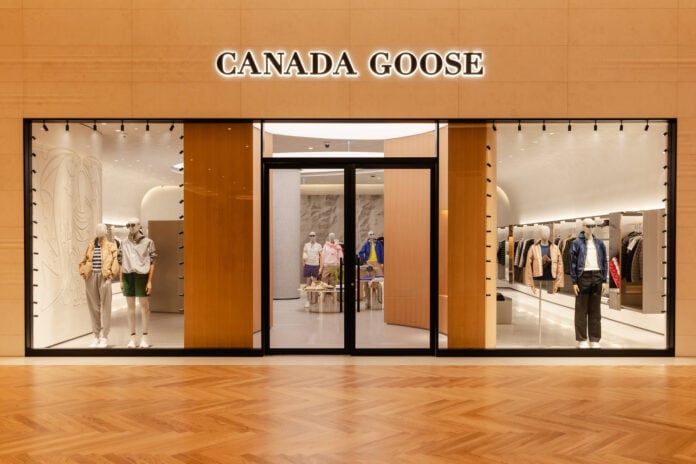
Canada Goose at Oakridge Park in Vancouver. Photo supplied
Canada Goose is using its newest Vancouver store to demonstrate how the company sees luxury retail evolving: through deeper customer engagement, personalized service and immersive brand experiences.
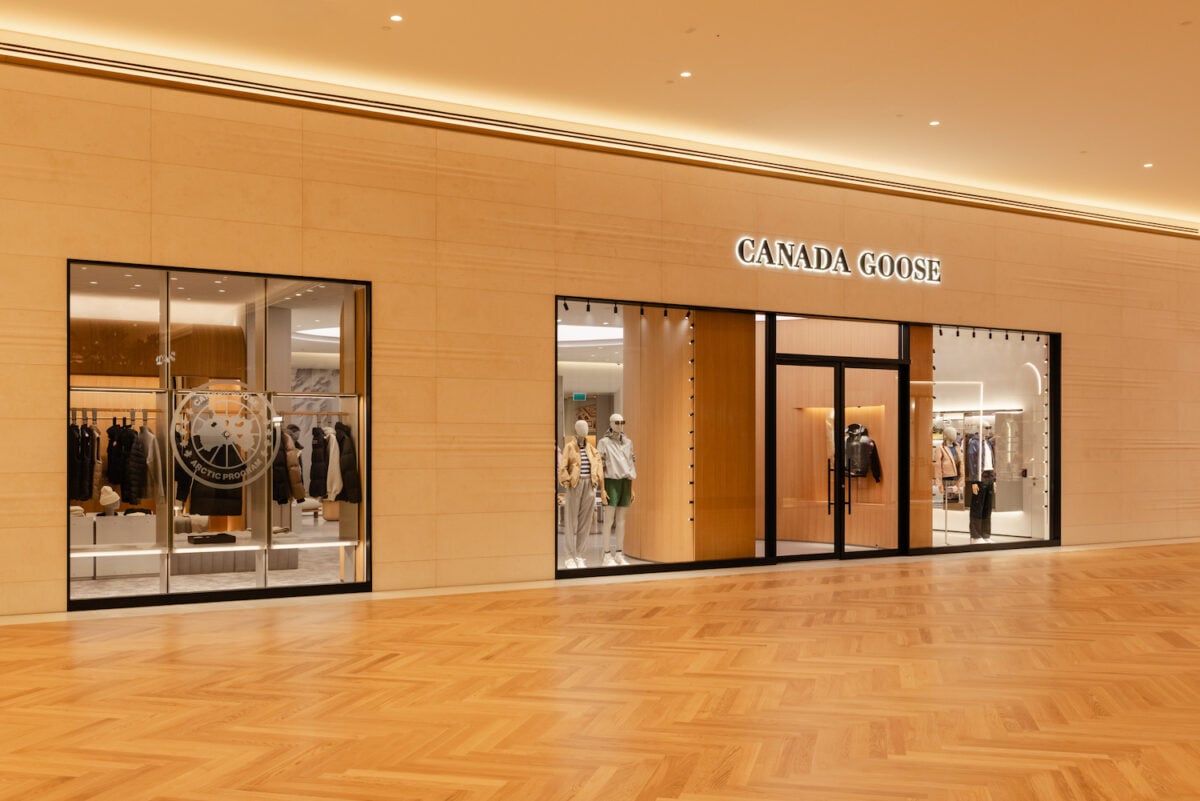
The Canadian luxury brand has opened a 4,269-square-foot location at Oakridge Park, marking the Canadian debut of its new global retail concept. Developed in partnership with architecture and design firm Snøhetta and first introduced in Paris, Milan and Chicago, the concept reflects a broader shift in how Canada Goose approaches physical retail.
“Retail is always changing,” Carrie Baker, President of Canada Goose, said in an interview with Retail Insider. “We’ve been responding to a pretty fundamental shift. It’s moving from product-led to experience and engagement-led.”
The Oakridge Park store is Canada Goose’s second location in Vancouver and one of 88 stores globally. The opening comes as the company continues to expand its direct-to-consumer business, reporting revenue growth of 13.3 per cent in Fiscal 2026 and ending the year with five consecutive quarters of positive comparable sales growth.
Carrie Baker, President of Canada Goose
For Baker, the role of the physical store has changed significantly since Canada Goose began opening its own retail locations.
“When you think about luxury retail, it has to do more than display a product,” she said. “It has to be an opportunity for us to fully express the brand and also be able to create a real relationship with that person walking in.”
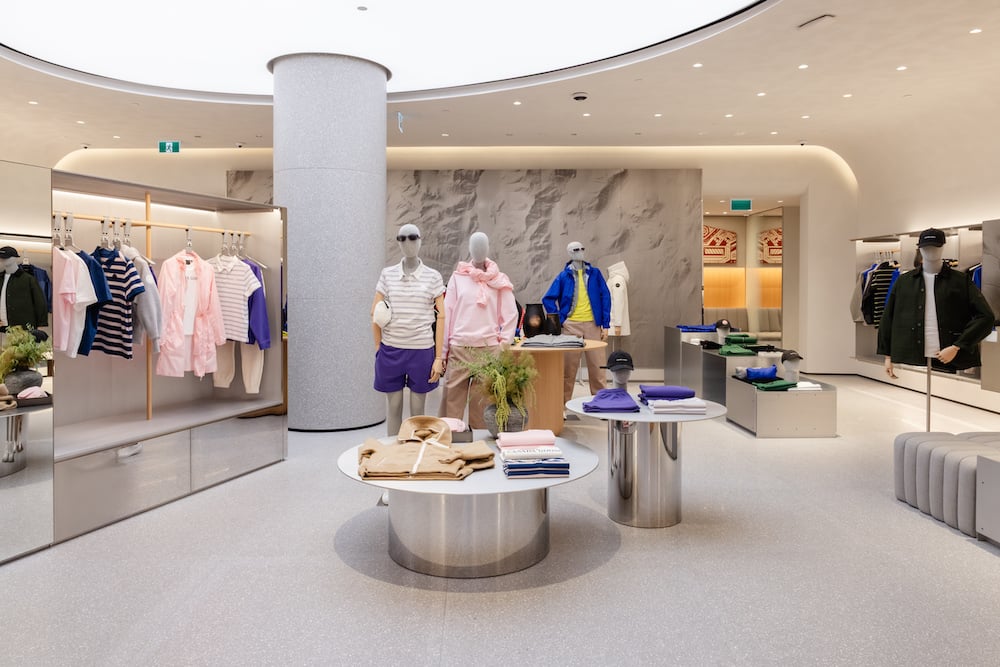
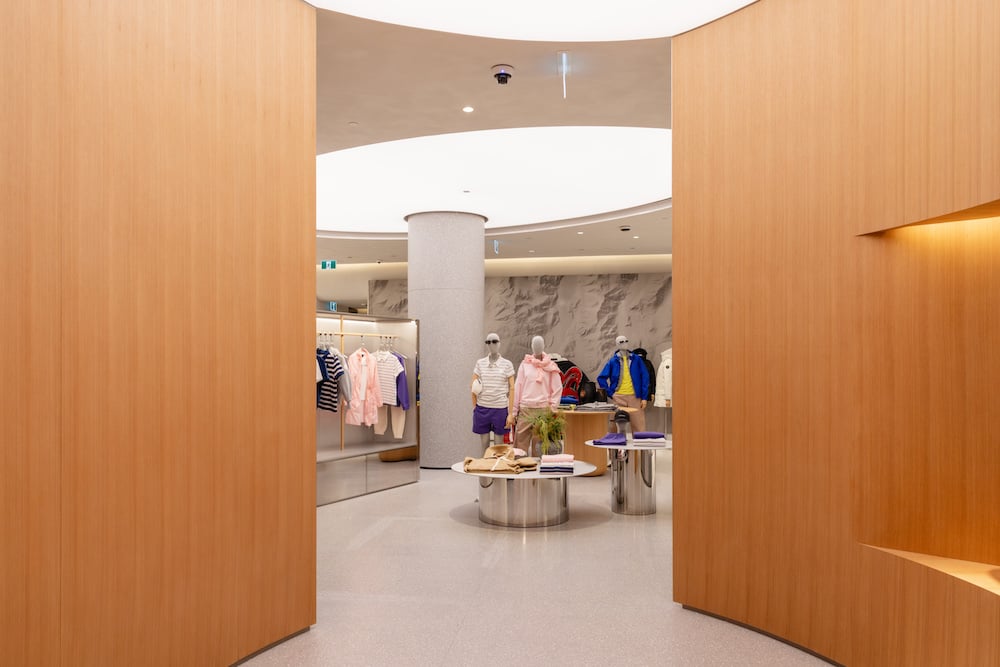
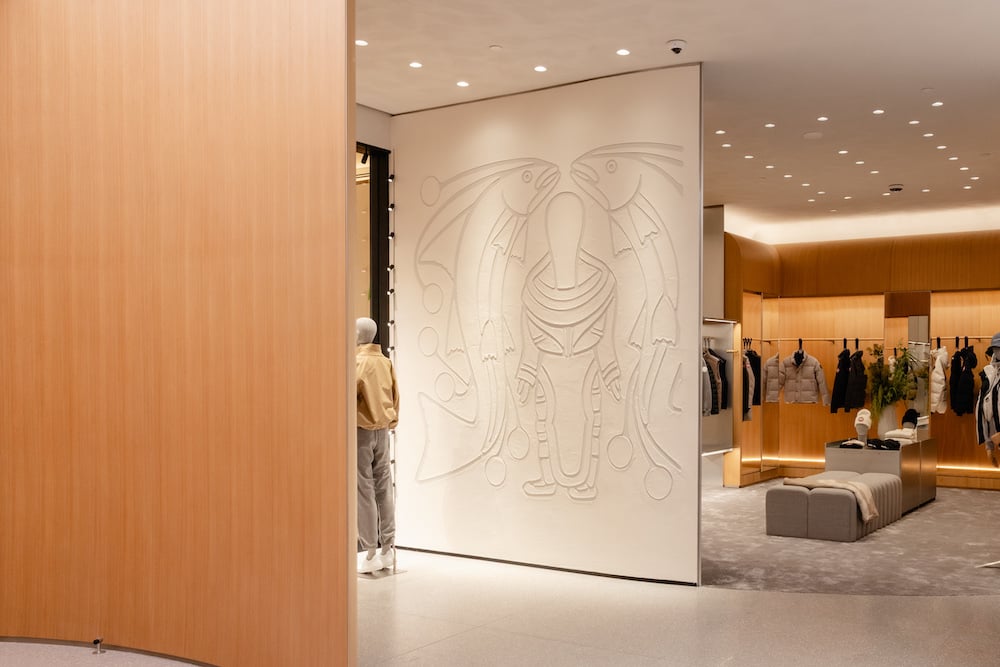
The new concept builds on Canada Goose’s longstanding focus on experiential retail while introducing a more immersive environment that brings together architecture, art and storytelling. At Oakridge Park, visitors encounter a space designed with wood, stone and brushed metal finishes, along with curated artwork and design elements intended to reflect Canadian heritage and the natural landscapes that have long inspired the brand.
Oakridge Park as a Luxury Retail Setting
The store opens within Oakridge Park’s growing luxury district, where Canada Goose sits alongside a collection of international brands that have helped reposition the Vancouver development as one of the country’s most closely watched retail projects.
For Canada Goose, the location reflects the company’s view of where the brand belongs globally.
“That’s right where we should be,” Baker said, referring to the store’s luxury adjacencies. “A luxury brand. I think Canadians forget that because they know us. They’ve known us for so long. But when you look at where we are around the world, our adjacencies are luxury, premium brands, and that’s exactly where we fit.”
Baker said Vancouver was already an important market for Canada Goose, with a strong base of local customers and tourism-driven demand. Oakridge Park offered an opportunity to reach that customer within an environment built around design, experience and a broader mix of uses.
“When you look at Oakridge and what they’re trying to do, to us, it reflects where luxury retail is going,” she said.
Canada Goose at Oakridge Park in Vancouver. Photo supplied
Why Canada Goose Rethought the Store Experience
The Oakridge Park store reflects a broader evolution taking place across luxury retail.
As consumers seek stronger personal connections with brands, Canada Goose has been rethinking what its stores are meant to do. The company’s earliest retail locations were designed to introduce customers to the full breadth of the brand’s assortment and communicate its story in a physical environment. Today, the objective has become more layered.
That shift is influencing everything from store design to customer service. The company now views its stores as places where customers can engage more deeply with the brand, learn about its heritage and build relationships with store teams.
The result is a retail concept that combines architecture, art, hospitality and storytelling within a single environment.
Inside the Oakridge Park Store
The Oakridge Park location introduces a refined design language that Canada Goose plans to incorporate into future retail projects.
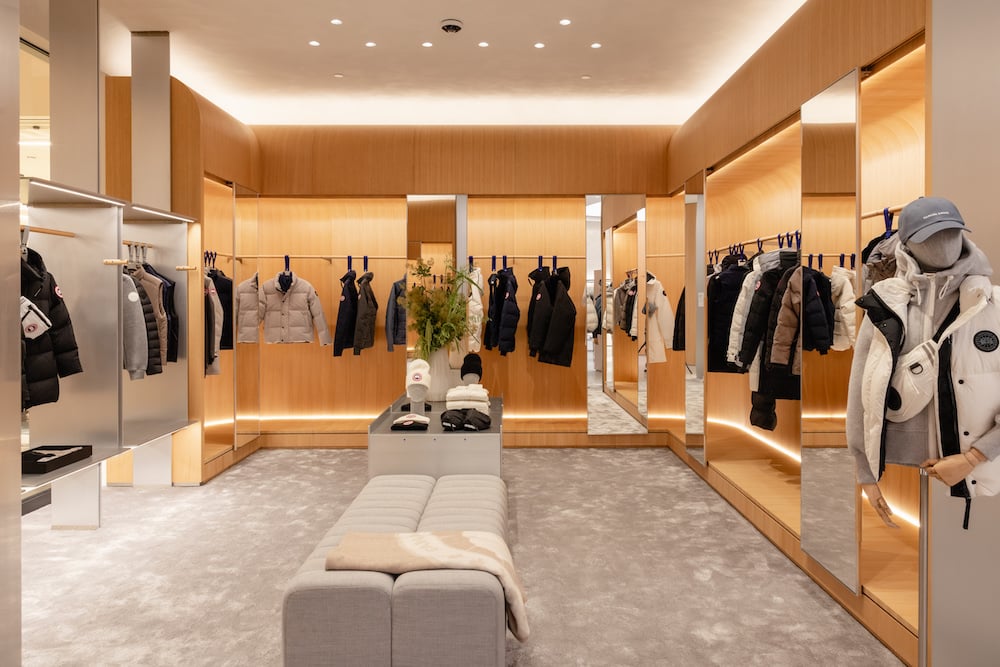
The concept draws inspiration from Canadian landscapes while maintaining a clean and contemporary aesthetic. Wood, stone and brushed metal finishes create a warm and understated backdrop for the product assortment, while carefully considered sightlines encourage customers to explore the space at a more relaxed pace.
The design also incorporates artwork inspired by the Rocky Mountains and visual references to Canada Goose’s heritage, creating a physical environment that reflects the company’s identity as a Canadian luxury brand.
A central feature of the store is what Canada Goose calls the “hearth,” a gathering space designed to anchor the environment and create a sense of warmth and connection. The layout encourages interaction, conversation and discovery, supporting the company’s belief that physical stores remain central to luxury retail.
Canada Goose at Oakridge Park in Vancouver. Photo supplied
The Vault and a More Personal Luxury Experience
Among the most distinctive elements of the new concept is a dedicated area known as the Vault.
Designed as a destination within the store, the Vault provides a more intimate environment where customers can explore new collections, receive personalized service and spend time with family or friends during the shopping process.
“It slows down the process a little bit more,” Baker said. “It engages them. It’s an opportunity to get to know them.”
The concept reflects a growing emphasis on clienteling within luxury retail. Canada Goose aims to build longer-term relationships with customers and better understand their preferences, lifestyles and shopping habits.
According to Baker, those conversations often reveal far more than a customer’s immediate product needs.
“Who are you? What are you looking for? What kind of style do you like?” she said. “These special places give us an opportunity for deeper brand immersion and an elevated client interaction.”
The company sees these interactions as increasingly important as luxury consumers place greater value on service, personalization and human connection.
Canada Goose at Oakridge Park in Vancouver. Photo supplied
Art, Architecture and Canadian Identity
While the new concept reflects a contemporary approach to luxury retail, Canada Goose has also incorporated elements that reinforce its Canadian roots.
The Oakridge Park store features several works by Indigenous artists, including commissions by British Columbia artist Sonny Assu. One installation reimagines the brand’s Snow Mantra Parka as a Northwest Coast Button Blanket, while another incorporates abstracted Kwakwaka’wakw formline imagery.
The location also includes a large-scale mural inspired by Inuit artist Kenojuak Ashevak’s Woman with Fish, continuing Canada Goose’s long-running commitment to showcasing Inuit and Indigenous art through its retail environments.
For Baker, these elements help tell a broader story about the company’s identity.
“Showcasing our connection to Canada is really important,” she said. “It’s so core to who we are.”
The artwork forms part of the Canada Goose Art Collection, which includes more than 700 pieces displayed in stores around the world.
“We want to continue to showcase that Canadian identity,” Baker said. “It’s how we show up, it’s how we tell our story, it’s how we serve.”
Beyond the Parka
Although Canada Goose remains best known for premium outerwear, the company continues to expand its product offering across multiple categories.
Baker said apparel has become one of the company’s fastest-growing businesses, reflecting changing customer perceptions of the brand.
“We are an outerwear company that continues to grow,” she said. “But when you look at what’s our fastest-growing categories, apparel.”
The expansion includes ready-to-wear collections, lightweight seasonal products, rainwear and footwear, helping Canada Goose engage customers throughout the year.
Rainwear has emerged as a particularly relevant category in markets such as Vancouver, where weather conditions create natural demand for lightweight performance products.
The broader assortment is also influencing customer behaviour. According to Baker, consumers who first enter the brand through apparel often become repeat customers and explore additional categories over time.
“What’s interesting is that when people start with Canada Goose through apparel, they’re actually more likely to come back and shop again,” she said.
The evolution reflects a larger objective: extending the brand’s relevance beyond cold-weather outerwear while maintaining its premium positioning.
Canada Goose at Oakridge Park in Vancouver. Photo supplied
Building Relationships Through Retail
A recurring theme throughout Baker’s discussion was the importance of people.
Canada Goose refers to store associates as “brand ambassadors,” reflecting the role they play in representing the company and building customer relationships.
“You can have the best environment in the world and the best product, but if you don’t have the best people working in your stores, it doesn’t matter,” Baker said.
The company places significant emphasis on hiring people who can connect with customers, communicate the brand’s story and create memorable experiences.
According to Baker, today’s luxury consumers increasingly expect a level of personalization that extends beyond product recommendations.
“People want to feel known,” she said.
That philosophy also informs Canada Goose’s omnichannel strategy. The company continues to invest in connecting digital and physical touchpoints, including wish lists, clienteling programs, in-store services and aftercare support.
Baker sees e-commerce and stores as complementary parts of a single customer journey.
“Those intersect,” she said. “Customers spend time in both and for different needs and at different times.”
Selective Growth and Long-Term Vision
The Oakridge Park opening comes during a period of continued growth for Canada Goose.
The company reported revenue of approximately $1.53 billion in Fiscal 2026 and ended the year with 88 stores globally. Direct-to-consumer comparable sales increased 8.4 per cent during the year, while fourth-quarter comparable sales rose 10 per cent.
Despite that momentum, Baker emphasized that Canada Goose remains selective when it comes to physical expansion.
“We don’t want to be everywhere,” she said. “We want to be in the right places.”
That approach has shaped the company’s retail strategy from the beginning. While Canada Goose continues to evaluate opportunities in Canada and internationally, the focus remains on opening stores that align with the brand’s positioning and long-term objectives.
For Baker, Oakridge Park represents an example of that strategy in action.
Located alongside some of the world’s most prominent luxury brands, the new store gives Canada Goose a setting to showcase its evolving vision for retail while reinforcing its place within the global luxury landscape.
As the company continues to refine its store concept, Oakridge Park offers a look at how Canada Goose believes luxury retail will evolve in the years ahead: through experience, storytelling, personal connection and a distinctly Canadian point of view.
Canada Goose at Oakridge Park in Vancouver. Photo supplied
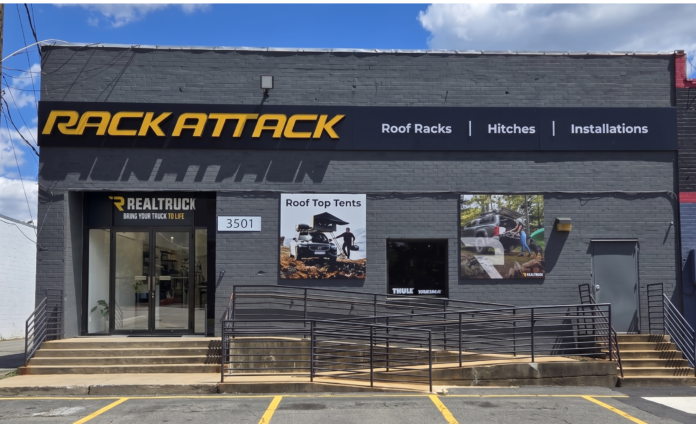
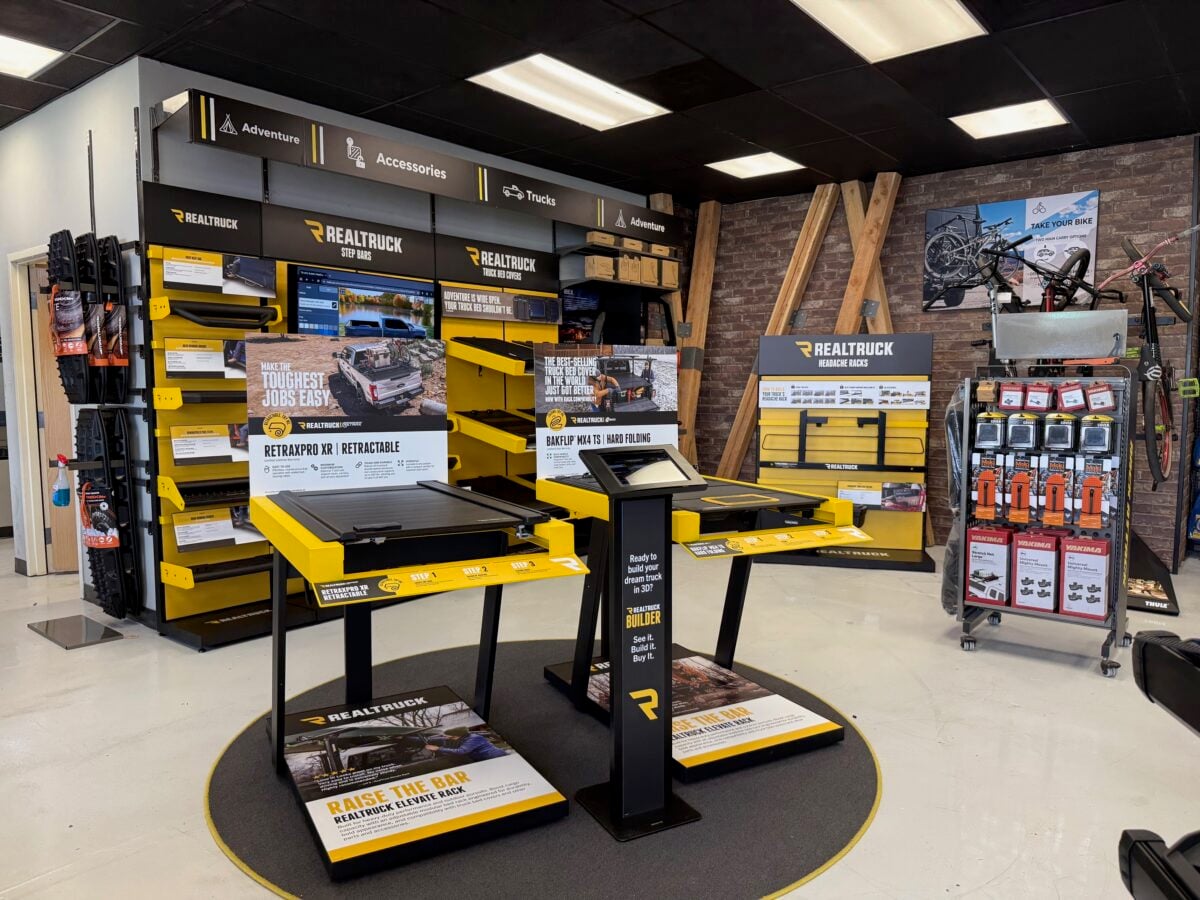
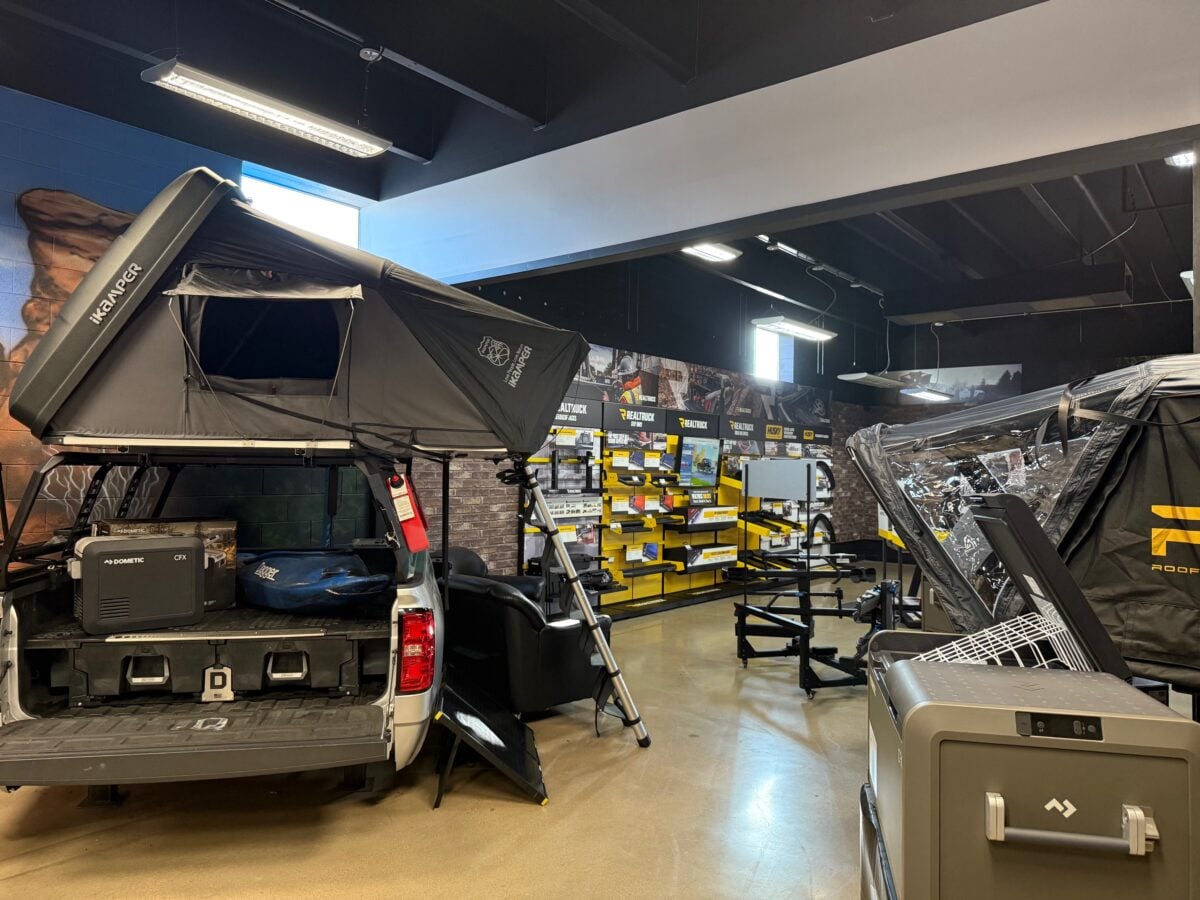
Rack Attack, a leading North American destination for vehicle racks, truck accessories, and overlanding gear, announced a partnership with RealTruck, a global aftermarket product and accessory brand and digital destination for truck, Jeep®, Bronco® and off-road enthusiasts.
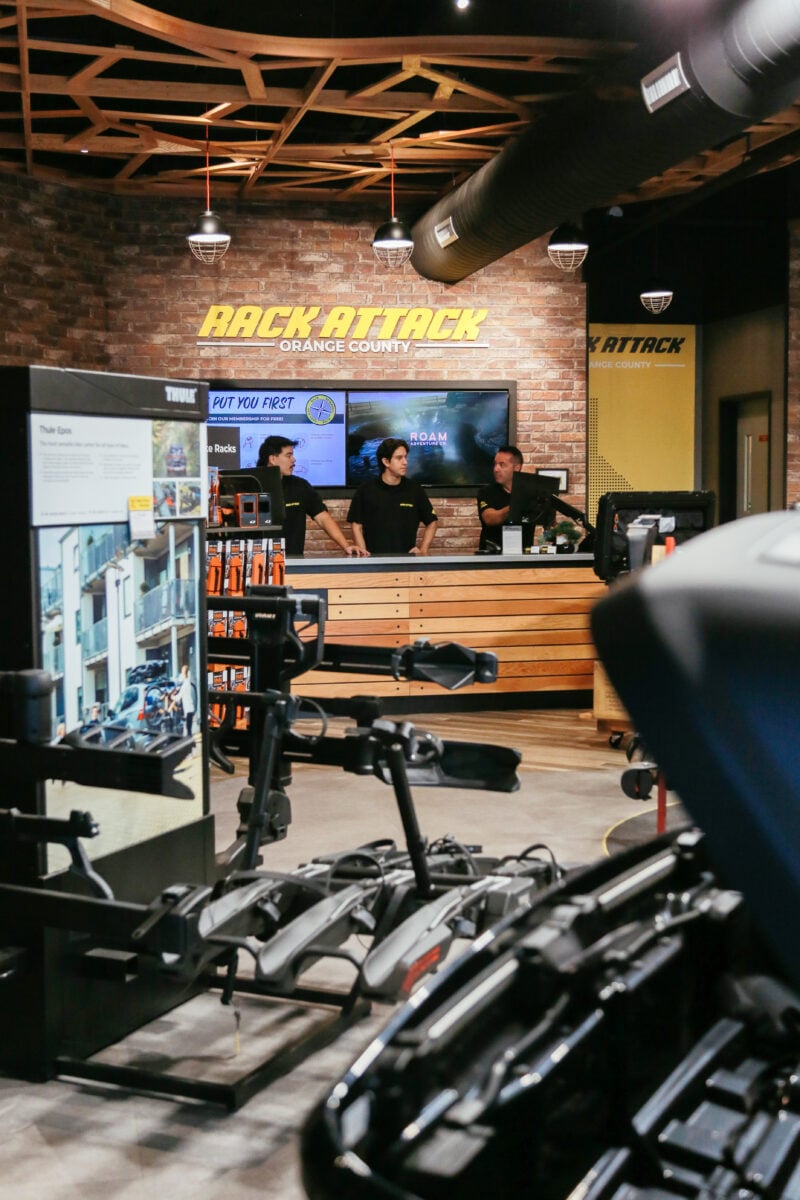
The partnership will see official RealTruck ‘store-in-store’ retail shops installed in all 45 Rack Attack locations across North America. The first in-store shop opened at Rack Attack’s Orange County store in Tustin, California, in October 2025.
Since then, all 31 other U.S. locations have been opened, with the latest integration at Rack Attack’s Minneapolis store in May. As of today, five additional official RealTruck ‘store-in-store’ retail shops have opened in Canadian Rack Attack locations (Ottawa, Calgary South, Calgary North, Coquitlam and Vancouver).
All 14 Canadian Rack Attack locations will have official RealTruck ‘store-in-store’ retail shops installed by July.
“The launch of official RealTruck store-in-store retail shops within our Rack Attack locations will elevate our partnership and create the ultimate customer experience. Together, we are offering truck owners and outdoor enthusiasts the greatest choice of products, combined with the best service across all our markets in North America,” said Alexander Welbers, CEO, Rack Attack.
Alexander Welbers
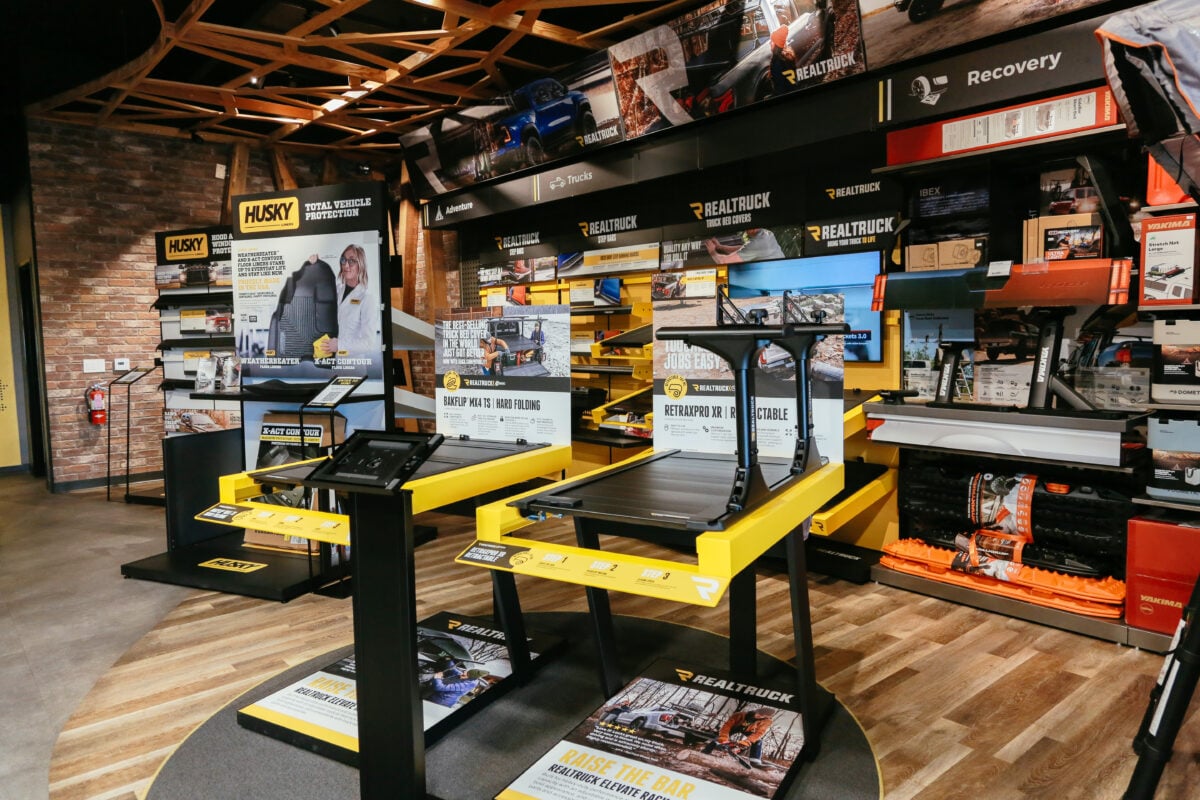
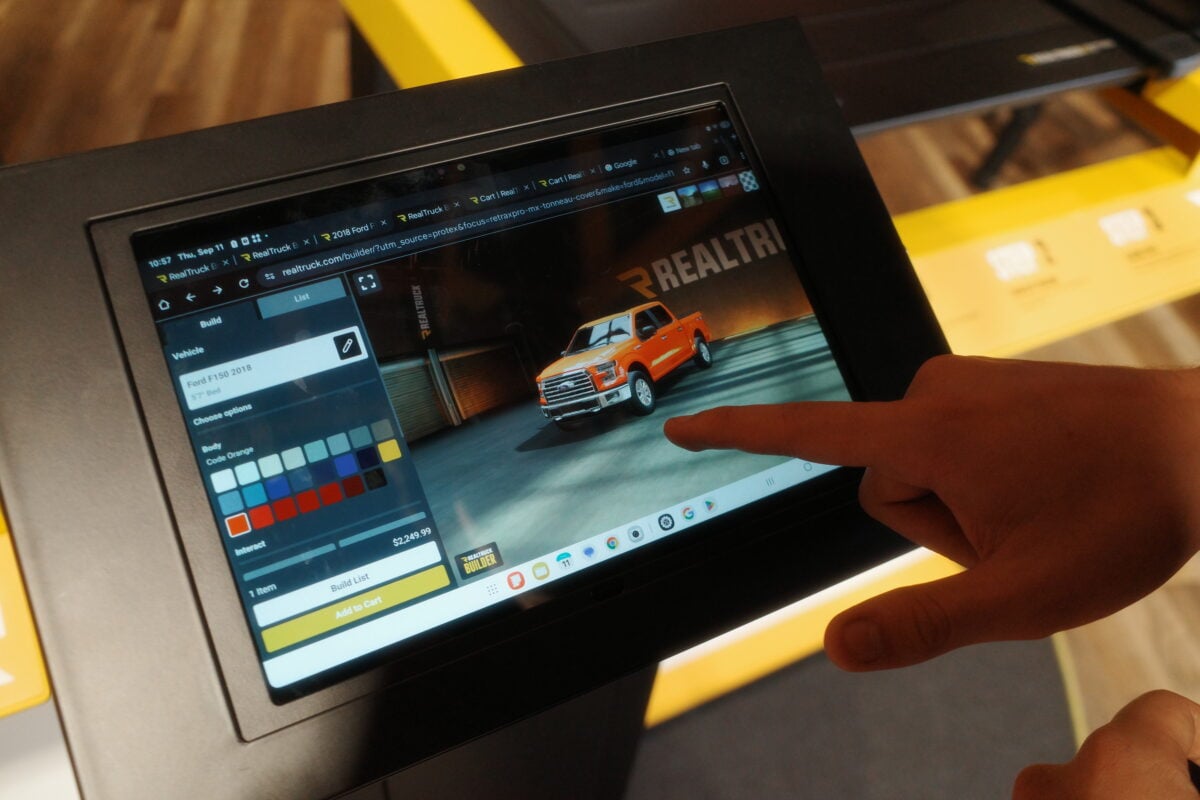
He said the dedicated spaces feature the innovative RealTruck Builder platform, allowing customers to visualize their dream truck in interactive 3D and explore countless accessory combinations guaranteed to fit their vehicle. RealTruck products such as truck bed covers, steps, swing cases, Husky Liners® floor and cargo liners, and more, are featured in this unique and industry-leading retail experience.
While in the store-in-store, customers can explore RealTruck products and speak with Rack Attack’s certified experts about the various options available for their vehicle, ensuring they find the right solution backed by professional installation and support.
“This partnership represents an exciting new chapter for RealTruck, allowing us to showcase our industry-leading truck accessories in an exclusive consumer experience inside Rack Attack’s retail locations,” said Travis Shirley, Senior Vice President of Sales at RealTruck. “We applaud Rack Attack’s forward thinking and innovative approach to make it easier than ever for truck owners to explore, shop, and get their hands-on RealTruck products that help transform their vehicles to fit their lifestyles.”
RealTruck, globally headquartered in Ann Arbor, Michigan, has 78 facilities across four continents.
Rack Attack photo
Welbers said Rack Attack has been in business for 30 years with the first location in Vancouver. Today, there are 45 locations across North America, and two Thule stores in North Vancouver in the Park Royal Mall, and in downtown Denver.
“Traditionally, 30 years ago, we started more with the rack part—base racks, cargo boxes, bike racks. Now, since 10 years, we are growing and growing the truck component of our stores. We’re a very big partner of RealTruck, who is by far the biggest brand in that space in North America,” said Welbers.
“That’s basically the giant in that industry. They have 29 brands now . . . It’s a massive, billions-and-billions-of-dollar company in the U.S.
With defining their brand, they looked for strategic partners that have a similar approach in presenting to customers and that fit their philosophy of how they want to service truck customers. Since then, we’ve been very close with them in a strategic partnership.
Rack Attack photo
“So we’re the first ones that rolled out these shop-in-shop concepts . . . We integrated some branding outside in some of the stores. And then the inside integration fits really well into our stores. They have the same corporate colours—yellow and black—like we have.
“We integrated their rack builder, which is a 3D visualization software that they have. They are the first ones. We have it in all our stores, where you can basically type in your truck model and year, and you can add all the products to it. It live-adjusts the vehicle and builds a quote. You can actually see how it looks on your vehicle before we install it or before you select something.”
Gem Studio, the experiential jewelry brand known for its hands-on workshops, is bringing its first Alberta location to CF Chinook Centre in Calgary on Thursday June 18.
Gem Studio Calgary is an interactive space that invites people to dive into the art of handcrafted jewelry with three unique and immersive experiences.
At Gem Studio Calgary, visitors can enjoy:
Silversmithing Workshops – Get hands-on with fire and tools to craft a custom silver ring from start to finish.
Charm Workshops – Mix and match from a selection of stunning charms to create a piece that tells your story.
Permanent Jewelry – Experience the latest jewelry trend with a dainty, clasp-free bracelet or anklet that’s micro-welded for a perfect, seamless fit.
Workshops typically range from 90 minutes to three hours, with prices starting at $65, making them an accessible and unforgettable creative experience.
Bridgett Jessop
“Our jewelry making studio is more than just a hands-on workshop, it’s an immersive experience where your creativity becomes something you can wear and cherish,” said Bridgett Jessop, Owner of Gem Studio Calgary. “We can’t wait to welcome friend groups, couples and creative Calgarians in to make their own special pieces!”
It is located on second level of CF Chinook Centre.
Founded in the U.S. by Matt and Lauren James, Gem Studio is an experiential jewelry brand that allows guests to design and handcraft their own custom pieces — from silver rings and charm bracelets to permanent jewelry — in an immersive, hands-on studio setting.
Now expanding across Canada through master franchise partner Founder Brands, Gem Studio is bringing its unique blend of creativity and community to major markets from coast to coast.
“Calgary’s vibrant, experience-driven consumer market and the unmatched reach of CF Chinook Centre made it the ideal home for Gem Studio’s first Alberta location, bringing a fresh, hands-on jewelry-making experience to one of Canada’s busiest retail destinations,” said Jessop.
“By combining creativity, personal expression and leaning into local events and culture like the Calgary Stampede, we give customers a reason to come back, whether they are celebrating a special occasion or looking for a way to connect with friends.
“We are seeing a shift from consumers wanting to simply buy products, to them seeking memorable experiences. Calgary’s creative, social and largely entrepreneurial spirit makes it a natural fit for a concept that combines craftsmanship, self-expression and connection.”