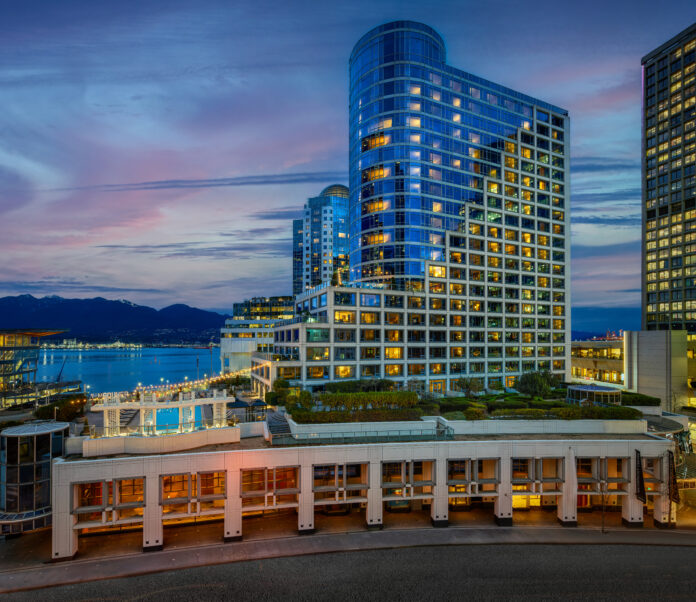
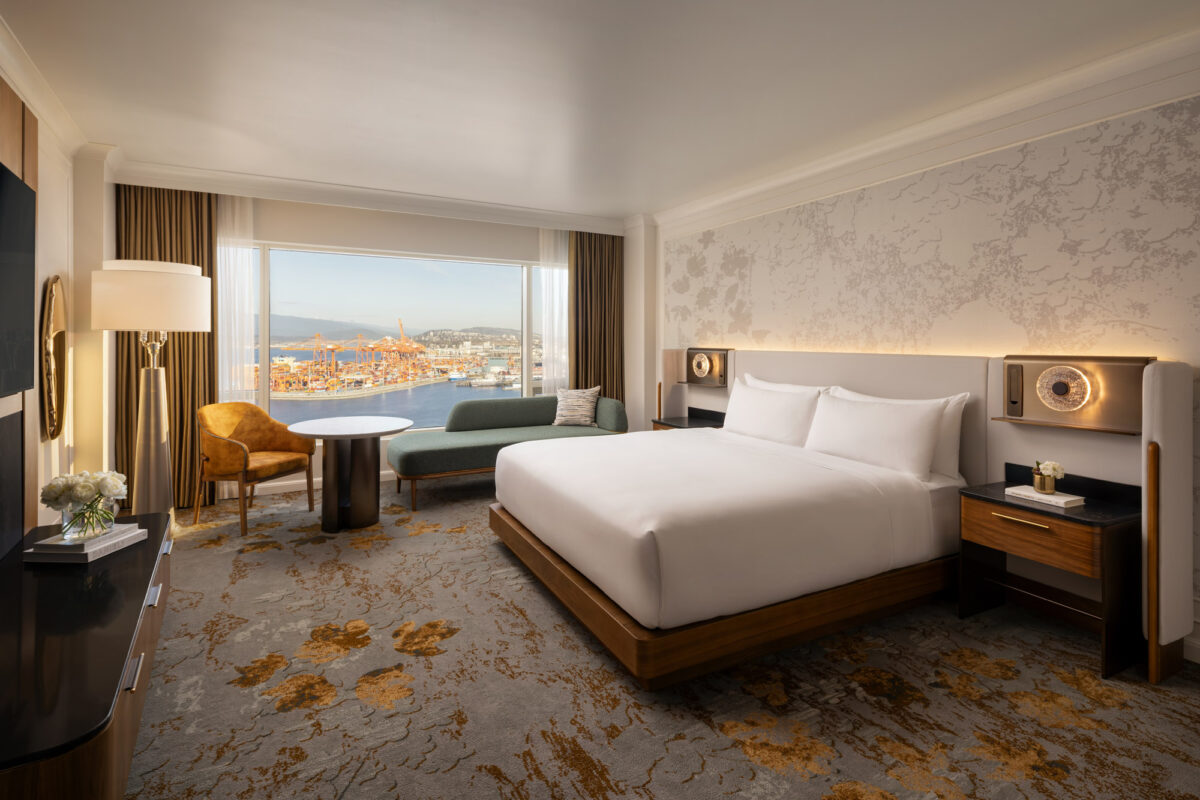
Fairmont Waterfront says it has completed the first phase of a multi-year renovation project as Vancouver’s record-setting cruise season drives increased demand from travellers extending their stays in the city before and after their voyages.
The downtown Vancouver hotel said the initial phase of the project includes 96 redesigned guest rooms and comes as cruise passenger volumes continue to rise at the Port of Vancouver. The property, located across from Canada Place Cruise Terminal, is also expanding its focus on services for cruise passengers as more visitors spend additional time in the city.
According to the Vancouver Fraser Port Authority, the 2026 cruise season is expected to bring about 1.4 million passengers and nearly 360 ship calls, exceeding previous records. The season runs from Feb. 26 through Oct. 13.
The port authority also said 76 per cent of cruise passengers spent time in Vancouver as part of their trip in 2025. Among international visitors, that figure reached 88 per cent, reflecting a growing tendency for travellers to include additional time in the city before or after embarking on a cruise.
Fairmont Waterfront said the trend has contributed to increased demand for accommodation tied to cruise travel. The hotel said bookings for its Connect With Your Cruise Ship package have risen 150 per cent compared with a year earlier.
The hotel offers complimentary luggage transfer for cruise passengers, allowing guests to leave tagged luggage in their room before it is delivered directly to their cruise ship. Its location across from Canada Place Cruise Terminal also allows guests to walk to embarkation.
“Cruise travel continues to be one of the most important drivers of visitation to Vancouver, and we’re seeing growing demand from guests who want to spend additional time exploring the city before or after their voyage,” said Randall Williams, general manager of Fairmont Waterfront.
Fairmont Waterfront photo
“Our role is to help improve that journey, whether that’s through our location just steps from Canada Place, our direct luggage transfer service, or by offering a newly renovated guest room designed for today’s traveler.”
The renovation marks the first completed phase of a broader property redevelopment plan.
Fairmont Waterfront said additional work is scheduled to resume in the fall of 2026 and will include more guest room renovations, upgrades to its Fairmont Gold accommodations, the pool area, hotel lobby and ARC Restaurant + Bar.
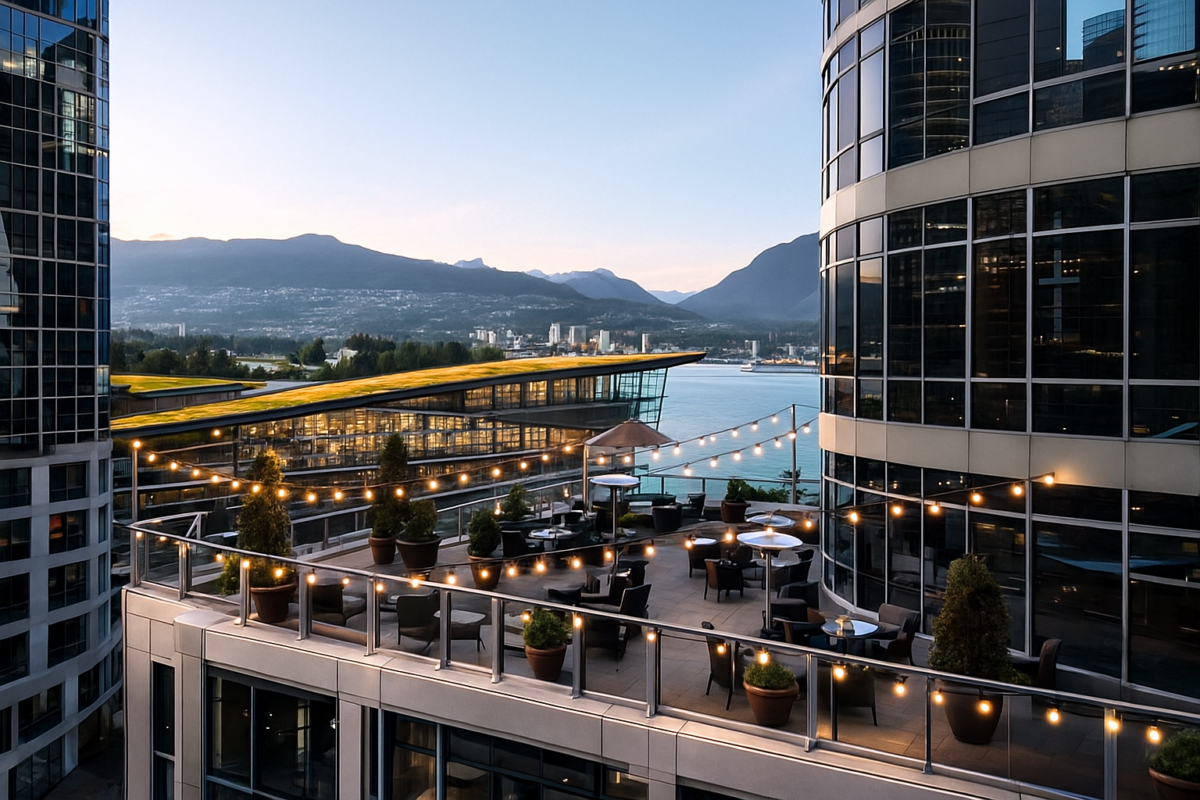
The hotel also said guests extending their stays can participate in programming that includes rooftop garden dinners, rooftop bee tours and seasonal wellness activities.
Retail Insider also published coverage of Jollibee’s plans to expand its franchise presence in Canada, strengthening multicultural market opportunities. Villages Calgary relocated its store to Inglewood, downsizing while focusing on online sales and adapting to changing urban retail dynamics.
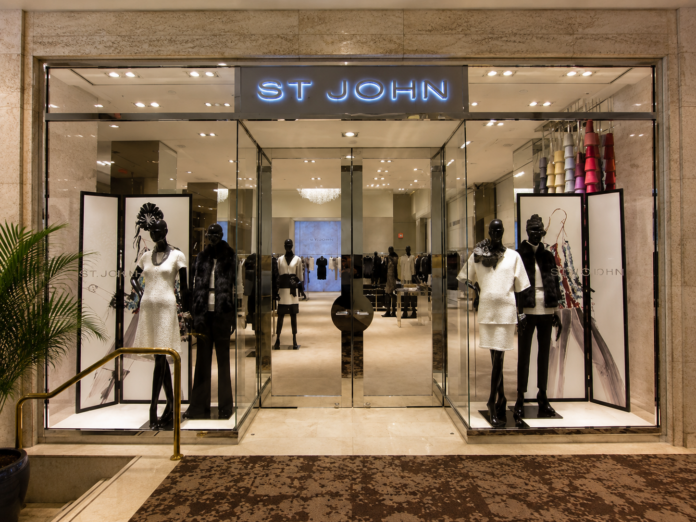
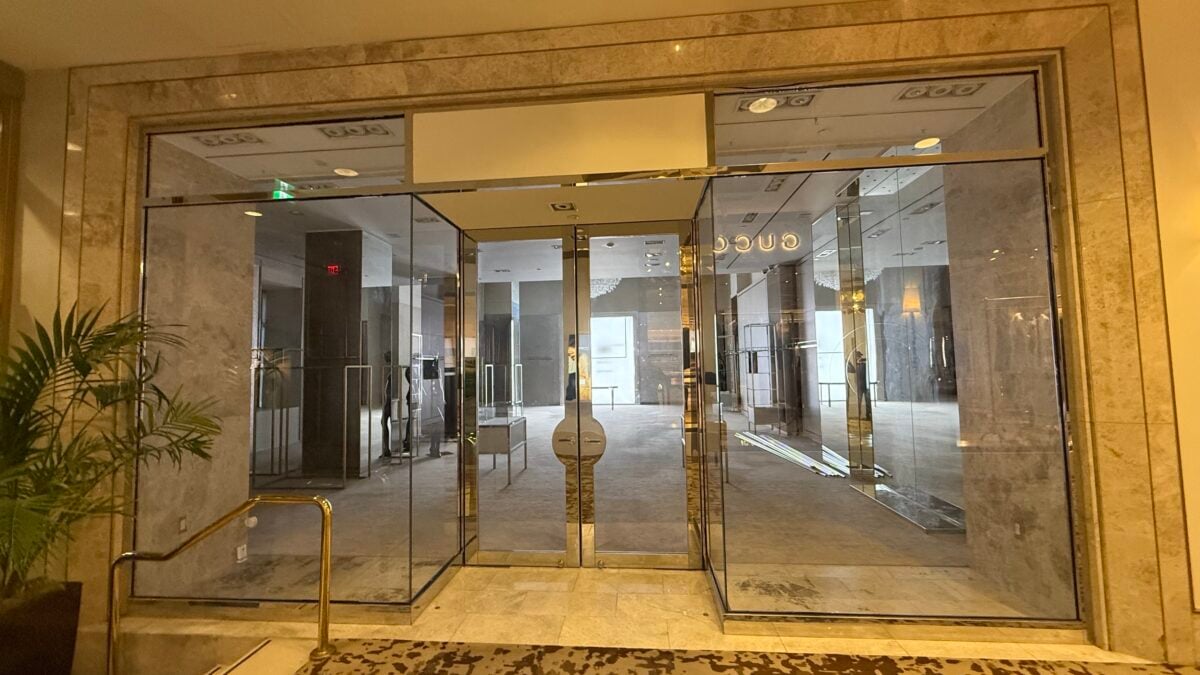
Former St. John store at the Fairmont Hotel Vancouver. Photo: Lee Rivett
The quiet closure of a boutique inside the Fairmont Hotel Vancouver marks the end of more than two decades of standalone retailing in Canada for American luxury fashion brand St. John Knits.
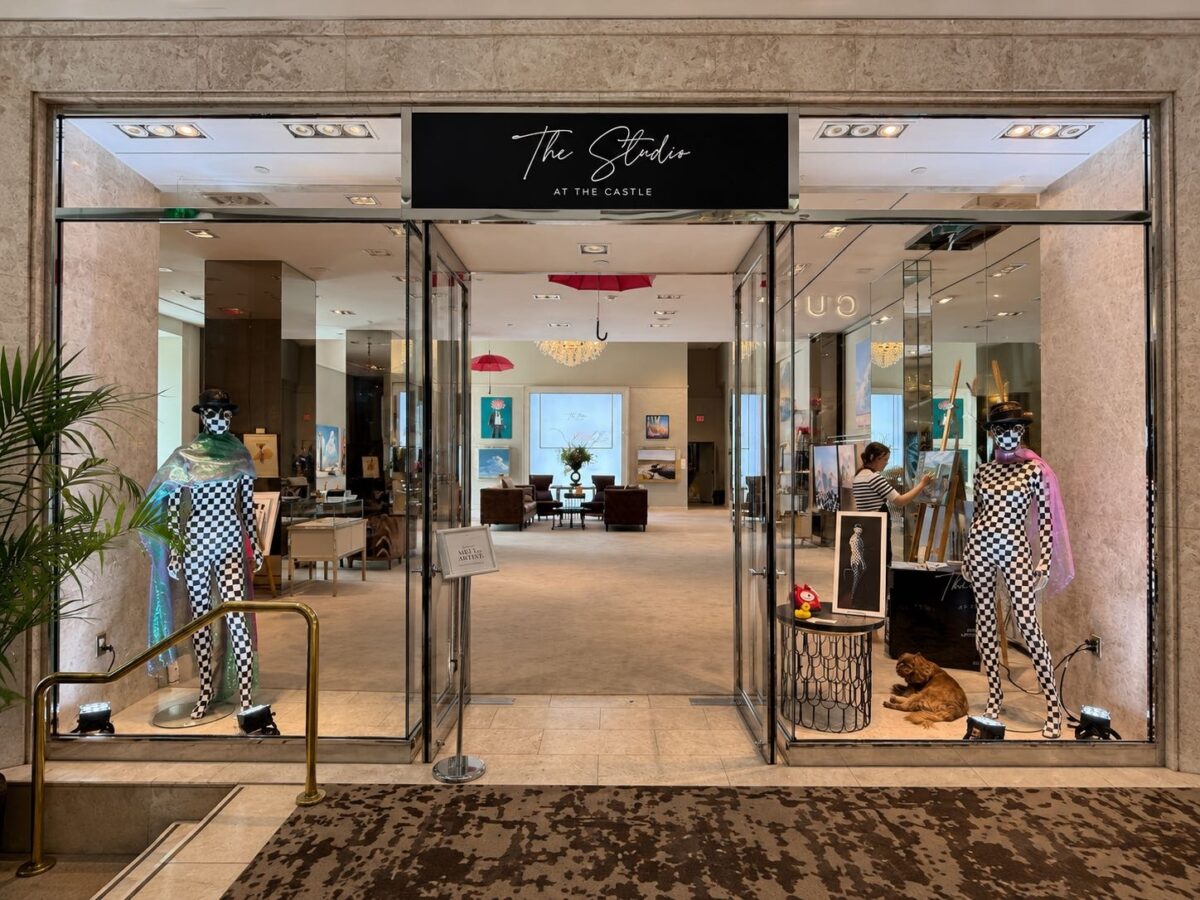
The store, located within the landmark downtown Vancouver hotel, closed at the beginning of June and has since been replaced by a temporary pop-up art gallery. The closure also ends St. John’s standalone presence in Canada, following the January 2024 closure of the brand’s Toronto boutique at 130 Bloor Street West.
While the departure of a luxury retailer is noteworthy in itself, St. John’s Canadian story is also one of retail history. The brand played an early role in the development of Vancouver’s luxury retail district long before the city’s now-famous collection of global luxury flagships arrived.
A Pioneer of Vancouver Luxury Retail
St. John’s relationship with Vancouver dates back even further than its Fairmont Hotel Vancouver boutique. The brand was sold in the city through Plaza Escada at Sinclair Centre, one of Vancouver’s earliest luxury fashion destinations which opened in 1990 and closed in 2011.
In 2003, St. John opened its own standalone boutique at the Fairmont Hotel Vancouver, occupying a prominent corner location at Burrard and West Georgia streets. At the time, Vancouver’s luxury retail landscape looked very different.
The city’s modern luxury district was still emerging. Chanel helped establish the area as a luxury destination when it opened at 755 Burrard Street in 1991, and only a handful of luxury brands operated nearby. The Fairmont Hotel Vancouver’s retail podium had yet to become the powerhouse collection of global luxury tenants that it is today.
Louis Vuitton occupied a much smaller space in the building, while Dior and Gucci had not yet arrived.
St. John therefore became one of the pioneering luxury brands that helped establish the district’s credentials and attract affluent shoppers to the area.
The Fairmont Hotel Vancouver’s Transformation
Over the next two decades, downtown Vancouver evolved into one of North America’s premier luxury shopping destinations.
The Fairmont Hotel Vancouver itself underwent a dramatic transformation. Gucci opened its first boutique in the hotel in 2006 and later expanded into a roughly 6,500-square-foot flagship. Dior entered the property in 2015 with a nearly 10,000-square-foot flagship, while Louis Vuitton also expanded into a store of approximately 10,000 square feet. The podium today also includes an Omega boutique.
In many ways, St. John helped build the luxury environment that ultimately evolved around it.
That evolution was perhaps most visible in 2014, when St. John relocated from its original corner location within the hotel to a roughly 3,000-square-foot space that had previously housed Griffins restaurant. The move made way for Dior’s flagship store and illustrated how dramatically Vancouver’s luxury market had matured.
The irony is that St. John helped establish a district that eventually became dominated by some of the world’s largest luxury houses operating increasingly large flagship stores, resulting in its relocation to a more obscure space within the hotel podium.
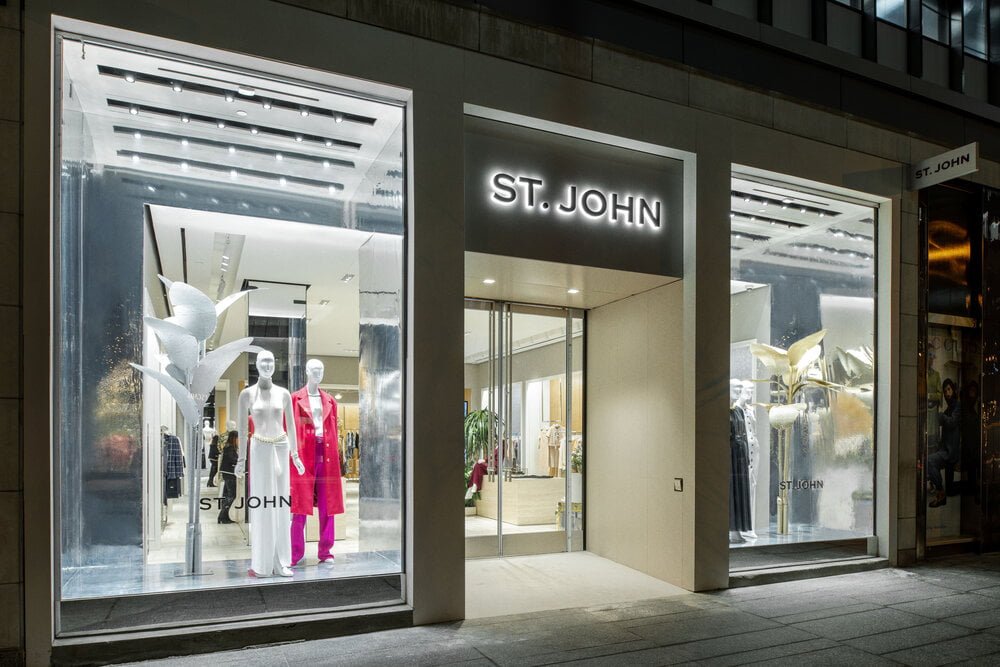
St. John store at 130 Bloor St. W. in Toronto, December 2020. Photo supplied
Toronto Expansion Was Short-Lived
St. John expanded its Canadian presence in late 2019 with the opening of a 2,100-square-foot boutique at 130 Bloor Street West in Toronto’s Yorkville neighbourhood.
At the time, the opening was viewed as a vote of confidence in Canada’s luxury market and Toronto’s increasingly important position among global luxury shopping destinations.
The Toronto store ultimately had a relatively brief run, closing in January 2024 after operating for just over four years.
Its closure left Vancouver as St. John’s sole Canadian location for the final two-and-a-half years of the brand’s presence in the country.
Parent Company Undergoing Strategic Transformation
St. John today is owned by Lanvin Group, which is controlled by Fosun International.
The luxury group has been undergoing a strategic transformation amid a broader slowdown in the global luxury sector. In fiscal 2025, Lanvin Group reported an 18 per cent decline in revenue and said it had been rationalizing its store portfolio and focusing on operational efficiency and profitability.
Interestingly, St. John has been among the stronger-performing brands within the portfolio, with revenue declining only modestly compared with some of the group’s other fashion houses.
That suggests the closure of the Vancouver boutique may be less about the performance of the St. John brand itself and more reflective of changing distribution strategies and the economics of operating standalone luxury stores in relatively small markets.
Shuttered Ferragamo store at 918 Robson Street in Vancouver. Ferragamo occupied this address since 1982, and recently relocated to Oakridge Park. Photo: Craig Patterson
Vancouver’s Luxury Landscape Continues to Evolve
St. John’s departure also comes during another period of change in Vancouver’s luxury retail landscape.
Italian luxury house Salvatore Ferragamo recently closed its longtime boutique at 918 Robson Street and relocated to a new store at Oakridge Park. Ferragamo had occupied the Robson Street address since 1982 and was the longest continuously operating luxury retailer in the same Vancouver location.
Unlike Ferragamo, however, St. John has not relocated within Vancouver. Its closure marks the end of approximately 23 years of standalone retailing in Canada and concludes a chapter for one of the brands that helped shape downtown Vancouver’s rise as an internationally recognized luxury shopping destination.
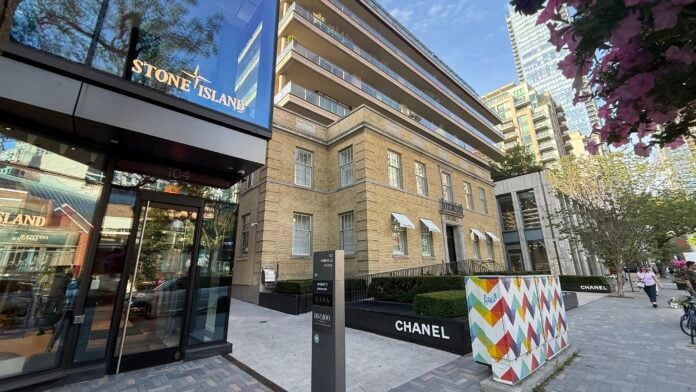
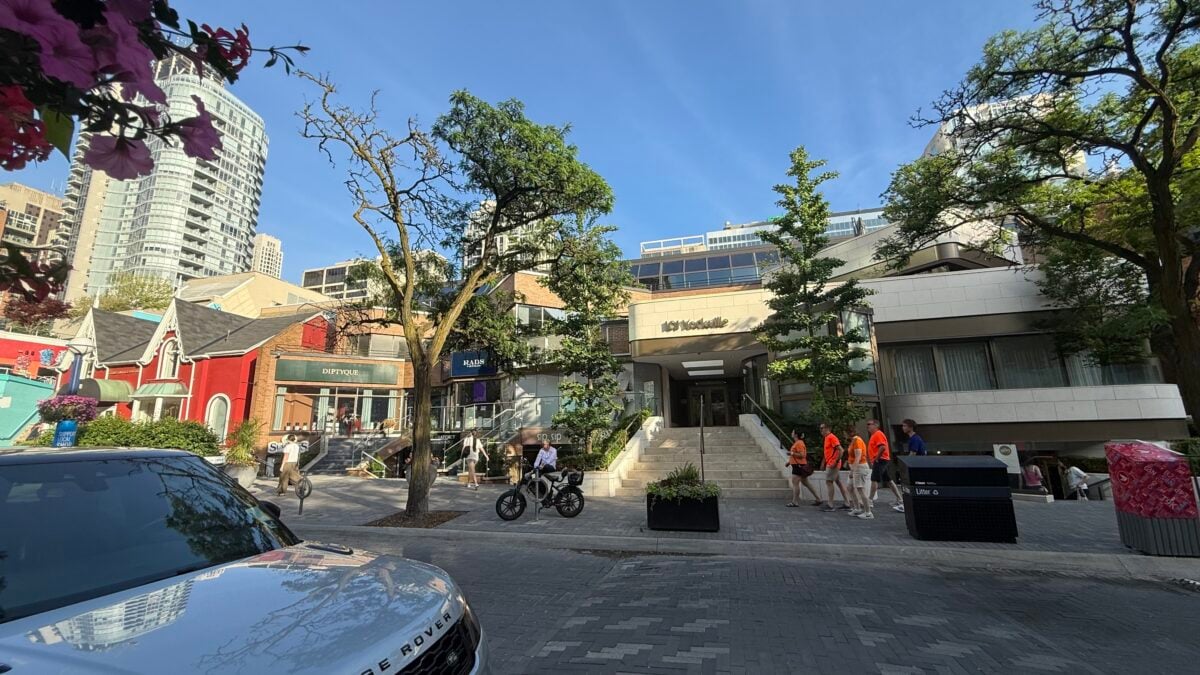
Chanel and Stone Island on Yorkville Avenue in Toronto. First Capital REIT developed several commercial buildings on the street, housing luxury brand stores. Photo: Craig Patterson
Last week, First Capital REIT unitholders overwhelmingly approved the previously announced $9.4 billion acquisition of the company by KingSett Capital and Choice Properties REIT, moving one of Canada’s most significant retail real estate transactions closer to completion.
The special resolution approving the plan of arrangement received strong support, with fewer than one per cent of votes cast against the proposal. First Capital said it intends to seek final approval from the Ontario Superior Court of Justice (Commercial List), with all other required approvals already obtained.
Under the arrangement, First Capital unitholders will receive $19.24 in cash and 0.3186 of a Choice Properties REIT unit for each First Capital unit they hold.
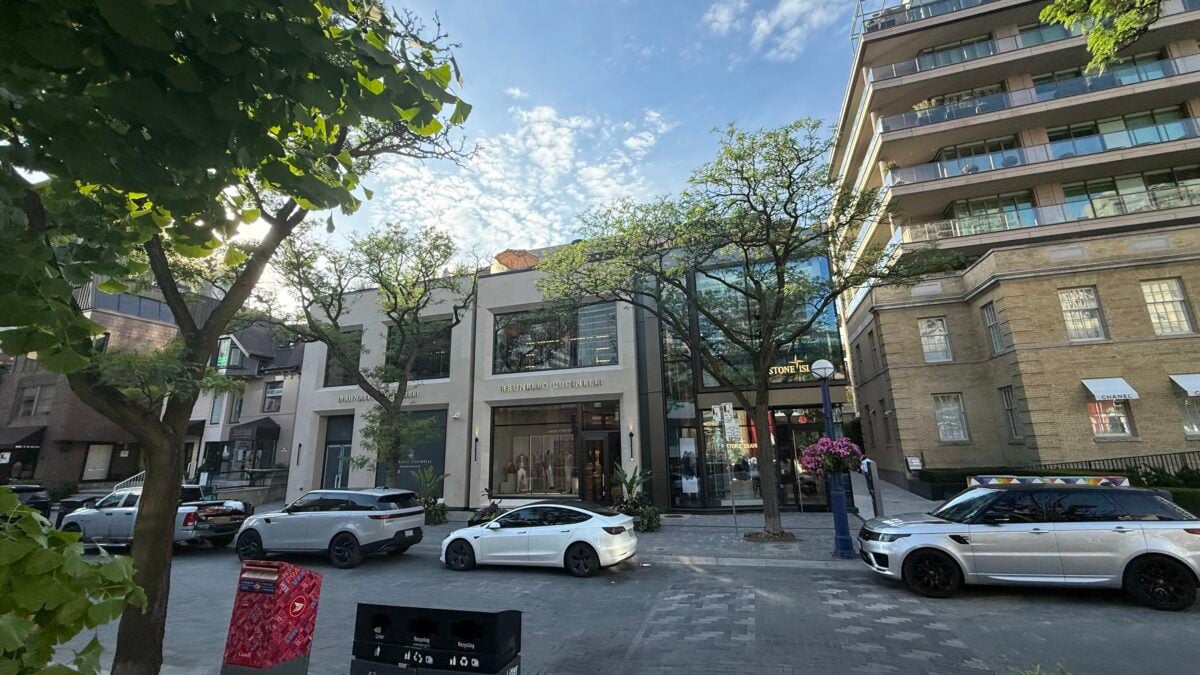
Recently expanded Brunello Cucinelli, Stone Island and Chanel on Yorkville Avenue in Toronto. First Capital REIT developed several commercial buildings on the street, housing luxury brand stores. Photo: Craig Patterson
Once completed, the transaction will see Choice Properties acquire approximately $5 billion of First Capital’s retail assets, while KingSett Capital will acquire approximately $4.4 billion of First Capital assets and all of First Capital’s issued and outstanding units.
The Choice Properties portfolio includes approximately $4.8 billion, or eight million square feet, of income-producing assets, along with approximately $200 million of properties under development. The portfolio is expected to generate approximately $235 million in net operating income in 2027, with near-term annual NOI growth of approximately 3.5 per cent.
For Canada’s retail real estate industry, however, the significance of the transaction extends far beyond the balance sheet.
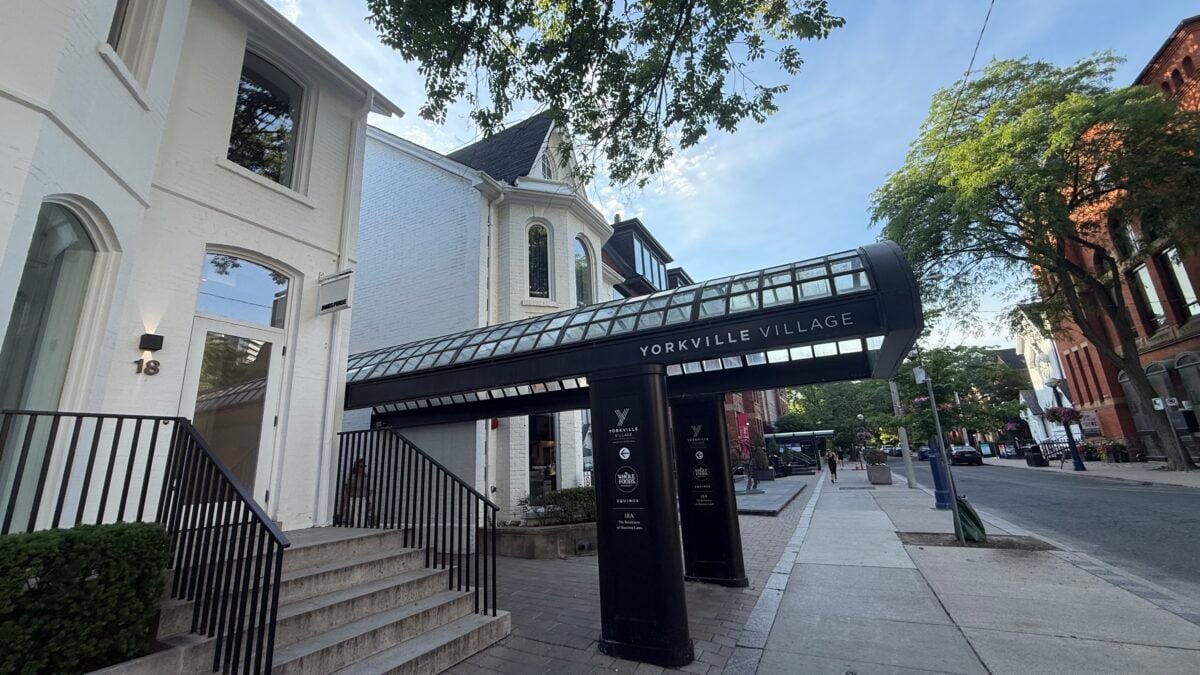
Hazelton Avenue entrance to Yorkville Village shopping centre in Toronto. Photo: Craig Patterson
The End of an Influential Retail Real Estate Platform
For more than three decades, First Capital occupied a distinct place in Canadian retail real estate.
While many landlords focused on enclosed malls, suburban plazas or individual shopping centres, First Capital built its reputation by assembling high-quality urban retail properties, introducing mixed-use intensification to aging shopping centres and creating retail districts that attracted some of the world’s leading brands.
In several cities, the company became more than a property owner. It became a district builder.
That approach helped shape parts of Toronto, Calgary and Montreal, where First Capital assembled properties, upgraded tenant mixes, advanced mixed-use development and attracted retailers that often require confidence in both the individual site and the broader neighbourhood.
The transaction now raises questions about what happens to that long-term placemaking strategy as First Capital disappears as an independent public company.
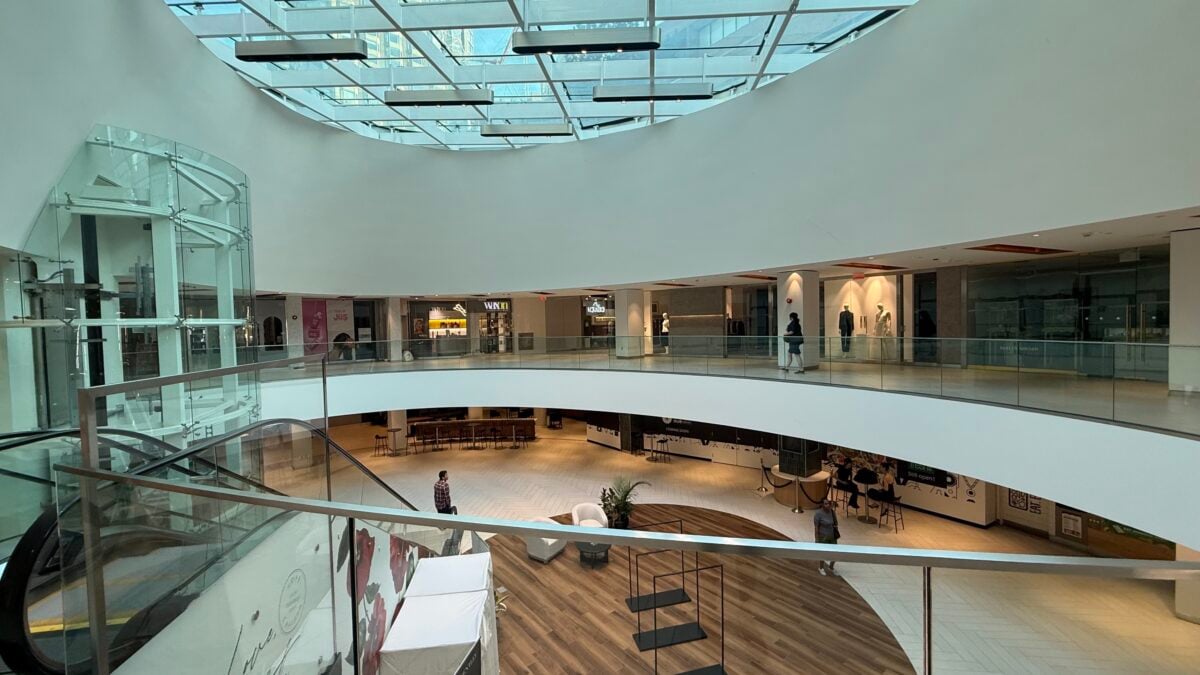
Yorkville Village shopping centre in Toronto (formerly Hazelton Lanes). Photo: Craig Patterson
Yorkville Enters a New Chapter
The most prominent example is Toronto’s Yorkville neighbourhood. Over several years, First Capital assembled a significant collection of properties in and around Yorkville Avenue, including Yorkville Village, formerly Hazelton Lanes, multiple buildings along Yorkville Avenue, the 101 Yorkville Avenue redevelopment opportunity, and an interest in the 138 Yorkville mixed-use tower.
Those holdings helped transform Yorkville Avenue into one of Canada’s premier luxury retail corridors. International brands including Chanel, Balenciaga, Brunello Cucinelli and Stone Island established a presence on the street as the area evolved from a secondary luxury address into a destination in its own right.
Today, Yorkville Avenue sits alongside Bloor Street’s Mink Mile as one of Canada’s most important luxury retail destinations, with international brands increasingly viewing the two streets as complementary luxury corridors.
That evolution did not happen by accident. First Capital’s control of key properties allowed it to influence leasing, streetscape improvements, merchandising and long-term redevelopment planning in a way few landlords could achieve through isolated ownership.
The change in ownership now raises important questions for the district. Will KingSett continue the same long-term vision for Yorkville, or will the strategy evolve under new ownership?
That question is especially relevant at 101 Yorkville Avenue, where future redevelopment has long been anticipated, and at 138 Yorkville, one of the country’s most ambitious mixed-use luxury projects. The 138 Yorkville development attracted national attention for ultra-luxury condominium residences marketed at prices reportedly ranging from roughly $10 million to more than $80 million. Construction is said to have been recently halted amid questions about financing — some are speculating that the new ownership might push for the project to become a rental apartment building.
With First Capital’s ownership interests now changing hands, industry observers will be watching closely to see how KingSett approaches this project as well as Yorkville Village, the surrounding Yorkville Avenue properties and future development opportunities in one of Canada’s most valuable retail districts.
101 Yorkville Avenue in Toronto — First Capital REIT had plans to eventually redevelop the site with luxury retail, and now plans are up in the air. Photo: Craig Patterson Stalled 138 Yorkville Avenue residential project, with units originally planned to be priced between $10 million (2,400 sq ft) to $83 million. A sub-penthouse is said to have recently been sold for $50 million, and now it’s unknown what the future of the tower will be. Some are speculating about high-end rentals. Photo: Craig Patterson
A Strategy Seen Beyond Toronto
Yorkville was one example of First Capital’s district-building approach. In Calgary, the company pursued a similar strategy around Mount Royal Village, expanding beyond the original property through nearby acquisitions and helping shape a broader retail district along 17th Avenue SW. The strategy demonstrated that First Capital was willing to think beyond individual assets and instead influence entire urban neighbourhoods through strategic property ownership.
In Montreal, the company also became active in urban mixed-use redevelopment, with projects such as Wilderton Centre and other major intensification initiatives reflecting the same broader philosophy. First Capital frequently looked at retail properties not only as income-producing assets, but as platforms for density, neighbourhood change and future value creation.
That is what makes the transaction significant for the retail industry. It is not simply the sale of a REIT. It is the transfer of a portfolio assembled over decades by one of Canada’s most influential urban retail landlords.
Mount Royal Village in Calgary. Image: First Capital REIT
Choice Becomes Even More Important in Canadian Retail
For Choice Properties, the acquisition strengthens an already significant position in Canadian retail real estate.
The portfolio being acquired includes a substantial number of grocery-anchored and necessity-based retail assets, a segment that has remained attractive to investors because of steady traffic, essential-use tenants and redevelopment potential.
The transaction also deepens Choice’s exposure to urban and high-quality retail assets, adding scale to a landlord already closely watched by national retailers, grocers and service-based tenants.
For tenants, the ownership shift could matter over time. Landlords influence more than rent. They also influence tenant mix, redevelopment timing, design standards, leasing strategy and the broader direction of retail properties.
What Comes Next
The immediate next step is court approval and closing. The larger question is what happens after that.
KingSett will inherit some of First Capital’s most complex and potentially valuable urban holdings, including assets with long-term redevelopment potential. Choice will absorb a major portfolio of income-producing retail properties that expands its national footprint.
The transaction also closes a significant chapter in Canadian retail real estate history. Over more than three decades, First Capital became one of the country’s leading advocates for urban retail and mixed-use intensification, helping redefine how shopping centres and retail districts could evolve within growing cities.
For Canada’s retail real estate industry, the sale marks the end of an era.
As the company moves toward new ownership, attention will now turn to whether First Capital’s vision for neighbourhood-building and urban retail placemaking continues, changes or gives way to a different approach.
Either way, one of Canada’s most influential retail real estate companies is set to disappear as an independent public company, leaving behind a portfolio that will continue to shape some of the country’s most important retail streets and shopping districts for years to come.
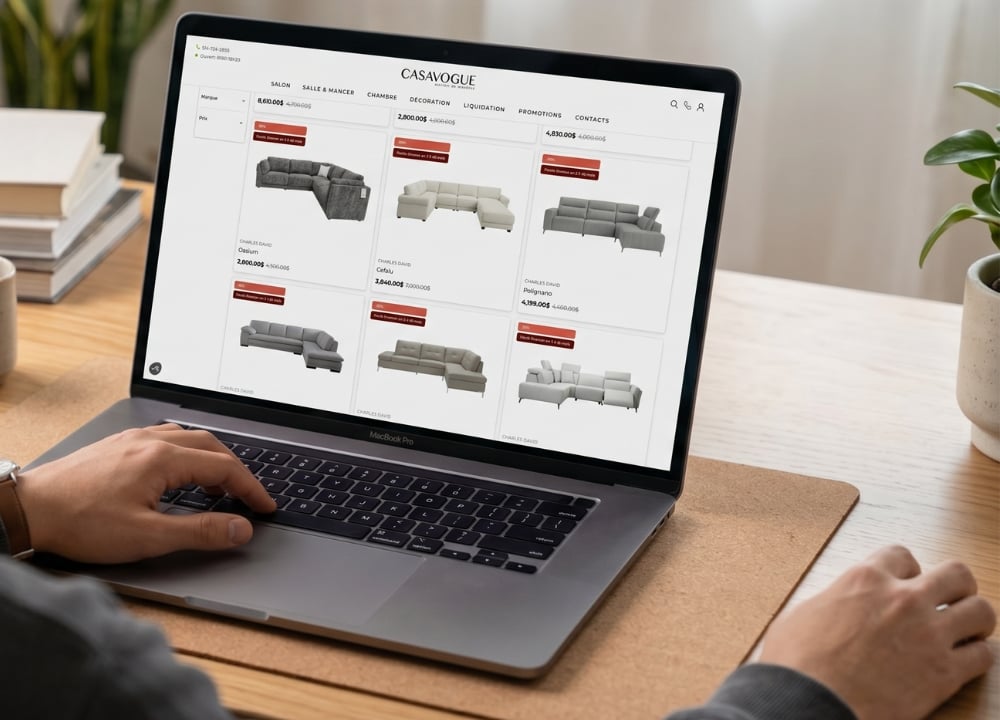
For many homeowners, the furniture selection process begins long before they step into a showroom. Customers often research styles, compare products, and gather inspiration online before making decisions about their living spaces. Recognizing this shift, Casavogue has launched a new website designed to provide a more informative and user-friendly experience while making it easier to explore the company’s extensive furniture collections.
The new platform reflects Casavogue’s ongoing commitment to helping customers make confident and informed decisions when furnishing their homes. With improved navigation, expanded product information, enhanced photography, and direct access to expert guidance, the website serves as a valuable resource throughout the furniture selection process.
Easier Navigation and Expanded Product Selection
The redesigned website offers customers access to a broader selection of furniture across living room, dining room, and bedroom categories. A simplified navigation structure makes it easier to browse collections and locate products that suit different lifestyles, spaces, and design preferences.
Visitors can move through categories more efficiently while discovering new collections and furniture options that may not have been as easy to find previously.
More Detailed Information for Better Decision-Making
One of the most significant enhancements is the depth of information available throughout the site. Product pages now feature more detailed descriptions, specifications, dimensions, and material information, helping customers better understand the characteristics of each piece.
This additional level of detail allows shoppers to evaluate furniture more thoroughly before visiting the showroom, creating a stronger foundation for purchasing decisions.
Direct Access to Personalized Guidance
While the digital experience has expanded significantly, personalized service remains central to the Casavogue philosophy. Throughout the website, customers can connect directly with Casavogue’s team through convenient call-to-action features designed to encourage conversation and collaboration.
Whether discussing room layouts, exploring customization options, or seeking recommendations for a specific space, visitors can easily connect with furniture specialists who understand the importance of finding pieces that align with both practical needs and design goals.
Connecting the Online and In-Store Experience
The new website complements Casavogue’s 38,000-square-foot Montréal showroom, where customers can experience furniture collections in person and explore complete room settings. By allowing visitors to research products, compare options, and review specifications before arriving, the platform helps create a more efficient and informed showroom experience.
Founded in 1972, Casavogue has spent more than five decades helping Montréal homeowners furnish their homes through a combination of curated collections, design expertise, and personalized service. The launch of the new website represents the latest step in that evolution, providing customers with additional tools and resources while maintaining the human guidance that has long defined the company’s approach.
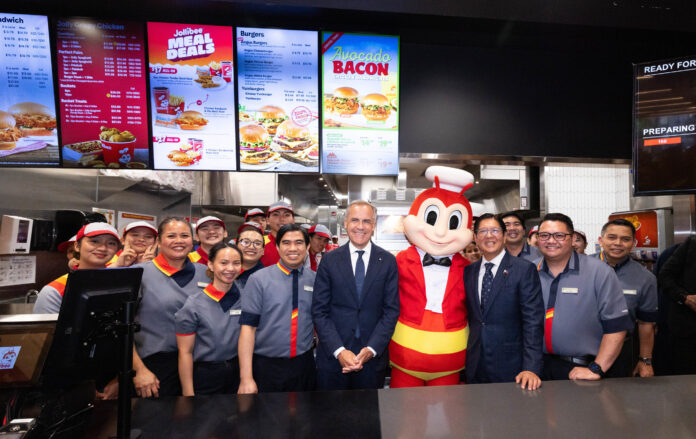
(L-R) Reden Espina, Restaurant Manager; Mark Carney, Prime Minister of Canada; the iconic Jollibee Mascot; Ferdinand Marcos Jr., President of the Republic of the Philippines; Jeffery Santos, Restaurant General Manager; and Jose Anthony Delos Santos, Restaurant General Manager, pose at the counter with the downtown Vancouver Jollibee crew. (Jollibee Photo)
Philippine President Ferdinand Marcos Jr. and Prime Minister Mark Carney visited a Jollibee restaurant in downtown Vancouver recently as the Filipino-founded fast-food chain highlighted its economic ties between Canada and the Philippines and outlined plans to expand its Canadian footprint.
The visit comes as Jollibee approaches its 10th anniversary in Canada and prepares to accelerate growth across the country through its franchising program over the next five years.
The company said the visit recognized Jollibee’s role in bilateral trade between Canada and the Philippines while drawing attention to its expansion strategy in the Canadian market. Jollibee entered Canada in December 2016 with the opening of its first restaurant in Winnipeg and says it intends to continue adding locations nationwide.
Beth Dela Cruz, president of Jollibee North America, said the visit reflected the company’s growth and its relationship with both countries.
“The immense privilege of hosting both President Marcos Jr. and Prime Minister Carney at our downtown Vancouver store, is a truly historic moment for our brand. This visit is a powerful symbol of Jollibee’s place on the global stage. It celebrates the deep bilateral ties between Canada and the Philippines, the vital role of the Filipino-Canadian diaspora in our growth, and the incredible momentum of our brand as we bring our unique, joyful dining experience to more Canadian families,” she said.
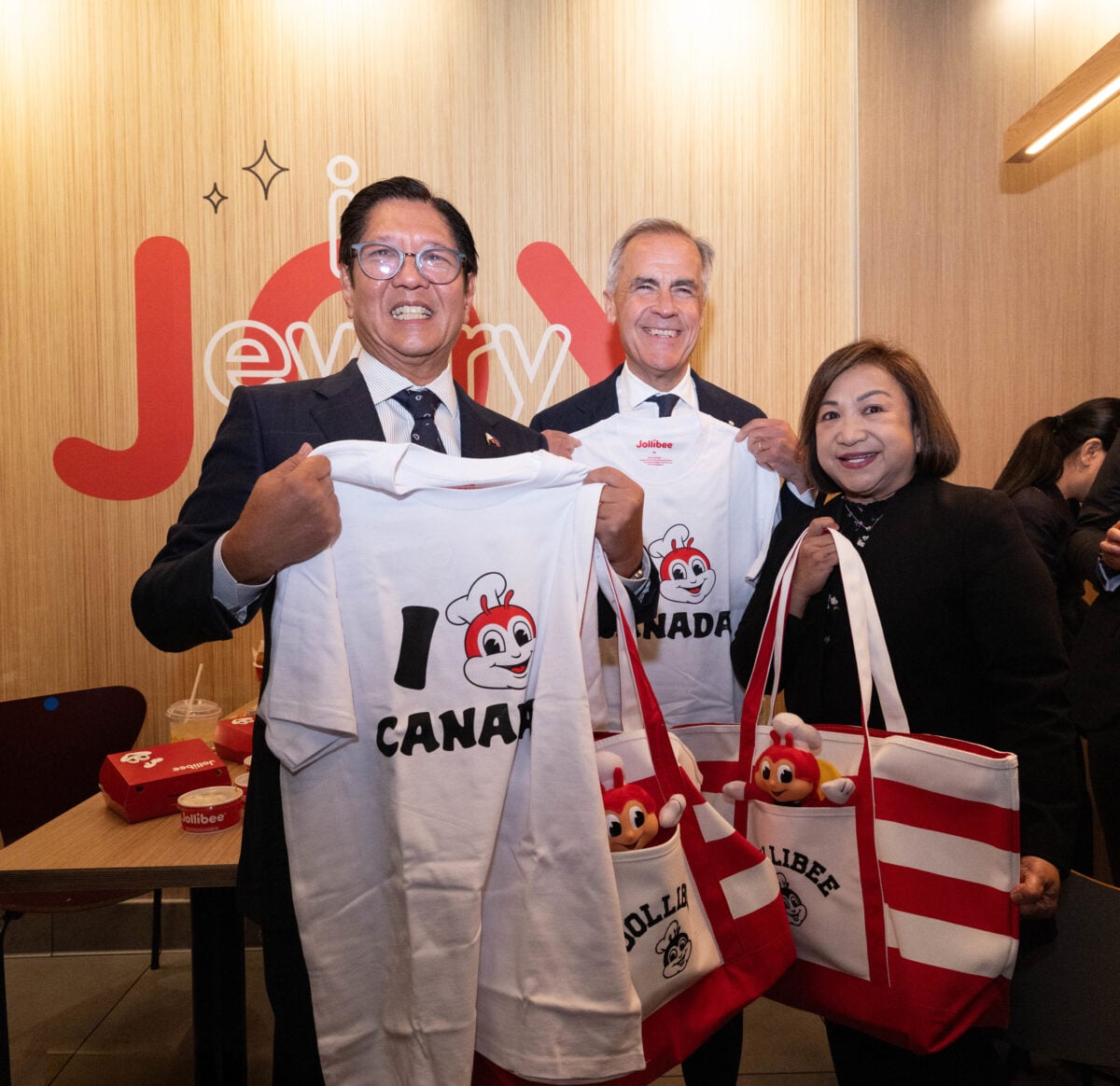
(L-R) Ferdinand Marcos Jr., President of the Republic of the Philippines; Mark Carney, Prime Minister of Canada; and Beth Dela Cruz, President of Jollibee North America, smile as they showcase custom Jollibee commemorative gifts during a historic visit to the flagship Jollibee location in downtown Vancouver. (Jollibee Photo)
Jollibee said its international operations support exports of agricultural products and food manufactured in the Philippines for sale in overseas markets, including Canada. According to the company, products such as Peach Mango Pies, made with Philippine mangoes, and other proprietary ingredients are produced in the Philippines before being exported to Canada.
The company also said its Canadian expansion is supported by its North American franchising platform. It said each new Canadian restaurant represents a local investment and is expected to create between 50 and 60 jobs.
During the Vancouver visit, Marcos and Carney joined Jollibee North America executives and the company’s mascot for commemorative photographs inside the restaurant.
Ferdinand Marcos Jr., President of the Republic of the Philippines (left), and Mark Carney, Prime Minister of Canada (right), share a warm moment before enjoying Jollibee’s world-famous Jolly Crispy Chicken, celebrating the brand’s rapid North American growth. (Jollibee Photo)
The two leaders also participated in a tasting featuring several menu items, including Jolly Crispy Chicken, chicken sandwiches, Peach Mango Pie and Pineapple Quencher. The company said the menu highlighted products connected to its Philippine supply chain.
Jollibee Foods Corp. said it operates more than 10,400 stores and cafés across 33 countries through a portfolio of 20 restaurant brands.
After more than four decades at the same location, Villages Calgary is relocating its retail operation to Inglewood after selling its longtime property, along Crowchild Trail northwest Calgary for $1.1 million, a move driven by declining revenues, falling customer traffic and a strategy aimed at reaching new shoppers.
The non-profit society will provide vacant possession of its existing building on Sept. 30 after the sale to a coffee roaster, while targeting a mid-September opening for its new 1,333-square-foot store on the main street in Inglewood. The organization said the sale closes a chapter that began with its occupancy of the building in 1984 and ownership since 2015.
The relocation represents a significant operational shift for the retailer, which is reducing its physical footprint by roughly half while redesigning its merchandising strategy and relying more heavily on online sales to complement the smaller storefront.
“We’re going to be focusing in-store on product that is appealing to this new demographic. That’s why we’ve hired a designer, because we have to be able to fit into that smaller space. But we do have a web store, so we’ll be able to continue selling other items online.”
Ferguson said the organization wants the new location to present a more curated shopping experience.
“For this space, we want it to be cohesive and balanced and not make the space appear cluttered,” she said.
Accessibility and customer access drive relocation
Linnea Ferguson
The decision to relocate followed several years of surveys involving customers, volunteers and members that identified shortcomings at the existing site.
Ferguson said respondents consistently pointed to accessibility, walkability and volunteer convenience as priorities.
“As you may know, we did a number of surveys of our customers, volunteers, and members over the last few years, because we’re a non-profit society,” she said.
“They identified three key things they felt we were missing in terms of our store. One was accessibility. One was walkability. And the other one was ease for volunteers.”
The new location, she said, addresses those concerns by offering a single-level layout, pedestrian traffic and parking.
The move also reflects changing retail dynamics for the organization.
Ferguson said customer visits and revenue have been trending downward for several years, with traffic worsening after road changes along Crowchild Trail.
“I think that’s the big incentive for moving,” she said. “Revenues have been declining, and our number of customer visits to the store has been declining for quite a long time.”
She said the organization observed a significant reduction in customer traffic following roadway upgrades that altered vehicle access to the area.
“We saw a steep decline when that happened,” she said.
Ferguson said destination businesses nearby appeared less affected by the traffic changes than a gift retailer dependent on browsing customers.
“When you’re in the gift shop business like we are, without that walking traffic, I think we’re sacrificing quite a bit,” she said.
Photo: Villages Calgary
Smaller footprint brings merchandising changes
The reduced retail space will require significant operational adjustments as the organization determines which products remain in-store and which shift primarily to online sales.
Ferguson said the move is also expected to change the customer base.
“I think we’re going to have more people in a younger age bracket,” she said.
The organization expects that demographic shift to influence merchandising decisions while requiring renewed efforts to build awareness of its mission.
“We are going to have to retell our story, because over the years we’ve built up quite a following of people who understand our mission in the northwest and the west side of Calgary,” she said. “They may not be as familiar here.”
She added that events, advertising and marketing will play an important role in introducing the organization to customers in its new neighbourhood.
Photo: Villages Calgary
Property sale marks end of long chapter
The sale of the existing building concludes a lengthy association with the property that stretches back more than four decades.
Ferguson said founder Erna Clippenstein initially operated the organization by selling self-help crafts from church to church before eventually establishing space inside a building owned with her husband.
Villages originally occupied only part of the main floor before gradually expanding throughout the property as other businesses closed and Clippenstein retired.
The organization later invested in maintaining the building, including repainting it in 2023 and completing other upgrades over the years.
Founded as a fair-trade certified retail outlet, Villages Calgary offers products from countries including Rwanda and Vietnam. Roughly 80 per cent of the store’s inventory is certified fair trade.
Originally independent, Villages Calgary later operated under the umbrella of the Mennonite Central Committee (MCC), which provided administrative support including HR policies and payroll. Prior to the COVID-19 pandemic, the MCC shuttered all of its own brick-and-mortar stores, allowing society-owned outlets like Villages Calgary to decide whether to continue independently.
Beauty consumers have never had more choice, yet finding the right product can feel harder than ever. Younger consumers are feeling this most acutely: nearly half of Gen Z say it is harder to make decisions today than it was last year, while 48% say they are buying more products they do not end up liking or using. Faced with an endless stream of recommendations, launches and trends, many shoppers are not lacking options; they are lacking relevance. That is the modern beauty discovery dilemma.
Traditional text-based search often struggles to solve it because beauty is rarely discovered in words alone. People do not always begin with the precise name of a lipstick, nail shade or haircut. More often, they start with a feeling, a finish, a look or an aesthetic they want to recreate. In beauty, inspiration is visual, emotional and highly personal.
Visual search queries continue to increase and are the fastest-growing search feature on our platform. This shift is especially pronounced among Gen Z consumers, who increasingly turn to visual platforms at the start of their journey and make up over half of Pinterest’s user base globally. For them, the process is not simply about finding a product quickly; it is about exploring identity, taste and self-expression. When that experience feels too transactional or generic, decision fatigue soon follows.
For the industry, this presents both a challenge and an opportunity. As digital beauty sales soar into the billions globally, the route from inspiration to purchase has become a decisive moment. Those that can make the experience feel intuitive, inspiring and personal will be far better placed to win attention and build lasting affinity.
A more intuitive path to purchase
Visual search is helping to unlock that opportunity by allowing consumers to begin with what catches their eye: a makeup look, a hairstyle, a nail design or even a packaging aesthetic. From there, they can explore related ideas and products in a way that feels much closer to how inspiration happens in real life.
What makes this so powerful is the growing sophistication of AI. Visual tools can increasingly interpret not just colour and shape, but also texture, tone and style intent. That means recommendations can feel less like a standard product feed and more like a curated journey tailored to the individual.
On Pinterest, for example, the Taste Graph has mapped over 80 billion signals based on what people search, save, Pin and engage with, creating a nuanced understanding of personal style that helps surface suggestions that feel uniquely relevant. Features such as Pinterest Lens and the Pinterest Assistant also help users move from an initial spark of inspiration to more refined exploration, making the experience feel expressive rather than purely transactional.
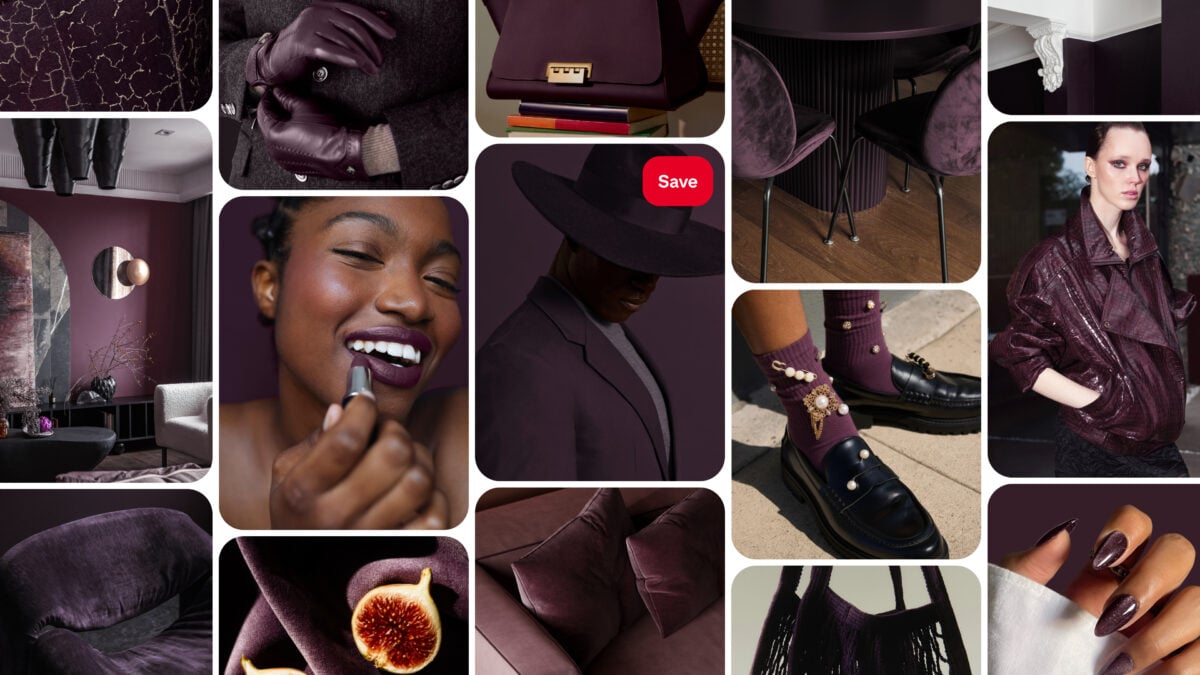
Pinterest photo
Where brands are getting it right
The brands seeing the greatest benefit from this shift are those that understand the path to purchase is rarely linear. Consumers do not always move neatly from need to search to purchase. More often, they browse, save, compare and imagine before they act.
Across the industry, leading beauty companies are already using AI to make the path from inspiration to purchase far more intuitive. The Estée Lauder Companies, for example, is connecting consumer signals through its ConsumerIQ platform, helping its brands better interpret what people are searching for, saving and engaging with. L’Oréalis embedding similar intelligence across its portfolio, including in brands such as SkinCeuticals, where AI is helping surface more precise recommendations based on individual needs and behaviours. In both cases, the emphasis is not simply on efficiency, but on making discovery feel more relevant, seamless and personal.
The future of beauty discovery
For the beauty category, the implications are clear. This is no longer just about answering an explicit search query; it is about showing up early, anticipating intent, supporting exploration and helping consumers find products that reflect who they are and how they want to express themselves.
The companies that will lead in this next chapter are those that truly embrace visual-search, AI-enhanced strategies not simply as a media tactic, but as a way to create more relevant and inspiring consumer experiences. In beauty, where personal expression is everything, the tools and platforms that make inspiration feel creative, precise and personal will shape not only what people buy, but how brands build connections in the first place.
Petsecure and Pet Valu Canada Inc. have announced a multi-year collaboration aimed at offering discounted insurance, retail savings and expanded access to pet care resources for Canadian pet owners.
The arrangement brings together Petsecure, operated under Definity through Petline Insurance Company, and Pet Valu Canada Inc., one of the country’s largest specialty pet retailers. The companies say the initiative is designed to connect retail and insurance services in a more integrated customer experience focused on pet health, everyday supplies and long-term care needs.
At the centre of the collaboration is a set of discounts tied to Pet Valu’s retail network and Petsecure pet health insurance products. Customers shopping across the Pet Valu family of stores will be eligible for savings when purchasing new Petsecure policies, with additional benefits tied to loyalty program participation.
The eligible retail banners include:
Pet Valu
Bosley’s by Pet Valu
Paulmac’s Pets
Total Pet
Tisol
Under the agreement, Pet Valu customers will receive a five per cent discount on a new Petsecure pet health insurance policy. Members of Pet Valu’s Your Rewards program with a completed My Pet Profile will receive an exclusive 10 per cent discount. Existing Petsecure policyholders will also be eligible for unspecified special offers in Pet Valu stores.
The companies say the collaboration is intended to create what they describe as a more connected experience for pet owners, linking everyday retail purchases with longer-term insurance coverage. It is expected to span multiple years, though no financial terms were disclosed.
Daniel Kennedy
“Our goal has always been to support the health and well-being of pets, and this new relationship with Pet Valu is a natural fit,” said Daniel Kennedy, Senior Vice President, and Chief Digital Officer at Definity. “By aligning our strengths, we can offer pet owners a seamless experience that provides both the protection they need and the products they trust, making it easier than ever to be a great pet parent.”
Kennedy’s comments underscore the strategic positioning of the partnership as a combined retail-and-insurance offering, with both companies pointing to improved convenience and coordinated value for customers.
Greg Ramier
From the retail side, Pet Valu described the collaboration as a way to broaden the services and expertise available to its customer base across Canada.
“We are pleased to work with Petsecure to provide devoted pet lovers across Canada with additional expertise and value, so their pets have access to well-rounded care when they need it,” said Greg Ramier, Chief Executive Officer at Pet Valu Canada Inc.. “Like Pet Valu, Petsecure is a trusted Canadian brand, that is committed to supporting pets, and pet parents, through all stages of their lives.”
Petsecure operates as part of Petline Insurance Company, which has focused exclusively on pet insurance in Canada since 1989 and offers multiple product lines under brands including Petsecure and Peppermint Pet Health Insurance. Pet Valu, meanwhile, operates a national network of more than 800 corporate-owned and franchised stores and offers an assortment of pet food, supplies and in-store services across its retail banners.
Petsecure photo
The collaboration comes as both companies look to deepen customer engagement through loyalty programs and cross-channel offerings, linking insurance coverage with in-store and digital retail experiences. The companies say the initiative is structured to provide ongoing value across both purchasing and care decisions for pet owners.
Online clothing purchases are returned more often than any other product category, with an estimated 60 per cent of garments bought on the internet being returned, according to a June 2026 study commissioned by eyewear brand Overnight Glasses.
The research, based on a survey of 1,882 online shoppers, examined which products consumers return most frequently, the reasons for those returns, how quickly shoppers decide to send items back and how often retailers refuse refund requests. The findings come as consumers return nearly US$1 trillion worth of online purchases annually, according to a news release.
Clothing accounted for 38.3 per cent of all reported online returns in the survey, making it the largest return category by a wide margin. The study estimated that 60 per cent of clothing purchased online is returned, with incorrect sizing or poor fit identified as the primary reason. Most clothing returns occur within one to two weeks of delivery.
Among clothing items, T-shirts and tops had the highest estimated return rate at 72 per cent, while maternity clothing was returned about three out of five times because of changing sizing during pregnancy, according to the report.
Footwear ranked second, representing 13.9 per cent of reported returns. The study estimated that 56 per cent of shoes and boots purchased online are returned, largely because of sizing issues. Fashion shoes recorded the highest return rates within the category, while ankle boots and combat boots were also frequently returned because of calf-width mismatches. Retailers accepted about 90 per cent of footwear returns, said Overnight Glasses.
Electronics accounted for 11.5 per cent of reported returns, with an estimated return rate of 26 per cent. Phone cases were identified as the most frequently returned electronic product because customers often selected the wrong model for their devices. Screen protectors and charging accessories also recorded relatively high return rates when buyers ordered incompatible products.
Automotive products represented 5.4 per cent of reported returns, with an estimated return rate of 30 per cent. The study found that incorrect vehicle fit was the leading reason for returns, accounting for most send-backs in the category. Retailers were estimated to refuse 16 per cent of automotive return requests, often when parts showed signs of installation.
Home products made up 3.1 per cent of reported returns and had an estimated return rate of 31 per cent. The report said some returns were linked to products purchased for one-time events, including party decorations and novelty items, contributing to a higher retailer refusal rate than many other categories.
Tima Miroshnichenko photo
The study also identified several other categories with notable return rates. Accessories had an estimated return rate of 34 per cent, while baby and children’s products were estimated at 45 per cent. Beauty and personal care products had a lower estimated return rate of 21 per cent but the highest retailer refusal rate at 37 per cent because opened cosmetic products are often ineligible for return. Watches and collectibles had an estimated return rate of 19 per cent, while hardware and tools were estimated at 22 per cent.
Overall, the report found that clothing, footwear and electronics accounted for the largest share of reported online returns, with product fit, sizing and compatibility emerging as the most common reasons shoppers sent purchases back.
Gidon Sadovsky, chief executive of Overnight Glasses, said inconsistent sizing remains a significant contributor to clothing returns.
“The real problem is sizing. Brands can’t agree on what a medium or size 8 actually means, so shoppers end up ordering three sizes of the same shirt just to find one that fits. That’s not the customer’s fault. Other products have clear standards that work. For example, light bulbs show exact wattage. Tires list exact dimensions. Eyeglasses follow precise prescriptions from your eye doctor, so you know exactly what you’re getting. When measurements are standardized, returns drop.”