Five Canadian consumer brands have teamed up to launch a Canada Day contest that will award five prize packages, each featuring a recreation of a promotional coat unveiled last month along with products and experiences from the participating companies.
The contest, called The Great Canadian Giveaway, brings together Molson Canadian, Canadian Tire, RBC, Sleep Country and Manchu Wok. The companies say the contest follows the debut of The Great Canadian Coat, a custom faux-fur jacket introduced in a music video released in mid-May.
The giveaway offers five prize packages with a stated value of more than $5,000 each. Along with the limited-edition coat, each package includes merchandise and experiences provided by the participating brands.
The prizes include:
Molson Mini Fridge (valued at $500)
Canadian Tire Blackstone 4-Burner LP Gas Portable Griddle (valued at $599)
RBC Concert Pack for two (valued at $700)
Sleep Country Hush ArcTech1 – Queen Size (valued at $2,099)
Manchu Wok Fortune Cookie Plush Toy and gift card (valued at $500)
The Great Canadian Coat (valued at $800)
The companies said the original coat attracted attention after its release and is now being recreated as the centrepiece of the contest.
“When the coat captured Canadians’ attention from coast to coast, the brands knew we had to do something about it,” said Eric Kouri, Marketing Director, Molson TM. “This is so much more than a piece of clothing – it’s a proud display of Canadian pride that we wanted to share with consumers nationwide. This unexpected collab is a great reminder of what makes Canada so special: our shared experiences, strong sense of community and the moments that bring us together, especially for Canada Day.”
The contest is open until July 10. According to the announcement, entrants must view the contest post on Instagram, follow the five participating brands, tag a friend in the comments and share who they would spend the “ultimate Canadian weekend” with.
The contest is open to Canadian residents who are of legal drinking age in their province or territory.
A Montreal-based public policy think tank says the federal government’s decision to impose a new tariff on imported canned vegetables will increase costs for consumers at a time when food prices continue to outpace overall inflation.
The Montreal Economic Institute (MEI) made the comments after the release of Statistics Canada’s latest consumer price data, arguing that the new tariff could place additional financial pressure on households, particularly those already facing higher grocery bills.
According to Statistics Canada, the Consumer Price Index rose 3.2 per cent over the past 12 months. Over the same period, prices for food purchased from stores increased 4.3 per cent, while prices for canned vegetables and other vegetable-based products climbed 4.6 per cent.
The comments come after the federal government announced recently it would impose a 10 per cent tariff on imported canned vegetables.
Renaud Brossard
“The federal government cannot on the one hand claim to want to address the high cost of living while on the other hand imposing new taxes on the food Canadians consume,” said Renaud Brossard, vice president of communications at the MEI. “It is unfortunately Canadian families, and in particular low-income families, who will pay more because of this decision out of Ottawa.”
The MEI said the latest tariff will add to concerns about food affordability as grocery prices continue to rise faster than the overall rate of inflation.
The MEI said the federal measure applies to food products and maintained that tariffs increase costs for domestic consumers.
The MEI is an independent public policy think tank with offices in Montreal, Ottawa and Calgary. It says its work includes research, media commentary and policy advice focused on economic and public policy issues.
Welcome to the Daily Synopsis by Retail Insider. We published 7 articles on Monday offering fresh insights into Canadian retail developments across several sectors.
Retail Insider also published economic and sectoral reports including the Bank of Canada’s Q2 update outlining weaker sentiment amidst rising inflation expectations. A new study highlighted how supply management adds hundreds of dollars to Canadian grocery bills each year. Canada Gold extended its reach by opening a Manitoba store and partnering with Winnipeg Blue Bombers. The pharmacy sector’s economic contribution was detailed, showing $22.9 billion in GDP and support for over 273,000 jobs in 2024.
North American retail is facing a tough reality check. Inflation, expensive logistics, and unpredictable consumer habits are squeezing margins tightly. In this environment, merchants simply cannot let money leak through their checkout systems. Digital sales are up, but so is online theft. To save their margins, practical retailers are ditching rigid, older setups. They are shifting to flexible payment orchestration to cut processing friction and block fake chargebacks before the damage hits their balance sheets.
The Macroeconomic Strain and Cross-Border Friction
Selling goods between major Canadian hubs like Ontario and the biggest U.S. markets brings in great revenue, but the financial math is getting harder. High interest rates and constant currency swings make cross-border sales riskier and more expensive. Retailers working across these borders need their payment systems to talk to each other without errors. Older setups fail to bridge the gap between different national banking networks. This weakness leads to high decline rates for honest international buyers. A rigid payment setup stops growth and forces brands to miss out on easy revenue.
Beyond regional conversion friction, the rise of e-commerce has triggered an alarming surge in dispute fraud. Industry research shows that first-party misuse, often called friendly fraud, can represent a major share of fraud-related chargebacks for eCommerce merchants, with some studies placing the impact as high as 60% to 80% of fraud losses. This practice creates massive hidden balance-sheet costs for retailers, who face heavy administrative fees alongside the loss of physical inventory. To survive in this climate, online brands require automated chargeback protection that serves as a data-driven defense mechanism, allowing companies to dispute false claims with clear evidence and preserve their hard-earned capital.
The Hidden Costs and Security Vulnerabilities of Legacy Frameworks
Too many established brands still rely on disconnected, older payment setups. These systems were built for a simpler time, so they struggle with the speed of modern online sales. They easily break or slow down during holiday shopping surges when checkout traffic peaks. Because these legacy frameworks process data in isolated silos, they cannot check for risks in real time. Retailers end up waiting hours or days for batch reports just to spot a fraudulent order that already went through. This delay results in higher baseline interchange fees and endless security alerts.
Furthermore, maintaining compliance within these outdated setups drains internal IT resources. The heavy burden of EMV certification for point-of-sale hardware and continuous web compliance updates frequently delays infrastructure upgrades for months at a time. While corporate teams navigate these bureaucratic technical processes, their active payment channels remain exposed to evolving fraud tactics.
Outdated e-commerce merchant services create distinct security gaps that modern malicious actors exploit regularly, particularly in the following infrastructure areas:
Unencrypted transaction data pathways running between checkout pages and secondary third-party APIs.
Absence of smart, risk-based multi-factor client verification checks during high-value online transactions.
Delayed software patch cycles that leave known gateway system vulnerabilities open for extended periods.
Fragmented transaction logs that prevent security departments from accurately auditing network breaches.
When a retail brand fails to address these fundamental system loopholes, it practically invites persistent fraud networks to target its checkout flow. Securing a modern storefront requires absolute infrastructure oversight, turning the payment gateway from a passive utility into an active line of defense.
The Evolution to Unified Transaction Infrastructure
The modern market response to these systemic security threats is a wholesale shift toward unified payment processing infrastructure. Enterprises are reducing the need to deal with several disjointed payment gateways, localized plugins, and third-party fraud tools, and are shifting to a single transaction layer. The structural change eases the software engineering by reducing the operational overheads, and allows all transactional data to be collected from around the world and stored in one analytical dashboard. When all the functions are in one place, a company will have the capability of identifying complex fraud patterns which may otherwise have been undetected in a decentralized setting.
Smart software automation is proving to be the most effective weapon against modern payment exploitation. For payment technology providers such as RapidCents, the shift is not only about processing transactions, but about giving retailers a more connected layer for authorization, fraud signals, tokenization, reporting, and dispute evidence. This type of API-driven infrastructure helps merchants manage checkout performance and chargeback exposure without adding unnecessary friction for legitimate buyers. By treating payment systems as dynamic software modules rather than rigid payment pipes, analytical platforms allow brands to adapt to real-time threats without interrupting the buyer’s journey.
These flexible frameworks form the core of effective North American retail payment solutions, delivering several critical advantages to scaling businesses:
Immediate evaluation of consumer risk profiles through behavioral data analysis at checkout.
Advanced tokenization of sensitive cardholder details to eliminate data breach liabilities.
Dynamic transaction routing to automatically bypass localized or regional processor outages.
Automated dispute resolution systems that instantly compile and submit evidence to issuing banks.
When orchestration, tokenization, fraud screening, and richer authorization data work together, retailers can improve approval quality while reducing unnecessary declines. The result is a stronger balance between fraud prevention and customer conversion. This data highlights that robust security does not have to ruin the customer experience; instead, smart orchestration keeps payment processing fast, clean, and highly secure.
Outlook
Fragmented payment stacks have evolved from minor IT headaches into direct threats to a company’s bottom line. To defend their margins against cross-border volatility, unpredictable chargebacks, and aggressive compliance audits, North American retailers must transition to automated, interoperable transaction layers.
Old software shortcuts no longer work in a market where checkout speed and data security dictate brand loyalty. Businesses that treat payment engineering as a core corporate strategy will insulate their revenue from ongoing fraud waves. Conversely, brands that stick with isolated legacy setups will watch their quarterly profits erode through avoidable network penalties and operational fees. Modern digital commerce simply moves too fast to rely on outdated financial infrastructure.
What Is Payment Orchestration for Retailers?
Payment orchestration is a unified transaction layer that connects gateways, processors, fraud tools, payment methods, tokenization, reporting, and dispute workflows. For retailers, it helps route transactions more intelligently, reduce failed payments, centralize fraud data, and improve checkout reliability across online, in-store, and cross-border sales channels.
Sales outlooks have softened slightly, reflecting a slowdown in business and consumer spending associated with rising fuel-related costs and heightened geopolitical uncertainty in the Middle East.
Firms’ export outlooks have improved. Fewer firms said trade uncertainty and hesitancy among US customers are constraining exports, and more firms reported strong demand for commodity exports.
Most firms did not report binding capacity constraints or labour shortages. Reports of difficulties sourcing critical inputs increased this quarter, but these were generally not viewed as limiting firms’ ability to meet demand.
Firms’ investment intentions remain strong. Soft demand and lingering uncertainty continue to weigh on investment plans for some, while elevated commodity prices are supporting plans for others. In the oil sector, higher oil prices are prompting producers to increase both production and investment. Firms’ employment intentions are weaker than the historical average.
The share of firms expecting their input and selling prices to increase rose markedly, with expected price increases often linked to high global oil prices.
Expectations for elevated oil prices have driven an increase in firms’ inflation expectations relative to recent quarters. However, most recently, inflation expectations have declined, with the lowest expectations of the quarter recorded in the period after the signing in mid-June of the interim agreement between the United States and Iran to end the war in the Middle East.
A slightly larger share of consumers than in the previous quarter expect inflation to be above 3% over the next 12 months. Moreover, two- and five-year-ahead inflation expectations edged up. While tariffs were still the most frequently cited driver of inflation, mentions of energy prices rose sharply from the previous quarter.
Concerns about high prices and economic uncertainty are still holding back consumer spending plans. Spending expectations are weaker among households that believe the war in the Middle East will significantly raise inflation. These households are more likely than others to substitute for cheaper essentials, curtail discretionary spending and drive less.
Consumers’ perceptions of the labour market improved modestly from their low levels in the previous quarter. This improvement reflected a decline in the perceived risk of losing a job, particularly among workers in sectors more exposed to trade.
Maria Solovieva
“Overall, both business and consumer sentiment remained subdued in Q2. However, as with the Q1 surveys, the timing of the data collection complicates the interpretation of the results. Both surveys were completed before the de-escalation of tensions between the U.S. and Iran and the subsequent decline in oil prices. As a result, they likely overstate the persistence of the recent energy-price shock. With oil prices having since retraced much of their earlier increase, sentiment should gradually resume its improving trend over the second half of the year. The most encouraging nugget from the BOS was that firms’ investment intentions remained elevated, despite the uncertain backdrop,” said Maria Solovieiva,, Economist, TD.
“From the Bank of Canada’s perspective, inflation expectations remain the key takeaway. The rise in short-term inflation expectations was unsurprising given the temporary increase in gasoline prices. Longer-term business inflation expectations remained well anchored, while longer-term consumer inflation expectations edged higher but remained below their levels a year ago. Taken together, the surveys suggest that the recent energy-price shock is unlikely to generate persistent inflationary pressures, reinforcing the case for the Bank to remain on hold at next week’s policy meeting.”
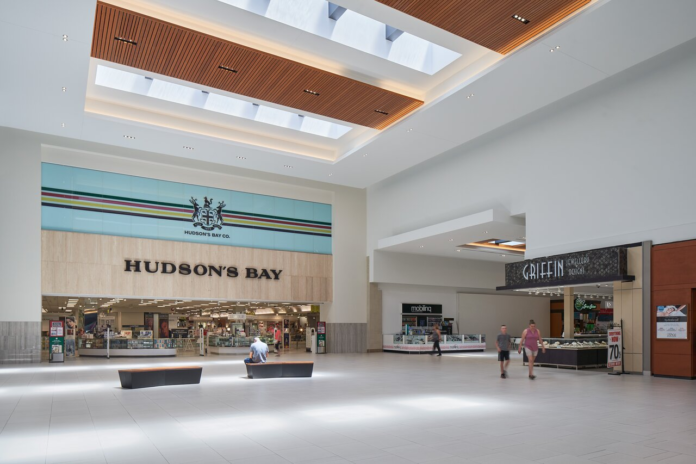
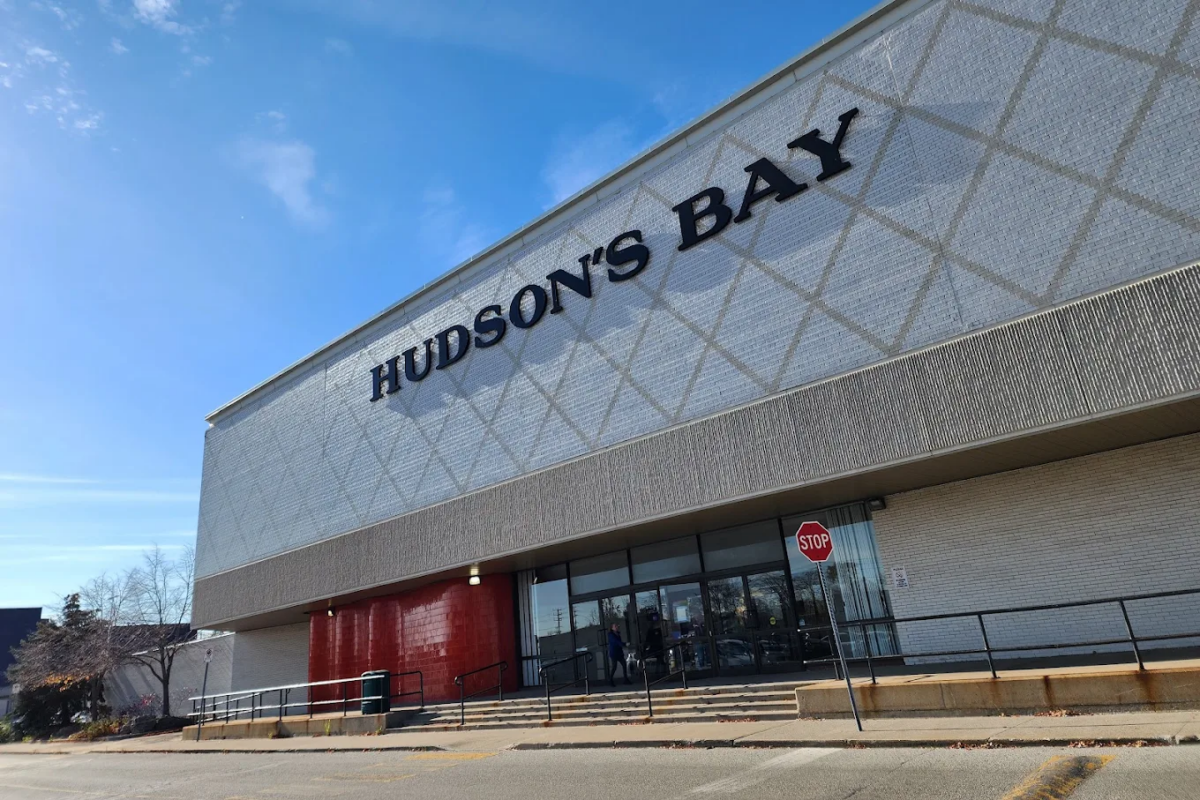
Former Hudson's Bay store at Devonshire Mall in Windsor, ON. Photo: TripAdvisor
More than 50 years ago, Simpsons unveiled a new department store at Devonshire Mall in Windsor that it described as “one of the most beautiful stores in North America.” The three-level store even featured “The Room,” the retailer’s celebrated designer fashion department, reflecting the company’s high expectations for the Windsor market.
At the time, it was considered one of the retailer’s finest new stores and a symbol of the continued growth of Canada’s regional shopping centres.
Today, the building that later became Hudson’s Bay is headed for demolition.
Primaris Real Estate Investment Trust, which owns Devonshire Mall, recently disclosed that it closed on the acquisition of the adjoining vacant Hudson’s Bay property for $4.5 million on June 5, 2026, and plans to demolish the building and create a new south entrance to the shopping centre.
The decision marks the end of a building that traced the entire arc of Canada’s department store industry, from the optimism of the 1970s expansion era to the recent collapse of Hudson’s Bay and the reinvention of regional shopping centres.
Simpsons advertisement in the Windsor Star, 1974. Image via Reddit
A Store That Began as Simpsons
The three-level department store opened on September 19, 1974, as a standalone Simpsons location during a major expansion of Devonshire Mall. In its annual report that year, the company highlighted the Windsor store as one of its premier new projects, underscoring both the importance of the development and its confidence in the Windsor market.
The Windsor store also featured “The Room,” Simpsons’ celebrated women’s designer fashion department. An August 1974 advertisement promoting the new store invited shoppers to discover fashions from “renowned designers in many lands,” underscoring the upscale ambitions of the new location and its importance within the chain.
At the time, department stores dominated Canadian retailing and regional shopping centres were anchored by large, multi-level merchants that offered everything from fashion and cosmetics to furniture and housewares.
Devonshire Mall occupied a particularly interesting place in Canadian retail history. The shopping centre originally opened in 1970 with a Simpsons-Sears anchor, which had already been rebranded to Sears by August 1973. When the standalone Simpsons store opened in September 1974, the mall was home to both a Sears department store and a separate Simpsons location — two retailers that shared common roots but operated under different banners.
Simpsons advertisement in the Windsor Star, 1974, mentioning the department store’s new restaurant inspired by The Arcadian Court in Toronto. Image via Reddit
From Simpsons to The Bay and Hudson’s Bay
Hudson’s Bay Company acquired Simpsons in 1978 but retained the well-known banner in certain markets for years afterward.
In Windsor, however, the Simpsons name disappeared earlier than many Canadians may remember. The Devonshire Mall location was among the stores outside Toronto and Montreal that were converted to The Bay on August 1, 1986, as Hudson’s Bay Company began consolidating its department store operations nationally.
The store would later become Hudson’s Bay in 2013, when the retailer adopted its historic name across the chain.
By the time the store closed during Hudson’s Bay’s liquidation in June 2025, the building had spent more than half a century in continuous department store use.
Simpsons advertisement in the Windsor Star, 1974. The Room was an upscale women’s fashion department featuring some of the world’s leading luxury labels at the time. Image via Reddit
The Store That Almost Had a Second Life
Billionaire Entrepreneur Ruby Liu initially considered the former Hudson’s Bay property at Devonshire Mall as part of her proposed network of nearly 30 department stores across Canada.
Retail Insider was shown documentation in the spring of 2025 that included the Windsor property among prospective locations under consideration.
As Liu refined her plans, however, the Devonshire site was ruled out relatively early.
Retail Insider also understands that Liu examined several other former Hudson’s Bay properties that had been owned through the retailer’s real estate joint venture with RioCan, including the former stores at Yorkdale Shopping Centre, Scarborough Town Centre and Square One Shopping Centre. Plans to open Ruby Liu stores in these malls were halted in the summer of 2025 amid a court battle for other mall leases.
The Windsor location ultimately never advanced beyond the evaluation stage.
A New Chapter for Devonshire Mall
Unlike many former department store spaces that are already controlled by their shopping centre owners, the Devonshire Mall Hudson’s Bay building was separately owned. Primaris only gained control of the property after completing its $4.5 million acquisition in June 2026, paving the way for the planned demolition and redevelopment.
The demolition of the former Hudson’s Bay building follows the removal of Devonshire Mall’s former Sears store, which was redeveloped with a new entrance and reconfigured retail space. The shopping centre has also explored longer-term opportunities that could include additional retail, entertainment, residential and hospitality uses.
Former Hudson’s Bay store at Devonshire Mall in Windsor, ON. Photo: Ben Schuman
By acquiring the former Hudson’s Bay property, Primaris gains full control of one of the mall’s most significant redevelopment sites and the flexibility to reshape the southern portion of the shopping centre.
When the former Hudson’s Bay building comes down, Windsor will lose more than a vacant department store.
The city will lose one of the last physical reminders of an era when Canadian malls were defined by iconic department store chains such as Simpsons, Sears and Hudson’s Bay — retailers that once shaped the country’s shopping habits and helped define the regional shopping centre itself.
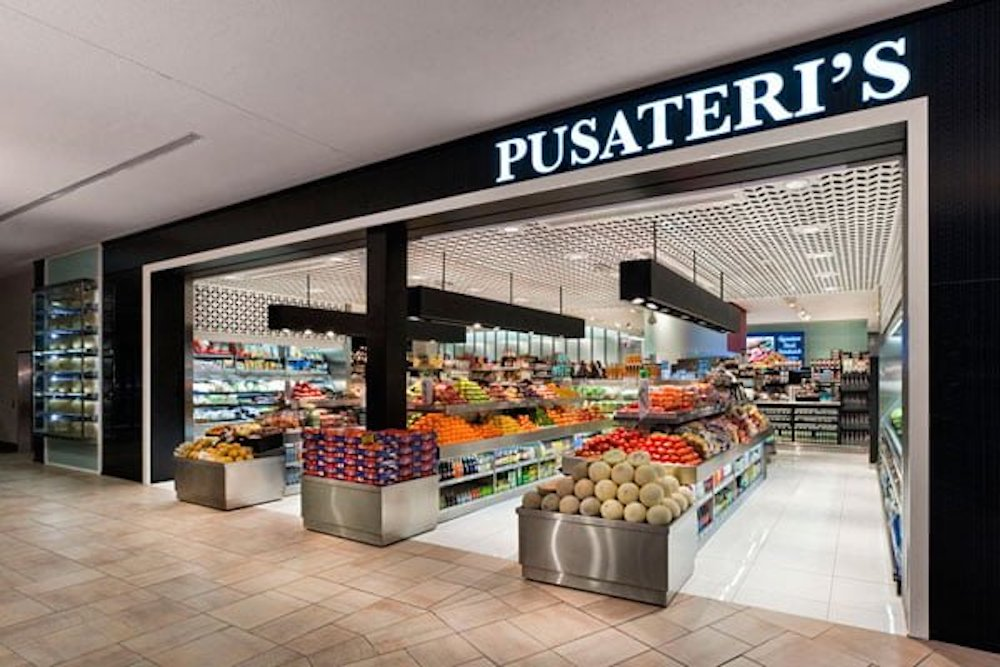
Bayview Village in Toronto, showing the former Pusateri's store. Photo: QuadReal
McEwan Fine Foods will open a 9,326-square-foot gourmet grocery store at Bayview Village Shopping Centre in Toronto in 2027, taking over the former Pusateri’s Fine Foods space as the property advances a broader transformation under QuadReal Property Group.
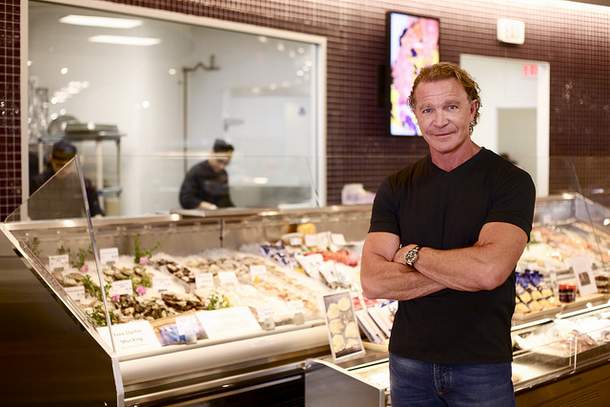
Mark McEwan
The new location will bring one of the Greater Toronto Area’s best-known chef-led food retail concepts into a prominent grocery space at the centre. McEwan Fine Foods will offer restaurant-quality meals alongside produce, meats, seafood, bakery, deli and cheese, floral, gifting and other specialty departments.
Several new food experiences are also planned, including a made-to-order sandwich and salad counter, an expanded gourmet international hot table, rotating seasonal features and an enhanced Japanese offering with a dedicated Omakase-to-Go counter.
Mark McEwan, President and CEO of The McEwan Group, told Retail Insider that the location reflects where he sees the McEwan Fine Foods business heading.
“Bayview Village has always been a location we admired,” McEwan said. “Situated at one of Toronto’s most accessible intersections, just off Highway 401, it has evolved into one of the city’s premier shopping destinations, serving a community that appreciates exceptional food, quality, craftsmanship, and elevated service.”
“For us, this was about much more than opening another grocery store,” he added. “It was an opportunity to invest in a location that reflects the future of the McEwan Fine Foods brand.”
Replacing the Former Pusateri’s Space
The store will occupy space formerly home to Pusateri’s Fine Foods, which unexpectedly closed its Bayview Village location in August 2024. Retail Insider reported at the time that the abrupt closure caught shoppers off guard and that the store had previously been considered one of Pusateri’s leading locations by sales. Two days later, Retail Insider reported on bankruptcy proceedings involving parts of the business amid a broader wave of closures.
For Bayview Village, securing another premium food operator for the space was a deliberate leasing decision.
Carrie DeVries, Senior Vice President, Retail Leasing at QuadReal Property Group, told Retail Insider that the location is one of the centre’s most important high-frequency spaces.
“It was a very intentional decision,” DeVries said of replacing the former grocery store with another premium food concept. “This is one of the centre’s highest-performing, highest-frequency anchor spaces, and we know our grocery offering is something our community truly values.”
She said the combination of premium grocery and prepared meals also fits Bayview Village’s broader positioning.
“A premium grocer, coupled with an exceptional prepared gourmet meal offering, reinforces the idea that luxury at Bayview Village is part of everyday life, not something reserved solely for special occasions.”
DeVries said several high-quality operators expressed interest in the space, and McEwan’s proposition was exceptional.
“There was strong interest from several high-quality operators, which reflects the strength of the Bayview Village brand and the level of demand we continue to see for the centre,” she said. “However, McEwan stood out early in the process.”
She pointed to the brand’s reputation under Mark McEwan, its chef-driven model and its established following across the GTA as factors in the decision.
Brandon Gorman, Executive Vice President and Broker at JLL Canada, represented McEwan in the lease deal.
Former Pusateri’s grocery store at Bayview Village in Toronto. Photo: Pusateri’s Fine Foods
An Evolution of the McEwan Format
McEwan said the Bayview Village store is being designed as an evolution of the company’s existing grocery formats, drawing from both its flagship at Shops at Don Mills and its urban express concept at Toronto’s TD Centre.
“Bayview Village has been designed as a thoughtful evolution of our existing stores, bringing together the very best elements of our flagship location at Shops at Don Mills and our urban express concept at TD Centre, while introducing several exciting new experiences designed around today’s customer,” he said.
A major focus will be chef-driven prepared food made fresh throughout the day.
The new sandwich and salad counter will offer made-to-order meals using premium ingredients, while the expanded international hot table will draw on global flavours. Seasonal daily features are intended to create variety for repeat customers, and the dedicated Omakase-to-Go counter will expand the brand’s Japanese offering.
Former McEwans’s at Yonge and Bloor in Toronto with Fabrica pizza, photo: McEwan
“Every detail has been designed around how people shop today, whether they’re picking up lunch, planning dinner, entertaining guests, or looking for restaurant-quality meals to enjoy at home,” McEwan said.
He said prepared foods have been central to McEwan Fine Foods from the beginning, reflecting his belief that customers should be able to enjoy restaurant-quality meals outside a restaurant without compromising on taste or quality.
“As customers increasingly look for exceptional food that fits seamlessly into their busy lifestyles, our chef-driven prepared foods have become one of the most important areas of our business,” he said.
McEwan said Bayview Village will also provide a platform to introduce and refine concepts that could later influence the company’s other locations.
“It gives us the opportunity to introduce new culinary concepts, refine our offerings, and create innovative products and experiences that can ultimately be shared across every McEwan Fine Foods location,” he said.
Updated renovatons to Bayview Village in Toronto. Image supplied
Part of a Broader Bayview Village Transformation
The McEwan opening comes during a significant period of change at Bayview Village.
QuadReal is advancing a multi-year transformation of the property as part of a broader 22-acre master-planned mixed-use community. The longer-term vision brings together retail, dining, residential uses and thoughtfully designed public spaces, while the shopping centre itself is nearing completion of a major interior renovation.
DeVries said gourmet grocery is a key part of the strategy because it gives customers another reason to incorporate Bayview Village into their regular routines.
“Gourmet grocery is a key pillar of our long-term strategy as it reinforces that Bayview Village is not only a destination for fashion, dining, and wellness, but also a place that our guests naturally incorporate into their everyday routines,” she said.
“As our broader masterplan continues to take shape, it reinforces our vision of a complete lifestyle destination where retail, dining, residential, and thoughtfully designed public spaces come together.”
McEwan Fine Foods, she said, is closely aligned with that direction.
“With the near completion of our interior transformation and the continued evolution of our 22-acre masterplan, we are creating a destination defined by curated luxury, exceptional design, and everyday livability,” DeVries said. “Bayview Village is evolving beyond a traditional shopping centre into a fully integrated lifestyle district.”
The McEwan announcement follows other leasing activity at the centre. Canadian outdoor and lifestyle brand Tilley has opened at Bayview Village, while HANK., a new multi-brand premium menswear concept, is also joining the tenant mix. The centre’s major interior renovation is expected to conclude later in 2026.
McEwan Fine Foods at CF Shops at Don Mills in Toronto. Photo: OpenTable
A Customer Base Aligned With the Brand
McEwan said the surrounding community was a major factor in the decision to open at Bayview Village.
“The Bayview Village customer shares many of the values that have defined McEwan Fine Foods,” he said. “They appreciate quality, authenticity, convenience, and memorable food experiences.”
He said the store is intended to serve a range of occasions, from everyday grocery shopping and prepared meals to specialty products and entertaining.
“For many, Bayview Village will become a neighbourhood destination for everyday shopping, while others will discover the McEwan brand for the first time,” McEwan said. “Our goal is the same for every guest to make outstanding food more enjoyable, more approachable and more accessible.”
That neighbourhood role is particularly relevant as Bayview Village’s broader mixed-use plan continues to take shape, adding a stronger residential dimension to a property already positioned around premium retail, dining and services.
McEwan Leaves Door Open to Further Growth
The Bayview Village store also offers a window into the future direction of McEwan Fine Foods.
McEwan said the immediate priority is delivering the new location, while the company continues to evaluate opportunities that align with its brand and long-term vision.
“Bayview Village represents an important milestone in the continued growth of McEwan Fine Foods, and we believe there are opportunities to bring the McEwan experience to other communities that share our appreciation for exceptional food, quality, and hospitality,” he said.
He stopped short of announcing additional stores, but said the company would consider opportunities across the GTA and beyond.
“Our philosophy has always been to grow with purpose rather than pace,” McEwan said. “Every new location must strengthen the brand, complement the community it serves, and deliver the same exceptional standards our customers have come to expect.”
The 2027 opening will give The McEwan Group a significant new platform to develop its chef-led grocery model, while providing QuadReal with a premium food anchor for one of the most important spaces in Bayview Village’s evolving retail mix.
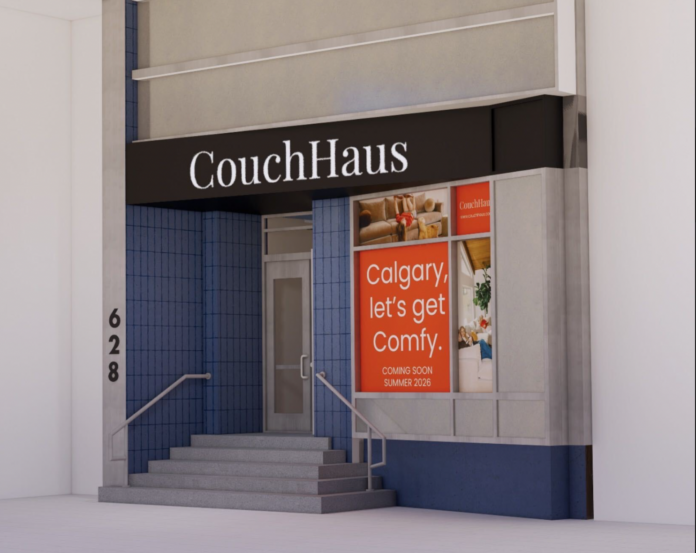
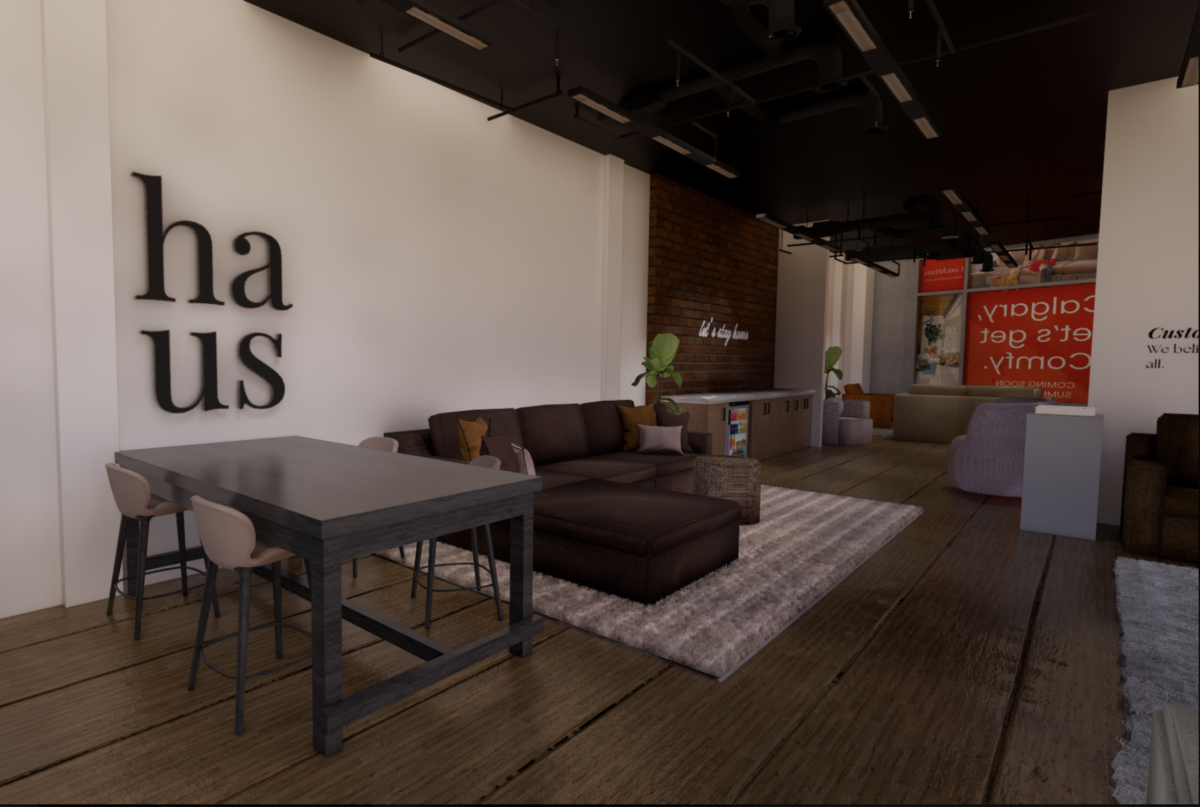
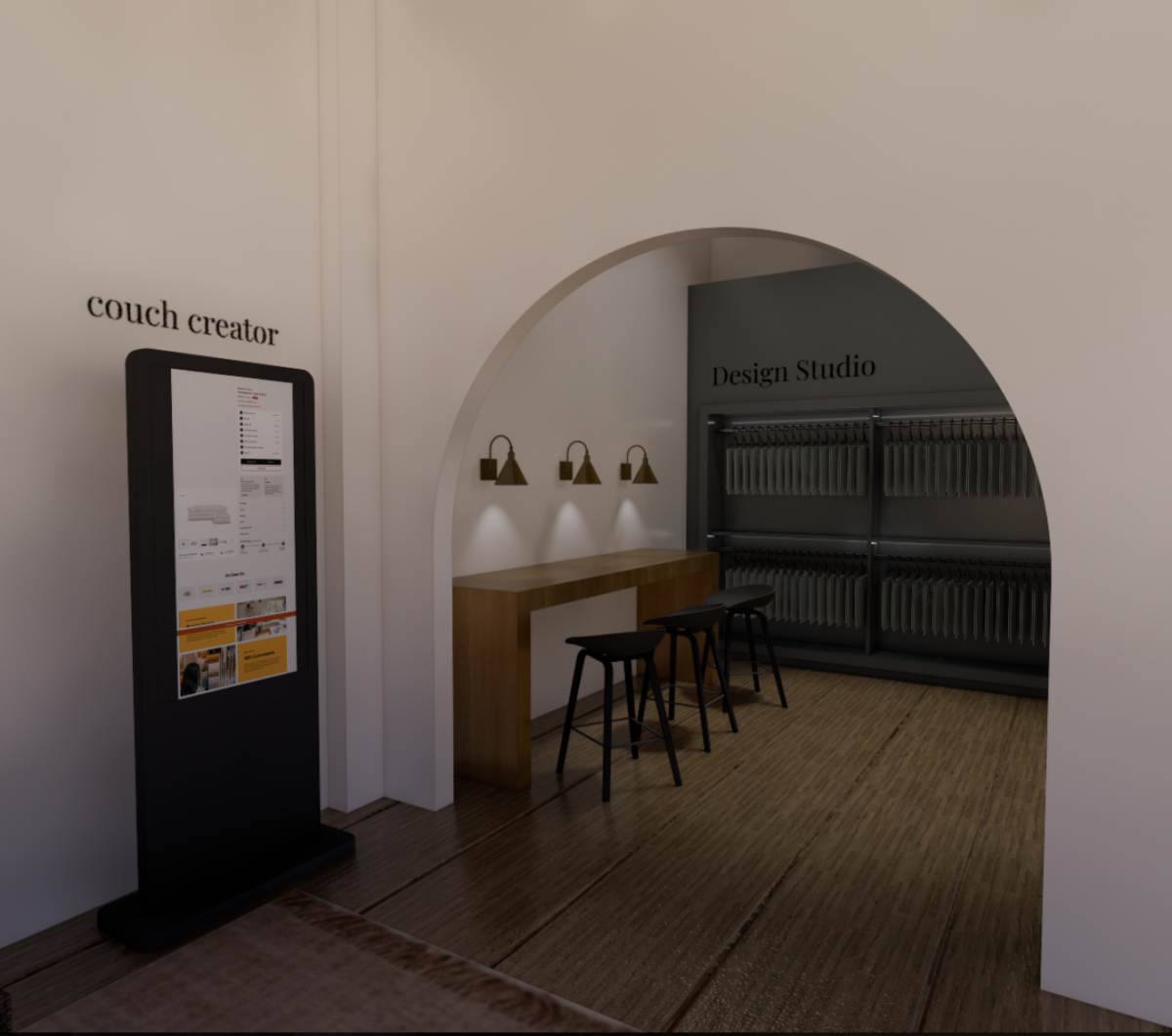
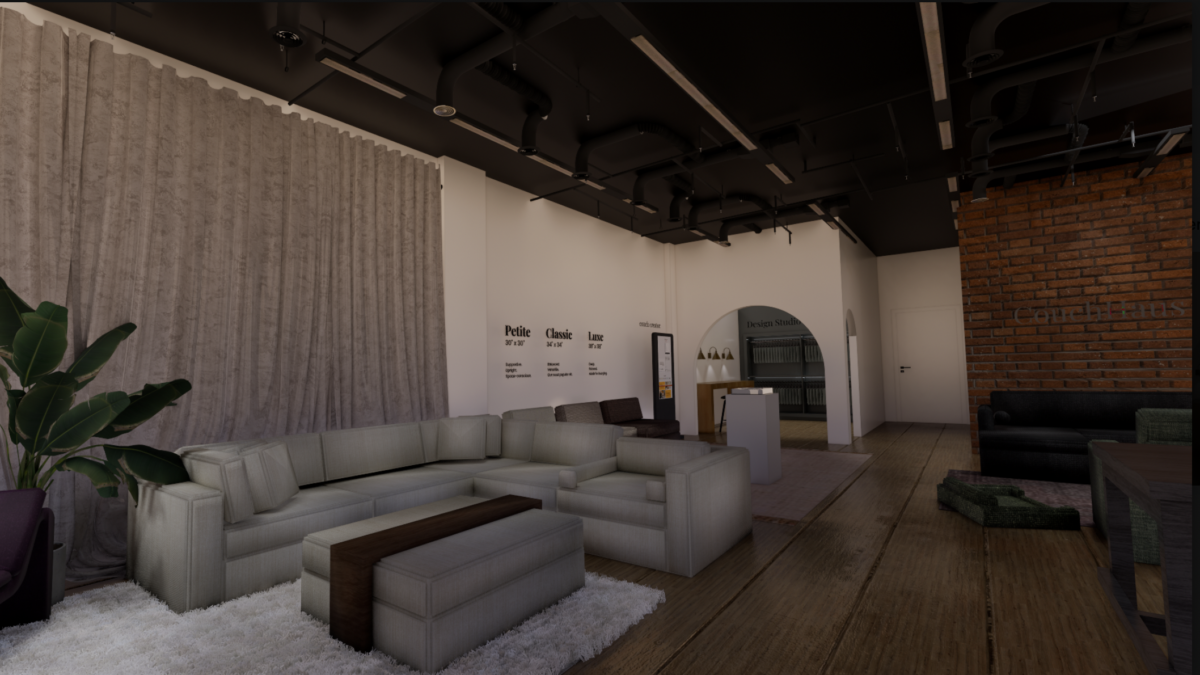
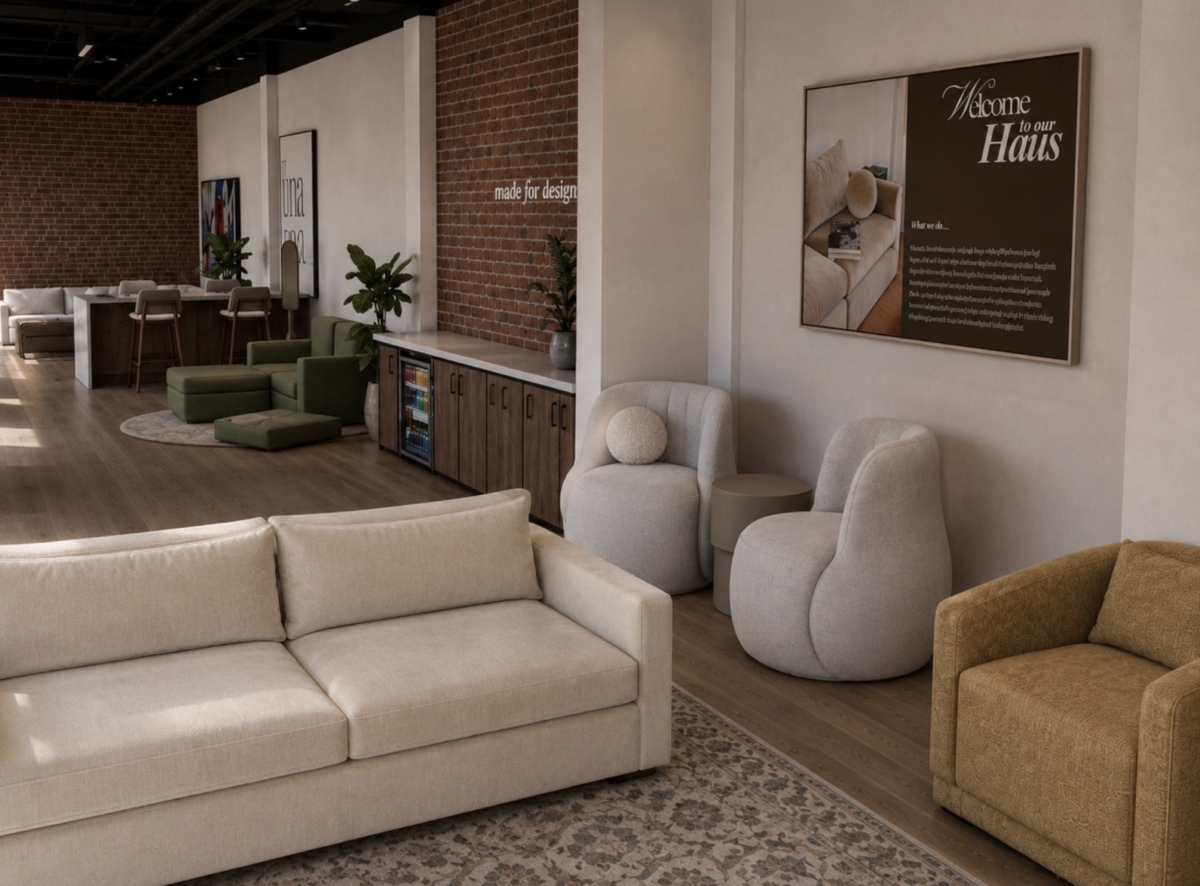
Furniture retailer CouchHaus, the Canadian custom modular sofa brand known for its made-to-order designs, washable slipcovers, and comfort-first approach, is expanding beyond its Vancouver base with a new Calgary showroom opening next week as the company looks to build a broader national retail presence in response to growing customer demand across Canada.
Co-founders Harrison Gordon and Paige Sandher said the Calgary location is expected to soft open in mid-July, with an official opening planned for early August. The move comes as the company also negotiates a lease for a Toronto location it hopes to open in the fourth quarter.
The expansion reflects a shift from operating a single flagship showroom to establishing a physical presence in markets where the company says online demand has already demonstrated customer interest.
The Calgary showroom will be located in the city’s Beltline district at the corner of 11th Avenue and 6th Street S.W.. At roughly 2,150 square feet, it will be slightly larger than the company’s approximately 1,600-square-foot flagship showroom in Vancouver’s South Granville neighbourhood.
The Calgary showroom will soft open from July 10–15 with appointments and walk-ins available.
“Calgary has consistently been one of our strongest markets, so opening a showroom here felt like the natural next step,” said Sandher. “As we continue to grow across Canada, our retail roadmap is focused on bringing the CouchHaus experience closer to the communities already showing strong demand for our product, paired with our design consults support in the custom journey.”
“The Calgary showroom is an important milestone in our Canadian expansion,” said Gordon. “With Vancouver established and Calgary opening this summer, we’re continuing to explore opportunities in Eastern Canada as we build the next phase of CouchHaus retail.”
Harrison Gordon
Gordon said the Calgary store also represents an evolution in how the company approaches retail development.
“Vancouver was more of a DIY project, and this time we’ve hired general contractors and are making it look a lot more professional,” he said.
The company’s first permanent retail location opened in April 2024 in Vancouver. It later tested demand in Ontario through a three-month pop-up store at Stackt Market in Toronto between November 2024 and January 2025.
Paige Sandher
Online data shaped expansion plans
Sandher said customer data played a central role in selecting Calgary for the company’s next permanent location.
“There are a couple of reasons,” Gordon said. “One, the data supports it.”
He said online orders, website traffic and requests for fabric samples consistently pointed to Calgary as one of the company’s strongest markets.
“It’s one of our top five markets across Canada at the moment,” he said.
The company also viewed the Beltline neighbourhood as a strategic fit because of its pedestrian traffic and its proximity to other furniture retailers.
Sandher said the experience in Vancouver reinforced the value of locating near competitors rather than away from them.
“One thing we noticed in Vancouver, which was a great success for us, was being on South Granville where furniture stores are back-to-back,” she said.
While Calgary does not have the same concentrated furniture district, he said many retailers are located within a short walk of one another, creating a similar shopping experience for customers.
“We’re still very close to our competitors, which is good,” she said.
CouchHaus photo
Toronto remains the next priority
The company is also moving beyond preliminary discussions for a Toronto showroom.
Sandher said the business is negotiating a lease in the city’s King East neighbourhood after submitting an offer that landlords are reviewing.
“We’re currently negotiating,” he said. “So it’s more than just scouting.”
The proposed location would be comparable in size to the Calgary showroom, although the total space spans about 3,000 square feet over two levels. Roughly 2,000 square feet would be dedicated to the showroom, while the mezzanine could be used for staff operations rather than retail displays.
Sandher said the company is considering either opening the location initially as a pop-up before transitioning to a permanent showroom or establishing a permanent store from the outset.
The goal is to open during the fourth quarter of the year.
CouchHaus photo
Showrooms remain part of customer experience
The expansion comes despite continued growth through the company’s online business.
Sandher said its products are typically high-value purchases that require more consideration than everyday retail items, making physical showrooms an important complement to digital sales.
“Our product is a high-consideration purchase with a higher order value,” she said.
She said improvements to the company’s website have helped customers better understand its products, but many consumers still prefer to see and interact with furniture before making a purchasing decision.
“Given the custom nature, people still want to interact with products and understand how companies look and feel in showroom settings,” Sandher said.
She said the company considered remaining focused on British Columbia while serving other regions online, but ultimately decided national demand justified expanding its physical footprint.
“We’ve seen that in our orders,” she said.
Because both Calgary and Toronto rank among the company’s five strongest markets based on online conversions, Sandher said opening local showrooms became the logical next step.
“We wanted to support customers with an in-store experience as well,” she said.
CouchHaus photo
Five years after launch, focus remains on growth
The expansion comes as the company marks its fifth anniversary.
Sandher said the business continues to position itself through product customization and ongoing improvements to its online platform.
“There’s something to be said about a young company doing something different,” she said.
She added that the company’s website has evolved significantly and remains an important part of how customers research products before visiting a showroom.
A report released by the Montreal Economic Institute says Canada’s supply management system increases the cost of staple foods for consumers, adding an average of $224 annually to grocery bills and contributing to higher living costs for lower-income households.
The analysis concludes that higher prices for dairy products, eggs and poultry associated with supply management disproportionately affect lower-income Canadians and estimates that more than 120,000 people remain below the low-income cut-off because of those added food costs.
The report compares prices for milk, eggs and poultry in Canada with comparable markets in the American Midwest to estimate the additional costs associated with the supply management system. According to the analysis, milk costs 171 per cent more in Canada, while consumers pay 46 per cent more for eggs and 29 per cent more for chicken.
“The main effect of supply management is to drive up the prices of a number of staple foods such as milk, poultry, and eggs,” said Gabriel Giguère, senior policy analyst at the MEI. “Unfortunately, those most affected by this policy are the least well-off: that is to say, our lowest-income families.”
The report estimates the average Canadian pays an additional $224 per year because of supply management. It says the impact varies by household income, with those in the lowest income quintile paying an estimated $279 more annually, while households in the highest income quintile pay an estimated $1,141 more.
Measured as a share of disposable income, however, the burden is greater for lower-income households, according to the report. It says the added costs represent 1.25 per cent of disposable income for households in the lowest income quintile, compared with 0.33 per cent for those in the highest quintile.
Gustavo Fring photo
The report attributes part of that difference to variations in the types and quantities of products purchased by households with different income levels.
“Supply management is a regressive policy that places a particularly heavy burden on the less fortunate while benefiting only a small number of farmers,” Giguère points out. “For families struggling to make ends meet, it’s clear that having a few hundred more dollars in their pockets at the end of the year would make a big difference.”
The report also examines the relationship between supply management and poverty. It says a household is considered low income if it must spend 20 per cent more of its budget than the average household to meet its basic needs.
Based on that measure, the analysis estimates that higher prices linked to supply management leave 41,279 Canadian households, representing 120,083 people, below the low-income cut-off.
“By abolishing supply management, we could help 120,083 people – roughly the population of the city of Terrebonne – lift themselves out of poverty,” Giguère said. “It wouldn’t make them rich overnight, but it would give some breathing room to the people who need it most.”
The report calls on the federal government to consider abolishing the supply management system, arguing that reducing food prices would ease cost-of-living pressures for Canadian households.
“If the goal is to help people cope with the cost of living, abolishing supply management is one of the most direct measures the government can take,” said Giguère. “Reducing the restrictions that jack up the prices of essential goods is a practical way to help the most vulnerable households.”
The Montreal Economic Institute is an independent public policy think tank with offices in Montreal, Ottawa and Calgary.
Canada Gold has expanded into Manitoba with the opening of its first Winnipeg location, giving the precious metals retailer 19 stores across Canada and the Pacific Northwest while also securing a sponsorship agreement with the Winnipeg Blue Bombers for the 2026 Canadian Football League season.
The new store, located at 635 Corydon Ave. in Winnipeg, marks the company’s first location in Manitoba and continues its retail expansion strategy. The company also announced it has been named the Winnipeg Blue Bombers’ Official Precious Metals Partner for the 2026 CFL season.
The partnership includes Canada Gold serving as the Presenting Coin Toss Partner for Blue Bombers games, along with additional initiatives intended to engage fans and the Winnipeg community.
Founded in Vancouver in 2008, Canada Gold operates as a physical bullion dealer.
Chris Pollock, founder and managing partner of Canada Gold, said the new location represents the company’s continued expansion while extending its services to customers in Manitoba.
“We’re excited to bring Canada Gold to Winnipeg and expand our commitment to serving customers with a trusted and transparent experience,” said Pollock. “This new location reflects our continued growth and dedication to providing fair evaluations, competitive pricing, and exceptional service for those looking to buy or sell precious metals and jewellery. We look forward to becoming a valued part of the Winnipeg community and building lasting relationships with our customers.”
Canada Gold said it is an authorized distributor of the Royal Canadian Mint and provides services for customers buying and selling precious metals.