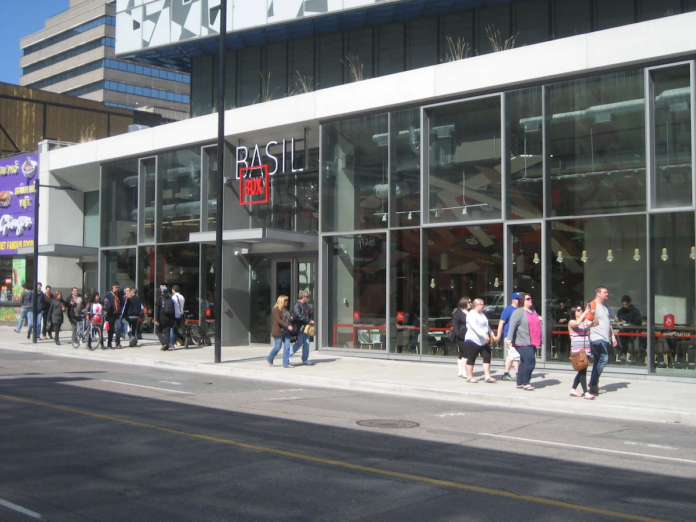
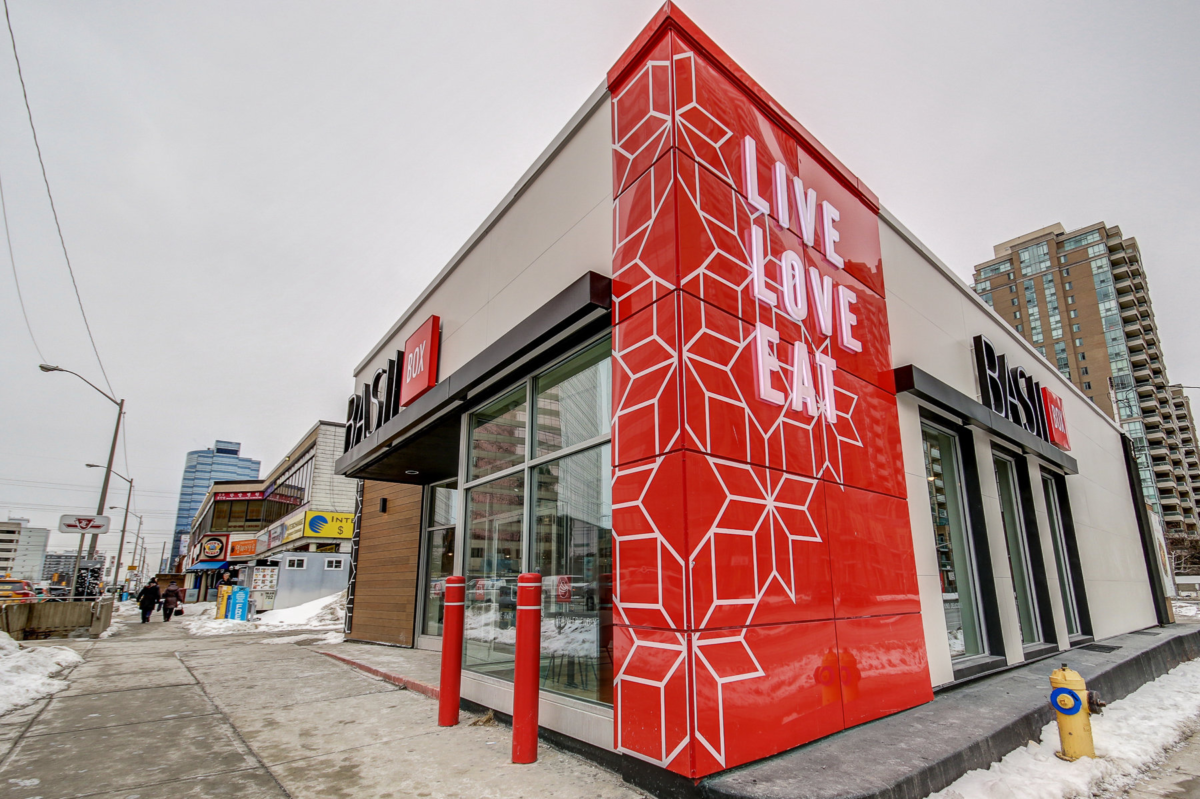
Shake Shack at Union Station in Toronto. Photo: Shake Shack
Shake Shack Canada is now available for delivery in Toronto straight to people’s doorsteps through the Uber Eats app with the new Vaughan Mills location joining the lineup soon.
The partnership expands Uber Eats Canada’s restaurant selection, giving Torontonians convenient access to Shake Shack, which has been a go-to dining destination since its launch in Canada in 2024. Customers can order the full menu, including fan favourites like ShackBurgers, Crinkle Cut Fries and hand-spun Shakes, through the Uber Eats app, according to a news release.
Lola Kassim
“Uber Eats is giving Canadians more restaurant options and making it easier to enjoy the foods they love without leaving home,” said Lola Kassim, General Manager of Uber Eats in Canada. “Welcoming Shake Shack to the Uber Eats platform allows us to expand our premium restaurant selection and bring a fan-favourite international brand to more diners across Toronto and the GTA.”
“Toronto has embraced Shake Shack with incredible enthusiasm since we arrived last year,” said Billy Richmond, Business Director at Shake Shack Canada. “We’re excited to partner with Uber Eats to bring our signature ShackBurgers, crinkle cut fries and more to doors across the GTA. From a quick lunch to a family dinner or a casual weekend bite, enjoying the signature flavours and quality ingredients Shake Shack is known for has never been easier.”
Formed in 2023, Shake Shack Canada is a partnership between Toronto-based private investment companies Osmington Inc. and Harlo Entertainment Inc. Its vision includes opening at least 35 locations across the country, with locations now open at Yonge & Dundas, Union Station, and Yorkdale Shopping Centre, Kitchen Hub Castlefield, Square One Shopping Centre, Yonge & Eglinton and Vaughan Mills.
Since the original Shack opened in 2004 in NYC’s Madison Square Park, the company has expanded to over 640 locations system-wide, including over 400 in 34 U.S. States and the District of Columbia, and over 225 international locations across London, Hong Kong, Shanghai, Singapore, Mexico City, Istanbul, Dubai, Tokyo, Seoul and more.
I listened to the Shopify Inc. (NASDAQ & XTSE: SHOP) Q3 2025 earnings call on November 4th. The call was hosted by Harley Finkelstein (President) & Jeff Hoffmeister (CFO).
GAAP Financials (all in $ USD)
Shopify posted Q3 revenue of $ 2.84 billion, up + 32% from last year. Within this, subscription solutions revenue was $ 699 million, up + 14.6 % & merchant solution revenue which was $ 2.145 billion, up + 38% from last year.
Revenue growth was due to increased penetration of Shopify Payments by + 65% & increased adoption of payments around the world. Also contributing to growth was expanded partnerships with PayPal & Klarna, offset by lower payment adoption in Europe.
Total cost of revenues was $ 1.45 billion or 51%. This was made up of subscription solutions at $ 128 million or 18.3% of revenue & merchant solutions which was $ 1.325 billion or 61.8% of revenue.
Gross margin rate was 49% vs. 52% last year. This was due, in part, to a revenue mix change from subscription solutions to merchant solutions. It was also a result of an increase in payments as this business delivers lower initial margin.
Gross profit for the quarter was $ 1.391 billion, up + 24% year over year.
Operating expenses were $ 1.048 billion, up 26% vs. Q3/24. This was mainly due to increases in sales & marketing, R & D and much larger transaction and loan losses. In Q3 Shopify saw higher losses in it’s payment business & it’s capital business.
According to management, Shopify’s operating expenses have dropped as a % of revenue over the last few years as follows: 2023 – 45%, 2024 – 39%, 2025 – 37%. This was achieved mostly with disciplined headcount management as the overall number of employees has been flat to down. At the same time, productivity has increased through automation, AI, tools & more.
Income from operations was $ 343 million, up + 21.2% over last year or 12.1% of revenue.
Net income was $ 264 million or 9.3% of revenue, down – 68% from last year. This was mostly due to a net unrealized gain on equity and other investments of $ 512 million in Q3/24 vs a loss of -$ 62 million this year.
Diluted EPS for the quarter was .20 cents, down from .64 cents in Q3/24.
CAPEX was $ 6 million in Q3.
Total cash & cash equivalents at the end of Q3 was $ 2.414 billion. Net cash provided by operating activities was $ 513 million, up + 21.3 % over last year.
Other Metrics
Gross merchandise volume (GMV) was $ 92 billion & grew 32% in Q3. The company has grown GMV by + 20% or more for 9 consecutive quarters. The growth was driven primarily by North America.
Q3 monthly recurring revenue (MRR) grew by + 10% based on growth in Plus plans.
Free cash flow margin was $ 507 million or 18% of revenue in Q3. Shopify discussed how it has consistently achieved steady cash flow margin over the last few years.
Bruce Winder
Management Commentary
Finkelstein kicked off the call with several key points regarding:
AI, Agentic AI & the Sidekick agent
The evolution of commerce
International expansion
Offline B2B channels
He said that “every 26 seconds a new entrepreneur makes their 1st sale on Shopify.” Finkelstein said that Shopify is “not just growing our piece of the pie, we are growing the pie.” He indicated that Shopify is balancing growth with profitability.
AI
The President says there are 3 ways he thinks about the evolution of AI:
How AI will help merchants sell everywhere
How AI will help merchants operate smarter
How Shopify as a company will use AI to build better
Sell Everywhere
Shopify discussed how Agentic commerce is being used from search to conversation.
On the last earnings call Finkelstein discussed the Commerce for Agents tool. He also discussed the Universal Cart & the Checkout Kit tool.
The objective for Shopify is to make it easier for AI agents to shop on a merchants store on a buyers behalf.
There are 3 layers to Agentic commerce from end to end:
Product Discovery – ChatGPT partnerships, Perplexity & other partners. Shopify’s goal is to power discovery for all AI agents & set a new standard for the industry.
Purchasing Experience – Universal Cart & Checkout Kit make shopping seamless. Used with ChatGPT & Microsoft Co-Pilot, making in-chat shopping flows possible.
Post Purchase Journey – helps agents keep shoppers engaged & informed. Examples include: order status, returns, support & reorder prompts.
The company discussed how it’s integration with OpenAI has already begun & that traffic has increased 7x for merchants using AI. Shopify indicated that based on their research, 64% of respondents said they would use AI to shop. It is very early, but Shopify said that they are “laying the rails” for Agentic AI or conversational commerce.
Different permutations will emerge as agentic commerce evolves. Shopify sees it’s role as preparing merchants for whatever path wins. The company wants to get merchants ready for agentic commerce just as they are for online, physical stores, B2B or where ever commerce goes next.
Finkelstein says “we are everywhere commerce is happening & we aim to get there first.”
Merchants Using AI to Operate Smarter
Sidekick is an example – a purpose built agent. In Q3, 750,000 shops used Sidekick for the 1st time. The agent has had almost 100 million conversations with merchants relating to analytics, SEO and more.
Build Better Products
Shopify monitors “signals” & data within it’s ecosystem to build & ship solutions for merchants. Then they scale quickly. An example of this monitoring is Scout, a voice of the customer tool. This internal Shopify agent scans hundreds of millions of signals (examples of a signals include: support tickets, usage data, actions & prompts) & is used by management to answer questions in seconds, grounded in evidence, that used to take weeks.
Key Takeaway: AI is not just a feature at Shopify, it is central to Shopify’s engine that powers everything the company builds.
Other Key Products & Growth Areas
Shopify Payments – reaching 65% penetration of GMV
Shop Pay – had + 67% growth in Q3.
Shopify wants to own checkout which includes: taxes, shipping, inventory, payments in any currency, bundles, subscriptions & compliance with regulations.
These apps are “like a well made watch” says Finkelstein. They execute well at scale and keep it simple for partners.
The President said “every upgrade shipped in Q3 cut friction & put merchants in reach of new markets.”
Merchants using Global-e can now offer Shop Pay as part of the payments process.
Shopify has a partnership with Klarna – the buy now, pay later company.
Shop Pay Installments has been launched in the UK after a successful launch in Canada earlier in 2025.
International
Shopify sees a “significant” runway ahead, especially internationally. The international division saw GMV grow + 40% in Q3 & represented 21% of Shopify global revenue in the quarter (up from 18% – 2 years ago).
Shopify has lower adoption rates outside of North America. Europe in particular offers growth prospects.
Shopify point-of-sale (POS) system Shopify Payments launched in 3 new countries in Q3.
Shopify Tap to Pay launched in 7 additional countries.
Shopify Capital has doubled it’s footprint since the beginning of the year & added Ireland and Spain in Q3.
The Shopping App expanded in 16 countries.
Offline GMV grew + 31% in Q3 as new brands joined this part of Shopify’s business.
B2B grew GMV + 98% in Q3.
Tariffs
Shopify’s cross border GMV is about 15% of it’s total, with US inbound GMV about 7%. The company has seen price increases from merchants but they have started to slow since Q2/25.
Management Guidance
Q4
Revenue growing mid-to-high 20% year over year
Gross profit $ growing low-to-mid 20% year over year
Operating expense to be between 30% to 31% of revenue
Free cash flow slightly above Q3
Share Price Dynamics
On the Nasdaq exchange, SHOP opened November 4th at $ 166.32. On November 5th shares opened at $ 158.34, down – 4.8%. As of writing on November 7th, the stock is down about – 9.2 % over the last 30 days but up +73.8% over the last year. SHOP is up + 42.3 % over the last 5 years.
On the XTSE exchange, SHOP opened November 4th at $ 236.19. On November 5th shares opened at $ 224.88, down – 4.8%. As of writing on November 7th, the stock is down about -8.2% over the last 30 days but up + 77.3% over the last year. SHOP is up + 54.4% over the last 5 years.
My Commentary
Shopify continues to post strong growth and appears to be moving in the right direction from an innovation perspective, particularly as it relates to AI. The world is changing quick though and Shopify must continue to move with it.
Net income was down significantly due to an unrealized gain last year on equity & other investments which put a dark cloud on an otherwise solid quarter.
One risk could be Shopify’s reliance on smaller sellers. If the economy softens, will consumers gravitate to large discounters that don’t use Shopify as a provider? Also, will consumers simply buy less? Particularly with US tariffs increasing costs and inflation.
The other risk is that if Agentic commerce grows significantly, will Shopify and their merchants need to compensate agent providers for transactions? Or will these AI companies try and replicate Shopify’s business model with their new found place in the consumer purchase process?
Retail Insider is streamlining its Canadian retail news from around the web to include a handful of top news stories that can be viewed quickly during the day. Here are the top stories from the past 24 hours.
Canadian lingerie company Understance has announced that it will close all three of its retail stores in Vancouver, Calgary, and Toronto on December 1, less than a year after completing its national expansion. The decision effectively ends the brand’s short-lived experiment with brick-and-mortar retail, shifting its focus back to e-commerce.
The Vancouver-based brand confirmed the closures in a post shared across its social media channels. “After years of fitting and serving you in person, our retail stores in Vancouver (Robson St.), Calgary and Toronto will be closing permanently on Dec. 1,” the company wrote. “We have limited inventory left, but if you’ve been meaning to visit or want to try our products in person, we’d love to see you before we close.”
Understance did not provide a reason for the store closures. Its website continues to operate, and a fourth retail location listed in Burnaby, B.C., was not mentioned in the announcement.
The closures mark a significant reversal for Understance, which only recently embarked on an aggressive retail rollout. The company opened its first store on Vancouver’s Robson Street in February 2022, followed by Toronto’s Bloor West Village in November 2024, Calgary’s Inglewood neighbourhood in December 2024, and Burnaby’s Metropolis at Metrotown in early 2025.
The brand had previously indicated plans to expand to as many as 30 retail locations across Canada and the United States within five years, blending digital reach with in-person fittings. Its stores were promoted as experiential environments where customers could receive personalized sizing guidance and learn about the technical aspects of its products.
That vision now appears to have been shelved. The abrupt announcement on social media suggests a strategic retrenchment and potential restructuring, as the company turns its attention once again to online sales.
Understance store at 2334 Bloor St W. in Toronto. Image supplied
Understance Built Its Brand on Fit and Function
Founded in 2021 by director Jiayi Lyu, Understance launched as a “solution-oriented lingerie company” focused on comfort, inclusivity, and technical fit. Rather than pursuing the fashion-driven approach of major lingerie labels, the company emphasized practical design and long-term wearability, offering what it described as “everyday workhorse bras.”
Understance gained attention for its size inclusivity, offering one of the broadest bra size ranges in North America, from 28A to 48N, across 149 distinct sizes. Its bras and underwear were divided into eight fit groups, reflecting a scientific approach to design and an effort to address common frustrations with mainstream lingerie, from inadequate support to limited size options.
The company’s mission, as stated on its website, was to help customers “discover the transformative power of comfort and support through thoughtfully designed products.” It quickly built a following online, appealing to consumers looking for fit accuracy and an educational approach to bra shopping.
Understance at Metropolis at Metrotown in Burnaby, BC. Photo: Understance
Customers Question What Comes Next
The announcement has sparked concern and speculation among Understance’s customers. Many were taken aback by the sudden closures, particularly in Toronto, where the store opened just over a year ago.
On Instagram, several shoppers commented that they feared the closures might signal deeper financial trouble. The company’s responses have only fueled uncertainty. Earlier this month, Understance replied to one commenter during an online clearance event, writing: “We’re clearing out inventory as instructed by management. We don’t know what the future holds, but there are no new restocks or styles coming.”
The statement led some to wonder if the brand was winding down altogether. Understance has not publicly confirmed or denied that possibility.
Hints of internal change began to appear in early fall. In September, Understance launched a clearance sale that drew strong response online, selling out of core styles and older collections. A November 4 Instagram post acknowledged the success of the sale and said, “Once these items are sold out, they won’t be available again.”
That comment, coupled with the later announcement of physical store closures, created confusion among loyal shoppers. Some expressed disappointment that a company known for its community-focused fittings and customer care was now stepping back from retail engagement altogether.
Toronto-based intimates brand Knix, known for redefining women’s underwear and activewear through innovation and inclusivity, has announced an expansion into men’s essentials with the launch of MNTD. The new line aims to deliver the same elevated comfort and performance-driven design that have made Knix popular, introducing a collection that “gives men that fresh out of the shower feeling all day long.”
Since its founding in 2013 by Joanna Griffiths, Knix has reimagined what comfort and confidence look like in women’s apparel. The company says that its commitment to innovation and function-first design now extends to men’s essentials with the introduction of MNTD.
Knix Founder Joanna Griffiths at a Knix pop-up in Holt Renfrew’s Bloor St. store in March 2025. Image: Knix/Holt Renfrew
“For the past 12 years, Knix has been redefining what comfort and innovation look like in women’s intimates and following years of requests and prototyping we saw a clear opportunity to bring that same revolution to men’s,” said Griffiths, Founder and President of Knix. “Men deserve products that look great, feel great and keep them feeling their best all day long. With 72% of women purchasing underwear for the men in their lives, and the incredible power of the Knix community, we are launching MNTD just in time for the holiday season.”
The debut of MNTD marks Knix’s first formal entry into the men’s category, drawing on more than a decade of technical fabric development, body-first design, and consumer insight.
MNTD introduces a collection that merges premium design with practical innovation. The lineup includes boxers, T-shirts, long sleeve tops, and socks, all designed to deliver superior comfort and performance throughout the day. Prices start at $22 CAD/USD per pair of boxers when purchased in bundles, with tees retailing at $50 CAD/USD.
Image: MNTD by Knix
According to Kate Rothschild, General Manager of Men’s at Knix, the new brand was born from an identified “innovation gap” in the men’s essentials market. “After over a decade of reimagining comfort and innovation in women’s intimates, and fostering the growth of our incredible community of women at Knix, the launch of a men’s brand was a natural next step,” she said. “We identified an innovation gap within the category that we are uniquely positioned to fill, creating products that offer men that fresh out of the shower feeling all day long.”
Kate Rothschild, General Manager of Men’s at Knix
Introducing Mint Condition and Pristine Pouch Technologies
At the core of the Knix MNTD men’s essentials line are two proprietary innovations designed to redefine comfort: Mint Condition™ Anti-Odor Technology and the Pristine Pouch™.
Mint Condition Technology integrates temperature regulation, moisture-wicking, and anti-odour features within ultra-soft, breathable fabrics. “Our Mint Condition Technology is a proprietary breathable, quick-drying fabric that delivers adaptive temperature regulation to keep you cool, while anti-odour technology keeps you smelling and feeling fresh all day,” explained Rothschild.
The Pristine Pouch is another first-of-its-kind feature developed by Knix’s design team. It prevents moisture buildup, eliminates ride-up, and maintains a consistent, comfortable fit throughout the day. Rothschild added, “Our Pristine Pouch is a first-of-its-kind design that keeps you dry and comfortable while preventing moisture from showing through.”
A specialized version, the Pristine Pouch Plus™, debuts in MNTD’s Buffer Boxer style, which can wick away up to three teaspoons of moisture, offering all-day dryness without bulk.
Knix at 294 Queen St. W. in Toronto. Photo: Craig Patterson
Designed, Tested, and Perfected by Real Users
Knix applied its established approach of wear testing and community-driven design to MNTD’s product development. The collection underwent more than 255 hours of testing with feedback from Knix’s extended network of men, including partners, colleagues, and friends, to ensure comfort and performance across all sizes.
“We’ve fit and wear tested each product on every size that we make,” said Rothschild. “The result is underwear and tees that don’t sag, bunch, or ride up, just fresher basics made to move with you all day long.”
The product line is available in a variety of cuts, colours, and sizes ranging from S to XXL, designed to accommodate a wide range of body types and lifestyles.
Image: MNTD by Knix
A Fresh Brand Identity for a New Market
The MNTD men’s brand stands as a distinct identity within the company’s portfolio. “It was important for us to create a distinctly male brand that looks and feels completely different than Knix as they are two separate entities,” said Rothschild. “While the two have commonalities with product innovation and development, we know that the target customer is unique to each brand.”
MNTD will operate under its own website, wearmntd.com, and social media channels under @wearemntd, emphasizing a clean, confident, and elevated aesthetic aimed at the modern man.
MNTD officially launched on Tuesday, November 11, and is available through wearmntd.com, Knix.com, and all Knix retail stores. The timing aligns with Knix’s broader retail expansion strategy, following the opening of its first New York City flagship at 242 Lafayette Street in SoHo earlier this year.
Knix plans further retail growth across North America through 2025 and 2026, signaling confidence in its ability to expand across gender and geography.
“MNTD will be available for purchase on wearMNTD.com and will have an initial presence inside all Knix retail locations,” said Rothschild. “In early December, full inventory will roll out in stores and be available for purchase from an in-real-life retail standpoint.”
E-commerce plays a pivotal role in the launch strategy, reinforcing Knix’s direct-to-consumer roots. “As much as MNTD is a part of the Knix family, it was important to us that MNTD is firmly established as its own brand,” Rothschild explained. “This will give us broader reach as we expand our customer presence across North America.”
Image: MNTD by Knix
Targeting the Active and Style-Conscious Man
The Knix MNTD men’s essentials line aims to serve a broad audience, from athletes seeking high-performance fabrics to professionals looking for premium basics. “MNTD is designed for the active, everyday man on-the-go,” said Rothschild. “We’re confident this first collection will appeal to a wide range of lifestyles: from the everyday athlete who values performance fabrics and no-chafe basics, to the professional minimalist who is looking for premium basics that look and feel superior.”
Interestingly, Knix expects women to play a major role in introducing the brand to consumers. “Studies show that 72% of women are already purchasing underwear for the men in their lives,” said Rothschild. “We have no doubt that our Knix community will play a role in word-of-mouth awareness, brand referral, and trial.”
Knix’s Broader Growth Vision
The launch of MNTD comes as Knix continues its trajectory from digital disruptor to established omnichannel leader. Since pivoting to a DTC model in 2016, Knix has expanded across Canada and the United States with both online and physical retail stores, maintaining its core values of inclusivity and innovation.
“This launch is a big step in Knix’s next chapter,” said Rothschild. “We know the same comfort, innovation, and confidence that our community loves are just as relevant for men. Expanding into this space with the launch of the MNTD brand lets us reach new customers while staying true to what Knix does best, reimagining everyday essentials that help people feel good in their own skin.”
Image: MNTD by Knix
Knix’s expansion into men’s apparel aligns with a growing trend among DTC brands diversifying their product portfolios to capture broader lifestyle markets.
Looking ahead, Knix plans to evolve MNTD through customer engagement and feedback. “We’re excited to introduce MNTD to the market and see how customers connect with the brand and experience the product,” said Rothschild. “We’re always eager to hear directly from them — what they’re looking for in their everyday essentials, their product feedback, and the new categories they want us to explore next.”
While no immediate plans for standalone MNTD stores have been confirmed, the company remains open to the possibility as the brand grows. “Knix stores have proven as a great way to engage with our customer in real life, so while there are no plans on the immediate horizon, we’re always listening, adapting and finding the best ways to meet our customers where they are. Never say never,” Rothschild said.
CF Carrefour Laval near Montreal. Image: Cadillac Fairview
At the beginning of 2025, economic commentators painted a bleak picture for Canadian apparel retailing. Forecasts warned that rising costs, consumer uncertainty, and discretionary spending cuts would weigh heavily on the sector. Many analysts expected another downturn following a 2.8 percent decline in apparel sales in 2024, coupled with a possible wave of retailer bankruptcies.
But as Randy Harris, President of Trendex North America points out, “Those forecasts could not have been more wrong.” Harris, who has tracked Canadian apparel market performance for decades, notes that the narrative of “doom and gloom” has given way to one of surprising strength and resilience across virtually every category of fashion retail.
A Strong Rebound in 2025
According to Trendex data, total retail apparel sales in Canada increased by 9.3 percent in the first seven months of 2025 compared to the same period last year. The growth was broad-based, with men’s apparel up 10.4 percent and women’s apparel up 9.1 percent. Importantly, those figures exclude the rapid expansion of the resale sector, which continues to gain traction among younger shoppers and sustainability-minded consumers.
Randy Harris
“Only one Canadian apparel retailer filed for creditor protection this year, apart from the long-anticipated wind-down of Hudson’s Bay,” says Harris. “That alone tells us that the health of the apparel industry is far better than expected.”
Specialty apparel stores were among the biggest winners, seeing sales climb 10.8 percent through August. The strongest growth came from Alberta and Quebec, where specialty apparel sales rose 13.2 percent and 17.1 percent respectively. These gains reflect not just consumer demand but also the vibrancy of local retail ecosystems and strong in-mall recovery traffic in major urban centres.
Retailers Reporting Double-Digit Growth
Several homegrown and international retailers have reported standout performances in 2025. Groupe Dynamite, which operates Garage and Dynamite, saw its Canadian sales climb 18.2 percent in the first half of the year. Roots, a heritage lifestyle brand, reported an 11.6 percent increase in direct-to-consumer (DTC) sales during the same period.
Children’s apparel and value-focused retailers also performed well. Carter’s Canada posted an 8 percent same-store sales increase in the second quarter, while TJX Canada, the parent company of Winners, Marshalls, and HomeSense, reported 9 percent comparable sales growth.
Aritzia, one of Canada’s most closely watched fashion success stories, experienced a 19 percent surge in Canadian sales from February through July. “These results underline a robust appetite for fashion among Canadian consumers,” notes Harris. “It’s clear that apparel spending is not just holding up, it’s thriving.”
CF Chinook Centre in Calgary. Photo: Cadillac Fairview
Why Canadian Apparel Sales Are So Strong
Harris attributes this momentum to several overlapping factors, rather than a single cause. Among them, the depreciation of the Canadian dollar has played a major role in shifting consumer spending back to domestic channels.
“The weaker dollar discouraged cross-border shopping and e-commerce purchases from U.S. websites,” explains Harris. “We also saw fewer same-day trips across the border, down 30.1 percent through August 2025. That spending is staying in Canada.”
At the same time, the Buy Now, Pay Later (BNPL) model has helped consumers afford higher-priced discretionary items. “BNPL has changed the psychology of shopping,” says Harris. “It allows Canadians to purchase items they might previously have postponed, which has been especially beneficial for fashion retailers.”
Credit card use has also surged across discretionary categories, while inflation has had little impact on apparel. “Unlike most other consumer goods, apparel prices actually declined slightly in the first half of 2025,” he adds. “That created a sense of affordability and encouraged purchases.”
Gift card redemptions from the 2024 holiday season also supported first-quarter apparel sales, since those transactions are only recorded upon redemption rather than purchase. “Gift cards provided a strong start to the year,” Harris notes, “and helped sustain momentum into the spring season.”
Tourism and the Luxury Segment
The rebound in inbound tourism has provided a significant boost, particularly to luxury retailers. Overall non-U.S. tourism rose 6 percent in the first seven months of 2025, led by increases of 6.3 percent from Europe and 6.7 percent from Asia. “Luxury apparel benefited directly from this return of high-spending international visitors,” says Harris. “Downtown cores in cities like Toronto, Vancouver, and Montreal have felt that impact.”
Luxury retailers in Canada have also adapted more quickly than anticipated to post-pandemic shifts, investing in experiential stores and digital engagement that appeal to both local shoppers and tourists. With global luxury brands expanding across Canada, from Bloor Street to Burrard Street, the sector remains a critical growth driver for apparel retailing overall.
Gucci at Fairmont Hotel Vancouver main floor/lobby in downtown Vancouver on December 19, 2022. Photo: Lee Rivett
Younger Consumers Fuel Spending
Demographics are another part of the story. Almost half of all adult apparel purchases in Canada are now made by consumers under 40, a group that includes many single adults still living at home. “This cohort faces fewer financial pressures than young families,” Harris explains. “They’re spending freely on apparel, footwear, and accessories, often driven by lifestyle and self-expression.”
Social media and the influencer economy continue to shape this group’s fashion habits, with trends moving faster than ever. The appetite for affordable style, paired with increased access to payment flexibility, has fueled growth across both mid-market and premium segments.
Regional Strength and Brand Resilience
While Alberta and Quebec are leading in specialty store growth, British Columbia and Ontario have also seen strong year-over-year increases, especially in mall-based environments where experiential retailing has become a key differentiator. “The Canadian apparel retail market is showing strong regional diversity,” Harris observes. “We’re seeing confidence from both local entrepreneurs and global brands expanding footprints.”
Retailers such as Simons, Reitmans, and Frank And Oak have also adapted successfully to evolving consumer expectations, balancing sustainability, omnichannel convenience, and accessible pricing. Meanwhile, the resurgence of physical retail has surprised analysts who expected e-commerce to dominate. “Consumers still enjoy shopping for apparel in person,” says Harris. “Stores remain essential for discovery, fit, and immediate gratification.”
Mall entrance to La Maison Simons at Toronto’s Yorkdale Shopping Centre, August 14, 2025. Photo: Craig Patterson
Revisiting the Forecasts
The contrast between early 2025 predictions and actual market outcomes has raised questions about how apparel retail performance is measured and interpreted. Harris believes that many analysts underestimated the adaptability of Canadian retailers and consumers. “It’s a reminder that data alone doesn’t tell the full story,” he says. “Retailers that read the market accurately and execute well can outperform expectations, even in uncertain times.”
Trendex North America’s latest report suggests that total apparel sales growth for 2025 could remain in the high single digits through year-end, barring significant economic disruption. That would make 2025 one of the strongest post-pandemic years for Canadian fashion retail.
Looking Ahead
While macroeconomic risks remain, including interest rates, household debt, and currency volatility, the Canadian apparel sector appears positioned for continued growth. Retailers are focusing on product differentiation, sustainability, and localized experiences to maintain momentum into 2026.
For Harris, the takeaway is clear. “Canadian apparel retailing is far more resilient than many give it credit for,” he says. “Consumers still want to look good and feel good, and they’re finding ways to make that happen. That’s why 2025 has been anything but a lost year for fashion.”
Canada’s small and craft alcohol producers still face major roadblocks when trying to sell alcohol across provincial borders despite recent agreements meant to ease trade restrictions, finds a new report from the Canadian Federation of Independent Business (CFIB).
The report, Bottled Up: Barriers facing small business in interprovincial alcohol trade, reveals that outdated rules and complicated processes continue to block Canadian producers from reaching new markets, even if that market is their neighboring province. Despite public support for reform and recent internal trade commitments, lack of energy for change has resulted in a fragmented system that drives up costs, limits consumer choice, and stifles the growth of small producers, added the national organization.
Keyli Loeppky
“When American liquor products were pulled from store shelves across Canada in response to U.S. tariffs, it opened space that could, and should, have been filled by Canadian producers,” said Keyli Loeppky, CFIB’s director of interprovincial affairs. “Instead, rigid interprovincial rules and excessive red tape continue to hinder small alcohol producers from expanding beyond their home provinces, leaving significant growth potential untapped.
“It’s absurd that Canadians can’t easily purchase alcohol products made in their own country. If we can’t fix barriers at home, how can we expect our businesses to meet goals to expand international trade? Provincial politicians need to put protectionism aside and work towards true free internal trade in Canada.”
The CFIB is Canada’s largest association of small and medium-sized businesses with 100,000 members across every industry and region.
The CFIB said Canada’s alcohol industry is built on small businesses, with over 1,500 breweries, wineries, and distilleries nationwide. Yet entrepreneurs face a confusing patchwork of regulatory, logistical, and pricing barriers when selling outside their home province, including:
Excessive red tape and complex regulations
Poor transparency and communication from regulators
Wide variability in markup rates
High shipping costs
SeoRhin Yoo
“Duplicative lab testing requirements, inconsistent mark-up rates, and confusing rules all add to higher costs and fewer opportunities for Canadian entrepreneurs,” said SeoRhin Yoo, CFIB senior policy analyst for interprovincial affairs. “Allowing direct-to-consumer shipment of alcohol would be a significant step forward, but it’s only one part of the solution small brewers, distillers and vintners want to see. Businesses that want to move pallets of their products, not just bottles, still face myriad barriers that make it not worth the hassle.”
CFIB said it is urging provinces to work together to fully implement the alcohol-related commitments already made under the Canadian Free Trade Agreement (CFTA) and recent Memoranda of Understanding (MOUs) on direct-to-consumer alcohol sales, including a strategic rollout plan for May 2026.
To create a fairer, more competitive marketplace, CFIB is calling on governments to:
Expand government commitments on mutual recognition agreements to include provincial rules, regulations and requirements on alcohol.
Increase transparency on listing processes and mark-up structures.
Establish a cross-provincial working group dedicated to alcohol trade reform.
Provide clear, accessible guidance to small businesses on interprovincial requirements.
Shapermint has launched its Shapermint Core collection at Walmart Canada, expanding its retail presence into more than 270 locations across the country.
The move marks the Canadian debut of the brand’s most popular size-inclusive shapewear styles, following its initial rollout in the United States. The company said the expansion supports its goal of making its comfort-focused products more accessible to customers worldwide.
Massimiliano Tirocchi
“Our launch into Walmart Canada reflects our mission to make comfort and confidence universally accessible,” said Massimiliano Tirocchi, co-founder and chief marketing officer of Shapermint. “We’re thrilled to offer Canadian customers in-store access to our bestselling styles that are loved by millions.”
The Shapermint Core collection features seven wardrobe essentials designed for all-day wear. The line includes a wireless shaping bra, high-waisted shaping panty, boyshort, shorts, bodysuit, shaping tights and cami.
Gabrielle Richards
“This launch is rooted in what our Canadian customers have told us they want: solutions that feel as good as they look,” said Gabrielle Richards, brand director of Shapermint. “Shapermint Core was designed with inclusivity and real life in mind—to support women, not squeeze them.”
The company said the launch reinforces its mission to reshape the shapewear category by focusing on comfort, affordability and confidence.
Founded in 2018, Shapermint serves more than 12 million customers globally and describes itself as one of North America’s leading size-inclusive shapewear and intimates brands.
Canadian consumers are expected to spend nearly $9.3 billion during Black Friday and Cyber Monday (BFCM) 2025, an increase of about $1.7 billion compared to last year, according to a survey by ecommerce marketing company Omnisend.
The survey found that the average Canadian plans to spend $319 on Black Friday and $242 on Cyber Monday. This represents an increase of $60 per person on Black Friday and $40 per person on Cyber Monday compared with 2024.
Marty Bauer
“Canadian consumers are trying to navigate financial pressures such as inflation and higher living costs,” said Marty Bauer, ecommerce and retail expert at Omnisend. “Yet instead of pulling back, many are leaning into Black Friday and Cyber Monday as a way to stretch their budgets, stock up on essentials, and save money over the long term.”
Most Canadian shoppers plan to spend between $100 and $499 on both days, with more Canadians expecting to increase spending (14–15 per cent) than decrease it (6–8 per cent).
Bauer said this reflects a cautious but deliberate growth in holiday shopping budgets. “Even though wallets are tighter, Canadians are increasing their budgets. They are making fewer impulse buys and instead focusing on strategic purchases where they can get the most value.”
The survey also found that Buy Now, Pay Later (BNPL) remains niche in Canada. While 14–15 per cent of Canadians expect to use BNPL this BFCM, 53 per cent prefer to pay upfront, and 25 per cent might use BNPL for larger purchases. “BNPL is on the radar, but it hasn’t become mainstream in Canada,” Bauer said. “Canadians remain conservative in their payment preferences, valuing control and financial stability.”
Discounts and free shipping continue to drive purchases. Seventy-two per cent of Canadians prioritise discounts, and 55 per cent consider free shipping essential. Early access deals (26 per cent) and loyalty points (25 per cent) are less influential, while influencer promotions (10 per cent) and peer reviews (7 per cent) have minimal impact. “This data proves that the basics still win,” Bauer said. “Discounts and free shipping are what consumers want most, while loyalty programs and influencer campaigns play a much smaller role in driving actual purchase decisions.”
Amazon remains the leading shopping destination for Canadians at 79 per cent, followed by Walmart at 45 per cent. Emerging platforms include Temu (17 per cent) and Shein (15 per cent), while Etsy (6 per cent) and TikTok Shop (4 per cent) remain minor players. Bauer noted, “Amazon may lead, but Canadians are clearly experimenting with newer, lower-cost platforms like Temu and Shein. This reflects a growing appetite for affordability in today’s economy.”
Photo: Pavel Danilyuk
Clothing and accessories are the most popular category for Black Friday, with 51 per cent of Canadians planning to buy apparel, followed by tech and electronics (42 per cent) and toys (24 per cent). Other categories include home décor (21 per cent), beauty (25 per cent), and food and drinks (18 per cent). “Fashion and tech are evergreen categories, but the rise of toys shows how parents are waiting until BFCM to stretch holiday budgets,” Bauer said.
Bauer advised retailers to focus on financial value when marketing BFCM deals. He suggested emphasising discounts and free shipping, offering tiered promotions, experimenting with emerging platforms, and using automation tools to target shoppers effectively.
“Canadians are financially stretched but still determined to shop smart,” he said. “Retailers who connect their promotions to real value and savings will capture the strongest growth this BFCM.”
The survey was conducted in August 2025 by Cint on behalf of Omnisend, polling 1,200 Canadian consumers about their shopping plans for Black Friday and Cyber Monday. Average spending estimates were extrapolated to the Canadian adult population of approximately 30 million.
A national survey conducted by Samsung Canada and Leger, which surveyed 510 Canadian workers across construction, healthcare, energy, mining, retail, and public safety, found that retail workers in particular are feeling the impact of unreliable tech:
More than half (56%) have experienced physical device damage, cracked screens and broken ports are common
One in two have faced battery or power failures that stalled their work
Half said that when a device breaks, the entire delivery chain is disrupted
Nearly two-thirds of retail workers say mobile devices are essential to their job, yet most are still relying on consumer-grade tech that wasn’t designed for fast-paced, customer-facing environments.
What might seem like small issues, a scan that doesn’t work, a restock that’s delayed, can multiply across stores and teams, quietly chipping away at customer experience and business efficiency.
“More than two-thirds of frontline retail workers (68%) say mobile devices are critical to their roles, whether that’s managing inventory, processing payments, or keeping customers informed. Yet 63% have experienced at least one device failure in the past year, such as cracked screens and dead batteries,” he said.
“That gap between reliance and reliability is striking. Retail workers are telling us, “We depend on these devices, but they’re not built for the pace and pressure of where we work.” For an industry built on speed and service, this disconnect shows that technology meant to empower employees can just as easily slow them down when it’s not designed for the environment.”
The survey found:
64% of retail workers say mobile devices are essential to their job, with average use of 4 hours per day for sales, inventory, and customer service tasks.
56% have experienced physical device damage, including 42% with cracked screens and 22% with broken buttons or ports.
52% have faced battery or power failures, most often charging issues (44%) and dead batteries (24%).
Half (50%) say when a device breaks, the entire supply chain is disrupted, underscoring how critical device reliability is for retail operations.
Only 35% of retail workers are aware of rugged devices, yet 53% say rugged tech is very important to their work, a clear gap between awareness and need.
Higgins said many retailers assume consumer devices are good enough because they’re familiar and affordable.
“In fact, 38% of frontline workers say a regular device “works just fine”, often because they haven’t been exposed to what rugged technology can offer. But when you look closer, 62% report ongoing issues like cracked screens or battery failures, which shows those consumer devices aren’t actually keeping up,” he said.
“Cost is the other major barrier, one in four workers (25%) think rugged devices are too expensive or hard to justify. Yet when you factor in the hidden costs of downtime, repairs, and lost sales, the math changes quickly. A single cracked screen can delay a transaction or idle an entire checkout lane. For many retailers, the real cost isn’t the device, it’s the disruption when that device fails.”
Device failures affect every part of a store’s operations, added Higgins.
“Our survey data shows that 44% of retail workers face task delays when their devices break, and one in three experience communication breakdowns with their teams. When frontline technology falters, it impacts everything from restocking and customer service to point-of-sale transactions,” he explained.
“In retail, even a short delay adds up. Lost minutes become lost sales, and system downtime quickly strains staff and the customer experience. Reliable technology isn’t just about convenience; it’s the backbone of operational efficiency. When devices fail, the flow of the entire store can falter.”
Retail is becoming more mobile, connected, and data-driven, and the demands on frontline tech are rising with it. Right now, nearly half of retail workers (48%) are aware of rugged devices, but only about one in three (34%) say they or their teams actually use them, added Higgins.
Photo: Alexander Suhorucov
“That awareness-to-adoption gap is the opportunity ahead. I see rugged and business-grade devices becoming the standard, not the exception. The
future of retail technology is about durability meeting intelligence, devices that can survive a drop, a spill, or a long shift, while seamlessly integrating with digital systems and analytics,” he said.
“At Samsung, we’re continuing to invest in technology that empowers workers, tools that perform reliably, stay secure, and give employees the confidence that their tech will work as hard as they do.”