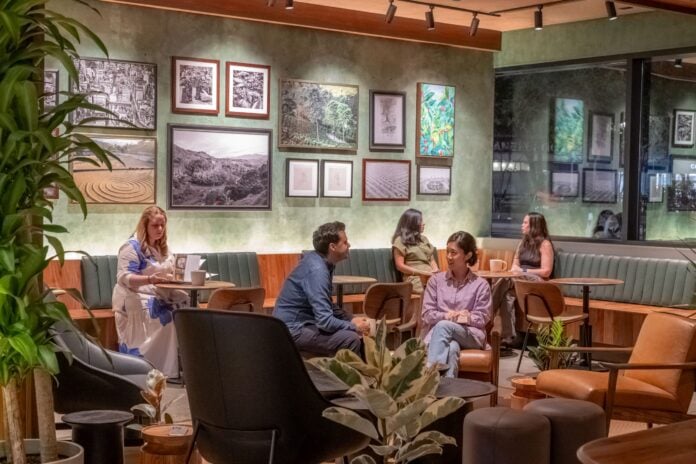
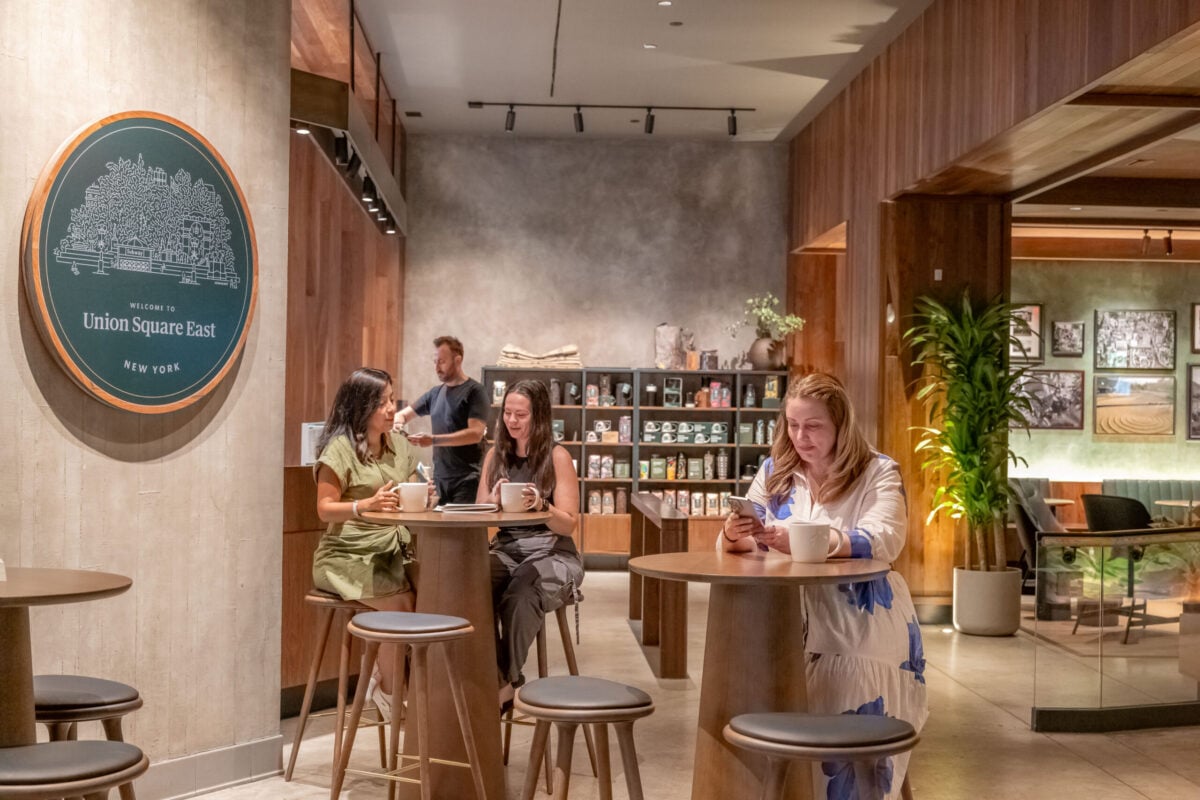
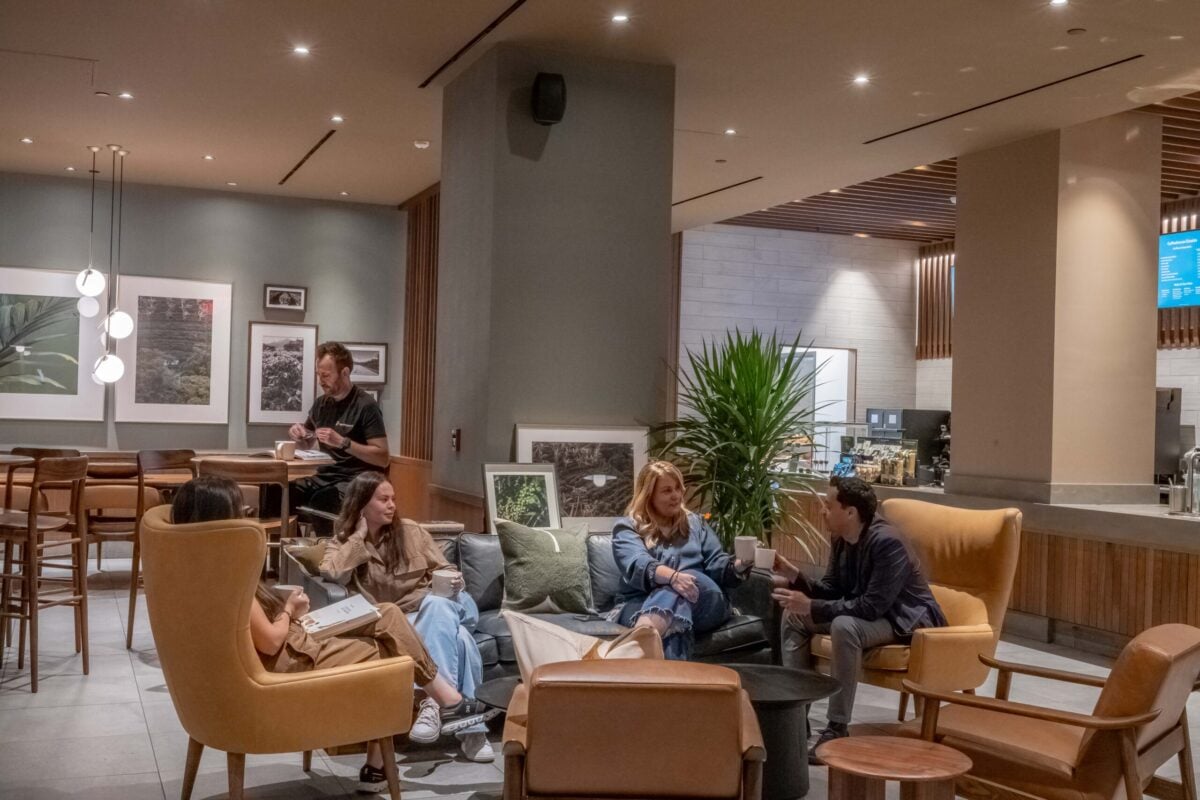
Coffee giant Starbucks is closing about 250 of its location and has launched a rollout of its coffeehouse uplifts across Canada, part of its “Back to Starbucks” strategy to bring “more comfortable seating, warmer designs, and neighbourhood-inspired details” to its locations.
The company says a refresh of Starbucks cafés is designed to bring customers back to what they love most about the coffeehouse: great coffee, craft, connection, and community.
At the same time, in a note, Mike Grams, the company’s Chief Operating Officer, said: “We have carefully reviewed our North America coffeehouse portfolio and identified locations where we do not believe we can consistently deliver the experience we want for customers and partners or where we don’t see a path to acceptable financial performance. As a result, we will close approximately 250 coffeehouses later this week. This represents approximately 1% of our more than 18,000 North America coffeehouses.
“Every year we close some coffeehouses and open others as part of managing our portfolio. And as we shared previously, we remain excited about the significant long-term growth opportunity ahead in North America. We are actively developing a strong pipeline of new coffeehouses and remain committed to growth in North America.”
Starbucks photo
Starbucks said customers visiting their uplifted neighbourhood coffeehouses will experience:
More – and cozier – seating, including couches and lounge chairs that invite customers to stay awhile.
Warmer colours, textures, and layered designs that create a relaxed, welcoming feel.
Locally-inspired touches, including neighborhood inspired art, photography and design elements that reflect neighbourhood’s character.
A redesigned espressobar offering a closer view of the craft behind every beverage.
Improved order flow, including dedicated space for customers ordering ahead in the Starbucks app.
“We sat in each store and asked ourselves, ‘What could we keep? What’s great about this? What’s the history of this place? What is this community like?’” she said. “… At that point it felt like we had a whole new approach to design, which was much more rooted in our heritage and will create an experience that is more richly sensorial.”
Starbucks photo
By the end of 2026, more than 1,000 coffeehouses in North America will be uplifted, with plans for more in the years to come, said Starbucks.
“Early results from uplifted coffeehouses in New York City and Southern California are already showing promise. Customers are staying longer, visiting more often, and sharing positive feedback. This transformation goes beyond design — it is about shaping the future of gathering spaces, strengthening community ties and creating places people love,” it said.
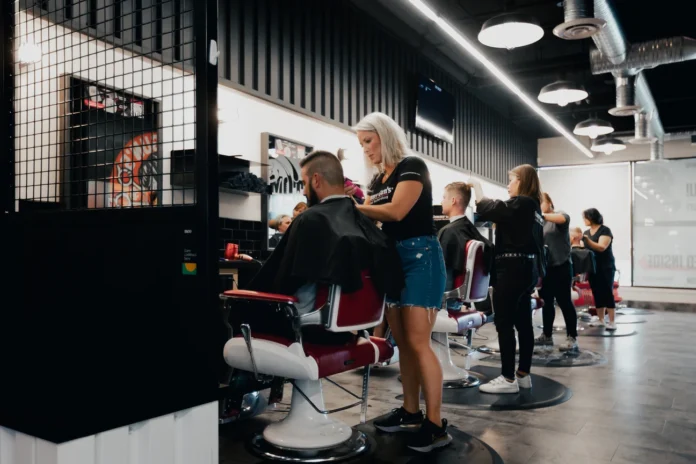
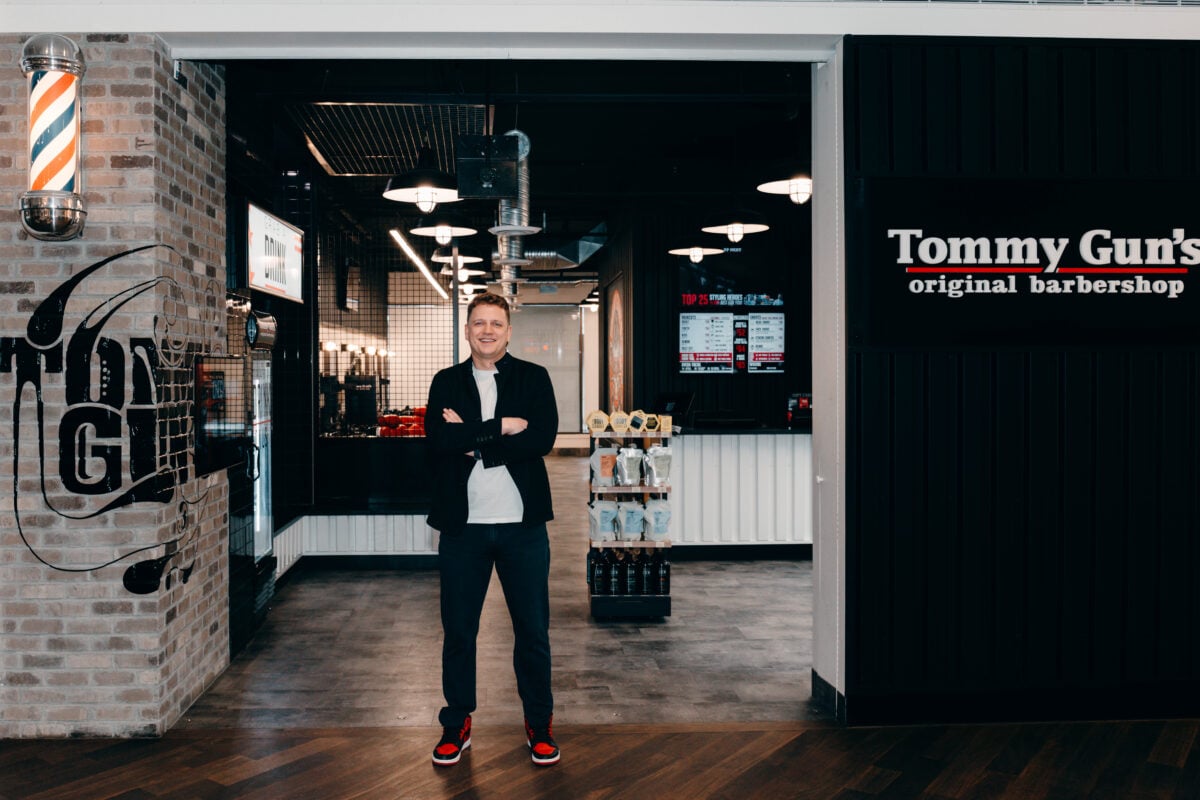
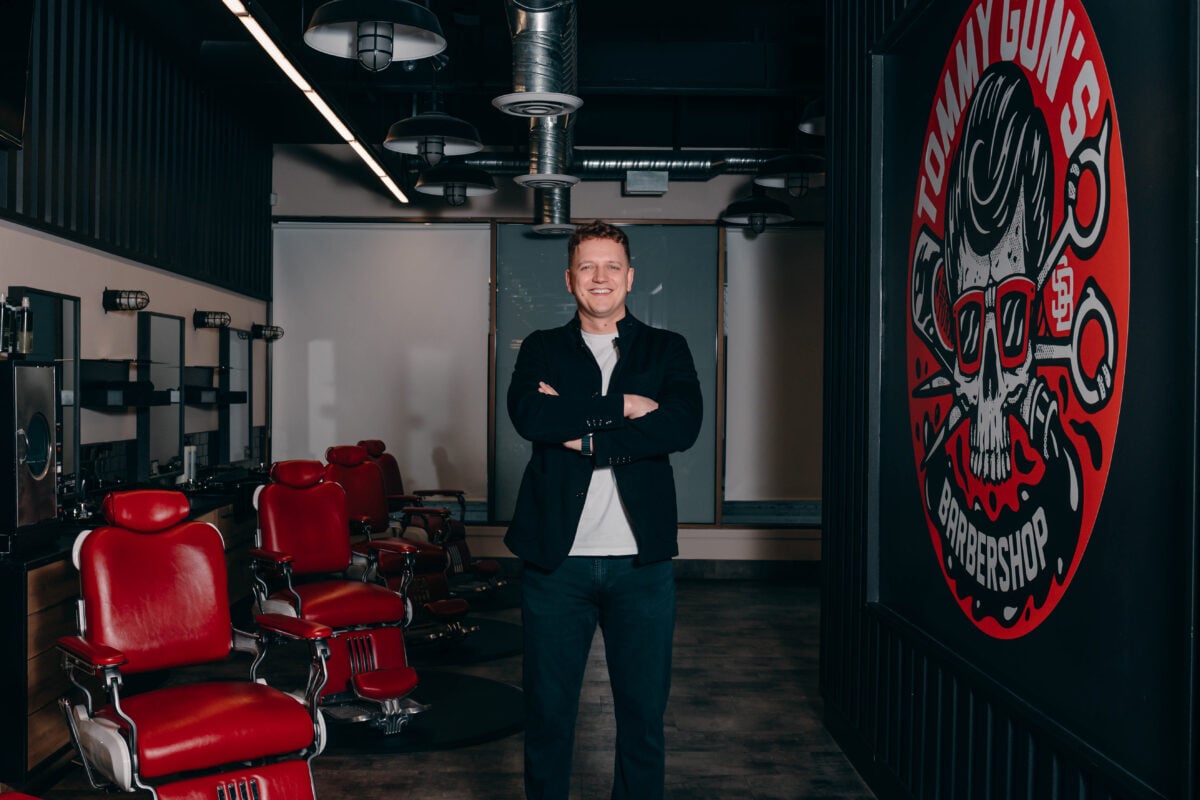
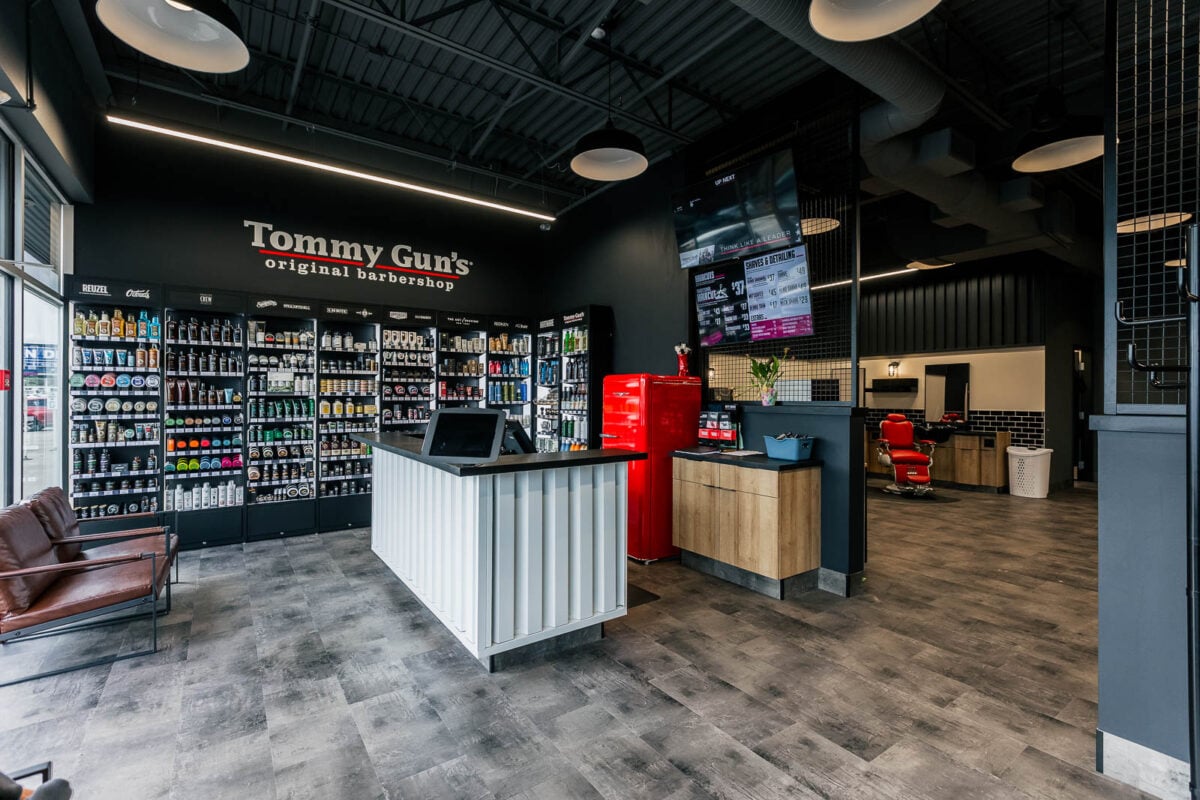
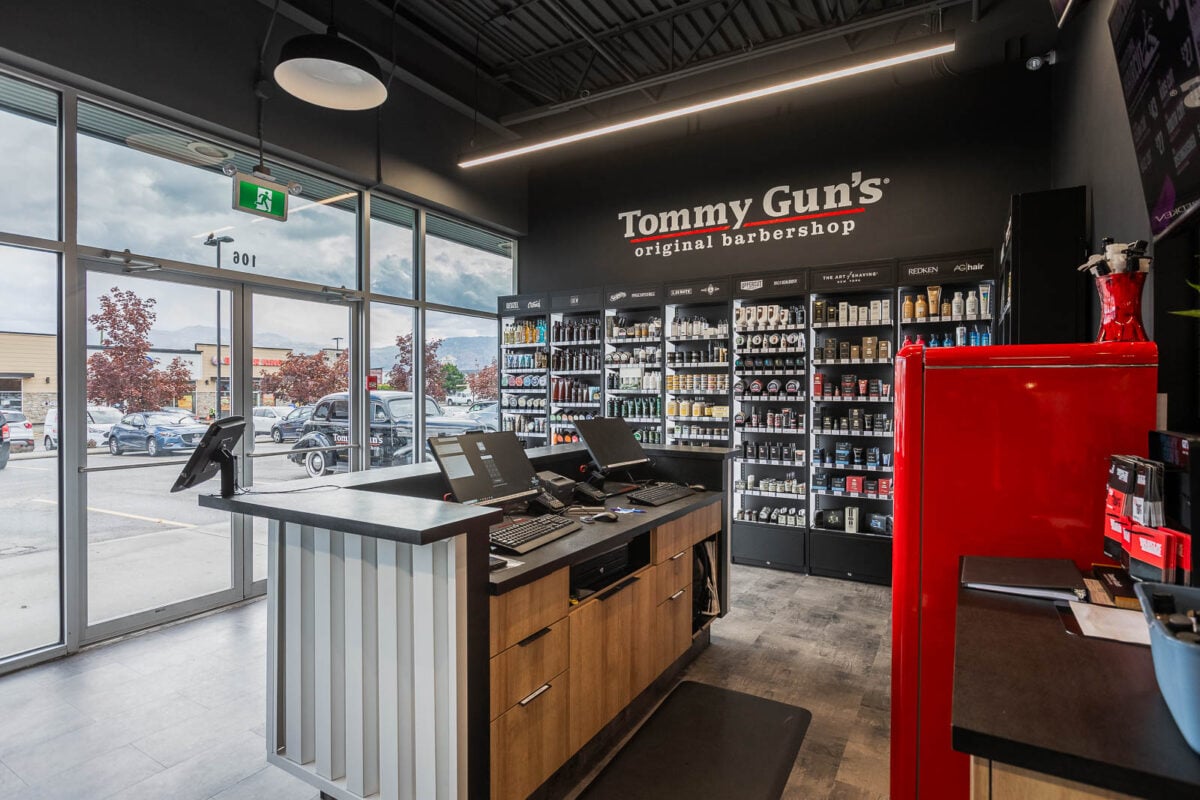
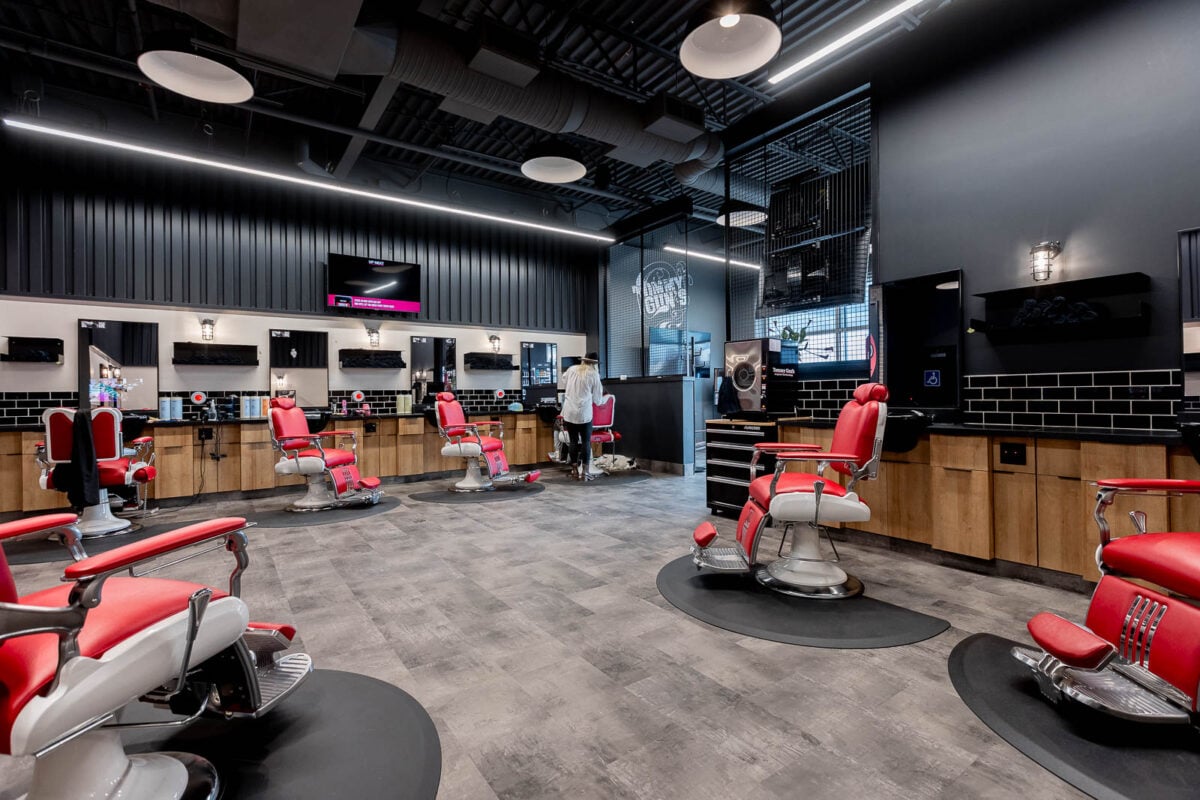
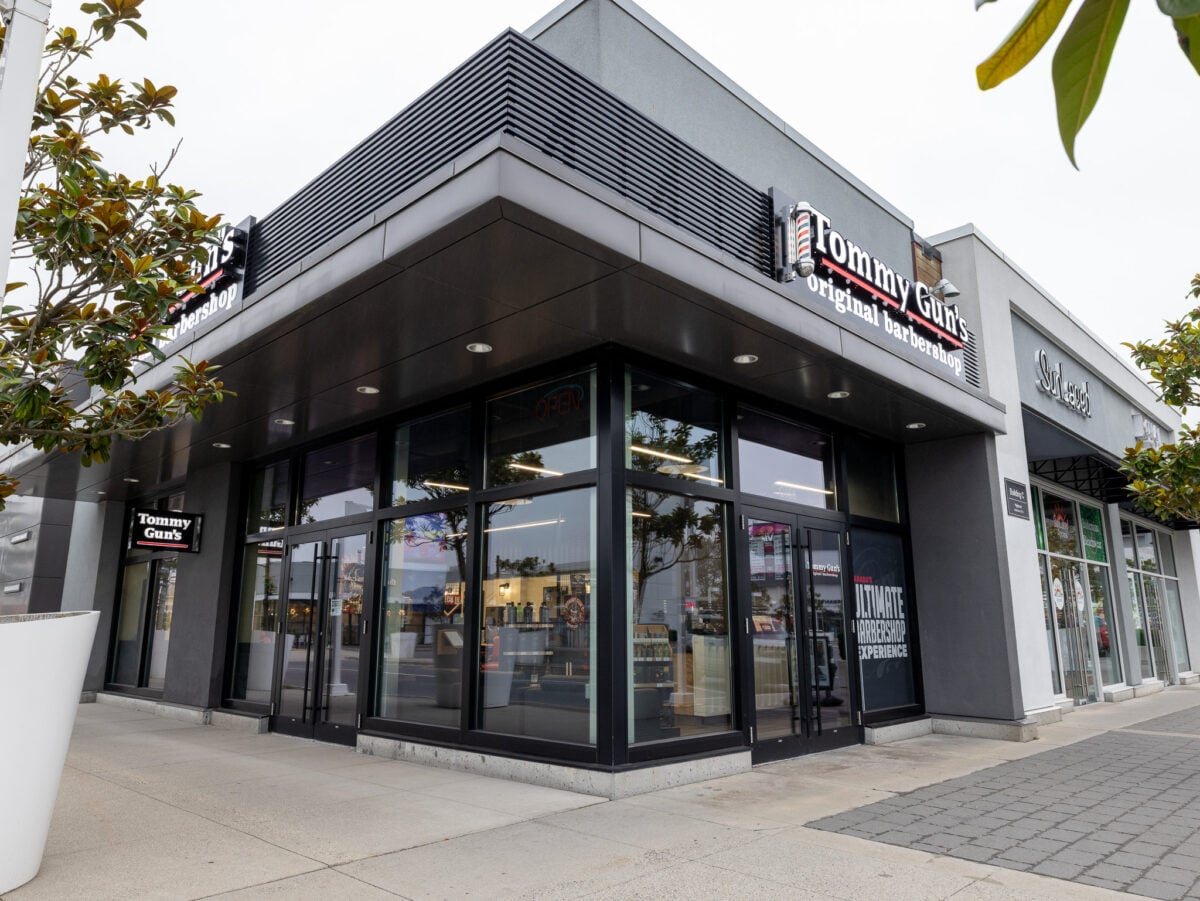
Tommy Gun’s Original Barbershop started in Red Deer, Alberta in 2009. It’s now past 100 locations across Canada, the US, Australia and New Zealand, just picked up back-to-back Best Health & Beauty Franchise wins, and keeps expanding.
Skilled barber shortages are a real, industry-wide problem right now. Tommy Gun’s has built a specific answer to it: a real career ladder from barber to franchise owner, backed by Tommy Gun’s University, its in-house training platform.
And Tommy Gun’s Original Barbershop is expanding hard right now. It has strong BC and Ontario growth, with at least one location doing seven figures in gross sales. Many owners went from barber to franchisee.
What began in 2009 as one Canadian barbershop with a vision to reinvent the traditional barbershop experience has grown into one of the world’s fastest-growing premium barbershop brands.
Since launching in 2009, Tommy Gun’s has grown to more than 100 locations across Canada, the U.S., Australia, and New Zealand. What have been the key drivers behind that growth, and how has the brand evolved as the business has scaled?
I think the key drivers behind our growth have been our focus on always being a leader and innovator in our space. We’ve consistently worked to lead in systems, experience, and brand across every market we operate in.
Because we have a relentless focus on continuing to evolve the brand and guest experience, we’ve been able to enter new markets at a quicker pace than many of our competitors and outpace the growth of the industry.
Another key driver has been our commitment to the success of our franchise owners. We’ve built a strong model that has resulted in very few closures and low franchise owner turnover. That consistency has created compounded success over the years.
As we’ve scaled, we’ve also never strayed from our people-first focus. We’ve leveraged technology to enhance every part of the experience around it, while maintaining the same core values that have been part of the business from the beginning. As a 100% privately held Canadian family business, we’ve maintained that family-oriented approach from 10 locations to more than 100.
Keenan Fisher
How many new locations does Tommy Gun’s expect to open over the next three to five years, and what markets or regions are the biggest priorities for expansion?
Over the next three to five years, we plan to open approximately 30 to 50 new locations in Canada and 50-plus internationally.
In Canada, Ontario and British Columbia continue to represent some of our biggest opportunities, with strategic growth planned in the Maritimes and Prairie provinces as well.
The U.S., Australia, and New Zealand are still much earlier in their growth paths, so there is a significant amount of open market and opportunity for expansion in those countries.
What does the current Tommy Gun’s location model look like in terms of company-owned versus franchised stores, and how important is franchising to the brand’s future growth strategy?
Franchising is everything to us. We believe organizations and networks work best when they’re fully committed to a specific path, and we are completely committed to the franchise structure.
We’ve built our organization to provide an incredible level of franchise support and have developed the infrastructure required to support successful growth through franchising.
All our locations are franchise-owned, and it is our mandate and strategy to continue growing that way. Franchising is critically important to the future of Tommy Gun’s.
Tommy Gun’s photo
As Tommy Gun’s expands internationally, how do you maintain a consistent brand and customer experience while adapting to different markets? And what have you learned from operating across multiple countries?
The two key pillars for maintaining consistency in our brand and guest experience are having great systems, measurements, and tools, and pairing those with the right partners and people.
That includes our support office team, our master franchise partners in Australia and New Zealand, and strong, well-suited franchise partners throughout our network.
One thing we’ve learned from operating across multiple countries is that the essence of the Tommy Gun’s brand and experience resonates across a wide variety of markets.
At the same time, there are always nuances between countries, whether they’re related to consumer expectations, or the overall guest experience. Making that 10 to 20 per cent adjustment to suit each individual market is what allows us to remain relevant and successful while still maintaining the core Tommy Gun’s experience.
Having strong master franchise partners, including Luke and Grace in Australia, has also allowed us to grow and expand overseas in ways that would be much more difficult to accomplish without knowledgeable local partners.
Tommy Gun’s photo
Looking ahead, what are Tommy Gun’s biggest growth opportunities beyond adding locations, including plans for customer experience, technology, services, partnerships, or other areas of the business?
One of our biggest strengths is our ability to continually evolve our systems and guest experience.
We aim to be leaders in technology and innovation, as well as in the overall guest experience. We’re continually implementing and launching new proprietary technologies that improve operations within the shops, strengthen our back-end analytics, and enhance the way we support and operate the network.
At the same time, we’re continuing to improve how we engage with our guests, both inside and outside of our locations. The goal is to enhance the guest experience across every touchpoint and continue finding new ways to make the Tommy Gun’s experience more seamless, convenient, and engaging.
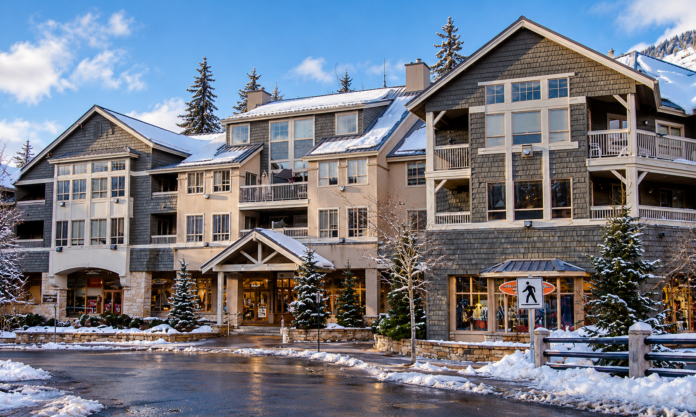
Tyndall Stone Lodge in Whistler BC. Image: Jody Wright
Mountain Equipment Company (MEC) is opening a 2,200-square-foot store in Whistler Village this fall, introducing a significantly smaller retail format as the Canadian outdoor retailer continues to invest in its store network.
The store will open at 104–4338 Main Street in Tyndall Stone Lodge, in a retail space previously occupied by Arc’teryx. It will become MEC’s 25th location nationally, seventh in British Columbia and first in the Sea to Sky corridor. MEC is targeting a soft opening on October 31, followed by a grand opening around Whistler’s resort opening weekend in late November.
The Whistler location represents a substantial departure from the larger stores historically associated with MEC. The company will use the smaller space for a tightly selected assortment suited to Whistler and the surrounding Sea to Sky market, supported by access to MEC’s broader inventory online.
“The size of the store is new for us, but what people experience when they walk through the door should be unmistakably MEC,” said Peter Hlynsky, CEO of MEC. “You should be able to talk to someone who knows the mountains, understands the gear, and can help you make a good decision.”
Hlynsky said Whistler will also allow MEC to learn from a format that “could shape how we serve other markets in the future.”
Peter Hylnsky hiking in the high alpine near Whistler this summer with one of his daughters
A Much Smaller MEC
At 2,200 square feet, the Whistler store is considerably smaller than the large-format locations traditionally associated with MEC, where broad assortments can span camping, hiking, climbing, cycling, snowsports, apparel and footwear.
Whistler will instead carry a focused assortment of regional and international outdoor brands alongside MEC Label, with products selected for the four-season needs of the resort community and Sea to Sky corridor. Customers will also have access to MEC’s wider assortment through MEC.ca, including delivery to the store for pickup where available.
Staff expertise will remain central to the smaller format, with MEC emphasizing employees familiar with the equipment, terrain and conditions in the region.
“MEC has been helping Canadians get outside for more than 55 years, and as we think about where and how we grow, Whistler is a natural fit,” Hlynsky said. “It’s a community that knows the outdoors, expects a lot from its gear and values advice from people who have actually used it.”
MEC Enters an Established Outdoor Retail Market
Whistler gives MEC access to one of Canada’s most established outdoor recreation markets, while placing the retailer among a concentration of technical outdoor, ski and snowboard businesses serving residents and destination visitors.
The new store’s space in Tyndall Stone Lodge was previously occupied by Arc’teryx, which has since relocated elsewhere in Whistler Village. MEC will join a market that already includes international outdoor brands and independent specialist retailers.
The location will also showcase MEC Label products. The line is designed by the company’s in-house team in Vancouver, with MEC saying its staff test products in outdoor conditions that include the nearby Coast Mountains.
Whistler’s year-round visitor economy gives the store a customer base extending beyond local residents. The broader Sea to Sky corridor is closely tied to skiing, snowboarding, mountain biking, hiking, climbing and other outdoor activities.
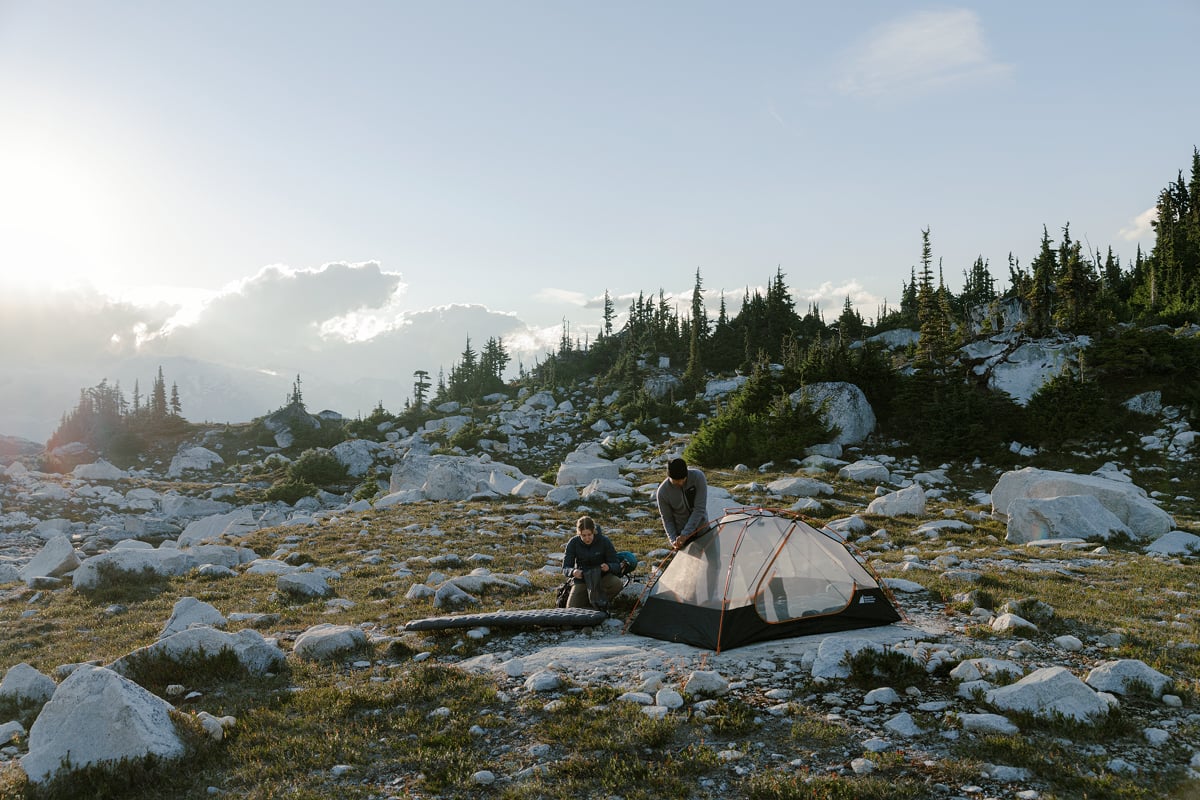
MEC Whistler Alpine camping Image
Smaller Formats Emerging at MEC
The Whistler opening follows another small-format experiment by MEC in British Columbia.
In June, MEC opened its first permanent standalone Gear Swap Store alongside its Kelowna location. The roughly 2,200-square-foot space allows members to trade in used outdoor gear for credit, purchase secondhand equipment and access repair services. MEC has described Kelowna as a test-and-learn environment for the concept.
Gear Swap serves a different purpose from Whistler, which will operate as a regular MEC store with a curated assortment. Both represent departures from the conventional large-format MEC model.
MEC has similarly described Whistler as an opportunity to learn. Hlynsky said experience from the store could help shape how the retailer serves other markets, although the company has not announced a broader rollout of the format.
Tyndall Stone Lodge in Whistler BC. Image: Jody Wright
Investment Following Return to Canadian Ownership
The Whistler opening comes during a period of investment following MEC’s return to majority Canadian ownership in 2025.
MEC traces its roots to Mountain Equipment Co-op, founded in Vancouver in 1971. The former member-owned co-operative was acquired by Los Angeles-based Kingswood Capital Management in 2020, ending the co-operative ownership structure.
In May 2025, control shifted to a group of Canadian investors led by Tim Gu, chairman of Unisync Corp. Hlynsky and Chief Merchandising Officer Chris Speyer were also part of the investor group, while Kingswood retained a minority interest. MEC had 24 standalone stores at the time of the transaction.
MEC has since pursued several initiatives across its stores and product business. Along with the Kelowna Gear Swap concept, the retailer has reinvested in its Laval and Kelowna stores, revived its printed catalogue and accelerated product development through MEC Label.
Community programming has also expanded. Train for the Trails, a free national program focused on trail-running skills and confidence, brought thousands of participants together at MEC stores, according to the company.
The Whistler store adds another format to those investments, applying MEC’s assortment, staff expertise and digital offering to a footprint substantially smaller than its conventional stores.
October Opening Planned
MEC is targeting October 31 for the Whistler store’s soft opening, ahead of the winter season. A larger grand opening is planned around Whistler’s resort opening weekend in late November, with a Locals Night also planned beforehand for the Sea to Sky community.
Following the opening, MEC will operate 25 stores nationally. The company says it has more than five million members across Canada.
Italian coffee company Lavazza is looking to significantly expand its presence in Canada as part of a broader North American growth strategy, with increased distribution, new consumer touchpoints and further investment in markets where the brand remains underrepresented.
The push is becoming increasingly visible in Canada. Lavazza has expanded its relationship with the Toronto International Film Festival (TIFF), extending its role as Official Coffee Partner through 2028 while becoming Gala Presenting Partner and introducing its first Red Carpet Lavazza Bar at Roy Thomson Hall.
The expanded TIFF presence comes as Lavazza pursues a much larger ambition for North America. The company has set a goal of more than doubling its business in the region by 2028, according to Daniele Foti, Vice President of Marketing for Lavazza North America, with Canada expected to play an important role in that strategy.
“The results have spoken for themselves – the engagement we’ve seen from Canadian audiences each year has been genuine and it’s only grown, which made deepening our involvement and extending our partnership into 2028 an easy call,” Foti told Retail Insider.
Lavazza’s Canadian plans extend well beyond marketing. The company sees room to increase distribution across grocery, e-commerce, foodservice and workplace channels, while moving further into parts of the country where its presence remains relatively limited.
“Canada plays a real role in why North America is such a priority for us,” Foti said. “It’s part of one of the largest global coffee markets, and we’re seeing real growth here.”
The strategy already has momentum. Lavazza Group reported that North American revenue increased 26.9 per cent in 2025, driven primarily by retail and e-commerce. Foti said the company made a decision in 2023 to more aggressively pursue the potential it saw in the region.
“We set the ambition to more than double our business here by 2028 – making it our most strategic growth market,” he said.
Lavazza x Cinema Lavazza
Canada Takes Larger Role in North American Strategy
Founded in Turin in 1895, Lavazza has grown from a family coffee business into an international group with operations across numerous markets. While the company’s European presence is well established, North America has become an increasingly important focus.
In Canada, Lavazza operates across grocery, e-commerce, foodservice and workplace channels. Its foodservice business includes hotels, restaurants and bars, while the company also supplies coffee and equipment for workplace environments, adapting its machines and offerings to different business requirements.
“All of our channels represent real opportunity for us,” Foti said. “For us, growth isn’t just about selling coffee through more channels, it’s about using each one as a way to be present and stay relevant to consumers, wherever they’re choosing to get their coffee.”
Lavazza products are already carried by major Canadian grocery retailers including Loblaw and Sobeys and are available through Amazon, according to Foti. The company also works with foodservice and workplace clients across the country, although he said considerable room remains to broaden its distribution.
“We’ve traditionally been strongest in big cities, particularly Toronto and the East Coast, so we see real opportunity to keep building there, and even more so on the West Coast, where our presence is still relatively light.”
Western Canada Offers Further Potential
Western Canada is an interesting area of opportunity given Lavazza’s longstanding connection to the region through Kicking Horse Coffee.
Lavazza acquired an 80 per cent interest in Invermere, British Columbia-based Kicking Horse Coffee in 2017 in a transaction that valued the Canadian company at $215 million. The investment was positioned at the time as part of Lavazza’s strategy to accelerate its development in North America. Kicking Horse has since become a wholly owned subsidiary of Lavazza.
The acquisition formed part of a longer expansion on the continent. In 2021, Lavazza established its first U.S. roasting and packing operation in Pennsylvania, another investment that reflected the growing importance of the North American market.
For the Lavazza brand itself, however, Foti said the West Coast remains relatively underrepresented. That creates an opportunity to build distribution in Western Canada while continuing to deepen the company’s presence in Toronto and other established markets.
Lavazza x Union Station Pop Up
Canada and U.S. Are Different Coffee Markets
Lavazza is not treating Canada simply as an extension of its U.S. business. Foti said the company sees differences in coffee preferences between the two countries, including what he described as a stronger European influence in Canada, particularly around espresso.
“They’re similar in a lot of ways, but different too,” he said. “In Canada, we see a stronger European influence in coffee culture, particularly around espresso, which shapes both consumer preferences and how we go to market.”
Qualità Oro is one example of how those differences affect Lavazza’s assortment. The blend is an important product for the company in Canada but does not have the same prominence in its core U.S. offering.
“Qualità Oro, for example, is one of our hero products here in Canada, but it’s not a major part of our core offer in the US,” Foti said. “Our approach in Canada leans more into that stronger espresso culture, rather than a one-size-fits-all North American strategy.”
Coffee consumption remains high across Canada. The Coffee Association of Canada’s 2025 Canadian Coffee Drinking Trends study found that 71 per cent of adults surveyed had consumed a coffee beverage the previous day, while 29 per cent reported consuming an espresso-based beverage.
Higher prices are nevertheless affecting how some Canadians buy coffee. The association has reported consumers seeking promotions, experimenting with different brands and adjusting some out-of-home purchases, adding another competitive consideration for companies operating in the premium segment.
TIFF Becomes Part of Broader Consumer Strategy
Lavazza’s expanded relationship with TIFF illustrates another part of the company’s Canadian strategy: creating opportunities for consumers to experience the brand beyond the grocery aisle.
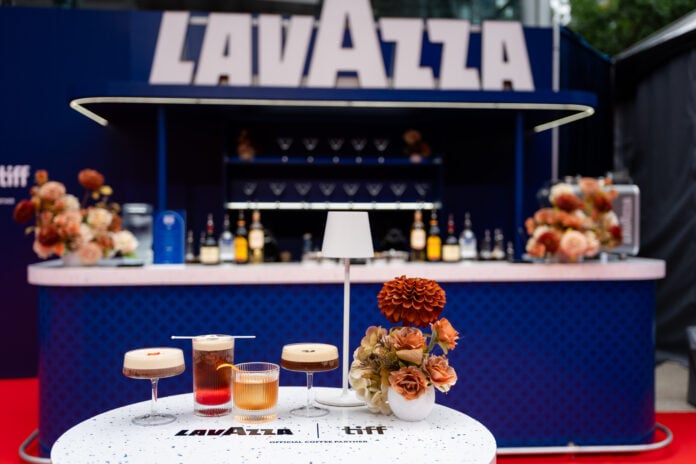
The partnership began in 2023 and has now been extended through 2028. This year’s program included the first Red Carpet Lavazza Bar at Roy Thomson Hall, where coffee and signature coffee-based cocktails were served to talent, filmmakers and guests.
Foti said the space was designed as an elevated hospitality experience where guests could pause during the activity surrounding the festival. The approach also allowed Lavazza to become part of the event experience itself instead of appearing primarily through conventional sponsorship branding.
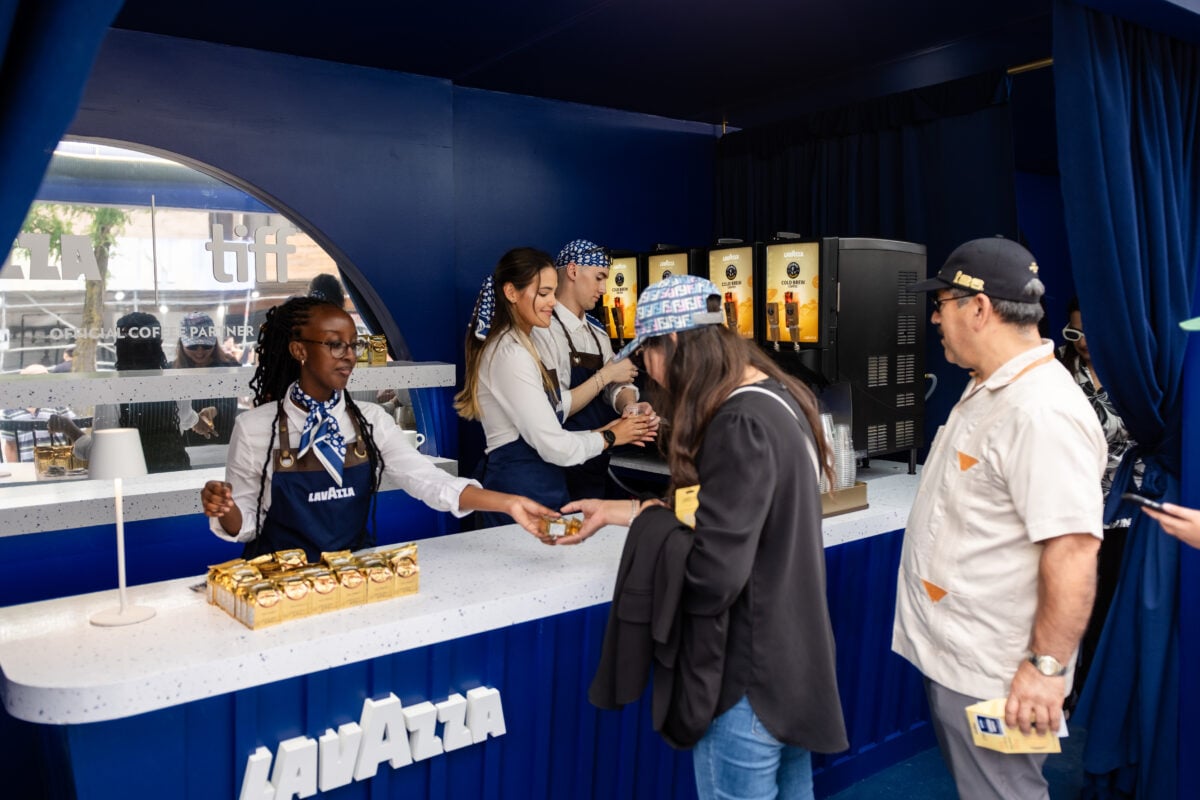
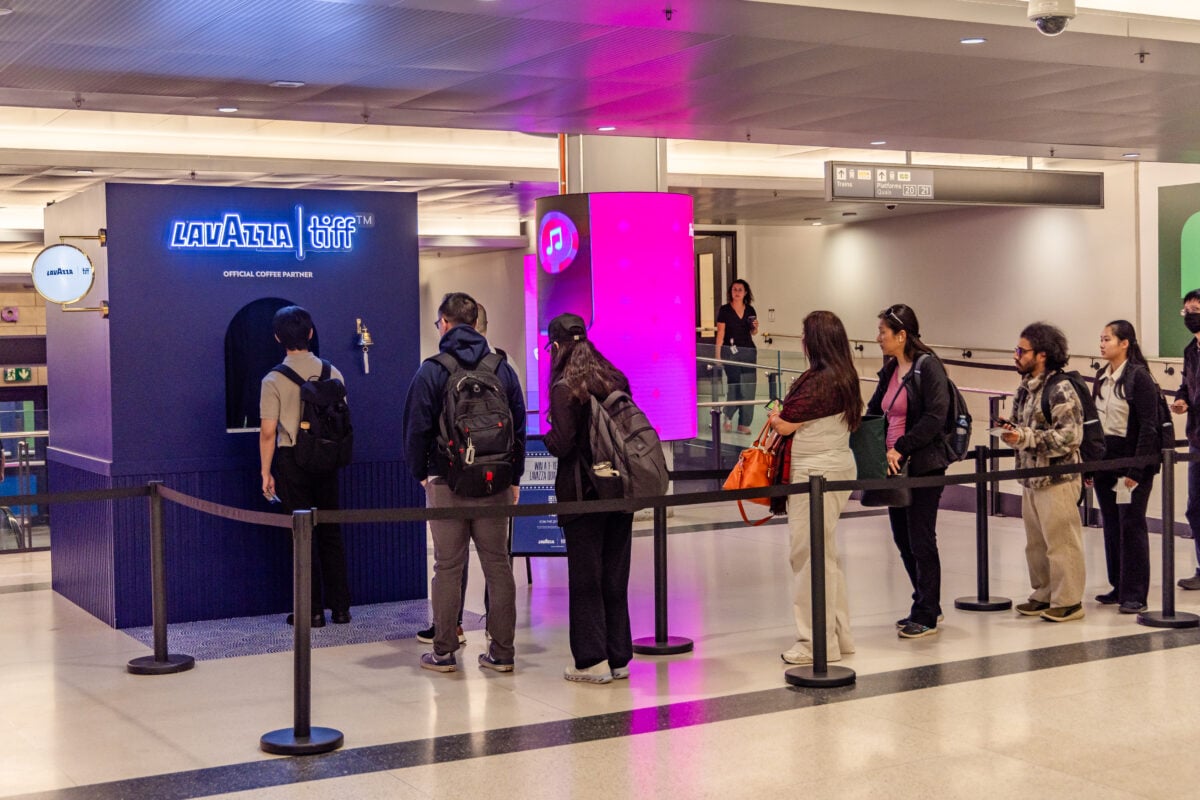
The company’s TIFF presence extended beyond the red carpet. Lavazza operated its Cinema Lavazza activation on King Street, participated in TIFF: The Market at the Metro Toronto Convention Centre and had an activation at Union Station.
“A festival like TIFF lets us build genuine connections with people, instead of just buying visibility,” Foti said. “Traditional advertising can tell people about a brand, but it can’t put them inside a real moment with it.”
He said that physical interaction can create a different kind of connection than conventional advertising.
“That kind of organic presence is what tends to stick with people; it’s a story they’re part of, not an ad they scroll past,” he said. “It also lets us show up as more than a logo – we’re contributing something to the moment itself.”
Lavazza x Union Station Pop Up
Measuring the Impact of Experiential Marketing
Lavazza evaluates partnerships such as TIFF through a combination of brand awareness, product sampling, lead generation and social engagement. Sales are also considered, though Foti said the impact of an event partnership extends beyond transactions generated while the event is underway.
Sampling can introduce consumers to the product, while social engagement extends the reach of an activation beyond those who experience it in person. The strategy also supports Lavazza’s broader effort to differentiate itself as competition intensifies in premium coffee.
“The premium coffee category is far more crowded than it used to be, with plenty of newcomers, so what matters most is building a brand that genuinely stands out,” Foti said.
Italian heritage is central to that positioning. Lavazza traces its blending tradition to founder Luigi Lavazza, who began experimenting with coffees from different origins after establishing his business in Turin in 1895.
Foti said the company’s history is less about emphasizing its age than demonstrating the experience and craftsmanship behind the product.
“We have over 130 years of experience behind us, and that’s less about being the oldest name in the room and more about the craftsmanship,” he said. “Conveying that story and value to consumers is honestly one of the biggest parts of my job.”
More Canadian Expansion Ahead
Lavazza expects to continue adding consumer touchpoints and expanding into Canadian markets where its presence is currently smaller as it works toward its broader 2028 North American objective.
Cultural partnerships will remain part of that effort. Foti said the company intends to pursue opportunities that provide a natural connection with the brand, with TIFF serving as one example of how Lavazza can combine product experience, hospitality and consumer engagement.
“You’ll see us continue investing in cultural partnerships that genuinely fit our brand, not just TIFF, but other moments that let us tell our story and connect with Canadians where they already are,” he said.
Those investments will run alongside the less visible work of broadening distribution across retail, foodservice, e-commerce and workplaces as Lavazza looks to establish a larger Canadian presence.
“All of that ladders up to the bigger ambition we’ve set for North America – building real, lasting relevance here, not just growing sales.”
Guac Mexi Grill is marking its 10th anniversary with 56 locations across Canada and plans to continue expanding at a pace of 10 to 15 restaurants a year over the next five years.
The Oakville, Ont.-based Tex-Mex chain, founded by CEO Trushna Makadia in 2016 after she spent a decade as a Extreme Pita franchise owner, is also preparing to open its first U.S. location and has begun expanding internationally.
Makadia launched Guac Mexi Grill after identifying an opportunity in the Tex-Mex market, with the company’s recipes, sauces and spices developed in-house. The franchise-only business has no corporate locations, and its original Brantford restaurant remains open under franchise ownership.
Trushna Makadia Khemie Khan
Steady growth over the years
Khemie Khan, Head of Marketing, said the company’s growth has been steady overall, despite a slowdown during the COVID-19 pandemic, with much of its early expansion driven by word of mouth and customers interested in opening their own locations.
The company is also undertaking a broader rebrand, including its website and restaurant interiors, as it prepares for further growth. Guac Mexi Grill’s preferred restaurant format is between 1,000 and 1,400 square feet, with a focus on inline or end-cap locations that include seating and space for on-site cooking.
Khan said the company is positioning itself around Tex-Mex cuisine, zero preservatives and food prepared in-house each day, while providing franchisees with marketing, training, operational and franchise development support.
The company, which is based in Oakville, Ontario, opened its first location in 2016 in Brantford, Ontario. It will also be expanding into Texas in the near future.
“So 10 years ago, our owner, Trushna Makadia, she is the one who founded Guac Mexi Grill. She was a franchise owner of Extreme Pita for 10 years before that, so an owner-operator herself. She’s been in the system. She knows the ins and outs. She’s been behind the counter,” said Khan.
“She stepped out of that with the intention of building something that’s her own. And she found the gap with Tex-Mex food, and hence the birth of Guac Mexi Grill.
“Every recipe that you have in our stores, everything that you see, every item, has been curated by Trushna. All the spices, all sauces, every recipe is owned by Trushna. So everything that we do is truly house made, truly a house recipe, something that is privately ours altogether at Guac.
“So that’s the backstory. Really wholesome, as Trushna is an immigrant herself to Canada, and having that experience of working behind the scenes and behind the counter, growing her brand to 56 locations in under 10 years.”
Guac Mexi Grill photo
Franchise-owned model
All locations are owned by franchisees.
“If you take a look at just from our inception to now, we had that slowdown period due to COVID. But right before COVID, it was just exponential growth. That’s where we had that ramp-up. We had everyone onboarded. There was interest in the market,” said Khan.
“Without being at conventions, people were visiting Guac and interested in opening their own Guac after trying the food themselves. So it really came from that word-of-mouth opportunity. Post-COVID, we did have a slowdown in our growth, but still steady enough to now say that we’re expanding in India and U.S.”
She said that over the next five years the brand is looking at growth of 10 to 15 locations every single year.
“We are looking at massive expansion, and where we are. We’re using our leverage in the States as well to pull and drive that growth. As we launch our brand in the States, that’s where we’re looking to also create those partnerships so that we can see that growth duplicate itself as what we’ve seen over the last 10 years.”
Guac Mexi Grill photoGuac Mexi Grill photo
Major rebranding initiative
Just under a year ago, the brand started to make some big changes throughout the company so that it could truly highlight who Guac is.
“And who we are is a Tex-Mex brand. We serve Mexican food . . . We are very keen, and we are very specific to say we offer Tex-Mex cuisine because we don’t offer an authentic Mexican culture. That is the first thing that differentiates Guac Mexi Grill, is our honesty and transparency to our customers in who we are and what we have to offer.
“Second to that is that we do believe in zero preservatives. Our food, though we like to stay away from the key word fresh because everyone uses it out there, we like to stay away from it because we really are… It’s all real ingredients. It all is real food. We prep everything in-house every day. Part of our core concept is cooking every single meal every day, so it’s right there in front of you. You feel like you’re getting that boutique service, but in a fast-paced environment.”
The ideal format for the brand is a store of between 1,000 to 1,400 square feet.
“Ideally, we’re looking for an inline or end cap unit. We do require that seating area. We want to be sure that our customers have that seating space and opportunity, but it’s also a fast-casual environment.
“We do live cooking on-site. We do not like to store overnight, so everything is live cooking on-site every single day.
“We’re very diverse in our current portfolio. We have multi-unit operators as well as first-time business owners, first-time restaurant owners, and those who have multiple brands under their portfolio. It’s a very diverse market altogether within Guac, and we’re very open. We have the marketing and training and operational support to help each of these groups and each of these types of operations so that they can see that success from day one.”
In the past year, the company website and stores were freshed up and rebuilt as it rebranded. As stores come up to renewal, as stores see the benefit in the renewed structure, they will be renovating all of their stores.
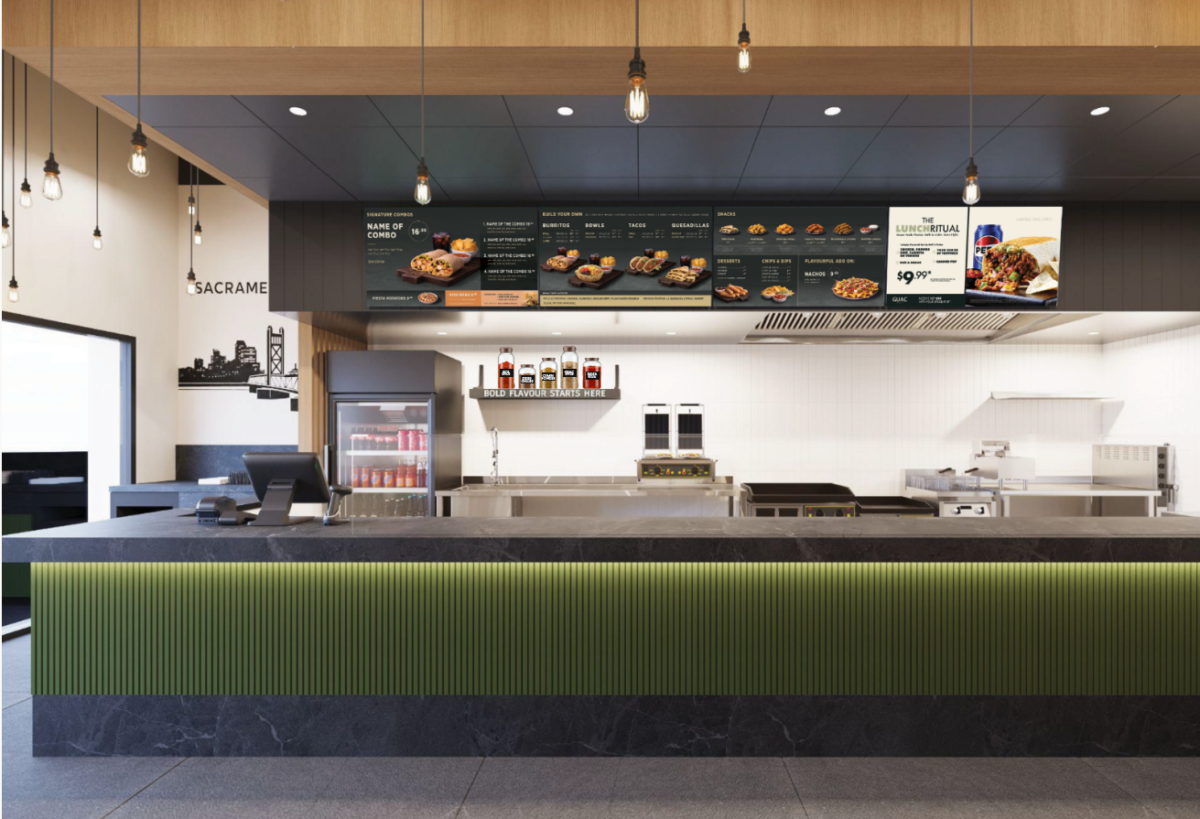
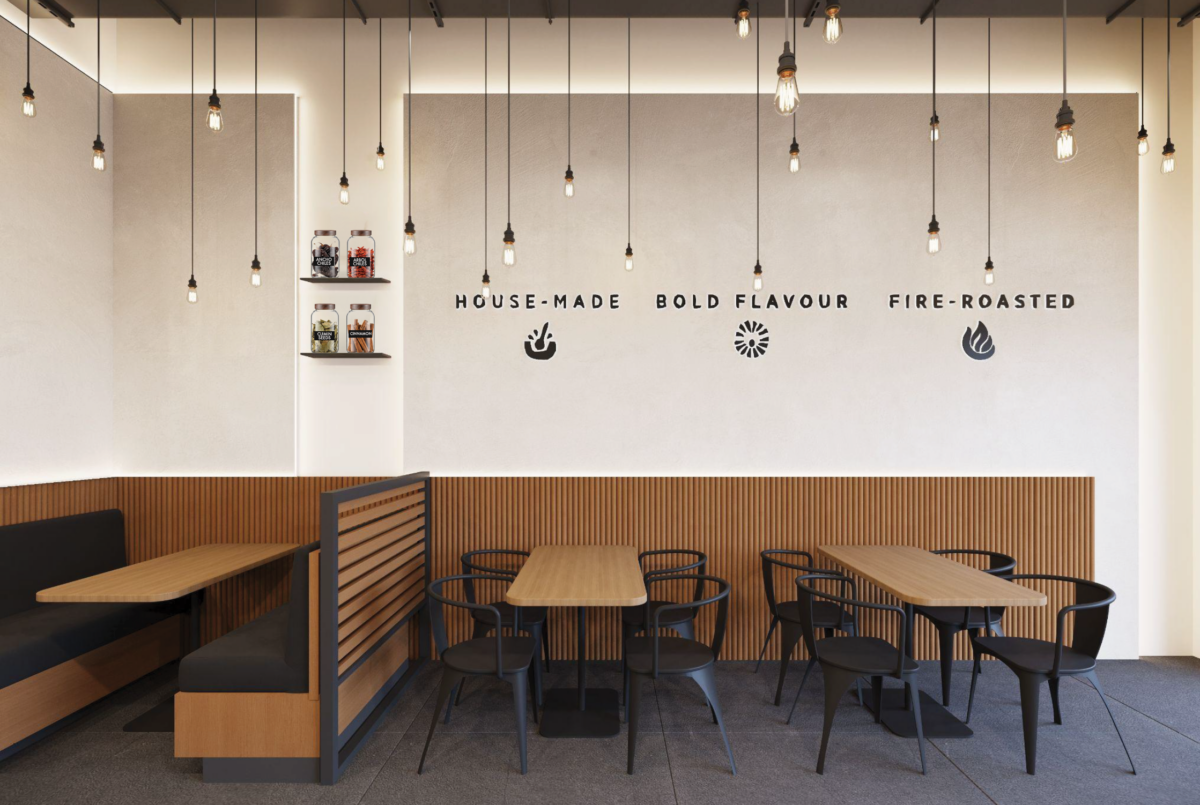
“It’s contemporary. It has that wooden, authentic feel there. So you have that industrial vibe, moving away from that fast-food-paced type of look and feel.“
Tara Tomulka’s path to building a food company began with burnout, anxiety and a growing realization that what she was eating was affecting how she felt.
After years working in corporate communications, Tomulka turned to nutrition and plant-based eating to help manage stress and improve her energy, eventually returning to school to become a holistic nutritionist and launching Rawcology as a blog in 2015.
What started as a way to share recipes and what she was learning about nutrition soon evolved into culinary classes, including the development of George Brown College’s first raw food course and its Vegetarian Culinary Arts 2 program.
A co-op experience with a nutritionist who had built a snack-food business also exposed Tomulka to the potential of creating healthier packaged foods, while her own frustration in grocery-store aisles convinced her there was an opportunity to do things differently.
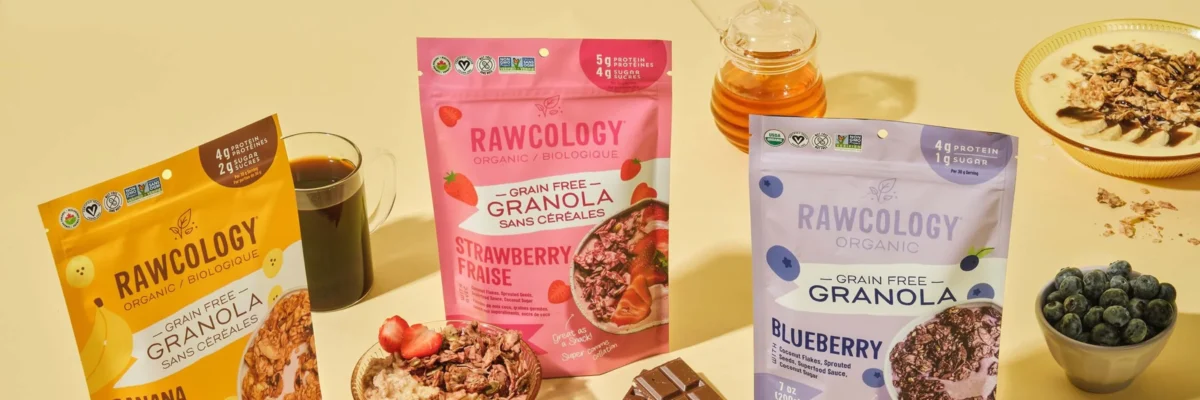
In 2017, Tomulka turned Rawcology into a food business, launching a line of coconut chips made with organic, plant-based, low-sugar ingredients and without common allergens such as peanuts, tree nuts and gluten. Nearly a decade later, the company is continuing to expand its distribution while Tomulka remains focused on the principle that prompted her to start the business: making nutritious, better-for-you food more accessible without compromising on the quality of its ingredients.
Tara Tomulka Rawcology photo
Genesis of the idea came initially from teaching courses
“I was teaching in my condo. I was teaching at other people’s homes. I would rent different spaces and teach classes, like rent spaces and teach classes there. And then, as part of my journey too, I developed and taught courses at George Brown College in their food program,” says Tomulka, the brand’s CEO.
“At George Brown, I developed their first-ever raw food course and their Vegetarian Culinary Arts 2 program. So all plant-based food courses. And then also was teaching other food nutrition workshops. I had gone back to school to become a holistic nutritionist as well, and so the classes were largely focused on nourishing, holistic nutrition-focused recipes.”
Today, Tara’s sister, Laura Powadiuk, and sister-in-law, Megan Loach Tomulka, help run the venture.
Corporate burnout, stress and anxiety
Before venturing into this new concept, Tomulka had found herself in a period of burnout, stress and anxiety after working in corporate communications for a number of years.
“I had turned to nutrition as a way to feel better. I was very into reading other blogs about plant-based nutrition. I was very interested in healthy eating and wellness. And from everything that I was learning, I learned that food is powerful and life-changing. When you change your diet, it really can completely change and overhaul your lifestyle. So because of the changes that I had made, I was able to better cope with stress and anxiety, just feeling more energized day to day as a result.
“And so I was really inspired by that and from everything that I had learned. I wanted to go back to school for holistic nutrition to focus on that. It really was about just following what was calling me to learn more about. I went back to school to become a holistic nutritionist in nutrition school and, and so yeah, went back to nutrition school, first launched Rawcology in 2015 as a blog to share recipes and content. All of the information that I had been learning, wanted to share that with the world and started teaching the culinary workshops and classes and had also the opportunity at George Brown College because of the platform that I had built with Rawcology. That’s how the administrators at George Brown had found Rawcology and everything that I was teaching, so they had brought me in to develop their food courses.”
Tara, Megan & Laura
Starting a snack food business
When she was in nutrition school she had done a co-op with another nutritionist that had started a snack food business. From that experience, she learned a lot from everything that woman had built and Tomulka was really inspired by that and the ability to create healthier, better-for-me food products.
“At the same time, there was definitely a frustration I felt walking in grocery stores. I’d pick up the back of the package and not understand why packaged food needed to be the way that it was and still largely is today, filled with refined sugars, cheap ingredients, and inflammatory oils that ultimately make individuals sick,” she explains.
“And so I was really inspired to create healthier, better-for-you packaged foods. I had already been making my own snacks and recipes at home, and knew that if I had that frustration with packaged foods, that other people felt the same way and that there was a gap in the market for better quality, better-for-you products.”
The launch of Rawcology
Rawcology first launched its food products with a line of coconut chips in 2017. Everything from the get-go was organic, plant-based, low sugar, and uniquely free from common allergens like peanuts, tree nuts, gluten, so that everyone could enjoy them regardless of dietary restrictions.
Prior to the launch and her journey, Tomulka admits she didn’t know much about nutrition.
“It was starting the day off going to Starbucks, getting a venti coffee and a yogurt. A simple yogurt and coffee for starting the day off. And then lunch was bought from the food court, not necessarily the best ingredients. And then at home it was relatively healthy, but I didn’t have the nutrition knowledge of truly how you nourish your body. So as a nutritionist, how I approach all meals today is you want the fab four.
“Healthy fiber, good fats, protein, and greens at every meal. And that’s how I like to frame setting yourself up for success.”
Rawcology photo
Sustainable energy throughout the day
Because of the transformation of the diet, Tomulka feels sustainable energy throughout the day.
“And now because of the diet changes, I’d say I do follow intuitive eating. I don’t like to be completely restrictive. There are times when I’m going to have a regular pizza and some sugar, but I feel the difference strongly.
“And you’re more aware too of what makes you feel good. Sustained energy, less anxiety and stress too. And I think when I am very conscious about getting enough protein, getting enough fiber, getting a variety of fruits and vegetables in my diet, I do feel it’s the energy that you get from your food too.”
The changing consumer
Definitely today we’re seeing a focus on protein and fiber as consumers are much more aware of the amount of protein that they should be getting, says Tomulka.
“Consumers are definitely more focused on getting a variety of protein into their diets. There’s also more of an awareness on the importance of fiber in our diets too, and how critical that is . . . There’s a greater emphasis and awareness on the importance of having both the protein and fiber in your diet. And so understanding where that fiber comes into, looking for more products with fiber, I think that’s been a big shift. And awareness of sugars too.”
Tomulka says a lot more consumers are aware of sugars to avoid and limit, and the negative impacts that sugar has in your body.
Challenges in starting up a business
She says there are two ways you can set up a food business. Either you get a co-manufacturer to produce your product, or you get into manufacturing the product yourself.
“And so one of the biggest challenges for us has been the manufacturing side. From the get-go, we have always manufactured our products, and I didn’t come from a manufacturing background, so it’s been a lot of learning along the way in terms of what’s required to build the business and then scale the business from that manufacturing side.
“That has been the challenge in terms of understanding food safety, how do you scale, what are the certifications needed? And then as we continue to grow the ability to scale, invest in new equipment, what is that track for sustainable growth in manufacturing? Those are definitely some of the largest hurdles we’ve faced in terms of the manufacturing side of the business.”
Tara, Megan & Laura
Future plans for the company
“For us, it is always staying true to the why. Why did we start this business in the first place? And it’s always been about the integrity of ingredients, so creating nutritious products with the highest quality ingredients,” adds Tomulka.
“We will never waver from that. And so the goal is to make healthier, better-for-you products more accessible across Canada, US, and internationally. We’ve had a lot of incredible growth in the past year with Costco . . . We have some exciting developments for this year and next year as well for increasing our distribution internationally as well. It is just continuing to grow and deliver better-for-you products locally and internationally, making healthier eating more accessible.”
While the company is based in Toronto, it moved its manufacturing facility to Niagara-on-the-Lake with a storefront in partnership with AM Ingredients during the summer.
Companies have always tried to predict what customers will pay – airlines have long adjusted fares based on demand, and retailers have experimented with personalized prices. But AI is giving companies a much more powerful way to answer an old question:
Cohen says AI is taking pricing from broad segmentation to much more granular personalization.
“Traditional dynamic pricing typically adjusts prices based on factors such as demand, inventory, or time, whereas AI can combine a large number of signals about an individual customer, including purchase history, browsing behaviour, location, and other contextual information, to estimate willingness to pay in real time. The result is the possibility of moving closer to the “right price for the right customer at the right time”,” he says.
Maxime Cohencottonbro studio photo
Personalized pricing to grow
Cohen says he expects personalized pricing to grow significantly, but much of it may initially take the form of personalized discounts, promotions, and offers rather than different posted prices for every customer.
“Adoption will be fastest among large e-commerce retailers, marketplaces, travel companies, and loyalty-driven businesses that have rich customer data, frequent transactions, and the technological infrastructure to experiment at scale. The book emphasizes that sophisticated AI-based pricing is already particularly feasible for businesses with large customer bases, substantial data, and strong technological capabilities,” he says.
Charging two customers different prices is not inherently problematic; we already accept this in settings such as airlines, hotels, student discounts, and loyalty programs, explains Cohen.
“The concern arises when the difference feels unfair, exploitative, or discriminatory, particularly when consumers do not understand why they are paying more or when pricing relies on sensitive attributes or proxies for them. With AI, the key challenge is not simply whether prices differ, but whether those differences can be justified and explained as fair and transparent,” he says.
Ketut Subiyanto photo
Big opportunity for retailers
The opportunity is enormous for retailers, says Cohen.
AI can help retailers respond faster to market conditions, better predict demand, target discounts more effectively, and enhance both revenue and profitability. But pricing is very sensitive because customers immediately notice when they feel they have been treated unfairly; an algorithm that produces a short-term profit increase can in some cases destroy long-term trust and loyalty if customers believe they are being exploited. The best pricing algorithm is not necessarily the one that extracts the highest price today, but the one that creates sustainable value over time,” he says.
Cohen says Generative AI could democratize sophisticated pricing because retailers will increasingly be able to ask an AI system to analyze products, markets, competitors, and customer contexts and recommend a price without the need of building a complex pricing algorithm from scratch.
“Looking further ahead, we may see the rise of agent-to-agent commerce, where consumers will delegate shopping decisions to AI agents that interact (and potentially negotiate) with retailers’ AI agents. As pricing becomes more autonomous on both sides of the transaction, the big question will shift from “Can AI recommend a price?” to “How much authority should we give AI to actually set and negotiate prices?”,” he says.
AI is playing a bigger role in how consumers research and buy, creating a growing trust question for brands: can their AI make accurate, relevant decisions with the customer information it has?
Amperity’s 2026 Consumer Priorities Report found that 78% of consumers are more likely to engage with personalized experiences when they trust how their data is being used, while 57.5% say invasive or “creepy” personalization makes them less likely to choose a brand.
Enterprises are also putting AI to work across customer data at greater scale. Amperity saw sessions with AmpAI, its AI interface for working with governed customer data, grow nearly fivefold year over year in Q2 FY27.
That growth offers an early signal that trusted customer data is becoming part of the infrastructure behind AI-powered interactions.
Derek SlagerThirdman photo
Derek Slager, co-founder and co-CEO of Amperity, discusses the trend in an interview with Retail Insider.
As AI becomes more involved in product discovery, recommendations and purchasing decisions, what does’trustworthy’ customer data look like from a retailer’s perspective?
Trustworthy customer data is data a retailer can use to make a dependable decision about a real person. It has to be accurate, current, permissioned, and resolved across the systems where that person interacts with the brand. Those are production requirements, not abstract data-quality goals.
That standard matters because product discovery is increasingly happening outside the retailer’s own channels. In our 2026 Consumer Priorities Report, 80% of U.S. consumers who use generative AI said they act on its recommendations, while fewer than 23% said they go directly to a brand they already know without consulting AI first.
When an AI system becomes the first interface a shopper uses, the context behind its answer is doing work once performed by an associate who knew the customer and understood the situation.
Most retailers have plenty of data. The problem is that ecommerce, store, loyalty, service, and marketing systems often hold different versions of the customer. Before AI can make a sound decision, the retailer needs to know which records belong to the same person, which signals are still current, and what the customer has permitted the brand to do. An AI system can execute every technical step correctly and still make the wrong decision if that context is wrong.
What are the biggest risks for retailers when AI systems make decisions using fragmented, outdated or conflicting customer data, and how can those errors affect the customer experience?
The biggest risk is that AI turns a data problem into a decision problem, then scales it. A fragmented profile once produced an irrelevant email. An agent can carry the same mistaken context into recommendations, offers, service interactions, and automated shopping experiences.
Consumers already notice the underlying failures. In Amperity’s 2026 State of Personalization in Retail report, 79% of U.S. shoppers said retailers get personalization wrong through irrelevant or mistimed outreach. With AI, the consequences can compound: recommending something the customer already bought, treating a loyal customer as new, contradicting a service resolution, or acting on a preference that changed yesterday.
The customer does not see a model error or an identity-resolution error. They see a brand that does not know them. As retailers delegate more decisions to AI, they need to raise the standard for the context behind those decisions and be able to reconstruct what the system knew, which rules it applied, and why it acted. Without that observability, teams cannot reliably diagnose or correct a bad outcome.
How can retailers use personalization to improve the shopping experience without crossing the line into what consumers perceive as invasive or ‘creepy’ marketing?
Useful personalization is grounded in the customer’s relationship with the brand and appropriate to the moment. Creepy personalization usually begins when a brand uses information in a context the customer did not expect, even if the underlying data is technically accurate.
The consumer data shows that this is not a choice between relevance and privacy.
72% of U.S. consumers said personalized experiences are important when choosing a brand, and 78% said they are more likely to engage when they trust how their data is used. At the same time, 57.5% said invasive personalization makes them less likely to choose a brand. The same customer can want a better experience and reject a use of data that feels unexplained or disproportionate.
Retailers should ask three questions before using a signal: Did the customer knowingly share it? Is this use consistent with their permissions and reasonable expectations? Does it create obvious value for them?
Remembering a preference, recognizing loyalty, or making a timely recommendation can feel like service. Demonstrating knowledge without a clear value exchange feels like surveillance. Accuracy is necessary, but appropriateness is the real boundary.
Vitaly Gariev photo
What specific steps should retailers take to give customers greater transparency, control and confidence over how their personal data is being used by AI?
Transparency and control have to show up in the customer experience, not just in the privacy notice. In our 2026 Consumer Priorities Report, 75% of U.S. consumers said they are more loyal to brands that are transparent about how they use customer data.
That starts with explaining, in plain language, what information is being used and why. If AI is materially influencing a recommendation, offer, or customer interaction, people should be able to understand its role.
The harder part is making those choices real across the organization. A preference expressed to customer service should not disappear when marketing or another business unit engages the same person. That requires a shared view of identity and permissions, along with controls over what data an AI system can access and what decisions it is authorized to make. For consequential actions, teams should also be able to trace the decision back to the data, rules, and permissions that informed it.
Customers should have practical ways to update preferences, manage communications, and opt out of specific uses. But a control is only meaningful if every system can recognize and enforce it. That is what turns transparency from a disclosure into something the customer can actually trust.
Vitaly Gariev photo
As retailers increasingly deploy AI across customer data and interactions, how do you expect the role of customer data management and governance to change over the next two to three years?
Customer data management will move from being treated primarily as marketing infrastructure to becoming core AI infrastructure.
Many organizations could tolerate fragmentation when individual teams used customer data for narrow, human-supervised tasks. AI changes the failure mode. Once models and agents use customer information to answer questions, recommend actions, build audiences, or interact directly with customers, inconsistencies in identity, freshness, permissions, and business definitions become operational risks.
Retailers will need a governed context layer that people and AI systems can rely on. That layer has to resolve identity, combine durable history with current signals, preserve lineage and permissions, and provide only the context relevant to the decision being made. More data is not automatically better context.
Governance will also become continuous. Policies cannot live only in review meetings and documents. Controls need to travel with the data, constrain the authority of the system, and be enforced when an AI system accesses information or takes action. The production standard will be straightforward: can the retailer reconstruct the decision, correct it when necessary, and show that it produced the intended customer and business outcome?
Welcome to the Daily Synopsis by Retail Insider. We hope you enjoy the 12 articles we published covering key developments in Canadian retail. Here are a couple highlights with a full list of the day’s articles thereafter.
Canada’s natural, organic, and wellness sector faces rising costs and supply challenges due to escalating tariffs on products like gluten-free foods and whey-based items. These pressures threaten an industry that supports over 147,000 jobs and approaches $40 billion in value. Meanwhile, Central Walk is redeveloping 310,000 square feet of former Hudson’s Bay space at Woodgrove Centre and Mayfair Shopping Centre, adding anchors such as H Mart, TM Wander, family entertainment, and Haidilao to expand tenant diversity and consumer draw.
7-Eleven Canada is expanding its food strategy by importing best-selling Korean snacks from its international network, following the strong performance of a Japanese-style egg salad sandwich. KaleMart24, a Montreal-based convenience store chain, is accelerating its expansion across Quebec and Ontario with plans to open at least 22 stores by early 2027 and a target of over 100 locations by year-end. Altea has secured a 51,000-square-foot long-term lease at RioCan’s Bayview and Broadway property in Toronto’s Leaside to develop a wellness club opening December 2027.
As Canada-U.S. trade tensions rapidly escalate, Canada’s natural, organic and wellness (NOW) sector is facing growing pressure from tariffs on both sides of the border.
The Canadian Health Food Association(CHFA) warns of impacts across the NOW industry that generates approximately $39.7 billion in economic output, contributes $18.7 billion to Canada’s GDP, and supports approximately 147,100 full-time equivalent jobs, according to research by MNP.
The CHFA is urging the Canadian government to act immediately to ensure its own measures do not magnify the damage, while using every available channel to protect Canadian businesses and market access in the United States.
CHFANOWToronto, Canada’s largest trade show dedicated to the natural, organic, and wellness space, takes place from Friday, September 25 to Sunday, September 27 at Exhibition Place.
What specific impacts are Canada’s counter-tariffs having on the affordability and availability of gluten-free foods for Canadian consumers?
Gluten-free foods already come at a premium, and tariffs on affected products create another cost pressure in a category where many consumers have limited flexibility. For Canadians with celiac disease or gluten intolerance, these are necessary dietary staples—not optional purchases.
Our members are concerned about what this will mean for individuals and families who already pay more for the food they need. When businesses can’t find comparable products from Canadian or non-U.S. suppliers, they may have to make those hard decisions to raise prices or stop carrying certain items. This could mean higher grocery bills and fewer choices for Canadians who already have little flexibility in what they can eat.
How are Canadian whey businesses being affected by tariffs on both sides of the border, and what are the potential consequences for the sector?
Demand for protein is growing across categories, and whey was already in limited supply before these tariffs were introduced. Now, Canadian businesses are being squeezed from both sides: affected U.S. whey entering Canada faces a 50% tariff, while affected Canadian whey entering the U.S. is subject to a 50% duty and will face new import restrictions beginning September 29.
Whey moves in both directions across a deeply integrated North American supply chain. CHFA’s research found that over the 12 months to July 2026, the whey and protein tariff codes accounted for approximately $628.7 million in imports from U.S. partners into Canada. During the same period, Canada exported approximately $58 million in whey to the United States.
These are not separate markets. Canadian companies are suppliers, customers and partners to U.S. businesses—and vice versa. Restricting that trade could increase costs, narrow sourcing options and create ripple effects across thousands of products, from protein powders and bars to supplements and functional foods on both sides of the border.
Gustavo Fring photo
How could tariffs create an incentive for Canadian manufacturers to replace domestically made ingredients with lower-cost alternatives from countries such as China?
When tariffs increase the cost and uncertainty of North American trade, manufacturers naturally have to reassess their sourcing options. In some cases, that could make lower-cost inputs from other markets, including China, more attractive, particularly if Canadian suppliers are also facing higher costs or reduced access to export markets.
That is the risk we need to be mindful of. Canada should be creating the conditions for companies to invest, manufacture and source here wherever possible. Trade measures should strengthen Canadian production and supply chains, not unintentionally make domestic suppliers less competitive or encourage businesses to look further afield for lower-cost alternatives.
Which parts of Canada’s natural, organic and wellness sector are currently experiencing the greatest pressure from the tariffs?
The greatest pressure is falling on businesses that rely on specialized U.S. ingredients, sell into the U.S. market or have few alternative suppliers—particularly in gluten-free foods and whey-based categories such as sports nutrition, supplements and functional foods.
SMEs are especially vulnerable because they often lack the working capital to absorb a 50% tariff, stockpile inventory or rebuild supply chains on short notice.
What I’m hearing from members is that these are not abstract trade-policy questions. They are making real decisions about orders, employees, product lines and whether they can continue serving their customers. These are resilient and innovative Canadian businesses, but resilience should not be confused with an unlimited ability to absorb new costs and uncertainty.
Darina Belonogova photo
How are businesses responding to the increased costs, and are you seeing any changes in product pricing, sourcing, inventory or consumer choice?
Overall, it really is still too early to know the full impact on businesses or consumers. But we’re hearing from members that they are closely monitoring the situation and considering how they may need to adjust their sourcing, orders, inventory and pricing.
For many ingredients, changing suppliers is not a simple or immediate process. It may require additional testing, reformulation or manufacturing changes, all of which can add time, cost and complexity.
At CHFA, we’re keeping members informed, connecting them with experts and helping open pathways into new export markets. We’re also working directly with government to ensure decision-makers understand the consequences for consumers, supply chains and Canadian jobs.
What could happen to Canadian products, businesses and jobs if the current trade tensions and tariffs continue for an extended period?
If trade tensions and tariffs persist, the concern is that temporary pressures could begin to affect longer-term business decisions. Companies may need to reassess production, investment, product lines and supply chains as they manage higher costs and uncertainty.
Canadian businesses have shown a great deal of resilience and adaptability, but prolonged trade friction can be especially challenging for smaller companies with less room to absorb additional costs. It also reinforces the importance of helping Canadian brands diversify their customer base, strengthen domestic opportunities and explore new export markets so they are not overly dependent on any one trading relationship.
The goal should be to give Canadian companies as many pathways to grow as possible — at home and internationally — while protecting the investment, innovation and jobs they create here.
What specific measures is CHFA asking the federal government to take immediately to protect Canadian businesses, maintain product availability and preserve access to the U.S. market?
We are asking the federal government to immediately remove affected gluten-free and whey products from Canada’s 50% counter-tariffs where adequate alternative supply is unavailable, and to provide expedited relief for businesses already paying these costs.
The government must also work with the United States before September 29 to protect market access for Canadian whey. Support programs need to work for SMEs—including businesses below existing revenue thresholds—and the government must consider the cumulative effect of these measures on Canadian suppliers, integrated supply chains and jobs. Businesses are making decisions now, so relief cannot come months after the damage has been done.