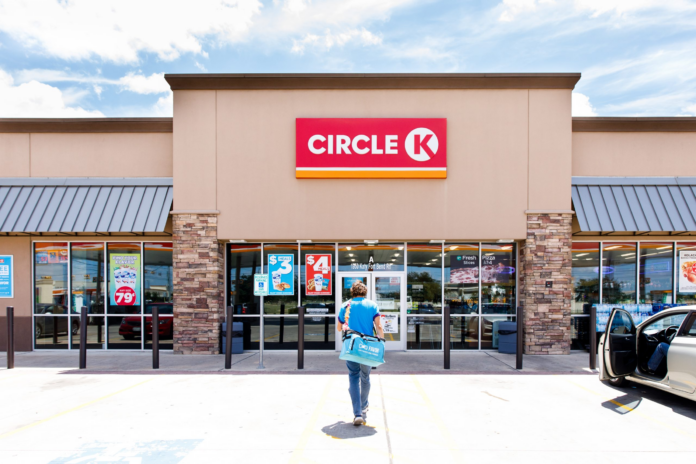
Circle K store/ Couche Tard. Photo: Yonge + St. Clair
Alimentation Couche-Tard Inc. has agreed to acquire retail assets from Irving Oil in Quebec and Ontario, including 52 retail sites already operated by Couche-Tard and fuel supply arrangements covering another 71 locations in Quebec.
The agreement expands Couche-Tard’s ownership of retail assets in the two provinces and adds 18 cardlock sites to the transaction, while maintaining service for existing Irving Oil fleet customers under a long-term agreement. No financial details were disclosed.
The Laval, Que.-based company said transaction remains subject to customary closing conditions and regulatory approvals, including under the Competition Act.
Transaction includes retail sites and fuel supply
The acquisition covers 50 retail sites already operated by Couche-Tard under the Quebec Alliance between the two companies, along with two locations in Pembroke and Cornwall, Ont., that are also currently operated by Couche-Tard.
The agreement also includes fuel supply to 71 retail sites in Quebec that are owned and operated by Couche-Tard. The news release did not disclose the financial terms of the transaction or provide a timeline for its completion.
The deal includes 18 cardlock sites, consisting of 16 in Quebec and two in Ontario. Cardlock facilities provide fuel access for commercial and fleet customers. Of the 18 sites, 16 are co-located with retail locations included in the transaction, while the other two are adjacent to sites already owned and operated by Couche-Tard.
Existing Irving Oil fleet customers will continue to receive service at these locations under a long-term agreement between the companies, according to the announcement.
Stéphane TrudelPHOTO: CIRCLE K
Couche-Tard cites existing relationship
Couche-Tard said its established relationship with Irving Oil and its experience operating the locations were factors in the agreement.
“These are markets and customers we know well. The transaction would support our continued investment in the everyday convenience experience we offer our customers.”
The announcement does not specify whether the acquisition will result in changes to branding, staffing or day-to-day operations at the affected locations.
Global convenience store operations
Couche-Tard operates in 27 countries and territories, with more than 17,200 stores worldwide, approximately 13,100 of which offer road transportation fuel.
The company operates under the Couche-Tard and Circle K banners and is one of the largest independent convenience store operators in the United States. It also operates in Canada, Scandinavia, the Baltic states, Belgium and Ireland, with additional operations in Luxembourg, Germany, the Netherlands, Poland and Hong Kong Special Administrative Region of the People’s Republic of China.
Approximately 145,000 people are employed across its network, according to the company.
Employment declined by 68,000 (-0.3%) in September and the employment rate fell 0.2 percentage points to 60.6%. The unemployment rate increased 0.1 percentage points to 6.5%. The employment decline was concentrated among youth aged 15 to 24 (-48,000; -1.8%) as well as women aged 25 to 54 (-28,000; -0.4%), reported Statistics Canada on Friday.
There were fewer people working in educational services (-35,000; -2.2%), health care and social assistance (-23,000; -0.8%) as well as manufacturing (-13,000; -0.7%). There were more people working in ‘other services’ (+17,000; +2.1%), which includes repair and maintenance as well as personal or household services, said the federal agency.
The wholesale and retail trade sector lost 9,600 positions while accommodation and food services grew by 1,000.
“In September, employment declined by 68,000 (-0.3%), split between full-time work (-35,000; -0.2%) and part-time work (-33,000; -0.9%). The employment decline in September follows a decrease in August (-42,000; -0.2%),” it said.
Prior to these two consecutive monthly declines, employment had trended up from April to July (+181,000; +0.9%). On a year-over-year basis, employment was up by 95,000 (+0.5%) in September.
MART PRODUCTION photo
“The employment rate—the proportion of the population aged 15 and older who are employed—decreased by 0.2 percentage points to 60.6% in September, marking a second consecutive monthly decrease. On a year-over-year basis, the employment rate in September was unchanged.”
Earlier in the year, the unemployment rate reached a recent peak of 6.9% in April, before declining to 6.4% in July and August. The unemployment rate in September was the same as it was at the start of the year (6.5% in January), noted Statistics Canada.
“The layoff rate—representing the proportion of people who were employed in August but had become unemployed in September as a result of a layoff—was 0.7%, similar to the rate observed a year earlier (0.6%) and the average during the period from 2017 to 2019 (0.6%) (not seasonally adjusted). The job-finding rate was 30.6% in September, down from 32.8% 12 months earlier and below the average of 36.5% during the period from 2017 to 2019. This refers to the proportion of people who were unemployed in August and had found a job in September,” it said.
“The labour force participation rate—the proportion of the population aged 15 and older who were employed or looking for work—fell 0.2 percentage points to 64.8% in September. This was the lowest level since December 1997 (when it was also 64.8%), excluding 2020 during the COVID-19 pandemic. On a year-over-year basis, the participation rate was down 0.4 percentage points in September 2026, largely the result of population aging.”
Analyst thoughts on the numbers
Andrew Grantham, Senior Economist, CIBC Capital Markets, said: “Canadian employment slumped again in September, with the unemployment rate ticking up slightly as new US tariffs took hold. The 68K decline in employment was in stark contrast to consensus expectations for a modest 10K rebound, and followed a 42K drop in the prior month as well. Data volatility appears to have been the main cause of the decline, with a 35K reduction seen in education services which often exhibits volatility around the start of new school years. However, the 13K decline in manufacturing employment could be a sign that new US tariffs are taking a toll. Through the monthly volatility, the 6-month average employment growth now sits at just 9K. The unemployment rate ticked up to 6.5%, which was in line with the consensus forecast and was prevented from rising further by a reduction in the participation rate. Wage growth for permanent employees remained only modest at 2.3%, despite accelerating slightly from 2.0% in the prior month. Overall, while the weakness in today’s employment data is likely more a reflection of data volatility than the impact of new US tariffs, it does support our call that the Bank of Canada will remain patient and keep interest rates on hold at the two remaining meetings this year.”
Andrew Hencic, Director & Senior Economist, TD Economics, said: “The labour market has now taken a breather for two consecutive months. The top line job losses are disappointing, but the focus should be on the unemployment rate. An uptick in September brings it back to where it was in June. We expect it to tread water in the coming months, as trade frictions and higher rates weigh on activity. One positive takeaway from this morning’s report was that private sector employment held steady, despite a decline in the labour force.
“Ultimately, this report is going to pour some more cold water on near-term rate hike expectations for the BoC. Markets are currently pricing 27% odds of a hike in October, and 88% for December, the latter down from being fully priced yesterday. We maintain the view that inflationary pressures are still relatively contained with average wage growth running at 2.4% and economic growth likely to slow further in Q4 as new tariffs weigh on activity. Given this backdrop we expect the BoC to remain data-dependent and stay on hold in October.”
Andrew GranthamAndrew Hencic
Douglas Porter, Managing Director, Chief Economist, said: “A second consecutive month of sizable job losses washes away the surprising strength reported in Canada’s job market through the early summer, and leaves employment up a so-so 0.5% from a year ago. While the large drop in education looks somewhat suspect (especially since it was entirely in one province), the underlying picture in other regions and industries does not inspire confidence. The pullback in manufacturing may be an early warning of the weight from the amped-up trade tussle. On balance, we continue to believe that the appropriate stance by the Bank of Canada is watchful waiting, particularly so with employment suddenly clouding over. The key CPI and Business Outlook Survey are both due on October 19, but this sour result greatly diminishes the chances (let alone the rationale) for rate hikes.”
Claire Fan, Senior Economist, RBC Economics, said: “Canada’s labour market lost 68,000 jobs in September, driven by losses in public sectors (education and health care), piling onto the 42,000-job loss in the prior month. These losses reversed most of the job growth seen over the summer and leave the year-to-date employment count at -41,000.
“The monthly employment counts are notoriously volatile, and there are reasons not to read too much into the softer reading too quickly. In September, 70%, or 48,000, of the decline in employment was among those aged 15 to 24, a group that typically sees seasonal headwinds around this time of year after the school year starts. The unemployment rate, as a more stable and reliable gauge of labour market conditions, ticked up slightly from 6.4% to 6.5% but remained 0.6 percentage points below a year ago.
“Looking ahead, we continue to point to important leading indicators such as job openings from Indeed.com as indications that hiring demand has not retreated to a problematic extent since new U.S. tariffs (that cover a small scope of Canadian exports) were imposed. We expect progress made in Canada’s labour market earlier will be largely sustained, and the unemployment rate to broadly edge lower through the end of 2026.”
Canadians plan to cut holiday spending by 11 per cent this year, but more than half are willing to pay extra for Canadian-made products as trade tensions with the United States influence shopping decisions, according to a new PwC Canada survey.
The accounting and consulting firm’s 2026 Canadian holiday outlook found that consumers expect to spend an average of $1,487 during the holiday season, down from the previous year, while 54 per cent would choose a more expensive Canadian-made product over a similar imported alternative, up from 49 per cent in 2025.
The findings suggest retailers face a combination of tighter household budgets and growing interest in domestic products, creating pressure to offer affordable options while making the Canadian origin of merchandise clear to shoppers. The survey also points to increased interest in artificial intelligence tools for shopping, although physical stores remain the leading purchasing channel.
“Canadians are cutting back, but they’re drawing a hard line on where their money goes,” said Adam Boutros, partner and national consumer markets leader at PwC Canada. “More of them than ever want their money to stay in Canada–and older Canadians are making that choice especially clear: even as they plan some of the steepest spending cuts, two-thirds of baby boomers are still willing to pay more for Canadian-made products.”
Vitaly Gariev photo
Canadian-made products gain ground
The survey found that 72 per cent of Canadians are actively looking for alternatives to U.S.-made products, while just 13 per cent intend to shop across the border this holiday season, down from 20 per cent in 2024.
Baby boomers showed particularly strong support for domestic products, with 66 per cent saying they would pay more for Canadian-made goods despite plans to reduce their overall holiday spending.
However, consumers remain focused on affordability. About 69 per cent said they plan to buy less expensive alternatives to stretch their holiday budgets, while three-quarters reported taking steps to manage seasonal spending.
The survey was conducted in July and early August, before the latest round of tariff escalations. PwC said the results may therefore understate the current level of Canadian sentiment toward domestic products.
For retailers, the findings point to the importance of communicating whether products are made, assembled or designed in Canada while keeping prices accessible.
“Canadian consumers are making more deliberate purchasing decisions than they have in years, with more than half looking to support Canadian businesses and products–giving retailers an opportunity to respond to a renewed ‘Canada strong’ sentiment,” said Anita McOuat, national managing partner, clients and industries at PwC Canada. “Retailers have an opportunity to leverage technology like AI and other digital tools to make Canadian-made products easier to discover, offer personalized recommendations, and clearly communicate value–turning this moment into lasting loyalty.”
Spending cuts vary by generation
The expected decline in holiday spending is not consistent across age groups, with older Canadians planning the largest reductions and Gen Z anticipating an increase.
Planned spending is down 21 per cent among Generation X consumers and 18 per cent among baby boomers compared with last year. Gen Z, by contrast, expects to spend 8 per cent more.
Households with children are also expected to remain an important source of holiday spending. They plan to spend nearly twice as much as households without children and are more likely to give screen-free, hands-on activities and experiences to both children and adults.
The findings indicate that retailers will need to account for differences in spending intentions among consumer groups as they approach the holiday season, with value remaining a priority for many households.
Andrea Piacquadio photo
AI use increases as stores remain central
The survey found that 28 per cent of Canadians expect to use artificial intelligence at some point during their holiday shopping, up from 17 per cent last year.
Consumers expect to use AI-powered tools to research products, compare items, find gift ideas and, in some cases, make purchases. Despite the increase in planned digital tool use, physical stores remain the leading purchasing channel across all generations.
About 40 per cent of respondents said they intend to use both online and in-store channels when making purchases, suggesting retailers will continue to need to accommodate shoppers across multiple platforms.
Regional spending intentions differ
British Columbia is expected to record the highest average holiday spending at $1,639, followed by Ontario at $1,567 and Quebec at $1,497.
Consumers in Atlantic Canada plan to spend an average of $1,349, while those in Alberta, Manitoba and Saskatchewan expect to spend $1,261.
Quebec was the only region where planned spending showed no notable year-over-year change, according to PwC.
What does the research reveal about the growing willingness of Canadians to pay more for Canadian-made products, particularly at a time when overall holiday spending is declining?
What we’re seeing this year is a clear ‘elbows up’ sentiment among Canadian shoppers. Even though average holiday spending is projected to decline by 11%, patriotism is playing a major role in where those dollars go. More than half of Canadian consumers (54%) say they are willing to pay more for a Canadian-made product over a comparable alternative, up from 49% last year. What’s particularly fascinating is that this trend is being led by older generations. Baby boomers are pulling back their total spending by 18%, yet two-thirds (66%) of boomers say they’ll pay a premium for Canadian-made goods. It demonstrates that while Canadians are cutting back on overall volume, they are intentional about spending their remaining budget on values that matter to them.
Elisa SwernAnita McOuatAdam Boutros
How should retailers respond to the 72 per cent of consumers who are actively seeking alternatives to U.S.-made products, and how important is it for businesses to clearly communicate where products are made, assembled or designed?
With 72% of Canadian consumers actively looking for alternatives to U.S.-made products during their holiday shopping, transparent origin storytelling is becoming increasingly important for retailers. Retailers need to make it effortless for shoppers to identify product origins across all touchpoints. Whether an item is made, assembled, or designed in Canada, that story needs to be front and centre on shelf signage, e-commerce filters, and product packaging. Beyond messaging, retailers must look at their product assortment now to ensure they can sustainably maintain a healthy balance of Canadian alternatives in store at price points that consumers can justify.
With 69 per cent of Canadians planning to purchase less expensive alternatives and average holiday spending expected to fall 11 per cent, how can retailers balance consumers’ desire to buy Canadian with their increasing focus on affordability?
It’s a delicate tightrope for retailers. On one hand, 69% of shoppers plan to buy less expensive alternatives; on the other, over half are willing to pay extra for Canadian products. The key for retailers is to compete on value, not just price. Shoppers don’t necessarily want cheap products—they want smart spending choices. Retailers can balance this by being tactical with promotional timing. For instance, holding dedicated promotional windows for Canadian items during peak shopping periods helps ease the price burden. Retailers should also highlight the long-term value of Canadian-made goods—such as quality, durability, and supporting local communities—so consumers feel confident that their money is well spent.
What do the generational differences in the survey — particularly the spending pullback among Gen X and baby boomers versus increased spending among Gen Z — tell us about how retailers should approach different consumer groups this holiday season?
The generational split highlights a real shift in where holiday momentum is coming from. Older cohorts are tightening their belts significantly—Gen X plans to spend 21% less, and Boomers 18% less. Meanwhile, Gen Z is the only group planning to increase spending (+8%), and millennial households—especially those with children—are driving the highest overall volume. Retailers need a dual strategy: For Baby Boomers & Gen X: Focus on timing and value. More than 43% of Boomers plan to delay their shopping into December, and they care deeply about Canadian-made goods. Target them with late-season, in-store promotions featuring local products. For Millennials & Gen Z: Capture them early. 38% of Gen Z and 33% of millennials plan to concentrate their shopping around Black Friday weekend. They are looking for experiences, screen-free activities for young families, and frictionless, AI-ready shopping channels.
With AI use in holiday shopping rising to 28 per cent while physical stores remain the leading purchasing channel, how do you see AI changing the retail shopping journey, and what should retailers be doing now to adapt?
A: AI usage has jumped significantly from 17% to 28% this year, but physical retail isn’t going anywhere. 74% of Canadians still prioritize in-person shopping. What we’re witnessing is the beginning of ‘agentic commerce,’ where AI tools increasingly remove friction for shoppers by finding products, organizing information from different retailers, and presenting the lowest-cost options, before a consumer ever steps into a store. To prepare, retailers need to ensure their product data, rich content, and pricing strategies are ‘AI-ready.’ If your product information isn’t structured so large language models can easily parse and recommend it, you risk being filtered out before the customer even walks through your doors.
Maybelline New York has launched a new campaign focused on the role of family and friends in supporting people experiencing mental health challenges, expanding its global Brave Together program ahead of World Mental Health Day on Oct. 10.
The campaign, called “Together We’re Brave,” builds on a program that has helped more than four million people worldwide access free one-to-one support since its launch in 2020. The initiative aims to encourage people to recognize the needs of loved ones experiencing anxiety, depression and other mental health challenges, while also helping those providing support understand how they can assist.
Campaign broadens mental health focus
The new campaign features stories involving mothers and daughters, best friends and other pairs, emphasizing the importance of personal connections during mental health challenges. Maybelline said the initiative is intended to help people who want to support someone but may be uncertain about how to approach the situation.
The company is positioning the campaign around the idea that mental health challenges can affect not only the person experiencing them but also their support network. It aims to encourage open conversations and help people recognize when to seek assistance for themselves or someone they care about.
Sandrine JollyChristine Crawford
“At Maybelline New York, we know that mental health journeys are rarely traveled alone,” said Sandrine Jolly, Global Brand President, Maybelline New York. “With ‘Together We’re Brave,’ we’re expanding the conversation around mental health to also recognize the people who stand beside us during life’s most challenging moments. By sharing these stories, we hope to inspire more open conversations and remind people that it is brave to reach out, whether for yourself or someone you care about.”
The launch represents another component of the company’s broader mental health initiative, which includes partnerships with nonprofit organizations and funding for mental health programs in multiple countries.
Since 2020, Brave Together has supported partnerships with more than 45 nonprofit organizations across 37 countries and contributed nearly $10 million toward mental health initiatives globally, according to the company.
Maybelline said it intends to continue using the program to increase awareness, reduce stigma and help people access mental health support. The initiative provides one-to-one support, online educational resources and programming intended to encourage conversations about anxiety and depression.
Maybelline photo
Partnership with NAMI continues
As part of the latest campaign, Maybelline will continue working with the National Alliance on Mental Illness (NAMI) in the United States to raise awareness, expand access to resources and encourage discussions about mental health.
The partnership reflects the campaign’s emphasis on helping friends and family members respond when someone they care about is struggling, even when they are unsure what to say or do.
“When someone we care about is struggling, we may not always know the right thing to say – but showing up matters,” said Christine Crawford, M.D., chief medical officer at NAMI. “Listening without judgment, staying connected, and helping someone find support can make a real difference. Through our work with Maybelline New York and Brave Together, we’re reminding people that you don’t need to have all the answers to be there for someone you love.”
Maybelline introduced Brave Together in 2020 as a long-term program to support people experiencing anxiety and depression worldwide. The company has committed to donating $20 million over five years to global and local organizations through the initiative, according to its corporate information.
Maybelline photoMaybelline photoMaybelline photo
The program’s activities include one-to-one support, an online education hub and initiatives designed to reduce stigma surrounding mental health.
The “Together We’re Brave” campaign adds a focus on the people who provide informal support to those experiencing mental health challenges, encouraging them to stay connected and help loved ones find appropriate resources.
More information about Brave Together and access to free mental health resources is available at www.maybelline.com/bravetogether.
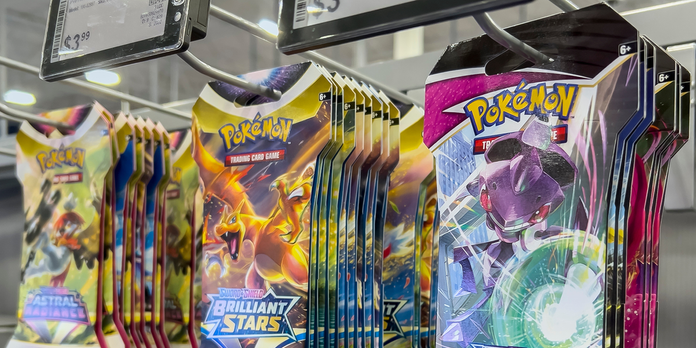
Pokémon trading cards in a store. Image: Dicebreaker
A thief who broke into All Elite Cards and Games in Nanaimo, B.C., in the early hours of September 17 was inside for less than two minutes, taking more than $5,000 worth of sealed Pokémon products. Owner Allan Mah said the individual first looked for cards in display cases before turning to sealed merchandise, with the person’s familiarity with the store leading him to believe they may have visited previously.
The Nanaimo break-in joins a series of incidents involving Pokémon cards and other trading-card products across Canada. Retailers in British Columbia, Alberta, Manitoba and Ontario have reported losses ranging from several thousand dollars to well into six figures, while police have investigated clusters of break-ins involving collectible-card businesses.
Retailers are responding with measures that include moving cards into bank safety-deposit boxes, removing inventory overnight, displaying empty product boxes, adding gates and cameras, and arranging some transactions away from their stores. For independent operators, the rising value of collectible cards is creating security, insurance and real estate considerations that were not traditionally associated with hobby retail.
Pokémon Becomes High-Value Retail Inventory
Pokémon cards are part of a large collecting and resale market encompassing specialty stores, online marketplaces, card shows, private dealers, livestream sellers and grading companies. Individual cards can sell for hundreds or thousands of dollars, while sealed boxes and discontinued products can also command substantial prices.
The Pokémon Company said in May that some Pokémon Trading Card Game products were difficult to obtain because of “very high demand.” It said affected products were being printed at maximum capacity, with additional reprints planned. The trading card game is also marking its 30th anniversary in 2026.
For retailers, the category can concentrate substantial inventory value into a small amount of physical space. Tens of thousands of dollars in cards can fit inside a bag, while sealed Pokémon products are recognizable and supported by an active resale market.
Professionally graded cards generally carry certification numbers and particularly rare cards may be identifiable. Sealed products and many ungraded cards can be harder to trace once they return to the resale market. Independent hobby stores can therefore find themselves carrying significant inventory values from premises that were not designed around the security requirements of traditional luxury retail.
B.C. Retailers Confront Repeated Break-Ins
House of Cards in Abbotsford was broken into in March after thieves reportedly used a vehicle and chain to pull away a security grate. The suspects spent approximately two minutes inside and left with an estimated $30,000 in Pokémon products. Owner Brandon Chreptyk told CityNews that the thieves concentrated on sealed booster boxes and bundles that could be resold quickly, while the store had already moved its most expensive products into bank safety-deposit boxes.
Other Lower Mainland card businesses were also targeted. Everything J&J in New Westminster was hit in January by four masked individuals who smashed display cases, while Captured! Cards in Burnaby experienced three attempted or successful break-ins between December and March.
Captured! Cards owner Leon Chan told CityNews that he had begun removing much of his expensive inventory overnight. He also said strata restrictions prevented him from installing bars over the store’s windows, with repeated theft and damage prompting him to consider relocating.
Vancouver Police reported another incident on August 3, when two masked suspects allegedly pried open the rear door of Royal Card Shop and Collectibles and used a stolen Ford pickup truck to pull a safe containing high-value Pokémon cards from the business.
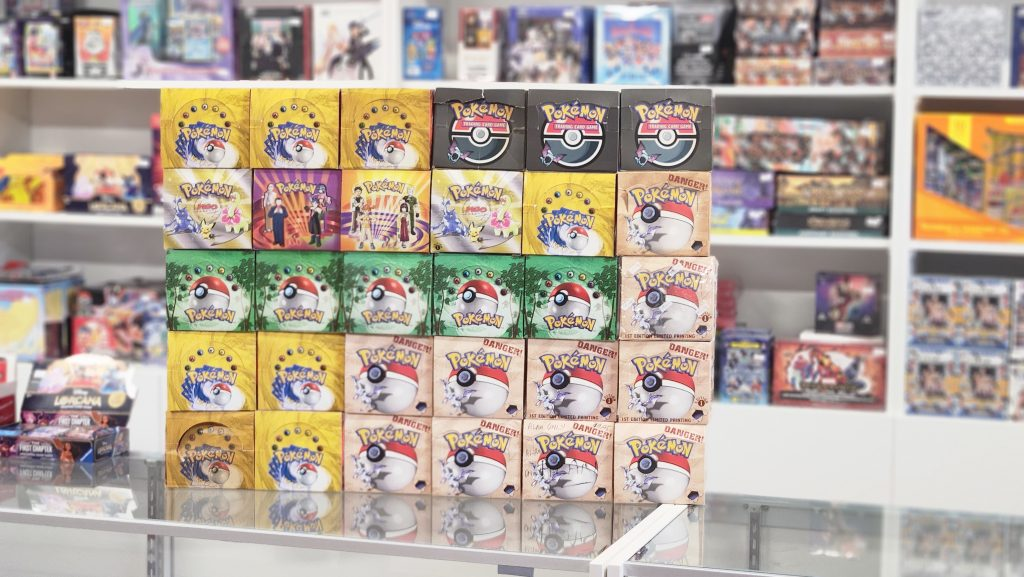
Pokemon cards, image: CollectFest
Alberta Stores See Clusters of Incidents
Edmonton has also experienced repeated break-ins involving collectible retailers. By November 2025, police were investigating 11 incidents involving gaming and collectible-card stores dating back to September, with Cerberus Gaming, Red Claw Gaming and Teaspot and ENV Collectibles among the businesses affected.
ENV Collectibles was targeted again on Canada Day this year, when Pokémon and One Piece cards were reported stolen. Edmonton police said at the time that nine break-ins involving collectible, hobby and card stores had already been reported during 2026.
Calgary Police have separately laid charges following a series of 2025 thefts at collectibles stores. More than $72,000 in trading cards was stolen from Eastridge Sports and Games in one incident, while more than $10,600 was taken from First Player Card Shop in another. Police said power tools and pry bars were used to enter businesses and stolen vehicles were used to travel to and from stores.
Ontario Investigation Expands Beyond Card Stores
The Greater Toronto Area has seen a similar series of incidents. Sunny Hobbies in Scarborough reported approximately $36,000 in merchandise stolen during an April break-in that surveillance footage showed unfolding in 46 seconds. Owner Sunny Huang subsequently told CityNews that he sold part of his personal collection to maintain cash flow while dealing with the loss, insurance and security upgrades.
Other incidents around the same period included high-value Pokémon cards taken from a Brampton convenience store and Pokémon merchandise stolen from a collectibles business in Mississauga.
Two June break-ins in Ajax subsequently became the starting point for a much larger Durham Regional Police investigation. Trading-card retailers Mintink and We Got Gamez were targeted on June 14, with Durham police putting the combined value of stolen merchandise at approximately $148,000.
The incidents led to Project Magenta, an investigation into a broader series of property crimes. Police allege the group was responsible for 36 incidents across Durham Region and Toronto between June and September, including eight commercial break-and-enters and 15 vehicle-theft-related offences.
Trading-card retailers, jewellery stores, cannabis dispensaries and pawn shops were among the businesses targeted. Police said stolen vehicles were frequently used to facilitate the offences, including incidents where vehicles were driven into storefronts. Two adult men and two male youths face more than 200 charges, with known losses and damage across the investigation estimated at nearly $1 million. The allegations have not been proven in court.
The inclusion of trading-card businesses alongside jewellery stores is notable from a retail security perspective. Both categories can concentrate substantial resale value into merchandise that can be removed quickly, although the physical stores and traditional security models associated with the two sectors are considerably different.
Winnipeg Retailers Hit in September
September brought two significant incidents in Winnipeg. Thieves entered Terri’s Trinkets and Toys after getting through a security grate and breaking through a wall, with Pokémon cards and other merchandise taken. The store had already experienced another Pokémon theft weeks earlier, and owner Terri Settle subsequently told The Canadian Press that she plans to stop selling the cards once her remaining inventory is gone.
Days later, Mulvey Market owner Kenan Hyseni reported roughly $70,000 worth of Pokémon products stolen following a Friday night trading event. Hyseni believes someone remained hidden inside the market after closing before leaving with sealed products, individual cards and professionally graded cards.
The incidents add to the operational questions facing specialty retailers carrying increasingly expensive inventory, including how much merchandise should remain on display and whether the highest-value products should remain on the premises outside business hours.
Valuable Inventory Moves Out of Sight
Some Canadian card retailers have already changed how they operate. First Row Collectibles owner Curtis Howson told the Winnipeg Free Press that his store has been broken into multiple times and that he does not like leaving expensive Pokémon cards on the premises overnight.
In Richmond, B.C., Team Collectors added security gates and expanded its surveillance system to 10 cameras. Particularly expensive cards could be handled by appointment, with transactions potentially taking place at a bank or police station. House of Cards had already moved its most expensive merchandise into bank safety-deposit boxes.
Cloud Games in York Region has taken a different approach. Manager Randy Ngo told CityNews that most of the company’s sales are conducted online, while its small retail office operates without exterior signage. An order for a sign was cancelled amid concerns about card-store robberies, while display shelves contain empty boxes and products are stored off-site before being transported to the location for arranged pickups.
These measures run against some conventional retail practices, where signage, product displays and readily available inventory are used to attract customers and encourage browsing. For some card retailers, limiting the amount of merchandise visible or stored on-site has become part of loss prevention.
Security Becomes a Real Estate Issue
Security requirements can also extend into the retailer-landlord relationship. Captured! Cards owner Leon Chan told CityNews that restrictions at his Burnaby property prevented him from installing window bars, and he was considering relocation following repeated incidents.
Cameras, alarms and safes can generally be installed within a retail unit, while measures such as gates, bars, bollards and reinforced entrances can involve landlords, strata corporations, building design and municipal requirements. Card stores occupying conventional retail premises may therefore face limitations on the physical security measures available to them.
Insurance Adds Another Pressure
Collectibles present their own insurance considerations because inventory can turn quickly and market prices can change. Condition and professional grading affect the price of individual cards, while sealed products can appreciate after their original release.
First Row Collectibles owner Curtis Howson told the Winnipeg Free Press that contents insurance was prohibitively expensive for his business and pointed to the difficulty of maintaining an accurate inventory. Hyseni also said following the Mulvey Market theft that he did not have collectibles insurance, citing the cost.
Those examples do not establish insurance conditions across the Canadian collectibles industry, but they indicate that coverage can become another significant operating expense for independent businesses carrying expensive stock.
Risk Extends Into Private Sales
Security concerns extend into the private resale market. Vancouver Police responded to five Pokémon-card robberies beginning March 23 after sellers arranged transactions, usually through Facebook Marketplace. Police allege a buyer would meet sellers, use bear spray and take the cards, with investigators subsequently arranging their own Pokémon transaction before arresting a suspect.
Later in April, Vancouver Police arrested three teenagers following another incident in which a seller offering two Pokémon cards valued at $7,000 each was allegedly bear-sprayed. One of the cards was recovered.
Laval police reported in June that they had recorded 30 incidents linked to Pokémon-card sales since January 2025, including 11 since March 2026. At least seven involved violence, including the use of pepper spray.
The private-sale incidents are distinct from commercial break-ins but highlight another security consideration within a category where substantial amounts of money can be involved in transactions conducted outside conventional retail environments.
Large Losses for Independent Retailers
Many specialty card stores do not have the scale to absorb significant theft as routine shrink. After Sunny Hobbies lost approximately $36,000 in merchandise, Huang told CityNews that margins at the business fall into the single digits after rent, utilities, staffing, inventory systems and insurance. He sold part of his own collection to help maintain cash flow.
Merchandise losses can also be accompanied by property damage, business interruption and additional security expenses. Edmonton retailer David Bibby described the financial impact to CityNews after approximately $8,000 in Pokémon and Magic products were stolen from Red Claw Gaming.
“I’m not Walmart; all of this is coming out of my pocket,” he said.
For an independent retailer, a five-figure inventory loss can represent months of profit before repairs and security upgrades are considered.
When a Card Store Starts Looking Like a Jewellery Store
Jewellery retailers have long designed stores around merchandise that concentrates substantial value into a small space, with safes, reinforced showcases, security glazing and overnight inventory procedures common across the sector. Traditional hobby stores developed under different circumstances, while the economics of trading cards have changed considerably in recent years.
Project Magenta offers a direct comparison. Durham police allege the same group targeted trading-card businesses alongside jewellery stores and other retailers carrying expensive, readily resalable merchandise.
Card retailers are adopting some similar precautions, including safes and safety-deposit boxes, removing expensive cards from display cases overnight, using empty packaging on shelves, adding gates and cameras, and moving some transactions to more secure locations.
There is a trade-off for retailers. Trading-card businesses often serve as gathering places where customers browse, trade, open packs, play games and meet other collectors, with physical merchandise and accessibility forming part of the store experience.
Strong demand for Pokémon has created opportunities for specialty retailers across Canada, while the value concentrated in the category has introduced operating risks that many traditional hobby stores were not designed to manage. Security, insurance, inventory storage and even the suitability of the retail space are increasingly part of that calculation.
Canadians remain largely positive about the country’s food system, but fewer believe it is moving in the right direction as affordability pressures, concerns about misinformation and uncertainty surrounding emerging technologies weigh on public confidence, according to new research.
The Canadian Centre for Food Integrity (CCFI) recently released its 2026 Public Trust Research, marking the 10th year of its national study of Canadians’ perceptions of the food system. The findings show that while overall impressions remain stable, confidence in the system’s direction has declined.
Affordability remains top concern
The research found that 57 per cent of Canadians have a positive impression of the country’s food system, unchanged from 2025. However, the proportion who believe the system is moving in the right direction fell five percentage points to 40 per cent, while the share who are unsure rose to 38 per cent.
“Canadians haven’t lost confidence in the food system today, but they’re becoming more uncertain about what comes next,” said Lisa Bishop-Spencer, executive director of the Canadian Centre for Food Integrity. “Trust is still there, but it’s operating in an environment shaped by affordability pressures, a more difficult information landscape, and rapid change.”
Lisa Bishop-SpencerAshley Bruner
Food affordability remains the leading concern among respondents, with 49 per cent identifying the cost of food as a major issue. That figure was unchanged from the previous year and exceeded concerns about inflation, access to health care, the availability of healthy food and the Canadian economy.
The findings suggest that Canadians’ positive views of the food system are increasingly accompanied by uncertainty about its future direction. For organizations across the sector, the results highlight the importance of understanding the factors influencing public perceptions and confidence.
Misinformation presents a growing challenge
Concerns about food-related misinformation increased to 43 per cent in 2026 from 40 per cent a year earlier. Respondents were also slightly more likely to report difficulty determining whether food-related information was true or false, pointing to challenges in assessing the credibility of information.
Farmers remained the most trusted stakeholders in Canada’s food system, with trust in them increasing five percentage points from 2025.
“Providing more information isn’t enough on its own,” said Bruner. “The challenge is making credible information easier for Canadians to recognize, understand, and verify, and ensuring the people and organizations providing it have earned their trust.”
The findings place information credibility alongside affordability as a key consideration for organizations seeking to maintain public confidence. Although Canadians continue to view the food system positively overall, growing uncertainty about the information they encounter presents an additional challenge for those communicating with consumers.
RDNE Stock project photo
AI adoption rises as comfort declines
Artificial intelligence is also emerging as an area of concern for public trust in the food system. The proportion of Canadians who use AI tools daily to obtain food-related information rose from 10 per cent to 12 per cent, although the increase was described as directional.
At the same time, comfort with AI declined significantly across every area measured in the research. The results suggest that the use of emerging technologies may be increasing faster than public comfort with their application.
The research examined affordability and value, trust and credibility, misinformation and transparency, Canadian food and resilience, and emerging technologies. Together, the findings point to a public trust environment shaped by economic pressures, questions about information quality and changing attitudes toward technology.
For the food sector, the results identify several areas requiring attention as organizations work to maintain public confidence. The research does not suggest that Canadians have broadly turned against the food system, but it indicates that fewer are confident about the direction in which it is heading.
“A strong and resilient food system depends on public trust,” said Bishop-Spencer. “The opportunity is to understand what’s underneath these shifts. That means paying attention not only to what Canadians think, but to what’s shaping those views, where uncertainty is emerging, and what organizations across the food system can do to strengthen confidence over time.”
Montreal-founded furniture company Transformer Table is expanding its U.S. retail presence after reporting annual revenue of $145 million, an increase of nearly 60% over two years, as the business looks to physical stores to support its next phase of growth.
The company is introducing new microstores in Utah and Colorado, followed by a larger flagship in Maryland, as it builds on a decade of growth driven by expandable dining furniture, e-commerce and retail partnerships. The United States now accounts for approximately 80% of Transformer Table’s business, making it the company’s largest market and the primary focus of its company-operated store expansion.
CEO Chris Wantlin said Transformer Table generated revenue of $91 million in fiscal 2024, $120 million in fiscal 2025 and $145 million in fiscal 2026, which ended in March. Revenue increased approximately 32% in fiscal 2025 and a further 21% in fiscal 2026, while U.S. sales grew 20% in the most recently completed year. The figures underscore the company’s expansion as it invests in additional ways to reach customers.
Founded in Montreal in 2016 by seven longtime friends, Transformer Table initially built its business around expandable dining tables designed to accommodate changing household needs. Its product assortment has since grown to include seating and other multifunctional furniture, with the company reporting that it now serves more than 70,000 households across 35 countries.
Wantlin joined Transformer Table as CEO in May 2026 after holding senior leadership responsibilities at Ashley Global Retail. His appointment came as the company continued developing its wholesale relationships and expanding its company-operated retail presence in the United States.
Chris Wantlin
Building a Physical Retail Presence
Transformer Table’s investment in physical stores reflects the importance of allowing customers to experience its furniture before committing to a purchase. While the company has established a substantial online business, its products often incorporate expandable mechanisms and multiple configurations that can be difficult to fully appreciate through photographs and videos.
“We started with a simple idea: furniture could do more. Online, we can show that. In a store, you can feel it,” Wantlin told Retail Insider. “A table that seats four on a Tuesday and twelve at Thanksgiving is hard to believe until you pull it open yourself.”
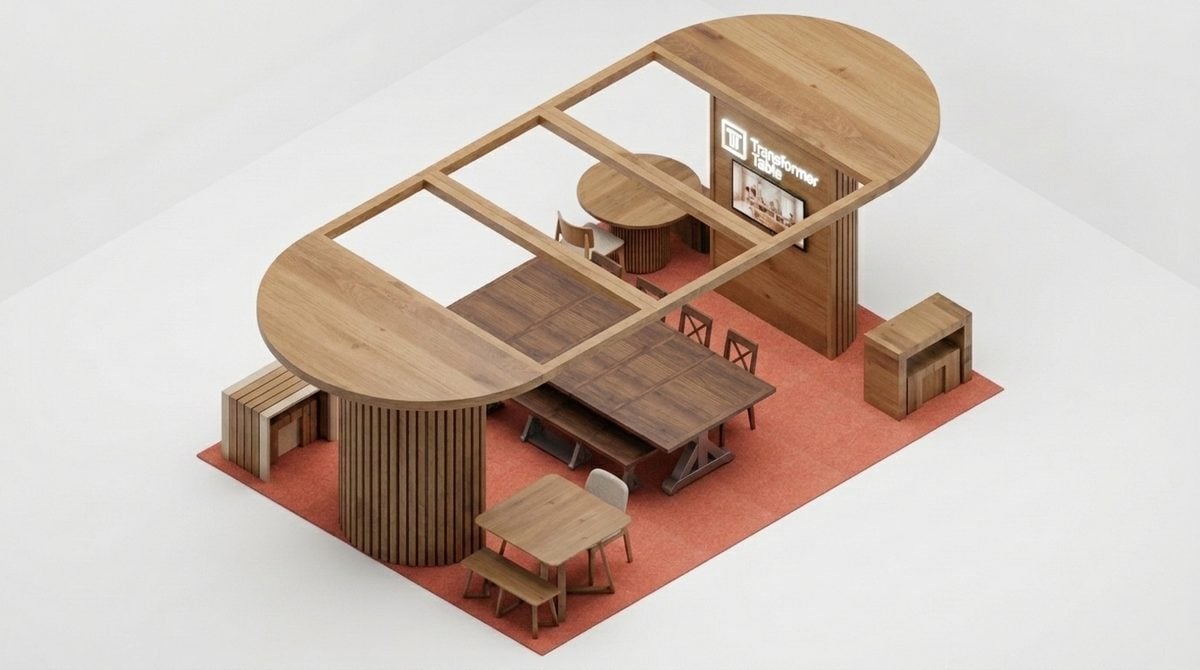
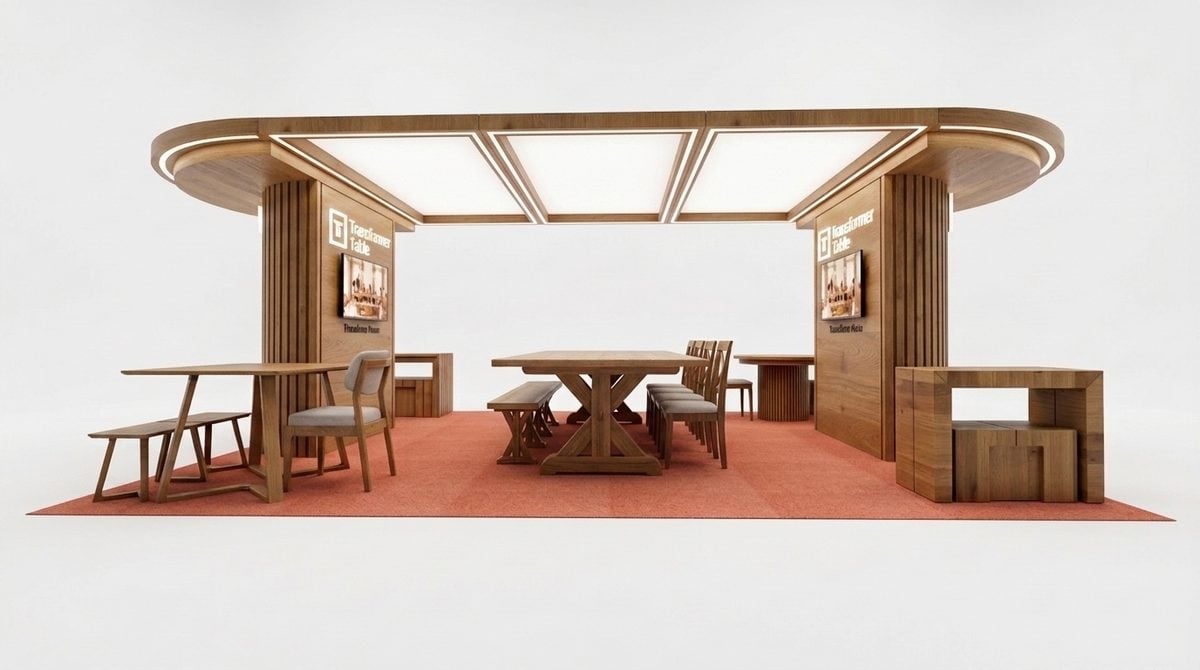
The company is using compact, demonstration-focused stores to introduce its furniture to customers in markets where it already has an established online and wholesale customer base. Shoppers can examine finishes, test the expandable mechanisms and explore different seating arrangements before arranging delivery to their homes.
Wantlin said the stores are intended to build consumer confidence while supporting the company’s broader business, including online sales. Customers who have interacted with the products in person may be more comfortable completing purchases digitally, giving physical locations a role beyond transactions made directly in-store.
The approach also differs from conventional large-format furniture retailing. Rather than displaying extensive collections across expansive showrooms, Transformer Table’s smaller locations concentrate on demonstrating its core products and helping customers understand how the furniture adapts to different household needs.
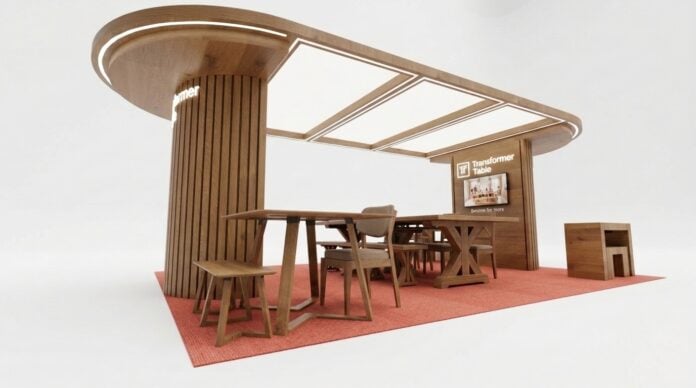
Rendering: Transformer Table
New Microstores and Maryland Flagship
The company’s latest expansion includes a microstore at Fashion Place in Murray, Utah, and another at Park Meadows in Lone Tree, Colorado. The locations are part of the company’s October 2026 expansion plans, with grand-opening activities announced for both markets.
Both shopping centres serve established suburban markets where Transformer Table has already identified demand through its website and retail partners. Wantlin said the company’s typical customer is a family furnishing a suburban home, frequently purchasing a complete dining set.
“We went where our customers already are,” Wantlin said, explaining that the two shopping centres provide convenient access to neighbourhoods where the company has an established customer base.
The microstores will feature best-selling expandable dining tables displayed in different configurations, alongside chairs, benches and sideboards. Customers will be encouraged to interact with the products, with most purchases arranged for home delivery rather than immediate collection.
A larger flagship is planned for The Mall in Columbia in Maryland, serving the Baltimore-Washington region. The approximately 4,000-square-foot store, expected to open in early 2027 according to the company’s September announcement, will offer a broader presentation of Transformer Table’s collections and provide a more comprehensive introduction to the brand.
Unlike the smaller locations, the Maryland flagship will showcase complete room settings, offer design assistance and introduce new furniture categories as the company expands beyond its established dining products.
“The microstores show what a Transformer Table can do. The flagship shows where the brand is going,” Wantlin said.
The company plans to introduce products for additional rooms of the home over the coming year, broadening its assortment as it seeks to build relationships with customers beyond their initial furniture purchases.
Retail Partnerships Support Broader Growth
Transformer Table’s company-operated stores form one part of a broader omnichannel strategy that includes e-commerce and wholesale distribution through retailers such as Costco.
Wantlin said the different channels serve distinct purposes. Retail partnerships provide access to customers across a much wider geographic area than the company could reasonably serve through its own locations, while company-operated stores allow Transformer Table to manage how its products are presented and demonstrated.
“Costco and our retail partners give us reach in markets we could never cover with our own stores. Our own stores let us control how the product is shown and what the customer experiences,” he said.
The company evaluates potential store markets by examining existing online demand, wholesale distribution and opportunities to attract new customers. Each sales channel is measured against its own performance targets, recognizing the different economics and customer relationships associated with wholesale, e-commerce and company-operated retail.
For shopping centre landlords, the microstore approach represents another example of a digitally established brand using physical retail to complement its existing distribution network. In Transformer Table’s case, the stores provide a setting where customers can experience the product’s functionality before purchasing, without requiring the company to replicate the expansive showroom model associated with traditional furniture retailers.
Rendering: Transformer Table
Further Expansion Depends on Store Performance
Despite its growing U.S. business, Transformer Table is approaching the latest openings as a test of its company-operated retail strategy rather than committing immediately to an extensive national rollout.
Wantlin said the three locations have defined targets for sales, customer acquisition and profitability. Management will evaluate their performance before deciding whether to proceed with additional stores, with larger suburban markets showing established online and wholesale demand among the company’s initial priorities.
“If they hit those marks, we see room for more stores across the U.S. We are looking first at large suburban markets where our online and partner demand is already strong,” he said. “The numbers will decide where we go next.”
While the company continues to maintain its Montreal showroom, additional company-operated stores in Canada are not currently planned. Wantlin said Canadian customers remain served through the company’s website and retail partners, while new store investment is being directed toward the United States.
The company has not ruled out expanding its Canadian retail presence in the future, but management intends to evaluate the performance of the American locations before reconsidering domestic expansion.
“For now, our store investment is focused on the U.S. We’ll revisit Canada once the model has proven itself,” Wantlin said.
PetSmart Canada will host free Halloween events at its stores across the country this month, including pet trick-or-treating activities and a new program introducing families to snakes, lizards and other small creatures.
The events, scheduled for Oct. 17, 18 and 25, are part of the retailer’s seasonal activities at its more than 160 Canadian stores, with a social media contest also running until Oct. 31.
New experience introduces specialty pets
The retailer’s new Meet the Spooky Pets experience will take place Oct. 18 from noon to 2 p.m. Families will have an opportunity to learn about specialty pets, including snakes, lizards and death-feigning insects, with PetSmart associates discussing the animals’ daily care and activities.
The selection of animals available will vary by store, according to the company.
“Halloween is one of our most anticipated celebrations of the year, and we’re always excited to see pets and pet parents get into the spirit,” said Grewal. “This year, we’re bringing even more Halloween fun to our stores across the country with the addition of our Meet the Spooky Pets experience. It’s a unique opportunity for families to discover the fascinating world of pets like snakes, lizards and other small creatures, while learning about the care they need to thrive. Whether you’re meeting these pets for the first time or already an enthusiast, we look forward to welcoming you to the celebration.”
Trick-or-treating events scheduled for October
PetSmart’s Tricks for Treats events will run Oct. 17 and 25 from 10 a.m. to 4 p.m. Participating pets can receive complimentary treats at stations throughout stores, while families will have access to colouring pages, festive sticker sheets and photo areas featuring Halloween backdrops and props.
Halloween-themed PetSmart tote bags will also be available while supplies last. Pets are encouraged to wear costumes but are not required to participate, the company said.
All PetSmart stores in Canada are participating in the October activities, according to the announcement. Pets entering stores must comply with the retailer’s in-store pet policy, and free items will be distributed on a first-come, first-served basis while supplies last.
The events provide an opportunity for the retailer to bring customers into its stores for seasonal activities, alongside its regular merchandise and pet services.
PetSmart operates more than 160 stores in Canada and also sells products through its Canadian website and mobile app. Its services include professional grooming, pet training, Doggie Day Camp and overnight boarding through PetsHotel at many locations.
PetSmart photo
Social media contest offers gift cards
PetSmart is also running the #PetSmartSpookyPawsContest through Oct. 31, encouraging Canadian pet owners to share a photo or video on social media showing their pets celebrating Halloween in costume.
The contest’s grand-prize winner will receive a $250 PetSmart gift card and an upgrade to Very Important Pet Parent status in the company’s Treats Rewards loyalty program. Three runners-up will each receive a $100 gift card and the same membership upgrade.
Participants can find additional contest details and eligibility requirements on PetSmart Canada’s Instagram page.
The retailer is also directing customers to its Thrills & Chills Halloween collection, which includes pet costumes in a range of styles.
PetSmart’s Treats Rewards program offers personalized promotions and points on purchases that can be redeemed for future savings, according to the company.
Retailer highlights broader pet business
PetSmart describes itself as a North American omnichannel pet retailer, offering pet-care products, seasonal merchandise and services through its stores and digital channels. Its online shopping options include autoship, same-day delivery and in-store pickup.
The company also works with PetSmart Charities of Canada on animal welfare and pet adoption initiatives. The organizations say they have helped more than 400,000 pets find homes through in-store adoption programs.
Further information about the Halloween events, contest and seasonal merchandise is available through PetSmart Canada’s website.
Welcome to the Daily Synopsis by Retail Insider. We hope you enjoy the 13 articles covering key developments in Canadian retail. Here are a couple highlights with a full list of the day’s articles thereafter.
Aritzia reported a 44.1% increase in Q2 fiscal 2027 net revenue to $1.17 billion, driven by strong comparable sales growth across all channels and geographies, particularly in the U.S. where revenue rose 60%. Canada’s menswear market is undergoing significant transformation as premium and luxury retailers invest heavily in physical stores and new concepts despite the decline of traditional department stores like Nordstrom and Hudson’s Bay.
“We sustained exceptional momentum in the second quarter, delivering 44% net revenue growth and a 35% increase in comparable sales, as broad-based strength across geographies, channels and product categories continued to demonstrate the wide appeal of our brand,” said Jennifer Wong, Chief Executive Officer. “This outstanding performance was driven by high demand for our Summer and Fall collections, supported by optimal inventory positioning, while strategic investments in real estate, digital and marketing continued to expand our reach and deepen client engagement. Our digital channel was particularly robust, accelerating to 68% net revenue growth, while the United States remained our top market with 60% net revenue growth. Our strong top line performance, combined with disciplined execution and our profitability initiatives, drove a 590 basis point increase in our adjusted EBITDA margin to a second quarter record of 21%. In addition, adjusted net income per diluted share more than doubled compared to last year. These results demonstrate the tremendous earnings power of our business model as we continue to scale.
“Our momentum has continued into the third quarter, driven by the positive response to our Fall product and growing affinity for our brand. I am incredibly proud of our people and the disciplined execution that continues to differentiate Aritzia. Their commitment to delivering exceptional experiences for our clients and advancing our strategic priorities has positioned us well for the future. I look forward to sharing how we plan to build on this momentum and unlock our next chapter of growth at our Investor Day on October 27, 2026.”
Jennifer WongAritzia photo
Second Quarter Highlights For Q2 2027, compared to Q2 2026:
Net revenue increased 44.1% to $1.17 billion, with comparable sales growth of 34.5%
United States net revenue increased 60.3% to $779.4 million, comprising 66.6% of net revenue
Canada net revenue increased 19.8% to $390.4 million, comprising 33.4% of net revenue
Retail net revenue increased 34.1% to $766.9 million, comprising 65.6% of net revenue
Digital net revenue increased 67.7% to $402.9 million, comprising 34.4% of net revenue
Adjusted gross profit margin excluding the benefit of tariff refunds increased 490 bps to 48.7%
Gross profit margin, as reported, increased 1,330 bps to 57.1%
Selling, general and administrative expenses as a percentage of net revenue decreased 130 bps to 29.5%
Adjusted EBITDAincreased 99.7% to $246.2 million. Adjusted EBITDA as a percentage of net revenue increased 590 bps to 21.0%
Net income increased 204.2% to $201.7 million. Net income as a percentage of net revenue increased 910 bps to 17.2%. Net income per diluted share increased 203.6% to $1.70 per share, compared to $0.56 per share in Q2 2026
Adjusted Net Income increased 122.1% to $156.0 million. Adjusted Net Incomeper Diluted Shareincreased 122.0% to $1.31 per share, compared to $0.59 per share in Q2 2026
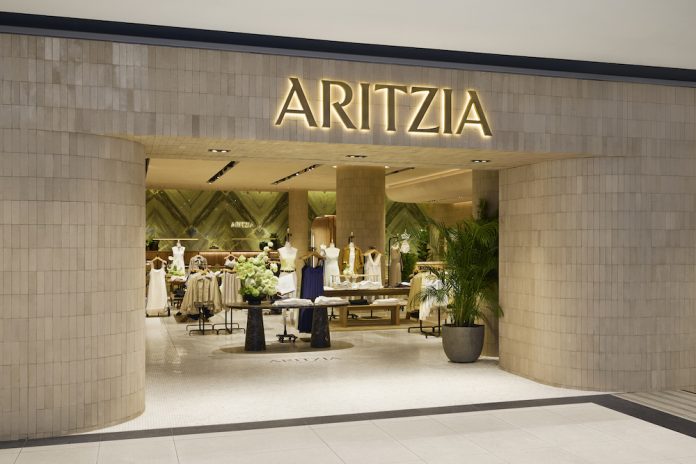
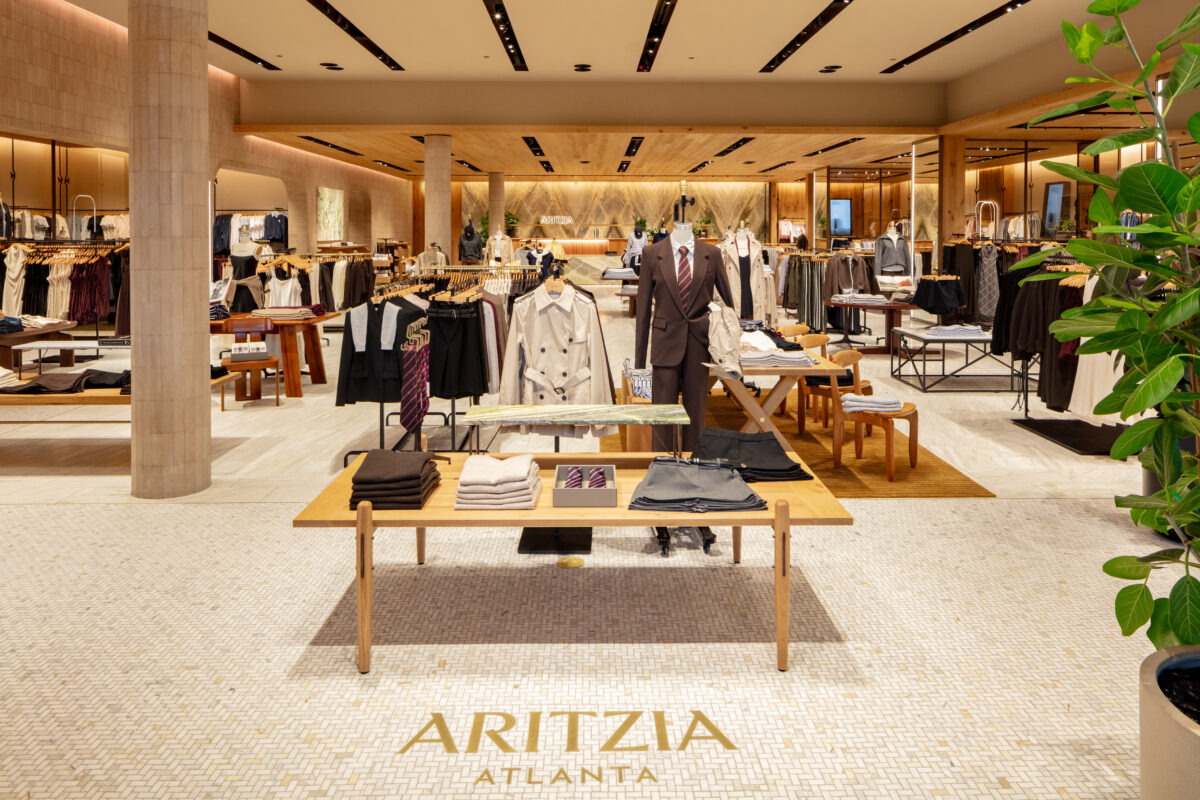
Aritzia Atlanta. Photo: Aritzia.
The company said the net revenue increase was driven by outstanding comparable sales growth and the strong performance of the its new and repositioned boutiques. Comparable sales increased “as all channels and all geographies generated positive double-digit growth. This was driven by exceptional demand for the Company’s product offering, as well as the Company’s digital initiatives and its strategic marketing investments,” it explained.
In the United States, net revenue increased 60.3% to $779.4 million, compared to $486.1 million in Q2 2026. This was fueled by strong comparable sales growth in Digital and Retail, as well as the company’s real estate expansion strategy. Net revenue in Canada increased 19.8% to $390.4 million, compared to $326.0 million in Q2 2026, driven by strong comparable sales growth in Digital and Retail, as well as the company’s real estate expansion strategy, added Aritzia.
“Retail net revenue increased 34.1% to $766.9 million, compared to $571.7 million in Q2 2026. The increase was driven by strong comparable sales growth in both the United States and Canada, as well as the strong performance of the Company’s new and repositioned boutiques. In the last 12 months, the Company opened 14 new boutiques and repositioned five boutiques. Boutique count3 at the end of Q2 2027 totaled 146 compared to 134 boutiques at the end of Q2 2026,” noted the retailer.
“Digital net revenue increased 67.7% to $402.9 million, compared to $240.3 million in Q2 2026. The increase was fueled by strong traffic growth, driven by robust demand for the Company’s product offering, its new mobile app and its investments in digital marketing.”
Aritzia said it expects the following for Fiscal 2027: Net revenue in the range of $4.78 billion to $4.88 billion, representing growth of approximately 29% to 32% from Fiscal 2026. This includes the contribution from retail expansion with 12 to 13 new boutiques and four to five boutique repositions. Eleven to twelve new boutiques and two to three repositions are expected to be in the United States with the remainder in Canada.
Founded in 1984 in Vancouver, Aritizia has 145+ boutiques throughout North America.