Home Blog Page 20

Bloor Street Retail Update: New Stores, Flagships and Major Changes Reshape Toronto Luxury Corridor

Future Tiffany & Co. at 66 Bloor St. West (corner of Bay St.) in Toronto. Photo: Craig Patterson

Toronto’s Bloor Street luxury corridor has changed dramatically over the past several years, as international brands invested heavily in new flagships, expanded stores and elaborate façades between Yonge Street and Avenue Road. Much of that construction took place during and in the years following the pandemic, reshaping one of Canada’s most prominent retail streets.

Another round of activity is now underway, though it looks different from the earlier flagship-building boom. New retailers and food-and-beverage concepts are arriving, established businesses are relocating or adjusting their footprints, Holt Renfrew is preparing further changes to its flagship, and several major properties remain in various stages of redevelopment or repositioning.

The activity extends well beyond luxury fashion. Jewellery and watch retailers continue to invest, new cafés are adding options to a stretch historically dominated by stores, and the area around Yonge and Bloor is developing an unusual concentration of burger and quick-service concepts. Several large development sites could also substantially alter the eastern end of the corridor in the years ahead.

Future Delysées and RH on Bloor Street in Toronto. Photo: Craig Patterson

Delysées Coming to Bloor as RH Prepares New Flagship

One of the newest additions will be Delysées Luxury Desserts, which Retail Insider has learned will open in the former Peloton space at 151 Bloor Street West. The French-inspired pastry and dessert concept will add another food-and-beverage offering to a section of Bloor where dining options remain comparatively limited. The lease was negotiated with CBRE’s Toronto Urban Retail Team, with Arlin Markowitz and Emily Everett involved in the transaction.

Delysées has been expanding its presence in major Canadian retail destinations. In addition to locations at Yorkdale Shopping Centre and Ossington Avenue in Toronto, Royalmount in Montreal and Lansdowne in Ottawa, the company now operates two concepts at Oakridge Park in Vancouver. Delysées Champagne Bar opened as part of Oakridge Park’s May 28 debut, pairing champagne with desserts, while a separate Delysées boutique subsequently opened near the shopping centre’s main entrance.

The Bloor location marks a return to the broader Yorkville area, where Delysées previously operated a boutique, while introducing a new use to the former Peloton premises following the fitness company’s departure.

The building at 151 Bloor also houses Max Mara, Montblanc and French childrenswear brand Bonpoint, although another tenant change could eventually come to the property. The Bonpoint premises are now being offered for lease by CBRE’s Urban Retail Team. The store remains open, and any eventual departure would be expected to follow the securing of a replacement tenant.

Immediately next door, RH will begin preparing its previously reported flagship at 157 Bloor Street West in the former Club Monaco store. The premises total approximately 17,000 square feet, with close to 10,000 square feet devoted to retail selling space and much of the remainder used for storage and supporting functions.

Sources tell Retail Insider that the Bloor location will not include an RH restaurant, distinguishing the Toronto store from some of the retailer’s larger Gallery concepts where hospitality plays an important role. The combination of RH and Delysées will bring two significant new uses to adjacent properties along this portion of Bloor.

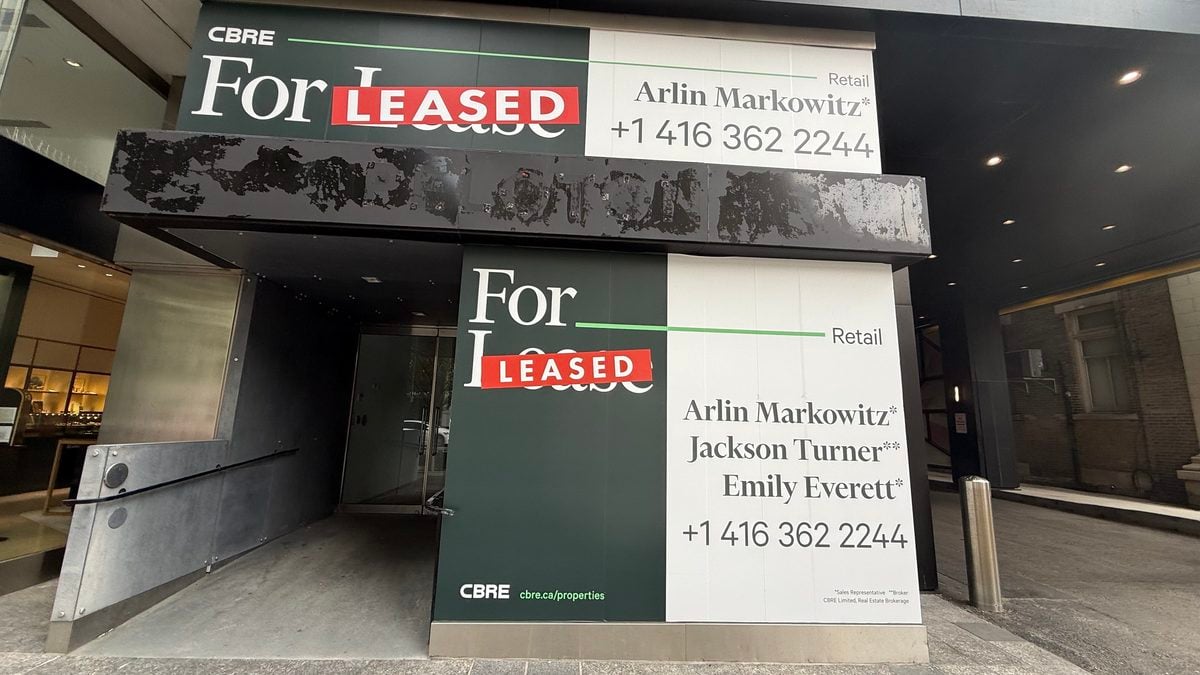
Future RH and Delysées on Bloor Street in Toronto. Photo: Craig Patterson
Future Delysées on Bloor Street in Toronto. Photo: Craig Patterson

Food and Beverage Slowly Expands Along the Luxury Strip

Despite the concentration of global luxury brands along Bloor, food-and-beverage options directly on the prime shopping stretch remain relatively sparse. Restaurants are considerably more plentiful immediately north in Yorkville, particularly along Yorkville Avenue, Cumberland Street and surrounding streets.

Paris Baguette added a street-level bakery café at 110 Bloor Street West in October 2024, while Amal operates from the second level of The Colonnade at 131 Bloor Street West. Holt Renfrew also has a restaurant on the mezzanine level of its flagship at 50 Bloor Street West, with Eataly across the street at Manulife Centre.

Delysées will fill a noticeable gap when it opens at 151 Bloor, adding another hospitality-oriented use directly to the luxury shopping strip.

Fashion, Jewellery and Watches Gain More Ground

Luxury jewellery and watches have become an increasingly prominent part of Bloor Street’s retail mix, with several properties seeing investment or tenant changes.

At the Manulife Centre, RUDSAK is preparing a store of approximately 1,000 square feet within a portion of the Birks premises at 55 Bloor Street West. Retail Insider recently reported that the Canadian fashion brand is taking the former Van Cleef & Arpels space through a sublease from Birks.

The deal follows a period of uncertainty over the future of the Birks flagship itself. The long-standing jeweller now appears set to remain on Bloor for the foreseeable future while changing how portions of its large premises are used.

Paris-based jewellery house FRED has opened a shop within Birks in an area previously occupied by Cartier. Montblanc is also expected to establish a presence inside the store. Together with the RUDSAK sublease, the moves point to a reconfiguration of the Birks footprint rather than the full departure that had previously been anticipated.
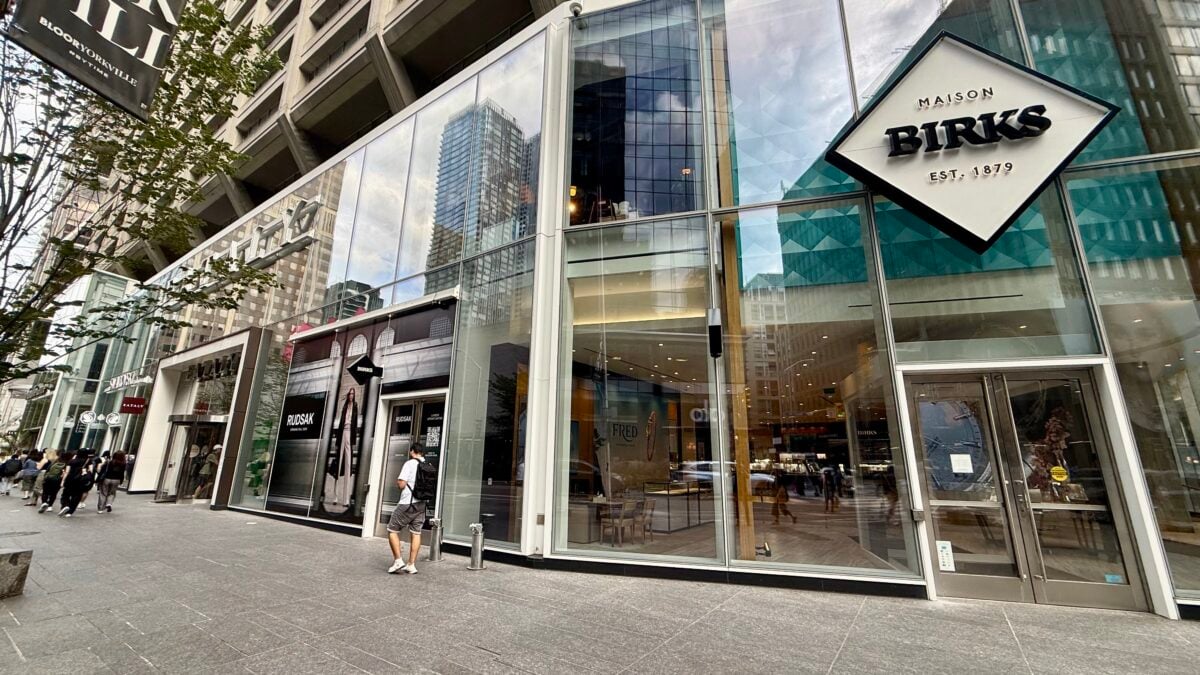
Future RUDSAK at Manlife Centre, 55 Bloor St. W. in Toronto. Photo: Craig Patterson

The largest project currently underway in that category is nearby at 66 Bloor Street West, where Tiffany & Co. is building a new two-level flagship. The approximately 15,000-square-foot store at the southwest corner of Bay and Bloor will replace Tiffany’s existing location at 150 Bloor Street West and is expected to open in early 2027, according to sources.

Approximately 6,000 square feet of the new Tiffany flagship will be at street level, with roughly the same amount of space upstairs. The scale of the project represents another substantial commitment to Bloor by one of the world’s best-known luxury brands.

There could eventually be further movement among the street’s major luxury tenants. Industry sources have indicated that Louis Vuitton has explored options for relocating its existing Bloor Street flagship, although no new location has been announced. Cartier is also said to be looking to relocate, while other brands are said to be looking for space either on the street or nearby.
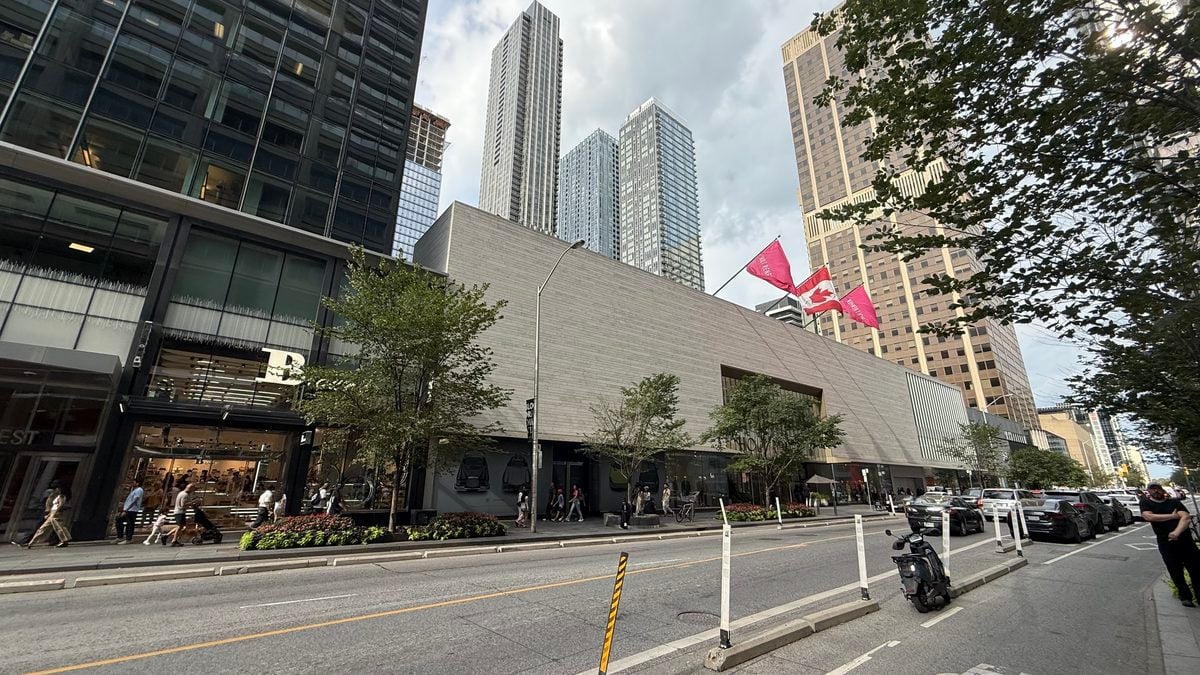
Holt Renfrew at 50 Bloor Street West in Toronto. Photo: Craig Patterson

Holt Renfrew Prepares for Another Major Reworking

Some of the most consequential changes could take place inside Holt Renfrew, one of the principal anchors of the Bloor-Yorkville retail district.

Sources tell Retail Insider that the department store is preparing another substantial reworking of its flagship at 50 Bloor Street West. Plans are expected to include the creation of additional retail space below the existing mezzanine level, along with changes to departments elsewhere in the building. A new in-store spa is said to be one of the potential additions.

The third-floor ON3 concept is expected to be repositioned as part of the project, while menswear and women’s contemporary departments will also be reorganized, according to sources. Holt Renfrew has not publicly announced the complete scope or timing of the work.

Evidence of the continuing investment can already be seen from Bloor Street. New window openings have been created on the second floor above the flagship’s main entrance, bringing natural light into a portion of the selling floor that previously had no exterior windows. The intervention has also changed the appearance of the façade when viewed from the street.

Changes are coming to the main floor as well. Moncler will open a concession of approximately 3,000 square feet in space recently vacated by Fendi, giving the Italian fashion brand a significantly larger presence within the store.

Mercedes-Benz Studio Toronto at Holt Renfrew’s Bloor Street flagship in Toronto. Image: CNW

Mercedes-Benz Canada, meanwhile, opened Mercedes-Benz Studio Toronto inside Holt Renfrew in June. The approximately 2,250-square-foot space is being used for changing automotive, fashion and design installations and is expected to remain through 2027.

The Studio recently underwent its first major refresh, reopening with a “140 Years of Innovation” experience tracing Mercedes-Benz history from the invention of the automobile through to the Canadian debut of the 2027 S-Class Sedan. The latest iteration also introduces Italian fashion brand Paul & Shark to the space.

The latest plans continue a multi-stage reinvestment in the Bloor flagship. During the pandemic, Holt Renfrew undertook a partial renovation that included a new façade, updated interiors and the return of menswear to the main store after years of operating from a standalone men’s location at 100 Bloor Street West.

Further changes are taking place under President and CEO Franco Savastano, who assumed leadership of Holt Renfrew following Sebastian Picardo’s departure in 2025. Savastano previously held senior leadership positions at European department store businesses including Globus and Jelmoli.

His arrival has coincided with several consequential decisions involving Holt Renfrew’s store portfolio, including abandoning plans for a second Vancouver location at Oakridge Park, where the retailer had been negotiating to occupy the former 140,000 square foot Hudson’s Bay premises.

The decision puts greater emphasis on Holt Renfrew’s existing network and particularly its Bloor flagship, which sits at the centre of Canada’s largest concentration of luxury retail. The planned changes indicate that investment in the property will continue beyond the renovations completed earlier this decade.
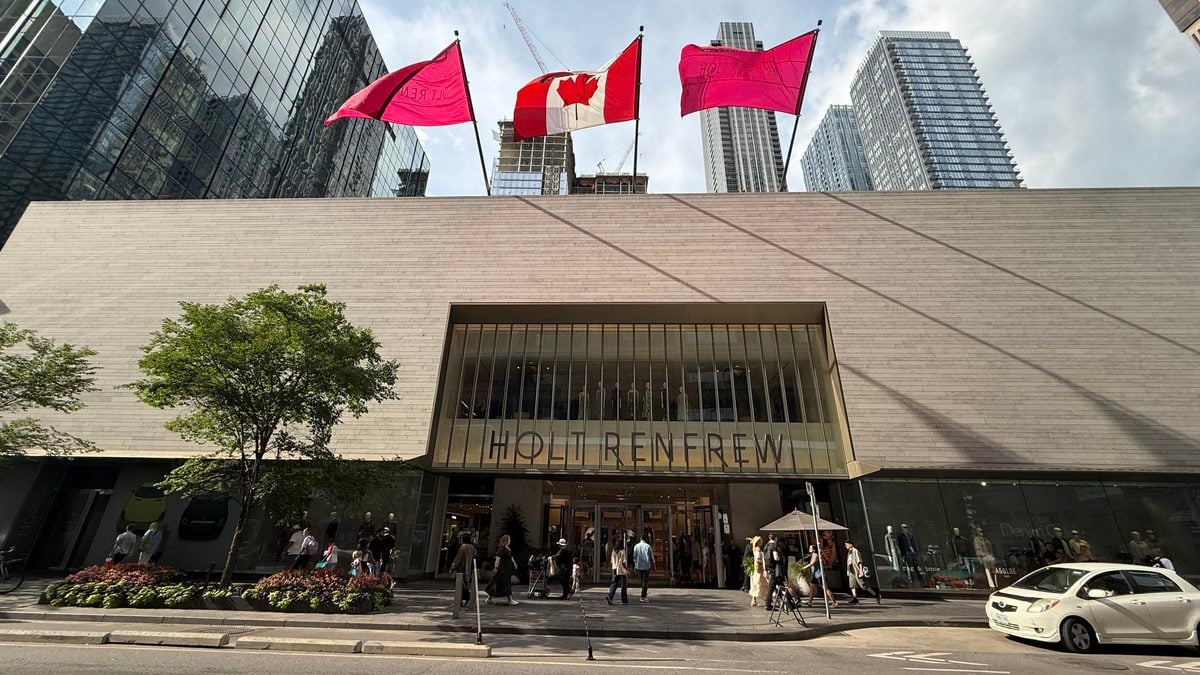
Holt Renfrew at 50 Bloor Street West in Toronto. Photo: Craig Patterson

Harry Rosen Leaves Bloor After More Than Five Decades

Another significant shift unfolded nearby, where Harry Rosen recently left an address it has occupied for more than half a century.

The menswear retailer closed its five-level flagship at 82 Bloor Street West on September 12 after more than 55 years on Bloor. The store spans more than 50,000 square feet and has long been one of the street’s most recognizable Canadian retail institutions.

Harry Rosen is moving less than 200 metres away to a new flagship at 153 Cumberland Street, with customer pickups scheduled to resume there September 22. While the move takes the company off Bloor itself, it keeps the retailer firmly within Yorkville and reflects the increasing integration of Bloor with the luxury retail streets immediately to the north.

The existing Harry Rosen property is tied to the longer-term redevelopment of 80 and 82 Bloor Street West. Plans have contemplated replacing the Harry Rosen building and neighbouring office tower with a substantially taller development, although the timeline has evolved.

One indication that redevelopment is not imminent can be found next door. GoodLife Fitness previously closed its gym at 80 Bloor in anticipation of future construction but has since reopened at the property.

Harry Rosen’s departure creates one of the most prominent vacancies on the luxury stretch while simultaneously adding another major retail anchor to Cumberland Street. It also illustrates how the geography of upscale retail in the area continues to spread beyond Bloor itself. CBRE is listing the building for lease until redevelopment plans are determined.
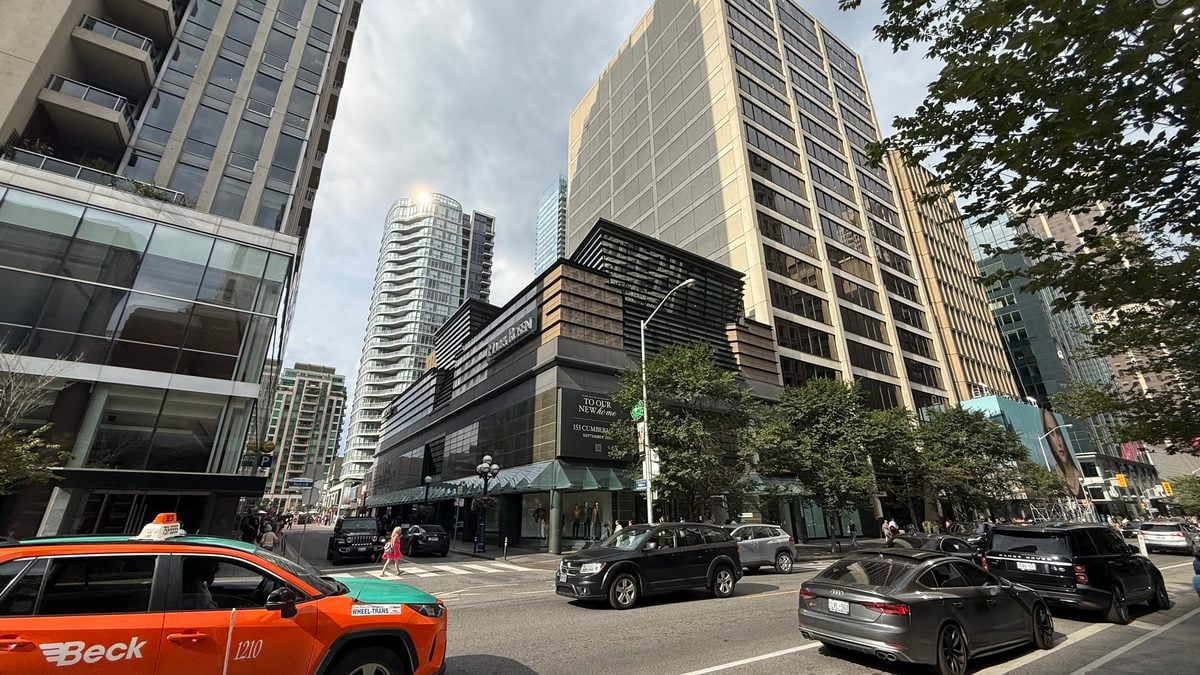
Former Harry Rosen and Holt Renfrew Men Bloor Street West in Toronto (corner of Bellair Street). Photo: Craig Patterson

One Bloor West Moves Toward Completion

At the eastern end of the district, work continues on one of Toronto’s most closely watched development projects.

The former Mizrahi development at the southwest corner of Yonge and Bloor is now known as One Bloor West, with Tridel retained as development manager, construction manager and sales manager following the financial difficulties that overtook Mizrahi Developments.

At 85 storeys and more than 300 metres in height, the tower is set to become one of the defining additions to Toronto’s skyline. Interim occupancy is anticipated beginning in 2027, with overall completion currently projected for 2028.

The retail component remains one of the project’s major unresolved questions. A prominent ground-floor space was originally intended for Apple before the technology company withdrew following a dispute with the previous developer, and the premises are now being marketed for lease by CBRE.

Sources previously told Retail Insider that RBC had examined the space at one stage, although no lease was ultimately announced.

The hotel component is also being closely watched. Tridel has publicly indicated that it is seeking a luxury hotel operator for the project, along with retail and food-and-beverage tenants.

Industry sources have told Retail Insider that Singapore-founded luxury hospitality brand Raffles has been discussed as a potential operator, with the possibility that the project’s private residences could carry ‘Raffles Private Residences’ branding as well. Raffles is part of Accor, the France-based global hospitality group.

No agreement with Raffles has been publicly announced, and Retail Insider has not independently confirmed that a transaction has been finalized.

Yonge and Bloor intersection in Toronto. Photo: Craig Patterson

Fabricland Stays Put as Redevelopment Waits

Immediately west of One Bloor West, Fabricland continues to operate at 19 Bloor Street West despite longer-term plans to redevelop the property.

The site is expected eventually to become a major mixed-use project, although sources indicate Fabricland could remain for several more years before construction begins. The Kimel family, associated with Fabricland, is also involved in the ownership and development of the property.

The situation is one of several examples along Bloor where the period between redevelopment plans and actual construction has stretched considerably, allowing existing businesses to remain or return while larger projects work their way toward construction.
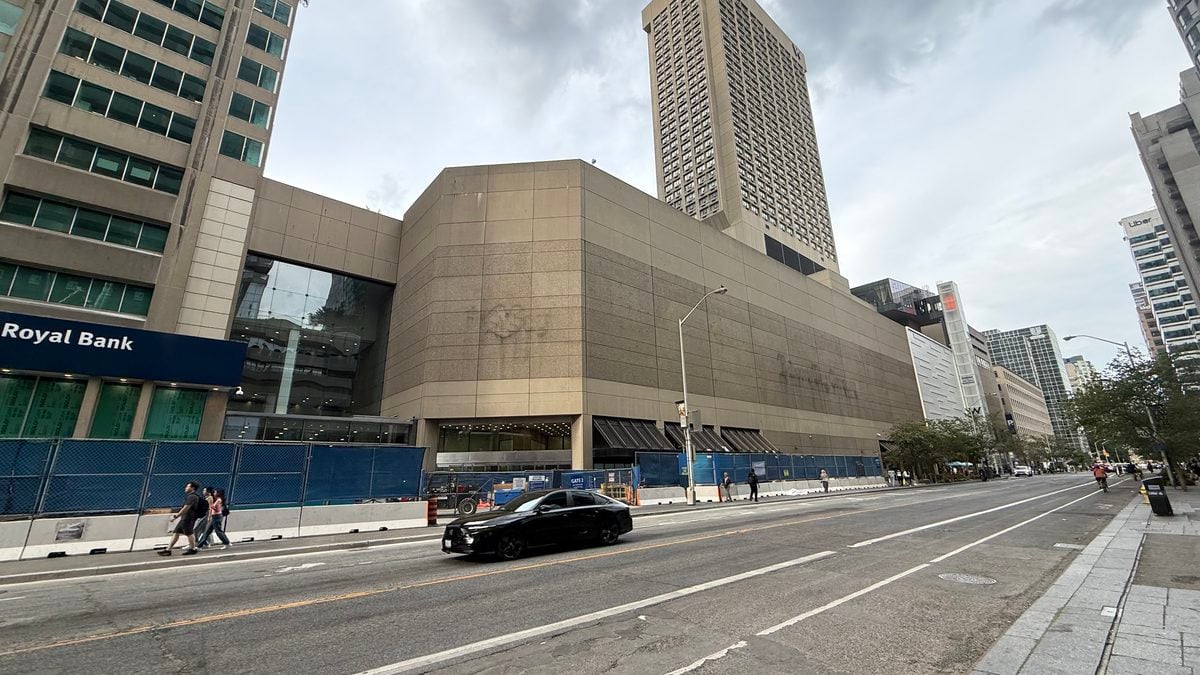
Former Hudson’s Bay store at 44 Bloor Street East in Toronto. Photo: Craig Patterson

Former Hudson’s Bay Remains a Major Question at Yonge and Bloor

Diagonally across the street, one of the corridor’s largest former retail spaces remains without the kind of major anchor that historically occupied it.

Hudson’s Bay closed its department store at 44 Bloor Street West in 2022 after nearly five decades of operation. A proposal has since emerged to convert significant portions of the former department store premises to self-storage, while the long-term retail component at the base of the property remains unclear.

There had previously been industry discussion about Canadian Tire potentially using part of the former Bay premises temporarily while its nearby store was redeveloped. Plans for the Canadian Tire property contemplate a mixed-use residential and retail development that would ultimately include a replacement Canadian Tire store, but no temporary move to 44 Bloor has been announced.

The continued uncertainty surrounding the former Bay property is particularly noticeable given its location at Yonge and Bloor, one of Toronto’s busiest intersections. It also contrasts with the level of investment taking place several blocks west, where luxury retailers continue to commit substantial capital to new and renovated stores.

New Uses Appear Below Bloor Street

The evolution of the area is also visible below street level, where new uses are appearing in spaces historically occupied by conventional stores and services.

SHKD Quest has opened on the concourse level of Holt Renfrew Centre at 50 Bloor Street West. The entertainment concept combines live-action games with mental and physical challenges designed for groups, using themed environments and competitive elements to create an immersive experience.

While parts of the format may recall laser tag and other interactive entertainment concepts, SHKD Quest has a broader focus on team-based challenges and gamified experiences.

Across the hall, Toronto Designers Market is entering a new chapter under owner Karen Ferguson and is expected to transition to the Wilkes & Bowens name this fall. Together, the concepts illustrate some of the experimentation taking place in lower-level retail environments as landlords seek businesses capable of generating repeat visits.
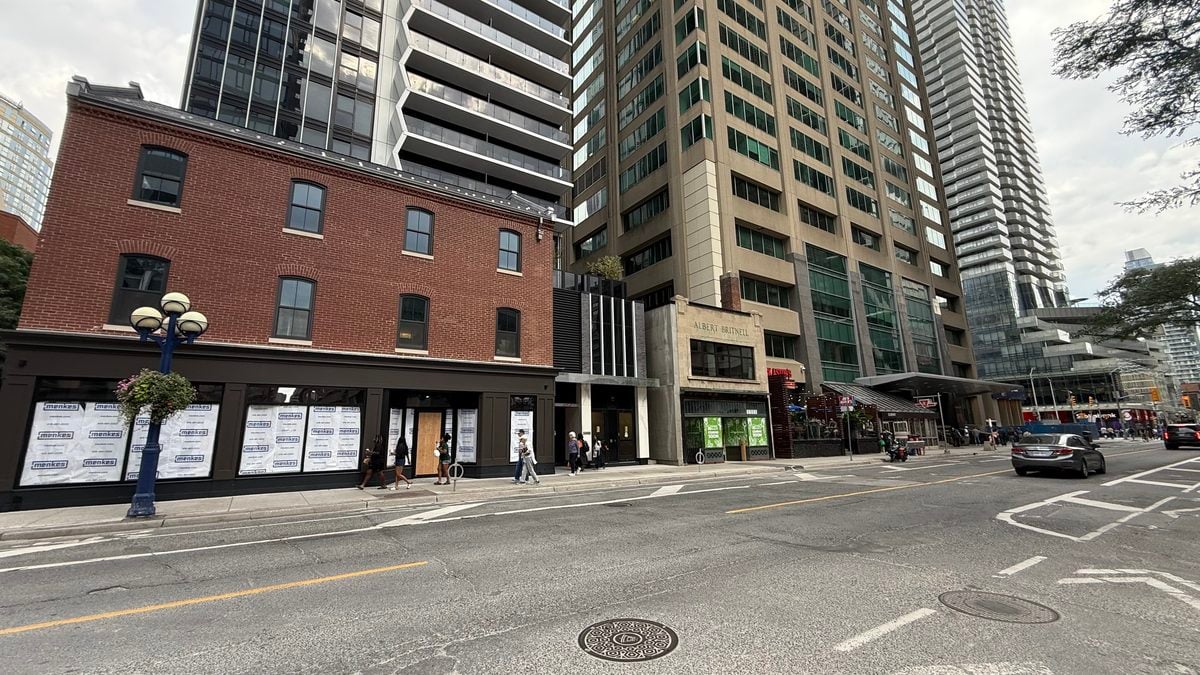
Future Shake Shack at 765 Yonge Street (north of Bloor) in Toronto. Photo: Craig Patterson
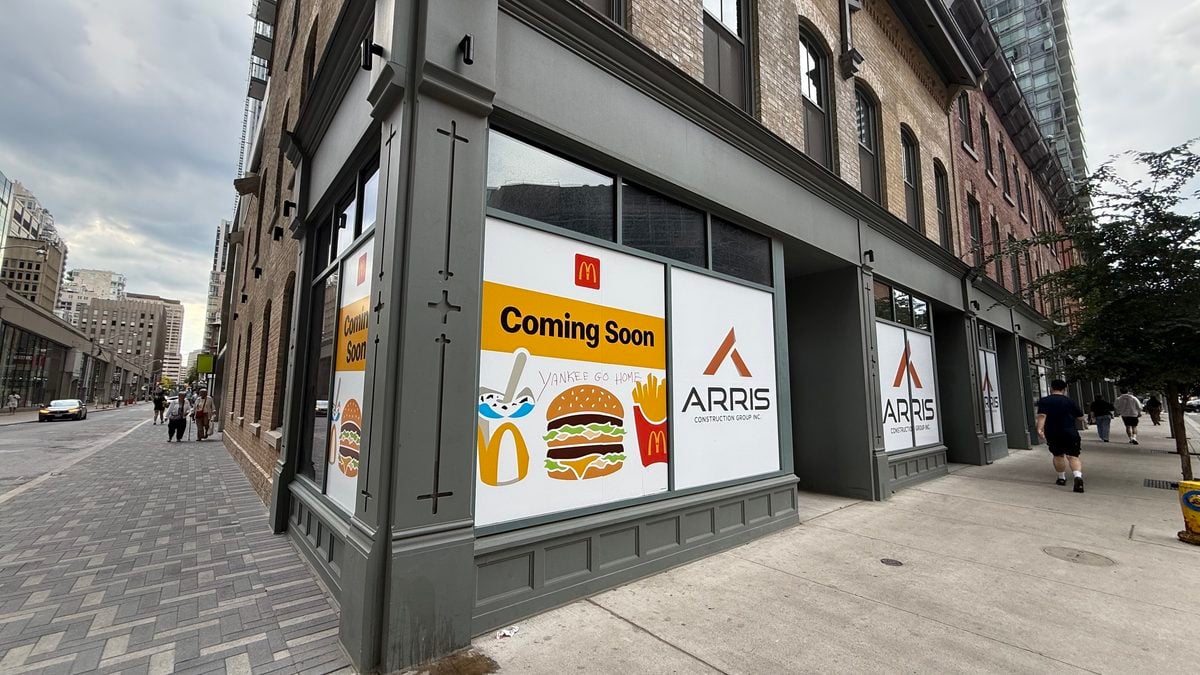
Future McDonalds at 8 Cumberland Street/Yonge Street (north of Bloor) in Toronto. Photo: Craig Patterson

An Unlikely Burger Cluster Forms Around Yonge and Bloor

Above ground, a very different type of cluster is taking shape around the Yonge and Bloor intersection.

Shake Shack is under construction at 765 Yonge Street immediately north of Bloor, part of the U.S.-based chain’s continuing expansion in Canada. Nearby, McDonald’s is preparing another location for the area at Yonge and Cumberland Streets, occupying space at the base of the Eight Cumberland condominium tower within a row of preserved heritage façades.

South of Bloor, Oklahoma Burgers opened on Yonge Street last year, while Bings is also operating nearby. Chick-fil-A and a recently reopened Popeyes add to the concentration of quick-service restaurants surrounding the intersection.

The result is an emerging burger and fast-food cluster within a short distance of Canada’s most expensive luxury shopping street, creating an unusual juxtaposition between the luxury flagships west of Yonge and the increasingly dense collection of quick-service restaurants around the subway interchange and beyond.

Bloor’s Next Chapter Is Already Taking Shape

The most visible phase of Bloor Street’s recent transformation was defined by construction. International luxury brands built large flagships, façades were rebuilt and significant capital flowed into a relatively short stretch of Toronto’s premier shopping street.

What is happening now is more varied. Some retailers are expanding while others are shrinking or moving, jewellery brands are gaining prominence, food and beverage is slowly filling gaps in the street’s tenant mix, and Holt Renfrew is preparing another round of investment in a flagship that has already undergone considerable change.

Harry Rosen’s move to Cumberland Street also reinforces how closely Bloor now functions with Yorkville immediately to the north. Retail activity that once might have been described simply as “Bloor Street” increasingly spans a larger district encompassing Bloor, Cumberland, Yorkville Avenue and the streets connecting them.

The eastern end presents a different picture. One Bloor West is moving closer to completion, Fabricland remains in place pending eventual redevelopment, and the former Hudson’s Bay continues to await a more definitive retail future. Around those properties, experiential concepts and a growing concentration of restaurants are adding new dimensions to the neighbourhood.

Bloor Street has already changed substantially since the pandemic-era construction boom began. With Tiffany & Co. building a major new flagship, RH and Delysées preparing to open, Holt Renfrew planning further changes and several large redevelopment sites still evolving, the street and the surrounding Yorkville district are likely to look considerably different again within the next few years.


More from Retail Insider:

Verifran launches franchise intelligence platform to streamline candidate qualification

Verifran photo
Verifran photo

Verifran has launched a new platform designed to give franchisors more information about prospective franchisees earlier in the recruitment process, bringing candidate readiness, brand compatibility and verification into a single system.

The Toronto-based company is positioning the platform as an intelligence layer between an initial franchise inquiry and a franchise development team, with the goal of reducing the amount of manual qualification work required before development staff engage more deeply with candidates.

Platform targets early-stage qualification

Verifran says its platform is intended to complement, rather than replace, existing franchise recruitment tools and processes, including lead-generation systems, customer relationship management platforms, brokers and referral networks. The company says the platform is designed to turn an initial inquiry into a more structured profile of the prospective franchisee.

Omran Ismail
Omran Ismail

“Franchising doesn’t have a lead generation problem. It has an intelligence and qualification problem,” said Omran Ismail, co-founder and CEO of Verifran Inc. “The industry has become exceptionally good at generating inquiries, but development teams are still often asked to do the hardest qualification work manually and after the lead arrives. We built Verifran to move that intelligence earlier, giving teams more time to focus on stronger opportunities and the people behind them.”

The platform includes several tools intended to assess prospective franchisees from different perspectives. Vera is a guided conversation tool that asks candidates relevant questions and converts their responses into structured information, rather than relying solely on a traditional inquiry form.

The Franchise Readiness Score measures candidate readiness across nine standardized dimensions on a scale of zero to 100. The company says the measure is independent of any particular franchise brand.

Brand DNA allows a franchisor to define the characteristics it considers important in a potential owner. The Franchise Compatibility Index then provides a brand-specific assessment of how closely an individual candidate aligns with those characteristics.

The platform also includes Verify, which is designed to confirm a candidate’s identity, financial information and background and distinguish verified information from information supplied directly by the candidate.

Candidate profile combines assessments

Verifran says the information from those tools is brought together in a Candidate Intelligence Card, providing franchisors with a consolidated view of a prospective franchisee’s readiness, compatibility with the brand and verification status.

The company says the approach is intended to allow franchise development teams to identify where direct human involvement is most useful, rather than spending as much time gathering basic information through forms, calls and follow-ups.

“Franchise development is fundamentally a relationship business, and we believe it should stay that way,” added Ismail. “Verifran doesn’t replace the conversation. It helps make the conversation worth having. When teams know more before that first meaningful interaction, they can spend less time collecting basic information and more time building relationships and determining whether there is genuine mutual fit.”

Verifran says it is not a lead-generation platform, CRM or broker, and is not intended to replace the franchise development process. Instead, the company describes its product as a separate intelligence and qualification layer that can operate alongside existing recruitment stages.

Verifran photo
Verifran photo

Founding team brings technology and franchise experience

Verifran was founded by Ismail as CEO, Adam El-Kadi as chief operating officer and Yazan Maarouf as chief technology officer. The company says the founding team has experience in entrepreneurship, product development, governance, software engineering and machine learning.

Its advisory board includes Victor Turcanu, a cross-border franchise lawyer, and Lisa Raffaele, founder of Bubblegum Canada and a communications strategist focused on franchise growth and brand awareness, along with other franchise-industry advisers.

The company plans to introduce the platform publicly at the National Franchise Show in Toronto on Sept. 19 and 20. The event will provide an opportunity for franchisors, franchise executives, brokers, consultants and prospective franchisees to see the platform and meet the Verifran team.

Verifran will exhibit at Booth 337 at the show as it begins its North American market launch.

More from Retail Insider:

WestJet, Tim Hortons announce new in-flight coffee and loyalty partnership

The partnership will see WestJet serve a new Tim Hortons coffee blend called Flight Roast on flights that currently offer in-flight refreshments, while members of the two companies’ rewards programs will eventually be able to earn points through eligible Tim Hortons purchases.

Recently Tim Hortons announced a loyalty partnership as well with Canadian Tire.

New coffee blend for WestJet flights

Beginning Nov. 30, WestJet guests will be served Tim Hortons Flight Roast, a coffee blend developed specifically for consumption at cruising altitude and created exclusively for the partnership. The companies said the coffee is designed to taste its best at 35,000 feet.

Flight Roast is made with 100 per cent Premium Arabica beans from selected origins and is roasted to a full medium. The companies describe the resulting coffee as smooth, rich and balanced, with hints of toasted nuts, cocoa and red fruit.

Tim Hortons coffee and tea will be available on WestJet flights that currently provide in-flight refreshments, expanding the coffee chain’s presence into the airline’s onboard service.

“Some partnerships just make sense, bringing together WestJet, Canada’s famously welcoming airline with Tim Horton’s, Canada’s favourite coffee is one of them,” said John Weatherill, WestJet Group Executive Vice-President and Chief Commercial Officer. “We’re excited to welcome Tim Hortons and its new Flight Roast blend onboard, giving guests a little taste of home with every cup while reinforcing our ongoing commitment to delivering Canadians with a welcoming experience.”

The companies said the Flight Roast was developed by Tim Hortons’ in-house coffee experts and builds on the chain’s existing coffee offering while being roasted and brewed specifically for the conditions of air travel.

“Since 1964, Tim Hortons has been serving great tasting coffee that Canadians love and we’re excited to bring Tims to the sky. We can’t wait for Flight Roast, a custom blend developed to be enjoyed exclusively for WestJet guests during their flights, to take off,” said Hope Bagozzi, Chief Marketing Officer for Tim Hortons. “This is just the first sip of something bigger. We’re thrilled to expand our loyalty ecosystem with our WestJet partnership to give Canadians even more value on their Tims runs starting next year.”

Loyalty programs to be linked in 2027

The second phase of the partnership is expected to begin in 2027, when members of WestJet Rewards and Tims Rewards will be able to link their accounts. Eligible Tim Hortons purchases will allow participating members to earn points through both programs, according to the companies.

Account linking will also provide access to exclusive offers and promotions, although the companies have not yet released details on the specific member benefits.

Additional information about the loyalty program integration and benefits will be announced closer to its rollout next year.

The partnership brings together WestJet, which is headquartered in Calgary, and Tim Hortons around two elements: an onboard product offering and a loyalty-program connection designed to provide benefits to members beyond their individual transactions with either company.

WestJet said it operates more than 600 daily flights and serves more than 275 destinations, including destinations across North America, Europe, Asia and other international markets. The airline has more than 15,000 employees, according to the release.

WestJet said its group includes WestJet Airlines, WestJet Vacations, Vacances WestJet Quebec and Sunwing Vacations.

More from Retail Insider:


Maybelline New York taps four Canadian artists to rework iconic jingle in new campaign (Videos)

Maybelline New York photo

Maybelline New York is putting a Canadian spin on its long-running “Maybe It’s Maybelline” jingle, with four Canadian artists creating original songs inspired by the beauty brand’s signature phrase.

The campaign, called The Power of Maybe: The Canadian Jingle Reimagined, launched this week and features Nicolina, Liz Lokre, Naomi and Tia Wood, with each artist interpreting the jingle through her own music and approach to self-expression.

Four artists, four interpretations

The campaign positions “Maybe” as a starting point for possibility, with the four songs exploring themes including new ideas, dreams, self-expression and taking chances. Each artist’s original song is also paired with a Maybelline product.

“Everyone knows the Maybelline slogan, but MAYBE has always meant more than a question mark,” said Catherine St-Pierre, Marketing Director, Maybelline New York Canada. “It is the beginning of possibility: the confidence to imagine, explore and express what could be. With this campaign, we wanted to give a new generation of Canadian artists the freedom to make our iconic jingle their own. Nicolina, Liz, Naomi and Tia each brought a completely different perspective to it, showing how music and beauty can both be powerful forms of self-expression.”

Nicolina’s original track, “Part of Me,” is described as a self-affirming song about embracing who you are and believing in yourself. The track is paired with Lash Sensational Sky High Mascara.

Liz Lokre’s “Maybe It’s Magic” focuses on confidence and magnetism and is paired with SuperStay Lumi-Matte Foundation. Naomi’s bilingual song, “Masterpiece,” centres on transformation and presenting oneself confidently and unapologetically, with SuperStay Vinyl Ink featured alongside the track.

Tia Wood’s “Maybe It’s…” explores identity, individuality and embracing one’s origins, and is paired with Instant Eraser Multi-Use Concealer.

Lokre said the campaign reflects her approach to pursuing a career in music and her willingness to pursue opportunities despite uncertainty.

“I’ve dedicated my life to my own maybe. Pursuing this dream means following my heart, listening to my intuition, and betting it all on myself,” said Lokre. “I stay focused on what’s possible. The space between what is and what could be is what gets me out of bed every day.”

Wood said makeup and artistic expression are connected to her sense of identity and independence.

“When I put on these physical creations of color, sparkle, shape and unique applique, I feel somehow connected, grounded and self-determined. This is how I feel when I am representing myself with makeup,” said Wood.

Digital campaign and live performance

The campaign has rolled out across the artists’ Instagram, TikTok and YouTube channels, with original song edits, behind-the-scenes Artist Jingle Capsules and Product Capsules.

The full campaign will also be available through Maybelline New York Canada’s YouTube channel and its The Power of Maybe campaign hub. The featured Maybelline products will be available through the Maybelline Amazon.ca Brand Store.

The campaign is scheduled to culminate Oct. 1 at 8 p.m. ET with MAYBE, Live, a YouTube Live music session featuring Nicolina, Lokre, Naomi and Wood performing the original songs created for the campaign.

More from Retail Insider:

Best Toy Store POS

Toy retail is one of the more demanding corners of the shop-floor world. A single store might carry everything from construction sets and board games to plush, trading cards, and seasonal exclusives, which means thousands of SKUs across dozens of vendors, often in multiple variations of the same line. Demand is wildly uneven too: a toy store can do a huge share of its year in the run-up to December and then spend the rest of the year helping shoppers find the right gift for the right age. The point-of-sale system underneath all of that has to do more than take payments. It needs to keep a sprawling catalog accurate, reorder bestsellers before they sell out, handle layaways and special orders, and increasingly tie the physical store to an online storefront.

With that in mind, we looked at five systems that are either purpose-built for toy and hobby retail or genuinely capable of running one, and focused on what each does well.

This roundup is based on each provider’s publicly stated features and pricing at the time of writing, rather than a hands-on test. Prices and plans change, so confirm the current details with each vendor before you commit. The right pick depends on how your store runs, so we’ve tried to highlight what each system does best.

Here are five systems worth considering.

1. Vibe Retail – best for toy retailers who want a specialist all-in-one

Vibe Retail is one of the few platforms that speaks directly to how toy stores operate rather than treating them as generic retail. It is a cloud-based, omnichannel system that unifies sales, inventory, payments, and customer data, and its dedicated toy store pos configuration is built around the category’s realities – including, in its own words, that “a toy store does a third of its year in December and needs to find the right gift for the right age the rest of the time.”

On inventory, Vibe keeps every SKU accurate across stores and the back room, from construction sets to plush to seasonal exclusives, with low-stock alerts and suppliers synced in for automated product additions. Promotional pricing can be set to apply automatically during configured periods, which takes the manual work out of holiday sales. Multi-store operators get a centralized dashboard with real-time stock levels and direct transfers between locations. On the sales side it pairs a built-in e-commerce site with selling through Amazon, Instagram, Facebook, and TikTok, and adds loyalty programs, digital gift cards, and built-in marketing tools. Vibe also promotes 24/7 retail support, migration specialists, and compatibility with existing hardware, so for an owner who wants software that already understands toy retail, it is a strong option.

  • Standout features: Accurate multi-store and back-room inventory with low-stock alerts and supplier sync; automatic seasonal promo pricing; omnichannel selling across a website plus Amazon, Instagram, Facebook, and TikTok; loyalty and digital gift cards.
  • Pricing: From $19/month (Essential), $97/month (Pro), up to $1,399/month (Ultimate).
  • Best for: Toy retailers who want a category-aware all-in-one that scales from one store to many.

2. Lightspeed – best for supplier-catalog depth and reporting

Lightspeed makes the list because it explicitly builds for this niche – it describes itself as “the point of sale system designed to help hobby, book and toy stores” – and pairs that with a genuinely deep retail engine. It frames itself as a one-stop commerce platform where you “manage your stock, sell anywhere and control all your operations from a single system.”

Its standout strength for toy stores is supplier handling: through Lightspeed’s NuORDER connection, thousands of products can be synced straight to the POS with preloaded data like UPC, MSRP, and descriptions, which is a real time-saver for a store juggling many vendors. Inventory covers costs, sales, and margins, product-performance reports that account for stockouts and missed sales, barcode scanning, and multi-location stock with reorder points. On omnichannel, you can build or connect an e-commerce site with no coding, sell across Facebook, Instagram, and TikTok and marketplaces like Amazon, eBay, Walmart, and Google Shopping, and fulfill via in-store pickup, local delivery, or shipping. Add tiered loyalty, customer purchase history, and real-time reporting for sales, inventory, and employees, and it is a capable, well-rounded option from a recognizable name.

  • Standout features: NuORDER supplier catalogs synced to the POS (UPC, MSRP, descriptions); product-performance reports accounting for stockouts; multi-location stock with reorder points; broad marketplace and social selling; tiered loyalty.
  • Pricing: Plan-based (Basic, Core, and Plus); specific rates are not published on the toy-store page – request a quote.
  • Best for: Multi-vendor toy stores that want strong supplier tooling and reporting depth.

3. SalesVu – best for holiday demand and layaway-heavy stores

SalesVu leans hardest into the parts of toy retail that break generic systems. It states plainly that “independent toy stores need a POS that can handle massive SKU counts, complex vendor catalogs, and holiday layaways,” and it is built around exactly those pressures.

On scale, it manages 10,000-plus SKUs with rapid barcode scanning and bulk uploads, and tracks multi-vendor catalogs with minimum order quantities and lead times. Its layaway workflow lets you process partial payments, hold inventory safely, and notify customers when items arrive – useful for big-ticket gifts spread over several paychecks. It also offers a set of AI-assisted tools: a Smart PO Automater that flags low stock across multiple vendors and generates consolidated purchase orders (with holiday demand prediction), listing enrichment for the online store, and age-based birthday recommendations. Assorted-case tracking and a wishlist/registry with duplicate prevention round out a feature set clearly shaped by how toy stores actually sell. If your busiest challenge is surviving Q4 with a huge catalog and a lot of layaways, it is well aimed.

  • Standout features: Handles 10,000+ SKUs with bulk uploads; full layaway (partial payments, held stock, arrival alerts); Smart PO automation with holiday demand prediction; multi-vendor catalogs with MOQs; wishlist/registry.
  • Pricing: Not disclosed on the toy-store page – request current pricing.
  • Best for: High-SKU stores with heavy seasonal peaks and frequent layaways.

4. Square – best for a simple, recognizable starting point

Square is the accessible all-rounder, and for a smaller or newer toy store it remains one of the easiest ways to get up and running. Its Retail POS pairs hardware and software for in-store and online sales, inventory, and staff and customer management, and its software comes in a free plan to start – there is no monthly subscription, though you still pay a processing fee on every transaction – with paid Plus and Premium tiers as you grow.

For a toy store, the practical strengths are real-time inventory tracking, barcode label creation and printing, multi-location transfers, and bulk import and export for managing a big SKU count. Square also handles customer engagement well, with loyalty, gift cards, and email and SMS marketing, plus staff scheduling and payroll, and it accepts all major payment types including digital wallets while syncing sales across channels. It will not match the toy specialists on layaway or deep vendor-catalog tooling, so a store that leans on those workflows should weigh that. But for ease of setup, brand familiarity, and a low barrier to entry, Square is hard to beat.

  • Standout features: Real-time inventory, barcode label printing, multi-location transfers, bulk import/export, loyalty, gift cards, and staff scheduling and payroll.
  • Pricing: Free software plan, plus paid Plus ($49/month per location) and Premium ($149/month per location) tiers; processing fees from 2.6% + 15 cents per in-person transaction, lower on the paid plans.
  • Best for: Newer or smaller toy stores that want the simplest possible setup with a familiar name.

5. MicroBiz – best for complex catalogs and flexible pricing

MicroBiz is a cloud retail POS used across many specialty-retail niches, with a dedicated setup for toy and hobby stores, and its strength is the messy middle of inventory and pricing. At its core is a multi-dimensional matrix inventory grid for managing items with several attributes – color, size, style – alongside minimum reorder points, CSV imports, and multi-store visibility.

Where it stands out is pricing flexibility, which suits toy stores that run bundles and promotions: markdown management for group markdowns, quantity-based tiered pricing (its own example is “1 for $5, 3 for $10”), time-based promotional pricing, and customer or tiered pricing. It also covers the toy-retail staples general systems skip – barcode price labels for untagged items, gift receipts that exclude prices, layaways, and special or back orders, plus phone orders. Customer sales history, product images at the register, and filterable search help at the counter, and it integrates with WooCommerce for online selling and QuickBooks Online for accounting. A free 21-day trial makes it easy to try before committing.

  • Standout features: Multi-dimensional matrix inventory; flexible pricing (markdowns, quantity/tiered, time-based promos); layaways, special orders, and gift receipts; WooCommerce and QuickBooks Online integrations; free 21-day trial.
  • Pricing: Not disclosed on the toy/hobby page – request current pricing.
  • Best for: Toy and hobby stores with complex catalogs and varied, promotion-heavy pricing.

What to look for in a toy store POS system

It is also worth knowing what separates a POS that merely works from one built for this category. The features that matter most for a toy store are:

  • Matrix or variant inventory that can hold a large, varied catalog – different editions, sizes, and versions of the same product line – without becoming unmanageable.
  • Low-stock alerts and automated reordering, so the bestsellers that drive your December survive the rush.
  • Vendor and supplier catalog handling – toy stores buy from many suppliers, often with minimum order quantities, so preloaded product data and consolidated purchase orders save real time.
  • Layaway, special orders, and gift receipts – long-standing toy-retail staples that plenty of general POS systems skip.
  • Omnichannel selling that keeps in-store, online, and marketplace inventory in sync from one back office.
  • Loyalty, gift cards, and age-aware marketing to turn one-time gift buyers into repeat customers.
  • Reporting that breaks sales down by product, vendor, employee, and season.

How to choose the right one for your store

There is no single best toy store POS system, only the best one for how your store operates. If you want software built around toy retail that scales from one register to many, Vibe Retail is a strong fit. If your catalog spans many vendors and you live in your supplier orders, Lightspeed’s catalog and reporting tools are compelling. If Q4 and layaways are your make-or-break, SalesVu is shaped for exactly that. If you are starting out and want the simplest, most familiar on-ramp, Square is tough to argue with. And if flexible pricing and matrix inventory are your priorities, MicroBiz is built for that complexity.

Whichever way you lean, shortlist two or three, book a demo, and test them against your real catalog, your busiest checkout moments, and your reordering and layaway workflows before you sign. The right system should feel like it was made for a toy-store floor – because the best ones were.

Frequently asked questions

What is a toy store POS system? A toy store POS (point-of-sale) system is the software and hardware a toy retailer uses to ring up sales, take payments, and run the business behind the counter. Beyond checkout, a good one manages a large, varied catalog across many vendors, handles layaways and special orders, keeps in-store and online inventory in sync, and holds customer data for loyalty and marketing.

What features matter most for a toy store? The essentials are matrix or variant inventory for a big catalog, low-stock alerts and automated reordering for seasonal peaks, vendor and purchase-order tooling, layaway and special-order support, omnichannel selling that syncs inventory, and reporting by product, vendor, and season.

How much does a toy store POS system cost? It varies widely. Entry plans can start as low as around $19/month (Vibe Retail), some providers offer a free software tier where you pay only per-transaction fees (Square), and specialist systems are often quote-based. Most vendors also charge payment-processing fees per transaction, so compare total cost, not just the subscription.

Do I really need layaway and special orders? For many toy stores, yes. Big-ticket and seasonal gifts often sell better when customers can pay over time or reserve out-of-stock items, and gift receipts are close to essential. If those workflows are central to your store, prioritize a system that supports them natively rather than one you have to work around.

The takeaway

Any of these five can run a toy store well – the deciding factor is fit, not ranking. Weigh a system’s strengths against how your store actually sells, especially through the holiday peak, then shortlist a couple, trial them against your own catalog and busiest moments, and choose from there.

This article is a general guide, not financial or purchasing advice. Prices, processing fees, plan features, and other figures are indicative only – they vary between providers and change over time. A POS system is a meaningful commitment for any toy store, so always confirm current pricing, transaction fees, contract terms, and the full agreement with any provider before you sign up.

What to Consider When Choosing a Commission-Based Marketing Agency

Most marketing agencies get paid whether your revenue goes up or down. A commission-based marketing agency works differently: part or all of its fee is tied to an agreed result, such as sales, leads, customer acquisition, or revenue.

That structure can be attractive, but the headline commission rate tells you very little on its own. How performance is measured, attributed, and calculated can matter just as much as the percentage itself.

Before choosing an agency, it is worth understanding how commission-based pricing works, what services these agencies provide, and what should be defined before the partnership begins.

What Is a Commission-Based Marketing Agency?

A commission-based marketing agency ties part or all of its compensation to a measurable business outcome rather than charging only a fixed fee.

Depending on the agreement, the agency may be paid based on:

  • Completed sales
  • Qualified leads
  • Customer acquisitions
  • Attributable revenue
  • Incremental revenue above an agreed baseline
  • Another measurable outcome defined by both parties

The structure can also vary. Some agencies work entirely on commission, while others combine a fixed base fee with a variable performance component. Revenue share is one type of commission-based arrangement, but the two terms are not interchangeable. A revenue-share model specifically calculates compensation using revenue, while a commission-based model can be tied to several different outcomes.

This is also why two agencies that both describe themselves as commission-based may have very different pricing structures.

How Does Commission-Based Pricing Compare With Other Agency Compensation Models?

There is no single pricing structure that works for every business. Each model distributes cost and performance risk differently.

Pricing modelHow it worksBest suited for
Monthly retainerFixed monthly fee for an agreed scope Ongoing support with predictable costs 
Project-basedFixed fee for a defined project One-time projects with clear deliverables 
Hourly pricingPay based on time spent Flexible or short-term support 
Commission-basedFee tied to an agreed result, such as sales, leads, or revenue Businesses seeking greater accountability for measurable outcomes 

What Services Can a Commission-Based Marketing Agency Offer?

A commission-based marketing agency can work as either a channel specialist or a broader growth partner.

Specialist agencies usually focus on areas where the result can be measured relatively clearly. These may include paid media, affiliate marketing, lead generation, email and SMS, SEO. For example, Splyt specializes in Google, Meta, and TikTok advertising and publicly describes its model as commission-only. Its agency fee is calculated as a percentage of the sales generated through the marketing it manages.

Other agencies work across a larger part of the customer journey. Their scope may combine paid acquisition, website management, CRO, email and SMS, creative, analytics, and growth strategy. For example, IMP Marketing uses a full-funnel approach through its CoScale model, combining a base fee with a percentage of incremental revenue.

Which structure makes more sense depends on the business problem. A specialist may be appropriate when the measurable outcome can be clearly connected to one channel. A broader growth partner may make more sense when performance depends on several connected areas. 

What Should You Consider When Choosing a Commission-Based Marketing Agency?

This is where most of the due diligence should happen. A commission percentage by itself tells you very little about whether an agreement is financially fair or operationally workable.

1. How Is the Commission Calculated?

The first step is to know exactly how the agency gets its commission. Compensation could be based on a sales, lead, acquisition, revenue generation, or other measurable outcome. Where the model is based on a percentage, explain the percentage rate as well as what the percentage is referring to. 

For instance, the former 10% would be on the total revenue from the store’s sales, while the latter would be the 10% above a sales baseline. What the agreement should also outline is what should be included in this calculation: refunds, discounts, taxes, shipping, chargebacks, ad spend, marketplace fees, etc.

Don’t just take the name of the rate and look at the headline rate, but be sure you also understand the base the percentage is based on and what is included or excluded from the calculation.

2. How Is the Baseline Defined?

Baseline definition becomes particularly important when the agency is compensated for incremental growth. Imagine a store generated an average of $100,000 per month before the partnership and reached $140,000 afterward. Is commission calculated on the entire $140,000 or only the additional $40,000?

Then consider seasonality. A holiday-driven business might naturally increase from $100,000 in September to $160,000 in November without any major marketing change. A useful baseline may therefore consider historical revenue, seasonal patterns, recent growth trends, existing campaigns, and major planned changes to the business.

For instance, IMP Marketing claims that its revenue-share partnerships establish the revenue bottom line, attribution requirements and revenue-share percentage prior to the start of work; any work done for them that generates revenue over those figures is what they are paid for. 

3. Does the Model Fit Your Margins and Unit Economics?

A performance-linked fee can look attractive on paper, but the real question is whether you still make enough money after paying for the result.

This becomes especially important in revenue-based models. Revenue growth and profitable growth are not the same thing. Consider a business with $100 in revenue but only $20 left after product cost, fulfillment, advertising, transaction costs, and other variable expenses; a large revenue-share fee could quickly reduce the value of that growth. 

Before committing, you should also test different scenarios: what happens to profitability if revenue grows 20%, 30%, or 50%? Commission-based pricing works best when there is enough economic room for both sides to benefit.

4. Does the Agency Understand Your Industry and Business Model?

Performance-based compensation does not replace relevant expertise. Different businesses have different customer journeys, margins, sales cycles, and growth challenges. Look for an agency that understands businesses similar to yours and can back up that experience with case studies showing measurable results.

Certifications, official partnerships, and a strong track record with key platforms can provide additional proof of expertise. For eCommerce businesses, for example, experience with Shopify, Klaviyo, Meta, and Google can be particularly relevant.

5. Does the Agency Feel Like the Right Working Partner?

Pricing and expertise matter, but so does the way the agency works. Pay attention to the early interactions: are they prepared, responsive, organized, and asking thoughtful questions about your business, or are they simply trying to move you through a sales process?

In a commission-based partnership, you want a team that shows ownership and genuine interest in growing with the business. Look for an agency that is proactive, transparent, and ambitious enough to keep looking for new opportunities rather than simply maintaining what is already working.

6. Are the Contract Terms Clear?

It’s important for any commission agreement to clearly define when the partnership begins as well as how it can evolve as the company expands. In certain models, the commission percentage is reduced when the revenue, sales or other agreed measure of performance reaches a threshold. If so, the review process should be predetermined. 

The exit terms should also be clearly defined. The minimum commitment, notice period, the termination process and what could happen with outstanding commissions or results that are produced very near the end or beginning of the partnership should be discussed on both sides. A good contract provides clarity for the brand and agency on how to modify their partnership as it grows and how to exit the relationship when it becomes inappropriate.

10 Best Commission-Based Marketing Agencies for U.S. Businesses in 2026

The agencies below use commission, revenue-share, pay-for-performance, or related performance-linked pricing structures and work with businesses in the U.S. market.

Because commercial models can change and individual agreements may be customized, confirm the latest pricing and eligibility requirements directly with each agency before making a decision.

AgencyCompensation modelFocus / Best forKey differentiator
IMP MarketingPure commission or hybrid revenue shareGrowing eCommerce businessesFull-funnel growth tied to incremental revenue
SplytCommission on generated salesDTC/eCommerce paid mediaSales-linked specialist model
Perform[cb]Pay per conversion outcomeScalable customer acquisitionMultiple outcome-based options
FunnelKakeRetainer + percentage of salesMulti-channel businessesHybrid fixed and performance fees
Theriot SolutionsPerformance-basedShopify paid socialCreative-led Meta specialization
Acquisition LabsShare above revenue baselineEstablished eCommerceAbove-baseline revenue model
BYAP MarketingFixed fee + revenue shareDTC/eCommerce growthBrand + performance approach
The PAX Digital GroupFee tied to additional profiteCommerce paid acquisitionProfit-linked compensation
Purple CowRevenue-share optionseCommerce and marketplacesFlexible engagement models
eComHoardRevenue share + other optionsGrowing eCommerce businessesBroad eCommerce support

Conclusion

Choosing a commission-based marketing agency involves more than finding the lowest percentage. Start by understanding exactly what outcome the agency is paid for and how the commission is calculated. From there, define attribution, establish a baseline where necessary, and make sure the economics still work after marketing costs and agency fees.

Relevant experience and operational fit matter as well. The agency needs enough control over the areas affecting the measured outcome, while both sides need access to the data used to calculate performance. The strongest commission-based partnerships are built on clear definitions rather than vague promises of aligned incentives.

When both sides understand what counts as a result, who influenced it, how it is measured, and how the resulting value is shared, commission-based pricing can create a practical structure for aligning agency compensation with business growth.

EAIGLE, Loblaw expand AI partnership at distribution centres

EAIGLE and Loblaw Companies Limited are expanding their partnership to deploy AI-powered gate automation technology across multiple Loblaw distribution-centre yards, building on earlier results aimed at reducing processing times and improving data accuracy and visibility.

The expanded rollout of EAIGLE’s Vision AI technology is focused on automating gate operations and improving the movement of vehicles through Loblaw’s distribution network. The companies say the technology is also intended to improve the driver experience and provide greater visibility into yard operations.

Expanding the technology rollout

Loblaw is scaling EAIGLE’s Vision AI across multiple yards and distribution centres as the companies look to improve the efficiency of vehicle access and related processes. EAIGLE’s AVAC technology automates routine gate processes, with the companies saying it can improve visibility and support more efficient movement of vehicles through distribution centres.

“We’re always looking for practical ways to improve how products move through our network so we can better serve our customers,” said Wael Yehia, Vice President, National Transportation at Loblaw. “Working with Canadian innovators like EAIGLE allows us to leverage technologies that can help improve efficiency, support our operations teams and keep products moving reliably across our network.”

The companies said the expansion is intended to address gate operations, which they describe as an important part of maintaining efficiency, security and resilience in supply chains. EAIGLE’s technology uses vision AI to automate vehicle access control, capture data and support real-time decision-making while reducing operational disruption.

“This is about scaling what works in real operations, a practical and measurable use of applied AI in supply chains,” said Amir Hoss, Chief Executive Officer at EAIGLE. “It should strengthen existing workflows, not replace them. What we’re seeing with Loblaw is a clear example of how Vision AI can be deployed at scale to improve consistency, throughput, and visibility across facilities.”

Integration with existing systems

EAIGLE said its platform uses computer vision to validate vehicles and capture freight data in real time. The technology integrates with existing warehouse management systems, transportation management systems, yard management systems and enterprise resource planning systems.

The companies said the expanded collaboration reflects Loblaw’s focus on improving efficiency and visibility across its distribution network while highlighting the use of Canadian technology to address supply-chain and logistics operations.

EAIGLE describes itself as a computer vision and data orchestration platform for gate and yard automation. Its AI-based platform is designed for supply-chain and logistics companies, with applications related to security, transportation and operational processes.

More from Retail Insider:

BCG: Canadian retail spending splits further as higher- and lower-income households diverge

Andrea Piacquadio photo

BCG recently published new research on how financial pressure is reshaping Canadian retail spending by income group and category.

The core finding is that the labels retailers plan around are becoming less reliable guides to which categories hold up. In some major categories, higher-income households spend two to four times as much as lower-income households. In others, spending is close to even.

A few other top findings:

  • Household appliances, a large discretionary purchase, show almost no income gap. Pet care, often seen as a basic everyday expense, is heavily skewed toward higher earners, who are more willing to trade up to premium options.
  • Looking six months ahead, some balanced categories are starting to split. In dining, lower-income households are pulling back while higher-income spending holds steady. In automotive and beauty, both groups plan to spend more, but higher earners are moving faster.
  • Lower-income buyers weigh price and brand trust more heavily. Higher-income buyers place more weight on service and the buying experience, especially for bigger purchases like appliances.

In an interview with Retail Insider, Terence Smith, Senior Director of BCG’s Centre for Canada’s Future and a co-author of the report, discusses the findings.

Question: What is driving the unexpected differences in spending patterns between higher- and lower-income Canadian households, and what does this mean for how retailers segment their customers?

Answer: Much of Canada’s recent consumer growth has been borrowed, sustained by savings, rising asset values, and debt while real incomes lag. As budgets tighten, households are not cutting back in the ways you would expect. They’re holding onto some discretionary spending while pulling back sharply in other areas. The result is an increasingly K-shaped economy where higher- and lower-income households are starting to pull apart, sometimes within the same category.

For retailers, this means the distinctions they previously used to indicate category performance (e.g. essential and discretionary, premium and value) are becoming less reliable indicators of resilience because they no longer can predict who keeps buying. These days, the more useful method is to review each category holistically and understand whether its customer base is holding, narrowing, or becoming more dependent on the households with greater room to spend.

Q: Why are categories such as household appliances showing relatively little difference in spending across income groups, while categories such as pet care are much more skewed toward higher earners?

A: This is exactly where the old distinctions (e.g. essential and discretionary, premium and value) break down. Just to give you an example, household appliances are a large discretionary purchase, yet they show relatively little income divergence. Pet care is often treated as a resilient everyday expense, yet it skews toward higher earners because they are more willing to trade up to premium options.

In some major categories, higher-income households spend two to four times as much as lower-income households, while in others spending is close to even. The takeaway is that today, the label on a category tells you very little about how resilient it is or who is really driving its demand, which is why understanding the divergence within each category is so important.

Caleb Oquendo photo
Caleb Oquendo photo

Q: What do the six-month spending intentions tell us about where financial pressure is likely to show up next, particularly in dining, automotive, and beauty?

A: Spending intentions signal where a category’s customer base may be starting to shift, and they show the divide taking different forms. In dining, lower-income households are pulling back while higher-income households intend to spend more, so the pressure is landing on the more constrained end of the market. In automotive and beauty, both groups expect to spend more, but higher earners are moving faster, which means these categories are leaning increasingly on households with greater room to spend.

The wider point is that some of the most consequential movements are happening in categories that look broadly balanced today. A balanced customer base can offer false reassurance if participation is quietly narrowing underneath it.

Q: How should retailers adapt their pricing, promotions, and product assortments as lower-income consumers become more focused on price and brand trust while higher-income consumers place greater value on service and the shopping experience?

A: Value is the number one factor for every income group as everyone is value-seeking right now. What differs is the form it takes. For some it means higher quality at a higher price, for others a more pared-back offer at a lower price. Price, promotion and assortment all sit inside that, which is why a single plan rarely serves two very different customers well.

As comparison gets easier, pricing and promotional capability has to keep pace no matter who you’re serving. But keeping pace is only half of it. The more valuable work is understanding what each group actually values, whether that’s high volume at a discount, convenient sizes, or samples of new products. Often it’s the same product, priced and promoted differently.

From there it’s a question of matching the proof to the buyer. Reviews, warranties and transparent sourcing close the trust gap for a household that can’t afford to get a big purchase wrong.  Installation, concierge and white-glove service are what convert consideration into a sale at the other end. Installation, concierge and white-glove service are what convert consideration into a sale at the other end. The same split applies to loyalty, where cashback and volume rewards land with one group and service upgrades with the other. What it all comes down to is dropping the average consumer as a planning assumption and working cohort by cohort, category by category.

Q: Are these shifts primarily a short-term response to economic pressure, or do you expect they will lead to longer-term changes in how Canadians shop and how retailers approach different income groups?

What the research is clear on is that financial pressure is already changing which retail categories hold up and which do not, and that responding to it takes more than a quick fix. The common thread is a shift away from planning around one average consumer and toward looking at each category separately to see how different income groups are behaving. The retailers who spot these shifts earliest will not just avoid the risk, they will be best placed to grow. 

More from Retail Insider:

Daily Synopsis: September 16, 2026

Welcome to the Daily Synopsis by Retail Insider. We hope you enjoy the 11 articles we published covering key developments in Canadian retail. Here are a couple highlights with a full list of the day’s articles thereafter.

Mine & Yours Luxury Resale, marking 13 years of operation, has evolved into a sophisticated luxury retail player with multiple stores across Canada and a deepening partnership with Holt Renfrew. TryCanadian.ca launched to help consumers easily find Canadian alternatives to U.S. brands amid ongoing trade tensions and counter-tariffs, featuring a database of over 900 companies with verified ownership and manufacturing details.

Dollarama reported a 17.6% year-over-year sales increase to over $2 billion in Q2 fiscal 2027, driven in part by a full quarter of Australian operations and growth across Canadian stores. Canadian grocery prices are projected to continue rising faster than overall inflation in the near term due to persistent pressures from meat prices, imported foods, and supply chain costs. The Downtown Yonge BIA is expanding its successful Taste of Downtown Yonge food-tour program with new weekday lunch and Sunday beverage tours to engage local workers and weekend visitors.

🗞️ The Day’s Retail Insider Article List

🌐 Canadian Retail News From Around the Web will be back tomorrow.

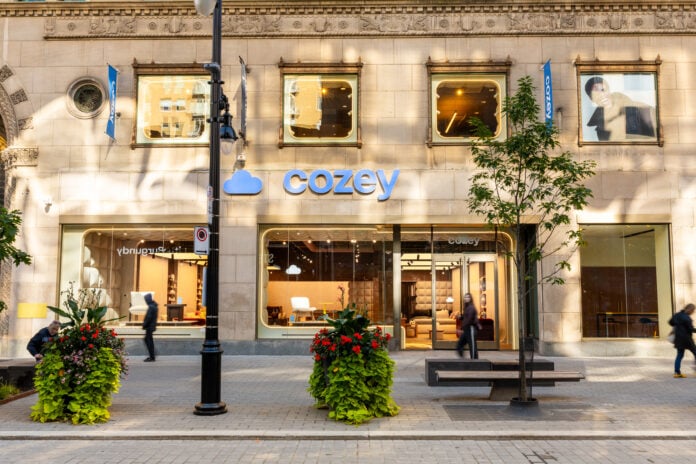
Cozey to open first permanent Montreal store as furniture retailer expands physical footprint

Cozey photo
Cozey photo

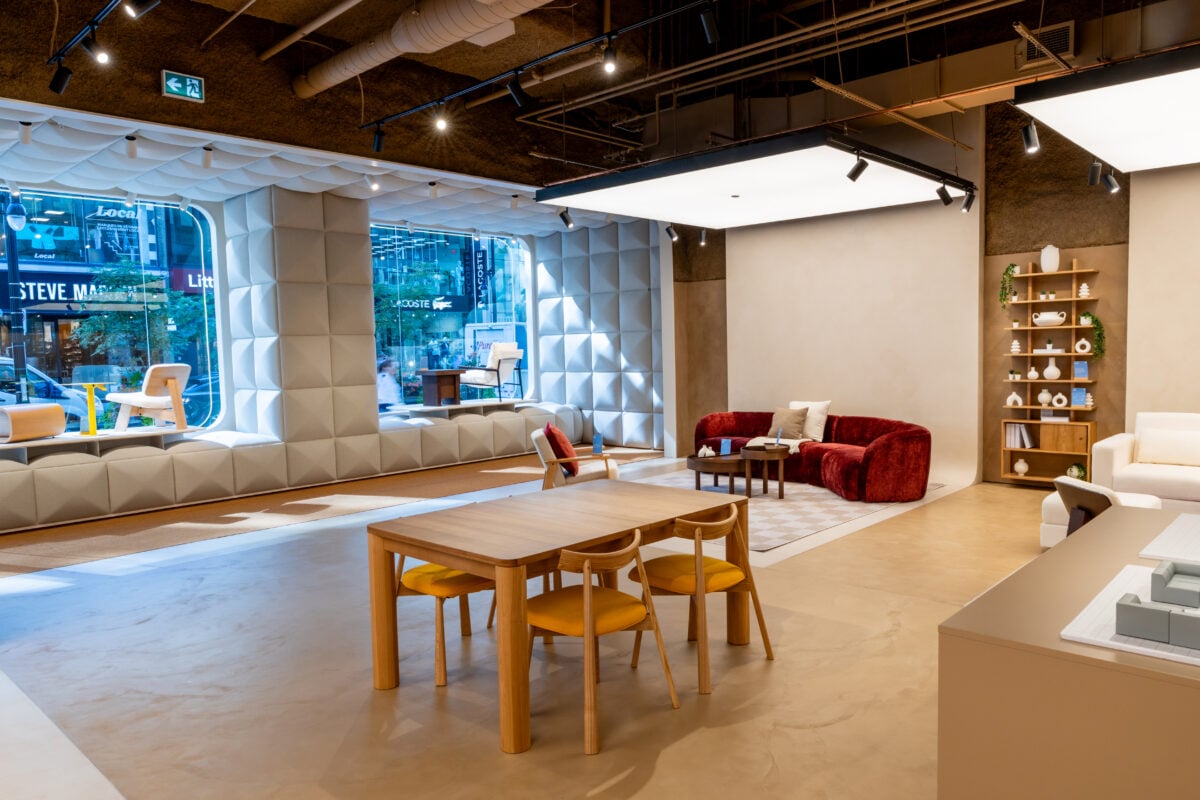
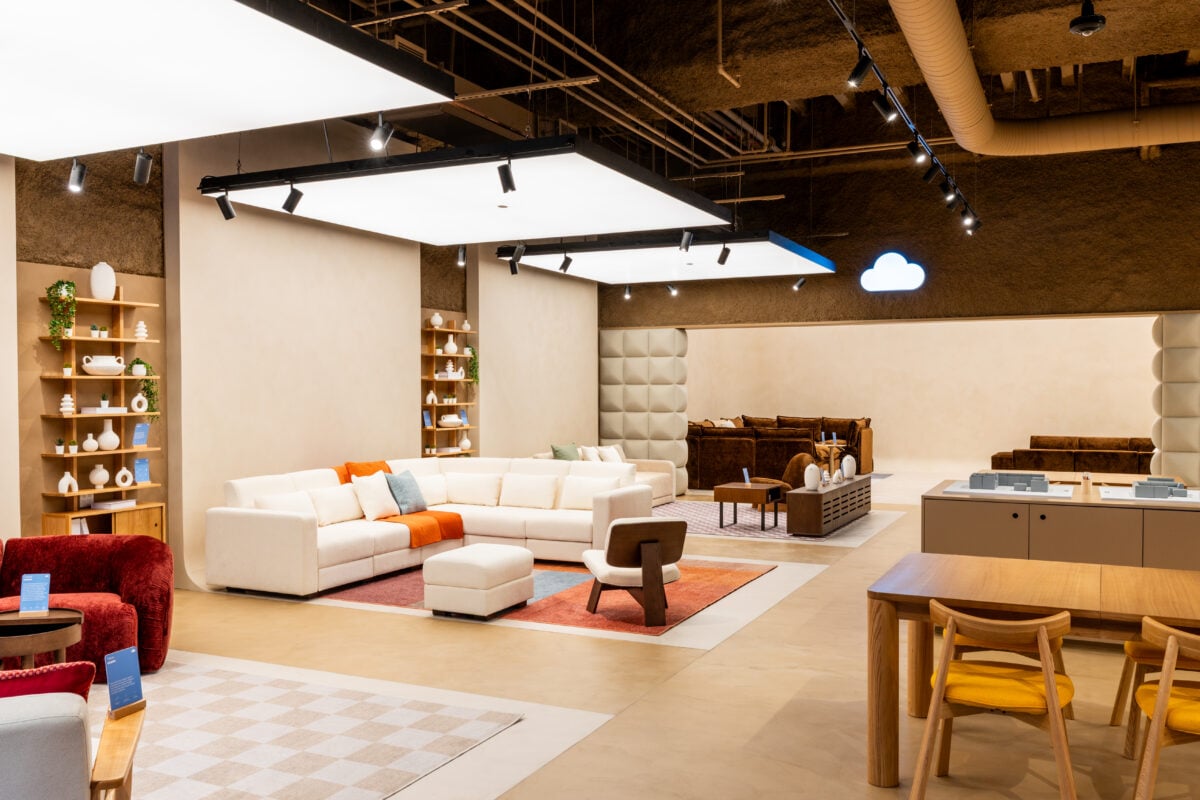
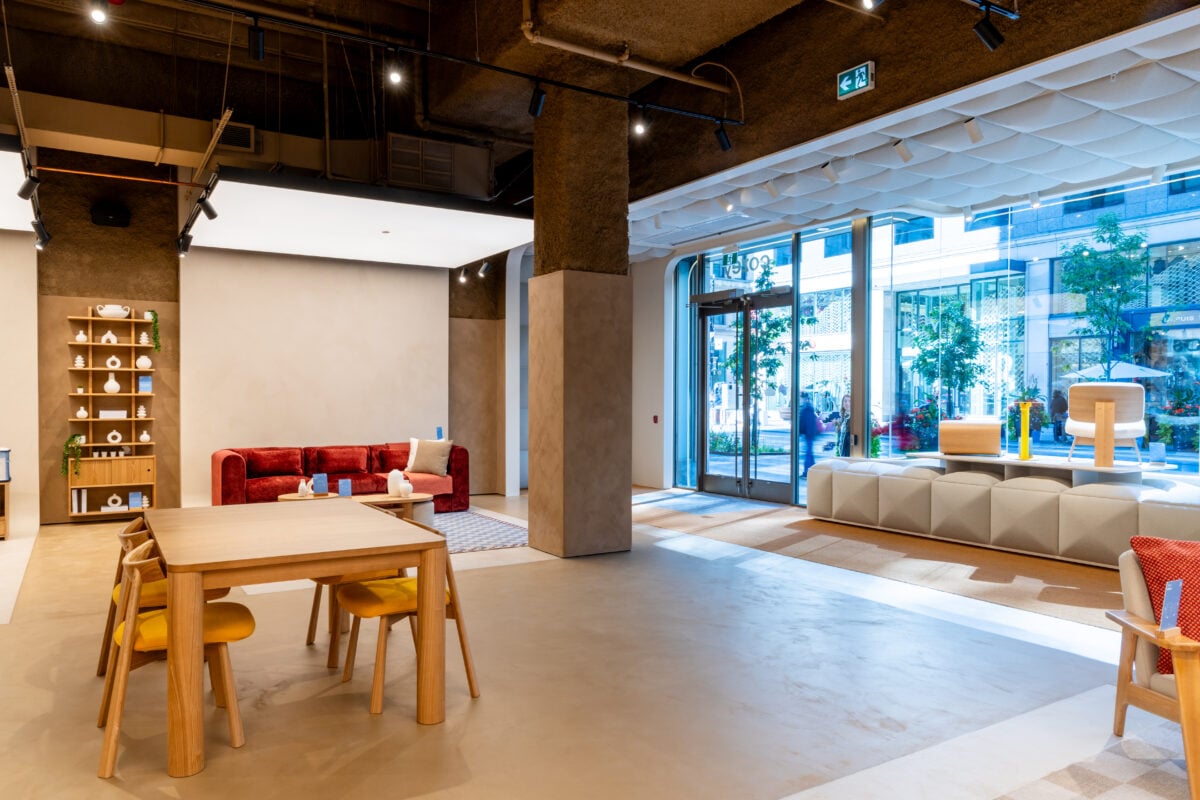
Montreal-based furniture retailer Cozey is opening its first permanent store in the city, adding a 3,700-square-foot downtown showroom as the company expands its physical retail presence across North America.

The store, at 1020 Saint-Catherine St. W., is scheduled to open Sept. 24 and will carry Cozey’s full collection, including living-room furniture, bedroom pieces and mattresses.

Expanding beyond online retail

The Montreal location is part of a broader expansion that has seen Cozey increase its physical retail presence while also entering new international markets. The company says it now operates six retail locations across North America, three of which are permanent, and plans to open a flagship store in New York in early 2027.

Cozey also launched its e-commerce business in Australia earlier this year. The company says it has continued expanding its product lineup with new categories and designs as it builds its presence beyond its original digital-only model.

The Montreal showroom will include the company’s newer products, including the Cassini Sofa, described by Cozey as its first modular curved sofa, along with two sleeper designs, the Orian Sofa-Bed and Atmosphere Sleeper Sofa.

For founder and chief executive Frederic Aubé, the Montreal opening also marks a return to the city where the company began in 2020.

“It feels good to bring Cozey home,” he said. “The very first Cozey sofa was designed to combat the realities of Montreal living: tight staircases, compact spaces, and ultimately, what we saw was a need for furniture that works harder for modern homes and customers. To be back on the ground, permanently, where it all began, and to have the opportunity to connect with and learn more from our customers here is incredibly meaningful for us. We have a week’s worth of celebrations planned to make the most of the homecoming that it is.”

Montreal showroom

The company says the new location will give customers the opportunity to see its complete collection in person, including its latest product launches. The showroom is located on a busy street in downtown Montreal and will operate seven days a week.

Cozey’s expansion into permanent retail locations represents a shift from its digital roots, with the company increasing its investment in physical stores while continuing to sell through its e-commerce operations.

The retailer says its product development strategy is focused on expanding into new areas of the home while offering furniture that combines function, flexibility and design. The company also says its approach has been influenced by Montreal and the way people live in urban spaces.

Cozey photo
Cozey photo

The store’s regular hours will be 10 a.m. to 8 p.m. Mondays and Tuesdays, 10 a.m. to 9 p.m. Wednesdays through Fridays, and 10 a.m. to 7 p.m. Saturdays and Sundays.

Cozey has also scheduled two events as part of its opening week. An opening-night event is planned for Sept. 24 from 4 p.m. to 8 p.m., followed by a coffee and doughnut event on Sept. 26 from 10 a.m. to 7 p.m. Both events require an RSVP, with space limited, according to the company.

The Montreal store comes as Cozey continues to expand its retail network and product offering while pursuing international growth through its e-commerce business.

More from Retail Insider:

Cozey photo
Cozey photo