Canada’s natural, organic and wellness industry has become one of the country’s fastest-evolving consumer sectors. Wellness has moved firmly into the mainstream, consumer interest continues to expand across natural health products, organic foods and wellness categories, and Canadian entrepreneurs are introducing innovative products that are finding their way onto retail shelves nationwide.
Yet strong consumer demand tells only part of the story.
Behind that momentum, many Canadian businesses are finding it increasingly difficult to expand distribution, navigate complex regulations and compete with larger international players. While consumers continue to embrace wellness products, turning that demand into sustainable business growth has become more challenging for many companies.
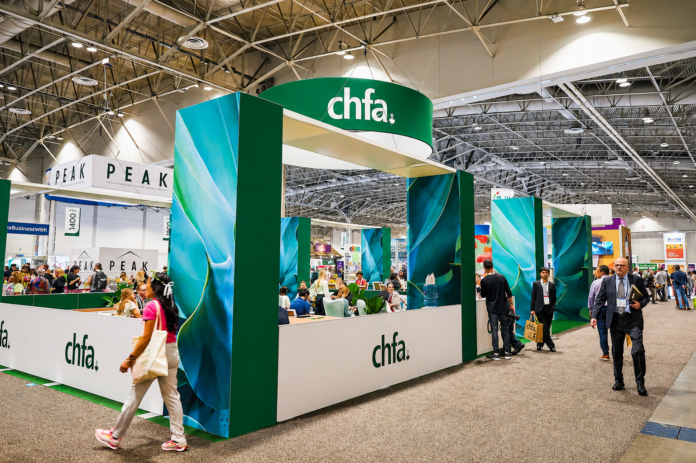
Those realities will take centre stage during State of the Industry: Growth, Competitiveness & the Cost of Inaction, a keynote lunch taking place at CHFA NOW Toronto 2026.
Designed as an executive briefing for retailers, brands and industry leaders, the session will bring together economic analysis, consumer insights and policy perspectives to provide a comprehensive look at where Canada’s natural, organic and wellness industry stands today—and what will be needed to strengthen its long-term competitiveness.
Demand Is Strong. Competitiveness Is the Challenge.
The sector continues to benefit from strong consumer interest across natural health products, organic foods and wellness categories, while innovation remains a defining characteristic of the industry.
The challenge, according to CHFA, is not a lack of consumer demand. Instead, many businesses face structural barriers that can limit their ability to grow at the same pace as competitors in larger international markets.
Retail concentration, commercialization challenges, regulatory complexity and rising operating costs are among the factors affecting the industry’s ability to scale. Even as market demand continues to expand, many Canadian companies face obstacles in transforming successful products into nationally recognized brands with broader market reach.
For retailers, these same forces influence assortment planning, category development and long-term merchandising strategies. Understanding how consumer trends, economic conditions and industry policy intersect has become increasingly important as the wellness marketplace continues to evolve.
Bringing Multiple Perspectives Together
The keynote brings together three complementary perspectives that are rarely presented in a single executive briefing.
MNP will examine the economic contribution of Canada’s natural, organic and wellness sector and the structural challenges affecting growth. NIQ will provide insights into consumer purchasing behaviour, emerging trends and areas where future category growth is expected, while CHFA will explore the policy and regulatory issues shaping the industry’s future. Together, the presentations are intended to provide attendees with a broader understanding of the forces influencing the sector today and what will be required to ensure Canadian businesses remain competitive.
“Canada has everything it needs to be a global leader in natural, organic and wellness products—strong consumer demand, innovative businesses and world-class entrepreneurs,” said Aaron Skelton, President and CEO of CHFA.
“The question isn’t whether the opportunity exists. It’s whether we’re creating the conditions for Canadian companies to capture it.”
Why It Matters for Retailers
Retailers are often among the first to recognize shifts in consumer behaviour, making them an important part of the industry’s continued evolution. As customer expectations change, retailers are balancing demand for innovative products with the realities of rising operating costs, evolving regulations and an increasingly competitive marketplace.
The State of the Industry keynote is designed to provide context for those decisions by bringing together data, economic analysis and policy perspectives in a single executive briefing. Rather than presenting isolated research findings, the session connects consumer behaviour, economic performance and industry leadership into one strategic conversation centred on “The Cost of Inaction.”
For retailers, suppliers and emerging brands alike, understanding the forces shaping Canada’s wellness economy is becoming increasingly important. By bringing together economic data, consumer insights and industry perspectives in one discussion, the keynote aims to give attendees a broader understanding of where the sector stands today—and what it will take for Canadian businesses to compete and grow in the years ahead.
The State of the Industry: Growth, Competitiveness & the Cost of Inaction keynote lunch will take place on Friday, September 25, during CHFA NOW Toronto 2026 at the Automotive Building at Exhibition Place. Presented by CHFA, MNP and NIQ, the session is part of the CHFA NOW conference program and is open to registered conference attendees who purchased the lunch session.
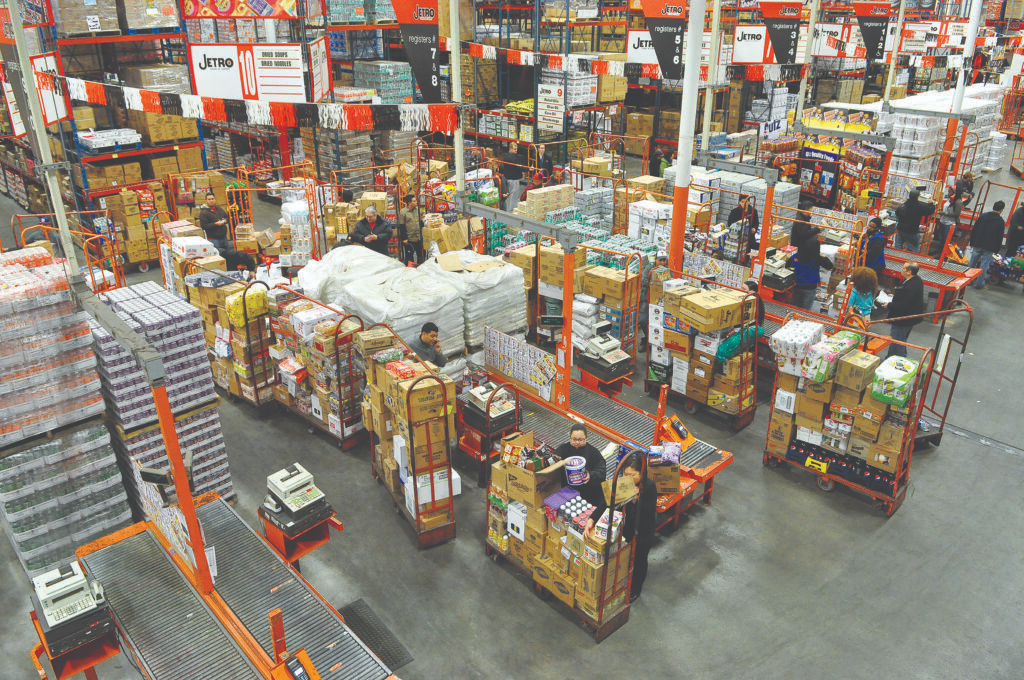
Restaurant Depot location. Photo: ADA Architects Inc.
Sysco plans to bring Restaurant Depot to Canada, potentially introducing one of the largest restaurant-focused cash-and-carry warehouse operators in North America to the Canadian foodservice market.
The Houston-based foodservice distribution giant outlined the Canadian opportunity while discussing its proposed US$29.1-billion acquisition of Jetro Restaurant Depot during its fiscal 2026 fourth-quarter earnings call. The transaction, announced in March, would give Sysco control of a large network of warehouse stores geared primarily to independent restaurants and other foodservice operators.
Sysco Chair and CEO Kevin Hourican told analysts that Canada forms part of the company’s longer-term expansion plans for Restaurant Depot. Sysco intends to use its existing supply-chain capabilities to take the format into additional markets following completion of the acquisition.
“We really believe that going to Canada is a compelling opportunity for the long term,” Hourican said, arguing that there is room in the Canadian market for a larger-scale restaurant-focused cash-and-carry operator.
No Canadian locations, opening dates or investment figures have been disclosed, and the acquisition itself remains subject to regulatory review in the United States. Sysco continues to expect the transaction to close by the third quarter of its 2027 fiscal year.
Restaurant Depot Built Around Independent Restaurants
Restaurant Depot operates a different model from the delivered foodservice business for which Sysco is best known. Customers visit large-format warehouses to purchase food, beverages, equipment, packaging and other supplies, typically in commercial quantities, giving restaurants another option alongside scheduled deliveries from conventional distributors.
The company operates 166 warehouses across 35 U.S. states and serves more than 725,000 independent restaurants and foodservice operators. Restaurant Depot generated approximately US$16 billion in revenue in calendar 2025 and about US$2.1 billion in EBITDA, according to Sysco.
Its warehouses carry fresh and frozen meat, seafood, produce, dairy products, grocery items, disposables, kitchen equipment and other products required to operate a restaurant or commercial kitchen. The model can be particularly useful to independent operators looking to compare prices, supplement regular distributor orders or obtain products immediately when an unexpected need arises.
Sysco announced March 30 that it would acquire Jetro Restaurant Depot in a transaction valued at approximately US$29.1 billion, including US$21.6 billion in cash and 91.5 million Sysco shares. Restaurant Depot is expected to continue operating as a standalone business segment following completion of the deal.
The acquisition would move Sysco into what it estimates is a US$60-billion to US$70-billion U.S. cash-and-carry market while increasing its exposure to independent restaurant customers. The company plans to take Restaurant Depot into more than 125 additional U.S. geographies over time, with Canada among the longer-term expansion opportunities management has now identified.
Photo: Restaurant Depot
Sysco Sees an Opportunity in Canada
Hourican characterized Canada as a market without a leading restaurant-focused cash-and-carry operator comparable to Restaurant Depot. There are already several national and regional companies supplying restaurants through warehouse and self-service formats, although none currently operates a restaurant-specialist cash-and-carry network nationally at anything approaching Restaurant Depot’s U.S. scale.
Sysco would also enter with an infrastructure advantage that few new international entrants could readily replicate. Sysco Canada already operates an extensive distribution network serving restaurants, hotels, healthcare facilities and other foodservice customers across British Columbia, Alberta, Saskatchewan, Manitoba, Ontario, Quebec and Atlantic Canada.
That existing network is central to the Canadian opportunity. Hourican said Sysco could eventually take Restaurant Depot into Canada by leveraging the company’s inbound supply chain, allowing the warehouse business to benefit from purchasing relationships and distribution infrastructure that Sysco already has in place.
A Canadian rollout could therefore look considerably different from a conventional international retail expansion. Sysco already buys, warehouses and distributes food at scale across the country and has longstanding relationships with Canadian restaurant operators. Restaurant Depot would add another way of serving some of those customers.
A Growing Canadian Warehouse Market
Restaurant Depot would arrive at a time when warehouse-style food distribution is attracting increased investment in Canada.
Costco has been expanding its Business Centre format, which offers commercial quantities of food, restaurant supplies, disposables and other products alongside delivery options. Its Canadian Business Centre network now extends across several major markets in Ontario, Quebec, Alberta, British Columbia and Manitoba.
Some of that expansion is recent. Costco opened Business Centres in Mississauga and New Westminster in late 2025, followed by East Gwillimbury in December and Winnipeg in March 2026. The stores are available to Costco members generally but carry a large assortment aimed at restaurants and other commercial customers, creating considerable overlap with foodservice purchasing needs.
Loblaw Companies Ltd. also participates in the warehouse channel through Wholesale Club, which sells bulk food along with restaurant and catering supplies. The banner has an established Canadian store network serving businesses and other customers.
Quebec has an especially developed restaurant warehouse market. Mayrand Food Group operates large-format locations in Anjou, Laval, Brossard and Saint-Jérôme serving retail and foodservice customers. Empire Company Ltd., the parent of Sobeys, agreed earlier this year to acquire Mayrand, describing the transaction as an entry into Quebec’s discount and warehouse food market. The deal has since received the required court and regulatory approvals.
Montreal-based Distribution Alimentaire Aubut is another longstanding player, supplying restaurants and other commercial customers through self-service warehouse locations.
The opportunity for Restaurant Depot is therefore more specific than filling an unserved market. Sysco would be introducing a restaurant-focused warehouse operator with considerable purchasing scale and the potential to build a national network, while competing with Costco, Wholesale Club and regional businesses that already have relationships with Canadian foodservice customers.
Taken together, the recent activity points to growing strategic interest in the commercial warehouse channel. Costco has been expanding its Business Centre network, Empire is acquiring Mayrand, and Sysco is proposing one of the largest transactions in its history partly to gain exposure to cash-and-carry foodservice distribution.
Costco Business Centre in Toronto, 2026. Photo: Terry PG/Google
Cost Pressure Changes Restaurant Purchasing
The timing is notable as Canadian restaurant operators continue to contend with difficult economics. Restaurants Canada has reported that affordability pressures and weak consumer confidence are leading some Canadians to seek lower-priced menu choices or reduce how frequently they eat out. At the same time, rising food, labour and other operating expenses continue to weigh on restaurant profitability.
More recent industry research has highlighted additional pressure from transportation costs. Restaurants Canada reported in July that 86 per cent of surveyed operators were experiencing higher food and ingredient costs related to rising gasoline prices, with the same proportion reporting supplier fuel surcharges. More than half were also seeing reduced customer traffic or lower spending per visit.
For restaurant operators with limited room to keep raising menu prices, purchasing becomes an increasingly important part of managing margins. Operators can look for savings by changing suppliers, substituting products, buying different quantities or moving some purchases toward lower-priced private-label alternatives.
Lower procurement costs do not necessarily translate directly into cheaper restaurant meals. Savings can help absorb higher wages, rent, utilities, insurance and other expenses, while giving operators more room to maintain portions, preserve accessible menu prices or rebuild margins.
Restaurant Depot’s proposition fits into that environment. An independent restaurant could use a cash-and-carry warehouse when a product is needed immediately or when warehouse pricing makes sense, while continuing to rely on conventional distributors for larger scheduled orders.
Sysco Sees a Multichannel Foodservice Model
Sysco’s longer-term strategy extends beyond operating Restaurant Depot and its existing distribution business as separate channels. Hourican described a scenario in which Restaurant Depot stores could help serve existing Sysco delivery customers when products are needed between scheduled orders. A restaurant that unexpectedly runs out of an ingredient or essential supply could potentially be served from a nearby Restaurant Depot warehouse if it is closer than a Sysco distribution centre.
That would give restaurants several ways to purchase from the combined company. Regular bulk orders could continue to arrive through Sysco’s delivery network, while supplemental purchases could be made directly at Restaurant Depot and, over time, warehouse locations could potentially support rapid local fulfilment for urgent orders.
The strategy brings some of the omnichannel thinking familiar to consumer retail into foodservice distribution, where purchasing has traditionally been divided more clearly between delivered wholesale and self-service warehouse formats.
Sysco also sees opportunities to share products between the two businesses and combine their purchasing volumes. Management expects approximately US$250 million in procurement-related cost synergies from the acquisition, while additional sales opportunities are not included in its original transaction model.
For Sysco, physical Restaurant Depot locations could help address circumstances where a scheduled delivery network is less flexible. Regular distribution works well for predictable purchasing, but a restaurant that unexpectedly runs out of cooking oil, meat, takeout containers or another essential item may need a solution within hours. A nearby warehouse could provide another way for Sysco to serve that customer.
Acquisition Faces Regulatory Review
Whether that strategy moves forward depends first on regulatory approval. Sysco said during its August earnings call that it had received a second request from the U.S. Federal Trade Commission as part of its review of the Restaurant Depot transaction. The process allows regulators to conduct a more detailed examination of the proposed acquisition and typically requires the companies to provide additional documents, data and other information.
The review comes amid concerns from some independent restaurant advocates in the United States about further concentration in foodservice distribution. Critics have questioned whether combining a major broadline distributor with a large restaurant-focused cash-and-carry operator could reduce competition for independent businesses.
Sysco rejects that argument. Hourican told analysts that Restaurant Depot and traditional foodservice delivery largely serve different purchasing needs: cash-and-carry customers choose to visit warehouses and transport their own goods, while Sysco’s delivery customers place greater value on having orders brought directly to their restaurants. He also reiterated that Sysco has no intention of raising prices at Restaurant Depot stores and argues that expanding the format would give more restaurant operators access to its low-cost model.
Sysco has faced major antitrust scrutiny before. The company abandoned its proposed acquisition of US Foods in 2015 after the FTC successfully challenged the transaction. The Restaurant Depot deal involves a different combination of businesses, but regulators are again examining a major transaction involving significant participants in the foodservice supply chain.
Sysco maintains that it expects to secure approval and complete the Restaurant Depot acquisition during fiscal 2027.
Canadian Details Still to Come
A Canadian expansion would come later. Sysco has not identified where Restaurant Depot would open its first Canadian warehouse, how many locations could eventually operate in the country or how quickly it would seek to establish a network.
The company has also not disclosed expected Canadian store sizes, capital investment or employment levels, or whether every element of Restaurant Depot’s U.S. format would be replicated in Canada.
Any expansion would take place against a Canadian competitive landscape that is already evolving. Costco is investing in its Business Centre network, Empire is moving into Quebec’s warehouse food market through Mayrand, Loblaw maintains Wholesale Club, and regional wholesalers continue to serve independent restaurant operators.
Restaurant Depot would bring another major participant into that market if Sysco completes the acquisition and follows through on its Canadian plans. Its longer-term opportunity may ultimately depend on how effectively Sysco can combine Restaurant Depot’s low-cost warehouse model with the foodservice distribution network it already operates across Canada.
The City of Calgary says there are no permit applications yet for the Downtown Bay building.
“From the Downtown Strategy side, The City doesn’t share information on applications to the downtown incentive programs, only on projects approved to receive funding. At this time, The Bay building is not approved for funding under any downtown incentive programs,” said the City in response to an inquiry by Retail Insider.
Astra has remained quiet about its plans for the iconic Bay property and have not spoken to the media about the acquisition.
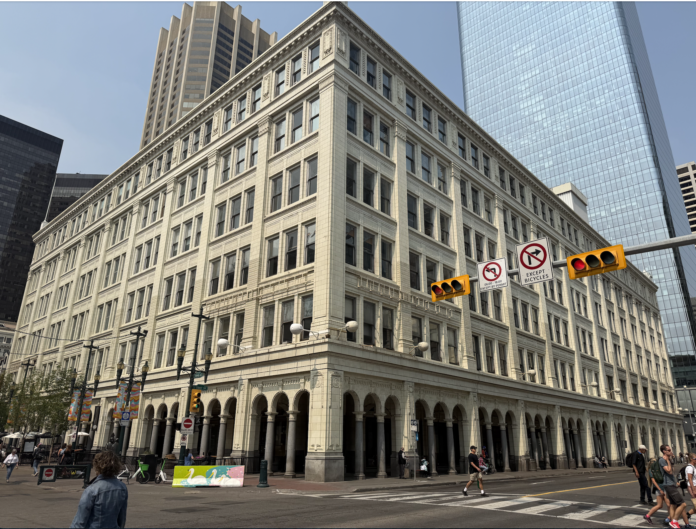
CBRE said the 448,834-square-foot, six-storey property is clad in terracotta and was the model for subsequent Bay buildings in Vancouver and Victoria.
Richie Bhamra Michael Kehoe
In a report on its website, CBRE said Calgary NIT lead Richie Bhamra brokered the sale of the building and said the marketing process resulted in six bids for the asset, three of them unconditional offers. Astra, a firm that specializes in office-to-residential conversions and adaptive reuse, proved to be the successful proponent.
“This could be a great redevelopment site,” said Bhamra in the article. “There is a real opportunity to make a significant impact on the downtown core.”
The Bay building was constructed between 1911 and 1913 as Canada’s largest department store, and was expanded in 1929 and 1956, noted CBRE.
“The expanded areas can be identified by the wider column spacing on the southern half of the building, which resulted in floorplates that are quite large, at 60,000 sq. ft.,” said Bhamra.. “So it took some creative conceptualizing from the groups that were looking at buying it.”
Downtown Calgary Bay. Photo: Mario Toneguzzi
The building, which sits on 1.65 acres of prime real estate along Stephen Avenue, is “a key piece of our downtown core,” said Bhamra. “It’s a great area for tourism and business, with lots of restaurants and pedestrian traffic. So hopefully no matter what ends up happening with the property it remains an active site.
“Because no other repurposing project in the downtown core will have a bigger impact than this.”
“Calgarians are eagerly awaiting the new owner’s vision for redeveloping this landmark property, a project that will undoubtedly present significant challenges. Modernizing the building’s mechanical systems, electrical infrastructure, and structural components will require a substantial investment. Even so, the property represents a remarkable opportunity to breathe new life into one of downtown Calgary’s most recognizable buildings,” he said.
“A variety of redevelopment concepts are likely under consideration, including residential housing, a boutique hotel, and ground-floor retail and food and beverage spaces. Similar adaptive reuse projects involving former Hudson’s Bay stores are already underway or being planned in other Canadian cities, demonstrating the potential these iconic properties hold for revitalization.”
The downtown Calgary landmark is awaiting a fresh vision for its next chapter, said Kehoe.
Downtown Calgary Bay. Photo: Mario Toneguzzi
“Whatever ultimately takes shape will almost certainly become a legacy project—one that captures the city’s attention and makes a lasting statement about the future of downtown Calgary,” he said.
“Interestingly, the building is not protected by provincial or municipal heritage designation. Even so, I am optimistic that the new owner will respect its rich history while embracing an exciting future. I hope to see an adaptive reuse project that preserves the historic arcade and the beloved façade that generations of Calgarians have come to know, while thoughtfully incorporating contemporary architectural elements that celebrate the building’s next chapter.
“As someone who has long appreciated historic commercial architecture, I remain optimistic about what lies ahead. With the right vision, this iconic building can once again become a vibrant destination and an important part of Calgary’s evolving downtown story.”
As Canadians gear up for back-to-school shopping, brands are pouring marketing dollars into digital channels to capture purchase intent. But new research from Vistar Media suggests many buying decisions begin long before consumers ever open a browser.
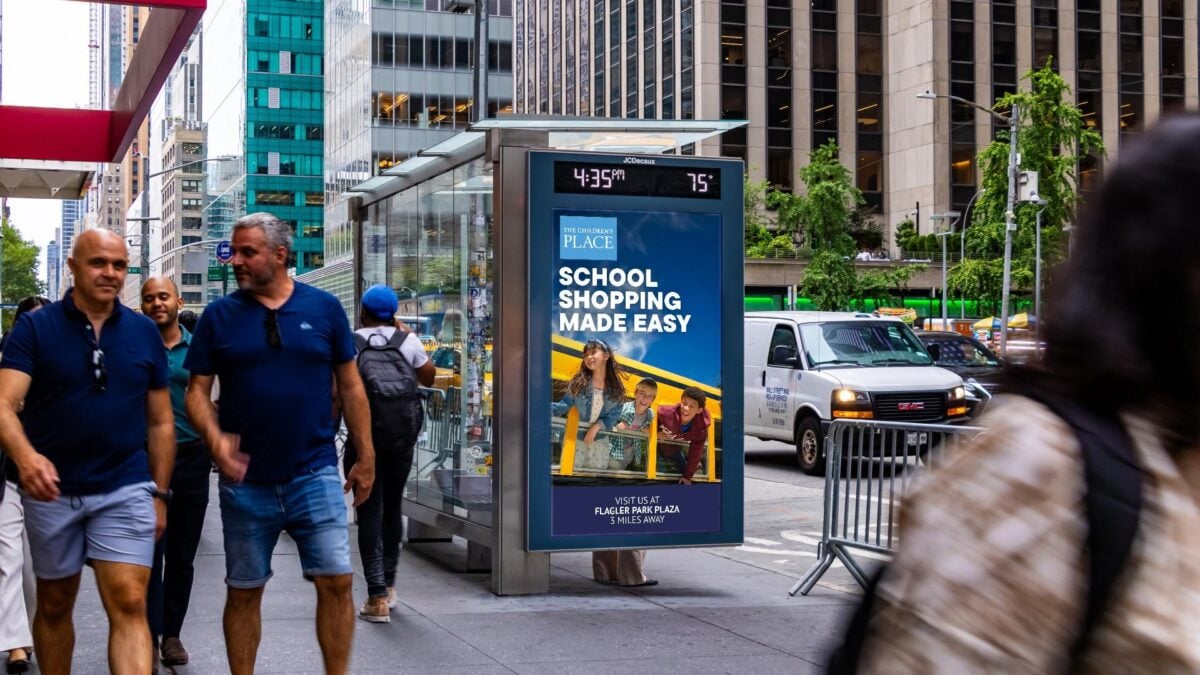
The new national survey found that 39% of Canadians have taken action after seeing a billboard or digital out-of-home (DOOH) ad, reinforcing that out-of-home isn’t just an awareness channel, it’s helping drive real consumer behaviour.
At a time when marketers are largely focused on clicks, conversions and attribution, the findings suggest many may be overlooking one of the most effective ways to build intent before shopping begins – especially at a time when 99% of Canadian parents plan to shop in-store for at least some of their Back-to-School purchases.
“For years, marketers have optimized for what they can easily measure – clicks, conversions and attribution. But consumers don’t make decisions in a vacuum. By the time someone searches online, their consideration set has often already been shaped. Out-of-home builds that mental availability in the real world, helping create demand before digital captures it. Back-to-school is a perfect example of why marketers need to think beyond the click,” said Scott Mitchell, Managing Director, Canada at Vistar Media.
Key findings include:
39% of Canadians took at least one action after seeing a billboard or DOOH ad in the past month.
22% looked up a brand online after seeing an ad.
18% visited a company’s website.
36% say a billboard influenced or reinforced the last action they took.
Gen Z is the most responsive audience, with 52% taking action after seeing an out-of-home ad, well above Boomers (32%).
Scott MitchellVistar Media image
In an interview with Retail Insider, Mitchell discussed the report’s findings.
Question: Back-to-school is one of the biggest retail moments of the year. How has the way Canadians shop evolved?
Answer: Back-to-school has become a season rather than a shopping trip. Parents are spreading purchases over several weeks, comparing prices across retailers, researching products online, watching for promotions and, for many, ultimately buying wherever they find the best value. Even shoppers who plan to purchase in-store often arrive after seeing them
throughout their daily routines, from digital channels to the places they visit every day.
That means the customer journey is much less linear than it once was. By the time someone searches for a product or walks into a store, they’ve often already encountered brands in a variety of places. For marketers, success isn’t about showing up more often. It’s about showing up in the moments that matter, when consumers are actively planning, researching or shopping.
Q: Your new research found Canadians are taking action after seeing out-of-home advertising. What does that tell marketers?
A: Our research confirms that out-of-home is doing far more than capturing
attention. It’s influencing what consumers do next. Nearly four in 10 Canadians told us they took at least one action after seeing a billboard or digital out-of-home ad in the past month, whether that was searching for a brand online, visiting a company’s website or making a purchase.
Clicks and conversions remain important, but they only capture part of the customer journey. Before someone searches for a brand or completes a purchase, they’re building familiarity, developing trust and narrowing their choices through a series of experiences that often happen offline.That’s where out-of-home creates value. It reaches people in the real world, while they’re commuting, shopping or going about their day, when brands can
become part of the decision-making process rather than simply responding to it.
In a fragmented customer journey, the brands that influence decisions aren’t always the ones consumers search for first. They’re the ones that become familiar before the search begins.
Q: Why should marketers rethink the idea that out-of-home is simply an “upper funnel” awareness channel?
A: We’ve reached a point where the traditional marketing funnel is a much less useful way to think about consumer behaviour. People don’t move neatly from awareness to consideration to purchase. They move fluidly between physical and digital environments, with every interaction helping shape a decision.
People move naturally between physical and digital environments throughout the day. Someone might see a digital billboard during their morning commute, look up the brand later that night and finally make a purchase several days later after seeing it again.
Our research found that 22% of Canadians searched for a brand after seeing an out-of-home ad and 18% visited a company’s website. That tells us out-of-home is doing more than creating awareness. It’s building familiarity and influencing consideration before consumers ever click on
an ad or enter a store. The opportunity for marketers isn’t to optimize for a single stage of the funnel. It’s to stay present in the moments that shape decisions.
Vistar Media image
Q: How does digital out-of-home complement digital marketing during a busy retail season like back-to-school?
A: Consumers don’t experience marketing one channel at a time. They move seamlessly between physical and digital environments throughout the day, and the brands they remember are the ones that show up consistently across those experiences.
Search, retail media and social are highly effective at capturing demand when consumers are actively looking to make a purchase. Digital out-of-home helps shape that demand by building familiarity and trust while people are out living their daily lives, whether they’re commuting, shopping or spending time in their communities.
In fact, our research found that 62% of Canadians trust billboard advertising more than social media ads. That matters because trust influences the brands consumers remember and ultimately choose. When someone later encounters that same brand through search, retail media or social, it isn’t a first impression. It’s a familiar one. The strongest campaigns aren’t built around individual channels. They’re built around connected moments that work together to influence decisions.
Q: What should Canadian marketers keep in mind as they finalize their back-to-school campaigns?
A: The most effective back-to-school campaigns won’t be built around channels. They’lll be built around consumer behaviour. Consumers don’t separate their lives into online and offline experiences. Every interaction
contributes to how they perceive a brand, whether they’re researching products, commuting to work or walking through a shopping centre.
Back-to-school gives marketers an opportunity to be present throughout those moments, not just when someone is ready to buy. The brands that stand out will be the ones that create a consistent experience across every
stage of the consumer journey. When each channel builds on the next, brands become more familiar, more trusted and ultimately more likely to influence a purchase.
The brands that win won’t necessarily be the loudest. They’ll be the ones that show up consistently in the moments that matter most.
Digital wallets accounted for nearly one-third of Canadian online spending in 2025, as consumers continued to broaden the ways they pay for goods and services, according to a new report from Global Payments Inc.
Digital wallets, including Apple Pay and Google Wallet, represented 32 per cent of Canadian e-commerce transaction value last year, second only to credit cards at 46 per cent, the 11th edition of the Global Payments Report found.
The report projects that digital wallets will account for 37 per cent of Canadian e-commerce transaction value by 2030, while credit cards are expected to decline to 42 per cent.
The findings point to a shift in Canada’s traditionally card-dominated payments market as consumers use a wider range of payment methods across online and in-store purchases.
Tom Tillhub photo
Credit cards remain dominant
Global Payments, which recently completed its acquisition of Worldpay, said the annual report examines consumer payment trends and forecasts how those preferences could develop through 2030.
The report is based on a survey of more than 63,000 consumers across 42 markets and five continents.
Canada remains heavily reliant on cards for in-person purchases. Credit cards represented 51 per cent of point-of-sale transaction value in 2025, while debit cards accounted for 23 per cent, according to the report.
Digital wallets represented 13 per cent of point-of-sale transaction value. That share is forecast to exceed one-fifth of in-store spending by 2030.
The figures suggest payment preferences are becoming more varied depending on how and where consumers shop, increasing the importance for businesses of supporting multiple payment methods across online and physical sales channels.
“Consumers increasingly expect greater choice and flexibility in how they pay,” said Phil Hogg, Head of Canada Enterprise Business Development at Global Payments. “The findings not only highlight the growing role digital wallets play in everyday commerce, but they also underscore the proliferation of payment options. Businesses that adapt to consumers’ desire for a range of payment choices will be better positioned to serve their customers and support future growth.”
Phil HoggSpotOn POS photo
Canada trails global digital-wallet adoption
The growth of digital wallets in Canada comes as other markets have shifted more strongly toward mobile-based payments.
Globally, digital wallets were the leading payment method in 2025, accounting for 56 per cent of e-commerce transaction value and 33 per cent of point-of-sale transaction value, the report said.
Payment apps, a broader category that includes digital wallets, buy now, pay later services, account-to-account payments and other banking applications, are forecast to represent 46 per cent of global in-store spending by 2030. The report puts the projected transaction value at about US$15.6 trillion.
The Asia-Pacific region had the highest digital-wallet adoption in 2025. Digital wallets accounted for 77 per cent of e-commerce transaction value and 62 per cent of point-of-sale transaction value in the region.
Canada, by comparison, continues to have a credit card-led payments market, although the report indicates consumers are increasingly using alternative methods.
Buy now, pay later gains ground
The report also identifies growth in buy now, pay later services, which accounted for five per cent of Canadian e-commerce transaction value in 2025.
That share is forecast to grow at a compound annual growth rate of nine per cent through 2030, according to the report.
The figures come as consumers gain access to a broader range of ways to pay for online purchases, including digital wallets and deferred-payment services.
Global Payments said the report is intended to provide an annual assessment of trends affecting consumer payments and their expected development through 2030.
Americans are increasingly choosing destinations closer to home and cutting the length of their trips as they look to manage rising travel costs, according to travel insurance sales data from Squaremouth.
U.S. visits to Canada rose 10 per cent between 2024 and 2025, while early data suggests visits could increase another 26 per cent this year, the travel insurance marketplace says.
The shift is part of a broader move toward shorter, more accessible international trips as travellers adjust their plans amid higher costs, according to Squaremouth’s Q2 2026 Travel Trends Report.
Canada gains ground among destinations
Canada moved into third place among the most popular destinations in Squaremouth’s sales data for the second quarter, up from fourth place and ahead of France.
The Bahamas also rose in the rankings, moving from 11th to eighth and surpassing Japan and the United Kingdom.
Mexico, the Dominican Republic, Jamaica and Turks & Caicos are also seeing strong demand, with some outperforming destinations that have traditionally been popular among international travellers in Europe.
Squaremouth says the destinations are suited to shorter, more accessible trips and represent an alternative to a traditional two-week European vacation.
The company describes the emerging pattern as a trend toward what it calls the “long international weekend.”
The shift is also showing up in the amount of time travellers spend at their destinations.
Squaremouth’s sales data shows younger travellers are the most likely to shorten their itineraries. Trip costs for Gen Z travellers have remained flat year over year, while travel costs overall have increased by about 24 per cent, according to the report.
With Gen Z travel budgets remaining fixed, the data suggests those travellers are reducing the length of their trips to offset higher costs.
Trips booked by Gen Z travellers have become two to five days shorter year over year, depending on the type of travel insurance policy purchased.
For medical-only policies, the average trip length has fallen by five days, from 25 days to 20. For comprehensive policies, the average has declined by two days, from 17 days to 15.
The figures show that travellers are adjusting different aspects of their plans to accommodate budget constraints, while continuing to take international trips.
Squaremouth says its findings point to travel remaining a priority for consumers in 2026 despite those constraints.
Data based on insurance purchases
The Q2 2026 Travel Trends Report is based on Squaremouth’s travel insurance sales data and is published quarterly.
The company says the report is intended to provide a snapshot of trends observed in its own sales rather than a comprehensive assessment of the travel insurance industry.
Its data is based on finalized travel insurance policies purchased through the Squaremouth platform. The company says the data is available for media use.
Squaremouth says it has more than 4.4 million insured customers and more than 23 years of market data.
Chrissy ValdezSummer tourists in Banff, AB. Image: Banff Tourism
Chrissy Valdez, Senior Director of Operations at Squaremouth, and the Head of Customer Service and Claims at Tin Leg, said the core driver to Americans choosing short, closer-to-home trips instead of traditional long-haul vacations is that trip cost is outpacing income growth.
“Trip cost this summer is up 17.4 per cent over the previous year and 33.1 per cent over the last five years. By comparison, the average American’s annual income is only up a modest four per cent over the previous year. That gap is pushing travelers toward destinations that cut cost through distance rather than through skipping the trip altogether,” she said.
“Canada has always been a popular destination for U.S. travelers, given its proximity, abundance of vacation types (city, mountain/outdoorsy, coastal, road trips), and the flexibility it offers for shorter-getaways. As long as trip cost continues to outpace income growth, I expect Canada, Mexico, and the Caribbean to see an increase in U.S. visitation.”
Valdez said Gen Z’s more limited disposable income, relative to other generations, is likely why they shortened trips this year rather than absorb rising costs.
“Other generations, who appear to be more settled financially, chose to carry the added cost or rearrange other budget priorities rather than change the trip they’d planned,” she noted.
Valdez said markets near the border, accessible via a short drive or quick flight, like Toronto, Montreal, and Vancouver, are best positioned to capture this consumer segment.
“Should trip costs continue to remain elevated, I expect destination substitutions for closer-to-home options and trip compression to continue for the majority of Americans. Those fortunate enough not to be impacted by the rise in cost will likely keep pushing further into premium and luxury travel (safaris, expeditions), a segment already growing well ahead of the market.”
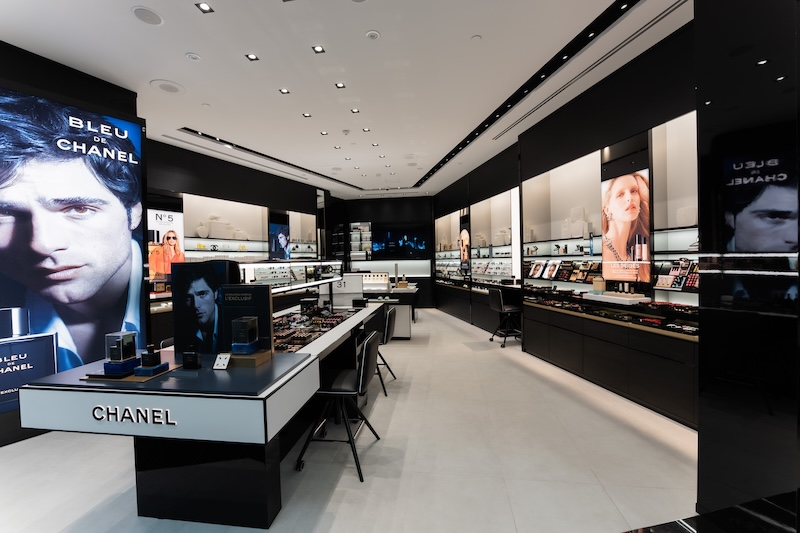
Chanel at Pearson Airport Terminal 1 in Toronto. Photo: Chanel
Chanel has opened a new standalone Fragrance & Beauty boutique at Toronto Pearson International Airport, expanding its presence at Canada’s busiest airport as Pearson and global travel retailer Avolta build out the airport’s premium and luxury retail offering.
Located in Terminal 1, the boutique carries Chanel fragrance, skincare and makeup, along with eyewear and travel-specific beauty sets. Avolta and Toronto Pearson held a grand opening celebration for the store on July 14. The opening comes during an active period for Chanel in Canada, following the June opening of its largest Canadian boutique at Oakridge Park in Vancouver and a major expansion at Holt Renfrew Yorkdale in Toronto late last year.
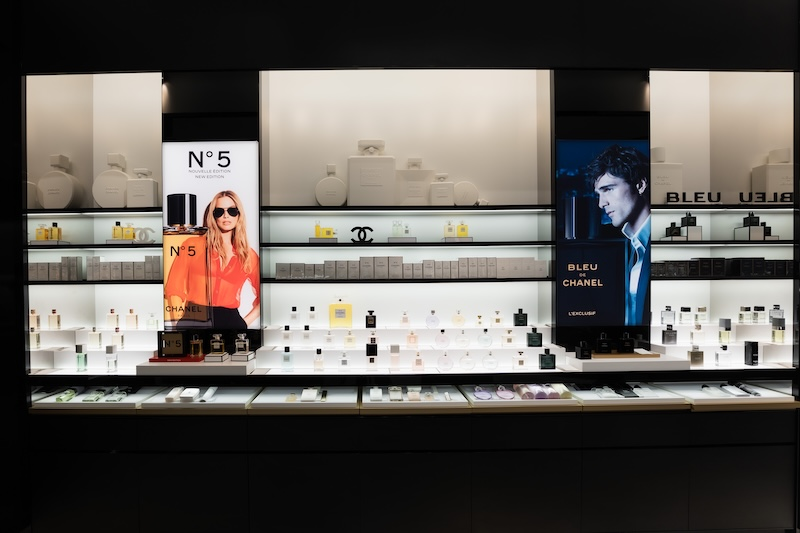
The Pearson boutique has been designed as a dedicated Chanel beauty environment, with a curated assortment and personalized service aimed at travellers passing through Terminal 1. Among the collections available is LES BEIGES, alongside Chanel’s signature fragrances, skincare and makeup, travel-ready beauty sets and the Spring/Summer 2026 Eyewear collection.
The interior incorporates recognizable Chanel design elements with bright tones and seasonal textures. The standalone format gives the brand its own environment rather than positioning its assortment within a conventional multi-brand airport beauty department.
“At Toronto Pearson, we’re focused on enhancing the passenger experience by offering an exceptional mix of premium and luxury retail that brings greater choice and convenience to every journey,” said Joe Daiello, Director of Concessions and Partnership Development at Toronto Pearson.
Daiello said brands such as Chanel give passengers greater access to luxury beauty and fragrance, whether they are shopping for gifts, travel essentials or personal purchases before departure.
Chanel at Pearson Airport Terminal 1 in Toronto. Photo: Chanel
Nearly 50,000 Square Feet of Avolta Duty-Free Retail at Pearson
The Chanel opening is part of a much larger retail operation at Toronto Pearson. Avolta, through its Dufry business, operates nearly 50,000 square feet of duty-free retail space across Terminals 1 and 3, with a portfolio that includes Chanel, Dior, Burberry, Ferragamo, Longchamp, Omega and Bulgari, alongside beauty brands such as Estée Lauder, Lancôme and MAC Cosmetics.
“Our new CHANEL boutique perfectly complements our growing duty-paid and duty-free offering at Toronto Pearson International Airport,” said Kate Herzig, Executive Vice President, Duty Free North America & Canada Retail Operations at Avolta.
Herzig said Avolta and the Greater Toronto Airports Authority have curated a premium shopping experience across Domestic Terminal 1 featuring some of the world’s most recognizable luxury brands. Dedicated branded environments are increasingly part of that mix, including a standalone Parfums Christian Dior boutique that opened in Terminal 1 Domestic in 2024 with fragrance, makeup and skincare.
Avolta is also expanding elsewhere at Pearson. In June 2025, the company opened a redesigned Toronto Duty Free store in Terminal 3, describing it as the first phase of a significant retail revitalization planned for the airport in partnership with the Greater Toronto Airports Authority. The initial 170-square-metre store, or approximately 1,830 square feet, focused on Canadian products alongside international duty-free brands, with plans for another 340 square metres, or approximately 3,660 square feet, dedicated to luxury cosmetics and fragrances.
Chanel Returns With a Standalone Beauty Boutique at Pearson
The new store is not Chanel’s first standalone beauty concept at Toronto Pearson. In 2019, Chanel opened what was described at the time as North America’s first standalone duty-paid Chanel Fragrance & Beauty boutique in Terminal 1 domestic departures, shortly after opening Canada’s first standalone Chanel Fragrance & Beauty boutique at Holt Renfrew Centre on Bloor Street in Toronto.
The earlier Pearson boutique subsequently closed. The 2026 opening brings a standalone Chanel Fragrance & Beauty concept back to the airport seven years after the original store opened, this time within a Pearson retail landscape that includes a larger concentration of dedicated luxury and beauty environments.
Chanel at Pearson Airport Terminal 1 in Toronto. Photo: Chanel
Chanel Opens its Largest Canadian Store at Oakridge Park
The Pearson opening comes less than two months after Chanel opened an approximately 13,000-square-foot boutique at Oakridge Park in Vancouver, making it the luxury house’s largest store in Canada. The Peter Marino-designed boutique is also the first Chanel location in the country to bring fashion, watches, fine jewellery, fragrance and beauty together under one roof.
Dedicated spaces showcase ready-to-wear, handbags, footwear and accessories alongside a Watches & Fine Jewelry salon and High Jewelry collections. Beauty has a substantial presence through a dedicated Fragrance & Beauty destination and Chanel Privé suite for consultations and treatments, while a Care & Repair Salon operating as part of the Chanel & moi initiative provides another specialized service within the boutique.
The scale of the Oakridge store grew considerably during the planning process. Retail Insider previously reported that Chanel had initially been evaluating approximately 5,000 square feet at the Vancouver development before ultimately proceeding with a boutique more than twice that size, allowing for a much broader assortment, private client areas and specialized services.
Yorkdale Expansion Preceded Oakridge Flagship
The Oakridge opening followed another major Canadian expansion only seven months earlier. In November 2025, Chanel unveiled an approximately 10,600-square-foot concession inside Holt Renfrew at Yorkdale Shopping Centre in Toronto, spanning two levels and becoming the largest Chanel concession globally and, at the time, the largest Chanel-operated store in Canada.
The Yorkdale boutique carries ready-to-wear, handbags, accessories and footwear alongside watches, fine jewellery and high jewellery. Beauty is not included within the concession, distinguishing its assortment from the broader offering at Oakridge Park. Oakridge subsequently surpassed Yorkdale in size, leaving Chanel with two Canadian retail environments exceeding 10,000 square feet.
The two stores give Chanel different large-format platforms in two of Canada’s strongest luxury retail markets. Yorkdale operates as an expansive concession within Holt Renfrew, while Oakridge is a standalone Chanel boutique with most of the house’s major product categories represented in one location.
Standalone Chanel Beauty Has a Longer History in Toronto
Chanel has maintained dedicated beauty retail in Toronto outside of its larger fashion boutiques and concessions. In May 2019, the luxury house opened Canada’s first standalone Chanel Fragrance & Beauty boutique at Holt Renfrew Centre, at 50 Bloor Street West, as part of the redevelopment of Holt Renfrew’s concourse-level beauty business.
The approximately 1,280-square-foot boutique carries fragrance, skincare, makeup and eyewear and includes dedicated beauty stations and a private treatment room inspired by the Chanel au Ritz spa in Paris. Chanel’s original standalone Pearson beauty boutique followed shortly afterward, adding an airport-specific format to the brand’s Toronto beauty presence. Seven years later, the new Pearson boutique joins a Canadian Chanel network that has expanded across several distinct formats including Shoppers Drug Mart.
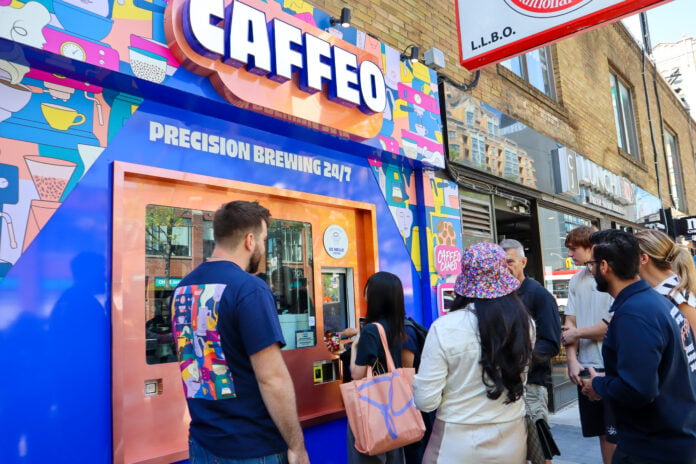
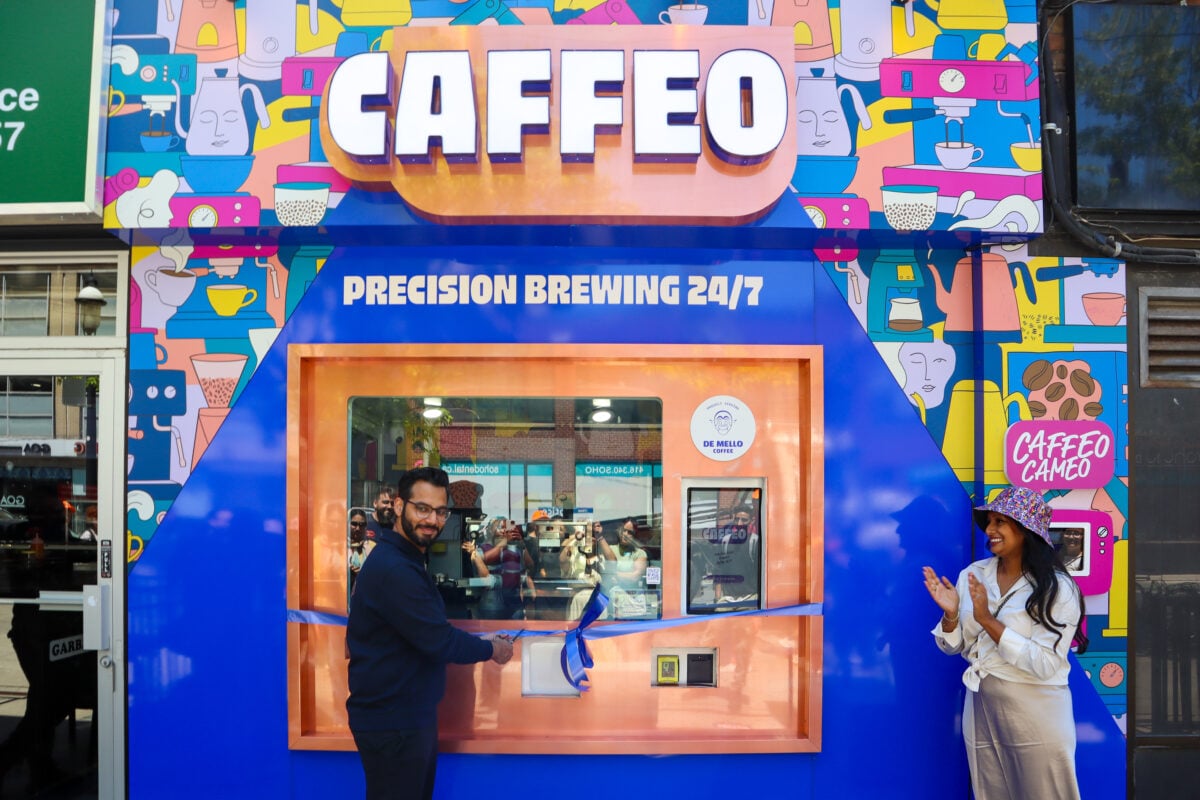
Caffeo is marking the relaunch of its downtown Toronto cafe with a giveaway offering one winner a complimentary beverage every day for a year, as the 24/7 robotic cafe looks to build on the reopening of its flagship location.
The promotion follows the relaunch of Caffeo’s cafe at 405 Richmond Street West and comes alongside a redesigned space and an expanded beverage menu. The giveaway is open to customers who follow the official instructions on Caffeo’s Instagram, with the prize redeemable only at the flagship location.
Relaunch and expansion
The cafe has introduced additional handcrafted beverages as part of the relaunch, including espresso-based drinks, specialty lattes, matcha and seasonal beverages.
Caffeo says its drinks are prepared using a robotic brewing system designed to control each stage of the process. The company says it uses locally roasted beans and the same equipment found in specialty coffee shops around the world.
Caffeo photo
“Our relaunch has been an exciting moment for the brand, and the response from the community has been incredible,” said Samee Motiwala, founder and CEO of Caffeo. “This next chapter allows us to continue pushing the boundaries of what a cafe experience can be by bringing together specialty coffee, technology, and a space designed for the Toronto community.”
The expanded menu includes traditional espresso drinks such as Americanos and cappuccinos, as well as the Bloom Latte and Caramel Popcorn Latte. The cafe also offers matcha and seasonal drinks including PomPassion Lemonade, made with pomegranate and passionfruit, and Charged Lemonade, which combines fresh lemon juice and espresso.
Caffeo says additional beverages are in development.
Giveaway details
The giveaway gives one customer a complimentary beverage each day for 365 days. Customers must follow the official giveaway instructions on Caffeo’s Instagram to enter.
The prize is limited to the company’s flagship location at 405 Richmond Street West.
The promotion is being launched as the cafe resumes operations following its redesign, with the company positioning the location as a place serving customers throughout the day and night.
Caffeo photo
24-hour operation
Caffeo operates around the clock, serving customers including early-morning commuters, students and shift workers.
The company says its robotic brewing system is intended to maintain consistency in drink preparation regardless of the time of day.
The relaunch combines the cafe’s automated preparation system with its expanded menu and redesigned location in Toronto’s Fashion District.
Caffeo describes itself as Toronto’s only 24/7 robotic cafe. The company says it serves coffee, matcha and signature beverages using automated brewing technology and premium ingredients.
The giveaway is now underway, with further information available through Caffeo’s Instagram account, @caffeobrews.
Revenue was $290.7 million, up 3.6% versus Q2 2025.
System-wide sales were $377.3 million, an increase of 2.0% versus Q2 2025. Same-store sales decline was 0.2%.
Adjusted EBITDA was $65.0 million, up 8.0% versus Q2 2025, representing 22.4% of revenue. Operating income was $41.9 million, up 14.0% versus Q2 2025.
Adjusted Net Income was $28.2 million or $0.41 per diluted share, compared to $26.2 million or $0.38 per diluted share, respectively, in Q2 2025. Net income was $24.9 million, up 14.3% versus Q2 2025.
Opened 7 new stores and ended the quarter with 877 stores across the network.
Free cash flow was $32.9 million, compared to $27.1 million in Q2 2025.
Subsequent to Q2 2026, the Board of Directors of the Company declared a dividend of $0.13 per common share.
On a 52-week comparable basis, the company said it expects revenue growth between 2% and 4%, Adjusted EBITDA marginof approximately 21%, and Adjusted Net Income per Diluted Share similar to Fiscal 2025.
“We were pleased with our Q2 performance, demonstrating our ability to adapt in a dynamic environment,” said Greg Ramier, Chief Executive Officer of Pet Valu. “Our teams delivered improved profitability, solid revenue growth and further market share gains, supported by disciplined execution across the business.”
“The strength of our model continues to be reflected in the capital-light growth of our network, increasing engagement across our digital and loyalty platforms, and strong demand for our differentiated offering. With a clear strategy, passionate people and actions within our control, we remain confident in achieving our 2026 Outlook.”
Greg RamierPet Valu photo
The company noted that revenue increase was primarily due to higher retail sales and franchise and other revenues.
For Fiscal 2026, the Pet Valu said it expects:
revenue growth between 2% and 4%, supported by approximately 40 new store openings, flat to 2% same-store sales growth and higher wholesale merchandise sales penetration;
Adjusted EBITDA margin of approximately 21%, which incorporates heightened value-seeking consumer demand trends and higher fuel costs, offset by operating expense leverage;
Adjusted Net Income per Diluted Share similar to Fiscal 2025; and
business reinvestment of approximately $35 million, consisting of approximately $20 million in Net Capital Expenditures and approximately $15 million in transformation costs.
“The Company continues to monitor the evolving governmental foreign trade environment and believes it has the appropriate mechanisms in place to adapt, as necessary. The Outlook for 2026 is based on several assumptions, including, but not limited to, governmental foreign trade policies currently in place as of this release,” it said.