Two national business groups say temporary federal changes to the Temporary Foreign Worker Program aimed at easing severe labour shortages are a positive step for employers, particularly in rural and tourism-dependent regions.
Restaurants Canada said the federal government’s announcement on Friday of temporary changes to the Temporary Foreign Worker Program to help employers experiencing severe labour shortages is a first step towards building a more strategic and predictable workforce that supports Canadian businesses, including the restaurant industry.
Kelly Higginson, President and CEO, said the organization has been calling for a targeted approach to immigration that includes taking into account the needs of rural, remote and tourism areas, where the pool of qualified or available workers can be insufficient or where needs may vary by time of year.
“Access to a reliable and predictable source of labour is essential to the economic and social fabric of these communities. TFWs account for just 3% of our workforce but help fill critical gaps that allow restaurants to continue operating and provide jobs for Canadians,” said Higginson.
Kelly Higginson
“Across much of the country, particularly in rural and non-urban communities, unemployment remains well below the national average, and demographic pressures are intensifying labour shortages. Restaurants in these areas often struggle to find enough qualified or available workers and need to rely on the TFW program, particularly for specialized roles like chefs and cooks, or for overnight shifts.”
The organization said the restaurant and foodservice sector is Canada’s fourth largest employer, with nearly 1.2 million workers, including more than 500,000 youth representing 40% of its workforce. Dozens of other industries, from agriculture to manufacturing, technology to tourism to transportation, benefit from the success of the industry.
“While the measures announced today are only temporary, they are a step in the right direction to help some restaurants address labour shortages in the near term. Restaurants Canada urges all provinces and territories to include the foodservice industry in their priority sectors for affected regions,” added Higginson.
“Many small businesses across Canada are struggling to keep their doors open with the loss of some fantastic members of their team,” said Dan Kelly, President, CFIB.
“Any measure that prevents businesses from losing experienced, trained workers is a positive one. While unemployment rates have ticked up in Canada, over half (52%) of small business owners using the program report their Temporary Foreign Workers help protect jobs for Canadians. A restaurant struggling to find an experienced cook will not be able to protect jobs for young Canadians waiting tables.
Dan Kelly
“CFIB is seeking additional clarity on whether these new temporary measures will provide them with a pathway to extend the stay of existing Temporary Foreign Workers already in Canada. There are 1.3 million temporary work permits set to expire in 2026.
“We encourage all provinces to request these new flexibilities for employers in their jurisdictions.”
The CFIB is Canada’s largest association of small and medium-sized businesses with 103,000 members across every industry and region.
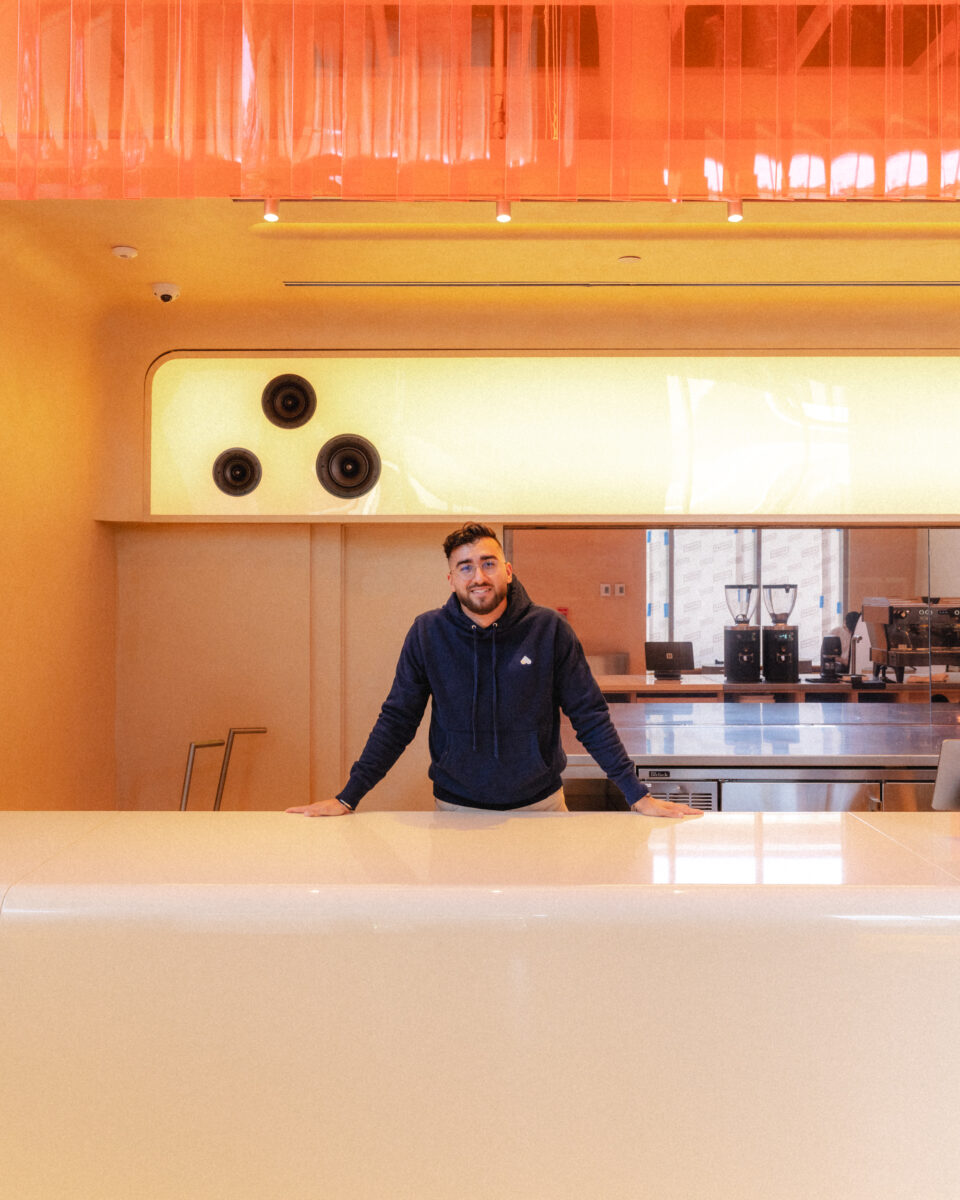
BAM BAM, by the team behind award-winning Nemesis, will open April 1 at 160 West Georgia Street in Vancouver, introducing a new all-day concept shaped by design, food, and the cultural moments that define North American nostalgia.
“The menu at BAM BAM is built around the food we all know and love. The classics. The kind of things you grew up eating and still crave today. Fried chicken, donuts, rolls, sandwiches, coffee, cocktails. The staples reinterpreted through our POV,” said the company.
The curated menu is focused on familiar staples. Fried Chicken anchors the offering with sandwiches such as Classic Rosemary and Hot Sweet, alongside Popcorn Chicken served with house sauces like Smoked Gherkins and Cucumber Dill Ranch. For sweet treats, housemade donuts rotate daily, while house-baked pastry rolls include the OG, Honey Sea Salt, Garlic Knot, and Meyer Lemon, explained the company.
“Guests can also order signature combos, such as The Bam Bam, featuring a chicken sandwich, potato sticks, donut, and drink, as well as a The AM Classic available until noon featuring a breakfast sandwich, potato sticks, and drink,” it said.
“The beverage program follows the same nostalgic focus with playful twists. Cocktails include Apple Pie & Rye, Strawberry Shiso Negroni, Pecan Pie Old Fashioned, and Hot Honey Margarita. Cafe-style drinks include Cherry Matcha, Apple Pie Latte, Strawberry Chocolate Milk, and a range of cream sodas including Cherry Cola, Lemon Meringue, and Apple Pie.
The space was designed by McKinley Studios collaboratively with Reno and team. The 2,800-square-foot space seats 55 people and draws inspiration from cultural North American moments, such as baseball clubhouses with warm wood, early hip-hop record shops layered with stacked speakers, and varsity iconography.
“To achieve this, the room is warm yet futuristic, combining cherry veneer, stainless steel counters, and chrome leather seating inspired by 1960s silhouettes. A central communal table with a green banquette sits beneath a sculptural chandelier by A-N-D Lighting, while custom artwork by artist Filipp Jenikae and a dedicated retail section further connect the space to fashion and culture,” said the company.
“BAM BAM’s debut collection, designed and developed by Kali Gill-Desjardins & Jess Reno, draws from vintage varsity culture and reimagined through a modern lens. The brand’s bulldog iconography is explored throughout. Each piece is thoughtfully cut and sewn using premium fabrics . . . “
Employment declined by 84,000 (-0.4%) in February and the employment rate fell 0.2 percentage points to 60.6%. The unemployment rate increased 0.2 percentage points to 6.7%, according to a report released Friday by Statistics Canada.
Employment fell among youth aged 15 to 24 years old (-47,000; -1.7%) and men in the core working age of 25 to 54 years old (-41,000; -0.6%). Employment was little changed for core-aged women and people aged 55 years and older, said the federal agency.
“Employment declines in February were recorded in services-producing industries (-56,000; -0.3%) and goods-producing industries (-28,000; -0.7%). The largest declines were in wholesale and retail trade (-18,000; -0.6%), and ‘other services’ such as personal and repair services (-14,000; -1.8%),” said Statistics Canada.
Employment had edged down as well in January (-25,000; -0.1%).
In February, the employment rate—the proportion of the population aged 15 and older who are employed—fell 0.2 percentage points to 60.6%, the second consecutive monthly decline. The employment rate in February was just above the recent low of 60.5% observed in August 2025, and was down 0.4 percentage points on a year-over-year basis, said the report.
“In February, the number of people working full-time declined by 108,000 (-0.6%), offsetting growth recorded over the previous two months. At the same time, there was little variation in the number of people working part-time in February. On a year-over-year basis, there was little change in the number of people working full-time or part-time,” it said.
“The number of employees in the private sector fell by 73,000 (-0.5%) in February, the second consecutive monthly decline. These declines offset gains observed in October and November 2025. Compared with 12 months earlier, the number of private sector employees was virtually unchanged in February. The number of public sector employees and the number of self-employed workers were both little changed in February.”
“In services-producing industries, the largest decline was in wholesale and retail trade (-18,000; -0.6%). Employment in this industry has trended down since October 2025, with a cumulative decline of 52,000 (-1.7%) over this period.”
Katherine Judge
Katherine Judge, Senior Economist, CIBC Capital Markets, said: “Overall, this is clearly a very worrisome report for the BoC (Bank of Canada) that shows that labour market slack has increased and activity is frozen amidst trade uncertainty.”
“Not only did employment decline, but the labour force contracted for a second consecutive month. Even looking through some of the noise in the top-line jobs figures, the unemployment rate rose again, reversing most of last month’s improvements. Undoubtedly, the report was weaker than expected, but looking through the noise shows an economy that has struggled to gain traction. Something that was to be expected given the structural changes Canada is facing,” he said.
“Looking forward, we are expecting the labour market to tread water in 2026, as a rapid slowdown in population growth drags on labour supply, and soft economic momentum limits hiring. The wildcard to all of this is how big the inflation shock from the ongoing conflict in the Middle East will be. The duration of the supply disruption remains highly uncertain, but its length will impact inflation and, thereafter, consumer spending and the economy at large.”
Douglas Porter
Douglas Porter, Chief Economist, BMO Capital Markets, said: “No sense sugar-coating this one—this is simply a brutal result, and the near absence of net job growth in the past year is perhaps the most telling reading here. While a tough winter may have exaggerated the weakness at the start of the year, and a shrinking labor force is also weighing heavily on headline employment, the underlying story so far in 2026 is one of weakness.
“A range of other indicators for January, including a 3% drop in manufacturing sales, reinforces the point that the economy stumbled out of the gate this year. And now the economy has to contend with higher energy costs flowing from the Iran conflict. Somehow, the market continues to price in Bank of Canada rate hikes for later this year, but if this employment report is at all indicative of underlying economic conditions, the last thing the Bank would be considering would be rate hikes.”
Happy Belly Food Group is planning a significant expansion across Canada this year, with the restaurant company aiming to open between 30 and 50 new locations as it builds on strong same-store sales and targets growth markets including Alberta, Quebec, British Columbia and Atlantic Canada.
Chief executive Sean Black said the company currently operates 84 locations across 10 brands and is seeing positive momentum despite rising costs that have challenged parts of the restaurant industry in recent years.
“Across the board we’re experiencing very positive same-store sales,” Black said in an interview. “So we’re adding new units and we’ve improved sales.”
The expansion will be concentrated within four of the company’s core brands, which Black said are expected to generate the majority of the group’s near-term growth.
Four brands driving expansion
Black said the company’s “core four” growth brands are Yolks, Rosie’s, Heal and iQ Food. New restaurant openings planned for this year will largely come from those concepts.
“This year, somewhere between 30 and 50 new restaurants,” he said. “Just across our portfolio, 30 to 50 restaurants is our anticipated opening this year.”
Sean Black
The strategy reflects a broader effort by the company to concentrate investment and development resources on brands that are gaining traction with customers.
Happy Belly’s portfolio spans 10 brands in total, but Black said the company is focusing its growth where it sees the strongest demand and operational potential.
Demographics shaping strategy
Black said consumer demographics are a key factor behind the company’s performance and growth strategy. The company targets a younger customer base, which he said has remained relatively resilient in its spending habits.
“Part of it is demographics,” he said. “We’re focused on a younger demographic. They’re still spending money. Not much has happened recently that’s impacted them.”
Location strategy is also playing a central role in the company’s expansion plans. Black pointed to several regions where population growth and economic activity are supporting demand for new restaurants.
Alberta is a major focus for the company, while markets in Atlantic Canada have also become increasingly attractive.
“Alberta is a big growth market for us,” Black said. “Atlantic Canada has had a huge boom in population growth and opportunity. Whether it’s Halifax or PEI, those markets are doing very well.” British Columbia is also a growth market for the company.
He said the company believes its brands and real estate strategy are aligned with the customer segments it is targeting.
“We’re well positioned with our brands and our real estate based on the customers that we go after,” he said.
Real estate central to growth
As the company expands, Black said securing appropriate locations has become one of the most important aspects of the business. He estimates that real estate work occupies roughly 80 per cent of his time as chief executive.
“If you want to be in retail today, you’ve got to be in real estate,” he said. “If you want to grow, you have to be very active and engaged in the real estate sector.”
While finding available locations is not necessarily the biggest hurdle, Black said affordability has become a key challenge as operating costs rise.
“Finding space is not all that hard,” he said. “Being able to afford it is harder.”
When evaluating potential sites, the company considers several factors including traffic patterns, population density and the broader competitive landscape.
“A big factor is the demographics and trade area,” Black said. “Car count, population density, and the competitive set, to see where your competitors are.”
Understanding the competitive environment is critical in today’s restaurant market, he said.
“Competition is real today. Everyone out there is fighting for share of stomach or share of wallet,” Black said. “It doesn’t matter what you’re selling, whether you’re selling pasta, pizza, steaks, burgers. It doesn’t matter. You’ve got to know what you’re up against.”
Photo: Happy Belly Food Group
Industry changes influencing growth
Black said broader changes affecting the restaurant sector are also shaping how companies approach expansion. One factor he pointed to is shifting immigration patterns, which he said have had an impact on franchising activity for some restaurant brands.
“A lot of brands were very dependent on immigration for franchising,” he said, adding that changes in that environment have created challenges for some operators.
Happy Belly’s operating model differs in part because it runs many corporate locations rather than relying solely on franchisees.
“We operate a lot of corporate stores, so we don’t need franchisees to sign a location to open a corporate,” Black said.
That structure provides the company with flexibility as it evaluates new markets and growth opportunities.
Photo courtesy of Happy Belly Food Group
Positioning for future expansion
Looking ahead, Black said the company expects continued growth in several regions where it believes demographic trends and economic conditions remain favourable.
Quebec, Alberta, British Columbia and Atlantic Canada will remain the primary focus for new development.
“A lot of our growth is from Quebec, Alberta, BC and Atlantic Canada,” he said. “Those are the markets that we’re most focused on.”
Despite ongoing cost pressures affecting the industry, Black said the company’s performance has remained positive.
The combination of rising sales, targeted brand investment and a strong focus on site selection will continue to guide the company’s strategy as it expands its footprint.
For Black, the competitive landscape means operators must remain highly disciplined about both real estate decisions and understanding their customers.
“Everyone out there is fighting for share of stomach or share of wallet,” he said. “You’ve got to be very aware of where your competition is.”
Small business owners across Canada are calling on governments to move quickly to strengthen the country’s domestic energy supply, according to new preliminary data from the Canadian Federation of Independent Business (CFIB).
An overwhelming majority (90%) of small businesses say governments should prioritize increasing Canada’s energy production and capacity to better support the economy and ensure businesses have reliable access to the energy they need to operate, said the CFIB.
Dan Kelly
“Canada cannot continue to sit on the sidelines when it comes to developing our energy potential,” said Dan Kelly, CFIB president. “It shouldn’t take supply shocks and external threats to get governments moving on projects and policies that protect our economy. The best time to start was a decade ago. The next best time is today.”
Two-thirds (68%) of small businesses say their energy costs have increased over the past year, adding pressure at a time when global events continue to create volatility in energy markets, added the CFIB.
“When fuel costs rise, the entire supply chain feels it, and there aren’t many small business owners who can absorb a prolonged spike in gas prices,” said Kelly. “Governments need to make energy infrastructure a priority and get shovels in the ground as soon as possible.”
The CFIB is Canada’s largest association of small and medium-sized businesses with 103,000 members across every industry and region.
Editor’s Note: This article is the first in a special Retail Insider thought leadership series exploring how luxury retail actually works, based on insights from luxury retail executive Douglas Mandel.
Luxury retail is entering a new chapter. The shifts underway are structural, not cyclical. The expectations of The New Luxury Client are reshaping how brands design stores, train teams, and define performance.
Douglas Mandel, former VP of Dior who led Canada and a veteran luxury retail leader, outlines what he sees as a decisive shift in client expectations. Drawing on decades of experience leading teams and overseeing stores in complex international markets, Mandel argues that in luxury, the product is only the beginning. The real business is the relationship.
For Canadian retailers navigating cautious consumer spending, rising operating costs, and intensifying competition from global brands, that message carries weight. The New Luxury Client is no longer impressed by square footage alone. They are looking for emotional intelligence, intentional design, and authentic human connection.
Douglas Mandel
From Transaction to Relationship
“In luxury, the product is just the start. The real business is the relationship,” Mandel says.
During his tenure overseeing Dior stores internationally, Mandel explains that leadership extended far beyond operations and financial targets. Senior executives were expected to know top clients personally, host them at fashion shows, and ensure they felt recognized and valued. Fashion shows were not marketing exercises. They were immersive brand experiences and, as he describes, “the ultimate expression of brand immersion.”
This approach reframes luxury retail as a long-term relationship strategy rather than a series of isolated sales. Mandel notes that in these environments, leaders become “a conductor of relationships, not just a P&L executor.”
For The New Luxury Client, recognition and continuity are essential. Whether the annual spend is in the tens of thousands or significantly more, the expectation remains consistent. Clients want to feel seen, not processed.
Across Canada’s growing luxury nodes, from Vancouver to Toronto and Montreal, this shift is increasingly visible. Flagships are expanding. However, the brands that resonate most deeply are those investing in meaningful client relationships rather than relying solely on visual spectacle.
The Client Journey as the True Blueprint
Mandel also challenges traditional approaches to store design.
“In luxury retail, the true blueprint is not your floorplan, it’s your client journey,” he says.
Historically, store layouts were built around product adjacencies, traffic flow, and visual hierarchy. Those fundamentals still matter. However, Mandel argues that they are insufficient if the emotional experience is not equally intentional. A store can be architecturally impressive and still fail if the client feels overwhelmed, disconnected, or rushed.
He advocates mapping the emotional journey of the client across the physical space, outlining what the client feels at each stage and how staff guide the interaction. The emphasis shifts from simply moving clients through zones to creating moments of welcome, exploration, engagement, and elevated closure.
For Canadian developers and landlords investing heavily in mixed-use luxury projects, this concept is particularly relevant. As retail integrates with hospitality and residential components, the emotional hierarchy of the store becomes as critical as its architectural design.
The New Luxury Client evaluates brands holistically. Lighting, scent, pacing, and staff interactions form a cohesive narrative. When those elements align, the store becomes memorable. When they do not, even the most expensive buildout can feel transactional.
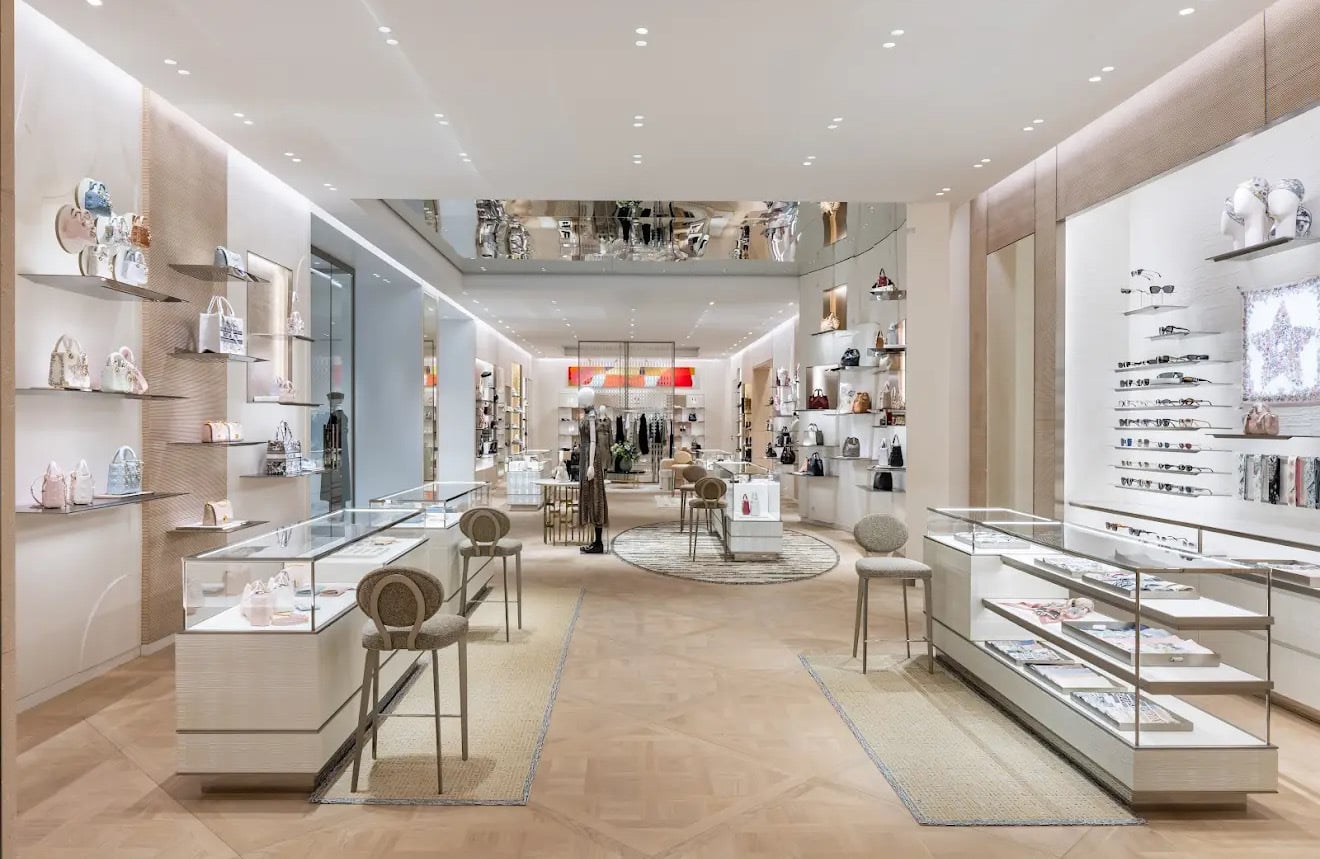
Dior Yorkdale store in Toronto. Photo: Daniel Bray, Here and Now Agency
Rituals Over Transactions
If journey defines the structure, ritual defines the rhythm.
“Luxury retail is evolving fast,” Mandel observes, noting that clients today demand more than product. “They want presence.”
He argues that the brands poised to succeed are those that embed rituals into their service model. Rituals are repeatable, meaningful moments designed to deepen emotional connection and elevate perceived value. They may include a distinctive welcome, a carefully choreographed packaging presentation, or a thoughtful follow-up that feels personal rather than automated.
“The brands that win in 2026 won’t just offer better promotions or prettier packaging. They’ll offer rituals,” Mandel says.
Rituals create emotional safety. In a climate defined by rising prices and digital saturation, consistency and symbolism help clients feel grounded and valued. Clients may forget a specific SKU, but they remember how they were treated.
For Canadian luxury retailers facing competition from both global e-commerce platforms and international flagships, ritual provides differentiation. It transforms service from an individual associate’s improvisation into a structured expression of brand values.
Clienteling as Culture, Not Software
Personalization is often associated with CRM platforms and data analytics. Mandel takes a more human-centered position.
“Clienteling isn’t a line item in your tech budget. It’s a brand behaviour that starts with your people and ends with loyal, emotionally invested clients,” he says.
He emphasizes that clienteling is not primarily a tool, but a culture. While technology can support the process, the foundation lies in training teams to capture details, act on insights, and maintain continuity across visits.
At its core, clienteling is “the art of knowing your client and showing them you care.” That includes remembering preferences, acknowledging milestones, and designing follow-up that feels intentional rather than automated.
For many Canadian luxury and premium retailers, particularly independent operators, this is an encouraging message. Meaningful clienteling does not require a global technology stack. It requires discipline, leadership, and a clear service philosophy.
The New Luxury Client is discerning. They can distinguish between generic outreach and genuine attention. In that environment, authentic clienteling becomes a strategic advantage.
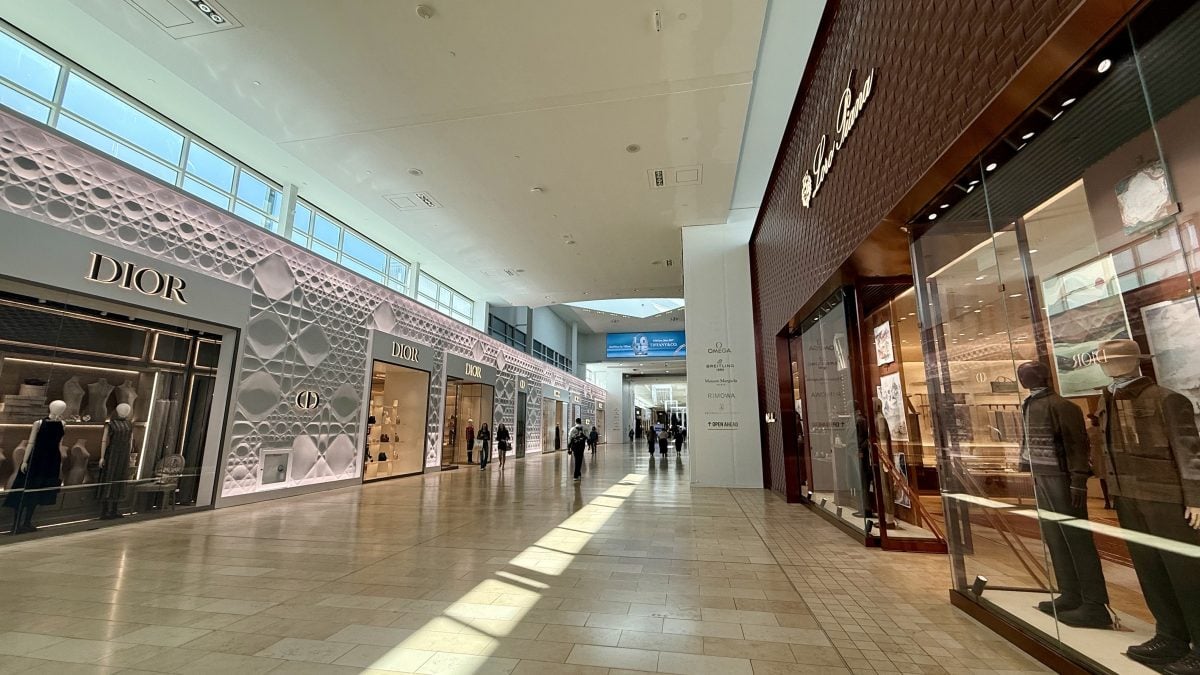
New luxury wing at Toronto’s Yorkdale Shopping Centre. Photo: Craig Patterson
Hospitality as the Foundation
Long before experiential retail became a widely used term, Mandel was applying hospitality principles inside a boutique setting.
Reflecting on an early flagship in Old Montreal, he describes furnishing the store with large couches and benches, encouraging clients to sit, converse, and linger. Clients would call ahead not to ask about inventory, but to inquire about what bottle of wine was open.
“They weren’t just coming to shop. They were coming to spend time. To connect. To feel seen,” he recalls.
The lesson extended to his leadership roles in global luxury houses. Retail, he notes, is about making people feel good, not merely facilitating transactions. A memorable retail experience is built with feeling, not fixtures.
As Canada continues to attract new luxury entrants and expand existing retail corridors, this principle remains relevant. Architectural ambition must be matched by emotional hospitality.
What The New Luxury Client Means for Canada
The New Luxury Client in Canada is globally informed, digitally fluent, and increasingly selective. Travel has resumed. Price transparency is immediate. Brand narratives are scrutinized.
In this context, luxury retailers cannot rely solely on logo recognition or prime real estate. They must invest in emotional continuity, structured rituals, and a clienteling culture that prioritizes long-term relationships over short-term conversion.
Mandel’s perspective offers a framework. Begin with the client journey rather than the floorplan. Embed rituals that create rhythm and memory. Build clienteling as a cultural discipline rather than a software solution. Recognize that the relationship, not the product, ultimately drives revenue.
Luxury is not about speed. It is about meaningful rhythm.
The New Luxury Client is not demanding less. They are demanding depth, intention, and humanity. The brands that respond accordingly will not simply generate sales. They will build enduring loyalty in a market that increasingly rewards those who treat luxury as a relationship, not a transaction.
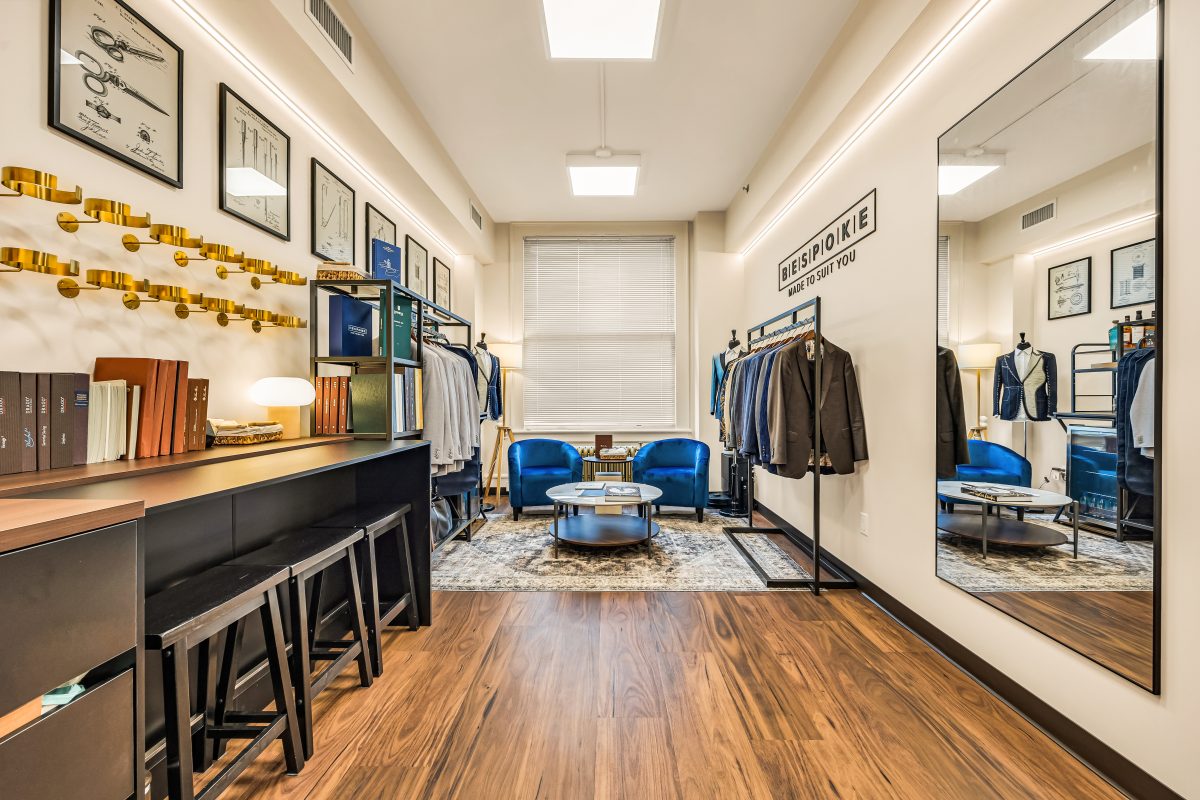
Bespoke Made Suits Vancouver Location 2026. Source: Bespoke Made Suits
Vancouver-based Bespoke Made Suits, co-founded by Adam Cheung, has expanded its operations with the opening of a physical showroom at 615–470 Granville Street, located near Vancouver’s Financial District. The new space marks an important step for the custom tailoring company as it continues to grow its presence while maintaining a concierge-style service model.
Rather than launching a traditional retail storefront, the company has introduced an appointment-based tailoring studio designed for consultations, fittings, and fabric selection. The showroom complements Bespoke Made Suits’ existing mobile service, which brings custom tailoring directly to clients throughout Metro Vancouver.
The addition of a dedicated showroom reflects a broader shift among some service-driven retailers toward hybrid models that combine in-person consultation spaces with mobile or digital customer engagement.
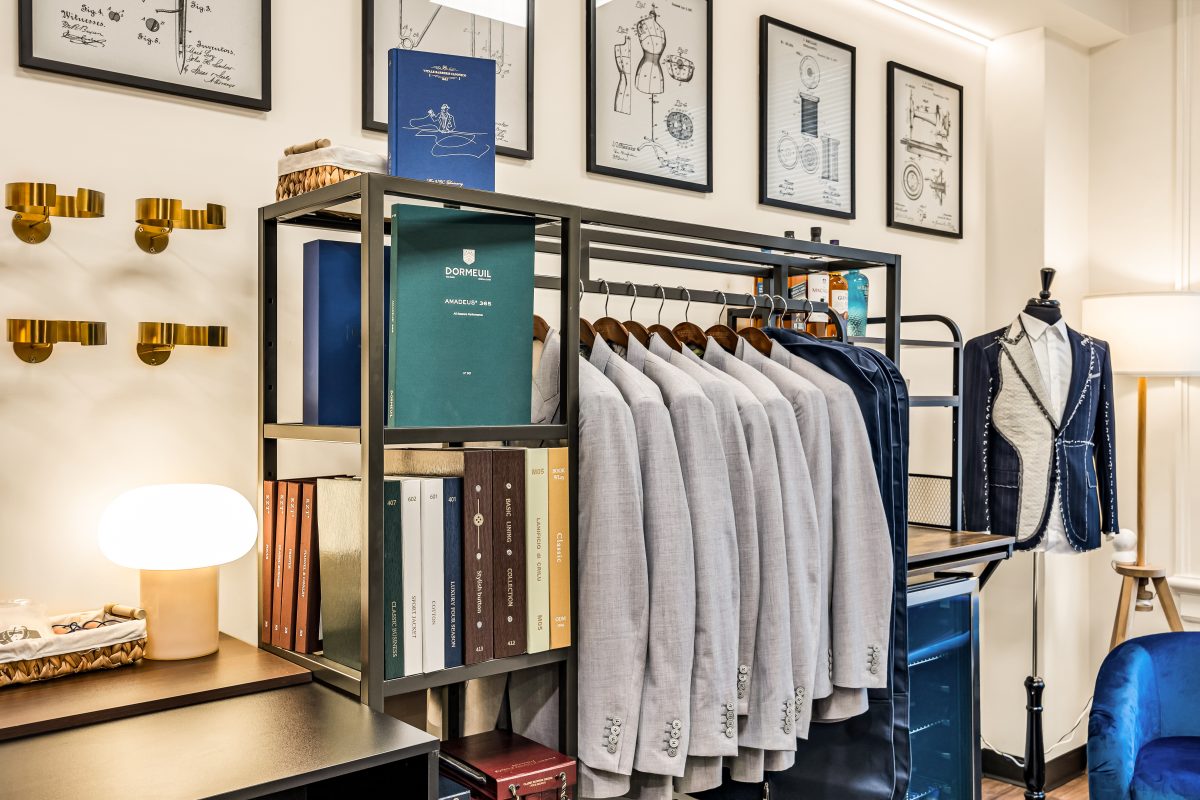
Bespoke Made Suits Vancouver Location 2026. Source: Bespoke Made Suits
A Studio Designed Around Craftsmanship
The approximately 250 square foot showroom has been designed as a working tailoring studio rather than a conventional retail floor. Clients visit by appointment for consultations, measurements, and fabric selection in an environment intended to highlight the craftsmanship behind bespoke garments.
Cheung personally designed and built the space.
“I designed and built the showroom myself,” says Cheung. “It was important that the space reflect the same level of thought, precision, and craftsmanship that goes into every garment we create.”
The interior combines wood, metal, velvet, and marble elements to create a refined but welcoming environment. Warm wood-effect flooring anchors the space, offering durability while maintaining the appearance of hardwood.
Framed prints of historical tailoring tool patents line the walls, referencing innovations that shaped many of the tools still used by tailors today. Shelving units display cloth books from leading mills alongside sample garments, allowing clients to explore fabrics and finishes in a tactile setting.
Thoughtful Interior Layout
Despite its compact footprint, the studio has been organized into distinct areas that support the tailoring process.
One section features sample jackets and neatly arranged fabric books, giving clients visual references for colour, texture, and construction. Nearby shelving houses collections from respected mills as well as the company’s in-house fabrics designed for durability and versatility.
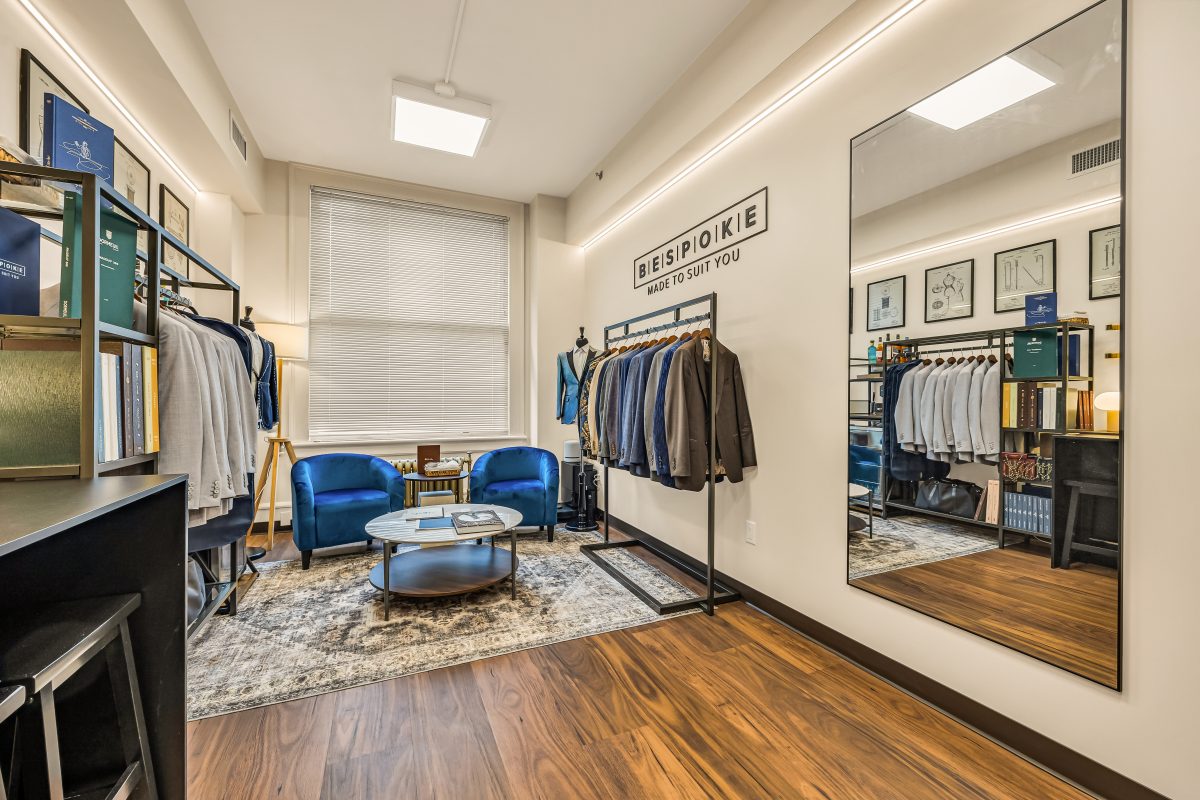
Another area functions as a consultation space, anchored by deep blue velvet lounge chairs and a marble-top table set on a patterned rug. This seating arrangement provides a comfortable setting where clients can discuss design preferences, review fabrics, and plan wardrobe pieces.
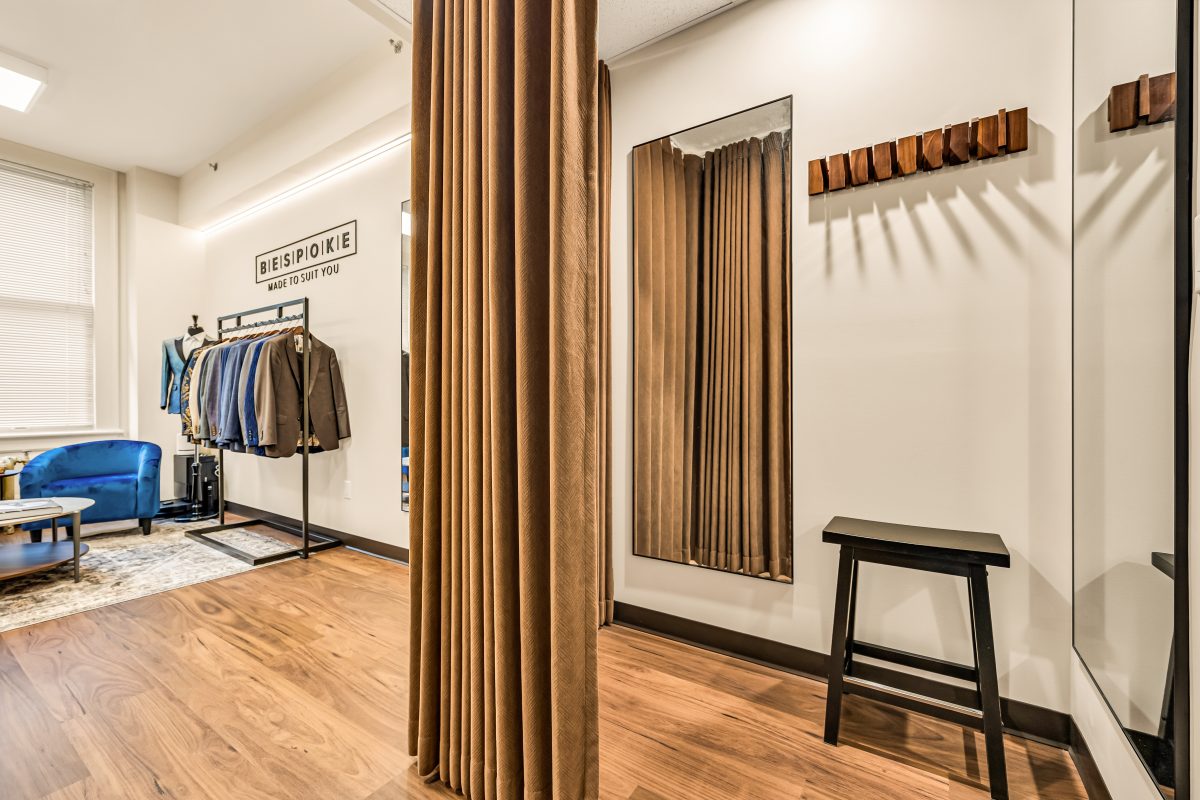
A large wall mirror and garment rack nearby allow clients to examine sample garments and visualize the final result during fittings.
The result is a studio that operates more like a private tailoring atelier than a traditional retail store, emphasizing consultation, craftsmanship, and personalized service.
Bespoke Made Suits Vancouver Location 2026. Source: Bespoke Made Suits
Positioned Near Vancouver’s Financial District
The showroom is located within an office tower along Granville Street, placing it within walking distance of Vancouver’s Financial District and several major corporate offices.
The building’s marble-lined lobby and traditional architectural details reflect the character of many historic commercial towers in the area.
This location aligns closely with the brand’s client base, which includes professionals, entrepreneurs, and executives working nearby. The downtown setting also allows clients to schedule fittings or consultations conveniently during the workday.
Bespoke Made Suits Vancouver Location 2026. Source: Bespoke Made Suits
A Hybrid Service Model
Since launching, Bespoke Made Suits has operated primarily as a mobile tailoring service, traveling directly to clients’ homes or offices for consultations and fittings. The company currently serves customers across Vancouver, Burnaby, Richmond, Surrey, Langley, Maple Ridge, White Rock, North Vancouver, and West Vancouver.
The addition of the Granville Street showroom expands that service model while maintaining the company’s emphasis on flexibility and convenience.
“We recognize that every client’s lifestyle is different,” says Cheung. “Some prefer the ease of having us come to them, while others enjoy visiting our showroom to fully immerse themselves in the process.”
Services are available in English, Cantonese, and Mandarin, allowing the company to serve Vancouver’s diverse professional community.
Fabric Selection and Italian Mills
Fabric selection plays a central role in the Bespoke Made Suits experience. Clients are presented with cloth from several respected textile houses, including Vitale Barberis Canonico, Loro Piana, and Dormeuil, alongside specialty European collections and the company’s own in-house fabrics.
These textiles range from lightweight wools suitable for year-round wear to cashmere blends designed for colder seasons. Clients seeking distinctive garments may also choose mohair fabrics for tuxedos, velvet for eveningwear, or silk-linen blends suited to warmer climates.
“We believe every man should have a suit that reflects not just his body, but his values and lifestyle,” says Cheung.
Bespoke Made Suits Vancouver Location 2026. Source: Bespoke Made Suits
Precision Tailoring
Bespoke Made Suits offers both made-to-measure and true bespoke garments, allowing clients to choose the level of customization that best suits their needs. The process begins with a detailed consultation examining body proportions, posture, and lifestyle needs before patterns are developed.
The company’s approach blends traditional tailoring techniques with modern construction methods.
“A man should not have to choose between comfort and style,” Cheung explains. “Our job is to make sure he has both, and that the suit stands the test of time.”
Rather than simply adjusting measurements, the company refines the garment’s pattern to align with the wearer’s proportions. Shoulders are adjusted to match posture, sleeves are attached with attention to natural arm movement, and reinforcement stitching is applied to areas of stress to improve durability.
Expanding Vancouver’s Tailoring Landscape
Beyond suits, Bespoke Made Suits offers custom dress shirts, overcoats, and accessories designed to help clients build cohesive wardrobes over time. The company has also become a popular choice among Vancouver grooms seeking personalized wedding attire.
The opening of the Granville Street showroom represents a new phase of growth for the company and reflects the continued demand for tailored clothing among professionals seeking personalized wardrobe options.
With the addition of its downtown studio, Bespoke Made Suits is expanding its presence while continuing to focus on craftsmanship, individualized service, and flexible consultation options.
Today’s Retail Insider articles highlight key developments in Canadian retail expansion and shifting consumer habits. Vancouver-based Article plans a new 9,600-square-foot showroom in Toronto, signalling a major move toward omnichannel furniture retail. Meanwhile, Abercrombie & Fitch is expanding its Canadian footprint with new stores across multiple cities. These stories, alongside evolving consumer behaviours and market strategies, reflect a retail landscape balancing physical growth with adapting to competitive pressures.
A woman shops on the Temu website. Image: RI/Google
Chinese marketplaces in Canada are rapidly becoming part of everyday consumer shopping habits, according to new survey data that shows widespread adoption and increasing purchase frequency among Canadian consumers.
A new study commissioned by ecommerce marketing platform Omnisend found that 73 percent of Canadians reported shopping on at least one Chinese marketplace, including Temu, Shein, or AliExpress, within the past year. The findings suggest that platforms once viewed primarily as discount destinations are evolving into routine shopping channels for many consumers.
The research also shows that usage frequency is rising across these platforms, with monthly and weekly shopping activity steadily increasing over the past two years.
Temu Leads Growth in Canadian Marketplace Usage
Among the platforms examined in the survey, Temu continues to see the strongest growth in Canadian adoption.
According to the data, 56.5 percent of Canadians shopped on Temu in 2026, up from 51.9 percent in 2025 and 39.3 percent in 2024. Shopping frequency on the platform is also rising. About 29.1 percent of Canadians now shop on Temu at least monthly, compared with 25.7 percent in 2025 and 20.5 percent in 2024.
Weekly usage has also increased. Ten percent of Canadians now report shopping on Temu at least once a week, up from 6.5 percent in 2024.
These figures indicate that Chinese marketplaces in Canada are increasingly shifting from occasional browsing destinations to platforms where consumers regularly complete purchases.
Shein Also Expands Canadian Consumer Reach
Shein is also gaining traction among Canadian shoppers, though at a slower pace than Temu.
The survey found that 40.9 percent of Canadians shopped on Shein in 2026, compared with 37.8 percent in 2025 and 34.7 percent in 2024. While annual usage continues to rise, the data suggests that Shein’s growth trajectory is more gradual.
Nevertheless, the platform is also seeing higher levels of repeat engagement among consumers.
“These marketplaces are no longer occasional discount options – they’re becoming embedded in everyday shopping behavior,” said Marty Bauer, ecommerce expert at Omnisend. “The biggest shift isn’t just how many Canadians have tried them. It’s how often they’re returning on a monthly and weekly basis.”
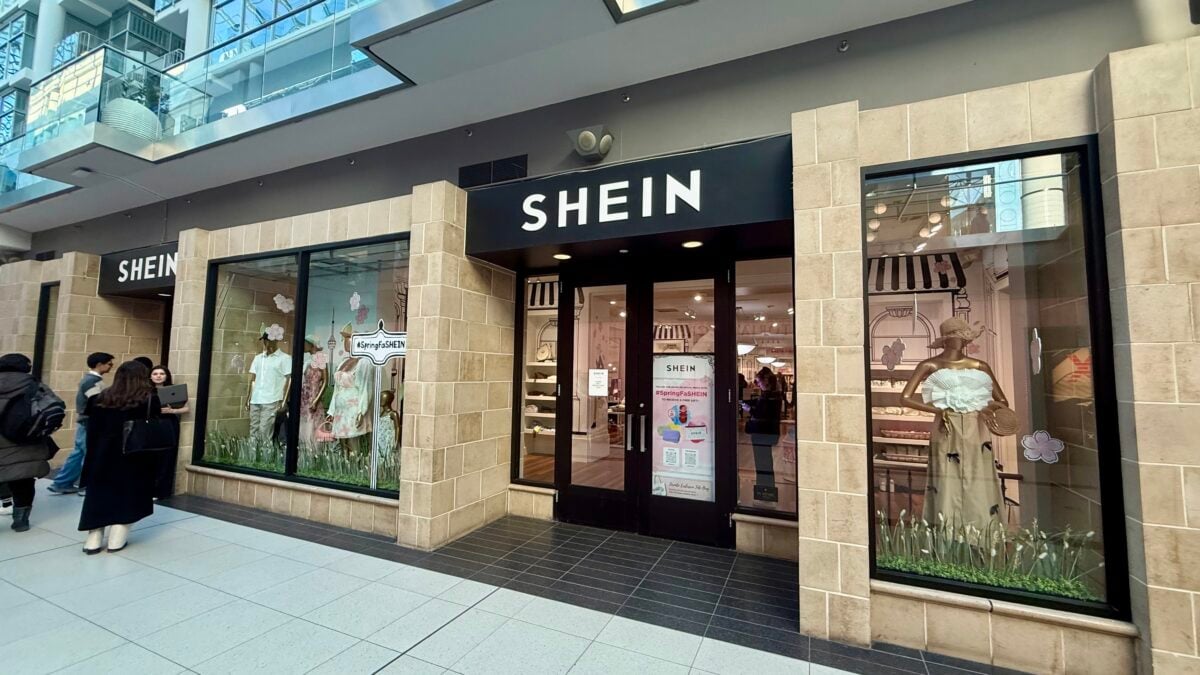
SHEIN pop-up at CF Toronto Eaton Centre in Toronto, during a preview on March 27, 2025. Photo: Craig Patterson
Increasing Frequency Signals Habit Formation
While annual participation rates illustrate the breadth of consumer adoption, frequency of shopping offers a clearer view of how these platforms are becoming integrated into everyday purchasing behaviour.
Between 2024 and 2026, weekly shopping on Temu increased from 6.5 percent to 10 percent. Shein saw weekly usage rise from 6.5 percent to 7.4 percent over the same period.
Many Canadians still report shopping on these platforms every few months. However, even this group is expanding. Temu’s “every few months” usage increased from 8.4 percent in 2024 to 13.5 percent in 2026, while Shein’s grew from 7.8 percent to 10.1 percent.
“What we’re seeing is habit formation,” Bauer said. “Consumers might start with occasional purchases, but over time these platforms are becoming part of their default shopping rotation.”
Competitive Implications for Canadian Retailers
The continued growth of Chinese marketplaces in Canada presents increasing competitive pressure for domestic ecommerce brands.
These international platforms compete aggressively on price and assortment, often offering large product selections at highly competitive price points. However, Bauer said Canadian retailers still maintain several important competitive advantages.
“Chinese marketplaces compete aggressively on price and assortment,” Bauer said. “But Canadian retailers still have strong competitive levers – faster domestic shipping, easier returns, localized customer support, and brand trust.”
According to Omnisend, retailers can strengthen their position by focusing on customer retention strategies that build direct relationships with shoppers. Clear delivery timelines and transparent return policies can also help build consumer confidence.
The report also highlights the value of strong post purchase communication through email and SMS, loyalty programs that reward repeat purchases, and personalization strategies designed to improve the overall shopping experience.
“When shoppers are splitting their budgets across more platforms, retention becomes critical,” Bauer added. “Brands that build direct relationships with customers – instead of relying solely on paid acquisition – will be in a stronger position long term.”
Survey Methodology
The survey was commissioned by Omnisend and conducted by Cint in June 2024, August 2025, and February 2026. Each year, 1,000 Canadians were surveyed using the same set of questions to evaluate consumer shopping habits on Chinese ecommerce platforms. Quotas were applied for age, gender, and geography to ensure national representation.
About Omnisend
Omnisend is an email and SMS marketing platform designed to help ecommerce businesses grow their online sales. The platform integrates with major ecommerce systems and provides automation tools, email templates, and customer support aimed at helping brands manage marketing communications and customer engagement.
Canada’s hotel industry continued to post a solid performance over the past year, driven largely by leisure travel demand and rising room rates even as occupancy levels begin to normalize, according to a report by Cushman & Wakefield.
“I think the industry has continued to perform very well,” Flood said in an interview from Toronto.
He said the sector experienced rapid revenue growth coming out of the pandemic period as travel resumed and demand surged. While the pace of growth has moderated somewhat since then, positive momentum has continued through 2024 and into 2025.
As detailed in the Hospitality & Leisure report, 2025 ranked among the stronger years for hotel transactions over the past two decades, highlighted by several notable full-service and luxury hotel trades. Despite some uncertainty going into 2026, low interest rates and a good level of available investment capital are expected to result in continued strong demand for hotel investments. The industry continues to outperform many other asset classes and continues to attract new capital.
Some key takeaways:
The past year proved to be another record year for Canadian hotel results, with RevPAR (Revenue Per Available Room) reaching a historic high of $142.89, a 4.1% increase over 2024 results;
In 2025, the overall market continued to show growth; however, some markets saw more significant impacts from tariffs and reduced business travel, while other markets saw stronger growth led by increased leisure travel. Overall, occupancy increased to 66.1% in 2025, the highest recorded occupancy in the last 20 years;
In 2025, RevPAR performance was again led by Vancouver ($223), Victoria ($218), and Toronto ($197). This was followed by Quebec City ($183) and Montreal ($156). Victoria, Halifax and Quebec City were cities with the strongest RevPAR growth in 2025, at 12.3%, 11.3% and 10.9%, respectively;
While political and trade uncertainty will continue into 2026, the Canadian market should see continued growth. Similar to 2025, growth will largely be through ADR as demand is expected to remain muted;
The outlook for international arrivals is positive, but the rate of growth will be significantly influenced by Canada’s relations with the U.S. and China. Markets like Toronto and Vancouver will get an added boost as they host the FIFA World Cup in June 202
Brian Flood
Room Rates Driving Growth
Flood said the primary driver of the industry’s current growth is not occupancy but pricing. Room demand has slowed slightly as hotels approach more typical occupancy levels following the surge in post-pandemic travel. However, average room rates continue to rise at a pace exceeding inflation.
“Room demand has slowed a little as we reach normalized occupancy levels,” he said. “But where we are seeing the growth is in average rate, which continues to increase at above-inflation levels.”
Flood attributed the pricing strength partly to shifting consumer expectations in the travel market. He said travellers emerging from the pandemic appear more willing to spend on higher-quality experiences, which has allowed hotels to adjust pricing accordingly.
“I think people are gravitating toward better quality and better experiences,” he said. “Hotels, in many respects, have enhanced their product as well.”
The result, he said, has been sustained upward pressure on demand in certain parts of the market, particularly leisure travel.
Leisure Sector Outperforming
Flood said the leisure segment has been the strongest-performing area of the hotel industry since travel resumed after pandemic restrictions. While corporate and group travel remain important contributors to hotel revenue, their growth has been more moderate.
“Group and corporate are important parts of the market, but their growth has been a little more muted,” Flood said. “Where we see stronger growth since COVID is in the leisure sector.”
Leisure travellers have also shown a greater willingness to absorb higher room prices, which has contributed to the industry’s rate growth. “In the leisure sector, hotels have been able to increase rates at a higher rate,” he said.
That trend has influenced the geographic distribution of performance across Canada, with tourism-driven markets showing stronger results than business-focused centres.
Tourism Markets Lead Regional Performance
According to Flood, leisure-oriented destinations across Canada recorded some of the strongest gains last year. Domestic travel played a significant role in that performance as more Canadians chose to vacation within the country rather than travelling abroad.
“Part of that was driven by more Canadians wanting to vacation within Canada as opposed to going overseas or to the U.S.,” he said. “So we did see much stronger domestic tourism demand.”
International tourism outside the United States also increased, adding to the momentum in certain destinations. Tourism-heavy regions such as the Maritimes and resort markets in Western Canada benefited most from the shift.
“The Maritimes, for example — Prince Edward Island and Nova Scotia — had very good years last year,” Flood said.
In Western Canada, he pointed to strong results in resort destinations. “We’ve seen markets there do very well, particularly the Rocky Mountain resorts,” he said.
Those destinations are closely tied to leisure travel and tourism activity, which has remained resilient.
Central Canada Sees Slower Growth
By contrast, the largest urban centres in central Canada recorded more modest growth. Flood said hotel markets in cities such as Toronto, Montreal and Ottawa were affected more directly by broader economic factors tied to cross-border business activity.
“Where we saw the least amount of growth, ironically, was in central Canada,” he said.
He said those markets tend to rely more heavily on corporate travel and business linked to the United States, which slowed in response to changes in U.S. trade policy.
“These central Canada markets are much more reliant on U.S. trade,” Flood said. “Industry and corporate definitely slowed.”
As a result, the urban markets that typically benefit from corporate travel did not experience the same pace of expansion seen in tourism-focused regions.
Outlook Remains Positive
Despite the slower growth in some areas, Flood said the overall outlook for the Canadian hotel sector remains favourable. The combination of continued rate growth and stable demand is expected to support performance through the remainder of the year.
Flood said that trend is expected to continue as both domestic and international tourism remain active.
“I think that’s going to continue through the year,” he said, noting that travel demand from both Canadian and international visitors is expected to support the sector.
Measured Development Pipeline
Flood also pointed to a relatively measured pace of hotel development in Canada, which he said has helped maintain balance in the market. New projects are continuing to move forward, but the volume of development remains moderate.
“Within Canada we don’t see as much new development,” he said. “There is new development occurring, but it’s at a very sustainable pace.”
That controlled expansion is likely to support stable operating conditions for existing properties while allowing the sector to grow gradually. Looking ahead, Flood characterized the industry’s trajectory as steady rather than volatile.
“I think going forward we’ll see a gradual expansion of the market,” he said.
For hotel operators and investors, the current environment suggests continued opportunity, particularly as travel patterns stabilize following the disruptions of recent years. “If anything,” Flood said, “what I would say is basically steady as she goes.”
He added that the sector still holds “good earning potential” as the market continues to evolve.