New Sephora store at 241 Rue Ste-Catherine W. in Montreal. Photo supplied
South Korean skincare brand IOPE has entered the Canadian market through an exclusive retail partnership with Sephora Canada, marking its first expansion into the country as part of a broader North American growth strategy.
The clinical-grade skincare brand, owned by Amorepacific, launched online at Sephora.com recently and in Sephora stores nationwide.
The move signals continued momentum in the Canadian beauty retail sector, as international brands look to tap demand for innovation-driven skincare products rooted in clinical research and dermatological science.
“We’re excited to be adding IOPE to our Canadian assortment. As a lab-based skincare brand, IOPE focuses on bioscience and dermatology to address aging and skin health. With decades of research and a legacy rooted in innovation, IOPE brings a refined approach to high-performance skincare,” said Jane Nugent, SVP, Merchandising, Sephora Canada. “We’re proud to partner exclusively on this launch, continuing our commitment to bringing globally iconic Korean skincare brands to our clients.”
Founded in 1996, IOPE said it has built its reputation on clinical testing and ingredient research tied to anti-aging formulations. The company cited advancements in active ingredients such as PDRN, stabilized Vitamin C and retinol stabilization technology, supported by dozens of patents in Korea and scientific publications.
The brand positions its formulations as bridging in-clinic cosmetic treatments and daily skincare routines, with products designed to address concerns such as skin texture, firmness, brightness and overall vitality.
Jane Nugent
IOPE is entering Canada with nine products across several collections, including XMD, Retinol RX™, Vitamin C and PDRN. The company said its newest launches are inspired by skin booster treatments that have gained widespread attention in Korea.
Among the products is the XMD Stem III Clinical Recovery Serum, priced at $80. The company said the serum was clinically tested to deliver treatment-level results across multiple performance measures, including skin elasticity, texture and volume, while avoiding the discomfort associated with in-office procedures.
Another launch is the Retinol RX™ 2% Reti-jection Serum, priced at $77. The product features the brand’s proprietary retinoid complex and is designed to balance effectiveness with reduced irritation compared with traditional retinol formulas. IOPE said the serum incorporates retinol-infused spicules intended to improve absorption and that a four-week clinical study showed improvements in the appearance of wrinkles, pores and skin radiance.
The company also plans to expand its Canadian assortment with additional products, including the Retinol RX™ 1% Super Bounce Serum, the Vitamin C 40% Concentrate Cream and the PDRN Caffeine Shot Serum. IOPE said these products are formulated to target specific skincare concerns such as smoothing, depuffing and rejuvenation.
Across its Canadian lineup, IOPE products range in price from $9 for a single sheet mask to $93 for the XMD Stem III Clinical Recovery Cream.
The Canadian launch represents a step in IOPE’s broader strategy to introduce what it describes as high-performance skincare innovations to new markets.
The brand said it intends to build on its initial entry with further product introductions aimed at advancing anti-aging skincare standards in Canada.
Across Canada, a quiet transformation is reshaping the commercial real estate landscape and potentially unlocking a creative solution to the country’s chronic housing shortage. Empty department stores, struggling suburban malls, and vast underutilized parking lots are increasingly becoming the foundation for mixed-use communities, purpose-built rental housing, and affordable residential developments.
For Ladan Hosseinzadeh Sadeghi, President and CEO of Sky Property Group Inc., this shift represents more than a strategic investment opportunity. It reflects a broader evolution in how urban land is viewed and utilized.
“We have spent decades building out in every direction, and now we are sitting on enormous tracts of underutilized commercial land in the most desirable, serviced parts of our cities,” says Hosseinzadeh Sadeghi. “Adaptive reuse isn’t a workaround, it is one of the most pragmatic and responsible paths forward for housing supply in Canada.”
Retail-to-residential conversions in Canada are therefore attracting growing attention among developers, planners, and policymakers seeking to address both housing supply constraints and changing retail real estate dynamics.
Sky Property Group Inc.
A National Opportunity Built on Vacant Square Footage
The scale of the opportunity is significant. Over the past decade Canada has lost hundreds of department stores and major anchor tenants. The shift toward e-commerce played a major role, and the COVID-19 pandemic accelerated many of those changes.
As a result, retail vacancy rates remain elevated in several suburban markets. Industry observers estimate that millions of square feet of commercial space across the country sits dormant or is underperforming.
Many malls that were once anchored by retailers such as Sears, Target, and Hudson’s Bay now face uncertain futures. Yet these sites retain a valuable advantage. They occupy large parcels of fully serviced land with established infrastructure including roads, transit access, water, sewer, and electrical systems.
“When I look at a struggling suburban mall, I see fully serviced land in an established neighbourhood,” says Hosseinzadeh Sadeghi. “That is incredibly rare in any major Canadian city today. The infrastructure is already there, water, sewer, roads, power. The community is already there. What’s missing is vision and political will to rezone and redevelop.”
This dynamic is helping position retail-to-residential conversions in Canada as an increasingly viable redevelopment strategy.
Residential conversion of a former commercial building. Photo: Sky Property Group Inc.
The Economics Behind Adaptive Reuse
Adaptive reuse refers to the conversion of existing buildings or redevelopment of underutilized sites for new purposes. In the retail sector, this often involves transforming aging commercial properties into residential communities or mixed-use developments.
Unlike office-to-residential conversions, which can face structural limitations such as deep floor plates and mechanical constraints, large-format retail spaces and expansive parking lots often offer more flexibility. Developers can either retrofit portions of existing structures or demolish them to unlock redevelopment potential.
Some projects involve converting former retail interiors into residential lofts, co-living communities, or public service hubs. Others involve demolishing aging retail boxes entirely and constructing mid-rise or high-rise residential towers on the underlying land.
In many cases the economics benefit from existing infrastructure. Land servicing, road access, and utility connections are already in place, reducing the costs associated with greenfield development.
Cities including Calgary, Edmonton, and Ottawa have already seen examples of retail site redevelopment emerging from former big-box retail properties. Municipal planning frameworks are also evolving to encourage this approach.
Calgary’s City Centres policy, for example, promotes the transformation of underperforming retail corridors and malls into dense, walkable neighbourhoods. The city’s commitments under the federal Housing Accelerator Fund have further reinforced the direction toward intensification and redevelopment.
“What Calgary has shown is that when the political framework is aligned, when municipalities are willing to rezone quickly and incentivize adaptive reuse, the private sector responds,” says Hosseinzadeh Sadeghi. “The federal Housing Accelerator Fund was a step in the right direction. We need more of that alignment between all levels of government.”
Pickering City Centre Renderings (Credit: CentreCourt Developments)
Zoning Reform as a Critical Enabler
Despite the growing interest in redevelopment, zoning remains one of the most significant barriers to retail-to-residential conversions in Canada.
Historically, commercial properties have been zoned exclusively for retail or commercial use. Changing that designation often requires lengthy municipal processes that include community consultation, planning reviews, and political approvals.
Hosseinzadeh Sadeghi believes streamlining these processes will be essential if adaptive reuse is to meaningfully contribute to housing supply.
“We cannot afford, as a country, to leave viable development sites locked in outdated zoning categories while families are living in substandard housing or paying half their income in rent,” she says. “Every abandoned parking lot next to a subway station is a policy failure. It doesn’t have to be.”
Several provinces are beginning to move toward policies that support greater flexibility in land use.
Ontario has introduced legislative changes aimed at increasing density around major transit station areas. British Columbia has also enacted broad upzoning reforms designed to accelerate residential construction.
Hosseinzadeh Sadeghi suggests that the next step could involve municipality-wide reviews of commercial land. These audits would identify underperforming retail sites that could be suitable for residential intensification.
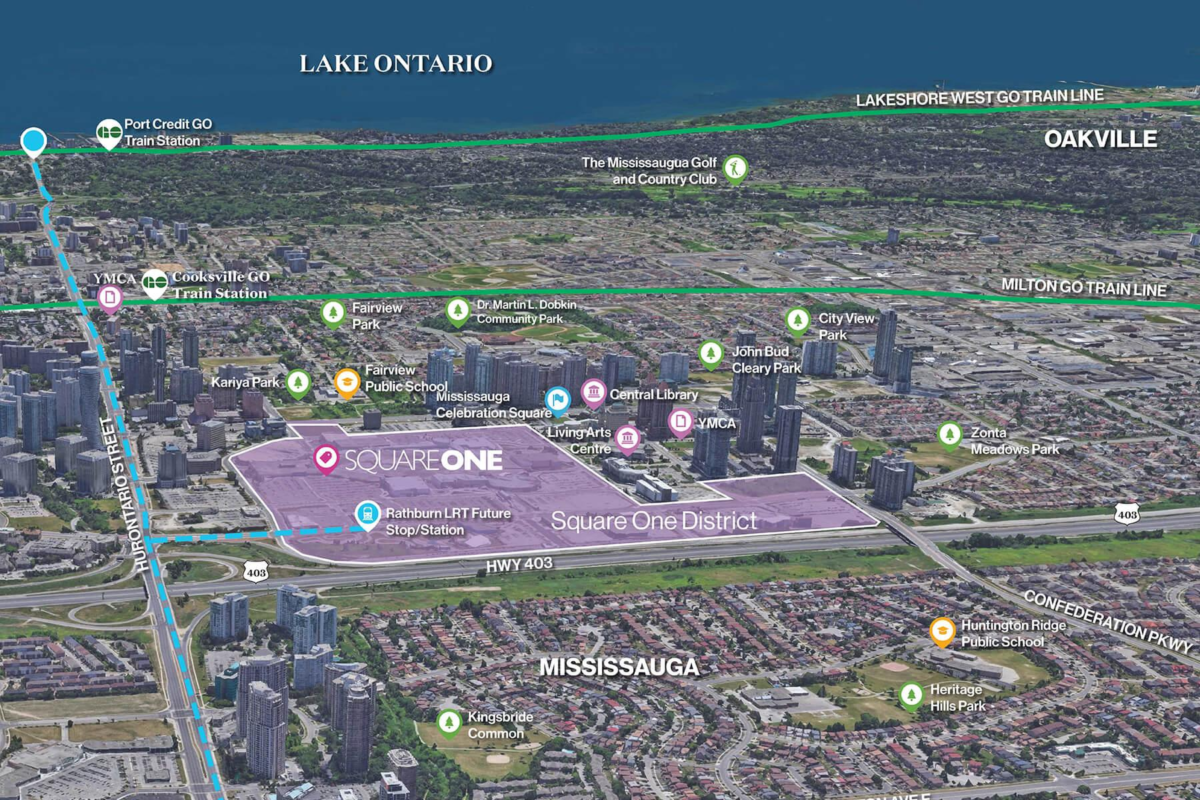
Rendering of the future Square One District in Mississauga. Image: Oxford Properties
Mixed-Use Communities as the Preferred Model
The most successful redevelopment projects do not simply replace retail with housing. Instead they integrate multiple uses to create vibrant and resilient communities.
Former mall sites, for example, may be reimagined as mixed-use districts that include ground-floor retail and services, grocery stores, residential rental units, condominiums, green spaces, and community amenities such as childcare centres or healthcare facilities.
“Mixed-use is not a buzzword, it is what communities actually need,” says Hosseinzadeh Sadeghi. “When we design for a single use, we create fragile environments. When we design for 24-hour life, where people can live, shop, work, and socialize within walking distance, we create resilience. And we create value.”
Developers pursuing retail-to-residential conversions in Canada increasingly view this layered approach as essential. Mixed-use development can help maintain retail activity while simultaneously introducing new housing supply.
Square One District in Mississauga. Image: Oxford Properties
Environmental Benefits Strengthen the Case
Beyond housing and economic considerations, adaptive reuse also presents environmental advantages.
New construction carries significant embodied carbon, referring to the greenhouse gas emissions associated with producing building materials and transporting them to construction sites. Reusing existing structures or redeveloping already-disturbed land can reduce a project’s environmental footprint.
“From a sustainability standpoint, the most environmentally responsible building is often the one that already exists,” says Hosseinzadeh Sadeghi. “When we can reuse, retrofit, or redevelop on already-disturbed land, we are making a climate decision as much as a housing decision.”
Lifecycle carbon analysis is becoming increasingly important within the green building sector. Institutional investors with environmental, social, and governance mandates are also paying closer attention to projects that demonstrate measurable sustainability benefits.
Adaptive reuse and retail site intensification often perform favourably in these assessments.
A Call for Coordinated Action
While interest in redevelopment is growing, Hosseinzadeh Sadeghi believes the true potential of retail-to-residential conversions in Canada will only be realized through coordinated action.
Federal housing programs, municipal zoning reforms, and private investment must work in tandem to accelerate redevelopment. Developers must also collaborate with community groups to ensure projects deliver both economic value and local benefits.
“The sites exist. The demand exists. The capital exists,” she says. “What we need is alignment, and the courage to move quickly. Canada’s housing crisis is not waiting for a perfect plan. We have to act with the tools we have, on the land we have, right now.”
For $25, you might walk out with a drone. Or a blender. Or a box of something you won’t identify until you tear through the tape.
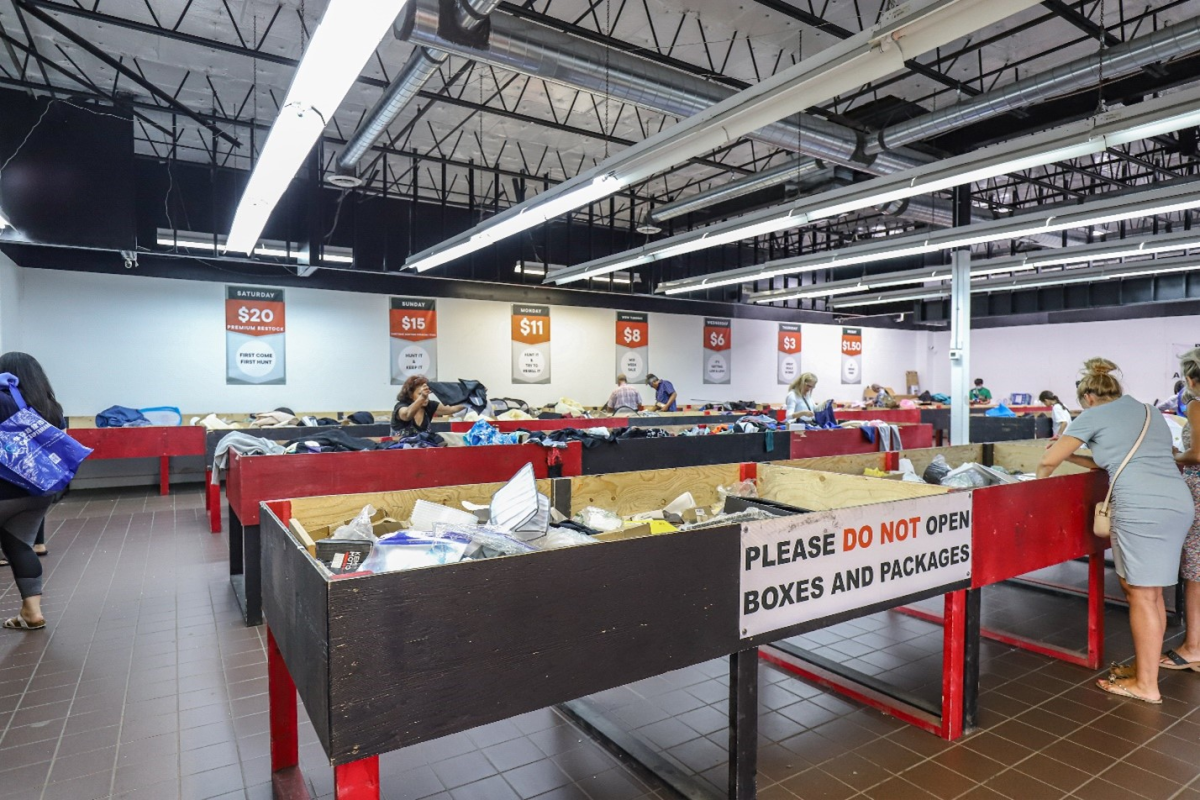
At “binz” stores, bargain hunters line up early on Saturdays to gain first access to piles of surplus goods dumped into waist-high bins. The merchandise comes from major retailers and online platforms, which are purchased through liquidation auctions and resold.
Binz stores are one highly visible edge of the booming recommerce and liquidation economy. The global recommerce market, which resells returned, refurbished and second-hand goods, is projected to generate more than US$200 billion annually.
Binz stores attract not only low-income shoppers but a broad cross-section drawn by the thrill of discovery and ultra-cheap goods. As the high cost-of-living strains household budgets in Canada, more consumers have traded down, seeking discounts and secondary markets.
Binz stores represent a layer of the secondary market that is equal parts bargain hunt and chaos. Liquidation marketplaces, off-price retailers and salvage wholesalers form a vast ecosystem beneath traditional retail designed to recover value from goods that cannot be sold at full price.
The afterlife of surplus
To understand binz stores, it helps to understand how surplus is created in the first place. They are the cumulative result of supply chain logistics, prediction error and the extraction of value in what might be called retail’s surplus afterlife.
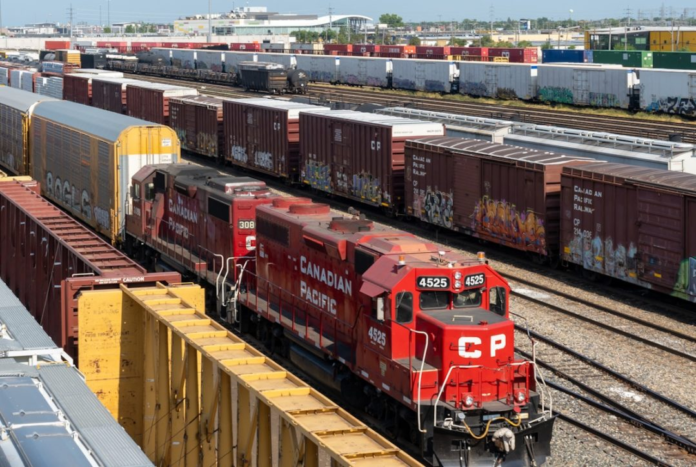
Modern supply chains are one-way highways that move goods from global manufacturers to centralized hubs, then to retail outlets. They are optimized for speed and efficiency, but they are rarely designed to run in reverse.
“Most of the supply chains are designed for moving goods from manufacturer to the consumer. They are not designed for returning stuff,” says Murat Kristal, professor of operations management at the Schulich School of Business at York University.
A ship in a busy port, featuring stacked cargo containers and a large crane. Image: RI/Google
Going forward, you might drop off a box of 15 at every store, he says. Now imagine going backwards, collecting unsold items, two here, three there, store by store, and then having to transport, sort and store them all in the warehouse while the fashion cycle changes.
Reversing the system multiplies the cost of the “last mile” of delivery — typically the most expensive part of distribution, explains Kristal. These final legs of distribution can account for about half of total shipping costs in some supply chains, according to industry analyses.
In many cases, it is cheaper to liquidate excess inventory in bulk than to reintegrate it backwards through primary distribution channels.
Forecasting the future
Retailers must predict the future, months in advance. A shirt on the shelf today may have been ordered a year ago, after yarns were sourced and factories booked in Southeast Asia.
Shipping full containers lowers per-unit costs, while producing smaller batches increases them. The economics of global manufacturing favours volume and planning production far in advance — a classic example of economies of scale where the cost of producing each individual item falls as the total number of units produced increases.
Companies must forecast how many units will sell in a market: how many small, medium and large, which colours and styles. If they predict 100 and sell 80, 20 remain. This forecasting is not optional “because you need to give a number to your manufacturer,” Kristal says.
Error is built into that bet. Retailers forecast based on past sales and trends. To avoid running out of stock, companies routinely overproduce or over-order to prevent empty shelves and lost sales. In fashion, between 10 and 40 per cent of garments made each year may go unsold. That buffer helps ensure availability but inevitably generates surplus inventory when demand fails to materialize.
Returning items to the warehouse is costly, and storing last season’s inventory makes little economic sense in industries driven by cycles. Liquidation often becomes the rational choice.
But the future is becoming harder to read. “It’s just that the unpredictability of the world we live in is increasing,” Kristal says.
Surplus goods lose value over time, but that value rarely disappears entirely. Instead, it continues to be extracted as goods move further downstream from manufacturers to liquidation channels, and ultimately to bargain-hunting consumers.
“With some exceptions, virtually everything that gets manufactured in the world gets sold,” says Mark Cohen, former director of retail studies at Columbia Business School. “Everything has an economic value that gets deflated as merchandise is bought, or merchandise is unsold” at its intended price and venue.
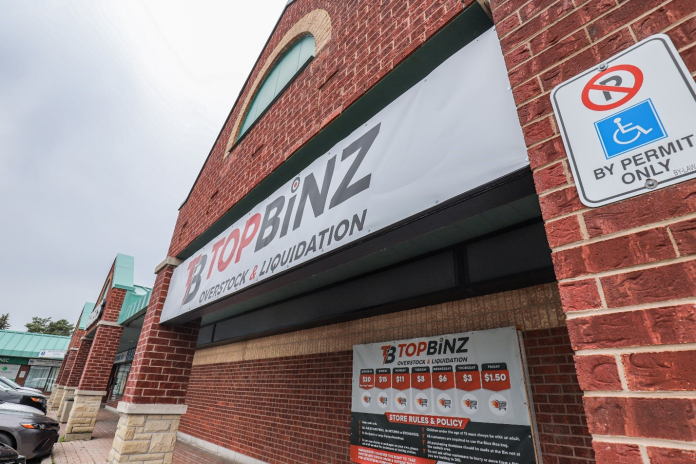
Top Binz in Vaughan, ON. Photo: Vaughan Economic Development
In binz stores, this value decay is prominently visible. Each day has a flat rate for binned items, with prices dropping daily until restock day renews the cycle. In one store, a board game that once retailed for $70 might sell for $25 on restock day, $10 by midweek and $1 by week’s end.
Each change of hands reduces margin, but value can persist longer than assumed. “Eventually, even if it winds up in a junkyard or in a garbage dump, there are increasingly attempts to extract value by repurposing or extracting material,” says Cohen.
The thrill of the hunt
Bargain hunting is not purely economic. It also has a psychological dimension. Research suggests that searching for deals can trigger feelings of excitement and reward, making binz shopping similar to a game of treasure hunt.
“Go as early as possible to get the best merchandise,” says Jonatas Beltrão, a Toronto painter. He first stumbled across a binz store while walking by and became curious about the large tables piled with goods.
Beltrão still laughs about his proudest purchase: a coffee maker that cost $85 on Amazon that he bought for $8.99. He goes every two weeks for the fun of finding brand-name items at a fraction of their original cost.
The uncertainty of what might appear in the binz, and the bragging rights of finding a trophy, help explain why some shoppers keep coming back and how goods continue circulating long past their intended retail life.
“There’s a buyer for almost everything,” Cohen says.
In that sense, binz stores show the afterlife of surplus goods: leftover merchandise becomes part of a shopping experience built around chance, discovery and the thrill of a good deal.
About the author:
Christopher Lo is Associate Professor of Public Health, University of Toronto; James Cook University
Let’s talk about the carbon tax—more specifically, the industrial carbon price, which still exists.
Last year, Prime Minister Mark Carney reduced the consumer portion of the carbon tax to zero. That decision may have left many Canadians with the impression that carbon pricing had disappeared entirely. It has not.
The industrial carbon price remains in place, and another increase is scheduled for April 1, when the price will rise from $95 per tonne to $110 per tonne.
At a time when global energy markets are once again facing geopolitical uncertainty, this increase risks amplifying the pressures already building within Canada’s food supply chain. With tensions rising in the Middle East and the possibility of disruptions to oil flows, higher fuel costs appear increasingly likely unless the current conflict de-escalates quickly. Anyone familiar with the region understands that predicting stability there is rarely straightforward.
We have seen how quickly energy shocks can ripple through food systems before.
At the start of Russia’s illegal invasion of Ukraine in February 2022, Canada’s carbon price stood at $40 per tonne. For a truck hauling food between Toronto and Montreal once a week, the additional carbon-tax burden amounted to roughly $2,000 per year.
On April 1, 2026, the carbon price will reach $110 per tonne—more than double what it was when the Ukraine war began. For that same weekly Toronto–Montreal route, the additional carbon-tax cost alone rises to roughly $6,000 per year compared with 2018. That is more than three times the burden carriers faced when the Ukraine war began.
And that calculation excludes the obvious: higher fuel prices themselves, which inevitably accompany geopolitical shocks such as Ukraine in 2022 or the latest tensions involving Iran.
The cumulative effect becomes clearer when looking at the national logistics system. Canada likely sees 800 to 1,200 long-haul food truck trips each day, many covering distances of roughly 1,000 kilometres. At a carbon price of $110 per tonne, the diesel tax component alone represents approximately $34 million to $52 million per year in additional costs across those shipments.
And this estimate is extremely conservative.
It excludes the additional costs associated with clean fuel regulations, refrigeration units, empty backhauls, secondary distribution routes, and warehousing operations. When those factors are included, the financial impact across the food supply chain could easily be three or four times higher.
Geography also matters. In a country as large as Canada, regions located far from major population centres—such as the Prairies or Atlantic Canada—bear a disproportionate share of transportation costs. Distance alone makes food logistics expensive; layering additional policy costs on top of that reality compounds the challenge.
It is also worth remembering that carbon costs accumulate across the entire supply chain. By the time food reaches a distribution centre, its price already reflects higher input costs at earlier stages—from farming to processing to transportation. And margins do vary in food distribution. Each additional cost is applied to an already higher base price.
Ultimately, consumers pay the difference at the grocery store.
Some industry observers have described carbon pricing in food logistics as a “silent killer” of competitiveness, and the description is not entirely misplaced. Canada is already a challenging market for food distribution due to its vast geography and relatively small population. Adding further cost pressures to logistics does little to attract investment in grocery retail and food distribution infrastructure.
To be clear, carbon pricing is not inherently misguided. In principle, it can be an effective tool to encourage innovation and reduce emissions. But when applied to the food system—an essential sector closely tied to affordability—the policy must be designed with particular care.
Not all provinces approach carbon pricing in the same way. Quebec, for example, operates a cap-and-trade system linked to California’s carbon market, where allowance prices are determined through auctions rather than through Ottawa’s annual price schedule. The mechanism is different, but the economic signal is similar. Carbon costs still work their way through transportation networks and food distribution systems.
If Ottawa genuinely wants to help the food supply chain cope with rising energy costs, it should at least consider pausing the scheduled April 1 increase, or examining whether parts of the food supply chain should receive temporary relief.
Putting a price on carbon can send an important environmental signal. But when it comes to food—an essential good that every household depends on—the stakes are simply too high to ignore the consequences.
Our own research has repeatedly shown that carbon pricing can disproportionately affect lower-income households, largely through higher food and energy costs across the food supply chain. Yet when the carbon tax was first implemented in 2018, Ottawa conducted remarkably little analysis of how the policy might influence food affordability.
Eight years later, Canadians are experiencing the consequences in real time.
This week’s developments in Canadian retail highlight a dual narrative of store expansion alongside growing economic pressures. Many retailers with long-term physical growth strategies continue to invest in flagship locations and regional markets through new stores, renovations, and reopenings. At the same time, consumer sentiment remains cautious as households contend with persistent inflation and shifting spending habits. Together, these trends illustrate how retailers are continuing to adapt their store strategies and operations within an evolving marketplace.
With International Women’s Day observed in early March, themes of empowerment and diversity also appear across various retail initiatives and partnerships. More broadly, rising operating costs and geopolitical uncertainty remain significant challenges for the sector. As a result, retailers are reassessing how they pursue growth, connect with customers, and build operational resilience in a changing economic environment.
Retailer News
Abercrombie & Fitch is underscoring its commitment to the Canadian market through a significant physical expansion with new store openings in Winnipeg, Ottawa, Calgary, and London, plus a strategic reopening at West Edmonton Mall, reinforcing its focus on reengaging younger consumers and premium shopping centres. These moves, detailed in this report, denote Canada’s importance within its global footprint and signal renewed brand momentum.
Similarly, MUJI’s expansion in British Columbia with a new 10,802-square-foot store at Tsawwassen Mills marks its first provincial launch since 2020, with this minimalist brand expanding organically to meet strong community demand, as explored in MUJI’s opening. This complements mounting investments in store environments shown by Sundays’ expansive Terminal HQ showroom in Vancouver that blends retail and operational HQ, amplifying digital-first brands’ efforts to create immersive physical retail experiences.
On the property side, Montreal-based Leyad’s acquisition of Lloyd Mall in Lloydminster demonstrates continued interest in necessity-anchored retail assets serving unique cross-provincial markets, detailed in Leyad’s latest acquisition. Meanwhile, First Capital REIT’s ambitious redevelopment of Edmonton’s Westmount Shopping Centre into an open-air retail complex reflects a nationwide trend of repositioning aging malls into community-centric hubs, both initiatives relevant for commercial real estate stakeholders navigating evolving asset strategies.
On a more somber note, the retail landscape still reflects fallout from significant disruptions such as Hudson’s Bay’s historic collapse a year after its CCAA filing, which has had lasting effects on department store presence in malls and commercial real estate dynamics, as analysed in this review. At the same time, Dixie Outlet Mall’s receivership highlights challenges facing older suburban retail properties and their complex redevelopment financing, particularly under long-planned mixed-use frameworks documented in receivership news.
Retailer Financials / Trends / Reports
While Canadian retailers embrace growth strategies, they also confront shifting consumer patterns amid economic pressures. Empire Company Limited’s Q3 report revealed a modest 2.1% sales increase driven by food sales and expansion of banners like FreshCo but noted a net loss tied to e-commerce impairments, consistent with the need for prudent capital allocation as highlighted in Empire’s financial results. The company’s adjusted earnings growth illustrates operational discipline amid a complex environment.
Consumer behaviour data further emphasises bifurcation in home improvement spending, with affluent and diverse homeowners investing in renovations and expressive upgrades, a shift critical for retailers targeting evolving demographic segments, based on Environics Analytics insights in home improvement spending shifts. Additionally, nearly three-quarters of Canadians increasingly shop on Chinese marketplaces, with platforms like Temu gaining strong traction, intensifying pressure on domestic retailers to enhance customer service and local advantages.
The Canadian hotel industry also highlights adjacent sector stability, supported by leisure travel and rising rates, as detailed in Cushman & Wakefield’s analysis, marking positive signals in hospitality linked to retail zones and lifestyle hubs, especially in tourism-heavy markets.
Retailer People News
Leadership shifts reinforce strategic revival across Canadian retail brands. Specsavers’ appointment of Jane Hoban as Managing Director marks a critical step for the optical retailer’s aggressive Canadian expansion and enhanced market influence, as outlined in this leadership update. Similarly, Chatime Canada is thoughtfully balancing cautious expansion with brand leadership via CEO Trinh Tham’s focus on franchise growth and digital engagement, reflecting prudent adaptation amid spending uncertainties, detailed in this interview.
Externally, geopolitical risks through the Iran conflict continue to impact retail operations and consumer behaviour by driving costs and inflation expectations, leading value-focused chains and discount retailers to adjust strategies, detailed in this video analysis exploring these macroeconomic impacts on Canadian retail.
Retailer Op-Eds
Commentary on consumer behaviour confirms that pragmatic shifts are reshaping retail environments. The rising trend of grocery shoppers wearing pajamas, connected to inflation, remote work, and convenience, signals a move away from leisurely store visits toward rapid, utility-driven trips. This shift challenges retailers to rethink store design and merchandising strategies amidst evolving consumer expectations, elaborated in grocery shoppers’ casual trends.
Moreover, rising oil prices are poised to exert upward pressure on Canadian grocery inflation, potentially reaching 6–8% in 2026 and amplifying cost challenges in production and transportation. These inflationary forces necessitate strategic planning for both retailers and commercial landlords facing operational cost increases and changing consumer spending habits, as analysed in this op-ed on inflation.
Editor’s Take
This week’s coverage highlights how Canadian retail continues to balance expansion with ongoing economic pressures. Brands such as Abercrombie & Fitch and MUJI demonstrate that physical stores remain a key part of retail strategy, particularly in growing markets and premium locations. These openings contrast with some of the sector’s challenges, including the lingering impact of high-profile failures such as Hudson’s Bay and real estate adjustments like the receivership of Dixie Outlet Mall.
Financial performance also reflects the need for greater operational discipline. Empire Company Limited’s results illustrate how retailers are focusing on efficiency while responding to consumers who are increasingly price conscious and digitally engaged. At the same time, data from Omnisend and Environics Analytics suggests a divided marketplace, where many consumers prioritize affordability while others continue to spend on premium products. This dynamic is pushing retailers to refine their strategies while retail real estate owners adapt their leasing approaches.
Leadership commentary and opinion pieces further emphasize the importance of flexibility and forward planning. Retailers are navigating inflationary pressures, rising fraud risks, and changing shopping habits. As stores evolve and digital engagement grows, retail leaders are being challenged to balance careful expansion with a deeper understanding of consumer behaviour in Canada’s changing retail landscape.
The latest Retail Insider articles cover key developments including federal changes to Canada’s Temporary Foreign Worker Program welcomed by business groups, and Happy Belly Food Group’s ambitious plan to open up to 50 new restaurants in 2026 amid strong same-store sales. Additionally, the evolving luxury retail market emphasizes emotional relationships over transactions. These stories, along with others listed below and Canadian Retail News From Around the Web, highlight the ongoing strategic and workforce challenges shaping Canada’s retail landscape.
Choosing a POS system is one of the most important technology decisions a retailer will make.
For many companies, the point of sale system is right in the middle of their daily activities. This is where sales take place, but it’s also where they keep track of their stock, store customer information, and check how well their sales are doing.
In the last ten years, the way shops handle sales has changed a lot. Today’s systems are more than just old-fashioned cash registers. They connect lots of things like keeping track of stock, processing payments, making reports, online shopping, and understanding customers, all in one place.
For stores that sell things in person, online, or both, having the right system to handle sales can make things a lot easier and give them a better view of how their business is doing. This can help them keep track of everything and make good decisions.
Below is a look at several of the retail POS systems widely used by retailers in 2026.
Quick comparison of retail POS systems
POS system
Best for
Key strength
Vibe Retail POS
Growing retailers
Unified retail operations platform
Square for Retail
Small businesses
Simple setup and transparent pricing
Shopify POS
Ecommerce retailers
Strong online and in-store integration
Lightspeed Retail
Complex inventory
Advanced stock management tools
Clover POS
Flexible hardware
Modular POS ecosystem
What to look for in a retail POS system
When picking a point of sale system, think about how it will work with your daily business routine. Price and equipment are important, but most store owners care more about the features that make their job easier. They want to know how the system will help them manage their store and make things run smoothly.
Instead of manually tracking stock or relying on separate tools, modern POS platforms allow retailers to monitor inventory levels in real time, see which products are performing best, and manage stock across multiple locations.
Many systems also include low-stock alerts and automated reordering features, helping retailers avoid running out of popular items while reducing excess inventory.
For businesses with large product catalogues, strong inventory tools quickly become one of the most valuable parts of the entire platform.
Integrated payments
Retail POS platforms should support a wide range of payment methods including debit cards, credit cards, contactless payments, and digital wallets.
When payment processing is built directly into the POS software, transactions are typically faster and reporting becomes much easier to manage.
Omnichannel selling
Retailers increasingly sell through multiple channels, from physical stores to ecommerce platforms and mobile checkout.
A good point of sale system should keep track of stock, orders, and customer info across all sales channels. This helps retailers see their business clearly and consistently. It’s like having all your important info in one place, so you can make smart decisions and run your business smoothly.
Reporting and analytics
Retail businesses collect a lot of information from their daily sales. A good point of sale system helps turn this information into useful knowledge that can aid in making better decisions.
Sales dashboards, product reports, and performance tracking allow retailers to understand what’s selling, which locations are performing best, and where opportunities for improvement exist.
Best retail POS systems in 2026
Below are several POS platforms that are commonly used by retailers across different segments of the market.
Great for retailers who want to manage their store’s basic operations all in one place.
Vibe is a cloud-based POS system for retail that brings together inventory management, payments, reporting, and customer insights within a single platform.
The platform is not just for checking out, it also helps stores manage their daily work. It lets them keep an eye on how much stock they have, how many sales they’re making, and how well each store is doing – all from one simple screen.
This makes it easier for retailers to manage operations across multiple stores, making Vibe a strong option for businesses looking for a multi location retail POS that can scale as they grow.
Key features
Real-time inventory tracking
Integrated payment processing
Advanced reporting and analytics
Customer loyalty and marketing tools
Omnichannel selling capabilities
Why retailers choose it
Retailers often look for POS platforms that reduce the need for multiple disconnected systems. Vibe focuses on bringing several retail tools together so businesses can manage operations more efficiently as they grow.
2. Square for Retail
Best for: small retailers and independent stores.
Square has become a common starting point for many small businesses due to its straightforward pricing and simple setup.
This system is really useful for retailers who are opening their first store. It has a built-in way to process payments and some basic tools to help manage inventory. This makes it a great option for new retailers who want to get started quickly and easily.
Key features
Integrated payment processing
Mobile POS hardware
Basic inventory tracking
Customer management features
3. Shopify POS
Best for: ecommerce brands expanding into physical retail.
Shopify’s point of sale system is really connected to their online store platform, so retailers can easily keep track of sales both in their physical stores and online, all from one place.
For brands that already operate online stores, the ability to sync inventory and customer data across channels can simplify operations significantly.
Key features
Ecommerce integration
Centralised inventory management
Customer profiles and purchase history
Omnichannel reporting tools
4. Lightspeed Retail
Best for: retailers managing complex product catalogues.
Lots of specialty stores use Lightspeed because it helps them keep track of their inventory, which can be really complicated. For example, stores that sell clothes, sporting goods, and lifestyle products often use Lightspeed to manage their stock. This is because these types of stores usually have a lot of different products with different sizes, colors, and styles, and Lightspeed helps them keep everything organized.
Key features
Multi-location inventory tracking
Supplier and purchase order management
Product variants and bundles
Detailed analytics and reporting
5. Clover POS
Best for: retailers looking for flexible hardware options.
Clover provides a modular POS ecosystem with several hardware configurations and a large marketplace of integrations.
This flexibility means stores can be set up in a way that suits them, depending on how big they are and how they’re laid out.
Key features
Customisable POS hardware devices
App marketplace integrations
Inventory management tools
Customer loyalty and gift card features
How to choose the best POS system for retail
Retailers comparing POS systems usually focus on several practical considerations.
Business size
The needs of a single-store retailer are very different from those of a multi-location chain. Choosing a POS platform that can grow alongside the business is often an important factor.
Inventory complexity
Retailers with large product catalogues or multiple locations should prioritise platforms with strong inventory management capabilities.
Integration requirements
When you’re setting up a point of sale system, it’s really important that it works well with the other tools you’re already using, like your accounting software, online store, and marketing programs. If they’re all compatible, it makes the whole process of getting started a lot easier.
Pricing and scalability
Many POS providers charge based on the number of registers, locations, or transactions processed. Retailers should evaluate pricing not only for current needs but also for future growth.
Final thoughts
Retail POS systems have evolved into much more than simple checkout tools.
Today’s platforms act as the operational backbone of many retail businesses, connecting sales transactions, inventory management, reporting, and customer insights in one place.
Choosing the right system ultimately depends on how well it fits the structure of the business and the direction the retailer plans to grow.
For many retailers, investing time in evaluating POS platforms carefully can make a significant difference to how efficiently the business runs over the long term.
Most store openings don’t stumble because the fixtures showed up late or the POS wasn’t configured. They stumble because the back-of-house turns into a choke point the moment the first delivery arrives. Pallets land wherever there’s space. Labels don’t match the PO. Aisles get blocked. Replenishment gets delayed. The sales floor looks “open,” but the store isn’t actually running.
If you want a clean opening week, treat stockroom and receiving like a launch system, not an afterthought. The goal is simple: every carton has a place to land, every exception has a path, and every task has an owner—before your first real volume day.
What breaks first during store openings
Receiving is the first place the store experiences real operational pressure. It’s where timing is tight, information is messy, and the physical world refuses to cooperate. Carriers show up early. Trucks show up late. A “mixed pallet” becomes a scavenger hunt. Someone puts a high-value item in a random corner “for now,” and that’s where shrink begins.
You also have a reality problem: opening week brings unfamiliar people into the back room—new hires, temporary help, vendor reps, and sometimes leadership visitors. That’s when you want the flow to be obvious and the rules to be consistent, because you won’t have time to teach the process five times a day.
High-profile openings like Simons’ Yorkdale store opening add pressure to back-of-house execution, because receiving and replenishment can’t slow down while the sales floor is busy.
Stockroom and receiving checklist
A “checklist” sounds like paperwork, but what you’re really building is a predictable sequence: unload → verify → stage → put away → replenish. If any step is unclear, the store improvises, and improvisation is what turns a stockroom into a maze.
Start by deciding what “done” looks like for day one. In plain terms, by opening morning you should be able to receive a delivery without blocking the back room, locate top-selling SKUs quickly, and replenish the sales floor without tearing open cartons in the aisles. If you can’t do those three things, the store will feel behind all week.
Now work backward. You don’t need a perfect layout, but you do need a layout that makes sense under pressure.
Receiving flow that works
The quickest way to create chaos is to mix functions. If “receiving” and “staging” and “putaway” happen in the same exact space with no boundaries, the store will always be stepping on itself.
Think in zones, even if the stockroom is small.
You need a landing zone where product can come off the truck and sit long enough to be verified. That zone has to stay clear enough for people to move safely, and it has to be close enough to the door that you’re not dragging pallets across the room. The landing zone is not a “temporary storage” area; it’s a short stop in a process.
You also need a staging zone for “not ready to put away.” During openings, that usually includes product waiting on system fixes, cartons missing labels, mismatched quantities, and anything that needs leadership sign-off. If you don’t define that zone, those problems spread across the stockroom and turn into lost time.
Finally, you need a putaway path that keeps people from working against each other. Putaway should move in one direction—from receiving toward storage locations—without requiring someone to cross the same narrow aisle repeatedly. That sounds basic, but it’s a common opening-week failure when aisles are packed with fixtures, ladders, and empty cartons.
Even temporary formats like SHEIN’s CF Toronto Eaton Centre pop-up can overload back rooms when assortments rotate fast and deliveries arrive in tight windows.
Inventory control and shrink risks
Opening week inventory issues usually aren’t “system” issues. They’re process gaps.
Make sure your receiving team has a clear rule for what gets verified at the door versus what gets verified later. If you try to do a perfect audit on the dock during a busy opening, you’ll create a bottleneck. If you verify nothing, you’ll pay for it later.
A practical approach is to verify what keeps you safe operationally. Confirm that the delivery is for the right store, capture the shipment ID, and validate high-impact SKUs and high-risk categories first. Then push the rest through a controlled process so you can keep the dock moving.
You also need a consistent exception path. “This PO doesn’t match” can’t become a dead end. Decide where mismatches get parked, who can approve a workaround, and what the documentation standard is (photo, carton label, timestamp, and note). When you set that standard early, you stop the “I thought someone else handled it” spiral.
If your opening involves a surge of deliveries over several days, keep your receiving rules simple enough that new team members can follow them. That’s especially important during highly watched launches and expansions, where volume can be unpredictable. Expansion stories like Zellers’ Edmonton debut and expansion plans are where stockroom/receiving discipline matters most, because a “one-store workaround” turns into a repeatable problem across locations.
People, coverage, and training in the back-of-house
The cleanest layout in the world won’t save you if your roles aren’t defined.
For an opening, receiving needs an owner who can make quick decisions and keep work moving. Putaway needs someone responsible for location discipline, not just speed. Replenishment needs someone who understands what the sales floor actually needs first, because the back room can’t push everything at once.
Equipment is where openings get risky. If you’re using powered equipment for receiving or narrow-aisle work, you want clear rules on who is allowed to operate what. Powered equipment should be limited to associates who have completed powered industrial truck training and an on-site evaluation tied to the store’s layout and traffic patterns.
For stores that use stand-up forklifts or similar warehouse equipment, onboarding often includes a specific line item for operator training for forklifts, especially when opening week brings new hires and unfamiliar layouts into the same space.
Safety basics that keep the back room running
Safety isn’t a separate project from “getting the store open.” It’s part of throughput.
Openings create slip hazards (plastic wrap, cardboard, dust), trip hazards (fixtures, cords, pallets), and collision hazards (people moving fast in tight aisles). These aren’t abstract risks; they’re the exact things that slow down receiving and create shutdowns when you can least afford them.
Your back room works better when walkways stay clear, spills get handled immediately, and storage doesn’t creep into travel paths. The walking-working surfaces requirements line up with the day-one basics: keep travel paths clear, prevent slip/trip hazards, and avoid turning receiving into an obstacle course.
Battery charging and equipment staging also need boundaries. If chargers, shrink-wrap stations, returns, and damaged goods all end up in the same corner, that corner becomes a daily jam. Give each function a home, even if the home is small.
Day-one readiness by mid-morning
A simple test for opening readiness is what the store can do by 10 a.m. on day one.
You should be able to receive a delivery without blocking exits or cutting off movement. You should be able to locate a priority SKU in under a minute. You should be able to replenish core categories without tearing open cartons in customer-facing areas. And you should be able to explain, in one sentence, what happens when something doesn’t match the PO.
If that sounds strict, it’s because opening week doesn’t give you time to “figure it out live.” When the process is clear, the store can absorb surprises. When the process is fuzzy, every surprise turns into a crisis.
Conclusion: keep the store openings checklist focused
The best store openings checklist for stockroom and receiving setup isn’t long. It’s practical.
Define your zones, keep receiving moving, give exceptions a clear path, and make sure equipment use is controlled and consistent. If you do that, the back room stops being the hidden bottleneck and becomes the part of the store that quietly keeps everything else running—especially during the first week, when volume and attention are both high.
European retail is entering a quieter, more disciplined phase. For much of the last decade, growth strategies focused on category expansion, aggressive marketing and rapid customer acquisition. Today, a different reality is taking hold. Margins are tighter, operational complexity has increased, and retailers are discovering that the real battleground is no longer the storefront but the system behind it.
Several structural pressures are now hitting retailers at the same time. Logistics costs have risen sharply in recent years, fuelled by fuel volatility, labour shortages and cross-border regulatory complexity. At the same time, e-commerce has introduced new operational pressures: higher return rates, more fragmented demand patterns and increasingly impatient customers who expect immediate availability. A product that is out of stock for even a short period can translate directly into lost trust and lost revenue.
In this environment, competitive advantage is gradually moving away from marketing visibility toward operational reliability. Inventory visibility, fulfilment reliability and regulatory compliance have become strategic assets rather than background processes. Retailers that control these systems effectively are quietly outperforming those still focused on expanding categories and chasing short-term growth metrics.
The Margin Pressure Reshaping Modern Retail
Retail has always operated on thin margins, but recent years have intensified the pressure across European operators. Inflation in transport, warehousing and last-mile delivery has steadily eroded the economics of many retail models. At the same time, price transparency has increased dramatically as consumers compare offers across multiple online platforms within seconds.
This pressure is particularly visible in e-commerce, where return rates remain one of the most significant operational challenges. In sectors such as fashion, return rates can exceed 30 per cent, creating an expensive reverse-logistics cycle that retailers must absorb. Even outside apparel, returns introduce costs in handling, re-stocking and inventory rebalancing that can quickly accumulate across large product catalogues.
At the same time, stockouts have become far more damaging than in the past. Modern consumers expect real-time availability and fast delivery, and when a product is unavailable, they rarely wait. Instead, they simply switch platforms. In a market where switching costs are effectively zero, even short disruptions in availability can lead to permanent loss of customer loyalty.
For this reason, retail competition is gradually shifting away from category breadth toward operational reliability. The ability to maintain stable margins increasingly depends on precise coordination across supply chains, warehouses and digital storefronts. Retail is no longer primarily a race to expand assortment. It is becoming a discipline of operational control.
Why Inventory Accuracy Has Become a Competitive Signal
In the past, inventory management was largely considered a back-office function. Today, it has become a visible signal of operational competence. Customers rarely see the warehouses or systems behind retail operations, but they experience their consequences every day: whether a product is available, how quickly it ships and whether the order arrives exactly as expected.
Accurate inventory data is therefore becoming one of the most valuable assets a retailer can possess. When inventory systems provide real-time visibility across warehouses, stores and online channels, retailers gain the ability to balance supply and demand with far greater precision. Without this visibility, stock imbalances quickly emerge, creating both shortages and costly overstock.
The stakes are even higher in sectors where products have expiration cycles or regulatory requirements. Food, cosmetics and health-related goods all require careful monitoring of shelf life and traceability. Poor inventory accuracy in these sectors can lead not only to financial loss but also to compliance risks.
Omnichannel retail has further increased the importance of stock synchronisation. Customers expect inventory to be visible and consistent across online stores, physical shops and fulfilment centres. If systems fail to communicate accurately, retailers risk promising products that are no longer available or delaying orders while inventory is located.
For consumers, the conclusion is simple. They judge a retailer by whether the product they want is available and delivered when promised. Behind that simple expectation lies a complex infrastructure of forecasting, stock management and logistics coordination that increasingly determines which retailers succeed.
Cross-Border Retail Is an Operations Problem
The growth of cross-border ecommerce has expanded opportunities for European retailers, but it has also introduced a new layer of operational complexity. Selling products across multiple countries requires far more than marketing translation or international shipping options. It demands a system capable of navigating regulatory frameworks, tax structures and logistical coordination across borders.
VAT regimes alone can create significant challenges. Retailers must ensure accurate reporting and compliance across multiple jurisdictions, each with its own thresholds and documentation requirements. At the same time, product labelling standards, safety regulations and packaging rules often vary between countries, requiring careful operational planning long before a product reaches the customer.
Fulfilment networks also become more complex as geographic reach expands. Warehousing strategies must account for delivery expectations that differ by market, balancing inventory placement with transport efficiency. A product stored too far from the end customer may introduce delays that undermine competitiveness, while distributing stock across too many locations can increase operational costs.
Delivery expectations themselves have changed dramatically. Consumers across Europe increasingly expect fast, predictable shipping regardless of where the retailer is based. Meeting those expectations requires careful coordination between inventory systems, fulfilment centres and last-mile delivery partners.
For this reason, cross-border retail is rarely a marketing challenge. It is fundamentally an operational one. Retailers that succeed across multiple markets do so not through promotional campaigns alone, but through systems capable of sustaining accuracy, compliance and fulfilment reliability at scale.
A European Pattern of Operational Discipline
Across Europe, a similar operational philosophy is quietly emerging among retailers that continue to perform consistently despite mounting pressures. While their sectors and product categories differ, these companies share a common emphasis on disciplined backend systems rather than aggressive retail theatrics. Inventory visibility, fulfilment reliability and operational clarity increasingly determine which retailers maintain stability as competition intensifies.
In Scandinavia, companies such as Boozt illustrate how logistics infrastructure can become a strategic differentiator rather than a support function. The fashion retailer has invested heavily in fulfilment automation and warehouse efficiency, allowing it to process large volumes of online orders while maintaining high levels of inventory transparency. This operational focus enables Boozt to manage the volatility typical of fashion ecommerce, where seasonal demand and return cycles require continuous inventory recalibration.
In France, Fnac Darty demonstrates a similar principle within a very different retail environment. Operating across consumer electronics, cultural goods and household appliances, the company has spent years integrating its physical store network with centralised inventory systems. The result is a retail structure where store locations function not only as points of sale but also as nodes within a broader fulfilment network, helping reduce availability gaps and shorten delivery times for online orders.
A similar operational discipline is visible within Poland’s growing digital retail sector. Companies such as Olmed illustrate how these operational principles extend even into regulated categories such as health products. In this context, inventory management carries an additional layer of responsibility, as product traceability, expiration monitoring and regulatory compliance must operate alongside standard fulfilment expectations. Retailers operating in this space therefore rely on tightly coordinated systems that maintain accuracy while supporting steady growth across both domestic and cross-border demand.
Across Central and Eastern Europe, platforms such as eMAG have adopted similar operational frameworks as e-commerce expands across multiple markets. With customers spread across Romania, Hungary and neighbouring regions, maintaining consistent fulfilment standards requires robust logistics infrastructure and carefully synchronised inventory data. As these platforms scale, operational discipline becomes less of a competitive advantage and more of a prerequisite for sustaining customer trust.
Taken together, these examples suggest that a broader pattern is forming across European retail. Regardless of category or geography, the companies navigating today’s retail environment most successfully tend to share one trait: a persistent focus on operational clarity. While marketing campaigns and brand storytelling remain important, it is increasingly the invisible systems behind inventory, logistics and compliance that determine which retailers can sustain reliable growth.
Quiet Efficiency Is Becoming Retail’s New Advantage
For many years, retail success was closely associated with speed. Companies raced to open new markets, expand product categories and acquire customers as quickly as possible. Growth itself became the dominant narrative, often celebrated through headline expansion announcements and aggressive marketing campaigns.
That dynamic is beginning to change. As margins tighten and operational complexity increases, the retailers maintaining stable performance are often those moving more deliberately. Instead of pursuing rapid expansion, they focus on strengthening the systems that support everyday operations. Inventory visibility, fulfilment accuracy and supply-chain coordination increasingly determine whether a retailer can maintain both profitability and customer trust.
This shift does not mean that growth has become irrelevant. Expansion remains essential in a competitive market. What has changed is the sequence of priorities. Retailers that first establish reliable operational foundations are far better positioned to scale without creating instability elsewhere in the system. Without those foundations, rapid expansion often introduces the very problems that erode margins: stock imbalances, delivery delays and rising operational costs.
Consumers may never see the warehouses, forecasting tools or compliance frameworks that make these systems work. Yet they experience the outcomes every time they place an order or walk into a store expecting a product to be available. Consistency, reliability and predictability have become powerful signals of competence in a retail environment where alternatives are only a few clicks away.
In this sense, the competitive advantage emerging across European retail is surprisingly quiet. It is not built on spectacle or speed, but on discipline. The retailers most likely to succeed in the coming years will not be the fastest expanders, but the ones running the most reliable systems.
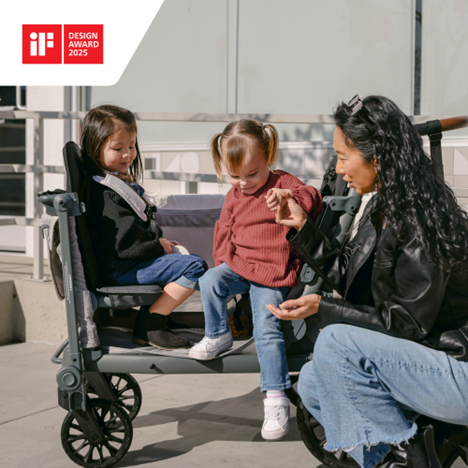
Wonderfold’s spacious L Series stroller wagon replaces the challenges of on-the-go parenting with cherished memories. This new model, available as a 2- or 4-seater, embodies everything parents loved about Wonderfold.
The WonderFold L Series all-terrain stroller wagon for kids has a sporty and stylish design that stands out
The first thing that strikes you about the L Series stroller wagon is how sleek and modern it looks. When many parents hear the word “wagon,” they expect a bulky or clunky design, but the new L series frame looks as at home on an adventurous hike as it does on a weekend brunch outing.
Its all-terrain aesthetic isn’t just for looks. The larger rear wheels paired with slightly smaller front wheels give the stroller wagon a stable ride on grass, sand, trails, and uneven city sidewalks. Where the Pro Series stroller wagon had a wheelbase of roughly 20.5 inches at the rear and 16 inches at the front, the L Series improves maneuverability and stability by widening the rear wheelbase to 22.5 inches and narrowing the front wheels to about 13 inches.
This thoughtful redesign didn’t go unnoticed. The L Series was honored with a 2025 iF Design Award, one of the world’s most prestigious recognitions for innovation in product design. When brands like Apple and BMW share similar accolades, you know you’re dealing with something special.
Why the WonderFold L Series side entrance is the new favorite feature for parents with toddlers
The innovation you’ll probably appreciate most about the L Series is its wider side-access door. Hoisting toddlers into the seats of a stroller wagon can be a workout, especially when you’re juggling bags, toys, and maybe a cherished cup of coffee.
Wonderfold listened and came up with a design that lets you unzip and open a side panel. It’s a simple feature, but it makes a world of difference. It reduces physical strain for you and lets kids hop in and out on their own. When the side panels are fully open, it even doubles as a bench, so you and your kids can take a break in comfort and style.
The best stroller wagon with maximum maneuverability and ride quality
One of the biggest tests for any stroller wagon is how it handles when loaded with kids and gear. Many stroller wagons tend to feel heavy or difficult to steer, especially in cases where the weight isn’t evenly distributed or when navigating uneven terrain.
The Wonderfold L4 feels surprisingly light and smooth, even when carrying multiple kids and all their gear. The sporty all-terrain wheels handle beach strolls and woodland hikes. And the L Series’ shock-absorbing suspension system keeps the ride cushioned and comfortable.
WonderFold stroller wagons always offer smart storage and thoughtful features
Storage space is a big deal for parents on the move. The L Series stroller wagons offer a large rear basket for all of your blankets, toys, and snacks. Two side pockets let you keep essentials within easy reach. And the front pocket with Velcro closure gives you space for quick-access items like keys or devices.
These storage compartments are sturdy and perfectly sized. You’ll never have to cram or worry about your stuff falling out.
Wonderfold has long been praised for its comfortable neoprene-covered seats, and the L Series continues this tradition. For safety, each seat comes equipped with a five-point no-rethread harness.
The L Series offers two models to choose from. The L2 has two seats, and the L4 seats up to four children. Impressively, upgrading to the larger model adds only a few inches and a couple of pounds, meaning both are easy to maneuver and transport.
The L Series canopy design has a few surprises as well. It’s easy to fold down or remove and stow on the stroller wagon’s side. It offers adjustable sun visors for added protection and is constructed from durable, weather-resistant fabric.
Folding and portability after a stroll: The L Series stroller wagons are built for busy families
The Wonderfold L Series stroller wagons fold down remarkably quickly. Just engage the foot brake to stabilize, push two sidebar buttons, and the stroller wagon collapses inward. The seats fold, the canopy slides down, and the handlebar locks it all into a compact shape ready to store.
Thanks to a built-in kickstand, the stroller wagon can stand upright, making it perfect for storing away in tight spaces like the back corner of the garage. The wheels also pop off easily, making loading and cleanup much simpler.
Any parent who exemplifies an active lifestyle should choose the WonderFold L Series stroller wagon. It takes your adventures to the next level with the convenience of a stroller and the capacity and comfort of a wagon.