While the tariff situation might be improving between the U.S. and other countries, that’s not yet the case here in Canada. In fact, we’ll be facing a large wave of tariff-related increases in the weeks ahead, warns Per Bank, CEO & President, Loblaw Companies Limited.
Per Bank
“Our customers might have seen a “T” symbol on our shelf labels, which indicated that a product has been impacted by tariffs. So far, we’ve been able to limit the number of T symbols on our shelves to a little over 1,000 items. But our inventory is running out, and in the next week or two, the number of products with a T symbol will surge to over 3,000. Within the next two months, that number could peak at over 6,000,” wrote Bank in a LinkedIn post.
“On average, our store portfolio combined carry roughly 80,000 items. So while the majority of products will be unaffected, customers will start to see more impacts in non-produce categories like natural foods, pantry staples, health & beauty products, and more.
“It’s been good to see Prime Minister Carney and other leaders engaging in dialogue with U.S. officials, as we’re all hoping for a rapid de-escalation of this situation. We were also pleased to see the change in policy, where only finished food products from the U.S. are subject to tariffs.
Source- Per Bank LinkedIn
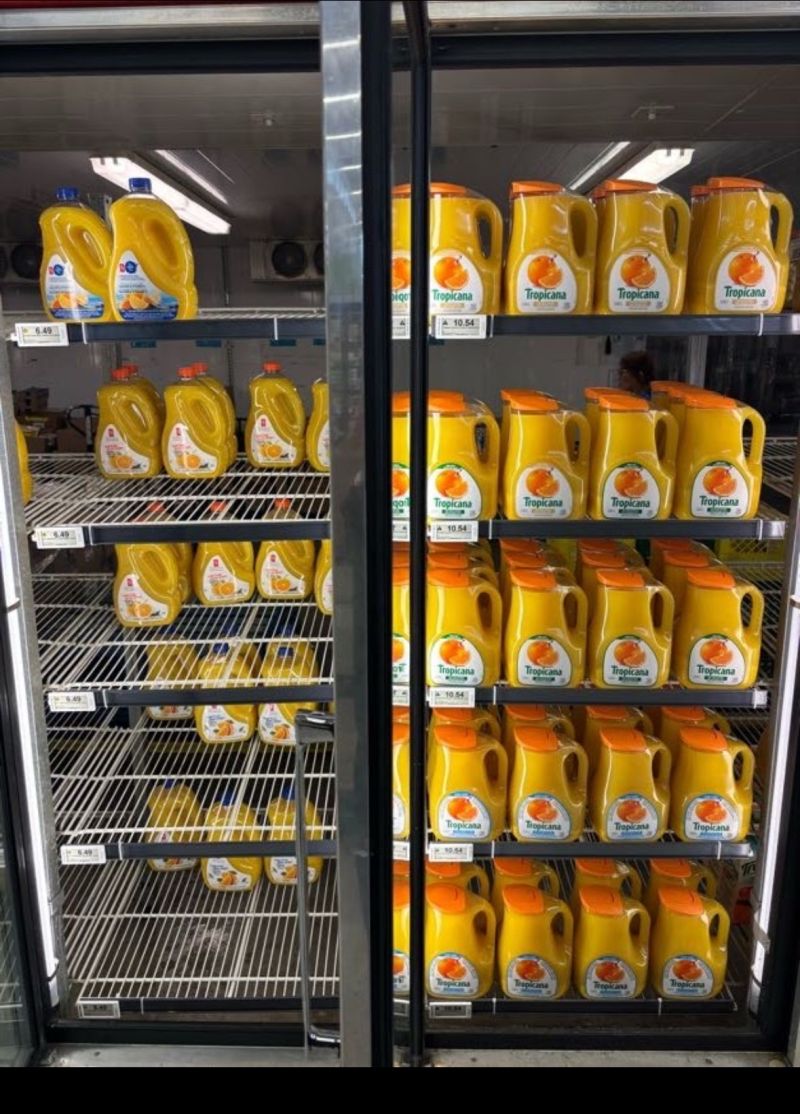
“In the meantime, customer decisions continue to shift. In this photo, for example, we see customers choosing PC orange juice made with oranges from Brazil over the national brand product sourced from the U.S. Sometimes, but rarely, it will be the reverse, where our control brand products are affected… as about 4% of our control brand products are sourced from the U.S.
“Needless to say, this situation continues to evolve. We’ll continue to do our best to help customers make informed decisions and in cooperation with our vendors to look for more Canadian and non U.S produced products where at all possible.”
In April, the Loblaw April Food Inflation Report said that while the impact of Canada’s counter tariffs was minimal on food prices in March, as retailers sell through existing inventories higher prices will begin appearing on shelf.
“While currently on pause, the tariffs the U.S. has threatened to impose on dozens of countries could indirectly impact food prices here in Canada. Coffee, already facing higher than normal prices due to a poor growing season, is one example. Many U.S. coffee producers import their beans from Vietnam (the second largest producer after Brazil), which could attract a 46% tariff. After roasting and packaging in the U.S., that finished product is sent to Canada, where an additional 25% tariff exists upon entry. As a result, every $1 spent on coffee previously could conceptually cost as much as $1.82 after tariffs,” explained Loblaw.
Scene+ and Recipe Unlimited, Canada’s largest full-service restaurant company, announced Wednesday the renewal of their partnership.
Recipe Unlimited will remain the exclusive dining partner for the Scene+ rewards program, allowing its 15 million members to continue earning and redeeming Scene+ points at more than 700 Recipe restaurant locations across Canada. The renewal agreement is for a 3-year period, according to a news release.
Scene+ members can redeem the points they earn on movies and entertainment, grocery, travel, retail shopping, gift cards and more. Members earn one (1) point for every $3 spent on dine-in, drive-thru, or takeout at participating restaurants, said the release.
Candice Troupe
“Scene+ is committed to developing partnerships that give the best quality and value to our members,” said Candice Troupe, Senior Vice President of Marketing and Partnerships at Scene+. “This renewal assures that Scene+ members will be earning and redeeming points while enjoying exceptional moments and meals for years to come.”
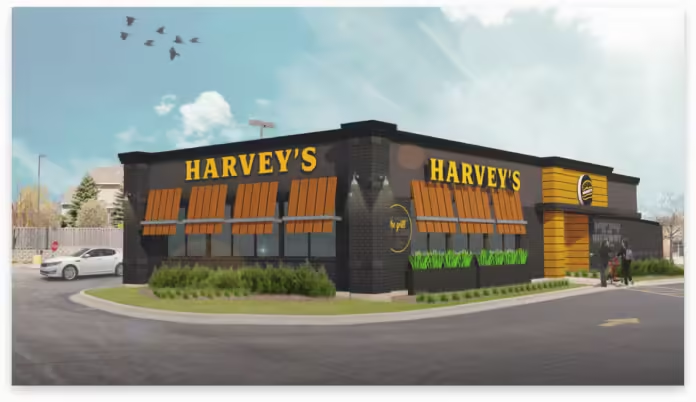
Recipe Unlimited is Canada’s largest full-service restaurant company, operating some of Canada’s most iconic restaurant brands including Swiss Chalet, Montana’s, Kelseys, East Side Mario’s, Harvey’s and New York Fries.
Frank Hennessey
“For the past decade, the partnership between Recipe Unlimited and Scene+ has demonstrated our joint commitment to rewarding our valued guests. I’m happy to share that we’re renewing this collaboration, ensuring we can continue working together to deliver exceptional dining experiences,” said Frank Hennessey, CEO, Recipe Unlimited.
Canadians can learn more about Scene+ and how to start earning and redeeming points at sceneplus.ca.
Founded in 1883, RECIPE Unlimited Corporation is Canada’s largest full-service restaurant company. The company franchises and/or operates some of the most recognized brands in the country including Swiss Chalet, Harvey’s, St-Hubert, The Keg, Montana’s, Kelseys, East Side Mario’s, New York Fries, Bier Markt, The Landing Group of Restaurants, Original Joe’s, State & Main, Elephant & Castle, The Burger’s Priest, The Pickle Barrel, Marigolds & Onions, Blanco Cantina, Añejo, and Fresh Kitchen + Juice Bar.
Scene+ is a carefully curated rewards program offering its more than 15 million members the opportunity to earn points in a wide variety of ways, in a manner that suits their buying habits and lifestyle. Through its relationship with Scotiabank, Scene+ members have an opportunity to accelerate their points-earning potential with eight options on credit or debit cards that give members access to a whole new level of rewards and value.
KINTON RAMEN, the popular ramen chain celebrated for its authentic Japanese cuisine, has announced the upcoming openings of its second Calgary location in the vibrant Mission District and its newest Richmond Hill location in the Smart Centre Bayview.
Named KINTON RAMEN Mission Calgary, this new location continues the brand’s expansion in Alberta, driven by increasing demand for high-quality Japanese dining experiences, said the company.
Karalyn White
“We’re excited to bring the KINTON RAMEN experience to the Mission neighborhood,” said Karalyn White, Senior Director of Franchising at KINTON RAMEN. “Our team is committed to creating a space that not only serves exceptional ramen but also reflects on the warmth and energy of traditional Japanese dining.
“We’re thrilled about our growth in Western Canada. From our South Trail Crossing opening to our other upcoming Alberta locations, it’s exciting to see the growing demand for authentic Japanese ramen in the province.”
Located at 1904 4 St. SW, KINTON RAMEN Mission Calgary is set for a soft opening in Spring 2025, with an official opening date to be announced soon. Following the soft opening period, which will allow staff to settle in, a grand opening celebration will be held at the restaurant.
The new Calgary location is the second of several planned for the city – with another restaurant slated for a soft opening this summer in the Uxborough neighbourhood, said the company.
This expansion is part of a signed Area Representative Agreement with The Labreche Group, which will bring 12 KINTON RAMEN outposts to Alberta over the next five years.
The company said KINTON RAMEN BayMac Richmond Hill continues the brand’s expansion in the Greater Toronto Area (GTA), driven by an increasing demand for high-quality Japanese dining experiences.
Located at 1070 Major Mackenzie Dr. E, the restaurant is expected to soft open in Spring 2025 – an official date will be announced soon. Following the soft opening period, which will allow staff to settle in, a grand opening celebration will be held at the restaurant.
With more than 45 locations across five provinces – Ontario, British Columbia, Manitoba, Alberta and Quebec – KINTON RAMEN has built a loyal following by combining innovative ramen creations with traditional recipes.
KINTON RAMEN began franchising in 2021 – nearly a decade after launching its first restaurant in downtown Toronto in 2012 – with a mission to make its unique dining experience accessible to all.
The brand was established in May 2012 and was one of Toronto’s first Japanese ramen restaurants, led by Executive Chef Aki Urata.
The brand is operated by the KINKA FAMILY, founded in 2019, a full-service international hospitality group. KINKA FAMILY owns and operates a diverse portfolio of restaurants and cafés in Toronto, Montreal, Vancouver, Chicago, and New York. Included are KINKA IZAKAYA, KINTON RAMEN and JaBistro.
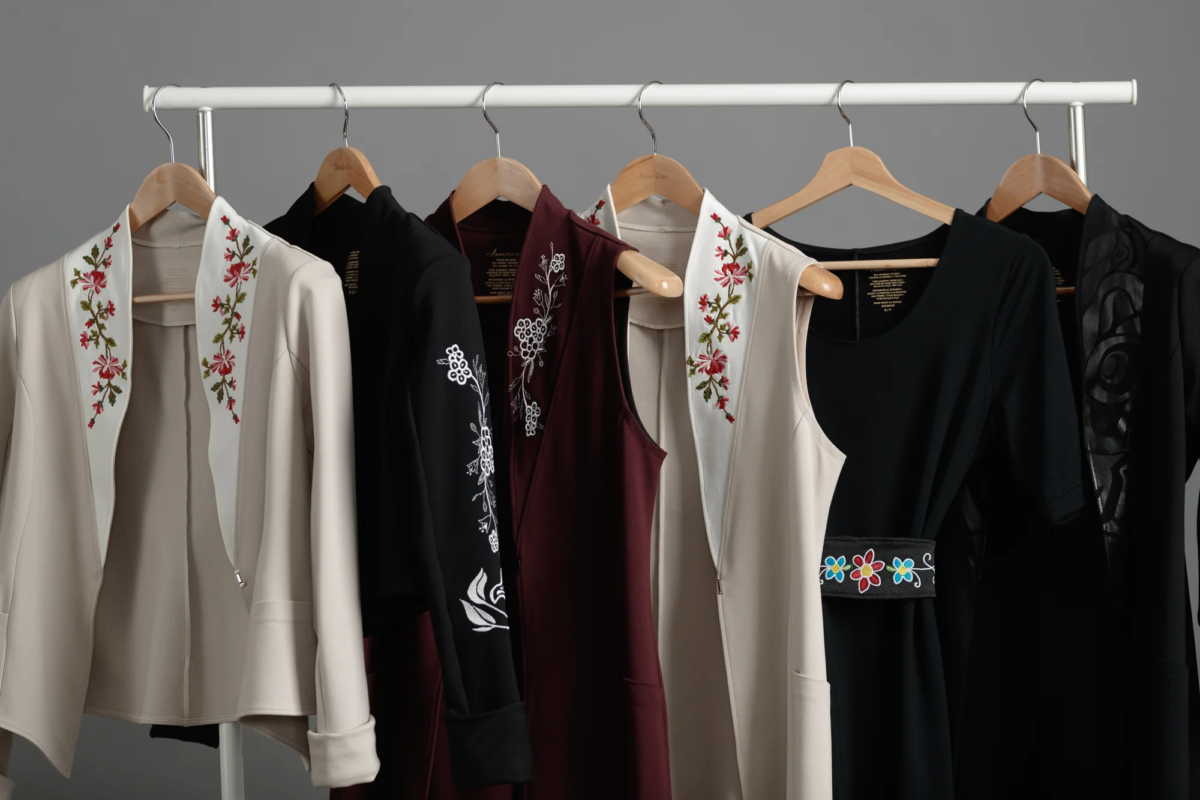
Winnipeg-based fashion brand Anne Mulaire is marking a major milestone in 2025 — celebrating 20 years in business. Founded by Métis designer Andréanne (Anne) Mulaire Dandeneau, the brand has stayed true to its roots: Canadian-made, sustainable, inclusive, and steeped in Indigenous storytelling.
“I used to be a contemporary dancer, and I grew up very connected to my Métis heritage, said Dandeneau. Our values were all about taking only what you need — living sustainably. That has stayed at the heart of everything I’ve built with Anne Mulaire.”
Andréanne (Anne) Mulaire Dandeneau
Today, as the brand celebrates two decades, it remains proudly manufactured in Winnipeg, using Canadian-knitted and dyed fabrics, while operating its flagship boutique and production facility at 421 Mulvey Avenue.
From Dance to Design: How It All Began
Before becoming a fashion entrepreneur, Dandeneau was immersed in the world of dance — a discipline that first revealed to her the shortcomings of synthetic fabrics.
“The costumes were all polyester, not breathable,” she recalled. “I started making costumes for my fellow dancers. At some point, I had to decide — would I continue dancing professionally or do something different?”
That decision led Dandeneau to Montreal, where she studied fashion design. But sustainability was still a missing conversation.
“During my time in fashion school, no one talked about sustainability,” she said. “I brought my knowledge into the classroom, always pushing against the grain. For my final project, I sourced silk-hemp blends and crocheted lace featuring wolf paw prints. It was my ‘aha’ moment — realizing there was space in fashion for someone championing natural fibres and sustainability.”
Photo: Anne Mulaire
Building a Brand in Winnipeg
After graduating, Dandeneau returned to Winnipeg, launching her brand in 2005. Her first client was a yoga studio that loved her natural-fibre creations. She built momentum, focusing on wholesale before quickly pivoting during the 2008 economic crash.
“Instead of letting stores go bankrupt owing me money, I took my inventory back and pivoted to direct-to-consumer shows like Toronto’s One of a Kind,” she explained. “I built that model for ten years, sometimes doing three shows at once across Canada and the U.S.”
This agility helped the brand survive multiple economic challenges, including the 2008 financial crisis, the COVID-19 pandemic, and now tariff-driven disruptions.
Photo: Anne Mulaire
Thriving Through Crises with Core Values Intact
The decision to manufacture locally has insulated Anne Mulaire from recent international tariff impacts — a move Dandeneau now sees as critical.
“When people ask how tariffs affect me, I say, ‘They don’t.’ Everything is made here. Our fabrics are knitted in Ontario. Our tags, printing, everything is Canadian,” she said proudly.
While U.S. sales have dipped slightly due to cross-border fees, the brand’s Canadian customer base remains strong and loyal — a testament to the lasting resonance of its values.
Reflecting on two decades in business, Dandeneau added: “You have to decide early — do you want to be a CEO who chases profit or a CEO of impact? I chose impact.”
Photo: Anne Mulaire
Commitment to Inclusivity and Circular Fashion
Inclusivity and sustainability are not just buzzwords for Anne Mulaire — they are deeply embedded in its operations.
The brand offers sizes from XXS to 6X, expanded during the pandemic to ensure accessibility for more customers. “True sustainability means it’s available to everyone,” Dandeneau emphasized.
Their Return to Nature program also exemplifies a holistic commitment to circular fashion. It includes repair, refresh, and resale initiatives, helping extend garment lifecycles and diverting textiles from landfills.
“We just did a resale drop,” she said. “Customers bring back pieces they no longer wear, and we resell them. It’s like giving garments a second life — and it’s better for the planet.”
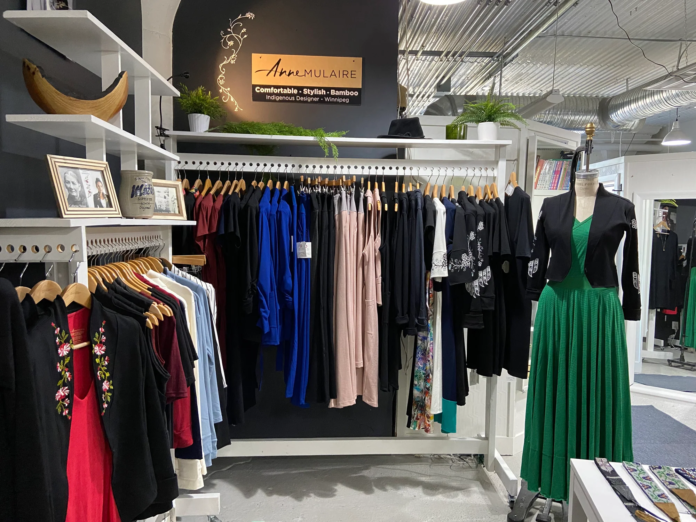
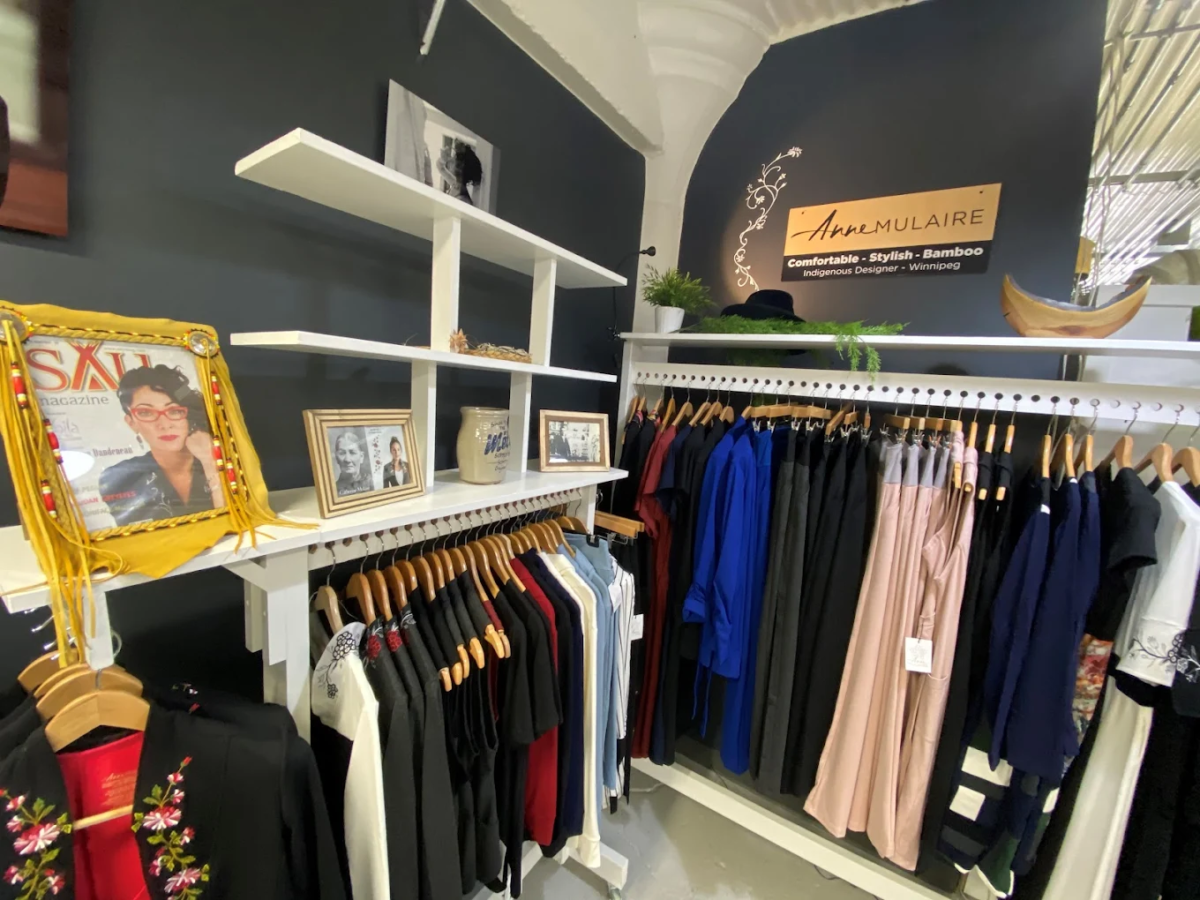
Anne Mulaire showroom in Winnipeg. Photo: Anne Mulaire
A Boutique and Manufacturer in One
The Anne Mulaire boutique is a rare model: a combined retail space and manufacturing facility. Customers visiting the Mulvey Avenue location can witness the craftsmanship firsthand — a rarity in today’s fast fashion-dominated market.
But the boutique wasn’t always part of the plan. After a former manufacturing partner defaulted, Dandeneau seized the opportunity to build her own operation from scratch in 2010, recruiting skilled workers, including some previously employed by Winnipeg-based Nygard.
“My office was in my parents’ basement for eight years to keep costs low,” she laughed. “Slowly, we transformed part of the factory into a boutique. It evolved organically.”
Today, the boutique offers a full expression of the brand: career wear, casual styles, elegant dresses, and heritage pieces featuring intricate embroidery inspired by her Métis ancestry.
Photo: Anne Mulaire
Storytelling Through Fashion
Every garment at Anne Mulaire tells a story — often literally.
“My father, a Métis artist, creates the prints for our collections,” Dandeneau explained. “Behind every design is a story about Indigenous culture in Canada. Clothing should mean something — it shouldn’t just be worn; it should inspire conversation.”
One standout piece is the Mulaire Jacket, featuring embroidery inspired by Dandeneau’s ancestor — one of the first Métis schoolteachers in the Red River region. “She combined Métis beading traditions with European embroidery, and I wanted to keep her spirit alive in my work,” Dandeneau said.
Anne Mulaire manufacturing facility in Winnipeg. Photo: Anne Mulaire
Looking Ahead: Expanding with Purpose
While the boutique continues to thrive in Winnipeg, Dandeneau has her sights set on expansion — but only thoughtfully.
“We’re working towards opening a store in Banff, Alberta,” she revealed. “It’s been a two-year search for the right space. We want to offer customers the full Anne Mulaire experience — something wholesale just can’t replicate.”
Banff would mark a symbolic and strategic next step: a Made-in-Canada, Indigenous-owned brand bringing authentic sustainable fashion to an iconic Canadian destination.
“There’s no clothing brand in Banff right now that’s truly made in Canada,” Dandeneau noted. “We would bring something unique — beautiful, sustainable fashion that carries the spirit of Métis culture.”
A Message for the Next Generation of Entrepreneurs
As Anne Mulaire celebrates 20 years, Dandeneau hopes her journey inspires others to stay true to their vision.
“I heard so many no’s along the way: ‘You can’t do both sustainable and Indigenous,’ ‘You have to manufacture overseas.’ But I stayed the course,” she said. “If you believe in your values, you can build something that lasts — something that matters.”
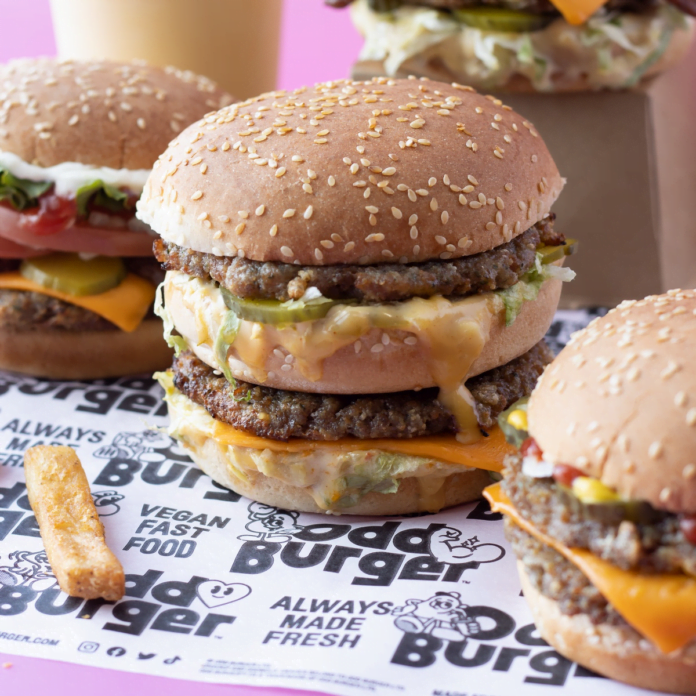
Odd Burger Corporation, a leading vegan fast-food restaurant chain and food technology company, announced Wednesday that its manufacturing division, Preposterous Foods Inc. has secured a distribution deal with Dot Foods Canada.
The distribution deal will make Odd Burger’s retail and food service line available to hundreds of distributors across Canada, greatly expanding the accessibility of Odd Burger’s manufactured food products. Odd Burger manufactures 5 frozen plant-based retail products for grocery stores and 20 plant-based foodservice products designed for restaurant use out of its manufacturing facility in London ON, said the company in a news release.
“The initial launch with Dot will see 5 retail SKUs available for distribution including the Company’s ChickUn Fillet, Smash Burger, Chickpea Burger, ChickUn Pretenders and Breakfast Sausage. The distribution deal with Dot will allow Odd Burger to better service national grocery and restaurant chains, as the Company will now be able to offer a convenient distribution channel and a national pricing program for its product lines,” it said.
James McInnes
“We believe that this is a very significant step forward for Odd Burger,” said James McInnes, CEO and Co-Founder of Odd Burger. “This distribution deal will allow us to secure listings with national retailers and will greatly increase our ability to grow revenue. Dot will also simplify our logistics and production process, which will drive efficiency across our manufacturing division.”
Dot Foods Canada is a Canadian business founded in 2016 and is a wholly owned subsidiary of Dot Foods Inc. Dot has distribution centres in Ingersoll ON and Calgary AB where it lists over 3,300 products from over 100 suppliers and services nearly 400 distributors. Dot specializes in Less Than Truckload (LTL) quantities, allowing its customers to order with a single case order minimum making products more accessible and more affordable across the supply chain.
Odd Burger Corporation is a franchised vegan fast-food restaurant chain and food technology company that manufactures a proprietary line of plant-based protein and dairy alternatives. Its manufactured products are distributed to Odd Burger restaurant locations through its foodservice line and sold at grocery retailers through its consumer-packaged goods (CPG) line. Restaurants operate as smart kitchens, which use state-of-the art cooking technology and automation solutions to deliver a delicious food experience to customers craving healthier and more sustainable fast food. With small store footprints optimized for delivery and takeout, advanced cooking technology, competitive pricing, a vertically integrated supply chain along with healthier ingredients, the company is revolutionizing the fast-food industry by creating guilt-free fast food that can be enjoyed at its restaurant locations or at home though its CPG line.
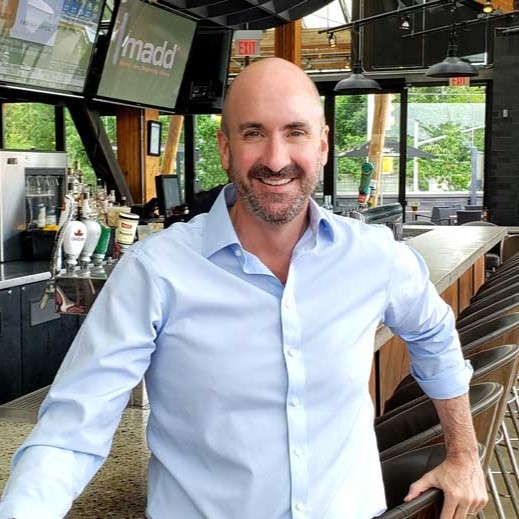
Based in Toronto, Skelton leads the CHFA, the country’s largest trade association dedicated to natural, organic, and wellness products.
Aaron Skelton
“We’ve got a mission of getting more healthy living products into the hands of more Canadians,” he said.
Representing the full ecosystem—from retailers to distributors, suppliers, manufacturers, and brokers—the CHFA boasts a membership that spans the entire value chain. “We’ve been around for 61 years now,” he added, “so well steeped in the changes that have happened in the health food industry.”
Recently, the Association hosted CHFA NOW Vancouver, its bi-annual trade show spotlighting hundreds of natural, organic, and wellness (NOW) brands to a key retail audience. While enthusiasm for the “Buy Canadian” movement is strong, early-stage startups are facing significant hurdles, including a decline in seed funding in 2024 and Canada’s lagging behind other developed countries in innovation and productivity.
CHFA is working hard to improve the landscape for NOW brands. A highlight of the trade show was CHFA Launch Pad, where eight passionate entrepreneurs pitched live on stage in a Dragons’ Den-style competition for the coveted Most Innovative Product award. The winner, Vancouver’s Magic Scoop, secured a prize valued at over $60,000 and face time with decision-makers who can help fast-track their success.
Skelton noted the CHFA focuses on three major areas: hosting industry events, federal advocacy, and arming members with data-driven insights.
“We focus on getting the industry together, and we do that through a multitude of events throughout the year,” he said. “We do a lot on advocacy and lobbying work… and then we’ve established quite a large directive on research and insights.”
When asked how the industry is faring in today’s economic climate, Skelton emphasized its durability.
“It’s been quite resilient over the last couple decades and has seen—even through some tough economic challenges—some really positive growth,” he said. “Health Canada-approved natural health products… continue to see quite strong growth into the double digits year over year.”
However, he acknowledged the challenges that persist. “This sector has not been immune from some of the economic challenges—some of our own creation and some that have been brought to us,” he noted.
Because the industry largely comprises small- and medium-sized businesses, Skelton said anything that stifles innovation and entrepreneurship can be particularly damaging. “Whether that be just the cost of doing business, access to capital, or a general environment that is benefiting innovation—this sector has seen growth for sure, but there are definitely sub-stories in it of challenges imparted on it by the current economic conditions.”
Source- Canadian Health Food Association
Looking forward, CHFA’s focus includes continuing to increase awareness, advocate for regulatory improvements, and guide members through a complex retail environment.
“One [priority] is ensuring that we create awareness, both through our supplier networks but also with our retail partners on what Canadians are looking for,” Skelton explained. “We’re quite proud on the natural health product side that over 82% of Canadians are now using a natural health product on a regular basis.”
Reducing regulatory burdens is another core part of CHFA’s strategy.
“Working directly with Health Canada and government officials to ensure that we’ve got the right environment for these really inspiring and necessary small business stories is really important,” he said.
Another challenge for CHFA members is navigating the increasingly costly Canadian retail landscape. “Canadian grocery is quite consolidated, as you would know very well,” Skelton said. “The increase of cost of doing business with most of these larger retailers are notably high… trade spend, promotional spends, distribution expenses have really been going up faster than sales have.”
To support its members, the CHFA prioritizes delivering insights that help brands allocate resources effectively. “We try to work with our supplier partners to give them better research and insights so that they can make better choices, be more efficient and effective with where they’re putting their dollars,” said Skelton. “And sharing that back with our retail partners so they know what Canadian consumers are looking for.”
“I think we’ve been really proud of the work we’ve been able to do to connect the right businesses together,” he said. “Regulatory and lobbying work can get a bit of an echo chamber… so ensuring that we can play an important role in translating that for the audience to ensure our members can make the best decisions is something that we’re quite proud of doing.”
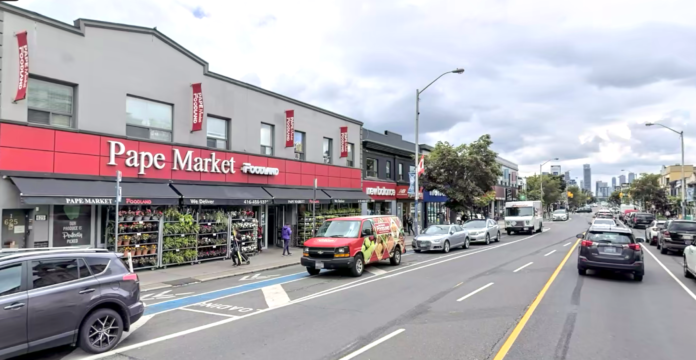
Foodland/Pape Market in Toronto. Photo: Apple Maps
As global tensions and economic pressure mount, Canadian consumers are demanding more than patriotic marketing — they want authenticity, community investment, and proof of values. According to Eve Rémillard-Larose, CEO of TBWA Canada, the stakes have changed, and brands must evolve or risk losing relevance.
“The day after Donald Trump made those comments, our phones started ringing off the hook,” said Rémillard-Larose in an interview. “Brands were panicking — they wanted to tell Canadians they were Canadian or that they’ve always been part of the community.”
Eve Rémillard-Larose, CEO of TBWA Canada
That initial rush, she explained, resulted in a marketing flurry. Maple leaves began appearing in advertising, websites were updated with patriotic copy, and slogans invoked unity. But the tone quickly shifted.
“Consumers began asking, ‘Okay, but what do you do for me?’” she said. “There’s this economic reality. Groceries are more expensive. Housing’s more expensive. People are scrutinizing brands more critically now.”
Authenticity Over Optics
Founded globally in the 1960s and operating in Canada for over 20 years, TBWA — dubbed “The Disruption Company” — has long partnered with major brands to craft creative campaigns that break through the noise.
Clients like Nissan, Apple, and RBC trust TBWA’s bold approach, with its Canadian arm operating out of Montreal, Toronto, and Edmonton with over 200 employees.
In recent months, however, the agency has focused on helping brands respond to a growing call for authenticity.
“It’s not enough to say you’re Canadian,” Rémillard-Larose explained. “You need to walk the talk. Consumers want to see tangible ways you’re contributing to their communities.”
Many brands, she noted, have already been doing the work — investing in local partnerships, hiring Canadian workers, sourcing from Canadian suppliers — but had never communicated those actions in a meaningful way.
The Air Transat ‘Canadian Ocean’ Moment
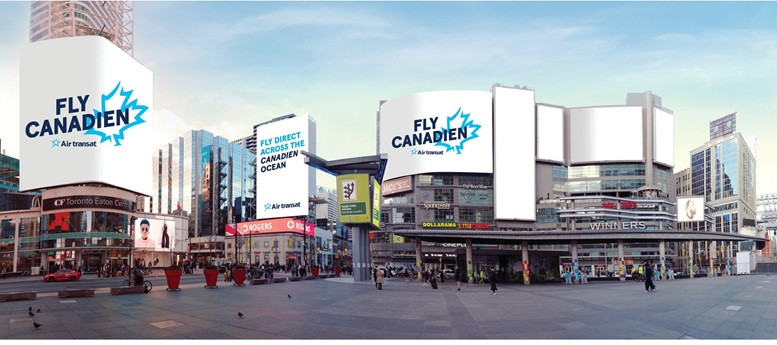
One recent example of TBWA’s approach is its cheeky campaign for Air Transat. Using April Fools’ Day as a launchpad, the agency helped the airline temporarily rebrand the Atlantic Ocean as the “Canadian Ocean.”
“We needed Ontario to understand that Air Transat flies direct to Europe, with over 100 weekly flights,” said Rémillard-Larose. “So we came up with a playful idea: if we’re crossing the ocean so often, let’s name it after ourselves.”
The campaign struck a nerve. “People laughed. They shared. But more importantly, it opened a conversation,” she added. “It was the perfect blend of cultural commentary and brand positioning.”
Spotlight on Foodland: Supporting Local Since Day One
Another campaign close to the CEO’s heart is for Foodland, a grocery banner under Sobeys that emphasizes hyper-local sourcing and deep community ties.
“Foodland has always bought from local farmers and supported regional economies,” said Rémillard-Larose. “It was already walking the walk, so this moment became an opportunity to amplify its values.”
The challenge, she said, was to evolve beyond slogans and show Canadians what brands like Foodland are doing — and have always done — to support people close to home.
Redefining What It Means to Be a Canadian Brand
As conversations around national identity and trade become more nuanced, so too do definitions of Canadian brand loyalty. Can a foreign-owned brand be Canadian if it employs Canadians, gives back locally, and manufactures in Canada?
“There’s complexity,” said Rémillard-Larose. “We’re seeing debates. Some brands were founded elsewhere but do more for Canadians than those that were born here. So the question becomes: what truly matters?”
She believes the focus should be less on where a brand is headquartered and more on its actions.
“I don’t think you need to be founded in Canada to have a meaningful impact,” she said. “If you’re invested here, if you’re giving back, if you’re showing up for communities — that’s what matters.”
Air Transat ads on Dundas Square in Toronto. Photo: Air Transat
The Risk of Superficial Patriotism
In the early days of the nationalist wave, some brands were quick to wrap themselves in the flag — sometimes without the substance to back it up. Rémillard-Larose warns that this kind of opportunistic marketing can backfire.
“Canadians are smart. They’ll call out performative patriotism,” she said. “This is not a ‘buy Canadian’ versus ‘don’t buy American’ issue. It’s more about trust, values, and connection.”
She noted that consumers are increasingly asking, Is this brand for me? Does it align with my values? Does it support my community? These questions now influence purchasing decisions more than ever.
Regional Nuances: Buying Local in a Diverse Country
Although the nationalist sentiment has united Canadians coast-to-coast, regional variations still matter.
“In Quebec, for example, you might see a stronger push for local French-language support. In Alberta, maybe the messaging has to be more fiscally conservative,” said Rémillard-Larose.
“But overwhelmingly, people want to support what’s in their backyard. We saw a strong shift toward ‘buy local,’ not just ‘buy Canadian,’” she added.
Campaigns that Drive Conversation — Not Division
Navigating patriotism in a divided global landscape isn’t easy. Brands must tread carefully, avoiding political landmines while staying relevant.
That’s where TBWA excels. “With Transat, we walked the line beautifully. It was clever without being divisive,” said Rémillard-Larose. “It got people talking — but in a positive way.”
That balance, she explained, is key. “You can be culturally relevant and funny without being polarizing. That’s the challenge creative agencies need to embrace right now.”
Data-Driven Decisions With a Human Touch
TBWA doesn’t rely on gut instinct alone. The agency begins every campaign with research into Canadian sentiment, values, and community concerns. Then it maps those insights against the brand’s core DNA to find alignment.
“We ask: what matters to Canadians, and how can this brand show up in that space authentically?” said Rémillard-Larose.
Success is measured not just in sales, but in trust, perception, and sentiment.
“We’re not looking for flash-in-the-pan virality,” she said. “We want to build long-term loyalty.”
Advice for Canadian Retailers: Be Real and Give Back
For Canadian retailers wondering how to navigate the current climate, Rémillard-Larose offers a simple yet powerful piece of advice: authenticity above all.
“If you want to stand tall and say you’re Canadian, then back it up,” she said. “What are you doing to earn that trust? Are you giving back? Are you helping Canadians stretch their dollars?”
She also urged retailers to think long-term. “This may be a moment, but there will be others. If you’ve built goodwill now, you’ll be better prepared next time.”
A Global Opportunity for Canadian Identity
Beyond domestic impact, Rémillard-Larose sees opportunities for Canadian brands on the global stage — especially those who lean into the country’s core values.
“We’re known internationally as nice, fair, welcoming — and those qualities are more valuable than ever,” she said. “Brands like Roots or Lululemon could do even more to reflect that image abroad.”
With the right mix of substance, storytelling, and pride, she believes more Canadian companies can become international icons.
The Condo Retail Sales Report: Trends and Insights 2019-2024 by JLL examined the condo retail real estate market trends in Toronto, analyzing transaction data to provide insights into market performance and dynamics.
“The condo retail real estate market has experienced notable shifts during this period, influenced by macroeconomic conditions such as interest rate changes and evolving investor sentiments,” it said.
“The data reveals a market that has navigated fluctuations in pricing and capitalization rates with 2023 and 2024 marking a decline in total transaction volume while maintaining relatively stable PPSF levels.”
The analysis concentrates exclusively on ground level retail space at the base of residential developments (those with condominium and stratified freehold ownership titles – both of which, for the purposes of this report, are referred to as ‘condo retail’’) located from Jane Street to the west, St. Clair Avenue West and Lawrence Avenue West to the north, and the Don Valley Parkway to the east (plus Leslieville) and Lake Ontario to the south.
Source: JLLSource: JLL
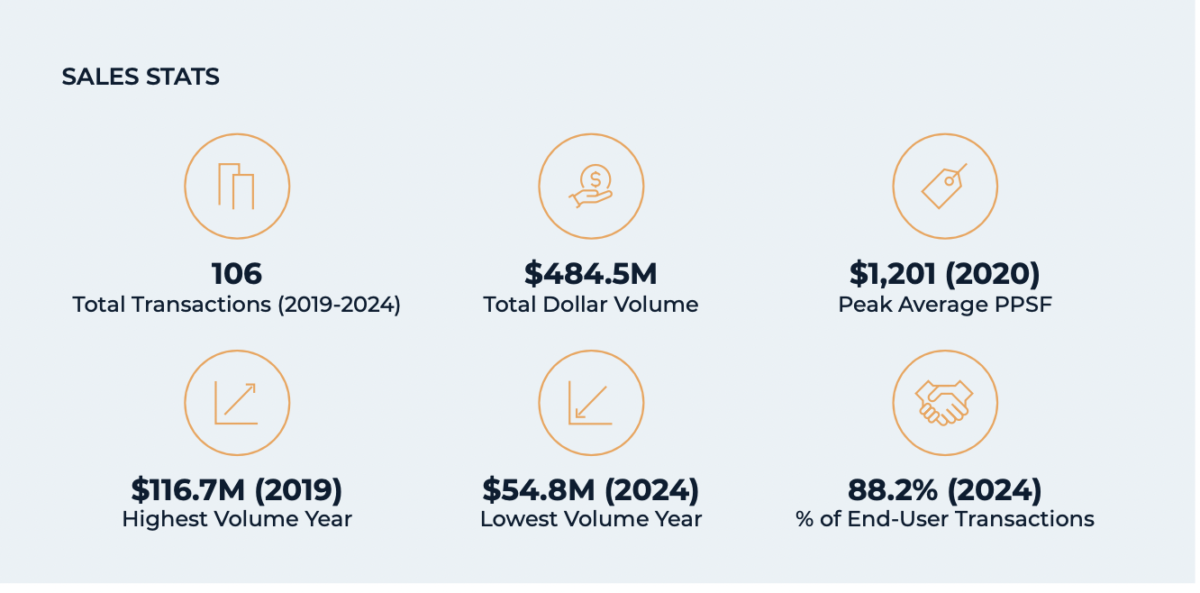
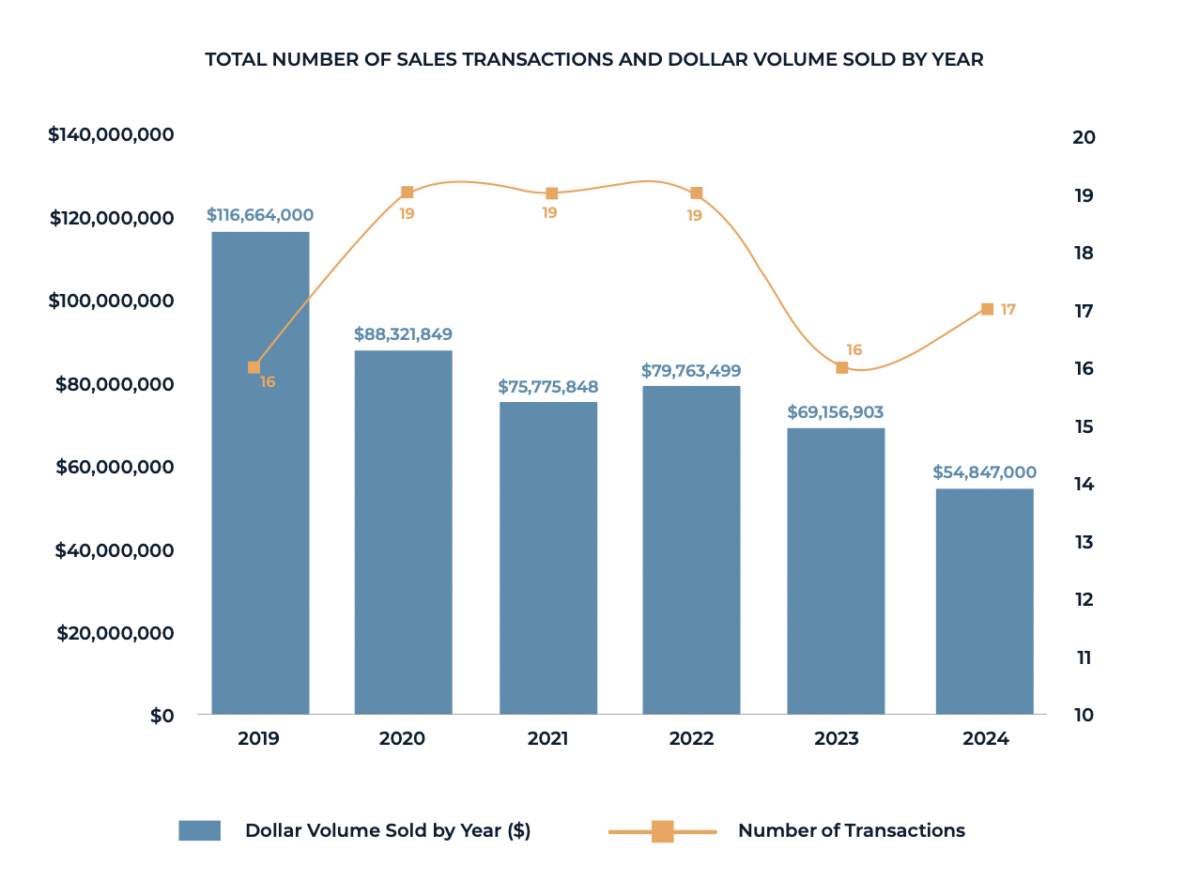
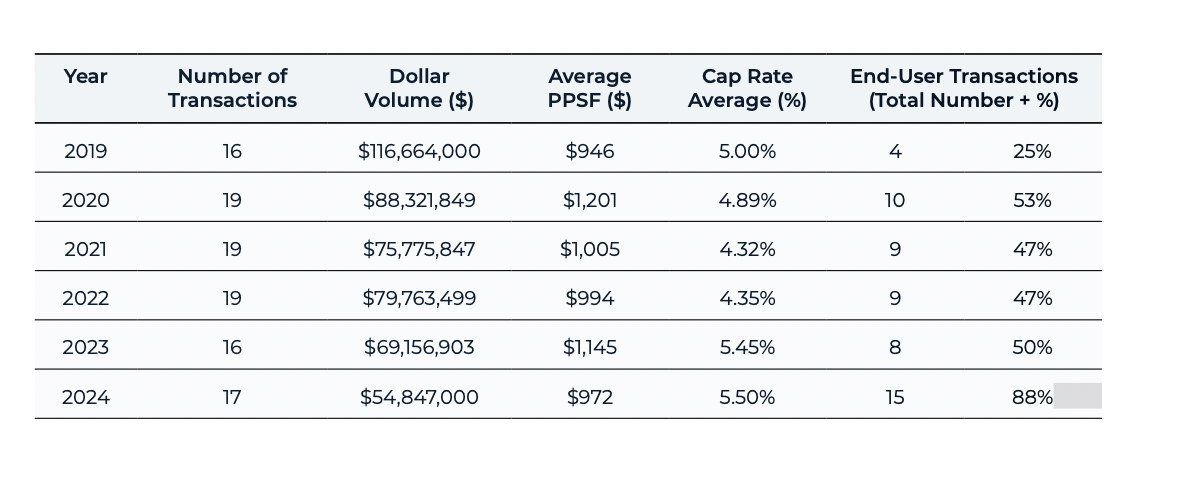
“The total dollar volume of retail transactions over the six-year period was $484.5 million, peaking in 2019 at $116.6 million, followed by a consistent decline through to 2024, where volume dropped to $54.8 million – a 53% decrease over six years. The decrease is likely attributable to a combination of factors, including higher borrowing costs, cautious investor sentiment, and diminished property valuations resulting from increasing capitalization rates,” said the report.
“The total number of condo retail sales completed from 2019 through to the end of 2024 is 106. Transaction volume remained relatively stable in terms of deal count, with the number of transactions per annum ranging from 16 to 19. The years 2020, 2021, and 2022 saw the highest number of transactions at 19 each, while 2019 and 2023 had the lowest at 16. This stability in transaction count suggests a consistent level of market activity despite fluctuations in total dollar volume.
Source: JLLSource: JLL
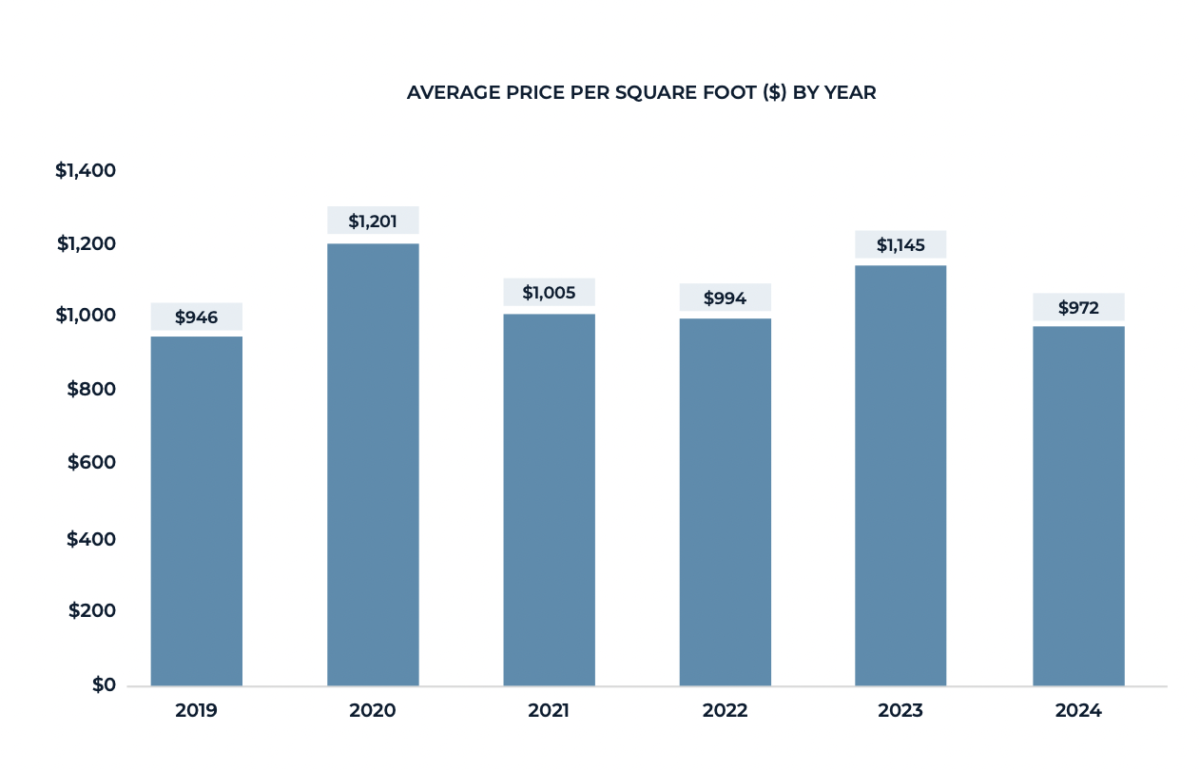
The report said the average price per square foot (PPSF) has fluctuated significantly over the six-year period, with no clear upward or downward trend. It reached its peak of $1,201 in 2020, following a rise from its lowest point of $946 in 2019, representing a 27% increase. These fluctuations might reflect changes in the mix of property types being sold, location variations within the study area, and overall market volatility influenced by broader economic factors. Subsequent years have seen various shifts in PPSF, indicating a dynamic and unpredictable market environment.
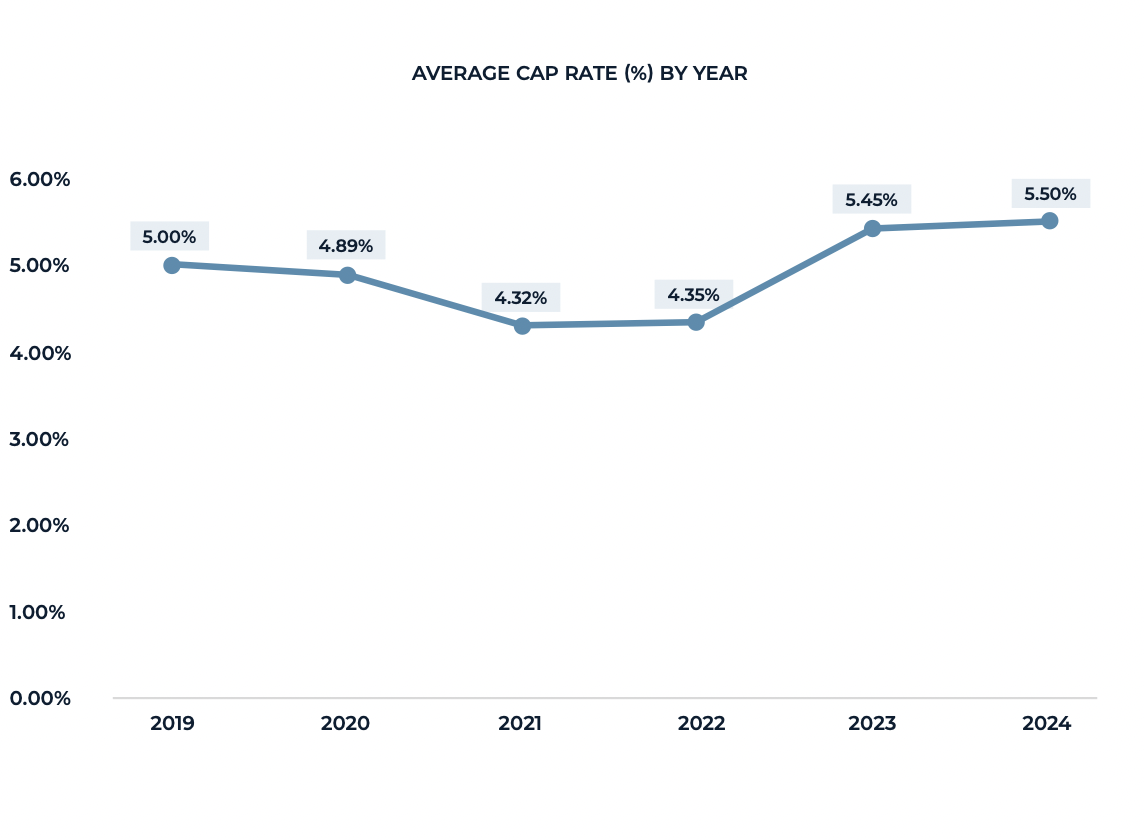
“Cap rates have shown notable variation over the study period, ranging from a low of 4.32% in 2021 to a high of 5.50% in 2024. There is an upward trend in recent years, with 2023 hitting a 5-year high of 5.45% before reaching 5.50% in 2024. The lowest average cap rate was recorded in 2021 at 4.32%, indicating peak investor confidence during a period of historically low interest rates. Conversely, the highest average cap rates were observed in 2024 (5.50%) and 2023 (5.45%), reflecting softening market conditions and a shift towards buyer-favourable pricing. This upward trend in cap rates aligns with the broader economic context of rising interest rates and increased market uncertainty,” explained JLL.
A significant shift towards end-user transactions has been observed from 2019 to 2024. In 2019, only 25% of sales were to end-users, but by 2024, this proportion had risen dramatically to 88.2%. This trend clearly demonstrates a growing preference for owner-occupied properties, particularly among professional services such as dentists, who are increasingly focused on purchasing their own real estate, noted the report.
Several factors have prompted this shift towards owner-occupier purchases:
1. Lower sales velocity for income-producing assets 2. Rising interest rates, making ownership potentially more attractive than leasing 3. The desire for greater control over property use and potential for long-term appreciation
“This trend has implications for both the market dynamics and the future composition of condo retail space ownership, potentially leading to a more diverse and stable tenant mix in these properties,” it said.
The report said the average size of transactions has fluctuated significantly over the study period. 2019 stands out with the largest average transaction size of 7,780 square feet. Subsequent years saw a shift towards smaller average transaction sizes, ranging from 3,514 to 4,953 square feet. This trend aligns with the increasing proportion of end-user transactions, which historically have resulted in smaller unit sizes. This is exemplified in 2024, where 15 end-user transactions averaged just 2,902 square feet, significantly below the overall average for the period. This shift in transaction size reflects the changing nature of demand in the condo retail market, with smaller, owner-occupied units becoming increasingly prevalent.
“The retail real estate market from 2019 to 2024 reflects a period of significant transition. While total transaction dollar volume has declined substantially, pricing metrics such as price per square foot (PPSF) have shown resilience. Simultaneously, cap rates suggest a recalibration of investor expectations in response to changing market conditions,” said the report.
Source: JLL
Looking ahead, investors should closely monitor several key factors, it added:
1. Interest rate movements and their impact on financing costs 2. Consumer spending patterns and their effect on retail performance 3. Evolving retail fundamentals, including the shift towards end-user ownership
“These factors will be crucial in identifying opportunities in a market that is adjusting to new economic realities. The increasing trend of end-user purchases, particularly among professional services, may continue to shape the landscape of condo retail real estate in the coming years,” said JLL.
The condo retail sales market for 2025 is expected to stabilize, with several key trends emerging, added the report:
End-user interest is projected to remain strong, driven by consistent lending environments and more affordable debt. However, we anticipate user transactions as a percentage of the overall market to decrease from the record high of 88.2% seen in 2024;
Economic uncertainties in the United States are fostering caution among Toronto investors. Nevertheless, the cap rate precedents set in 2024, averaging 5.50%, may provide sellers with confidence in asset values;
We expect more high-profile assets to trade in 2025, potentially leading to an increase in both overall dollar volume and number of transactions from the $54.8 million and 17 transactions recorded in 2024;
Price per square foot figures are expected to remain stable, continuing the trend observed in recent years. Vacant condo retail assets are expected to trade within a consistent value band, similar to the $972 per square foot average seen in 2024.
“The stabilization of the market may attract a more diverse range of investors, balancing the recent dominance of end-users. This could lead to a more dynamic and competitive market environment.”
Retail Insider is streamlining its Canadian retail news from around the web to include a handful of top news stories that can be viewed quickly during the day. Here are the top stories from the past 48 hours.
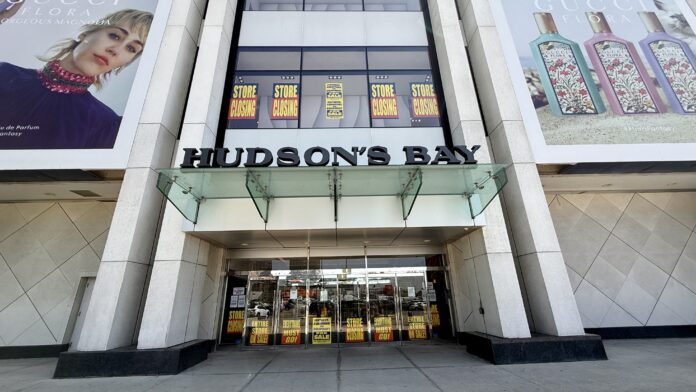
Former exterior entrance to the Hudson's Bay store at Toronto's Yorkdale Shopping Centre on Monday, May 12, 2025. Photo: Craig Patterson
The Hudson’s Bay Company is expected to decide on a buyer—or group of buyers—for its assets and leases by early to mid-June, marking a significant milestone in one of the most high-profile retail restructurings in Canadian history. The announcement was made during a court appearance on Tuesday by Ashley Taylor of Stikeman Elliott LLP, legal counsel for the department store chain.
Taylor confirmed that Hudson’s Bay will return to court within two to three weeks to seek approval of one or more transactions related to its intellectual property, retail leases, and other business assets. The timeline sets the stage for a potential transformation or partial resurrection of Canada’s oldest retailer, which filed for protection under the Companies’ Creditors Arrangement Act (CCAA) on March 7, 2025.
According to court documents, Hudson’s Bay has received 17 formal bids for various components of its operations. These include offers for its well-known intellectual property—such as the Hudson’s Bay name, its signature multicoloured stripes, and private label brands like GlucksteinHome and Hudson North—as well as its customer databases and historic artifacts.
In a parallel bidding process, 12 parties have submitted offers for 39 of the company’s 96 store leases, which span the Hudson’s Bay, Saks OFF 5TH, and Saks Fifth Avenue banners in Canada. Many of the lease bids overlap, suggesting competition for prime retail locations. Several bidders also submitted joint offers for both assets and leases, hinting at interest in restarting retail operations using select components of the company.
Ontario Court Approves Extension to July 31 Amid Restructuring Efforts
Ontario Superior Court Justice Peter Osborne has granted Hudson’s Bay an extension of court protection under the CCAA until July 31, 2025. The previous deadline had been set for May 15. The extension will provide additional time to complete liquidation sales, select buyers, and finalize asset transfers.
“We are asking for an extension so we can have some breathing room to see what can be done,” Taylor told the court, emphasizing the need to complete the complex sale process and asset monetization.
The extension comes at a time when Hudson’s Bay is nearing the end of its liquidation process, with most stores expected to be vacated by the end of June. Liquidation sales began in late March at 74 Hudson’s Bay stores, two Saks Fifth Avenue stores, and 13 Saks OFF 5TH locations. By April 25, the company added six final Bay stores and a Saks to the liquidation list after a last-ditch effort to revive a scaled-down version of the chain fell through.
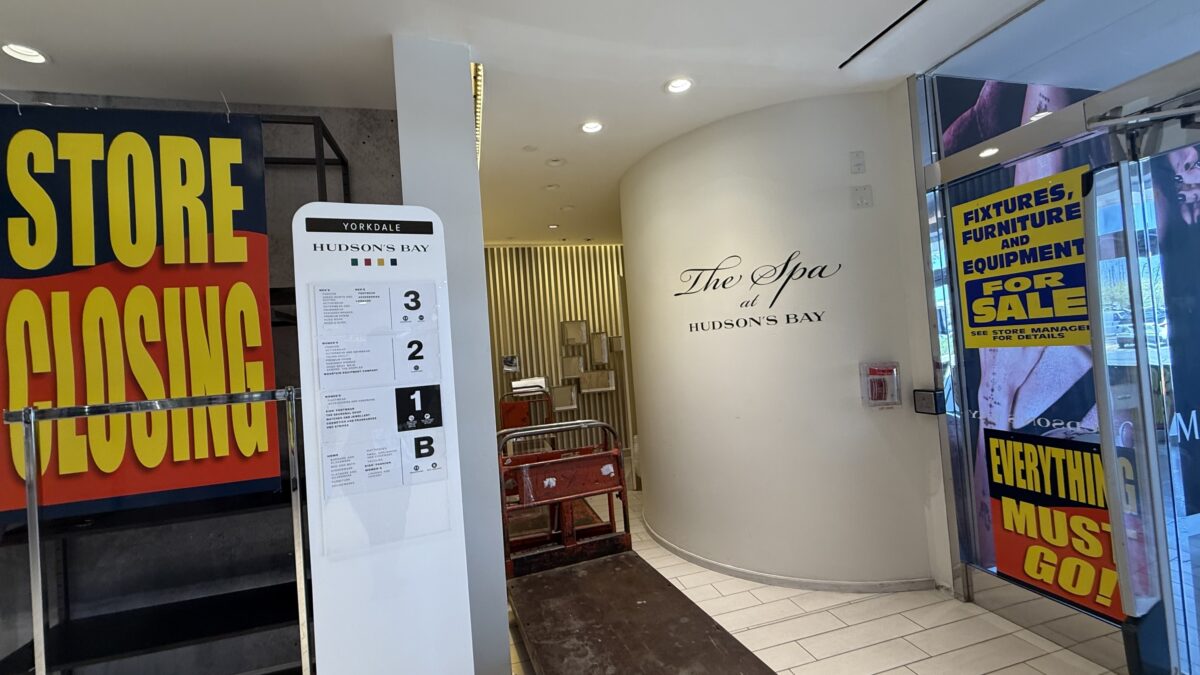
Hudson’s Bay store at Toronto’s Yorkdale Shopping Centre on Monday, May 12, 2025. Photo: Craig Patterson
Court filings show that the company’s liquidation strategy has yielded significantly more cash than anticipated. According to an affidavit sworn by Hudson’s Bay Chief Financial Officer Jennifer Bewley on May 7, sales from April 19 to May 2 totaled $129.5 million—approximately 40% higher than earlier forecasts. As of May 2, the company held $194 million in cash, or $70.3 million more than it had projected.
Hudson’s Bay is now preparing to use this surplus cash to begin paying off portions of its senior debt. Justice Osborne approved a motion that allows the company to repay up to $165 million under two credit facilities.
Initial payments include $25 million to retire a revolving credit facility managed by Bank of America and $40 to $46 million to Restore Capital LLC, a lender involved in recent emergency financing. The motion also permits further repayments as cashflow allows.
Pushback from Landlord Stakeholders Over Debt Repayments
The motion to repay senior debt was not without controversy. Lawyers representing key landlords, including RioCan REIT, opposed the move. Joseph Pasquariello of Goodmans LLP, counsel for RioCan, argued that repaying lenders before determining the future of the leases and assets could be premature.
“There has not been one sale, one transfer of a lease put before this court for an approval,” said Pasquariello, calling the debt repayment process “very hurried.” He also raised concerns about transparency around how much debt remains with the Canadian entity after a separate $2.65 billion U.S. transaction involving the acquisition of Neiman Marcus by Hudson’s Bay’s parent company.
That transaction, completed in December 2024, resulted in the formation of Saks Global, which now holds all U.S. retail operations and real estate assets formerly under HBC. The Canadian operations were separated from those U.S. assets as part of that deal.
Taylor responded in court that the Neiman Marcus acquisition reduced Canadian indebtedness by approximately $1.36 billion and that the current repayments apply only to debt secured after the split. The U.S. entity, he noted, is no longer a guarantor of Canadian debt.
Despite the objections, Justice Osborne ruled in favour of Hudson’s Bay, stating that “distribution is appropriate” given the liquidity generated through asset sales.
Bidding Landscape: Known Buyers and Strategic Intentions
Of the 17 bids received, a few parties have made their intentions public. Notably, Weihong Liu, the entrepreneur behind Central Walk, has submitted a proposal to acquire approximately 25 Hudson’s Bay store locations across British Columbia, Alberta, and Ontario. Liu’s vision includes transforming stores into experience-driven retail hubs.
Liu’s bid is believed to include Hudson’s Bay trademarks, 25 stores, and potentially its customer database. Her real estate firm, Central Walk, already owns several major malls in Canada, including Mayfair Shopping Centre in Victoria, Woodgrove Centre in Nanaimo and Tssawwassen Mills near Vancouver.
Another confirmed bidder is Toronto-based Urbana Corporation, which is seeking to acquire Hudson’s Bay’s intellectual property portfolio. This includes historic brand assets such as Zellers, GlucksteinHome, and the company’s 1670 Royal Charter.
Canadian Tire Corporation has also expressed interest in select brand assets but has publicly ruled out acquiring the entire chain. The company’s bid is expected to focus on individual brands that could complement its existing product and private label strategy.
No bids were received from insiders, including Executive Chairman Richard Baker, according to court documents.
An entrance to the Hudson’s Bay store at Toronto’s Yorkdale Shopping Centre on Monday, May 12, 2025. Photo: Craig Patterson
Background: Canada’s Oldest Retailer Faces a Pivotal Moment
Founded in 1670, Hudson’s Bay Company is the oldest corporation in North America and an enduring symbol of Canadian retail history. However, decades of shifting consumer habits, growing e-commerce competition, and an overbuilt store network gradually eroded its market position.
The situation reached a breaking point earlier this year. On March 7, 2025, Hudson’s Bay filed for creditor protection under the CCAA, citing over $1.1 billion in debt. The company owed money to approximately 400 stakeholders, including landlords, vendors, suppliers, and tax authorities.
Alvarez & Marsal Canada Inc. was appointed as the court monitor, overseeing the restructuring process and coordinating the asset sale. Initially, Hudson’s Bay aimed to restructure around a smaller core of stores, but by late April, the company pivoted to full liquidation after failing to secure necessary financing.
Store Closures, Asset Sales, and the Road Ahead
All Hudson’s Bay, Saks Fifth Avenue, and Saks OFF 5TH stores in Canada are set to close by June 15. After June 1, furniture and fixtures will be cleared out, and the company will vacate all properties by month’s end. The lease disposal process includes a mix of direct transfers and auctions where bids overlap.
The company is also preparing to auction a collection of 4,400 historical artifacts, pending court approval. These include items of national significance tied to the company’s 355-year history.
The Ontario court is expected to reconvene in late May or early June to approve selected bids and provide direction on next steps. The outcome could see parts of the Hudson’s Bay brand continue under new ownership, either as retail operations or as licensed intellectual property.
Impact on Employees and Canadian Retail
The closure of Hudson’s Bay has far-reaching implications. Roughly 9,400 employees will be affected by the store closures, alongside thousands of retirees. Legal and financial advisors are actively working to ensure their interests are considered as the process unfolds.
The disappearance of Hudson’s Bay from Canadian shopping centres also raises questions about the future of department store retail in the country. As landlords weigh their next moves, interest from global and domestic players—like Central Walk and Canadian Tire—suggests the story of Hudson’s Bay may not end entirely.
For now, the fate of this storied brand rests with the Ontario courts, competing bidders, and the court-appointed monitor overseeing the process. A clearer picture of Hudson’s Bay’s future is expected to emerge by mid-June.