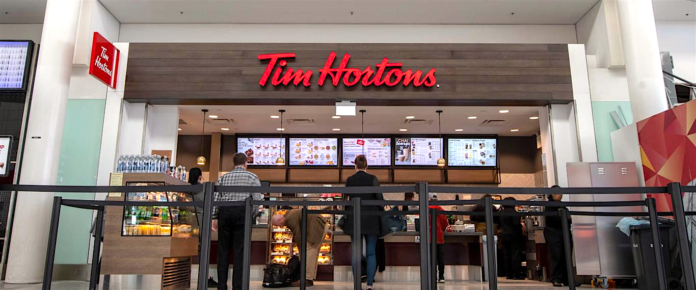
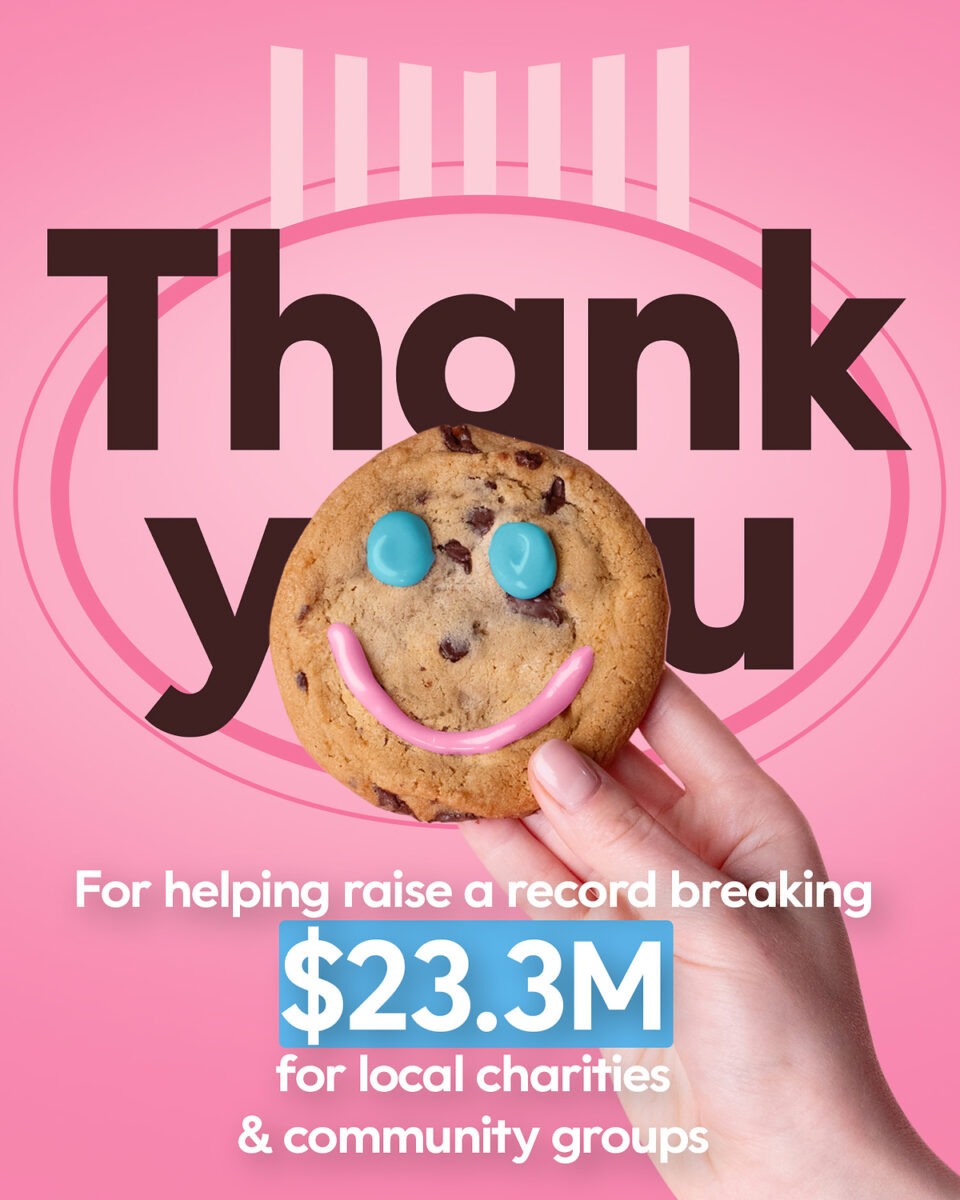
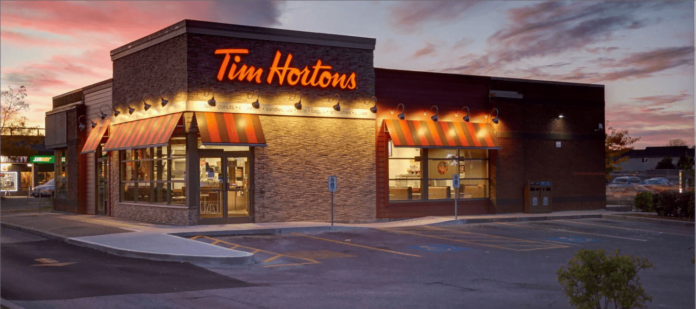
Tim Hortonssays its 30th annual Smile Cookie campaign raised a record $23.3 million this year for nearly 700 local charities and community groups across Canada and the United States.
The company said the latest fundraising total brings the campaign’s cumulative amount raised since its launch in 1996 to more than $174 million.
The campaign, which donates 100 per cent of pre-tax Smile Cookie sales to local causes selected by restaurant owners, began as a local fundraising initiative in Hamilton, Ont.
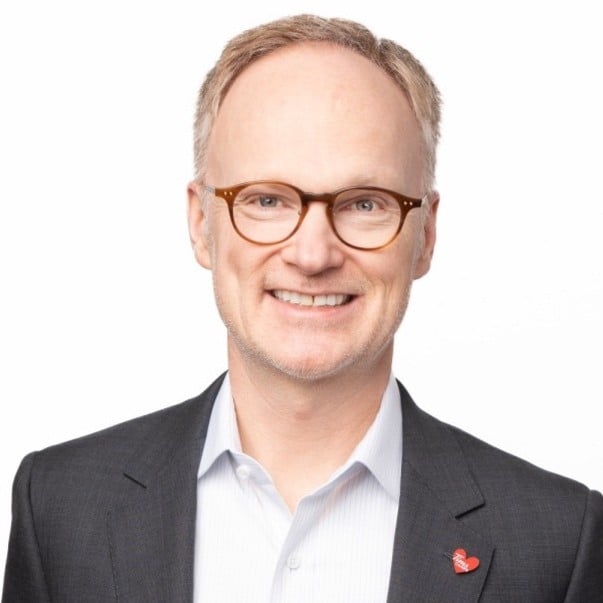
Axel Schwan
“Tims restaurant owners are proud members of the communities where they live and work, and for decades their passion for giving back has made the Smile Cookie campaign what it is today,” said Axel Schwan, president of Tim Hortons.
“When the first Smile Cookie was sold in 1996, no one could have imagined we’d one day be celebrating more than $174 million raised in the program’s history. That’s a testament to Tims restaurant owners, team members, volunteers, and guests who have committed to making a difference in their communities year after year. Thank you for your incredible generosity.”
The company said the Smile Cookie campaign was created in 1996 by Maureen Sauve and other Tim Hortons restaurant owners in Hamilton.
According to the company, the original fundraiser was inspired by efforts to support a hospital ward treating Sauve’s daughter at the time.
It said the initiative evolved from a local fundraising effort into a broader annual campaign tied to the company’s community giving efforts.
The company said all pre-tax proceeds from Smile Cookie sales are directed to local charities and community groups chosen by Tim Hortons restaurant owners.
The campaign operates across Tim Hortons locations in Canada and the United States.
Founded in Hamilton in 1964, Tim Hortons said it now operates nearly 4,000 restaurants across Canada and more than 6,000 locations globally.
From New York to Toronto, the concept of government-run grocery stores has been trending lately. The idea is not new, and the evidence shows that these initiatives do not address the root cause of high food prices, and carry a heavy risk of failure, the MEI notes in a Viewpoint published on Thursday.
The MEI is an independent public policy think tank with offices in Montreal, Ottawa, and Calgary.
Charles Lammam
“Government-run grocery stores have been tried before, and the results have been costly for taxpayers,” said Charles Lammam, Senior Fellow at the MEI and author of the publication. “Key drivers of higher food prices are the government policies already on the books, such as tariffs, interprovincial trade barriers, and layers of regulatory costs. That is where reform is needed.”
This year, a proposal for a government-run grocery pilot project was tabled and adopted in Toronto. In Ottawa, a city councillor recently proposed studying such a model, said MEI.
At the federal level, new NDP leader Avi Lewis is proposing to establish such a network across the country, promising savings of “30 to 40 percent” for families. At the provincial level, Québec solidaire recently indicated that it wants to evaluate this proposal, it noted.
“The grocery sector is well known for its razor-thin profit margins, which hover between three and five per cent,” explained the organization.
“Even if those margins were entirely eliminated, and supply chains remained just as efficient, monthly savings for consumers would be just $11 to $18 per person. By way of comparison, a Canadian family of four spends an average of $17,571 per year on groceries—roughly $370 per person per month—according to a Canadian study.”
“Running a grocery store means coordinating thousands of perishable products across complex supply chains, on margins that leave little room for error,” said Lammam. “Governments simply do not have the expertise to do that, and it is inevitably the taxpayer who ends up paying the price.”
MEI shared that the record of government-run grocery stores in North America isn’t encouraging: the failure or restructuring rate of these initiatives likely exceeds 50 per cent, according to Dalhousie University Professor Sylvain Charlebois.
In Kansas City, for example, the government spent $29 million in public funds to keep Sun Fresh Market afloat. The municipal government-run grocery store opened in 2018 and shut its doors last summer, beset by empty shelves, food safety issues, and persistent financial losses. A similar project in Erie, Kansas, operated at a loss for years before being handed over to a private operator, added MEI.
Mike Jones photo
While the sharp rise in food prices has had a real impact on household budgets, the researcher notes that many public policies are contributing factors, it said. Barriers to interprovincial trade are equivalent to an internal tariff of nine percent, according to an International Monetary Fund analysis.
Tariffs on imported food average 15 percent, with surcharges of 200 to 300 percent on dairy, eggs, and poultry. The regulatory burden, taxes throughout the supply chain, and transportation costs also inflate the price of every product found on store shelves, added MEI.
“If the goal is truly to lighten Canadians’ grocery bills, the solution is not to have governments enter the grocery business—it’s to eliminate the policies that are artificially driving up prices,” said Lammam.
Healthy Planet says it will launch a soccer-themed promotional campaign tied to this year’s FIFA World Cup in Toronto, including a public appearance by Canadian soccer player Jonathan Osorio and a renewed national food donation initiative.
The health and wellness retailer said Toronto FC captain and Canadian men’s national team player Osorio will appear at its Etobicoke store on May 17 as part of the campaign launch in partnership with BioSteel.
The company said the campaign will extend to three downtown Toronto store locations that will be rebranded with a soccer theme during the tournament period as visitors arrive in the city. Staff at those stores will wear soccer jerseys as part of the initiative.
Jonathan Osorio Instagram
“The impact that this year’s World Cup will have on our community and for youth soccer is immeasurable,” said Osorio, captain of Toronto FC. “I’m very excited to work with BioSteel and Healthy Planet to bring the community together and ignite the World Cup spirit.”
Healthy Planet said the Etobicoke appearance marks the official start of its 2026 soccer campaign, which the company said is intended to focus on nutrition, hydration and wellness during a period when soccer activity in Canada is expected to intensify.
The company said the campaign is designed to coincide with increased international attention on Toronto during the tournament and position its stores around themes connected to sports and wellness.
Alongside the soccer campaign, Healthy Planet said it is renewing its Good Food Drive program for 2026 after reaching what it described as a one million meal milestone in 2025.
The company said it plans to donate another one million meals’ worth of healthy food across Canada this year through partnerships with Food Banks Canada and other community organizations.
Healthy Planet said the initiative is focused on providing nutritious food to families in need across the country.
“Health and community are inseparable for us,” added Khera. “Whether it is celebrating soccer with our neighbours in Etobicoke or helping ensure a family elsewhere in the country has nourishing food this week, the mission is the same. We want to help Canadians live healthier lives.”
The company said the May 17 event will take place from 8 a.m. to 10 a.m. at its Etobicoke store at 994 Islington Ave.
Healthy Planet said the event will include a mini exhibition soccer match in the parking lot followed by an in-store walkthrough with Osorio after the store opens at 9 a.m.
The retailer said local media, community members and a member of Parliament have been invited to attend.
Healthy Planet operates 43 stores in Ontario and also runs an e-commerce platform focused on health, wellness and nutrition products through Healthy Planet.
“Our first quarter results reflect a tale of two markets, underscoring both the resilience of our brand and the regional headwinds faced during the first couple of months of 2026. Nationally, our Same Store Sales Growth(i) was close to flat at -0.4%, and was the outcome of positive Same Store Sales Growth in Western Canada offset by negative Same Store Sales Growth in Eastern Canada. Our restaurants in the West achieved growth in guest counts and outperformed the market, giving us confidence that our strategic marketing and value-oriented offerings continue to resonate with Canadians. Conversely, A&W restaurants located in the Eastern provinces experienced a decline in guest counts which was primarily driven by severe weather events that forced temporary closures and hindered guest access to restaurants and delivery services. The weather events, alongside the non-recurrence of last year’s federal tax holiday, created marked differences in quarter over quarter sales growth in the Eastern provinces,” said Susan Senecal, President and CEO.
“In Ontario specifically, we are navigating changing demographics and a complex macro-environment characterized by economic and consumer uncertainty and are committed to finding ways to meet the evolving needs of our guests as we move forward” added Ms. Senecal. “Looking ahead, we are excited about the progress being made to expand the Pret A Manger brand in Canada and are pleased to share that we have secured leases for several new locations and expect to open three to four franchised Pret locations by the end of the year.”
FIRST QUARTER HIGHLIGHTS
For Q1 2026, compared to Q1 2025
System Sales of $402.8 million increased by $5.9 million (1.5%)
Revenue decreased by $1.7 million (3%) to $59.4 million
Operating costs decreased by $0.6 million (2%) to $33.3 million
General and administrative expenses increased by $0.8 million (7%) to $11.7 million
Income before income taxes increased by $1.2 million (10%) to $13.7 million
Adjusted EBITDA of $19.5 million was consistent with Q1 2025 of $19.4 million and Adjusted EBITDA Margin increased 110 bps to 32.9% from 31.8%
Cash Dividend of $0.480 per share was declared on March 5, 2026 and paid March 31, 2026
Opened 4 new A&W restaurants and 1 new corporately owned Pret location
Secured leases for additional Pret locations and expect to open three to four franchised locations by the end of Fiscal 2026, with construction starting this summer.
“We are pleased to report a solid start to 2026. Retail demand remains strong resulting in exceptional retention of maturing tenancies which has led to lease extensions with a compelling average rent growth of 11.5% (excluding Anchors). Our focus on value-oriented retail, alongside the ongoing enhancement of tenant quality is further strengthening the positioning of our centres in each market we operate; including increased consumer traffic; enhancing the long-term value of our portfolio,” said the Trust in a news release.
“On the development front, a program of new retail development is gaining momentum at SmartCentres. We are excited to bring, in the near future, new SmartCentres to Kingston, Ontario, Lindsay, Ontario and Winnipeg, Manitoba, to name a few as part of an ambitious growth program fueled by consumer demand for our core large format retailers in the categories of grocery, general merchandise, fair price apparel and others. We expect construction to begin later this year in Kingston and Winnipeg.”
2026 First Quarter Highlights
Retail Operations
In-place and committed occupancy rate of 97.6% as of March 31, 2026 or 98.0% as of today.
Strong tenant base and customer traffic continued to drive Same Properties NOI growth for the three months ended March 31, 2026, which increased by 1.4% (3.4% excluding Anchors) compared to the same period in 2025. This represents 3.0% growth over the trailing 12 months (4.8% excluding Anchors), reflecting leasing and renewal activity across the retail portfolio and improved occupancy in self-storage, partially offset by tenant turnover and higher expected credit loss provisions this quarter.
Extended approximately 80% of leases maturing in 2026, with strong rent growth of 11.5% (excluding Anchors) and 5.8% (including Anchors).
Leasing momentum remained resilient, with approximately 56,000 square feet of vacant space leased during the quarter. In addition, growing demand for new retail space continues, with approximately 52,000 square feet executed during the quarter.
Development
Construction of the 200,000 square foot retail building pre-leased to Canadian Tire on Laird Drive in Toronto continues on schedule, with possession expected in Q3 2026.
Acquired an 18.8-acre land parcel in Kingston, Ontario, for approximately $7.1 million, as part of the retail development growth program.
Construction of self-storage facilities is progressing well at Montreal (Notre Dame St. W) and Laval E, Quebec, and at Burnaby and Victoria, British Columbia. The Montreal and Laval E facilities are expected to open in Q2 2026. Both projects in British Columbia are expected to open in 2027. The Trust is also in the process of obtaining municipal approval for four additional sites across Ontario, British Columbia and Alberta.
Construction of the ArtWalk condo Tower A in the Vaughan Metropolitan Centre continues to advance as planned, with approximately 93% of the 340 units pre-sold. The underground parking structure is completed, and the formwork reached the second floor of Tower A during the quarter.
Financial
Net operating income for the three months ended March 31, 2026 was $137.7 million, representing an increase of $0.9 million, or 0.7%, as compared to the same period in 2025. The increase was primarily attributable to higher base rent driven by lease-up and renewal activities across the retail portfolio, partially offset by an increase in ECL provision.
FFO per Unit and FFO with adjustments per Unit for the three months ended March 31, 2026, were $0.54 and $0.52, respectively, compared to $0.56 and $0.54 for the same period in 2025. The decreases were primarily attributable to higher interest and general and administrative expenses, partially offset by higher NOI.
Net income and comprehensive income for the three months ended March 31, 2026 increased by $139.5 million as compared to the same period in 2025. The increase was primarily attributable to a $50.3 million fair value gain on investment properties, representing a $130.4 million increase from the prior year period, reflecting improved valuation parameters and leasing activity, as well as a $10.5 million improvement in the fair value loss on financial instruments to $4.0 million in the current period, primarily due to mark-to-market adjustments on interest rate swaps.
SmartCentres is one of Canada’s largest fully integrated REITs, with a best-in-class and growing mixed-use portfolio featuring 200 strategically located properties in communities across the country. SmartCentres has approximately $12.3 billion in assets and owns 35.5 million square feet of income producing value-oriented retail and first-class office properties with 97.6% in place and committed occupancy, on 3,500 acres of owned land across Canada.
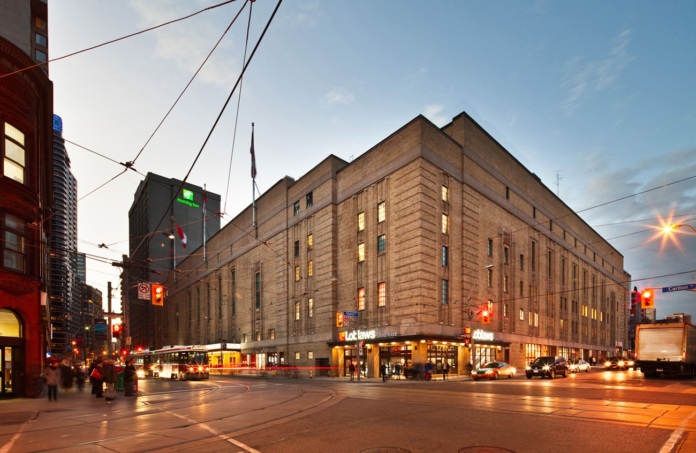
Loblaws at Maple Leaf Gardens in Toronto. Photo: Loblaws
Canadian consumers continue to prioritize value as economic pressure and elevated food costs reshape grocery shopping habits across the country, according to executives at Loblaw Companies Limited during the company’s first quarter 2026 earnings call. The retailer reported continued strength in its discount banners, growing demand for promotions and private label products, and an ongoing shift toward lower-cost food purchases as shoppers remain cautious with spending.
The company delivered first quarter revenue growth of 4.2% year-over-year to $14.48 billion, while adjusted diluted net earnings per share increased 10.6%. Loblaw also reported strong momentum in both food and pharmacy operations, supported by new store openings and continued expansion across Canada.
Executives, however, spent much of the call discussing how Canadians are continuing to adjust purchasing behaviour in response to affordability pressures.
“We are seeing right now is more of the same,” said President and CEO Per Bank during the earnings call. “Customers, they are still doing what they did in the last quarter. They are trading down.”
Loblaw executives pointed to changing purchasing patterns across core grocery categories as consumers increasingly gravitate toward lower-cost alternatives and promotional pricing.
Per Bank cited chicken sales as one example, noting that customers are buying fewer premium “free-from” products while increasingly purchasing entry-level offerings instead.
Per Bank
“It’s a double-digit decline in the free form, it’s a double up in our opening price point,” he said during the call.
Executives also noted consumers are purchasing fewer steaks while shifting toward lower-cost proteins such as minced beef, alongside increased promotional shopping activity across the grocery business.
The comments reflect broader trends unfolding across Canada’s grocery sector, where value-focused shopping habits continue to shape retail performance. Loblaw executives said the company’s internal food inflation metrics remain below Canada’s grocery CPI rate of 4.4%, which management attributed partly to promotional strategies, loyalty offers, and efforts to resist supplier price increases.
Private label products also continued to outperform national brands during the quarter, according to management, as consumers increasingly seek lower-cost alternatives without sacrificing perceived quality.
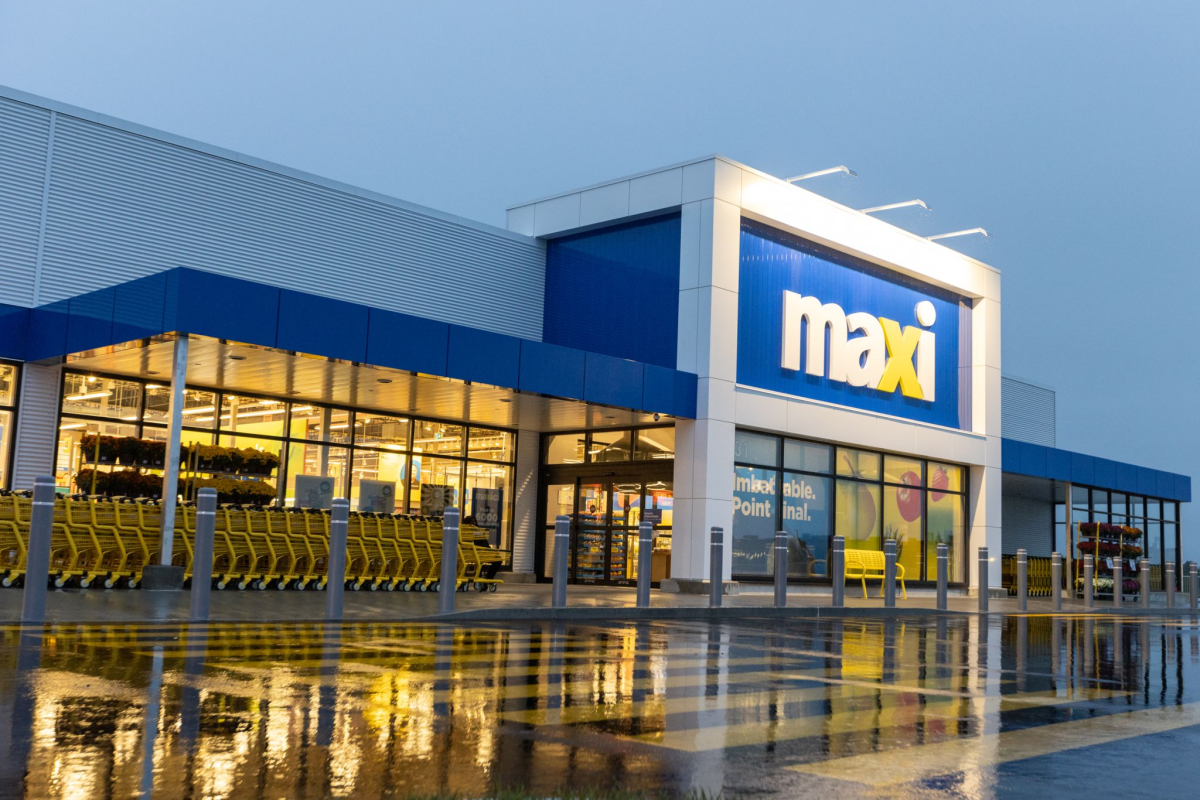
Maxi store. Photo: Loblaw Companies
Discount Banners Continue Driving Growth
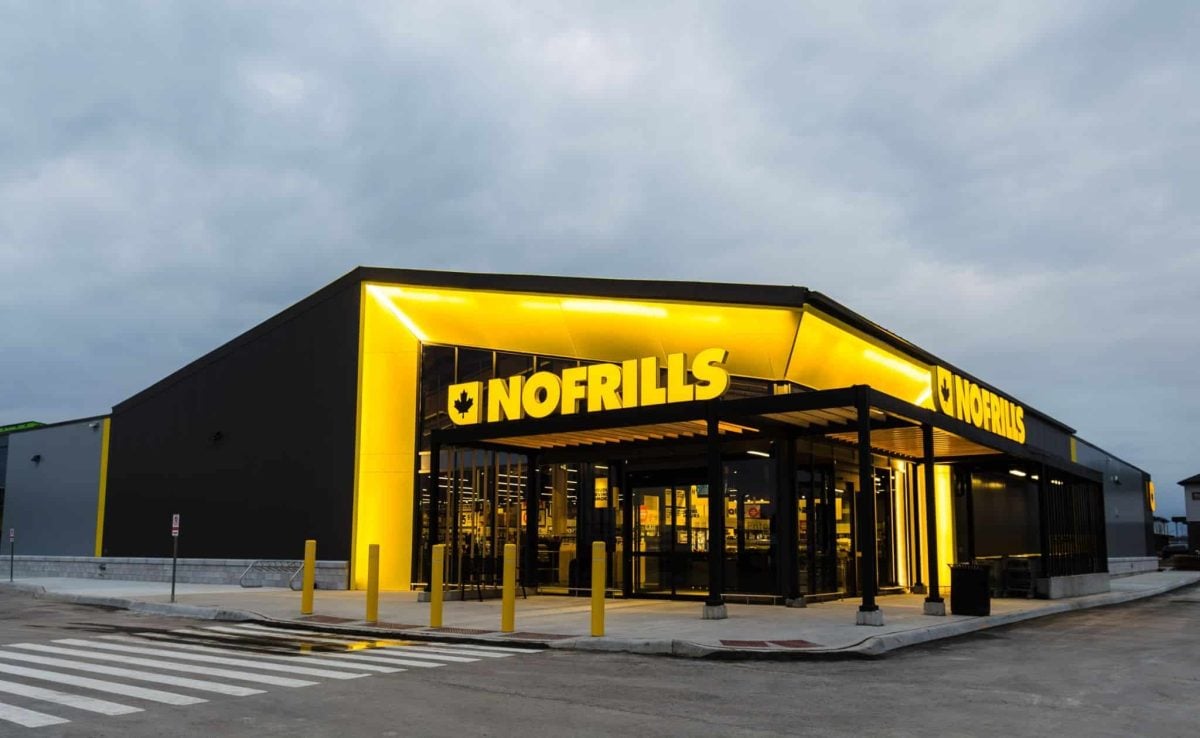
Loblaw’s discount banners, particularly No Frills and Maxi, remained among the company’s strongest growth drivers during the quarter as consumers continued prioritizing affordability.
The company opened five new hard discount stores during the quarter and plans to open approximately 30 discount locations in total during 2026.
Executives said newer discount locations have been generating particularly strong results. Loblaw noted that 28 hard discount stores opened since 2023 are averaging double-digit same-store sales growth.
Management also emphasized that many new stores are being developed in underserved markets where discount grocery penetration has historically been limited.
Per Bank highlighted Vancouver Island as an example, noting that Loblaw operated only one No Frills location there when he joined the company in 2023. By the end of this year, the retailer expects to have four stores operating on Vancouver Island, with additional locations already planned.
The company also cited Sudbury, Ontario, where Loblaw previously had no No Frills stores despite a population of approximately 166,000 residents. The retailer now operates two locations in the market and said performance has exceeded expectations.
Loblaw Reducing Store Construction Costs
Executives also revealed that Loblaw has reduced grocery store construction costs by approximately 30% over the past several years through operational and design efficiencies.
According to Chief Financial Officer Richard Dufresne, the company has focused heavily on reducing refrigeration costs, accelerating store construction timelines, and testing semi-assembled building components to improve development economics.
Management said these efficiencies allow Loblaw to expand into smaller Canadian communities while maintaining acceptable returns on investment.
“For every dollar that we reduce our construction cost, it just drives up our IRR,” Dufresne said.
The comments underscore how major grocery operators are increasingly adapting real estate strategies to support discount expansion and smaller-format growth opportunities across Canada.
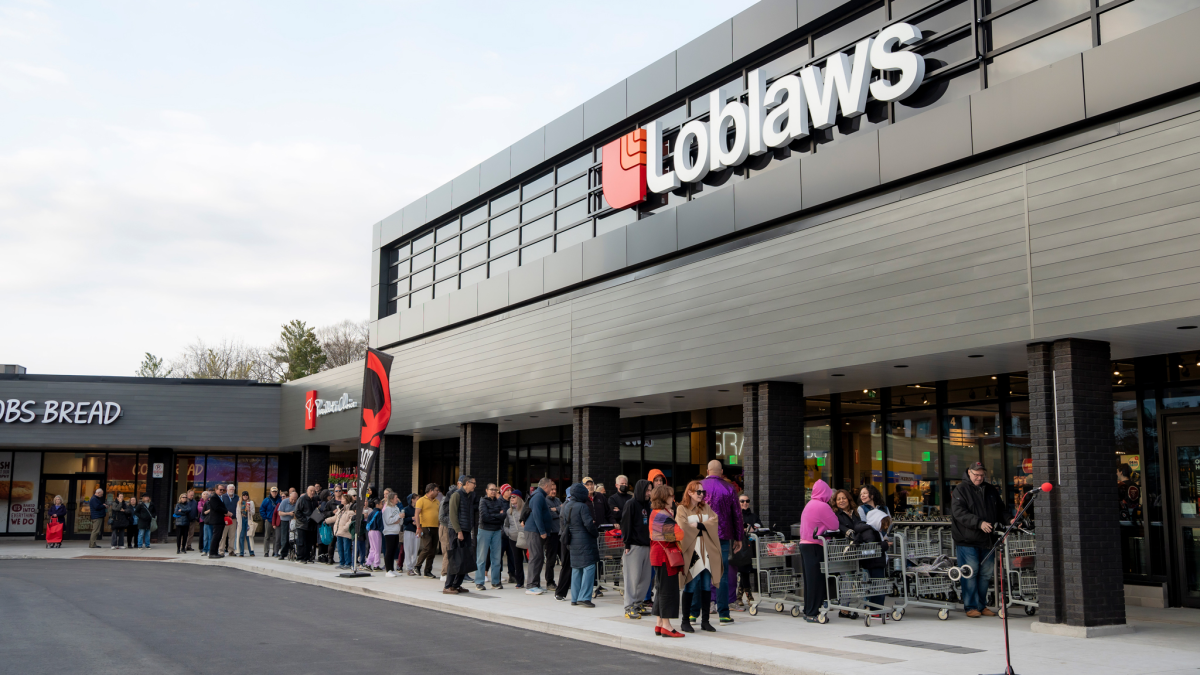
Loblaws at Humbertown Plaza in Toronto. Photo: Loblaw Companies
Conventional Grocery Stores Still Performing Well
While discount banners continue outperforming, Loblaw executives stressed that the company’s conventional grocery operations also remain healthy.
The retailer pointed to strong performance at banners including Fortinos and T&T Supermarket, with management highlighting continued growth in multicultural grocery offerings and preferred food categories.
Executives also said conventional stores continued gaining tonnage and market share against competitors despite cautious consumer spending.
The company’s food same-store sales grew 2.4% during the quarter, while absolute food sales increased 3.9%.
Loblaw additionally reported continued momentum in e-commerce, with online sales increasing 20.3% year-over-year, driven by growth in PC Express delivery and third-party delivery integration.
New concept No Frills store in Komoka. Image: Loblaw Companies
Discount Grocery Growth Continues Reshaping Canadian Retail
The latest results reinforce how discount grocery continues evolving from a temporary inflation-era response into a more deeply embedded consumer behaviour trend across Canada.
Although executives said shopping patterns have not materially worsened in recent months, the company acknowledged that consumers remain cautious and highly focused on value across multiple categories.
At the same time, Loblaw is continuing to invest aggressively in discount grocery expansion, supply chain modernization, e-commerce, and operational efficiencies as competition intensifies across Canada’s grocery sector.
The company plans to open approximately 70 stores in total during 2026, including both grocery and pharmacy locations.
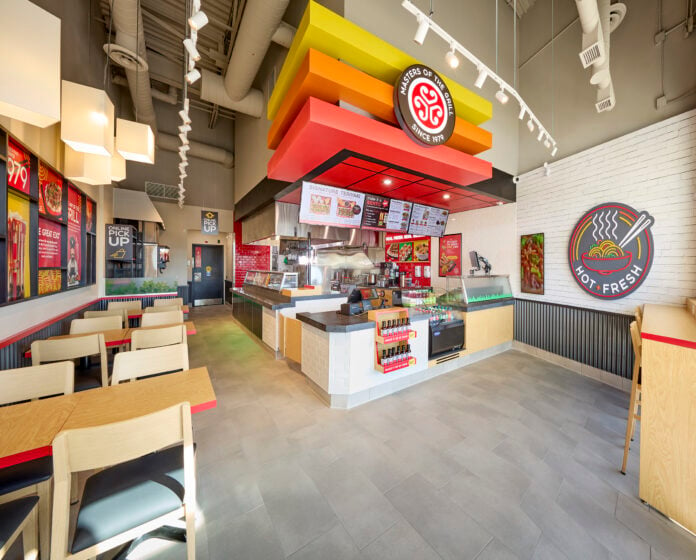
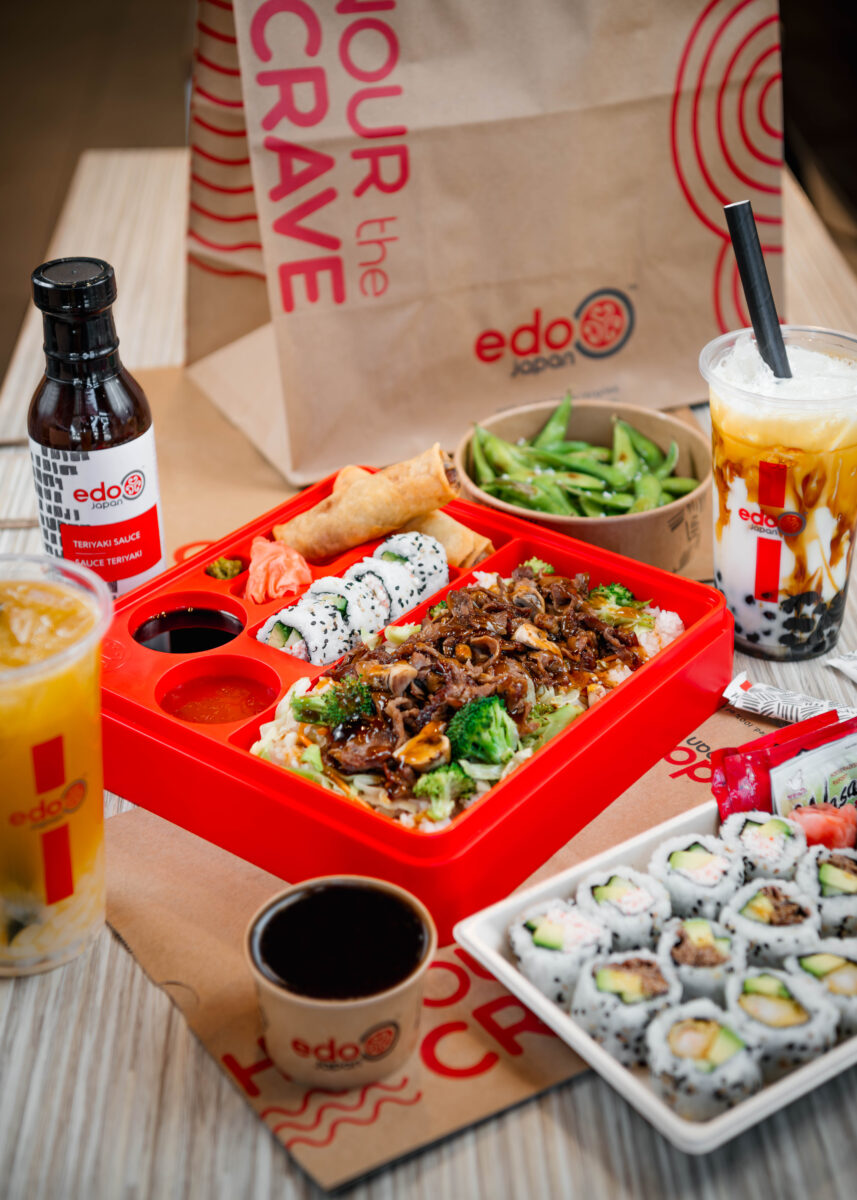
Edo Japan is accelerating its expansion across Canada, building on a franchise model that continues to attract new franchise partners while driving sustained reinvestment from its existing network.
Founded in Calgary, the quick‑service restaurant brand specializing in Japanese‑style cuisine is nearing 220 locations nationwide, with approximately 70 per cent of franchisees committed to multi‑unit ownership.
That depth of reinvestment underscores growing confidence in the brand’s long‑term performance and scalability, as operators expand their portfolios over time rather than cycling out of the system.
“Franchisees choose to reinvest when they see a business that is stable, relevant and built to perform across different markets and cycles. That level of confidence is earned. It comes from consistently delivering strong unit economics, maintaining a clear and disciplined operating model and continuing to evolve the brand so it stays meaningful to guests,” he said.
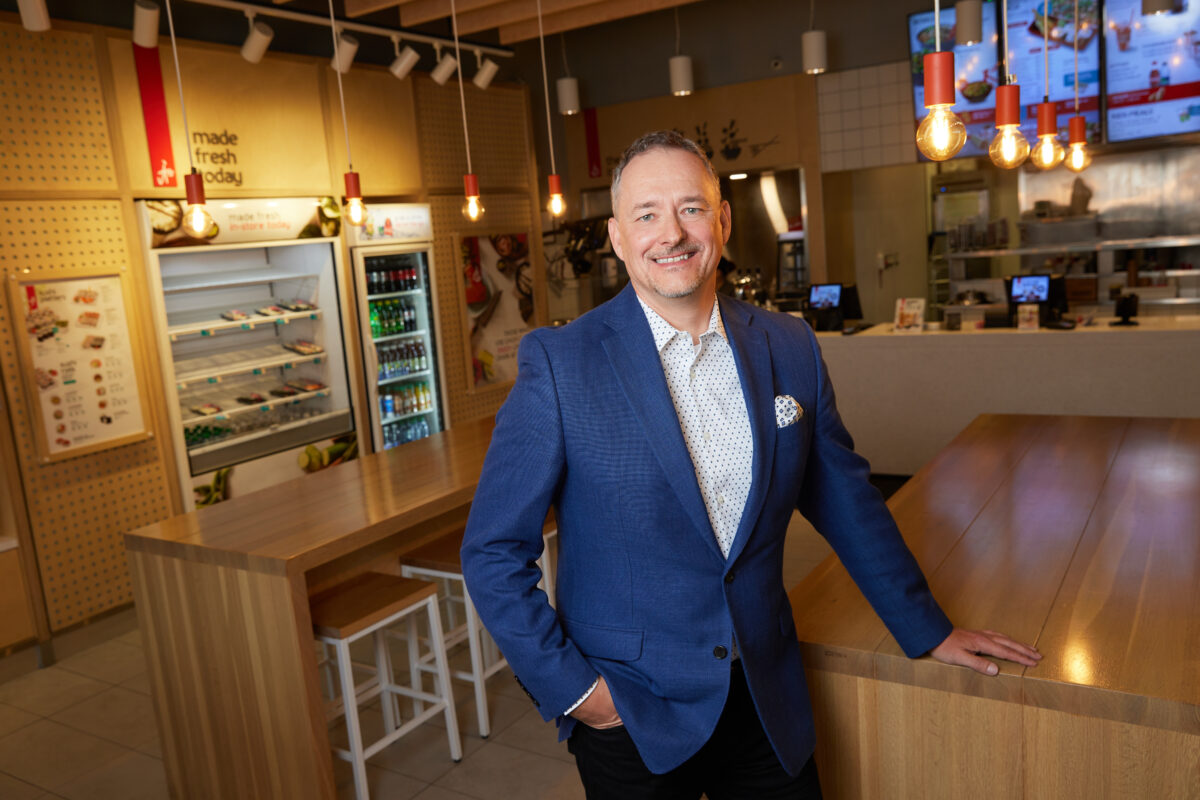
Dave Minnett, President & CEO of Edo Japan
“We’ve been doing this for a long time, and that consistency matters. When an operator can look at their first location and see predictable performance, a clear path to growth and a brand that’s still gaining traction, expanding into additional locations becomes a very rational decision.”
Minnett said the brand has always approached the model with the belief that you have to get the first location right before anything else.
“If the fundamentals are strong at the unit level, growth tends to follow naturally. Many of our franchisees started with a single restaurant and expanded over time as they built confidence in the consistency of the model. From there, it’s about removing friction as they scale. We’ve built a framework that supports growth in a practical way, whether that’s around site selection, build-out, training or ongoing operations,” he said.
“Just as importantly, the relationship evolves. Early on, there’s a lot of focus on getting the day-to-day right. As operators grow, the conversations shift toward portfolio performance, team development and longer-term planning. The goal is to keep the business straightforward at the store level, while giving experienced operators the structure and access they need to grow in a disciplined way.”
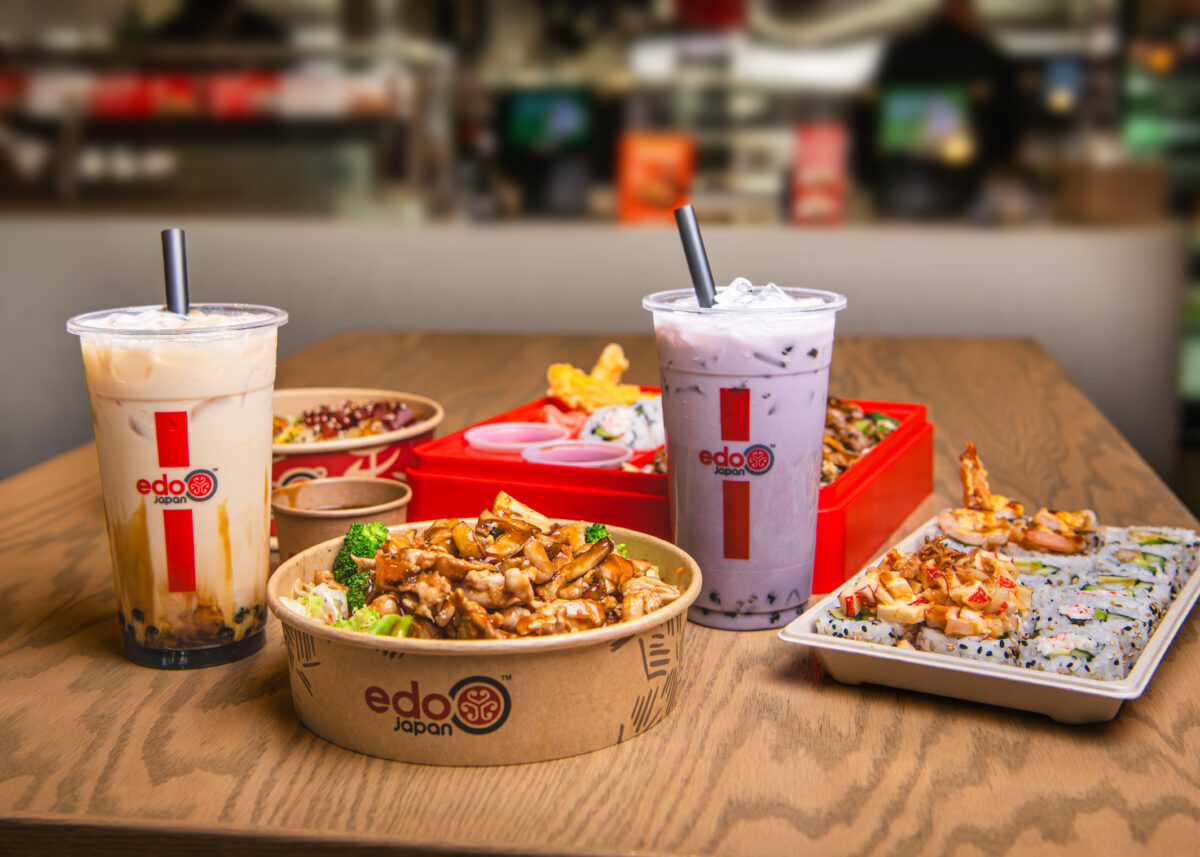
Edo Japan photo
The brand has been around for 47 years, Minnett says that comes from staying focused on the fundamentals.
“The food has to be good, the brand has to mean something to guests and the business has to work for the people operating it. That’s been consistent from the beginning. At the same time, we’ve never stood still. We’ve continued to evolve where it matters, whether that’s the look and feel of the restaurants, the menu or how we connect with guests digitally,” he explained.
Multi-unit Edo Japan franchisee Ken Chow
For multi-unit franchisee Ken Chow, in Alberta and Ontario, what first drew him to Edo Japan was how strong and recognizable the brand already was.
“People knew it, trusted it, and kept coming back, which gave me a lot of confidence right out of the gate. After opening my first location, I started to really understand the model and how it performs day to day. It’s a business where if you stay disciplined and execute well, you can see consistent results. That made the decision to grow feel a lot more like a smart next step than a big leap,” he said.
Like many franchisees, his first location was very hands-on. He learned the business inside and out, from operations to staffing to guest experience.
“As the restaurant became more established and I built a strong team, I realized the model was scalable. Each new location came with its own learning curve, but the foundation was always there. Over time, my role shifted from working in the business to working on the business, which is really what made multi-unit ownership possible,” added Chow.
“What made it easier to scale was how clear and repeatable the system is. There are solid processes in place, from training to operations, so you’re not starting from scratch with each new location. A big part of it also comes down to building strong leaders in each restaurant.
Edo Japan photo
“Once you have the right people in place, it becomes much more manageable to grow. There’s support there when you need it, especially around openings or when something new comes up, but a lot of the confidence comes from knowing the model works and you can apply it consistently across locations.”
When asked what he would say to entrepreneurs considering a franchise opportunity but unsure about long-term growth potential, he replied: “I’d say look closely at the franchisees who’ve already been invested in the business for years and ask yourself why they’re still here.
“In Edo Japan’s case, the fact that so many operators continue to reinvest speaks volumes. Franchising is a long-term decision, and Edo Japan is a brand that continues to evolve while staying true to what made it successful in the first place. If you’re looking for a community you can grow with over time, that track record really matters.”
Retail Insider’s latest articles are listed below alongside Canadian Retail News From Around the Web. Edo Japan’s expansion highlights strong franchisee reinvestment and multi-unit ownership fueling growth. RioCan’s Q1 results reveal a surge in retail leasing with near full occupancy and rapid re-leasing of Hudson’s Bay spaces. Together, these developments and others illustrate a retail landscape balancing franchise scalability and tightening commercial real estate markets, signaling cautious optimism amid evolving consumer behaviour.
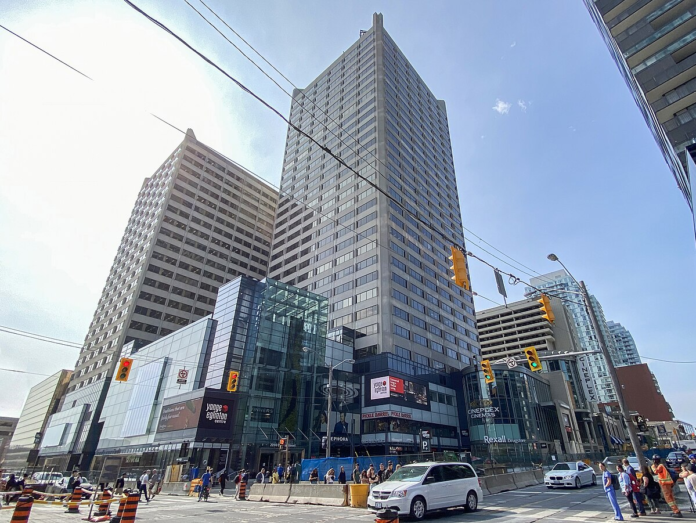
RioCan's head office at Yonge Eglinton Centre in Toronto. Photo: McGregor Allsop
Canada’s largest retail-focused REIT is seeing accelerating momentum as demand for space remains strong, rents rise sharply, and vacant department store boxes begin to fill.
RioCan Real Estate Investment Trust reported first quarter 2026 results that reinforce a narrative increasingly evident across the Canadian retail landscape: well-located retail real estate is tightening, and landlords are gaining leverage.
The company’s performance reflects a combination of structural factors, including limited new supply, sustained demand from essential retailers, and the ongoing absorption of large-format vacancies left behind by legacy department store Hudson’s Bay Company.
Leasing Spreads Signal Strength in the Market
RioCan posted blended leasing spreads of 25.8% in the quarter, with new leasing spreads reaching 58.5%. Over the past twelve months, blended spreads have averaged 23.1%, pointing to sustained upward pressure on rents.
President and CEO Jonathan Gitlin described the current environment as a “retail leasing super cycle,” driven by expiring legacy leases and a lack of new supply.
Jonathan Gitlin
The results are not isolated. Instead, they reflect a broader shift in market dynamics, where existing assets are being repriced to current market levels after years of more modest growth.
“We continue to benefit from a favorable retail leasing environment,” Gitlin said on the company’s earnings call, noting that the trend is supported by high-quality assets in densely populated markets.
Occupancy Remains Near Full Capacity
RioCan’s retail portfolio remains effectively full, with committed occupancy at 98.6% and a retention rate of 92.4%. The high occupancy levels underscore the lack of available space across major markets.
Demand continues to be driven primarily by necessity-based tenants, including grocery stores, pharmacies, and essential personal services. These categories have proven resilient despite broader economic pressures, and they are continuing to expand in key urban nodes.
At the same time, limited turnover is constraining the amount of space available for new entrants, intensifying competition for well-located units.
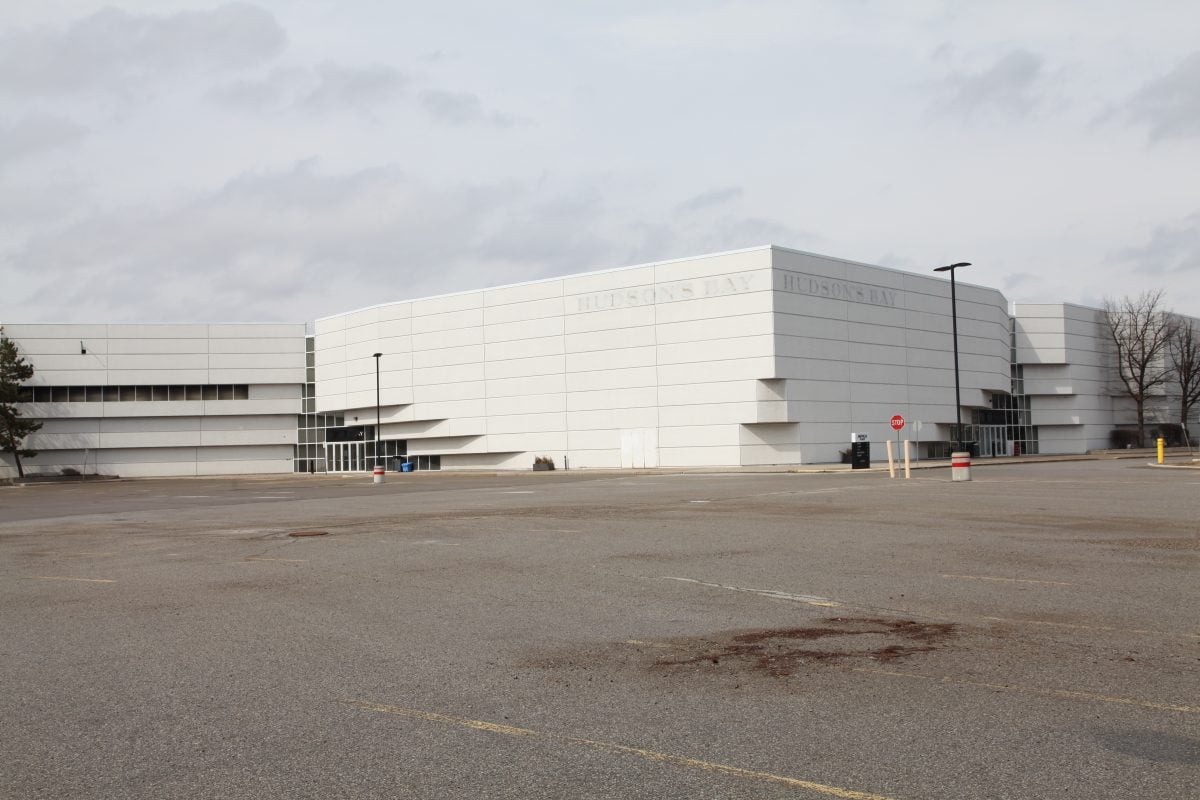
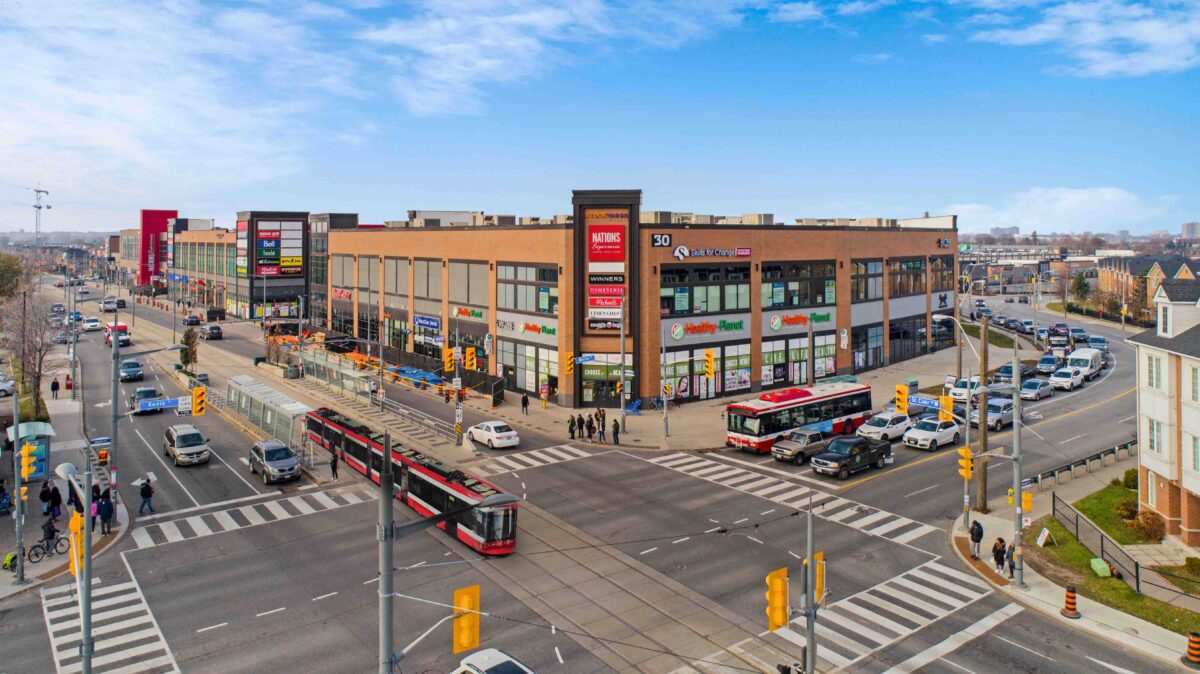
Exterior of the former Hudson’s Bay building at Oakville Place, to become Nations Experience.
Former Hudson’s Bay Spaces Begin to Fill
A notable development in the quarter was progress in leasing former department store space.
RioCan highlighted that vacant boxes at properties such as Oakville Place and Georgian Mall, previously occupied by Hudson’s Bay, have already been fully leased. While some of these tenants have not yet commenced rent payments, the rapid backfilling of these large-format spaces signals strong underlying demand.
The absorption of former Hudson’s Bay locations is significant given the scale of vacancies created by the company’s exit from multiple markets. Across Canada, former department store spaces have represented one of the largest sources of available retail square footage.
RioCan’s experience suggests that well-located assets are being repositioned more quickly than some observers anticipated.
No New Supply Reinforces Landlord Advantage
A key theme emerging from RioCan’s commentary is the absence of meaningful new retail supply.
Gitlin emphasized that barriers to development remain high, including land availability, zoning constraints, and construction costs. As a result, new ground-up retail projects are unlikely to materially impact the market in the near term.
The lack of supply is extending the runway for existing assets, allowing landlords to capture rent growth as leases roll over.
“If RioCan can’t find viable land and opportunities to build new sites, it’s likely others will face the same challenges,” Gitlin said.
This dynamic is contributing to a structural shift in the sector, where value is increasingly concentrated in existing, well-located properties.
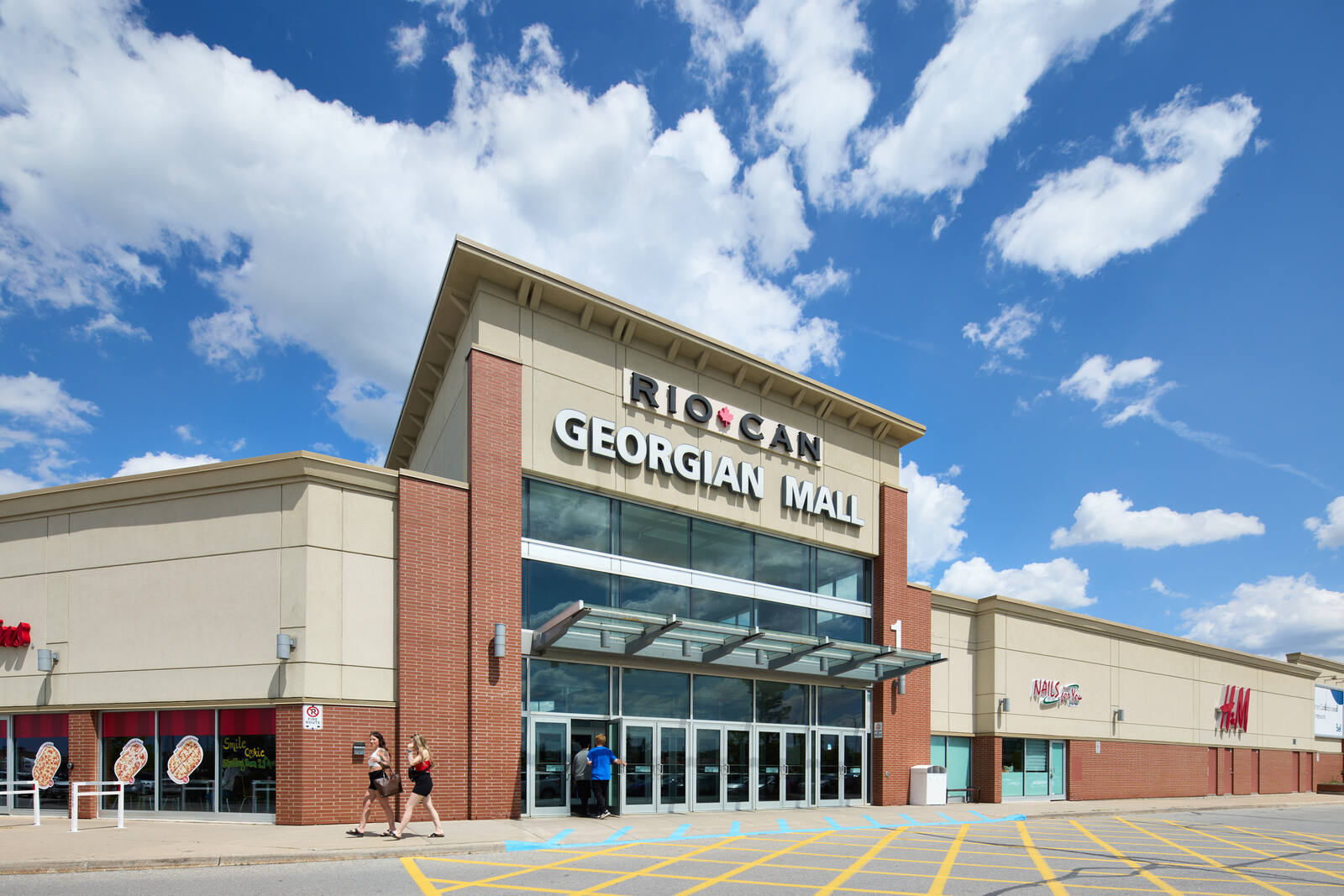
Georgian Mall in Barrie. Photo: RioCan
Leasing Economics Continue to Evolve
Beyond headline rent growth, RioCan is also reshaping lease structures.
New leases increasingly include annual rent escalations, typically in the range of 2% to 4%. At the same time, the company is reducing reliance on percentage rent and negotiating more predictable long-term agreements.
These changes reflect a shift toward more stable and transparent income streams, aligning retail leasing more closely with other commercial real estate asset classes.
The approach also positions landlords to better capture inflationary growth over time.
Capital Recycling Refocuses Strategy on Retail
RioCan continues to advance its capital recycling program through the sale of residential assets under its RioCan Living platform.
As of early May, the company expects to repatriate approximately $1.04 billion, representing about 80% of its $1.3 billion target. Proceeds are being redeployed into retail-focused investments, unit repurchases, and balance sheet improvements.
The strategy is simplifying the business while sharpening its focus on core retail operations.
At the same time, RioCan is investing in intensification opportunities within its existing portfolio, including retail infill and site enhancements designed to increase density and productivity.
Toronto Stock Yards Village, image via RioCan
Outlook Remains Stable as Growth Continues
RioCan reaffirmed its 2026 outlook, including same-property net operating income growth of 3.5% to 4% and core funds from operations of $1.60 to $1.62 per unit.
The company expects leasing momentum to continue, supported by strong fundamentals and limited supply.
While leasing spreads may fluctuate from quarter to quarter, the broader trajectory remains positive.
Retail Real Estate Enters a New Phase
RioCan’s results point to a sector that is no longer defined by excess space or weak demand.
Instead, the Canadian retail market is entering a phase characterized by constrained supply, strong tenant demand, and rising rents. The rapid leasing of former Hudson’s Bay spaces adds another layer to that narrative, suggesting that even large vacancies can be absorbed in the current environment.
For landlords, the implications are clear. Pricing power is returning, and the value of well-located retail real estate is being reinforced.
For retailers, the environment is becoming more competitive, as access to prime space tightens and occupancy costs rise.
As 2026 unfolds, RioCan’s performance will serve as a key indicator of how durable these trends prove to be across the broader market.
The company said system-wide sales grew by 6.2% compared with last year.
“We delivered a strong start to the year, converting solid topline results into double-digit earnings growth while returning capital to shareholders through the resumption of share repurchases and our growing dividend. Tim Hortons and International each delivered their 20th consecutive quarter of positive comparable sales. And at Burger King, our results reflect several years of hard work by our franchisees and teams to elevate the guest experience, driving stronger engagement and clear outperformance. We’re executing against the plan we laid out during our Investor Day in February and remain confident in the path ahead,” said Josh Kobza, Chief Executive Officer of RBI.
The company said system-wide sales reached $347 million US in the quarter, up from $322 million US for the same period a year ago.
Restaurant Brands International Inc. is one of the world’s largest quick service restaurant companies with nearly $48 billion in annual system-wide sales and roughly 33,000 restaurants in more than 120 countries and territories. RBI owns four of the world’s most prominent and iconic quick service restaurant brands – Tim Hortons, Burger King, Popeyes and Firehouse Subs.
RBI’s principal executive offices are in Miami, Florida. In North America, RBI’s brands are headquartered in their home markets where they were founded decades ago: Canada for Tim Hortons and the U.S. for Burger King, Popeyes and Firehouse Subs.