Retail Insider is streamlining its Canadian retail news from around the web to include a handful of top news stories that can be viewed quickly during the day. Here are the top stories from the past 24 hours.
Rendering of the new Paris Jewellers at SouthCentre in Calgary. Image supplied
Edmonton-based Paris Jewellers has opened its newest retail location at Southcentre Mall in Calgary, marking the company’s 23rd store in Canada and its third in the city. The expansion reflects the brand’s evolving retail strategy, which prioritizes customer experience, modern store design, and internal team development as key drivers of success.
“This store is really exciting for us,” said Chau Lui, Co-Owner and Director of Operations for Paris Jewellers, in an interview with Retail Insider. “We’ve been looking at Southcentre for a long time, but we wanted to open when we were ready and when we had the right people. That’s been the foundation of how we’ve approached growth.”
The new Southcentre Mall store introduces an updated concept that draws inspiration from the brand’s flagship location at West Edmonton Mall. According to Lui, the design reflects years of learning and feedback from both customers and employees.
“We wanted a space that feels inviting, that encourages people to stay and explore,” she explained. “The layout now features showcases along the walls to create open sightlines and conversation areas. We’ve also added more mirrors, which seems small, but customers linger longer when they can see how a piece works with their overall look.”
Visual details also play an important role. Each concept store includes unique wallpaper selections, personally chosen by Lui and her design team. “It’s a little personal touch that adds texture and warmth,” she said. The Southcentre location is smaller than the flagship, creating what Lui calls “a cozy, approachable space” that ensures customers never feel overwhelmed.
Sisters Trang Wong and Chau Lui, co-owners of Paris Jewellers.
A Family-Owned Canadian Brand with Deep Roots
Founded in 1987 by a Vietnamese immigrant family, Paris Jewellers began as a single store in St. Albert, Alberta. Today, it operates across Alberta, British Columbia, Saskatchewan, and Ontario, with plans for further expansion. The company remains headquartered in Edmonton.
The brand’s origins are deeply tied to resilience and service. Lui recalls how her mother built the company without speaking English, relying on a Vietnamese-English dictionary to communicate with customers. “Back then, we didn’t have marketing or all the product selection,” said Lui. “What we had was how we made people feel. That experience kept people coming back.”
Experience at the Heart of Expansion
Today, Paris Jewellers has built its reputation on a high-touch, personalized shopping experience, and that focus remains central to its growth. “From day one, the only thing we really had was how we made people feel,” said Lui. “That’s why training is such a huge priority for us. We want every interaction to feel special and consistent.”
The company’s internal strategy reflects this emphasis on experience. Rather than opening stores based solely on market data or available real estate, Paris Jewellers now prioritizes locations where it can promote trained team members into leadership roles.
“When we think about growth, we don’t just think about store numbers,” Lui explained. “We also think about the growth of our employees. Our Southcentre manager was an assistant manager at CF Market Mall who we knew was highly promotable. That internal strength makes for a seamless opening.”
This approach supports retention and culture, which Lui views as non-negotiable for long-term success. “Everyone in our organization knows what it takes to grow with us,” she said. “It’s never a surprise. We have clear criteria for advancement, and that creates excitement and engagement across the team.”
Rendering of the new Paris Jewellers at SouthCentre in Calgary. Image supplied
Data, Design, and Customer Insights
While team development drives operational strategy, data plays an important role in site selection. The company analyzes online sales, customer surveys, and regional trends to guide decisions. However, Lui emphasizes that data alone does not dictate timing. “We knew Calgary was strong for us,” she said. “But we waited until we had the right people ready to lead.”
The Southcentre store also reflects Paris Jewellers’ evolving understanding of how customers shop for jewelry today. “When we design a store, we think about the full experience,” Lui noted. “Jewelry isn’t just a single piece, it’s about how it fits into your collection and your lifestyle. The design helps bring that to life.”
Looking Ahead: Ontario Expansion and a “Dream” Collection
Paris Jewellers sees significant opportunity in Ontario for future growth, although Lui declined to share specifics. “You’ll have to stay tuned for that,” she said. In the meantime, the company is preparing for its holiday season and an upcoming launch that she describes as “a dream come true.”
“It’s something really special that we can’t announce just yet,” she hinted. “But it’s a collection we’ve been working on for a long time, and it means a lot to us.”
“One-third of Canadian small firms depend on the summer tourism season for their revenues, and we cannot afford to lose a single day,” she said.
“Given the ongoing tariff disputes with the United States and China, Canadian businesses are scrambling to find new suppliers and customers in other provinces or other countries. Removing Canada’s major domestic and international carrier from service would be another blow at this critical time.
“We are calling on the airline and union to resolve this issue with no disruption to service. If this is unsuccessful, Ottawa needs to immediately intervene to avoid the significant economic damage a strike would have on Canada’s economy.”
The CFIB is Canada’s largest association of small and medium-sized businesses with 100,000 members across every industry and region.
“Every day, more than 130,000 people fly with Air Canada for personal, business and tourism reasons. Air travel also plays a critical role in internal and international trade being the transportation mode of choice for high-value and time-sensitive cargo. Almost half of Canadian pharmaceuticals that are shipped by air travel on Air Canada. Agriculture and perishable food products, and parts and machinery for small and medium-sized Canadian manufacturers will be impacted. There is little doubt that the impact of a labour disruption at Air Canada will be felt by all Canadians,” he said.
David Pierce
“At a time when Canada is facing unprecedented economic challenges and trade uncertainty, a service disruption would interrupt air cargo connectivity, directly impacting Canadian businesses that are working to diversify their customers in provinces across the country. The impact on business will be felt internationally too, and would lead to losses for Canadian exporters, further compounding the impacts on industries throughout our economy.
“At the Canadian Chamber of Commerce, we know the best deals happen when both sides sit down and negotiate in good faith at the bargaining table. This year, especially, the stakes of these negotiations are high, not just for flight attendants and Air Canada, but for workers at our airports and for the broader Canadian economy.
“If parties cannot reach a negotiated agreement, the federal government should be ready to intervene to avoid a prolonged disruption to Canadian air travel and shipping. We urge the federal government and all parties to continue to put the best interests of our country’s businesses, workers, and communities at the forefront.”
The Canadian Chamber of Commerce is Canada’s largest and most activated business network — representing over 400 chambers of commerce and boards of trade and more than 200,000 businesses of all sizes, from all sectors of the economy and from every part of the country.
On Wednesday, Air Canada said that it has issued the statutory 72-hour lockout notice to the Canadian Union of Public Employees (CUPE) representing 10,000 flight attendants at Air Canada and Air Canada Rouge after the union provided notice it intends to begin a strike.
To provide customers certainty, Air Canada will begin a phased wind down of most of its operations to be completed over the next three days. The airline has also sought government-directed arbitration to resolve the situation, it said.
“Air Canada has been forced into this decision to lock out its Flight Attendants and regrets the impact the suspension of operations will have on customers as a result of the union’s issuance of a strike notice during such a heavy travel period,” said the company.
“However, as events at other airlines in recent years have shown, sudden or unmanaged work stoppages produce a significantly worse disruption to travel than a planned suspension of flying. A controlled wind down allows Air Canada to advise customers in advance, reduces the chance of customers being stranded, provides the airline and customers the time and opportunity to make alternative travel arrangements, and gives customers more certainty.”
Net earnings of $323.0 million, up 9.0% and adjusted net earnings of $331.8 million, up 8.8%
Fully diluted net earnings per share of $1.48, up 13.0% and adjusted fully diluted net earnings per share of $1.52, up 12.6%
Eric La Flèche
“We are pleased with our results in the third quarter, marked by solid comparable sales growth in food and pharmacy, and good cost control. We successfully opened 5 new food stores in the quarter, a pace that will continue in the fourth quarter, on track with our plan to accelerate the development of our growing discount banners. We are confident that our sustained investments in our retail network and supply chain combined with strong execution will continue to fuel our growth and create long-term shareholder value,” said Eric La Flèche, President and Chief Executive Officer.
“The significant investments in the modernization of our supply chain are largely behind us, and we are now focussed on realizing efficiency gains,” said the company.
“These investments position us well for growth through the expansion of our retail network in the years ahead. As we begin our fourth quarter, we continue to face an uncertain economic environment, and it is difficult to predict how this environment will evolve and how it will impact our operations and our customers. We remain steadfast in our focus to deliver value to our customers through our robust merchandising programs, our strong private label and loyalty offers and working with our supply chain partners.”
With annual sales of more than $21 billion, METRO Inc. is a food and pharmacy leader in Québec and Ontario, providing employment to more than 97,000 people.
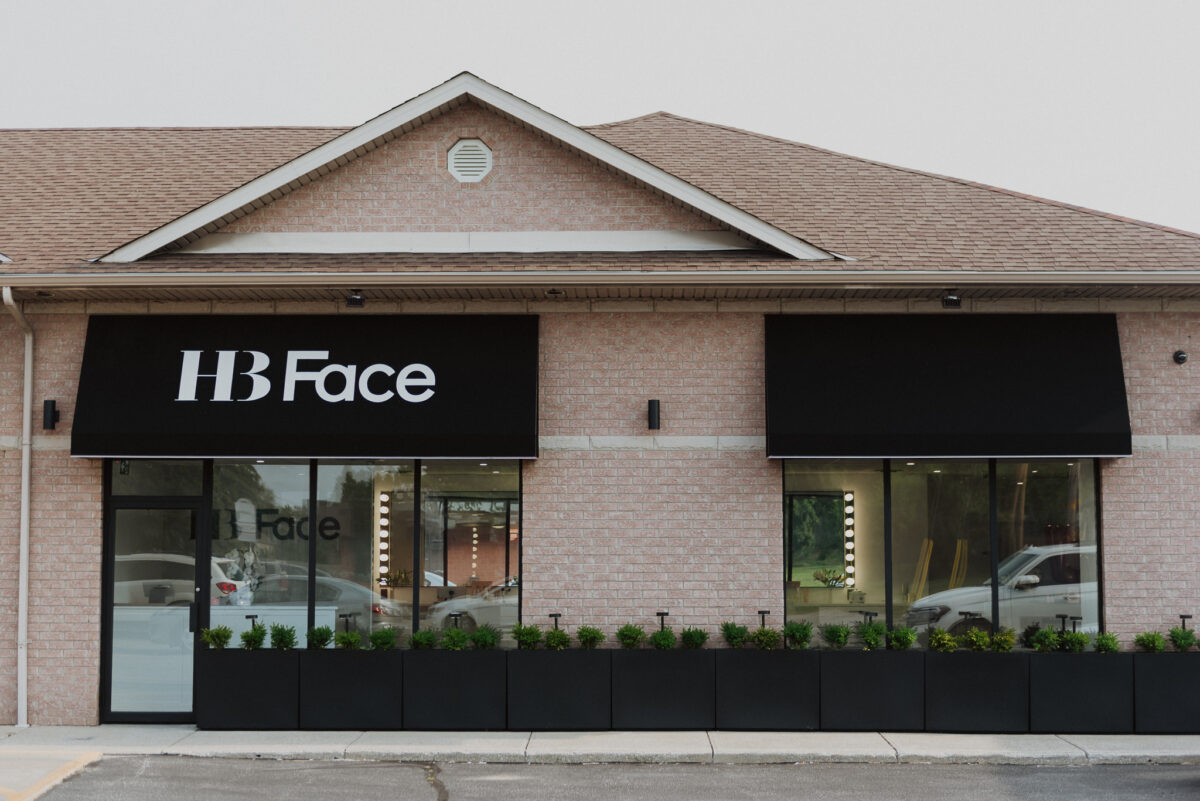
HBFace, the modern beauty studio rooted in the philosophy of Brows First, Beauty Follows, has opened its third location at 1202 Lakeshore Rd, Sarnia.
This expansion is not just a business milestone, it’s a deeply personal homecoming for founder and CEO Haley Bogaert, returning to her hometown of Sarnia after years of healing and transformation.
She has been living in Toronto and is now splitting her time between Sarnia and Toronto. Her other two locations are in Toronto in Oakville.
Haley Bogaert
“Coming back to Sarnia feels like a full-circle moment,” said Bogaert. “After losing my mom and brother, it was too painful to be here for a long time. But resilience transformed that pain into purpose, and now HBFace is rooted in the community where my story began.”
At HBFace, beauty is more than skin deep. The brand champions a belief in Resilient Beauty – that true beauty begins within and radiates outward, she added.
Born from personal loss, HBFace’s journey is a tribute to the power of inner strength and the healing nature of self-expression. With a strong commitment to mental health and community connection, HBFace is more than a brow and beauty studio, it’s a movement, explained Bogaert.
HBFace said it delivers a modern, elevated beauty experience grounded in expertise and thoughtful design. Clients can expect efficient, professional treatments in a welcoming, high-style space, where results meet intention.
With plans for rapid expansion across Canada and future ambitions in the U.S., HBFace said it is on a mission to simplify beauty, empower individuals, and build a resilient community. Each new location carries forward the belief that Brows First, Beauty Follows, because beauty isn’t just what you see. It’s what you overcome.
“Whether you’re enhancing your everyday look or prepping for a special moment, HBFace offers consistent and high-impact results. Every service is designed to simplify your routine and boost your confidence because when your brows are right, the rest falls into place,” said the brand.
“In addition to in-studio services, HBFace offers a curated line of skincare and beauty products – like the bestselling Brow Glaze, Brow & Lash Serum, Lip Crayon, and Water for Skin Hyaluronic Acid Serum, designed to complement treatments and help clients maintain effortless beauty at home.”
The company said its brand pillars are: ● Brows First: Brows frame the face and set the tone for everything that follows. HBFace specializes in brows as the foundation of beauty—delivering structure, balance, and glow-up energy. ● Resilience: HBFace’s story is rooted in loss, but built on strength. The brand reflects the power of overcoming adversity and the belief that resilience is its own form of beauty. ● Simplicity: HBFace believes in doing more with less—streamlining routines with effective, expertly executed services and curated skincare and makeup essentials. ● Accessible Luxury: Premium doesn’t have to mean exclusive. HBFace provides high-quality services and products at accessible price points, ensuring beauty excellence for all.
“At the heart of HBFace is a team of skilled professionals trained in the latest techniques through rigorous, ongoing training and education. This ensures every client receives exceptional service with consistency and care – rooted in resilience, elevated by expertise,” explained the brand.
“To foster ongoing connection and make beauty maintenance effortless, HBFace offers the HB Insider Club – a membership program that includes exclusive perks, priority booking, and special pricing. It’s designed to support each client’s journey toward Resilient Beauty, every day.”
Toronto-based family physician Dr. Erica Weste has launched a new brand that’s breaking ground in the baby care industry. Her company, My Petite Coco, is the first and only complete baby skincare line in Canada founded and formulated by a physician mom.
“It’s thoughtfully crafted, made with love and perfected by science, which is the ethos of our brand,” said Weste in an interview with Retail Insider. “The products are designed to meet a baby’s delicate, sensitive skin, delivering maximum but gentle hydration, protecting and soothing the skin.”
Though the line is suitable for anyone, the products are geared specifically toward babies from newborn to age three. “Even more narrow, the focus would be more so on babies, so newborns especially, because that’s a really important time when it comes to skincare for little ones,” she said.
Erica Weste
The idea behind My Petite Coco began in 2020, when Weste created a baby shower gift for a close friend who was expecting twins. “I thought, what can I give her as a really special, personalized gift that’s something that you just can’t buy off the shelves? So I made a few baby skincare products for her to use on her daughters,” she said.
Over time, and through her own medical practice, she observed how common skin issues are among infants. “At least 50% of babies born, at least in Canada, typically will have some kind of skin symptom, whether it’s dryness, redness, or itching,” said Weste.
When she became pregnant, she looked at what was available on store shelves. “There was a void in the market. There was nothing that really satisfied my expectations for baby skincare. So I went back and pulled out the formulas I had from 2020, I revamped them. And that’s the story of My Petite Coco.”
The name also holds personal meaning. “Coco is the nickname for my daughter. And ‘petite’—I’m bilingual, so I grew up speaking English and French—was just a way to pay homage to my French-speaking background.”
Source: My Petite Coco
Launched in April 2025, the brand has already gained retail traction. My Petite Coco products are currently available on well.ca, as well as in boutique stores like Love Me Do on Queen Street in Toronto, Jill and the Beanstalk on College Street in Toronto, and Thistle & Wren in British Columbia.
Weste sees expansion in the near future. “I do foresee going into more retail outlets, considering this is a fairly new brand. I do predict some more brick and mortar space, but also increasing our direct-to-consumer sales with time.”
However, she’s not looking to open her own storefront. “We do not have plans for our own brick-and-mortar store. We want to meet our customers where they are, which is in maternity and baby stores.”
Currently, the line includes four SKUs: Baby Balm, Baby Oil, Baby Cream, and Baby Wash and Shampoo.
Weste’s background in science and medicine plays a central role in her product development. “I’m a physician who also does my own formulations. I have a Bachelor of Science from the University of Toronto, and I’ve been making my own skin and haircare products for over 20 years,” she said.
“Every single ingredient that is in every single one of our products has been selected by me—heavily researched, everything is evidence-based and tested for efficacy and safety,” she added. “I use premium ingredients in my own skincare and I thought, well, I feel like babies should have premium ingredients as well. We care about our skin—we should care about our baby’s skin as well.”
BurritoBar USA Inc., a leading fast-casual Mexican food franchise, has awarded the Master Franchise rights for the state of South Carolina to Krinesh Patel, Rakesh Patel and Jatin Patel with plans to open 54 new franchised Barrio Burrito Bar restaurants over the next two decades.
With the signing of this most recent Master Franchise Agreement, the brand has surpassed 1,592 contractually committed franchise units throughout the United States, further accelerating the brand’s aggressive growth plans in the U.S. market, said the company.
Barrio Burrito Bar said it prides itself on serving fresh Tex Mex cuisine using high-quality ingredient; daily-prepared meats; homemade salsas; and unique menu offerings such as Bang-Bang Shrimp, Crunchy Chicken, and “Extreme Fries,” providing craveable meal options that appeals to a wide consumer base.
barBURRITO, its Canadian affiliate, opened its first restaurant in downtown Toronto in 2005 and has grown to over 375 locations from coast to coast, establishing itself as dominant market leader and Canada’s largest and fastest-growing burrito franchise.
Building on its success in Canada, the concept entered the U.S. market in 2020 under the name BURRITOBAR. In 2024, it rebranded to Barrio Burrito Bar. As part of the brand evolution, key brand attributes were created including a new name; a contemporary logo; elevated design elements; and refined esthetics. Collectively, these revitalized characteristics further elevates the brand positioning within the category, it said.
Jeff Young
“The growth trajectory of Barrio Burrito Bar in the United States has been extraordinary and our compelling and lucrative Master Franchise program has been a driving force in the success in the company’s ongoing International expansion strategy,” said Jeff Young, Chief Development Officer.
“This exceptional business model offers our Master Franchise partners the opportunity to develop and manage a territory who are remunerated with a predictable and recurring revenue stream through shared franchise fees and ongoing royalties.
“Our accelerated franchise development activity continues to yield remarkable results, with Master Franchise agreements now signed in Michigan, Florida, Virginia, Maryland, Tennessee, Iowa, Nebraska, North Texas, South Illinois, North Illinois, Ohio, New Jersey, West Virginia, Louisiana, Georgia, Long Island and Westchester County in New York State, Kentucky, Indiana, North Carolina, Western New York State, Pennsylvania; Alabama and now South Carolina. Nearing 1,600 contractually committed franchise units in the US is an incredible feat and it’s just the beginning of what we can accomplish together with our incredible Franchise Partners.”
Established in 2005 in Toronto, Canada, barBURRITO Fresh Mexican Grill offers fresh, made-to-order Tex-Mex in a quick-service format. Since its inception, barBURRITO has grown to become Canada’s largest and fastest-growing Mexican food franchise, with over 375 locations nationwide. In 2020, the company expanded into the U.S. under the brand BURRITOBAR, later rebranding to Barrio Burrito Bar. Since then, it has secured single-unit Franchise Agreements, Area Development Franchise Agreements, and Master Franchise Agreements, with commitments to open hundreds of locations across the country.
Hudson's Bay/Saks Fifth Avenue flagships in downtown Toronto. The building at 176 Yonge Street began its life in 1898 as a Simpsons store. Photo taken April 23, 2025 by Craig Patterson
The International Downtown Association Canada (IDA Canada) earlier this month officially launched Downtown Month 2025, a national campaign taking place throughout August to celebrate and highlight the essential role that downtowns play in communities across the country.
From local businesses and cultural institutions to public spaces and gathering places, downtowns remain the economic, cultural, and social engines of cities, towns, and neighbourhoods. Downtown Month provides an opportunity to showcase the strength and resilience of these spaces while underscoring the pressing need for coordinated leadership and investment to support their continued renewal, said IDA Canada.
Kate Fenske
“Downtowns across Canada are continuing to adapt and evolve in the face of economic and social challenges,” said Kate Fenske, Chair of IDA Canada.
“This month is a time to celebrate their progress while also reinforcing the need for focused federal support to help ensure their long-term success.”
IDA Canada said it continues to advocate for a national downtown strategy. Its policy priorities include investing in public spaces and infrastructure, increasing housing density, support small businesses (either supporting small businesses, addressing mental health and addictions, and ensuring downtowns remain inclusive and welcoming through improvements to the justice system and bail reform.
“Canada’s downtowns are the heartbeat of our communities. With strategic investments and a shared vision, they can thrive once again,” added Fenske. “We invite everyone to take part in Downtown Month by celebrating their local downtowns and joining the call for long-term, sustainable solutions.”
Throughout August, IDA Canada members across the country will be sharing key messages, hosting local events, and engaging their communities to shine a spotlight on the importance of downtowns and the need to support their recovery and growth.
IDA Canada is a national coalition that works on behalf of more than 500 Business Improvement Associations. Together, it represents over 250,000 business and property owners in districts that account for billions of dollars in assessments and economic activity.
As food companies race to meet evolving regulations and rising consumer demand for clean labeling, Canadian-founded, AI-powered nutrition platform MenuSano is expanding beyond North America to serve clients worldwide.
“MenuSano helps clients seamlessly meet compliance standards and create innovative, trend-driven recipes their customers love, in minutes – all at a fraction of the cost of legacy systems, making recipe development and labeling easier and scalable,” said Sonia Couto, Founder, MenuSano.
Sonia Couto
MenuSano said its accessible nutrition labeling and recipe analysis platform – starting at just $29/month – is now available across the U.K., Middle East, and Asia. The software also often eliminates the need for costly lab testing, reducing expenses by as much as 95 per cent.
Trusted by leading CPG, restaurant, and foodservice brands, including Shake Shack, Canopy Growth, Pizza Nova, Momofuku, and Healthy Planet, MenuSano now also offers modules for supplements, edibles, and cannabis-adjacent products.
“What started as a personal mission to help people eat better has grown into a global platform that empowers companies to navigate change,” added Couto, a cancer survivor who bootstrapped the company after experiencing how difficult it was to access clear, accurate nutrition information during her recovery.
MENUSANO: AN ALL-IN-ONE SOLUTION
With just a few clicks, subscribers can:
• Generate high-resolution, country-compliant nutrition labels in minutes that meet U.S., Canadian, and global standards
• Use AI-powered Smart Search that matches ingredients based on user behaviour
• Create custom ingredients and proprietary blends • Run complete nutrition analyses to meet business needs and consumer expectations
• Automate country-specific calculations, including rounding rules and cooking methods
• Access the platform 24/7 through a cloud-based, mobile-friendly interface
Sonia Couto
FOOD BRANDS FACE MOUNTING REGULATORY PRESSURE
The company said U.S. regulators are increasing scrutiny around added sugars, sodium, and artificial dyes, while demanding greater ingredient transparency.
In Canada, new front-of-package (FOP) nutrition labeling regulations take effect January 1, 2026. Meanwhile, 74 per cent of consumers prefer brands with accurate nutrition labels and 60 percent actively seek “clean label” products with simple, recognizable ingredients (Innova Market Insights, 2024), it said.
FOOD TECH PLATFORM POISED FOR GROWTH
With the global nutrition labeling market expected to grow from $25.4 billion to $36.2 billion by 2035 (CAGR 3.6%), MenuSano is positioned to capitalize on accelerating demand for faster, smarter compliance tools as a scalable, AI-powered alternative to legacy software solutions that can cost up to $30,000 per year.
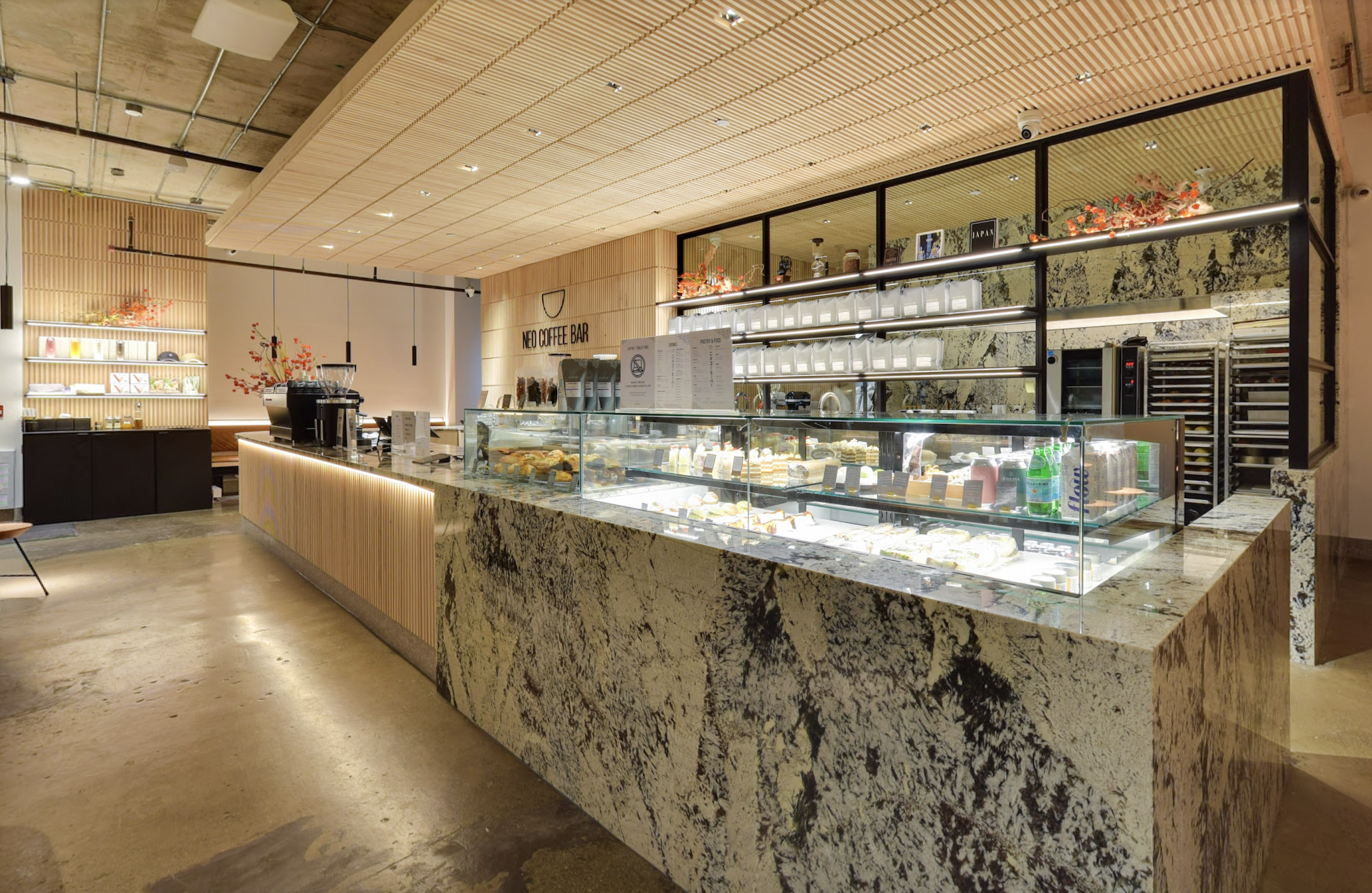
NEO Coffee Bar is celebrating 10 years of serving beverages and creating a vibrant gathering place rooted in craftmanship, care and community.
Since opening its first location in 2015, it has grown to five locations across Toronto, becoming a trusted destination for those seeking quality, intention and a moment of calm in the city. Known for its quiet design, precise preparation and thoughtful service, the brand has earned its reputation one cup at a time, said the company.
Alan De Luna
“In a fast-moving city, NEO Coffee Bar was created as a place to pause,” said Alan De Luna, Marketing Consultant at NEO Coffee Bar. “We’ve always believed in making space for intention – with our guests, our community and each other.”
Inspired by Japanese tea culture, the company said it offers drinks and desserts made with matcha, houjicha and yuzu. Each item reflects a quiet tradition – reimagined in its own way and served in a space designed to slow things down.
“We work with organic ingredients and take pride in doing things the right way – by hand, with care,” said De Luna. “Every drink and pastry reflect our commitment to craftsmanship, from how it’s made to how it’s presented.”
Its success is a testament to the dedication of its team and the loyalty of its customer. Every cup served represents a shared moment and a commitment to excellence, it added.
“As we mark this important milestone, we extend our gratitude to the team and community that made the first 10 years of NEO Coffee Bar possible,” said De Luna. “Looking ahead, we remain focused on sustainable growth and are committed to expanding our café presence across Canada with the same care and intention that have defined us since day one.”