The history books are likely to give “liberation day” a different name. While the idea around reciprocal tariffs were dubious even before they were announced, what was announced seems set to maximize U.S. pain
In practice, these tariffs will have widespread inflationary impacts and weaken U.S. growth. For example, tariffs nearing 50 per cent on Lesotho, Cambodia and Vietnam—countries that primarily export inexpensive goods to the United States—will only make these products more expensive. The United States will not succeed in bringing these industries back in a meaningful way. In fact, relocating clothing production to other countries has significantly increased the purchasing power of U.S. consumers
Given the widespread nature of these tariffs, U.S. consumers will have no safe haven from tariffs and inflation will surely spike significantly
From an economic perspective, global growth is also set to weaken. Many companies around the world have moved production to optimize supply chains and take advantage of the relative strengths of different countries, both in terms of costs and productivity
“While Canada was spared from the worst, many other countries were hit with tariffs well above even the highest of expectations. This upheaval in global trade will significantly weigh on economic growth around the world, with the United States likely the biggest loser,” said the Conference Board.
“This means that Canadian exporters of resources, which might have been able to shrug off a 10 per cent tariff given U.S. reliance on these goods, will now face headwinds from weaker global demand.
“Canada has responded by announcing matching tariffs on U.S. content on vehicles, on top of $60 billion in previously announced retaliatory measures that remain in place. Canada is not out of the woods. During his speech, President Trump continued to push the false narrative that Canada is an unfair trade partner and once again called for American farmers, specifically dairy producers, to have more access to Canadian consumers.
“Given the uncertainty surrounding trade with the United States, it remains important for Canada to diversify trade beyond the United States. Overall, while (the recent) tariff announcement seemed to be favourable to Canada, tariffs on key sectors—including others that are likely to follow—coupled with what seems to be a worst-case outlook for U.S. and global growth will hurt Canada’s economy. Consumer and business confidence had already sunk to recession lows, hurting the economy even before what’s now become a global trade war.”
At a time when Canadians are increasingly favouring Canadian brands and shopping, new data from Adyen, the global financial technology platform of choice for leading businesses, in partnership with the Retail Council of Canada (RCC), provides insights into how Canadian retailers can fortify the shopping experience when it matters most.
Experience converts to loyalty: The majority of Canadians (81%) agree they are likely to return to a store that delivers a meaningful or memorable shopping experience
Payment preferences: Canadian shoppers most frequently pay in-store with a tap/contactless credit or debit card (52%) and online with a digital wallet (26%).
Shipping costs are make-or-break: More than half of Canadian shoppers (55%) agree that unexpected shipping costs or fees when shopping online could cause them to abandon a purchase.
Long lines are a turnoff: Nearly half of Canadian shoppers (49%) say long checkout lines while shopping in-store could make them abandon a purchase.
“While online shopping offers seemingly endless options, it can’t match physical stores for instant gratification. The top reason for visiting physical stores was the ability to buy something immediately, chosen by 60% of consumers, with 34% wanting to avoid shipping delays,” said the report.
In-store shopping also puts shoppers in control, fitting seamlessly into their everyday lives:
55% shop in-person because of the convenient location
45% want to try on and test products in person
“And then there’s the chance to save. 42% of consumers shop in-store to avoid shipping fees while 37% look for the exclusive in-store discounts or couponing opportunities that physical stores provide.”
Overall, it was the practical side of in-store shopping that appealed to the Canadian shoppers we surveyed. Just 29% mentioned the social aspect of shopping, such as spending time with friends or interacting with staff. Only 13% highlighted special in-store events. While Santa Claus might swap the North Pole for malls across Canada each November and December, that may not be enough to tempt Canadians out of their homes, said the report.
Santo Ligotti
“Many Canadians continue to value in-person shopping for the experience, convenience, and potential cost savings it offers. From being able to try products firsthand to avoiding shipping fees, these in-store benefits remain important. Retailers who prioritize seamless, memorable experiences are well-positioned to build lasting customer loyalty in a competitive landscape,” said Santo Ligotti, VP of Marketing and Member Services, Retail Council of Canada.
While overall Canadians enjoy in-store shopping, they do have frustrations, said the report, adding that the main reasons for walking out rather than checking out are:
Items out of stock (53%)
Long lines (49%)
Poor customer service (41%)
“In fact, that personal touch is something that Canadian shoppers truly value. 80% of the 2,000 shoppers surveyed said they’d be likely to return to a store that provided a meaningful or memorable experience. This sentiment increased across generations, from 76% of Gen Z to 86% of the Silent Generation,” it said.
“So what does make Canadian consumers opt for online? It’s that combination of cost and convenience. The top reason for shopping online, chosen by 53% of our respondents, is when an item isn’t available in-store.
“Another practical reason is limited access to physical stores, due to geographical location or lack of transportation. This was the case for 29% of respondents, peaking at 36% in Saskatchewan.
“Savings also play a significant role. 32% shop online to take advantage of promo codes and other perks of being a loyal customer. In contrast the flip side, it’s unexpected fees that rankle. Over half (55%) of online shoppers will abandon their carts due to unexpected shipping fees, a figure that jumps to 63% among Baby Boomers.
Source: Adyen
“Those fees are even more of a consideration when it comes to returns, with 68% of shoppers saying these fees influence whether they’ll return items online or in-store.
“Meanwhile there was consensus at either end of the demographic spectrum with 50% of both Gen Z and the Silent Generation saying they would clear their cart if delivery times were unclear or take too long.”
Customers want better loyalty programs offering personalized rewards (39%). And, regardless of the technological advances that emerge, the personal touch still matters. 25% percent want to see enhanced human interactions and customer service, compared to 12% who would prefer cashier-less stores, added the report.
Sander Meijers
“Canadian shoppers’ preferences are evolving, but at the core, they still expect a balance of cost, convenience, and experience. Retail is no longer just about choosing between online or in-store; it’s about offering value in all its forms. Whether it’s the speed of getting something immediately or the savings of skipping shipping fees, the future of retail lies in seamlessly blending convenience, cost-effectiveness, and personalized service—no matter where customers choose to shop,” said Sander Meijers, Canada Country Manager, Adyen.
For the first time ever, regional 50/50 Cash Lotteries and the Split the Pot Lottery are now available at local convenience stores across several Northern Ontario communities—including Barrie, North Bay, Sault Ste. Marie, Sudbury, Thunder Bay, and Timmins—marking the launch of the first non-OLG lotteries accessible in-store.
Residents in these communities can now easily take part in supporting their local hospital foundations, which fund critical care and services in their communities, while also gaining the chance to try their luck at winning big cash prizes, according to a news release.
Gerti Dervishi
“We’re excited to enable this first-of-its-kind lottery model to convenience stores across Ontario,” said Gerti Dervishi, CEO of Ascend Fundraising Solutions. “By making charitable lotteries accessible in everyday retail spaces, we’re creating a simpler, more engaging way for people to support local hospitals.”
For more information on participating stores, ticket prices, and program details, visit: https://on.splitthepot.ca
To celebrate the launch, grand opening events will take place at select convenience stores in each region from April 14 to April 17. Residents are invited to join the celebrations to learn about the lotteries and enjoy a chance to win while supporting vital healthcare causes.
“With much of the equipment, furniture, and associated services in these hospitals not funded by the government, community-driven initiatives like this are critical in helping fill the gap. Each regional 50/50 Cash Lottery has been running online for several years, raising millions for local hospitals and awarding millions more in prizes. Additionally, the Split the Pot Lottery has grown tremendously over the past year, with millions of dollars raised for participating hospitals and dozens of winners across the province,” said the news release.
“Each 50/50 monthly jackpot is split between the winner and the participating hospital foundation. With the Split the Pot Lottery, the grand prize winner receives 60% of the prize pool, two additional winners share 20%, and ten more winners split the remaining 20%. 50/50 Tickets vary by region, and Split the Pot tickets start at $10 for 5 tickets—making it an affordable and impactful way to support local healthcare while having a chance to win big.”
Each participating lottery directly supports its regional hospital foundation, including Health Sciences North Foundation, RVH Auxiliary, North Bay Regional Health Centre Foundation, Sault Area Hospital Foundation, St. Joseph’s Foundation of Thunder Bay, and Timmins and District Hospital Foundation. These foundations work to improve healthcare access and outcomes through equipment upgrades, research, and specialized services.
June, the highly anticipated new bi-level concept from the award-winning team behind The Keefer Bar, one of North America’s 50 Best Bars, will officially open its doors on April 10.
Situated on an iconic street corner in Cambie Village in Vancouver, June invites guests to step into a world where brasserie charm meets spirited revelry. Upstairs, indulge in French-inspired West Coast fare, while downstairs, inventive cocktails keep the night going. Limited dining room reservations can now be made online.
The bi-level, 4,500 square-foot space features 100 seats upstairs, and 35 downstairs (coming soon), with three forthcoming patios.
“June is our vision of a neighbourhood brasserie that offers both warm hospitality and a truly immersive experience, from dinner to late night,” said co-proprietors Cam Watt and Keenan Hood. “The team has done an exceptional job with the food and drinks menu, and we can’t wait to open our doors, starting with our dining room, and later, our cocktail bar. We want people to settle in, stay a while, and enjoy great company in a space unlike any other in Vancouver thus far.”
Source: June
“With our dinner menu, it was important for us to curate an experience that isn’t too fussy, but still elevated and special,” explained head chef Connor Sperling, who played a key role alongside Published on Main’s executive chef Gus Stieffenhofer-Brandson when the restaurant earned its Michelin star. “We’re serving up some French brasserie classics, like tartare, but we’re also putting our own June take on things – French ravioli with Beurre d’Isigny, a version of French roast chicken with Loong Kong, and of course, steak frites. We’ll definitely have some nostalgic sweets like banana soft serve and chocolate madeleines.”
Satoshi Yonemori – credit Juno Kim
The cocktail program, collectively designed by bar director Amber Bruce, bar manager Satoshi Yonemori (previously Grapes & Soda), and head bartender Riley Maggs.
“When Satoshi, Riley, and I started working on the cocktail menu, our goal was to create drinks that would capture the essence of recognizable classics, as well as options that are entirely unexpected and playful,” said Bruce, who helped lead the Keefer Bar team to earn a spot on North America’s 50 Best Bars list. “Every drink, including our non-alcoholic section, is designed to complement the exciting brasserie energy of June – be it a sip at the bar, a pairing with dinner, or soon, cocktails and snacks in our intimate downstairs bar.”
Source: June Source: June
Acclaimed Mexico City-based architect Héctor Esrawe, who also designed Watt’s Acre Resort in San José del Cabo, Mexico, breathes life into the expansive bi-level space and “embraces a design strategy that honours the character and scale of the original site. The result is a warm expression of contemporary dining—a relaxed, sophisticated, and welcoming experience.”
“From the very beginning, creating a positive, inclusive culture and crafting a welcoming space for everyone has been at the heart of our vision for June,” added Letícia Castro, general manager, June. “Putting together a group of people that matches this energy was very important to me. Every decision—whether it’s the individuals who make up our team or the details woven into the details of the space—has been made with intention.”
Business conditions have deteriorated due to the trade conflict with the United States, according to results from the Business Outlook Survey and the Business Leaders’ Pulse, says the Bank of Canada.
“Sales outlooks have softened, particularly for exporters. Firms reported having sufficient capacity, and many are delaying investment and hiring decisions amid uncertainty. Firms expect that widespread tariffs would raise costs and lead to higher selling prices. In this context, expectations for inflation are higher than they were last quarter,” it said in its Business Outlook Survey—First Quarter of 2025.
Also the Bank said overall, results of the first-quarter 2025 Canadian Survey of Consumer Expectations“show that the escalating trade conflict with the United States is damaging consumer sentiment. Confidence in the labour market has weakened significantly, and consumers have become more pessimistic about their financial health. Although consumption plans had been improving over the past several quarters, consumers now intend to spend more cautiously given the uncertainty around the trade conflict. They expect the trade conflict to lead to a higher cost of living, and this has pushed up their inflation expectations.”
In its Business Outlook, the Bank found:
Business sentiment has deteriorated, and uncertainty is widespread due to the trade conflict with the United States. Firms are developing plans to mitigate the effects of tariffs on their operations but see many challenges ahead.
Fewer businesses than last quarter expect sales growth to improve over the coming year. Firms reported having sufficient capacity to meet expected demand.
In the current economic environment, many businesses are delaying important decisions, such as those related to investment and hiring, until they have a clearer outlook. Hiring intentions are weak.
Firms no longer expect growth in their input prices to slow. Two-thirds of businesses believe that their costs would be pushed higher if widespread tariffs are implemented. As a consequence, many firms would increase their selling prices.
Near-term inflation expectations are higher than last quarter, with firms believing the inflationary impacts from tariffs will outweigh reduced pressures from weak demand.
In its Consumer Survey, the Bank found:
Overall, results of the first-quarter 2025 survey show that the escalating trade conflict with the United States is damaging consumer sentiment.
Confidence in the labour market has weakened sharply. This is because many consumers—notably those working in sectors that are highly dependent on trade—are worried about losing their job. In this context, consumers have also become more pessimistic about their financial health.
Although consumption plans had been improving over several quarters, consumers now intend to spend more cautiously given the uncertainty around the trade conflict. In addition, elevated housing costs and the high prices of many goods and services continued to weigh on households’ spending plans.
Consumers expect the trade conflict to lead to a higher cost of living. This is reflected in their short-term inflation expectations, which rose in the first quarter of 2025.
But HBC was always more than a hinterland mercantile fur trader in earlier centuries, just as it was more than a department store anchoring downtown shopping in the 20th century.
Like the beaver it nearly wiped out, HBC made Canada into its home by fundamentally transforming its environment, and no bankruptcy court will liquidate that legacy. Still, that legacy is more complex than many might assume.
HBC and the making of Canada
HBC’s initials have sometimes been jokingly elaborated as “here before Christ.” But if we were to take a more secular tone, we might instead say it was “here before Canada,” initiating some of the country’s basic economic and political institutions.
In 1670, England’s King Charles II granted 18 investors the power to make laws, monopolize trade, enforce penalties and establish colonies in Rupert’s Land. Some four million square kilometres, this land grant centred on Hudson Bay but ranged from Labrador in the northeast to the Prairies in the southwest.
Along with establishing fur-trading posts populated by transient servants, the company created its own colonies. In 1811, HBC shareholder Thomas Douglas (Lord Selkirk) organized the first settlers in the Prairies at Red River, now Winnipeg. Forty years later, in 1851, HBC’s former chief factor James Douglas took charge of developing Victoria on Vancouver Island.
Of course, Indigenous Peoples were in these areas long before Canada and long before HBC was. To secure its investments and protect its settlers, HBC representatives negotiated the first treaties with Indigenous Peoples west of the Great Lakes.
Mistahi Maskwa (Big Bear), a Plains Cree chief, trading at Fort Pitt, N.W.T., in 1884. (National Archives of Canada)
The 1817 Selkirk Treaty at Red River and the 14 Douglas Treaties on Vancouver Island in the 1850s are examples of HBC’s expansive role in settler colonialism. Overlooked for some time, the Douglas Treaties are now shaping jurisprudence.
Likewise, transferring the six-storey, 94-year-old HBC department store in downtown Winnipeg to 34 First Nations in 2022 might be seen as a form of reconciliation. However, the company itself indicated “shifting consumer behaviour” was the reason for the handover.
Land and sovereignty
Beyond its treaties with Indigenous Peoples and support for settler farmers, HBC is further implicated in the formation of Canadian sovereign territory writ large.
If asked to name famous real estate transactions formative for state-making in North America, one might readily think of Louisiana or Alaska, but Canada, too, was created through purchase. HBC sold Rupert’s Land to the government of Canada for $1.5 million in 1869, forming a significant portion of what we now know as modern-day Canada.
Hudson’s Bay kept roughly seven million acres after the sale, ensuring it would remain a significant force well into the 20th century. Writing of its lands in the Success Belt in the Prairies, HBC argued:
“This land, with a cash payment, was retained as recompense for over 200 years of exploration, pioneering, and trading which the Company had done and without which Canada, as she is today, would not exist.”
Incremental HBC land sales over the coming decades were accompanied by catchy slogans like Victoria as “The Garden of Canada” or Edmonton as Canada’s “Farthest West.”
A pamphlet of HBC land sales in British Columbia and the Prairies. (Photo by Heather Whiteside)
HBC pamphlets advertised wharves, orchards, gardens, houses, estates, seashore lots, residential subdivisions, hotels and businesses in coastal and interior British Columbia, Alberta, Saskatchewan, Manitoba and northern Ontario.
It wasn’t until the mid-20th century that the company parted with its remaining residential acreages in Winnipeg in 1954 and Victoria in 1961.
A legacy that outlasts a ledger
The timing of the HBC’s bankruptcy dovetails with renewed anxieties about American annexation as U.S. President Donald Trump repeatedly threatens to turn Canada into the 51st state.
Such annexation anxieties are nothing new for Canada.
In the 1850s, United Kingdom parliamentary support for the HBC monopoly was driven in part by a desire to counter American influence. One English MP warned in 1857 that if the HBC’s trade between the Red River colony and London were to end, “the whole of it would be transferred to the United States.”
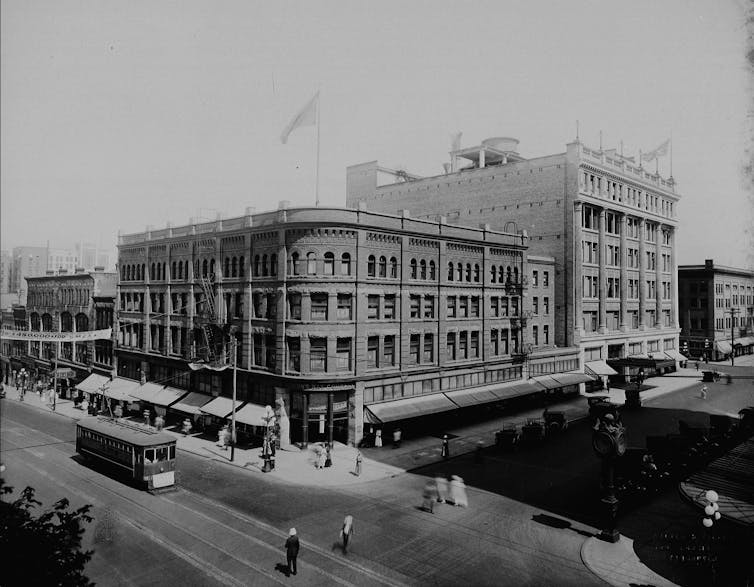
An old Hudson’s Bay Company store in foreground beside a new company store in background in Vancouver in 1918. (National Archives of Canada/W.H. Calder)
As Canadians look to protect the country from foreign threats, it helps to know how the country came to be in the first place. The long-running and multi-faceted role of the HBC is an integral part of Canada’s story; it has always been more than just a company.
Now saddled with $1 billion of debt, HBC’s demise seems inevitable. But its endurance beyond the original 1670 stockholders’ £4,720 investment speaks to its lasting impact. The HBC legacy will surely shape whatever’s next in store for Canada.
About the Author:Heather Whiteside is an Associate Professor of Political Science at the University of Waterloo.
Retail Insider is streamlining its Canadian retail news from around the web to include a handful of top news stories that can be viewed quickly during the day. Here are the top stories from the past 24 hours.
Customers will get design support for kitchens, bedrooms, and bathrooms as well as a curated selection of relevant IKEA products to touch and try (there will be no products or food available for immediate purchase and takeaway). When their designs are complete, they can be ordered for home delivery or picked up at a local pick-up point location. (CNW Group/IKEA Canada Limited Partnership)
IKEA Canada will officially open its newest Plan and order point in Sherbrooke, Quebec, on April 14. This marks the fourth such location in the province and the ninth across Canada, as the Swedish home furnishings giant continues to expand its network of smaller-format, service-oriented planning studios.
Located at 1305 Boulevard du Plateau-Saint-Joseph in the SmartCentres Sherbrooke shopping area, the new IKEA location will offer customers access to expert support in designing and ordering complex home furnishing solutions — particularly for kitchens, bathrooms, and bedrooms.
Personalized Support and Planning Services
Unlike traditional IKEA stores, the Sherbrooke Plan and order point will not stock goods for immediate takeaway or offer food services. Instead, customers can engage with IKEA planners to receive expert guidance on customizing spaces to fit their needs. A curated selection of home furnishings will be available to view and experience in person, helping customers make informed design choices.
Once finalized, purchases will be fulfilled via home delivery or can be collected at a nearby pick-up point. Customers are now able to pre-book appointments for planning services, starting from the April 14 opening date.
Special Grand Opening Promotion
To celebrate the opening, IKEA Canada is offering a limited-time 15% discount on kitchen purchases of $1,500 or more. This promotion is valid exclusively at the Sherbrooke and Brossard Plan and order points, running from April 14 through May 26, 2025. The offer is subject to availability, and customers must book planning appointments to take advantage of the promotion.
A launch event is planned for April 14, with IKEA staff and members of the Sherbrooke community invited to mark the occasion.
Plan and order points are one of the many ways IKEA Canada is making affordable home furnishings and services more convenient and accessible, allowing customers to get support from IKEA experts to plan, order, and purchase complex home furnishing solutions for the kitchen, bedroom, and bathroom. (CNW Group/IKEA Canada Limited Partnership)
Meeting Evolving Consumer Needs
The expansion of IKEA’s Plan and order point concept reflects the brand’s strategy to adapt to changing consumer behaviours. Smaller, design-focused locations allow IKEA to serve communities that are not near full-sized stores, making the brand’s solutions more accessible to Canadians across the country.
The Sherbrooke studio supports IKEA’s broader initiative to help Canadians during a period of rising costs by emphasizing affordable, efficient home solutions.
Part of a National Growth Strategy
The opening in Sherbrooke is part of IKEA Canada’s ongoing strategy to expand its customer touchpoints nationwide. The company continues to open full-sized stores, smaller-format planning studios, pick-up points, and enhance its digital shopping experience.
IKEA currently operates 16 full-sized stores in Canada, including locations in Montreal and Quebec City. The Plan and order point concept, introduced to Canada in recent years, has been successful in urban areas and mid-sized cities, offering flexible access to IKEA’s services without the footprint of a full store.
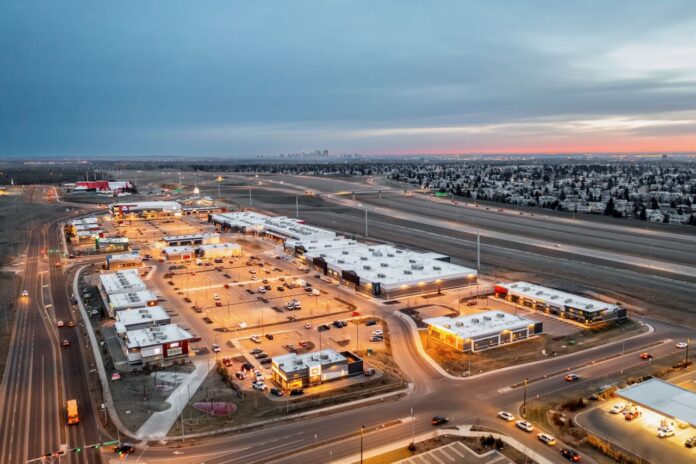
Buffalo Run is part of Taza’s innovative 1,200-acre development located just west of Calgary. This collaboration highlights a shared commitment towards providing diverse retail experiences in the area, serving nearby residents and visitors alike, said the development corporation.
James Robertson
“As a partnership between Tsuut’ina Nation and Canderel, Taza is one of the country’s most exciting and innovative developments. We are creating three dynamic village-style communities with a focus on providing diverse services and retailers. We welcome Loblaw and the Real Canadian Superstore to Buffalo Run, offering even more shopping choices for nearby residents and visitors alike,” said James Robertson, President of Taza Development Corporation.
Jonathan Carroll
“This is our first-ever Real Canadian Superstore in collaboration with an Indigenous community in Alberta. Taza is where culture, opportunity and community come together in a meaningful way. We are so pleased to invest in this innovative development and bring fresh, delicious food options and excellent customer service and be part of this growing area,” said Jonathan Carroll, Senior Vice President, Superstore Operations, Loblaw Companies Limited.
Construction of this newest location of the Real Canadian Superstore is set to start in 2025, with a projected opening date in 2026. The project is expected to create a number of employment opportunities during both the construction and operational phases of the project.
“The Real Canadian Superstore will offer an extensive selection of groceries, household goods, and general merchandise, catering to the needs of everyday shoppers. Its presence is set to further enhance the retail offerings at Buffalo Run, by complementing the current retail mix of the adjacent Shops at Buffalo Run, making the area an even more attractive and convenient shopping destination,” explained Taza in a news release.
“Upon completion, Buffalo Run will offer 390 acres of retail, dining and recreation experiences. It is one of three community villages within the overall development of Taza, which, upon completion, will house more than 700,000 square feet of retail across 1,200 acres. Since its inception, the development has seen the successful launch of more than 50 businesses across Buffalo Run and Taza Park, with more announcements to follow in the coming months.
“Set within Taza’s visionary 1,200-acre development just west of Calgary, Buffalo Run is poised to become a vibrant hub of retail, commerce, and convenience, meeting the growing need for essential amenities in the area. This groundbreaking partnership not only elevates the local shopping experience but also reinforces Taza’s unwavering commitment to fostering community growth and prosperity for both Tsuut’ina residents and visitors alike.”
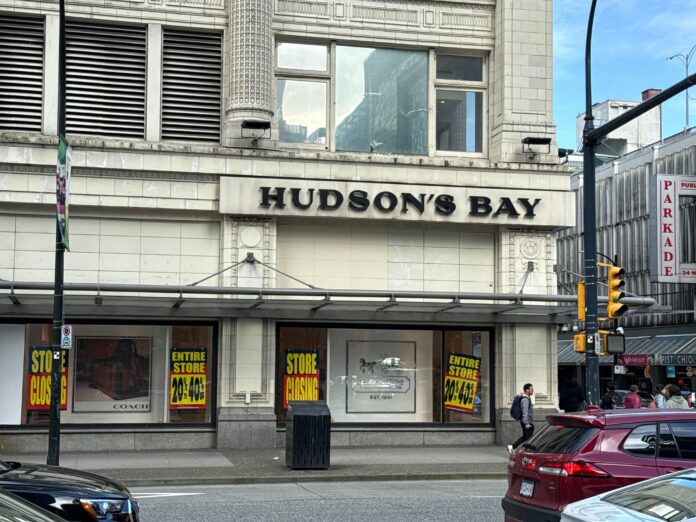
Hudson's Bay store in downtown Vancouver on Saturday, April 5, 2025. Photo: Lee Rivett
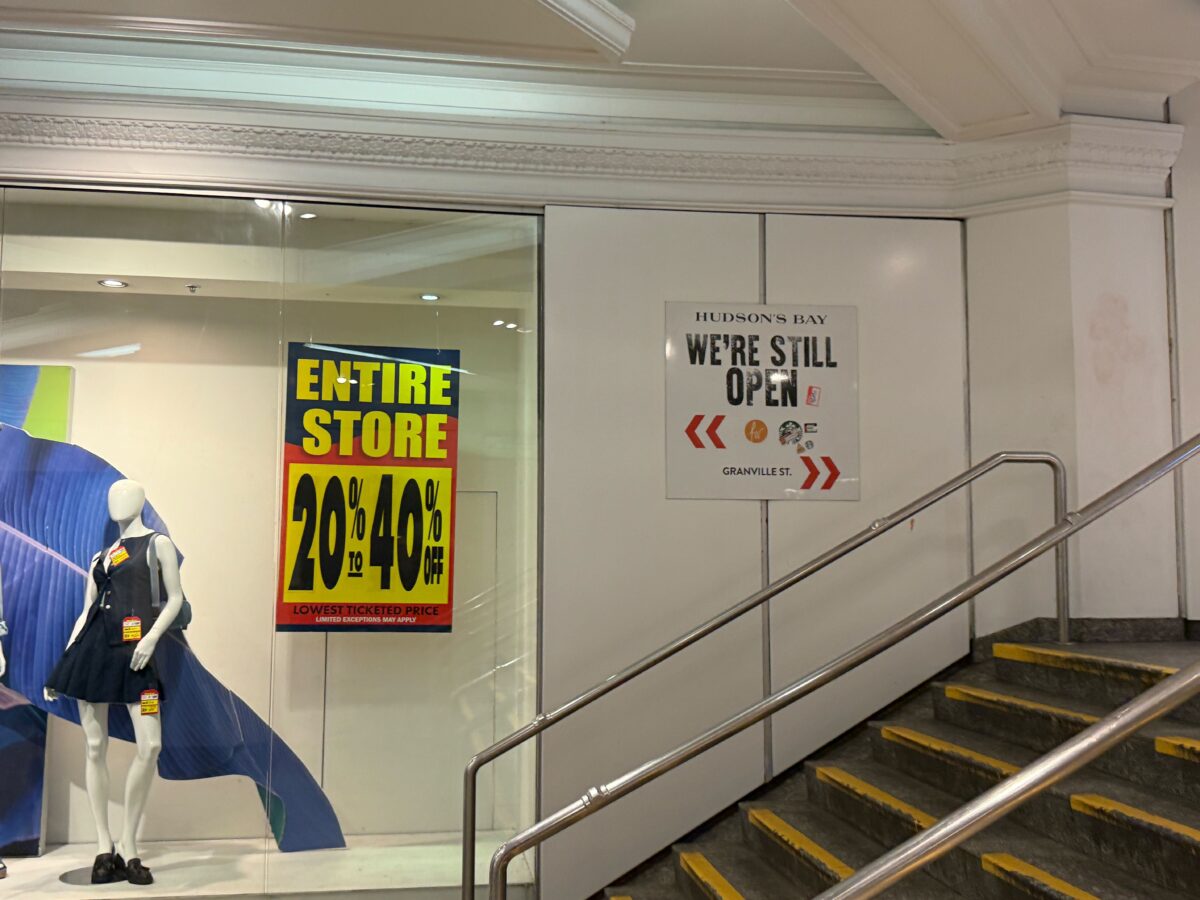
The Canadian retail landscape is undergoing a historic shift with the closure of Hudson’s Bay stores following the company’s filing for bankruptcy protection. Yet despite its storied past, the department store chain’s departure is expected to have a limited impact on overall apparel sales in Canada.
That’s the conclusion from Randy Harris, President and Founder of Trendex North America, who has been analyzing apparel retail trends in Canada for over two decades.
“In 2024, Hudson’s Bay only held a 2.2% share of the Canadian apparel market,” said Harris in an interview with Retail Insider. “That’s down from 2.4% the year before. It’s become almost a non-entity.”
Randy Harris
A Declining Force in Apparel
While Hudson’s Bay was once considered a national retail powerhouse, its influence in fashion and clothing has sharply eroded in recent years. According to Harris, the company’s declining relevance means its closure will not significantly alter the dynamics of Canada’s apparel industry.
“We believe that the vacuum created by them going out of business won’t benefit any one player. It’ll be spread out across multiple retailers,” he explained. “And we don’t believe the brand had a meaningful lock on the market for anyone under the age of 35.”
The aging customer base—many of whom were drawn in by loyalty programs rather than product uniqueness—further limited the store’s cultural and commercial relevance. “A young kid that’s 22 years old didn’t go to the Bay and didn’t give a damn about their points,” Harris quipped.
Lessons from Sears and Woodward’s
Looking at the past, Harris draws a parallel to the closures of Sears Canada and Woodward’s.
“When both Woodward’s and Sears went out of business, around 20% of their apparel business just disappeared,” he said. “It didn’t transfer neatly to another retailer. It just vanished from the market.”
That trend, though difficult to trace precisely through Statistics Canada, suggests that store closures don’t always lead to redistributions of market share. Instead, they sometimes result in overall contraction.
Still, Harris anticipates a much smaller ripple effect with Hudson’s Bay given its already diminished presence.
“The difference here is the Bay doesn’t sell anything that’s truly unique. It’s not like they had exclusive lines that can’t be found elsewhere.”
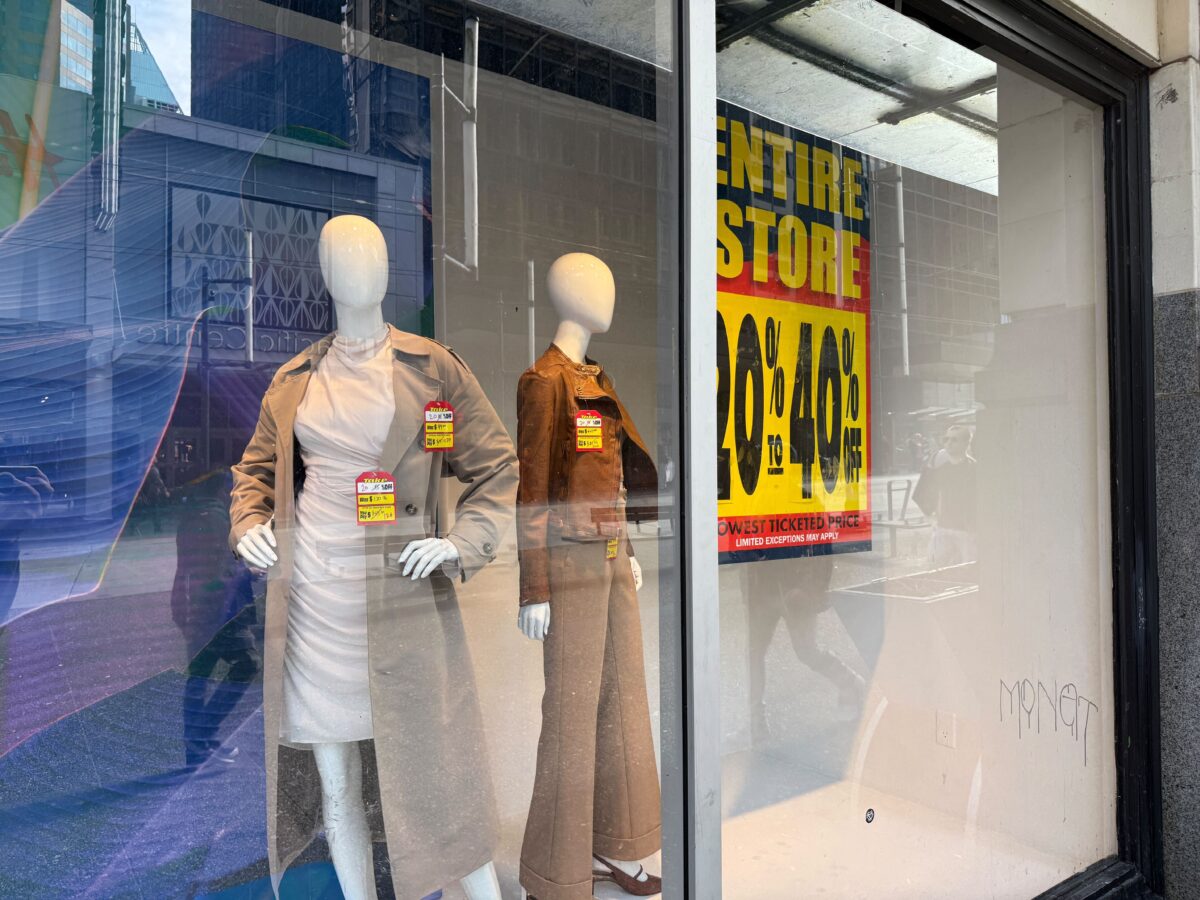
Display window at the Hudson’s Bay store in downtown Vancouver on Saturday, April 5, 2025. Photo: Lee Rivett
Lack of Differentiation and Strategic Missteps
One of the critical issues, Harris argues, is that Hudson’s Bay failed to define itself in a changing retail landscape.
“They tried private labels but never put any muscle behind them,” he said. “None of them are memorable. They didn’t have anything iconic. When Bonnie Brooks left, to me, that was the death knell.”
Bonnie Brooks [Kevin Van Paassen/The Globe and Mail/Canadian Press]
Brooks, who served as President and CEO from 2008 to 2012, was widely credited with reinvigorating the brand before stepping down. Harris believes that what followed was a revolving door of executives and a takeover by financial engineers who lacked understanding of retail fundamentals.
“They were focused on short-term gains, not long-term positioning. It became a case of financial engineering rather than retail strategy.”
The Richard Baker and Eddie Lampert Parallel
Harris draws a striking parallel between Hudson’s Bay Company Executive Chairman Richard Baker and former Sears Holdings Chairman Eddie Lampert, both of whom he refers to as “financial engineers.”
“Neither of them are retailers. That’s the bottom line. They didn’t understand the retail business and ran these companies into the ground,” he said. “It’s the same story with different characters.”
He adds that while department stores are evolving globally—with examples of successful adaptations in Europe and Asia—Canada’s department store models failed to pivot effectively.
“We’re not in an age of generalists anymore. We’re in an era of specialists. Unless you bring something unique, you’re going to struggle.”
No Clear Launch Pad for Emerging Brands
While the impact on overall apparel sales may be minimal, the closure of Hudson’s Bay could complicate brand launches in Canada. Harris acknowledges the department store occasionally served as an entry point for emerging international labels.
“You’re right that the Bay sometimes introduced brands like Macy’s does in the U.S.,” Harris said. “But they never did anything to reinforce them or build excitement. There was no long-term strategy behind those launches.”
Even those brands that did enter via Hudson’s Bay will likely pivot to direct-to-consumer strategies or seek alternative retail partners.
“Most of the brands already had or were working on opening their own stores,” Harris said. “They’ll go direct to the consumer.”
Hudson’s Bay store in downtown Vancouver on Saturday, April 5, 2025. Photo: Lee Rivett
The Real Apparel Winners in Canada
With Hudson’s Bay out of the equation, attention turns to the current leaders in Canadian apparel retail.
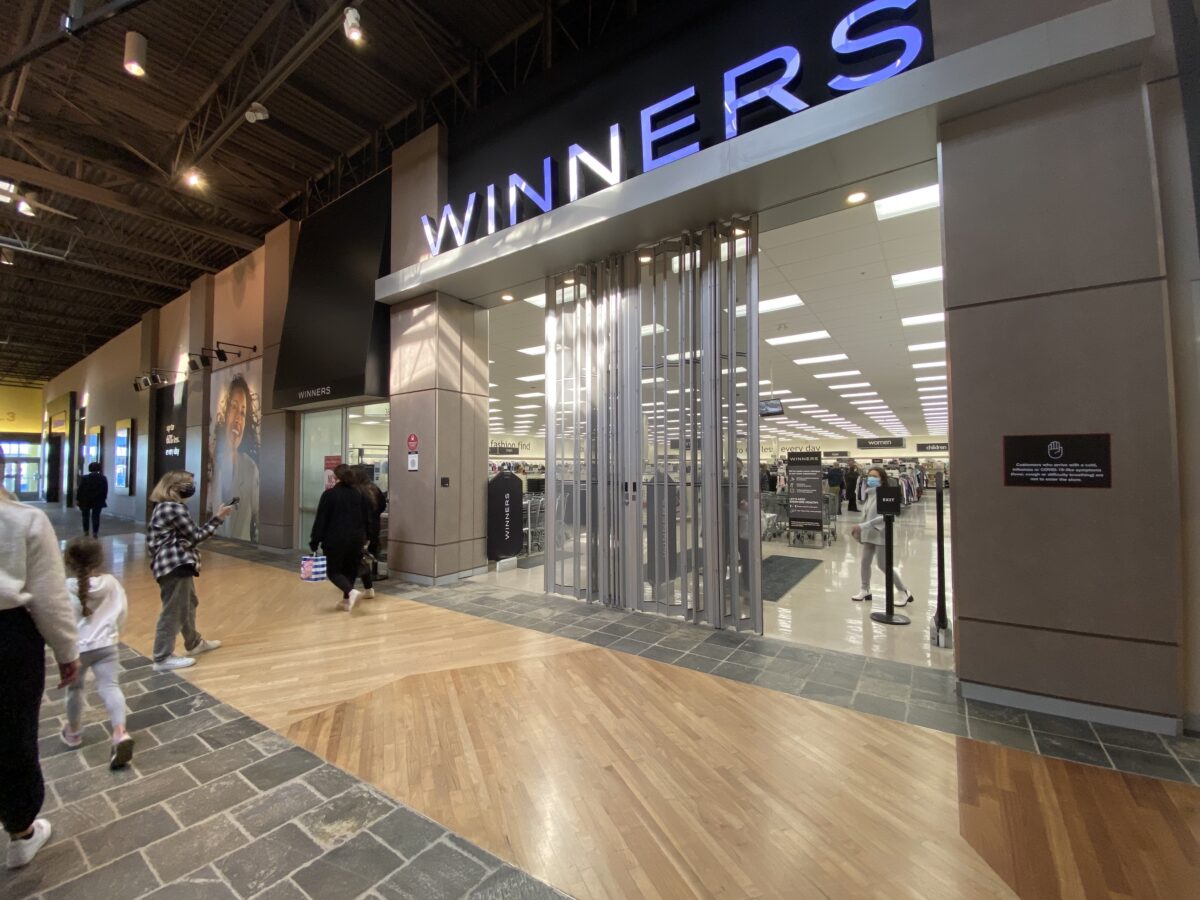
“The number one apparel retailer in Canada right now is TJX/Winners,” Harris confirmed. “With over 325 stores, they dominate the space.”
Following Winners are brands with strong market identities such as Lululemon and Mark’s, which Harris says are successful because of their clarity and consistency.
“If you go to Winners, you’re looking for discounted brands. Lululemon has a clear niche, and so does Mark’s. That clarity is key.”
Even warehouse clubs like Costco have carved out a sizable share of the apparel market, driven by price-conscious consumers seeking value.
“Consumers are trading down,” Harris said. “They don’t have as much disposable income, and they’re looking for value propositions. That’s why retailers like Winners and Costco are thriving.”
Winners at CrossIron Mills. Photo: Jessica Finch
No Growth in Apparel Market in 2024
Trendex’s data shows a sobering picture for the broader apparel sector. “There was absolutely no growth in the Canadian apparel market in 2024,” Harris revealed. “None. Zero.”
In his view, this stagnation is driven by shifting consumer behaviour, with shoppers turning to lower-cost retailers or fast-fashion platforms like Shein.
“People don’t have the money they used to, and they’re making choices that reflect that. They’re finding value wherever they can.”
Comark, Northern Reflections, and the COVID Excuse
Harris also cautions against blaming current retail failures entirely on COVID-19.
“There’s always a retailer blaming COVID,” he said. “But at what point does the statute of limitations expire? If three retailers filed for creditor protection, what about the other 300 that didn’t?”
He notes that few companies admit missteps or flawed business models in their CCAA filings.
“It’s always external factors,” he said. “They never take responsibility for poor decisions.”
The Decline of the Middle Market—Or Is It?
While many observers have declared the death of the retail middle market, Harris sees a more nuanced picture.
“I cringe when I read these sweeping statements that the middle is dead,” he said. “Retailers like Simons and Uniqlo are doing very well in what I’d call the upper-middle.”
The problem isn’t the middle per se, he argues—it’s retailers that lack a clear market focus.
“It’s creative destruction,” Harris explained. “Those who fail to adapt or differentiate themselves get weeded out. But that doesn’t mean there isn’t a healthy market for well-positioned mid-tier players.”
A Catastrophic Decline in Sales
Internal Hudson’s Bay documents revealed that in-store sales dropped by almost 33% year-over-year between 2023 and 2024.
“Can you imagine if your income dropped by 33%? That’s catastrophic,” Harris said. “And I’m sure expenses didn’t go down. If anything, they went up.”
The financial strain was intensified by the company’s awkward positioning in the market—neither high-end nor value-driven.
“They were upper-middle, but without a clear focus. That made them vulnerable,” Harris said.
Unanswered Questions Around Accountability
Perhaps most troubling, according to Harris, is the lack of accountability at the top.
“Both HBC and Sears Canada were destroyed by poor leadership,” he said. “And yet there’s no accountability. The people responsible are walking away, buying condos in Boca.”
Harris says this points to a broader issue of how retail is governed when financial engineers are at the helm.
“It’s a failure of oversight and strategy. Retailers need people who understand consumers, not just spreadsheets.”
Final Thoughts: Will Anyone Really Notice?
For many Canadians, the loss of Hudson’s Bay stores might not be felt all that deeply.
“From a consumer standpoint, I don’t think most people give a damn,” Harris concluded. “The people who shopped there were older, loyal to the points system. But for younger shoppers? The Bay was irrelevant.”
While its closure marks the end of an era, the data suggests that Canada’s apparel market will carry on largely unfazed—dispersing sales among established players with stronger brand identities and modern retail strategies.
As Harris succinctly put it:
“It’s not a retail tragedy. It’s a long-overdue reality.”