Advertisement
Home Blog Page 670

Saks Fifth Avenue Food Hall to Shut at CF Sherway Gardens in Toronto

Saks Fifth Avenue CF Sherway Gardens, January 2023. Photo: Craig Patterson

The world’s first Saks Fifth Avenue food hall will be shutting its doors at the end of the month at CF Sherway Gardens in Toronto, marking the end of a chapter that began in 2016 with Saks entering the Canadian market with two stores in the city. 

Toronto-based Pusateri’s Fine Foods operates the CF Sherway Saks food hall which opened along with Saks fashion store in March of 2016 — the idea was that the food hall would become an attraction to draw visitors into the store, and it appears that it wasn’t a success. Pusateri’s also opened a Saks food hall in downtown Toronto in November of 2016 and that food store will remain open for now. 

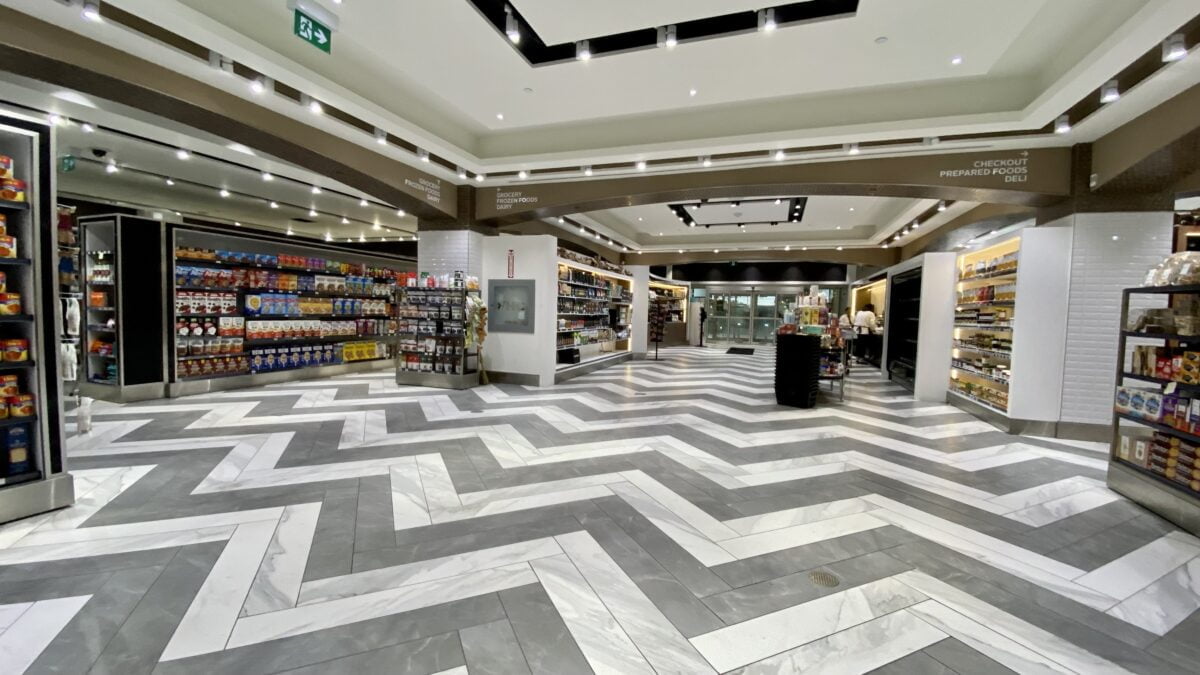
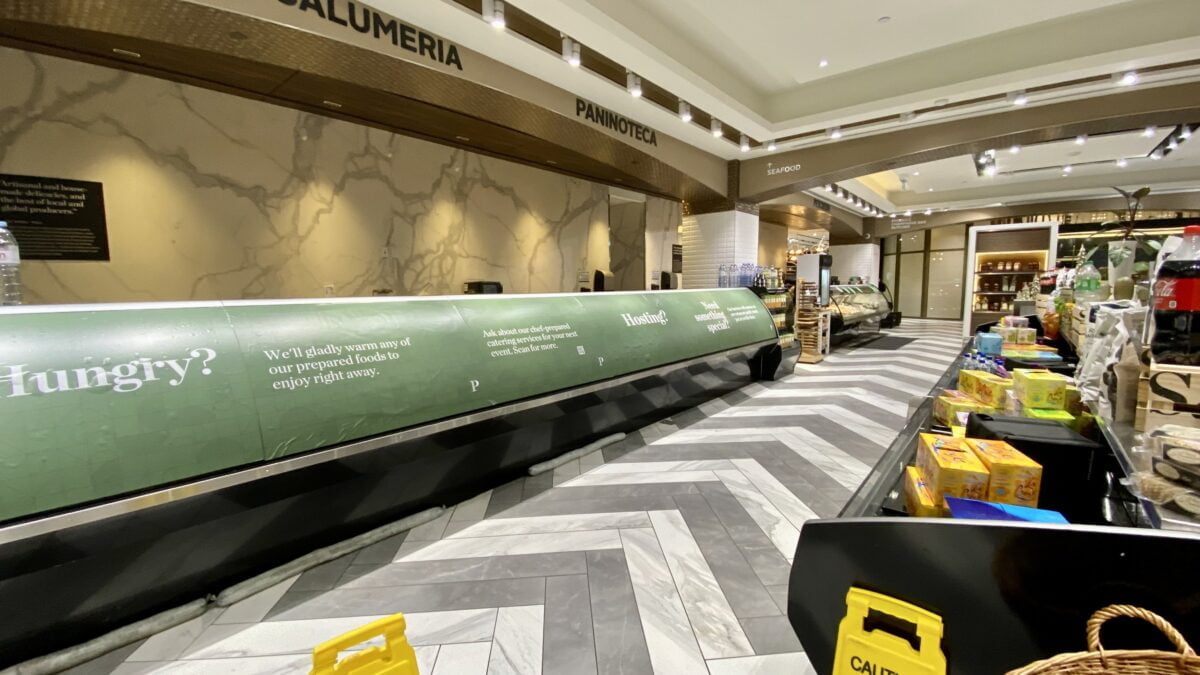
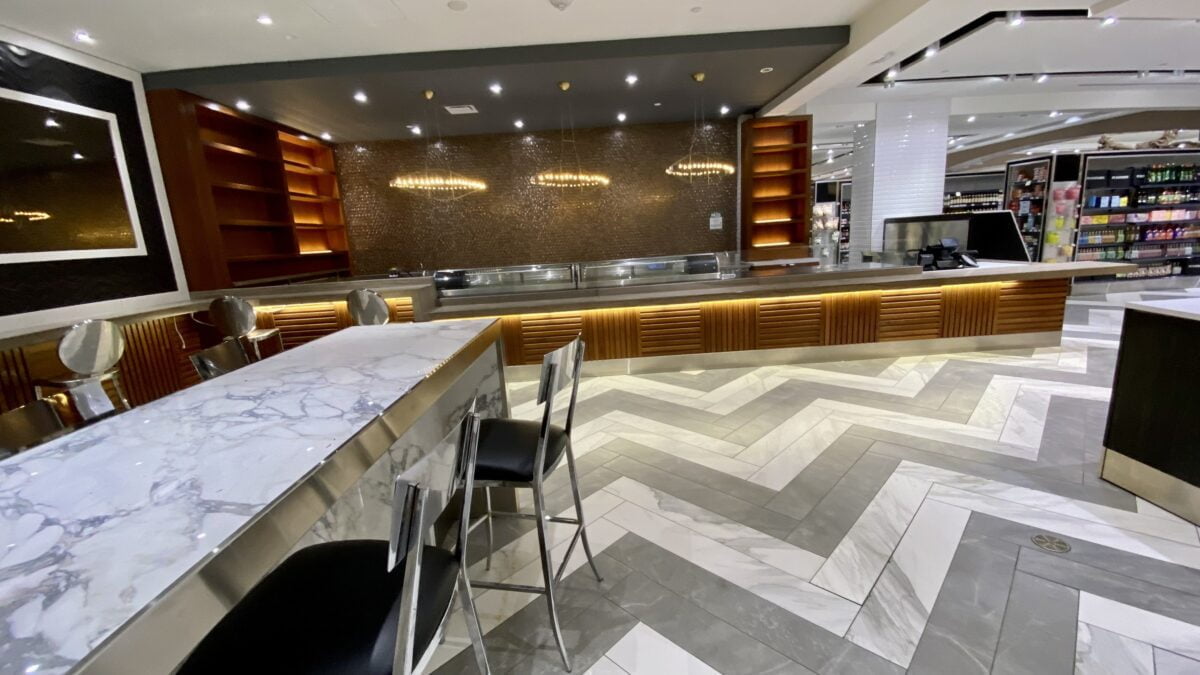
The CF Sherway Gardens Saks food hall spans about 18,500 square feet according to the retailer, and houses a range of prepared food items, grocery options, and at one time had seating areas with ten culinary stations including a prosciutto bar, Champagne and raw bar, sushi bar, cold-pressed juice bar, café, full service hot food counter, rotisserie, and even a Nutella café. A visit last week showed some of the food hall already being empty although some grocery items are still in-store prior to its final scheduled closure on January 28th. 
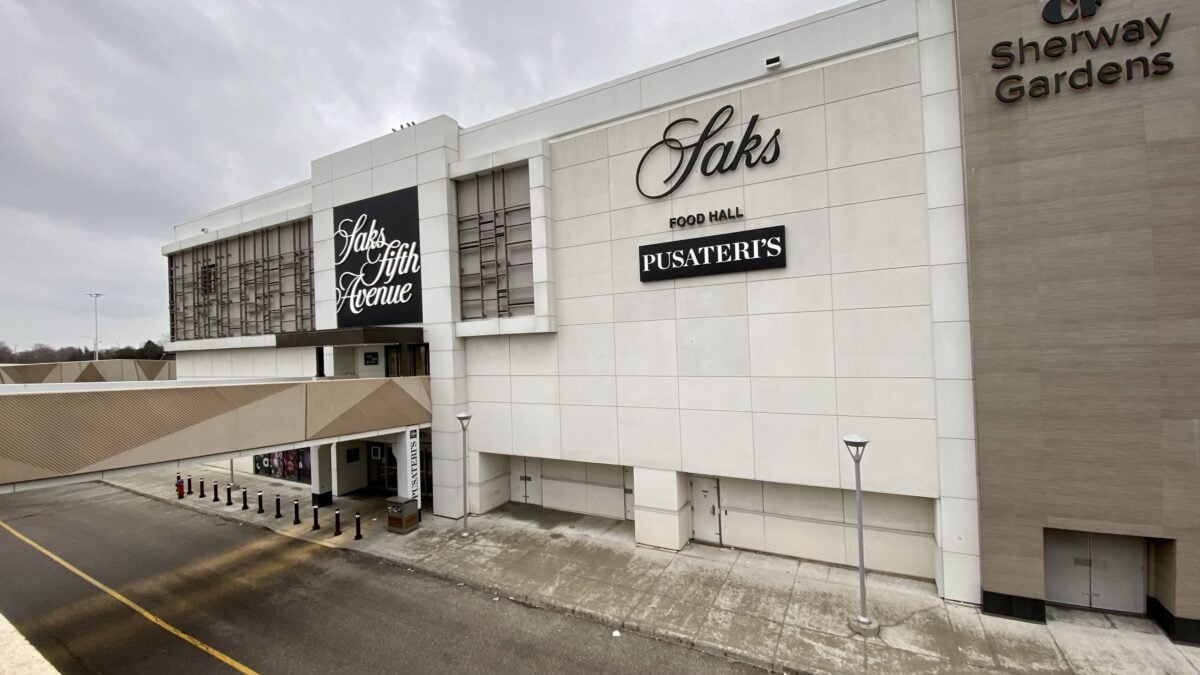
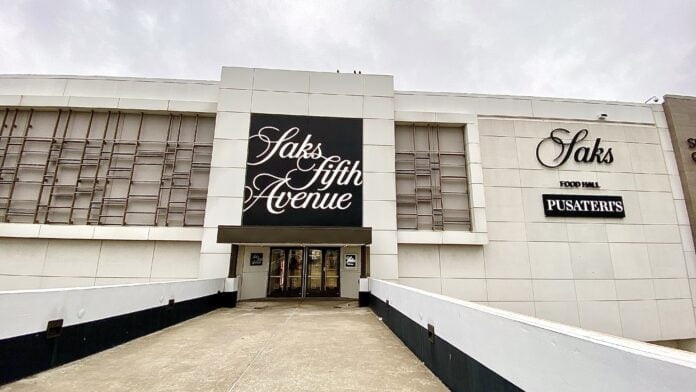
Saks Fifth Avenue at CF Sherway Gardens in January 2023. The Pusateri’s-run Saks Food Hall is located on the lower level of the store. Photo: Craig Patterson
Inside the CF Sherway Saks food hall, photo: Craig Patterson
Some of the hot meal options at the Saks food hall have already been shut. Photo: Craig Patterson
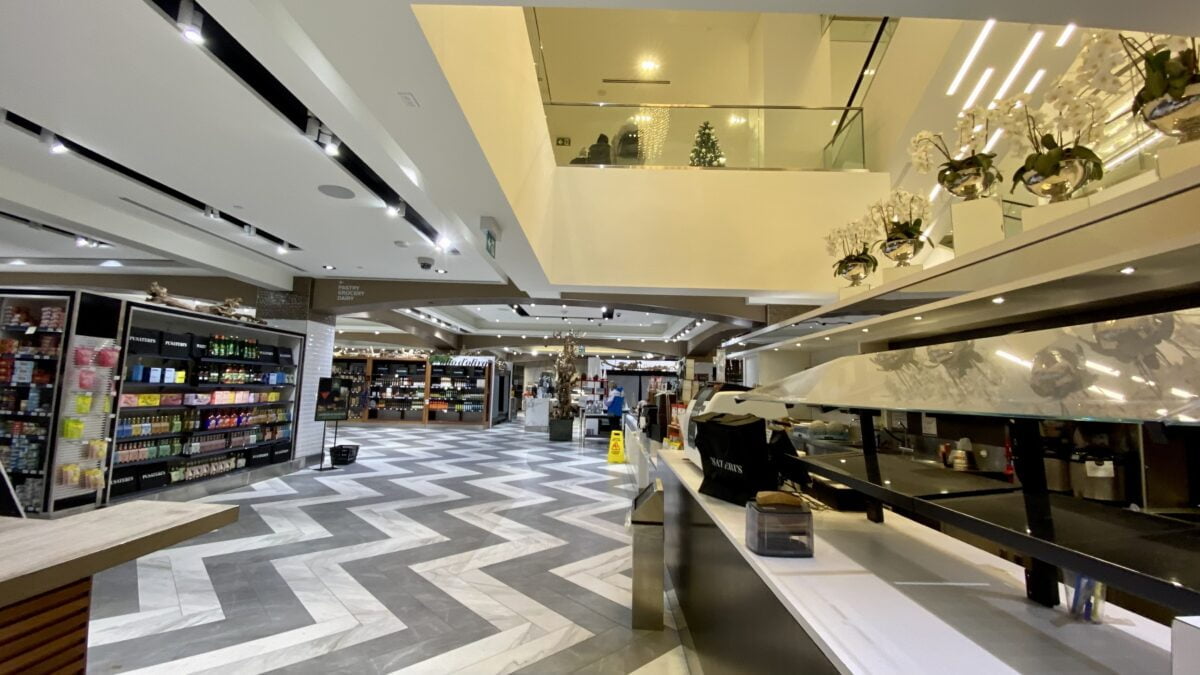
View of the Saks food hall’s former hot food area and the open cut-out to the Saks fashion store upstairs. Photo: Craig Patterson

Saks Fifth Avenue’s men’s department was once located next to the basement-level food hall. Menswear was moved upstairs during the pandemic where some women’s fashions had been located, resulting in a downsizing of the 48,920 square foot women’s fashion floor that also included the elimination of the women’s luxury brands that were once located there. That included former women’s boutique spaces for some big-name designers that opened with the store in March of 2016 such as Alexander McQueen, Etro, Akris Punto, Max Mara and others. 

It’s not yet known what will be done with the 43,700 square foot basement level of Saks after the food hall closes — with menswear having moved upstairs, the entire lower level will become vacant. Currently there’s a large cut-out open area between the grocery store and the fashion store above providing visibility between the two floors. 

The 49,000 square foot main floor of the Saks store still features a range of handbag boutiques, jewellery, cosmetics, footwear and a 5,500 square foot restaurant branded Beaumont Kitchen. The selection of women’s shoes appeared sparse last week and one shoe area had been cordoned off. 

A former Nancy Gonzalez handbag boutique on the main floor has been converted to another brand — Gonzalez, known for making pricey bags in exotic skins, is in legal troubles after being accused of smuggling crocodile handbags and could face jail time. 
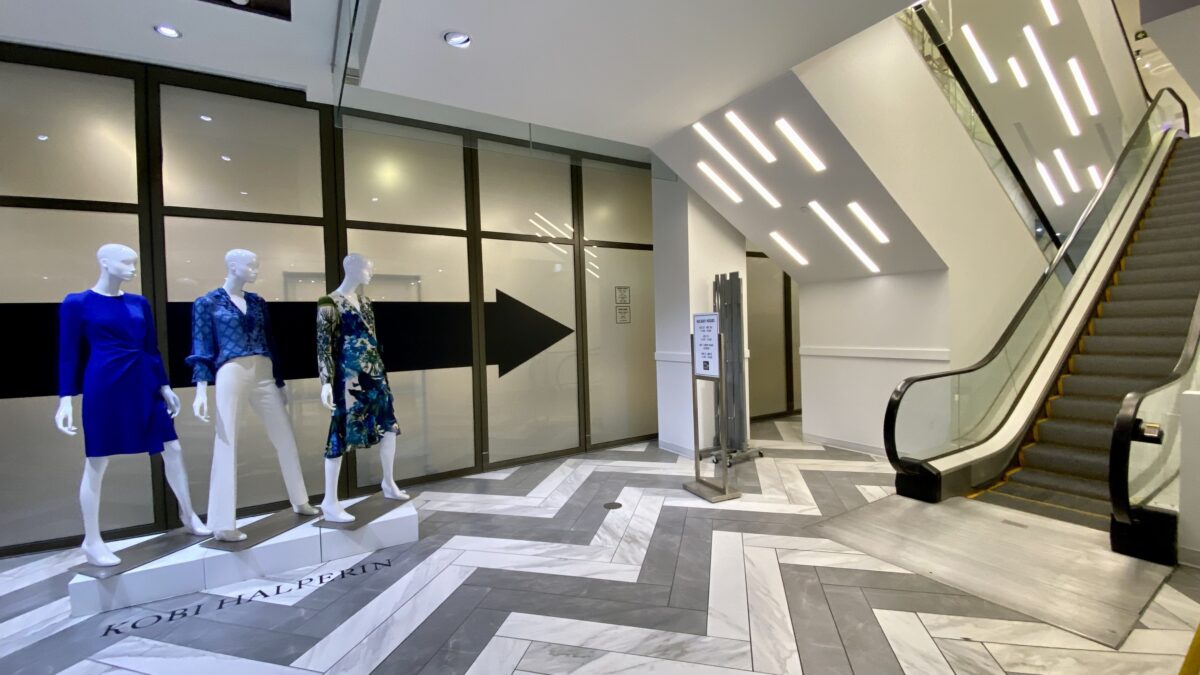
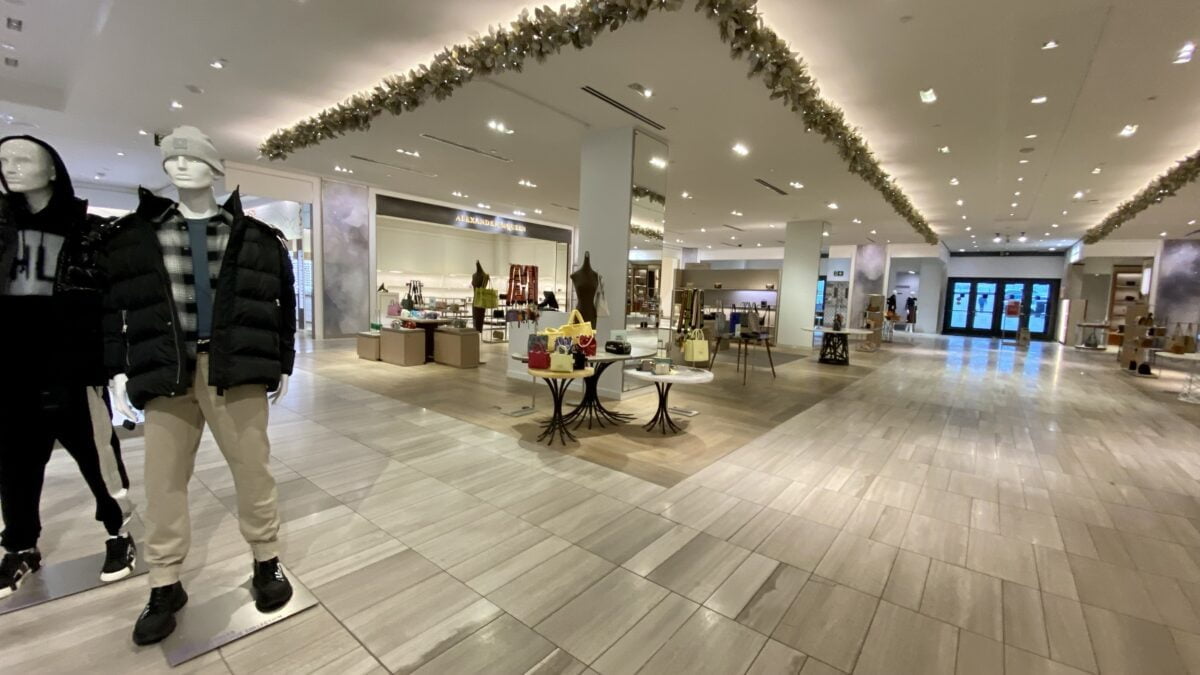
The area behind the mannequins was once the men’s department of Saks which moved upstairs during the pandemic. This photo was taken from the Saks food hall looking to the escalators that lead to the main floor accessories and beauty areas. Photo: Craig Patterson
Empty sit-down seating area at Saks food hall CF Sherway Gardens. Photo: Craig Patterson
Main floor bags/accessories at Saks Fifth Avenue CF Sherway Gardens, January 2023. Photo: Craig Patterson
Cordoned-off women’s footwear area at Saks CF Sherway Gardens, January 2023. Photo: Craig Patterson

Overall, the Saks space features high ceilings and an attractive design with little change since Saks’ opening nearly seven years ago. In 1971 Eaton’s opened in the mall and its box is now occupied by both Saks and a Sport Chek flagship — Saks occupies more than 143,000 square feet though its actual retail presence is now about 100,000 square feet with the loss of the lower level. The Eaton’s influence actually saw the mall’s developer at the time shift the design of the mall so that Eaton’s was visible from both freeways beside Sherway Gardens. 

The exit of the Pusateri’s-run Saks food hall at CF Sherway Gardens follows the recent announcement that Italian food concept Eataly will be opening in the mall. The Eataly store will be located next to where Saks is currently operating and Eataly hasn’t yet said when the store will be opening. A wall of non-branded hoarding beside Saks will eventually become home to Eataly when construction is completed. 

Pusateri’s opened its second Saks food hall in November of 2016 in the subway/PATH level of Saks Fifth Avenue in downtown Toronto. Its construction had been delayed — Saks opened its three level fashion store downtown in February of 2016 and construction delays saw the grocery component open about nine months later. The downtown Saks food hall was closed for much of the pandemic and has since partially reopened, though foot traffic in that part of downtown Toronto is still down significantly given that many are working from home. Prior to the pandemic, more than 50,000 people would pass the store via the underground PATH network daily. 
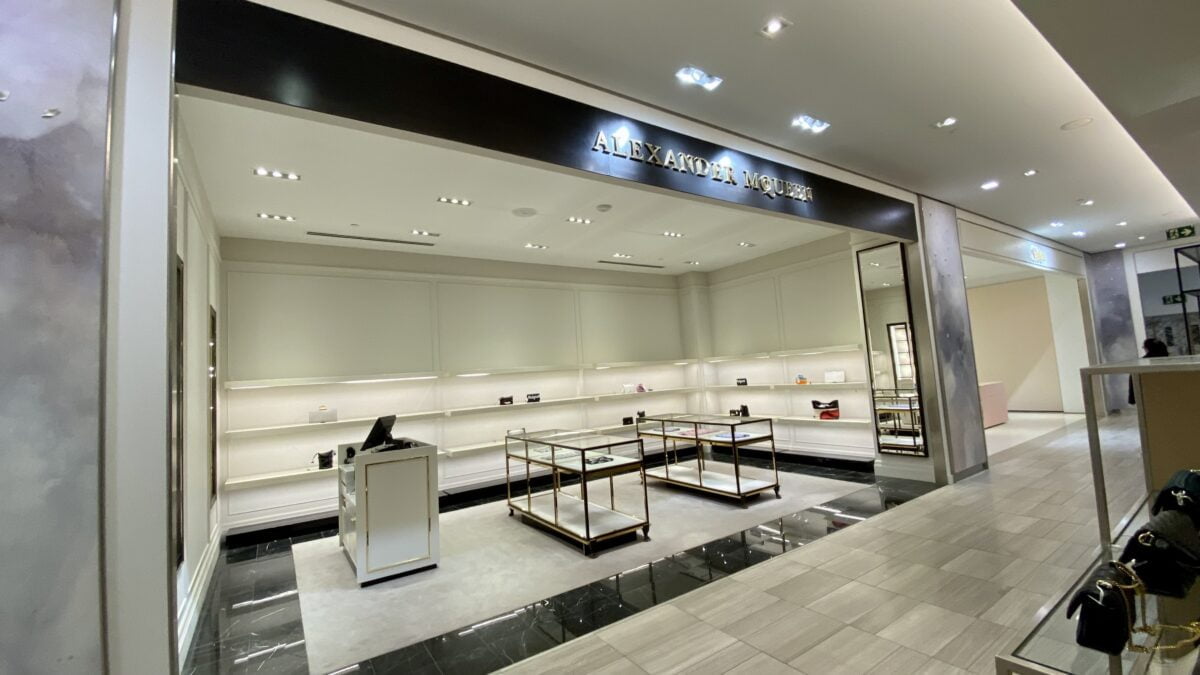
Not much product – Alexander McQueen boutique space at Saks CF Sherway Gardens. Photo: Craig Patterson
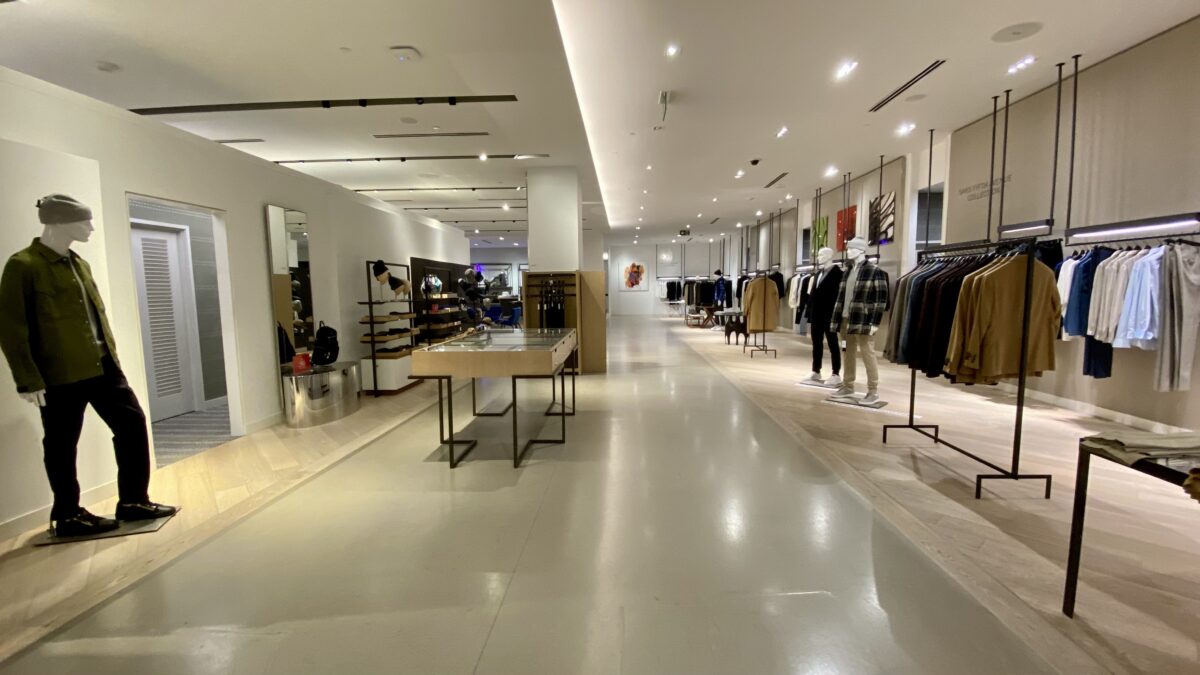
Menswear department, now upstairs on the third floor of Saks CF Sherway Gardens. Photo: Craig Patterson
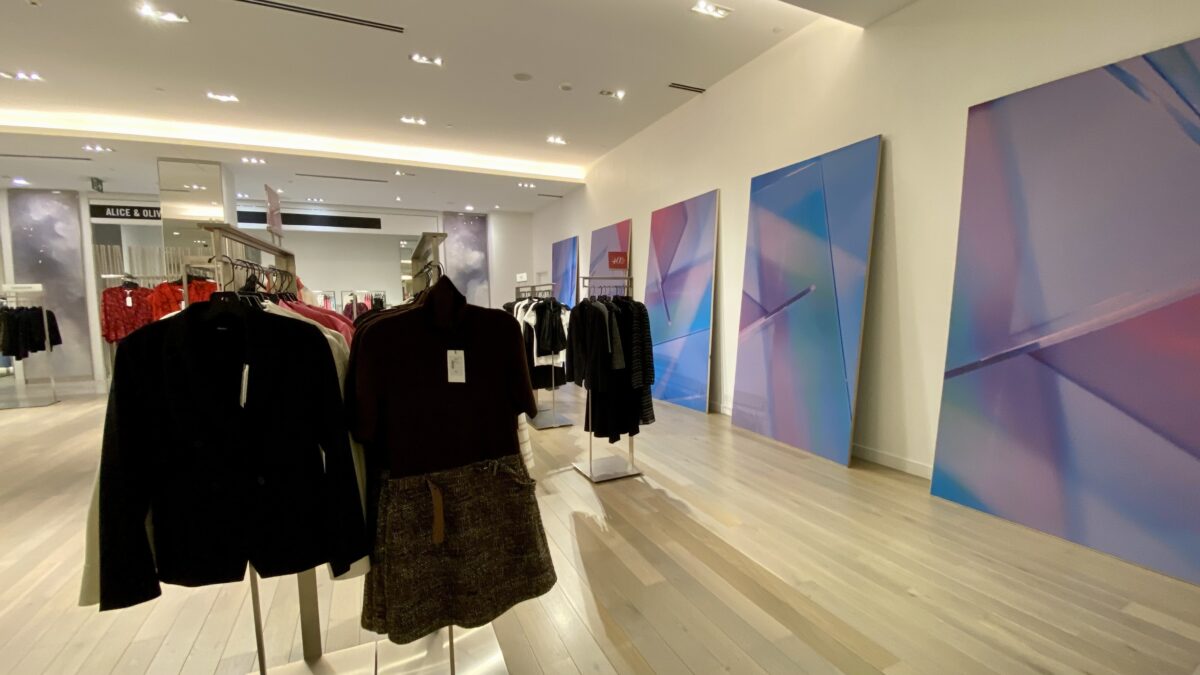
Women’s fashions — in years past luxury brands had boutiques in this area which has since been downsized. Photo: Craig Patterson
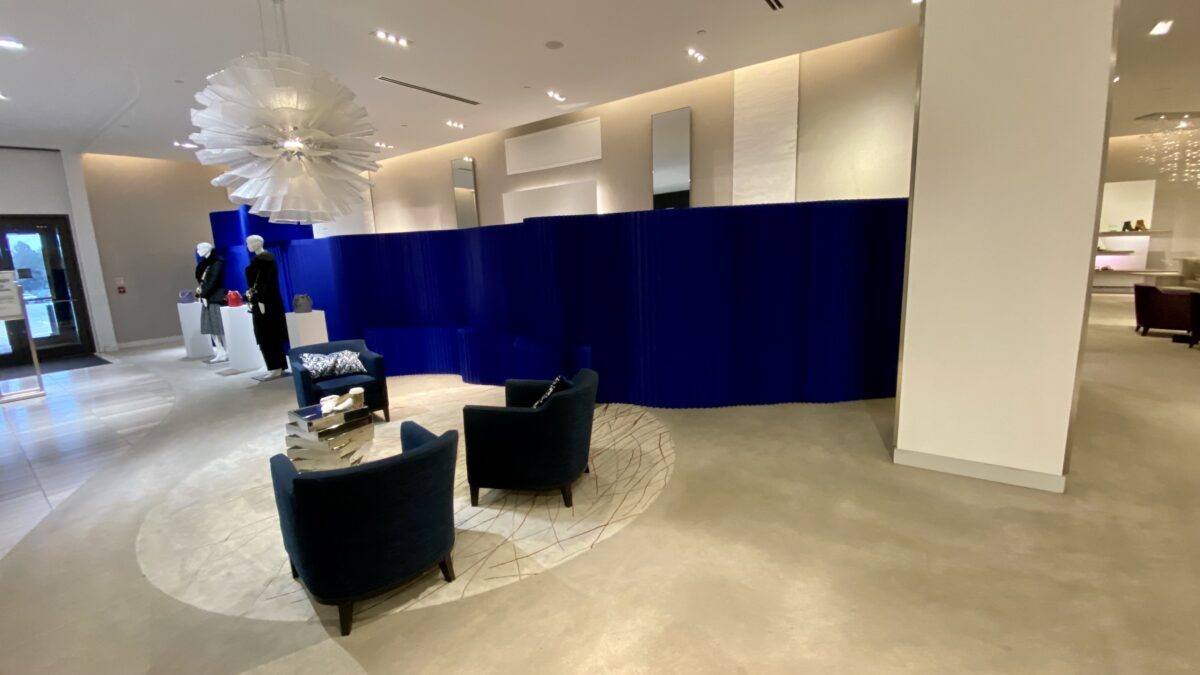
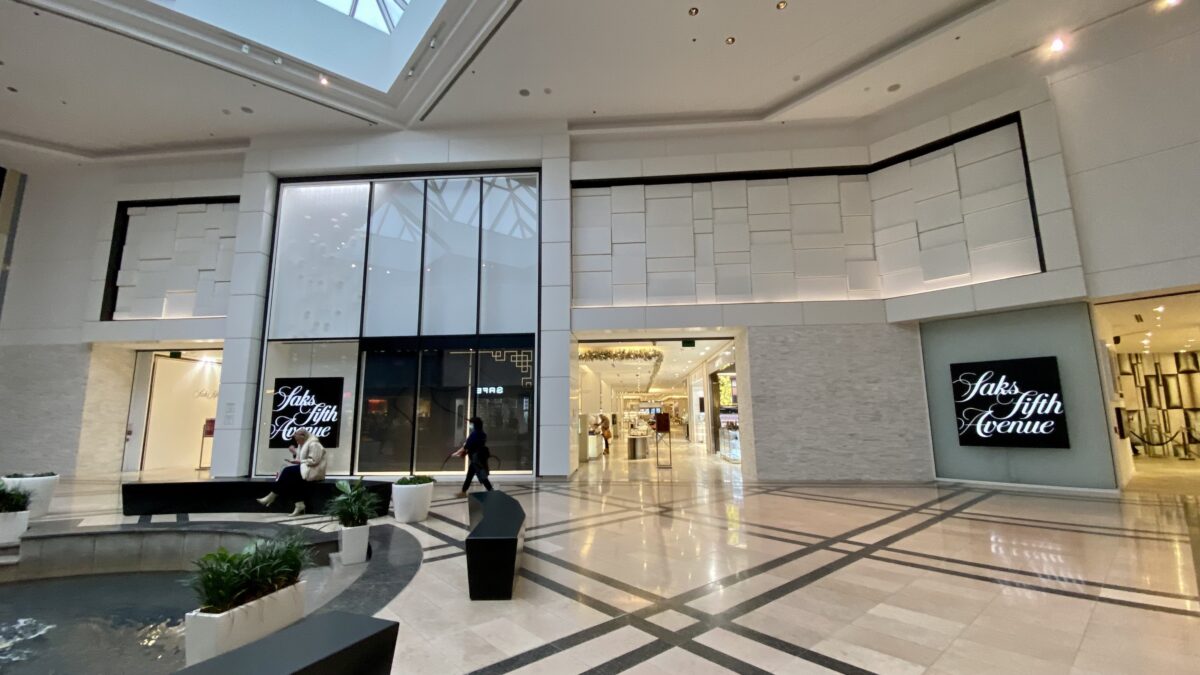
Mall entrance to Saks CF Sherway Gardens in Toronto, January 2023. Photo: Craig Patterson

We recently reported that the downtown Saks store had seen minor renovations following the exit of several luxury brand concessions. One of the key changes was Saks moving the women’s footwear department downstairs to the main floor where handbags had been — staff in the store said it was to pair shoes with bags, though it also appears that space is being filled so that areas of the store aren’t empty following the exit of Louis Vuitton, Dior and Saint Laurent boutique concessions. 

Several months ago Saks reduced its store hours for its three Canadian stores. The CF Sherway location is now open just six hours a day from noon to 6pm seven days a week. The retail opening hours for the mall are 10am-9pm Monday-Saturday with the mall closing at 6pm on Sundays. It’s unusual for a mall-based store to maintain such reduced hours, even for an anchor store. 

In Canada, Saks Fifth Avenue also operates a 115,000 square foot store at CF Chinook Centre in Calgary which opened in February of 2018. That store does not have a food hall component and its opening hours are now reduced the same as at Saks CF Sherway Gardens. 

We’ll follow up on more news about Saks Fifth Avenue in Canada as more information is said to be coming out in the weeks ahead. 

McArthurGlen Designer Outlet Mall in Vancouver Adds Retail Tenants in “Spectacular” Year [GM Interview]

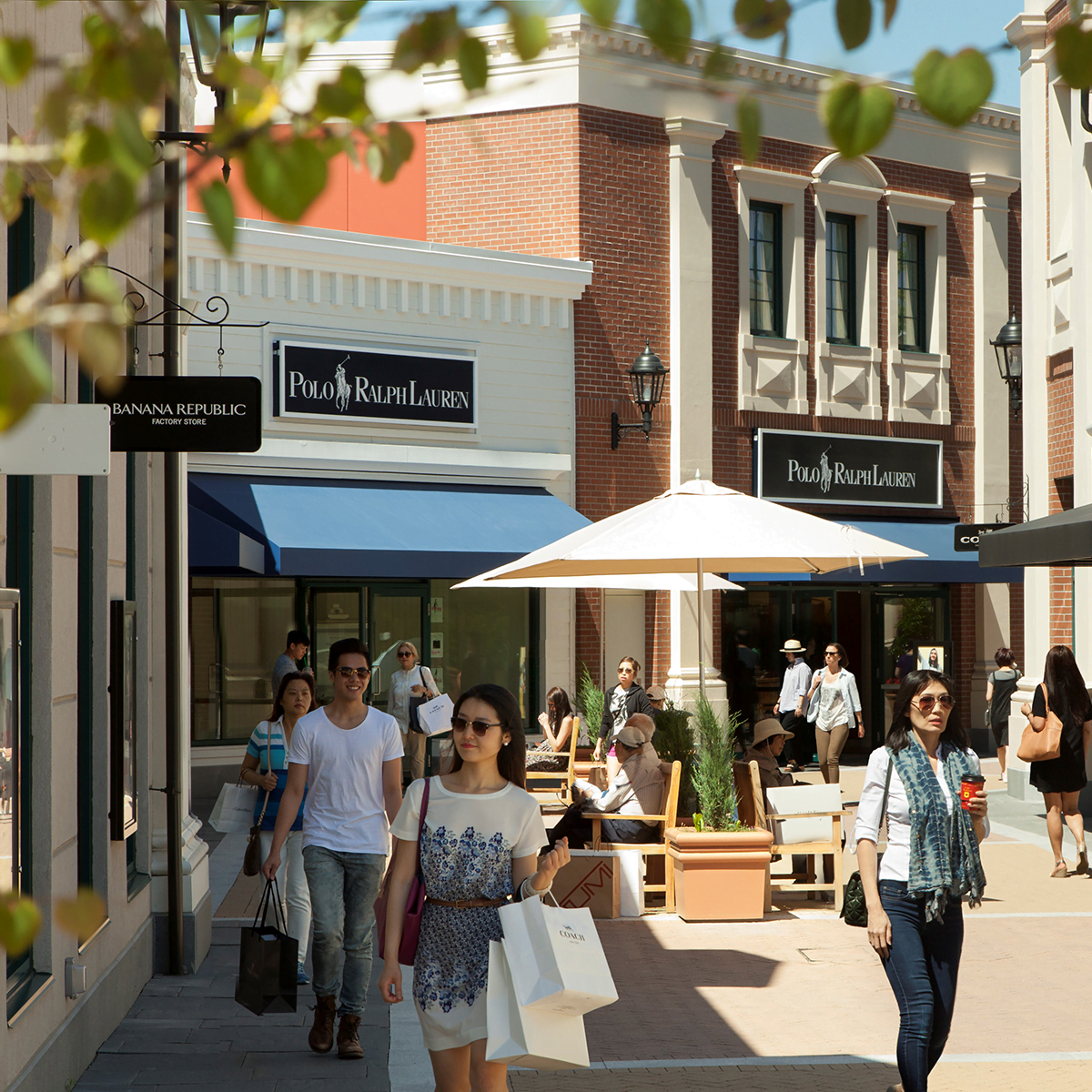
McArthurGlen Designer Outlet Vancouver
Image: McArthurGlen Designer Outlet Vancouver

It was an exciting year in 2022 for McArthurGlen Designer Outlet Vancouver with a number of new store openings and 2023 promises to be a continuation of the momentum developed in the retail sector for the property.

Robert Thurlow, General Manager of the shopping centre, described 2022 as a “spectacular” year.

Robert Thurlow

“It was so much better than anticipated. I was very surprised by the rebound that we saw in 2022. It was remarkable. We finished the year 30 per cent ahead of our budget. And if anybody had told me that back in the first quarter I would have told them they were crazy,” said Thurlow.

“But it really did happen probably from the April/May period onward straight through the end of the year. Once we saw some of the lifting and easing of some of the pandemic restrictions that we had earlier in the year, and most of those were restricted around March time, and we really did see a return to travel, especially domestic travel, I thought it really surprised us. What we saw was huge numbers of people returning not just to McArthurGlen but obviously to Vancouver and British Columbia from Alberta, Ontario and Quebec. Those were the big feeder markets that we saw throughout 2022 and interestingly when we were looking at the visitor numbers coming from those other provinces we were actually over indexing from 2019 from Ontario. We actually saw a 15 per cent increase of visitors from Ontario visiting the centre from what we saw in 2019.”

Image: McArthurGlen Designer Outlet Vancouver

He said traffic was up 29.8 per cent from 2021 and just over 30 per cent up in sales.

Thurlow said the local catchment has been very supportive throughout the pandemic as well. 

“We’re really seeing local customers in much stronger numbers than we ever saw pre-pandemic. I think the brand mix, the new stores that we opened, really resonated with that local customer,” he said.

In 2022, the centre opened seven new stores – Furla, Karl Lagerfeld, Pandora, Harry Rosen, Browns, Steve Madden and Castella Cheesecake.

In 2023, Thurlow said Oak & Fort and Moose Knuckles will be opening new permanent additions. There will also be a new Plenty store as well as the upsizing of Versace and Mountain Warehouse.

“By the time we get to mid-year with the openings of the new stores and the stores that are under construction for the expansions, we’ll be fully leased, It will get us up to 99 per cent which is considered fully leased, which is a great spot for us to be,” said Thurlow. “A lot of our success is certainly down to the really strong leasing activity that we’ve had throughout the pandemic and leading us all the way into 2023.”

Image: McArthurGlen Designer Outlet Vancouver

The second phase of McArthurGlen was opened just a few months before the pandemic struck in March 2020. 

“For us to get that kind of a rebound and to see phase two fully leased within two, two and a half years, is remarkable,” said Thurlow.

McArthurGlen currently has about 325,000 square feet. By mid-year with the new stores, the shopping centre will be up to 95 stores.

“We are planning a phase three. We’re working on that now and hopefully we’ll have an announcement maybe in the next quarter of what the timing of that is going to look like because we do have land on the northeast corner of the property right now,” explained Thurlow. 

“It’s about another 65,000 square feet that will be our phase three. That will be about an additional 30 to 35 stores depending on how we carve up the space. That’s coming on the radar very quickly and I think we should have an announcement about that within the next few months about our planned timing for that phase.”

US-Based CONTROLTEK Opens Fulfillment Centre in Montreal with Further Canadian Expansion Plans [Interview/Photos]

Image: CONTROLTEK

American-based CONTROLTEK, a global leader in asset protection, tracking and visibility solutions, has opened a new fulfillment centre in Montreal, reinforcing the company’s commitment to Canada.

Tom Meehan

The company, which is based in Bridgewater, New Jersey, plans to continue expanding in Canada.

“As we continue to drive momentum in the Canadian marketplace, we further our investment in expanding our presence,” said Tom Meehan, president of CONTROLTEK. “We have established this dedicated facility which offers a full breadth of fulfillment capabilities to serve as our primary point for order fulfillment to meet the growing range and demands of Canadian retailers.”

Meehan said CONTROLTEK Canadian fulfillment operations began in mid-2022, with the sprawling facility of 100,000 square feet in Montreal.

“The strategic location was chosen as it places us close to our densely populated customer base and is in the same time zone (ET) as our corporate headquarters for best service for our customer. We also have another Distribution Centre located centrally within North America, so this seemed like a nice fit in proximity,” he said.

Image: CONTROLTEK

“The location suited some of the transportation routes that we were using.”

CONTROLTEK is a global leader in tamper-evident security packaging, retail asset protection and RFID solutions. The company’s line of inventory protection and visibility solutions helps financial institutions, government agencies, and retailers protect their assets better and run their operations more efficiently.

Image: CONTROLTEK

It also has offices in the San Francisco Bay area and Toronto. It has distribution centres in Chicago and northern California with a smaller one in Toronto and it manufactures all over the world including Canada.

“We’ve been in business 47 years and (the tamper-evident security packaging division) is heavily based on protecting cash. So tamper-evident packaging for cash,” said Meehan. 

“We have a retail division that is focused on EAS (electronic article surveillance) and RFID (radio frequency identification) for retail.”

Image: CONTROLTEK

Montreal is the primary distribution centre in Canada for the company.

“It’s primarily designed to support our Canadian clients,” he said. “We had been in the past supporting Canada through our US DC and as the business grew we felt that we needed to have a DC in Canada and that was really the focal point.

Image: CONTROLTEK

“We’ve had some great growth throughout the Canadian market in the retail sector and it was just a circumstance where we wanted to make sure we could get product quicker, easier to our Canadian customers.”

Meehan said the company will also manage through its Montreal centre any repairs. 

“As we grow, we probably would expect to have one on the West Coast as well. With the one in Chicago, it does cover the central part of Canada pretty quickly. We’re right there. We’d be looking at the growth of business. We’ve really only opened an office about a year ago. We’ve been doing Canadian business through the United States through the US retailers. Now we have actual employees in Canada and an office in Canada so we need to make sure that we can cover the ground with the DC.”

Lush Cosmetics Aiming to Reduce Packaging Waste Further in Canada with ‘Naked’ Options [Interview]

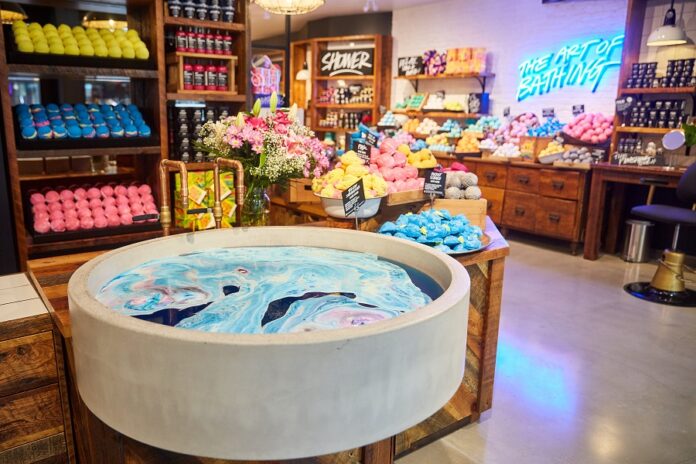
(PHOTO: LUSH)

After receiving a sustainability award in November 2022, Lush, an international cosmetics brand known for its fresh handmade products, is continually looking to evolve and find new ways of going above and beyond to remain a trustworthy brand that consumers can count on from product quality to sustainability.

“Keeping up with the rapidly evolving field of sustainability is especially important to Lush because we identify as a campaigning company that is driven by our mission to leave the world lusher than we found it. Our passionate staff and customers share Lush’s values, hold us accountable, and encourage us to do more,” says Katrina Shum and Sheila Ongie, the Lush Regeneration and Sustainability Team at Lush. “To overcome the barrage of messaging in the world today, we need to work even harder to be heard. We have invested time, focus, and energy in doing the work and building an authentic brand that is rooted in our values. Now, we see the opportunity to further connect our customers with our values by sharing our impacts in deeper and more meaningful ways. We believe our stories have the opportunity to inspire, and grow our overall impact within the cosmetics industry.”

“Leaving the World Lusher than we Found it”

“We have ambitious plans for doing our part to solve the climate crisis, by recognizing the connections to biodiversity, rewilding, and healthy communities. Specifically, our work is centered around five areas: protecting forests and wildlife, achieving 100 percent renewable power, making materials regenerative and circular, radically reducing transport emissions, and standing up for climate justice and adaptation.”

Katrina Shum

Lush is known as a company that uses sustainable packaging as most of its products don’t come with packaging. For instance, Lush has naked products which eliminates waste and is the first brand to create packageless products as the bar concept was developed in 1987. Customers can find shampoo bars, conditioner bars, and soap bars. When Lush needs to use packaging, it uses 100 percent post-consumer plastic and all Lush’s pots, lids, and bottles can be recycled using its local recycling program.

“We keep our initiatives fresh through constant evolution. We find that sustainability and regeneration are rapidly changing fields, and customers’ expectations similarly evolve. One of the best examples of Lush’s constant reinvention is in our approach to packaging – or lack thereof. The naked approach supports Lush’s priority for ethically purchased, quality, regenerative ingredients rather than spending money on packaging materials. Solid unpackaged products such as shampoo bars, massage bars make up over 60 percent of Lush’s sales today. For products where packaging is still required, Lush defied the norm in 2009 by adapting 100 percent recycled content, then shook things up further in 2015 by moving our packaging supply chain from Asia to North America to launch a circular recycling program.”

Sheila Ongie

The circular recycling program at Lush encourages customers to clean and bring in their empty Lush pots and place it towards a purchase. If a customer brings in five, they can get a free face mask and in 2022, Lush refreshed the program so customers can get a dollar off their purchase for every pot they brought in.

As Lush partners with growers, manages its own supply chain, creates its own products, and everything in between – Lush is able to be involved in every step allowing more room for improvement for sustainability and can ensure customers are getting 100 percent of what they are told about Lush’s sustainability initiatives.

Future Sustainability Goals

Lush on Queen Street West (Image: Dustin Fuhs)

“We are driven to leave the world lusher in all areas that our business touches, and we are working faster and harder than ever to stay within our planetary boundaries. This includes taking direct action where we have operational oversight – such as in our manufacturing facilities, distribution centers and shops, and finding the leverage points for influencing our upstream and downstream impact.”

Looking upstream, Lush is currently looking at ways to strengthen its partnerships to include carbon reduction and sequestration opportunities. Shum and Ongie said 80 percent of Lush’s carbon footprint is within its supply chain of growing and processing ingredients and only have partnerships where the company shares the same set of values where sustainability comes first.

Lush will also be looking at evolving product formulas to continue to use self-preserving ingredients that can be used without packaging. Currently, Lush’s shampoo bars avoid three plastic bottles each and around 2.8 million plastic bottles per year.

“Thanks to our innovators, naked options exist in nearly every Lush product category today. This innovation is being noticed as in November 2022, Lush received a sustainability award for our new naked mascara. As happy as we were for the recognition, it was the exposure and industry acceptance of this new low-impact product that fills us with excitement. Since naked is a Lush core value, we can expect to see further innovation in this space.”

As Lush continues to evolve with its naked products to eliminate waste and to further its sustainability goals of reducing its carbon footprint, Lush is a company that is known to keep moving forward, to be involved in activism such as animal rights, and to include its customers with every change. The sustainability award, Shum and Ongie said, has pushed Lush to want to try new things as it has challenged the brand to grow more.

“Lush customers know that our brand stands for doing what is right over what is easy. We are not afraid to challenge the status quo and stand up for what we believe in. We are fortunate to have well informed staff and customers who are not afraid to ask us the hard questions, which has continuously challenged us. We believe in the value of innovation and creativity. To be on the leading edge requires us to be nimble, to try new things and to be okay with making mistakes and trying again in order to show our customers, the industry, and others what is possible.”

Related Retail Insider Articles

Health-Focused ‘KaleMart24’ to Launch in Canada to Disrupt Convenience Store Retail [Interview]

Image: AmazonGo

A fresh new concept—positioned to become “the Whole Foods of convenience stores”—is ready to make its market entry and tap into a new generation of on-the-go shoppers.

KaleMart24 is being spearheaded by Oussama (Sam) Saoudi, who is the founder and CEO of Montreal-based Toro Beverages, which revolutionized the energy drink industry by introducing Canada’s first matcha-powered energy drink. Toro Matcha is made in Canada with Japanese Uji matcha and only good-for-you ingredients, it’s 100 per cent natural, sugar-free, gluten-free and vegan.

Sam Saoudi

“I am a millennial and a busy entrepreneur, time is scarce for me, and convenience stores (c-stores) play an important role in saving me time. I belong to an on-the-go generation that is driving the trend for increased visits to c-stores. We make frequent trips to smaller stores just to grab a quick and fresh lunch/snack in time to make it back to the office or to class,” said Saoudi.

“Our generation is becoming more conscious about health, however, natural food and beverage options in current c-stores are very limited or non-existent.

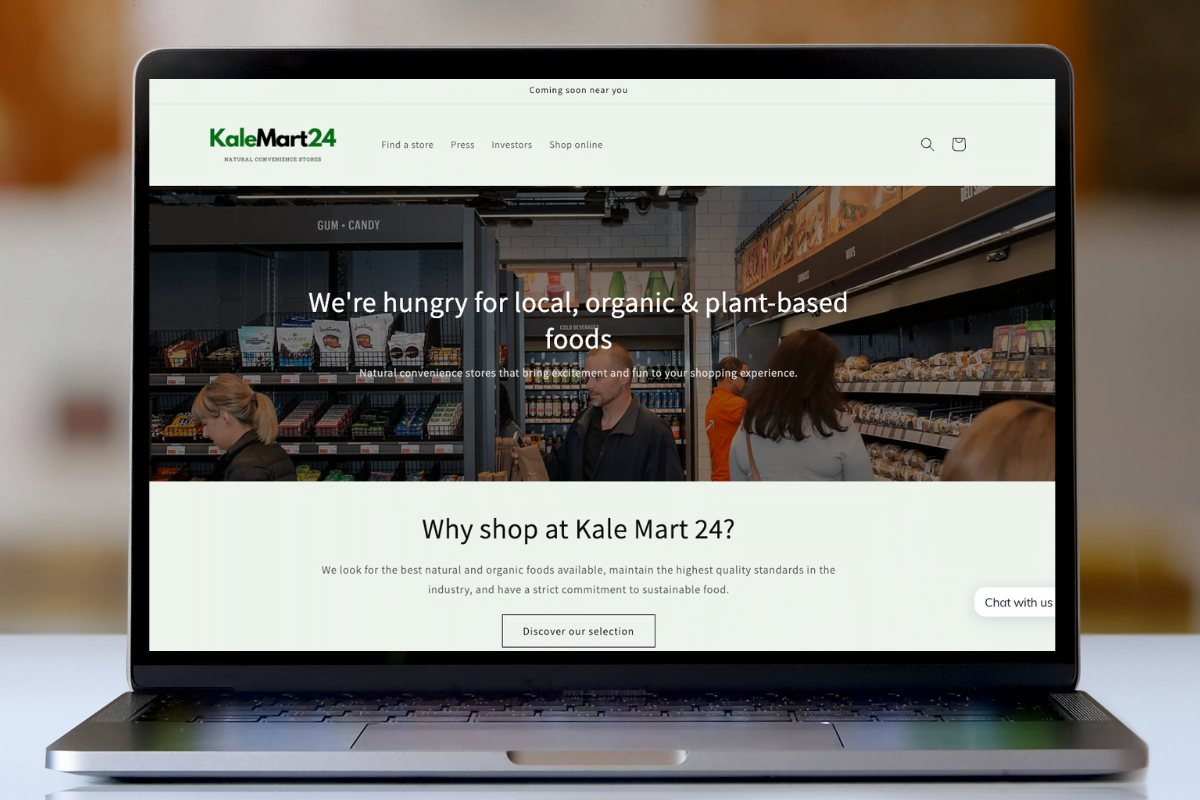
Image: KaleMart24.com

“KaleMart24 is breaking through the mold of c-stores being associated with junk food by offering healthier choices that cater to a mobile savvy younger generation.”

He described KaleMart24 as the “Whole Foods Market” of convenience stores. KaleMart24 is a sustainable c-store chain that makes shopping for organic and healthy foods incredibly fun, with the homey feel of a market, yet the modern elegance of an upscale c-store. 

“Curating specialty brands and products, KaleMart24 includes all the usual sections of a c-store, along with a small personal care section, and a small organic pet section,” he said. “We are fostering connections between people, food and the neighbourhood. We are conscious about our customers’ health and believe that we contribute to a healthier diet than conventional stores.

“We are also leveraging tech by offering self-checkout, contactless and mobile payments to encourage shoppers to shop easily and buy often. We’re located close-to-home or on the way to work to take advantage of the important food on-the-go category.

“After the COVID-19 pandemic, younger generations are more conscious about their health, but are looking for quick and accessible healthy foods. They are increasing their visits to c-stores, but healthy options are lacking. Thus, KaleMart24 is necessary at this point in time.”

Example of Convenience Grocery Store Concepts (Image: AmazonGo)

Saoudi said the company is planning to open several locations in major Canadian cities before expanding internationally to major cities in the USA, UAE, Europe and Asia. He sees this brand as an international brand that will dominate the better-for-you convenience food market.

Tony Flanz, CEO of Montreal-based Think Retail is helping the brand launch the concept. The ideal store size is about 1,500 square feet in high-traffic areas and near universities.

Tony Flanz

“Stores have a modern, upscale look, while still maintaining an earthy, homey market-like atmosphere. Expect all the usual categories, but with specialty brands and products that include not only food and beverages, but also personal care items and even organic pet food,” says Think Retail on its website.

“Stores will leverage technology with a strong loyalty program, as well as self-checkout, contactless and mobile payments options that encourage shoppers to shop easily and buy often 24/7.”

It says the concept will have wide-appeal for time-strapped health-conscious consumers, but zeroes in on Millennials, who desire a high-quality food experience, with a unique narrative and global flavours.

“This demographic is looking to save time and they’re always on the go, which makes them the ideal c-store shopper. Now, KaleMart24 is filling the gap for BFY (better for you) convenience products that shoppers can grab easily close to home or on their way to and from work or school,” says Think Retail.

Consumer Spending in Canada Strong for Holiday Season: Mastercard Study

Black Friday Deal at Fido (Image: Dustin Fuhs)

Even during an unpredictable time with economic challenges, Canadians were out spending this holiday season.

According to Mastercard SpendingPulse, which measures in-store and online retail sales across all forms of payment, Canadian retail sales, excluding automotive, increased 3.8 per cent year over year (+15.6 per cent year over three years) in November. While e-commerce sales were down three per cent year over year, growth remained strong since pre-pandemic at 56.2 per cent from three years ago. In-store sales in November were up 5.3 per cent year over year (+7.3 per cent YO3Y). 

Canadian retail sales on Black Friday (November 25) were up 5.6 per cent year over year, with Apparel (6.6 per cent) and Electronics (5.8 per cent) among the sectors showing sales growth. In-Store sales saw an increase in spend at 7.5 per cent on Black Friday, indicating a strong return to in-person shopping this holiday season.

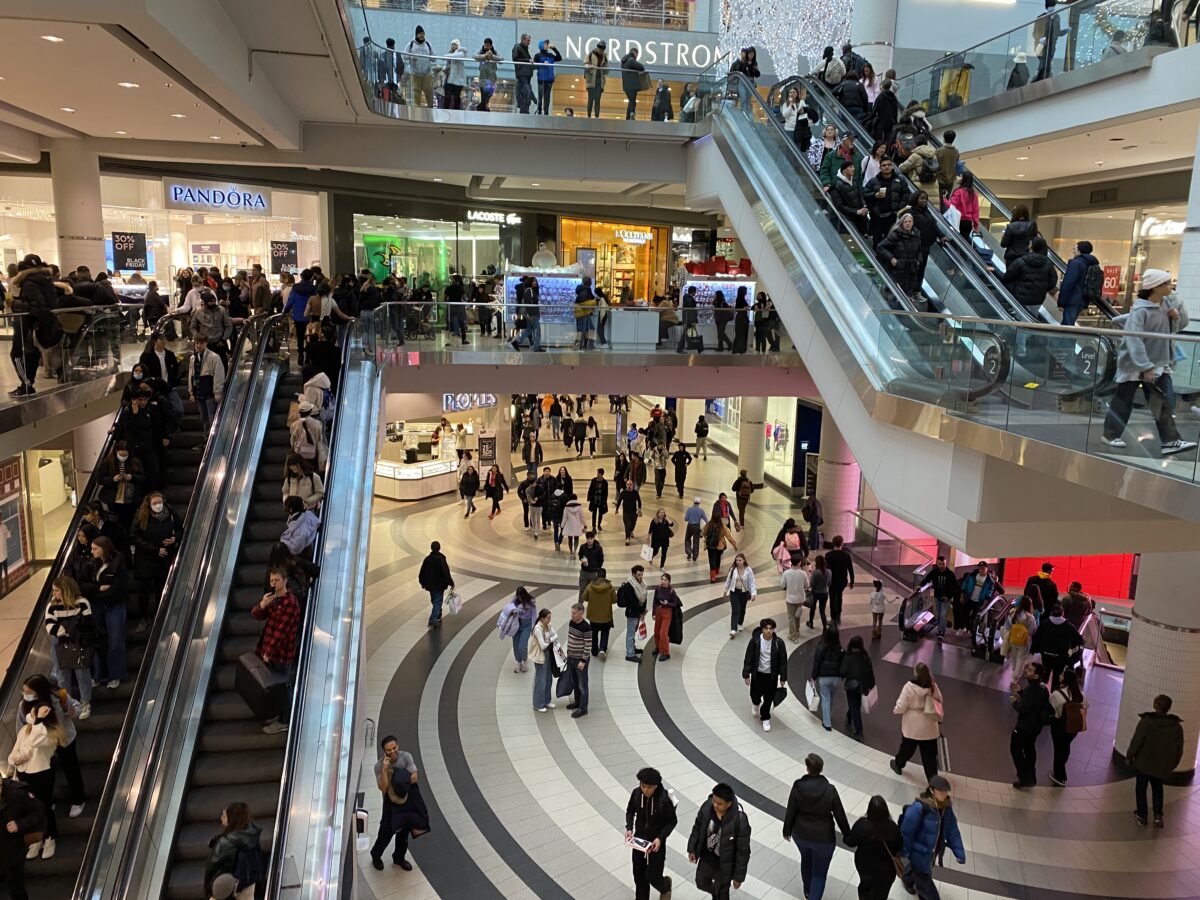
CF Toronto Eaton Centre on Black Friday 2022 (Image: Dustin Fuhs)

The Canadian numbers for December aren’t in yet but November was a good sign of what retailers in the country could expect for the holiday season.

“What we’re seeing is a Canadian consumer that is shopping but they’re being careful so that there are certain categories that are performing better than others,” said Steve Sadove, senior advisor for Mastercard and former CEO and Chairman of Saks Incorporated. “Experiences are driving behaviour. I believe value, given inflation and all the pressures on people, is (also driving behaviour).

“Categories that performed well early in the pandemic are slowing. So you see this reversion to the norm. The winners as we look at November, people are still going back to the stores. So you saw 5.3 per cent growth in stores. The overall growth at 3.8 per cent is a slowing growth. There’s no question it’s not at the pace of growth that we had seen earlier in the year. That is inflation is driven.

“And e-commerce is not growing as quickly as it was. You saw this massive spurt in e-commerce during the pandemic increasing more than 50 per cent. But now you’re not seeing as rapid a growth. It’s still an elevated level but it’s not at an accelerating growth level. I think the most interesting data through November is really the role that experiences are playing. Restaurants are growing at 14 per cent. So people want to get out again. Fuel is growing. Part of that is the rise in fuel prices but it’s also people getting out again and traveling.

“It’s a combination of the experiential and then you contrast with everything home related which is declining . . . Those are categories that fared very well earlier in the pandemic when you’re stuck at home. What do you do? You go buy a new television set or you’re fixing up your home with home improvements. That has passed and now you’re in this phase of the experiential.”

Mastercard SpendingPulse Canada (November 2022)

Sadove said it’s also the pattern being seen in the U.S. as well.

According to Mastercard SpendingPulse, U.S. retail sales excluding automotive increased 7.6 per cent year-over-year this holiday season, running from November 1 through December 24. Canadian data will be coming out in the near future.

“This holiday retail season looked different than years past,” said Sadove about the U.S. market. “Retailers discounted heavily but consumers diversified their holiday spending to accommodate rising prices and an appetite for experiences and festive gatherings post-pandemic.”

Black Friday Deal at Harry Rosen (Image: Dustin Fuhs)

Sadove said the amount of sales during the holiday season in Canada is in some ways a back to normal environment.

“Last year you didn’t have enough inventory in the system. You had supply chain issues. The brands and the retailers ordered a lot more product this year. The supply chains loosened up. They also ordered more product in the categories that they thought were going to continue to grow but didn’t. So you see these declines in electronics, in home, in jewelry. They ordered too much of it even in certain areas. Apparel is not all the same. They ordered too much of athleisure, at-home, type products but not enough of the going out to the weddings and the social occasion apparel,” he said.

“So I think you’ve got too much product in the system that had to be cleared out. Fashion inventory is a wasting asset so it doesn’t get more valuable over time. I think the retailers decided they needed to clear out the system. So you saw accelerated discounts. I would call it earlier and deeper because of that and I would expect you’re going to see deep discounts right now Boxing Week to clear out the excess inventory.

“I’m guessing as you go into 2023 once a lot of this inventory clears there’s a lot more predictability, even though there’s a lot of uncertainty, I would anticipate that the retailers would be much more cautious as they’re buying 2023 so it will right size itself over time. But you’re still in this period right now of the retailers learning, and the brands learning, the changes in the consumer behaviour and the inventory is a result of that.”

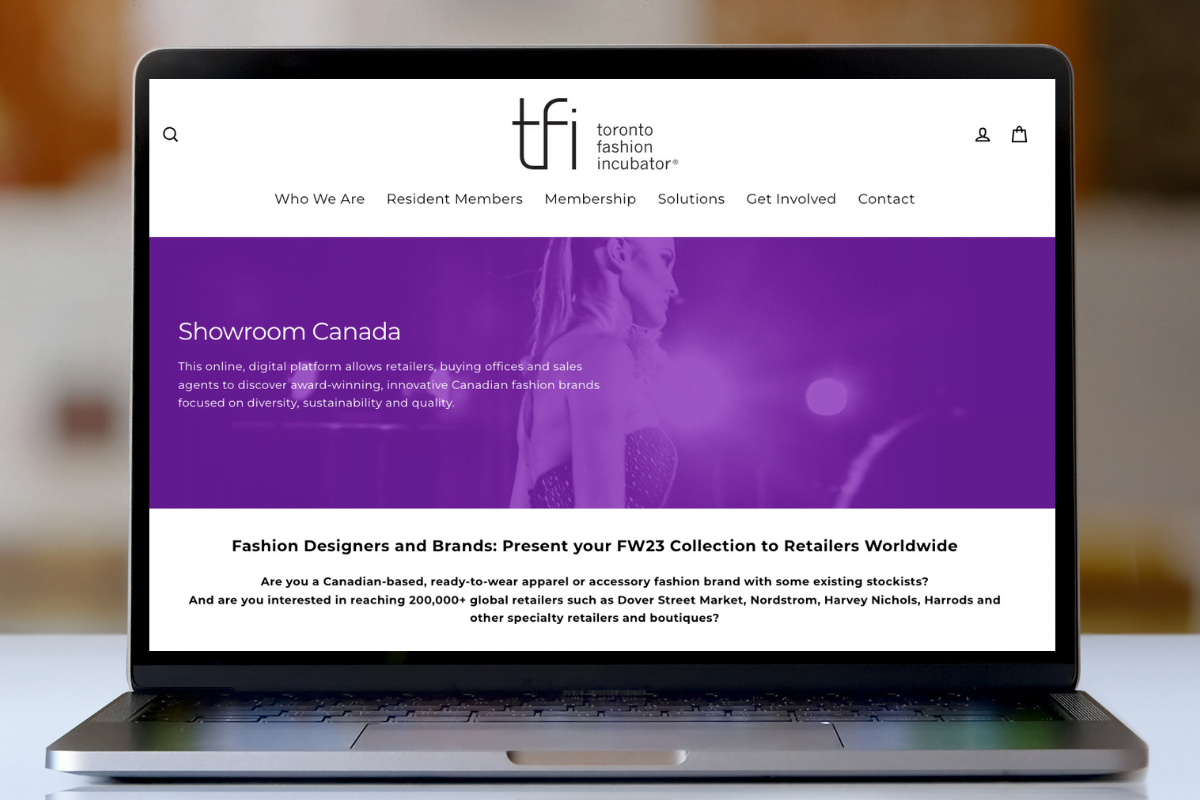
TFI Launches 18 Canadian Designers on Digital Showroom to Target Global Retailers [Susan Langdon Interview]

Image: Toronto Fashion Incubator

The work of 18 Canadian fashion brands will be elevated by a digital showcase with worldwide exposure to retailers, changing the way business is conducted.

Susan Langdon

Showroom Canada is a virtual space for designers to expose their fall-winter ’23 collections to more than 200,000 global stockists.

“That’s a pretty amazing opportunity,” said Toronto Fashion Incubator (TFI) executive director Susan Langdon.

“Some of these retailers include Dover Street Market, Harrod’s, Nordstrom, and Harvey Nichols.”

The B2B digital wholesale platform is being built on Joor.

Many brands haven’t done an online showroom before and “we’re providing educational webinars with the Joor people,” said Langdon. 

Image: Toronto Fashion Incubator

TFI is an award-winning non-profit that helps educate and mentor fashion entrepreneurs in all things business-related. It launched in 1987 and bills itself as the world’s first fashion incubator. Its “groundbreaking incubator model has been replicated in major fashion meccas such as New York, Paris and London,” according to its website.

Alumni and members include Christopher Paunil, David Dixon, Shelli Oh, Foxy Originals, Garrison Bespoke, JUMA, Lesley Hampton, Line Knitwear, Miriam Baker, Sentaler, Smythe, S.P. Badu, and Todd Lynn.

For Showroom Canada, TFI will be covering everything from digital assets needed to using line sheet templates to pricing for international markets. 

It’s similar to factoring, said Langdon. 

When designers get an order from retailers around the world, they can opt into Joor Pay to help with cash flow.

“The designer will get paid in full within six days. And then Joor collects the payment from the retailer within 60 days, so that’s pretty amazing.”

That takes away a lot of fear from designers –  some of whom are wholesale newbies, while others are “venturing into a digital B2B wholesale concept for the first time.” 

A mentoring system is in place for TFI members, who can spend two hours with volunteers “who have a lot of retail experience.”

That includes a former buyer from Holt Renfrew, and Franco Mirabelli, “who had his own chain store but also did sell to stockists, so he can give real life examples.”

Being able to offer wisdom and say “‘this would happen to me, this is how I broke into stores,’” is helpful.

TFI also has a designer who had her own small boutique and was the shoe buyer for the Shoe Company. 

“A lot of our members are not just apparel designers, but they’re also accessory designers,” said Langdon.

Her career began in fashion, too. 

“As a designer, I sold across Canada, the U.S., a little bit into the U.K., and I meet exclusively with our resident members,” she said. “These are the people who rent studios within our facility and I can share my experiences … particularly with international markets and how to approach retailers, how to follow up with them.”

Image: Toronto Fashion Incubator

Getting Canadian designers’ lines into stores isn’t easy, “especially when you’re breaking into the market,” said Langdon. “Once you’ve made a name for your brand, and it’s proven to have a good sell-through rate, often, stores will set aside a budget for you.”

Langdon said she recently found out Nordstrom has a 10 per cent ‘open to buy’ every season.

It means the retailer is looking for new brands to bring in to “create some excitement and curiosity for shoppers.”

For those having difficulty breaking into the Canadian market, “which a lot of designers are finding, you can be discoverable by American buyers or buyers from Europe.” 

When Showroom Canada ran in 2021, the greatest response rate was from American buyers, she said. “‘They’re a lot more willing to take a chance on a Canadian brand, which I think is great.”

It’s been running for two years and is a grant-reliant program.

Showroom Canada launched in late 2020, when brands were having difficulties with wholesale orders and buying appointments with retailers.

Langdon conceptualized an online tradeshow and it did well. “We ran it for six weeks [in 2021] and the brands who participated, together they generated almost a million dollars in wholesale sales,” she said, adding “that’s pretty good.”

Fashion designers don’t have to leave Canada to find success, said Langon.

While brands such as Erdem, DSquared2, and Mark Fast have found “great success” elsewhere, the pandemic has forced business online.

“Look at some of these great brands like Greta Constantine, Jenny Bird, and Sid Neigum, who were all members of TFI, who will remain in Canada, you know, and they’re doing extremely well, selling all over the world … I definitely would encourage brands to stay in Canada because we have an excellent support system here like TFI that you’re not going to find elsewhere.”

Video Interview: Top 5 Digital Marketing Trends For 2023

Video Interview: Top 5 Digital Marketing Trends For 2023

Steve Buors, CEO & CO-Founder of Reshift Media, discusses the Top 5 Digital Marketing Trends in 2023.

Buors talks about:

  1. Localization as a differentiator: According to Shopify, 49% of North Americans are more likely to purchase from a brand due to its local presence, and CFIB reports that 66% of consumers say they make efforts to buy from small businesses.
  2. Improved performance through machine learning & AI:  As marketers look to increase the efficiency and effectiveness of their advertising in 2023, the continued increase in the use of AI and machine learning will allow marketing professionals to analyze real-time data and dynamically generate personalized content and ads based on a combination of user characteristics and business objectives.
  3. Explosion of short-form video: Online video consumption continues to grow, with video accounting for 82% of all online traffic.
  4. Increased competition for new franchisees: According to Google Trends, search volume for terms such as “start a franchise,” “buy a business,” and “buy a franchise,” are up 30% on average compared to the same month in 2021. In fact, several months saw search volume increase more than 100% over the prior year.
  5. Creating competitive advantage with first-party data: With third-party cookies set to be obsolete by 2024, first-party data collection will be essential in 2023 for marketers. 

The Video Interview Series by Retail Insider is available on YouTube.

Connect with Mario Toneguzzi, a veteran of the media industry for more than 40 years and named in 2021 a Top Ten Business Journalist in the world and the only Canadian – to learn how you can tell your story, share your message and amplify it to a wide audience. He is Senior News Editor with Retail Insider and owner of Mario Toneguzzi Communications Inc. and can be reached at mdtoneguzzi@gmail.com.

Interviewed this episode:

Like, Share and Subscribe to Mario Toneguzzi on YouTube!

Follow Mario:

Also check out the other series offered by Retail Insider, including The Weekly podcast and The Interview Series, which are both available on Apple Podcasts, Stitcher, TuneIn, Google Podcasts, or through our dedicated RSS feed for Simplecast and other podcast players.

Follow Retail Insider:

Share your thoughts!