Retail Insider is streamlining its Canadian retail news from around the web to include a handful of top news stories that can be viewed quickly during the day. Here are the top stories from the past 24 hours.
EY is partnering with Shopify in a global alliance to help enterprises activate and scale their e-commerce businesses.
The EY-Shopify Alliance, founded in Canada, will help merchants get to market faster, at scale, increase revenue potential, improve cost efficiencies, reduce tax risk and provide customized experiences.
EY and Shopify will train an initial cohort of 500 technical professionals around the world who will play a key role in bringing the unique strength of the alliance to enterprise customers at scale and add accelerated value to customers.
The Alliance is also creating new secure options for the sale of regulated products such as pharmaceutical products and alcoholic beverages.
Image: EY Canada
Further support will be extended to those professionals by enabling up to 10,000 consultants through exposure to the Shopify platform. The alliance will also establish a set of first-of-its-kind EY wavespace x Shopify centres. Leveraging the global network of EY wavespace™ innovation hubs (in locations such as New York, London, Toronto, Sydney and Singapore), these centres will bring the power of Shopify, EY teams and their collective clients together to create improved online customer experiences and solutions, reimagine the future of e-commerce and unlock new markets for regulated products.
Ritu Khanna
“For modern enterprise businesses to compete in today’s world, they need scale, speed, flexibility and exceptional commerce experiences in order to drive growth. Bringing EY and Shopify together provides enterprises the ability to activate and scale their commerce strategies in new ways, leveraging the power of Shopify’s powerful commerce platform,” said Ritu Khanna, VP, Partnerships at Shopify.
“Together, we will help large-scale businesses meet the challenge of today’s rapidly changing retail environment. One of the unique areas of opportunity that EY and Shopify will focus on through our partnership is helping merchants who wish to sell regulated products, like alcoholic beverages and pharmaceuticals, through e-commerce.”
Image: EY
Warren Tomlin, Managing Partner at EY and Global Alliance leader with Shopify, said “we are genuinely as proud of Shopify as any Canadian should be at what they’ve been able to build out of Ottawa and out of Canada and the entrepreneurs and the businesses that they’ve enabled.”
“We looked at that and said we think they are legitimately ready for enterprise clients beyond the ones that they’ve started to test and experience. And so when we looked at them we thought we could help them in two distinct ways,” said Tomlin.
Image: Warren Tomlin
“Way number one would be to have a global alliance with them so as big brands around the world want to either re-platform their e-commerce solution or go direct to consumer or rethink the way they deliver their offering online, that drives a lot of sophistication. You need to integrate it into back end systems, you need to integrate it into legacy systems and we wanted to be the first to bet on Shopify that they were ready for enterprise grade. And we’re very, very bullish that they are.
“On the other branch, coming out of the pandemic, we believe that the complexity of selling whether it’s alcohol, cannabis, gaming, pharmaceutical, PPE, luxury products, needs a certain amount of rigour and compliance and regulatory approvals. And Shopify runs the Ontario Cannabis store and they have some experience there and we felt that with our audit, assurance, tax and consulting pedigree we’d be able to work with clients that are looking to sell regulated product online. So similar to the way we’re going to help them in a sort of stock enterprise client, we want to help them the same whether it’s a health provider or a controlled product or substance on that side.”
Image: EY-Shopify
Tomlin said that as we look to a possible recession where spend is scrutinized he’s very bullish that Shopify will come out as a potent way to rethink an enterprise commerce strategy.
“We call it commerce transformation. So it’s not just simply thinking about a platform change to take out cost. Of course, that would be a key part of it but it’s the ability to delight clients in a better user experience at the same time,” he said.
Kristina Rogers, EY Global Consumer Leader, said enterprises and online merchants are re-evaluating their e-commerce strategies to provide better, more relevant and frictionless experiences to meet high e-commerce customer expectations.
“This collaboration with Shopify will help brands enhance their customer journeys, explore new channels and ultimately grow their businesses — all while navigating the increasingly complex world of regulated retail,” she said.
Image: EY-Shopify
Jad Shimaly, CEO and Chair, Ernst & Young LLP (EY Canada), said the demands and expectations of next-generation conscious consumers will require a pivot to thrive in accelerated e-commerce environments — and fast.
“The alliance with Shopify will provide a broad range of transformational services that help merchants comply with the complex regulatory landscape and build new operating models that deliver seamless, sustainable customer experiences. I am excited to see this partnership unlock opportunities for clients that allow them to grow at scale while creating long-term value for all stakeholders,” said Shimaly.
Harley Finkelstein, President, Shopify, said modern enterprises operate in a complex environment where scale, speed and flexibility are needed to drive growth.
“We are excited to work with EY teams to bring the performance, customization and commerce expertise that our merchants know and love to more large enterprises around the world,” he said.
The costs of goods and services in nearly all consumer categories have sharply increased over the last year. The world is grappling with a looming recessionary economy, rising inflation, and the Russia-Ukraine war, driving costs upward, seemingly with no end in sight.
The fashion industry has certainly not been immune to these increases, both in the high-end luxury space, as well as the low-end, fast-fashion segment. However, the mid-market, ‘contemporary’ players are also on the move as far as price-positioning and have seized an opportunity to re-configure their place in the market. This re-positioning took place tacitly, and quickly, and this holiday season will determine if their bets on pricing models will pay off.
With the worst of the pandemic, apparently, in our rear-view mirror, global apparel and accessory brands have begun a slow and steady, but often uneven rebound, across the major markets of the U.S., Europe, and China, leading the recovery. Both mall, and off-mall brick-and-mortar outlets have seen increased foot traffic and higher sales, despite grappling with staff shortages, shipping and freight delays, and rising costs across the board.
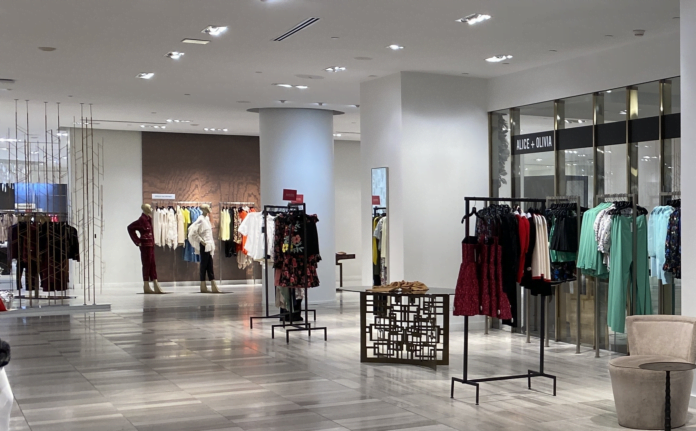
Women’s contemporary floor at Holt Renfrew, 50 Bloor St. W. in Toronto. Photo: Craig Patterson
Mono-brand stores are dealing with higher raw material costs, more expensive and smaller labour forces, and are, in many cases, opting for air freight as a more reliable option than sea, but with the explosive logistics costs, are trying to avoid margin erosion wherever possible. Multi-brand retailers are victim to short-shipments, and increased shipping costs by local and domestic carriers.
Overall, significant challenges remain; the looming global recession, high inflation, and the Russia-Ukraine war are no small matters for an industry almost solely based on discretionary spending.
Typically, this web of seemingly never-ending challenges would spell disaster for the entire global fashion industry, or a continuation of the storm that brands suffered through during the closures and shut-downs of the COVID-19 pandemic. Interestingly, this has not been the case in the past twelve months. Instead, we have seen unprecedented spending across all fashion and apparel sectors, an insatiable appetite for luxury goods, and a complete ‘reset’ of the price positioning seen prior to the pandemic.
Alexander Wang Campaign Image. Alexander Wang will open its first Canadian store next year on Bloor Street in Toronto.
Fashion consumers are flooded daily with messages about increased costs for manufacturers and designers, as well as the push to make more environmentally sustainable products, which of course, cost more to produce. While these factors may be true, it is clear that the brands themselves are not taking the same kind of hit to their pocketbooks that consumers are. The never-ending price increases indicate that the growing costs of doing business are partly being passed on to the consumer, while brands struggle to maintain their margins, and their bottom line.
Luxury brands like Louis Vuitton, Chanel, Hermes, and Brunello Cucinelli have been steadily increasing their prices for years, part of an industry that will report revenue of $117 billion in 2022, and is expected to climb by 5.62% annually. There are suggestions that the main contributors for these hikes are in part to rising costs of raw materials, soaring marketing spends, and a significant investment in brick-and-mortar flagships located on the best (and most expensive) shopping streets and malls of the world.
What we have seen, given the latest earnings from Kering Group, parent company of brands such as Gucci and Saint Laurent, reporting a revenue increase of 23% YoY for the third quarter of this year, or LVMH, parent to the namesake Louis Vuitton, reporting 56.5 billion euros in revenue, in the first nine months of 2022, up 28% from the same period in 2021. While increasing prices at that level is sure to price out a certain portion of customers, leading to fewer of them, luxury brands are happy to make their products more scarce, and, as such, more desirable by their true base; those who can really afford their products.
In contrast, and on the low end of the pricing spectrum, the pandemic saw brands like the Chinese-owned SHEIN, favouring small-batch runs of new items, soar to success, while the Spanish behemoth Zara, used that time to perfect its supply chain, now able to have their products go from the design table to shipping container in three weeks, and demanding a turnover of inventory in it’s stores of a maximum of ten days, far shorter than the industry average.
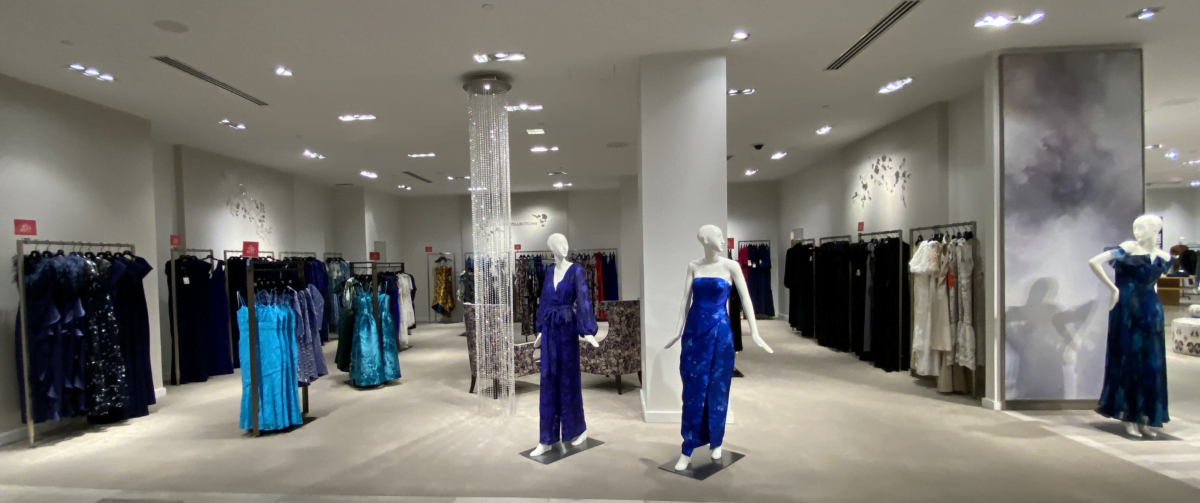
Women’s contemporary evening wear at Saks Fifth Avenue in downtown Toronto. Photo: Dustin Fuhs
While luxury brands occupied the high end of the pricing spectrum, and fast-fashion on the low, contemporary brands have traditionally occupied the mid-market. They are seen merchandised in their own department store floors, or online on e-commerce websites primarily dedicated to this price point, and have always hovered around the $500 space and for years have existed as the ‘sweet spot’ for many customers. Brands like Philip Lim, Alexander Wang, Theory, and Isabel Marant have been hallmarks of this space for many years, anchoring the contemporary floors of Holt Renfrew, Bloomingdales, Saks Fifth Avenue, and Nordstrom. Marant, selling a majority stake to Montefiore Investment in 2016, has seen huge success, growing from 22 stand-alone stores at that time, to the current count of 66, and doubling revenue from 2016 to 2019, from 150 million euros to 300m. However, this category segment has been on shaky ground for years, getting squeezed by both the lower and the higher on the pricing spectrum. As DTC brands entered department stores, and luxury companies became more accessible with streetwear offerings, the contemporary space was losing desirability to its traditional base.
But as the 2022 fall/winter collections rolled into retail stores and e-commerce sites alike, we saw these mid-market brands suddenly occupying a new part of the pricing spectrum. The label L’Agence, in pre-pandemic years, had success with a blazer style at the time retailing in the $500 USD range. Now, the same, granted, newer iteration of the jacket, is in the $675 USD range as seen on the Bloomingdale’s website.
Similarly, Ulla Johnson, coveted by the New York City socialite scene, has its boho dresses starting at $600 – a departure from the $500 ‘sweet spot’ they initially thrived in. The pricing gap left open by the increased costs of luxury brands, has resulted in the perfect time for contemporary brands to transition to the ‘advanced contemporary,’ or ‘affordable luxury’ categories.
The transition was quick, and with the response from consumers being favourable, it would appear that customers have accepted the explanations given by brands in order to justify their price increases. However, the closures of the pandemic also provided the perfect platform to “reset” the pricing game throughout the industry, tacitly unveiled to customers as stores merchandised their fall 2022 collections – and it’s been a largely winning formula. While popular brands climbed the pricing ladder, emerging brands like the French ba&sh, and AMI Paris have secured a top spot in the ‘new’ contemporary space, offering dresses in the USD $400 range, and secondary items like hoodies, at USD$300.
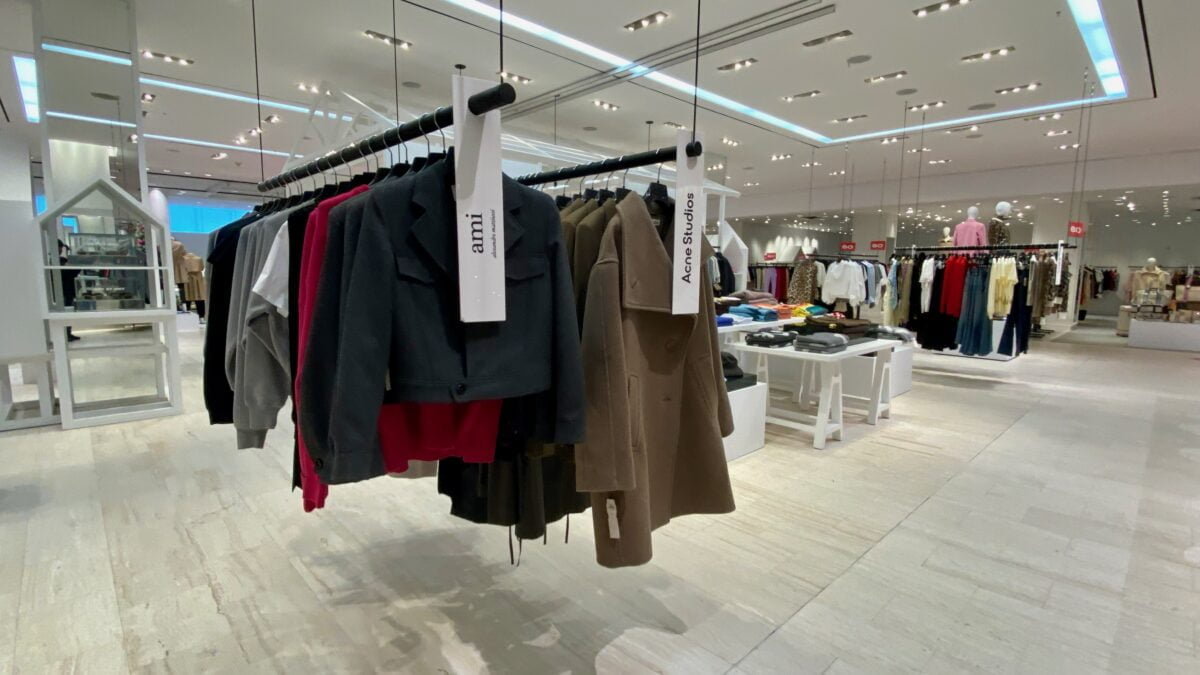
Women’s contemporary at Saks Fifth Avenue in downtown Toronto. Photo: Dustin Fuhs
While the popular rhetoric, and that largely accepted by consumers, is that the fallout from the pandemic, as well as the current economic climate are to blame for rising costs the fashion industry has seized the opportunity to re-align pricing in all categories. They have successfully moved out of the crowded, and tightly squeezed ‘contemporary’ category, and into the new, more breathable, advanced contemporary space, hovering just below the luxury designers, all while maintaining margins and maximizing profits.
With the Black Friday and Cyber Monday shopping holidays around the corner, fashion brands and retailers alike are watching very closely. Traditionally these four days have set the outlook for the year ahead, and this year the stakes are higher than ever. While third-quarter results have been solid for luxury, and mixed for the plethora of contemporary brands, both long-standing and emerging, the outlook has been hopeful. The proverbial clock is ticking for the newly instated advanced contemporary brands, and the upcoming weekend will be a strong determinant as to whether its most recent price positioning will spell success for them.
About the Author:
Based in Toronto, Alex Mazelow has been working in the fashion and retail space for 15 years, and holds a Master of Business Administration from Toronto Metropolitan University, and a Bachelor of Arts from McGill University.
Outdoor equipment and apparel retailer La Cordée will be celebrating its 70th anniversary in the spring of 2023 with the opening of its flagship store in downtown Montreal.
President Cédric Morisset said the location is strategically located in the Promenades de la Cathédrale complex and this new store concept will have a surface area of 25,000 square feet.
Cedric Morisset
It will be configured to energize the shopping experience by inviting consumers to test products in different spaces. The customer will be at the heart of the store’s narrative, in which everything will be designed to bring their experience to life in real nature. There will be a test bench for footwear, including climbing shoes, a climbing wall, as well as cycling, cross-country skiing and hiking workshops. All of this will revolve around a lobby area designed to encourage interaction and allow the community to come together around a common passion: outdoor activities, he said.
“It’s a great milestone,” said Morisset of the company’s upcoming 70th anniversary. “Not a lot of retailers have 70 years. We’re very proud of that.”
La Cordée – St Roch (Image: La Cordée)
Currently the retailer has six stores plus its ecommerce business.
“We’re very Montreal centric and that’s one of the challenges. As the years are going to come by, we’re going to grow and open new stores throughout the province of Quebec because right now people think of La Cordée as very Montreal,” said Morisset. “We’re in Laval, two stores in Montreal, one on the South Shore of Montreal. So we have four out of six that are within the belt of Montreal and then we have two in Quebec City. One downtown we opened in April our most recent store in Quebec City.”
Morisset said the area around its new flagship store in the spring is being revamped.
“It’s a prime location on Sainte-Catherine (Street) in Montreal. There’s a lot of history and the location that we’re going to open is underneath a real cathedral. It’s amazing. It’s an area where you go down to take the subway. There’s a lot of foot traffic with people who take the subway. Honestly, it’s going to be a great location,” he said.
“We think with COVID there’s going to be a resurgence with the downtown here in Montreal. We’ve seen it already. We have two stores right now in Montreal and they’re double digit increasing week after week. So we see a lot of momentum right now in Montreal.”
La Cordée – Laval (Image: La Cordée)
Morisset said the retailer is hoping to open one new store per year until 2028.
“We should be around 12 stores in 2028 and we’ll see where we go from there,” he said.
The company was acquired by MACH Capital in the fall of 2020. Recently it announced the addition of two key executives who will enable it to remain a successful organization and continue to occupy a leading place in the outdoors market.
Roxane Lalonde was named Vice-President of Marketing and E-Commerce, and and Charles Lapointe was named Vice-President of Purchasing.
Direction La Cordée
Lalonde has more than 15 years of experience in the retail sector. Lalonde held marketing and e-commerce management positions with companies such as Mondou, Louis Garneau Sports, DeSerres and Renaud-Bray.
“We are pleased to welcome Roxane to our management team,” said Morisset. “Her great expertise in retail and digital marketing, as well as her tremendous energy, will surely help La Cordée optimize its practices and experience new growth. With the significant investments we have made, including the opening of our distribution centre and the launch of a new website, I am convinced that the addition of such a high-calibre professional to the team will greatly contribute to the improvement of the customer experience, both in-store and online.”
Lapointe has extensive strategic and business experience, having developed the full potential of multiple omnichannel platforms in the high-end retail industry and worked with vertically integrated retailers including Holt Renfrew, Harry Rosen and La Maison Simons. Lapointe has nearly 15 years of retail expertise with industry-leading companies, focused on integrating and creating a customer-centric physical and digital experience.
“The arrival of a visionary vice-president of purchasing like Charles is great news, not only for our organization and our employees, but also for all our suppliers,” said Morisset. “By joining La Cordée’s executive team, Roxane and Charles will have the opportunity to combine their vast experience and expertise with their passion for the outdoors. These two professionals will certainly add value to the company as it strives to achieve its most ambitious objectives, which, over the next few years, will propel our brand to new heights.”
Retail Insider is streamlining its Canadian retail news from around the web to include a handful of top news stories that can be viewed quickly during the day. Here are the top stories from the past 24 hours.
The Video Interview Series by Retail Insider is available on YouTube.
Connect with Mario Toneguzzi, a veteran of the media industry for more than 40 years and named in 2021 a Top Ten Business Journalist in the world and the only Canadian – to learn how you can tell your story, share your message and amplify it to a wide audience. He is Senior News Editor with Retail Insider and owner of Mario Toneguzzi Communications Inc. and can be reached at mdtoneguzzi@gmail.com.
Also check out the other series offered by Retail Insider, including The Weekly podcast and The Interview Series, which are both available on Apple Podcasts, Stitcher, TuneIn, Google Podcasts, or through our dedicated RSS feed for Simplecast and other podcast players.
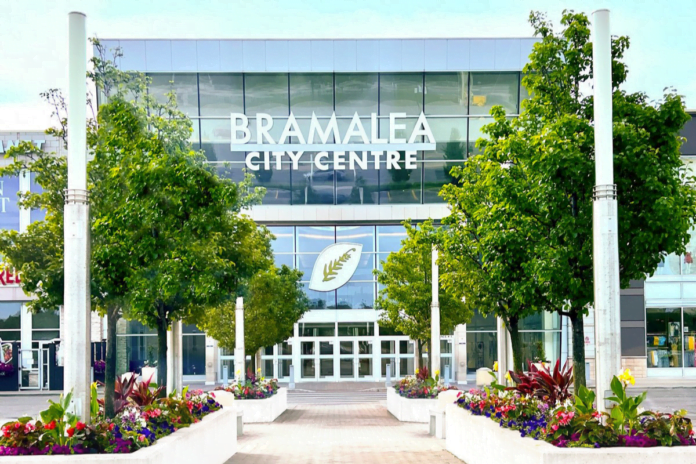
Bramalea City Centre continues to evolve to meet the growing needs of the City of Brampton in the Greater Toronto Area.
Brampton is known as one of the fastest-growing urban centres in the country with a population now approaching 700,000 and over the years Bramalea City Centre has adapted to the rapid growth by redeveloping the mall and bringing in new retailers.
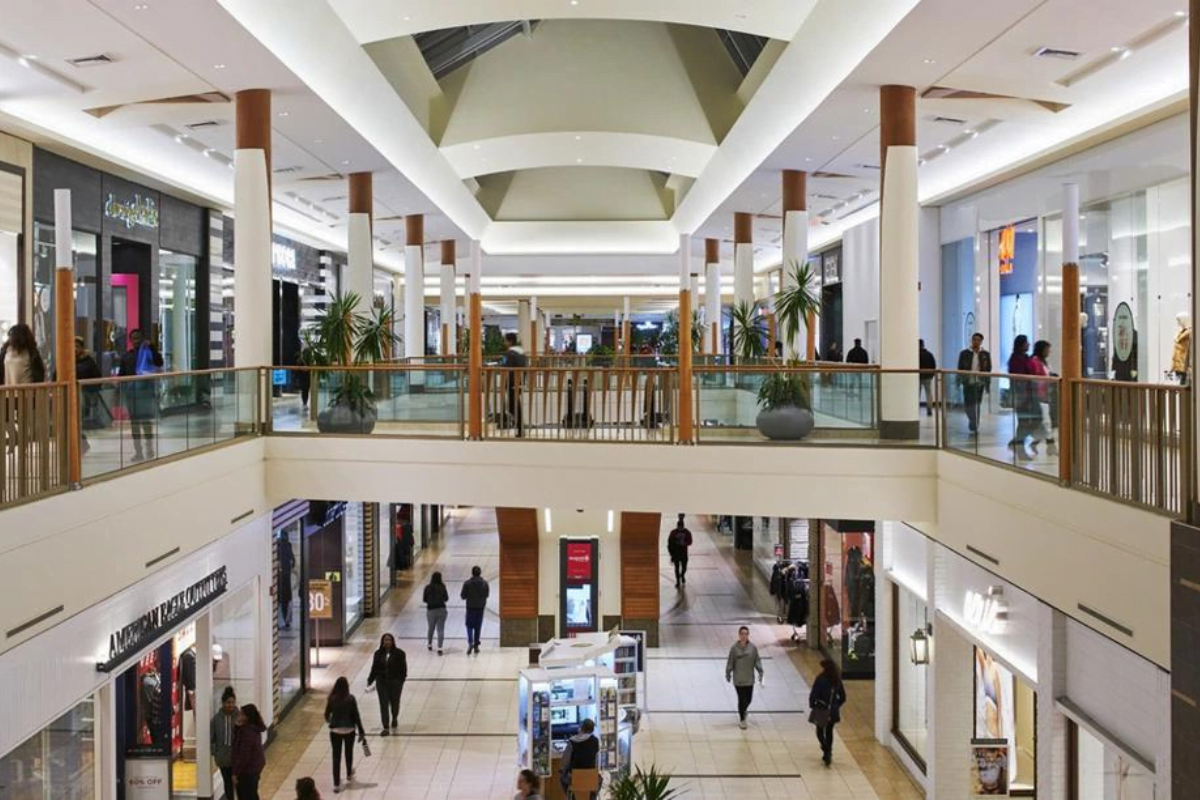
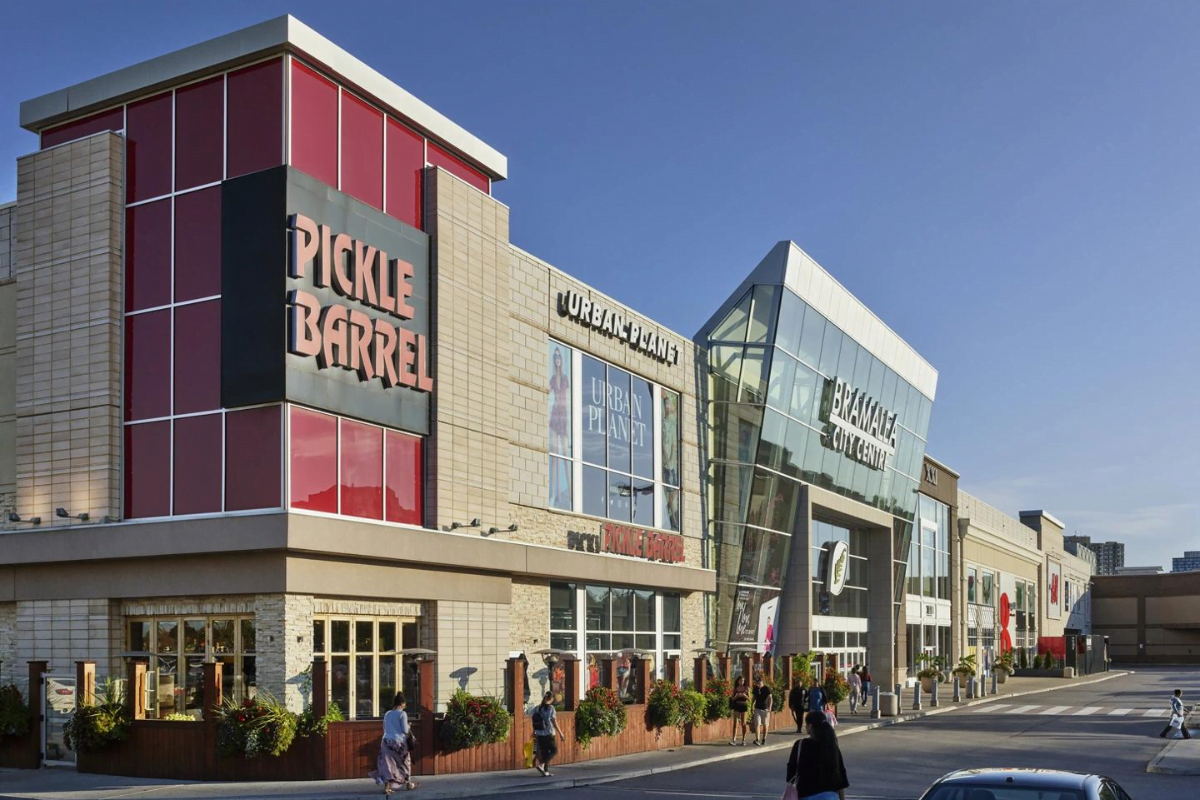
Bramalea City Centre has 1.5 million square feet of retail space at the corner of Queen Street and Dixie Road in the heart of Brampton. Bramalea City Centre is the fifth largest shopping centre in Ontario and seventh in Canada. Brampton is Canada’s second fastest growing city and the 9th largest city. The Province of Ontario has designated Brampton as an urban growth area and by 2031, the City’s population is expected to grow to 725,000.
The original shopping centre opened in the early 1970s.
Bramalea City Centre (Image: Morguard)
“It’s gone through a number of transformations since its original construction,” said Andrew Butler, General Manager of BCC. “Morguard purchased it in 2004 and then they undertook a renovation of the shopping centre and brought it up to sort of contemporary standards.
“Right now we stand at about 1.5 million square feet of retail space and over 300 stores in the enclosed mall. And we have a number of freestanding pads as well as an office complex. So it’s a fairly large property. Fairly large site.”
The freestanding pads have about 27 tenants.
The office complex is about 80,000 square feet over three buildings.
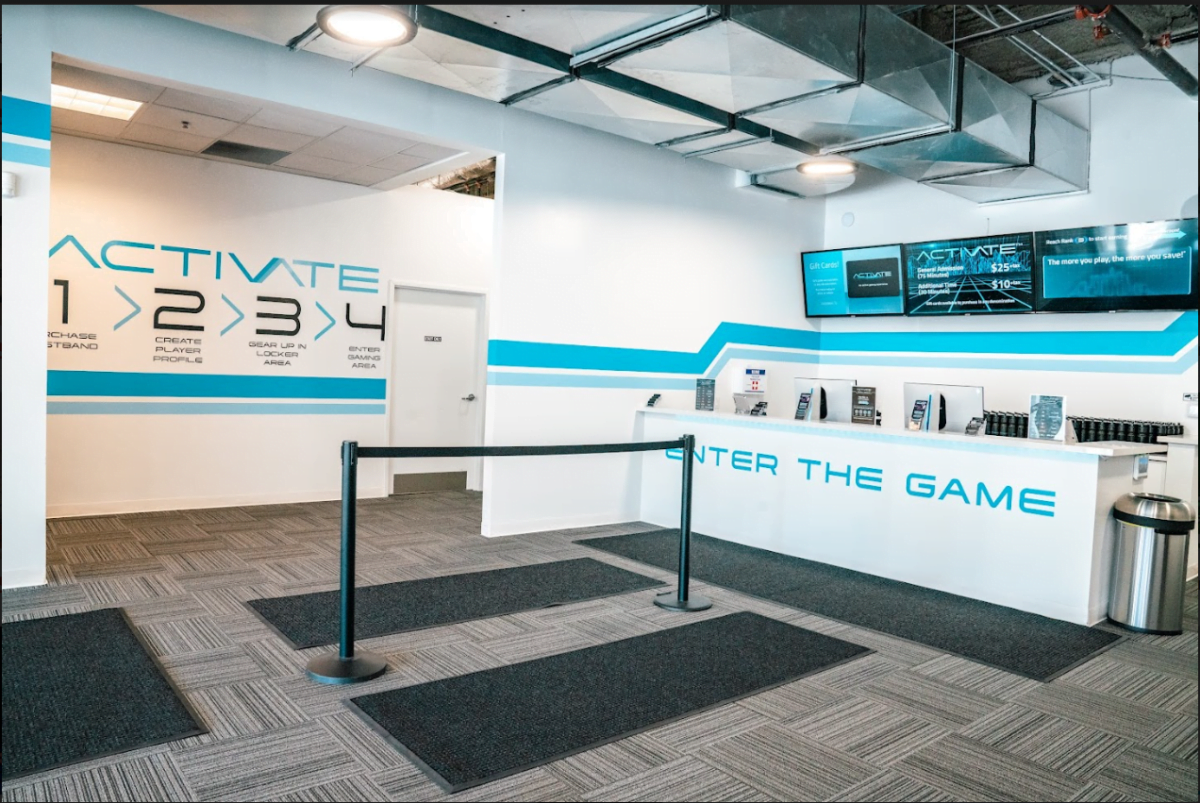
Bramalea City Centre (Image: Morguard)Activate at Bramalea City Centre (Image: Elle Marie)
A $165-million expansion project opened in September 2010. The project created 417,292 square feet of underground parking space, six new pad buildings constructed on the property, 325,000 square feet of new retail area on two levels, a new architectural centrepiece at the northwest corner of the property, and relocated loading docks and chiller units.
“We certainly feel that Bramalea is well positioned to take advantage of that growth (in Brampton). We’re located on Queen Street just to the east of the 410 Highway which obviously is a major thoroughfare that gets you to either the 407 or the 401 to other large highways in southern Ontario,” said Butler.
“And our primary trade area we’re looking at 600,000 people and the secondary another 400,000 or so people. We service a large catchment area. It’s a good transit system that services the Peel Region which Brampton is in. We have a Peel Region bus terminal adjacent to the property on the east side. Brampton is such a growth market. Really strong demographics. A young demographic. A lot of families. Decent disposable income.
“Brampton is a key growth market. I think with the investments Morguard and the owners have made on the site we’re well positioned to take advantage of that growth.”
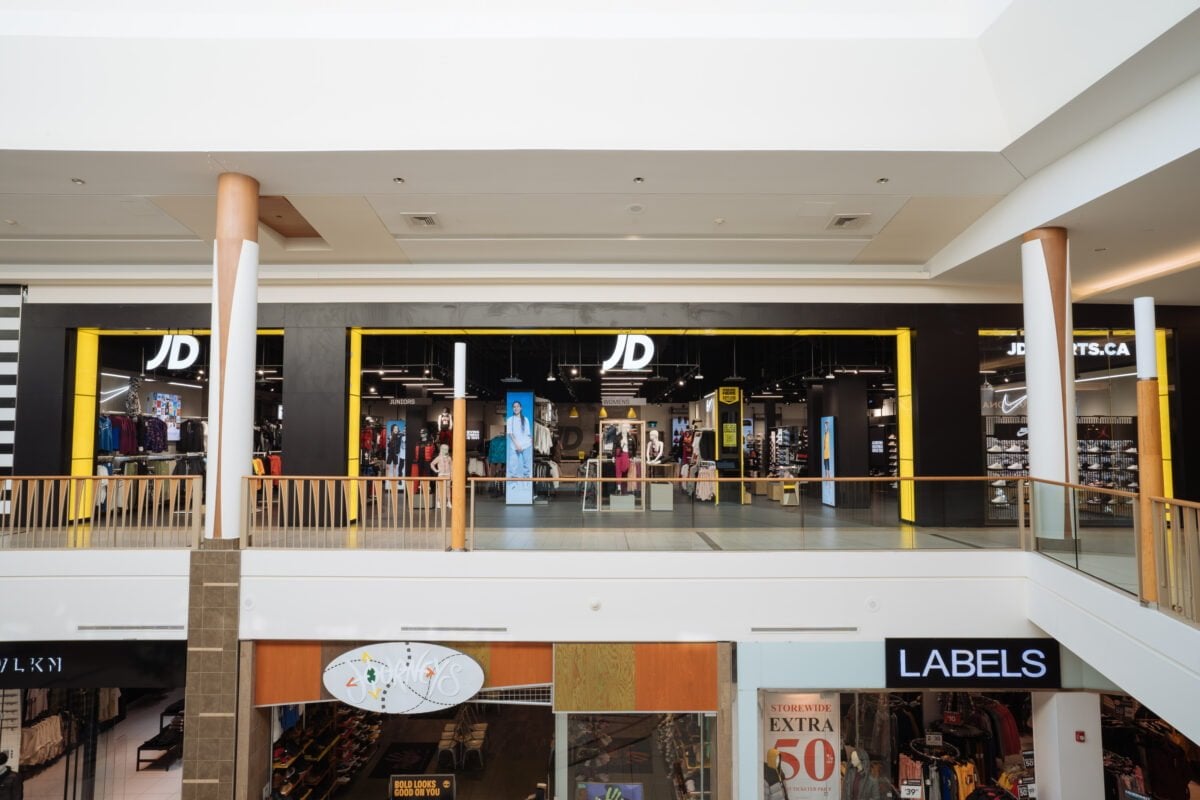
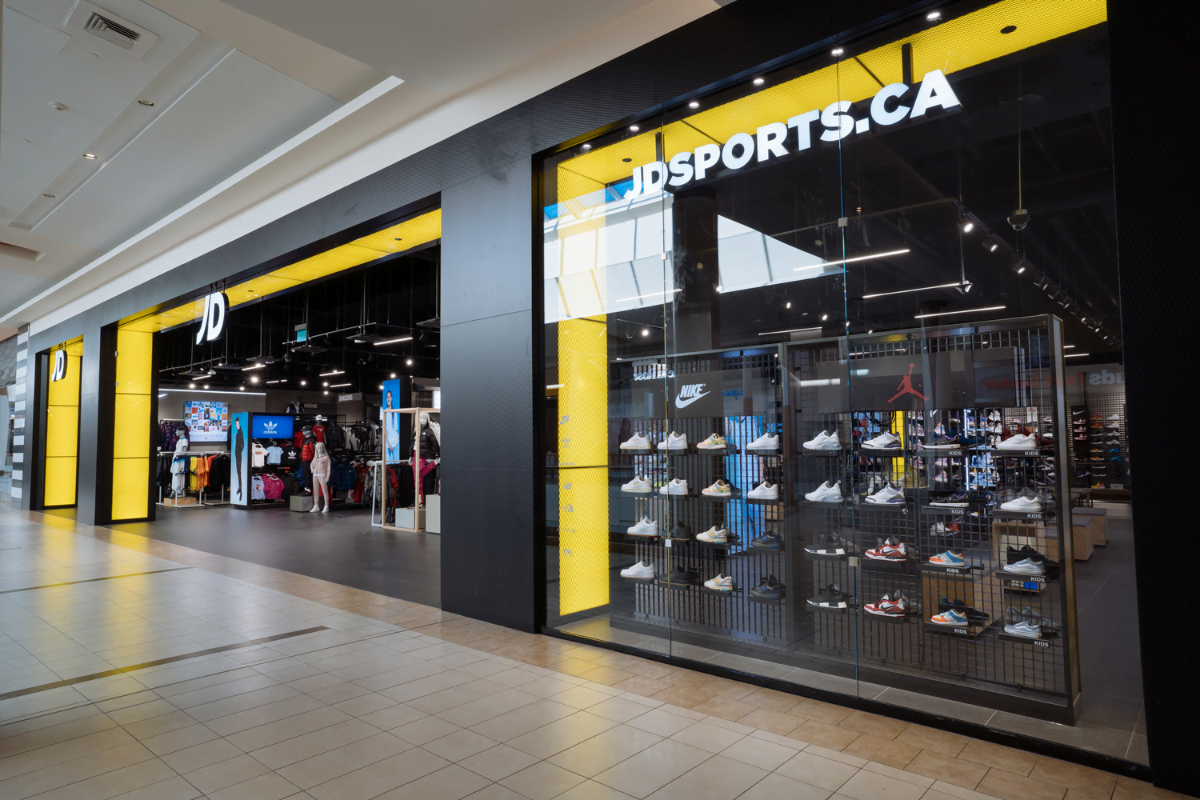
JD Sports at Bramalea City Centre (Image: Elle Marie)JD Sports at Bramalea City Centre (Image: Elle Marie)
Butler said traffic in the shopping centre has reached pre-COVID levels and sales are exceeding pre-COVID numbers.
“We were fortunate. Our leasing team has been really strong and has done a lot of good work in adding to the merchandise mix. We experienced what everybody else experienced where you had the closures and the reduced traffic with only essential services,” he said.
“But I was really pleasantly surprised that when we came out of it we didn’t see anywhere near the failure rate that I thought was potentially going to happen. I don’t think we lost more than one or two tenants out of the whole process. With the reopening we’ve actually been able to secure some new deals on the property that have been really helpful. One of which has been Decathlon which just opened up for us.”
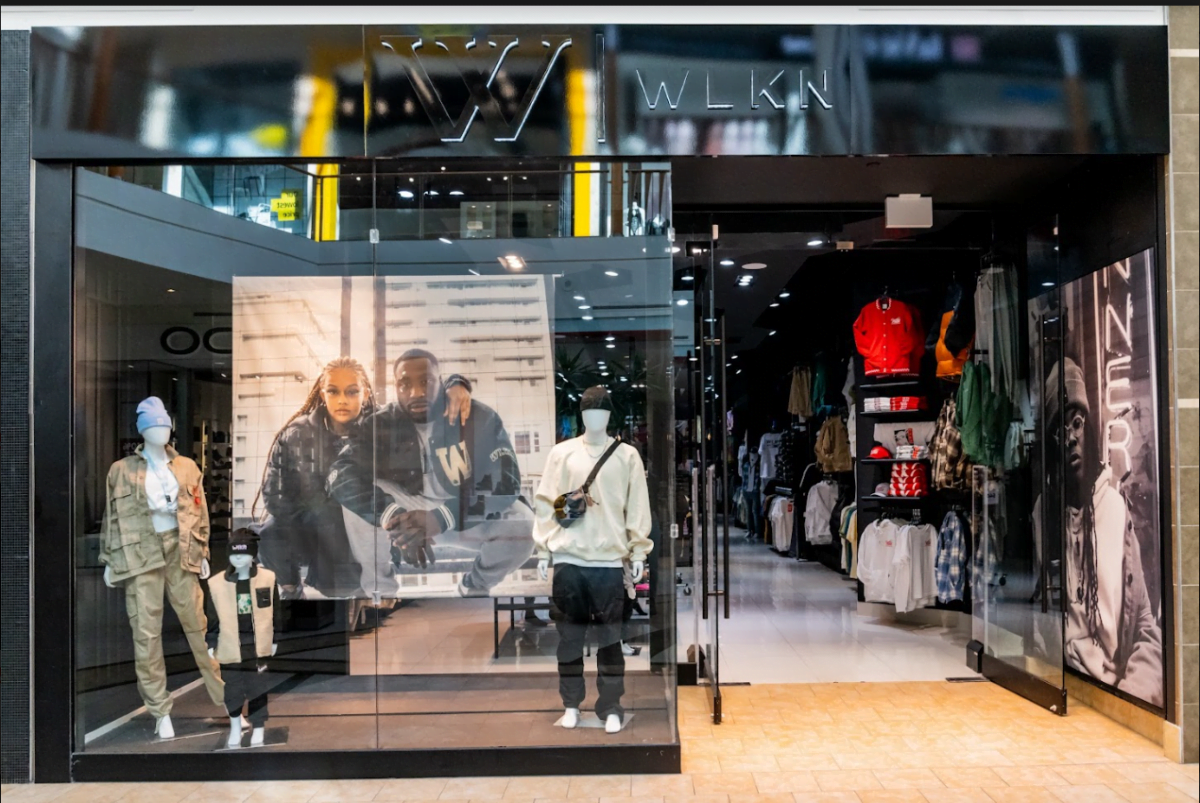
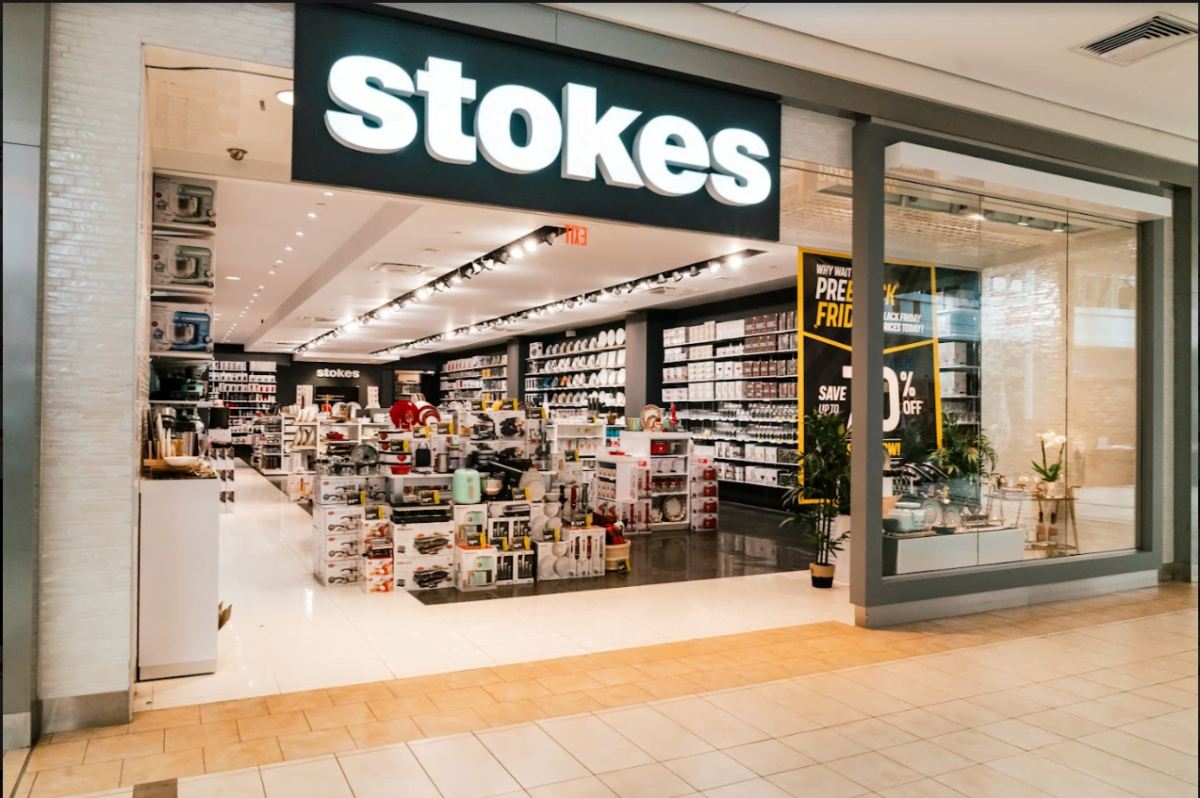
Recently, the shopping centre has seen the opening of Activate, JD Sports, Stokes and WLKN as well.
It also added CIBC and triOS College.
In the past year or so, some of the other new tenants include Church’s Chicken, uBreakiFix, Domino’s Pizza, Value Buds.
“We’ve got 100 per cent occupancy on our pad sites now,” said Butler. “We’re probably 95 per cent occupied now (in the mall itself). Despite what we all went through the retail side of it has actually come through pretty strong and I’m very optimistic that come the Christmas season we’re going to see some significant numbers for the property.
“Speaking with our leasing team, they’re pleasantly surprised with how the leasing market is evolving. There’s a lot of good opportunity out there and I think we’re well positioned to take advantage of it.”
Decathlon at Bramalea City Centre (Image: Decathlon)Stokes at Bramalea City Centre (Image: Elle Marie)
In 2015, Bramalea City Centre won the esteemed Outstanding Retail Building of the Year (TOBY) International Award at the Building Owners and Managers Association (BOMA) International Awards in Los Angeles. The TOBY Awards honour the best of the best in commercial buildings. In 2014 Bramalea City Centre was awarded the TOBY Award at the local level through BOMA Toronto.
For Bramalea City Shopping Centre, Morguard did extensive work in the years leading up to the award to enhance nearly every aspect of building’s operation and raise the standards of this building.
Those investments included:
Addition of energy efficient lighting retrofits;
Rooftop demand control ventilation systems to lower energy consumption;
Installation of building automation systems;
Retrofit of low flow fixtures to reduce water consumption;
Introduction of electrical charging stations for electrical vehicles;
Waste diversion – over 70 per cent of waste is diverted away from landfills;
Addition of a green roof on one of the Centre’s buildings and cisterns to collect rainwater for landscape irrigation.
Leasing Opportunities at Bramalea City Centre are available through Morguard.
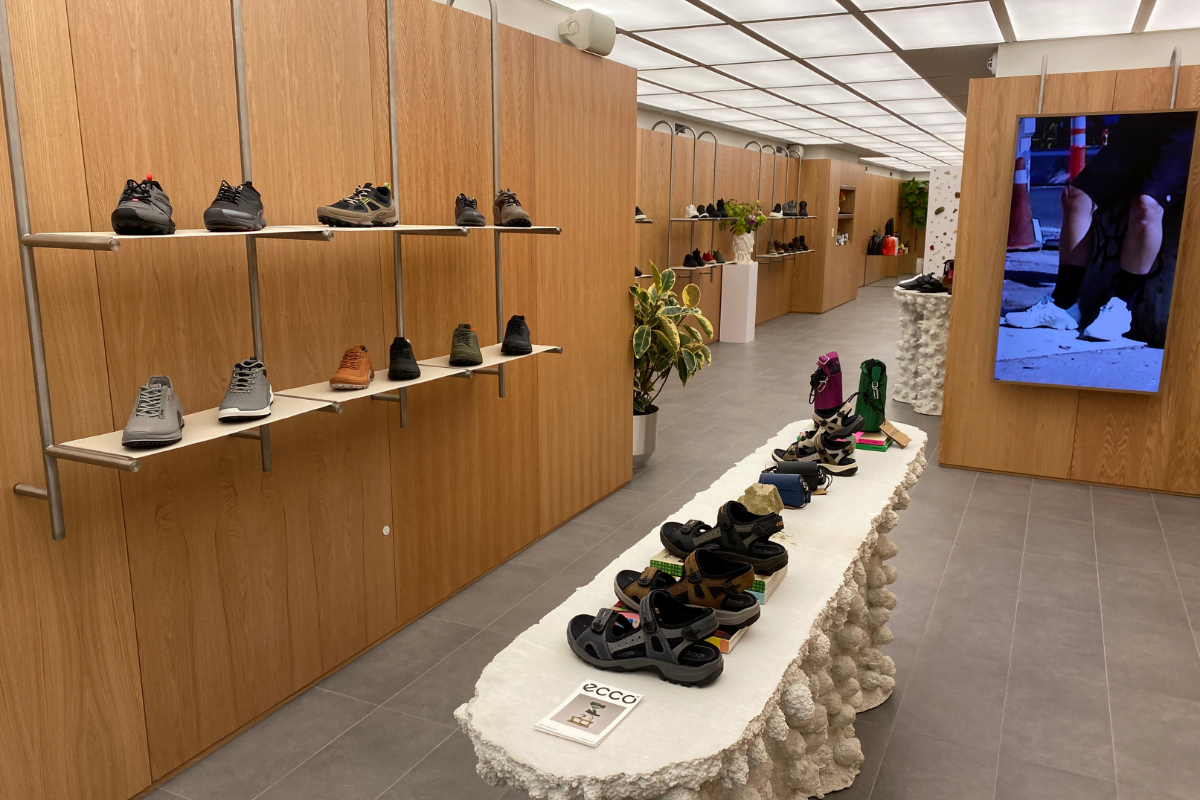
Danish footwear brand ECCO now has 38 stores in Canada and it has recently opened a new concept store in Toronto where it will be a grounding place for testing new ideas.
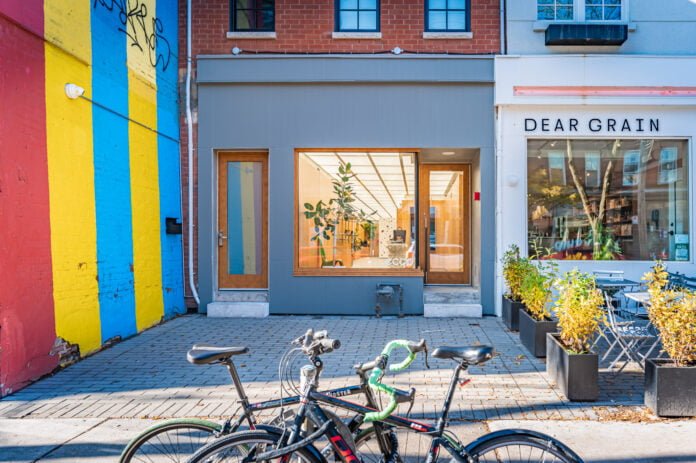
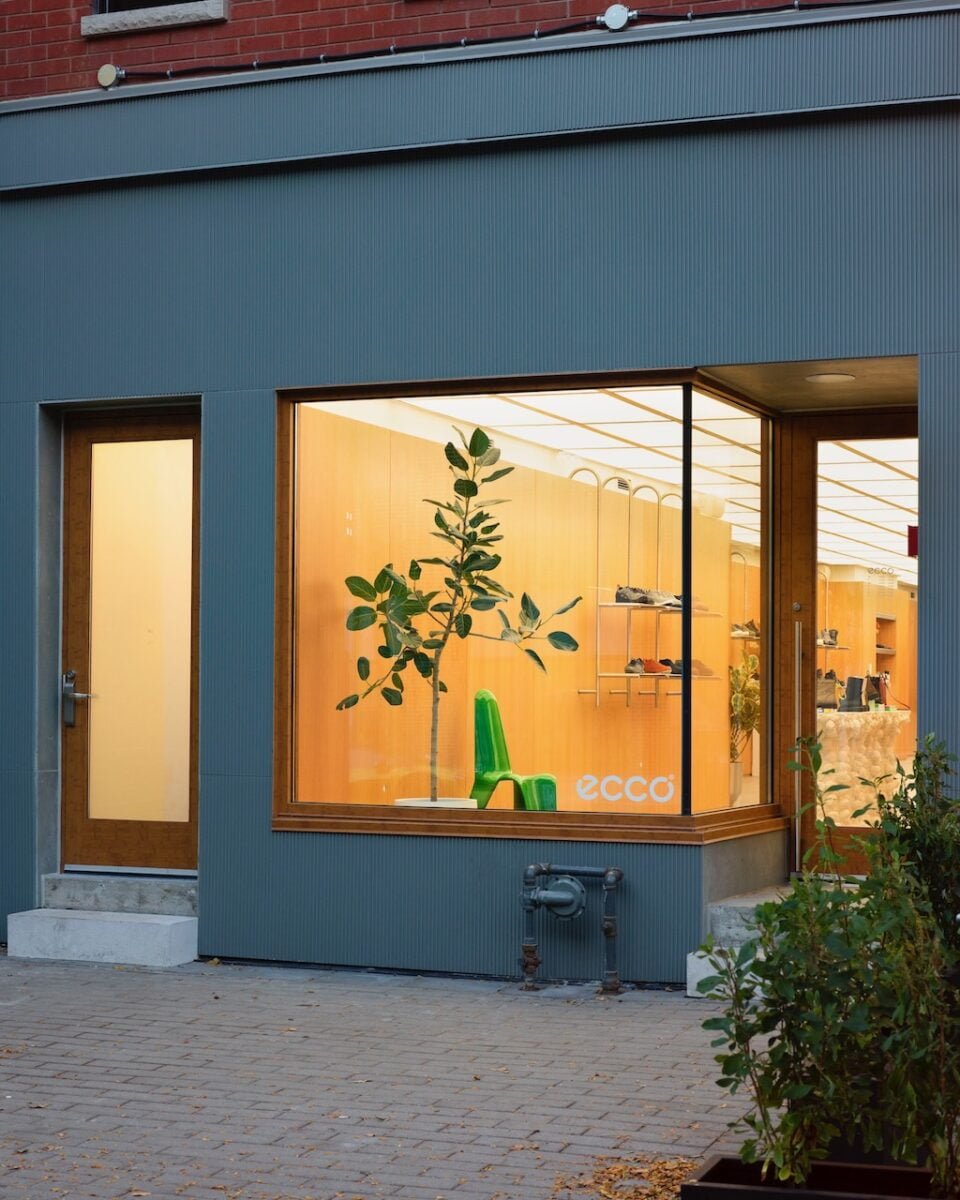
Located at 46 Ossington Avenue in Toronto, the ECCO store space is just over 1,200 square feet and is a space where ECCO can have a deeper connection with customers. The store celebrated with its grand opening on October 27th.
“We entered Ossington with the whole idea of creating a community hub. Ossington kept coming up as one of the central locations where there was a lot of energy, a lot of momentum, and a good vibrant consumer that may not be our traditional consumer, but somebody that we want to connect with. There are lots of younger customers in the area and we wanted a space that is eye-catching, engaging, and invites people into the space where they can learn more about the brand, concept, and more about how we are trying to engage in the community. The store is really vibrant, bright, and open to draw the consumer in,” says Joe Devlin, the Commercial Director at ECCO Shoes Canada.
ECCO at 46 Ossington Ave (Image: ECCO)
The new location will be a space where ECCO can connect more with the consumer while also keeping in touch with its Danish heritage.
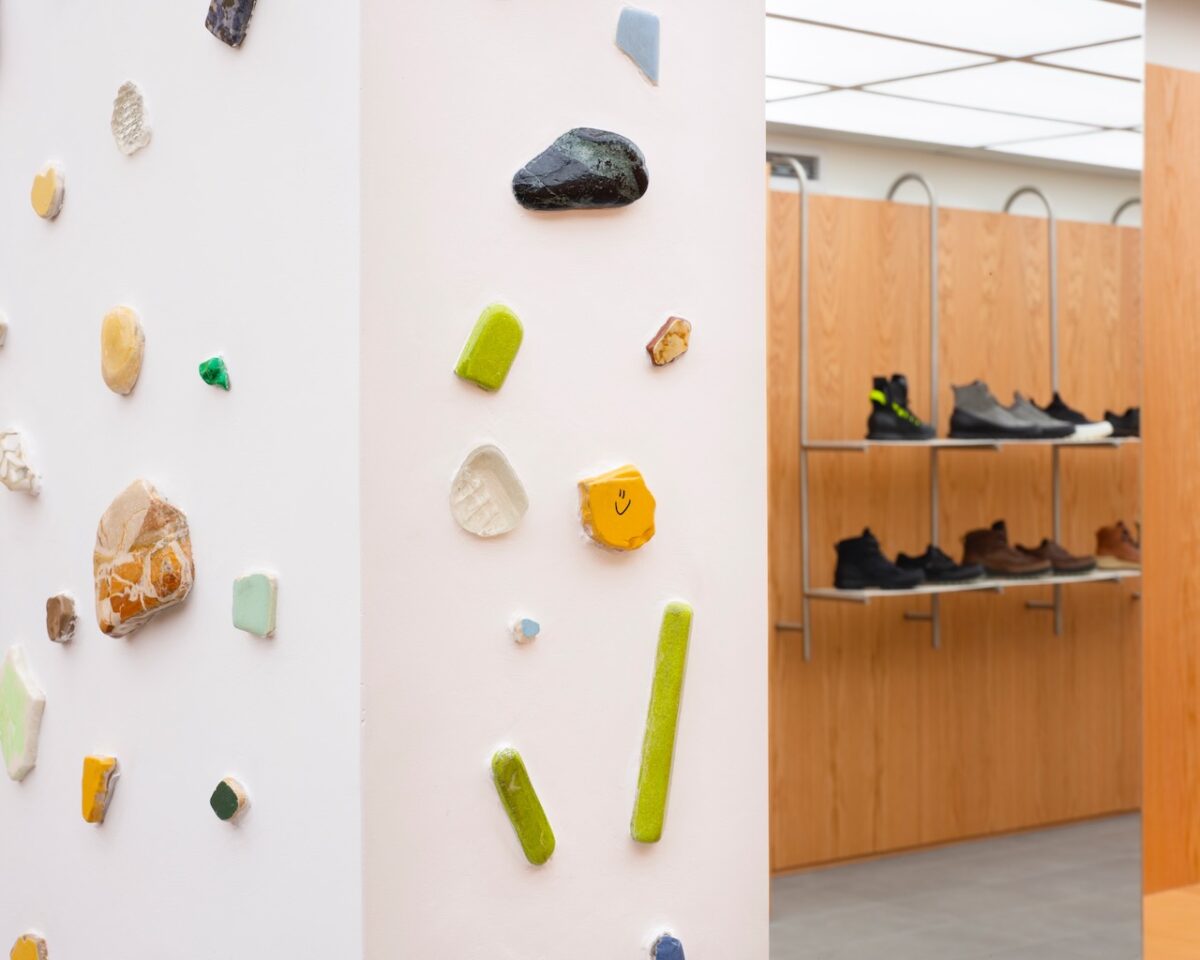
“We wanted something a little more vibrant, but also true to our heritage and who we are by keeping the feel of minimalist, clean lines, an engaging space, and also modular so we can create an event space for people to connect with the brand. We couldn’t be happier with where we landed with this space and how it has actually come to life”.
ECCO was founded in 1963 in Denmark and has since then grown into a well known international leader in footwear. Today ECCO has 38 stores in Canada and is sold in over 90 markets across the world. Products found at ECCO include a variety of footwear for men, women, and also leather goods.
What Can Customers Expect
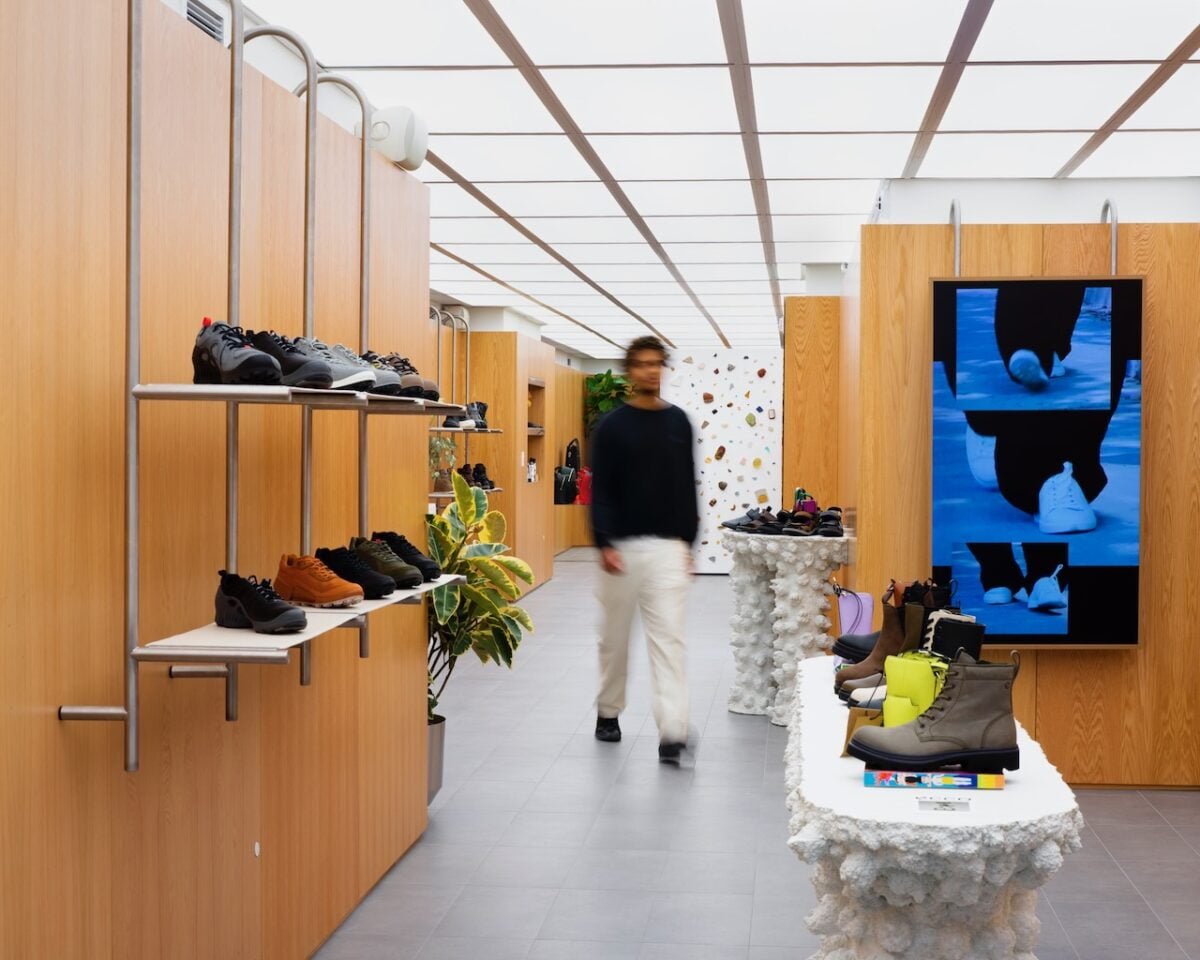
ECCO at 46 Ossington Ave (Image: ECCO)
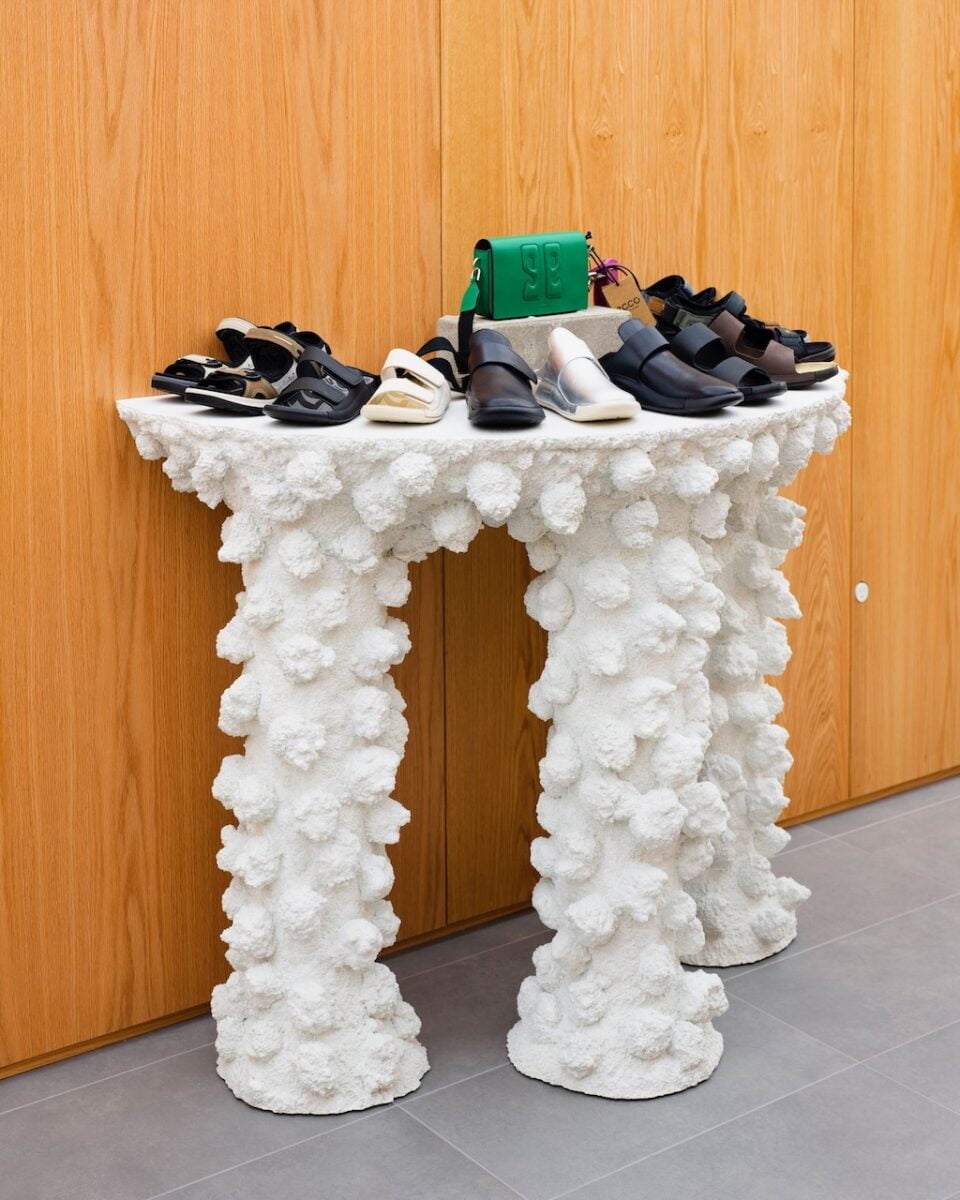
The new store is split into three spaces: the front entrance, design language, and ELU, ECCO’s Leather Good’s Unit. The front entrance is around product and collaboration, the middle section is for connecting with the community as it has artwork displayed from local artists and community designers, and the backspace is where customers can find ECCO’s leather goods and can be turned into an event space.
The Ossington location will also have exclusive products to share with customers.
“The unique proposition this store will offer, is that we will bring in some exclusive products from our global entities, where this will be the only store in Canada that will be carrying some products and will continue to do some exclusive pieces that create energy. This space will also be the biggest leather good space you will see from the brand in the entire country.”
ECCO at 46 Ossington Ave (Image: Dustin Fuhs)
The leather section will be complete with all of ECCO’s bags, backpacks, gloves – “all of our opportunities in leather goods that the consumer might not have been exposed to before”. The leathers offered at Ossington are in a variety of colours, different textures, and premium smooth leathers that are all created at ECCO.
“The ELU department is a large global focus for us to expand globally and we think there is a great opportunity with some of the leather products that we create. We are taking the opportunity to really try and expand this offering and the Ossington store will be the center and the beginning of this phase. This area of our business from an ECCO standpoint has been around for years, we just have been more focused on footwear and nothing is going to be taken away from there, but we are going to be spending more energy and time on developing our consumers’ access to these types of goods.”
Community Engagement
ECCO at 46 Ossington Ave (Image: ECCO)
The Ossington store will be a test location on how ECCO can engage with the community. Devlin said the store will be running community events and are looking at programming ideas, including having a night out event where ECCO will provide food and drinks while consumers connect with the brand and understand its Danish history.
The store will also be providing an opportunity for local artists to showcase their art along with ECCO’s products. If these programs work, they will be applied to other stores in Canada and international locations – this will be the testing location for the ELU concept as well as for community engagement.
Future Plans
ECCO at 46 Ossington Ave (Image: ECCO)
Customers can expect another store to open in 2024, this will be ECCO’s 39th store in Canada; however, Devlin was unable to disclose the location at this time.
Instead of focusing on expanding the amount of physical stores, Devlin said the company’s plan is to expand within the stores that are already open – meaning building connections with the community and its leather department.
The Ossington location will serve as a testing ground for any new ideas and if they succeed it will be applied to other locations throughout Canada and globally.
“We are really focused on optimizing our Ossington location and making sure we are connecting and drafting off our community concept that we are doing right now.It is a test and growth opportunity and we are looking at where we can make it scalable and look at opportunities where we can expand and go deeper in some of our own locations. For us, the expansion idea comes from building the brand and connecting with the consumer base as opposed to adding more physical stores. Ossington is more about creating an environment for the consumer as opposed to just a shopping environment – which is something we are looking to continue to build upon.”
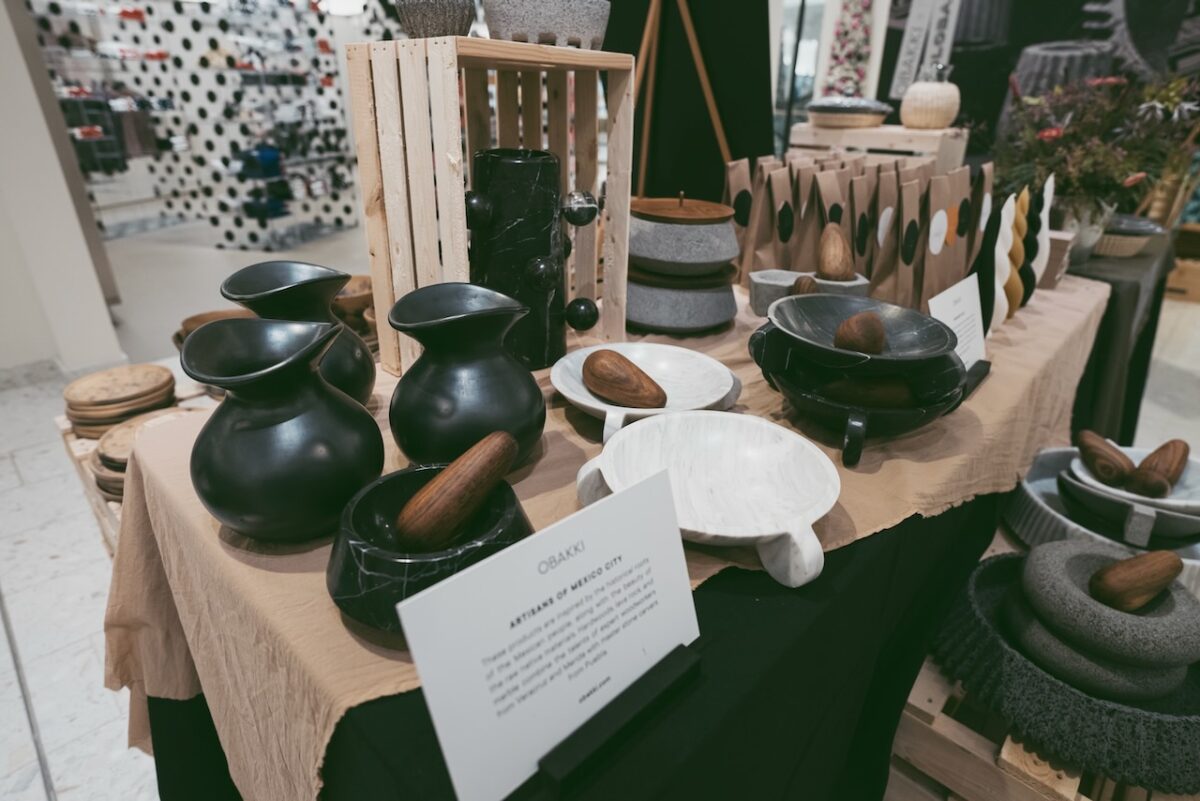
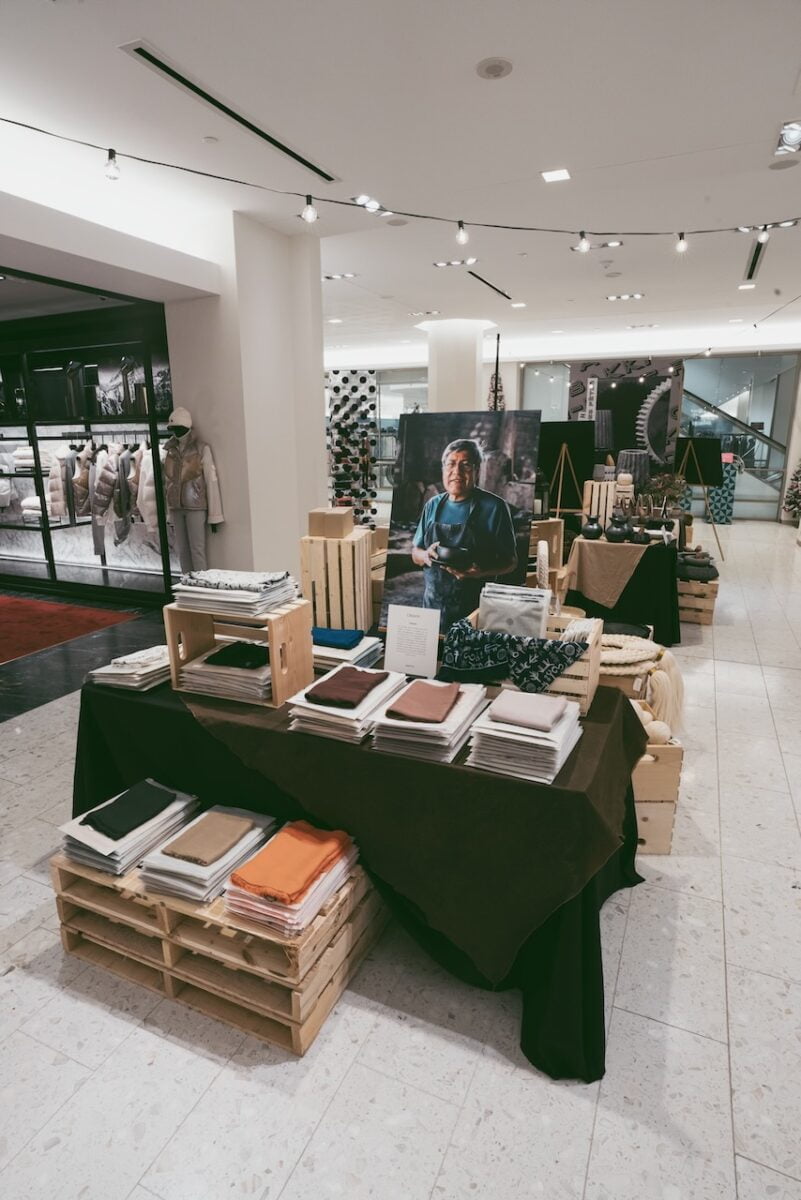
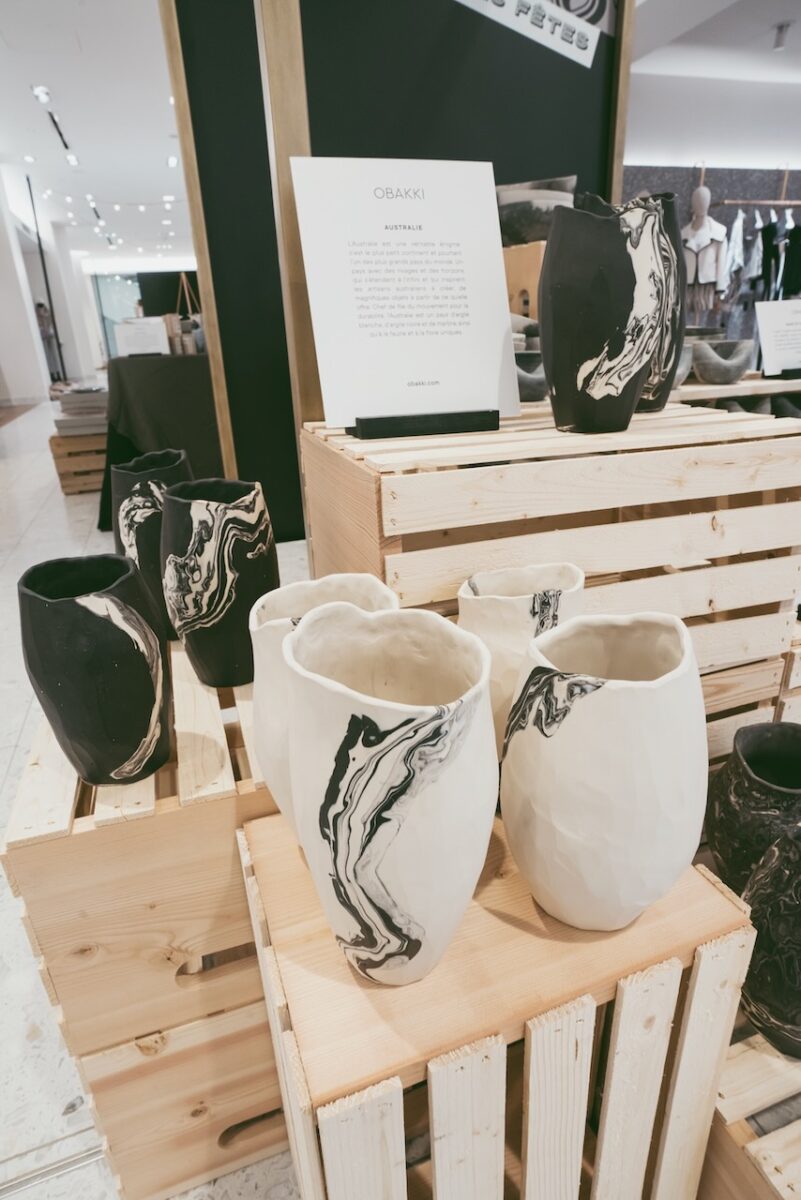
Obakki Holiday Pop-up in Holt Renfrew Ogilvy (Image: Jeff Malo / Holt Renfrew)
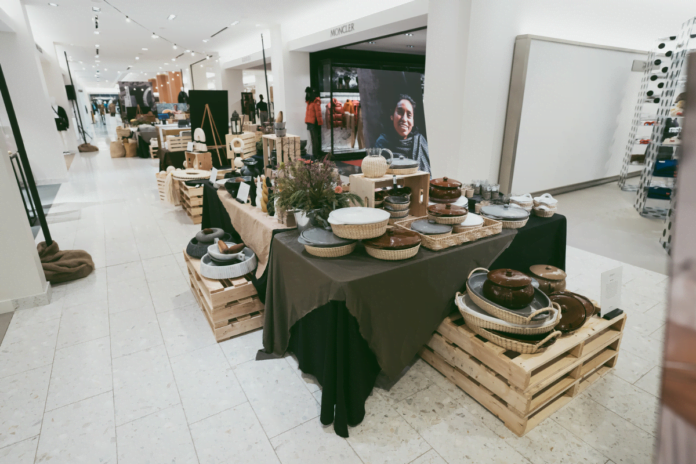
Canadian purpose-led lifestyle retailer Obakki has opened a seasonal pop-up shop at Holt Renfrew Ogilvy in downtown Montreal as part of Holt Renfrew’s H Project initiative.
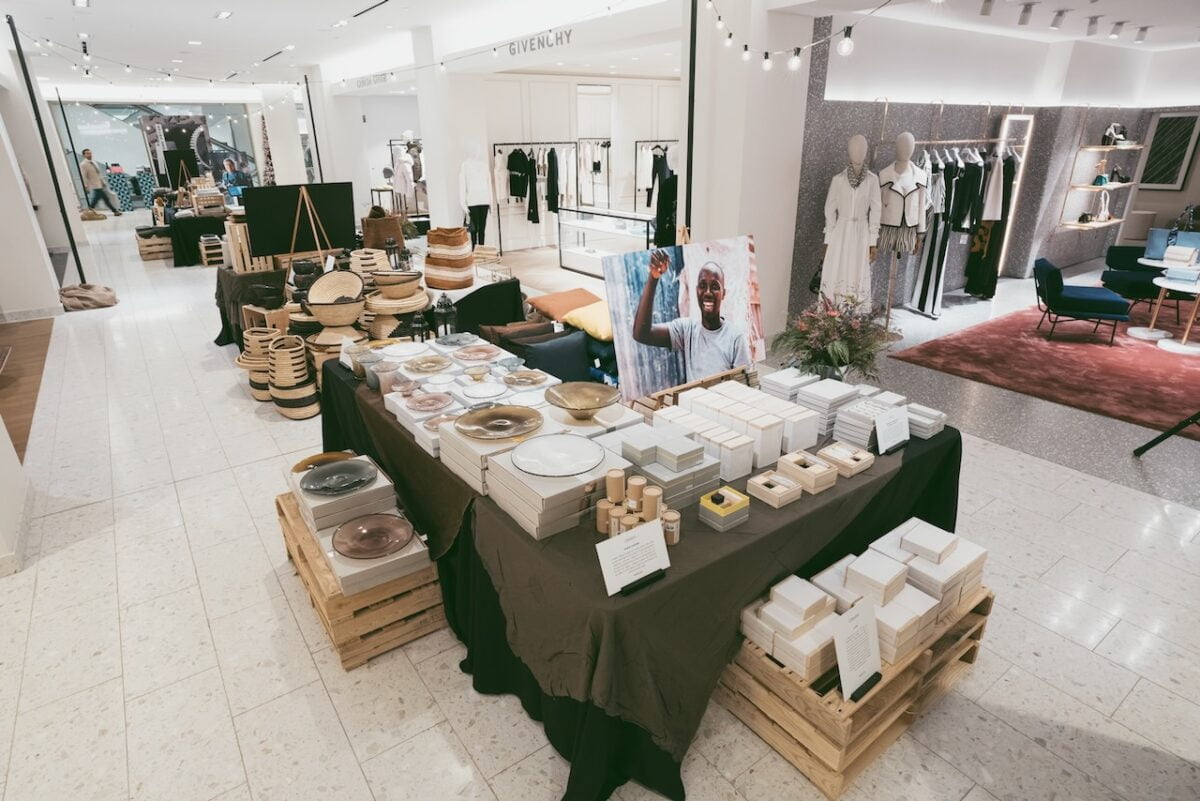
The immersive Obakki marketplace experience, located on the third floor of Holt Renfrew Ogilvy, features 25 artisans from 10 countries, including Kenya, Italy, Japan and Australia.
“With this pop-up at Holt Renfrew Ogilvy, the Montreal market will have a genuine opportunity to support and uplift artisan-made craft, shared Treana Peake, Founder of Obakki. “Many of our artisans come from very rural regions without any access to an international platform so an opportunity like this is huge. What you’ll find throughout the market is a lifetime of work, a whole lot of generational skill and an immense amount of pride and love that has been poured into the pieces before you.
“I honestly believe there is space in our design industry to both consider and incorporate modern, meaningful, and impactful collaboration. Because to me, sustainability is more than protecting the environments, it’s also about protecting, promoting and uplifting the communities and people behind the products we choose to put in our homes. And, the products you’ll find in this pop-up are the perfect example of this.”
Obakki Holiday Pop-up in Holt Renfrew Ogilvy (Image: Jeff Malo / Holt Renfrew)
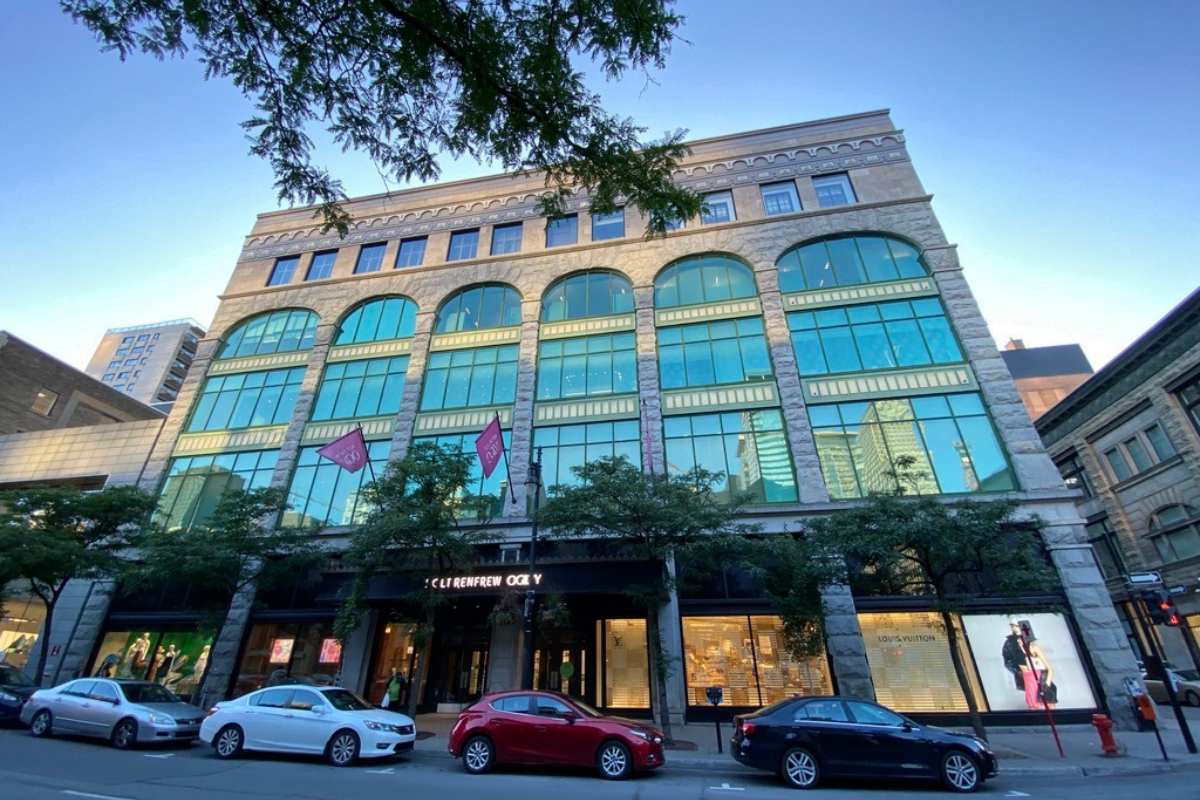
Former Holt Renfrew at 1300 Sherbrooke Street West (Image: Dustin Fuhs)
Former Holt Renfrew at 1300 Sherbrooke Street West (Image: Dustin Fuhs)
Holt Renfrew Ogilvy at 1307 Saint-Catherine St W (Image: Dustin Fuhs)
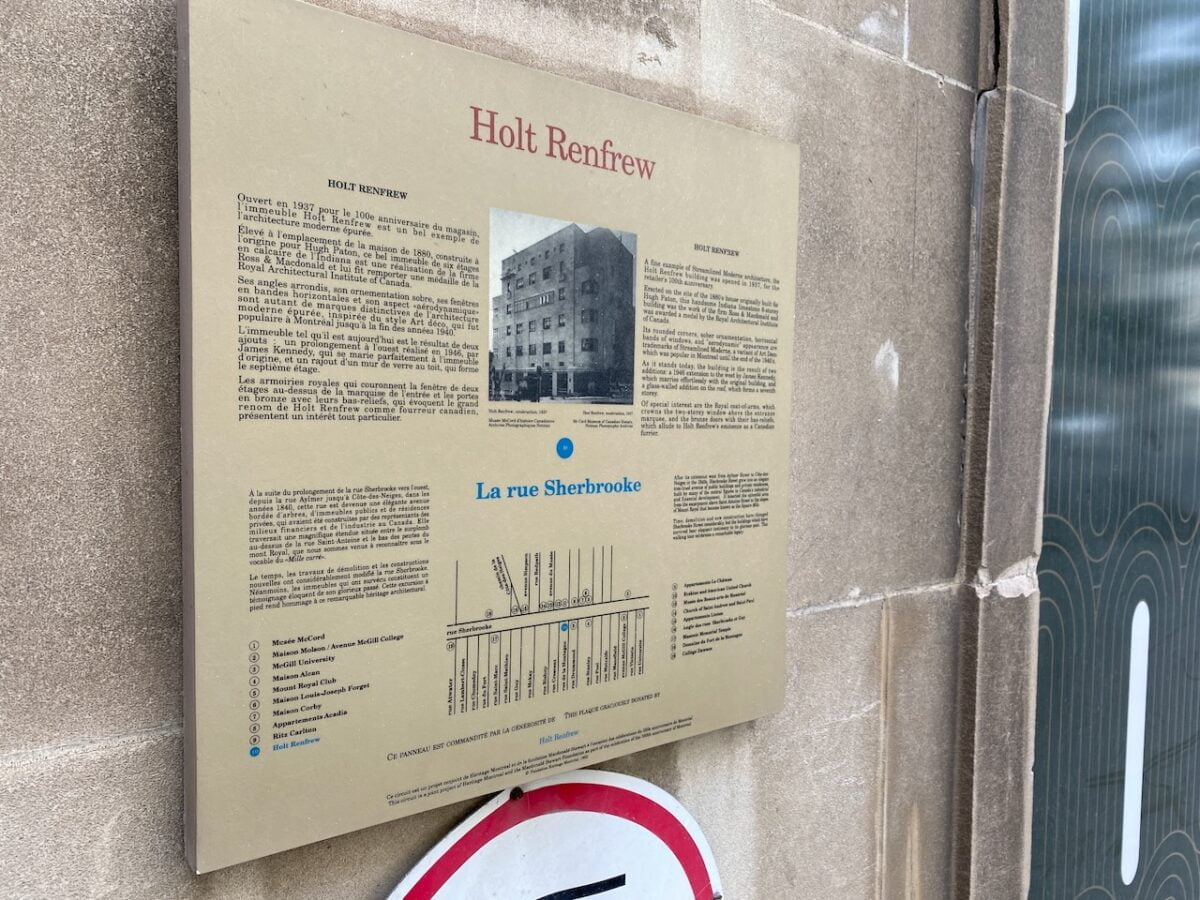
Montreal’s Holt Renfrew store, which operated nearby at 1300 Sherbrooke Street West since 1937, closed in 2020 to coincide with the opening of the expanded Holt Renfrew Ogilvy store on Ste-Catherine Street. Selfridges Group, the former parent company of Holt Renfrew, bought the 180,000-square-foot Ogilvy department store on Ste-Catherine Street in 2011 and subsequently announced that it would merge the two stores into one that would be named ‘Holt Renfrew Ogilvy’.
The 250,000 square-foot store is one of the largest multi-brand luxury stores in North America and has the opportunity to showcase brands in permanent and pop-up formats.
“We understand that the Holt Renfrew Ogilvy customer is looking for an expanded Home offering and this partnership allows us to bring them this product category in a meaningful way, said Alexandra Weston, DVP of Brand and Creative Strategy at Holt Renfrew. “To be true to both the Obakki and H Project brands it was important to include storytelling to provide the customer access to the story and the people behind the brands and products they were buying.
Obakki Holiday Pop-up in Holt Renfrew Ogilvy (Image: Jeff Malo / Holt Renfrew)
Obakki Holiday Pop-up in Holt Renfrew Ogilvy (Image: Jeff Malo / Holt Renfrew)
Obakki Holiday Pop-up in Holt Renfrew Ogilvy (Image: Jeff Malo / Holt Renfrew)
Holt Renfrew and Obakki partnered on a pop-up in Holt Renfrew Vancouver this past Spring 2022, which allowed the brand to gain experience with this experience in preparation for the Montreal activation.
“Obakki and H Project have partnered for many years in various ways and are always connected. Since Obakki’s evolution from an apparel brand into homewares, we have been looking for a way to showcase more of the collection and the Global Market concept from Obakki was the perfect way to do this,” shared Weston.
“We always saw this as a roaming market. We began discussing the next location for the Obakki Global Market as soon as we wrapped in Vancouver.
Obakki Holiday Pop-up in Holt Renfrew Ogilvy (Image: Jeff Malo / Holt Renfrew)
The lessons from the Vancouver pop-up from a consumer standpoint will be evident in the Montreal location.
“The setup as a souk market that you have to weave through to experience all of the products and various artisans was very successful and something we mirrored from the Vancouver pop up in Montreal.”
Holt Renfrew also partnered with Obakki to present images of the artisans and story cards for each country and artisan.
“Because storytelling is so relevant for Obakki and H Project, we found that engaging the customer and associates with elevated events and increased training session was important to the success of the pop up.”
The Obakki x Holt Renfrew Ogilvy Pop-up goes from November 17th to December 13th and the full Obakki market collection is available online.
Retail Insider is streamlining its Canadian retail news from around the web to include a handful of top news stories that can be viewed quickly during the day. Here are the top stories from the past 24 hours.