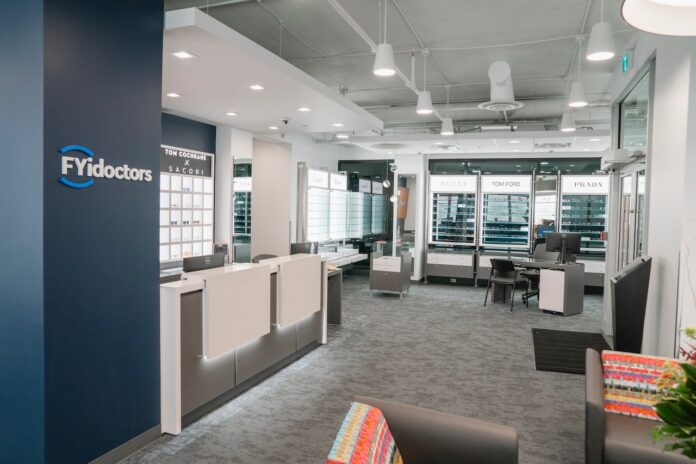
FYidoctors, a division of FYihealth group, has opened its latest flagship location in Calgary as the brand continues to expand across the country in the competitive eyewear and eyecare market.
Since its inception in 2008, FYidoctors banner has more than 275 locations in Canada, employing 630 doctors and more than 2,300 people.
The company has 47 clinics in Alberta. The newest location in the Mission neighbourhood of Calgary is 3,000 square feet.
“This clinic, its design, and the technology it offers is what we have as a vision for our entire network across Canada at FYidoctors. It exemplifies that FYidoctors has become as a leader in patient care in Canada and we are very proud to provide such a wide range of services and products to our patients,” said Dr. Alan Ulsifer, CEO Chair of FYihealth group.
Image: FYidoctors
The company also has close to 40 medical aesthetic locations. Those locations currently all retain their original names, when FYi acquired them.
Ulsifer said there remain several independent practices in Canada when it comes to the eyecare and eyewear market. Research on the market indicates that more than 1,200 independents would consider joining a bigger group and eventually rolling their business into an entity like FYi.
Alan Ulsifer
“It’s an interesting market. You go into (CF) Market Mall, you go into (CF) Chinook Centre (in Calgary), it’s the same idea. So many different optical players and I guess you can break them into different categories. Obviously, the traditional players that have been here for a long time, the out of country entrants,” he said.
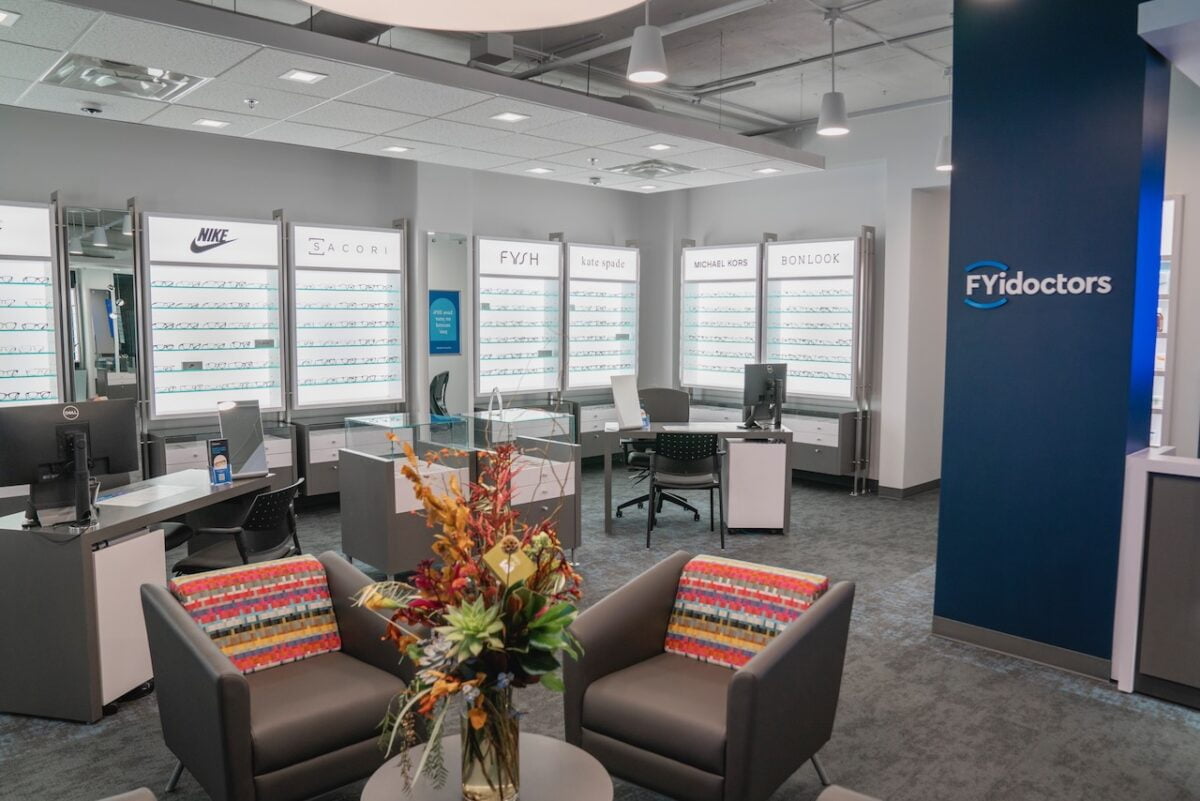
“There is a segment of the market that’s really built on millennials, people that want to look good, they want to have multiple pairs of eyewear, they want to identify with a brand that has a social presence, that’s cool. It’s definitely an emerging segment in the market. It’s a segment that probably we as a brand probably weren’t doing as good of a job for and I think we’ve really stepped up our game in that area in the acquisition of BonLook and offering more of that product offering.”
Image: FYidoctors
Ulsifer said FYi continues to have a vertically-integrated lens manufacturing facility and it recently acquired a frame company Westgroupe. The company so far in 2022 has made 17 acquisitions for optometry and added over 45 locations across all FYihealth group brands.
“We’re in it to win it,” he said. “Also our differentiator has always been the medical eyecare side. Technology, investing in the most recent, latest diagnostic equipment, making that standard practice in all of our locations. We believe that there’s a big segment of the population that really want high quality eyecare and also affordable but also fashion eyewear as well.”
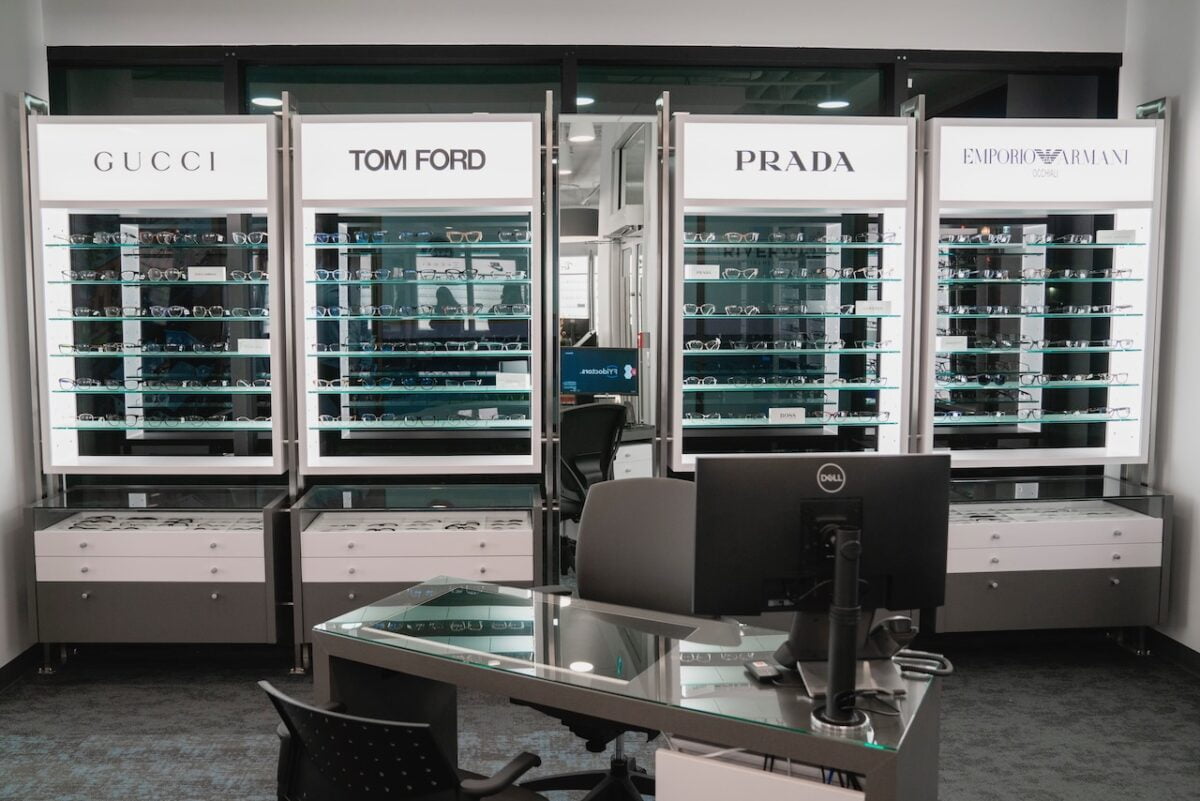
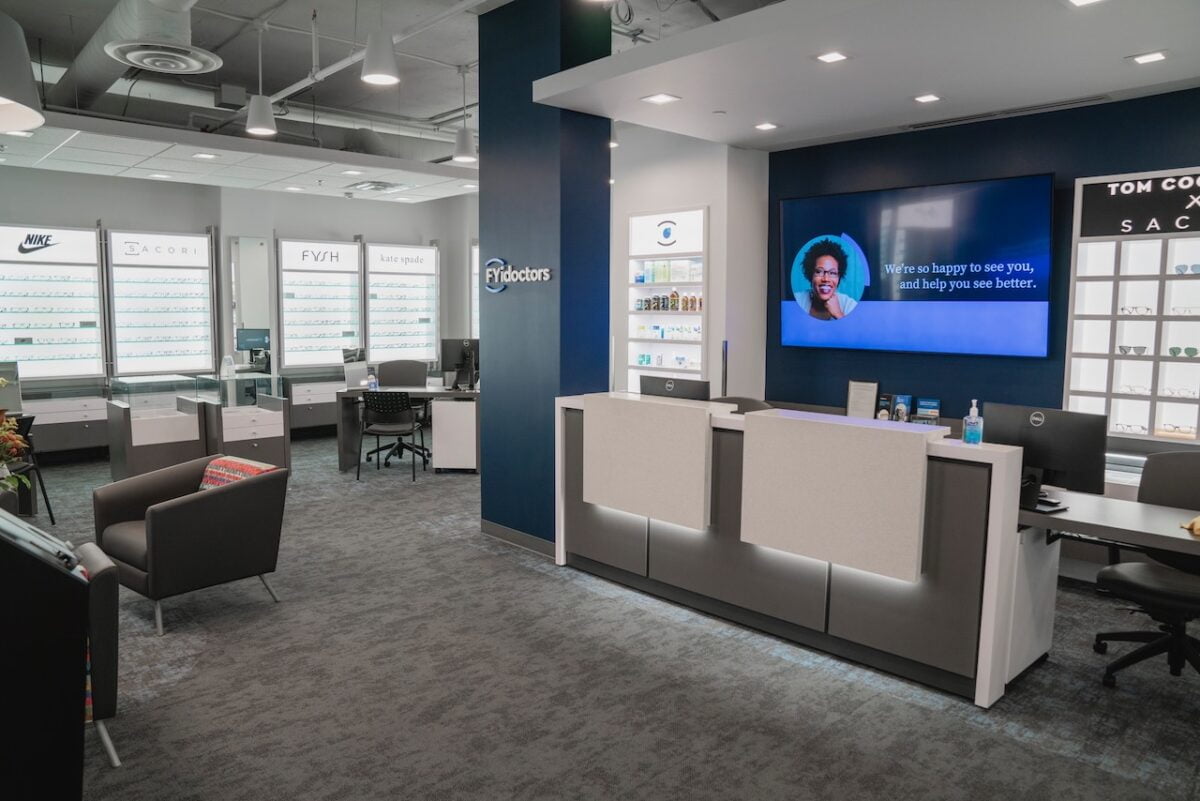
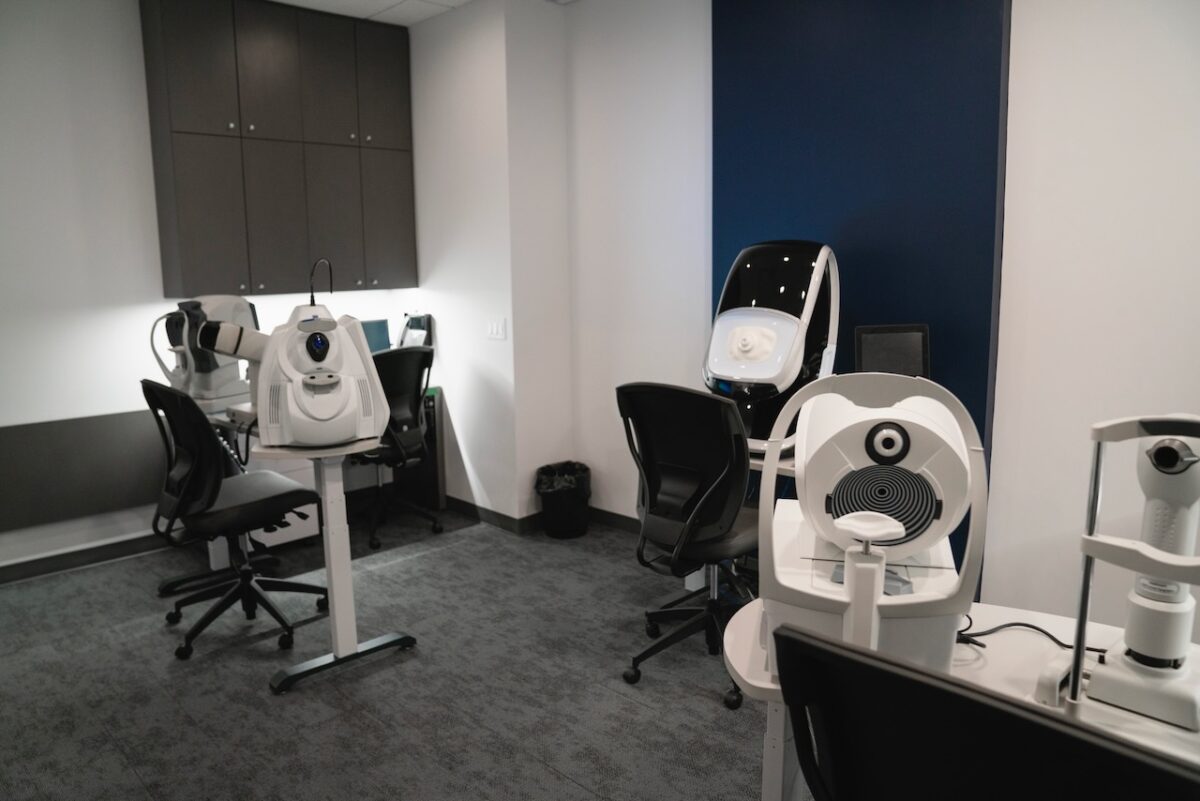
The new Calgary clinic offers personalized eye care using state-of-the-art optometric technology and carries a wide selection of exclusive brands, including Cartier, BonLook, H Halston, Chopard and more. This clinic also has the largest FYidoctors exam room in Canada. The location carries over 45 brands of optical eyewear and offers more than 2,000 frames in clinic.
Image: FYidoctorsImage: FYidoctors
“Unique to this FYidoctors location is a fully customizable digital storefront display wall facing street traffic. New interactive digital media is utilized throughout the clinic space to educate and engage our patients,” said the company.
“Additionally, a unique “FYidoctors scent” is used throughout the clinic to stimulate the olfactory senses of patients while browsing. The clinic’s waiting area is designed to be more relaxed and comfortable, creating an opportunity for our patients to enjoy their time at the clinic. With top-of-the-line materials, the overall clinic purchasing experience is improved with exceptional acoustics, lighting, digital touch points, and interactive messaging.”
The company is headquartered in Calgary and also owns a distribution facility in Delta, BC.
Besides the FYidoctors banner, it also operates banners Visique, Renue, Grimard, Factory Optical, Optiks International and BonLook.
87 Yorkville Avenue on November 7, 2022. Photo: Craig Patterson
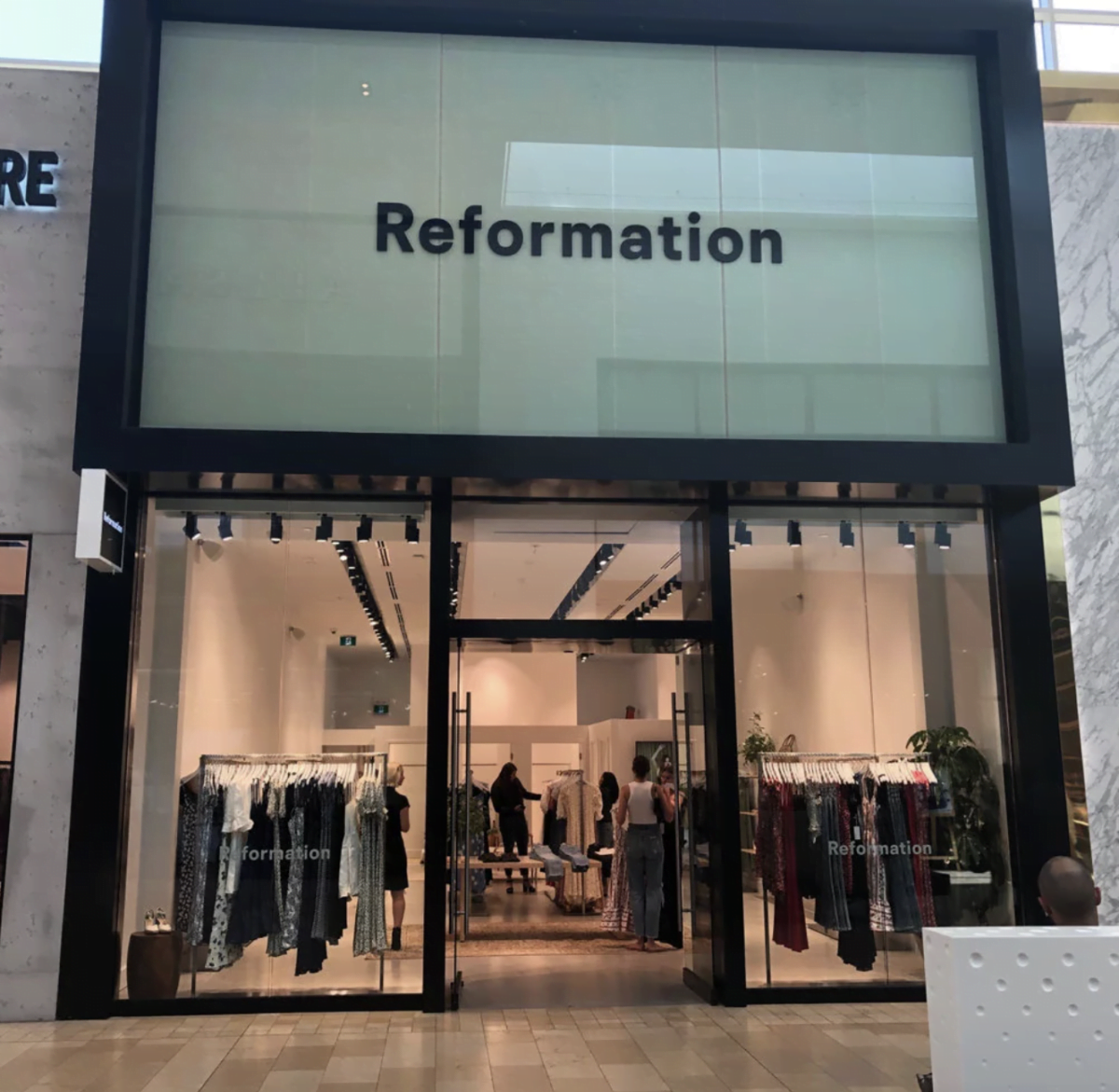
Innovative eco-friendly US-based women’s fashion brand Reformation will be opening its second storefront in Canada this year, this time showcasing the company’s technology-driven dressing rooms in a flagship space in Toronto’s Bloor-Yorkville area. Reformation entered Canada in 2019 with a store at Toronto’s Yorkdale Shopping Centre and now the expansion is picking up again after the pandemic.
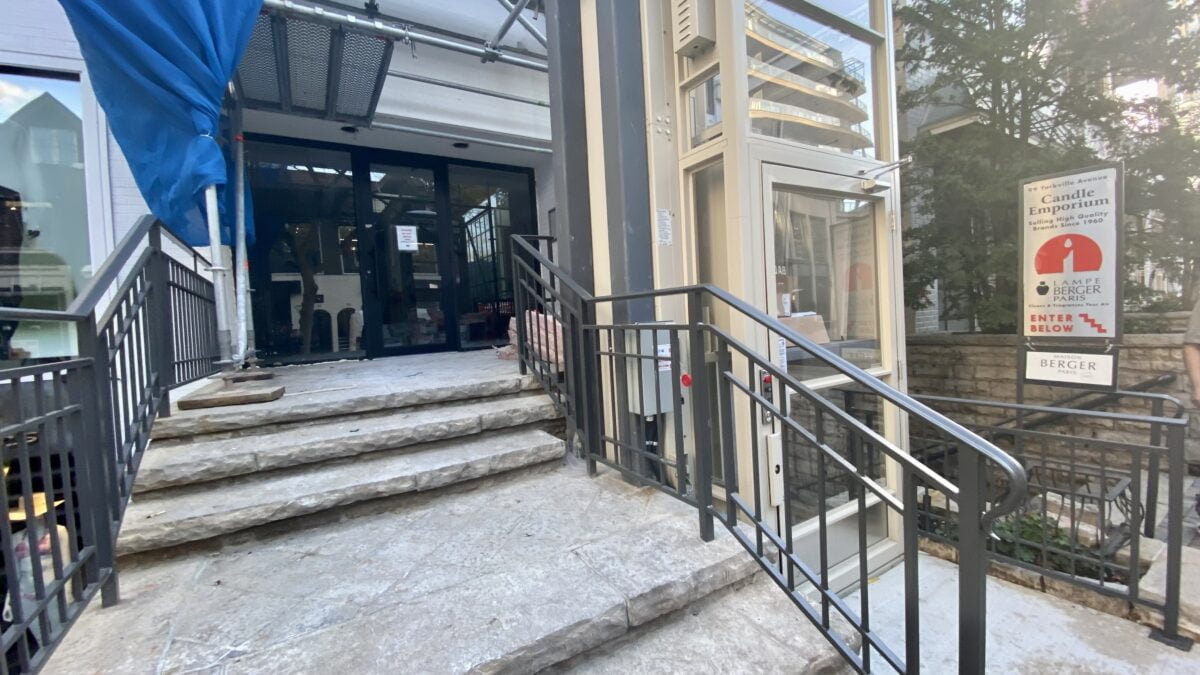
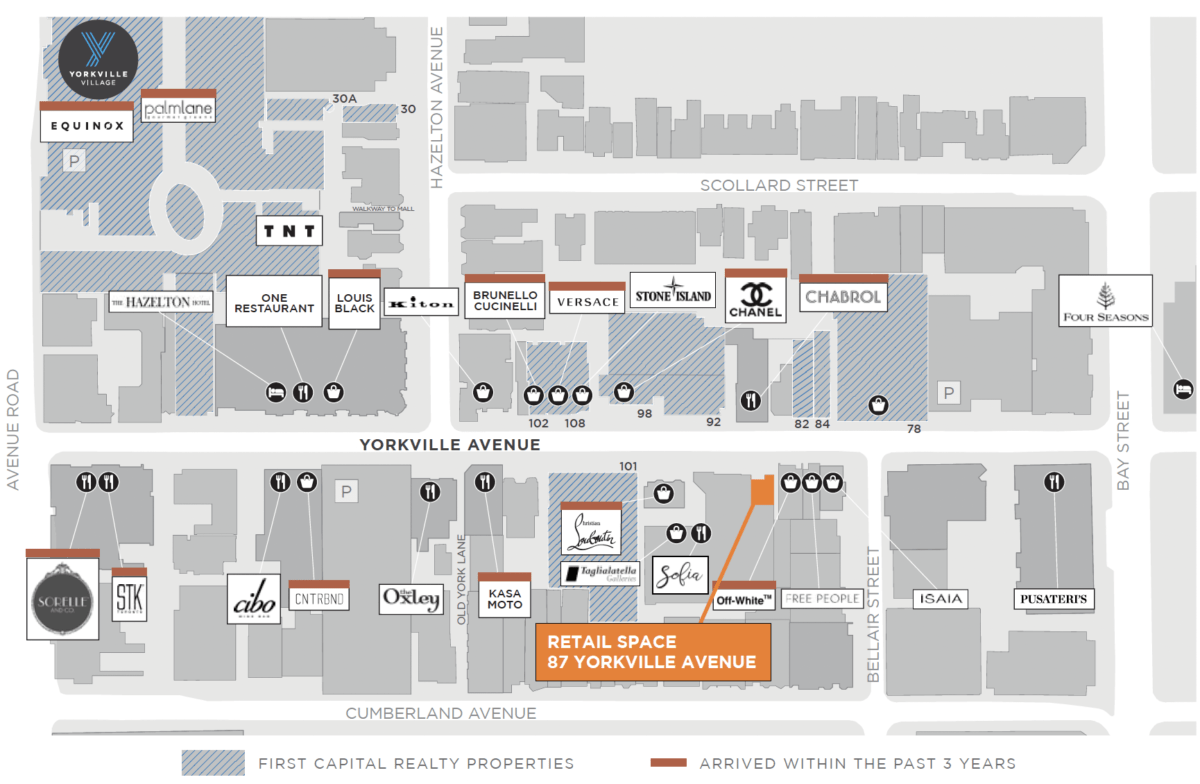
The flagship at 87 Yorkville Avenue opens mid-December, spanning 3,556 square feet on one level. The retail space, accessed by a short flight of stairs, was occupied by a Clarins spa until about a decade ago and has housed numerous pop-ups since then. The new store will become Reformation’s second-largest globally with only a store in London’s Covent Garden being a bit larger. Reformation as a permanent tenant at 87 Yorkville Avenue is a welcome addition to the area which is seeing new high-end retailers opening nearby, including several luxury brands. David Wedemire of brokerage DWSV negotiated the lease on behalf of Reformation, and Allied REIT manages the building.
“We’re excited to bring the brand to life for more Toronto customers with our new flagship store in Yorkville. Canada is our fastest growing international market and our Canadian customer is focused on being fashionable, while also living a sustainable lifestyle,” said Hali Borenstein, CEO at Reformation in a statement.
“This will also be our first Retail X store in the market, which is a great way to add magic back to the shopping experience. Through our one-of-a-kind technology, customers can spend more time getting to know the brand and the product compared to a typical retail experience.”
New elevator for the future Reformation store at 87 Yorkville Avenue on November 7, 2022. Photo: Craig Patterson Image: DWSV.ca 87 Yorkville Avenue on November 7, 2022. Photo: Craig Patterson
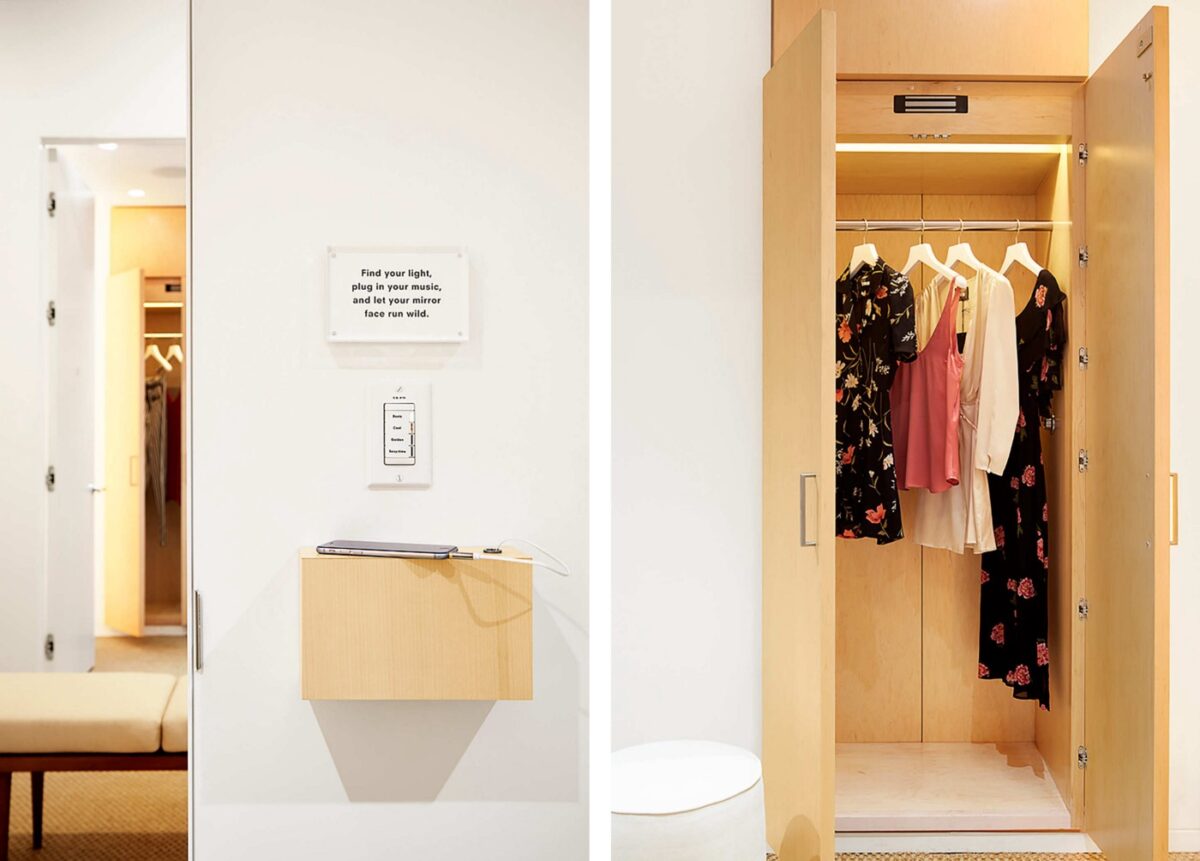
A total of eight Retail X “magic wardrobes”, will be located in the Yorkville flagship. Touchscreen monitors will be placed throughout the store where customers can digitally choose the styles they’d like to try on while shopping. The consumer’s selections will then populate into one of the store’s dressing rooms. Additional touchscreens are included in each dressing room to order new sizes or styles, and the magic wardrobes (two-way doors) will allow for product fulfilment to a customer’s room without having to leave. Customized lighting options in the fitting rooms will allow shoppers to see how a garment may look in ‘golden’ light vs ‘cool’ lighting with another lighting option being ‘sexy time’.
The store will feature localized merchandising and regional assortments of products and a dedicated Canadian landing page on Reformation’s website will allow for shopping in Canadian dollars. Also included on the website will be localized imagery, copy, pricing, North American size guides, and payment options like ApplePay, PayPal and Klarna.
Sustainability is a focus of the new store. All Reformation stores are designed with sustainability in mind, using natural and recyclable materials including vintage furniture, eco-friendly fabrics and hangers, and reusable totes. Reformation says that it offsets 100% of its electricity with renewable energy.
Reformation’s first Canadian store opened in the summer of 2019 at Toronto’s Yorkdale Shopping Centre in a 1,650 square foot space in the mall’s Nordstrom-anchored expansion wing that opened in 2016. Reformation is located between a new Psycho Bunny flagship and Zadig & Voltaire, and is across from retailers Williams Sonoma, Away, Muji and Uniqlo.
The much larger Yorkville Avenue flagship is Reformation’s ninth store to open this year, bringing its total store count to 36. Six of those are located outside of the United States with four stores being in the UK.
It’s not yet known if Reformation will open other stores in the Canadian market — Vancouver and Montreal could be targets depending if the right space can be found.
Reformation, known for its sustainability focus, is also known for being a “cool girl” clothing company (as stated in Allure). Reformation has become popular amongst celebrities such as Rihanna, Taylor Swift, and model Karlie Kloss and the celebrity endorsements have reportedly led to the brand seeing strong sales exceeding $100 million annually. The company says that its goal is to create designs that are ‘sexy, edgy and feminine’, utilizing sustainable methods and materials.
Video via BuzzFeed
Reformation began by selling vintage clothing out of a small Los Angeles storefront in 2009. The brand quickly expanded into making its ‘own stuff’, with a focus on sustainability. In 2019 Reformation announced that it had sold a majority stake to Permira Funds, a private equity firm known for investing in labels such as Valentino and Proenza Schouler.
We’ll follow up on this story with a visit to the store next month.
Matos talks about collaboration, problem-solving and tenacity. She was a guest speaker at the recent inaugural Small Business Summit in Calgary put on by Square, Interact and the Calgary Sports and Entertainment Group.
The Video Interview Series by Retail Insider is available on YouTube.
Connect with Mario Toneguzzi, a veteran of the media industry for more than 40 years and named in 2021 a Top Ten Business Journalist in the world and the only Canadian – to learn how you can tell your story, share your message and amplify it to a wide audience. He is Senior News Editor with Retail Insider and owner of Mario Toneguzzi Communications Inc. and can be reached at mdtoneguzzi@gmail.com.
Also check out the other series offered by Retail Insider, including The Weekly podcast and The Interview Series, which are both available on Apple Podcasts, Stitcher, TuneIn, Google Podcasts, or through our dedicated RSS feed for Simplecast and other podcast players.
Retail Insider is streamlining its Canadian retail news from around the web to include a handful of top news stories that can be viewed quickly during the day. Here are the top stories from the past three days.
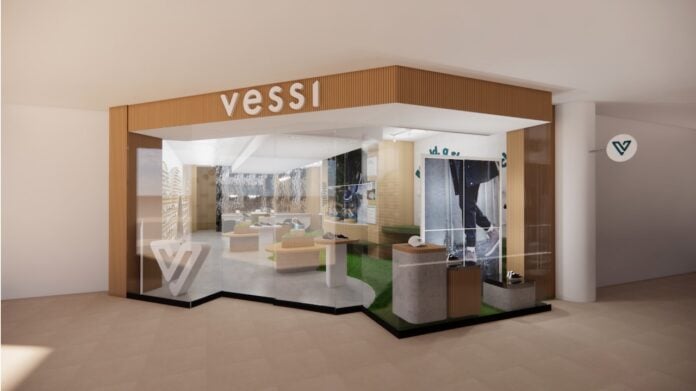
Future Vessi Storefront in Metropolis at Metrotown (Rendering: Vessi)
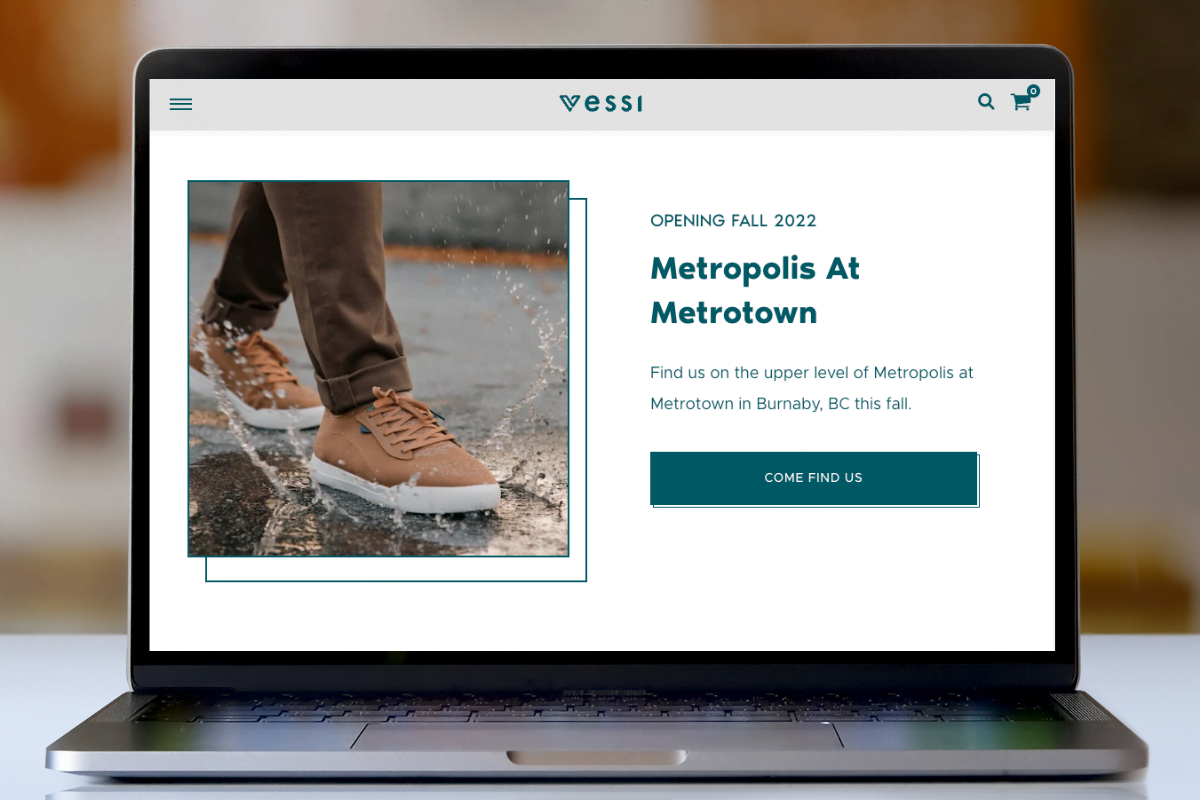
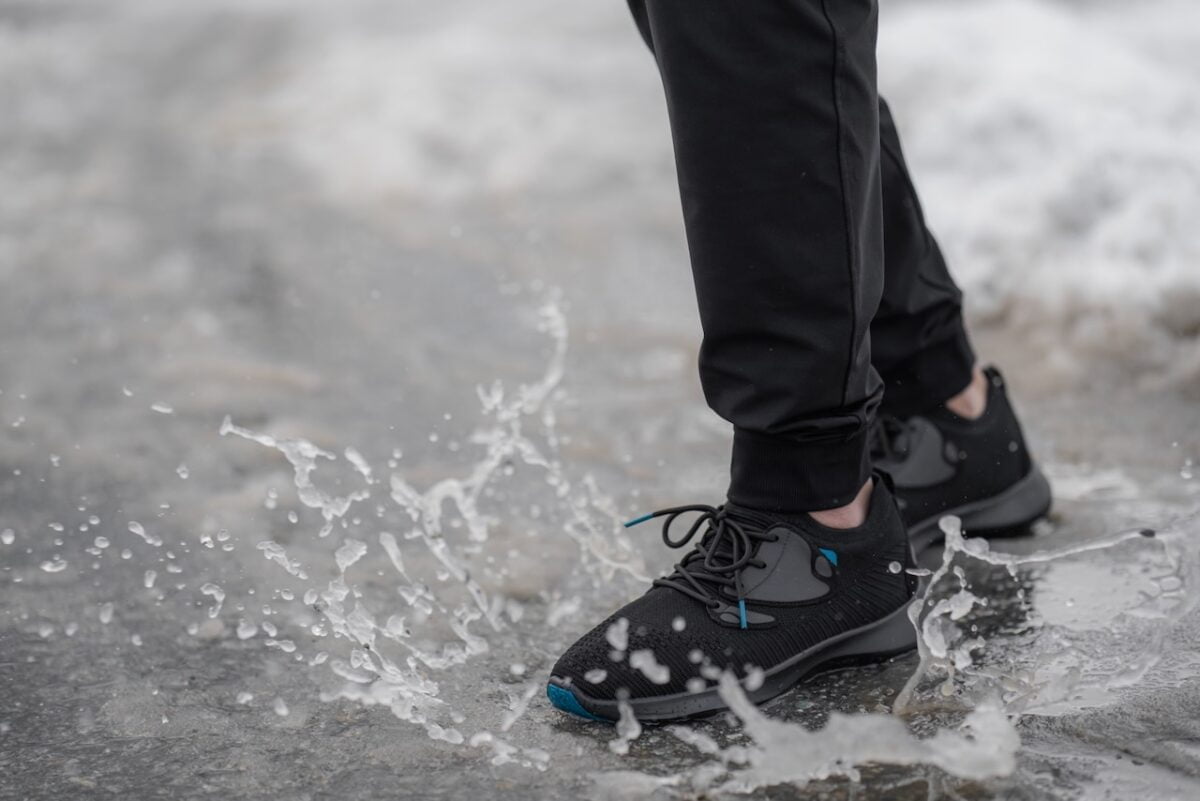
Vancouver waterproof footwear brand Vessi is opening this month its first ever permanent store at the Metropolis at Metrotown.
Vessi is one of North America’s fastest growing sneaker companies. Founded in 2018, its mission is to inspire happiness in all-weather by creating everyday wear that gets people out there, rain or shine. They’ve built up a loyal fan base and have become one of Vancouver’s most beloved brands, and have sold over 1,000,000 pairs of sneakers.
Mikaella Go, Co-Founder and Chief Brand Officer, said the idea of Vessi came to the three Vancouver founders of the company who quite simply had it with the rainy weather.
Mikaella Go
So they set out to create a totally waterproof sneaker that not only kept their socks dry, but kept their feet sweat-free, comfortable and looking stylish.
“Although our journey started out with the problem of rain-soaked socks, what we ended up with is a sneaker worth taking everywhere. Whether it’s a sunny day or a stormy one, you’re at home, headed to work or visiting someplace new, in a pair of Vessis you’re always ready for anything,” say the founders on the company’s website.
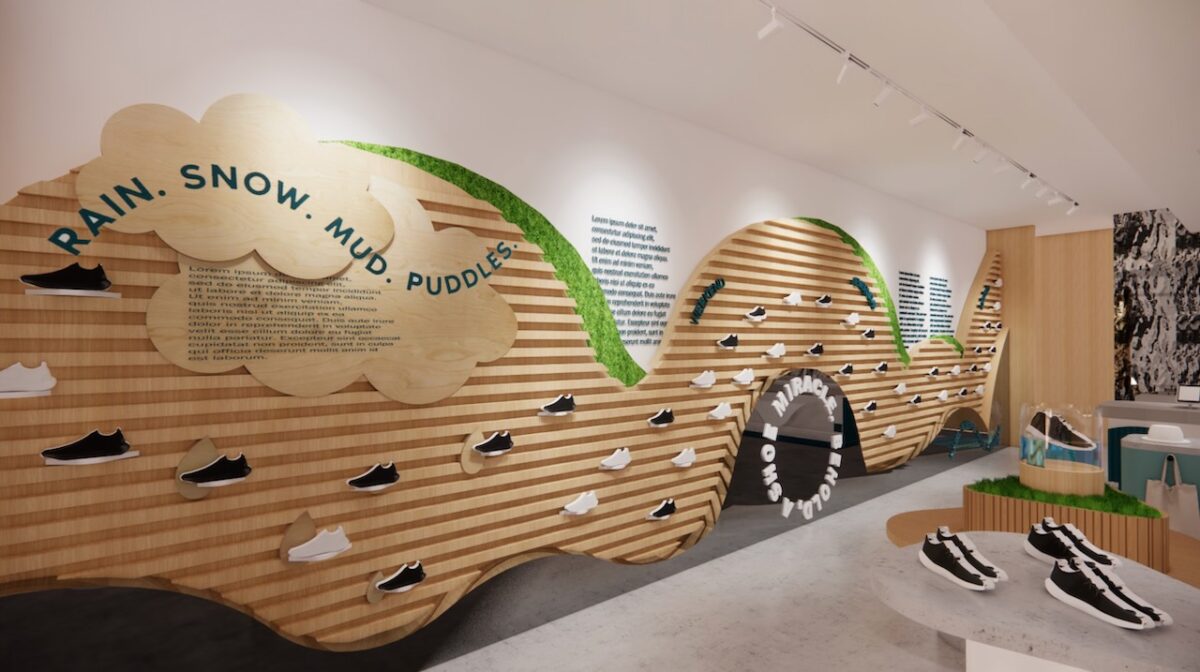
Future Vessi Storefront in Metropolis at Metrotown (Rendering: Vessi)Image: Vessi at Metrotown
The company was launched on Kickstarter and has been an online business since then.
“It really validated that people did want a product like Vessi,” said Go. “We started off with one style. Now we have six different styles that are completely waterproof.
“We are slowly trying to penetrate the US market and we’re opening our first retail store here in Vancouver. It’s really exciting for us. We wanted to do it before COVID but unfortunately we weren’t able to do it. So this is a really big milestone for Vessi as a company to be able to really interact with the customers in person and be able to offer Vessi’s impression.”
In the past Vessi has done a couple of pop-up locations in Vancouver and Toronto.
Image: VessiImage: Vessi
The permanent location in Metropolis will open in the Upper Level next to Armani Exchange, occupying the former Call It Spring space.
“We actually sent out a survey to our customers asking them where they want us to show up at. I think for us it’s really about our community and figuring out where to go from there – what products we make, where we show up. And Metrotown was one of the top three,” said Go.
“And then we took a look at the space and it just really felt like it checked a lot of the boxes that we were looking for. We love the space. We’re really excited to move into it.
“This is our first go at it for physical stores. But we do have plans opening up either a pop-up store or other permanent stores across Canadian cities and we’re also currently building our presence in key markets across the US. Pop-ups there as well. We’ve also entered a couple of wholesale accounts in the States such as Nordstrom. Our ultimate goal is to be able to give people access to Vessi in person and online.”
David Garbuz of brokerage Oberfeld Snowcap is representing Vessi in its Canadian store expansion, with other locations said to be in the works.
Podcast: Royalmount in Montreal Announces 1st Luxury Tenants
Craig and Lee discuss recent tenant announcements to Montreal’s Royalmount development opening in 2024, and what impact it could have on downtown Montreal.
Recent tenant announcements include flagships for Louis Vuitton and Gucci as well as Tiffany & Co., Sandro, Maje, and a large RH (Restoration Hardware) store.
The Weekly podcast by Retail Insider Canada is available on Apple Podcasts, Stitcher, TuneIn, Google Play, or through our dedicated RSS feed for Overcast and other podcast players. Also check out ourThe Interview Seriespodcast where Craig interviews guests from across the Canadian retail landscape as part of theThe Retail Insider Podcast Network.
Drop us a line at Craig@Retail-Insider.com. You can also rate us in Apple Podcasts or recommend us in Overcast to help more people discover the show!
Background Music Credit: Hard Boiled Kevin MacLeod (incompetech.com). Licensed under Creative Commons: By Attribution 3.0 License. http://creativecommons.org/licenses/by/3.0/
New research from Google Canada indicates digital is here to stay and is now the gateway to all commerce.
“As a result of the pandemic, Canadian retail has changed forever, but the rise in ecommerce has been durable and permanent. While we expect to see a return to in-store shopping this holiday season, shoppers will use digital to inform, inspire and enable their purchases. 86 per cent of shoppers discover brands/products while browsing online and 89 per cent of holiday shoppers searched online first before a store visit,” said Google Canada.
Swathi Sadagopan
Swathi Sadagopan, Strategic Insights Lead, for Google Canada Retail, said Canadians are increasingly using digital in their shopping experience not only for buying items but also for researching items prior to visiting stores.
“With so much having changed over the past few years, we’re seeing a few key trends take shape this holiday season. For one, given the current state of the economy, many holiday shoppers are concerned about the rising cost of items they need or want to buy. This holiday season we will see more price conscious consumers looking for two key value indicators: cost and convenience. So, don’t presume pessimism. Instead, work on positioning your value clearly to Canadians,” said Sadagopan.
“Unsurprisingly, digital is driving the shopping experience both online and in-store and is now the gateway to all commerce, with shoppers going online to inform, inspire and enable their purchases. We will also see a return to in-store holiday shopping, but that shoppers will want those visits to be purposeful and efficient – combining this with a more omnichannel experience.
As a result of the pandemic, Canadian retail has changed forever and the rise in ecommerce has been durable and permanent and its momentum has continued, she said.
“There’s no doubt that Canadian holiday shoppers are looking forward to a ‘normal’ holiday season, but economic uncertainty has given rise to a more price conscious consumer. Canadian holiday shoppers will be more conscious about their spending this season,” said Sadagopan. “In fact, 72 per cent of Canadian holiday shoppers say they are concerned about the rising cost of items they need or want to buy and 60 per cent of holiday shoppers say they plan to buy less because of the impact of inflation on their finances. This holiday season we will see more price conscious consumers with more shoppers deal seeking, brand switching and researching before they buy.
“With digital here to stay, retailers should keep the customer experience top of mind to win the holidays. With shoppers researching online for both store availability and price before making a purchase, the importance of retailers maintaining a strong digital presence will be integral to meeting demands of shoppers.”
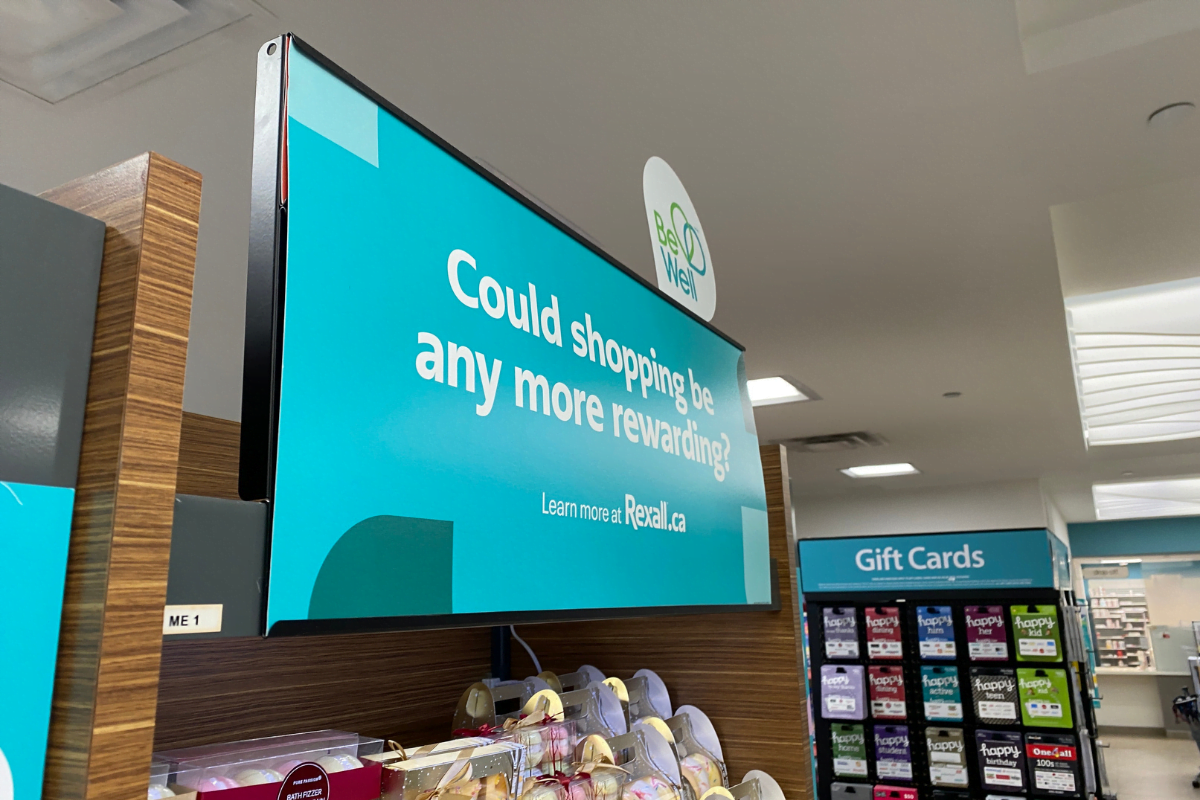
Rexall.ca (Image: Dustin Fuhs)
The research also found:
Holiday shoppers are being strategic, making fewer impulsive purchases: One in four holiday shoppers say they are shopping for things now that they don’t need until later because they’re worried items will go out of stock while nearly half of Canadian holiday shoppers say they’re taking inventory of what they have to determine what they need;
Convenience is key to winning over holiday shoppers: While we anticipate a return to in-store shopping, shoppers will use digital to make those trips purposeful and efficient. Shoppers will research online for both store availability and price before making a purchase. More than half (54 per cent) of holiday shoppers said they will confirm an item is in stock before going to buy it. Searches for curbside pickup aren’t slowing down either, with search interest for ‘curbside pickup near me’ increasing 250 per cent year-over-year; and
Online video plays an increasingly important role in the shopping journey: 70 per cent of consumers say they bought a brand because they saw it on YouTube with over two in three (67 per cent) holiday shoppers having watched a video on YouTube before a store visit;
60 per cent of holiday shoppers say they plan to buy less because of the impact of inflation on their finances;
Search interest for price sensitive terms have increased this year, with ‘discount code’ increasing 2x and ‘price match’ up 7x;
The top behaviours holiday shoppers say they’ll do more this season includes deal seeking and researching;
85 per cent of Canadian holiday shoppers say they will shop at stores with discounts;
73 per cent said they will shop with stores that offer free shipping;
41 per cent of holiday shoppers said they are comparing prices and price matching;
One in four holiday shoppers say they are shopping for things now that they don’t need until later because they’re worried items will go out of stock;
Nearly half of Canadian holiday shoppers say they’re taking inventory of what they have to determine what they need;
32 per cent say they keep an eye out for new brands even if they’re not planning to buy right then;
Nearly one in four surveyed Canadian holiday shoppers had said they had already begun their holiday shopping by mid-September.
Retail Insider is streamlining its Canadian retail news from around the web to include a handful of top news stories that can be viewed quickly during the day. Here are the top stories from the past 24 hours.
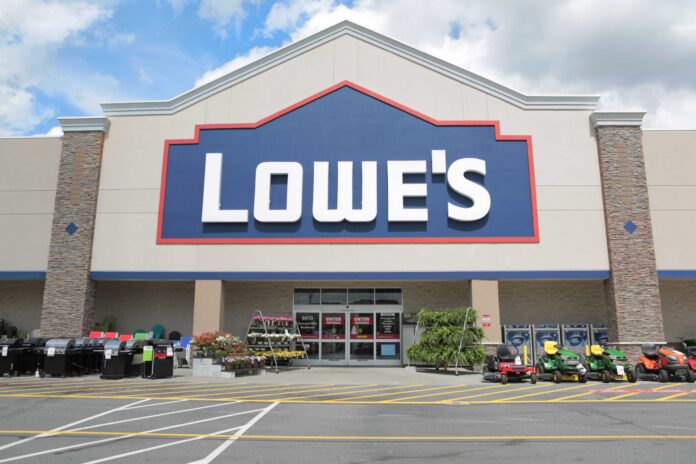
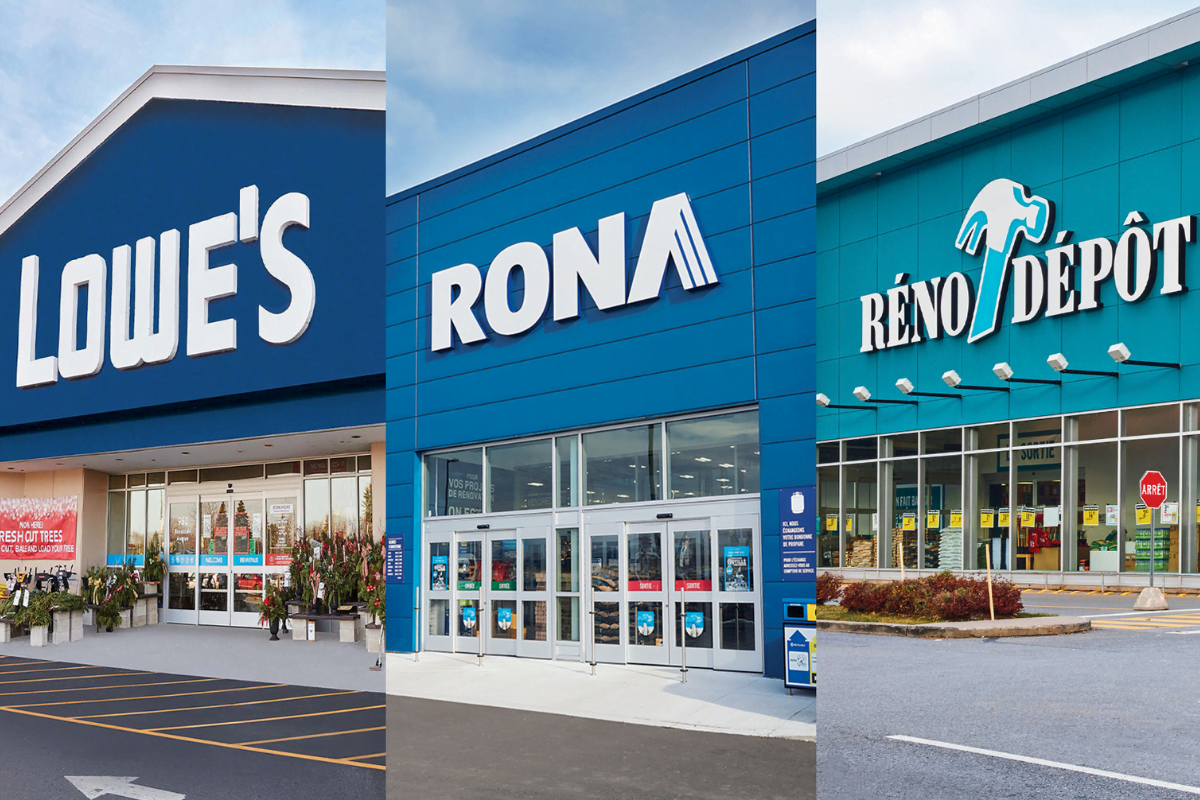
Retail giant Lowe’s Companies, Inc., based in the United States, is selling its Canadian retail business to Sycamore Partners, a private equity firm specializing in retail, consumer and distribution-related investments, for $400 million in cash, and performance-based deferred consideration. As well, all Lowe’s stores will eventually be rebranded as RONA according to the retailer in a statement Friday morning.
The company announced Thursday that its Canadian retail business based in Boucherville, Quebec, operates or services approximately 450 corporate and independent affiliate dealer stores in a number of complementary formats under different banners, which include, Lowe’s, RONA, Réno-Dépôt and Dick’s Lumber.
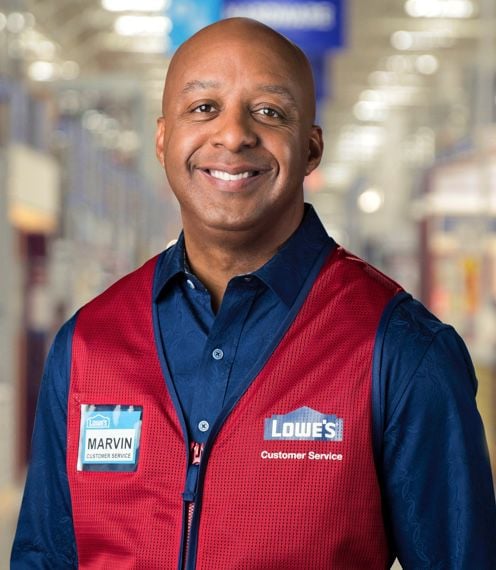
MARVIN R. ELLISON
“The sale of our Canadian retail business is an important step toward simplifying the Lowe’s business model. While this business represents approximately seven per cent of our full year 2022 sales outlook, it also represents approximately 60 basis points of dilution on our full year 2022 operating margin outlook,” said Marvin R. Ellison, Lowe’s chairman, president and CEO.
“We remain confident in our short and long-term outlook for the U.S. business, underscored by improved sales trends and strong profit flow-through in the third quarter, as well as our expectations for solid business performance for the remainder of 2022. By executing this transaction, we will intensify our focus on enhancing our operating margin and ROIC, taking market share in the U.S. and creating greater shareholder value. I want to thank our entire Canadian team for their hard work and dedication to our customers. We look forward to working with Sycamore Partners in executing a seamless transition.”
Image: Lowe’s Canada
Stefan Kaluzny
The transaction is expected to close in early 2023, subject to customary closing conditions and regulatory approvals. In connection with the preparation of the company’s financial statements for the third quarter of 2022, the company expects to record a pre-tax non-cash impairment charge of approximately $2 billion related to its Canadian retail business, it said.
“We are honored to partner with Lowe’s to establish Lowe’s Canada and RONA as a standalone company headquartered in Boucherville, Quebec,” said Stefan Kaluzny, Managing Director of Sycamore Partners. “We look forward to working with the company’s management team to build on its 83-year history as a leading Canadian home improvement business serving families, builders, and contractors in their communities across the country.”
Tony Cioffi
“We are excited to work with Sycamore Partners on this next chapter of growth for our business.” said Tony Cioffi, president of Lowe’s Canada. “Together, we will remain committed to supporting our associates, our Canadian- and Quebec-based vendors and our dealer network.”
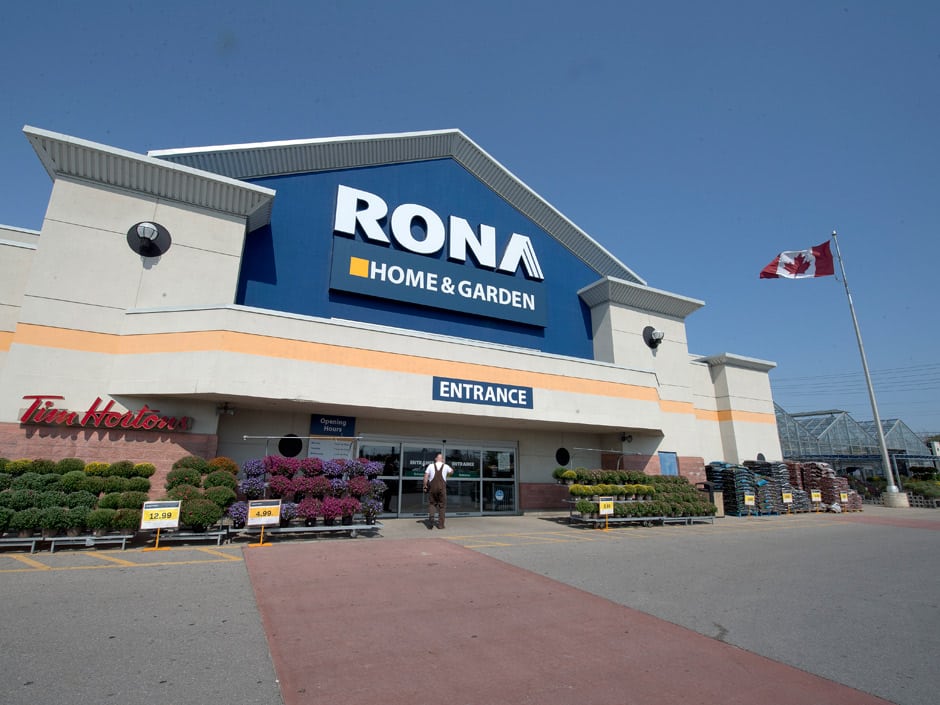
Image: Rona
Lowe’s issued further statements on Friday morning, including that it will “eventually move away from the Lowe’s banner in Canada in favour of the RONA banner in a manner that ensures the least possible disruption to our business.”
“We have put in place appropriate measures to ensure a seamless transition to new ownership, with minimal disruption for our 26,000 associates. It will remain business as usual, including unchanged compensation and benefits.”
“In recent years, we have put in place a strong leadership team, invested strategically, and simplified our business, which puts us in a great position for the future.”
“Under Sycamore ownership, we will maintain a strong commitment to our Canadian- and Quebec-based vendors, including through our ongoing involvement in the ‘Well Made Here’ initiative, meant to encourage the purchase of domestically manufactured quality products.”
Retail expert George Minakakis described the Canadian division as a business deal gone sour for Lowe’s.
George Minakakis
“They paid $2.4 billion in 2016. The brand operations in Canada were sold for $400 Million to Sycamore Partners, with a $2 billion impairment charge incurred by Lowes. In other words this deal failed to consummate the Lowe’s Brand with Rona in a way that they could lead in Canada,” said Minakakis, who leads advisory firm Inception Retail Group and is author of The New Bricks & Mortar, Future Proofing Retail. “Now Sycamore Partners has the task ahead of them to restructure the operations, finances, business, and consumer model that will allow this brand to appeal to more Canadians. However can they? The short term outlook calls for a recession, that means a lot less consumer spending.
“However, the exit of a US parent from Canada is telling! That will also lead to changed internal culture. I expect new leadership, and strategies to ensure this brand stays profitable. The acquisition price may allow for that but what we don’t know is how much it will cost to build a stronger brand. Supply chains will be key as will their deployment of human capital that becomes a competitive advantage. I just hope that they are able to tap a Canadian with a background in dealing with different cultures. The number one mistake American firms make is believing that our mutual English language allows for US leadership to be easily transported crossborder. That’s a retail fallacy.
“That’s the same fallacy that hurt Target in Canada. The retrenchment from Canada also makes you wonder about the US economic challenges.”
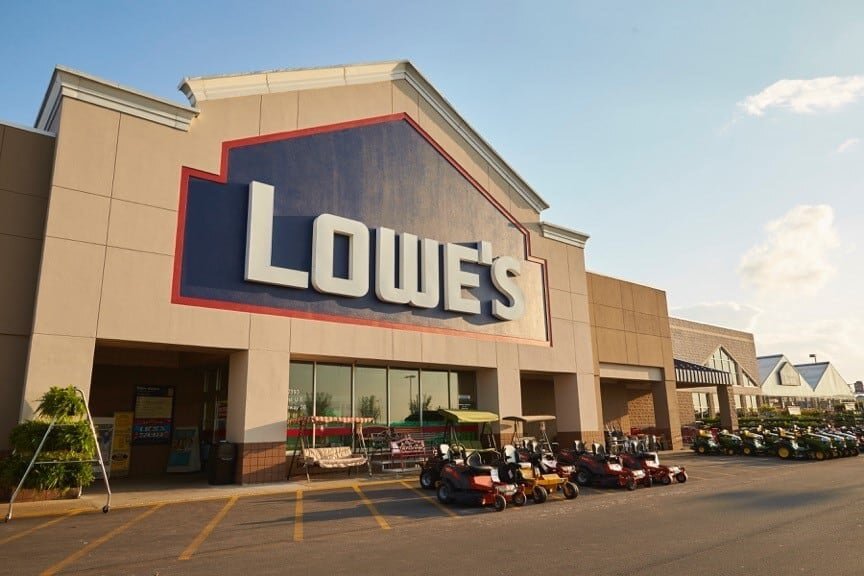
Exterior of Lowe’s Canada store. Photo: Lowe’s
Liza Amlani
Liza Amlani, Principal/Founder, Retail Strategy Group, and Co-Founder, The Merchant Life, said she’s not sure what exactly “Lowe’s is simplifying by this sale” but she does think the company needs a lot more than new ownership to be profitable.
“The challenge with Lowe’s/RONA is that Home Depot has private label brand power and an exceptional customer experience. Taking market share from HD will always be a challenge. Lowe’s needs to get their inventory under control and focus on the customer. Shift merchandising strategies to leverage consumer insights and build trust with the shopper. I’ve shopped at both RONA and Lowe’s – the stores had low footfall, prices were not competitive, the assortment was flat and there wasn’t a brand ambassador in sight. And that’s just my experience,” she said.
“A sale could help the brand refocus the merchandising strategy but it truly comes down to what does the consumer want. Selling to a NY based firm could be the opportunity that Lowe’s needs to reinvent itself to a Canadian home and DIY destination. I hope that’s the case as I’d hate to see more stores close on account of archaic retail practices.”
Lowe’s Canada will open a new distribution centre in the Greater Calgary Area. The new 1,230,000-square-foot facility is expected to open in the fall of 2021 and will represent a joint investment of more than $120 million. (CNW Group/Lowe’s Canada)
“RONA was just too different a company compared to Lowe’s. Sycamore will have its work cut out for it as the profitability of the Canadian division has been an obvious issue. Look for major staff cuts and overhead reduction as they lower their break-even point. Big nasty write down for Lowe’s too to clean up the mess,” said the President of Bruce Winder Retail.
Doug Stephens, Founder of Retail Prophet, said the sale of Lowe’s Canadian division was somewhat inevitable.
Doug Stephens
“Lowe’s wasn’t really addressing key market and consumer needs. Customer experience is essentially status quo relative to competitors, compounded by the fact that Lowe’s also hasn’t locked in the trade customer to the degree that competitors like Home Depot have. And with the renovation market shifting heavily from Do-It-Yourself to Do-It-For-Me, it’s essential, especially if acquiring younger customers is the goal,” he said.
“So, Lowe’s seemingly found itself sandwiched between smaller, more local competitors like Home Hardware on one side and Home Depot on the other. And absent any defined incentive for consumers – be it a remarkably better buying experience, higher service levels, more convenience or better product assortments – they really had little to offer the Canadian market.”
Michael Kehoe
Michael Kehoe, Broker of Record with Fairfield Commercial Real Estate, said the Sycamore Partners acquisition of Lowe’s Companies Inc. Canadian retail business is a significant event on the Canadian retail scene.
“RONA and Réno-Dépôt are legacy Canadian brands going back 83 years in a retail category now dominated by a few key players. The Sycamore track record in retail, consumer and distribution-related companies will provide stability and continuity for the Canadian and Quebec-based associates, vendors and their extensive dealer network. This is good news for Canadian consumers and contractors in these uncertain and challenging economic times,” he said.
Bulgari Yorkdale (Photo Credit: Jenna Marie Wakani)
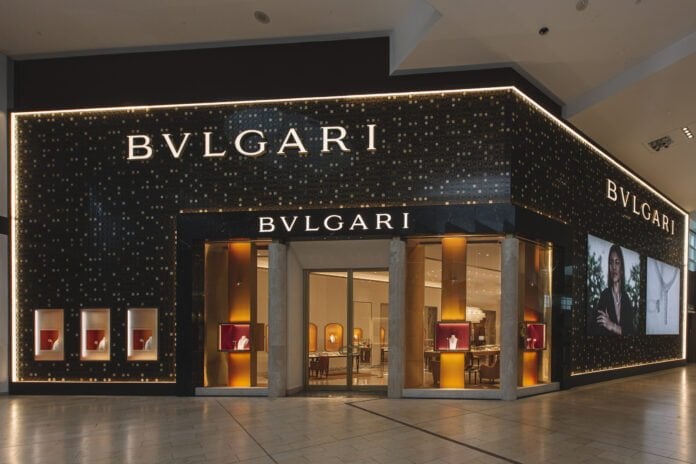
LVMH-owned Italian luxury jewellery brand Bulgari has renovated and expanded its flagship location at Toronto’s Yorkdale Shopping Centre. The retail space has doubled in size and the store is now one of the only locations globally to carry Bulgari’s high jewellery collection.
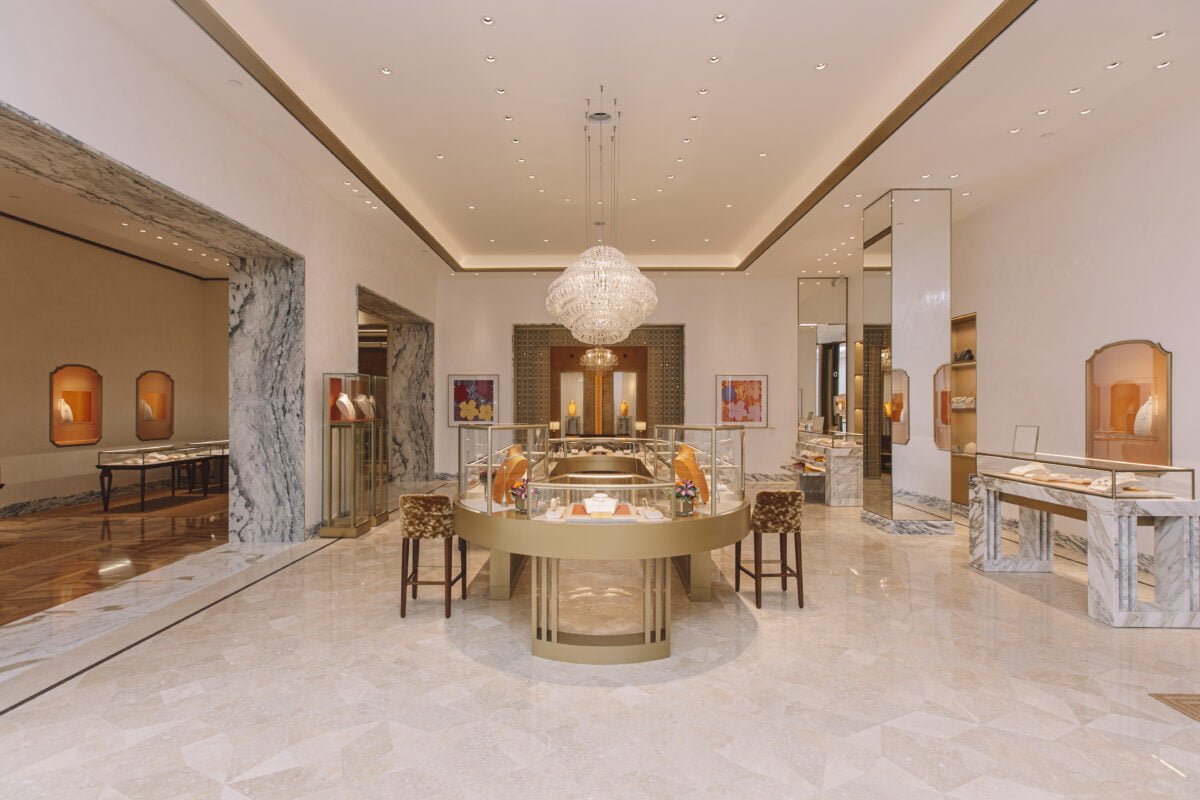
The renovation of the Yorkdale store took about five months, expanding the retail space from about 1,500 square feet to approximately 3,000 square feet. Architect Peter Marino conceptualized the space which now has two private salons.
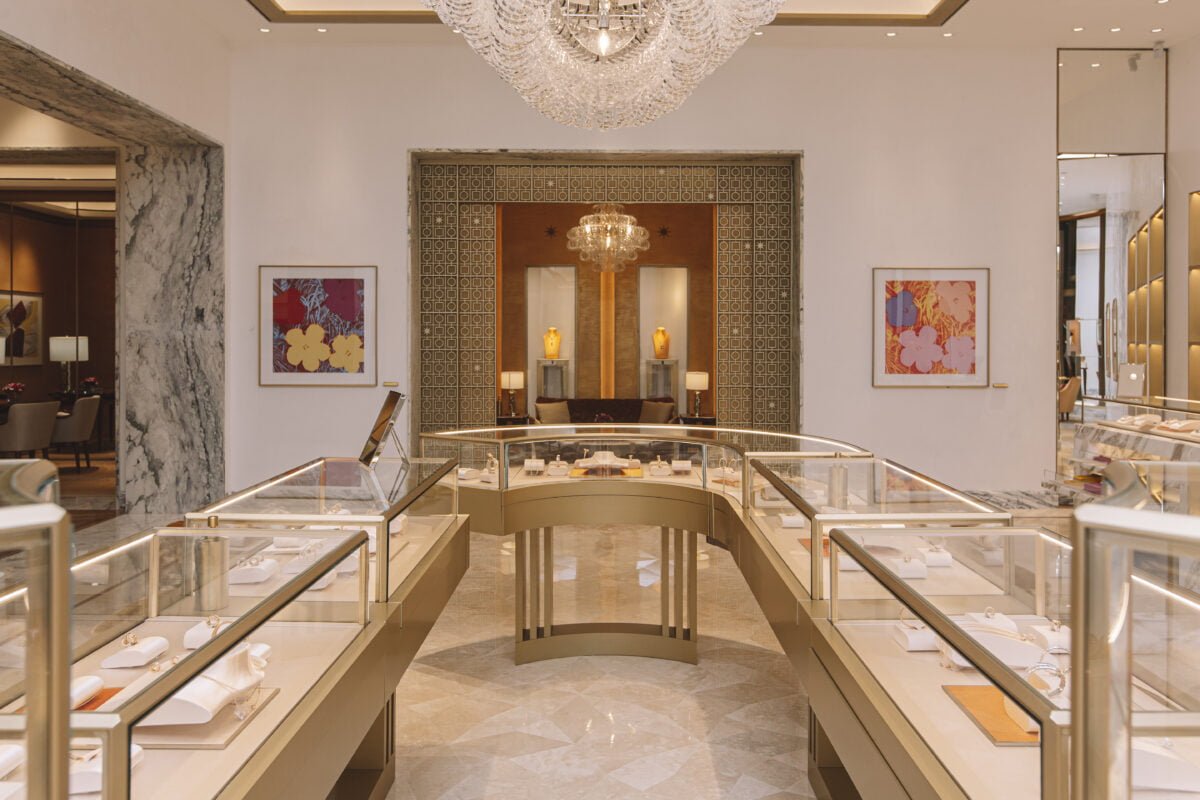
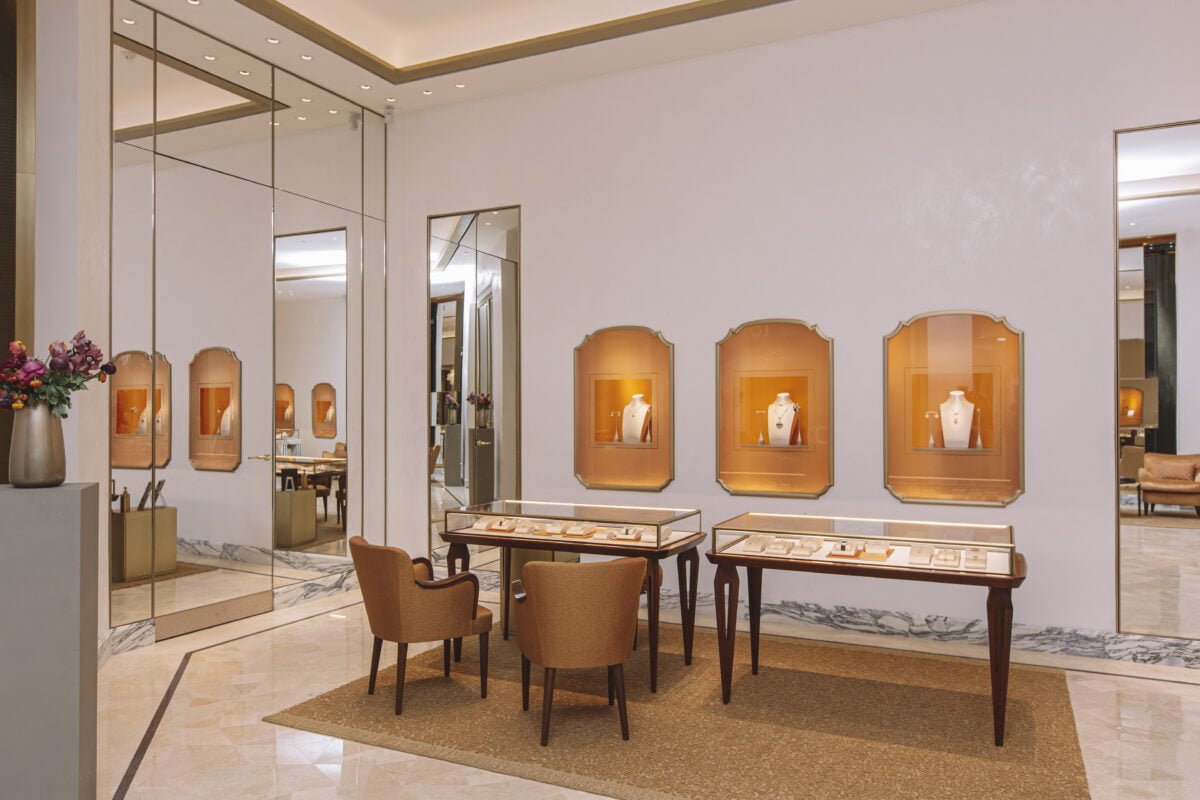
The main entrance to the Roman-inspired store is made of Black Grand Antique marble, and the interior includes white Tarvertino Navona marble walls that are finished in white and gold hand-applied Scagliola plaster. The middle of the store features the recognizable Bulgari Condotti eight-point star in red porphyry, which dates back to the first Bulgari shop opened by Sotirio Bulgari in Rome in 1884. Condotti windows within the store reference the original windows still present in Bulgari’s historic flagship on Via Condotti in Rome, and there are two Murano crystal chandeliers made by Italian artisan Vistosi that illuminate the interior.
Photo Credit: Jenna Marie Wakani
Three Andy Warhol silk-screen prints in the store were issued specifically for Bulgari by the Warhol Foundation. Andy Warhol was known for being a longstanding fan of Bulgari, so much so that he had called the New York boutique “the most important museum of contemporary art.”
“I am thrilled to celebrate the re-opening of our flagship boutique in Toronto. The store’s newly imagined concept seamlessly blends the luxurious materials and iconic Italian designs that reflect Bulgari’s heritage, with a contemporary, best-in-class client experience. I look forward to welcoming our clients back inside to discover our iconic creations within this new expression of Roman art & design,” said Joshua Gaynor, Managing Director of Bulgari Canada.
Photo Credit: Jenna Marie WakaniPhoto Credit: Jenna Marie Wakani
The expanded Bulgari flagship carries an expansive range of jewellery as well as watches, eyewear and fragrances. Handbags and leather goods also sell very well in the Yorkdale store according to a Bulgari representative, with the store now carrying a more extensive selection than what one may find in other Bulgari locations.
The Yorkdale flagship is said to be one of Bulgari’s top-selling in North America, prompting the brand to add its high jewellery collection as part of the store expansion. Prices for Bulgari’s high jewellery line can be into the six and even seven figures with designs featuring precious metals and stones. Other Bulgari stores in North America carrying high jewellery include 5th Avenue in New York City, Beverly Hills, San Francisco and Costa Mesa California (South Coast Plaza).
In Canada, Bulgari also operates concessions at Holt Renfrew in Toronto at 50 Bloor Street West and at Holt Renfrew in Vancouver at CF Pacific Centre. Travel retailer Dufry operates Bulgari boutiques in Vancouver International Airport as well as in Toronto’s Pearson Airport in Terminals 1 and 3. Multi-brand retailers in Canada carrying Bulgari include Chateau d’Ivoire in Montreal, Bandiera Jewellers in Toronto, and Montecristo Jewellers at Metropolis at Metrotown in Burnaby BC.
Video advertisement featured at the beginning of TIFF films this year
Attendees of the Toronto International Film Festival (TIFF) would have seen Bulgari’s recent marketing — the luxury brand advertised heavily during the event and was a presenting sponsor of some awards. Splendid looking high jewellery pieces from Bulgari were part of advertising that included billboards and videos at the beginning of TIFF films. The TIFF partnership spans an initial three-year term which means Bulgari will be part of the festival in 2023 and 2024.
Bulgari was founded in Greece in 1884 and is now headquartered in Rome. LVMH acquired Bulgari in 2011 as part of a strategic alliance. Bulgari operates a network of standalone stores, concessions, and wholesale accounts in major markets globally. Marriott operates Bulgari Hotels and Resorts which has seven locations globally with more to come, and there are Bulgari-branded restaurants in Tokyo and Osaka.
Yorkdale has become one of North America’s top shopping centres in terms of both sales per square foot as well as the number of luxury brands carried within. Yorkdale now boasts the highest density of luxury brands anywhere in Canada and more are said to be on the way into 2023.