Home Blog Page 81

RUDSAK Opening Bloor Street Store at Toronto’s Manulife Centre

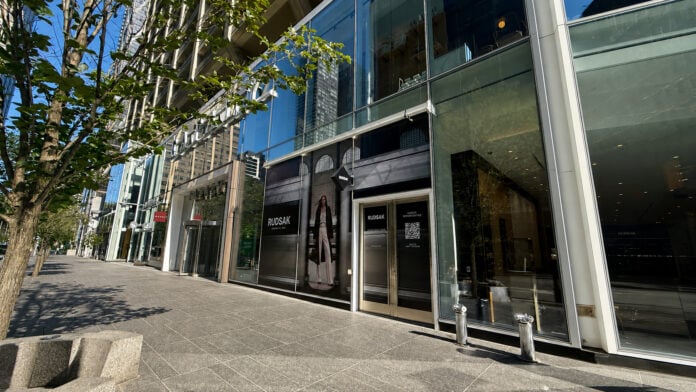
Future RUDSAK at Manulife Centre, 55 Bloor St. W. in Toronto. Photo: Craig Patterson

Montreal-based fashion brand RUDSAK is preparing to open a store on Bloor Street in Toronto, taking street-facing space at Manulife Centre that includes the former Van Cleef & Arpels boutique operated by Birks.

Construction hoarding for RUDSAK is now in place at 55 Bloor Street West, immediately beside the main Bloor Street entrance to Eataly. The opening follows the closure of RUDSAK’s store at CF Toronto Eaton Centre, shifting the brand’s downtown presence to the Bloor-Yorkville retail district.

Ben Labrecque of commercial real estate brokerage Urban Reform Realty Inc., who represents both RUDSAK and Birks, told Retail Insider that Birks continues to hold the premises and that RUDSAK is taking the space through a sublease. Labrecque said the Bloor Street location is being used as a test for RUDSAK.

Former Van Cleef & Arpels Space

Van Cleef & Arpels previously operated a licensed boutique through Birks as part of the jeweller’s Bloor Street flagship. Although connected internally to Birks, the boutique had its own entrance directly from Bloor Street, giving the French luxury jewellery brand a separate storefront.

Retail Insider reported in 2022 that Van Cleef & Arpels was preparing to establish a standalone corporate boutique farther west at 100 Bloor Street West. The new store opened in 2023, moving the brand into a larger dedicated space within the section of Bloor Street where many international luxury brands are concentrated.

The space now being prepared for RUDSAK includes the former Van Cleef frontage. While the Birks premises had previously been marketed in various configurations, RUDSAK will span over 1,000 square feet. Birks continues to control the overall premises, with RUDSAK operating under a sublease.

Birks Remains at Manulife Centre

Birks continues to operate at Manulife Centre despite earlier expectations that its Bloor Street store would eventually close. Retail Insider previously reported comments from former Birks leadership indicating that the location was expected to close, but those plans later changed following discussions with the landlord.

More recently, Retail Insider spoke with a vendor that was exploring establishing a shop-in-store within the Bloor Street Birks location, providing another indication that the jeweller expects to remain at Manulife Centre for the time being. The vendor was not authorized to speak publicly about its plans and is not being identified.

The Birks store itself has changed considerably over the past several years. Van Cleef & Arpels is no longer part of the location following its move to 100 Bloor, while other luxury brands have also departed as the jeweller has adjusted its operations on Bloor Street.
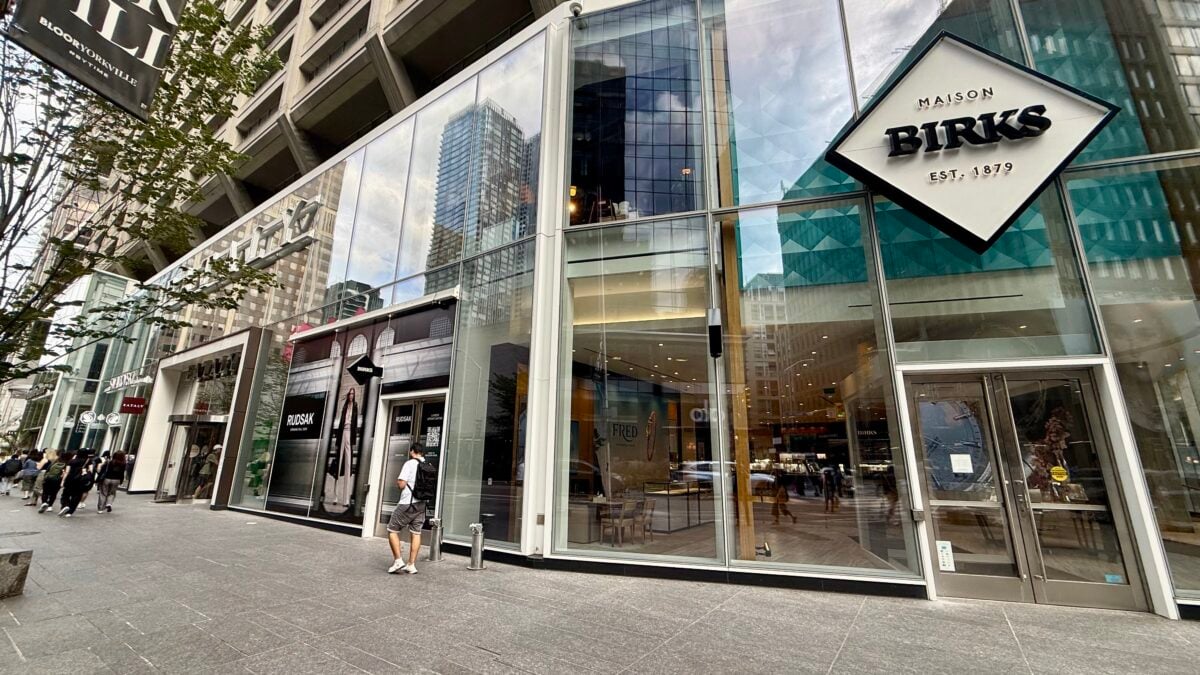
Another look at the future RUDSAK at Manlife Centre, 55 Bloor St. W. in Toronto. Photo: Craig Patterson

RUDSAK Tests Bloor-Yorkville

The move gives RUDSAK a different type of downtown Toronto presence following the closure of its CF Toronto Eaton Centre store. The new location has direct Bloor Street frontage and places the brand within the Bloor-Yorkville market, where Canadian fashion retailers operate alongside a growing concentration of international luxury brands.

Founded in Montreal by Evik Asatoorian in 1994, RUDSAK built much of its early recognition around leather goods and outerwear before expanding into apparel, footwear, bags and accessories. Its retail strategy has changed considerably over the years, including a period of aggressive expansion that took the company to 34 locations by 2019 after it had earlier contemplated a Canadian network that could eventually surpass 50 stores.

In a 2021 interview with Retail Insider, Asatoorian acknowledged that RUDSAK had opened stores in some locations where it should not have and said the company was moving toward a smaller physical network. Toronto and Montreal remained important markets, but the focus shifted from maximizing store count to operating stronger locations. Asatoorian also said physical stores remained important for customers to discover and experience the brand as e-commerce grew.

RUDSAK subsequently began updating its store fleet and refining its positioning. Executives told Retail Insider in 2023 that the company was developing what it described as a “performance luxury” identity, while renovations incorporated more open layouts, digital elements and experiential features.

That approach was reflected in RUDSAK’s boutique at Royalmount in Montreal, where the company adopted a more elevated store presentation. By RUDSAK’s 30th anniversary in 2024, Asatoorian described e-commerce as the company’s largest “store,” alongside a more selective physical retail network and expansion outside Canada.

The decision to test Bloor Street after closing at CF Toronto Eaton Centre provides another example of that more selective approach to physical retail, shifting the brand’s downtown Toronto presence from a major enclosed shopping centre to a street-facing location in Bloor-Yorkville.

Bay and Bloor Retail Mix Evolves

RUDSAK will join a notable group of retailers around Bay and Bloor. Alo Yoga occupies the northeast corner of the intersection, with Canadian footwear retailer Browns next door and Holt Renfrew immediately to the east. Aritzia and lululemon also operate nearby, creating a concentration of Canadian fashion retailers alongside international brands.

The intersection is also seeing further luxury investment. Tiffany & Co. is currently building a new flagship at Bloor and Bay, diagonally across from Birks, with an opening expected in early 2027. Farther west, the retail mix becomes increasingly concentrated with international luxury brands, including Van Cleef & Arpels, Hermès, Burberry, Saint Laurent, Gucci, Rolex, and others.

RUDSAK’s storefront immediately beside Eataly’s main Bloor Street entrance also places the brand next to one of Manulife Centre’s principal retail destinations. Eataly opened its first Canadian location at the complex in 2019. Retail Insider will report on the store opening, happening this fall.

More from Retail Insider:

Groupe Dynamite appoints new digital leader as Chief Customer Officer

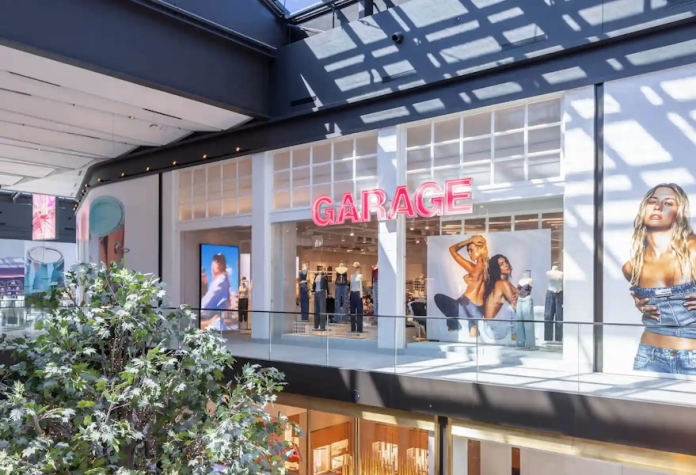
Garage store at Royalmount in Montreal. Photo: Garage/Groupe Dynamite

Fashion retailer Groupe Dynamite Inc. has appointed Henry Spear to the role of Chief Customer Officer (CCO).

In his role, Spear will be focused on deepening Groupe Dynamite’s customer obsession, using personalization, innovation and technology to elevate the experience at every touchpoint across GARAGE and DYNAMITE. He will focus on eliminating friction and making every interaction more seamless, intuitive and engaging, while building deeper, more lasting relationships and increasing customer lifetime value, said the retailer in a news release.

“Our customers expect shopping with GARAGE and DYNAMITE to feel inspiring, easy, and seamless wherever they engage with us,” said Stacie Beaver, President and Chief Operating Officer. “Creating a consistent experience across our digital and physical channels is at the core of our growth strategy. Henry’s proven ability to elevate the online customer journey and optimize digital operations will help us continue to raise the bar for our customers as our brands scale.”

The retailer said Spear brings more than two decades of experience across digital, E-commerce, customer experience, and omni-channel retail. Most recently, he served as Senior Vice-President of Digital & Customer Care at JD Sports, overseeing the digital P&L across multiple banners and advancing the company’s direct-to-consumer experience. He previously held senior leadership roles at Gymshark, including President of North America, and at Faherty Brand, following earlier experience with J.Crew, Gap Inc., and Boston Consulting Group.

More from Retail Insider:

25% of New Businesses in Canada Are Started by New Canadians: CFA

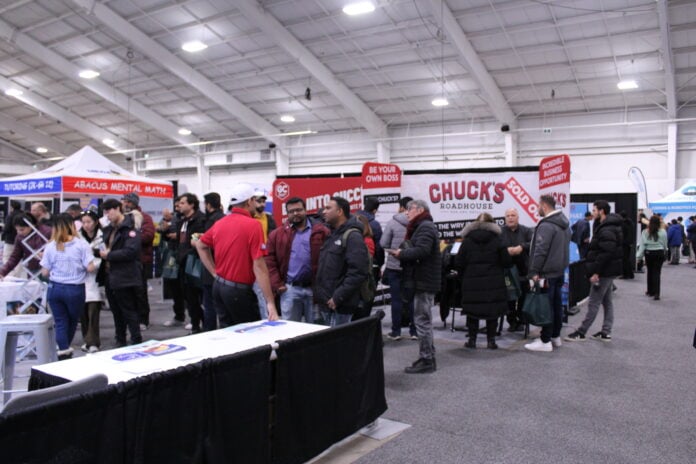
Franchise Canada Trade Show

Newcomers are playing a significant role in Canada’s entrepreneurial landscape, accounting for 32% of all business owners with paid staff.

As Canada continues to welcome newcomers from around the world, a growing number are choosing entrepreneurship, not just as a career path, but as a way to build long-term financial security and contribute to their communities. Many are turning to franchising as a practical and proven route to business ownership, offering support, training, and established systems that can help reduce the challenges of starting a business in a new country, says the Canadian Franchise Association (CFA.

It says newcomers are making a significant impact on Canada’s entrepreneurial landscape:

• One in four new businesses in Canada is started by an immigrant.
• There are more than 800,000 self-employed newcomers across Canada.
• Over 250,000 newcomer entrepreneurs employ staff, creating jobs and supporting local economies.
• Newcomer entrepreneurs are contributing across a wide range of industries, including restaurants (53%), grocery stores (52%), truck transportation (56%), and computer systems design and services (49%).

Why more newcomers are choosing franchising:

  • A proven business model that reduces many of the risks associated with starting a business from scratch.
  • Comprehensive training, operational support, marketing expertise, and ongoing mentorship.
  • Access to established brands with existing customer recognition and trusted business systems.
  • Opportunities in more than 60 industries, allowing entrepreneurs to find businesses that match their skills, experience, and investment goals.
  • A network of franchisors and fellow franchisees, who provide guidance, collaboration, and share best practices.
  • The opportunity to build wealth while creating jobs and investing back in local communities.

For many newcomers, franchising provides more than a business opportunity—it offers a pathway to economic participation, community connection, and long-term success in Canada, says the CFA.

In an interview with Retail Insider, Sherry McNeil, President and CEO of the CFA, discusses the trend.

Question: The data show that newcomers account for a growing share of business ownership in Canada. What is driving more newcomers to choose franchising over starting an independent business?

Answer: For many newcomers, franchising can provide a practical and proven pathway to business ownership, particularly when they are navigating a new country and an unfamiliar business environment.

One of the key advantages is access to an established business model and support system. Rather than having to build every aspect of a business from the ground up, franchisees benefit from training, operational support, marketing expertise, established processes, and the experience of a franchisor and broader franchise network.

An established brand can also provide customer recognition and a foundation on which to build. With franchise opportunities available across more than 60 industries, newcomers can explore businesses that align with their skills, experience, interests, and investment goals.

There is also an important community aspect to franchising. Franchisees have the opportunity to connect with franchisors and other franchise owners, share experiences and learn from people who understand the challenges and opportunities of running a business in Canada. For someone who is building both a business and a professional network in a new country, that can be particularly valuable.

Ultimately, franchising can help newcomers turn their entrepreneurial ambitions into business ownership while creating jobs in their communities, building financial independence, and contributing to the communities where they live and operate.

Q: What are the biggest misconceptions newcomers have about franchise ownership, and what realities should prospective franchisees understand before investing?

A: One common misconception is that franchisees have very little room to bring their own ideas or creativity to the business because the franchisor establishes the operating model. In reality, franchising provides a framework and proven systems, but franchisees are still responsible for running their businesses, leading their teams, engaging with customers, and marketing their products or services within the parameters of the brand.

The best franchise relationships bring together the strength of the system with the experience, energy, and entrepreneurial mindset of the franchisee.

Another misconception is that franchising is too expensive or out of reach for many aspiring business owners. There are franchise opportunities across a wide range of industries and investment levels, so prospective franchisees can explore opportunities that align with their financial resources, experience, and goals.

At the same time, prospective franchisees need to understand that franchising is not a guarantee of success, and it is not a passive investment. Choosing a franchise should be about much more than selecting a recognizable brand name.

People should take the time to understand what the day-to-day business will look like, how much time and involvement will be required, the total investment and ongoing costs, staffing requirements, hours of operation, customer acquisition, and the potential timeline for achieving a return on their investment. Most importantly, they need to determine whether the business is the right fit for their skills, lifestyle and long-term goals.

Doing that due diligence is critical. The right franchise opportunity, combined with the right franchisee, is ultimately what creates the strongest foundation for success.

Q: Where are you seeing the strongest growth opportunities for newcomer franchisees—in terms of industries, regions, or business models—and why?

A: One of the strengths of franchising is the breadth of opportunities available. Newcomer entrepreneurs are already making a significant impact across industries including restaurants, grocery, transportation, technology, and professional services. Government of Canada data reinforces this, highlighting the significant participation of newcomers across these sectors.

From a franchising perspective, we see opportunities in areas where there is strong consumer demand and a clear, scalable business model. Food and hospitality, health and wellness, home and commercial services, retail and professional services all offer a range of franchise opportunities.

We are also seeing opportunities in communities experiencing population growth, not just in Canada’s major urban centres but in emerging markets across the country. For newcomers, the opportunity is really about finding the right fit—an industry and business model that aligns with their skills, experience, interests, financial capacity and long-term goals.

Newcomers bring valuable perspectives, international experience and an entrepreneurial mindset to the Canadian business landscape. Franchising can provide the framework and support to turn those strengths into successful businesses.

Yogi Patel, Booster Juice Franchisee

Q: What barriers do newcomers still face when trying to buy or build a franchise business in Canada, and what changes would make the biggest difference?

A: While franchising can help reduce some of the challenges associated with starting a business from scratch, newcomers can still face barriers when looking to become franchise owners. Financing is one, particularly for entrepreneurs who may not yet have an established financial or credit history in Canada. Other challenges can include navigating Canadian regulations, understanding franchise agreements and financial commitments, finding the right location and becoming familiar with the business environment and requirements of a particular industry.

Access to good information and trusted resources can make a significant difference. For someone building a business in a new country, having a clear understanding of the financial commitment, legal considerations, operational requirements and expectations of the franchise relationship is essential.

Like every industry, franchising has also seen a rise in fraudulent activity. Canadian banks have reported instances of fraudsters posing as legitimate business opportunity in order to secure franchisee investments or bank loans.

This is an area where organizations like the Canadian Franchise Association can play an important role. Through education, resources, and networking, we can help prospective franchisees better understand the franchise model and make informed decisions before they invest. The CFA promotes ethical franchising and is a strong community of franchise brands as well as the banks, law firms, and other services that support the franchise industry.

It’s important to Look for the Logo—the CFA member logo, displayed on franchisors’ websites, tradeshow booths, and marketing materials, tells you a brand is a member of the CFA and has signed on to the CFA’s Code of Ethics.

Anyone who is interested in purchasing a franchise should start at the CFA’s directory site, LookforaFranchise.ca, where they can search for franchise opportunities by industry, investment level, and more. You can also visit FranchiseCanada.Online to learn more about franchising in general and read success stories from CFA member brands.

If we can make the pathway to business ownership easier to navigate, we can help more newcomers turn their entrepreneurial ambitions into sustainable businesses that create jobs, generate economic activity and contribute to communities across Canada.

Q: Can you share a specific example of a newcomer franchisee whose experience illustrates both the challenges and the broader economic impact that franchising can have on local communities?

A: Yogi Patel is a great example of how franchising can help a newcomer build a successful business while making a broader contribution to the communities he serves.

Yogi moved to Canada from India at the age of 13 and began exploring entrepreneurship and franchise opportunities later in life. He opened his first Booster Juice location in Toronto in 2012. Like many entrepreneurs, he faced challenges early on, including sales that were initially below expectations. With hands-on support from the Booster Juice team, including Founder, President and CEO Dale Wishewan, he was able to work through those challenges and build a stronger business.

Today, Yogi now owns more than 20 Booster Juice locations across the Greater Toronto Area, Durham Region, and Nova Scotia. Along the way, he has created employment opportunities and helped develop team members into managers and future leaders.

What I find particularly compelling about Yogi’s story is that his impact extends beyond the growth of his business. Through his business he is deeply involved in the local communities he serves, supporting schools, sports programs, community events, and charitable initiatives. He has also been involved in food drives, blood donation campaigns, health awareness programs, and other community outreach through BAPS Charities in Canada.

His story illustrates what can happen when entrepreneurial ambition is combined with the support of a franchise system. The result isn’t just a successful business. It can mean jobs, leadership opportunities, community investment and a lasting contribution to the local economy.

That is one of the reasons franchising can be such a powerful pathway for newcomers.

It gives entrepreneurs the opportunity to build something of their own while becoming an important part of the communities they serve.

More from Retail Insider:

Why Major Retailers Are Turning Employees Into Content Creators: Billo

Vitaly Gariev photo
Vitaly Gariev photo

Many major retailers suddenly want their own staff behind the camera. In the space of a few weeks, Gap Inc. opened its creator program to employees across Old Navy, Gap, Athleta and Banana Republic. Starbucks moved to scale its Green Apron Creators network. And Staples turned a viral in-store associate into a genuine brand asset.

Donatas Smailys, CEO of creator marketing platform Billo, explains the thought behind these decisions and how it can be problematic. 

“Showing authentic and imperfect people on camera is a very good strategy for brands that want to create relationships with their audience and win their trust in the age of AI. Audiences are getting very good at smelling a transaction, so the market is swinging back to the realest asset a company owns: the people who actually work there. The danger is that the moment you script them or push them to hit quotas, you kill the exact thing that made them worth filming.”

“On another hand, those same people can create viral moments, but will they make people convert? Without a proper system and accountability on someone’s end, these initiatives will not be sustainable. And we all know how much consistency matters on social media.”

In an interview with Retail Insider, Smailys discussed the trend.

Question: What is driving major retailers to increasingly turn their own employees into content creators, and why is this strategy gaining momentum now?

Answer: The honest answer is trust. Audiences have gotten very good at smelling a transaction, so the market is swinging back to the most real asset a company owns: the people who actually work there. For a decade, employee advocacy just meant “please reshare the brand’s post”, staff were a distribution channel. What’s changed is that the employee is now the origination point of the creative – not to replace hired creators, but to add a layer of authenticity alongside them. It’s gaining momentum now because anyone can create content with their phone and because in the age of AI, showing an authentic, imperfect real person on camera is one of the few things you genuinely can’t fake.

Q: What makes employee-created content more authentic or effective than content produced by professional creators, and what evidence are you seeing that it builds consumer trust or drives sales?

A: An employee works with the product or service every day, so they notice the angle marketing overlooked and brings a fresher take. But I’d push back on framing it as “more effective than professionals,” because that’s the wrong comparison. Employee content is more authentic while professional UGC (User Generated Content) is more consistent and targeted. The evidence we see is that real, human-made content earns trust that polished or AI-generated content doesn’t. But the trust converts to sales only when there’s a system tracking it. A viral employee moment builds awareness. Whether it drives conversion depends on whether someone is accountable for turning it into one.

Q: How can retailers preserve that authenticity while still giving employees enough structure, training and direction to produce consistent content at scale? 

A: The line is direction versus dictation. A brief that helps set the goal and gives them the raw materials: here’s what’s legally clear, here’s the true thing about the product, here are the hooks that tend to work – now go make it in your voice. A brief that kills it says these words, hits these numbers, posts this often. The first treats the person as talent. The second treats them as a delivery mechanism.

Expecting consistency from employees as content creators is naive and that’s exactly where hired UGC creators come in. They can carry the reliable volume while your staff provides authenticity.

Alena Darmel photo
Alena Darmel photo

Q: What are the biggest risks retailers face when they ask employees to become creators—for example, scripting, quotas, compensation, brand safety or employee burnout?

A: The first risk is over-management – the moment you script people or push them to hit quotas, you kill the exact thing that made them worth filming.

The second is building your company’s awareness on one person. Treat employee creators the way you’d treat anyone you bring on for a UGC campaign, because people leave, and if the audience was built around one face, it leaves with them.

And there’s a risk marketing shouldn’t pretend to own: the labour side. A lot of the pushback isn’t a marketing problem, and a creator program doesn’t fix it. If people are unhappy with the job, putting a camera on it amplifies that.

Q: What does a sustainable employee-creator program need in place to move beyond viral moments and actually deliver measurable business results?

A: For a program to be sustainable it needs a named owner inside marketing who is accountable for scaling it. It also needs an agreed metric from day one, tied to attributed outcomes like tracked conversions rather than follower count. And a system that removes the fear factor, because most employees assume posting could get them fired, so only the boldest few ever try. Clear permission and clear rules (here’s what you can do, here’s what’s off-limits, here’s what you get for it) turns a lucky moment into something repeatable. Start with the people already posting, and support them instead of forcing something out of everyone else.

More from Retail Insider:

GoodLeaf Farms says all three Canadian vertical farms have reached profitability

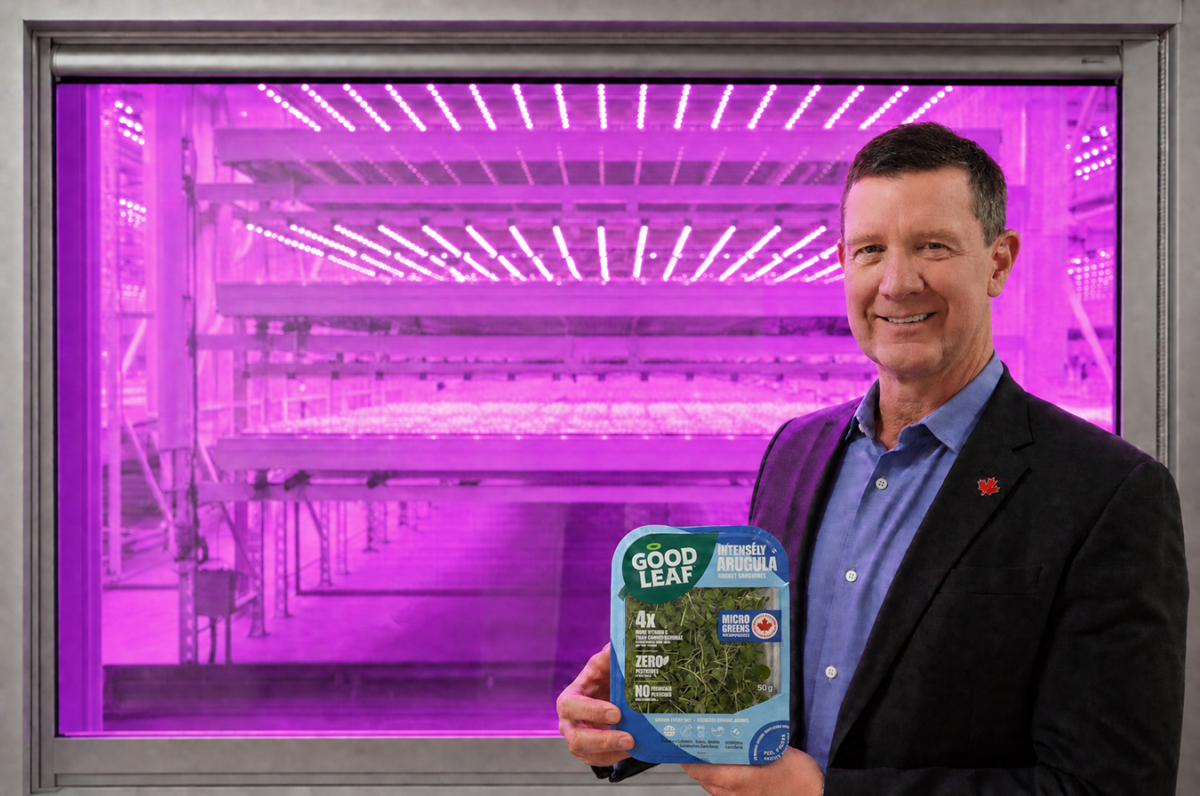
Source: GoodLeaf Farms

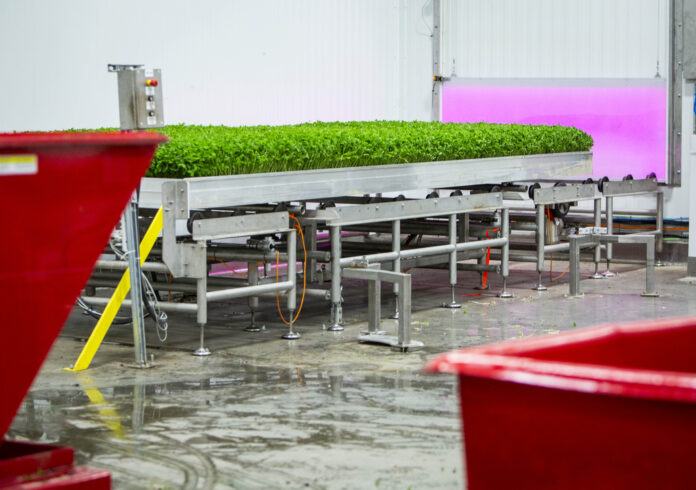
GoodLeaf Farms says all three of its vertical farming facilities in Quebec, Ontario and Alberta have reached profitability, a milestone the company says follows a more than five-fold increase in revenue over three years.

The Canadian vertical farming operator reported revenue of $34 million in 2025, up from $6.4 million in 2023. Revenue has increased another 31 per cent in 2026, according to the company, as demand for its baby greens, microgreens and salad blends has grown and its retail distribution has expanded.

Growth and profitability

GoodLeaf, founded in 2011, operates three commercial-scale farms supplying retailers and food service partners across Canada. The company said the facilities are now profitable for the first time, marking a significant milestone for its business.

“Today marks a defining moment for GoodLeaf and for the future of Canadian agriculture,” said Andy O’Brien, President & CEO of GoodLeaf Farms. “Reaching profitability across all three of our farms demonstrates that vertical farming has a place in the future of Canada’s food system. With the right technology, operations and team in place, we’re proving that vertically farmed produce can be delivered at scale—and we’re just getting started.”

The company said its profitability reflects several years of innovation, growth and investment. GoodLeaf uses proprietary technology to grow produce year-round in Canada and operates its farms at what it describes as national scale.

The company is backed by Canadian investors including McCain Foods, Farm Credit Canada and Power Sustainable LIOS. GoodLeaf said its business model is designed to support long-term growth while maintaining its standards for quality and food safety.

National operations

GoodLeaf said it has spent the past 15 years developing a business intended to supply Canadians with fresh, locally grown produce throughout the year.

The company describes itself as Canada’s largest and only national microgreens producer and a global leader in microgreens innovation. It said its microgreens contain up to 166 times more nutrients than mature counterparts and are grown without pesticides.

The company operates farms in Quebec, Ontario and Alberta and supplies products to retailers and food service operators across the country.

“Canadians are increasingly looking for food that is fresh, nutritious and grown closer to home,” said O’Brien. “This milestone strengthens our ability to continue investing in our farms, our people and the innovation that helps make fresh, locally grown greens more accessible to Canadians across the country.”

GoodLeaf was founded in Halifax and uses multi-level vertical farming and controlled indoor growing systems. The company said its farms can produce greens year-round and that its technology and intellectual property underpin its three commercial-scale operations in Canada.

The company said the profitability of all three facilities positions it to continue investing in its farms, employees and technology as it expands its operations.

More from Retail Insider:

Small business confidence hits three-year low as costs rise and cash reserves shrink: Zensurance

Ketut Subiyanto photo

Canadian small-business confidence has fallen to its lowest level in three years as rising operating costs, weaker revenues and economic uncertainty put pressure on owners, according to a new survey from Zensurance.

The fifth annual Zensurance Small Business Confidence Index found that confidence fell to 49 per cent this year, down from 58 per cent in 2025 and 70 per cent in 2024. Nearly half of respondents said they had considered closing their business permanently at some point this year, while four in five reported having three months of cash reserves or less.

Rising costs weigh on businesses

The survey of 1,000 owners, entrepreneurs and self-employed professionals found that 59 per cent said the economy had negatively affected their business since the beginning of 2026.

Seventy-one per cent said total operating expenses had increased from last year, while 58 per cent said higher gas and fuel costs had hurt their bottom line. Forty-three per cent reported lower revenues than in the first half of 2025.

Despite those pressures, nearly half of respondents said they remained confident about the months ahead.

“Business owners cannot control inflation, tariffs or shifts in the economy, but they can prepare for unexpected events that could threaten everything they’ve built. Business insurance is one of the ways owners can help protect themselves against those setbacks,” said Danish Yusuf, CEO and Founder of Zensurance. “Our research suggests many businesses are focused on surviving today’s financial pressures while overlooking risks that could create even greater challenges tomorrow.”

Insurance gap widens

The survey also found that 61 per cent of small businesses are operating without insurance coverage, nearly double the 33 per cent reported in 2024.

Customer nonpayment for completed work was identified as the most significant business risk by 29 per cent of respondents. Cyberattacks or data breaches followed at 14 per cent, while nine per cent identified theft or vandalism.

Among businesses without coverage, 29 per cent said they did not think they needed insurance, 38 per cent said they did not face the types of risks covered by insurance and 22 per cent said their business had no risks at all.

Buy Canadian impact varies

The survey found that the impact of the “Buy Canadian” movement on small businesses has been mixed.

Seventeen per cent of owners said the movement had a noticeable positive effect on revenues or customer demand, including six per cent who said it had significantly increased the number of Canadian customers.

Thirty-eight per cent said the movement had made no difference.

Amina Filkins photo
Amina Filkins photo

Regional pressures differ

Cost concerns also varied across the country.

In Atlantic Canada, 75 per cent of respondents identified gas prices as a challenge, compared with 58 per cent nationally. Ontario had the highest share of respondents identifying inflation as their top concern, at 38 per cent.

British Columbia had the highest proportion of business owners who said they had considered closing permanently at some point this year, at 57 per cent. In Alberta, the figure was 39 per cent.

“Small business owners are often focused on the challenges they can see every day – costs, revenue and the economy – but the risks they cannot predict can have an equally significant impact,” said Yusuf. “Understanding where they may be exposed can help owners make informed decisions about protecting the businesses they’ve worked so hard to build.”

More from Retail Insider:

Daily Synopsis: August 18, 2026

Welcome to the Daily Synopsis by Retail Insider. We hope you enjoy the 9 articles we published today covering key developments in Canadian retail.

Canadian Tire is accelerating the expansion of SportChek’s Destination Sport stores by leveraging vacant Hudson’s Bay spaces, creating bigger, concept-driven locations with enhanced digital and loyalty initiatives. DAVIDsTEA opened a flagship at Square One, aiming for 25 Canadian stores by year-end and driving sales growth through a balanced omnichannel strategy. Shake Shack expanded in Ontario with three new restaurants, including its first drive-thru in London, focusing on suburban and automobile-oriented markets.

Canada’s restaurant industry could lose up to 2,500 restaurants in 2026 due to rising costs and shifting consumer habits, affecting community and commercial real estate viability. Despite these challenges, Canadian consumer spending accelerated in Q2 supported by increased transactions and growth in essentials and discretionary goods. Retail Insider also published that The Home Depot’s Q2 sales reached $47.9 billion, highlighting continued demand in home improvement.

🗞️ The Day’s Retail Insider Article List

🌐 Canadian Retail News From Around the Web will be back tomorrow.

SportChek Plans More Destination Sport Stores as HBC Spaces Create Opportunities

CF Chinook Centre Calgary. Photo by Mario Toneguzzi
Future Sport Chek Destination store at CF Chinook Centre Calgary. Photo by Mario Toneguzzi

Canadian Tire Corporation is preparing to accelerate the expansion of SportChek’s Destination Sport format across Canada, with former department-store spaces emerging as a source of new real-estate opportunities as the sporting-goods banner continues to post strong sales growth.

The company said alongside its second-quarter results that it is working with landlords to roll out additional Destination Sport stores during the second half of 2026, with more new-concept locations expected in 2027. During Thursday’s earnings call, Canadian Tire executives specifically pointed to vacancies created by the collapse of Hudson’s Bay as potential opportunities for larger SportChek stores, as well as for the newer Mark’s BBB format.

The expansion comes as SportChek posts the strongest comparable-sales growth among Canadian Tire’s major retail banners. Comparable sales increased 8.0% in the second quarter, compared with a 4.2% increase at Mark’s and a 0.8% decline at Canadian Tire Retail. SportChek’s result marked its eighth consecutive quarter of comparable sales growth.

World Cup merchandise was a major contributor, accounting for roughly half of SportChek’s comparable-sales increase. Montreal Canadiens fanwear also contributed during the quarter, while athletic footwear performed well.

The World Cup accelerated momentum that was already evident at SportChek rather than creating it. The banner entered Q2 having posted seven consecutive quarters of comparable sales growth, including a 3.3% increase in the first quarter of 2026. SportChek comparable sales increased 6.2% for full-year 2025, following declines in both 2023 and 2024, illustrating a broader improvement in the banner’s performance.

Stifel analyst Martin Landry pointed to SportChek’s performance as one of the highlights of Canadian Tire’s second quarter, along with continued momentum at Mark’s and accelerating e-commerce growth. Landry said investments in new concepts and store refreshes appear to be gaining traction with consumers.

Destination Sport Moves Into Its Next Phase

Destination Sport represents a significant evolution of the conventional SportChek store, with larger assortments, sport-specific merchandising areas, expanded footwear presentations, enhanced service offerings and greater integration of digital tools throughout the shopping experience.

SportChek initially introduced the concept in Moncton and Etobicoke, followed by locations in Windsor, Ontario, and Richmond, British Columbia. Canadian Tire executives have previously said the early Destination Sport stores were materially outperforming the locations they replaced, helping support plans for a wider rollout.

The next phase appears likely to include a combination of renovations, relocations and new stores as suitable larger-format space becomes available. Canadian Tire CFO Darren Myers told analysts that vacancies resulting from Hudson’s Bay exits are creating attractive future opportunities for both Destination Sport and the Mark’s BBB concept. The company’s broader store refresh program also remains active, with 30 projects completed during the first half of 2026 and more expected before year-end.

Canadian Tire President and CEO Greg Hicks later said the company has accelerated its ambitions for modern SportChek and Mark’s stores and that its real-estate team is actively engaged on potential sites, including some former HBC leases. Canadian Tire has not identified which former Hudson’s Bay locations could ultimately house SportChek stores, and the comments do not suggest that SportChek would necessarily occupy entire former department-store boxes.

CF Chinook Shows How Former Department Stores Can Be Reused

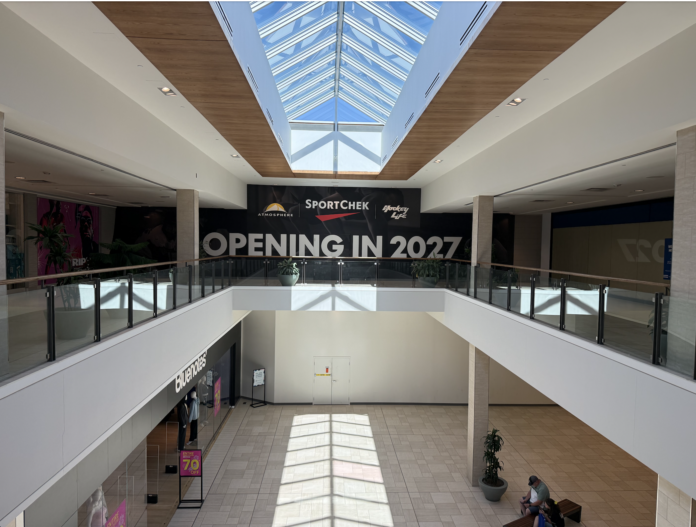
CF Chinook Centre in Calgary offers an example of how large-format SportChek expansion can fit into the redevelopment of a former department-store anchor. SportChek is preparing to consolidate its existing presence at the mall into a new Destination Sport store occupying the entire second floor of the former Nordstrom space, spanning almost 70,000 square feet. Expected to open in 2027, the Calgary store is set to feature expanded assortments, sport-focused zones, upgraded services and enhanced brand experiences.

The former Nordstrom space is meanwhile being divided for multiple retailers. Retail Insider has observed construction hoarding at CF Chinook Centre identifying Old Navy as an incoming tenant within part of the former department store’s main floor.

The configuration demonstrates how Destination Sport can become a major component of a department-store redevelopment without SportChek needing the entire former anchor. A large floor plate can accommodate the deeper assortments and additional services planned for the format, while other portions of the building can be divided for separate tenants.

That example is particularly relevant as landlords across Canada determine how to reposition former Hudson’s Bay locations. The exits of Nordstrom and Hudson’s Bay have created successive waves of large-format vacancies at Canadian shopping centres, with many of those spaces too large for most contemporary retailers to occupy on their own.

Subdivision can create substantially larger-than-average mall units for retailers that still want significant physical footprints. For SportChek, that can mean access to prominent locations and floor plates capable of supporting a more expansive store than would typically be available within an existing mall’s inline retail mix.

Canadian Tire’s comments make clear that former HBC properties are now part of that real-estate discussion. Management is directly identifying Hudson’s Bay vacancies as opportunities for Destination Sport, although it has not announced specific former Bay locations for the format.

CF Chinook provides a useful illustration of how such a redevelopment could work, even though the former anchor there was Nordstrom rather than Hudson’s Bay. A large sporting-goods store can occupy a substantial portion of a former department store while other retailers take the remaining space, allowing landlords to replace one very large tenant with several new uses.

The opportunity also comes as SportChek is performing well enough for Canadian Tire to pursue expansion from a position of strength. Management said new and modern SportChek and Mark’s stores are outpacing the company’s broader retail sales, while Triangle members are increasingly shopping across its different banners.

Credit: SportChek
Credit: SportChek

SportChek Growth Extends Beyond New Stores

Physical expansion is only one part of Canadian Tire’s plans for SportChek. The company is also trying to expose the banner to more customers by increasingly connecting the digital businesses of Canadian Tire, SportChek and Mark’s.

Consumers visiting one of the banners online can now move more easily between the others, an early step in Canadian Tire’s broader digital harmonization strategy. Hicks said the company is already seeing Canadian Tire’s much larger web volumes generate customer traffic for both SportChek and Mark’s.

E-commerce continues to grow substantially faster than bricks-and-mortar sales across the company. Comparable e-commerce sales increased 12% during the quarter, including 14% growth at the Canadian Tire banner, while the company has also been building its online-only assortment and expanding fulfillment options. Stifel noted that Canadian Tire has improved its ability to direct website traffic toward SportChek and Mark’s, while average e-commerce order values across the business are now almost double those generated through bricks-and-mortar shopping.

The existing cross-banner links are only the first stage. Canadian Tire ultimately intends to integrate search, cart and payment functions across its retail banners, allowing customers to navigate a much larger combined assortment through a more connected digital experience. Hicks specifically highlighted sporting goods as an area where the breadth of Canadian Tire’s various banners could become more apparent once those systems are integrated.

SportChek and Mark’s could be significant beneficiaries because both operate smaller networks than the Canadian Tire banner. Greater integration gives those businesses access to customer traffic generated elsewhere within the company rather than requiring every shopping journey to begin directly with SportChek.

Triangle reinforces that strategy. Management said its loyalty members continued to outperform non-members on sales, spending and trips during the second quarter, while personalized promotions and a growing network of Triangle partnerships contributed to higher loyalty sales. For SportChek, the combination of larger stores, cross-banner digital traffic and the Triangle ecosystem gives Canadian Tire several ways to increase the banner’s reach beyond simply adding locations.

A Larger Role for SportChek

The availability of former department-store space comes at an advantageous point in SportChek’s development. Destination Sport requires considerably more room than a conventional mall unit, while the restructuring of former Nordstrom and Hudson’s Bay anchors is producing the kind of larger floor plates that can accommodate the format.

The real-estate opportunity is arriving alongside Canadian Tire’s broader push to operate its banners as a more integrated retail system. SportChek’s physical expansion can increasingly be supported by Triangle, cross-banner shopping and digital infrastructure designed to make more of Canadian Tire’s combined assortment visible to customers.

With additional Destination Sport locations planned for the second half of 2026 and more new-concept stores expected in 2027, the concept is moving beyond its initial rollout. Canadian Tire is now looking for the locations to support that growth, and some of the large spaces left behind by Canada’s former department-store anchors are firmly in the mix.

More from Retail Insider:

Canada Could Lose 2,500 Restaurants in 2026 as Industry Pressures Mount

Toronto restaurant. Photo: Into the Kitchen

Earlier this year, the Agri-Food Analytics Lab forecast that Canada could lose approximately 4,000 restaurants on a net basis in 2026. The prediction attracted considerable attention because it captured the financial anxiety spreading across the industry.

At mid-year, however, the evidence suggests that the forecast was likely too pessimistic.

One private location tracker identified 579 Canadian restaurant closures during the first six months of 2026. The number is incomplete and cannot be converted into a net figure because comparable Canadian opening data are unavailable. Nevertheless, the anticipated collapse has not yet become visible on the scale originally expected.

So the good news, based on what we know today, Canada is unlikely to record 4,000 net restaurant closures this year.

That does not mean the industry is healthy. Restaurants Canada reports that 41% of operators are losing money or merely breaking even, up from 36% in March. Almost two-thirds say their profitability is lower than last year. Accommodation and food-service insolvencies reached 360 during the first half of 2026, approximately 7.5% more than during the same period last year. Second-quarter filings alone increased by almost 19%.

The crisis is real, but it is highly uneven.

Restaurants in Toronto and Vancouver face punishing rents, labour costs and insurance premiums. Yet population growth, tourism and affluent consumers continue to support demand. Montreal benefits from a strong dining culture and tourism, but operators contend with taxation, regulation and intense competition.

Alberta’s population growth and comparatively strong consumer economy offer some protection, while smaller markets across Atlantic Canada and the Prairies depend more heavily on seasonal traffic and narrow customer bases. Losing one restaurant in Toronto barely registers. Losing one in a small community can remove an important employer and gathering place.

The pressure also varies enormously by restaurant format.

Quick-service restaurants remain comparatively resilient. Their drive-thru networks, digital ordering systems, purchasing scale and aggressive value promotions give them advantages independent operators cannot easily replicate. When budgets tighten, consumers often trade down from full-service dining to fast food rather than stop eating out entirely.

Fast-casual restaurants may occupy the most uncomfortable position. They carry higher food and labour costs than traditional fast-food outlets but lack the service and sense of occasion that justify fine-dining prices. A $20 or $25 lunch is becoming harder to defend when consumers can trade down or eat at home.

Independent full-service restaurants remain the most exposed. They rely heavily on labour and on profitable additions such as alcohol, appetizers and desserts. They generally have less purchasing power, capital and technological capacity than large chains. A dining room can appear full on Saturday evening while the business loses money over the entire week.

Fine dining faces a different challenge. Affluent consumers are less sensitive to inflation, and special occasions remain important. But even wealthier customers are becoming more selective. They may visit less frequently, order fewer bottles of wine or skip dessert. Exclusivity can protect the top of the market, while the middle continues to be hollowed out.

Then there is the emerging GLP-1 effect.

The Agri-Food Analytics Lab estimates that approximately 8% of Canadian adults now use GLP-1 medications such as Ozempic, Wegovy or Mounjaro. These drugs could eventually remove about $3.4 billion annually from Canada’s food economy as users consume smaller portions, snack less and reduce their alcohol intake.

For restaurants, this will not necessarily produce empty dining rooms. It will appear through smaller bills: one appetizer instead of two, fewer drinks, unfinished entrées and fewer desserts.

That matters because the products most likely to be eliminated often generate the strongest margins. Customers may occupy a table for the same amount of time while spending considerably less. For an industry built on thin margins and table turnover, that shift is significant.

The GLP-1 effect will also differ by format. Fast-food and fast-casual operators built around frequency, portions and impulse purchases could face smaller orders. Fine-dining establishments may retain the occasion but lose profitable extras. Restaurants emphasizing protein, quality, smaller portions and experience may adapt better than those competing primarily on volume.

Why, then, has the anticipated closure wave not materialized?

Restaurant owners rarely close the moment they become unprofitable. They inject personal savings, borrow, reduce staffing, delay payments and stop paying themselves. New franchises and ambitious entrepreneurs also continue entering the market, replacing some of the establishments that disappear.

A more cautious outlook would now place the likely net decline between 1,500 and 2,500 restaurants, concentrated among independent, full-service and mid-market operators. Even that would represent a serious loss of jobs, entrepreneurship and community infrastructure.

The original forecast may prove too pessimistic, and that should be acknowledged openly. But the larger warning remains valid.

Canada may not lose 4,000 restaurants this year. What it is steadily losing is diversity, as independent dining gives way to chains, value formats and standardized experiences.

More from Retail Insider:

11 Retail Trends and Predictions That Will Shape 2026

Retail doesn’t sit still — it never has. But what’s happening in 2026 feels less like a wave and more like several waves hitting at once. Tariffs are reshuffling supply chains. Consumers are splitting into two camps with not much in the middle. And AI has stopped being a pilot program and started showing up in actual operations.

The global smart retail market is on track to hit $450.7 billion by 2033, growing at 30.3% annually from 2025. That growth isn’t distributed evenly. It’s going to retailers who made infrastructure decisions early — and it’s coming at the expense of those still waiting to see how things shake out. Here are the 11 trends worth paying close attention to right now.

1. Agentic Commerce Takes Center Stage

Something fundamental shifted in retail this year. The customer isn’t always the one doing the shopping anymore.

Agentic commerce — where AI systems browse, compare, and buy on behalf of users — is no longer a concept being discussed at conferences. It’s happening. AI platforms are projected to drive $20.9 billion in retail spending in 2026, nearly four times the 2025 figure, and that number will keep climbing as consumers hand more purchasing decisions to their AI assistants.

For retailers, this changes the rules of the game in ways that aren’t comfortable. Brand loyalty, emotional connection, packaging design — none of that matters when an AI agent is making the call. What matters is price, availability, and whether your product data is accurate and structured enough for a machine to read and trust. Retailers who haven’t thought about this yet are already at a disadvantage in the fastest-growing segment of digital commerce.

2. AI-Powered Personalization Moves Beyond Recommendations

The “you might also like” row at the bottom of a product page feels almost quaint now. AI personalization in 2026 touches pricing, homepage layout, promotional timing, loyalty offers, and post-purchase communication — adjusted for each individual user in real time, not broad demographic segments.

Retailers doing this well are seeing it in the numbers: higher conversion, bigger baskets, more repeat purchases. According to Forrester research cited by NRF, one in four shoppers will use specialty retail chatbots in 2026 — which tells you a lot about how quickly AI-mediated shopping has become normal. Retailers still targeting by segment while competitors target by individual are giving ground every day. Deploying AI solutions for retail is no longer a future investment — it is a present-day competitive requirement.

3. Supply Chain Disruption Drives Reshoring and AI-Led Forecasting

Trade policy has made supply chain planning genuinely hard. 95% of retail executives expect tariffs to push costs higher in 2026, and 77% of supply chain leaders have already moved sourcing away from China. The old playbook — long supplier relationships, predictable lead times, static safety stock — doesn’t hold up when the rules can change in a news cycle.

What’s replacing it is a combination of geographic diversification and smarter forecasting. Retailers are shortening supply chains through reshoring and nearshoring while simultaneously investing in demand models that pull in macroeconomic signals, geopolitical data, and real-time supplier performance. For anyone running a margin-sensitive, inventory-heavy business, getting forecasting right in this environment isn’t a technical exercise — it’s a survival one.

4. The Phygital Experience Becomes the Standard

Three powerful shifts are reshaping the retail landscape in 2026: the blending of physical and digital shopping experiences, a focus on value, and Gen Z’s growing spending power. The concept of “phygital” retail — seamless integration between in-store and digital touchpoints — has moved from a strategic aspiration to a baseline customer expectation.

Shoppers now expect to buy online and return in-store without friction. They expect inventory shown on the website to actually be available. They expect the experience to feel consistent whether they’re on their phone at midnight or standing in a fitting room. The retailers who’ve invested in making that seamless are pulling away. Those running separate digital and physical operations that barely communicate with each other are going to keep hearing about it from customers — and seeing it in churn.

5. Social Commerce Accelerates — Particularly TikTok Shop

TikTok Shop is forecast to generate $23.4 billion in U.S. e-commerce sales in 2026. To put that in context — that’s a bigger e-commerce operation than Target, Costco, or Best Buy. Social commerce has stopped being a supplementary channel and started being a primary one for a growing portion of retail spending, especially among younger consumers.

Discovery, consideration, and purchase are now collapsing into a single interaction on social platforms — bypassing search engines, brand websites, and traditional digital marketing funnels. Retailers that have built content-first social strategies and integrated their product catalogs with social commerce platforms are capturing demand that competitors who rely on traditional digital channels are missing entirely.

6. Gen Z and Gen Alpha Redefine Value

Younger consumers are pulling off something that seems contradictory on paper: spending less while expecting more. Gen Z and Gen Alpha are more price-conscious than previous generations were at the same life stage — but they’re also less forgiving when a brand feels inauthentic, a product feels cheap, or a shopping experience wastes their time.

Tight budgets haven’t lowered the bar. They’ve raised it. When money is limited, every purchase gets more scrutiny, not less. Retailers trying to win these shoppers on price alone are fighting a battle they won’t win against mass merchants with far greater scale. What’s actually working is a combination of honest brand positioning, products that hold up, and experiences — digital or in-store — that feel like they were designed for real people rather than focus groups.

7. Autonomous and Intelligent Inventory Management

Walk into most retailer back-offices five years ago and you’d find spreadsheets, physical counts done on a schedule, and replenishment decisions made by people working off numbers that were already a week old. That process is being replaced — not gradually, but pretty quickly.

Computer vision, RFID, and AI demand signals now track stock continuously and flag replenishment needs before a shelf actually runs empty. The gap between what the system knows and what’s actually happening in the store has gone from days to minutes. In large distribution centers, autonomous robots now handle picking, packing, and sorting at a pace and accuracy that would be impossible to match manually. For big retailers, the savings from reducing overstock, shrinkage, and emergency replenishment can reach into the hundreds of millions annually. But this isn’t only an enterprise story anymore — cloud-based platforms have brought AI inventory tools within reach for mid-size and smaller operators who couldn’t have justified the investment three years ago.

8. Sustainability From Marketing Promise to Operational Requirement

For a long time, sustainability in retail meant a webpage about commitments and some recycled packaging. That’s no longer enough — and shoppers, regulators, and investors all know it.

In 2026, vague environmental claims are a reputational liability, not a differentiator. The retailers building genuine credibility are the ones who can show their work: take-back programs with real volume behind them, packaging reductions that get measured and published, supplier emissions tracked at the source. Sourcing decisions that could hold up under scrutiny. That’s a different kind of commitment than a promise page on a website — and consumers, regulators, and institutional investors have all gotten better at telling the difference. The ones still treating sustainability as a communication exercise are increasingly exposed.

9. Loyalty Programs Rebuilt Around Data and Personalization

Ask most shoppers how many loyalty cards they have and they’ll laugh. Dozens, probably. Ask how many they actually care about — that number drops fast.

Points and tiers made sense when loyalty programs were novel. Now they’re background noise. Consumers have figured out that most loyalty currencies are worth very little, and the “personalized” offers they receive are anything but. A birthday discount on a category you never shop is not personalization — it’s a mail merge.

The retailers seeing real retention gains in 2026 have moved away from this model entirely. Instead of rewarding past purchases with generic points, they’re using behavioral data, purchase history, and life-stage signals to anticipate what a customer needs next — and showing up with something genuinely useful before the customer has to go looking. That shift, from reactive to anticipatory, is where loyalty programs start to feel less like a points game and more like a relationship. And that’s what actually keeps people coming back.

10. Retail Media Networks Become a Significant Revenue Stream

Retail media used to be Amazon’s game. Now everyone wants in.

The concept is simple: a retailer sells ad inventory within its own digital properties to brand partners — the same brands whose products sit on its shelves or in its marketplace. Walmart, Target, Kroger, and hundreds of smaller chains have either launched or significantly expanded their own networks in the past two years. The financial logic is hard to argue with — margins on media revenue are dramatically better than on product sales, and the first-party customer data powering retail media targeting is becoming a scarcer and more premium asset as third-party cookies disappear from the digital advertising ecosystem.

For retailers with significant digital traffic and loyal customer bases, a well-executed retail media network represents a fundamentally new profit center attached to existing infrastructure.

11. Economic Polarization Reshapes Competitive Positioning

PitchBook’s 2026 outlook predicts a K-shaped economy this year, deepening the divide between retail’s haves and have-nots — with companies within the AI ecosystem expected to thrive while others struggle with weakened consumer buying power. The mid-market retail segment is under particular pressure: value-oriented retailers and premium brands are both growing their shares, while the middle is contracting.

For retailers caught in the middle, 2026 demands a clear strategic choice: invest in the operational efficiency and price competitiveness required to win on value, or invest in the product quality, brand differentiation, and experience elevation required to command premium positioning. Trying to compete in both directions without clear prioritization is the strategic trap that has claimed well-known retail brands in recent years — and will claim more in the period ahead.

Final Words

There’s no single secret behind the retailers gaining ground right now. But if you look closely at what separates them from the ones struggling, a pattern emerges: they made earlier bets on data and AI, and those bets are compounding.

That doesn’t mean every winning retailer has a massive tech budget or a dedicated AI research team. It means they’ve built operations where decisions — about inventory, pricing, customer offers, supply chain — are grounded in data rather than gut feel. And the distance between those retailers and the ones still relying on last season’s numbers is getting harder to close with every passing quarter.

In 2026, this isn’t a long-term strategic issue anymore. It’s an immediate one. Retailers that haven’t started building these capabilities are already behind — not in theory, but in market share, margin, and customer retention. The window for a gradual transition has narrowed considerably.

This article was prepared by the InData Labs team — an AI and data science company helping retail businesses build data-driven operations, from demand forecasting and personalization to AI-powered inventory management.