Advertisement
Advertisement
Home Blog Page 866

Harry Rosen’s Youthful Perspective and Innovation Push In 2021: Interview with CEO Larry Rosen

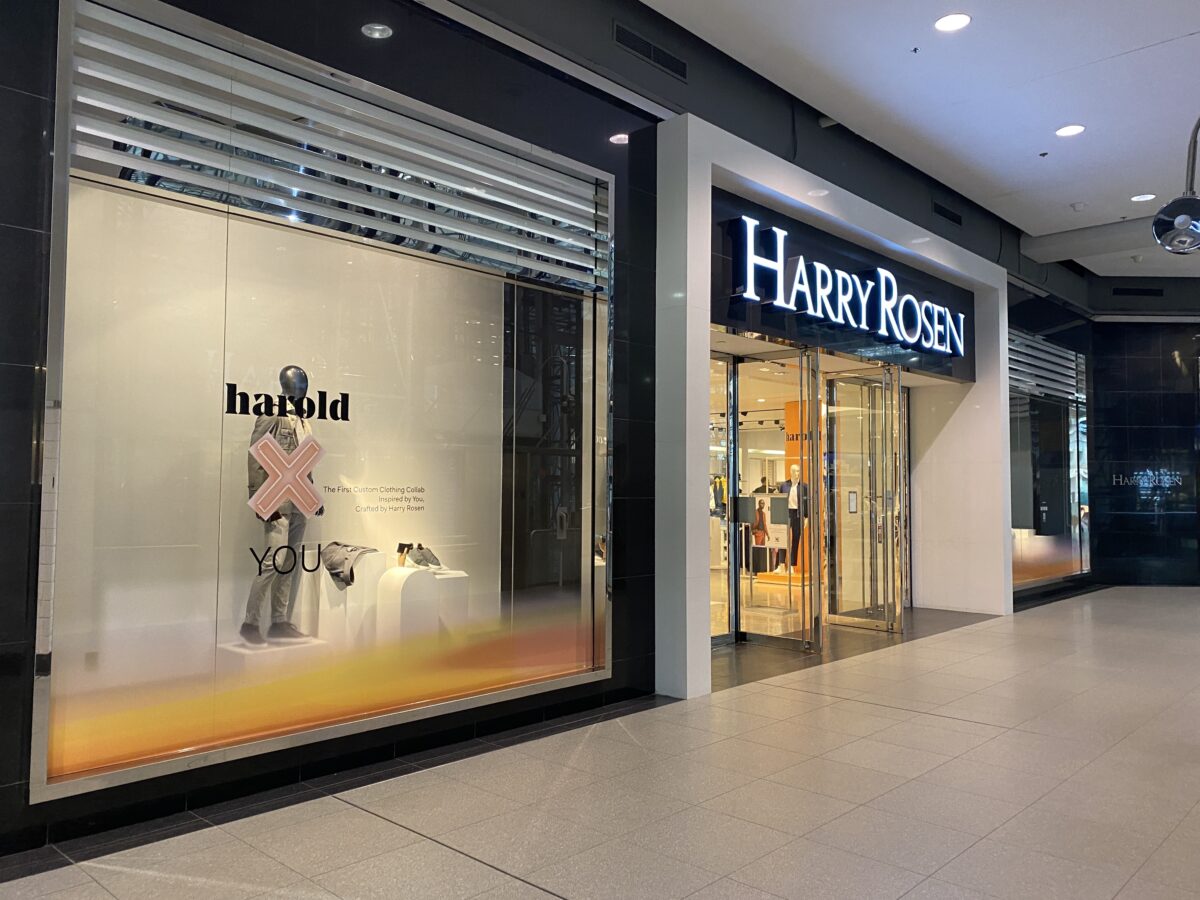
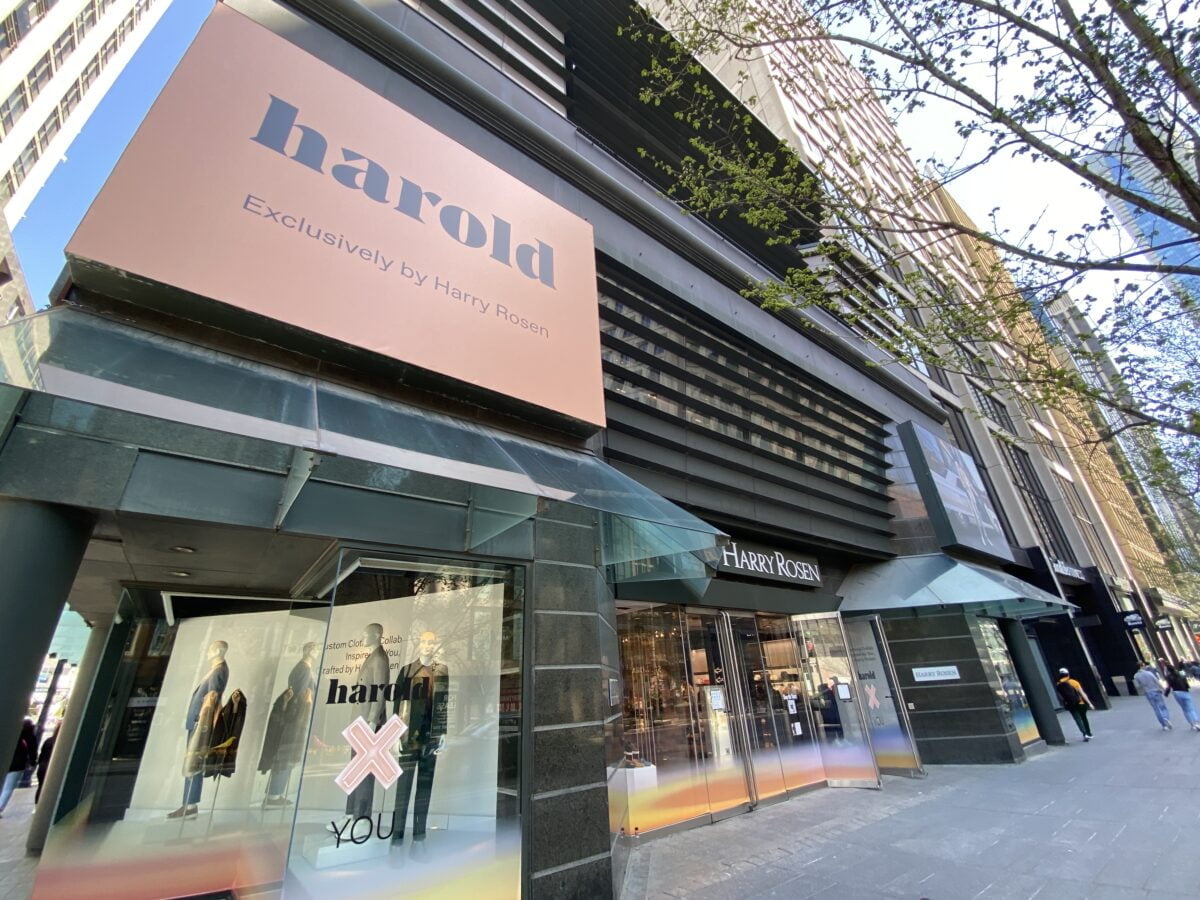
Exterior of Harry Rosen store at Square One. Photo: Harry Rosen

The year 2020 was a difficult one for the retail industry, to say the least, particularly for those operating in and around the apparel space. Interruptions to global supply chains, a more cautious consumer and forced store closures due to government-imposed lockdowns across the country are just some of the factors and challenges that retailers have needed to contend with over the course of the past ten months or so. The resulting impacts have been well-spread and widely documented, wreaking havoc on the bottom line for most. For others, the outcomes have been far more serious, leading to the permanent shuttering of their operations. There’s no doubting the severity of the destruction that COVID-19 has caused retailers in Canada and around the world. It’s changed everything that we had come to know and has cast an air of uncertainty, even fear, concerning what’s to come. Despite these challenges, however, leading Canadian menswear retailer Harry Rosen continues to move forward, shaping its own future through clever adaptation and forward-thinking ingenuity.

Part of the Culture

The company’s success, even during difficult times, shouldn’t be a surprise to anyone who’s followed the industry and retailer through the years. Since it’s founding 66 years ago, Harry Rosen has weathered many market challenges, evolving with the tastes and preferences of multiple generations of Canadian men and catering to numerous shifts in style. The retailer’s ability to pivot and respond effectively in the face of adversity is perhaps one of its greatest strengths and a central reason that helps explain the tremendous accomplishments it’s enjoyed through the years. According to the company’s CEO, Larry Rosen, it’s resilience and fortitude that began with his father, Harry, who exemplified the characteristics that quickly became part of the Harry Rosen culture, reenforcing the foundations on which the company had been built. And it’s a culture and foundation that he says is strengthened even further today through the invention and creativity of the immensely talented team that he leads.

“We’ve got a number of young executives at the company who are doing some really amazing things,” he says. “They bring a youthful perspective and a strong spirit of innovation to our operations and deserve a great deal of credit for a lot of the more important decisions that we’ve made recently as a business. Their insights and ideas have allowed us to continue to adapt and evolve with trends within the market, helping to drive us forward and increase our relevance within the menswear space.”

The young, innovative executives that he refers to include the retailer’s Chief Marketing Officer, SVP Marketing & E-Commerce, Trinh Tham, his son Ian Rosen who leads the company’s Digital & Strategy, and Shannon Stewart, Vice President, General Merchandise Manager, and Alan Whitfield, Executive Vice President, Store Operations, to name a few. Their efforts, supported by their teams, have collectively aided in the recent transformation of the Harry Rosen digital experience for customers, the optimization of its e-commerce capabilities and performance and the introduction of a new visual identity and positioning for the brand. These decisions and the work put in to execute on them have been critical in preparing Harry Rosen to effectively respond to some of the challenges brought on by the impacts of COVID-19 and to place itself well to continue servicing the evolving needs and behaviour of the consumer.

“The effect that COVID-19 has had on the industry has been very dramatic,” he asserts. “Forced store closures and reduce capacities at malls and within stores across the country have significantly impacted the performance of many businesses. Most apparel retailers, Harry Rosen included, ended the holiday period with inadequate revenue and too much fall inventory. But what this extremely negative circumstance has provided us is an opportunity to take a good look at what we’re doing, how we’re servicing our customer and making our product available, and improving in those areas to continue strengthening our brand and our relationships with our clients.”

The Pandemic’s Lasting Impacts

Although Rosen laments the fact that the experience of the Canadian consumer is currently restricted with respect to their ability to visit stores and to touch and feel product, he recognizes the gains the company has made on the e-commerce side of the business, posting record-braking online sales during the recent COVID months. The migration of sales to the online channel represents one of the most significant changes to consumer behaviour as a result of the global pandemic and resulting lockdowns. But, as Rosen sees it, the e-commerce boom is less of a change in behaviour and more reflective of an acceleration of a trend that the industry’s been experiencing for some time.

“We were fortunate enough to have already established an e-commerce presence before the impacts of COVID took hold,” he says. “We’ve been selling online for more than 12 years. But since the start of the pandemic, we’ve experience extraordinary growth in our online sales which have been supported by the digital enhancements that we made. These enhancements, along with all of the other work that we’ve recently done had been in development for some time. But we decided to ramp up our efforts in some of these areas in order to meet the needs of the evolving consumer. The impacts of COVID have clearly influenced some of these needs, accelerating a move to online that I don’t see reverting once everyone’s been vaccinated. There will be a return to stores and a recovery of the sales that happen within the physical retail environment when all of this comes to an end. But I think that the Canadian consumer, even those who may previously have been reluctant to order product online, have become very comfortable with the experience and service over the past number of months and will continue to do more of their shopping virtually.”

In addition to influencing the channels through which consumers are making their purchases, another way in which the pandemic may pose long-term impact, Rosen suggests, is the attitude of the Canadian workforce with respect to where and how they work. He believes that although there will be a return to offices, most people will be working more of their hours and days remotely going forward. In the short-term, in combination with recent lockdowns and societal restrictions, the impact a lack of corporate traffic has had on the tailored clothing business has been severe. Serving to supplement for a reduction in its sales of tailored clothing and to continue meeting the evolving demands of the Canadian consumer, however, is Harry Rosen’s excellent selection of sportswear and outerwear.

“We’re confident that our tailored business will bounce back when people start holding events again and returning to their offices,” he states. “But the impact that COVID has had on the businesswear market to date has been profound, reducing it significantly. We’re fortunate in that we have a long history of being an outstanding sportswear and outerwear retailer. It’s an area of our business that we’re very proud of and one that we continue to focus on, increasing our selection and expanding our outreach. It helps to position us nicely, allowing us to continue satisfying the apparel needs of our customers both today as well as moving forward.”

A sample of the available services provided by Harry Rosen. All can be found on harryrosen.com

Creativity and Adaptation

As already mentioned, these tweaks and subtle shifts in focus within the business have become something of a cornerstone of the Harry Rosen brand through the years, allowing it to continuously adapt with current change while making the right decisions and investments to secure longer-term success. It’s representative of a nimbleness and willingness to innovate. In fact, the creativity within the company, as Rosen rightly points out, seems to be boundless today and is well represented by the partnership that the company recently entered into with DoorDash in order to provide same-day delivery of any of the retailers top 25 highest selling products during the busy 2020 holiday period. It’s an innovation that Rosen lauds as ingenious, providing the retailer with a means by which to remove friction from the holiday gift buying experience for its last-minute shoppers while securing sales that may very well have not happened if the service hadn’t been available.

It’s clear when discussing the retailer’s future plans with Rosen the pride that he possesses for the group of people that he works with and the execution and subsequent achievements that they’re collectively responsible for. What it’s resulted in is a Harry Rosen brand that will likely come out of this very difficult period with an even stronger reputation and proposition for the customer. But, despite all of this excellent work, what he perhaps seems even more satisfied with is the continuation of the company’s involvement in meaningful causes through its most recent collaboration with Toronto Raptors President and Giants of Africa Founder Masai Ujiri.

A Matter of HUMANITY

The project, which launched in December 2020 and is centred around the theme HUMANITY, features a seven-piece athleisure capsule designed by Ujiri and Canadian designer Patrick Assaraf, with each piece adorned with the word ‘HUMANITY’ in Ujiri’s handwriting. Focused on raising funds for charity and introducing new Black designers to the Canadian market, net proceeds from the sale of the collection will go to Black Youth Helpline, an organization which provides young people with access to culturally relevant, high-quality services and resources in their local community, including crisis counselling, strategies for staying in school and support for families, schools and communities. It’s an amazing commitment and contribution by the retailer that, according to Rosen, transcends what the leading menswear retailer does as a business and is part of what he sees as part of a growing collective aimed at eradicating racism and promoting inclusivity within the industry.

“This kind of work and the efforts that are being made by incredible individuals like Masai are nothing short of critical in raising awareness of some of the issues in our societies that continue to plague us. It’s true that it’s been a tremendously difficult year for the industry. But, being involved with Masai to the degree that we’ve committed to allows us to do something that goes well beyond the retail industry. Everyone knows that there are systemic barriers to accessibility and opportunity within our communities. This collaboration simply gives us the chance to do our part, to promote inclusion within the industry that we operate. We all know that more needs to be done to start to correct some of the injustices that occur on a daily basis. We’re hoping that with the help of Masai and Patrick that we’ll be able to do our part, reminding the world that there’s more that unites us than divides us.”

CF Chinook Centre [Mall Tour Series – November 2020]

Retail Insider’s series of Mall Tours heads to Cadillac Fairview’s CF Chinook Centre just south of downtown Calgary during Black Friday in November 2020. Craig and Lee provide commentary on what’s happening at the mall in a tour showcasing what’s open and a bit of insights into the retailers.

Initially built in 1960, the mall has gone through a number of expansions and renovations. A new wing was added in the 1980s for specialty retailers, the entire complex was rebuilt in three phases in 2000, and an expansion adding 180,000 square feet opened in 2010.

CF Chinook Centre Video Tour:

CF Chinook Centre Tour Details: 

CF Chinook Centre Retailers Mentioned in Tour

Map of Chinook Centre – Lower Level

Level 1 (ground floor) retailers:

Map of Chinook Centre – Upper Level

Level 2 (second floor) retailers:

Other Malls in the Retail Insider “Mall Tour” Series:

Luxury Brand Thom Browne to Open 2nd Canadian Storefront in Vancouver

Exterior image of 745 Thurlow Street. Photo: MCMP Architects

Luxury New York City-based fashion brand Thom Browne will open its second standalone Canadian storefront this spring in downtown Vancouver. Thom Browne will replace a Versace store that opened at 745 Thurlow Street in December of 2015.

The new Thom Browne store will span about 1,875 square feet on one level in a retail space featuring an angled facade at the base of a newly-built office tower. A Brunello Cucinelli store is located next to the future Thom Browne and retailers directly across the street include Moncler, Saint Laurent, Prada, Off-White, Rolex, and Burberry.

The Vancouver Thom Browne store will feature the brand’s collections of fashions for men and women including ready-to-wear, bags, accessories, footwear, eyewear, and fragrances. The design is expected to be similar to the Thom Browne store which opened in November at Toronto’s Yorkdale Shopping Centre — that store spans about 1,430 square feet and was the first standalone Thom Browne store to open in Canada. The Yorkdale Thom Browne store showcases marble inside and out with high ceilings and a mid-century office theme to its design.

Click for interactive Google Map of 745 Thurlow Street, Vancouver

**Article updated June 30, 2021 with the following construction signage photos at 745 Thurlow Street from Retail Profile: Alberni Street ‘Luxury Zone’ in Downtown Vancouver (Summer 2021):

Exterior of Thom Browne store in Yorkdale Shopping Centre. Photo: Thom Browne

David Wedemire and Stan Vyriotes DWSV Remax Ultimate Realty Inc. negotiated the Vancouver Thom Browne lease deal on behalf of the retailer, as well as the Toronto deal. QuadReal owns 745 Thurlow Street.

The downtown Vancouver Thom Browne store will be the fifth standalone location for the brand in North America. Besides the new Yorkdale location, three other Thom Browne stores exist in the United States: one in New York City at 100 Hudson Street, one at South Coast Plaza in Costa Mesa CA, and one at the Miami Design District in Miami.

Globally, Thom Brown operates 40 retail spaces including a mix of standalone stores and concessions in department stores. The majority of Thom Browne’s locations are in Asia.

Versace at 745 Thurlow Street — construction starts soon on the Thom Browne store that will replace it. Photo: QuadReal

In Vancouver, Thom Browne is also available at retailers including Holt Renfrew, Harry Rosen (menswear), Roden Gray on Water Street, and The Room at Hudson’s Bay carries the women’s line in Vancouver (and Toronto) as well.

American fashion designer Thom Browne founded his brand in 2001 with made-to-measure menswear. His background prior to founding the clothing line included a position as a salesperson at Giorgio Armani in New York City before designing for Club Monaco. He was said to be instrumental in starting the trend of slim-fitting menswear with collections inspired by mid 20th century American style that included details such as grosgrain trim and short trousers shown with exposed ankles. His first line of ready-to-wear menswear launched in 2004 and he won several awards early on before launching womenswear for Brooks Brothers’ Black Fleece label in 2007. The first women’s Thom Browne collection debuted in 2011.

Vancouver to Lose Versace after 34 Year Run

The Versace store at 745 Thurlow Street, which opened in December 2015, will shutter this month after about five years in operation. Prior to opening the Thurlow Street store, Versace had a presence in Vancouver since 1987 via a licensed boutique at multi-brand retailer Leone at 757 W. Hastings Street which we announced last year would be closing. Versace also partnered to open a Versace Home location on Cordova Street in Vancouver in 2014 and that store has also since closed.

Hindsight 2020: Canadian Retail in the Rearview Window

Exterior of a boarded up Harry Rosen in Yorkville - Photo taken by Craig Patterson Spring 2020

Many are no doubt pleased that the year 2020 has come to an end. The past 12 months have been unlike anything in recent memory, with some saying that a ‘retail apocalypse’ was playing out. While that’s up for debate, there’s no question that thousands of store locations have closed permanently while many of the trends towards digital seen pre-COVID were accelerated due in part to sheer necessity.

Things were already challenging for retail in Canada at the beginning of 2020. Retail Insider had mapped out hundreds of individual store locations that were set to close in Canada in early 2020 due to various challenges. Some retail chains had too many store locations and rents had become an issue, which resulted in some companies looking to downsize footprints. Some retailers had been over-extended financially following the 2019 holiday shopping season and investments in merchandise and experience were being made in anticipation of a successful 2020.

Many were enthusiastic that 2020 would be a good year for retail — it was the start of a potential “roaring twenties”, though there was talk of a coronavirus illness that was spreading outside of China. The chatter grew to become concern as COVID-19 spread into North America and the disease became better known in terms of its transmission. Restaurant patronage decreased while ‘panic buying’ of some items such as toilet paper began to challenge the supply chain.

In March, a group of large retailers banded together in an effort to stop the spread of the virus by agreeing to temporarily close their stores. Many more retailers joined them prior to government mandates that businesses deemed ‘non-essential’ would have to shutter temporarily by law. Stores remained closed for weeks or months depending on where they were located in the country. The closures put a financial strain on retailers and other businesses that were no longer able to rely on foot traffic as in the past.

Le Chateau storefront at Square One Shopping Centre – Photo by Square One

To address the shutdowns, retailers launched curbside pickup, contactless payments, and other innovations that were previously not commonplace in Canada. Ecommerce became a lifeline rather than another sales channel, resulting in unprecedented growth in online shopping in Canada as well as a surging stock price for Ottawa-based ecommerce platform Shopify. The supply chain expanded rapidly and companies involved in logistics and warehousing have done well. Many of the trends seen before COVID-19 were accelerated during the pandemic with some saying that the country moved five years into the future digitally in a span of about five months.

Despite the innovations, retailers across the country were struggling and some filed for bankruptcy protection. Some retailers such as Le Chateau announced that all stores would close. With people working from home, fashion categories struggled as an example. Travel bans and closed borders eliminated international tourism, again hitting retailers and other businesses reliant on visitors.

Consumers remained cautious and masks became increasingly mandated in businesses. The less-than-comfortable shopping experience saw many more look to online channels and convenience. The work from home movement also resulted in struggles for many businesses that catered to work places.

A quiet day on Toronto's King Street East. Photo: Dustin Fuhs
A quiet day on Toronto’s King Street East – Photo by Dustin Fuhs

The relationship between landlord and tenant became, in many instances, strained over the weeks and months of closures. Some retailers, including the Hudson’s Bay Company, did not pay rent on their retail spaces during the closures, and in some instances beyond. Landlords also struggled to meet financial obligations which were made worse by retailers not paying rents due. Government assistance helped to a degree though it was deemed generally inadequate overall. Thousands of retailers, foodservice businesses, and fitness facilities closed permanently due to strained finances.

The summer of 2020 saw increased retail sales as the deemed ‘non-essential’ businesses remained open. Precautions were put into place and case counts remained low in many parts of the country. For a time, Canada was looked at as being a country that was successfully controlling the spread of COVID-19.

Case counts again began to climb in many parts of the country in the fall of 2020, resulting in temporary business shutdowns in November in Ontario, Quebec, and Manitoba — and some lockdowns have unfortunately extended into 2021 with some saying that Toronto will be locked down through February. This is hitting retailers and other businesses hard and the full extent of the damage won’t be known for a few of months at least. While stores have been closed in the Toronto area since mid-November, southern Ontario is now seeing record-breaking COVID positivity numbers exceeding 3,000 daily. It’s likely that in the future we’ll look back at this time and realize that many grave and unfortunate mistakes were made.

The Christmas season saw non-essential retail lockdowns in the Toronto area as well as in Manitoba, while foot traffic was down significantly across the country. The physical Boxing Day shopping holiday was cancelled in Ontario and Quebec, again hitting the bottom line of many retailers. The destruction to the retail industry because of the lockdowns will be known as soon as this month as bankruptcy filings begin and businesses shutter.

At the same time, ecommerce shopping exploded in Canada and continues to be very popular. Condominium lobbies have become receiving centres as purchases for goods including groceries are done online. Amazon’s market share in Canada has expanded greatly. Small businesses have quickly either developed websites or have expanded ecommerce capabilities in order to just survive.

Small businesses have also been embraced in Canada much more than in the past, with many campaigns launched to save small businesses. Websites, associations, and even web tools have been developed to help the consuming population support small businesses. Many hope that the trend will continue into the future, particularly given that large international chains were continuing to gain market share in this country prior to the pandemic.

Thousands of people in the retail industry lost their jobs in 2020. With thousands of stores closing came thousands of job losses on the sales floor and on up. A surprisingly high number of managers within retailers and at major landlords were terminated in 2020, almost none of which was reported in the mainstream press. The same goes for other support industries. Many entrepreneurs also lost their retail businesses. Government monies have supported some hit with unemployment though the end of that will be in sight this year.

Hudson's Bay, Queen Street, Toronto - Photo by Hudson's Bay
Hudson’s Bay, Queen Street, Toronto – Photo by Hudson’s Bay

Interestingly, some luxury retailers said that sales had been up in 2020. Brands that were able to interact virtually with clients, such as on mobile devices, were able to make sales even higher than in 2019. Shoppers buying high-end items such as jewellery and bags were buying “treats” according to retailers, as opposed to taking trips or having an expensive evening out.

It’s not yet clear exactly how many individual store locations closed in Canada in 2020, though we know it is extensive and will continue into this year. Malls and urban streets across Canada are seeing increasing vacancies that are concerning. The expense of opening physical businesses will keep some leasing deals from happening for the short term, though things are looking up.

Some retailers are looking at a longer-term situation — where rents are currently going down, they are looking to find the right spot and are willing to do a lease deal. That means that new stores and restaurants will be opening, which is good news — Point Zero, for example, could see 50 new stores. Some are seeing 2020 as a catalyst for innovation which will ultimately make the world a better place.

The Canadian retail industry will never be the same as things begin to recover from the current pandemic. Many retail chains will have been lost and some brands will gain or regain popularity, while new brands altogether will come on the market (likely with some sort of celebrity endorsement). It will be interesting to see what happens in 2021 and beyond as we move more rapidly into the digital age than ever.

Season 3, Bonus 1: Education Retailers Need for Post-COVID Success

A special edition podcast interview with Natalie Bibeau, President at NATA PR. Craig and Natalie discuss skills and education retailers may need to successfully emerge from a troubled 2020.

Interview Details

Learn how to combine PR with social media to reach your clients and easily boost your SEO and sales. Find out about the next training sessions here : www.natapr.com/en

The Weekly podcast by Retail Insider Canada is available on Apple Podcasts, Stitcher, TuneIn, Google Play, or through our dedicated RSS feed for Overcast and other podcast players.

Subscribe, Rate, and Review our Retail Insider Podcast!

Follow Craig:

Follow Retail Insider:

Listen & Subscribe:

Share your thoughts!

Drop us a line at Craig@Retail-Insider.com. You can also rate us in Apple Podcasts or recommend us in Overcast to help more people discover the show.

Arlene Dickinson Launches Campaign to Help Struggling Canadian Businesses

Shop local
Shop local

One of Canada’s highest profile entrepreneurs and biggest advocates for entrepreneurship, Arlene Dickinson, has launched a social media campaign to help struggling Canadian business owners as they navigate the turbulent waters caused by the COVID-19 pandemic.

In a recent Facebook post, Dickinson said: “Small businesses are in DANGER! They make up the fabric of our communities but many are at risk of closing this winter. If you want to see your favourite places survive and thrive act now! Waiting until ‘it’s all over’ may be too late. So I’ve come up with a way to make a real difference to local shops and businesses now by helping their rankings on search — please write and perform a #RavingReview! You could sing it, dance it, stand outside your favourite shop and YELL it! Get creative and be as over-the-top complimentary as you can be!”

Arlene Dickinson
Arlene Dickinson

Dickinson is urging people to keep buying from local businesses but also to go a step further and help them in this social media campaign by following three simple steps:

  1. Submit a review of a local business on Google/Yelp;
  2. Record yourself performing it; and
  3. Post it on Facebook, Twitter, and other social media sites with #RavingReview.

“Everybody’s talking about how important it is to support local and how meaningful it is for us to give them business but we can’t support every single business. Telling people to spend money is sometimes a really difficult thing for people to do right now. So we were thinking at Venture what could we do to support small business without it costing people more money and asking people to spend all the time,” said Dickinson.

“Small business relies on Google reviews and Yelp reviews because that helps them in their search ranking but also when you have a great review online you actually get more customers and you actually get them to spend more. So we knew there was a financial reward in having reviews and we knew that people liked to talk about the businesses they support with enthusiasm. So we thought why don’t we make that easier for people to do and get people to just do a rating review. Put something on Google and Yelp. Then record yourself and put it on your social media and amplify your voice. It works. Businesses are getting business as a result of it.”

Along with serving as Calgary-based Venture’s President and CEO, Dickinson is the General Partner of District Ventures Capital, a venture capital fund focused on helping market, fund and grow entrepreneurs and companies in the food and health space. The serial entrepreneur is a three-time best-selling author, podcaster, and accomplished public speaker. Dickinson is widely recognized for her role as a Dragon/Venture Capitalist for over 12 seasons on the multi-award-winning television series, Dragons’ Den. Dickinson is cause-oriented, passionate about the underdog, and brings a strong sense of social responsibility to everything she does.

Dickinson’s leadership has been recognized many times, including Canada’s Most Powerful Women Top 100 Hall of Fame, the Pinnacle Award for Entrepreneurial Excellence, as well as PROFIT and Chatelaine’s Top 100 Women Business Owners. She is a Marketing Hall of Legends inductee and a recipient of the Queen Elizabeth Diamond Jubilee Award. Dickinson has served for many years as an Honourary Captain in the Royal Canadian Navy. She also sits on several public and private boards and is actively involved in supporting community and country.

“I have a fear that big business is going to fill the void and what’s happening with small businesses being shut down and big business not being shut down. You’ve got entrepreneurs who are not able to deliver their goods and services the way that they should be able to. So I do worry alot about small business being impacted,” said Dickinson. “We’re hearing now that one in seven businesses are at risk of closing. I think that’s an underestimation actually. I worry about their ability to keep the lights on and also to keep growing.

“It’s one thing with these government programs for businesses to do just that — keep their lights on. It’s another thing for them to be able to recover to pre-pandemic revenues. How do we help them grow and get in the digital world and compete? This is where I feel there’s going to be a lot of damage done to small businesses.”

As small businesses navigate through these challenging times, Dickinson said this is an opportunity for them to make sure they are keeping track of their costs and keeping up with their ecommerce.

“Going where people are. Making sure you’re thinking about the things you’re really good at and how you deliver those goods and services in a new age where there’s curbside delivery or back door delivery for restaurants now with their delivery services. And try to understand that consumers are still shopping — we saw record numbers on Shopify as an example — we know that consumers are still consuming. How do you get in front of them where you have to find ways to leverage your existing customer bases through email marketing, through offers and through promotion on digital platforms,” said Dickinson.

“Some small businesses are caught without a digital presence and so making sure that you have one I think is really critical.

“Being an entrepreneur is never easy but I’ve said this before but I will say that everybody always loves to say entrepreneurs are the backbone of our country’s economy. Small business matters so much and employs the majority of our country. And yet when it comes to programs that actually help small businesses whether it’s tax policy, whether it’s opening policies during a pandemic and how that can work better, whether it’s programs to help digitalize better, we really don’t do a good job. And we need to do a better job of that as a country or we are going to lose the innovation that entrepreneurs and small business brings to us.”

International Retailers Continue to Enter Canadian Market Despite Pandemic [List/Analysis]

Interior of new Tudor boutique in Yorkdale Shopping Centre. Photo: Tudor
Interior of new TUDOR boutique in Yorkdale Shopping Centre. Photo: TUDOR

Every year Retail Insider tracks international retailers opening stores within the Canadian marketplace. Despite the COVID-19 pandemic, 2020 saw at least 13 international brands enter the country. While it’s the lowest number since Retail Insider began tracking international entrants in 2014, it’s still an impressive number given what has been a transformative year for the retail industry in Canada.

Some international brands had already set out plans to open in Canada prior to the pandemic, and some continued to do so despite concerns about a changing consumer profile and mass shutdowns. Some brands, looking to a future where the pandemic is over, opened stores with an eye to long-term growth despite current challenges.

In the previous years that Retail Insider published the international entrants lists, the number of first-to-market retailers has ranged from 20 to a whopping 50+ international retailers that entered the country over a 12 month period. In 2019, we reported that 30 retailers had entered the country by opening stores — about the same number as in 2018. In 2017, a record-breaking 50+ international brands entered the Canadian market by opening stores. In 2016, Retail Insider wrote a special edition piece for Retail Council of Canada’s publication Canadian Retailer, where we counted 21 international retailers that had come to Canada by opening stores that year.  In 2015 we reported that 28 retailers had opened their first freestanding locations in Canada that year and in 2014, we counted 20 international brands that entered Canada by opening stores.

In terms of geography, the breakdown of cities that saw first-to-Canada stores open in 2020 are broken down as follows:

  • Toronto/GTA: 8
  • Montreal: 2
  • Vancouver: 1
  • Winnipeg: 1
  • Regina: 1

The Toronto area is clearly the primary entry point for international brands opening stores in Canada, far surpassing any other market in 2020. The Yorkdale Shopping Centre, which for years has launched more first-to-Canada brands than anywhere else, saw two of the 13 retailers we tracked for 2020 open in the mall. Luxury brands Celine and Golden Goose were both expected to open at Yorkdale in late 2020 but were delayed due to the pandemic.

First Capital REIT-owned Yorkville Village, including the adjacent Hazelton Hotel, is home to three of the 13 international retail entrants — representing 23% of the total.

The Montreal area saw two of the 13 international entrants open there while Vancouver, Winnipeg, and Regina each saw one first-to-Canada retailer opening. The Vancouver market in particular has seen a slowdown since 2017-2018 when a relatively high number of first-to-Canada brands launched there.

The following is Retail Insider’s count of the international brands that entered Canada in 2020 by opening standalone stores. The list is chronological from earliest to most recent openings.

Exterior of ba&sh store in Yorkville
Exterior of ba&sh store in Yorkville. Photo: Craig Patterson

ba&sh: In March, French women’s fashion brand ba&sh opened its first Canadian storefront at the base of the Hazelton Hotel in Toronto’s Yorkville area. The 1,300-square-foot boutique was open for a couple of days prior to being shut down temporarily along with other ‘non-essential’ retail, opening again in the early summer until a second shutdown hit stores in November. First Capital REIT owns the Hazelton Hotel at 118 Yorkville Avenue as well as the adjacent Yorkville Village.

A second, much larger ba&sh location opened in September in Montreal’s wealthy Westmount area on Sherbrooke Street West.

Exterior of Aeropostale store

Aeropostale: New York City-based casual fashion retailer Aéropostale made its return to the Canadian marketplace in March with a new-2,200-square-foot store opening at the CF Polo Park shopping centre in Winnipeg. Plans were in place to open about 15 stores in Canada prior to the COVID-19 store shutdowns in the spring and the expansion will continue into 2021.

Aéropostale was in Canada a few years ago but left the market in the spring of 2016 after the bankruptcy of its US division. The company had 41 stores in Canada at the time. Shane Butner, Director of Marketing & Brand for Bluenotes, Aéropostale Canada and Thrifty’s, said the company chose Winnipeg as its first entrance back into the market because the Manitoba city “was a strong market for Aéropostale when they were last in Canada and a great market to learn from before we open a store in Toronto.”

Exterior of YOYOSO store. Photo: YOYOSO

YOYOSO: In March, Chinese variety retailer YOYOSO is kicking off its entry into Canada with its first storefront at the Southland Shopping Centre in Regina. A second location recently opened at Cornwall Centre in Regina, with both stores being operated by a local franchisee.

The Southland store spans about 2,000 square feet featuring the retailer’s blue-green branding that is eye-catching. The retailer focuses on eight categories in its stores, including health and beauty/cosmetics, home accessories, fashion accessories, fashion bags, digital accessories, stationery & gifts, seasonal products, and imported food. A total of 5,000 products are available and YOYOSO says that 500 new items arrive in its stores each month.

YOYOSO was founded in 2014 and now operates more than 1,000 stores in 30 countries worldwide. Markets include China, Malaysia, Philippines, Australia, New Zealand, Mexico, Bahrain, Brunei, Georgia, Kuwait, India, South Africa, Hungary, Mongolia, Brazil, the United States, Guatemala, Ecuador, France, Russia, and Iraq. South Africa is a new market for YOYOSO, according to its website.

Exterior of new Away store in Yorkdale Shopping Centre. Photo: Maxime Frechette

Away Luggage: In late summer 2020, New York City-based travel and lifestyle brand Away — known particularly for its innovative luggage — opened its first Canadian storefront at Toronto’s Yorkdale Shopping Centre. The Yorkdale Away location spans more than 2,880 square feet on one level, and features a unique design inspired by travel. That includes a double-height metallic facade with mock airplane windows above the glass storefront. The interior of the store includes light wood shelving and flooring that contrast with bright artwork such as large postcards on the walls. The direct-to-consumer brand is likely to open more stores in Canada as it also sells through its online channels and social media.

Exterior of QuanU store in Kennedy Commons in suburban Toronto. Photo: QuanU

QuanU: In July, Chinese furniture retailer QuanU opened its first Canadian store at Kennedy Commons in suburban Toronto. The company will continue to expand further into Canada in 2021 with plans for as many as 15 stores this year. QuanU has more than 5,000 stores in China and was founded in 1986.

Entrance of new Ray-Ban store in CF Toronto Eaton Centre. Photo: Craig Patterson

Ray-Ban: In September, upscale sunglasses and eyewear brand Ray-Ban opened its first standalone store in Canada at CF Toronto Eaton Centre in Toronto. The 650-square-foot boutique features the brand’s trademark red facade and interiors, as well as hundreds of styles of sunglasses. More locations are expected to follow as Ray-Ban expands its direct-to-consumer operations in Canada.

Exterior of Pilgrim store in Place Montreal Trust. Photo: Maxime Frechette

Pilgrim: In the fall, Danish jewellery brand Pilgrim opened its first permanent storefront in Canada in downtown Montreal. It follows last year’s openings of two Pilgrim pop-up stores in the Montreal area that proved successful. The new Montreal Pilgrim boutique is located at Place Montreal Trust located on Ste-Caterine Street. The boutique is 504 square feet in a prime corner retail space. More locations are expected to open in the Montreal area and possibly beyond in 2021.

Exterior of Thom Browne store in Yorkdale Shopping Centre. Photo: Thom Browne

Thom Browne: In November, New York City-based luxury fashion brand Thom Browne opened its first Canadian store at Toronto’s Yorkdale Shopping Centre. The 1,430-square-foot store features a range of men’s and women’s fashions, bags, accessories, footwear, and fragrances. The store’s interior is unique with high ceilings and a design reflective of a mid-century office with signature slat blind-covered windows, “fluorescent” LED tube lighting, polished grey and black terrazzo flooring, and banker grey Bardiglio and Carrara marble walls. Mid-century furniture by American and French designers is featured throughout. The expansion will continue in 2021 with a second standalone Canadian Thom Browne store that will open in Vancouver, details to follow.

AVON MAKE UP COUNTER. PHOTO: AVON
Avon make up counter. Photo: Avon

Avon: Beauty brand Avon officially launched a Canadian retail expansion in November with an initial plan to open three storefronts. The first of these opened in Montreal and locations in Toronto and Vancouver are also in the works. It’s part of an effort by Avon to create an immersive experience for consumers in dedicated spaces for the first time. The Montreal Avon flagship features a reception area, café and lounge space (with complimentary snacks and beverages), product displays, ordering stations, a ‘mini spa experience’, training area, and a conference room. The space encourages trial, sampling, and discovery through product knowledge training and beauty advice. Avon’s full range of skincare, colour cosmetics, fragrances, personal care items, and health and wellness items are carried along with Avon-owned brands.

The 3,200-square-foot Montreal ‘Studio 1886’ Avon location is at 5500 Trans-Canada Highway in suburban Pointe-Claire. The highly interactive retail space is contained within Avon’s Canadian headquarters. The open concept Avon space is a place where Avon’s independent sales representatives can meet with customers to showcase the latest products. It’s part of a multi-channel shift from Avon’s door-to-door sales which has been a core sales channel for the brand for over 100 years.

Interior of Yorkville Couple Diamonds store. Photo: Toronto Life

Couple Diamonds: New York City-based Lab-grown diamond brand Couple Diamonds opened its first permanent store at Toronto’s Yorkville Village shopping centre in the fall. The 900-square-foot boutique became Couple’s Canadian flagship store as part of a retail expansion for the brand. Couple specializes in lab-grown diamonds which it claims are identical to mined diamonds down to the atom. The raw diamonds are cut and polished and graded by the International Gemological Institute before undergoing a 12-step quality control process to ensure they meet an exceptionally high standard.

Exterior of the new Tudor boutique at Yorkdale Shopping Centre. Photo: Tudor

Tudor: In the fall, luxury watch brand Tudor opened its first standalone store in North America at Toronto’s Yorkdale Shopping Centre. The 450-square-foot boutique is connected to and operated by Raffi Jewellers. The boutique was only open briefly before being shut down temporarily in November — the store has yet to reopen as Ontario’s lockdowns extend until at least January 23rd.

The Toronto store features red, black, and grey colour hues and houses a range of price Tudor time pieces. We’ll update this with a full article when the store has reopened hopefully later this month.

The history of Whoo storefront. Photo: The history of Whoo

The history of Whoo: In December, South Korea-based LG Household & Health Care chose Canada to open the company’s first multi-brand retail store under ‘The history of Whoo’ banner. The retail space at CF Richmond Centre near Vancouver is part of a growth plan that will see LG’s beauty brands expand further into the Canadian market. The history of Whoo’s retail space at CF Richmond Centre spans 475 square feet. Included are Gani marble floors, mirrored ceilings, gold-plated fixtures, and a one of a kind custom chandelier. The store acts as a way to share the story of the brands carried within The history of Whoo, including The history of Whoo, Su:m37 and O HUI. More Canadian locations are expected according to the company.

Exterior of Polestar in Toronto. Photo: Craig Patterson

Polestar: In late December, Volvo-owned electric car brand Polestar opened its first location in North America at Toronto’s Yorkville Village shopping centre at 55 Avenue Road in Yorkville. The bi-level space includes a street-facing facade on busy Avenue Road as well as an entrance from within the mall. One-on-one appointments are permitted though the space is otherwise shut due to provincial lockdowns until at least January 23rd. Grand Touring Auto runs the Toronto space, as well as a new Montreal Polestar location (at 1255 boulevard René Levesque West) set to open this year. A Vancouver location under a different operator (at 827 Seymour Street) is also set to open and the company will open service centres in Victoria, BC and Waterloo, ON.

Retail Insider will continue to track international retailers entering Canada in 2021. This year is expected to see more than 2020, and we have already reported on several of them. That includes French luxury brand Celine and Italian luxury brand Golden Goose that will both open at Toronto’s Yorkdale Shopping Centre, The Webster which will open in Toronto’s Yorkville area in the spring, and Italian luxury brand Isaia which will open on Yorkville Avenue in April. We’re aware of several others that we’ll report on in due course when permitted.

Canadian Ecommerce Company EMERGE Sees Significant Growth Through Website Acquisitions

The EMERGE team celebrating a successful 2020 despite the odds. Photo: EMERGE Instagram

EMERGE, a disciplined, diversified, rapidly-growing acquirer and operator of e-commerce assets, has seen tremendous growth as it rides the wave of the growing trend in online shopping.

In its third quarter, for the three months ending September 30, the Toronto-based company saw gross merchandise sales growth of 251 percent from a year ago to $7.7 million. Revenue jumped by 196 percent to $2.2 million. Also Adjusted EBITDA was positive $62,196 compared to negative $173,681 in Q3 2019.

“EMERGE’s third quarter results demonstrate the impact of the acceleration of consumer spending online,” said Ghassan Halazon, Founder and CEO of EMERGE. “Our diversified e-commerce portfolio grew rapidly in the quarter as we saw strong demand in a number of key verticals, including groceries, essentials, and golf products, which offset COVID affected categories. This performance is a testament to the agility of our business model, the resilience of our merchant partner network, as well as the great trust instilled in us by our loyal customer base.

Ghassan Halazon
Ghassan Halazon

“The quarter continues the trend this year of strong revenue growth and positive Adjusted EBITDA, demonstrating our consistent commitment to disciplined operations and prudent capital allocation. It’s truly a momentous time to be at the forefront of Canadian e-commerce, a sector that has experienced more growth in recent quarters than it has over the prior decade. EMERGE is better positioned than ever to continue to acquire, integrate, and accelerate quality e-commerce brands.”

EMERGE Connects 2 Million Members With 12,000 Merchant Partners Across North America

Halazon said the company, which was founded in 2016, connects more than two million members with 12,000 merchant partners across North America. Its portfolio includes UnderPar.com, JustGolfStuff.ca, WagJag.com, and BeRightBack.ca.

“We’re a disciplined acquirer and operator of digital or niche e-commerce brands. Our network of e-commerce sites provide offers on everything from golf to groceries, essentials, nearby staycations and experiences,” said Halazon.

“Right now we’re focused on pure play e-commerce sites.”

EMERGE was named one of the fastest growing companies in Canada by the Startup 50, and the Globe and Mail’s 2020 Canada’s Top Growing Companies.

Halazon said he and other veteran e-commerce and technology entrepreneurs and operators have been in this space for the past decade or so.

“We realized that the small to mid market e-commerce is challenged from an exit opportunities perspective. That is to say that the small bootstrap niche e-commerce companies were not getting a lot of attention from the Amazons of the world. So Amazon is more interested in acquiring the Whole Foods of the world. Private equity folks are interested in acquiring sorts of relatively bigger e-commerce companies that are either public or that have sort of $100 million plus range in sales,” said Halazon.

“That carved us an interesting opportunity to consolidate this small to mid market. That’s what we do. We actually go out, we acquire these often bootstrap businesses in e-commerce and when we acquire them we consolidate them. So we integrate them under a universal platform and playbook where they share everything from technology to resources to data. So the idea is power in the group. Power in the scale.

“In essence what we do is when we acquire a business we’re basically helping them centralize a lot of things that are non-core to the niche itself.”

Halazon offered an example of what EMERGE can do. He said the company acquired WagJag for about $500,000 from newspaper giant Torstar which was looking to restructure. And EMERGE has since driven $30 million in gross sales in three years and made its money back in six months in what Halazon describes as a “very lucrative acquisition.”

The e-commerce trend has been a growing one in recent years but it has been accelerating for the past few months during the COVID-19 pandemic.

“Obviously we’ve seen a monumental rise in e-commerce here where the last couple of quarters we’ve experienced more growth in the sector than e-commerce has seen in the prior decade,” explained Halazon. “So from our perspective, sitting at the forefront of Canadian e-commerce, there’s never been a better time for us to prove out this thesis and we believe we are well-positioned to go out and consolidate this small to mid market e-commerce space.

“There’s thousands of fast-growing, profitable e-commerce companies that have been created and are continuing to thrive in this pandemic world. As an acquirer and operator, from our perspective, there’s no shortage of pipeline to go after. The types of businesses we look at often exhibit between $1-$5 million in profit and between $5-$50 million in revenue. When we go speak to these groups, we offer them a win-win scenario where they get to continue on with us under the EMERGE umbrella, they keep their brand, they keep their team and offices, but they get the fair portion of the consideration in cash and the remainder they get through EMERGE shares which are faring quite well and some earn out over a multi-year period.”

Retail Insider Top 20 Most-Read Articles of 2020

In 2020, the Canadian retail industry changed significantly amid ‘non-essential’ store closures and shifting consumer sentiment. Retail is increasingly moving online while some retail brands struggle. We will be identifying the lasting impacts from 2020 for years to come.

Over the course of the year, some articles published in Retail Insider saw many thousands of readers, and we’ve listed the top ones below.

20. BRIEF: J. Crew Shuts all But 1 Store in Canada, Lululemon Expanding Flagship

Other News: Nordstrom shuts main floor designer boutiques in Toronto, Saks Food Hall shut until 2021, Balenciaga opens in Montreal, Zadel Jewellery Studio opens Granville Island workshop.

19. Nordstrom Launches Canadian E-Commerce Site After Shutting all Stores Amid Coronavirus [Analysis]

Nordstrom at CF Toronto Eaton Centre - Photo by Dri-Design
Nordstrom at CF Toronto Eaton Centre – Photo by Dri-Design

After opening its first store in Canada more than five years ago, the retailer has unveiled an ecommerce site featuring luxury brands to boost revenue in this country. Given the vast assortment, competitors could take a major hit.

18. Reitmans Files for and Obtains Bankruptcy Protection

Reitmans' New CF Carrefour Laval boutique - Photo by Reitmans
Reitmans’ New CF Carrefour Laval boutique – Photo by Reitmans

The iconic Canadian retailer says that this was “the hardest decision we have had to make as an organization in our almost one hundred years of history”.

17. Retailers Begin Opening Stores in Canada as COVID-19 Restrictions Are Lifted

Store owner turning open sign broad through the door glass and ready to service.

A careful, phased approach to the reopening of the economy has begun in several provinces after many businesses were effectively shut down in mid-March to prevent the spread of the potentially deadly virus.

16. President of Arc’teryx Urges Apparel Industry: Don’t Save Sinking Supply Chain by Pushing Garment Workers Overboard

Arc'teryx store in Toronto's Yorkdale Shopping Centre. Photo: Arc'teryx
Arc’teryx store in Toronto’s Yorkdale Shopping Centre. Photo: Arc’teryx

Jon Hoerauf, President of Arc’teryx, says that 2020 is a reckoning for the global apparel sector.

15. 1st Prototype Urban ‘Real Canadian Superstore’ Opens in Downtown Calgary

Photo by Real Canadian Superstore

It is unlike any other Superstore location in Canada. The 80,000-square-foot store is also joined by other Loblaw nameplates in the same RioCan complex which is part of the city’s East Village revival.

14. Second Wave of Retail Bankruptcies Expected in Canada Amid COVID-19 Pandemic: Expert

An empty CF Toronto Eaton Centre - Photo by Toronto Tourism
An empty CF Toronto Eaton Centre – Photo by Toronto Tourism

It’s an inevitable consequence of the devastating economic impact of the coronavirus pandemic, though the future could be promising when retail adapts to a new world.

13. Invisible Face Mask ‘Mingle Mask’ Targets Canadian Retailers and Businesses

Model wearing a Mingle Mask - Photo by Mingle Mask
Model wearing a Mingle Mask – Photo by Mingle Mask

The made-in-Canada invisible, ergonomic mask provides all the benefits of mask protection while allowing one’s face to be completely visible.

12. The End of ‘Hero Pay’ for Grocery Workers in Canada an Operational Necessity: Expert

Smiling shopkeeper serving a customer while wearing a mask, coronavirus pandemic concept

Sylvain Charlebois says the temporary increased costs made operating grocery stores almost unprofitable.

11. Landlords to Face Mass Vacancies for Taking Hard Line on Retailer Rent Relief: Experts

Exterior of Yorkdale Shopping Centre - Photo by Yorkdale Shopping Centre
Exterior of Yorkdale Shopping Centre – Photo by Yorkdale Shopping Centre

Industry sources blast landlords and suggest solutions amid the COVID-19 epidemic which could result in “tumbleweeds blowing through malls” if businesses go under.

10. Hudson’s Bay Exiting Downtown Edmonton After 207 Years

Hudson’s Bay at West Edmonton Mall

The loss of the last department store in downtown Edmonton is a blow to the city’s core which saw Holt Renfrew exit earlier this year, as well as Woodward’s and Eaton’s in years past.

9. Retail in Canada to Change Forever Amid Restructuring, Bankruptcies and Permanent Store Closings

Army & Navy department store on Whyte Ave, Edmonton - Photo by Google street view
Army & Navy department store on Whyte Ave, Edmonton – Photo by Google street view

Retailers across the country are evaluating operations to determine if they can remain operational. Some retailers such as Army & Navy have already announced that they will close forever.

8. Reitmans Permanently Shutting all 131 Addition Elle and Thyme Maternity Storefronts Amid Restructuring

Exterior of Addition Elle Store - Photo by Addition Elle
Exterior of Addition Elle Store – Photo by Addition Elle

After obtaining bankruptcy protection last month, the company will shut two of its retail banners while at the same time reducing its workforce by about 1,400 employees.

7. Cadillac Fairview Prepares to Reopen Canadian Shopping Centres with Plans and Protocols [Interview]

CF Polo Park - Photo by Cadillac Fairview
CF Polo Park – Photo by Cadillac Fairview

Executive Vice President of Operations Sal Iacono discusses what will be done to enhance safety as mall stores across the country reopen in the coming weeks.

6. Canadian Government Announces 75% Rent Relief for Small Retailers and Businesses

Crescent Street in Montreal - Photo by Betakit
Crescent Street in Montreal – Photo by Betakit

Prime Minister Justin Trudeau announced Friday that the federal government has reached an agreement to implement the Canada Emergency Commercial Rent Assistance (CECRA) which could help save the economy.

5. Victoria’s Secret Quietly Closing Canadian Stores

Victoria's Secret
Victoria’s Secret

One major landlord says that the US-based lingerie and underwear retailer has seen plummeting sales in Canada over the past two years.

4. Mass Store Closures in Canada Escalate Significantly Amid COVID-19 Pandemic [Update]

Hudson's Bay, Queen Street, Toronto - Photo by Hudson's Bay
Hudson’s Bay, Queen Street, Toronto – Photo by Hudson’s Bay

A sudden collapse of retail in Canada has some shaming retailers that remain open while malls operate at reduced hours.

3. Hundreds of Stores to Close in Canada in Early 2020 [Analysis]

Ten Thousand Villages

Retail Insider counts well over 700 retail locations that will shutter early on this year amid a shift in consumer preferences and an otherwise challenging time for the industry. At the same time, some analysts expressed optimism as new concepts open and expand in Canada.

2. BRIEF: Hudson’s Bay Receives Eviction Notices From Malls, Banana Republic Shutters on Bloor

Other News: Diesel opens only Canadian store at Yorkdale, Frank And Oak looks to international expansion after acquisition, Oxford Properties supports food banks, interview with Muji President, King & Bay innovates to fight the spread of COVID-19.

1. Wave of Store Closures to Hit Canada in the Summer of 2020

Frank And Oak storefront - Photo by Retail Insider
Frank And Oak storefront – Photo by Retail Insider

The COVID-19 pandemic is partly to blame for hundreds of permanent retail store closures that will happen over the next couple of months.


Keep reading Retail Insider, as we’ll be reporting on Canadian retail industry stories in 2021. Let’s all have a safe and prosperous new year!

Retail Profile: Guildford Town Centre in Surrey During COVID-19

Guildford Town Centre. Photo: Lee Rivett

Retail Insider continues its Photo Tour series of Canadian malls to provide a window into shopping centres which may be less frequented lately due to the COVID-19 pandemic. This edition takes us to Guildford Town Centre in Surrey, near Vancouver, which is the third largest mall in the province after Metropolis at Metrotown (see our Metropolis and Metrotown photo tour) in Burnaby and Park Royal Shopping Centre (see our video tour of Park Royal) in West Vancouver.

Google Map of Guildford Town Centre Location

History of Guildford Town Centre

Guildford Town Centre was built in 1966 and has undergone several renovations. Under the ownership/management of Ivanhoe Cambridge, the latest modernization renovation began in 2010 and in 2014 across three phases. The first phase focused on a new Walmart Supercentre and a two story parkade and completed in 2011. The second and third phases focused on modernizing the existing interiors as well as adding 200,000 square feet to the south end, including a 1,034-seat food court and 75 new stores.

Upper Level Mall Entrance from new, southern two-level parkade – Photo by Lee Rivett
Upper Level Mall Map of Guildford Town Centre.

The Guildford Shopping Centre has two retail shopping levels. To separate the shopping centre into manageable pieces, we’ll divide the centre into five zones for each floor/level. Based on the map above, the quadrants break down to the ‘right addition’, ‘lower centre’, ‘upper centre’, ‘upper left’ and ‘lower left’.

Upper Level ‘Right’ Zone tour at Guildford

Guildford Centre Mall Map – Upper Level with Right Zone Circled.

To start off the tour, we arrived and parked in the north parking lot and entered through entrance number nine on the lower level (ground level). To access the upper level, there is a very small entrance hall that hosts the BC Liquor Store, a Lyft ride share kiosk area and the anchor tenant, Life Instyle Furniture on the bottom floor of the large building at the extreme north end of the shopping centre.

Ground Floor anchor on north side of Guildford Mall

There are very few retailers on the ground level in this area as the majority of it is located on the upper level right accessible by escalators right inside of the doors. Urban Behavior occupies the floor above the furniture store and is located at the top of the escalators.

Urban Behavior as the Upper Level Anchor Tenant – Photo by Lee Rivett

What was unique about the second floor extension was that the retail was within an overpass above 104th Avenue. Once shoppers reach the Urban Behavior entrance, it is not readily noticeable that one is walking above a busy street below.

Overpass over 104th Avenue containing majority of retailers in this area

Stretching from Urban Behavior anchor to the Hudson’s Bay Store, notable retailers in this overpass zone include:

Atrium at the Guildford Shopping Centre

Guildford Mall Map – Centre Atrium Location

Once visitors trek over the overpass, the main shopping centre generally follows the shape of a square; however, there are some additional twists that keep this square ‘thinking outside of the box’. The centre atrium at the core of the shopping centre is a wide open space with living, green walls and provides a perfect space for events in a non-COVID era.

Guildford Atrium (South View) – Photo by Lee Rivett
Living Wall in Guildford Centre Atrium – Photo by Lee Rivett

Upper Level ‘Lower Centre’ Zone Tour at Guildford

Guildford Mall Map – Lower Centre Zone on Upper Level

Continuing the tour, the ‘lower-center’ zone has the historic and major anchor of Hudson’s Bay, but other major tenants in the area include UNIQLO, Old Navy, Atmosphere and Lululemon.

See related articles for these major tenants:

Other retailers amongst the larger retailers include:

Hudson Bay at Guildford Town Centre – Photo by Lee Rivett

We continued onward towards the lower left zone, passing by the side of UNIQLO with a view of the skylights and red ribbon to soften the aesthetics.

Corridor Outside of Uniqlo Guildford – Photo by Lee Rivett

Upper Level ‘Lower Left’ Zone Tour at Guildford

Guildford Mall Map – Lower Left Zone on Upper Level

Continuing the tour to the ‘lower-left’ zone, this area is accessible by the two-level parkade through entrance 10. The major anchor retailers in this area are on either side of entrance 10, being Thrifty’s by Bluenotes and Aritzia. Select other retailers amongst the larger retailers include:

Upper Level ‘Upper Left’ Zone Tour at Guildford

Guildford Mall Map – Upper Left Zone on Upper Level

Continuing the tour to the ‘upper-left’ zone, this area is accessible by the two-level parkade through entrance 11. The major anchor retailer in this area just inside of entrance 11 is H&M.

Related H&M articles include “H&M continues Canadian store expansion as it looks to sustainability” from October 2019.

Other select retailers amongst the larger retailers include:

H&M at Guildford – Photo by Lee Rivett

The corridor along the upper level between the left and center zones is quite open and expansive.

Upper Level Corridor at Guildford – Photo by Lee Rivett

Upper Level ‘Upper Centre’ Zone Tour at Guildford

Guildford Mall Map – Upper Center Zone on Upper Level

The last area of the mall the ‘upper-center’ zone, this area is accessible by the two-level parkade through entrance 6. The major anchor retailers in this area are London Drugs as well as Muji Canada. Related articles for the major anchor retailers for this area include:

Other select retailers amongst the larger anchor retailers included:

Muji at Guildford – Photo by Lee Rivett
London Drugs at Guildford – Photo by Lee Rivett

Before we leave the upper level, the high ceilings provide a theatrical and airy feel to the shopping centre.

Upper level Guildford (facing Ann Louise and Change) – Photo by Lee Rivett

Lower Level at the Guildford Shopping Centre

Heading down the escalators in front of Birks, we found ourselves on the lower level at the Artium. We could see grand views of the Hudson’s Bay and the architecture truely shone in the winter afternoon sunlight.

Atrium at Guildford from Lower Level – Photo by Lee Rivett

To organize the photo tour for the lower level, we separated the floor into three zones (upper zone, middle zone and lower zone) which we will run through for major tenants as well as the select retailers amongst them.

Lower Level “Upper” Zone Tour at Guildford

Guildford Mall Map – Upper Zone on Lower Level

Continuing the tour to the ‘upper-left’ zone, this area is accessible by ground level through entrance 5. Walmart Canada is the major tenant which isn’t directly accessible through the inside of the mall, but the lower floor of H&M is the other major tenant. Related articles for the major tenant (besides H&M which we previously covered) include:

Select other retailers amongst the larger retailers include:

H&M Man at Guildford from Lower Level – Photo by Lee Rivett
Walmart Canada (seen from upper level parkade) at Guildford – Photo by Lee Rivett

Lower Level “Middle” Zone Tour at Guildford

Guildford Mall Map – Middle Zone on Lower Level

Continuing the tour to the ‘middle’ zone, this area is to the left of the main atrium and above the main food court. Muji Canada and Sport Chek are major tenants. Select other retailers amongst the larger retailers include:

SportChek at Guildford from Lower Level – Photo by Lee Rivett
Muji at Guildford from Lower Level – Photo by Lee Rivett

Lower Level “Lower” Food Court Zone Tour at Guildford

The final area in our Guildford Town Centre tour is the food court area in the lower zone on the lower level.

Guildford Mall Map – lower food court zone on Lower Level

We had a very interesting photo walk around Guildford Town Centre, and we hope you enjoyed coming along with us. Don’t forget to check out the Yorkville photo tour in Toronto that came out earlier this month.