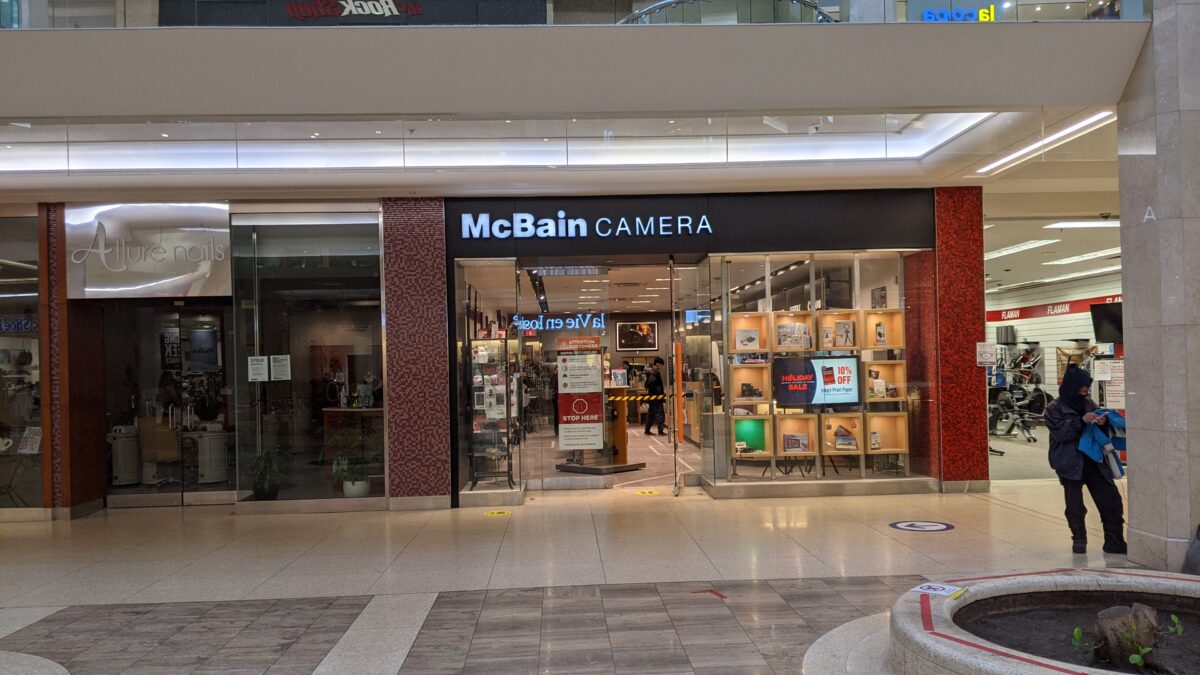
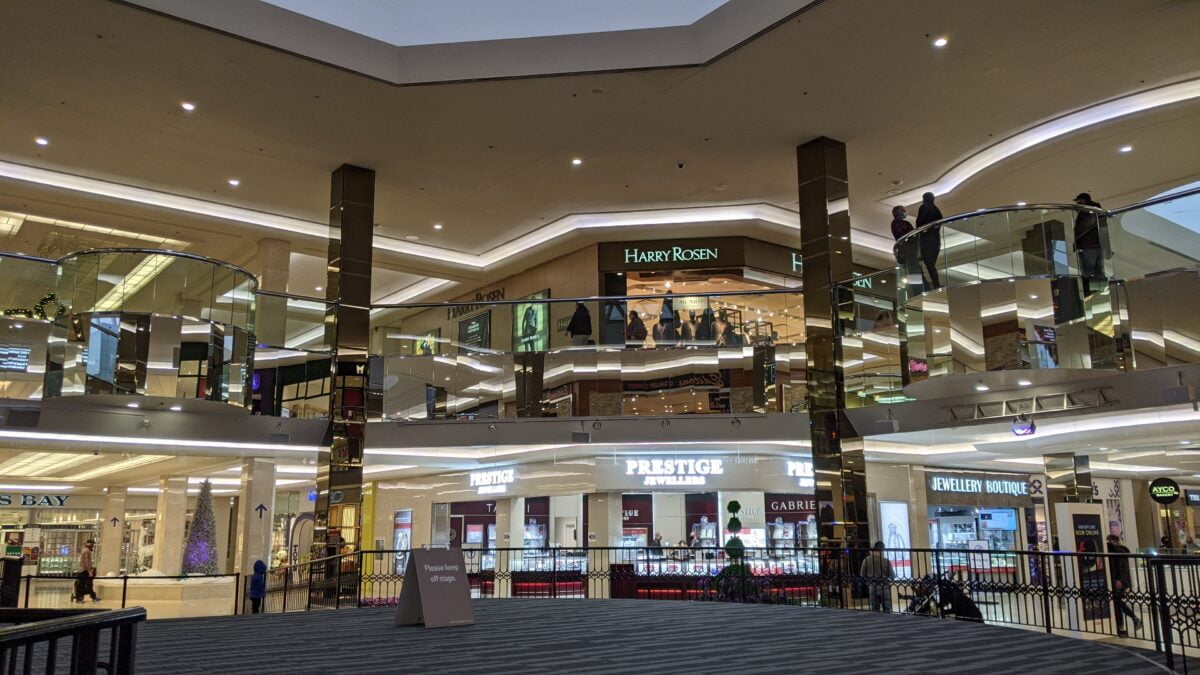
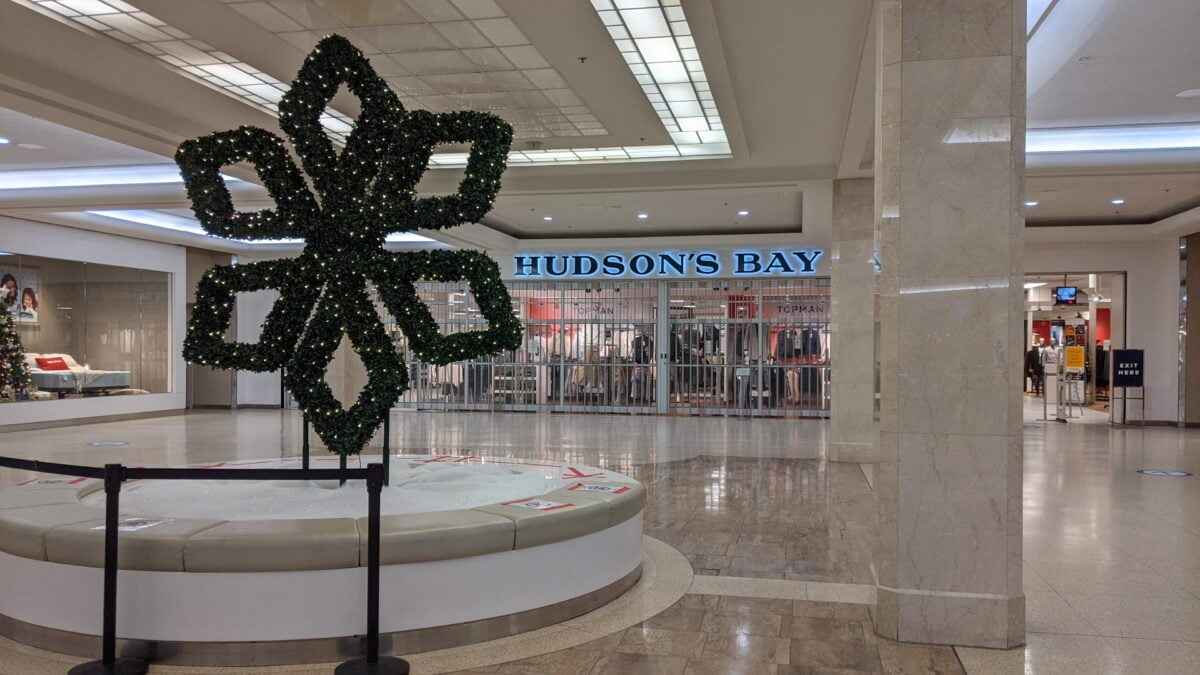
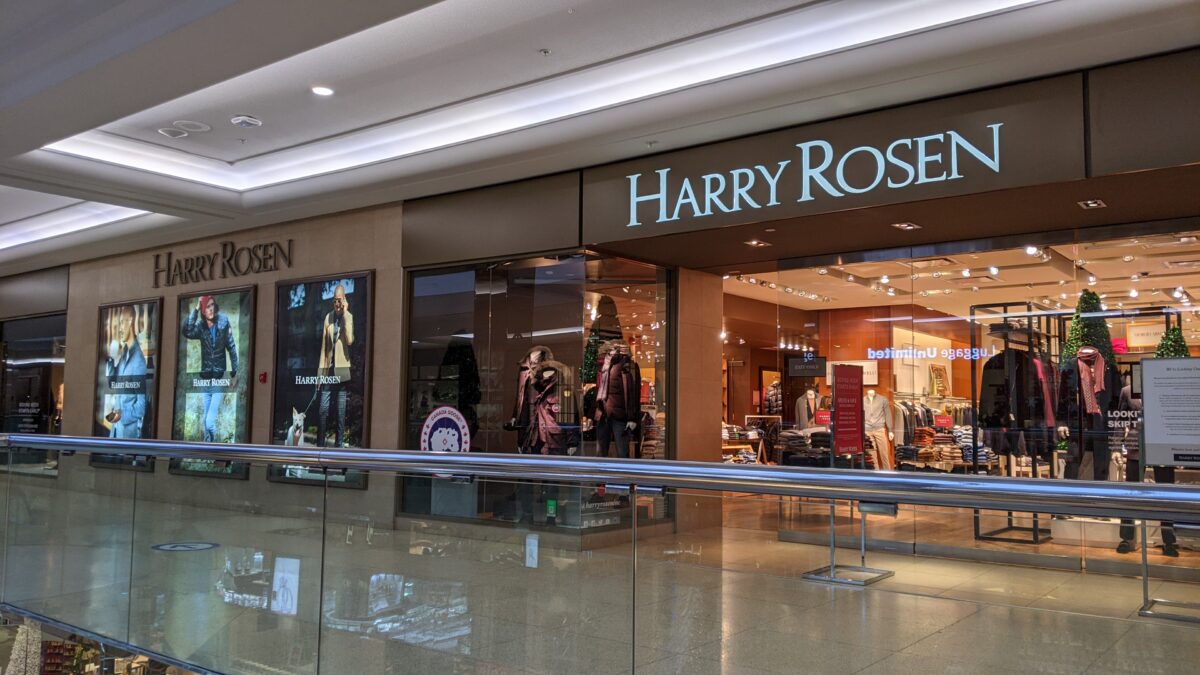
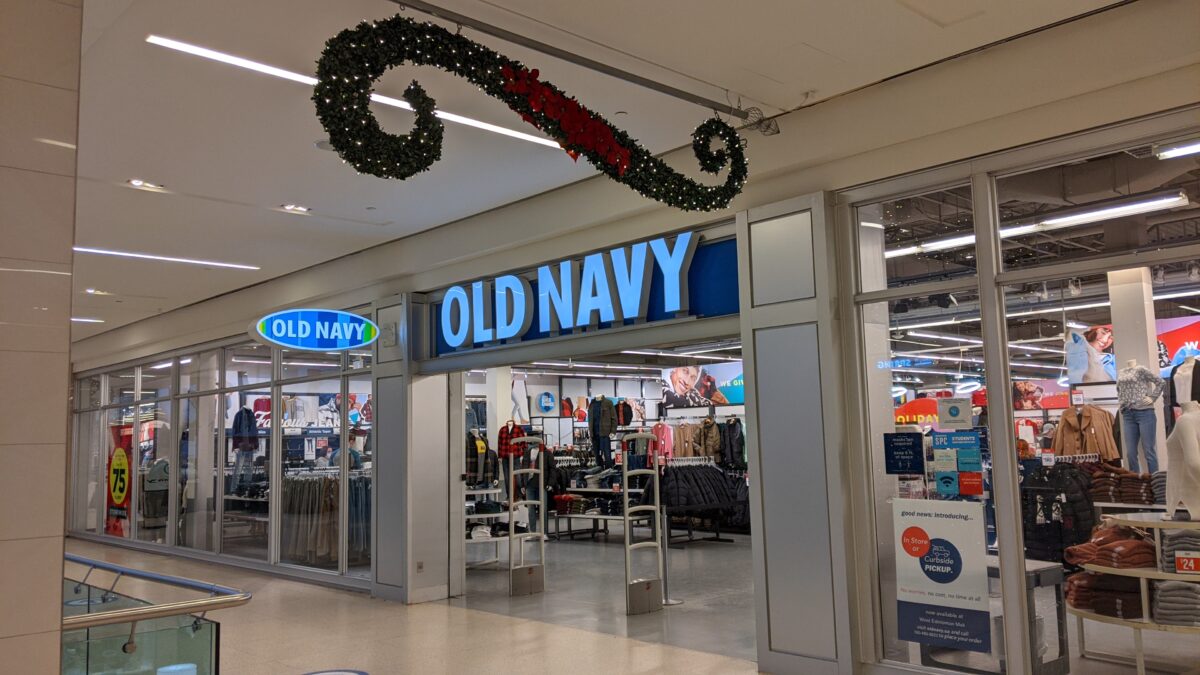
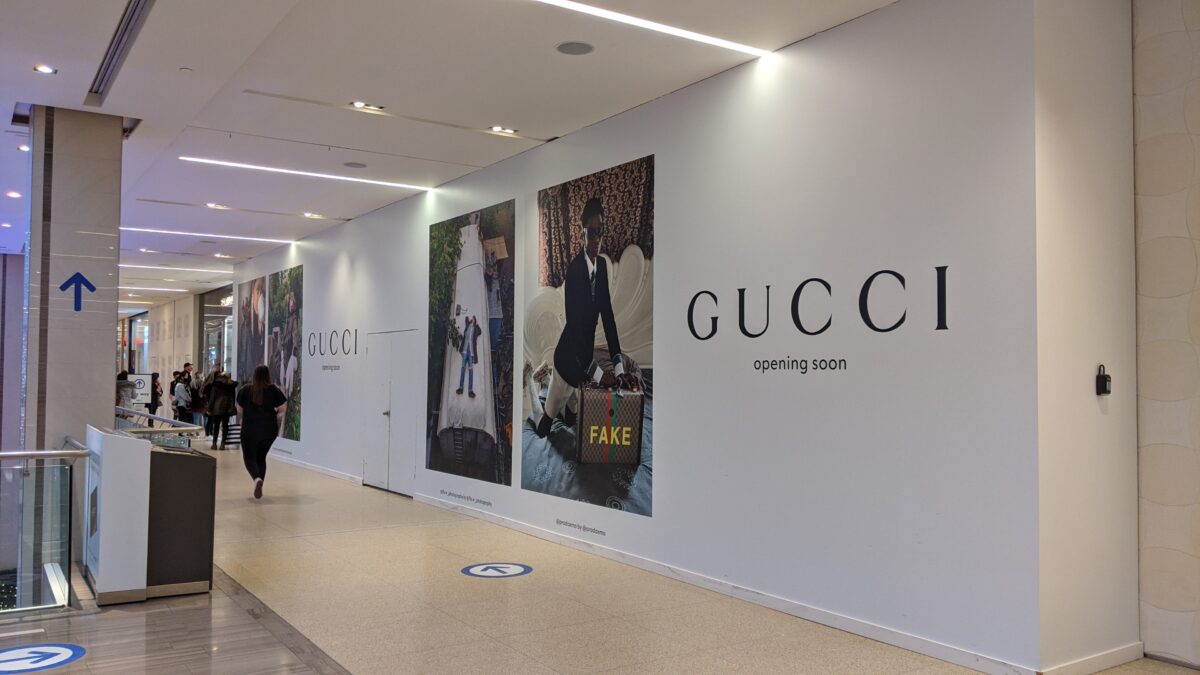
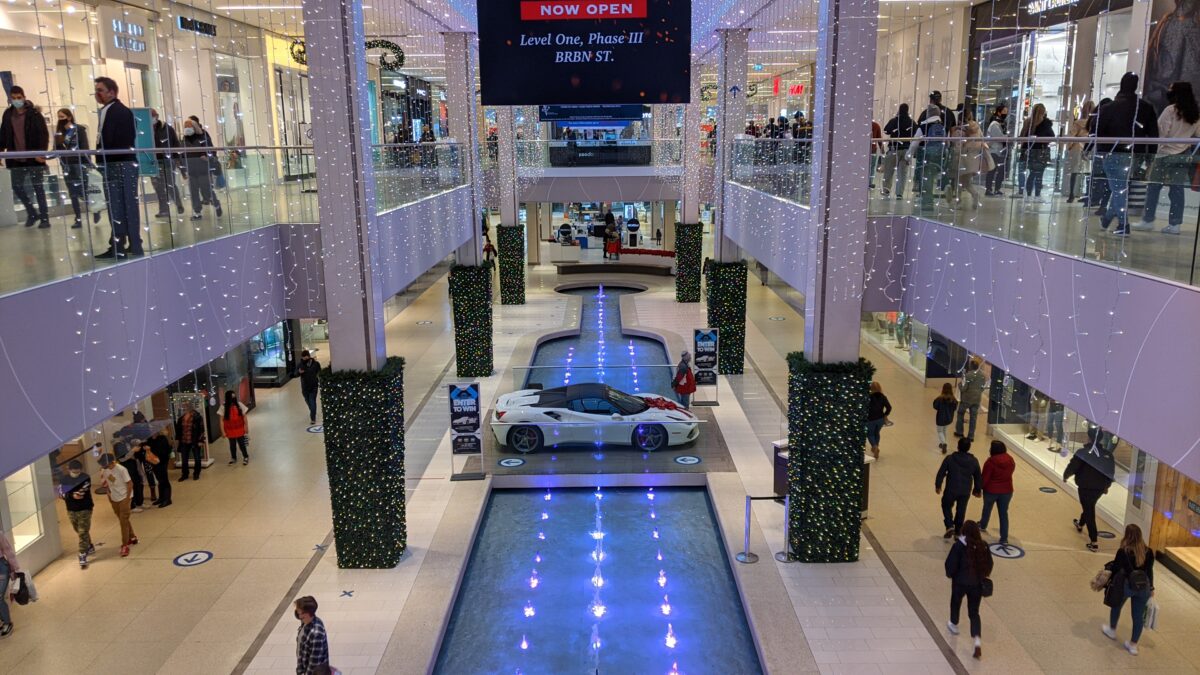
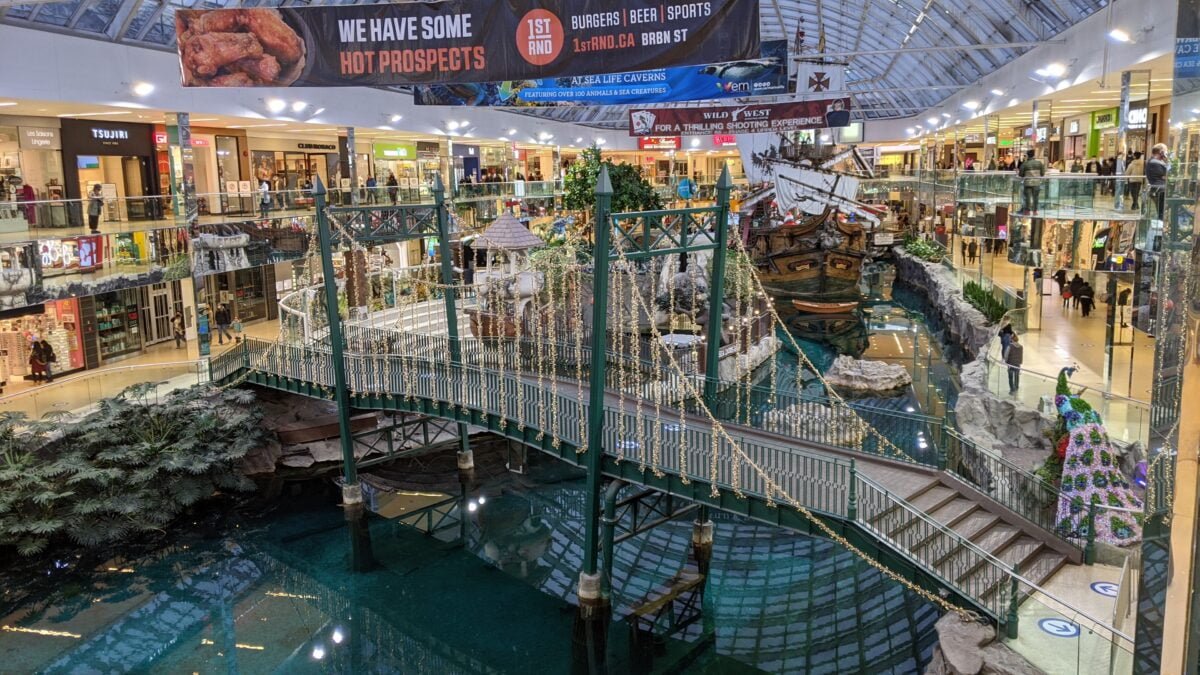
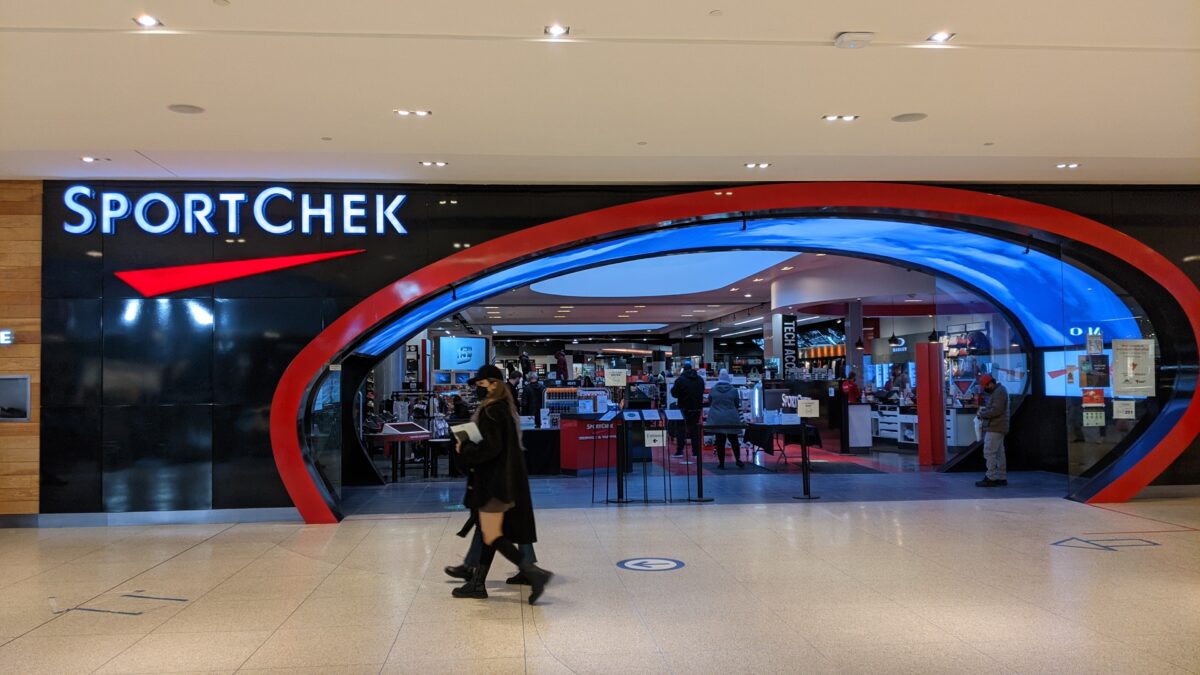
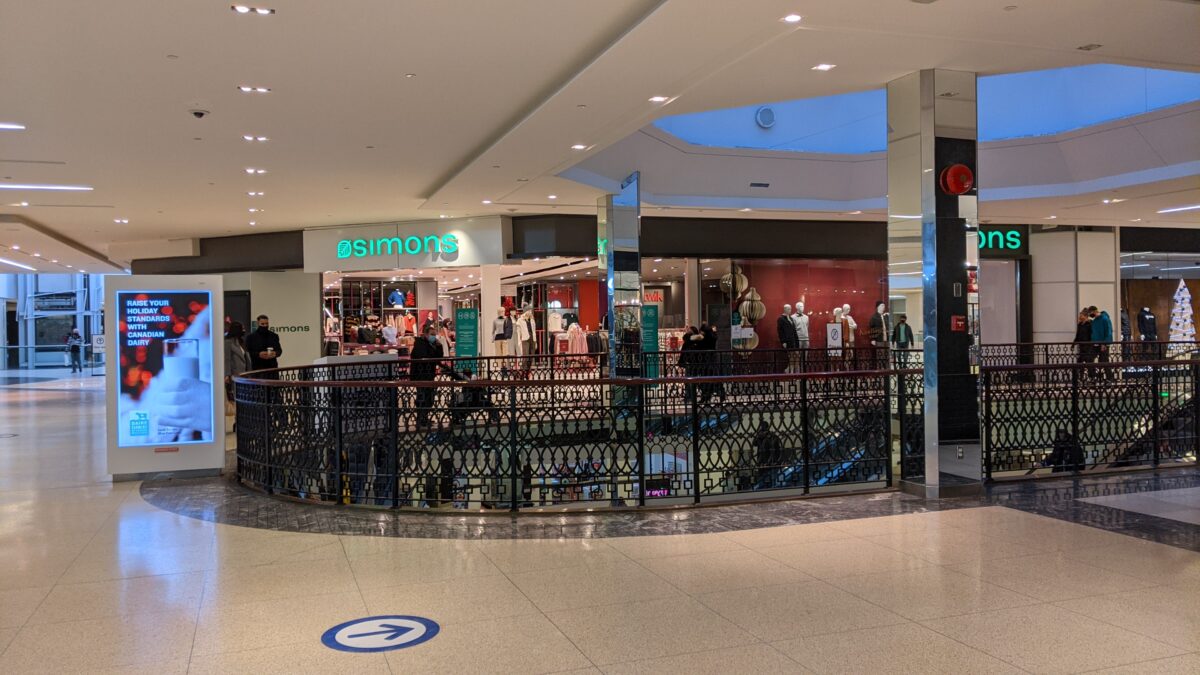
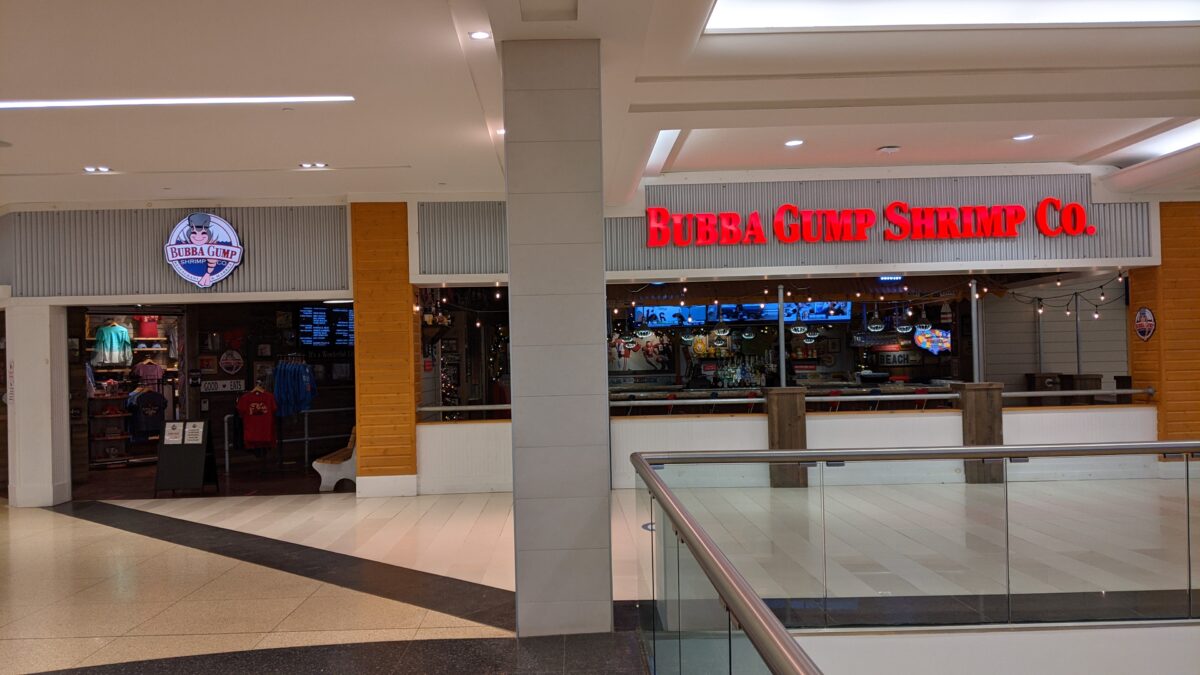
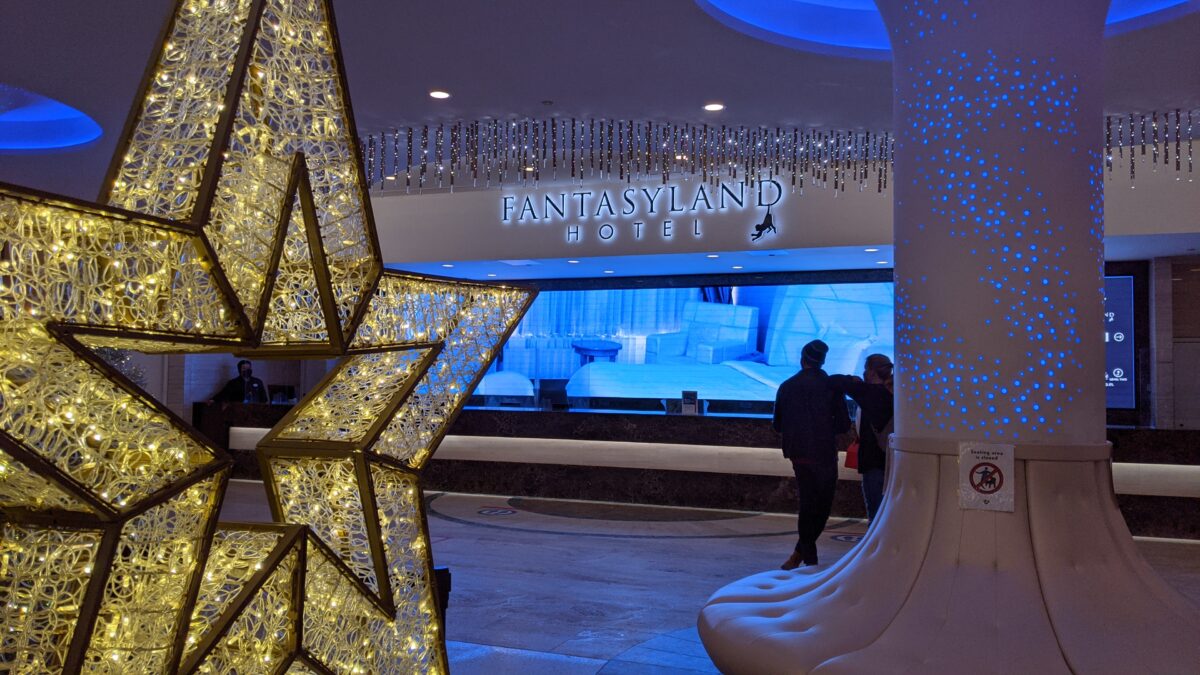
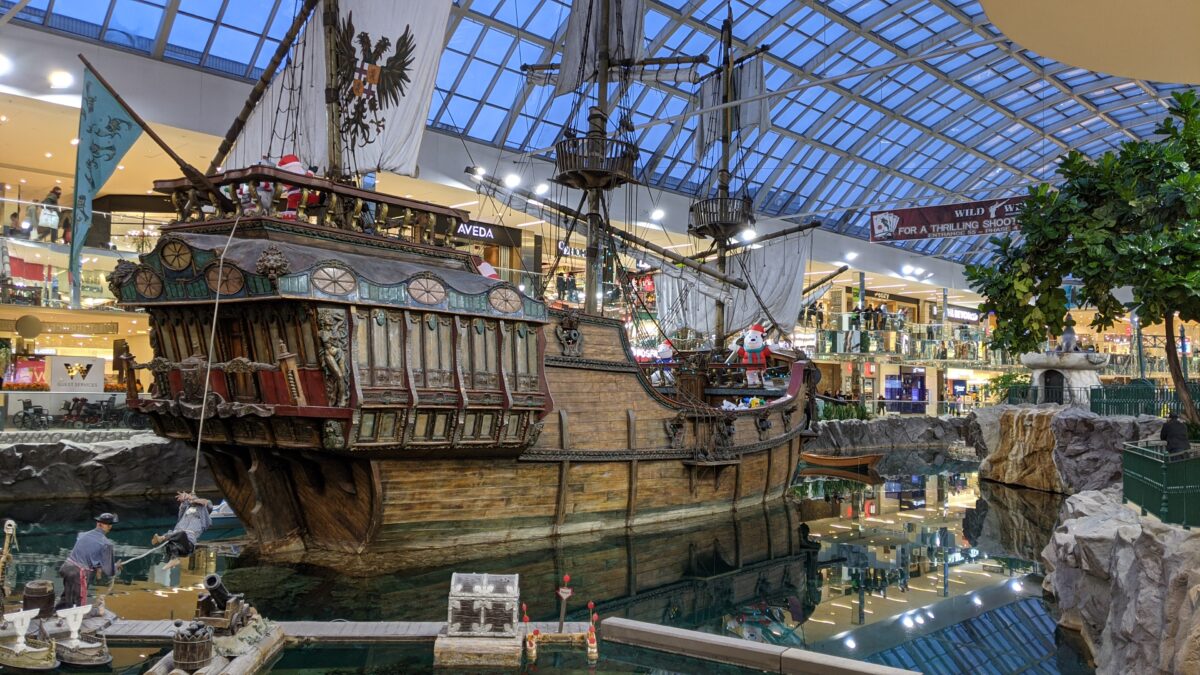
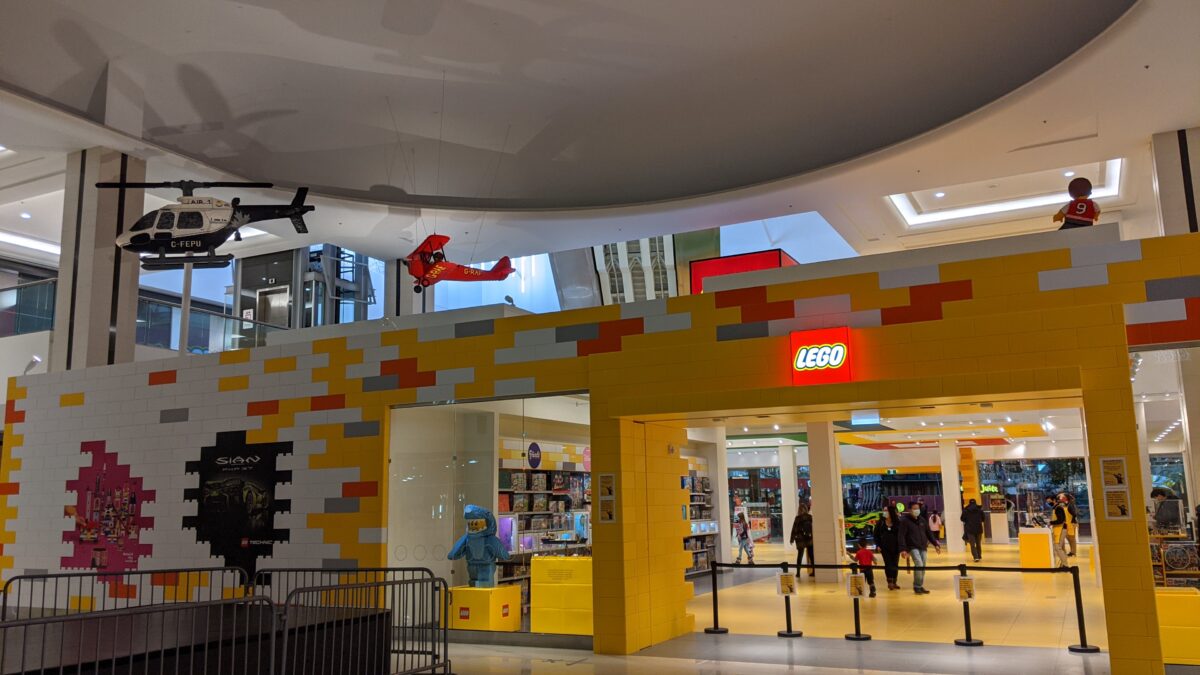
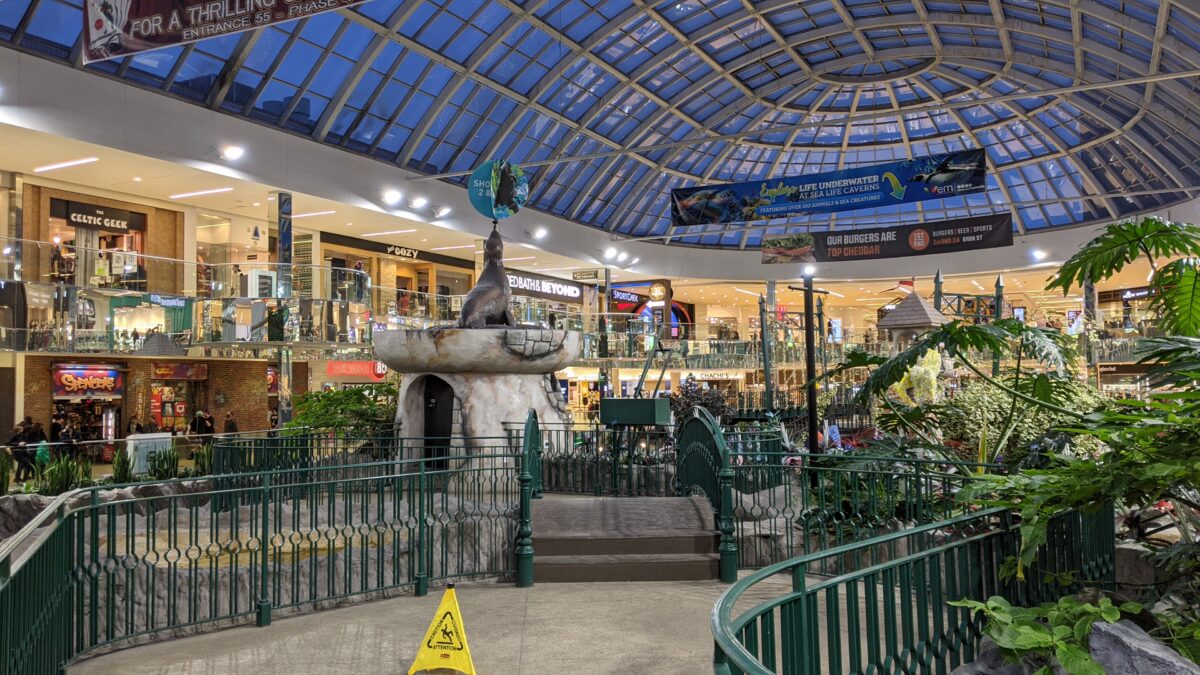
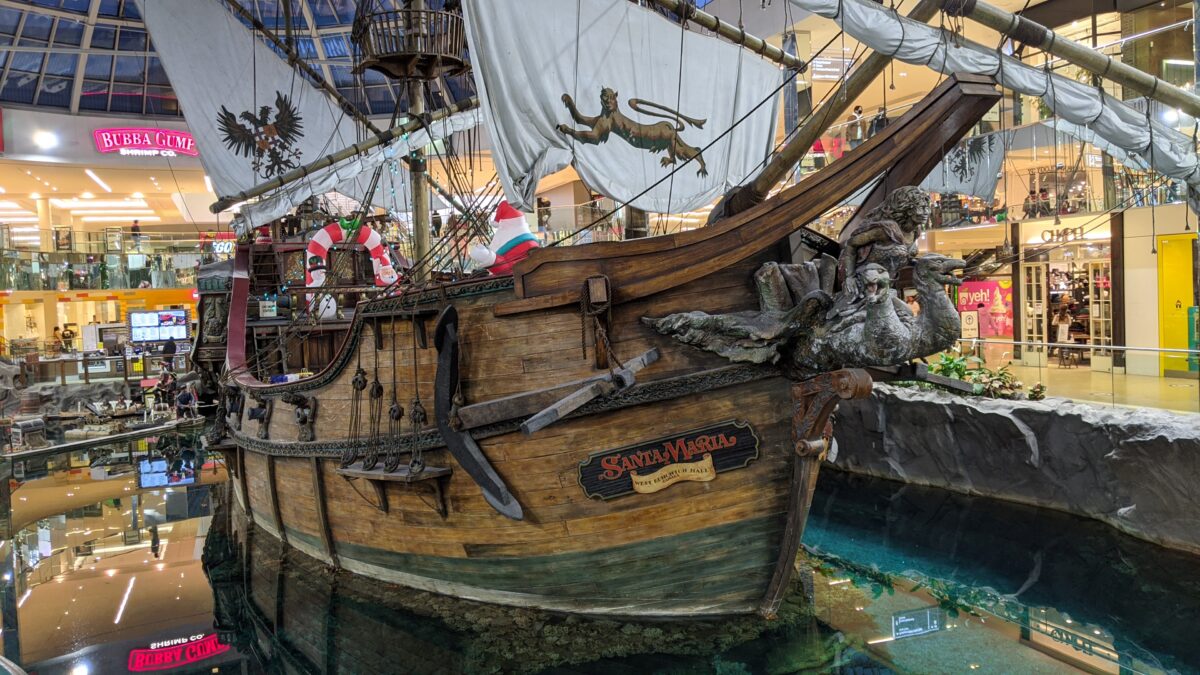
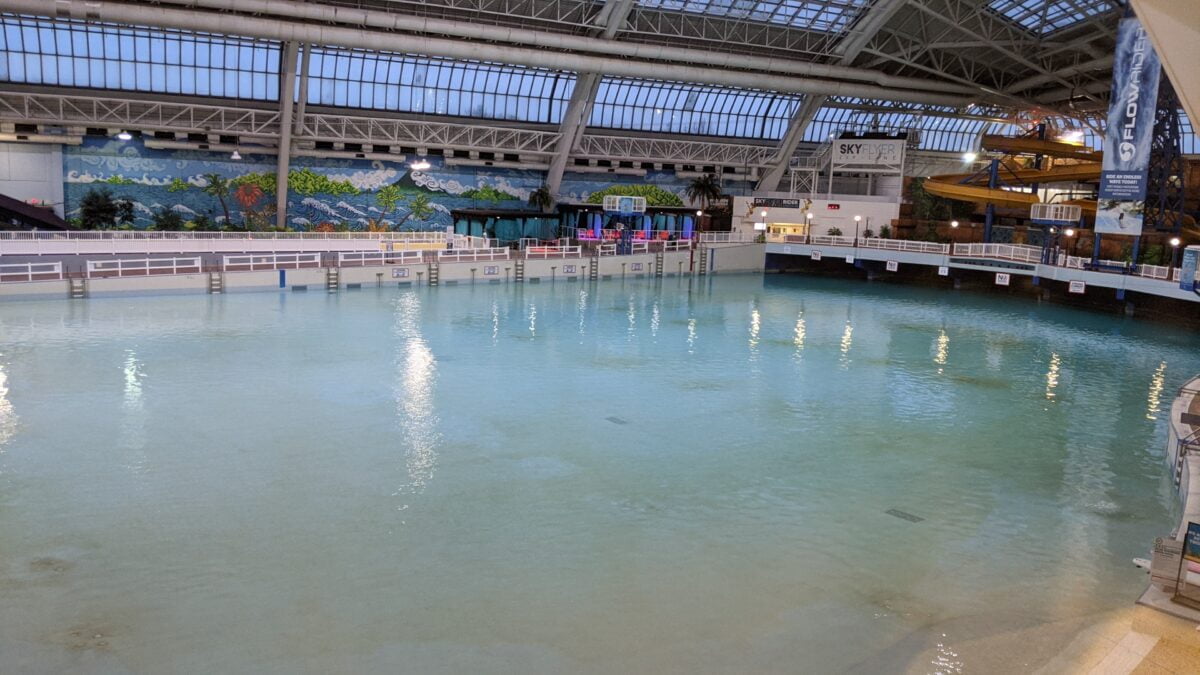
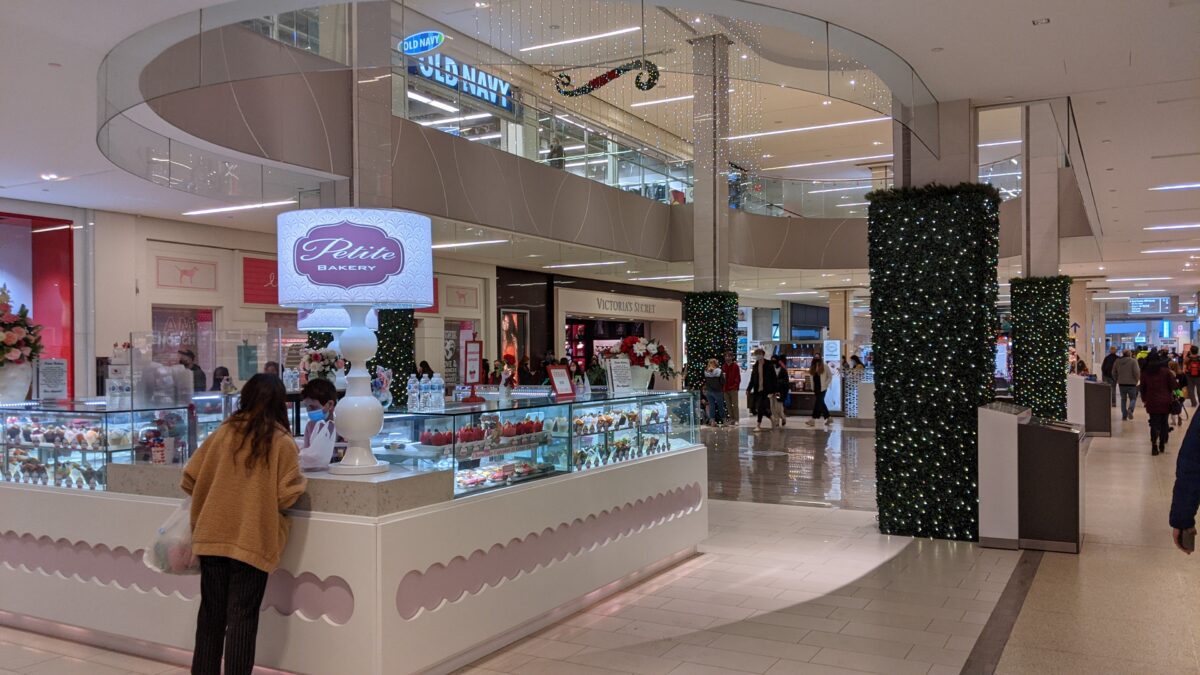
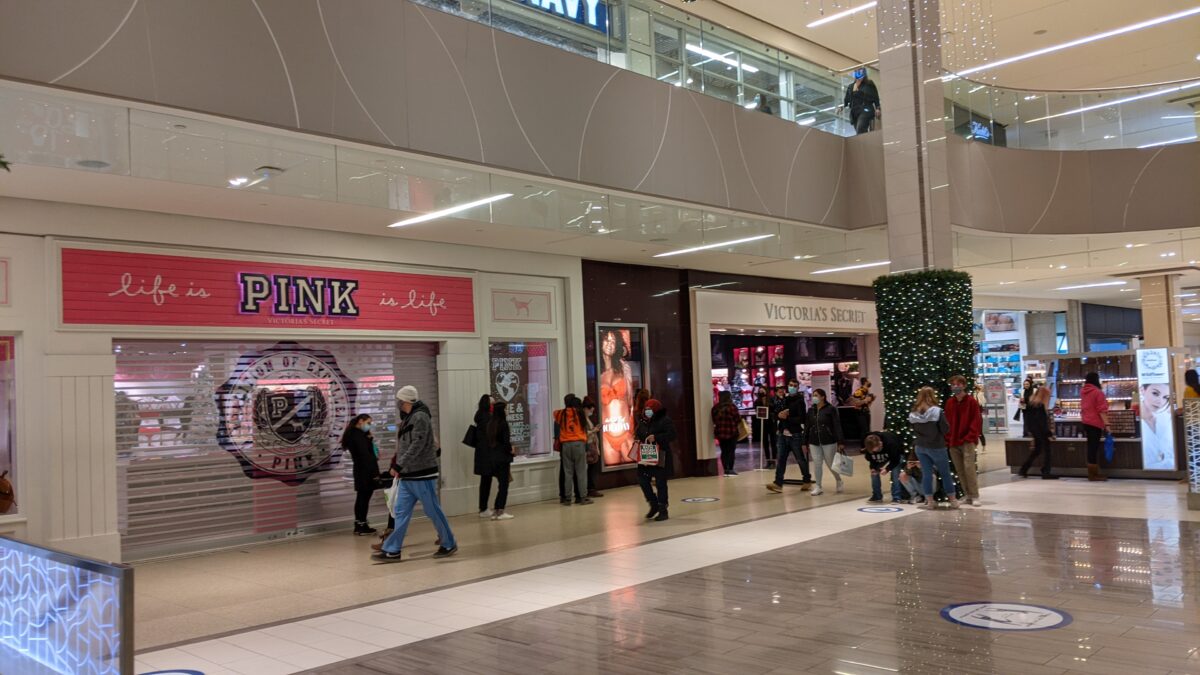
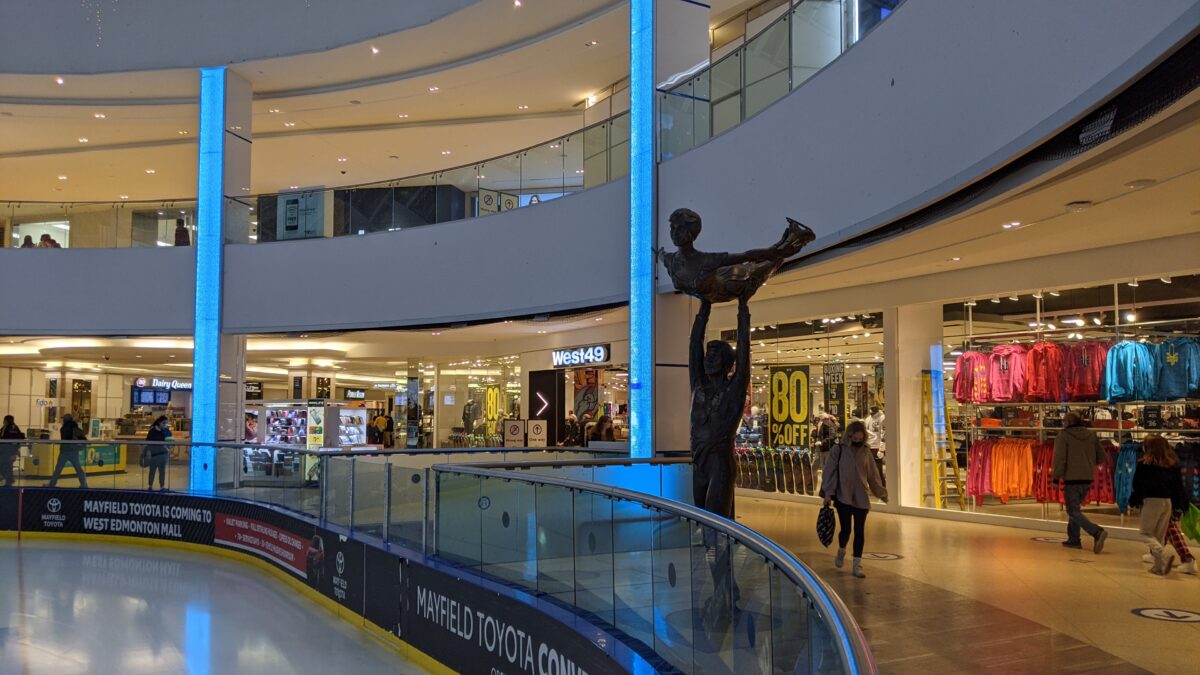
Retail Insider continues its Photo Tour series of Canadian Malls to provide a glimpse into shopping malls across Canada which may be less frequented due to the COVID-19 pandemic. This edition is the full photo tour of the West Edmonton Mall in Edmonton, Alberta. As West Edmonton Mall (WEM) is the largest mall in Canada, with over 800 retailers, attractions, and experiences – so we are excited to share the images.
We have partnered up with Matthew from Best Edmonton Mall for the photos that are used in this tour. He visited the mall on December 22nd, 2020 and we wanted to share his experience.
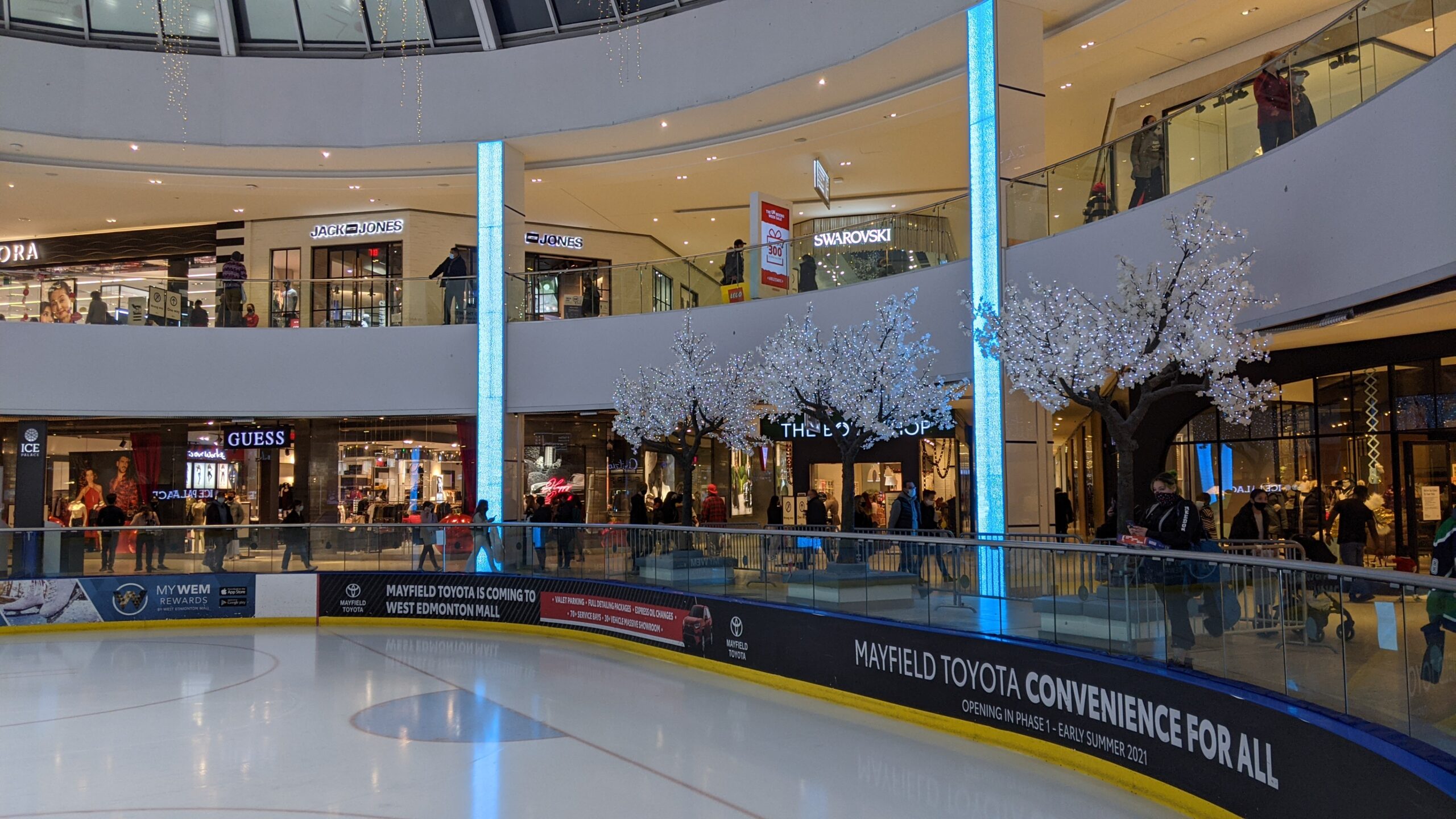
Ice Palace at West Edmonton Mall - Photo by Matthew at Best Edmonton Mall
Retail Insider continues its Photo Tour series of Canadian Malls to provide a glimpse into shopping malls across Canada which may be less frequented due to the COVID-19 pandemic. This edition is the first of a two-part photo tour of the West Edmonton Mall in Edmonton, Alberta. As West Edmonton Mall (WEM) is the largest mall in Canada, with over 800 retailers, attractions, and experiences, this edition focuses on Phase 1 and Phase 2 of the shopping centre.
We have partnered up with Matthew from Best Edmonton Mall for the images that are used in this photo tour. He visited the mall on December 22nd, 2020 and we wanted to share his experience.
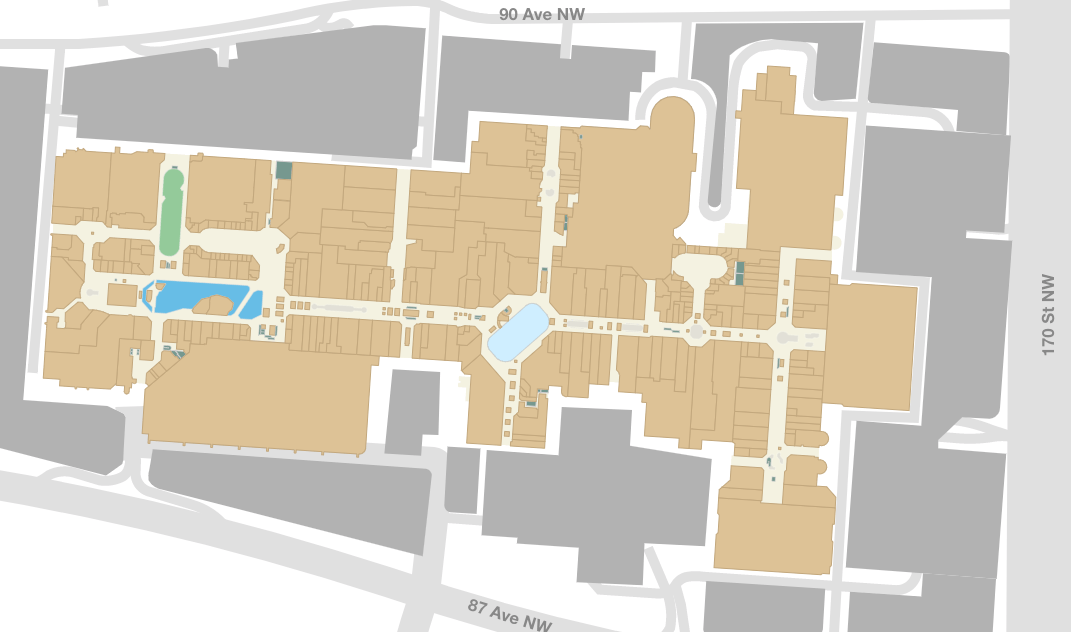
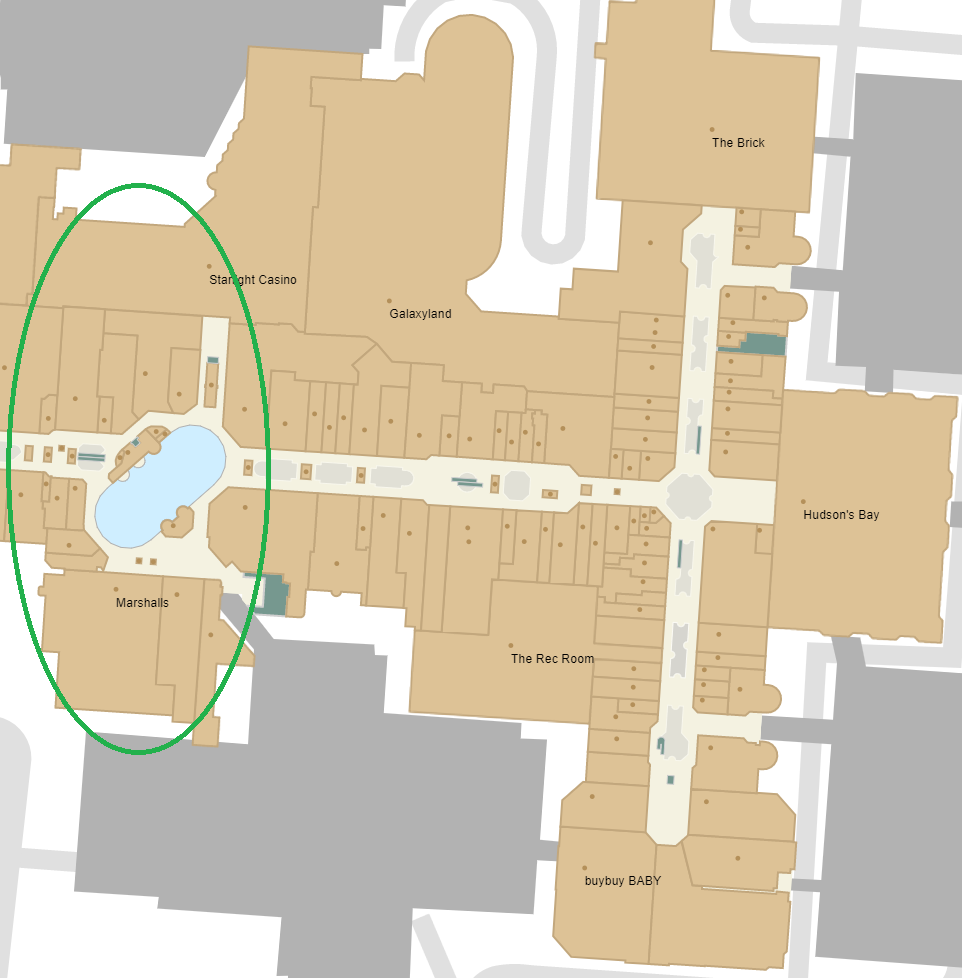
The West Edmonton Mall Map – Click for the Interactive website
Breaking Up West Edmonton Mall into Pieces for the Tour
One of the more challenging parts of the photo tour was to bring 5.3 million square feet of shopping centre to our loyal Retail Insider readers. As a result, we split West Edmonton Mall into two mall tour articles, one will be run today and the second can be found here.
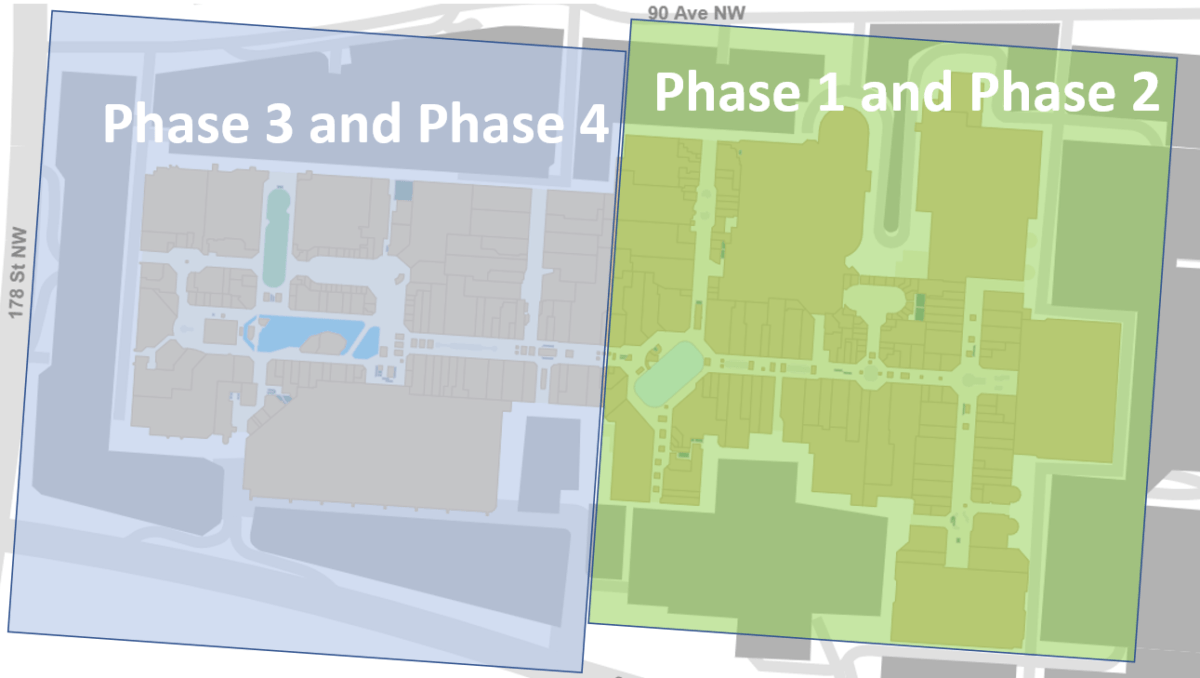
Phase 1 and Phase 2 (Part One/this article): Completed in 1981 and 1983 respectively; and
WEM Map. Phase 1 and Phase 2 (in Green) featured in this article. Phase 3 and Phase 4 (in Gray/Blue) featured in a second article.
All four phases have two retail levels which we’ll cover from the ground (level 1) up (level 2). As always, the mall tour will progress through the mall in ‘tour zones’. Each zone will highlight the main retail tenants and a selection of other retailers with related links to other Retail Insider articles. This is not an exhaustive listing as the shopping centre has over 800 retailers and our apologies to any retailers we may have overlooked.
Lower Level Overview at West Edmonton Mall, Phases 1 and 2
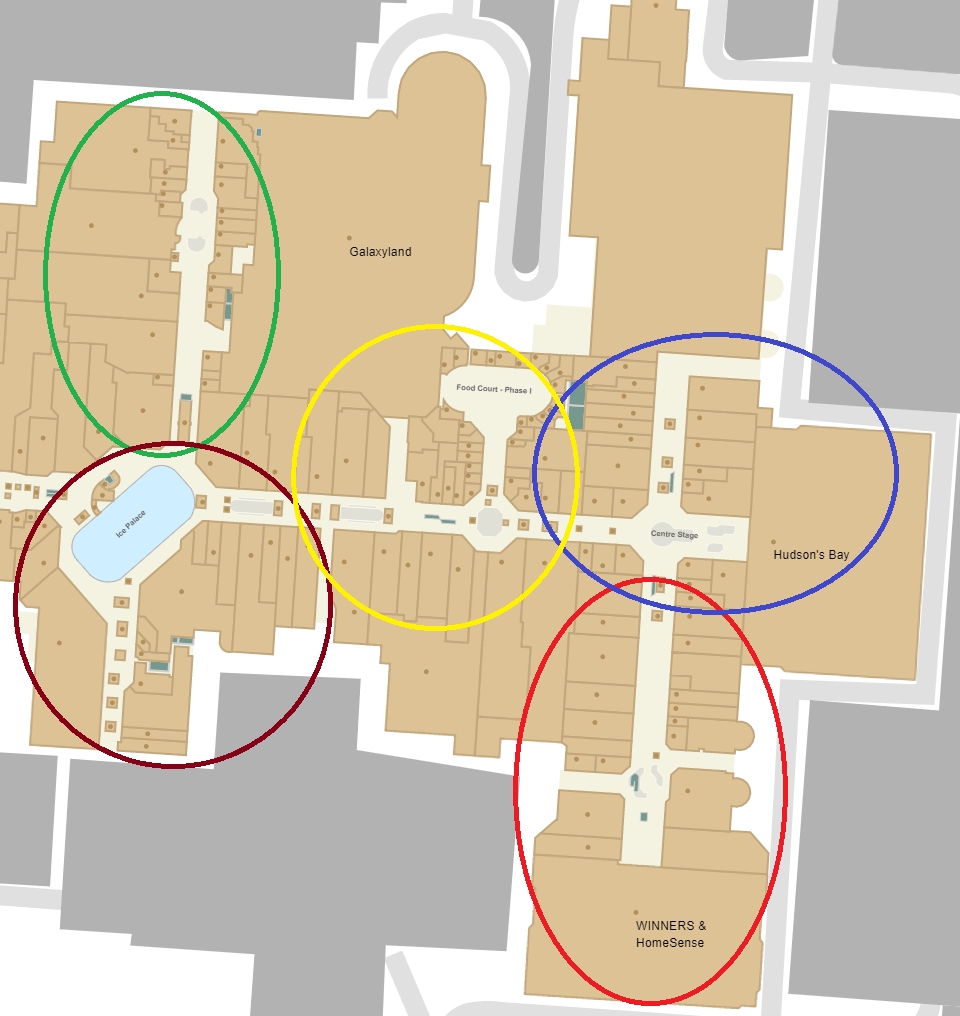
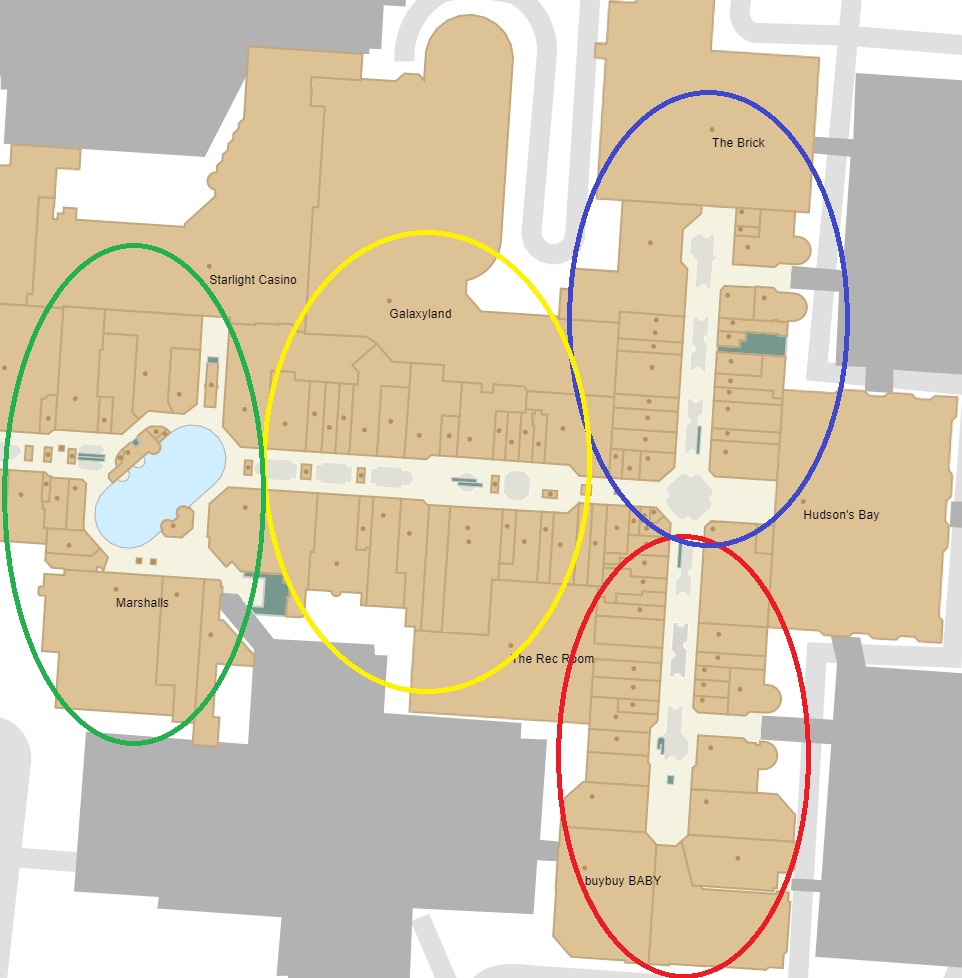
WEM (Phase 1 and Phase 2) – Lower Level – Tour Zones
The lower level for Phase 1 and Phase 2 of the West Edmonton mall tour was densely packed with retailers. For an orderly wander through the shopping level, the ground floor was grouped into five ‘tour zones’:
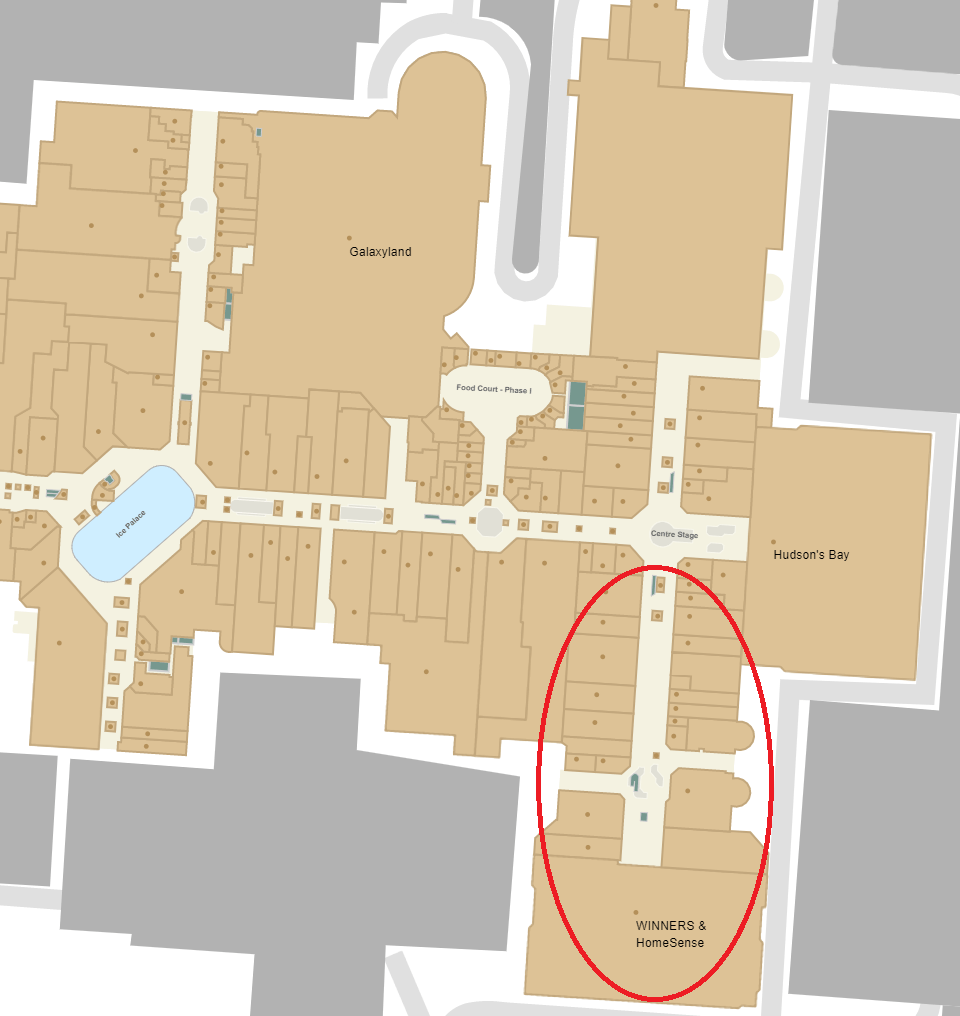
Lower Right Zone (Red) in Phase 1
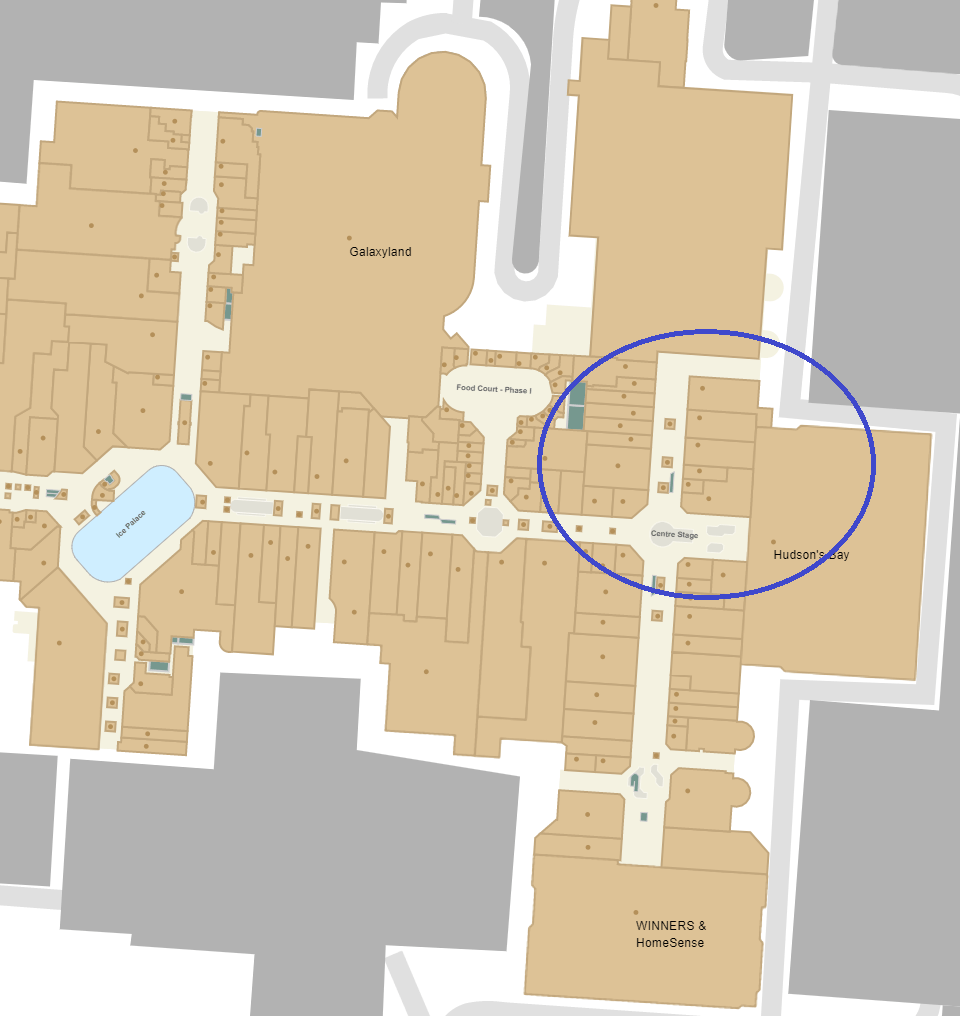
Upper Right Zone (Blue) in Phase 1
Centre Zone (Yellow)
Lower Left Zone (Burgundy) in Phase 2
Upper Left Zone (Green) in Phase 2
West Edmonton Mall, Lower Level, Lower Right Zonein Phase 1
WEM (Phase 1 and Phase 2) – Lower Level – Lower Right Tour Zone
Starting off our tour in West Edmonton Mall’s Phase 1, the lower right tour zone is anchored by Winners and HomeSense. The Winners/HomeSense space as well as several spaces in the mall started off as an Eaton’s department store which shut in 1999 amid the chain’s bankruptcy. It was eventually turned into a Target store which opened in 2013 and closed in early 2015. The wing struggles with foot traffic compared to the ‘centre run’ of the mall, though the massive Winners/HomeSense has become a draw.
Bronze Whale Statue (Head) – Photo by Matthew @ Best Edmonton Mall
Bronze Whale Statue (Tail) – Photo by Matthew @ Best Edmonton Mall
The Whale sculpture, a favourite decades ago in the second phase of the mall, was moved to Phase 1 a couple of years ago and was recently relocated from the north to the south side of the wing. Many children have climbed into the mouth of the sculpture over the years, as described in the video below.
West Edmonton Mall, Lower Level, Upper Right Zone, Phase 1
WEM (Phase 1 and Phase 2) – Lower Level – Lower Right Tour Zone
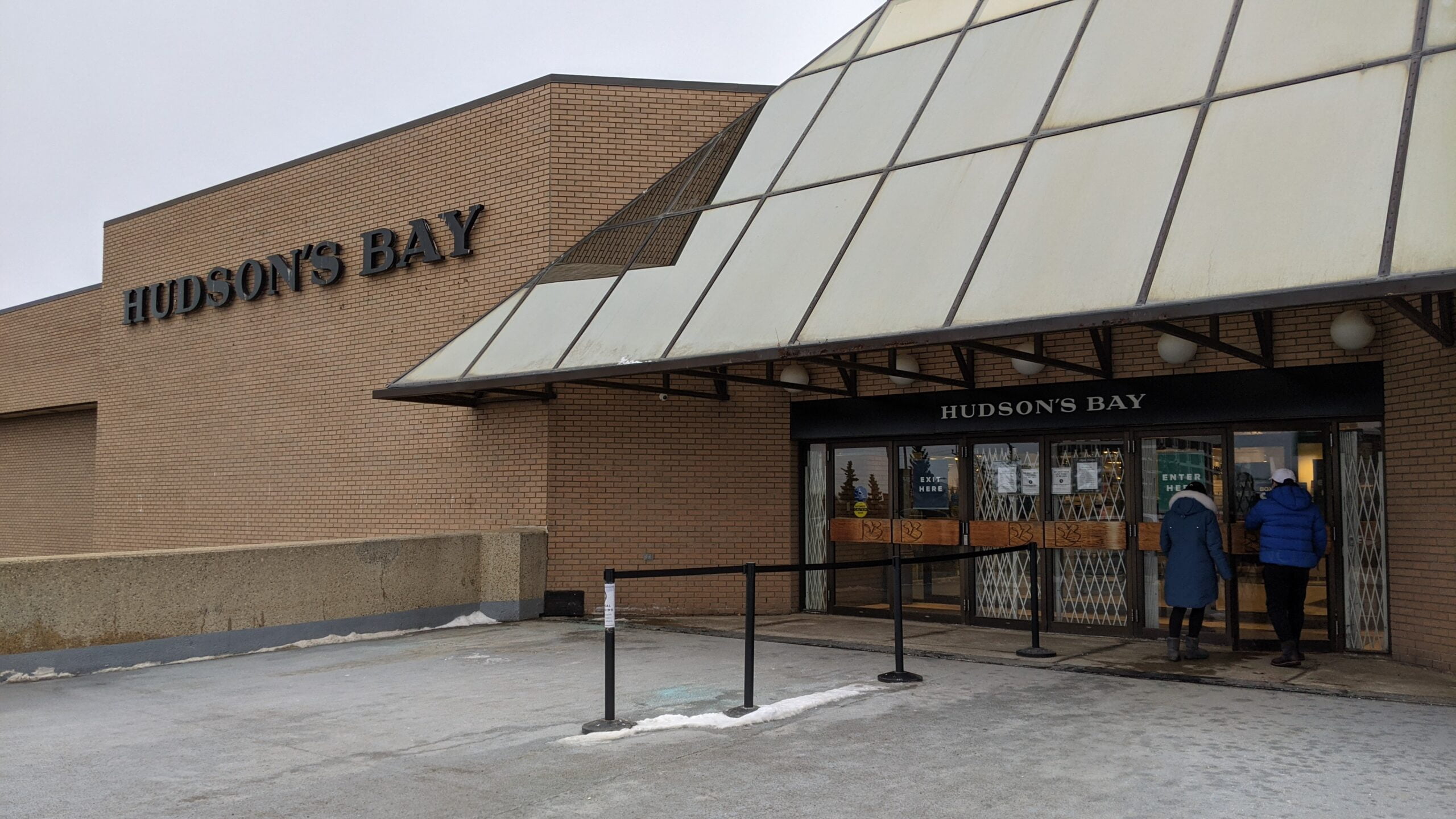
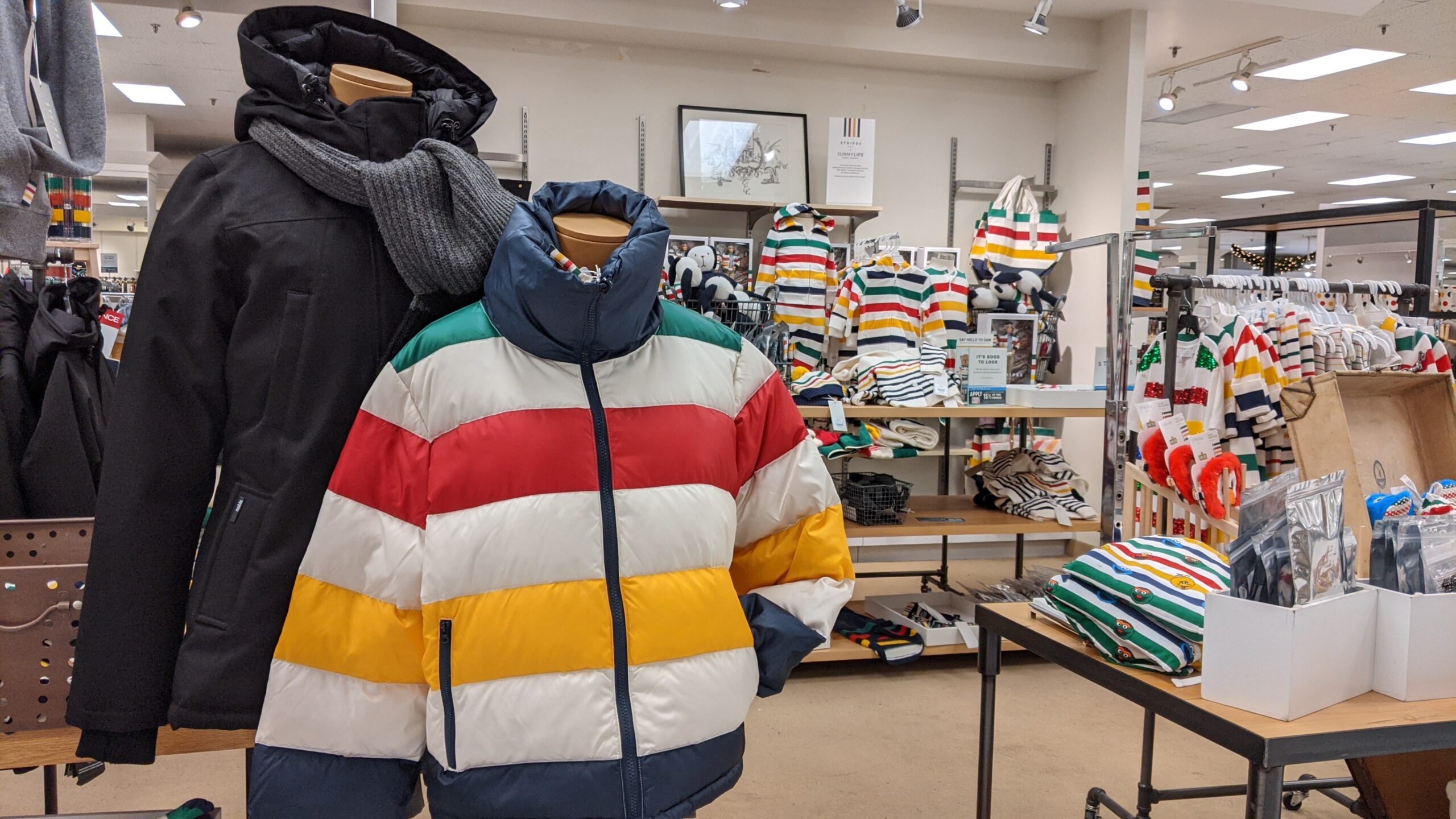
Hudson’s Bay West Edmonton Mall December 2020 Holiday – Photo by Best Edmonton Mall
Hudsons Bay West Edmonton Mall – Photo by Matthew at Best Edmonton Mall
Hudsons Bay West Edmonton Mall – Photo by Matthew at Best Edmonton Mall
Hudsons Bay West Edmonton Mall – Photo by Matthew at Best Edmonton Mall
Hudsons Bay West Edmonton Mall – Photo by Matthew at Best Edmonton Mall
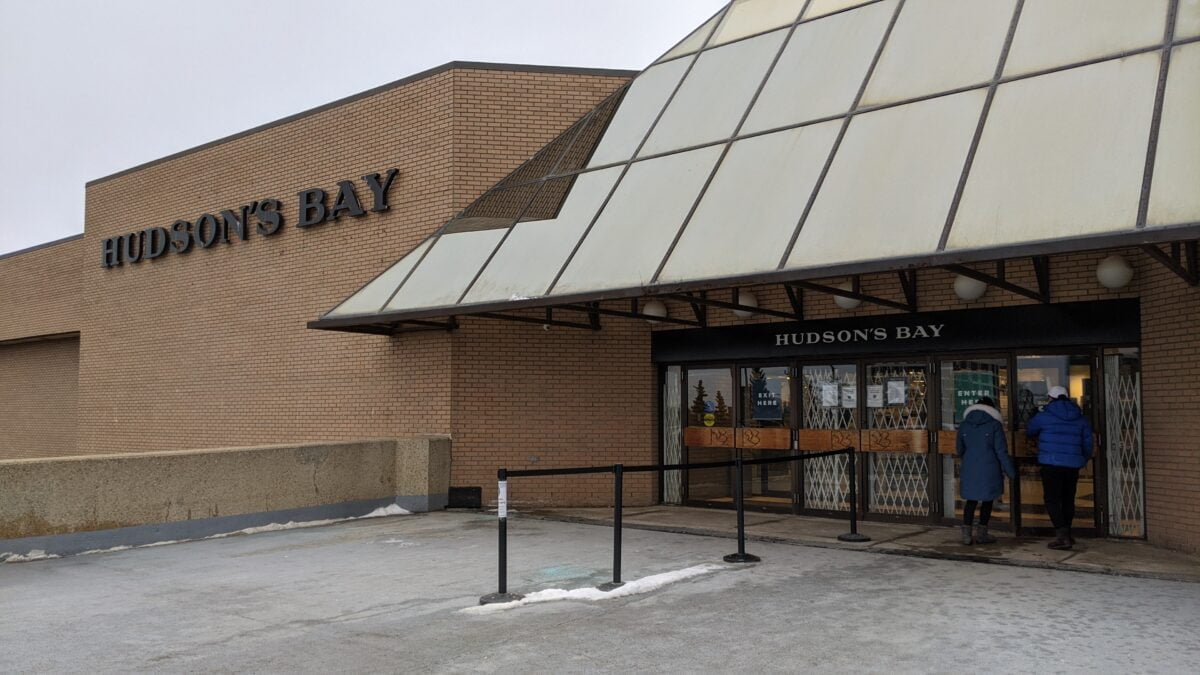
The “Upper Right” tour zone on the lower level at West Edmonton Mall has the Centre Stage and its main anchor is Hudson’s Bay. The Hudson’s Bay store is about 165,000 square feet and could use a renovation. Hudson’s Bay is one of the original anchors of West Edmonton Mall, along with Eaton’s and Sears. In 1985 Woodward’s joined them over in Phase 3, and Bretton’s opened in 1987 not long after.
Mayfield Toyota is scheduled to open July 1 of this year — we were the first to report on the interesting development. Included will be a 117,000-square-foot automotive centre, a new 200,000-square-foot multi-level parking structure and service detail centre, and valet parking throughout the mall.
Clustered to the left (on the map above) of Centre Stage is a grouping of jewellers, including:
West Edmonton Mall. Photo by Matthew @ Best Edmonton Mall
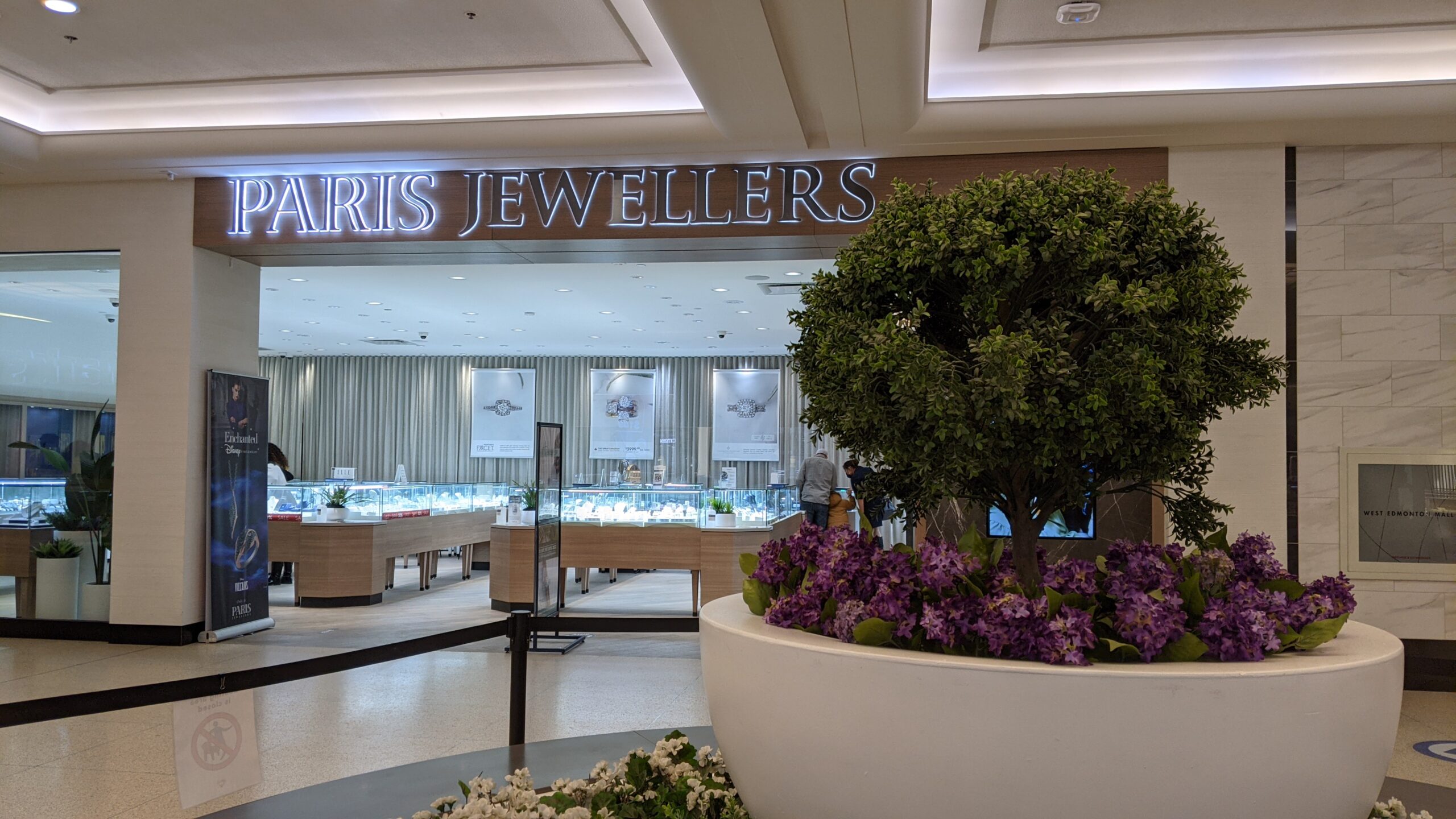
Paris Jewellers at West Edmonton Mall. Photo by Matthew @ Best Edmonton Mall
The centre stage has been home to performances and other exhibits over the years. In years past a large water fountain was located there.
West Edmonton Mall, Lower Level, Centre Zone
WEM (Phase 1 and Phase 2) – Lower Level – Centre Tour Zone
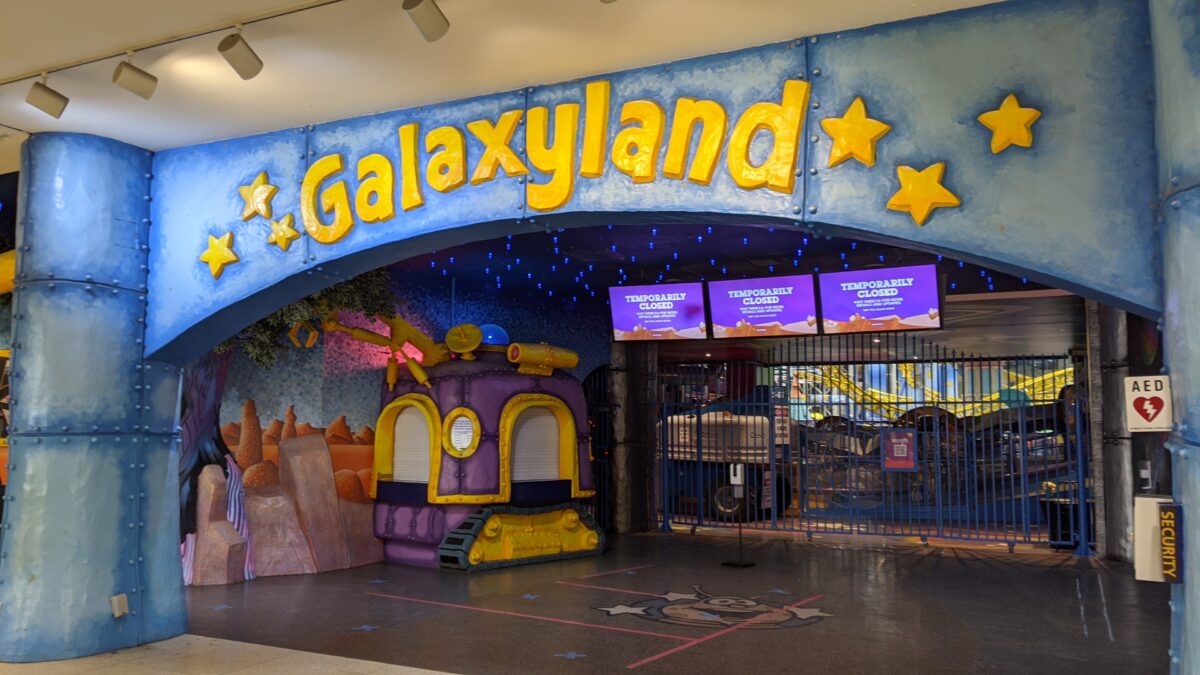
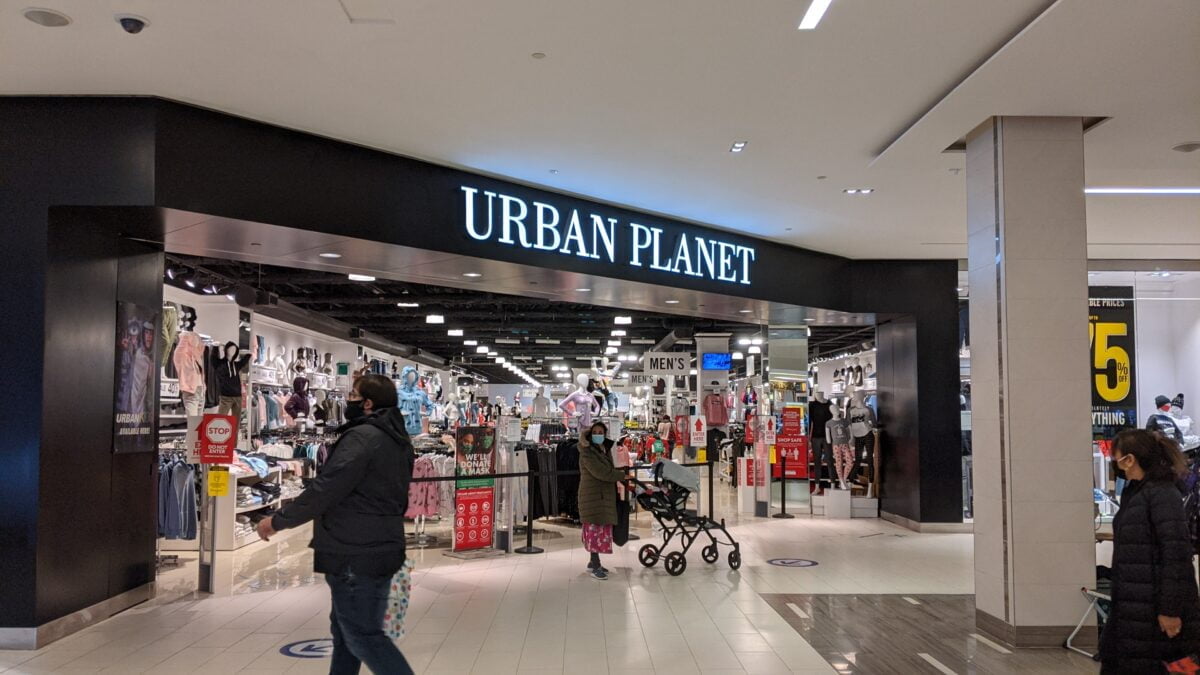
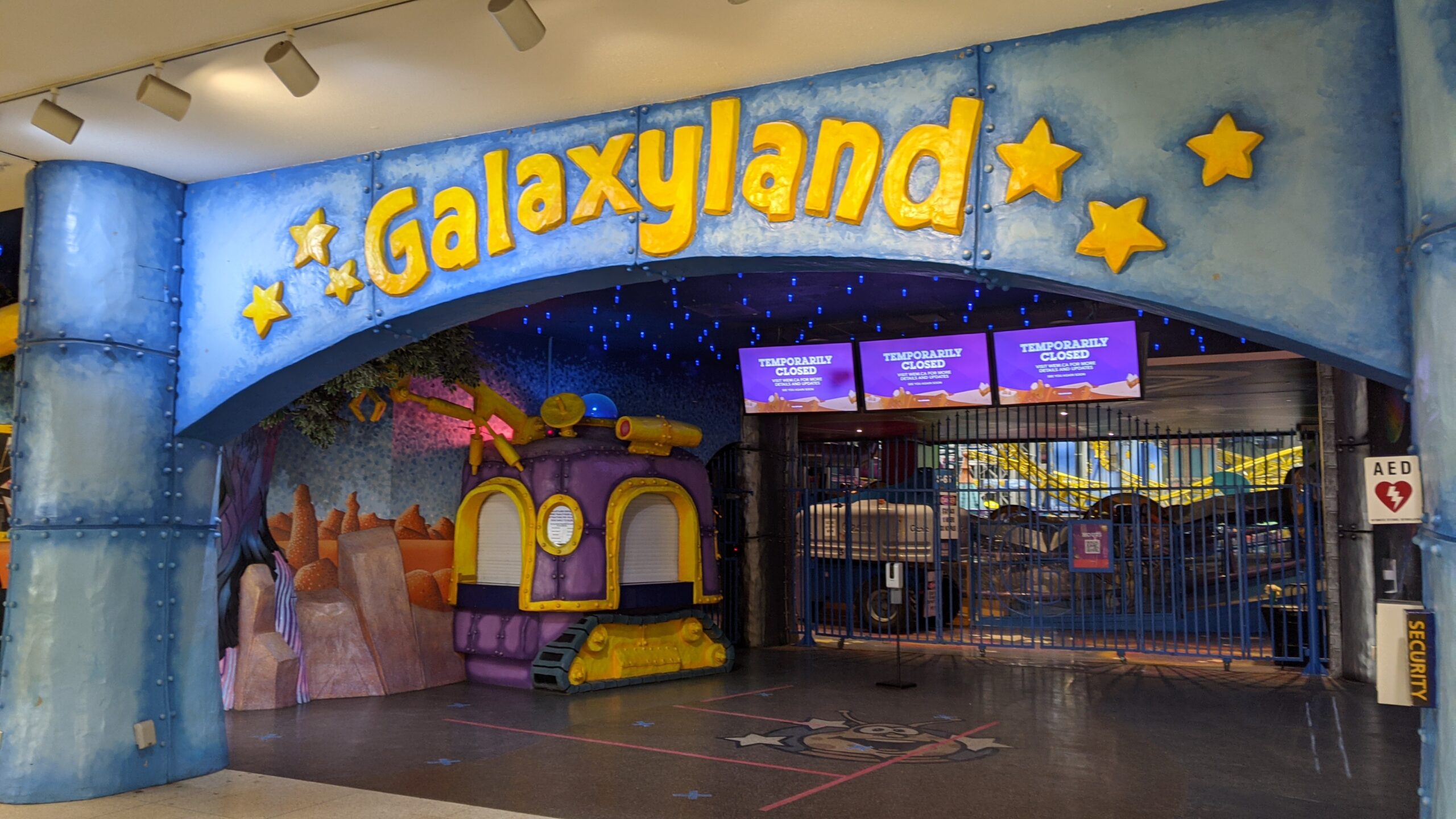
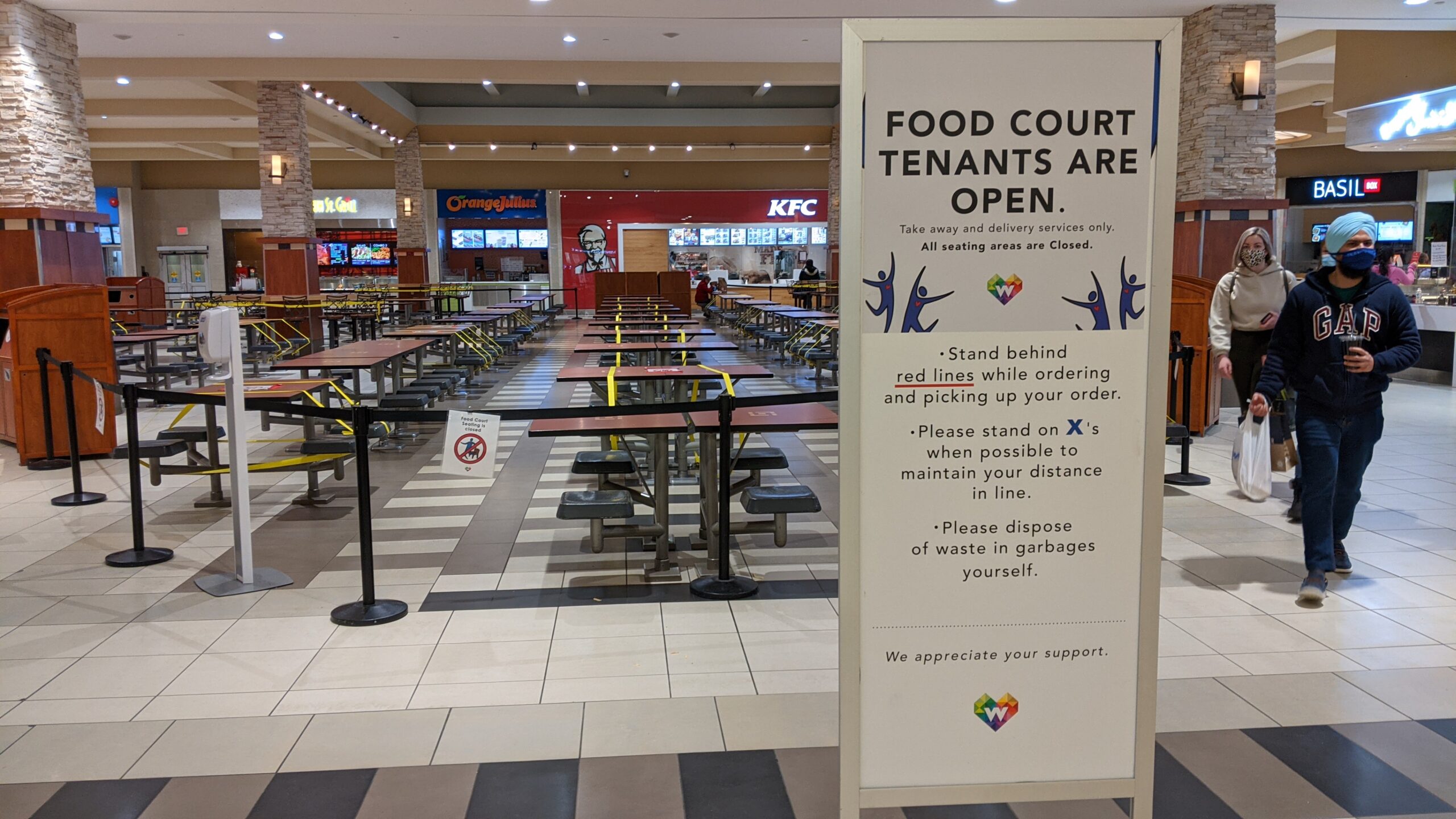
The “Centre” tour zone on the lower level at West Edmonton Mall has one of two mall food courts as well as one entrance to Galaxyland Amusement Park. Key retailers in this zone include Miniso, Urban Planet, and Mark’s. Related articles for the key retailers include:
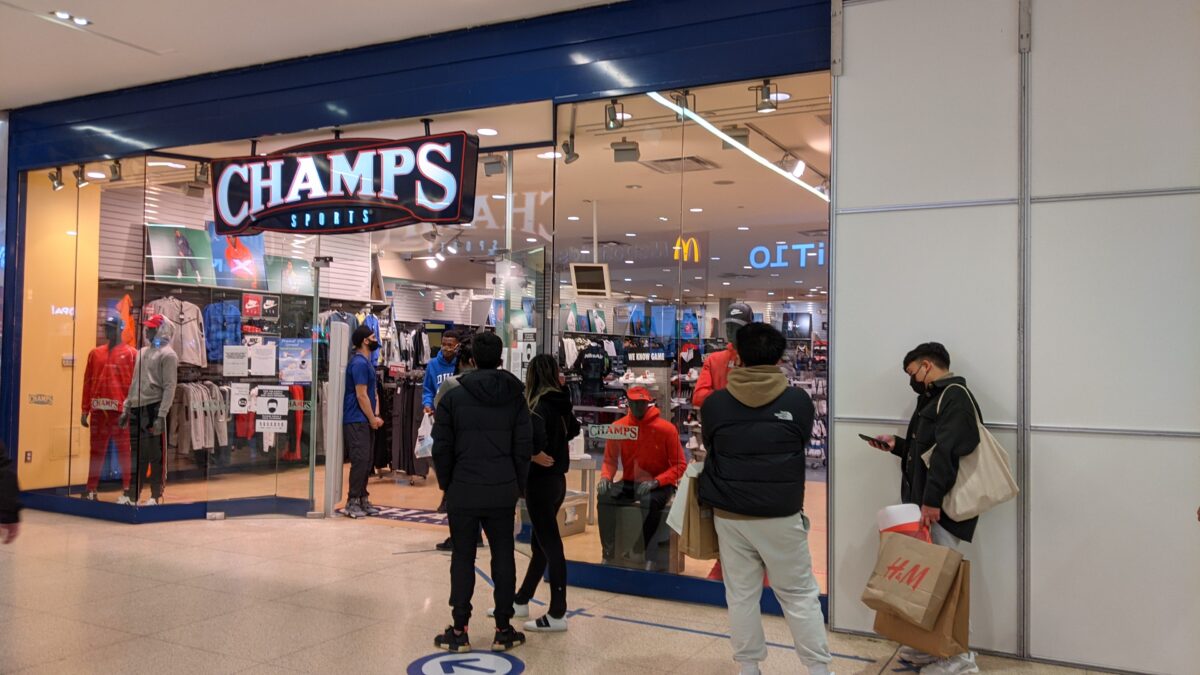
Champs Sports at West Edmonton Mall – Photo by Matthew at Best Edmonton Mall
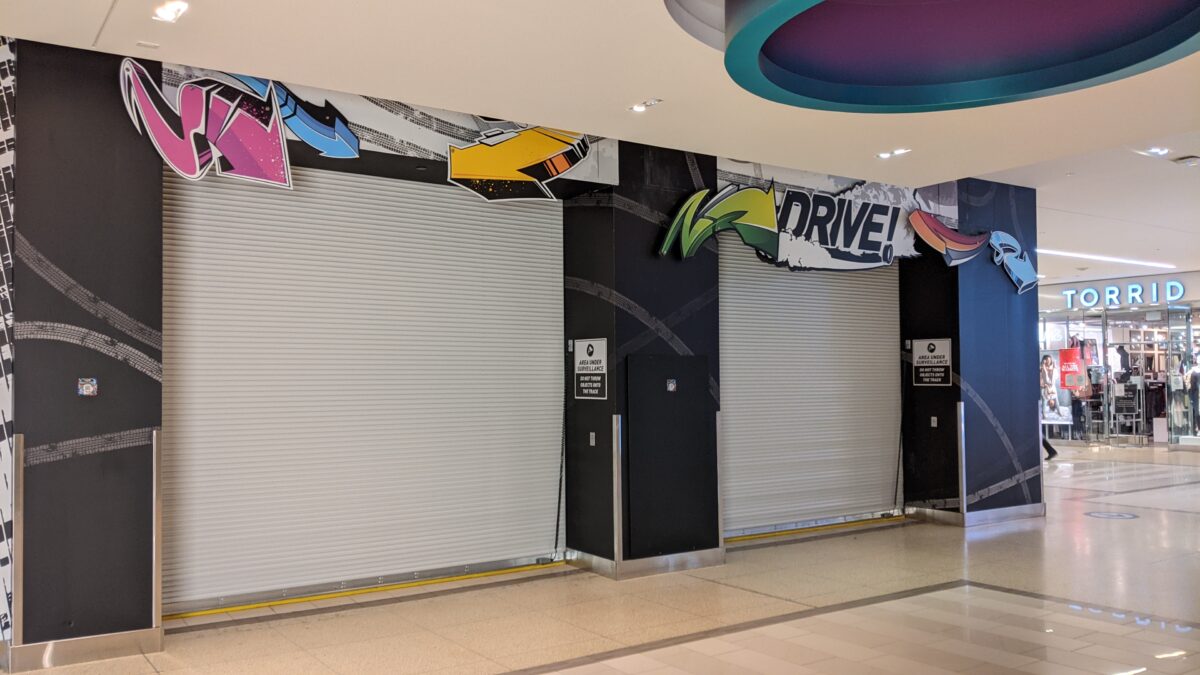
Drive! at West Edmonton Mall – Photo by Matthew at Best Edmonton Mall
Galaxyland Entrance at West Edmonton Mall – Photo by Matthew at Best Edmonton Mall
Food Court at West Edmonton Mall – Photo by Matthew at Best Edmonton Mall
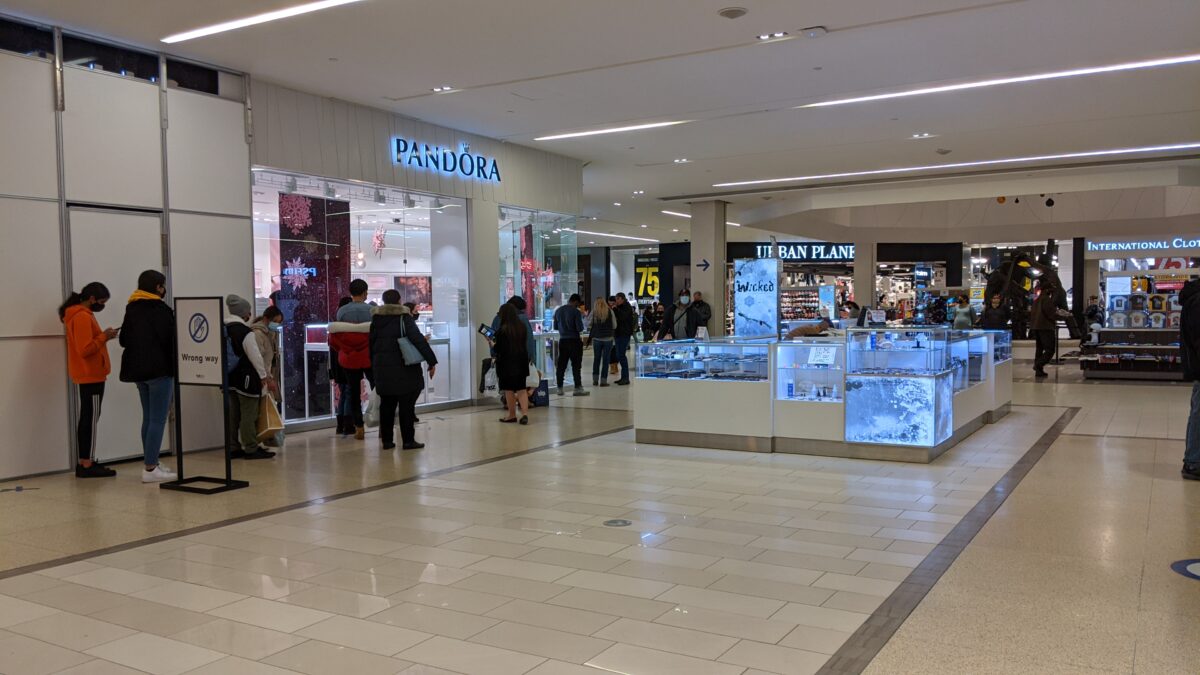
Pandora at West Edmonton Mall – Photo by Matthew at Best Edmonton Mall
This area at times can get quite busy and some retailers and foodservice businesses see exceptionally high sales. The Urban Planet store spans more than 16,000 square feet. Given the proximity to Galaxyland, this will be a popular part of the mall in the future as tourists return.
In 1987, upscale Ottawa-based department store Brettons opened a 45,000-square-foot store in the area where Mark’s, Urban Planet, and International Clothiers are located — the Brettons store closed in 1996 when parent company Comark went bankrupt. Prior to being occupied by Brettons, the space was a Safeway grocery store.
Drive! at West Edmonton Mall – Photo by Matthew at Best Edmonton Mall
Drive! at West Edmonton Mall – Photo by Matthew at Best Edmonton Mall
Drive! at West Edmonton Mall – Photo by Matthew at Best Edmonton Mall
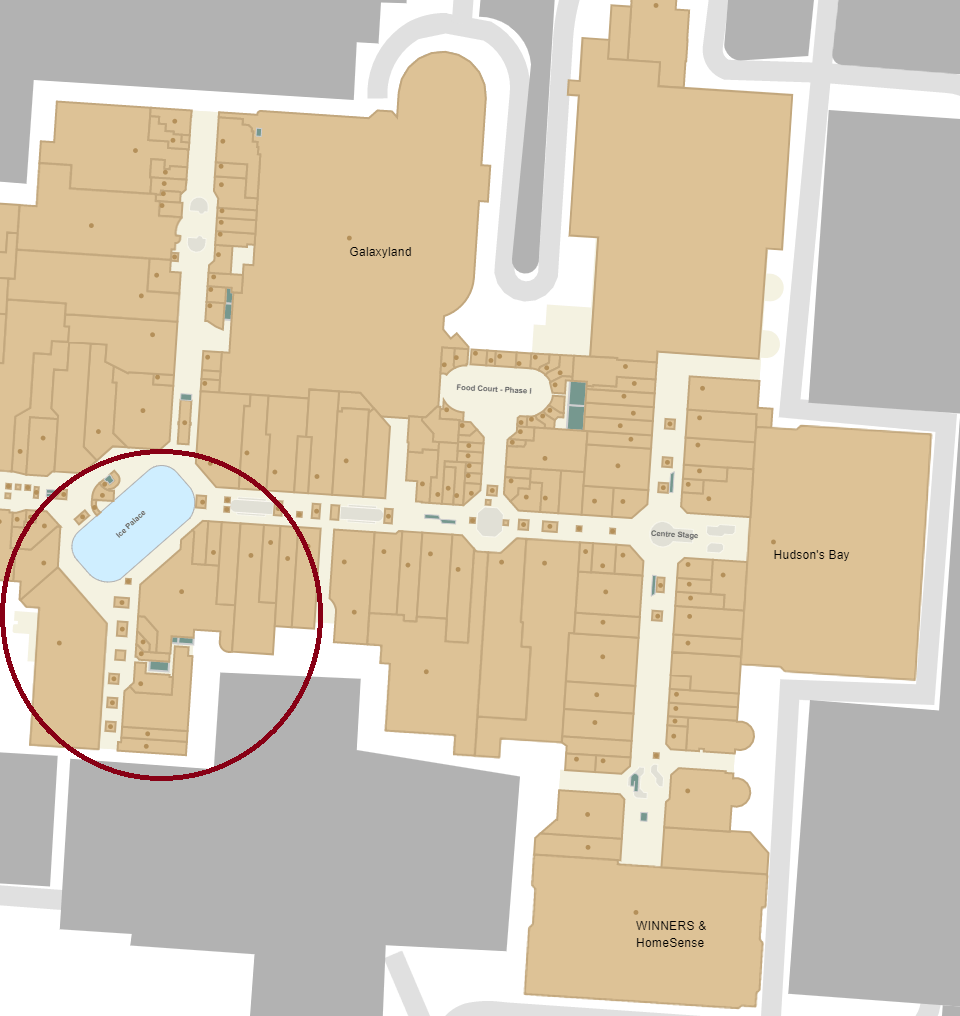
West Edmonton Mall, Lower Level, Lower Left Zone in Phase 2
WEM (Phase 1 and Phase 2) – Lower Level – Lower Left Tour Zone
The “Lower Left” tour zone on the lower level at West Edmonton Mall has the Ice Palace skating rink featuring activities such as public skating, competitions, hockey games, and exhibits where the ice is covered over. For years, Entrance 48 at the south end of this section of the mall was the busiest because of the adjacent bus loop. Key retailers in this zone include Artizia, Urban Outfitters, and West 49. Related articles for the key retailers include:
Canada’s first Forever 21 opened in this part of the mall in 2002. The store shut last year amid a company bankruptcy and the 22,450-square-foot space is now occupied by West 49.
Some retailers in this part of the mall do exceptionally well, including Sephora and Aritzia which are particularly successful.
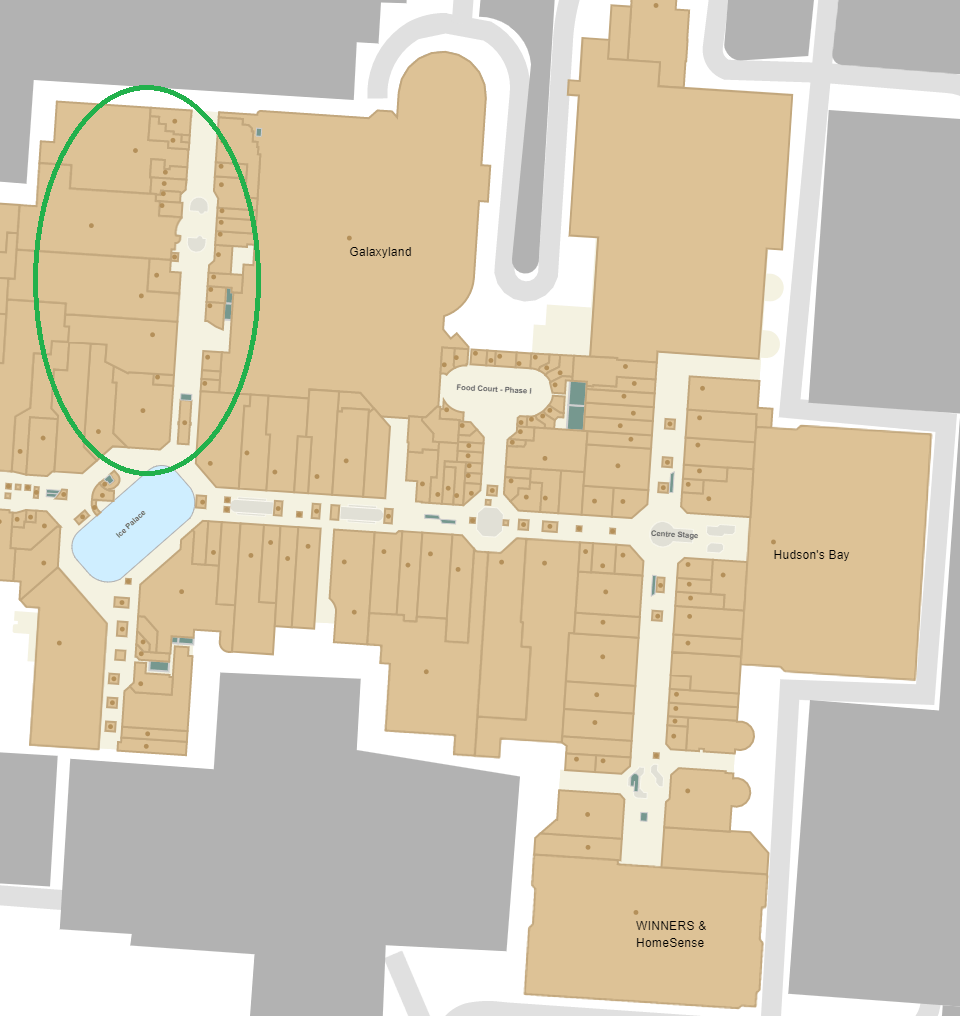
West Edmonton Mall, Lower Level, Upper Left Zone Phase 2
WEM (Phase 1 and Phase 2) – Lower Level – Upper Left Tour Zone
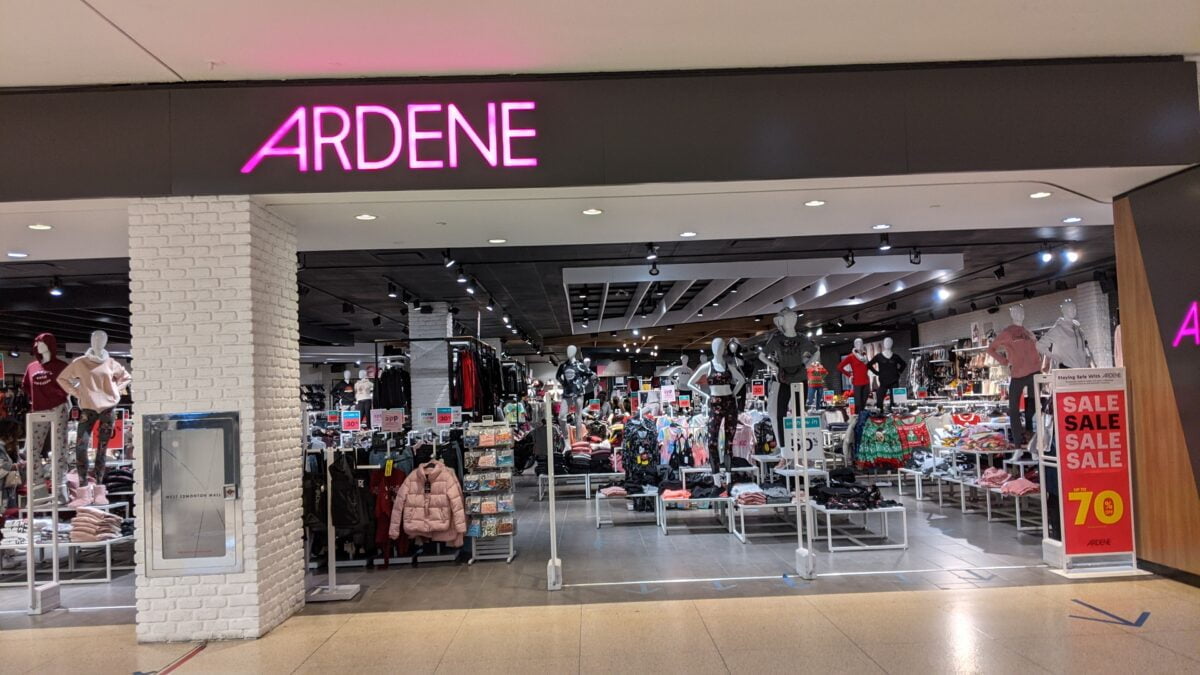
The “Upper Left” tour zone on the lower level at West Edmonton Mall has another entrance to Galaxyland with key retailers in this zone including Guess! and Ardene. Related articles for the key retailers include:
West Edmonton Mall Social Media Photo Shoppe #WEMPS
West Edmonton Mall Social Media Photo Shoppe #WEMPS
West Edmonton Mall Social Media Photo Shoppe #WEMPS
West Edmonton Mall Social Media Photo Shoppe #WEMPS
West Edmonton Mall Guest Services
West Edmonton Mall (Phase 1 and Phase 2): Upper Level
WEM (Phase 1 and Phase 2) – Upper Level – Tour Zones
Moving up in our West Edmonton mall tour of Phase 1 and Phase 2, the upper level has been divided into four tour zones for this article:
Lower Right Zone (Red) Phase 1
Upper Right Zone (Blue) Phase 1
Centre Zone (Yellow) Phase 2
Left Zone (Green) Phase 2
West Edmonton Mall, Upper Level, Lower Right Zone, Phase 1
WEM (Phase 1 and Phase 2) – Upper Level – Lower Right Tour Zone
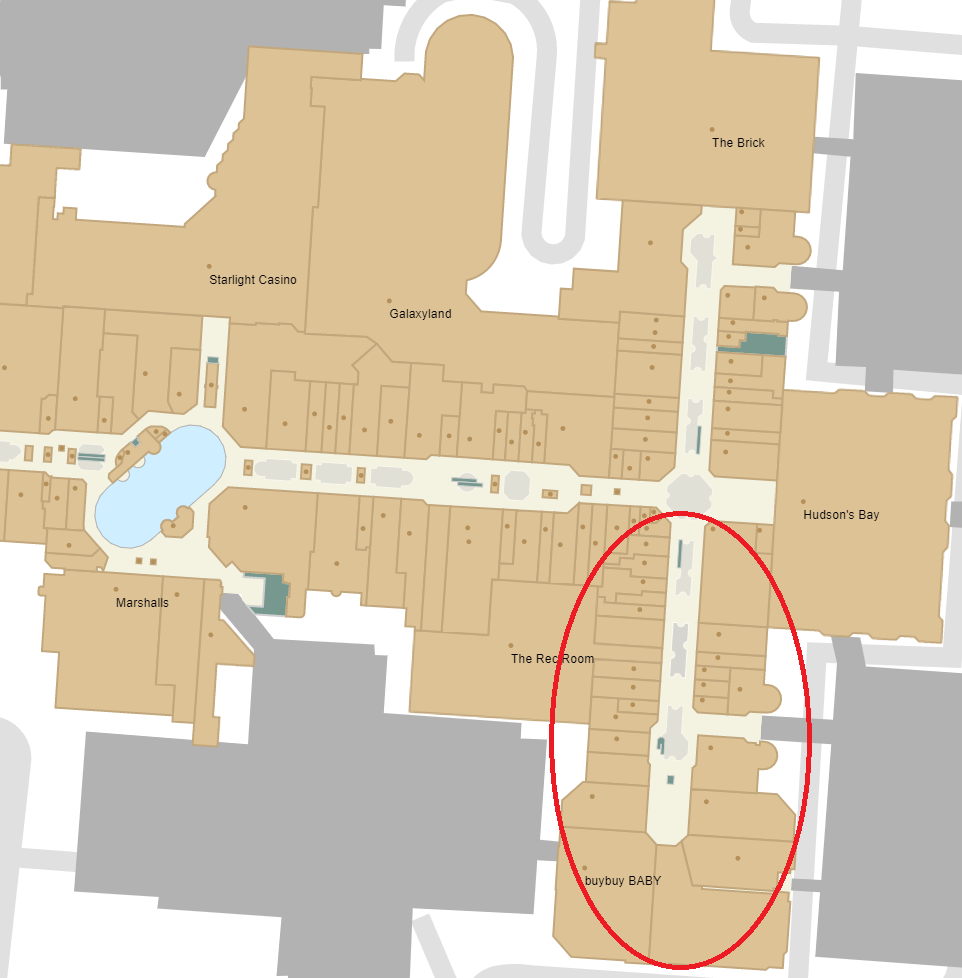
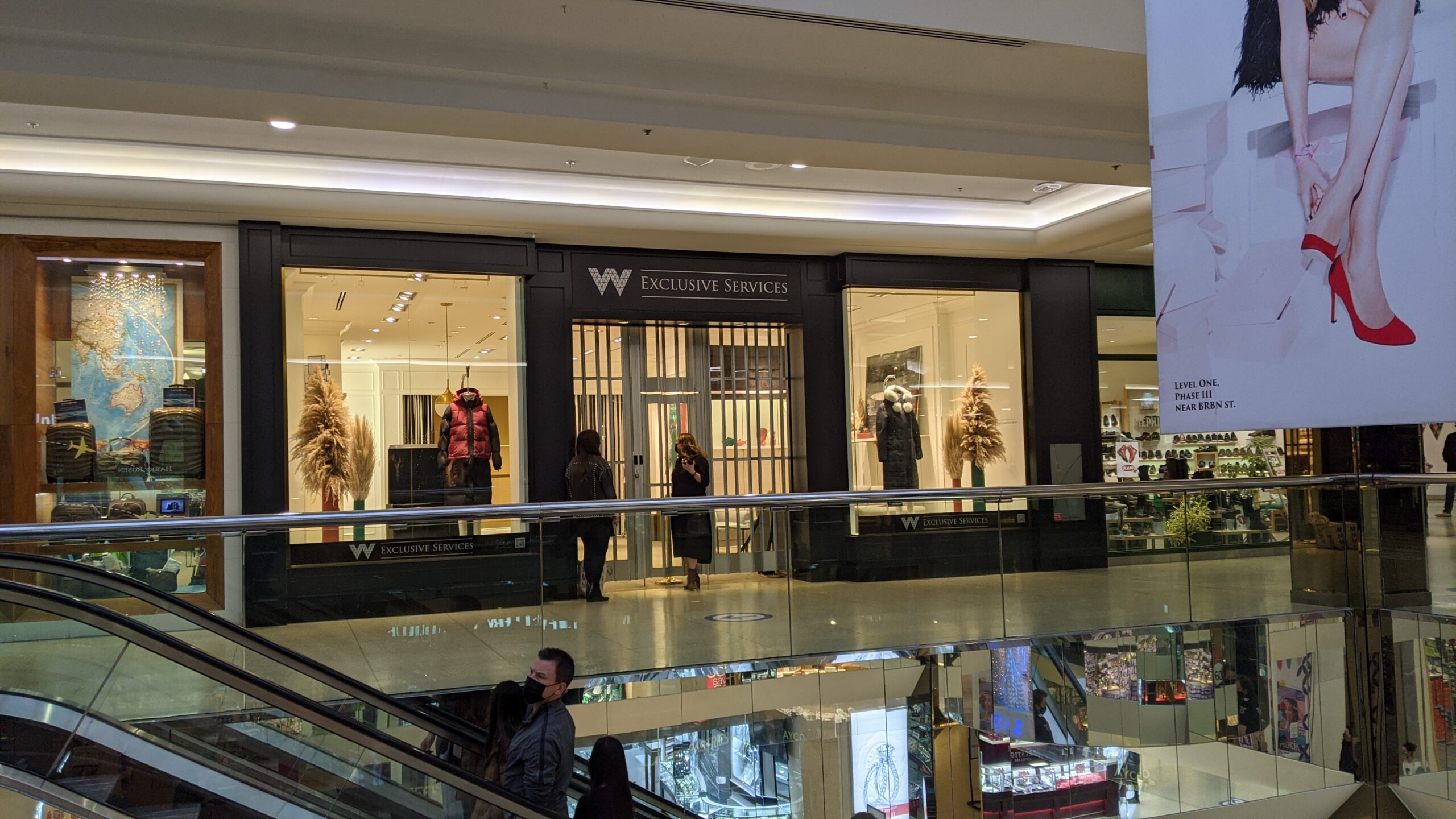
The “Lower Right” tour zone on the upper level at West Edmonton Mall features an entrance into entertainment concept ‘The Rec Room’. Key retailers in this zone included Harry Rosen and buybuy BABY. Related articles for the key retailers include:
West Edmonton Mall Guest Services Photo by Matthew at Best Edmonton Mall
Photo by Matthew at Best Edmonton Mall
Buybuy BABY is part of the former upper level of the mall’s former Eaton’s store which became a Target, as discussed above.
Some are surprised that Harry Rosen is located in this part of the mall. Luxury retailers are mostly located near Louis Vuitton in Phase 3. Several years ago CEO Larry Rosen explained how Phase 1 was strategic so that his male customers could find parking and pop in and out of the store. At one time competitor Henry Singer was so successful that Rosen considered exiting the Edmonton market, though times have changed.
The Rec Room, spanning nearly 100,000 square feet over two levels, opened in August of 2017. The expansion was intended to be a Holt Renfrew store and was being built on spec while negotiations with the retailer were ongoing. A deal never happened and The Rec Room was instead built-out.
Galaxyland. Photo by Matthew at Best Edmonton Mall
Galaxyland. Photo by Matthew at Best Edmonton Mall
Galaxyland. Photo by Matthew at Best Edmonton Mall
Galaxyland. Photo by Matthew at Best Edmonton Mall
West Edmonton Mall, Upper Level, Upper Right Zone, Phase 1
WEM (Phase 1 and Phase 2) – Upper Level – Lower Right Tour Zone
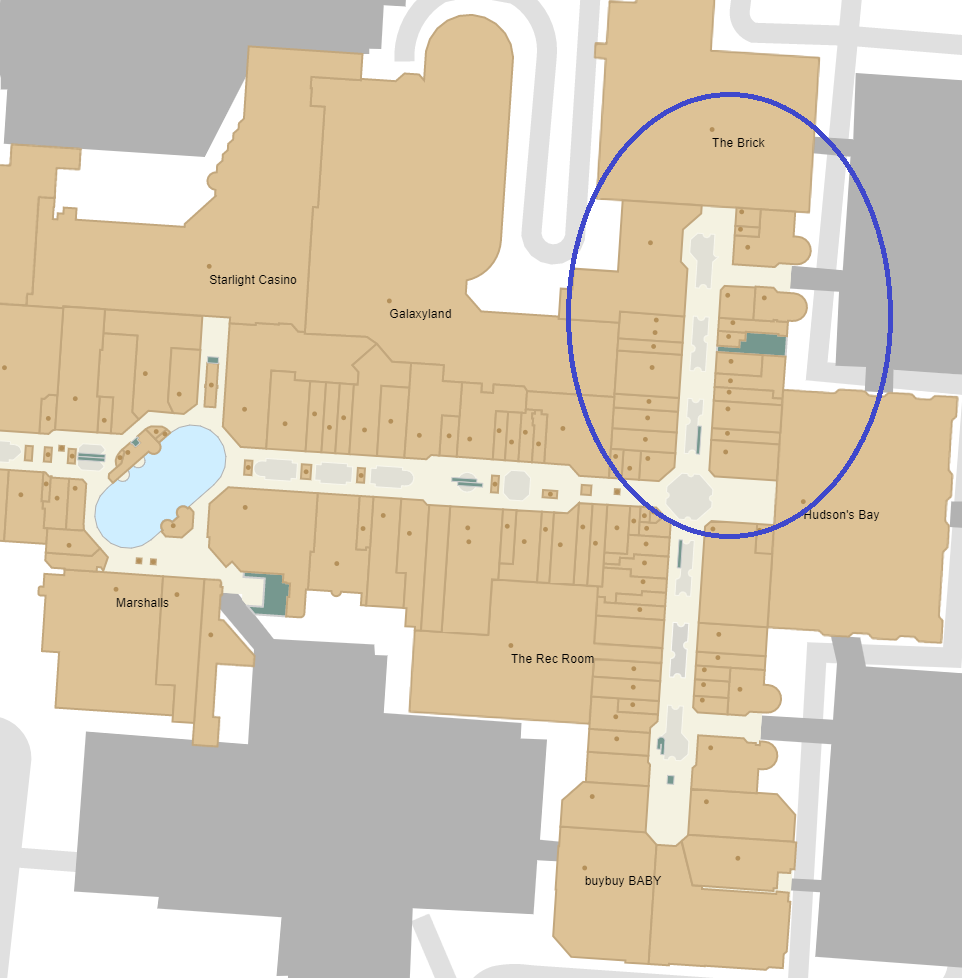
The “Upper Right” tour zone on the upper level at West Edmonton Mall has another entrance to Hudson’s Bay which we mentioned being accessible from the lower level as well. Other key retailers in this zone include The Brick, DSW Designer Shoe Warehouse, and Maison Birks. Related articles for the key retailers include:
This wing in the mall, like much of Phase 1, is quieter than the centre of the mall. In the 1990s Alfred Sung operated stores in this section of the mall including ‘Alfred Sung’ and ‘Alfred by Alfred Sung’, the latter featuring menswear as well as women’s fashions.
West Edmonton Mall, Upper Level, Centre Zone
WEM (Phase 1 and Phase 2) – Upper Level – Centre Tour Zone
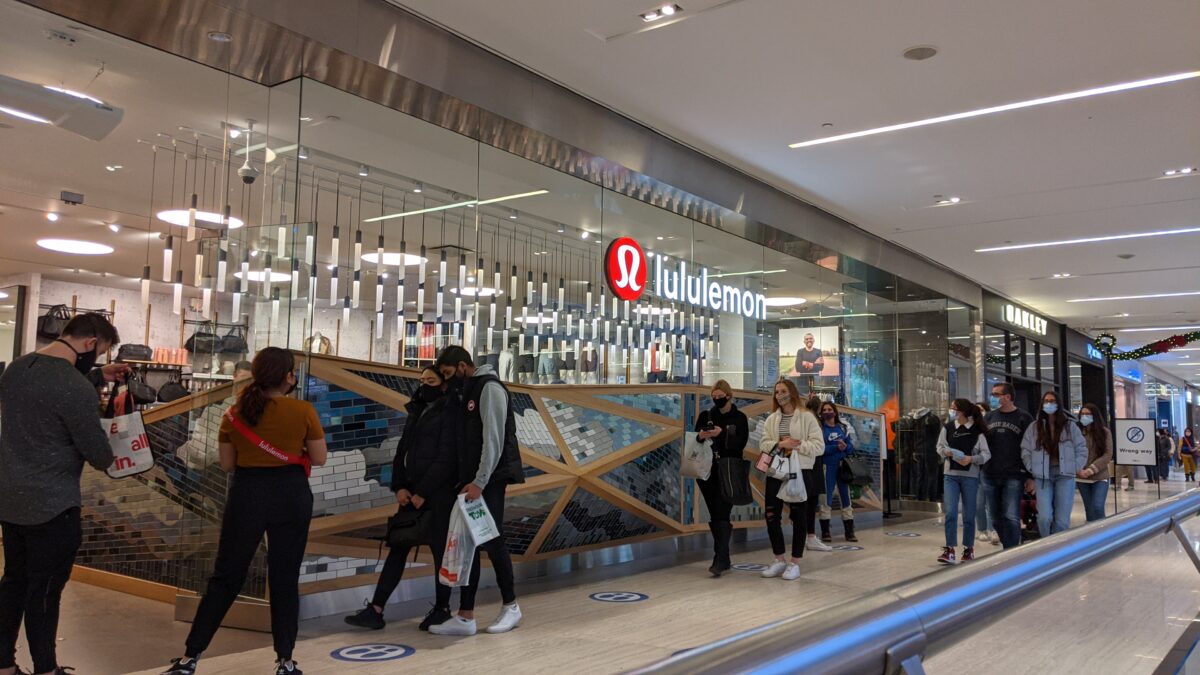
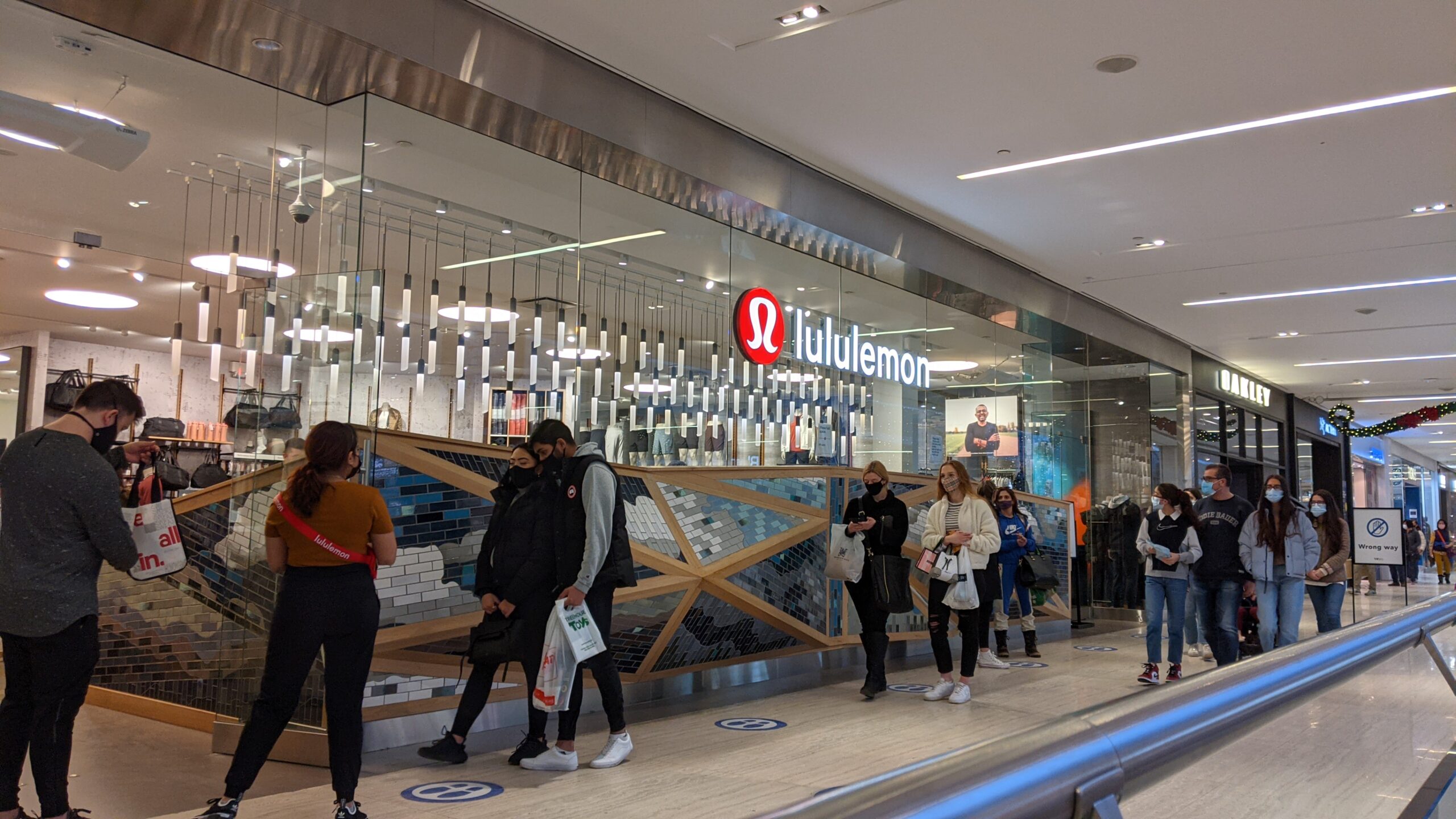
The “Centre” tour zone on the upper level at West Edmonton Mall has several international brands including Apple, Lululemon, and Samsung. Related articles for the key retailers include:
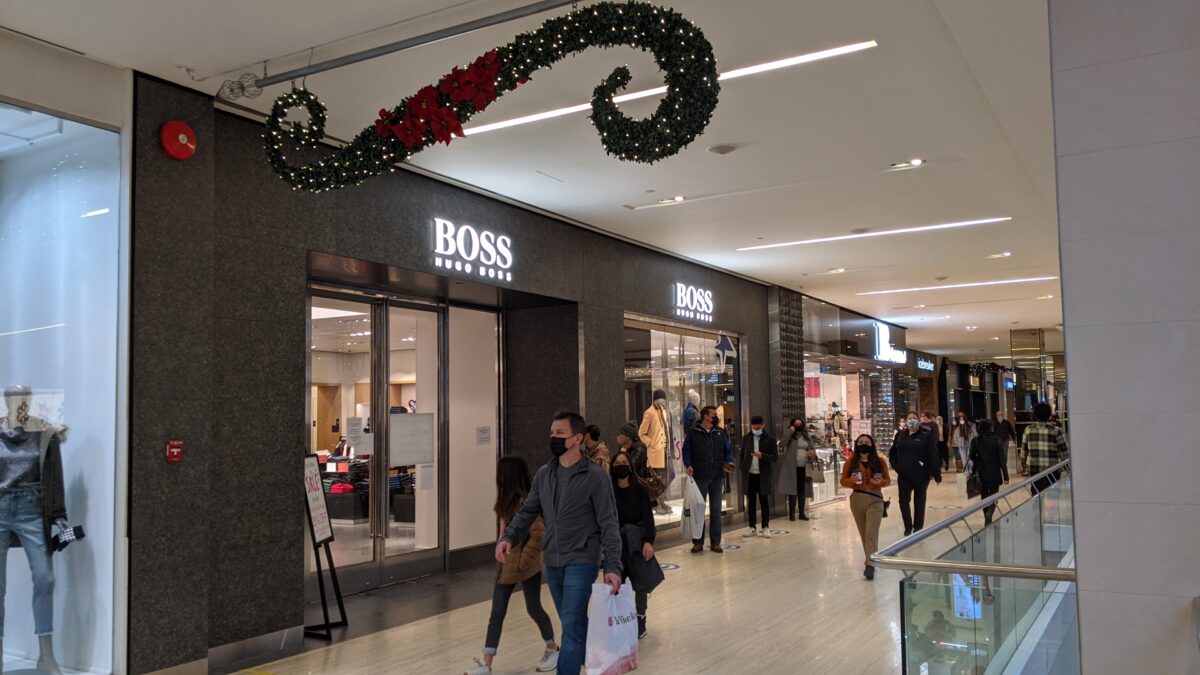
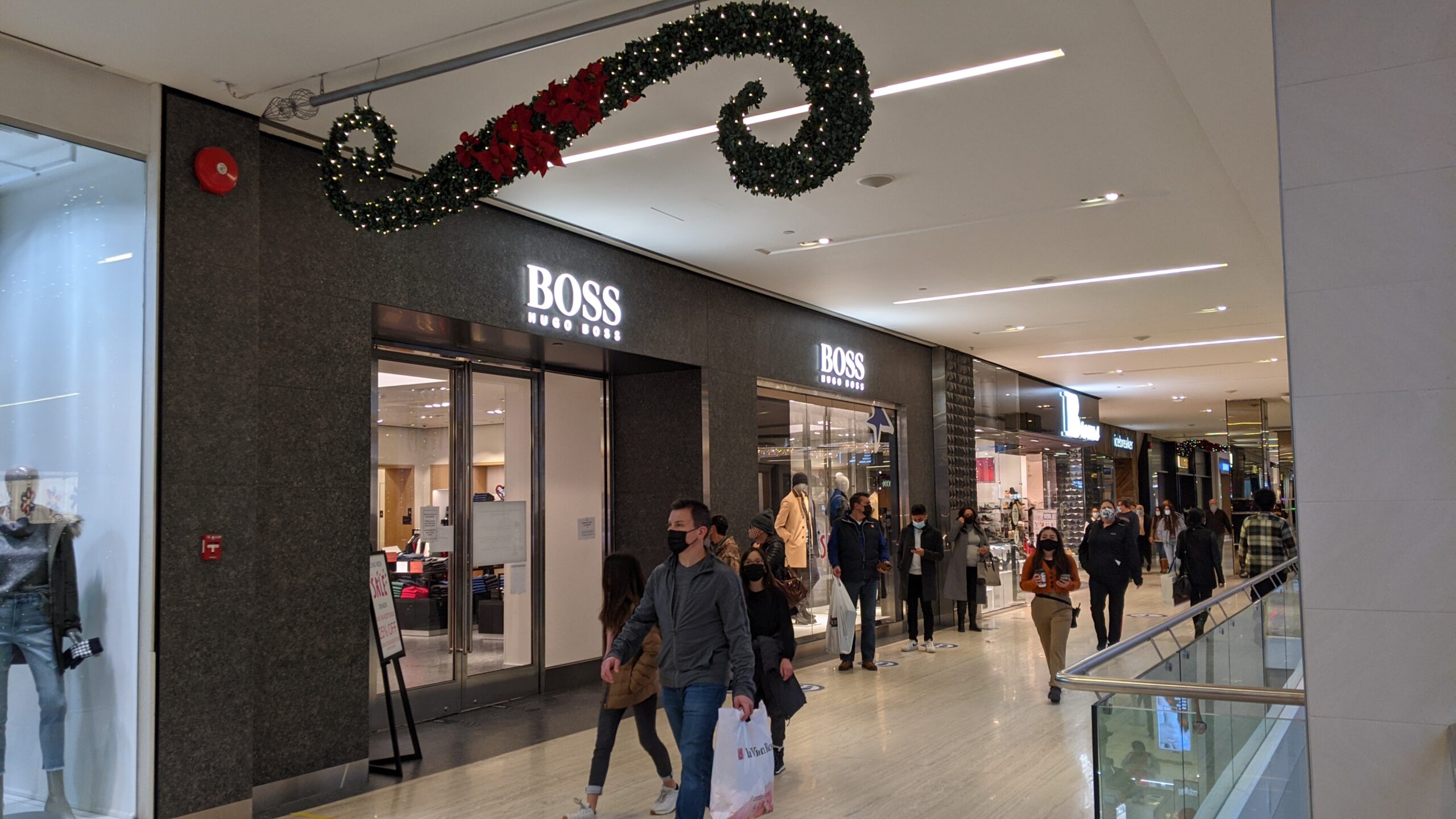
Some retailers in this section of the mall do extremely well. While Apple doesn’t reveal store sales numbers, sources say that the West Edmonton Mall store did over $50 million in sales in 2019. Lululemon also sells tens of millions of dollars annually at West Edmonton Mall. Hugo Boss recently renovated its West Edmonton Mall store featuring the brand’s newest design, similar to the Yorkdale location in Toronto.
In the photo below, glass art work hanging from the ceiling is meant to depict oil droplets.
Photo by Matthew at Best Edmonton Mall
West Edmonton Mall, Upper Level, Left Zone
WEM (Phase 1 and Phase 2) – Upper Level – Left Tour Zone
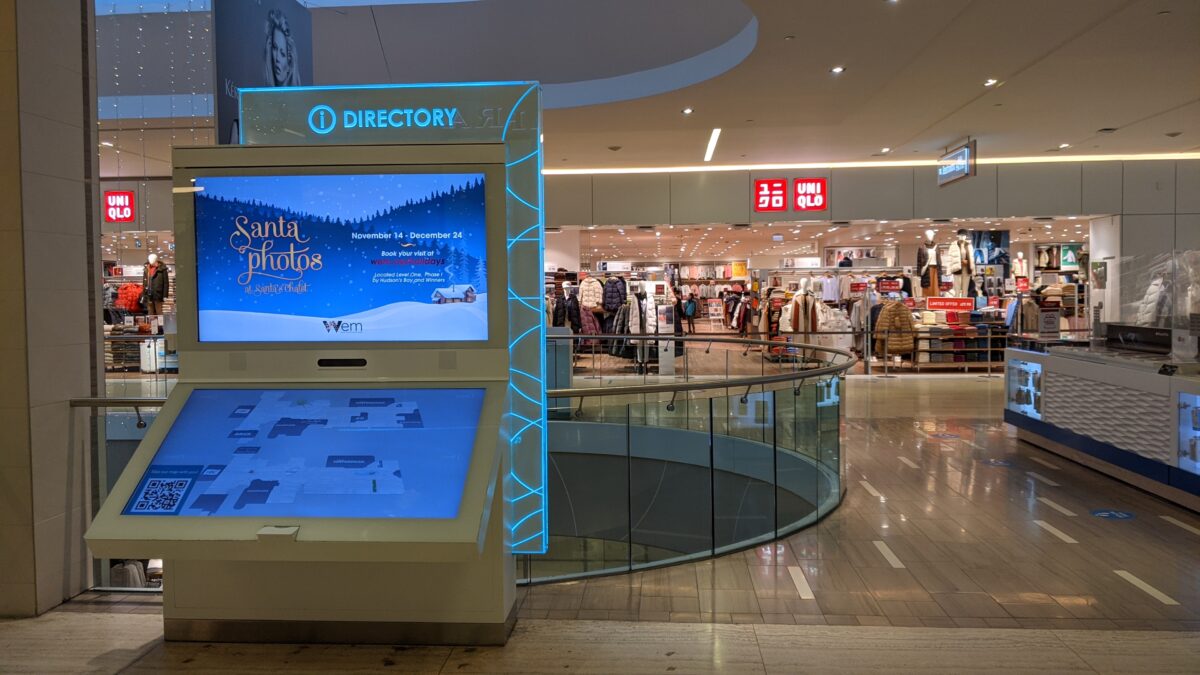
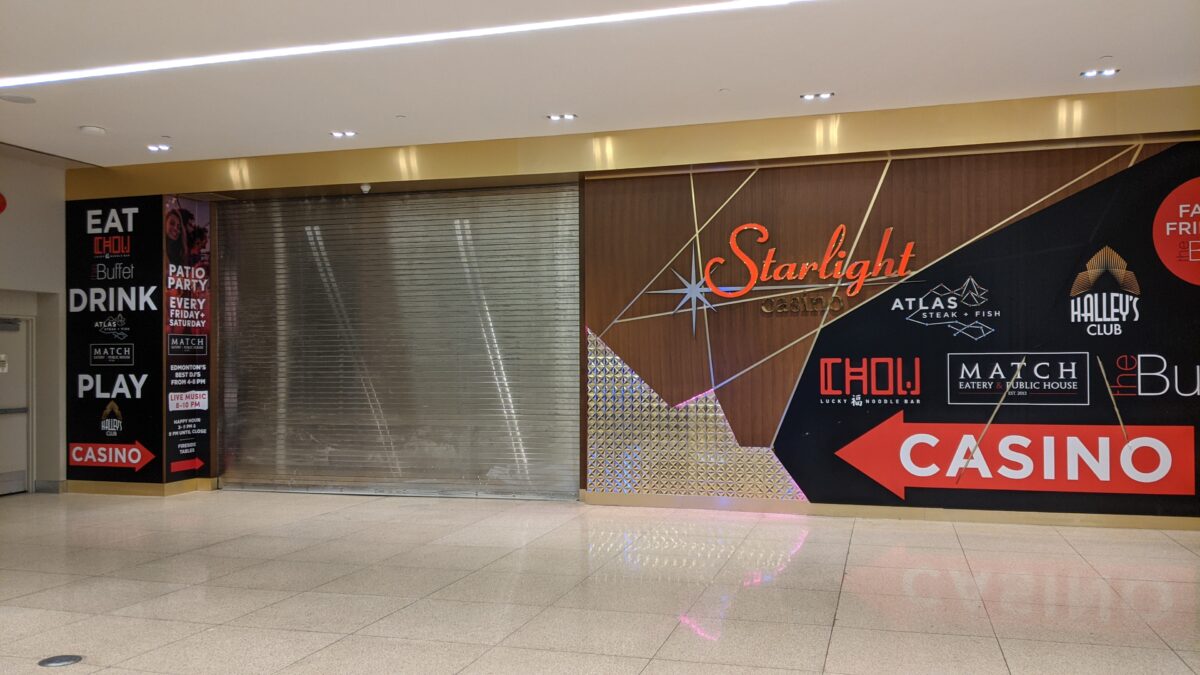
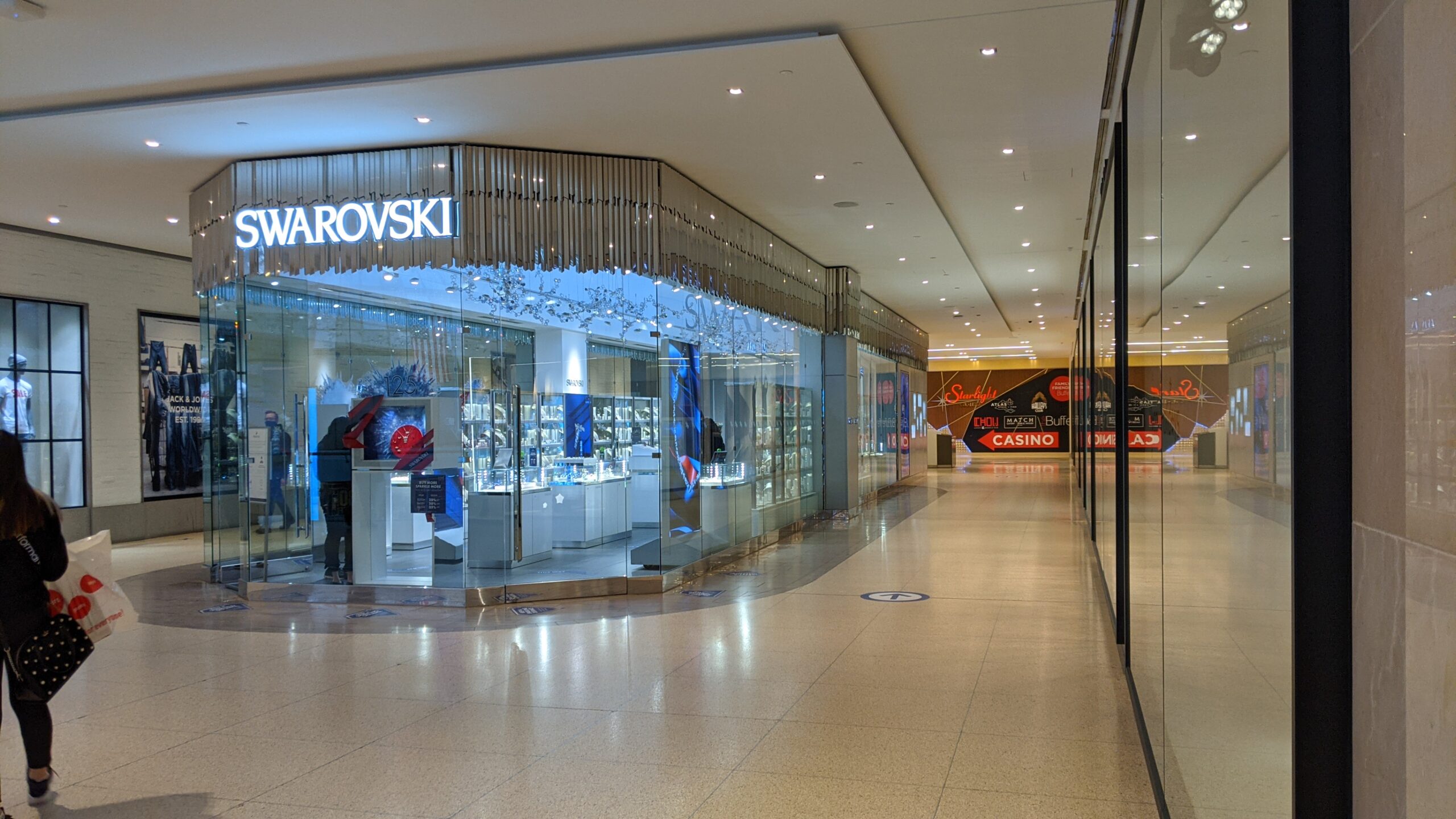
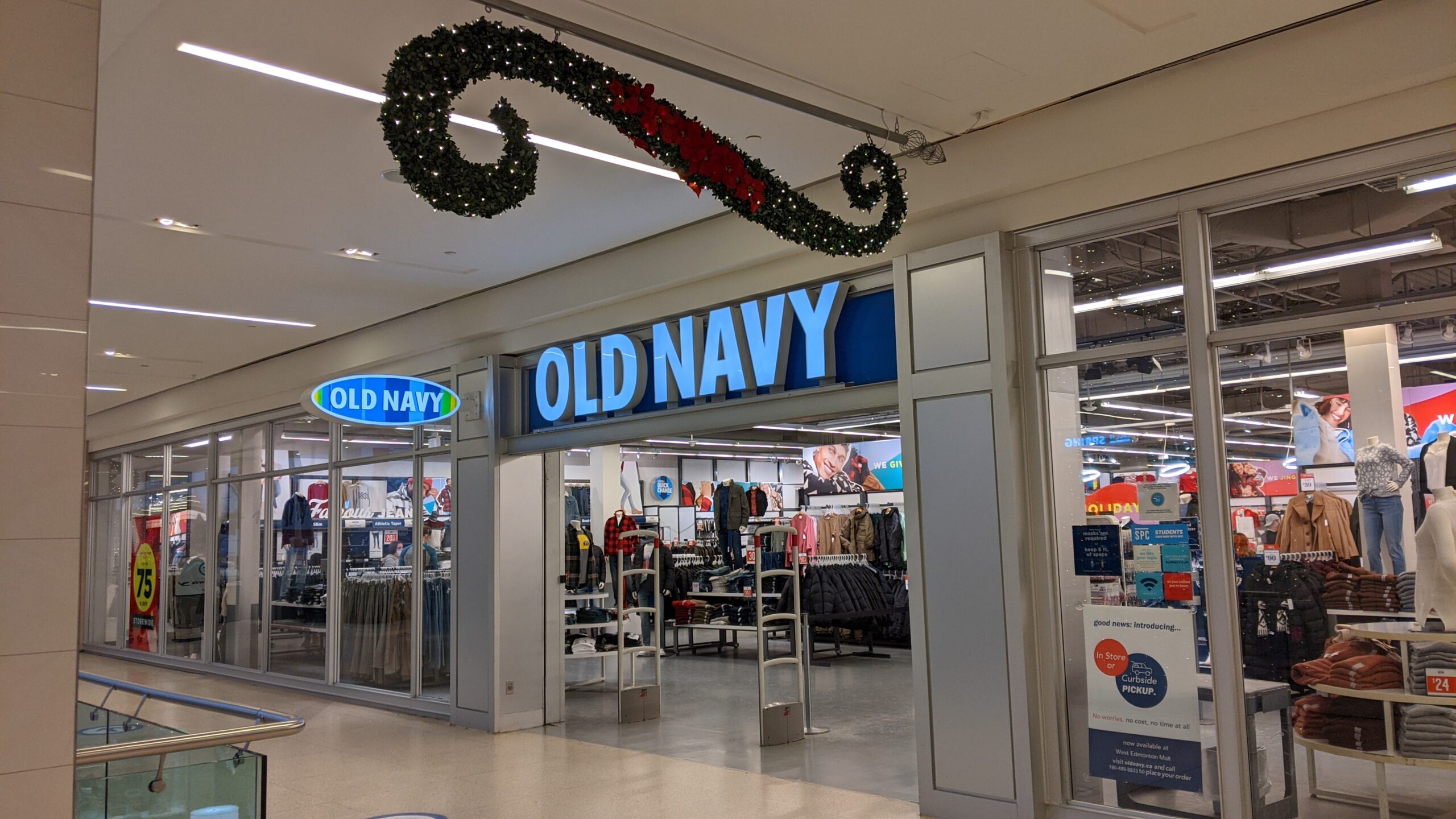
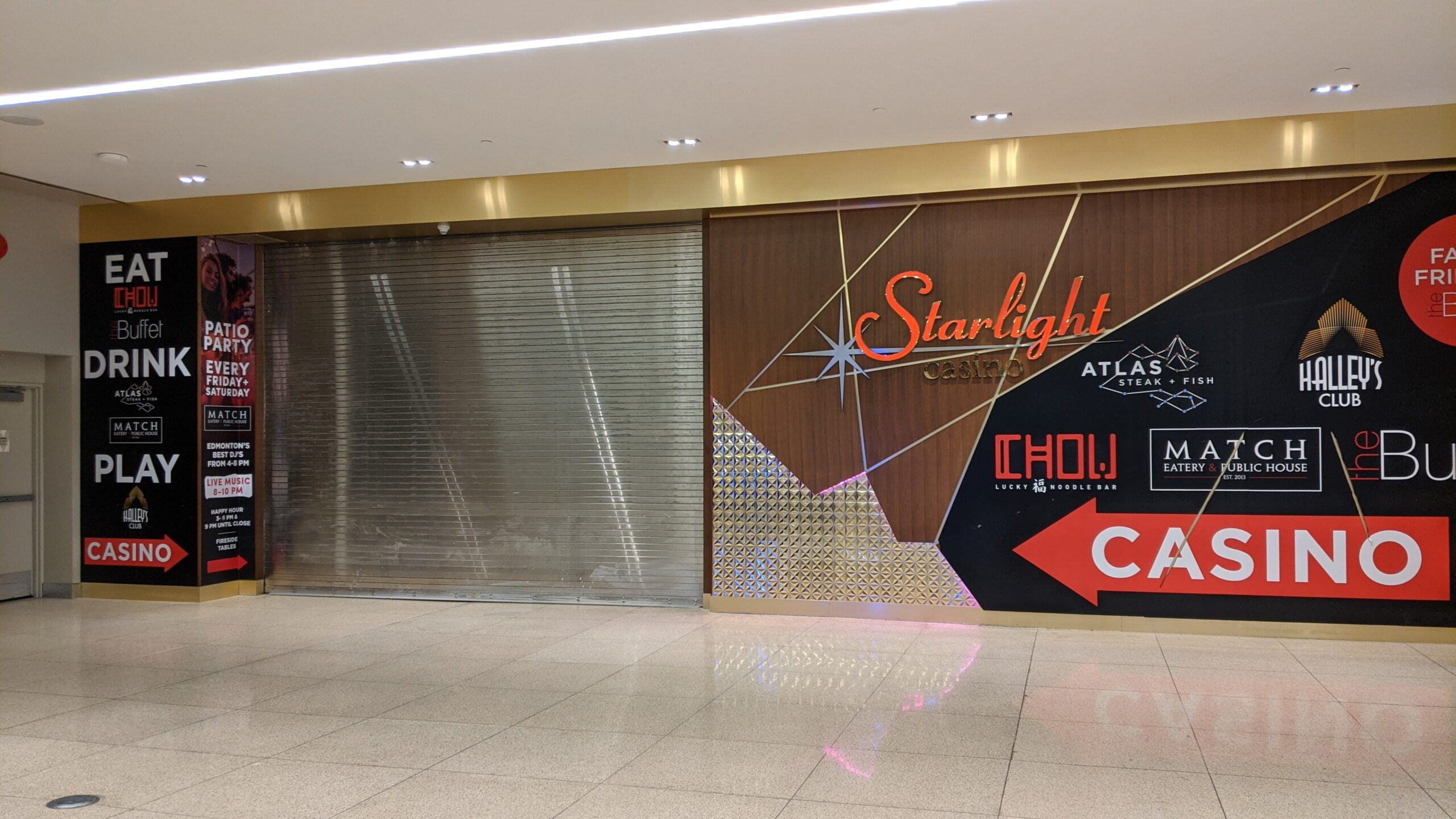
The final tour zone for our West Edmonton Mall tour of Phase 1 and Phase 2 is the ‘left zone’ on the upper level. The entrance to the Starlight Casino is located in this zone as well as UNIQLO, Sephora, Zara, and Anthropologie. Related articles for the key retailers include:
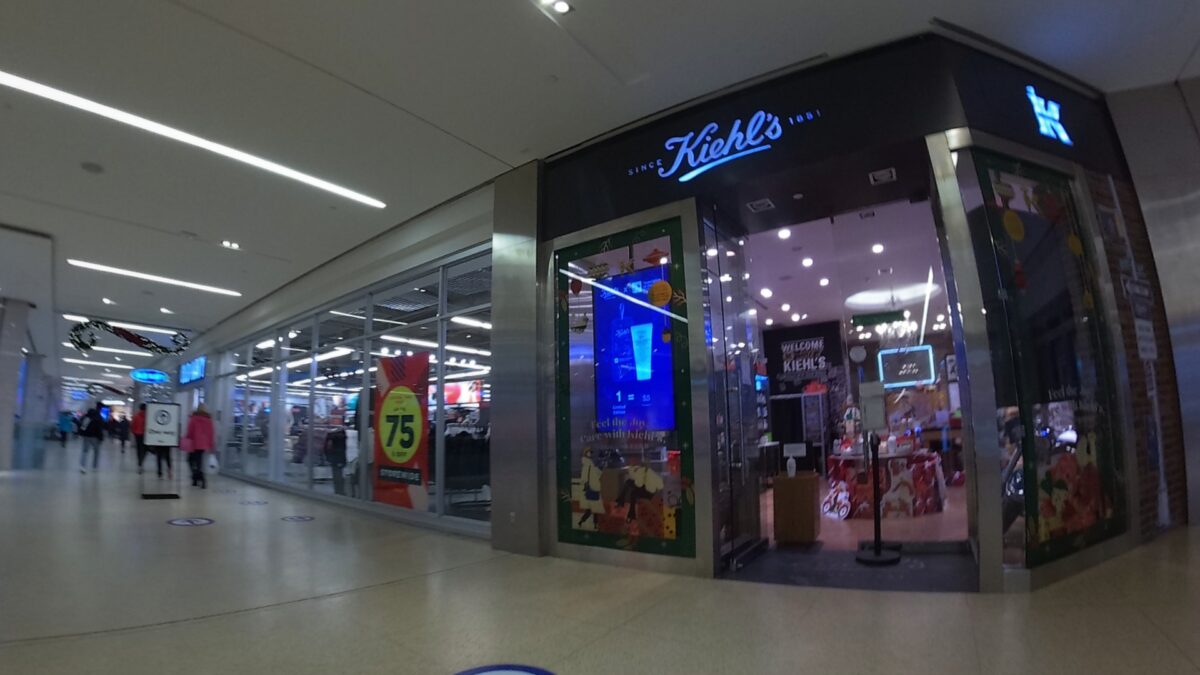
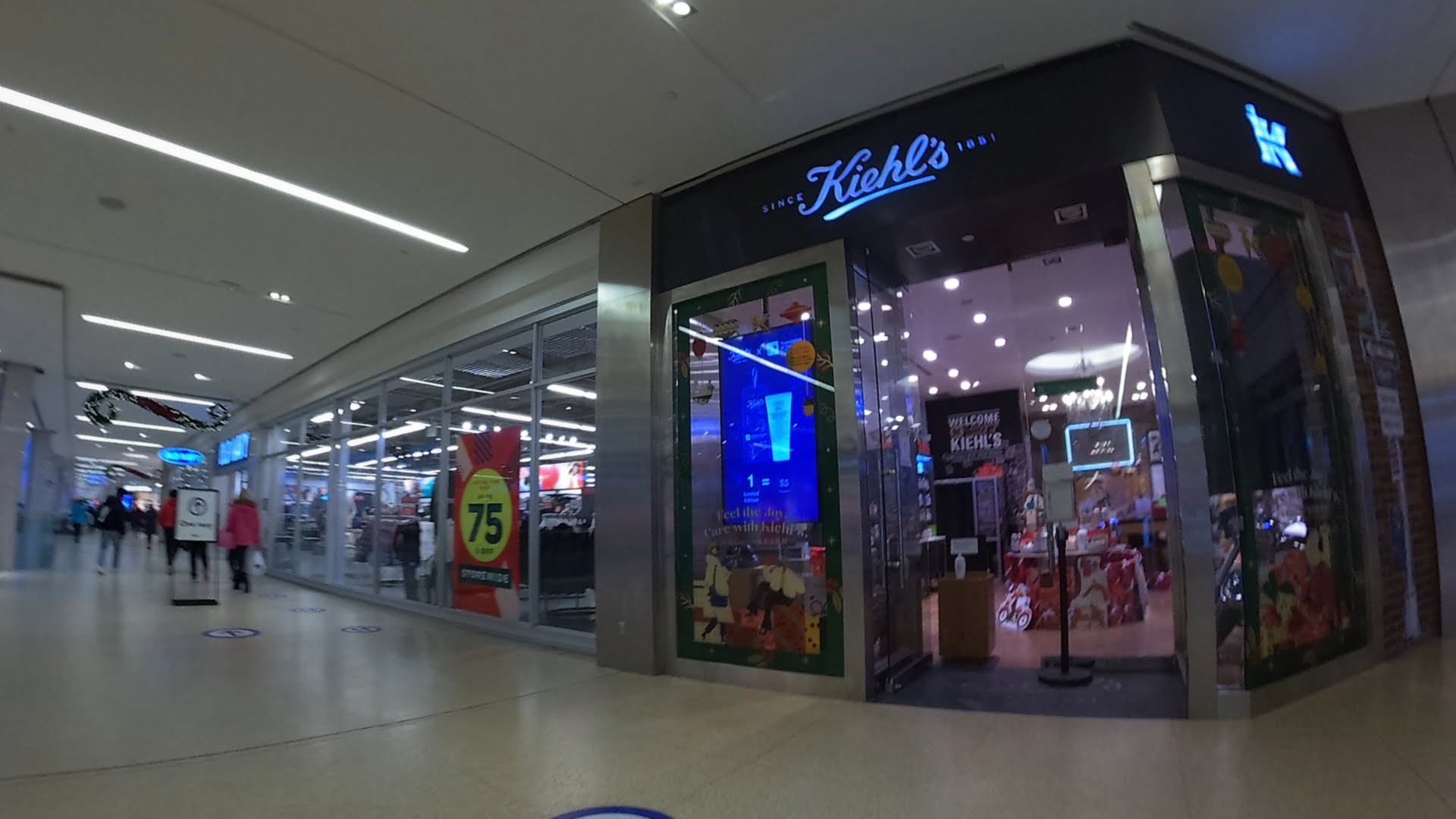
Kiehl’s at West Edmonton Mall – Photo by Matthew at Best Edmonton Mall
Swarovski at West Edmonton Mall – Photo by Matthew at Best Edmonton Mall
Old Navy at West Edmonton Mall – Photo by Matthew at Best Edmonton Mall
A unique Swarovski store is contained in a rounded retail space that years ago was an aquarium featuring exotic sea creatures. Several were located throughout the mall. Marshalls is a popular draw and opened in the summer of 2018 in part of the former Zellers space in the mall.
Starlight Casino at West Edmonton Mall – Photo by Matthew at Best Edmonton Mall
Starlight Casino at West Edmonton Mall – Photo by Matthew at Best Edmonton Mall
Wrap Up of West Edmonton Mall (Phase 1 and Phase 2) Photo Tour
And that’s a wrap! Join us tomorrow for a tour of Phases 3 and 4 of West Edmonton Mall, which are the two newest phases and house a wide range of retailers from luxury brands such as Louis Vuitton and Saint Laurent to the innovative Simons anchor store. We hope you enjoyed this tour which took a considerable amount of work to put together.
Thank you again Matthew from Best Edmonton Mall who supplied photos for this article.
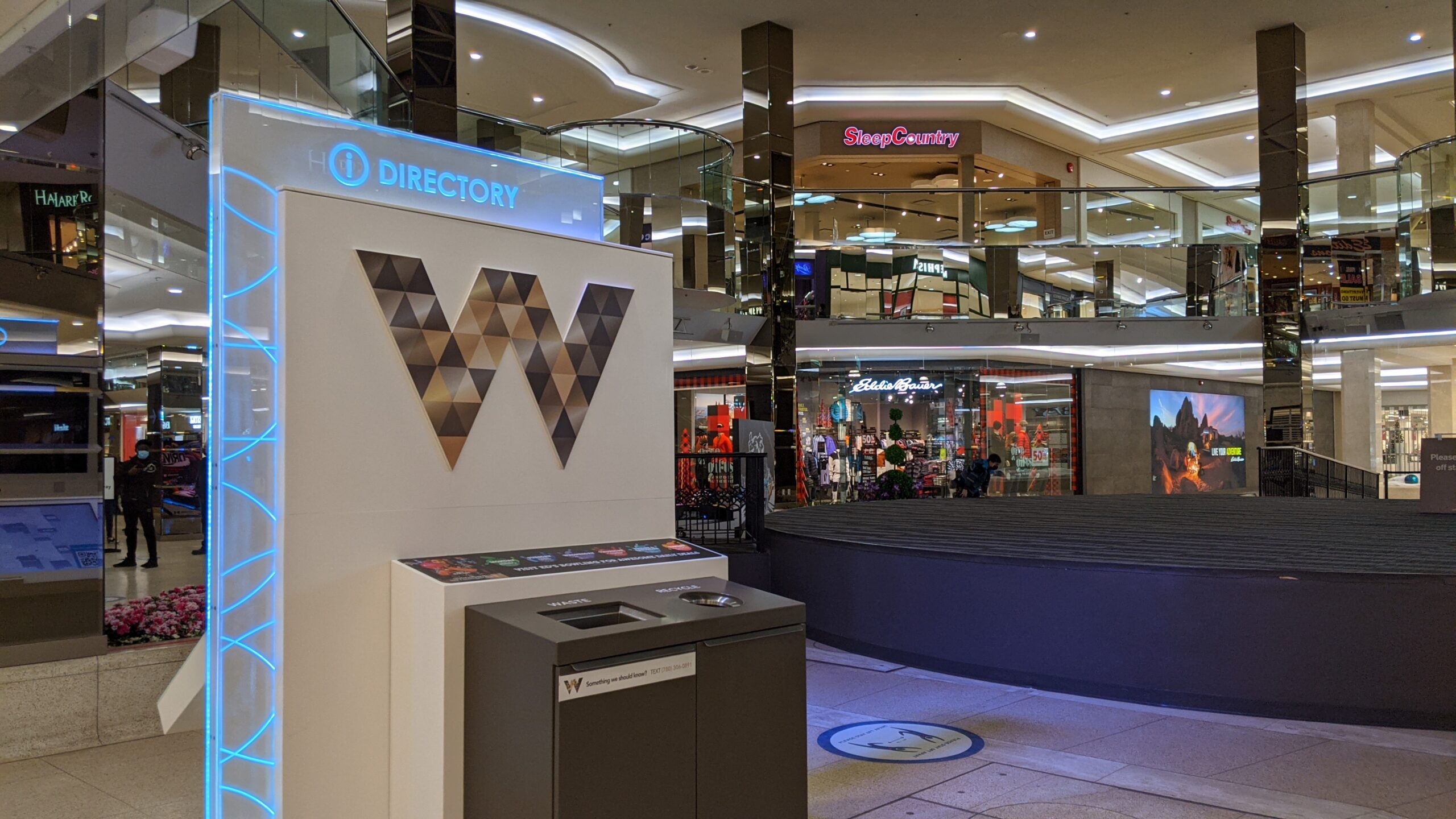
West Edmonton Mall Directory Photo by Matthew at Best Edmonton Mall
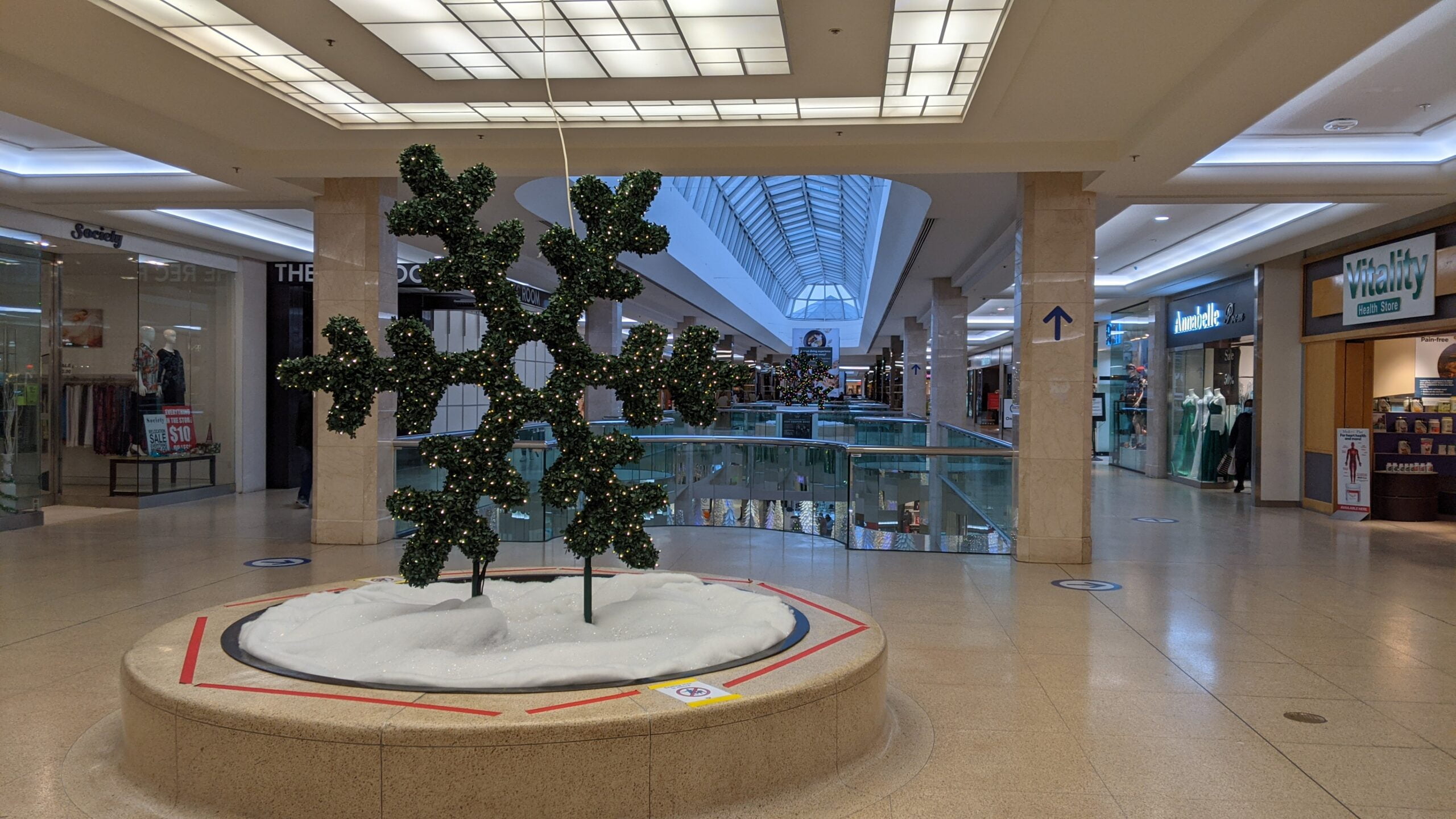
Holiday Decorations Photo by Matthew at Best Edmonton Mall
Food Court A&W Photo by Matthew at Best Edmonton Mall
Food Court Photo by Matthew at Best Edmonton Mall
Food Court Photo by Matthew at Best Edmonton Mall
Interested in Seeing More West Edmonton Mall Photos
An empty CF Toronto Eaton Centre - Photo by Toronto Tourism
Montreal-based SGM, in conjunction with MEDIAVORE, has developed an innovative e-commerce solution for shopping centres.
They say it’s the first online store adapted to malls during a time when brick and mortar retailers are being severely challenged by the economic and health crisis created by the on-going COVID-19 pandemic.
The online marketplace brings together products selected from several retailers and it has been launched at the Complexe Desjardins in Montreal — the first shopping centre in the country to adopt this transactional platform.
Anissa Errai
“What makes this platform a major innovation is that we have successfully integrated a shopping solution that covers all retailers in order to keep revenues in the shopping centres,” said Anissa Errai, VP, Consulting Services and Strategy Group at SGM.
“This is a perfect solution within the current context of the pandemic and it effectively meets the challenge of delivering products on time for the holidays. But it also has enormous potential. As we know, consumers are always seeking greater convenience, speed and flexibility. Our platform offers all three: one site, one order, one bill, products delivered to their door in one delivery or collected at the shopping centre. It also promotes local shopping at a time when our retailers need it the most.”
SGM is a creative marketing agency that focuses on commercial spaces and work, live, and play environments. Since 2003, SGM has worked with some of the biggest Canadian real estate organizations. MEDIAVORE develops e-commerce businesses, web applications, and ERPs that focus on intuitive client-experiences and employee-experiences for automating business processes. DVORE is a customizable e-commerce platform that is integrated in the operations of B2B/B2C e-commerce businesses, marketplaces and transactional platforms.
“We are so pleased that Desjardins has chosen DVORE’s marketplace solution to develop a local shopping platform in partnership with SGM,” added Alexandre Jalbert, Co-founder and Digital Strategist at MEDIAVORE and DVORE.
Alexandre Jalbert
Errai said the unique site (which is down and relaunches this spring) gives consumers the comfort of shopping from their homes and have everything delivered free of charge (within a four-kilometre radius) in less than 24 hours.
The first phase of the shopping experience included a handful of businesses but the plan is to add more retailers and continue to evolve the concept further in 2021. The second phase will integrate all the stores and restaurants at Complexe Desjardins. Besides delivery service and curbside pickup, customers will also have the option of coming in to pick up their purchases from secure lockers.
Errai said the company hopes to expand the unique shopping experience to other shopping centres and it could be used in a number of other possible applications such as main street areas and neighbourhood business districts.
“We’ve been thinking of this kind of e-commerce platform for shopping malls for quite a while but with the pandemic it accelerated the thinking,” said Errai.
“We’ve done the pilot project with 15 retailers for Christmas. They choose the Christmas gift ideas to put on the platform and to sell it online. The beauty for the consumers is it’s one invoice and one delivery. That’s an innovation there.”
Errai said Complexe Desjardins was the first place to kick off the concept because SGM has been working with the shopping centre for the past few years on its marketing strategy. It was also a great opportunity because it is a downtown shopping mall.
“We do want to propose this to other shopping malls and other groups because we think it will help. Every shopping mall is going to need a platform like that to help multiply their sales,” she said.
“I think there are a lot of advantages of this platform and it could apply to a lot of strategies for different area shopping malls.”
“I think there are a lot of advantages of this platform and it could apply to a lot of strategies for different area shopping malls.”
This week, Craig & Lee return for 2021 and discuss Vancouver’s Alberni Street “Luxury Zone” and Toronto’s Bloor Street “Mink Mile” for recent announcements of openings/closures.
The Weekly podcast by Retail Insider Canada is available on Apple Podcasts, Stitcher, TuneIn, Google Play, or through our dedicated RSS feed for Overcast and other podcast players.
Drop us a line at Craig@Retail-Insider.com. You can also rate us in Apple Podcasts or recommend us in Overcast to help more people discover the show!
Background Music Credit: Hard Boiled Kevin MacLeod (incompetech.com). Licensed under Creative Commons: By Attribution 3.0 License. http://creativecommons.org/licenses/by/3.0/
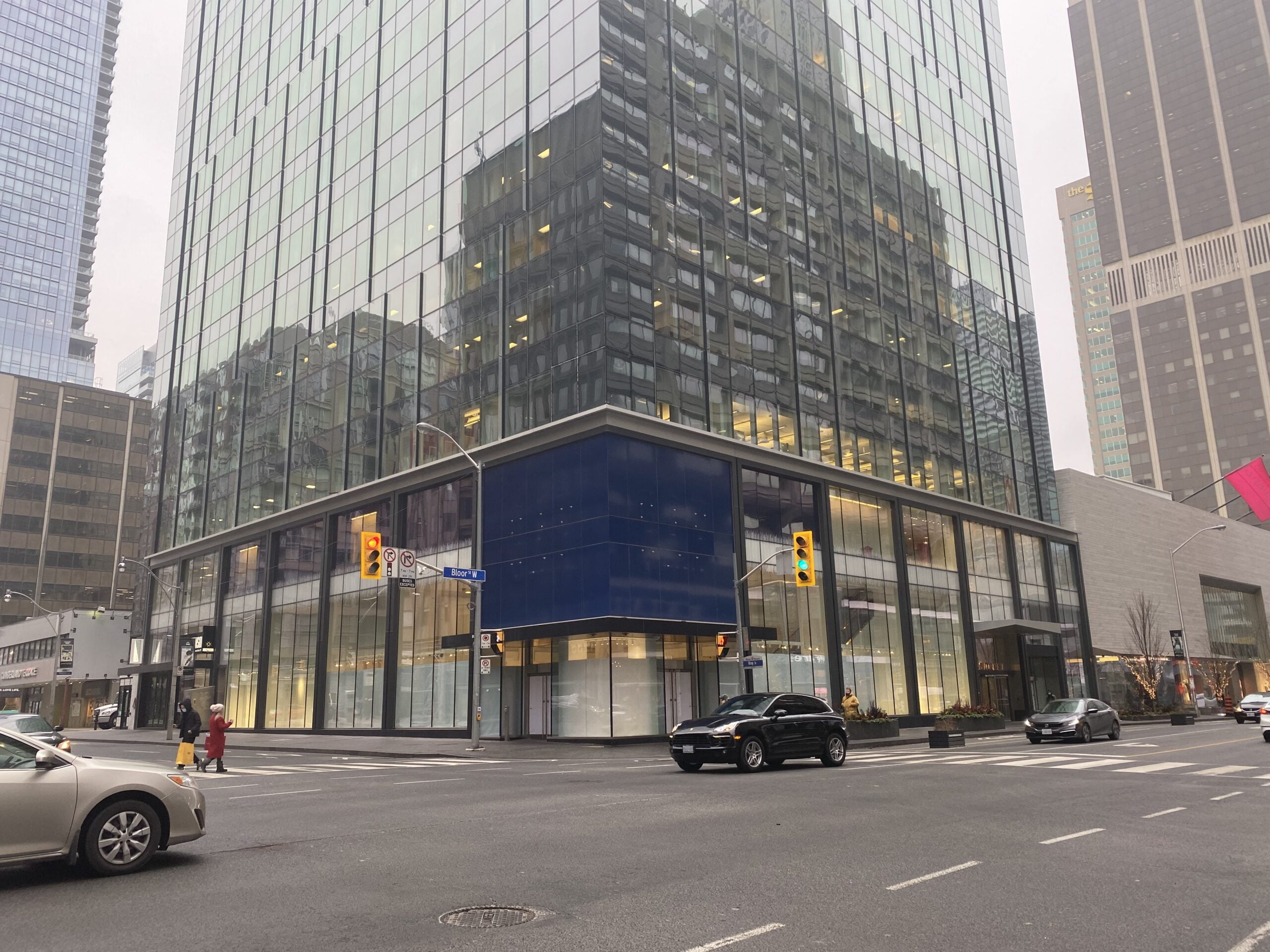
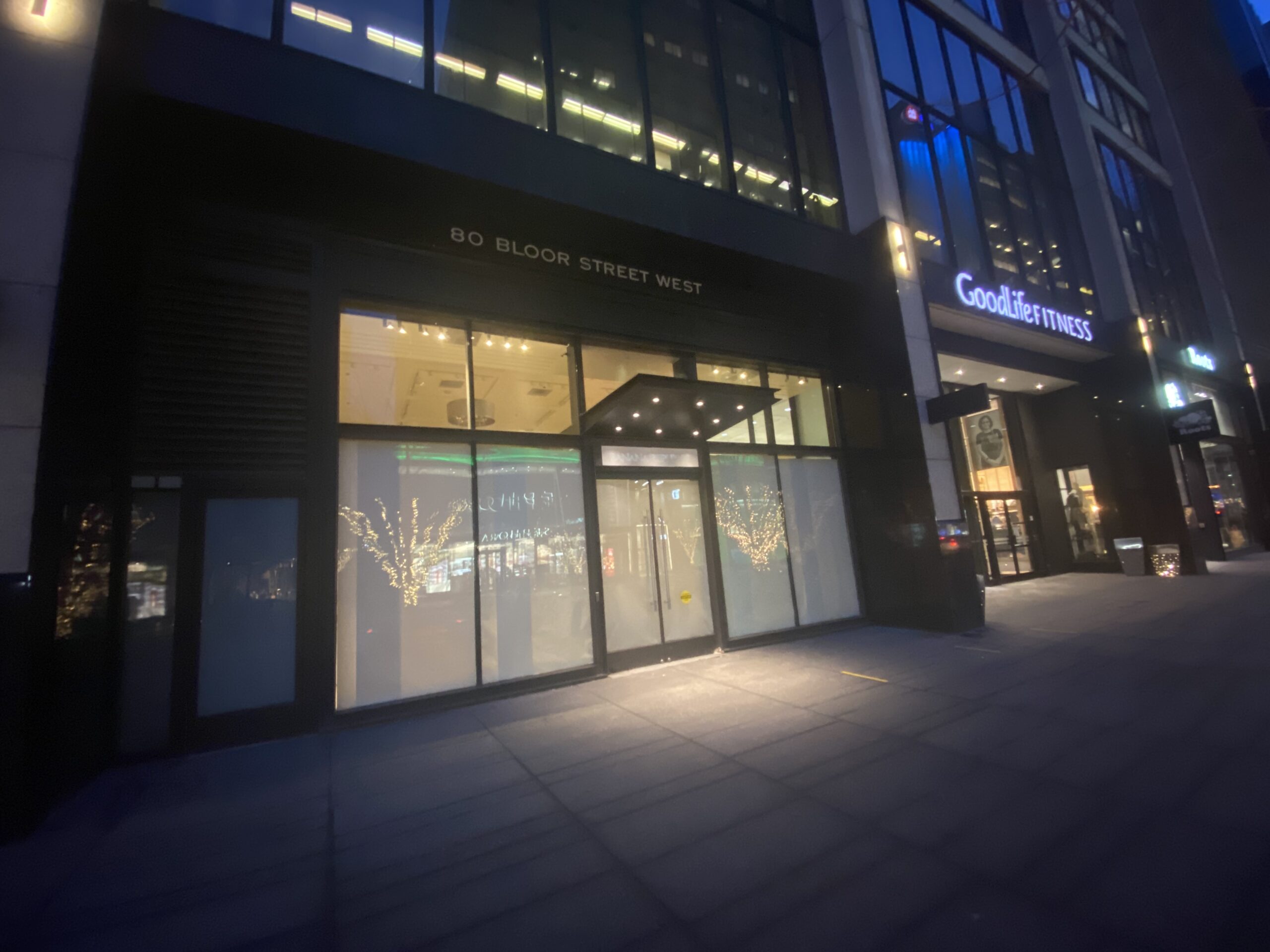
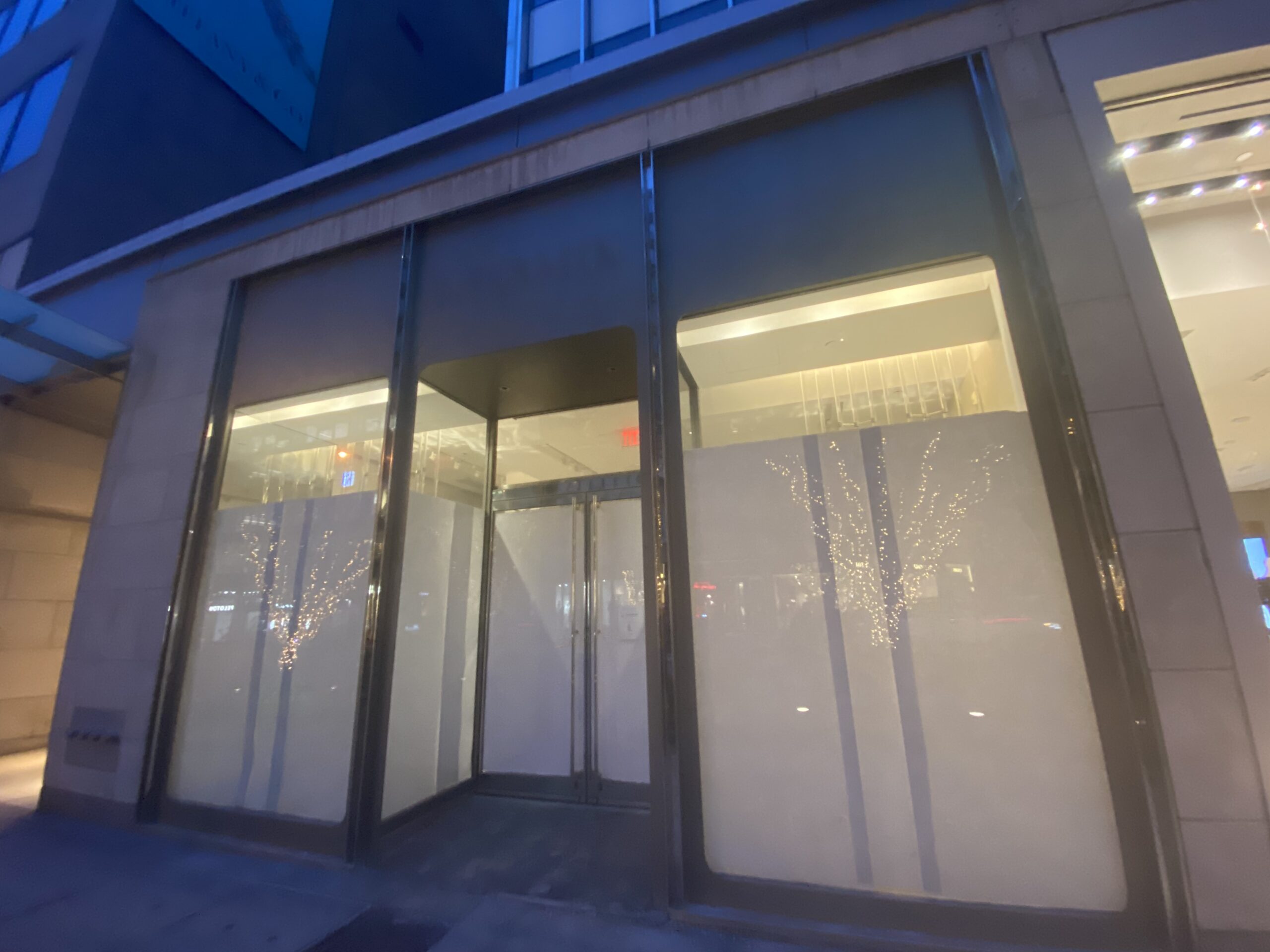
The signs are off all three of the Gap’s storefronts on Toronto’s prestigious Mink Mile. The Gap storefront at 60 Bloor Street West saw its signage come down earlier this week. On Wednesday, signage for the Gap-owned Intermix at 130 Bloor Street West was being taken down. Both of these developments followed the shuttering of the Banana Republic store at 80 Bloor Street West in October.
1 of 3
Former Gap store on Bloor Street West - Photo by Craig Patterson (January 14 2021)
Empty Banana Republic store on Bloor Street West. Photo: Craig Patterson (January 14 2021)
Empty Intermix store on Bloor Street West. Photo: Craig Patterson (January 14 2021)
It’s the first time in more than two decades that the Gap has no storefronts on Bloor Street. The spaces will also have to be leased at some point — so far only the Intermix space has been leased, filling about 2,000 square feet. The Gap store on Bloor spanned about 17,000 square feet and Banana Republic was about 6,500 square feet.
The Gap opened at 60 Bloor in 1999, joining the nearby Banana Republic store that had opened in 1995. Intermix opened in 2011 prior to being acquired by Gap in 2012.
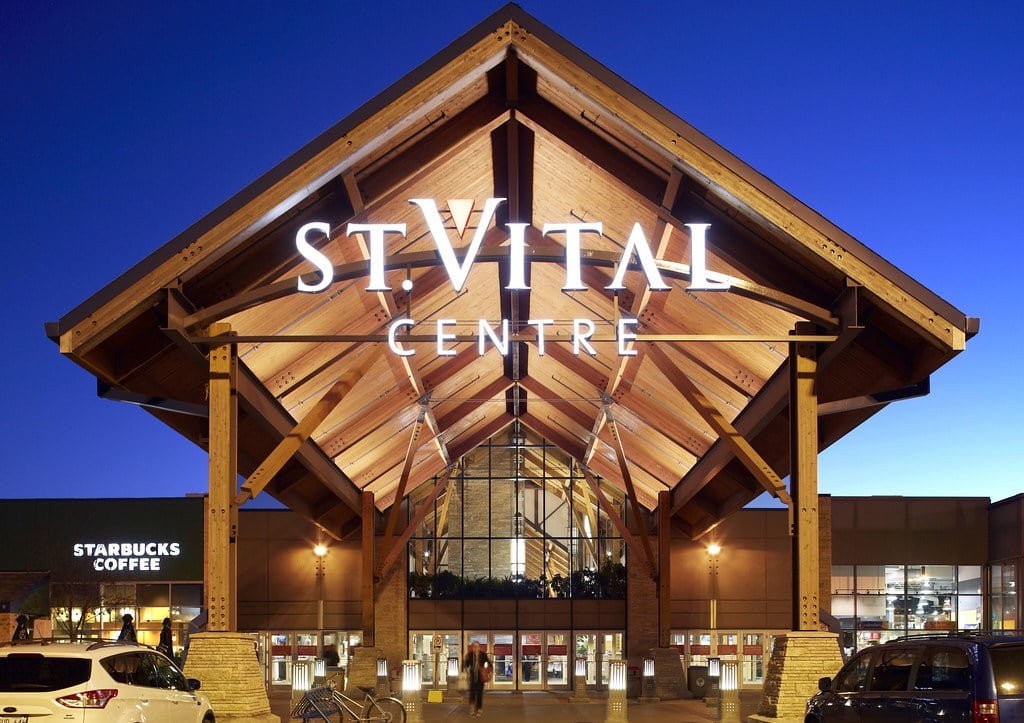
Exterior of St. Vital Centre. Photo: St. Vital Centre
BentallGreenOak Welcomes 2 New Super Regional Assets to its Retail Services Portfolio
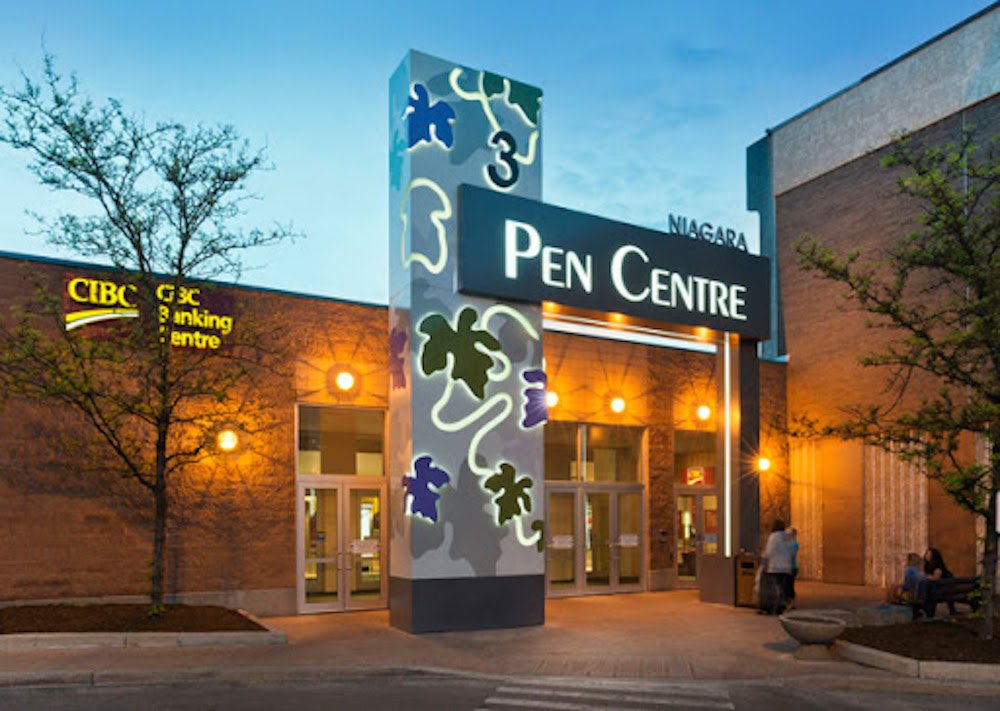
BentallGreenOak has announced that, effective January 1, 2021, it has welcomed two new Super Regional Assets to its retail services portfolio. Having been awarded the management services mandate for St. Vital Centre in Winnipeg, Manitoba and Pen Centre in St. Catharines, Ontario, the addition of these two properties will increase BGO’s retail assets under administration by over 2 million square feet.
With 927,000 square feet of leasable space, St. Vital is home to 160 stores and services and is situated in one of Winnipeg’s fastest growing areas. St. Vital is anchored by Hudson Bay, London Drugs, Silver City, Sport Chek, Walmart, and the soon-to-open Homesense and Marshall’s. This centre welcomes over 8 million visitors per year. St. Vital is known for its expansive food hall and exceptional location that is easily accessible for families and students.
Exterior of the Pen Centre. Photo: Cushman & Wakefield
Pen Centre is the largest enclosed shopping centre in Ontario’s Niagara Region, with over 1,072,000 square feet of leasable space. Located just 15 minutes from two of Ontario’s largest tourism draws —Niagara-on-the-Lake and Niagara Falls — Pen Centre is perfectly positioned to welcome tourists as easily as it does local St. Catharine’s-area residents. An estimated 10 million customers per year visit Pen Centre for its 160 stores and services and impressive anchor mix including Hudson’s Bay, Landmark Cinema’s, Walmart, Winners/Homesense, H&M, Zehrs, and a new Sport Chek concept store.
For information on opportunities available in these two retail properties, please contact:
Retailers Ranked Among Canada’s Best Places to Work in 2021
This week Glassdoor announced the winners of its 13th annual Employees’ Choice Awards, recognizing the Best Places to Work in 2021 across Canada. The awards are based on the input of employees who voluntarily provide anonymous feedback by completing a company review about their job, work environment and employer over the past year.
Ratings were based on a 5-point scale: 1.0=very dissatisfied, 3.0=OK, 5.0=very satisfied.
Lululemon ranked seventh in the list and Ikea ranked 17th. Apple, which has a network of stores in Canada, ranked 4th although that could include support services. The top 10 list include the following:
Rendering of Kia Motors Canada showroom. Rendering: Kia Motors
Kia Canada Reports Record-Breaking Year in 2020
Despite a challenging year and a turbulent automotive market in 2020, Kia celebrated eight months of record sales (January, February, June, July, August, September, October, and December) including their best-ever month in Canadian history, in August.
Kia sold a remarkable 72,452 units in 2020, with top models Forte and Sorento among the best-selling models, and newcomer Seltos emerging as a consumer favourite. Kia attributes its record-breaking year to Canadians’ desire for uncompromising quality, leading design, innovative technology and award winning vehicles. Kia was also awarded top position for the 6th year in a row in the J.D. Power IQS report in the US.
“During a year where Canadians were looking for vehicles that could not only meet their needs, but that they could rely on for quality and safety, we are grateful that we can deliver on products that satisfy both,” says Elias El-Achhab, Chief Operating Officer at Kia Canada.
Kia Canada offered a range of consumer promotions in 2020, including the industry leading “Kia Has You Covered” incentive from May to August, in which Kia paid, not deferred, the first six months’ of payment on finance and the first three months’ payment on leases, on a number of their most popular models. As an extension of the Power to Give COVID-19 response initiative — in which Kia Canada partnered with Food Banks Canada to deploy vehicles and funds to local hunger relief organizations — the brand is also proud to have donated protective Face Shields to the Public Health Agency of Canada for the dedicated frontline workers of Canada.
Interior of Crocs store showcasing a variety of colours. Photo: Crocs
Crocs Cleaned Up in 2020
Crocs is on track to report its best annual sales ever as the pandemic gives new life to the brand. Revenue for 2020 will climb more than 12% to about $1.4 billion, a record high, the company said Monday in a statement. That’s well above Crocs’ earlier forecast for sales growth of no more than 7%. It also anticipates sales growth of 20% to 25% in 2021.
Crocs shares jumped as much as 11% in New York trading. The stock has been on a four-year winning streak and gained 50% in 2020.
“Amidst a global pandemic in 2020, we will deliver the strongest revenue in Crocs’ history,” Crocs CEO Andrew Rees said in a statement. “Our brand momentum is exceptional, and we anticipate another record year in 2021. We definitely benefited from consumer casualization,” said Rees, adding that the clogs are also easy to clean and sanitize, thereby enhancing their pandemic-time appeal.
Looking ahead, he said value and comfort will continue to be important for shoppers. More younger consumers also gravitated to the brand during the pandemic due to various collaborations rolled out by Crocs. In the past 12 months, the brand teamed up with a number of artists and brands, including Post Malone, Justin Bieber, and fast-food chain KFC on special edition collections.
“They were younger, predominantly female consumers. This was a big driver of growth in North America. As the year progressed, it broadened to new younger male consumers,” he said.
There are currently Crocs stores in three Canadian cities — Edmonton, Montreal, and Ottawa — and many retailers across the country, like Softmoc, also sell the ever-popular sandal.
RBC, Rexall, and Be Well Logos. Photo: CNW Group/RBC Royal Bank
RBC and Rexall Team Up to Reward Canadians for Managing Their Health and Wellness
Royal Bank of Canada (RBC) and Rexall have announced a new strategic partnership that will allow RBC clients to earn and receive even more value and savings, while accessing Rexall’s health and wellness resources. RBC clients will receive 50 Be Well points for every $1 spent on eligible purchases at Rexall when they link their eligible RBC credit and debit cards to their Be Well™ card. This will deliver 5x more value than nonRBC Be Well™ members or unlinked RBC clients.
“We’re thrilled to be adding Rexall to our highly successful loyalty partner program,” said Sean Amato-Gauci, Executive Vice-President, Cards, Payments & Banking, RBC. “Through our proprietary RBC Rewards loyalty program and strategic loyalty partnerships, our clients receive additional ways to instantly save and earn more RBC Rewards points. We’re proud to be partnering with Rexall, a company that shares our common values of supporting the health and wellness of our employees and clients.”
Rexall’s Be Well™ loyalty program, which launched this past September, already has over 1.7 million members and provides access to tools and insights into managing and improving health and wellness, while also delivering value and savings.
“This new offering enhances our mission of making the journey to better health and wellness easier, simpler, and more rewarding,” said Nick Caprio, President, Rexall. “We’re looking forward to growing our partnership with RBC to give additional tools and benefits to Canadians searching for a path to better health.”
RBC clients can visit www.rbc.com/rexall to learn more about this new program and for more information about Be Well, visit www.letsbewell.ca.
While Rexall’s efforts to create loyalty are commendable, it still has a way to go to meet the top loyalty program in the country, PC Optimum, under the Loblaw/Shoppers Drug Mart umbrella.
Lineup of Flow flavours. Photo: Flow Alkaline Spring Water
Flow Alkaline Spring Water Innovates Online with New Flavour
Peach + Blueberry Flow Alkaline Spring Water
Flow Alkaline Spring Water, a leading premium water brand emphasizing sustainability in sourcing, packaging, and practice, introduces a new addition to its range of delicious flavours ‘Flow Peach + Blueberry’. The flavour joins the following line-up of premium spring water with organic flavours including: Cucumber + Mint, Strawberry + Rose, Blackberry + Hibiscus, Lemon + Ginger, and Watermelon + Lime.
Launching in January 2021, Flow’s newest organic flavour Peach + Blueberry will be available for preorder from December 26th, 2020.
The Peach + Blueberry flavour has organic flavour derived from essences of organic fruits and is a pure tasting alkaline, mineral-rich flavoured water with no sugars, juice, or calories and emphasizes sustainability through its eco-friendly packaging. This new flavour is still packaged in 100% recyclable cartons and made from +75% renewable materials, underscoring the brand’s commitment to sustainability.
“Flow’s Peach + Blueberry is a taste of summer in the colder months,” says Krissie Millan, CMO of Flow Alkaline Spring Water. “Great tasting, thirst-quenching water is a simple, necessary pleasure you should be able to enjoy anytime, and in any flavour you like.”
During the first COVID-19 pandemic in April of 2020, the Canadian brand donated a total of $1 million worth of Flow water to frontline healthcare workers across North America.
Available for pre-order online from the end of December on flowhydration.com and in retail stores including Loblaws, Metro, Longo’s, Whole Foods, Healthy Planet and more.
We heard this week that Alimentation Couche-Tard (ACT) is looking at acquiring European-based Carrefour, the seventh largest food retailer in the world. A non-binding, friendly offer was sent to Carrefour, which is worth south of $13 billion currently. Buying a grocery chain would be a significant departure from what ACT is known for. ACT is all about the convenience store economy. They have achieved greatness, just by building a massive business out of a piece of the retail landscape that is often overlooked or not taken seriously: convenience stores. Other than 7-Eleven, no other company in the world has been as committed to the customers who are in between meetings or meals, or service people on their rounds. But running supermarkets is a different story.
ACT, which is now worth about $46 billion, has grown through acquisitions of companies that didn’t manage to capitalize on being at the right place and the right time, with quality products at people’s disposal. Carrefour would be the largest acquisition in ACT’s illustrious history — a big bite to take. The company’s largest transaction to date was Texas-based CST Brands for about $6 billion in 2017. Investors may not see how the fundamentals of such a business deal could make sense for a company like ACT, but this may not in fact be such a long strategic reach for them.
What may be motivating Couche-Tard in acquiring a company like Carrefour is how the car industry is slowly transitioning towards electric vehicles. Couche-Tard has been a formidable force turning fuel business into food and convenience dollars. With fewer gas stations, many ACT-owned outlets will need to think differently about the market.
Carrefour also presents a rebuilding situation ACT would enjoy exploring. Carrefour’s network and brand need to be reenergized. For the last decade or so, despite posting decent figures, shareholders have been left wondering if the grocer could do better. Unlike convenience stores, groceries always offer limited margins with few prospects for growth. But ACT has a reputation of generating value by polishing hidden gems in companies like Carrefour. So, it is fitting for ACT to look at Carrefour as a tremendous opportunity.
What is also largely unknown about ACT is its highly effective supply chain. The company has been able to provide above-par products in stores, just because of how they deal with suppliers and how they focus on in-store merchandizing. Practices at ACT are very much transferable to an environment like food distribution.
Deal Between ACT & Carrefour Presents Unique Opportunity for Canadian Food Products
A deal between ACT and Carrefour could also present a unique opportunity for Canadian food products. Food manufacturing offers some of the best products in the world, and some of the safest ones. Having access to a portal like Carrefour in Europe, coupled with favorable conditions provided by the Comprehensive European Trade Agreement, an ACT-owned Carrefour could become the food ambassador Canadian companies need to generate more business on the old continent. Things could get interesting.
In essence, ACT is arguably one of the least understood and appreciated Canadian companies out there. Most investors will understand the company since it has delivered financially, time and time again. But most Canadians have never taken the time to appreciate how an empire can be built by selling fuel, chips, slurpees, and soft drinks. The unglamorous aspect of the business has gotten many to overlook the genius of Alain Bouchard and his team. It’s an impressive legacy.
Food retailing is not beyond what ACT can do in the future. The deal is not only about hedging against fossil fuels and the move to electric energy in the car economy, but also about making an iconic company more successful in the future. Financial multiples may not make sense right now given how the food retailing has performed well in recent months due to the pandemic, but the deal is still worthy of consideration.
The French government was quick to state that an acquisition would pose a food security threat to the French people. Such a claim makes little sense, given that Carrefour generates most of its business outside of France, and that France’s food distribution market is highly fragmented, unlike Canada’s.
An acquisition of Carrefour by ACT offers an interesting storyline. There are so many intriguing elements to this deal, it would be regrettable if it does not happen.
A row of vacant Queen Street storefronts in Toronto. Photo: Dustin Fuhs (January 10th 2021)
Despite the recent arrival of the vaccine for the COVID-19 pandemic, HRC Retail Advisory in a report expects the first half of 2021 to be a continuation of 2020’s acceleration toward digital and omni-channel, as most shoppers remain at home.
“Despite that, we anticipate pent-up demand to be unleashed in late 2021, bringing relief to some of the retail sectors that have struggled since the industry was thrown into turmoil last spring,” said Antony Karabus and Farla Efros, CEO and President respectively of Toronto and Chicago-based strategic advisory firm HRC Retail Advisory.
Karabus said, “2020 was a year of mass chaos, which descended upon retailers with virtually zero warning. This brought significant opportunity for those in all facets of home, home improvement, backyard, pet, food, exercise, and other sectors that previously had only experienced modest growth rates. Retailers in these sectors that invested in robust store fulfilment of digital orders and digital capabilities ended 2020 with decent results, despite the pandemic.”
Farla Efros & Anthony Karabus
“2021 is likely to be a good year for retail, with increased consumer spending in the back half of the year due to pent-up demand in categories that suffered the biggest declines in 2020. Spending will also likely see an increase as many consumers will have additional savings, due to a lack of spending on discretionary items in 2020.”
Here are the top five predictions for retail in 2021 from the team at HRC Retail Advisory:
Retail Will Experience Two Different Calendar Halves
While the first half of 2021 will see a continuation of 2020’s spending patterns on home and backyard categories, exercise equipment, food, and comfort and active apparel, we expect that the second half of 2021 will see the unleashing of pent-up demand for entertainment, eating out, travel, work and dressy apparel for special occasions, and other discretionary categories that have been hardest hit by the pandemic in 2020.
“Because the lockdowns are being driven to a large extent by the hospitals being overwhelmed across the country — as the higher risk populations get vaccinated, that slowly but surely will reduce pressure on the hospitals and their ICU’s,” said Karabus and Efros. “At some point they’re going to loosen the reins on lockdowns and an increasing percent of the population is going to be vaccinated.
“We’re assuming that gradually, starting in the second quarter, we’ll have less restrictions on society which means people will be able to shop in retail again the way they did in late 2020 with some restrictions. By the third quarter and the fourth quarter, especially by the fourth quarter, we believe that it will be a lot closer to business as usual and normal life.”
Karabus and Efros say that many sectors of retail have really suffered through the pandemic such as apparel, department stores, and luxury. Those will see the benefit of pent-up demand in the second half of 2021.
Digital Will Continue to Dominate as Consumers’ New Shopping Habits Are Reinforced
The shift from stores to e-commerce will continue to accelerate in 2021. The decline in store traffic will also continue, but begin to reverse by Q3 of 2021. Over the past year, digital and omni-channel grew to become 50 percent or more of some retailers’ sales, and the need to create and enhance these capabilities — whether it means investing in processes, tools, or talent — will remain a critical priority in 2021.
“Even though we see a slow and gradual return back to normal life, we believe that habits have been developed and people are now accustomed to shopping online,” said the HRC Advisory’s leaders. “Over the last 10 years, online has been incrementally growing year over year as a percentage of total retail sales. And it has had a massive acceleration because of the pandemic. We do not see the same upward acceleration but rather a continuation of the shift from physical stores to online but not at the accelerated pace we saw last year.”
Karabus and Efros added that omnichannel is going to be a more critical part as well of that online experience.
“A lot of people are down on retail. We’re not down on retail. We’re down on retail done poorly,” they said.
Retailers Will Need to Strategically Build on Their Category Strengths
By expanding into relevant, adjacent categories, retailers can increase share of consumers’ wallets. The success of pharmacy and dollar sectors’ expansion into food and consumables is a great example of capitalizing on traffic and consumer brand trust. Other potential opportunities for success include categories such as household cleaners and other replenishable categories that are considered “essential”.
“The epitome of who has done it really well is Walmart, Costco, Indigo and Canadian Tire. They sell a lot of adjacent categories and succeed at it based on the trust of the consumer in their brands,” said Karabus.
Additional Bankruptcies Are Likely in Discretionary Sectors That Have Suffered in 2020
Retailers with weak balance sheets and declining sales will remain at risk. As such, HRC expects that landlords may make additional acquisitions of troubled retailers to avoid loss of tenant income, as evidenced with their purchases of JCPenney, Forever 21, and Aeropostale.
“I don’t think it will accelerate but we think tons of small mom and pop retailers will go away because they don’t have the access to financing that the bigger, more sophisticated retailers have. But if you consider the bigger retailers that have filed for bankruptcy in the last 12 months – Aldo, Reitman’s, Laura, Le Chateau, Henry’s, MEC and a few others, at the end of the day, few of the CCAA filings were really surprising,” said Karabus and Efros.
“Many of the retailers that filed had not invested most effectively to transform their business to the right place given the new world. They used bankruptcy as an opportunity to close hundreds of stores that should have been closed earlier.”
The Store Role, Processes, and Customer Experience Must Be Redefined
Given the continued reduction in store traffic and growing customer expectations for more seamless in-store experiences, retailers must focus on improving the shopping experience. Doing so will help increase conversion rates and transaction value, and enable them to capitalize on their foot traffic. To effectively compete, retailers must find the right balance in their stores of serving walk-in traffic and fulfilling digital orders in stores.
“Retailers need to think about their business over the next five years and not over the next month and they need to say where is the consumer going and if the consumer is going to continue buying online at a greater rate year after year they need to ask themselves how they are going to service their consumer in the best possible way,” said the HRC leaders.
“You’ve got to find the right combination of closing stores where the mall doesn’t have a future, where the market doesn’t have a future, and keeping stores open while repurposing them as dual purposes where they serve the customer coming in the door and they also serve as micro fulfillment centres.”
TraffikFlo logo posted in front of TraffikFlo lights in store window. Photo: TraffikFlo Facebook
A Toronto-based company has created a physical distancing traffic management solution to help retailers manage pedestrian traffic in their stores.
Basically, like a traffic light on a roadway, the TraffikFlo app is connected to a sign that tells customers if it is okay for them to enter a store. The simple box, placed on storefront doors or windows, indicates to consumers whether they can either walk into the establishment right away (green light) or have to wait depending on store capacity numbers (red light).
Damian Wright, Founder, Owner and Creative Technologist at WXM, the company behind the app, said the sign itself is connected by Bluetooth and it can be controlled manually by an app on someone’s phone or tablet or through a web browser.
“It can be set up somewhere that is easily visible,” said Wright.
The sign is made out of cardboard, recycled materials, with a Go (green light) or a No (red light).
The concept was launched last summer. From the idea stage to when it was produced and manufactured, took about three months. Initially it focused on working with local retail stores ensuring the concept was up and running and working the way it should.
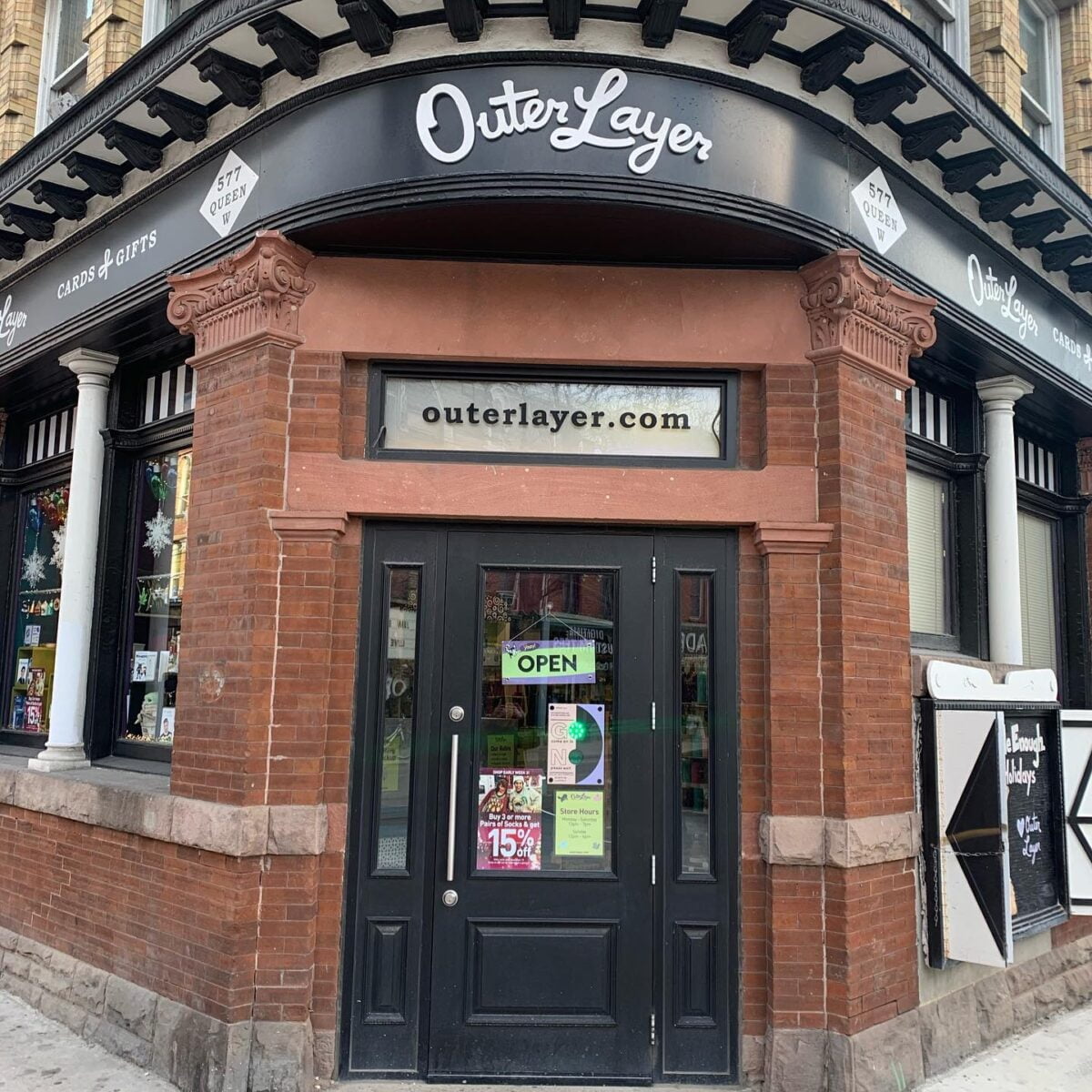
Toronto store Outer Layer using TraffikFlo system to control for social distancing. Photo: TraffikFlo Facebook
TraffikFlo system on front door of store also promoting #supportlocal. Photo: TraffikFlo Facebook
“The local consumers around us really loved it and they were singing its praises. What they really liked about it, and the feedback we were getting from the customers, was that it was just so simple for them to know that I could enter a store,” said Wright.
WXM has been in business for about seven years. The creative technology company has specialized in creating interactive technology for events and for advertising campaigns.
The innovative TraffikFlo app can be downloaded through either Google Play or the App Store and syncs via Bluetooth. Alternatively, the sign can also be controlled through a Chrome web browser at app.traffikflo.com. For added security, access is controlled through the app using a personal pin number.
The traffic system can be controlled through either Manual or Counter Mode. Counter Mode allows stores to input a max number of patrons within the store. As patrons enter, they add to the tally until the max number is reached, which will turn the display from green to red. As people leave, subtract from the total and the light will turn back to green. This is not an automatic system, but a useful alternative manual process.
“My idea was the mom and pop shop. They don’t want to be hiring security. They don’t want to be having to spend the extra money when things are so tough and they don’t want to have to spend extra salary on a person just to control the lineup here and there where it’s needed,” said Wright.
“With this sign, I made it for those small and independent stores. But what we’ve actually found is that a lot of other stores and other locations are interested. We’ve had security offices buy it. We’ve had a recycling plant in Kingston buy it. Any which way that they can help control people around them. Or control that flow of traffic which easily communicates to customers it’s safe to enter that space. I’ve even had people talk to me about having it in their work offices and spaces where people aren’t sure if they should be entering or not.”
The concept is being sold online and through Shopify throughout North America. Also word of mouth is helping spread the word about the innovative and simple but effective sign.
“It’s across the U.S. now but we’ve actually had people reach out to us in the UK. So now we’re looking at selling it in the UK. We’ve been talking to a company in France who would like to take it on.”
Wright sees the potential for other uses of the sign even when times return to ‘normal’.
“I do have a couple of ideas of where it could go. I think we’re going to be into social distancing for awhile. I’m focusing right now on making sure we can help the small retailers but I definitely think in the future, outside of the pandemic, it could have potential in other areas of business and also other areas of work. I’m working on developing those right now and I’ve got some really fun ideas for it,” said Wright.
Consumer protection, law and justice concept with man's hand holding magnifying glass.
On November 17, 2020, there was a sea change in the House of Commons that may affect how Canadian private companies, as well as brands doing business in Canada, collect, use, disclose, and store customer personal information.
Remove the data privacy protection sections from PIPEDA and put them into a dedicated customer privacy rights law, the Consumer Privacy Protection Act (CPPA);
Create a legal tribunal that would hear cases related to breaches of privacy, known as the Digital Privacy Tribunal.
The CPPA will empower the privacy commissioner’s office to levy considerable fines upon companies who flout privacy law. It appears to be modeled on Europe’s General Data Protection Regulation (GDPR), and in particular the GDPR’s schedule of standard fines. The GDPR is generally considered to be the gold standard in global customer data privacy rights law.
At this time, Canadian privacy law has no set schedule of legislative penalties on privacy law violations. If passed into law, the CPPA will have two “levels” of fines similar to the GDPR, set at the following:
For more “run-of-the-mill” breaches relating to IT security failures, the CPPA fine is set at $10 million, or 3% of a company’s annual gross revenue, whichever is larger;
For more serious privacy breaches where the customer’s rights to privacy are seriously breached, companies may be fined $25 million, or 5% of a company’s annual gross revenue, whichever is larger.
These fines are not set in stone, as penalties for violating the GDPR have easily run into the hundreds of millions of Euros. Additionally, the amounts above are not capped, and the privacy commissioner would be empowered to levy additional fines similar to how a court of law determines damages. However, if implemented, Canadian data privacy penalties would easily become the most severe of any G7 nation. The penalties in the EU under the GDPR are already severe, such as a €50,000,000 penalty against Google France, and a €35,000,000 fine levied against H&M in Germany. Facebook has set aside an astonishing €300,000,000 in anticipation of a fine against them that may be levied in Ireland. Expect the CPPA to follow similarly in terms of levying fines.
The CPPA also creates new rights for consumers that were previously not available before. They include:
Greater transparency: Companies must be up-front and specific about the way they collect, use, and disclose customer personal information. They cannot obfuscate or bury critical information about how this is done in overly lengthy privacy notices that are difficult for the average consumer to read.
Algorithmic transparency: Companies must be able to demonstrate how the technology they use complies with data privacy law. They must also demonstrate the reason why data was used to predict, recommend, or make a decision, particularly as it relates to performing credit checks, creating customer profiles, and creating advertising.
The Right to Data Portability: This is a new right from the GDPR which allows customers to request all the personal information they give to a company and direct them to transfer it to another business, such as direct competitors. As the personal information belongs to the customer, businesses cannot object or deny a customer their right to data portability.
Although the overall purpose is to protect Canadian consumers’ right to privacy, the following are some of the other key objectives in Bill C-11:
To penalize companies that do not report privacy breaches;
To compel companies to create records of breaches;
To discourage over-collection and unnecessary retention of PI;
To prevent use of PI in ways that are privacy-invasive;
To prevent selling or disclosure of PI to other organizations without proper consents or legislative reasons for doing so; and
To discourage companies from silencing whistleblowers.
Kobalt, a Vancouver-based IT security company, will be presenting a free Zoom webinar on January 21, 2021, on Bill C-11 and its implications for businesses in Canada. The presentation will include an overall introduction to the legislation, from both the consumer’s and the business’s point of view. To register for the webinar, click here.
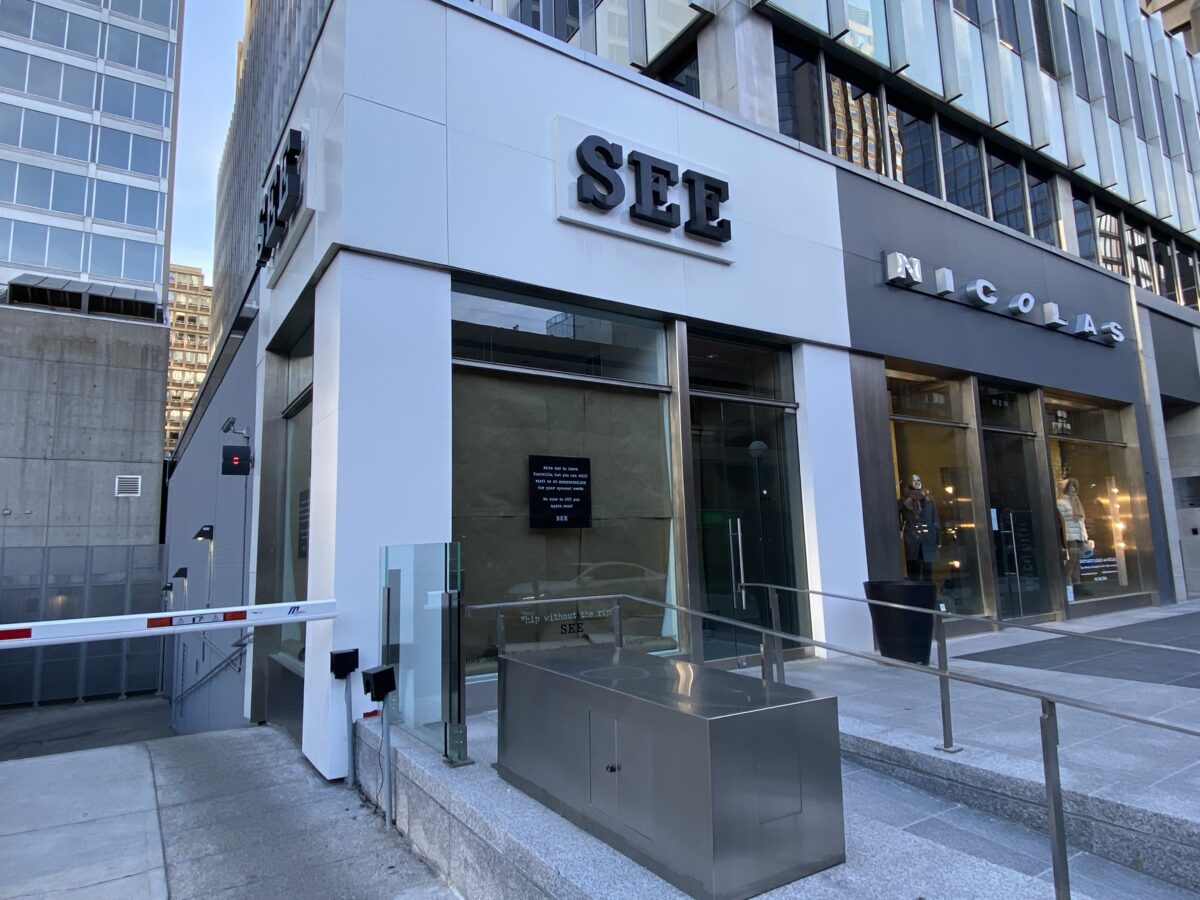
SEE Eyewear Exits Canadian Storefront and Cancels Expansion Plans
Edgy and popular SEE Eyewear has shut its only Canadian storefront that was located at 153 Cumberland Street in Toronto’s Yorkville neighbourhood. The 812-square-foot boutique opened in November of 2017 and plans were in pace to grow the retail chain across Canada.
Urban locations were being targeted for SEE locations and Toronto’s Queen Street West was already being looked at for a second Canadian location according to Founder and Owner, Richard Golden, during an interview at the store opening. The expansion would have been carefully planned with Vancouver and Montreal being among the targeted cities for future locations.
SEE is still available to Canadians online according to a sign on the storefront noticed by Retail Insider over the weekend.
SEE Eyewear at 153 Cumberland Street. Photo: Craig PattersonSignage on the front of the SEE Eyewear store at 153 Cumberland Street. Photo: Craig Patterson
SEE, which stands for ‘Selected Eyewear Elements’, was founded in 1997 by optical pioneer Richard Golden with an aim to provide consumers with affordably priced, fashion-forward eyewear. The company’s prices encourage shoppers to create a ‘wardrobe’ of glasses, with a wide variety of styles available. In the Toronto store, SEE’s collection ranged from $199 to $599 for eyeglasses and include single-vision plastic or polycarbonate lenses. All sunglasses are priced at a reasonable $149 per pair.
The chain doesn’t appear to have grown a lot in the US since we first reported on it more than three years ago — in 2017 SEE had 40 stores and according to its website, there are currently 43 locations in the US only.
Rendering of The Manulife Centre Podium at 55 Bloor Street West
(Note: a previous version mentioned CBRE, which was not involved in this particular deal)
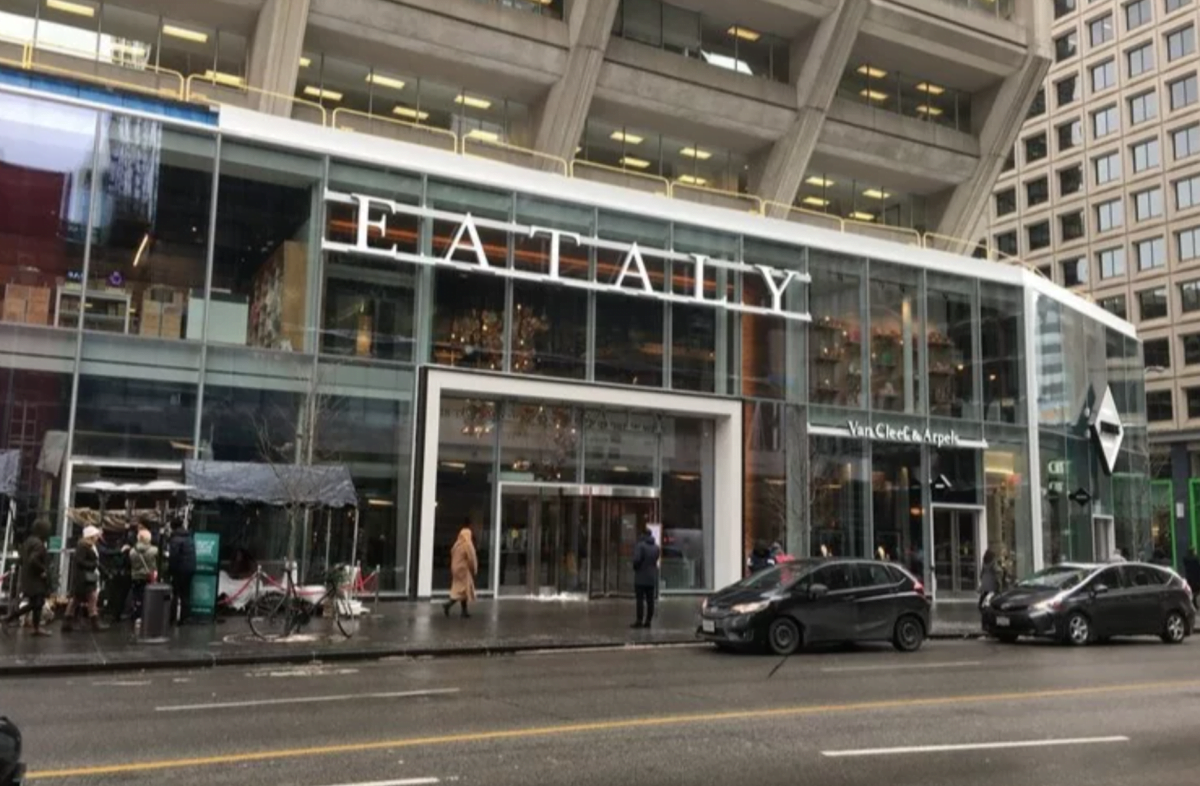
The Liquor Control Board of Ontario (LCBO) has leased a more than 10,000-square-foot space on the street level of the Manulife Centre at 55 Bloor Street West in downtown Toronto. The coveted location is at the corner of Bloor Street and Balmuto Street in the renovated podium of the Manulife Centre which cost well over $100 million to renovate and features a 50,000-square-foot Eataly location that opened last year. The new location will replace a smaller LCBO store in the basement of Manulife Centre.
Corner of The Manulife Centre where the new LCBO is set to go. Photo: Craig Patterson
We’ll follow up on this story when more details are available — we might expect a premium liquor selection, given that the new LCBO store will face directly towards Holt Renfrew’s flagship store across the street.
Other recent tenants opening on Bloor Street include Hakim Optical at 66 Bloor Street West and a Bogner pop-up at The Colonnade at 131 Bloor Street West. Some prominent stores have recently closed on the street including The Gap, Banana Republic, Mulberry, Victorinox, MAC Cosmetics, and several others, with Club Monaco set to join them. A new set of tenants will eventually replace them as the Mink Mile sees something of a transformation.
The LCBO raised eyebrows in the spring of 2020 amongst landlords and brokers when the Crown corporation asked for rent breaks despite being declared an ‘essential’ retailer that was allowed to remain open during shutdowns. Some argued that such a government-owned business should not be asking private landlords for such a discount.
The North Face x Gucci collaboration. Photo: Gucci
Gucci Opens North Face Collab Popup in Toronto and Customers Probably Won’t be Able to Visit
Gucci announced last week that it would open a select few The North Face x Gucci popup stores in North America, and Toronto’s Holt Renfrew store at the Yorkdale Shopping Centre is one of the locations. The popup opened last week and will operate until February 14th. With Toronto’s lockdowns of ‘non-essential’ retail extending into at least February 10th, customers will only be able to do virtual appointments, make telephone orders, and pick-up purchases curbside.
Toronto is one of only a handful of places in North America for The North Face x Gucci pop-ups. Other locations include at standalone Gucci ‘Pins’ storefronts in Brooklyn NY and in downtown Los Angles, as well as at the Gucci flagships in Union Square in San Francisco and on North Michigan Avenue in Chicago.
The North Face x Gucci collaboration includes a wide range of products, from windbreakers and fleeces to a series of bags and backpacks emblazoned with the new logo —The North Face has adapted its quarter-circle stamp, which pays homage to the famous granite Half Dome in Yosemite National Park, and now includes Gucci’s green-red-green stripe for the collaboration, which is 70s inspired.
Exterior of CF-Promenades-St-Bruno. Photo: CF Promenades St-Bruno
CF Promenades St-Bruno’s ‘Marché des Promenades’ Adds New Merchants
Spring of 2021 will see new additions to the popular CF Promenades St-Bruno’s ‘Marché des Promenades’.
The 13,000-square-foot open exchange space continues to bring together the cream of passionate culinary craftsmen, producers, and restaurateurs from Quebec, Greater Montreal, and its surrounding agricultural regions. 40 additional merchants are set to join Marché des Promenades within the next few months, including Edward Smoked Meat, SAQ, Quai des Glaces, and LAPop.
Landlord Cadillac Fairview had originally announced its investment of $67.5 million in its CF Promenades St-Bruno shopping centre property to create a “market-style food hub” in mid 2019. With the goal off reinforcing the centre as a key destination for Montreal’s South Shore community, Cadillac Fairview officially opened the innovative space in late 2020, promising a “unique food, beverage, and entertainment experience”.
The market, which resides in CF Promenades St-Bruno’s former Target space, is all part of a much larger investment on the part of Cadillac Fairview, which has seen more than $175 million spent over the past several years on updates and expansions.
lululemon has opened a seasonal popup store in Richmond Hill’s Hillcrest Mall and now no one can visit it due to pandemic lockdowns. The pop-up could signal a permanent lululemon location eventually opening in the mall.
The popup store opened in December when in-mall shopping was still allowed under Ontario’s COVID-19 restrictions. As of recently, however, Hillcrest Mall is closed to the public and is only offering centralized and curbside pickup services for its shoppers.
The popup offers an array of lululemon’s favourite activewear, all of which can be browsed and purchased at shop.lululemon.com and picked up safely outside the mall.
Working with select retailers within the centre, Hillcrest mall is providing locals with the means to shop their favourite stores despite the current situation. Hillcrest are encouraging those interested to contact the retailers directly (online or by phone) and there is a list of participating retailers featured on the mall website. Once you have placed your order with the store, you will be contacted by email notifying you of your pickup time. All curbside pickups will be conducted at Entrance 4 of the mall.
lululemon operates 87 locations across Canada as of 2021, with 17 of those being seasonal stores.
Exterior of Eataly Toronto. Photo: Craig Patterson
Eataly Celebrates Turning 14 as it Marks a Year in Canada
Italian grocerant Eataly turns 14 this year and the popular upscale store is encouraging its shoppers to “Sale-a-Brate” with them. With up to 50% off hundreds of its favourite products through to February 7 and month-long offers and weekly popups, Eataly is hoping to celebrate its birthday in style this new year.
Available until Sunday, January 17, shop up to 50% off the following high-quality products:
Select Italian extra virgin olive oils & vinegars
Pecorino Toscano
IGP & Sicilian Pepato
Hearty winter greens & chicories, housemate sauces and seasonal fresh pasta
The hybrid grocery store opened its Toronto location in November 2019 in the city’s Yorkville neighbourhood. The introduction of the 50,000-square-foot, three-level Eataly location was met with considerable hype, with lineups every day for weeks post opening.
Featuring a grocery store, fresh market, four restaurants, and at least six bars, and coffee shops, Eataly has managed to weather the COVID-19 storm despite having to close its restaurants and bars during 2020.
Eataly Toronto partnered with Selfridges Group and Terroni Restaurants for its entrance to Canada, though Terroni is reportedly no longer involved with the Toronto concept. Eataly’s Canadian operations are partially owned by the billionaire Weston family, who also own Holt Renfrew, directly across the street from Manulife Centre.
Eataly Toronto is open for in-store shopping and is also providing online options at shoptoronto.eataly.ca or on Instacart.