The Canadian government recently passed the Fighting Against Forced Labour and Child Labour in Supply Chains Act. The new law is designed to address forced labour and child labour in supply chains by requiring companies to disclose their efforts in eliminating labour abuse from their supply chains.
The legislation, known colloquially as Canada’s Modern Slavery Act, does not require large Canadian companies to actually take actions to prevent or reduce the risk of forced labour and child labour in their supply chains.
The act also doesn’t hold companies accountable when forced labour is found. Similar weak disclosure laws in California, the United Kingdom and Australia have already been found to be ineffective by academic researchers.
Our recent investigation at the Governing Forced Labour in Supply Chains Project into the Canadian apparel company Lululemon Athletica casts doubt on the ability of this new law to tackle labour abuse.
The new law falls short of what is required to make large corporations exercise due diligence to prevent labour abuse from occurring within their supply chains.
Remembering Rana Plaza
This new Canadian law comes a decade after the tragic collapse of the nine-storey Rana Plaza building in Bangladesh that killed nearly 1,130 garment workers and injured over 2,500. The disaster raised concerns about the ability of voluntary corporate initiatives to address labour rights violations and protect workers.
In response to the tragedy, an agreement between brands, retailers and trade unions called the Accord on Fire and Building Safety in Bangladesh was established. The accord was designed to improve workplace safety and prevent future accidents in the garment sector.
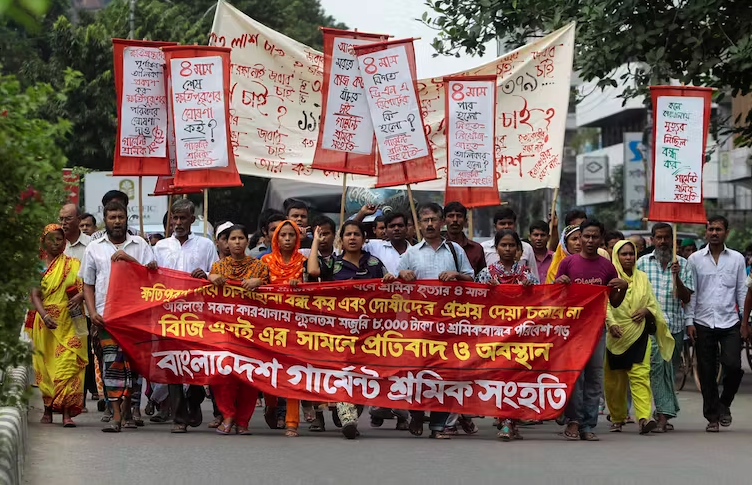
Building on this initiative, the International Accord for Health and Safety in the Textile and Garment Industry — with 198 brand and retailer signatories — was introduced in 2021.
Remarkably, only one Canadian garment company — Loblaw Companies Ltd., the parent company of the Joe Fresh brand — has signed the accord. Other Canadian companies prefer their own voluntary initiatives.
Legislation aimed at addressing forced labour in supply chains has the potential to address these weak corporate initiatives — but only if the law is strong enough.
Lululemon report
Our report, Lululemon’s Conundrum: Good Corporate Social Responsibility Initiatives and the Persistence of Forced Labour, examines Lululemon’s efforts to address potential labour abuse in its supply chain.
In 2021, KnowTheChain — which evaluates companies’ efforts to address forced labour risks in their supply chains based on international labour standards — ranked Lululemon first among 129 apparel and footwear companies for its measures to address forced labour risks.
Despite being recognized as an industry leader in this area, an investigation by researchers at Sheffield Hallam University in England found that Lululemon was at a high risk of sourcing from the Xinjiang region in China — which has been associated with forced labour and human rights abuses — that same year.
In response to this accusation, Lululemon stated it had zero tolerance for forced labour, was committed to all the workers in its global supply chain and regularly monitored vendors globally through a due diligence process.
Lululemon supplier concerns
Lululemon does not own or operate any of the manufacturing or raw materials facilities used to make its apparel. Its April 2023 supplier list revealed the company sourced from suppliers located in four out of the 10 worst countries for workers’ rights violations according to the 2021 Global Rights Index created by International Trade Union Confederation: Bangladesh, Colombia, the Philippines and Turkey.
According to the supplier list, one of Lululemon’s largest manufacturing facilities is in Bangladesh, with over 13,000 workers — 70 per cent of whom are women. Despite this, Lululemon has not signed the 2021 International Accord for Health and Safety in the Textile and Garment Industry.
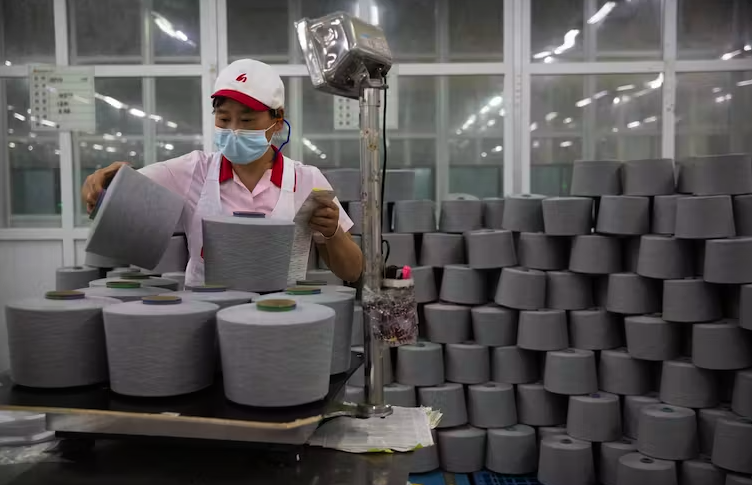
Two reports found that from 2018 to 2019, workers at a Lululemon supplier factory had to work two to three nights without being allowed to go home or take necessary breaks.
While a 2022 follow-up investigation determined this situation had been rectified by Lululemon and the supplier, some workers reported they still felt unable to refuse overtime requests.
According to the follow-up report, the supplier at the same factory also engaged in serious union-busting tactics, including firing the union’s elected leaders and reports from workers that some managers had threatened to close the factory if the workers unionized.
The follow-up report found that while many of the anti-union issues had been addressed, some supervisors reportedly made comments that could be construed as still discouraging workers from joining the union.
Corporate transparency issues
Lululemon has several codes and policies in place to address forced labour. One is the Lululemon Global Code of Business Conduct and Ethics, which states that employees and vendors are to adhere to labour and employment standards in the countries they operate in, unless the code sets a higher standard.
Employees are encouraged to report any violations to this code internally through Lululemon or externally using third-party tools such as the international Integrity Line. This phone line allows employees to anonymously report complaints at any time.
However, third-party complaint avenues pose challenges, including requiring tech access, trusting unfamiliar third parties and filing a complaint that protects one’s anonymity while still providing enough detail about worker issues.
Another code Lululemon has in place is the Vendor Code of Ethics and its accompanying Benchmarks policy. Vendors are responsible for enforcing key aspects of the code of ethics, including creating grievance and disciplinary systems for violations and training workers on the policy’s content. When vendors use subcontractors, they are the ones responsible for ensuring subcontractors adhere to the policy.
While Lululemon can conduct unannounced visits to monitor their compliance with the Vendor Code of Ethics, this is rarely done. Only one per cent of assessments in 2019 were unannounced. Lululemon also works with third-party auditors sometimes, which can be problematic since these auditors rely on their clients to stay in business, raising questions about the authenticity of auditing reports.
Reliance on local labour laws
Lululemon’s measures to address forced labour largely rely on the labour laws in the countries in which the suppliers are located. Relying on local labour laws is a major shortcoming of many corporate initiatives, since they often fall short of international legal norms and are not well enforced.
In California, the United Kingdom and Australia, Lululemon is required by law to report on its efforts to detect, remedy and eradicate forced labour in its supply chains. However, the information necessary for evaluating the effectiveness of these initiatives is not available to researchers, the public or workers.
Crucial information about all the participants and purchasing practices in a supply chain, such as the amount of lead time suppliers are given for orders and whether suppliers get paid on time, are not provided. Additionally, information on how workers navigate Lululemon’s policies and grievance mechanisms is not publicly available.
Due diligence legislation needed
Our study raises concerns about the effectiveness of current transparency and disclosure laws as an effective tool for combating forced labour in supply chains.
Disclosure laws, like those in Canada’s new act, will not require Lululemon to reveal the type of information needed to ensure its suppliers are not abusing workers. Nor does the new law require large multinational corporations to take any steps to eradicate labour abuses in the supply chains.
Our study suggests disclosure laws are a form of window dressing that can be used by companies to project an image of social responsibility to consumers, rather than genuinely improving the working conditions for supply chain workers.
It’s time to require companies to take real steps to rid their supply chains of labour abuse. If Canada is to truly eradicate force labour in global supply chains, it needs mandatory due diligence legislation that involves supply chain workers at every stage of the process — before another disaster like Rana Plaza occurs.
Editor’s note: Prior to publishing this story, The Conversation sought comment from Lululemon about how the company is complying with the new Fighting Against Forced Labour and Child Labour in Supply Chains Act, as well as some other issues raised in this article. Lululemon did not respond.
By Gayathri Krishna, PhD Candidate, School of Labour Studies, McMaster University, Judy Fudge LIUNA Enrico Henry Mancinelli Chair of Global Labour Issues, School of Labour Studies, McMaster University, Kaitlyn Matulewicz, Researcher, Governing Forced Labour in Supply Chains Project
This article is republished from The Conversation under a Creative Commons license. Read the original article.