In an era of compressed margins, tariff uncertainty, regulatory change and digital fragmentation, North American retailers face a structural challenge. They must modernize promotional workflows without sacrificing accuracy, brand consistency, artwork quality or profitability.
For decades, the weekly flyer sat at the center of retail marketing. Today, that flyer still drives traffic, but it now coexists with email, mobile apps, social media, geo-targeted ads, in-store signage, retail media and digital flyer platforms. Each channel demands speed, precision and personalization. Yet behind the scenes, many retailers continue to rely on manual spreadsheets, siloed systems and fragmented agency and media partner workflows.
This is where ARISTID Retail Technology has positioned itself as a strategic partner in retail marketing automation, helping large retailers transition from legacy, paper-driven processes to a centralized, data-driven promotional creative engine.
“We provide an end-to-end platform for retailers so they can manage promotions from the very beginning, when they decide which offers to push, to execution across every channel,” explains Florian Payri, Co-CEO and Deputy General Manager of ARISTID. “Automation takes a lot of the burden away and creates more value in what humans are doing.”

From Spreadsheet Chaos to a Single Source of Truth
The promotional process inside many retail organizations remains surprisingly manual. Pricing decisions live in spreadsheets. Creative assets are built separately. Updates are sometimes still communicated by email. Changes are often made late in the process, introducing risk and rework.
Delivery deadlines driven by downstream manual processes further pressure teams and reduce competitive advantage, conflicting with the near-real-time expectations of today’s retail environment.
Retailers can find themselves buried under hundreds, sometimes thousands, of spreadsheets each week. Add multiple rounds of edits and revisions, and the volume of static data grows rapidly. The result is inefficiency, duplication and increased risk of error.
ARISTID’s SaaS platform was designed to eliminate that fragmentation. It acts as a single source of truth for product and promotional data, connecting purchasing, marketing and IT teams within one structured workflow. Instead of re-entering information for each channel, data flows automatically into creative assets, whether destined for print, web, mobile or social.
One of the company’s key differentiators is that everything is managed within a single platform rather than a patchwork of tools that barely communicate. Promotional data becomes centralized, controlled and secure, reducing risk while improving speed to market.
The result is not simply efficiency. It is governance and peace of mind.
Automation at Scale Without Human Error
Promotions are complex. A typical grocery or home improvement retailer may manage hundreds of offers each week across thousands of SKUs. When pricing varies by region, store format or local competitive pressure, complexity multiplies.
Personalization, in particular, cannot happen at scale without automation.
“The only way you can personalize at the scale required, per store or per region, is to increase output by two or three orders of magnitude,” Payri explains. “That’s impossible to do with human beings alone.”
ARISTID’s approach blends structured automation with carefully applied AI that strictly follows retailer brand guidelines, rather than relying on open-ended AI interpretation. The system locks down critical pricing and promotional mechanics so outputs do not require manual quality control. AI enhances creative presentation rather than generating entirely new visualizations.
With some clients, ARISTID can generate hundreds of thousands of pieces of content per week. At that scale, manual proofing is not feasible. Even with newer AI-based tools, quality control requirements remain complex and risky.
Accuracy is not theoretical. In Quebec, a promotional pricing error involving a “two-for-one” mechanic recently resulted in significant margin erosion for a major grocer. In a low-margin category like grocery, such missteps are costly.
Retail marketing automation reduces the risk of those errors while increasing output.
RONA: Enabling Digital Agility Across 425 Stores
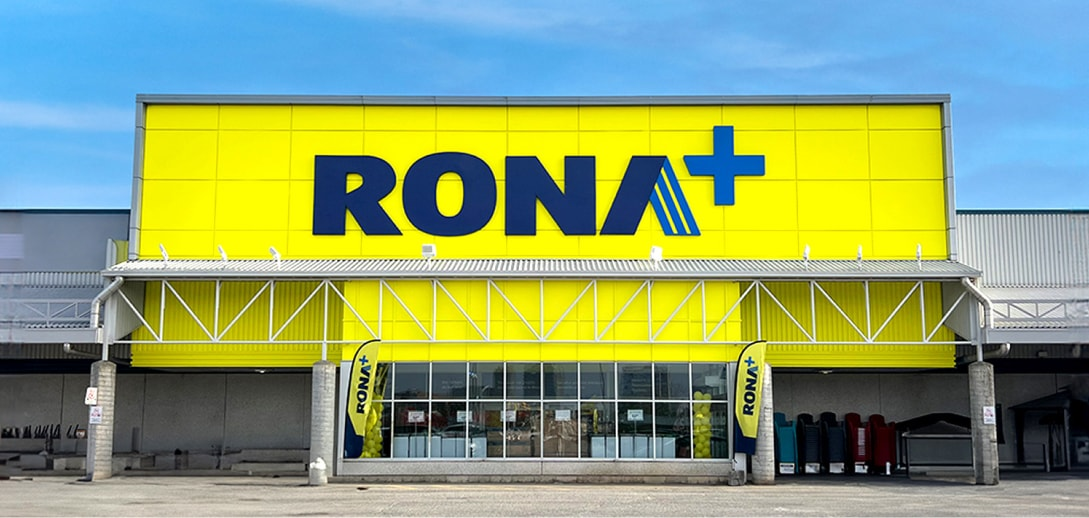
In early 2025, ARISTID announced a major partnership with RONA to modernize promotional systems across approximately 425 stores in Canada.
Like many large retailers, RONA had been operating on legacy systems originally designed for paper production. As digital channels expanded, those processes became a bottleneck.
Through ARISTID’s automation tools, RONA replaced manual workflows with a structured production engine. Marketing teams can now focus on strategic initiatives while the industrial production of flyers, signage and offer data runs through automated systems.
Internally, the impact extends beyond efficiency.
One European CMO described the transformation in vivid terms. Before automation, every week felt like an emergency. After implementation, that anxiety disappeared. The system simply worked.
For marketing leaders responsible for multi-million-dollar campaigns, that shift from constant firefighting to operational stability is significant.
Canac: Building the Foundation for Digital Growth
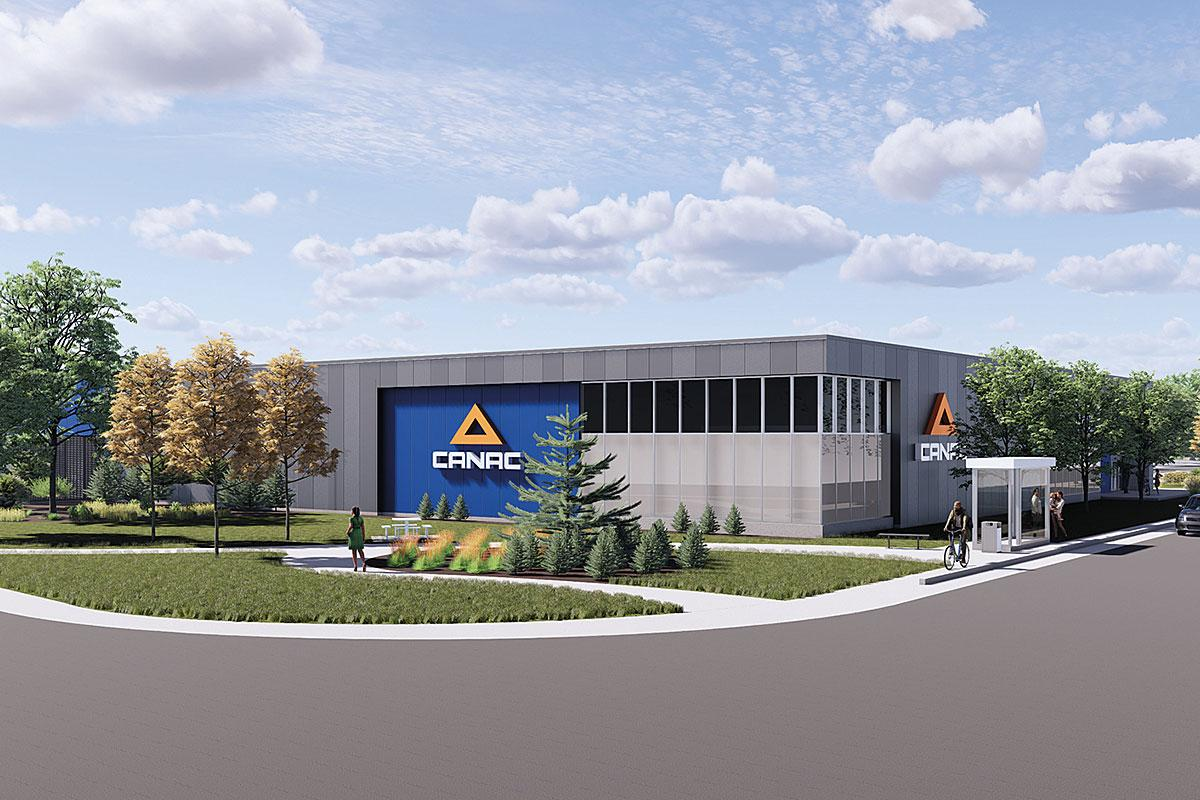
Canac, the Quebec-based home improvement retailer with 36 stores, became ARISTID’s first North American client in late 2023.
Canac had already moved toward a zero-paper flyer model in 2020, positioning itself as an early adopter of digital-first promotion. However, the back-end processes required to support high volumes of digital content remained complex.
With ARISTID’s Omnipublish platform, Canac transformed how it produces offline channels such as flyers, while publishing to digital platforms like Flipp.
“The heavy lift is putting the foundation in place,” Payri says. “Once those foundations are there, achieving new challenges becomes much easier.”
That foundation now positions Canac to expand further into digital activation, hyper-local campaigns and personalized outreach.
Quebec Compliance and Pricing Transparency
Canadian retailers face regulatory pressures that increase promotional complexity.
Quebec’s Bill 72 introduced new pricing and labeling transparency rules that require clear display of regular price, sale price, unit price and promotional mechanics. Additional rules govern how to present taxes, deposits, eco-fees and loyalty-related incentives.
Manually updating thousands of assets to reflect font size changes, bilingual layouts and cost-per-unit disclosures is logistically overwhelming.
ARISTID addresses this through its creative engine. Layout rules are defined centrally. When a promotion is generated for Quebec, the system automatically adjusts typography, positioning and calculation logic to comply with legal requirements.
“If you update the brand style guidelines and creative rules, the system applies them everywhere,” Payri explains.
This capability becomes critical when regulatory changes take effect quickly. Retailers can adapt across print, digital and in-store communications without redesigning each asset.
Hyper-Localization in a K-Shaped Economy
Retail analysts describe Canada’s current environment as “K-shaped.” Higher-income consumers continue to spend, while others trade down.
For national chains, one pricing strategy rarely fits all markets.
ARISTID enables retailers to localize promotional content by price zone, region or individual store. A suburban Toronto location might emphasize premium outdoor kitchens, while a more price-sensitive area highlights entry-level offers.
Store-level tools also empower local managers to activate promotions relevant to their communities. If a grocery store needs to move fresh inventory quickly, a manager can deploy geo-targeted ads to clear product rather than waste it.
Automation supports both sustainability and profitability.
Real-Time Feeds and the Shift Beyond Static Flyers
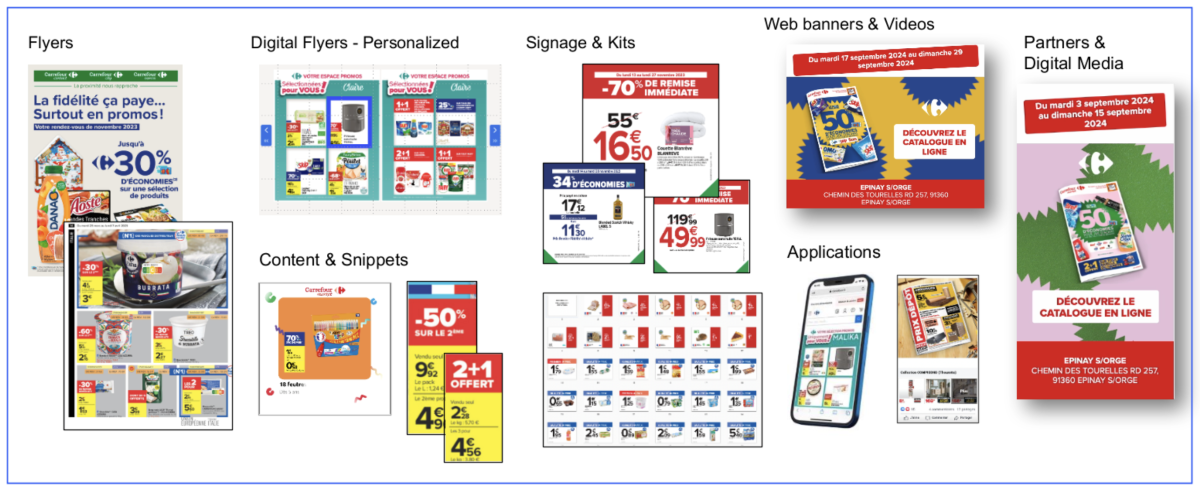
ARISTID’s integration with last-mile partners moves retailers beyond static PDF workflows.
Instead of sending fixed files, ARISTID’s tools can transmit live data feeds and creative snippets or complete ad units. If pricing changes internally, updates can be reflected on digital platforms in near real time. This reduces the risk of price mismatches that frustrate consumers, erode trust and create regulatory exposure.
It also shortens the promotional cycle significantly. Some retailers historically required two weeks to generate a first flyer draft. With automation, that timeline can shrink to hours.
Shorter cycles create greater agility. Retailers can respond to competitive moves, supply disruptions or tariff changes more quickly.
Change Management at Scale
Implementing retail marketing automation is not simply a software installation. It requires an organizational shift.
ARISTID projects can involve onboarding between 50 and 400 employees into new workflows. Resistance to change is natural. However, once teams experience the system, reactions tend to align.
When asked whether they would return to previous processes, most say no. Many question how they managed without it.
Importantly, ARISTID positions automation as resource reallocation rather than workforce reduction. Many clients double promotional output without increasing staff. Others redirect talent toward strategy, creativity and analytics.
In tight labour markets, automation allows retailers to expand channel presence without proportionally increasing headcount.
Measurable Impact: Margins, Speed and Engagement
While specific client figures remain confidential, the impact of retail marketing automation is measurable.
Production costs decline as manual work, third-party publishing and rework decrease. Time to market shortens, enabling more flexible inventory management and supplier negotiations.
In one European case, targeted personalization tripled click-through rates by presenting more relevant offers. Higher engagement leads to stronger conversion and incremental revenue.
Margin management can also improve. When national pricing forces retailers to adopt a lowest-common-denominator approach, profitable regions lose margin potential. Localized strategies, supported by automation, unlock additional revenue.
In grocery, where margins are often in the low single digits, incremental gains are meaningful.

What Comes Next for ARISTID
After three decades in the industry, ARISTID’s roadmap focuses on commercial expansion and product evolution.
North America is a priority, with Canada serving as a springboard. On the product side, the company continues to invest in AI-enhanced creativity and mobile-first activation, building on the more than $70 million CAD already invested in the platform over 15 years.
One emerging use case allows store-level staff to capture a product photo on a smartphone and automatically generate on-brand promotional content using embedded creative rules. AI enhances the image while maintaining brand and pricing integrity.
At the same time, ARISTID is encouraging retailers to move beyond static PDF flyers toward structured, data-driven content that can be assembled dynamically across channels.
As Payri notes, the goal is to shift from paper-based mass communication to targeted digital engagement while maintaining revenue stability.
Major platforms such as Google and Meta are also expanding their capabilities through partnerships with ARISTID, which supplies accurate data and high-quality creative assets at scale.
A Structural Shift for North American Retail
Retail marketing automation is not a short-term efficiency initiative. It represents a structural shift in how promotional data is governed, distributed and monetized.
North American retailers operate in an environment shaped by regulatory complexity, tariff volatility, labour constraints and digital fragmentation. The weekly flyer remains important, but it no longer operates in isolation.
ARISTID’s approach is straightforward. Build the foundation. Centralize data. Automate intelligently. Enable personalization. Then innovate.
For retailers willing to make that transition, the result is improved agility, stronger margin management and greater operational stability.
In a market where promotions represent a significant share of revenue, getting the process right is essential for long-term competitiveness.
For more information on ARISTID and how to work with them on retail marketing automation, visit: aristid.com