On August 14, 1991, one of the most familiar names in Canadian retail disappeared. For generations, Simpsons had been associated with grand downtown department stores, designer fashion, suburban shopping centres, Christmas displays and an era when Canadian department stores occupied a central place in the country’s commercial and cultural life.
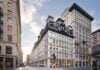
Its flagship at Queen and Yonge streets in Toronto stood directly across from Eaton’s, its great rival, and grew into one of the most important retail buildings in Canada. The Simpsons stores did not all suddenly go dark that August day. Most continued operating under different names, with eight absorbed into The Bay and six transferred to Sears as part of a broader transaction between Hudson’s Bay Company and Sears Canada.
What ended was the Simpsons name itself, bringing to a close a retail history that stretched back 119 years to the establishment of the Robert Simpson Company in 1872. Its final years were considerably more complicated than a steady decline toward closure.
Hudson’s Bay Company acquired a substantial and profitable retailer in the late 1970s, spent much of the following decade closing weaker locations while trying to differentiate Simpsons from The Bay, invested heavily in important stores, pushed the banner further upscale and opened new Simpsons locations shortly before deciding to retire the name. Thirty-five years later, much of the Canadian department-store landscape that surrounded Simpsons has disappeared as well.
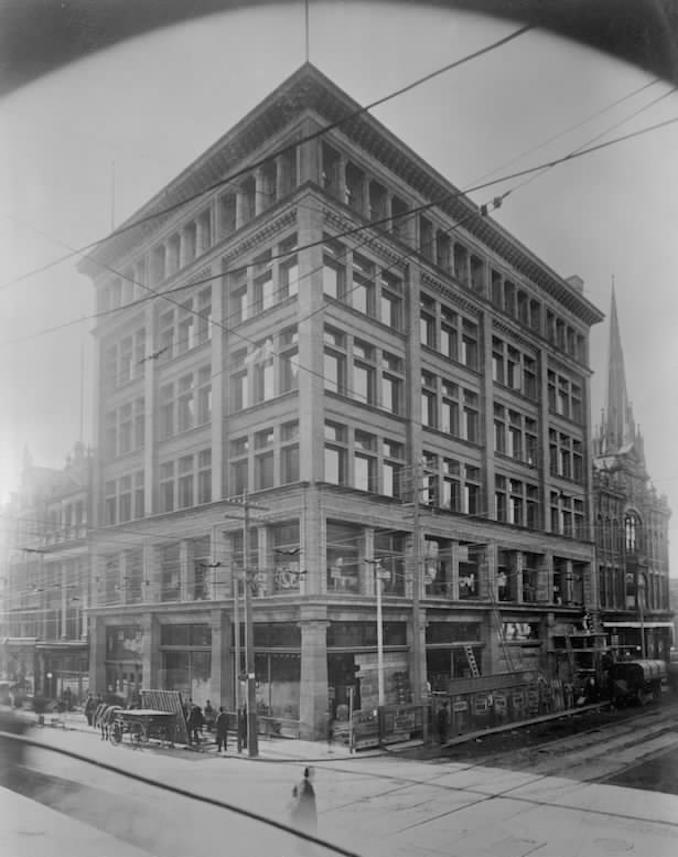
From Robert Simpson to a Retail Institution
The history of Simpsons began well before enclosed shopping centres and national retail chains came to dominate Canadian shopping. Scottish-born Robert Simpson entered retailing in Ontario in the 1850s, opening a dry goods business in Newmarket before moving his operations to Toronto in 1872.
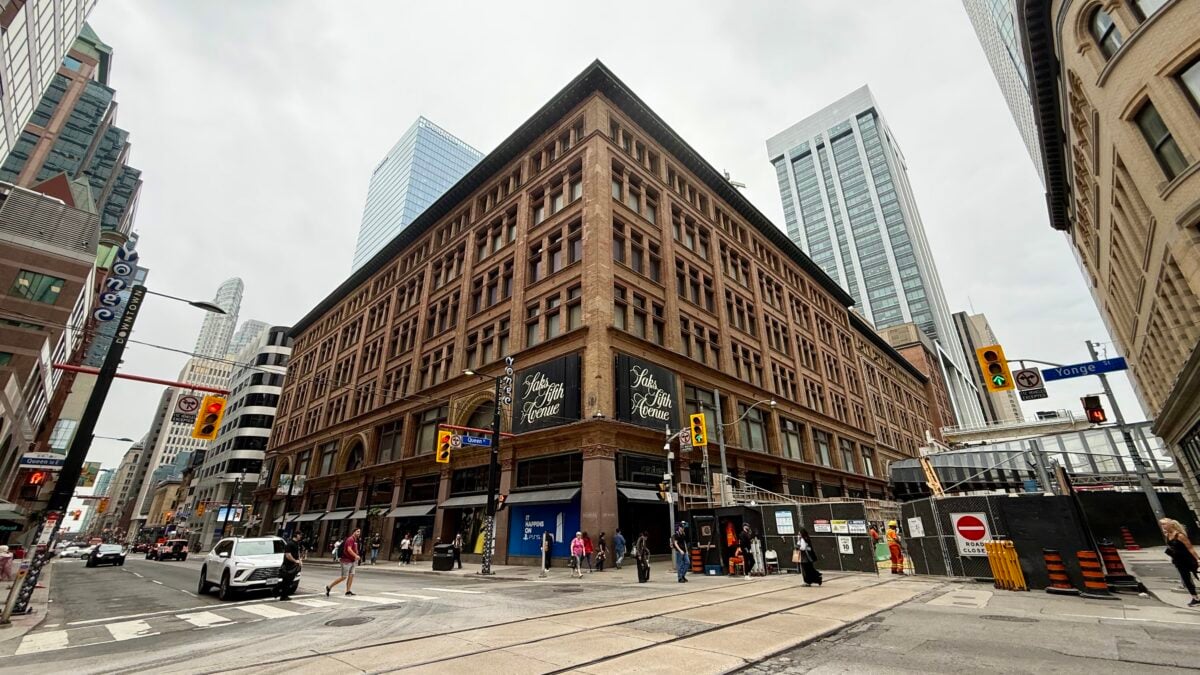
The company eventually established itself at Queen and Yonge streets, where its flagship would grow alongside Toronto itself. A major six-storey store constructed in the 1890s was destroyed by fire in March 1895, only months after completion. Simpsons rebuilt quickly, with a replacement opening in 1896 using construction intended to reduce the fire risk that had destroyed its predecessor.
Successive expansions transformed the property into an enormous retail complex. A 1929 Art Deco addition brought some of the building’s most enduring features, including Arcadian Court, which became one of Toronto’s best-known dining and event spaces.
Simpsons eventually occupied a dominant position at Queen and Yonge, facing Eaton’s across the intersection and creating one of the most intense department-store rivalries in Canadian retail. Both companies operated enormous downtown flagships offering fashion, furniture, appliances, restaurants, cosmetics, food and countless other categories under one roof.
For generations of Toronto shoppers, the rivalry was visible simply by standing at the corner. Department stores were major destinations, particularly before suburban malls became the dominant shopping format.
Simpsons also grew beyond Toronto, developing stores in several Canadian cities and participating in the suburban shopping-centre expansion that reshaped retail after the Second World War. Fashion became one of the company’s most important points of distinction.
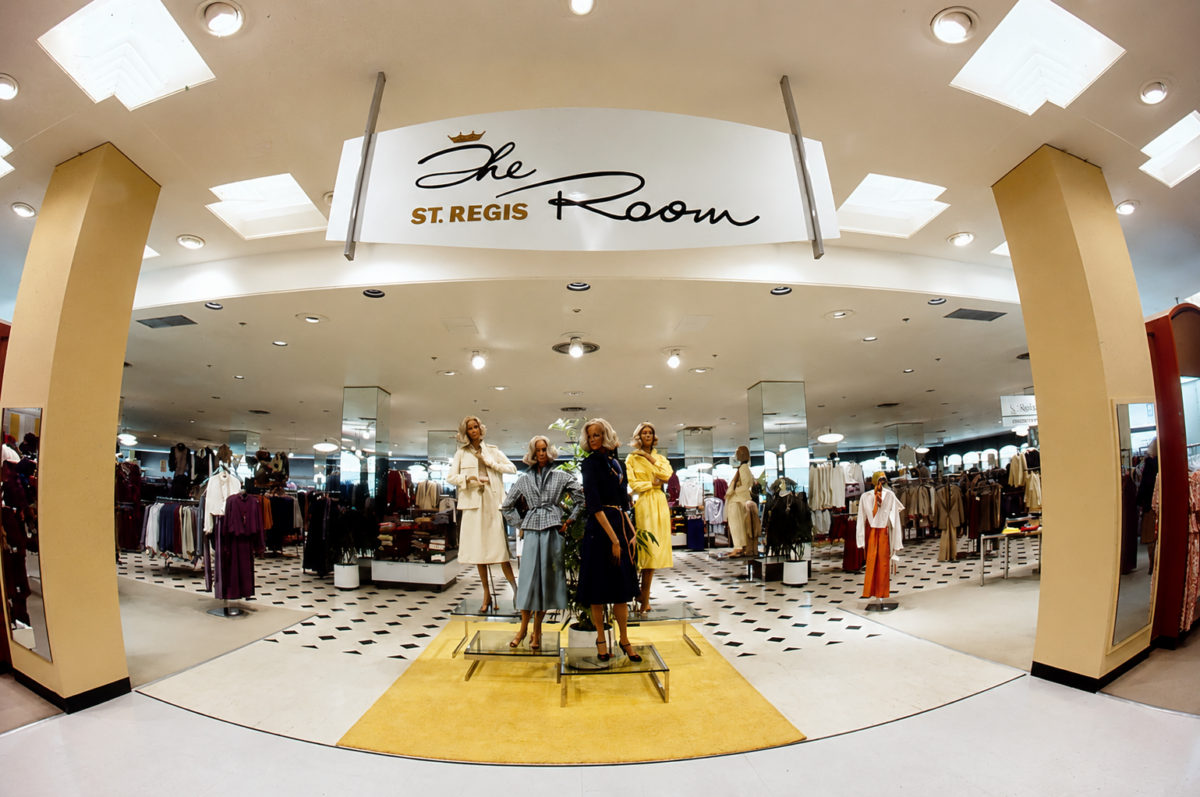
The St. Regis Room and Simpsons’ Fashion Authority
Long before international luxury brands operated networks of standalone boutiques across Canada, department stores played a major role in introducing Canadian consumers to global fashion.
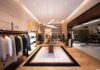
At Simpsons, the St. Regis Room became one of the clearest examples. Opened at the Queen Street flagship in 1937, the department was designed for customers shopping at the upper end of the market. Contemporary advertising promoted fashions associated with leading centres including Paris, London and New York.
The experience could resemble a private salon. Historical research into Canadian fashion retail describes environments where merchandise was selectively presented to clients, experienced sales staff developed long-term relationships, and customers relied on personalized advice when building wardrobes. Privacy, service and access to international fashion were central to the appeal.
Over different periods, Simpsons became associated with major designer names including Christian Dior, Yves Saint Laurent, Oscar de la Renta and André Courrèges. The Queen Street St. Regis Room catered to what was traditionally described as Toronto’s carriage trade and became one of the country’s leading destinations for international designer fashion.
That high-fashion business extended well beyond Toronto. Simpsons operated St. Regis Room or comparable upscale designer-fashion departments at several stores across the country, including Ottawa, London, Windsor and Regina. Halifax also had a St. Regis Room, while Montreal operated its parallel high-fashion concept under the Salon Vendôme name.
Their presence in markets such as Regina, London and Windsor is an important part of the Simpsons story. International designer fashion was being sold through Canadian department stores well beyond Toronto and Montreal, giving affluent customers in regional markets access to merchandise that today would typically be associated with dedicated luxury boutiques.
Before Yorkville, Vancouver’s Alberni Street and other contemporary luxury districts developed into concentrations of standalone boutiques, department stores were often where Canadian shoppers encountered leading international labels. The St. Regis influence survived the Simpsons banner through The Room at Hudson’s Bay, which later became one of the most visible links between Simpsons and a subsequent generation of Canadian luxury retail.
Simpsons-Sears Changes the Canadian Retail Map
Another major chapter began in the early 1950s, when Simpsons entered a partnership with Sears, Roebuck and Co. to create Simpsons-Sears.
The arrangement produced one of the most consequential retail businesses in postwar Canada. Simpsons was already established in major markets, while Simpsons-Sears became particularly important in suburban and regional expansion. Geographic restrictions initially limited direct competition between the related businesses.
Under the original arrangement, Simpsons-Sears could not open within 25 miles of existing Simpsons stores in Toronto, Montreal, Halifax, Regina and London, while Simpsons agreed not to expand beyond those markets for 20 years. The structure helped shape the geographic development of both companies as Canadian shopping increasingly moved into suburban malls.
Over time, Simpsons-Sears developed into a major Canadian retailer in its own right. After Hudson’s Bay Company acquired Simpsons, the relationship changed, and Simpsons-Sears eventually became Sears Canada.
Decades later, Sears would take over several Simpsons stores when the original banner was eliminated. The company Simpsons helped establish in Canada ended up inheriting pieces of Simpsons itself.
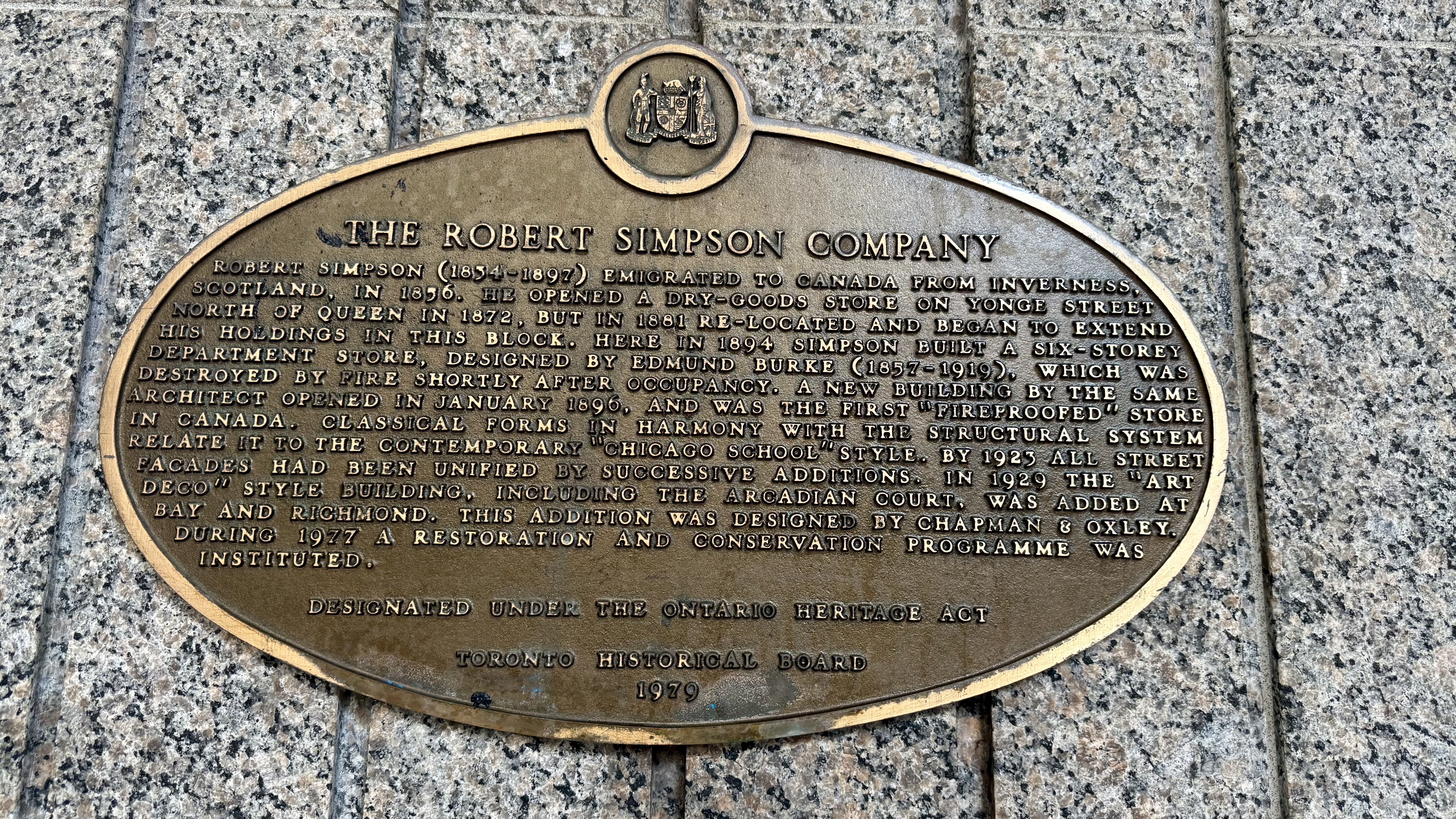
HBC Arrives in 1978
By the late 1970s, Simpsons remained a substantial business. For the 56-week fiscal year ending January 31, 1979, Simpsons Limited reported sales of approximately $744 million and net earnings of about $31 million. On a comparable 52-week basis, sales were roughly $704 million, an increase of more than 10 per cent from the previous year.
The Queen Street flagship alone was estimated to have generated close to $180 million in annual sales around 1978. The numbers show the scale of the business Hudson’s Bay Company was acquiring and challenge the assumption that Simpsons was already a distressed retailer when HBC arrived.
In August 1978, Simpsons proposed a merger with Simpsons-Sears, a plan approved by the Simpsons board. The combination would have brought together two retailers that had spent roughly 25 years growing alongside one another and was intended to consolidate their financial resources and operations. Because Sears, Roebuck would have become the principal shareholder in the combined business, the transaction required review under Canada’s foreign investment rules.
While that process was underway, Hudson’s Bay Company launched its own bid for Simpsons. The proposed Simpsons-Sears combination was abandoned in December 1978, and by January 1979 HBC controlled more than 88 per cent of Simpsons shares.
The acquisition gave Hudson’s Bay Company another major Canadian department-store business at a time when it already operated The Bay and had significant involvement with Zellers. It also created a strategic question that would follow Simpsons through the remainder of its life under HBC: how to give two full-line department-store banners under common ownership sufficiently distinct roles in the market.
Recession, Retrenchment and Questions About Queen Street
That challenge became harder as economic conditions deteriorated. Canada entered a severe recession in the early 1980s, accompanied by high interest rates, weaker consumer spending and considerable pressure on retailers. Hudson’s Bay Company was hit hard, with merchandising operating profit falling sharply in 1982 as the downturn affected The Bay, Simpsons and Zellers.
Simpsons was already confronting problems in parts of its store network. Its Regina store closed on June 27, 1981 after four consecutive years of losses. Ottawa followed, with its closure announced in 1982 and the store shutting in January 1983 after failing to achieve sustained profitability.
The pressures reached Queen Street as well. The downtown Toronto flagship was among the possibilities being considered around 1982 as HBC dealt with weak results and the difficult economic environment. Reference to the closure was even made in the kid’s TV show Today’s Special, which used Simpsons as a backdrop for the series and referenced the potential closure in an episode.
The possibility is particularly striking given the store’s scale. Only several years earlier, Queen Street had been estimated to generate close to $180 million in annual sales. By the early 1980s, the economics of operating a massive downtown department store were being examined against a backdrop of recession and the continuing growth of suburban shopping centres.
HBC ultimately kept Queen Street open and was also investing elsewhere in the Simpsons network, illustrating how unsettled the strategy remained. The downtown Montreal Simpsons underwent an expensive renovation during the early 1980s, while the company simultaneously pursued new and replacement stores.
HBC’s 1982 annual report noted that Simpsons opened new 124,000-square-foot stores at Warden Woods Mall in Scarborough and Cataraqui Mall in Kingston. A new 150,000-square-foot Halifax flagship was under construction, while another Simpsons opened at Mayflower Mall in Sydney, Nova Scotia, in March 1983.
HBC was closing unprofitable Simpsons stores and considering difficult options for others while continuing to invest in locations where it saw potential. The financial pressure nevertheless intensified. In 1984, Simpsons eliminated approximately 1,631 positions, including more than 1,000 in Toronto, and the division was reported to have lost roughly $53 million that year.
The deterioration from the late 1970s was significant. HBC still had to determine whether Simpsons and The Bay could operate profitably alongside one another while giving shoppers a sufficiently clear reason to choose between them.
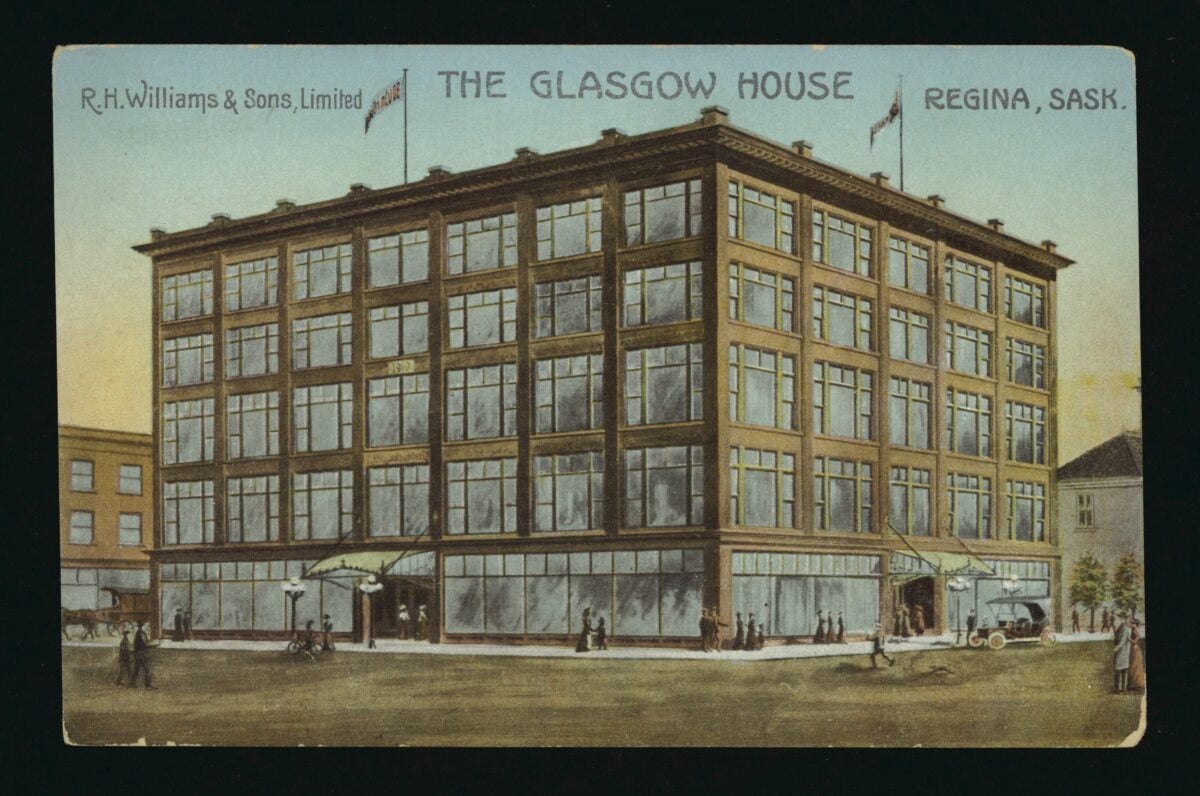
Defining Simpsons Within HBC
Hudson’s Bay Company increasingly attempted to create a hierarchy among its retail banners. Zellers occupied the value-oriented end of the market, The Bay served a broad middle-market department-store customer, and Simpsons was increasingly positioned toward a more upscale shopper.
The approach had logic, but the execution was difficult. Simpsons and The Bay sold many of the same categories, dealt with overlapping suppliers and often served similar consumers. In some markets, the two banners operated within the same shopping centres or trade areas.
HBC needed to make two large department-store businesses feel different enough to warrant the expense of maintaining both. By the middle of the 1980s, the company began reducing the overlap.
Simpsons Retreats From Much of Canada
In 1986, Hudson’s Bay Company undertook a major restructuring that effectively ended Simpsons’ status as a national department-store chain.
Eight Simpsons stores outside Toronto and Montreal were converted to The Bay. The affected locations included stores in London, Kitchener, Kingston and Windsor in Ontario, along with operations in Nova Scotia.
The changes represented a significant contraction of the Simpsons name. Five years before the banner disappeared entirely, it had already vanished from many Canadian markets where generations of shoppers had known it.
The conversions also ended the Simpsons identity at stores that had carried some of the retailer’s more upscale fashion operations, including locations such as London and Windsor. Simpsons was increasingly being concentrated in the Toronto and Montreal regions, an arrangement that would last only a few more years.
Montreal Loses Simpsons
Montreal had its own important Simpsons history. The company entered the market through its acquisition of John Murphy Co., with the downtown business eventually operating under the Simpsons name. The store became a notable part of Montreal’s department-store landscape and included Salon Vendôme, its high-fashion department.
By the end of the 1980s, HBC decided to eliminate the remaining overlap between Simpsons and The Bay in Quebec. Three Greater Montreal Simpsons stores at Anjou, Pointe-Claire and Laval were transferred into The Bay operation in January 1989 and subsequently rebannered. Contemporary accounts confirm the three locations formally switched to The Bay during the first months of that year.
The other two locations faced different outcomes. Downtown Montreal closed on January 28, 1989, while the St-Bruno Simpsons also closed where HBC had overlapping Bay operations. The downtown store reopened for a final clearance, and after that sale ended in April, part of the property continued for a time as a Simpsons liquidation centre using only two floors and a fraction of the former workforce.
The restructuring effectively removed Simpsons from Quebec and left its future concentrated in the Toronto area. HBC still believed there was life in the banner and was about to make one of its largest investments in Simpsons in years.
The “Miracle on Queen Street”
HBC invested approximately $30 million in the Queen Street flagship as part of a major modernization that became known as the “Miracle on Queen Street.”
By this period, the sprawling store approached one million square feet across roughly ten levels. The redevelopment was intended to restore Queen Street as a major destination and reinforce Simpsons’ upscale positioning after years of uncertainty surrounding the business.
The makeover included an enormous cosmetics department that was promoted as the largest in the world, along with a gourmet food hall in the basement. The St. Regis Room was expanded, designer fashion received renewed emphasis, and upscale specialty shops included names such as Alfred Dunhill of London.
These were substantial changes for a business HBC had spent much of the decade restructuring. Queen Street was being positioned as a sophisticated urban flagship with merchandise and services intended to give Simpsons a clearer identity at the upper end of the market.
HBC was also expanding the banner around Toronto, with new Simpsons stores opening at Erin Mills, Markville and Mapleview during the 1989-90 period.
Mapleview offers a particularly striking example of how quickly the strategy changed. When Mapleview Centre opened in Burlington in September 1990, both Simpsons and The Bay anchored the mall. Within nine months, HBC had agreed to transfer the new Simpsons store to Sears.
The Burlington transaction was unusually complex. Sears moved into the former Simpsons space at Mapleview, while HBC took over Sears’ existing Burlington Mall location and converted it to The Bay. The Bay already operating at Mapleview remained in place.
A Simpsons store that had opened in September 1990 was operating as Sears by August 1991. HBC was therefore still investing capital in the banner and adding locations shortly before deciding that the economics of maintaining Simpsons separately no longer worked.
The Beginning of the End
By the beginning of 1991, the distinctions between Simpsons and The Bay were becoming increasingly difficult to maintain.
On January 3, Hudson’s Bay Company announced that the two banners would combine their advertising in Greater Toronto, with anticipated savings estimated at approximately $15 million. Advertising was one of the principal ways each retailer expressed a separate identity, and combining it demonstrated how much of the operating distinction between Simpsons and The Bay had already eroded.
Canada was also experiencing another recession, adding pressure to a department-store industry dealing with changing consumer behaviour and intense competition. HBC had spent years trying to establish Simpsons as the more upscale of its two department-store businesses, while the costs of maintaining two overlapping organizations continued to mount.
By June, the company had reached a final decision.
The End of a 119-Year Era
On June 5, 1991, Hudson’s Bay Company announced a restructuring that would eliminate the Simpsons banner.
The news was treated as the end of a Canadian retail institution. The following day, the Toronto Star captured the response in a front-page headline: “End of 119-year era leaves staff in tears.” The Globe and Mail reported that the Simpsons sign would vanish as HBC prepared to absorb stores into The Bay and transfer others to Sears.
The reaction reflected the place Simpsons had occupied in Canadian retail. Employees had built careers with the company, while generations of customers had grown up shopping its stores. The banner had survived world wars, the Depression, recessions, the migration of shopping from downtown streets to suburban malls and enormous changes in fashion and consumer culture.
One of the most intriguing options discussed at the time was reportedly retaining Queen Street as the sole Simpsons store. There was a certain logic to the possibility: Queen Street had the history, architecture, enormous scale, St. Regis Room and public recognition to operate as a singular destination department store, and HBC had invested tens of millions of dollars in the property only two years earlier.
The company ultimately decided that supporting Simpsons as a one-store banner would be too expensive. With that option rejected, the name would disappear from Canadian retail.
Where the Stores Went
The final restructuring involved a complicated exchange with Sears Canada, which has led to conflicting numbers in later accounts.
Eight remaining Simpsons stores stayed with Hudson’s Bay Company and were converted to The Bay. Six Simpsons stores were transferred to Sears. Sears also acquired two existing Bay stores, bringing the total number of locations transferred to Sears in the wider transaction to eight, while HBC acquired Sears’ store at Burlington Mall.
The Simpsons locations acquired by Sears generally closed temporarily for conversion and reopened progressively during August and September 1991. Mapleview’s new Sears store opened August 14. The existing Simpsons locations were carried forward as either The Bay or Sears rather than being permanently closed in the restructuring.
The arrangement completed an unusual historical circle. Simpsons had helped establish Simpsons-Sears in the 1950s; Simpsons-Sears became Sears Canada; and Sears Canada subsequently inherited several Simpsons stores when the original chain disappeared. Both sides of that history would eventually vanish from Canadian retail.
August 14, 1991
On August 14, 1991, the eight Simpsons stores retained by Hudson’s Bay Company were rebannered as The Bay. At Queen and Yonge, the department store continued operating in the building Simpsons had developed over generations.
Employees continued serving customers and the physical store survived. What disappeared was the retail identity attached to it for more than a century. August 14 therefore marks the end of one of Canada’s oldest and best-known retail banners rather than the mass closure of its remaining stores.
The Robert Simpson Company had been established 119 years earlier. Its surviving operations now continued inside the two department-store businesses that had become most closely intertwined with its history.
The Strange Afterlife of Simpsons
The Simpsons name had an unusual afterlife even after it disappeared from stores.
Hudson’s Bay Company continued accepting Simpsons credit cards for years after the banner was retired. In 2001, HBC transferred ownership of the SIMPSONS department-store trademark to Sears Canada, adding another layer to the long relationship between the two retailers.
By then, the Canadian department-store landscape was changing rapidly. Eaton’s, Simpsons’ imposing rival across Queen Street, failed in the late 1990s, and Sears acquired its remaining stores before briefly attempting to operate the Eaton’s name again. Sears Canada itself completed its liquidation in 2018, ending a retailer whose Canadian roots stretched directly back to Simpsons-Sears.
Within a few decades, the department-store competitors that had once seemed permanent had largely disappeared.
What Simpsons Left Behind
Simpsons nevertheless left traces throughout Canadian retail.
Its fashion legacy continued through The Room at Hudson’s Bay, whose roots could be traced to the St. Regis Room. Its Queen Street flagship remained one of Toronto’s most recognizable retail buildings, while Arcadian Court continued as an event venue long after the Simpsons signs were removed.
Former Simpsons stores across the country went on to operate under The Bay, Sears and other uses, embedding parts of the company’s physical network into the next generation of Canadian retail.
Its broader legacy lies in the kind of institution Simpsons represented. Large department stores sold furniture and appliances while introducing consumers to international fashion, operating restaurants and food departments, creating elaborate seasonal windows and serving as landmarks in downtowns and suburban shopping centres.
Retail has since become considerably more specialized. Luxury companies increasingly operate their own boutiques, while electronics, beauty, home goods, furniture and fashion have fragmented across specialist chains, direct-to-consumer businesses, online marketplaces and category retailers.
The full-line department store consequently occupies a much smaller place in Canadian retail than it did during Simpsons’ peak. The disappearance of Simpsons in 1991 was one important milestone in that wider transformation.
Thirty-Five Years Later
Simpsons disappeared in 1991, followed by Eaton’s before the end of the decade and Sears Canada in 2018. Hudson’s Bay continued operating the former Simpsons flagship for another 34 years, until its Canadian department stores closed in June 2025.
The circumstances surrounding each retailer were different, but together their disappearance shows how profoundly the Canadian department-store landscape has changed. Statistics Canada’s 1991 roster of major department-store organizations still included Simpsons, HBC, Eaton’s, Sears, Woodward’s, Ogilvy and Robinsons. Thirty-five years later, that retail landscape is almost unrecognizable.
The former Queen Street flagship provides an unusually visible reminder of the change. For generations it carried the Simpsons name. After 1991, Hudson’s Bay signage marked the historic building while The Bay operated inside.
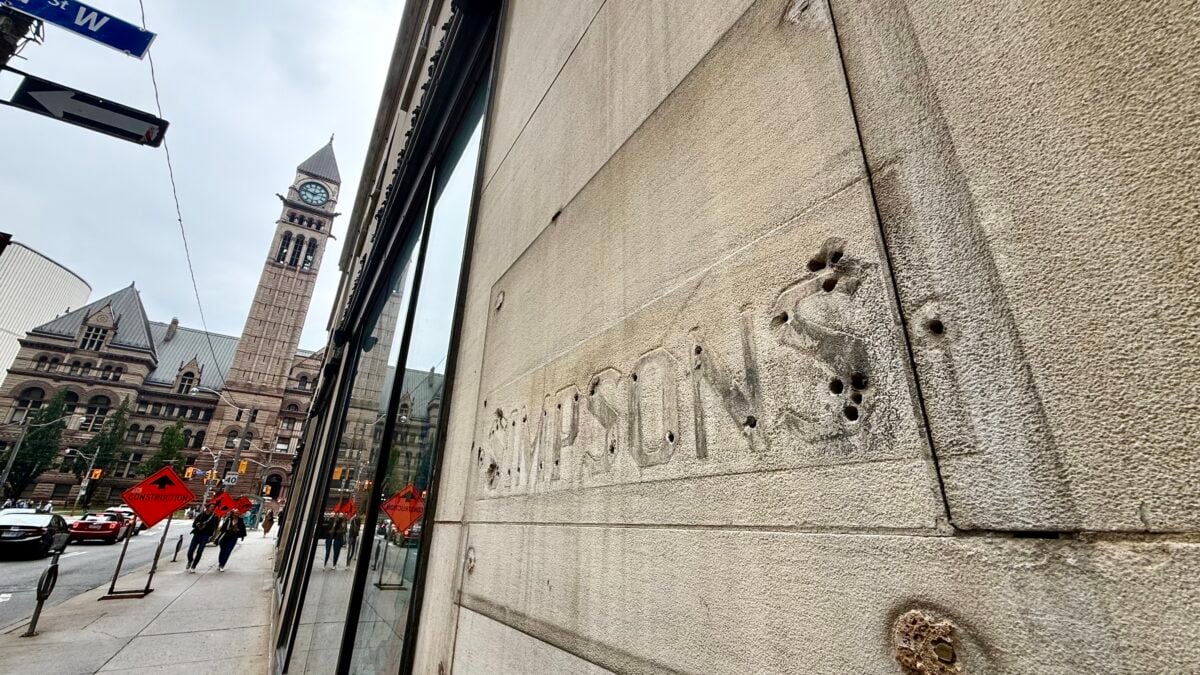
Following Hudson’s Bay’s 2025 closure, exterior HBC signs were removed from portions of the building. Underneath, the word SIMPSONS became visible again in the stone, and the old lettering remained visible in 2026.
The retailer itself is history, along with much of the department-store world in which it once competed. Its influence survives in Canadian fashion history, retail architecture, former shopping-centre anchors and memories of an era when a department store could occupy an unusually large place in the commercial life of a city.
At Queen and Yonge, 35 years after the Simpsons banner disappeared, the old name was visible once again.