When Sungiven Foods entered Canada in late 2019, the timing was challenging. Within months of opening its first Vancouver store, the COVID-19 pandemic disrupted supply chains and altered grocery shopping habits across the country.
Yet six years later, the company is accelerating growth in Metro Vancouver, refining its store format, expanding ready-to-eat offerings, and deepening its private-label program. The retailer now operates 10 stores across the Lower Mainland and plans to open between 10 and 15 more locations over the next several years.
In an interview, Paul Zhang, President of Sungiven Foods in North America, described the company’s journey as both deliberate and adaptive.
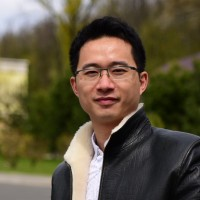
“Our founders were Canadians living in Vancouver for a long time,” Zhang explained. “They saw an opportunity to build something meaningful for the communities here. Vancouver has a strong appreciation for global food culture, fresh ingredients, and healthy living. We believed our strengths in global sourcing, private label development, and fresh supply chain management could fit well here.”
The result is what many shoppers describe as a curated, smaller-format alternative to traditional Asian supermarkets, often compared to Trader Joe’s in the United States, but with a distinctly Asian and health-focused lens.
A Focused Metro Vancouver Strategy
Sungiven’s Canadian operations remain concentrated in Metro Vancouver. Current locations include Vancouver, Burnaby, Richmond, Surrey, White Rock, and North Vancouver. The newest store, which soft-opened in January 2026, is located at One Park in Richmond, across from CF Richmond Centre.
“Right now, we have 10 stores,” Zhang said. “We just soft-opened our second Richmond location a couple of days ago.”
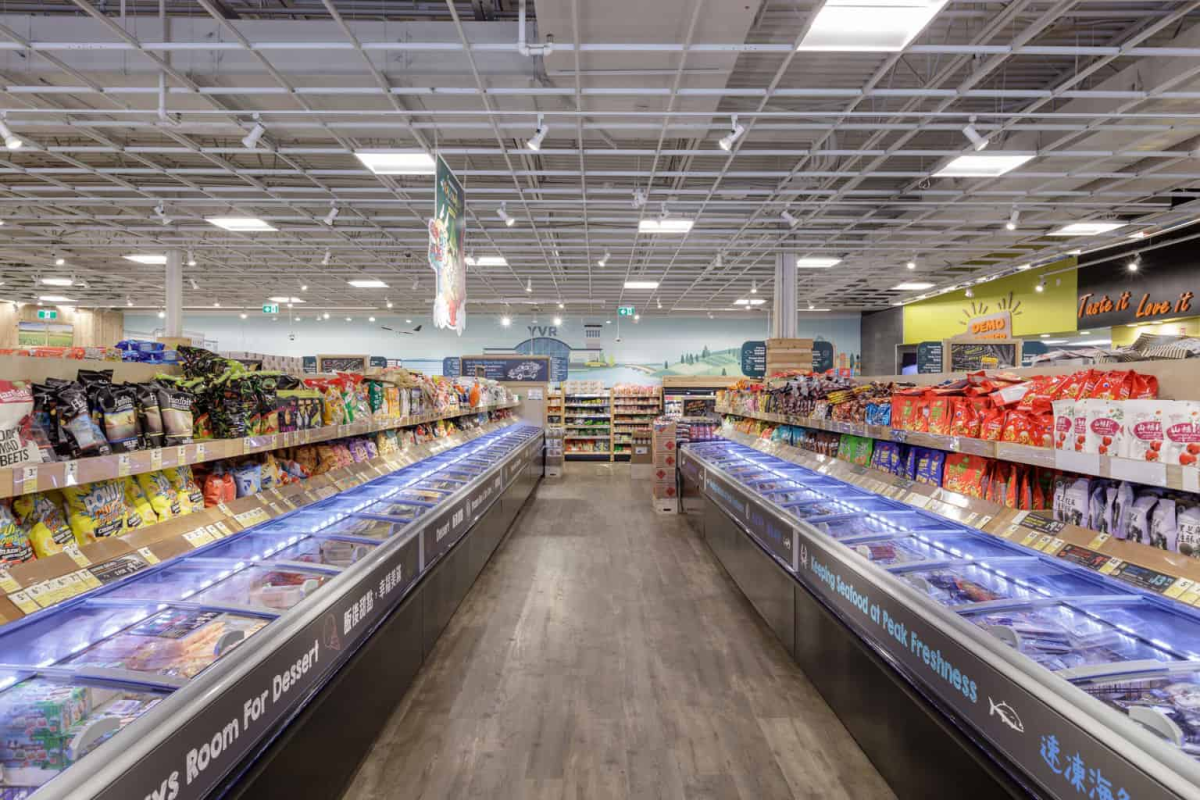
The company’s early stores varied significantly in size, ranging from roughly 3,000 to 24,000 square feet. That experimentation phase has now ended.
“Back in 2019, we tested different formats to see what the market wanted us to be,” Zhang explained. “Now we have a much clearer concept. We will focus on smaller sizes. There will be two models, around 4,000 square feet and about 8,000 square feet.”
The smaller footprint provides flexibility in dense, urban neighbourhoods where daily shopping is part of community life. According to Zhang, Sungiven performs best in residential areas with multicultural populations and younger families who prioritize fresh food and healthy lifestyles.
Originally, the majority of customers were Asian. That mix has shifted dramatically.
“Our non-Asian customers went up from about five percent to around forty percent,” Zhang noted. “We are still trying to find the best way to fit into communities, but it seems we perform well in younger, more health-focused neighbourhoods.”
This neighbourhood-based strategy forms the core of the Sungiven Foods Canada expansion plan in British Columbia.
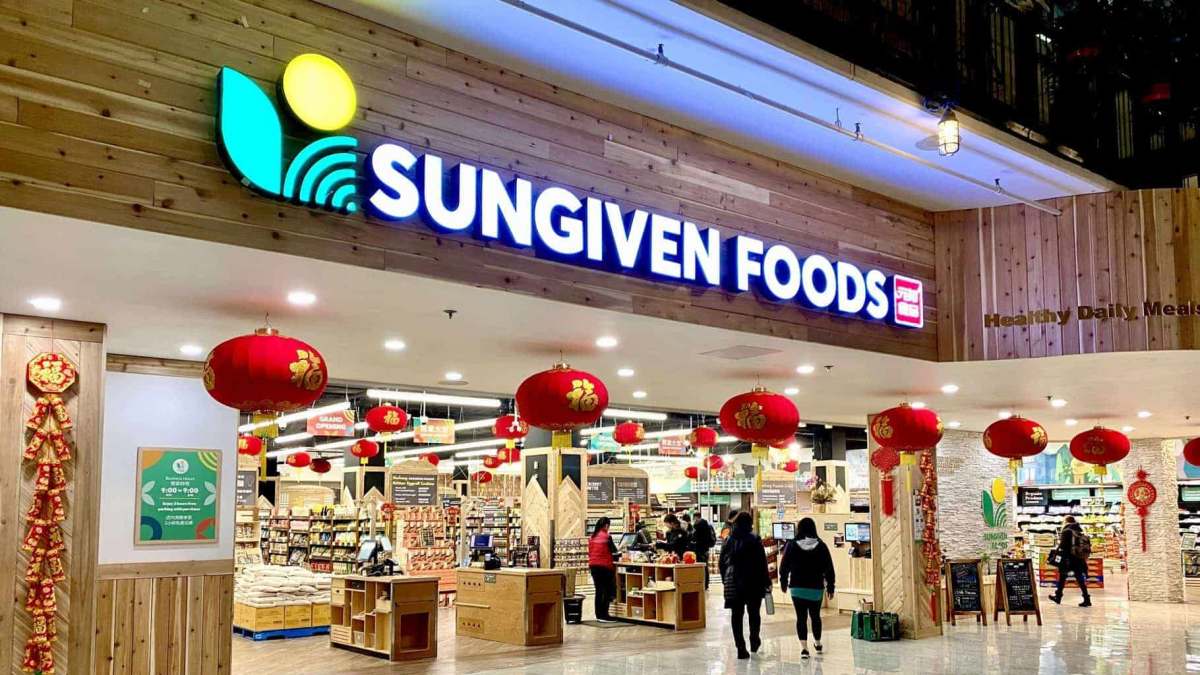
Private Label as Competitive Advantage
One of Sungiven’s defining characteristics is its heavy reliance on private-label products. More than 60 percent of stock comes from in-house brands such as Onetang, Yuho, and Sunfreesia.
“A lot of people call us an affordable Asian whole foods store,” Zhang said. “Some say we are like an Asian Trader Joe’s. We have many private label products, and we keep growing them.”
Unlike traditional grocers that rely heavily on third-party brands, Sungiven develops products directly with manufacturers and farms.
“We really focus on sourcing the best product with the best value directly from manufacturers or farms,” Zhang explained. “Everything on our shelves, we are responsible for. We are accountable for the quality. We act as the buyer for the customer, not the seller for vendors.”
This distinction is central to the company’s positioning. Rather than simply applying a store label to commodity products, Sungiven develops customized items tailored to local community preferences.
The company adheres to what it calls the “Three Lows” philosophy: low processing, low additives, and lower prices for quality through vertical integration. Products emphasize non-GMO ingredients, free-run eggs, and Canadian AAA-grade meats without added hormones.
The approach aims to blend global sourcing expertise with local supply chains. Approximately half of Sungiven’s sales now come from locally sourced products, which has helped cushion the impact of global supply chain disruptions and rising food costs.
“Yes, tariffs and cost increases have an effect,” Zhang acknowledged. “But it is not as severe for us because we have development around the world and strong local supply. The cost went up a little bit, but it’s not a shortage issue.”
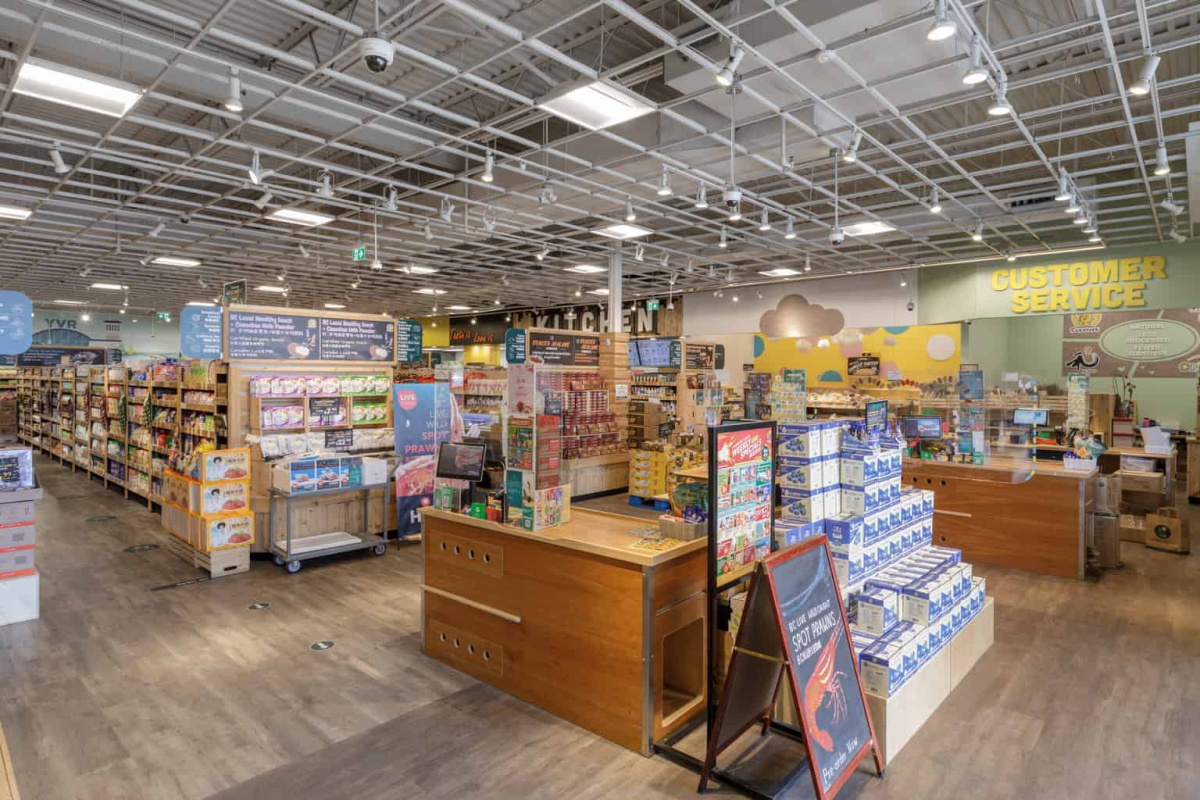
Ready-to-Eat and Community Convenience
In recent years, Sungiven has shifted further toward ready-to-eat and ready-to-cook offerings. The newest Richmond location features expanded grab-and-go meals, hot food stations, and in-house bakery items designed for busy urban professionals.
“We can see growing demand for ready-to-eat items and ready-to-cook meal kits,” Zhang said. “People prefer to spend more time with loved ones rather than a couple of hours cooking. They want something easy and fresh.”
This evolution reflects broader grocery trends across Canada. Urban shoppers increasingly seek convenience without sacrificing quality.
Sungiven supports this strategy with centralized infrastructure. The company operates a distribution centre and a central kitchen, allowing stores to operate without large backrooms, commercial kitchens, or loading docks.
“We have our DC built already, and we have our central kitchen to supply ready-to-eat meals every day,” Zhang said. “We don’t even need a loading dock in many cases. The smaller scale helps us find locations more easily.”
That operational flexibility underpins the Sungiven Foods Canada expansion strategy, especially in land-constrained urban markets.
Digital Integration and Uber Eats Partnership
In February 2026, Sungiven launched a partnership with Uber Eats, becoming one of the first major Asian-focused grocery chains in British Columbia to offer on-demand grocery delivery through the platform.
The company had already piloted online delivery through its own app in mid-2025, promising fresh produce and meat delivered within 45 minutes.
“We see delivery as an expansion of our community service, not just a sales channel,” Zhang said. “You don’t need to spend an hour and a half driving to a big store just to buy milk. You can open the app on your way home and have fresh groceries at your door.”
Zhang acknowledged that maintaining price parity between in-store and online channels remains a challenge. However, demand continues to grow, particularly among young families and professionals.
The integration of smaller-format stores with fast local delivery creates a hybrid model that bridges physical retail and digital convenience.
Global Roots and the Boomerang Strategy
Though Sungiven is often perceived as a Chinese import, its story is more complex. The founders, Richard Lian and Kathy Su, developed the concept while living in Vancouver in the early 2000s. Inspired by the West Coast’s health-conscious retail culture, they brought the model to Xiamen, China, in 2011, where it scaled to more than 200 locations.
In 2019, they returned to Vancouver for international expansion.
“Vancouver is a good place to test our model because it is so multicultural and diverse,” Zhang said. “Once we make our model even clearer, we will move out.”
The parent company, Xiamen Sungiven Foods Holding Ltd., began as an import-export business in 2001 and now manages relationships with more than 1,000 partner factories globally. Research and development centres in Hamburg and Burnaby support product quality and regulatory compliance.
Zhang envisions broader geographic growth over time.
“For my vision, we should call ourselves Sungiven Foods Global,” he said. “Not only Canada, but the United States and Europe are targets as well.”
For now, however, the focus remains firmly on Metro Vancouver.
Looking Beyond British Columbia
When asked about expansion outside British Columbia, Zhang was cautious but optimistic.
“Moving to another province requires strict planning of supply chains and operations,” he said. “It’s on the table, but we are still focused on Greater Vancouver.”
Toronto has been identified informally as a potential future market, given its multicultural demographics and dense neighbourhoods. Zhang did not confirm timelines, but he acknowledged that Eastern Canada represents a logical next step once operational clarity is achieved.
The disciplined approach suggests that Sungiven is prioritizing long-term stability over rapid national rollout.
Building a Community Cornerstone
Zhang emphasized that Sungiven’s ambition extends beyond grocery sales.
“We try to make our shops a cornerstone of the community,” he said. “People go to grocery stores not only to buy food. It is where people connect. We want to provide value and communicate with customers about living life in the community.”
That philosophy aligns with the brand name itself, which means “Given by the Sun,” reflecting a belief in natural, sun-grown food rather than heavily processed alternatives.
As the Sungiven Foods Canada expansion continues in Metro Vancouver, the retailer appears to be refining a model that blends curated private labels, smaller-format convenience, digital integration, and community orientation.
After weathering a pandemic launch and navigating global supply chain volatility, Sungiven has quietly built a loyal following in British Columbia. Traffic counts are rising annually, customer demographics are broadening, and store formats are becoming more standardized.
If the company can replicate that balance of global sourcing and local relevance in new markets, it may evolve from a regional player into a national competitor within Canada’s increasingly dynamic grocery landscape.