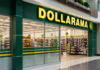
As part of Retail Insider Reports, this Q3 2026 Discount & Off-Price Report analyzes Q3 2026 developments in Canadian discount and off-price retail. Drawing on Retail Insider coverage, industry research, company disclosures, government data, and broader market signals, it identifies key dynamics shaping value-oriented retailers, suppliers, landlords, and consumers. These reports are designed to deliver executive-level insights across major retail sectors and can be accessed through the Retail Insider Report Hub.
This report examines Canadian discount and off-price retail, including dollar stores, closeout retailers, liquidation formats, off-price apparel, and retailers competing primarily on price and value.
Report Contents
- Executive Summary
- Retail Insider Coverage
- Value Seeking Does Not Necessarily Mean Trading Down
- Different Retailers Sell Different Versions of Value
- Dollarama’s $5 Ceiling Tests the Operating Model
- Dollarama Can Win Purchases Across Retail Categories
- Store Expansion Adds More Value Competition
- Discount Grocery Extends the Value Battle
- Temu Is Becoming a More Local Competitor
- Broader Industry Coverage
- Editor’s Take & Outlook
- Representative Articles
- More From Retail Insider
Executive Summary
Canadian value-oriented retailers produced strong transaction growth during Q3 2026, with Dollarama and TJX Canada both reporting more purchases through their stores. Dollarama’s Canadian comparable sales increased 5.4% in its fiscal second quarter, driven by a 3.7% increase in transactions and a 1.7% increase in average transaction size. TJX Canada, which operates Winners, Marshalls and HomeSense, reported comparable sales growth of 6%, driven primarily by increased customer transactions.
The two businesses sell very different versions of value. Dollarama combines low absolute prices with consumables, household products and general merchandise, while TJX’s off-price model is built around branded fashion and home merchandise. Both generated more transactions. Dollarama management said it could not quantify how much of its performance was attributable to trade-down, while consumer research during the quarter showed continued interest in value formats alongside improving discretionary-spending intentions.
Competition is also expanding. Dollarama raised its Canadian opening guidance, TJX continued pursuing regional and urban opportunities, discount grocers added stores and conversions, and Jumbo secured its first Canadian location at Vaughan Mills. Temu’s local-seller model is adding a domestic dimension to digital value competition.
Value is ultimately a purchasing judgment, not a single retail format. Retailers need to make it clear to customers while preserving the assortment, convenience and margins required to deliver it. Canadian value retail entered the second half of 2026 with strong transaction growth at two of the country’s largest value-oriented operators.
Several patterns emerged during the quarter:
- Dollarama’s Canadian comparable sales increased 5.4%, including 3.7% transaction growth, while TJX Canada’s 6% comparable-sales increase was driven primarily by customer transactions.
- The results support strong demand for value but do not establish widespread consumer trade-down. Dollarama management said the contribution from trade-down could not be quantified.
- Value takes different forms across dollar stores, branded off-price retail, discount grocery, large-format general merchandise and digital marketplaces.
- Dollarama’s $5 maximum price point is testing how effectively the retailer can manage sourcing, assortment and operating costs while maintaining its low-price positioning.
- Physical expansion continues through Dollarama, TJX and new entrant Jumbo, although operating stores, announced locations and longer-term plans represent different stages of growth.
- Temu’s Canadian local-seller model creates a digital competitor that can also serve as a sales channel for domestic merchants.
The next phase will test whether retailers can sustain customer transactions while maintaining the margins behind their offers.
Retail Insider Coverage
Value Seeking Does Not Necessarily Mean Trading Down
Strong value-retail performance can easily be interpreted as evidence that financially pressured consumers are moving downmarket. The company and consumer evidence presents a more complicated picture. Dollarama CEO Neil Rossy acknowledged that financial hardship can encourage customers to seek lower-priced options. Households under pressure can also reduce spending altogether, and management said it could not quantify how much of Dollarama’s performance was attributable to trade-down.
Consumer research during the quarter showed value seeking alongside greater willingness to spend. A July Stifel survey of 300 Canadian adults found that 75% expected to increase their dollar-store spending over the following 12 months, while discretionary-spending intentions also improved.
BCG research released in September similarly found that consumers across income groups seek value, although what justifies a purchase varies. Affordability and trusted essentials can matter heavily in one transaction, while quality, service or the purchase experience can carry more weight in another. TJX Canada’s performance adds another dimension. Winners, Marshalls and HomeSense are built around branded off-price fashion and home merchandise, much of it discretionary. A 6% comparable-sales increase driven primarily by transactions indicates continued willingness to buy those products when customers find the combination of merchandise and price attractive.
Consumers can become more value-conscious while remaining willing to spend.
Different Retailers Sell Different Versions of Value
The businesses grouped under the broad value category compete through substantially different propositions.
Dollarama combines low absolute prices with convenience and an assortment spanning cleaning supplies, snacks, household goods, stationery, toys and seasonal merchandise.
Winners, Marshalls and HomeSense give customers access to branded fashion and home merchandise at prices intended to compare favourably with conventional retail. Discount grocers including No Frills, Maxi, Food Basics and FreshCo compete heavily around frequent household purchases, where customers repeatedly encounter and compare prices.
Jumbo will bring a large-format version of value retail to Canada with an assortment spanning home products, seasonal merchandise, toys and general merchandise. Temu competes digitally through price, assortment and marketplace access, while its local-seller program allows Canadian inventory and merchants to participate in the platform. A household can use several of these businesses without treating them as substitutes. Someone might buy cleaning supplies at Dollarama, groceries at No Frills, branded clothing at Winners and an occasional product through Temu.
Dollarama’s $5 Ceiling Tests the Operating Model
Dollarama’s maximum $5 price point is one of the clearest expressions of its consumer positioning. Management said during the quarter that another price point above $5 was not necessary under current conditions and that the company intended to delay introducing one for as long as possible.
Maintaining that ceiling does not mean the assortment beneath it remains static. Individual prices, products, pack sizes and merchandise can change, while Dollarama can use sourcing, merchandising, logistics and store efficiency to manage cost pressures. The company maintained Canadian gross-margin guidance of 45.0% to 45.5% despite incorporating elevated oil and freight costs into its assumptions for the balance of the fiscal year. The guidance remains a forecast, and changing cost conditions could affect future results.
Dollarama therefore needs to maintain a credible low-price offer while managing costs and preserving margins that support its store network and continued expansion. The $5 ceiling should not be treated as an alternative measure of Canadian inflation. Dollarama’s assortment is not a fixed consumer basket, and changes to products, sizes and sourcing can occur without changing the maximum price point.
Dollarama Can Win Purchases Across Retail Categories
Dollarama’s assortment gives the chain competitive overlap with a wide range of retailers. Cleaning products and household supplies can compete with supermarkets, pharmacies and mass merchants. Snacks overlap with grocery and convenience stores, while stationery, toys and seasonal merchandise extend Dollarama’s reach into specialty and discretionary categories.
Dollarama does not need to replace another company’s entire shopping trip to gain spending. It can capture individual purchases that might otherwise have occurred across several retail formats. More transactions can increase Dollarama’s role in household shopping routines even when another retailer remains the primary destination for a broader category.
Store Expansion Adds More Value Competition
Dollarama ended its fiscal second quarter with 1,734 Canadian stores after adding 15 net locations during the period. It raised fiscal 2027 Canadian opening guidance to 65 to 75 stores from 60 to 70.
Management linked the revision to available opportunities and landlord delivery timing and cautioned against interpreting it as a permanently faster annual expansion rate. A Western Canadian logistics hub expected to become fully operational by the end of calendar 2027 is intended to support the network as it grows.
TJX is pursuing a different development model. A 42,500-square-foot combined Winners/HomeSense has been announced for Parsons Creek Town Centre in Fort McMurray, bringing the banners into the region for the first time. Construction and opening dates had not been announced during the reporting period.
TJX management has also referenced opportunities following Hudson’s Bay’s departure, although the company has not quantified how much former Bay spending has transferred to Winners, Marshalls or HomeSense.
Jumbo will add another large-format competitor when it enters Canada at Vaughan Mills. Fox Group secured the approximately 47,000-square-foot former Toys “R” Us lease near HomeSense/Winners and Hockey Life, with the opening currently targeted for early 2027.
Fox acquired the lease rather than the former Toys “R” Us Canada business, and Jumbo does not yet have Canadian operating results. Its Vaughan Mills store will provide the first domestic evidence of how Canadian consumers respond to the concept. The development models differ considerably. Dollarama can add relatively compact stores across a network exceeding 1,700 locations, while TJX can enter a regional market with more than 40,000 square feet. Jumbo is beginning with a large-format location at one of Canada’s major shopping centres.
Discount Grocery Extends the Value Battle
Canadian grocers are also directing development toward discount banners. Loblaw continued emphasizing No Frills and Maxi within its expansion plans, Metro announced the conversion of 10 Ontario supermarkets to Food Basics, and Empire’s FreshCo entered Atlantic Canada during the quarter. Some represent new locations, others involve banner conversions or acquired stores, and broader company investment programs can include other formats.
The common thread is increased investment in banners positioned around frequent household spending, extending value competition into one of the consumer’s largest recurring expenses.
Temu Is Becoming a More Local Competitor
Temu’s Canadian marketplace is adding a domestic component to a business commonly associated with cross-border e-commerce. Canadian merchants can list domestically held inventory for local fulfilment, while Temu’s Shopify integration allows participating merchants to synchronize products and inventory, manage fulfilment and receive marketplace orders through Shopify.
The scale of Temu’s Canadian local business remains unclear. PDD has not disclosed Canadian revenue, the proportion of Canadian orders fulfilled domestically or a new Canadian warehouse network in the reporting reviewed. Consumer surveys showing that Canadians have purchased from Temu measure adoption rather than market share and cannot establish how much spending has moved away from domestic retailers.
Inventory located closer to customers can reduce some of the delivery and returns disadvantages associated with cross-border e-commerce. Recruiting Canadian merchants also changes the competitive relationship: Temu can compete with domestic retailers for consumer attention while providing some businesses with another marketplace through which to sell. Physical retailers retain potential advantages in immediate product access, in-person service and returns, but those benefits need to remain meaningful relative to price and assortment.
Broader Industry Coverage
Transaction Growth Provides the Clearest Evidence
Statistics Canada’s July retail data showed general merchandise sales up 6.8% year-over-year in current dollars and 7.1% at constant prices. The category includes several types of retailers and does not separately measure dollar stores or off-price operators.
Company-specific results provide a clearer view. Dollarama’s 5.4% Canadian comparable-sales increase for the quarter ended August 2 consisted of 3.7% transaction growth and a 1.7% increase in average transaction size. Consumables and general merchandise performed strongly, while management also reported strength in toys and positive seasonal demand.
The Canadian figures are more useful for assessing the domestic business than Dollarama’s 17.6% consolidated sales increase to approximately $2.03 billion. That comparison included a full quarter of Australian operations versus only 13 days in the corresponding period a year earlier.
TJX Canada reported 6% comparable-sales growth for the quarter ended August 1, with management saying the increase was driven primarily by customer transactions. Winners, Marshalls and HomeSense sell a substantially different assortment from Dollarama, yet both businesses generated more purchases during their respective quarters.
TJX counts transactions at the register and does not use people counters, so increased transactions should not be described as measured store foot traffic. The common signal is that customers completed more purchases at both businesses.
Editor’s Take & Outlook
What Retailers and Landlords Should Watch
Transactions are one of the clearest measures to watch as value competition intensifies, alongside average transaction size, gross margin, merchandise mix and customer retention.
For Dollarama, the relationship between transactions, the $5 ceiling and gross margin will show whether the retailer can continue managing cost pressure without materially changing its visible price architecture.
For off-price retailers, transactions and merchandise performance can indicate whether customers continue finding enough branded discretionary merchandise at attractive prices to support repeat purchases.
Expansion introduces another consideration. New stores need to generate enough sales without excessive cannibalization, while announced locations and development targets should be separated from stores actually operating.
Landlords will also encounter very different space requirements. Dollar stores can provide frequent visits from relatively compact locations, off-price retailers can occupy much larger stores, and concepts such as Jumbo can provide new uses for large-format vacancies. Hudson’s Bay’s departure has created additional opportunities for retailers seeking larger footprints, although former department-store space will not suit every format or property.
Outlook: Can Transaction Growth Continue?
The next six to 18 months will show whether the current momentum continues as retailers add stores and work through changing supply-chain costs.
For Dollarama, transactions, average transaction size, gross margin and the $5 maximum price point will be important measures. Its revised opening range and Western logistics infrastructure will also show how the retailer is preparing for further Canadian development.
TJX Canada’s comparable sales and transactions will provide another measure of discretionary value demand. New locations and opportunities created by Hudson’s Bay’s departure could expand the network, while reported segment profitability and merchandise execution will remain important alongside sales growth.
Jumbo’s Vaughan Mills opening will provide the first Canadian evidence for its large-format concept. Temu’s Canadian seller adoption and domestic fulfilment will show whether localization becomes materially more important to consumers and merchants. Discount grocery development will continue adding another layer of competition around routine household spending. Across these formats, the central test is whether retailers can retain customer transactions while preserving the margins required to keep delivering value.
Editor’s Take
Canadian consumers clearly want value, but Q3 does not support a simple conclusion that financially pressured households are universally trading down.
Dollarama generated more transactions across an assortment that includes routine household goods and discretionary merchandise. TJX Canada also generated transaction-led growth through Winners, Marshalls and HomeSense, where branded fashion and home products remain central to the offer.
Consumers can become more selective about price while remaining willing to spend.
That creates competition well beyond traditional retail categories. Dollarama can capture a household purchase that might otherwise have gone to a supermarket or pharmacy. Winners can compete for a branded apparel or home purchase. A discount grocer can win the grocery basket, while Temu can compete for an individual online purchase.
Retailers do not need to replace an entire shopping trip to gain a larger share of household spending. Winning individual purchases more frequently can alter competitive dynamics.
Expansion by Dollarama, TJX and discount grocers, along with Jumbo’s arrival and Temu’s localization, will give consumers more opportunities to make those choices.
The harder part is sustaining what makes each offer attractive. Low prices need sourcing and margins that work. Off-price retail needs compelling merchandise. New concepts need enough transactions to support their stores.
Q3’s results show that consumers are responding to value across very different retail formats. Whether that momentum lasts will depend on retailers continuing to deliver prices, products and shopping experiences customers consider worth the purchase.
Representative Articles
- Beyond Store Growth: What’s Next for Dollarama? — Jul 9, 2026
- Winners/HomeSense to open first Fort McMurray location at Parsons Creek Town Centre — Jul 9, 2026
- METRO to Convert 10 Ontario Stores to Food Basics — Aug 13, 2026
- TJX Says Winners, Marshalls and HomeSense Are Gaining Major Market Share in Canada — Aug 21, 2026
- MadHatters poised for continued growth — Aug 26, 2026
- Loblaw Plans More No Frills and Maxi Stores in $1.2B Expansion — Sep 1, 2026
- Temu Is Becoming a More Local Competitor for Canadian Retailers — Sep 1, 2026
- Dollarama Q2 sales increase 17.6% y/y to surpass $2 billion — Sep 16, 2026
- Dollarama’s $5 Ceiling Is Becoming a Test for Canadian Retail — Sep 17, 2026
- Canadian Consumers Signal Unexpected Rebound in Spending Intentions — Jul 7, 2026
- BCG: Canadian retail spending splits further as higher- and lower-income households diverge — Sep 17, 2026
- Jumbo to Open First Canadian Store at Vaughan Mills in Former Toys “R” Us — Sep 21, 2026
- Empire Raises Store-Opening Target as Canadian Grocery Expansion Intensifies — Sep 14, 2026