Everist recently celebrated its five-year anniversary and the haircare brand is entering its next phase with a continued focus on “beauty, undiluted,” alongside new packaging and expanded distribution across North America.
Question: Looking back over five years, what were the biggest inflection points that shaped Everist’s growth and brand positioning?
Answer: The first one was our launch in 2021. From day one, we knew that we didn’t want to create products that were not a joy to use. We wanted to create products that felt like an upgrade — better performance, better ingredients, better design — while dramatically reducing waste. Introducing a completely new format to the category was a risk, but it immediately differentiated Everist and helped define our identity as a true innovation-led brand.
The second big moment was the industry and consumer validation we received early on. Being named as one of the year’s best inventions, alongside recognition from major beauty editors and retailers, gave us credibility far beyond our size and helped position Everist as a leader in the emerging concentrated beauty space.
Most recently, one of the biggest strategic shifts has been evolving our messaging to lead with the unique consumer benefits of Everist for supporting hair and scalp health. That shift has significantly accelerated both sales and brand momentum for us.
Jayme Jenkins (left) and Jessica Stevenson
Q: You’ve said innovation takes time. What were the biggest challenges in getting consumers to understand and adopt concentrate-based haircare?
A: One of our biggest advantages (as well as our biggest challenges) was creating a totally novel product, no one has ever created shampoo, conditioner and body wash concentrates before. A major unlock in our growth was finding a way to explain the product in a way that people could easily understand. Explaining our cream concentrates as a hybrid of haircare and skincare and messaging the benefits of this for hair, scalp and skin, encouraged trial and led to our exponential growth over the last few years.
Q: Can you walk through the “unsexy” realities of scaling a beauty brand and how those challenges influenced your strategy?
A: On the product side it was complex to scale up the production of a totally new form factor with no blueprint of how it was supposed to be done. Lots of failed batches, gritty textures, etc figuring out the right temperatures and mixing speeds. Then there is also the operations of scaling. We have gone out of stock on core products more than a dozen times over the last few years as we try to pair managing our cash flow with growing consumer demand. The results of all of these challenges on the formulation and operations side is a discipline in product innovation, fewer, better launches that are highly differentiated. We never want to launch a ‘me too’ product without a unique point of view.
Everist photo
Q: How has your partnership as founders, and with your community, directly shaped product development and decision-making?
A: Our partnership as founders, and our partnership with the Everist community, has shaped nearly every aspect of product development and decision-making from the very beginning. Internally, we’ve always approached the brand collaboratively, balancing creative vision with deep customer listening and long-term brand building. At the same time, our community has played a direct role in helping shape the evolution of Everist. They’ve been involved in everything from product feedback and innovation to packaging. They are very vocal about packaging! We wouldn’t want it any other way. The answers are there if you’re willing to listen.
Q: As Everist enters its next phase with new packaging and broader distribution, what are the key priorities and risks you’re focused on over the next 12–18 months?
A: One of our biggest priorities over the next 12 to 18 months is ensuring that we evolve the brand without losing the ethos that made customers connect with Everist in the first place. As we introduce new packaging and expand distribution, we’re very focused on building Everist into its full potential as a premium beauty player while staying deeply aligned with our core values and customer experience.
There’s naturally a lot of operational complexity that comes with scaling, from packaging transitions to retail expansion and maintaining supply chain excellence, but the lens we apply to every decision is the customer. We want to make sure that the Everist community feels included in the evolution of the brand, and that we continue listening closely to their feedback as we grow.
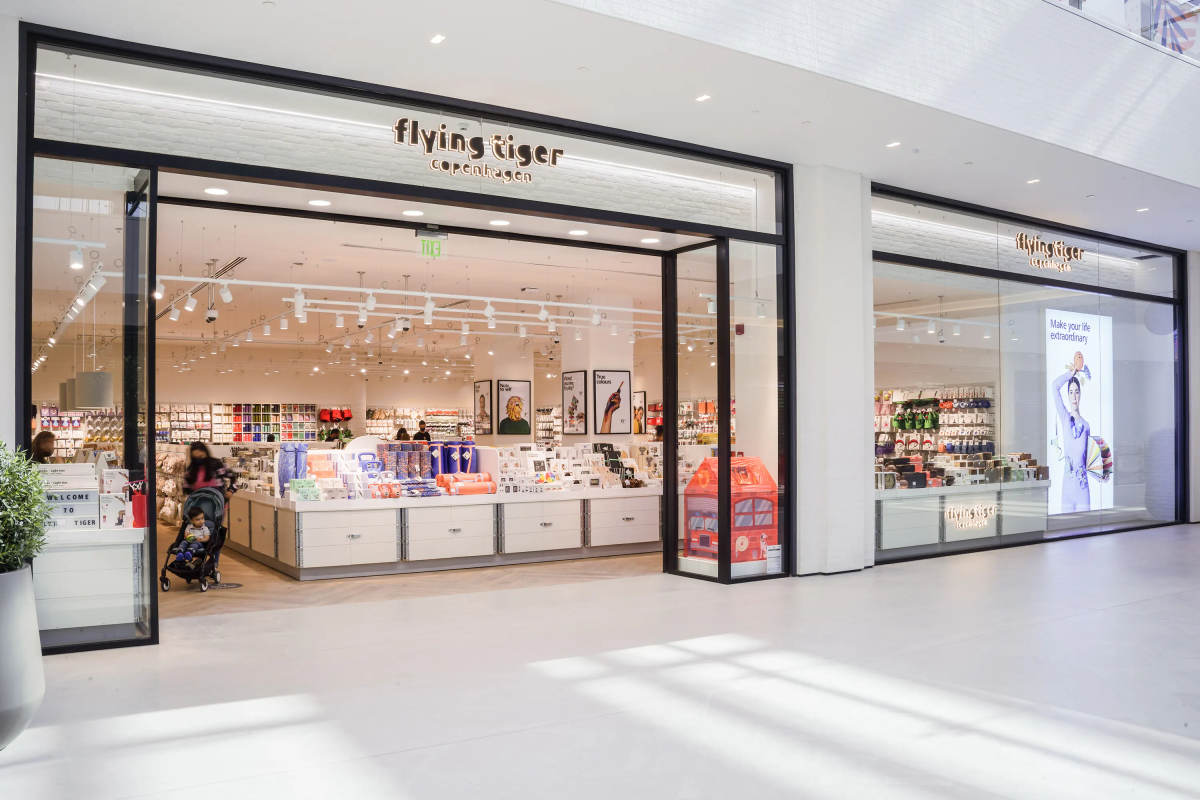
Construction signage for Flying Tiger at CF Toronto Eaton Centre. Photo: Eithne Lavin
One of Europe’s most recognizable discovery-driven retailers is officially entering Canada, as Danish chain Flying Tiger Copenhagen prepares to launch a major Greater Toronto Area expansion across several of the country’s busiest and most productive shopping centres.
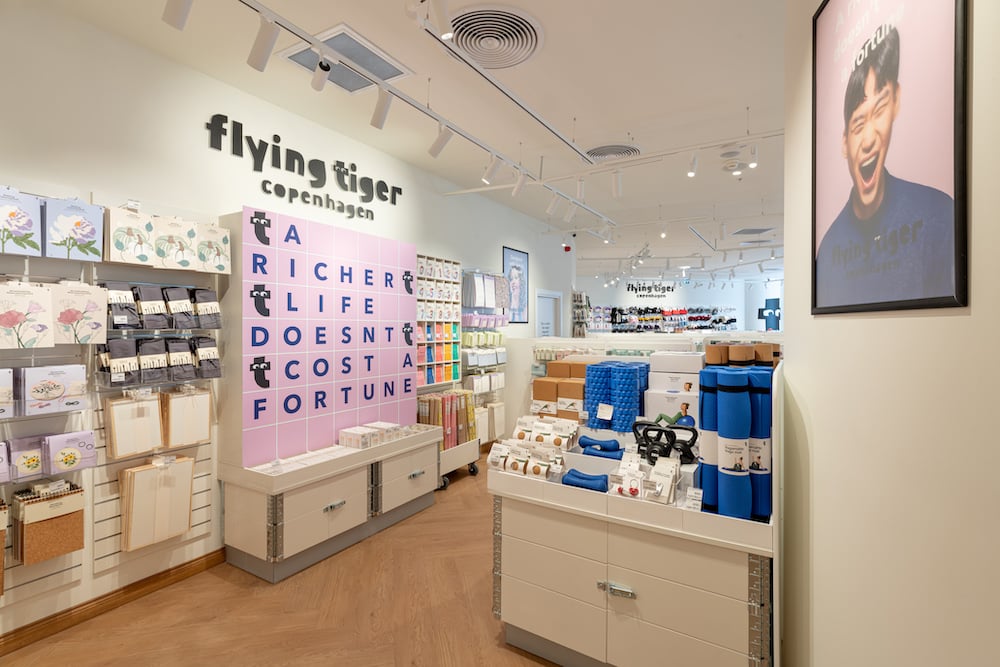
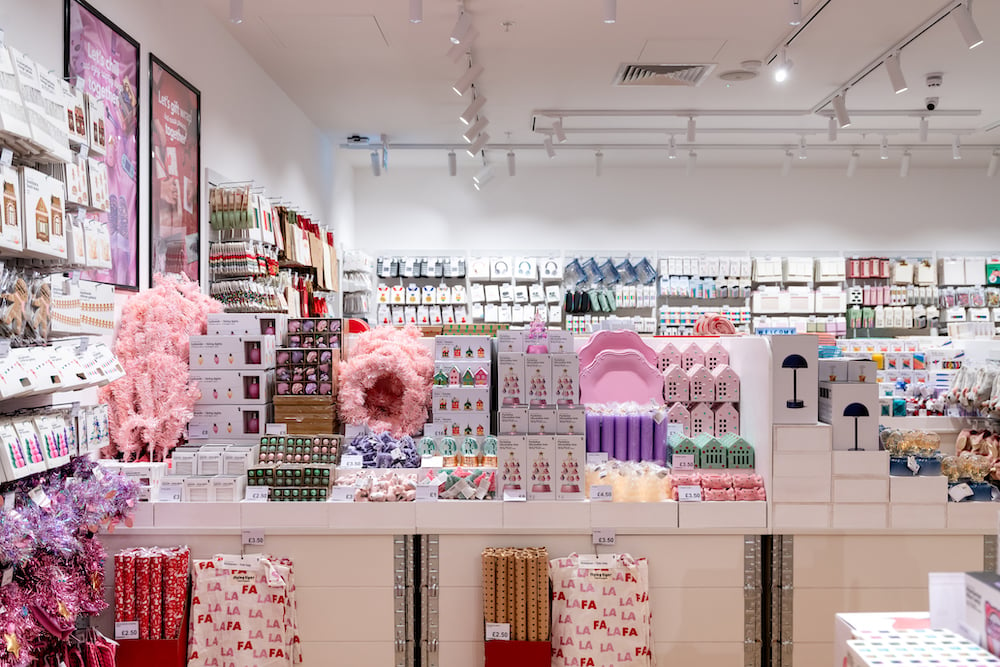
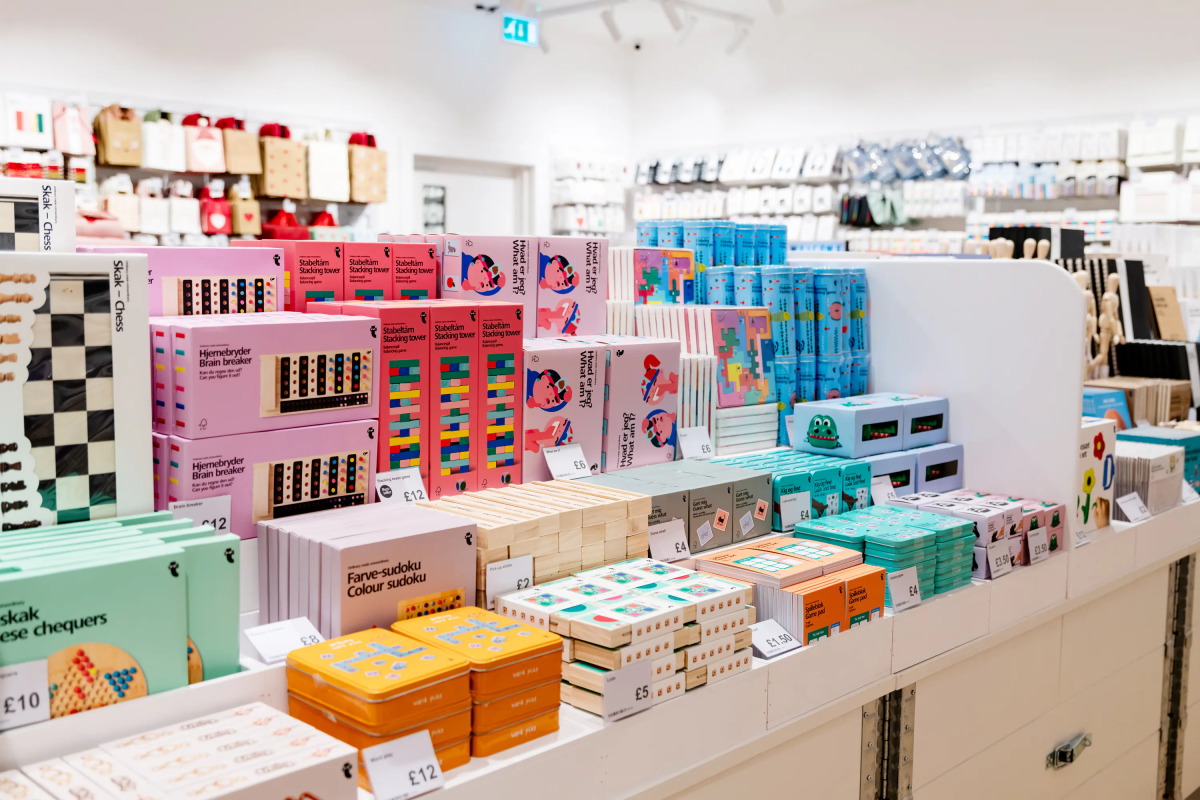
Known for its colourful stores, affordable Scandinavian-inspired merchandise, and constantly changing assortment of impulse-oriented products, Flying Tiger Copenhagen has built an international following around a retail concept that blends value shopping with entertainment and exploration. The retailer’s stores feature a range of products from home décor and kitchenware to stationery, toys, crafts, seasonal products, gifts, and novelty merchandise presented through highly visual displays and curated pathways designed to encourage browsing and repeat visits.
The company’s first Canadian store is scheduled to open at CF Toronto Eaton Centre at the end of June 2026. Additional GTA locations are planned for Vaughan Mills, Scarborough Town Centre, Square One Shopping Centre, and CF Markville later this year.
The Canadian expansion is being operated through a partnership with Fox Group, the international retail and franchise operator overseeing the brand’s Canadian rollout.
Flying Tiger Copenhagen’s arrival comes at a time when consumers are increasingly gravitating toward affordable “small indulgences” and shopping environments that feel immersive, entertaining, and visually engaging. As economic pressures continue influencing discretionary spending, many retailers are seeing stronger consumer interest in browse-driven concepts that combine affordability with novelty and experience.
Canada Marks Flying Tiger Copenhagen’s 45th Global Market
Founded in Copenhagen in 1995, Flying Tiger Copenhagen has expanded into more than 1,000 stores across 45 global markets. The retailer first entered Asia with a Japanese store opening in 2012 and has steadily expanded internationally over the past decade.
“We’re thrilled to bring Flying Tiger Copenhagen to Canada, marking an exciting new chapter in our international growth,” said Jens Aarup Mikkelsen, CEO of Flying Tiger Copenhagen, in a statement.
“We see strong alignment with Canadian consumers who appreciate design-led products at accessible prices. Our stores are built to surprise and inspire, and we look forward to becoming part of the Canadian retail landscape.”
Inside a Flying Tiger Copenhagen Store. Photo: Flying Tiger
In an interview with Retail Insider, Eithne Lavin, General Manager of Flying Tiger Copenhagen Canada, said the Greater Toronto Area was selected because of both its scale and diversity, as well as its openness to new retail concepts.
Eithne Lavin, General Manager of Fox Group Canada
“The GTA is a natural place to begin because it’s a diverse and dynamic retail market with a strong appetite for new experiences,” Lavin said.
The selection of shopping centres reflects a carefully targeted Canadian market-entry strategy. The rollout combines downtown Toronto office and tourism traffic at CF Toronto Eaton Centre with several of Canada’s busiest suburban regional malls serving large multicultural and family-oriented trade areas.
Retail Concept Focuses on Browsing, Discovery, and Impulse Purchases
Flying Tiger Copenhagen’s retail model differs from many traditional value-oriented chains by emphasizing exploration, visual merchandising, and constantly refreshed assortments rather than purely transactional shopping.
Stores are intentionally designed as guided pathways that move shoppers through colourful displays, rotating seasonal collections, novelty merchandise, and limited-time products intended to encourage spontaneous purchases and repeat traffic.
“Our stores are designed as guided journeys where customers follow a curated path through the space,” Lavin said. “The experience is immersive and encourages exploration and surprise.”
The retailer occupies a distinctive space within the market, blending elements of value retail, Scandinavian lifestyle branding, gifting, and novelty merchandising into a highly curated shopping environment.
Products range from stationery and toys to kitchenware, crafts, party supplies, and home décor, with colourful shelving and rotating displays helping create a sense of urgency and discovery throughout the stores.
“Our products are designed in-house, and we place a strong focus on seasonal collections and ranges that evolve quickly throughout the year,” Lavin said.
The company regularly introduces hundreds of new products in order to maintain freshness and encourage repeat visitation.
The concept also aligns with broader post-pandemic consumer behaviour shifts that have seen many shoppers increasingly treat physical retail as a form of entertainment and escapism rather than simply a transactional activity.
Inside a Flying Tiger Copenhagen Store. Photo: Flying Tiger
Physical Retail Experience Prioritized Over E-Commerce
While many international retailers entering Canada have prioritized omnichannel expansion and digital commerce, Flying Tiger Copenhagen is initially placing its focus heavily on physical retail.
Lavin said the company’s immediate priority is building a strong in-store customer experience before evaluating broader e-commerce opportunities in Canada.
“At the moment, we’re focused on the in-store experience,” Lavin said. “As we evaluate future opportunities, we’ll look at how the brand grows in Canada and in what format.”
That strategy reflects the tactile and visually driven nature of the retailer’s merchandising model, which relies heavily on browsing behaviour, impulse discovery, and physical interaction with products.
Lavin indicated that the CF Toronto Eaton Centre location will exceed approximately 250 square metres (about 2,700 square feet), and other store footprints will vary depending on individual shopping centre layouts.
Flying Tiger Copenhagen’s Canadian arrival also highlights broader changes taking place across Canada’s shopping centre industry.
Over the past decade, major landlords have steadily diversified tenant mixes beyond traditional apparel retailers by introducing more entertainment concepts, food halls, luxury brands, off-price chains, experiential tenants, and browse-driven retail concepts designed to increase dwell time and repeat visitation.
The addition of Flying Tiger Copenhagen to several major GTA malls reflects how shopping centres are increasingly blending value-oriented retail with experiential and premium offerings within the same properties.
Consumers also continue demonstrating strong interest in stores that combine affordability with novelty, social-media-friendly merchandising, and visually engaging environments. One example is Miniso and its IP-heavy offerings.
Lavin said Flying Tiger has already seen strong engagement across its Canadian social media channels ahead of the first opening, particularly from consumers already familiar with the retailer through international travel.
Although Flying Tiger Copenhagen is not publicly discussing long-term Canadian store targets, company executives repeatedly emphasized that they see substantial long-term growth potential in Canada.
“We see strong long-term potential in Canada and absolutely plan to grow over time,” Lavin said.
Flying Tiger Copenhagen’s Canadian launch reinforces broader retail industry trends showing that international retailers continue viewing Canada as an attractive expansion market, particularly for concepts that combine affordability, strong branding, and experience-driven shopping.
In this environment, advantage will come less from efficiency alone and more from smarter design. The report also points to a clear upside: a chance to rebuild supply chains that are more competitive and value-creating.
Key findings include:
Global disruptions are up 38% year over year: Canada’s supply chains have faced more than 70 labour related major disruptions since 2022, revealing the risks of single‑region, lowest‑cost sourcing.
Risk exposure is higher because of trade concentration: Dependence on a small number of trade routes and imported finished goods leaves Canada more exposed to shocks and cascading disruptions.
Supply chain diversification delivers real upside: A mix of onshore, nearshore, friendshore, and selective offshore sourcing is driving 133% procurement ROI, up to 30% higher margins, and 20–30% shipping savings.
SME ecosystem scaling is the unlock. Strengthening supplier ecosystems by enabling Canadian SMEs to scale, with access to technology, capital, and predictable demand translates diversification into tangible economic impact: job creation and stronger domestic capacity, not just intent.
Mahendra Dedasaniya
Mahendra Dedasaniya, National Supply Chain & Network Operations Leader, discussed the issue.
Question: Your report suggests supply chain resilience is now more important than pure efficiency. What specific changes are Canadian retailers and businesses making today to balance cost control with stability and risk management?
Answer: Canadian businesses are rethinking a category based sourcing strategy and that is not a retreat from cost discipline but it’s an upgrade to total cost of ownership under volatility. Business leaders are recognizing that the ‘cheapest unit price’ can be the most expensive outcome once you factor in total landed cost and cost attributable to stockouts, expediting, lost customers, and reputational damage during volatility and disruptions.
Hence there is an increased focus on mission‑critical or high‑visibility categories being pulled closer to home i.e. onshore where continuity and compliance matter most while lower‑risk, high‑volume categories still leverage offshore scale, but with more deliberate diversification across regions to avoid single‑point failures.
We are seeing businesses typically adopting three practices in their updated sourcing playbooks i.e. (1) dual‑sourcing and regionalization to reduce dependency risk (2) supply chain visibility through multi-tier illumination, robust business planning and supply chain risks identification to monitor the business disruption beyond tier 1 supplier and create a competitive differentiator and (3) targeted buffers, not blanket inventory through more inventory everywhere’ to smarter buffers in the right nodes.
In the bottom line, Canadian businesses are not abandoning cost control but they are upgrading it into total cost of ownership under volatility where resilience spending is justified by avoided stockouts, avoided expediting, and reduced revenue-at-risk during shocks.
Q: The report cites a 38 per cent increase in global disruptions and more than 70 labour-related disruptions affecting Canada since 2022. Which sectors or product categories in Canada are currently the most vulnerable, and where are companies feeling the greatest pressure?
A: The vulnerability is concentrating where three forces overlap: dependence on imported inputs, tight service‑level expectations, and exposure to supply chain related risks. That’s why the highest pressure shows up in sectors that cannot tolerate interruptions and where substitutes are limited.
We are seeing two pressure points i.e. (1) Transportation chokepoints (ports/rail/seaway/air), where Canada has seen repeated work stoppages and disruptions across the network and (2) Deep-tier supplier blind spots, because risk often originates beyond Tier 1 and visibility beyond Tier 1 remains a recognized weakness.
At a sector level, the risk signal is strongest in advanced manufacturing and electronics‑intensive supply chains, automotive and industrial production networks, and life sciences/healthcare because those sectors are structurally more exposed to foreign production shocks, and disruptions propagate quickly through multi‑tier supply chains.
In Canada, labour actions across ports and rail create economy‑wide ripple effects: exporters lose shipment windows, importers face backlogs, and recovery can take days or weeks. That’s particularly acute for agri‑food exports and time‑sensitive replenishment categories in retail.
Deloitte photo
Q: Deloitte found that diversification strategies — including onshoring, nearshoring and friendshoring — can significantly improve margins and procurement ROI. What industries in Canada are moving fastest on diversification, and what practical barriers still stand in the way?
A: The economics are increasingly compelling. Our analysis highlights that supplier diversity programs can deliver strong procurement ROI and that nearshoring can materially lift gross margins. The point is not that every category should move, but that the right categories can create both resilience and economic upside.
There are three barriers that explain why execution lags intent and those are (1) Cost and complexity of reconfiguring networks when moving production or shifting sourcing strategies that requires large capital investment and ability to manage operations disruption (2) Multi‑tier visibility gaps since many organizations still lack deep-tier transparency beyond their tier 1 supplier and (3) Regulatory and talent constraints to manage the multiple trade offs between innovation, speed to the market, market volatility, regulatory requirements and constantly changing country’s competitiveness.
Canadian industries are moving quickly where continuity risk is existential however the winners will be those who treat diversification as disciplined ‘right‑shoring’ by category customised based on their business need.
Deloitte photo
Q: The report highlights Canada’s dependence on a small number of trade routes and imported finished goods. In light of ongoing geopolitical tensions and tariff uncertainty, how exposed is Canada compared with other developed economies?
A: We are exposed for two structural issues: trade intensity and concentration. Two‑way trade is roughly 67% of Canada’s GDP, which is comparatively higher so external shocks transmit faster into Canadian prices, availability, and growth.
As we know, our export relationship is heavily anchored with the U.S. market which is a strength in stable periods, but a vulnerability when tariffs, border friction, or demand shifts change the rules of the game. That’s why diversification is not just an operational issue; it’s a Canada’s competitiveness issue.
We also face a ‘self‑inflicted’ exposure premium since labour and logistics disruptions undermine corridor reliability and that can increase the total delivery costs regardless of what’s happening geopolitically.
Deloitte photo
Q: You describe scaling Canadian SMEs as a key “unlock” for stronger domestic supply chains. What role should governments, large retailers, and major suppliers play in helping smaller Canadian businesses gain the technology, capital, and predictable demand needed to compete at scale?
A: Scaling SMEs requires a coordinated ‘runway and pull‑through’ model: government builds the runway, and anchors create demand and capability lift. If we do only one side, we won’t get scale. Our government’s priorities and recent announcements are very strategic to improve the invest in trade through infrastructure and corridor resilience, early approvals so capacity can come online faster. This will also improve interoperable traceability and compliance standards so SMEs can qualify for large procurement ecosystems rather than being screened out.
For large retailers and major corporates, the single biggest unlock is predictable demand. Multi‑year volume commitments or ‘banded’ contracts give SMEs the confidence to invest in AI, floor automation, quality systems, and capacity. They will run the supplier development program so that local SMEs meet tier 1 performance expectations and quality requirements.
Canadian businesses are now more focused on integrating SMEs into their end to end supply chains through modularizing work packages that SMEs can win and give them an option of using dual‑sourcing to make supplier resilience a growth pathway. This transition requires some handholding by large organizations and working capital investment but helps to reduce the risk across their supply chain. That’s how we will turn ‘Buy Canadian’ intent into scalable Canadian capability.
Welcome to the Daily Synopsis by Retail Insider. We hope you enjoy the 12 articles we published today covering key developments in Canadian retail. Pet Valu revealed a more cautious Canadian consumer adapting shopping habits due to inflation and rising fuel costs.
Toronto-based menswear brand Guardin launched with TNT focusing on minimalist suede and leather outerwear. Maison Territo celebrated its first anniversary at Royalmount with a luxury interiors showroom featuring exclusive brands and immersive design experiences.
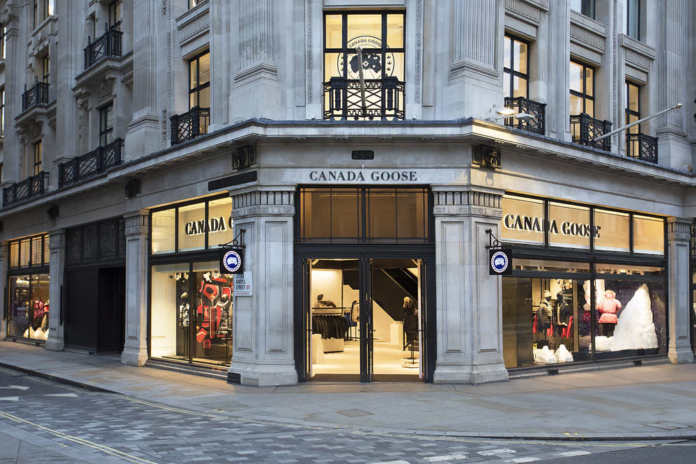
Canada Goose store in London UK. Photo: Canada Goose
Canada Goose is pushing further beyond its winter parka roots as apparel and warmer-weather collections become a larger part of the business for the Canadian luxury brand.
The Toronto-based retailer reported strong fourth quarter and full-year fiscal 2026 results on Thursday, with management highlighting rising apparel sales, stronger retail conversion, and renewed wholesale momentum as signs that the company’s broader evolution is beginning to gain traction.
Revenue for the fourth quarter increased 18% year-over-year to $453.3 million, while annual revenue rose 13% to $1.53 billion, marking the first time Canada Goose has surpassed $1.5 billion in yearly sales. Direct-to-consumer comparable sales increased 10% during the quarter, representing the company’s fifth consecutive quarter of positive comparable growth.
The shift is notable for a company long associated with premium down-filled outerwear built for harsh winter climates.
Building Beyond Parkas
Management spent much of the earnings call discussing apparel, seasonal assortments, colour palettes, customer engagement, and retail conversion rather than focusing primarily on technical outerwear.
“We expanded our product offering to enhance year-round relevance,” said Chairman and CEO Danny Reiss. “Apparel led growth in Q4 and for the year, while down-filled outerwear remained the majority of our revenue and meaningful contributor to growth. That dynamic is exactly what we’ve been building towards.”
Danny Reiss
Canada Goose introduced what it described as its largest spring-summer assortment to date, launching the collection earlier than in previous years to generate demand outside the winter season. The assortment included lighter-weight outerwear, fleece, T-shirts, and casual apparel designed for more everyday use.
Many luxury brands are trying to smooth out seasonal swings by keeping customers engaged throughout the year. Canada Goose appears to be moving more aggressively in that direction as it broadens both its product mix and fashion positioning.
The company is also leaning further into fashion under Creative Director Haider Ackermann, who joined the brand last year. Management pointed to strong customer response to newer colour palettes, seasonal capsules, and more fashion-oriented assortments.
Ackermann, known internationally for his work in luxury fashion, brings stronger fashion credibility and a more editorial aesthetic to the brand as Canada Goose works to expand beyond its technical outerwear heritage.
“Our fastest-growing category is apparel,” Reiss said. “Consumers have always wanted to buy best products from us, and it continues to drive our customers into our stores and online across all seasons.”
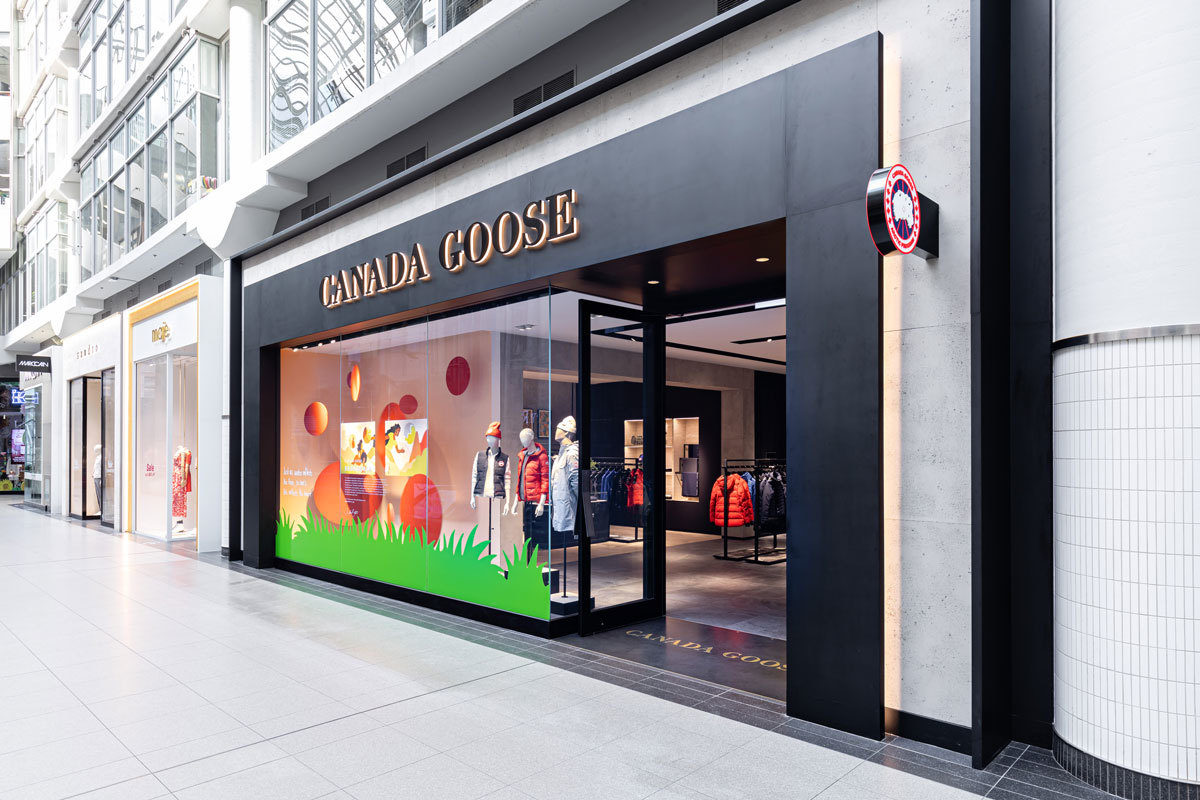
Canada Goose at CF Toronto Eaton Centre (Image: Benoy)
Conversion Becomes More Important Than Traffic
Canada Goose said stronger conversion rates helped support growth across stores and e-commerce even as traffic remained inconsistent in some global markets.
North American revenue increased 11% during the quarter, although management acknowledged softer traffic at some tourist-oriented urban locations. Stronger online performance and improved in-store conversion helped offset some of those pressures.
Asia Pacific revenue rose 23%, driven by Mainland China and travel retail demand, while Europe, the Middle East and Africa recorded 25% growth despite weaker inbound tourism spending in some regions.
The dynamic reflects broader changes happening across luxury retail, where many brands are seeing softer foot traffic but shoppers arriving with clearer purchase intent. As discretionary spending becomes less predictable, retailers are placing greater emphasis on conversion, client relationships, and productivity.
Canada Goose also discussed investments in staffing, training, and digital integration aimed at creating a smoother connection between online browsing and physical retail.
“We are applying greater rigor to improve productivity across our network,” Reiss said.
Wholesale Business Returns to Growth
Canada Goose also reported improving momentum in wholesale after several years spent tightening distribution and reducing exposure to less strategic retail partners.
“The reset we started three years ago is complete and the channel has returned to growth,” Reiss said. “This reflects better product flow, healthier inventory and stronger sell-through.”
Wholesale revenue increased 52% in the fourth quarter and 9% for the full year. Management said retail partners are responding positively to newer assortments and expanded seasonal offerings, especially in apparel and lighter-weight categories.
The recovery is notable given how dramatically luxury wholesale relationships have shifted in recent years as premium brands tightened inventory controls, reduced department store exposure, and focused more heavily on direct-to-consumer retail. Canada Goose was no exception after pulling out of retailers such as La Maison Simons and Sporting Life in recent years.
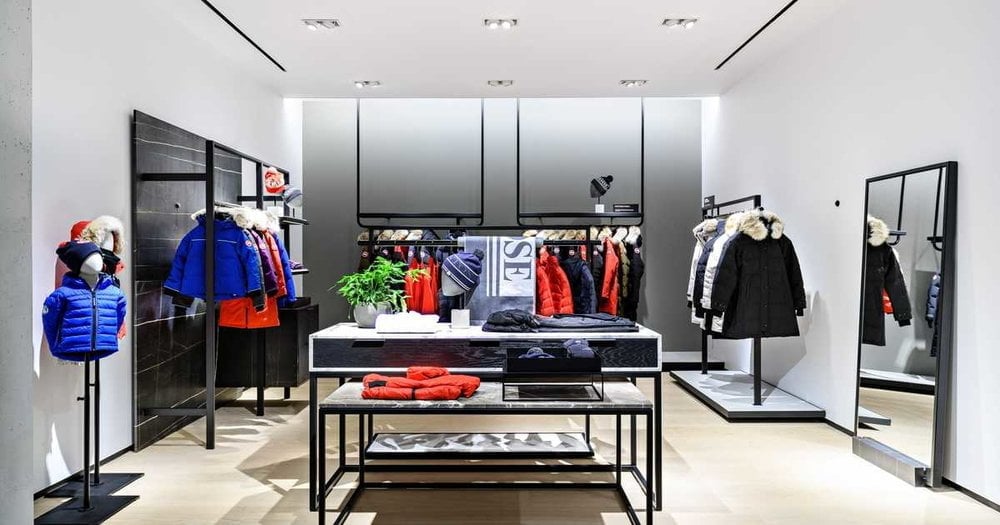
Canada Goose at West Edmonton Mall. Photo: Canada Goose
Store Productivity Under Review
Canada Goose opened nine net new permanent stores during fiscal 2026 and ended the year with 88 locations globally. At the same time, the company is reassessing performance across its retail fleet.
During the quarter, Canada Goose recorded an $8.4 million impairment charge tied to select underperforming stores as management tightened return expectations across the business.
Executives said future store investments will remain focused on flagship locations and markets where the company sees stronger long-term potential.
Luxury Spending Environment Remains Uneven
Despite reporting strong fiscal 2026 growth, Canada Goose issued relatively cautious guidance for fiscal 2027, forecasting low single-digit revenue growth as the company prepares for a more uncertain luxury environment.
Management cited geopolitical tensions, softer discretionary spending, uneven tourism flows, and cautious consumer sentiment as ongoing challenges facing the sector.
“We are planning for a more challenging macro environment,” said Chief Financial Officer Neil Bowden. “We remain focused on driving margin expansion and improving profitability despite a more complex operating environment.”
Canada Goose is now betting that a broader apparel and lifestyle business can help reduce its reliance on winter outerwear at a time when luxury consumers are becoming more cautious and selective globally.
When even Canadians’ spending on pets starts becoming more deliberate, it may be one of the clearest signs yet that economic pressure is reshaping consumer behaviour across the country.
For years, pet retail has been viewed as one of the more resilient segments of the retail industry. Consumers may postpone fashion purchases, reduce restaurant visits, or scale back discretionary spending during tougher economic periods, but many continue prioritizing their pets. That pattern still appears largely intact in Canada today. What is changing, however, is how consumers are choosing to shop.
Recent results from Pet Valu Holdings offer an unusually detailed look into those evolving habits. During the company’s first quarter earnings call, executives repeatedly described Canadian consumers as increasingly value-conscious, promotion-driven, and more strategic in how they spend.
The company reported first quarter system-wide sales of $375.2 million, up 2.5% year-over-year, while revenue increased 3.2% to $287.9 million. Same-store sales were flat. Yet the more revealing story may not be the financial results themselves, but rather what management’s commentary says about the mindset of the Canadian consumer in 2026.
Executives spoke repeatedly about customers consolidating shopping trips, waiting for promotional periods, leaning more heavily into loyalty programs, and becoming increasingly sensitive to fuel prices and household costs. Pet Valu CEO Greg Rameier said consumers continue spending on their pets, particularly within consumables and premium food categories, but are becoming far more intentional about when and where purchases occur.
That distinction matters because it reflects a broader shift now emerging across Canadian retail. Consumers are still spending, but they are increasingly trying to make every shopping trip count.
Consumers Are Protecting Important Purchases While Seeking Better Value
One of the more interesting themes from Pet Valu’s quarter is that Canadian consumers do not appear to be abandoning premium pet products altogether. Instead, they are becoming more selective and disciplined in how they buy them.
Pet Valu said growth remained strongest in consumables and premium food offerings, including frozen raw and gently cooked pet food, while discretionary hardlines such as toys and accessories continued to soften. The company also reported stronger participation in promotions, proprietary brands, and loyalty programs as consumers searched for ways to preserve quality while managing tighter household budgets.
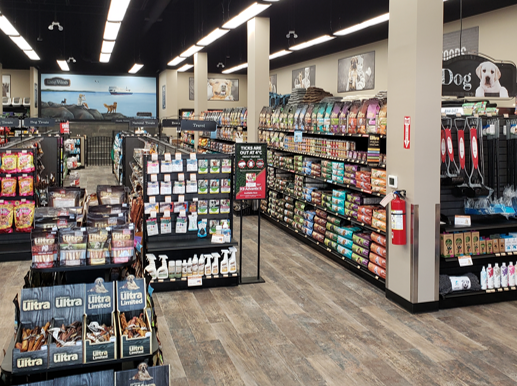
Photo: Pet Valu
This does not yet resemble a traditional trade-down cycle where consumers abandon premium categories entirely. Rather, it suggests shoppers are increasingly recalibrating how they spend.
For many households, pets occupy an emotionally protected category of spending. Consumers may reduce impulse purchases or delay discretionary purchases for themselves before cutting back on products tied to pet health and nutrition. That makes behavioural shifts within pet retail particularly meaningful because even subtle changes can reveal broader consumer pressure underneath.
What appears to be emerging is a more intentional style of shopping behaviour.
Consumers are making fewer casual trips. They are waiting for promotions, clustering purchases around planned errands, building larger baskets, and trying to maximize value during each visit. Pet Valu executives repeatedly referenced the importance of “monthly stock-up” behaviour during the quarter, noting that loyal customers are increasingly consolidating purchases into fewer, more purposeful shopping trips.
Those same patterns are increasingly visible across grocery, pharmacy, and other necessity-driven retail categories throughout Canada.
Loyalty Programs Are Becoming Core Retail Infrastructure
Another striking detail from the quarter was the scale of Pet Valu’s loyalty penetration.
The company said loyalty participation reached approximately 90% during the first quarter, an exceptionally high figure within Canadian retail.
That number speaks to something much larger happening across the industry. Loyalty programs are no longer simply marketing tools or discount vehicles. Increasingly, they are becoming foundational infrastructure within retail businesses, helping companies personalize offers, drive repeat visits, maintain customer relationships, and defend market share during slower economic periods.
Pet Valu specifically noted that it successfully converted more casual customers into monthly repeat shoppers during the quarter. In a retail environment where consumers are reducing discretionary shopping trips, frequency becomes increasingly valuable.
The company also reported continued growth in its autoship subscription business with low churn rates, another indication that predictability and convenience are becoming more important as consumers attempt to better manage both budgets and time.
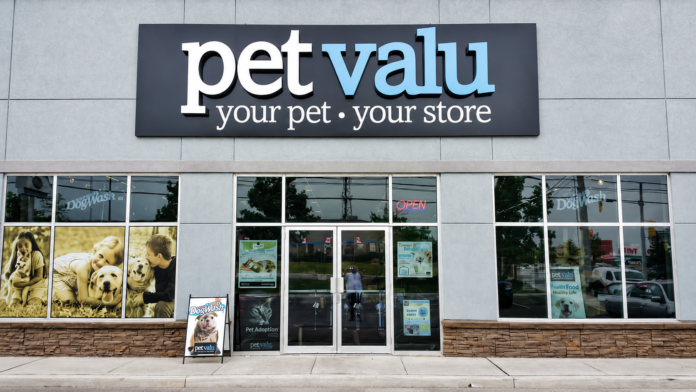
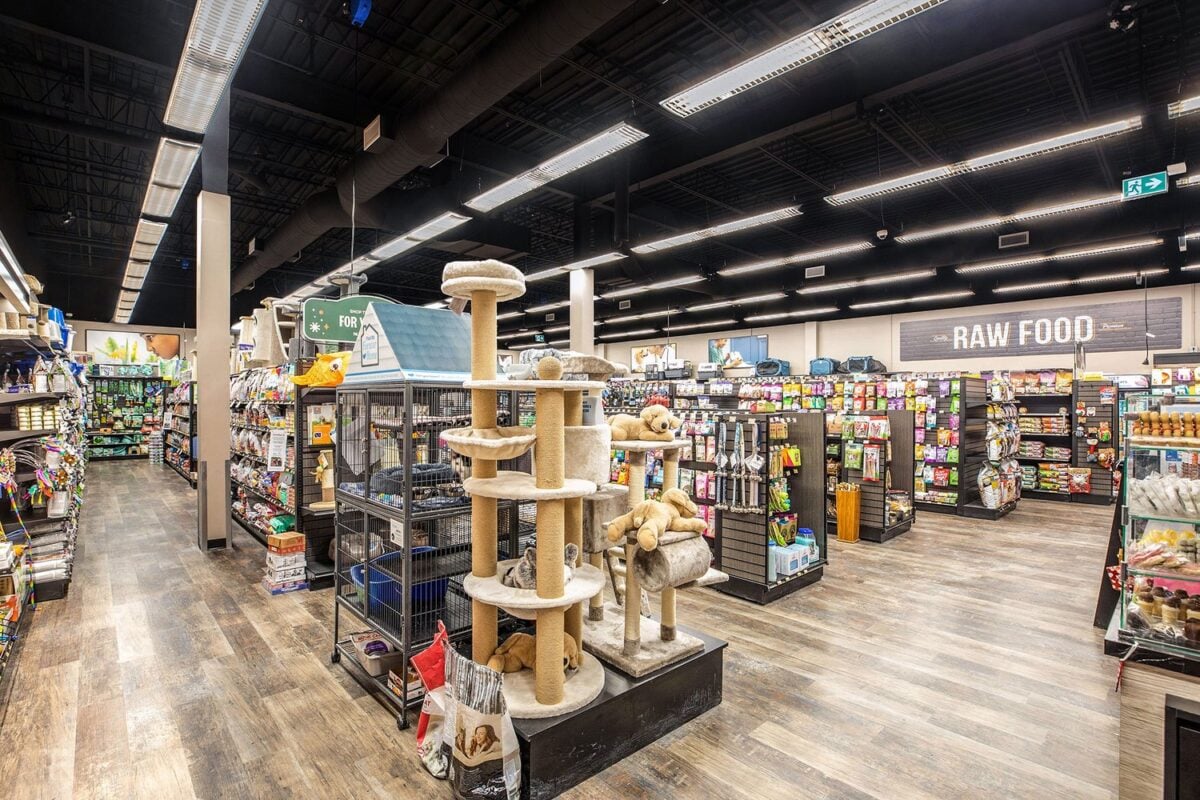
Pet Valu Ottawa (Image: Fox Contracting)
Fuel Costs and Inflation Are Changing Shopping Patterns
One of the more notable aspects of Pet Valu’s earnings call was how prominently fuel prices featured in management’s commentary.
Rameier said retail fuel costs rose approximately 40% during the quarter, contributing to weaker consumer confidence and more cautious shopping behaviour. Executives also noted that higher fuel costs are beginning to affect the company’s own transportation, freight, and procurement expenses.
The result is a retail environment where both consumers and retailers are simultaneously adapting to economic pressure.
Consumers are becoming more selective about shopping trips and increasingly timing purchases around promotions, discount days, or larger planned errands. Retailers, meanwhile, are working harder to maintain value perceptions while protecting margins and competing for fewer discretionary shopping visits.
Pet Valu repeatedly referenced heightened promotional activity during the quarter, though management characterized the competitive environment as rational rather than aggressive. Even so, the emphasis on promotions and value messaging reflects how intensely retailers are now competing for consumer attention and spending.
According to a research note from Stifel analyst Martin Landry, the challenges facing Pet Valu appear to be macroeconomic rather than company-specific. His report said the company appears to be gaining market share despite softer consumer confidence and ongoing inflationary pressure in Canada.
That nuance is important because Pet Valu’s quarter may ultimately say less about weakness in pet retail itself and more about the increasingly cautious mindset shaping Canadian consumer spending more broadly.
Martin Landry
Convenience Is No Longer a Differentiator
Another clear takeaway from the quarter is how deeply omnichannel behaviour has become embedded within Canadian retail.
Pet Valu said some of its strongest digital performance came from click-and-collect services and online delivery platforms including Uber Eats, Instacart, and DoorDash.
Importantly, management noted that customers using delivery platforms often purchase premium products such as frozen raw offerings that historically may have been associated with in-store shopping. That suggests digital ordering is complementing physical retail rather than replacing it.
The trend also reinforces how convenience itself is evolving.
Consumers attempting to reduce fuel costs, consolidate errands, and better manage time increasingly expect retailers to provide flexible fulfillment options. Omnichannel retailing is no longer viewed as an innovation or competitive advantage. For many consumers, it has simply become part of the expected shopping experience.
Rural Canada Is Becoming Increasingly Attractive for Retail Expansion
While much of Canadian retail expansion historically focused on major urban markets, Pet Valu’s recent strategy points toward growing opportunity in smaller communities.
The company opened stores in Wawa and Manitouwadge during the quarter and plans to open approximately 40 new locations in 2026, many targeting underserved rural markets.
That strategy reflects a broader shift becoming increasingly visible within Canadian retail real estate.
As occupancy costs rise in major urban centres and competition intensifies, secondary and tertiary markets are attracting greater attention from national retailers searching for growth opportunities and untapped demand. In many smaller communities, national retail offerings remain limited despite stable customer bases and strong local loyalty.
Stifel’s research note also pointed to encouraging early results from some rural locations, with management indicating smaller-market stores may generate stronger returns than certain urban locations.
For retailers capable of operating efficiently at scale, these markets may represent some of the country’s most attractive remaining retail white space.
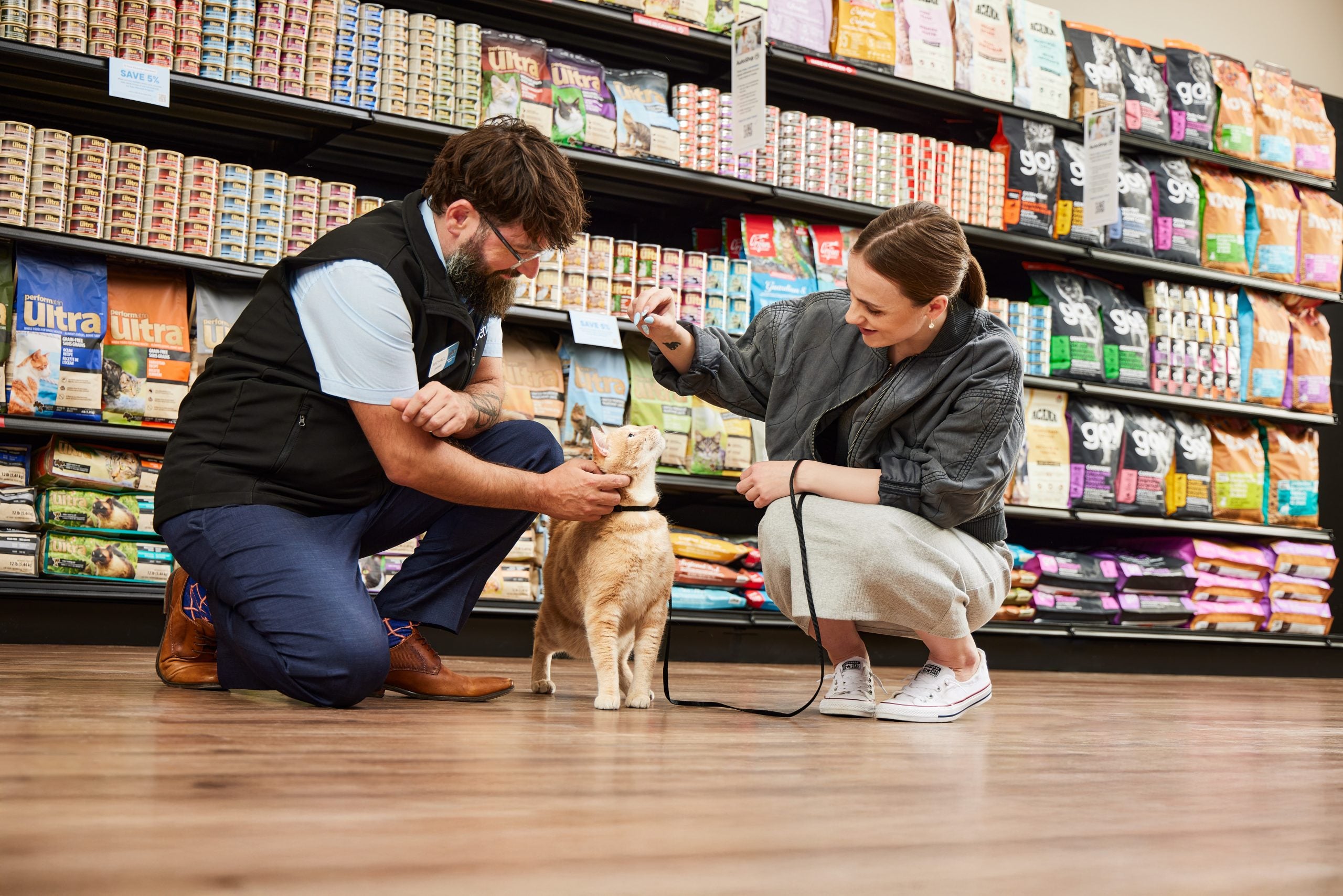
Photo: Pet Valu
Scale Matters More During Economic Pressure
Another recurring theme throughout both the earnings call and analyst commentary was the growing importance of scale.
Pet Valu repeatedly emphasized its vendor relationships, supply chain infrastructure, proprietary brands, franchise network, and customer data ecosystem as competitive advantages.
Those advantages become increasingly important during inflationary periods when retailers must carefully balance pricing, promotions, inventory, and operating costs while continuing to compete aggressively for consumer spending.
Stifel similarly argued that larger operators such as Pet Valu may be better positioned than smaller competitors to negotiate with suppliers and absorb cost pressures. The report also suggested prolonged economic pressure could create additional challenges for smaller independent operators over time.
Even amid softer margins and heavier promotional activity, Pet Valu continues expanding stores, investing in digital capabilities, and repurchasing shares through its buyback program.
Pet Retail May Be Providing a Read on the Canadian Consumer
Pet spending has traditionally been viewed as one of retail’s more emotionally resilient categories. Many consumers are willing to absorb higher costs personally before reducing spending on their pets.
That still appears largely true in Canada. What is changing is the strategy behind the spending itself.
Canadians are still buying premium pet food, remaining loyal to trusted retailers, and prioritizing needs-based purchases. At the same time, they are increasingly waiting for promotions, consolidating shopping trips, reducing impulse purchases, and looking more carefully for value wherever possible.
Following its 2024 debut in Vancouver, B.C., Article is expanding into the U.S. with two new stores arriving in fall 2026. Credit: Article. (CNW Group/Article)
Article, a leading modern furniture brand, announced Thursday that its first U.S. furniture store locations are opening in San Francisco, California, and Bellevue, Washington, before the end of the year.
The company said it selected locations on the West Coast based on historically strong e-commerce performance as part of a strategy to build on its existing customer base.
Aamir Baig
“We see physical retail as an extension of the business we built online and are approaching expansion with discipline,” said Aamir Baig, Co-founder and CEO of Article. “The West Coast has always been core to our business and represents roughly a quarter of total purchases. It’s where our company is headquartered and where we built early infrastructure to support customer demand. Expanding our retail footprint to California and Washington is a natural next step.”
Since launching in 2013, Article said it has delivered nearly three million orders to customers across the U.S. and Canada.
Article’s debut store opened in August 2024 and surpassed expectations, driving 47 per cent revenue growth in the local Vancouver market in 2025. Building on that momentum, the company is expanding its physical retail footprint to support future growth. The U.S. is Article’s largest customer base, with California and Washington consistently ranking among the top five states for e-commerce performance, explained the retailer.
Article said its continued investment in stores supports a broader strategy to build a durable, scalable retail footprint across North America. San Francisco and Bellevue will be the first stores to open in the U.S., with additional locations to follow. Article added it plans to have up to five store locations, including Vancouver and Toronto, by early 2027.
“To strengthen relationships with West Coast customers, the new stores will be positioned to engage distinct audiences. In San Francisco, Article will open in the Design District, one of the city’s primary interior design hubs, to position itself among leading design brands and deepen engagement with trade and design-conscious customers. The Bellevue store, located in the Bellevue Collection, a high-end urban shopping center just outside downtown Seattle, will cater to a broader, general customer base,” it said.
“Store spaces will incorporate proven elements like curated vignettes and an extensive swatch library, making it easier for customers and interior designers to visualize their spaces and make purchase decisions. Free interior design services will also be available at both locations for customers who need support with room layouts and design plans.”
As luxury fashion prices continue climbing into four-figure territory for everyday outerwear, many consumers are becoming increasingly selective about how they build their wardrobes, gravitating toward timeless design, understated branding, and pieces intended to remain relevant well beyond a single season.
That shift is helping create space for a new generation of contemporary premium brands positioned between mass-market apparel and traditional European luxury houses.
Toronto-based menswear label Guardin is aiming to enter that space with a tightly curated collection of minimalist suede and leather outerwear designed around seasonless dressing, restrained aesthetics, and accessible premium pricing.
Founded by Alex Mazelow, Dan Poirier, and creative director Kuba Rygal, the brand has officially launched with its first retail partner, TNT The New Trend, as it begins pursuing wholesale growth opportunities across Canada and the United States.
Guardin founders Alex Mazelow (seated), creative director Kuba Rygal (left) and Dan Poirier (right)
The initial collection features suede trucker jackets, calfskin bombers, leather overshirts, and softly structured outerwear rendered in muted tones such as chocolate brown, taupe, black, and stone. Rich suede textures, matte calfskin finishes, and understated detailing reinforce the brand’s focus on refined wardrobe staples rather than trend-driven fashion.
Retail pricing generally ranges from approximately $495 CAD to $995 CAD depending on fabrication and silhouette.
“We wanted to create a brand that felt timeless and understated,” Mazelow said in an interview with Retail Insider. “We wanted people to invest in pieces they could wear for years rather than something that feels disposable after one season.”
Guardin Navy Lumen jacket
Positioning Between Contemporary and Luxury Fashion
The founders say the concept for Guardin emerged from what they viewed as a growing disconnect between increasingly expensive luxury fashion and consumers still seeking elevated materials and refined design.
While the brand draws aesthetic inspiration from labels such as Loro Piana, Brunello Cucinelli, The Row, and Celine, the company says its objective is not to compete directly with traditional luxury labels, but rather to offer a similar minimalist sensibility at a more approachable price point.
“We wanted to democratize quiet luxury,” said Mazelow. “There’s a customer who appreciates understated design and premium materials but who also feels disconnected from where luxury pricing has gone over the past several years.”
That positioning appears increasingly aligned with broader shifts occurring across menswear, where consumers are showing renewed interest in investment-oriented dressing, neutral palettes, and more restrained branding.
Rather than emphasizing overt logos or heavily trend-driven styling, Guardin’s collections are designed around versatile layering pieces intended to remain relevant across multiple seasons.
“There’s no shortage of luxury outerwear in the market,” Mazelow said. “But finding premium product with that level of quality and aesthetic at an accessible premium price point is much more difficult.”
Gaurdin Man Weave Jacket
Toronto Atelier Supports Slow-Growth Philosophy
Guardin currently operates from a Toronto atelier where the company handles sampling, prototyping, and small production runs before outsourcing larger-scale manufacturing through international production partners.
Mazelow said the operational structure was intentionally designed around tighter inventory control, slower production cycles, and reduced excess stock.
Rather than producing large seasonal inventories in advance, the company says it intends to align production more closely with demand in an effort to minimize waste while maintaining greater flexibility.
“We didn’t want to build a business dependent on overproduction,” said Mazelow. “Everything is being approached very intentionally, both from a sustainability standpoint and from a product standpoint.”
The company’s sustainability philosophy focuses less on traditional fashion marketing language and more on operational discipline, including controlled production volumes, long-term garment durability, and reduced markdown dependency.
Mazelow described the approach as part of a broader “slow fashion” philosophy centred around longevity rather than rapid consumption.
“We want people to buy a piece and have it for ten or fifteen years,” he said. “There’s nothing disposable about the garments we’re making.”
The launch also arrives amid growing interest in Canadian-designed premium apparel brands as consumers increasingly seek quality, craftsmanship, and longevity over fast-moving fashion trends.
TNT The New Trend store at Yorkville Village in Toronto. Photo: TNT The New Trend
TNT Partnership Brings Early Industry Validation
Guardin’s launch partnership with TNT The New Trend represents an important early validation point for the emerging label.
Founded more than 30 years ago, TNT has built a longstanding reputation within Canada’s luxury and contemporary fashion market for introducing both established and emerging brands through a highly curated retail environment.
Aidan Assaraf, Director of Menswear at TNT, said the retailer was initially drawn to both the founders and the collection’s positioning within the broader menswear landscape.
“We always try to support local and are constantly looking at new brands, especially ones with good people behind them,” Assaraf told Retail Insider. “Alex has been in the industry for many years, and for us it was a very smooth and easy conversation from the beginning.”
Assaraf said the collection filled a noticeable opportunity within TNT’s assortment, particularly within what he described as the “midway outerwear” category situated between contemporary apparel and top-tier luxury pricing.
“At this specific category there’s a lot out there,” he said. “But at this price point, where the perceived value is still there and we’re not losing the quality we would expect behind it, that becomes very interesting.”
The retailer also worked collaboratively with the founders during the early stages of product development, providing feedback on fit, fabrication, and execution before committing to the partnership.
“We gave them quite a few notes during the sampling stages,” said Assaraf. “They were very receptive to feedback, and that opened the door for collaboration.”
For Guardin, the partnership provides immediate credibility within Canada’s premium menswear landscape as the company begins pursuing broader wholesale expansion opportunities across North America.
Guardin Trucker Jacket in Chocolate Brown
Wholesale First, Direct-to-Consumer Later
Unlike many newer fashion labels that prioritize aggressive direct-to-consumer growth, Guardin plans to focus primarily on wholesale expansion during its early years.
Mazelow said the strategy reflects changing shopping behaviour among younger consumers, many of whom are returning to physical retail environments and multi-brand boutiques after years of accelerated e-commerce growth.
“We’re going to be a wholesale-first company,” he said. “When somebody is spending several hundred dollars on a jacket, the retail experience still matters.”
The company is currently meeting with Canadian sales agencies while also exploring representation opportunities in New York and Los Angeles as it evaluates future U.S. expansion.
Future plans include expanding into knitwear, woven garments, cashmere overshirts, and eventually womenswear, though the founders say growth will remain measured and deliberate.
As the brand expands, Mazelow said the company intends to maintain the same disciplined approach that shaped its launch, focusing on slower long-term growth, controlled production, and timeless wardrobe building rather than rapid trend-driven expansion.
“We want to build the brand carefully,” he said. “We want to build it for the long term.”
Over four in 10 (44%) agri-businesses are facing higher costs and supply disruptions for critical inputs like fertilizer due to shipping disruptions in the Strait of Hormuz, finds new data by the Canadian Federation of Independent Business (CFIB).
“High taxes, ongoing red tape, and rising energy costs are already straining Canada’s food supply. Now, the Strait of Hormuz-related disruptions are compounding the squeeze,” said Juliette Nicolaÿ, CFIB bilingual policy analyst. “Agri-businesses depend on imported, price sensitive inputs like fertilizer, so any delays or price spikes hit hard, especially during seeding and planting seasons.”
Juliette Nicolaÿ
Canada’s agriculture sector is facing an entrepreneurial drought, with no net business creation since the fourth quarter of 2022. In April, CFIB’s Monthly Business Barometer showed that confidence among Canada’s agri-businesses also remains near bottom of all sectors, at 53.3 points, reflecting the current challenging business environment, said the national organization, which is Canada’s largest association of small and medium-sized businesses with 103,000 members across every industry and region.
In a recent letter sent to Agriculture and Agri-Food Minister Heath MacDonald, the CFIB said outlined three key priorities to strengthen agri-business competitiveness: lowering the total tax burden, reducing red tape and regulatory burden, and safeguarding property rights on agricultural land.
Most (90%) agri-businesses said they’re worried about the future of Canadian agriculture due to the regulatory burden, while nearly seven in 10 agri-business owners wouldn’t recommend starting a business in the sector due to red tape, it said.
With the proposed Alto high-speed train, and other major projects, a quarter of agri-businesses (26%) also said they’re concerned with infrastructure projects threatening their property rights, added the CFIB.
“Canada’s food supply is at risk, and losing agricultural entrepreneurs only makes it worse. Governments must protect farmland and work with farmers before introducing new environmental regulations, zoning changes or urban expansion initiatives,” said Christina Santini, CFIB director of national affairs.
Christina Santini
CFIB said it is calling on the federal government to restore agri-business confidence and strengthen the sector’s competitiveness by:
• Reducing the small business tax rate from 9% to 6% • Increasing the small business deduction (SBD) threshold to $700,000, and passive income amount to $70,000, and indexing them moving forward • Implementing a two for one rule on new regulations • Reducing red tape and improve service at the Canadian Food Inspection Agency • Simplifying labour and Business Risk Management programs • Modernizing the small business deduction and support succession planning • Working with provinces to safeguard property rights on agricultural land.
“Agri-businesses need the certainty and support to compete and adapt to today’s economic challenges. With farms and producers playing such a crucial role in Canada’s economy, government must listen and act now to strengthen this key sector,” said Santini.
Happy Belly Food Group is continuing to transform iQ Food Co. from a distressed Toronto wellness brand into a national expansion platform, with plans to open the concept’s first Western Canadian location at The CORE Shopping Centre in downtown Calgary.
The company announced this week that it has signed a five-unit development agreement for Calgary, with the first location expected to open in Fall 2026 along Stephen Avenue. The deal marks another step in Happy Belly’s broader effort to scale multiple emerging restaurant concepts across Canada while targeting high-density urban retail environments.
The announcement is also notable because it places iQ Food Co. into one of Calgary’s most prominent downtown retail and office nodes at a time when landlords continue repositioning urban shopping environments around foodservice, convenience, and daily-use traffic.
From Creditor Protection to National Expansion
Happy Belly acquired Toronto-based iQ Food Co. in 2024 after the company entered creditor protection proceedings, gaining control of four existing downtown Toronto locations along with the brand’s intellectual property and operating platform.
At the time, the acquisition attracted attention because iQ had already developed a loyal following among urban professionals and wellness-focused consumers despite financial challenges that emerged during a difficult operating environment for independent foodservice brands.
Founded in Toronto, iQ Food Co. built its reputation around smoothies, salads, wraps, bowls, coffee, and grab-and-go meals positioned within the premium healthy quick-service category. The brand’s original locations were concentrated in dense urban nodes tied to office workers, fitness-oriented consumers, and downtown pedestrian traffic.
Happy Belly appears to have viewed the concept as an opportunity to acquire an established lifestyle-oriented brand with expansion potential, then integrate it into a larger operational and franchising infrastructure.
Less than two years later, the Calgary agreement suggests the company is now accelerating that strategy.
The planned Calgary location is significant because Happy Belly selected a major downtown shopping and office environment for iQ Food Co.’s Western Canadian debut rather than pursuing a more traditional suburban expansion model.
Located along Stephen Avenue, The CORE Shopping Centre remains one of Calgary’s most important downtown retail destinations, connecting office workers, residents, tourists, and transit users within the city’s central business district.
The project arrives as downtown Calgary continues seeing gradual office recovery and renewed leasing activity across foodservice and mixed-use retail categories.
For landlords, health-oriented quick-service concepts have become increasingly attractive because they can generate repeat daily visits across breakfast, lunch, snack, and beverage occasions while operating efficiently within smaller-format retail spaces.
That flexibility has become increasingly valuable as shopping centres and urban retail environments adapt to changing consumer behaviour and evolving workplace patterns.
Healthy QSR Concepts Continue Gaining Attention
The expansion also reflects broader momentum within the premium wellness and functional food segment of the restaurant industry.
While parts of the broader restaurant sector continue facing pressure tied to inflation and discretionary spending challenges, health-oriented concepts focused on convenience, nutrition, and grab-and-go formats have remained an area of continued interest for both consumers and landlords.
Many urban retail owners are increasingly prioritizing foodservice operators capable of generating consistent daytime traffic while complementing fitness, residential, office, and mixed-use development environments.
iQ Food Co.’s positioning appears aligned with that shift.
The company said the Calgary agreement forms part of a broader pipeline that now includes 80 committed iQ Food Co. units across Alberta, Ontario, British Columbia, and Atlantic Canada through franchise and development agreements.
Happy Belly Continues Building Multi-Brand Platform
The iQ Food Co. expansion also highlights Happy Belly’s evolution into one of Canada’s more active emerging restaurant consolidators.
In recent months, the company has continued expanding brands including Heal Wellness, Rosie’s Burgers, and Yolks Breakfast, while also announcing a deal to acquire a 50% interest in Ghost Taco.
Rather than focusing on a single banner, Happy Belly has been assembling a diversified portfolio spanning multiple restaurant categories and consumer demographics.
That model increasingly resembles a platform approach where emerging concepts with established customer loyalty can be scaled through centralized operations, franchising systems, and real estate development strategies.