Ever watched a rental property owner juggle maintenance calls, tenant complaints, and a mountain of bedding that needs washing? It’s honestly a bit overwhelming to witness. The successful ones, though, they’ve figured out something pretty clever. They’ve stopped trying to handle every single thing themselves.
Here’s the thing about the rental business: time really is money. While you’re spending hours dealing with laundry between tenants, your competition is out there securing new properties and building relationships. The math is actually pretty straightforward when you think about it.
The Real Cost of DIY Laundry Management
Picture trying to turn over three Airbnb properties in one afternoon. You’ve got a checkout at 11 AM, new guests arriving at 3 PM, and somehow all those sheets, towels, and pillowcases need to go through a complete wash and dry cycle. Spoiler alert: it’s not happening.
Most property managers underestimate the true cost of handling laundry in-house. Sure, you might save a few dollars per load, but what about your time? What about the wear and tear on your machines? The truth is, those savings disappear pretty quickly when you factor in equipment costs, utilities, and the opportunity cost of your time.
Then there’s the quality factor. Professional laundry for businesses delivers a level of cleanliness and presentation that’s honestly hard to match with a residential washer and dryer. Your guests notice these details, even if they don’t consciously think about them.
Finding the Right Laundry Partner
This part’s a bit tricky, but it’s absolutely critical. Not every commercial laundry service understands the rental business. You need someone who gets that timing matters. A lot.
Look for services that offer pickup and delivery. Better yet, find ones that can work around your specific turnover schedule. Some companies will even coordinate directly with your cleaning teams, which is basically like finding gold.
The best partnerships develop when both sides understand each other’s pressures. You need reliability, they need consistent volume. It’s a pretty natural fit when you find the right match.
Questions to Ask Potential Partners
What’s their turnaround time? Can they handle rush orders when you have unexpected bookings? Do they use commercial-grade equipment that actually gets things properly clean? These aren’t just nice-to-have features. They’re essentials.
Ask about their backup plans too. Equipment breaks down, staff call in sick. How do they handle these situations? The last thing you want is to discover their contingency plan involves telling you to figure it out yourself.
The Numbers Game of Scaling
Here’s where outsourcing really shines. When you’re managing five properties, doing laundry yourself might seem manageable. When you hit fifteen or twenty properties? Good luck with that.
Professional laundry services often offer volume discounts. The more you send them, the better your per-piece pricing becomes. Meanwhile, you’re free to focus on what actually grows your business: finding new properties, improving your marketing, or enhancing the guest experience.
The time savings alone can be transformative. Instead of spending weekends at the laundromat, you could be scouting new locations or finally getting around to updating those property listings.
Making the Transition Work
Start small if you’re nervous about it. Pick your highest-volume property and test out the service for a month. Track everything: costs, quality, timing, guest feedback. The data will tell you whether this makes sense for your operation.
Communication is huge during the transition. Make sure your cleaning teams, property managers, and laundry service all have each other’s contact information. Everyone needs to be on the same page about pickup schedules and special requirements.
The thing about scaling any business is knowing when to let go of tasks that don’t require your personal attention. Laundry rarely needs the property owner’s touch. What it needs is to be done well, on time, and consistently. That’s exactly what professional services deliver.
The Canadian retail landscape continues to transform at a rapid pace, driven by shifts in consumer behavior, supply chain complexity, and the growing integration of digital tools into everyday store operations. Retailers across the country are rethinking how they equip their teams, manage inventory, and engage with customers. Behind the scenes, the technology infrastructure supporting these operations has become increasingly important to competitive success. From point-of-sale systems to employee scheduling platforms, the tools retailers choose directly impact efficiency, staff satisfaction, and ultimately, the customer experience.
One often-overlooked aspect of this technological evolution is the computing hardware that powers retail environments. Whether in back offices, management areas, or specialized retail functions, the devices that store teams rely on to shape how smoothly daily operations run. As retailers evaluate their technology investments, they’re exploring diverse solutions that balance performance with practical constraints like space limitations and energy efficiency. Options like mini PCs represent the kind of flexible computing approach that modern retailers are increasingly considering as they modernize their operational infrastructure.
The Changing Demands On Retail Technology
Retail operations today demand more from technology than ever before. Store managers juggle multiple responsibilities: monitoring sales data, managing staff schedules, processing returns, coordinating with supply chain partners, and responding to real-time inventory challenges. Each of these tasks relies on computing devices that need to be reliable, responsive, and capable of handling multiple applications simultaneously.
The physical environment of a retail store presents unique constraints. Back offices are often cramped, storage areas are limited, and desk space is at a premium. Traditional desktop towers, while powerful, consume significant physical space and generate considerable heat. This reality has prompted retailers to explore alternative computing solutions that deliver the performance they need without the bulk of conventional setups. The shift toward more compact, efficient hardware reflects a broader industry trend toward optimization and smart resource allocation.
Operational Efficiency And Space Optimization
Canadian retailers operating in urban centers face particular pressure to maximize every square foot of their facilities. Whether in downtown Toronto, Vancouver, or Montreal, retail space commands premium costs. This economic reality drives decisions about how to allocate that space most effectively. Back offices, storage areas, and management zones must balance multiple functions within confined areas.
Compact computing solutions allow retailers to maintain full operational capability while freeing up physical space for other critical functions. A smaller device footprint means more room for inventory storage, employee break areas, or customer service zones. This spatial efficiency translates directly to operational flexibility. Retailers can reconfigure spaces more easily, adapt to seasonal demands, and respond to changing business needs without major infrastructure overhauls. The ability to maintain powerful computing capabilities in minimal space has become a practical advantage in the modern retail environment.
Energy Consumption And Operational Costs
Energy efficiency has moved from a peripheral concern to a central consideration in retail operations. As utilities costs rise and retailers face increasing pressure to reduce their environmental footprint, the power consumption of computing hardware matters. Larger, traditional desktop systems consume more electricity, generating higher operational costs over time and contributing to a retailer’s overall carbon footprint.
More efficient computing hardware directly reduces energy bills and aligns with sustainability goals that increasingly matter to both retailers and their customers. Canadian retailers, particularly those with multiple locations, recognize that small efficiency gains across their entire estate compound into meaningful savings. A device that consumes less power while delivering comparable performance represents a straightforward operational improvement. This economic incentive, combined with growing corporate sustainability commitments, has made energy-efficient computing a legitimate business consideration rather than merely an environmental preference.
Supporting Diverse Retail Functions
Modern retail operations encompass a wider range of functions than traditional store management. Digital signage systems, inventory management platforms, customer analytics tools, and employee training programs all require computing resources. Different areas of a store or retail operation may have distinct technology needs, and a one-size-fits-all approach to hardware often results in either overspending or underperformance.
Flexible computing solutions allow retailers to match hardware to specific functions more precisely. A device used primarily for inventory management has different requirements than one supporting digital displays or employee scheduling. By deploying appropriately scaled computing resources to different operational areas, retailers can optimize their technology spending while ensuring each function receives adequate support. This targeted approach to hardware deployment reflects a more sophisticated understanding of how technology actually serves retail operations.
Future-Proofing Retail Infrastructure
Retail technology landscapes continue to evolve rapidly. Cloud computing, artificial intelligence applications, and advanced analytics are becoming increasingly prevalent in retail operations. While these developments are primarily software-driven, they still place demands on the underlying computing infrastructure. Retailers need hardware that can support current operations while remaining capable of handling emerging tools and applications.
Investing in modern, well-engineered computing solutions provides a foundation that can adapt as retail technology continues to advance. Hardware that is built with quality components and thoughtful design tends to remain functional and capable longer than devices designed primarily for cost reduction. For retailers managing multiple locations and complex operations, this durability and adaptability reduce the frequency of technology refresh cycles and provide better long-term value.
Conclusion
The Canadian retail industry continues to navigate significant operational and technological challenges. As retailers modernize their infrastructure and optimize their operations, the decisions they make about computing hardware ripple through their entire business. The shift toward more efficient, flexible, and space-conscious technology solutions reflects a maturing approach to retail operations management. By carefully evaluating their technology investments and choosing solutions that align with their specific operational needs, retailers can build more resilient, efficient, and adaptable business models. The future of Canadian retail will be shaped not just by consumer trends and market forces, but by the practical decisions retailers make today about the tools and infrastructure that power their daily operations.
Corner of Bloor and Bay streets in Toronto, May 25, 2026. Photo: Craig Patterson
On some of Toronto’s busiest retail streets, the city’s changing shopping landscape can now be measured in matcha cafés, Pilates studios, wellness clinics, athleisure stores, and packed restaurant patios.
“We’re getting 20 calls a day for matcha and Pilates concepts,” said Arlin Markowitz, Executive Vice President with CBRE Canada’s Urban Retail Team in Toronto.
For Markowitz, the surge reflects a much broader shift underway across Toronto retail. Consumers are still spending, but increasingly they are prioritizing experience, lifestyle, convenience, wellness, and self-care over more traditional forms of discretionary spending.
Across many of Toronto’s strongest urban retail corridors, contemporary fashion, athleisure, wellness retail, experiential dining, and hospitality-driven concepts are reshaping leasing demand. At the same time, some traditional luxury expansion has moderated, creating opportunities for a wider range of brands to secure space in some of the city’s most sought-after retail districts.
Arlin Markowitz
The result is a retail landscape increasingly shaped by how people live rather than simply where they shop.
From Bloor-Yorkville and Ossington Avenue to Queen West, King West, and emerging districts around Dupont and Geary Avenue, Toronto’s retail market is becoming more neighbourhood-driven, experience-focused, and lifestyle-oriented as the city continues to densify and evolve.
Contemporary Fashion Expands Into Toronto’s Premier Retail Corridors
According to Markowitz, one of the biggest changes taking place across Toronto retail is the growing influence of contemporary fashion and lifestyle brands within premier shopping districts.
“For the first time, contemporary and lifestyle brands are getting opportunities that historically would have gone to major European luxury houses,” he said.
He pointed to brands such as Alo Yoga, Arc’teryx, Lululemon, and Frette as examples of retailers recently opening in the Bloor-Yorkville area. Markowitz said other similar concepts are now looking at locating nearby.
The trend aligns with a recent CBRE Canada analysis on contemporary fashion retail in which Markowitz noted that contemporary fashion and athleisure brands are increasingly filling vacancies in key shopping districts including Bloor-Yorkville, Ossington Avenue, and Yorkdale Shopping Centre.
Brands such as Luca Faloni and Eleventy have recently expanded into Yorkville, while retailers including Gentle Monster at Yorkdale and Carhartt WIP on Ossington have helped reinforce demand in other urban retail corridors.
Bloor-Yorkville remains Canada’s dominant luxury shopping district and continues to attract affluent consumers and international brands. However, the tenant mix is broadening as contemporary fashion, wellness, and performance-oriented brands increasingly compete for space alongside traditional luxury retailers.
“We have geopolitical uncertainty, higher interest rates, elevated housing costs, and a condo market correction in Toronto,” said Markowitz. “Luxury leasing on Bloor has become more cautious, but it’s also creating opportunities for other strong brands to enter the market.”
At the same time, Markowitz emphasized that major luxury and flagship deals continue to happen quietly behind the scenes in Yorkville.
Hermes and Burberry at 100 Bloor St. W., May 25, 2026. Photo: Craig Patterson
He noted that 157 Bloor Street West has been leased to what he described as a “world-class” brand that remains confidential for now. He also said the upcoming Harry Rosen flagship on Cumberland Street could help strengthen Yorkville’s western luxury corridor and shift additional pedestrian traffic toward Avenue Road.
The evolution reflects broader changes in consumer behaviour, particularly among younger affluent shoppers who continue to pursue aspirational products and experiences while becoming more selective about where they spend.
“It doesn’t have to be Hermès or Chanel to feel aspirational,” said Markowitz. “Consumers are increasingly finding that through brands like Reformation, Veronica Beard, James Perse, and Aesop.”
That shift toward what many in the industry describe as “accessible aspiration” is increasingly visible across Toronto retail. Consumers are not necessarily abandoning discretionary spending, but many are reallocating it toward categories tied to identity, wellness, dining, travel, and lifestyle experiences.
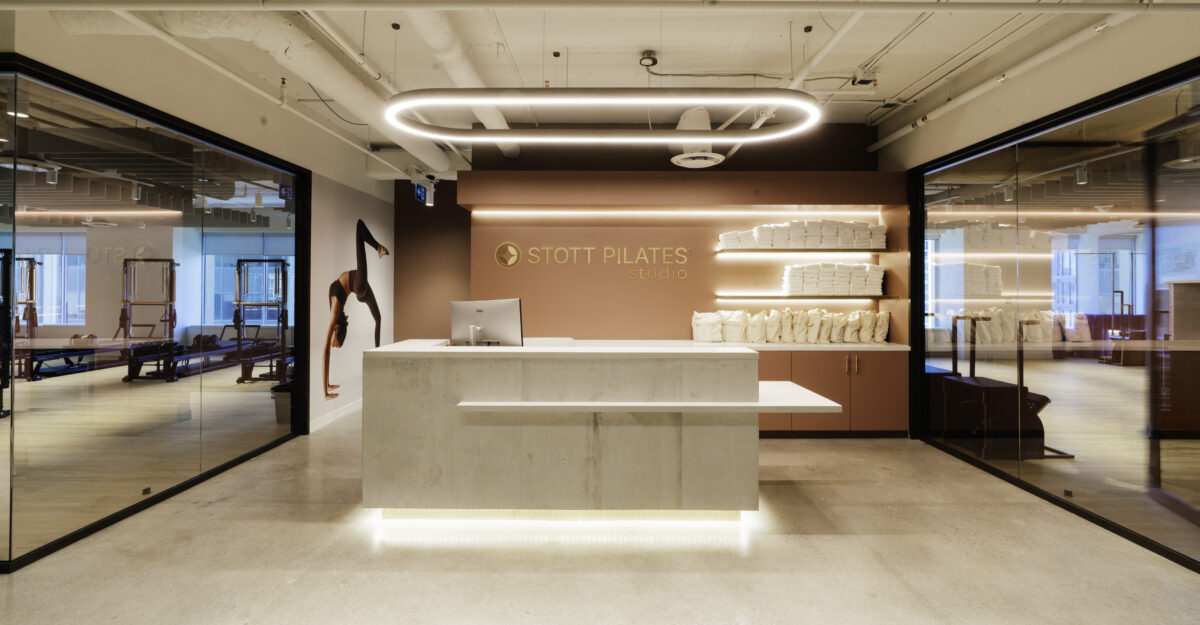
Stott Pilates Studio at 2 Bloor St. E. in Toronto, Credit: Merrithew / STOTT Pilates
Wellness Retail Emerges as One of Toronto’s Hottest Growth Categories
The rise of wellness retail may be one of the defining stories shaping Toronto’s current leasing market.
Alongside the growth of athleisure and contemporary fashion brands, Toronto is also seeing strong demand from Pilates studios, skincare concepts, cosmetic clinics, medi-spas, and beverage operators built around health and wellness positioning.
“We’re seeing tremendous demand across wellness, cosmetic, and self-care concepts,” said Markowitz.
In many downtown Toronto neighbourhoods, those concepts are increasingly clustering together beside cafés, restaurants, and fashion boutiques, helping create curated retail ecosystems that blend hospitality, fitness, wellness, and social experience.
The trend speaks to how consumer priorities have shifted in recent years. Even amid economic pressure, many consumers continue to spend on categories tied to wellness, self-improvement, dining, travel, and social identity.
“I think people would rather live in a smaller apartment but still spend on dining, travel, wellness, and lifestyle experiences,” said Markowitz. “Consumers are still prioritizing those experiences.”
That behaviour is especially visible among younger urban consumers, where wellness, fitness, food, fashion, and social culture increasingly overlap. Matcha cafés, boutique fitness studios, skincare concepts, and athleisure brands often feed traffic into the same neighbourhood ecosystems, helping strengthen Toronto’s most active urban retail streets.
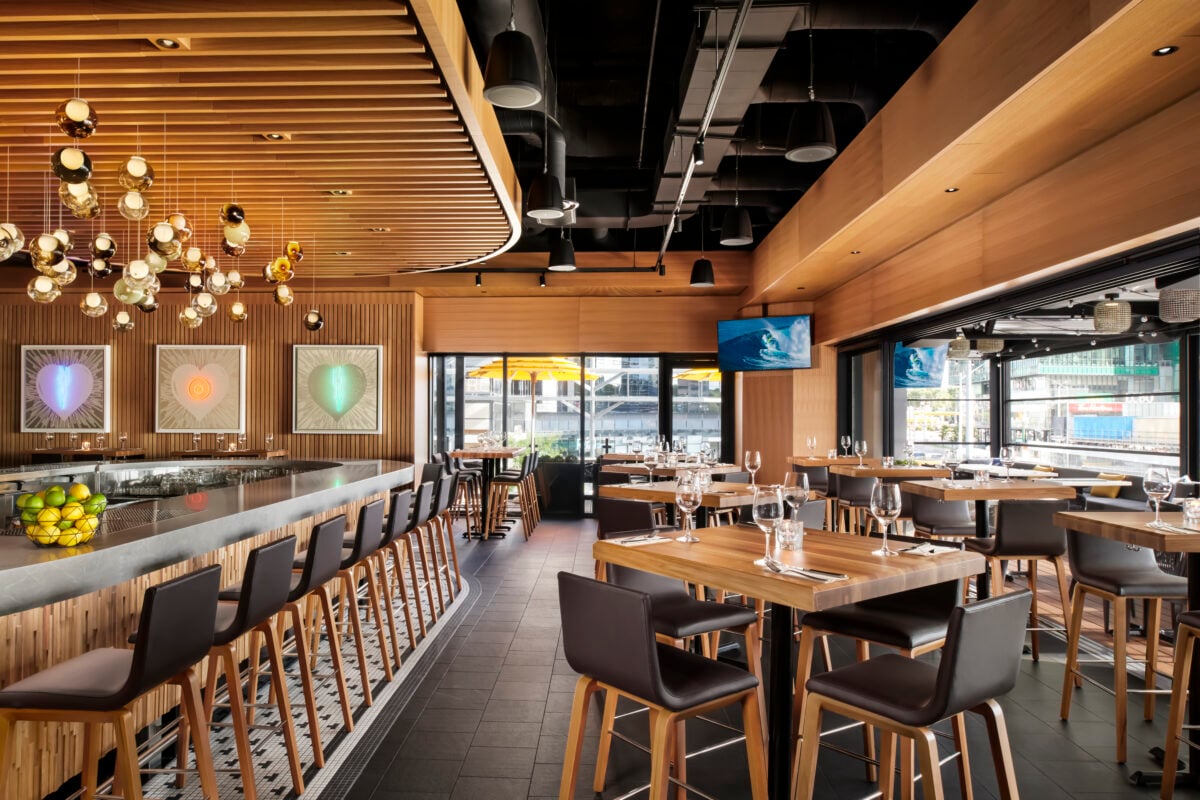
Cactus Club Cafe, Yonge Sheppard Centre in Toronto. Photo supplied
Toronto’s Dining Scene Continues to Shift Toward Accessible Premium
Food and beverage remains another major force shaping Toronto retail, although some of the strongest-performing operators increasingly occupy a more approachable premium segment.
Markowitz pointed to brands such as Cactus Club Cafe, Earls, and JOEY Restaurants as examples of concepts benefiting from consumers seeking elevated experiences at more accessible price points than traditional fine dining.
“Consumers still want elevated dining experiences, but they’re becoming more selective about value,” said Markowitz. “Brands like Earls and JOEY offer a premium experience at a more approachable price point.”
Markowitz jokingly described the category as “West Coast Premium,” referencing the British Columbia roots of several of the restaurant brands.
The same recalibration visible in fashion is now playing out across dining. Consumers still want atmosphere, quality, and experience, but many are increasingly balancing aspiration with value.
That shift has helped support operators capable of delivering polished interiors, strong hospitality, and energetic social environments without the price points associated with luxury dining.
Beautiful row of shops on Ossington Avenue in Toronto. Image: CBRE Urban Retail Team
Ossington Continues to Outperform
Among Toronto’s urban retail corridors, Ossington Avenue remains one of the city’s strongest-performing streets.
“Ossington is incredibly strong right now,” said Markowitz. “There’s very little space available.”
He pointed to a recent leasing situation involving the former Delysées space across from Bellwoods Brewery, where three offers arrived within a week.
The corridor’s strength reflects a balance of fashion, food, hospitality, independent retail, and neighbourhood culture that continues to attract consumers and brands alike.
Unlike districts dominated by a single retail category, Ossington generates activity throughout the day and evening. Cafés, boutiques, bars, restaurants, and lifestyle retailers operate within the same ecosystem, creating one of the city’s most active pedestrian environments.
On warm evenings, crowded patios and busy sidewalks spill across the corridor as shoppers move between cafés, boutiques, bars, and restaurants. That street-level energy has helped transform Ossington into one of Canada’s most closely watched urban retail districts.
According to CBRE’s recent analysis, brands including Carhartt WIP and Mejuri have helped reinforce the street’s growing national profile. The scarcity of available retail space has also intensified competition among tenants seeking well-positioned storefronts in the neighbourhood.
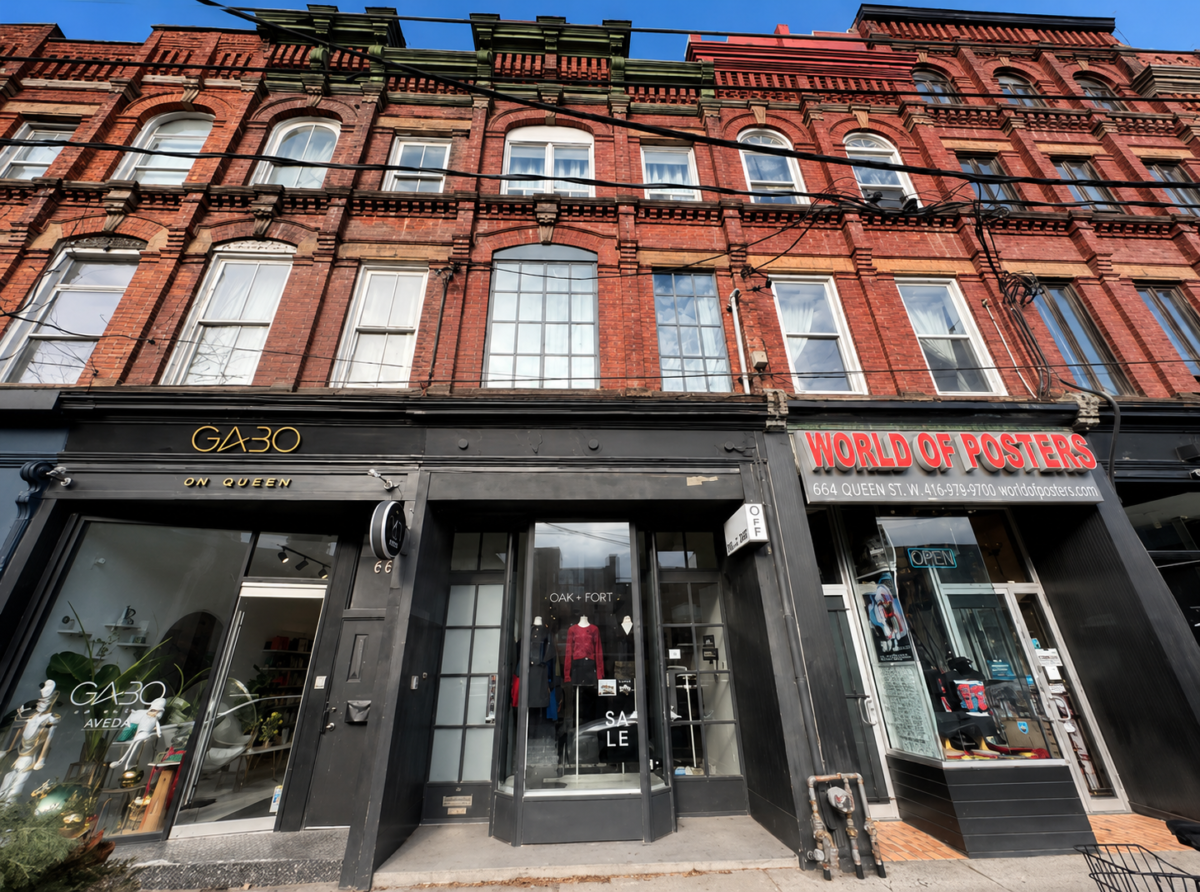
Future location of Vivobarefoot, 666 Queen St. W. in Toronto. Photo: Julie SEO (broker who listed the property, no broker on the tenant side of the lease deal)
West Queen West Shows Signs of Recovery
West Queen West is also showing renewed momentum after a more difficult post-pandemic period.
Markowitz said the area near the former Fluevog store on Queen Street West had been building strong momentum before COVID-19 disrupted activity across the corridor.
“West Queen West was building great momentum before the pandemic,” he said. “It was hit hard during COVID, but we’re seeing strong signs of recovery again.”
He pointed to The Botanist at 662 Queen Street West as an example of the kind of creative concept now helping drive traffic and interest in the area. The business combines matcha beverages, Vietnamese coffee, and a library-inspired interior concept.
“Creative experiential concepts are performing very well right now,” said Markowitz.
Vivobarefoot will be among the new tenants opening on West Queen West this summer.
The evolution reflects a broader shift taking place across many of Toronto’s urban retail districts, where successful operators increasingly blend food, hospitality, retail, design, and social interaction into hybrid environments.
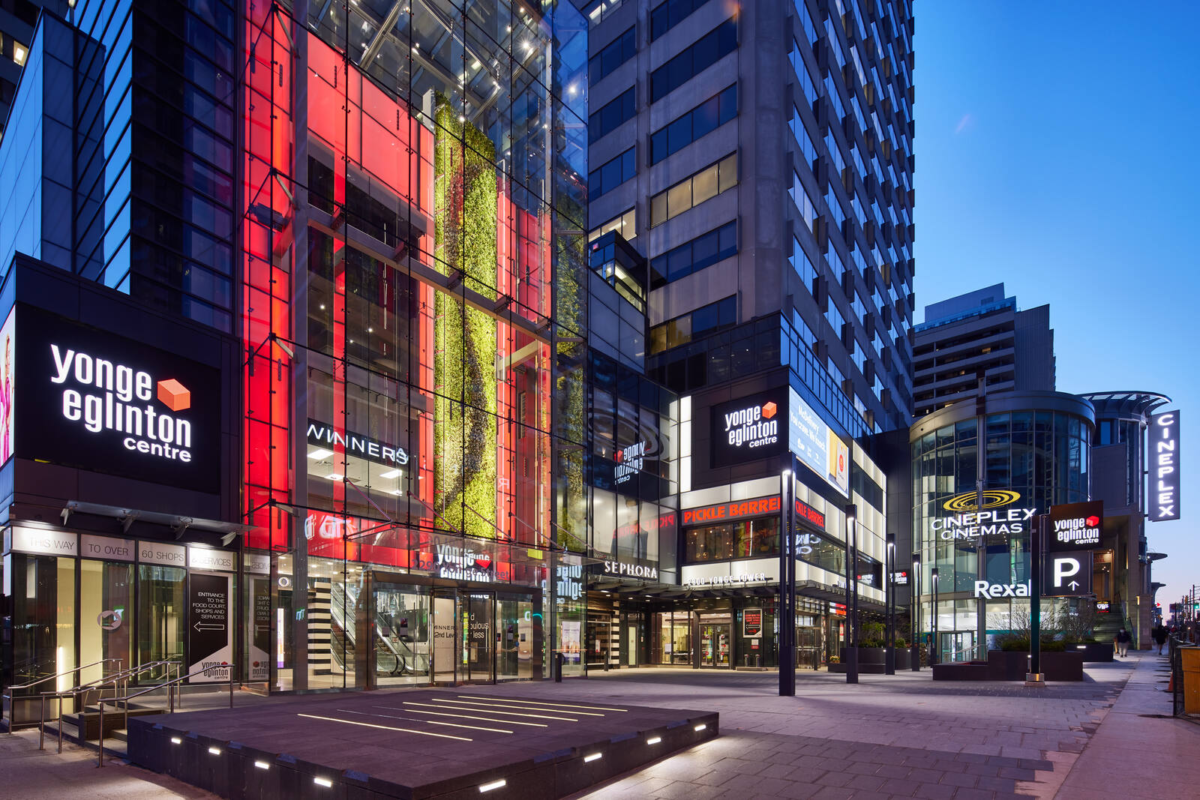
Yonge Eglington Centre (soon to be renovated). Image: RioCan
Yonge and Eglinton Benefits From Density and Transit Growth
Yonge and Eglinton continues to strengthen as residential density intensifies around the corridor.
“Yonge and Eglinton is very strong,” said Markowitz. “The density there is incredible.”
The long-awaited Eglinton Crosstown LRT is also expected to support retail growth along the corridor by increasing accessibility and foot traffic, particularly for convenience-oriented and service-based businesses.
“Transit corridors will continue attracting convenience, food, and service retail,” said Markowitz.
As Toronto continues to intensify around major transit corridors, neighbourhood retail nodes are becoming increasingly important. While not every transit corridor will evolve into a major retail district, many are expected to support strong demand for food, beverage, wellness, and convenience-driven retail serving dense residential populations.
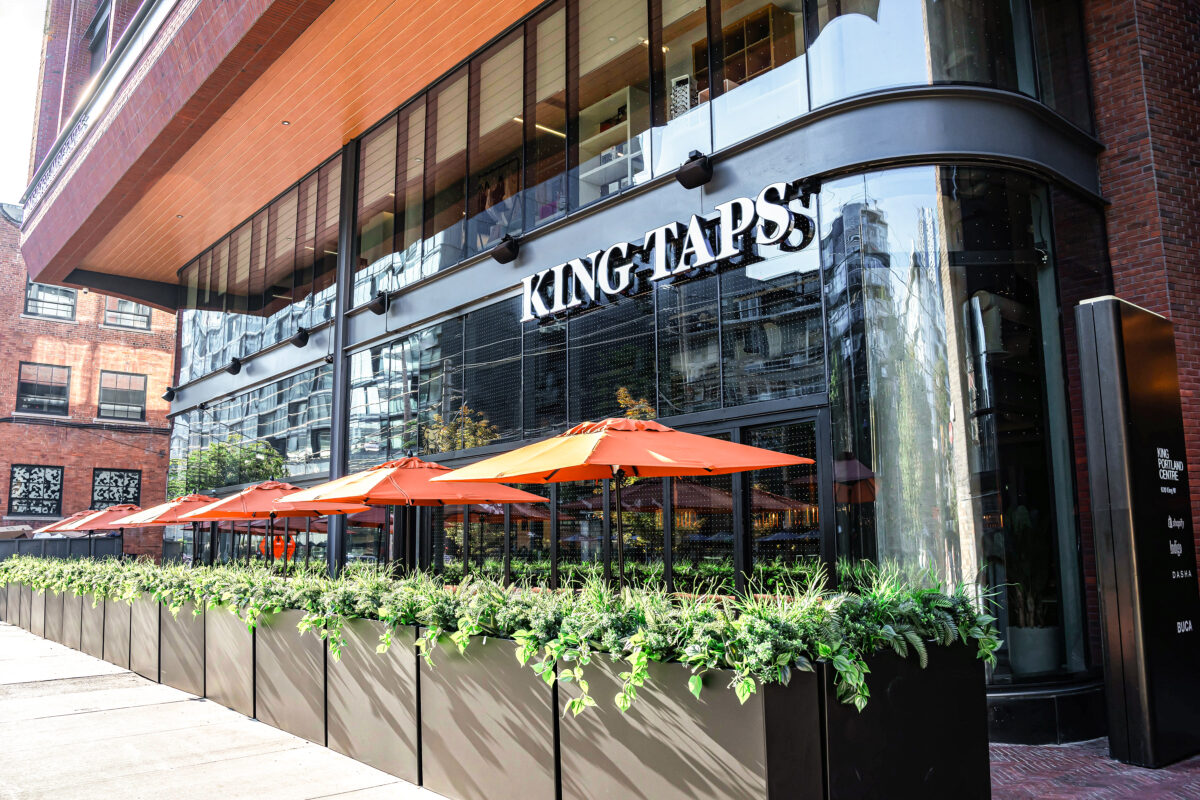
King Taps on King West in Toronto. Photo: King Taps.
King West Faces Saturation Challenges
While several Toronto retail corridors continue to strengthen, Markowitz believes King West is entering a more complicated phase.
“King West is having a tougher moment right now,” he said.
According to Markowitz, the district experienced enormous momentum during 2021 and 2022, but the concentration of restaurants and nightlife-oriented businesses has created increasing saturation.
“Retail districts become vulnerable when they rely too heavily on restaurants and nightlife alone,” he said.
The observation highlights one of the broader lessons emerging across Toronto’s retail market. The city’s strongest urban retail districts typically combine multiple categories, including fashion, food, wellness, hospitality, services, and residential density. That diversity creates more resilient traffic patterns throughout the day and evening and helps stabilize neighbourhoods during softer economic periods.
Markowitz contrasted King West with areas such as Ossington, Queen West, and Yorkville, where multiple retail categories operate together.
“The strongest retail streets usually have a balanced mix of uses,” he said.
He added that rents on College Street in Little Italy have remained relatively stagnant for years, while more diversified retail corridors have experienced stronger rent growth.
Still, Markowitz believes King West could strengthen again as large-scale mixed-use projects reshape the neighbourhood.
He pointed to the King Toronto development, where Whole Foods Market will serve as an anchor. A nearby Equinox gym will also be an attraction.
“Projects like King Toronto will help diversify the area,” he said. “Whole Foods and Equinox are the kinds of anchors that can strengthen a neighbourhood long term.”
Galleria Mall redevelopment in Toronto. Rendering: Hariri Pontarini Architects
Midtown West Emerges as Toronto’s Next Lifestyle District
Looking ahead, Markowitz believes the broader Dupont, Dufferin, Geary Avenue, Sterling Road, and Davenport area could become one of Toronto’s next major lifestyle-oriented retail districts.
“I do think there’s an emerging district there,” he said. “I call it Midtown West.”
The area combines many of the ingredients that shaped other successful urban retail corridors earlier in their evolution, including adaptive reuse buildings, independent operators, residential intensification, creative businesses, restaurants, and cultural spaces.
Markowitz pointed to the Galleria development at Dupont and Dufferin, the Hazelview and Fitzrovia project at Bloor and Dufferin, activity on Geary Avenue, and the continued growth of Sterling Road as examples of momentum building across the district.
“It has a strong creative energy to it,” he said. “I think it’s going to become a very important area over time.”
Like Ossington and portions of Queen West before it, Midtown West is benefiting from a combination of lower relative occupancy costs, industrial character, residential growth, and increasing cultural momentum. As Toronto continues to evolve westward, the area may increasingly attract independent retailers, hospitality operators, and emerging lifestyle brands seeking opportunities before rents rise further.
915 Dupons St. creative building in Toronto. Photo: Junto Studio
Toronto Retail Is Becoming Increasingly Experience-Driven
Increasingly, Toronto’s strongest retail districts are being shaped by wellness, dining, experience, neighbourhood identity, urban density, and lifestyle spending.
Consumers may be more selective with spending than they were several years ago, but many continue to prioritize categories tied to self-care, social connection, hospitality, fashion, food, and experience. Retailers and landlords are adapting accordingly.
At the same time, strong urban storefronts are becoming increasingly competitive in Toronto’s best-performing retail corridors. From Ossington and Yorkville to Queen West and emerging districts such as Midtown West, demand for well-positioned street retail space remains intense.
Toronto’s evolving retail map now reflects something broader than shopping alone. It reflects how the city itself is changing. As density increases, transit expands, and neighbourhoods continue to evolve, Toronto’s most successful retail streets are increasingly functioning as walkable lifestyle ecosystems where food, fashion, wellness, hospitality, and culture intersect.
The city’s future retail winners may increasingly be the neighbourhoods capable of combining all of those elements into compelling urban experiences.
As wet spring commutes and increasingly unpredictable weather continue reshaping consumer habits, Canadian accessories brand KOMBI is expanding beyond its winter roots with a new rainwear collection designed for year-round urban use.
The Montreal-founded company, best known for gloves, mitts and cold-weather accessories, has unveiled a spring/summer 2026 assortment that includes waterproof rain jackets, commuter bags, footwear and weather-focused accessories aimed at consumers navigating changing conditions without sacrificing everyday style and functionality.
The launch represents a notable evolution for the 65-year-old Canadian brand as it broadens its Climate Series platform and expands further into transitional-weather and commuter-focused categories.
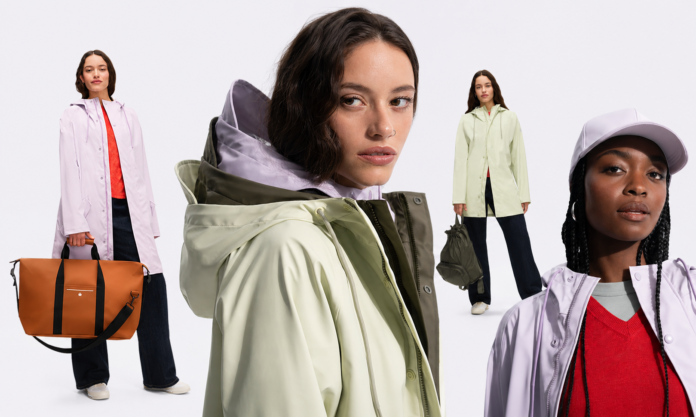
KOMBI Rain Line
Canadian Brand Looks Beyond Traditional Winter Categories
Founded in 1961, KOMBI has built a longstanding presence within Canada’s winter apparel market through sporting goods retailers, outdoor specialty stores and ski resort channels across North America and abroad.
The company says its products are sold through more than 1,500 retail locations in Canada and carried in over 60 ski resorts, while international growth has expanded in recent years, particularly within European markets.
The new rainwear collection signals a broader strategic shift as KOMBI looks to build relevance beyond the colder months that historically defined much of its business.
The company has previously referenced changing seasonal conditions and evolving consumer needs as part of its push toward broader year-round product offerings.
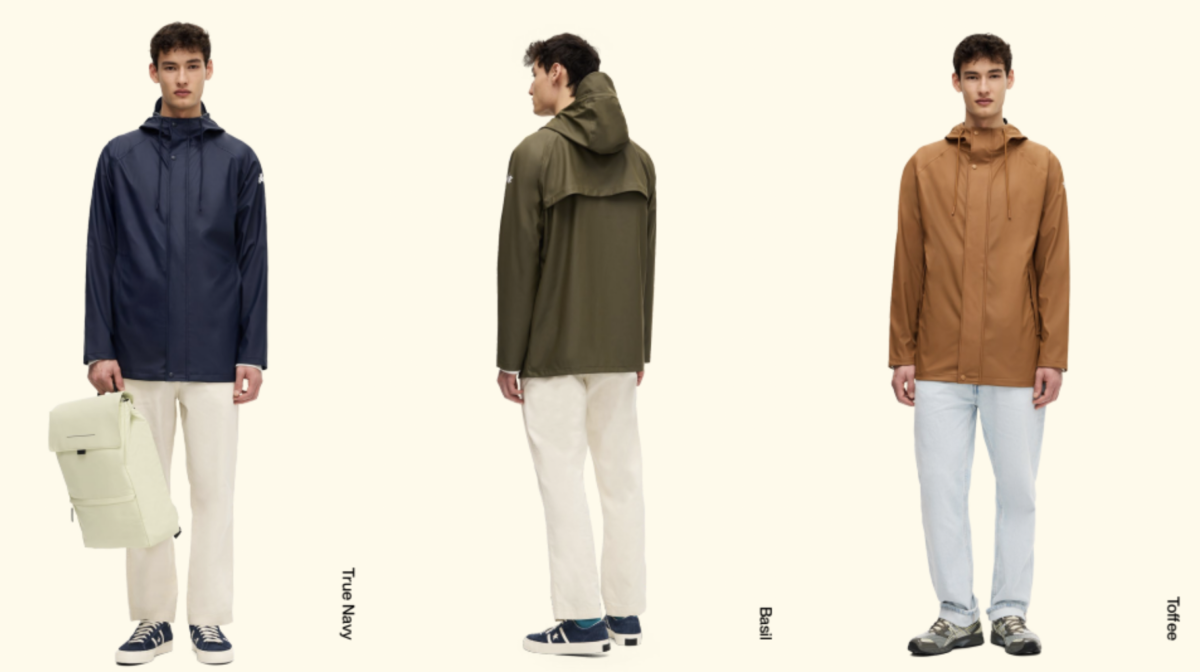
KOMBI Rain Line
Collection Focuses on Urban Commuting and Everyday Functionality
The new assortment has been designed specifically for urban commuting and wet-weather city life, combining technical protection with a cleaner lifestyle-oriented aesthetic intended for everyday wear.
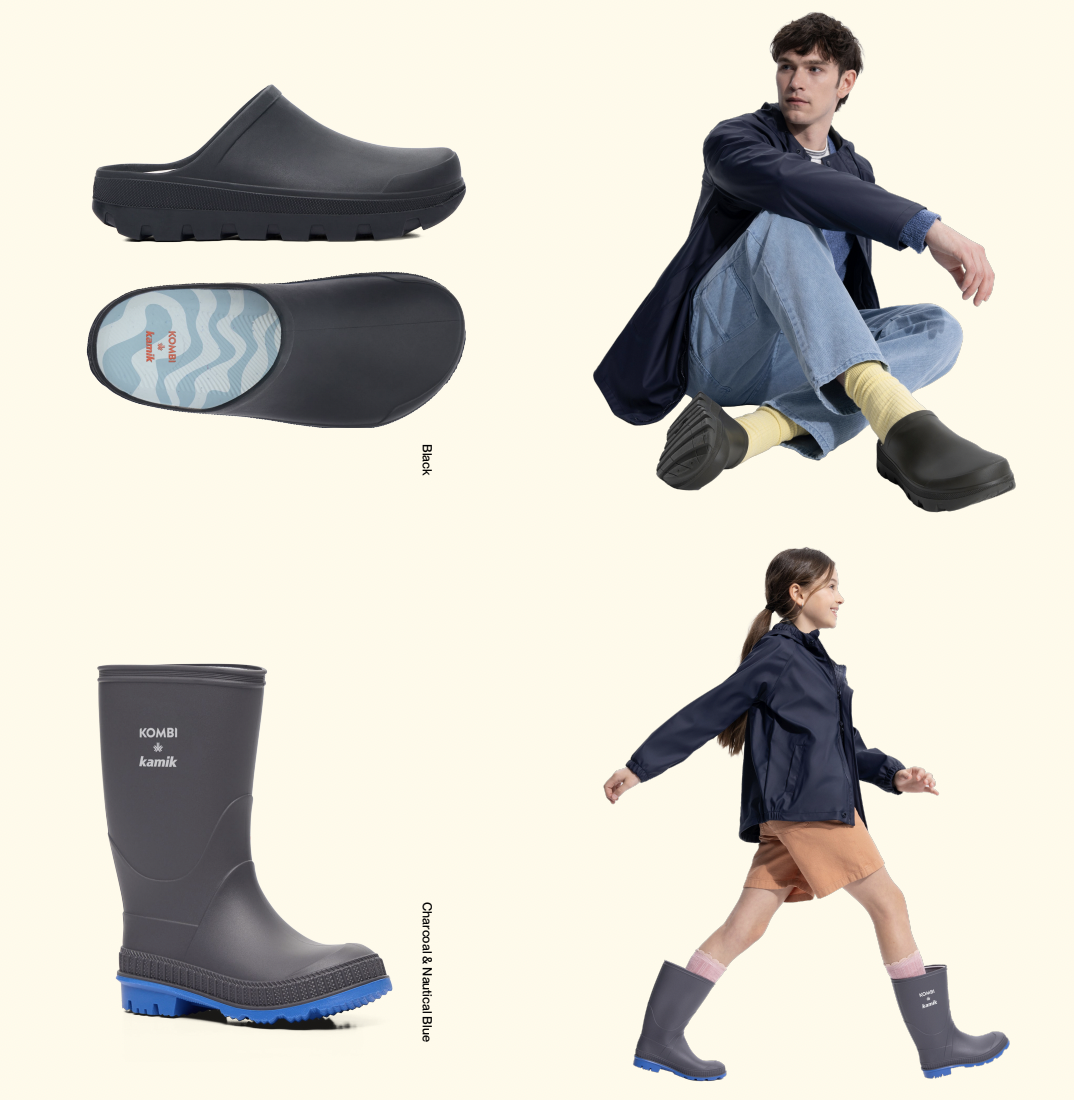
The collection includes lightweight rain jackets and longer raincoats featuring seam-sealed waterproof construction, ventilation systems, reflective detailing and adjustable hoods intended for changing weather conditions and active commuting.
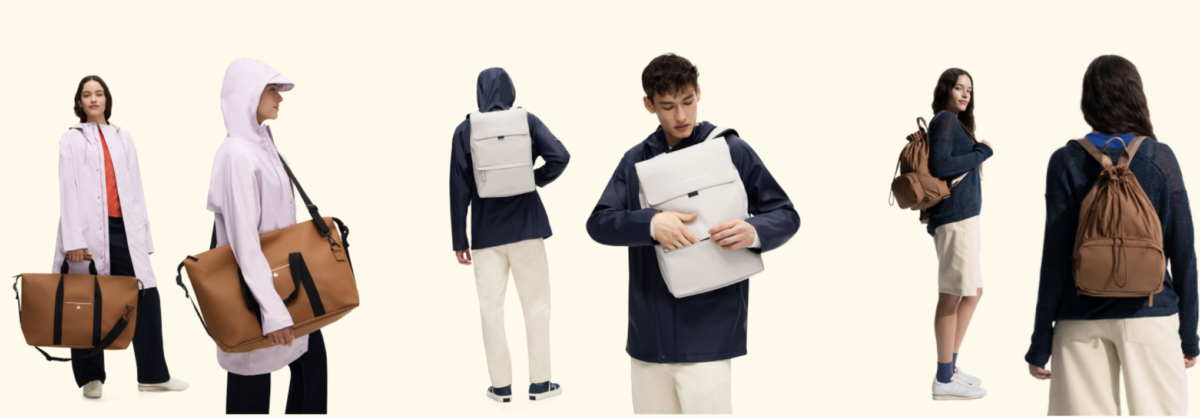
KOMBI is also introducing waterproof commuter bags and backpacks, including laptop-ready and weekender styles, alongside umbrellas, caps, bucket hats and water-resistant gloves.
One of the more notable additions is waterproof footwear manufactured in Canada, according to the company, representing an expansion beyond KOMBI’s traditional accessories business.
The products incorporate the company’s RainSHIELD waterproof technology, which forms part of its broader Climate Series initiative focused on variable and transitional weather conditions.
KOMBI Rain Line
Technical Apparel Continues Expanding Into Everyday Fashion
KOMBI’s latest launch reflects broader shifts occurring throughout the apparel industry as technical performance products increasingly move into mainstream lifestyle and commuter categories.
Consumers increasingly want apparel and accessories that combine weather protection, comfort and versatility for commuting, travel and everyday use. That demand has helped blur the lines between traditional outdoor apparel and contemporary urban fashion.
The growing popularity of technical lifestyle products has also created opportunities for brands to expand beyond rigid seasonal merchandising cycles and introduce products with broader year-round relevance.
KOMBI’s commuter-focused positioning places the company within a growing segment of the market where functional outerwear and everyday fashion continue to converge.
While KOMBI remains strongly associated with winter accessories, the latest collection represents one of the company’s more significant category expansions in recent years.
The broader assortment of outerwear, footwear and commuter accessories suggests the company sees long-term opportunity in serving consumers across multiple seasons rather than relying primarily on winter weather demand.
As seasonal conditions become less predictable and consumers increasingly prioritize versatility in their wardrobes, apparel brands continue adapting assortments to accommodate changing purchasing patterns and year-round wearability.
For KOMBI, the expansion signals a continued push toward building a broader climate-focused lifestyle business that extends well beyond the winter season.
Canadian consumers continue to expect brands to publicly support Pride Month, even as several major corporations have reduced or withdrawn sponsorship support tied to high-profile Pride festivals, creating financial strain for organizers and intensifying discussions around corporate authenticity, retail marketing strategy, and values-based branding.
A new survey commissioned by Omnisend and conducted by Cint in March 2026 found that 56% of Canadians believe Pride Month participation from brands remains important. At the same time, 33% of respondents said they have noticed companies pulling back from Pride campaigns and sponsorship activity during the 2025 and 2026 periods.
The findings come as Pride Toronto continues dealing with the financial impact of losing several major corporate sponsors ahead of its 2025 festival season, with organizers saying the effects are still being felt as planning continues for 2026.
Consumers Looking Beyond Symbolic Pride Marketing
The Omnisend survey suggests Canadians are increasingly evaluating whether companies demonstrate consistent support for LGBTQ+ communities beyond seasonal marketing campaigns.
Among respondents, 46% said only brands that genuinely support LGBTQ+ communities should participate in Pride-related initiatives. Another 32% said they expect companies to demonstrate year-round support rather than limiting visibility to June campaigns alone.
Consumers also identified what they view as the strongest indicators of meaningful support. Donations to LGBTQ+ organizations ranked highest at 22%, followed by transparency around inclusion initiatives and public advocacy efforts, both at 20%.
“For retailers, this means that a Pride campaign isn’t being judged only on the ad itself anymore,” said Marty Bauer, Ecommerce Expert at Omnisend, in the company’s release. “People look at whether the brand shows up consistently, even outside of June.”
Younger Canadians placed greater importance on corporate Pride participation than older demographics. According to the survey, 68% of both Gen Z and Millennial respondents said brand participation in Pride Month matters to them, compared to 50% of Gen X respondents and 41% of Baby Boomers.
The findings reflect broader shifts taking place across the retail sector as brands navigate increasingly complex consumer expectations around social values, inclusion initiatives, and corporate positioning.
Toronto Pride Parade. Photo: Pride Toronto
Pride Toronto Still Facing Financial “Aftershocks”
The conversation around corporate Pride participation intensified after Pride Toronto confirmed that several major sponsors either withdrew or declined to renew sponsorship agreements ahead of the organization’s 2025 festival season.
According to reporting by various media outlets, companies including Google, Home Depot, Nissan, Adidas, and Clorox either ended or did not renew sponsorship support tied to Pride Toronto programming.
Pride Toronto Executive Director Sherwin Kojo Modeste has since said the organization continues to experience the financial “aftershocks” of those departures as it prepares for its 2026 festival season, which marks the event’s 45th anniversary under the theme “We Won’t Stop.”
Organizers have reported a funding gap estimated at approximately $700,000 to $800,000 for the 2026 season, despite retaining many existing partners and bringing in additional support.
The loss of several multinational “anchor” sponsors created challenges extending beyond direct financial contributions. Large corporate sponsors often provide substantial marketing reach, employee participation, vendor relationships, and broader credibility that can help attract additional sponsorship support.
According to previous reporting, Modeste linked the sponsorship withdrawals to broader shifts in how some U.S.-based multinational corporations approach diversity, equity, and inclusion initiatives amid growing political polarization surrounding DEI-related issues.
At the same time, Pride Toronto has pointed to broader economic pressures affecting sponsorship budgets, including inflation, tariffs, and rising operational costs.
Out on the Street at 504 Church Street in Toronto. Photo: Craig Patterson
Retailers Navigating a More Complex Marketing Environment
The sponsorship changes have sparked broader discussions throughout the retail and marketing sectors around how brands engage with social causes and public-facing advocacy campaigns.
Several companies that reduced or ended sponsorship support indicated the decisions were tied to broader reviews of marketing and community investment priorities.
Nissan Canada said its decision reflected a reevaluation of marketing and media initiatives, while Home Depot said it regularly reviews charitable and non-profit giving activities. Google reportedly stated that it would continue supporting employee participation in Pride-related events and community activities.
Industry observers have noted that brands increasingly face pressure from multiple directions. Some consumers have criticized corporations for treating Pride as a seasonal marketing exercise without demonstrating broader year-round support, while others have pushed back against the commercialization and politicization of Pride campaigns.
As a result, some corporations appear to be adopting more cautious approaches toward highly visible Pride sponsorships and marketing activations while continuing internal inclusion initiatives or quieter forms of support.
Vancouver Pride Parade. Photo: Vancouver Pride Society
New Sponsors Step In as Festivals Seek Additional Funding
Despite the sponsorship pullbacks, several Canadian businesses and organizations have stepped in to support Pride programming. According to previous reporting, companies including No Frills and Shoppers Drug Mart provided newer or expanded support for Pride Toronto following the withdrawal of several larger sponsors.
However, organizers say replacement sponsorships have not fully offset the loss of major multinational partners.
The sponsorship challenges have also intensified discussions around the long-term financial sustainability of major Pride festivals across Canada.
Earlier this year, Pride organizations in Toronto, Montreal, and Vancouver jointly requested approximately $9 million in emergency federal funding over three years to help offset rising security costs and declining corporate sponsorship support.
Meanwhile, some community members and organizers have argued that reduced corporate participation could create opportunities for Pride festivals to reconnect more closely with their activist origins and grassroots community focus.
Pride festivals continue generating substantial economic activity for major urban centres, driving spending across restaurants, hotels, entertainment venues, nightlife, and retail districts during some of the busiest tourism periods of the summer season.
The Omnisend survey included 1,029 Canadian respondents and used quotas based on age, gender, income, and geographic region to create a nationally representative sample. The reported margin of error was plus or minus 3 percentage points.
For the first quarter of 2026, compared to the first quarter of 2025:
Q1 revenue grew to $5.9M vs. $5.0M, an increase of 17.5% YoY, marking the 8th consecutive quarter of YoY revenue growth
Q1 Gross profit grew to $2.1M vs. $1.9M, an increase of 6.2% YoY
Q1 Adj. EBITDA improved to $122K vs. $32K, marking the 6th consecutive quarter of positive Adj. EBITDA
Cash position grew to $4.1M (March 31, 2026) vs. $2.7M (March 31, 2025), an increase of $1.4M YoY
Viral Loops was acquired on March 10, 2026 and contributed from the day of closing. Q2 is Viral Loops first full quarter under EMERGE ownership. Viral Loops achieved approximately $1.3M Revenue and $800K Adj. EBITDA in 2025 (unaudited).
Ghassan Halazon
“Our Q1 results marked another strong quarter of revenue growth and positive Adjusted EBITDA, despite being the most seasonal quarter for our golf business. During the quarter, we also completed the strategic acquisition of Viral Loops that we expect will be immediately accretive to earnings and cash flow.,” said Ghassan Halazon, Founder and CEO, EMERGE.
“Looking ahead, Q2 is expected to be the strongest quarter of the year in terms of revenue and Adj. EBITDA, with the 2026 golf season now in full swing, along with the inclusion of Viral Loops in its first full quarter under EMERGE.”
EMERGE Commerce is a disciplined acquirer and operator of profitable e-commerce brands and technologies across Direct-to Consumer and Business-to-Business segments. Its D2C portfolio spans its Grocery and Golf verticals. truLOCALis its flagship Canadian meat and seafood subscription service. Its Golf vertical includes UnderPar (discounted golf experiences), JustGolfStuffand Tee 2 Green (discounted apparel and equipment). EMERGE B2B houses Viral Loops, its referral marketing platform.
A woman shopping with her son in a grocery store. Photo: Unsplash
As Canadian grocers invest billions into e-commerce infrastructure, AI personalization, and retail media networks, new research suggests the physical grocery store remains the country’s most effective environment for turning product discovery into purchasing behaviour.
The findings arrive during a period of major transformation within Canadian grocery retail. Consumers are increasingly engaging with digital platforms, retailers are expanding omnichannel capabilities, and food inflation continues reshaping household spending habits. Yet despite that rapid evolution, the physical aisle still appears to play an outsized role in influencing what Canadians ultimately decide to try.
Research from Leger found that 47% of Canadians made an unplanned purchase of a new food or beverage product while shopping in-store during the previous three months. By comparison, only 30% reported making similar spontaneous purchases while shopping online.
The gap highlights a broader reality emerging across Canadian retail: digital channels may shape awareness and consideration, but physical grocery stores remain highly effective at converting interest into trial.
Consumers Are Becoming More Deliberate About Spending
The findings come as grocery affordability remains a growing concern for Canadian households.
Canada’s Food Price Report 2026 estimates that a family of four will spend $17,571.79 on food this year, representing an increase of nearly $1,000 over 2025. Food prices are now approximately 27% higher than they were in 2021, with categories such as beef continuing to experience significant price increases.
That environment is influencing how consumers evaluate new products. Rather than responding strongly to broad advertising campaigns or aspirational branding, Canadians appear more focused on practical value, usefulness, and perceived purchasing confidence.
Leger found that 77% of Canadians remain open to trying new food and beverage products, but the strongest trial drivers were directly connected to tangible value. Sampling and tasting influenced 46% of respondents, while promotions, coupons, and value for money each influenced 45%.
Traditional advertising demonstrated surprisingly weak influence. Only 7% of Canadians said advertising motivated them to try a new product.
The findings suggest Canadian consumers are becoming more selective about the information they trust, particularly as higher food costs force households to scrutinize discretionary spending more carefully.
“Canadians are not lacking information. They are selective about what earns their attention and what ultimately shapes their behaviour,” the report noted.
Loblaws store at Maple Leaf Gardens in downtown Toronto. Photo: Echo Chamber
Grocery Stores Continue to Function as Discovery Environments
The research reinforces the continuing strategic importance of physical merchandising within Canadian grocery retail.
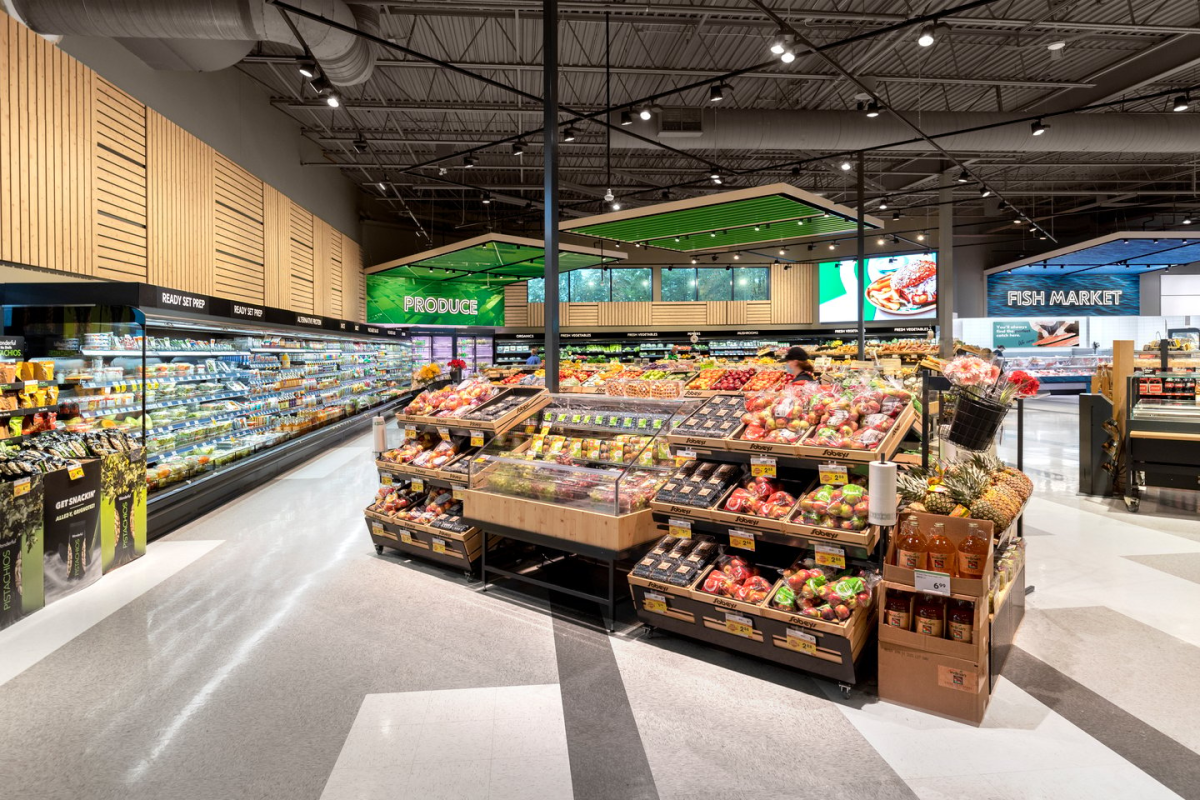
While consumers increasingly encounter products through fragmented digital touchpoints, including Facebook, Instagram, TikTok, streaming platforms, and retailer apps, the in-store environment continues to exert unusually strong influence at the moment purchasing decisions are actually made.
According to the report, 32% of Canadians discover products through in-store shelves and signage, slightly ahead of Facebook at 31% and television at 30%. Family recommendations also remain highly influential at 29%.
That distinction matters because grocery shopping often operates differently than other forms of e-commerce. Many consumers enter stores with only partial shopping lists, navigate aisles while comparing prices and promotions, and remain highly susceptible to visual interruptions, endcaps, packaging, displays, and sampling opportunities.
In that environment, the grocery shelf functions as more than a fulfillment mechanism. It becomes a behavioural conversion point where curiosity, convenience, pricing, and physical visibility interact simultaneously.
The findings also help explain why Canadian grocers continue investing aggressively in store modernization and retail media infrastructure.
Retail media now captures roughly 20% of all digital advertising spending in Canada, with expenditures increasing nearly 20% year-over-year as brands shift budgets toward closed-loop retail ecosystems capable of directly measuring purchase behaviour.
Major Canadian grocery operators are rapidly expanding those capabilities.
Loblaw Companies Limited is investing approximately $2.4 billion in 2026, including plans to open 70 new stores while continuing to expand automation infrastructure designed to improve e-commerce efficiency. Walmart Canada is advancing AI-driven personalization tools and expanding in-store digital media networks, while Empire Company Limited continues building first-party data and off-site media capabilities connected to its grocery platforms.
The findings suggest those investments are tied to a broader strategic objective: monetizing consumer attention during active shopping moments.
Online Grocery Still Struggles With “Discovery”
The report also highlights one of the continuing structural challenges facing grocery e-commerce platforms.
Canada’s online grocery market is now valued at approximately $3.84 billion USD, with click-and-collect accounting for roughly 46% of all online grocery orders. Consumers continue embracing digital convenience, particularly when avoiding delivery fees, but online grocery platforms still face limitations in replicating the spontaneous experimentation that occurs naturally inside stores.
The contrast between in-store and online impulse behaviour illustrates that challenge clearly.
Nearly half of Canadians reported making spontaneous in-store purchases of new products, substantially higher than the 30% who reported similar behaviour online.
That gap points toward a growing issue within grocery e-commerce often described as a “discovery gap.” Digital grocery platforms perform efficiently when consumers are replenishing known items or shopping from predetermined lists. However, they remain less effective at recreating the sensory and behavioural conditions that encourage experimentation.
Physical grocery stores still hold major advantages in areas such as visibility, tactile engagement, impulse merchandising, sampling, and real-time comparison shopping.
The challenge is particularly important because product trial often drives higher-margin purchases and increases basket size, both of which remain strategically important for grocers operating in a highly competitive and inflation-sensitive environment.
Sobeys grocery store in Orangeville, ON. Photo: Sobeys
Utility and Trust Are Becoming More Important Than Branding
Another notable takeaway from the research is the growing shift toward utility-driven consumer engagement.
Canadians continue consuming large amounts of food-related content, but they increasingly prioritize practical information over traditional brand messaging. Leger found that 46% of consumers actively seek recipes, while 40% search for deals and savings opportunities.
At the same time, many consumers appear skeptical about the broader influence of marketing itself. Only 43% of Canadians said food information meaningfully impacts their purchasing behaviour, while 57% reported that such content has little or no influence.
Even social media influence appears more nuanced than many marketers assume.
Younger consumers remain more likely to discover products through Instagram and TikTok, yet trust in those platforms trails more traditional and interpersonal sources. Family recommendations and in-store sampling ranked significantly higher in perceived reliability.
One of the report’s more surprising findings showed that flyers continue outperforming many digital channels in trust, particularly in Quebec and Atlantic Canada.
That persistence reflects how Canadian grocery shopping behaviour continues evolving in layered and sometimes contradictory ways. Consumers may browse recipes on social media, use retailer apps, and order groceries online, yet many still rely heavily on practical value cues, trusted recommendations, and highly visible in-store merchandising when making final purchasing decisions.
“Digital channels may continue to grow in reach, but the shelf remains one of the most effective places to convert interest into trial,” the report stated.
In many ways, the findings challenge the assumption that digital commerce is replacing physical grocery retail. Instead, they suggest the industry is evolving toward a hybrid model where digital platforms generate awareness and convenience, while stores remain the critical environment where discovery, trust, and purchasing decisions ultimately converge.
Kristy Miller says winning a regional Woman of the Year award for entrepreneurs over 40 reflects years of behind-the-scenes work building her fast-growing Canadian candle company.
Speaking with Retail Insider Co-Editor-In-Chief Mario Toneguzzi, Miller described the recognition in the Kitchener-Waterloo region as both unexpected and rewarding after previously being nominated without winning.
Miller founded The Scented Market eight years ago after researching cleaner household products while on maternity leave. She said concerns about traditional candle ingredients and their effects on families and pets inspired her to experiment with soy candles at home.
Kristy Miller
What began as a hobby quickly evolved into a business after friends and online followers showed growing interest in her products. Miller said social media became a key driver of the company’s expansion, allowing her to educate consumers, build community engagement and market products without significant advertising costs.
The entrepreneur said persistence was critical in the company’s growth. After being rejected by Dragon’s Den in 2018, Miller continued building the brand before later being invited onto the show in 2022, where she received nine offers from six investors.
Today, The Scented Market is expanding retail partnerships across Canada and the United States while continuing community-focused initiatives. Miller said the company recently launched fundraising partnerships that have returned more than $46,000 to schools, charities and organizations.
The company has also partnered with the RCMP Foundation on a candle gift set supporting mental health initiatives.
Miller said entrepreneurs should focus on resilience, celebrate small victories and maintain a strong mindset while navigating the challenges of building a business.
Happy Belly Food Group Inc., a leading consolidator of emerging restaurant brands, says it has secured a multi-year, exclusive national agreement with Uber Eats, Uber Technologies food delivery platform, to support Happy Belly’s growing portfolio of corporate and franchised restaurant locations across Canada.
This national partnership establishes Uber Eats as Happy Belly’s exclusive third-party delivery marketplace partner and is designed to drive meaningful benefits for every franchisee and corporate location through improved service levels, streamlined support, and more competitive commercial terms, said the company.
Uber Eats photo
Key benefits of the national agreement, according to Happy Belly:
Dedicated national account management and an elevated level of service, including coordinated onboarding, operational support, and escalation pathways across brands and regions
Competitive national pricing intended to reduce delivery-related costs and push improved economics down to individual franchisees and corporate stores
Consistency and simplification at scale, including standardized processes, consolidated support, and stronger system-wide visibility as the company continues to grow
Sean Black
“Partnering with Uber Eats, a world-class delivery platform allows us to leverage national-account scale in a way that directly benefits our franchisees and corporate locations,” said Sean Black, Chief Executive Officer of Happy Belly. “This agreement strengthens service levels through dedicated national account support, improves unit economics through competitive terms, and helps us execute with greater operational discipline as our footprint expands.
“National agreements are most powerful when they impact the P&L at the store level. By consolidating our delivery marketplace relationship under one exclusive partner, we can simplify execution, standardize support, and create a more predictable operating environment for our operators while driving tangible savings and improved service for the system.”
Black said the agreement builds on Happy Belly’s track record of securing national partnerships with leading operators across food distribution and beverage, including its national distribution agreement with Sysco Corp and its exclusive supply agreement with Coca-Cola Canada Bottling Limited as part of the company’s strategy to consolidate purchasing, strengthen vendor relationships, and improve profitability across the network.
The company’s portfolio includes Heal Wellness, Rosie’s Burgers, Yolks Breakfast, Via Cibo Italian Street Food, and others.
Landmark Global, a leader in cross-border e-commerce delivery and international logistics solutions, has released its Cross-Border Confidence Index.
Conducted among 2,000 U.S. and Canadian consumers, the research reveals a widening gap between North American consumers’ interest in global brands and their confidence in the cross-border e-commerce shopping experience.
North American consumers have more access than ever to international brands through marketplaces, social commerce, and direct-to-consumer expansion. However, Landmark Global’s Index shows that access does not equal conversion. Concerns around hidden costs, delivery uncertainty, and complicated returns are driving pre-purchase hesitation, causing consumers to opt out before checkout. For brands, this shifts the challenge from driving demand to removing friction, making cost transparency, delivery predictability, and returns simplicity critical levers for converting global interest into revenue, said the company.
“The challenge for brands today isn’t reaching global customers, it’s delivering an experience they can trust,” said James Edge, Chief Executive Officer, Landmark Global. “As cross-border e-commerce becomes more complex with tariffs, shifting trade lanes, and evolving regulations, companies need a more integrated approach that brings together data, customs expertise, and fulfillment strategy. The brands that solve for that complexity will be the ones that unlock the next phase of global growth.”
At the centre of consumer hesitation is a growing lack of trust in the total cost of international purchases. Landmark Global’s Index shows that 43% of North American consumers are deterred by hidden duties and taxes, making it the top barrier to cross-border e-commerce. This concern is even more pronounced in Canada, where 59% of consumers cite hidden costs as a key barrier, whereas U.S. consumers are more likely to cite delivery delays (38%) as a primary concern. An additional 32% of North Americans cite surprise delivery fees, reinforcing that the issue isn’t solely about cost but the unpredictability surrounding it, according to the report.
James Edge
Nearly seven in 10 (69%) of North American consumers say they would be more likely to complete a purchase if duties and taxes were prepaid at checkout, with 73% of Canadian consumers and 65% in the U.S. This highlights a clear opportunity for brands to improve conversion by eliminating ambiguity. These findings point to a fundamental shift: consumers are not rejecting cross-border e-commerce; they are rejecting experiences where the final price is unclear, added Landmark.
“Delivery delays are a concern, as observed in 32% of North American consumers. Findings suggest that speed is no longer the primary issue – it’s certainty. North American consumers are willing to wait for international orders, but only if expectations are clearly set. Simultaneously, expectations are tightening. Nearly two-thirds (64%) of North American consumers expect international orders to arrive within two weeks or less, and 21% expect delivery within one week, signaling that cross-border shipping is now being judged against domestic e-commerce standards.
For brands, the ability to provide consistent, reliable delivery timelines is becoming more important than simply offering the fastest option,” it said.
“The Index also reveals that returns are no longer a post-purchase thought; they are influencing decisions much earlier in the buying journey. In fact, 41% of North American consumers note they would be more likely to purchase if returns could be handled locally, while 24% cite complicated returns as a key concern when shopping internationally. This indicates a growing shift toward pre-purchase risk assessment, in which consumers factor in the difficulty of returning an item before committing to a purchase. Returns are evolving from an operational afterthought into a critical component of the overall customer experience.
“Cross-border e-commerce is becoming less about enabling access and more about managing complexity. As tariffs shift, trade lanes evolve, and compliance requirements tighten, the challenge for brands is no longer just reaching international customers, but doing so in a way that is consistent, compliant, and scalable across markets.”
Insights from James Edge
Question: Your data shows that unexpected duties and taxes are the biggest reason consumers abandon cross-border purchases — why are so many retailers still failing to provide landed-cost transparency at checkout?
Answer: Many retailers still underestimate how difficult landed-cost accuracy is. It’s not as simple as adding a tax line at checkout. Retailers need accurate product data, customs classification, broker input and a real-time understanding of how regulations, tariffs and duties are changing across different markets and shipping lanes.
That’s where the disconnect happens. Many retailers are still relying on fragmented systems or outdated information, while market conditions such as tariffs and duties shift in real-time, making it difficult to stay agile and accurate. The consumer lacks visibility into the operational complexity behind cross-border commerce. They just see a surprise bill at delivery or checkout, and our data shows that’s enough to make them walk away.
Q: The report suggests shoppers want local returns options. What operational or financial barriers are preventing retailers from offering seamless domestic-style returns for international orders?
A: The demand for domestic-style returns exists, but they are hard to make work economically if the retailer hasn’t built the right network to support them. Once an international order comes back, someone has to move it, clear it, inspect it, decide whether it can be resold, and either restock or dispose of it, and each step adds cost.
Retailers that solve this process friction treat returns as part of the cross-border experience from the start, with clear customs processes and enough visibility to know where that product should go next.
Q: Are Canadian and U.S. consumers behaving differently when it comes to cross-border shopping expectations, and what does that reveal about the maturity of the market?
A: Across Canadian and U.S. markets, both want more certainty, but they still face different pain points. In Canada, the issue is much more about cost transparency, with 59% of consumers citing hidden duties and taxes as a barrier and 73% saying they’d be more likely to buy if costs were prepaid at checkout.
In the U.S., delivery delays are the bigger concern at 38%, which suggests the market is maturing in two directions: Canadian shoppers are highly sensitive to total landed cost, while U.S. shoppers are increasingly judging cross-border purchases against the speed and predictability they expect from domestic e-commerce.
Vitaly Gariev photo
Q: How much of the trust gap in cross-border e-commerce is a logistics problem versus a communication problem between retailers and consumers?
A: The trust gap is rooted in logistics complexity, but consumers experience it as a communication problem. Cross-border e-commerce is evolving due to shifting duties and taxes, changing customs requirements, fluctuating shipping costs and complicated international returns. Those are real operational challenges retailers must face and coordinate behind the scenes.
However, from the customer’s perspective, trust breaks down when those complexities are not communicated up front. If a shopper encounters hidden service fees or even vague delivery timelines, confidence quickly disappears. Consumers know that cross-border shopping isn’t simple, but they do expect transparency and predictability.
Q: What practical changes should retailers prioritize over the next 12 months if they want to reduce cart abandonment and build long-term consumer confidence in international shopping?
A: Retailers should work to make the cross-border e-commerce experience seem less risky before shoppers click “buy.” The initial focus should be on refining the fundamentals behind the scenes: precise product classification, enhanced customs data, and improved lane-by-lane planning to clearly display duties, taxes, and delivery windows at checkout.
Following that, the experience should be made more local-like with prepaid landed costs, realistic delivery estimates, and straightforward returns. Customers are not against international brands; they just dislike unexpected charges and delays.