The numbers showed big growth in sales, AI-influenced sales as well as a surge in “Buy Now Pay Later”.
Black Friday Results | Key Findings for Canada:
Black Friday sales in Canada grew 6% YoY, reaching$865M USD
Average discountingrose to 28% (up from 27% last year)
$173M USD in Canadian Black Friday online sales were influenced by AI and digital agents
AI-search-referred traffic:
AI-search-referred-traffic increased 5xcompared to last year’s Black Friday
Conversion rates from AI search are4x higher than social, showing AI’s strength in product discovery
Social and Mobile:
Social traffic share was12%, down from 13% last year
Mobile traffic share decreased to 74% from75%
Mobile order share increased to 60%, up from 57% last year
Payment Shares:
Buy Now, Pay Later shares grew from 2.8%to 5.1% this year
Mobile Wallet Pay increased from16% to 18%this year
Both these channels are taking share from the traditional payment channels, Credit card/Debit Card, whose shares decreased from 80% last year to 75% this year
Caila Schwartz
Caila Schwartz, Director of Consumer Insights, SalesforceSpend Insights, said: “Canadian Black Friday sales were strong, growing 6% year-over-year to a total of $865 million, suggesting the consumer is certainly still spending, but that growth comes with a clear warning sign. Shoppers are relying heavily on flexible financing to afford those deep discounts. The use of ‘Buy Now, Pay Later’ plans surged dramatically, with its share of payments nearly doubling from 2.8% to 5.1% this year. This shows that while retailers successfully drove purchases with aggressive deals, the Canadian consumer’s holiday budget is clearly stretched, forcing them to lean into debt just to ease the cost of shopping.”
“AI took centre stage in Canada during Black Friday. Evolving from a helpful add-on to a critical value driver for retailers, with AI-search-referred traffic surging 5x year-over-year,” she added.
Online sales were strong on Thursday with sales up 10% YoY.
Order volumes were up 9% YoY, indicating strong demand.
Units per transaction alsoincreased 15% YoYwith consumers not only placing more orders, but also buying more items at checkout.
Discounts were strong heading into the Black Friday event, with Thursday discount rates averaging 30%, up 15% over last year.
Thanks to large discounts, the average selling price in Canada fell 12% YoY.
“The Canadian consumer is converting at rates we haven’t seen in years. By offering discounts up 15% over last year, retailers successfully dropped the average selling price by 12%. This focus on value is unlocking massive demand: not only are shoppers placing more orders, but they are buying 15% more units at checkout. The message is clear: great prices are the engine driving Canada’s strong start to Cyber Weekend,” said Schwartz.
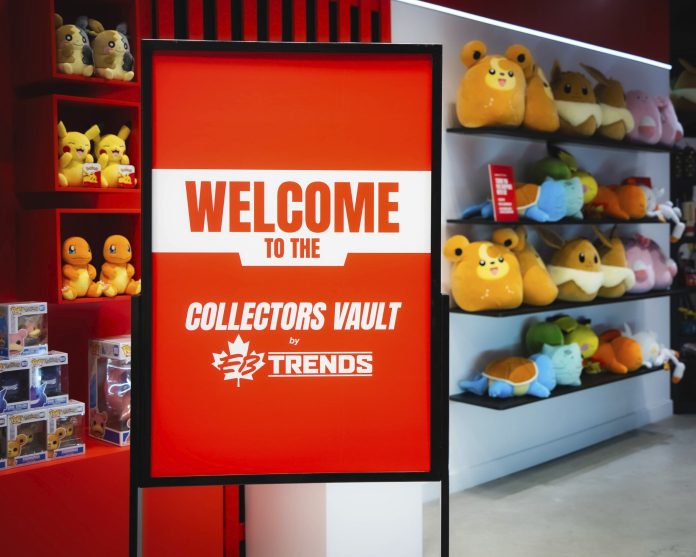
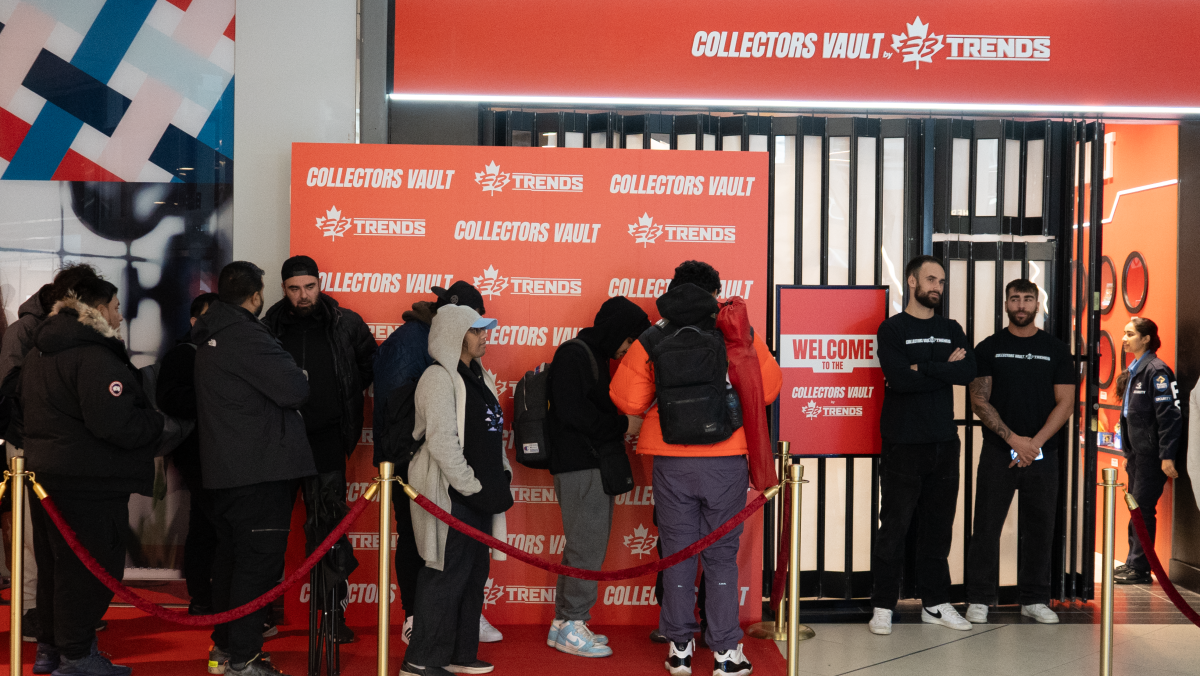
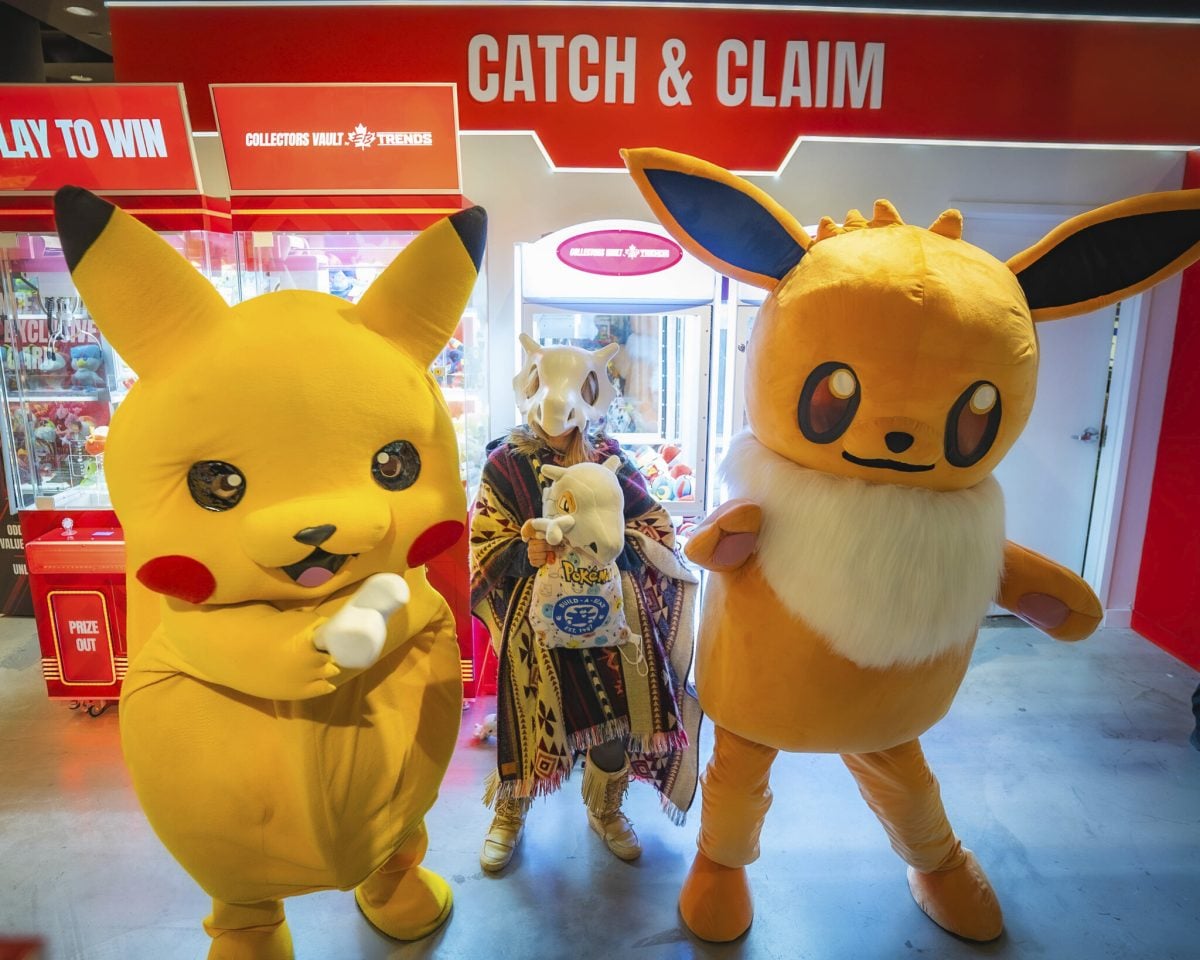
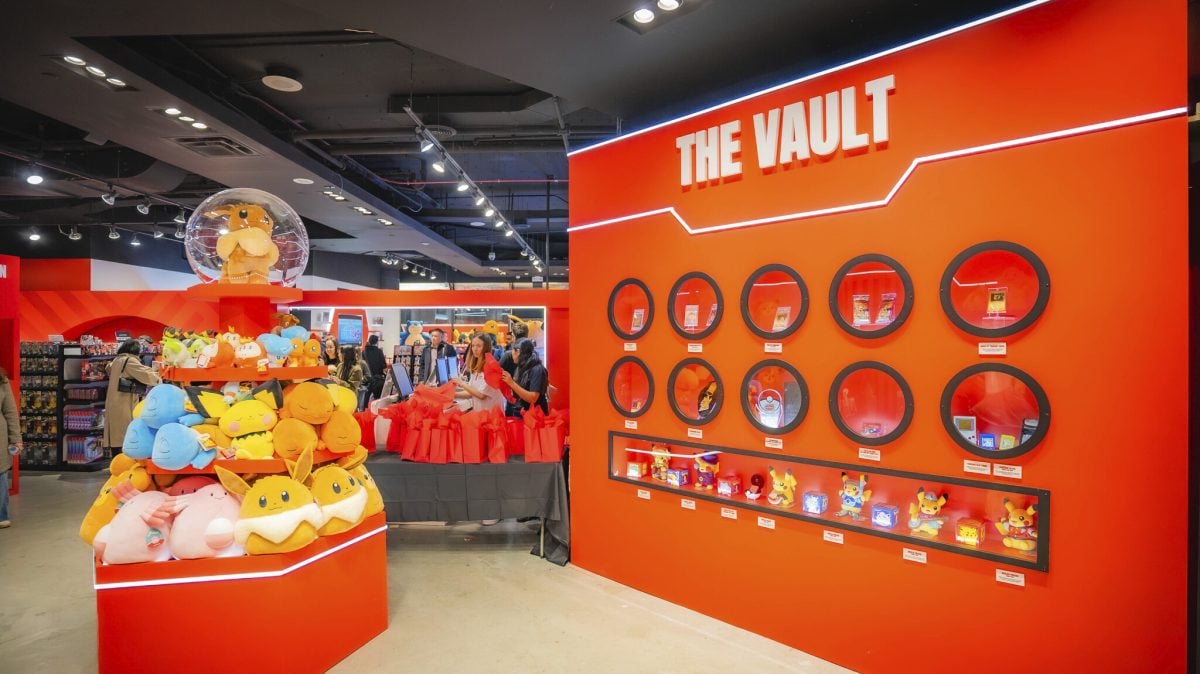
World champions, collectors, and cosplay heroes recently converged on Toronto for the VIP preview of the Collector’s Vault — an EB Trends pop-up at the CF Toronto Eaton Centre celebrating the creatures, cards, and culture that sparked a global obsession.
Toronto’s most passionate fans, including a six-year-old Pokémon prodigy and Canada’s nine-year-old Junior Champion were on site for a one-night-only sneak peek of the Collector’s Vault before it officially opened to the public on November 1.
The Vault, on Level 2 in the former Frank and Oak space, runs until January 15.
Inside people will find:
The Legendary Wall – a display of ultra-rare collectibles worthy of legend
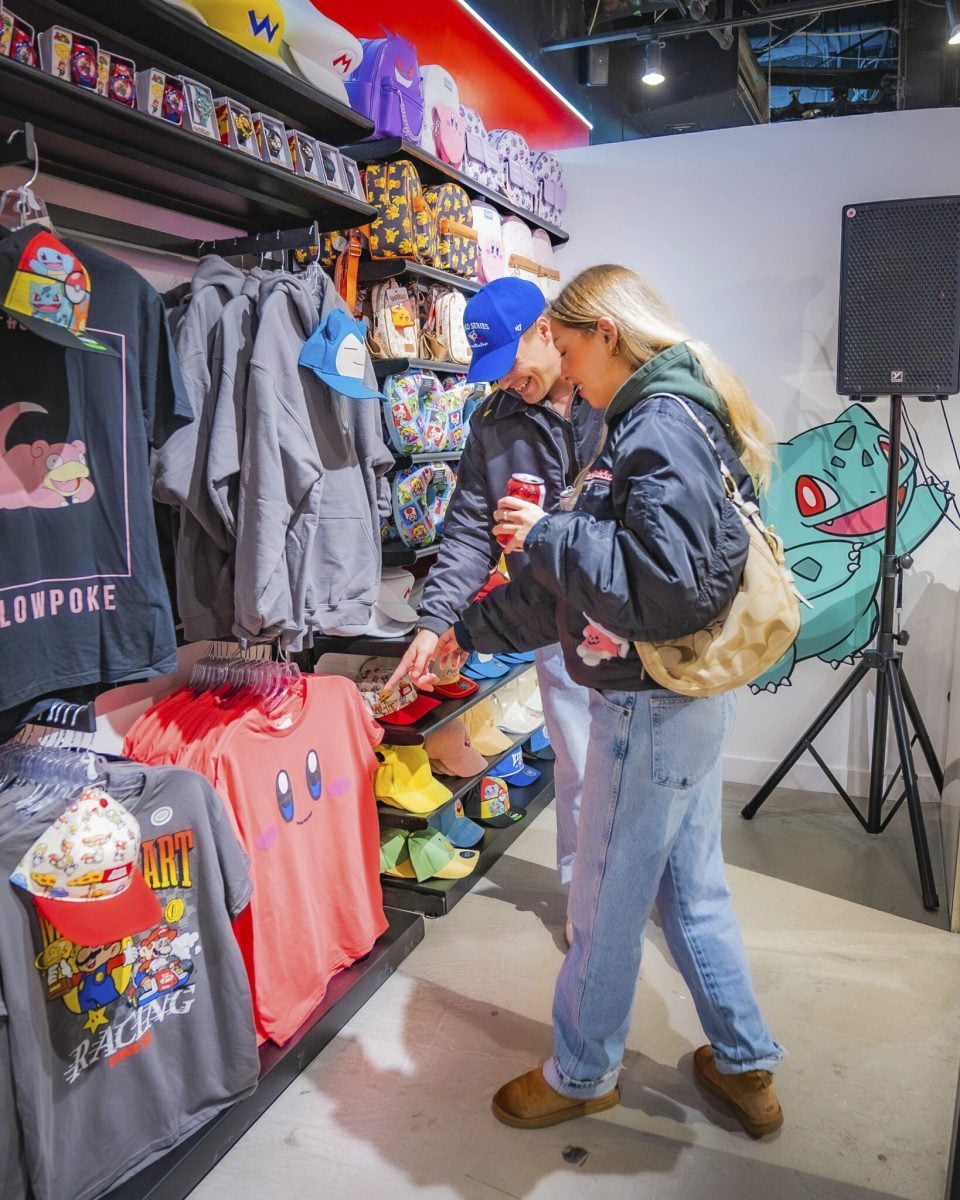
Exclusive merch drops and collector must-haves available for a limited time
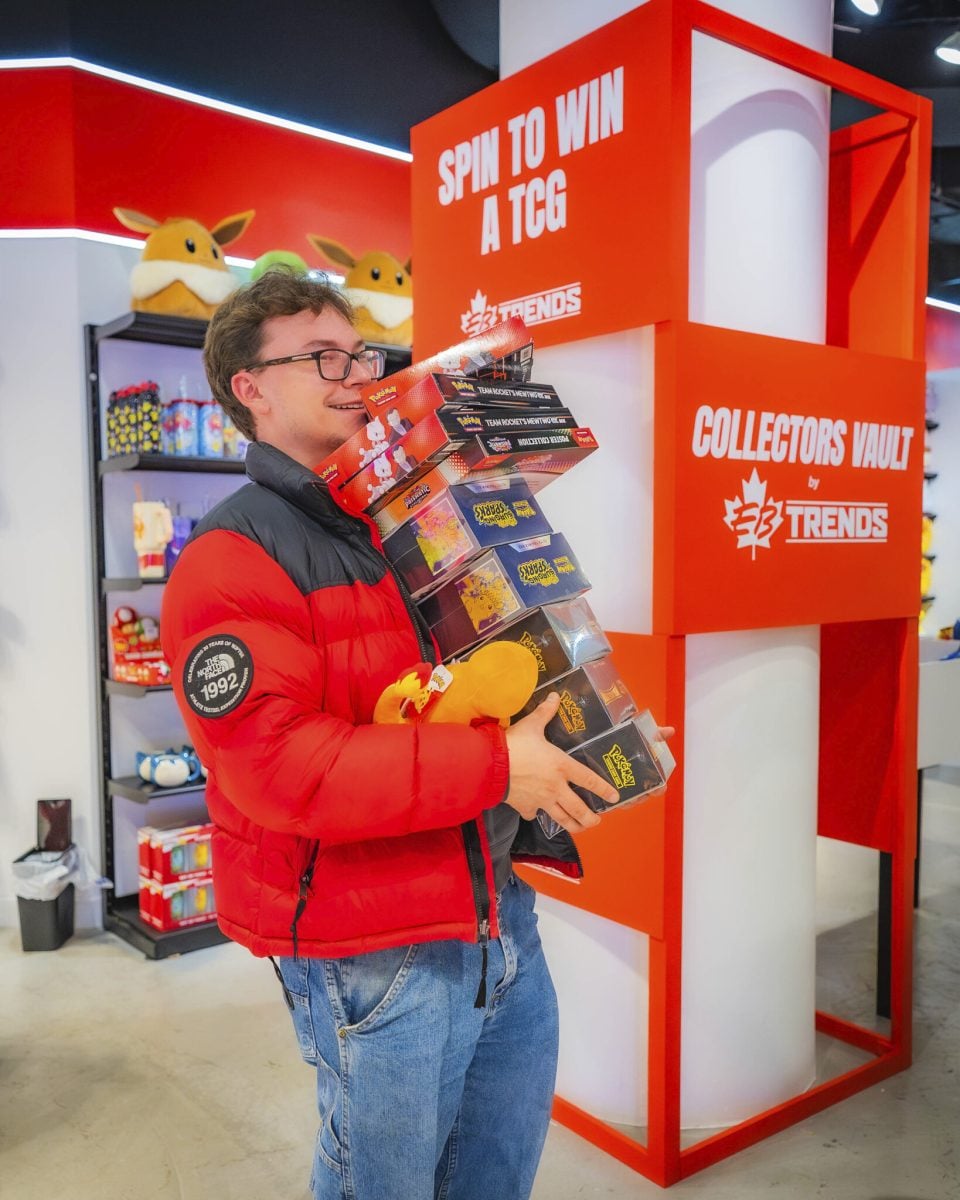
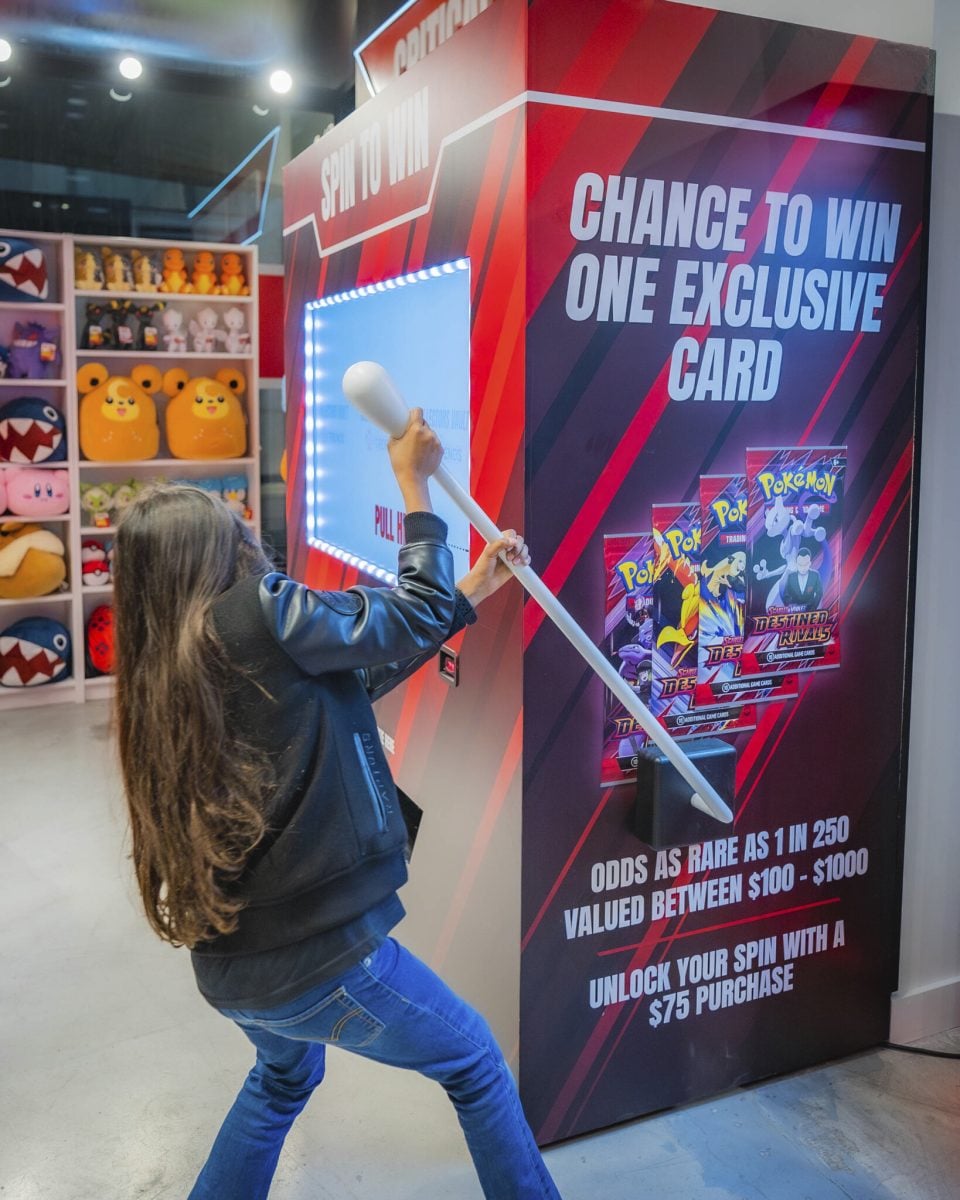
The Epic Pull Machine – with $5,000 worth of cards, including rare ones valued at $1,000
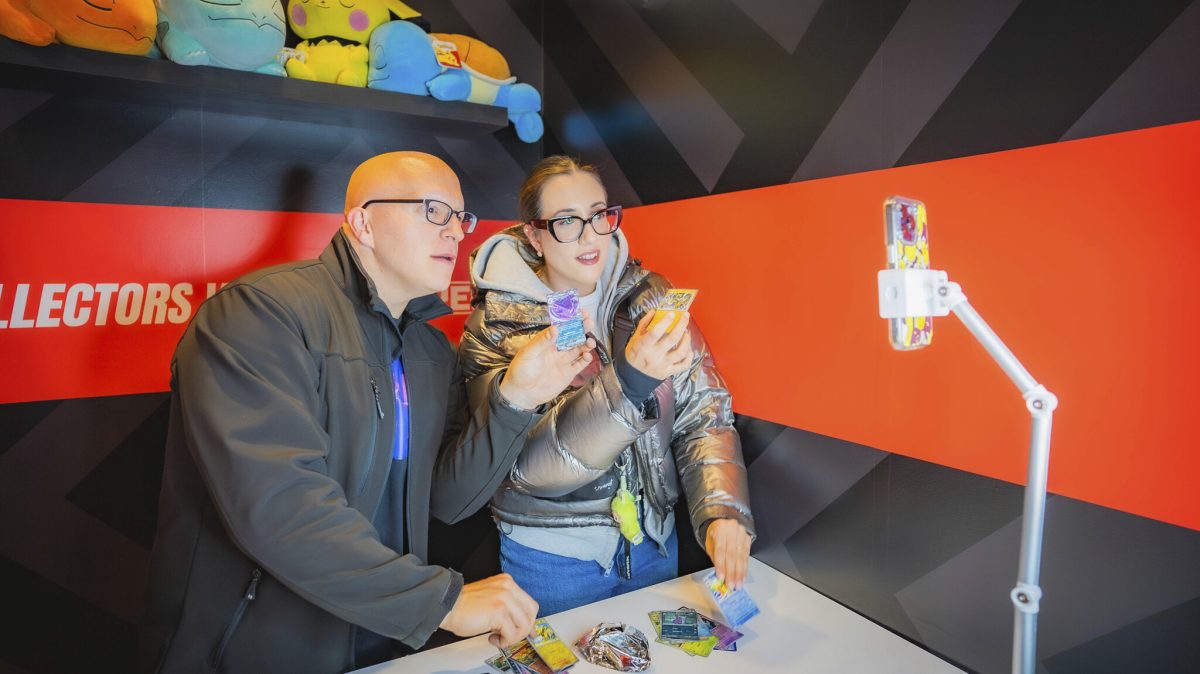
The Live Pack Break Zone – the place to rip, record, and stream your pulls for all to see
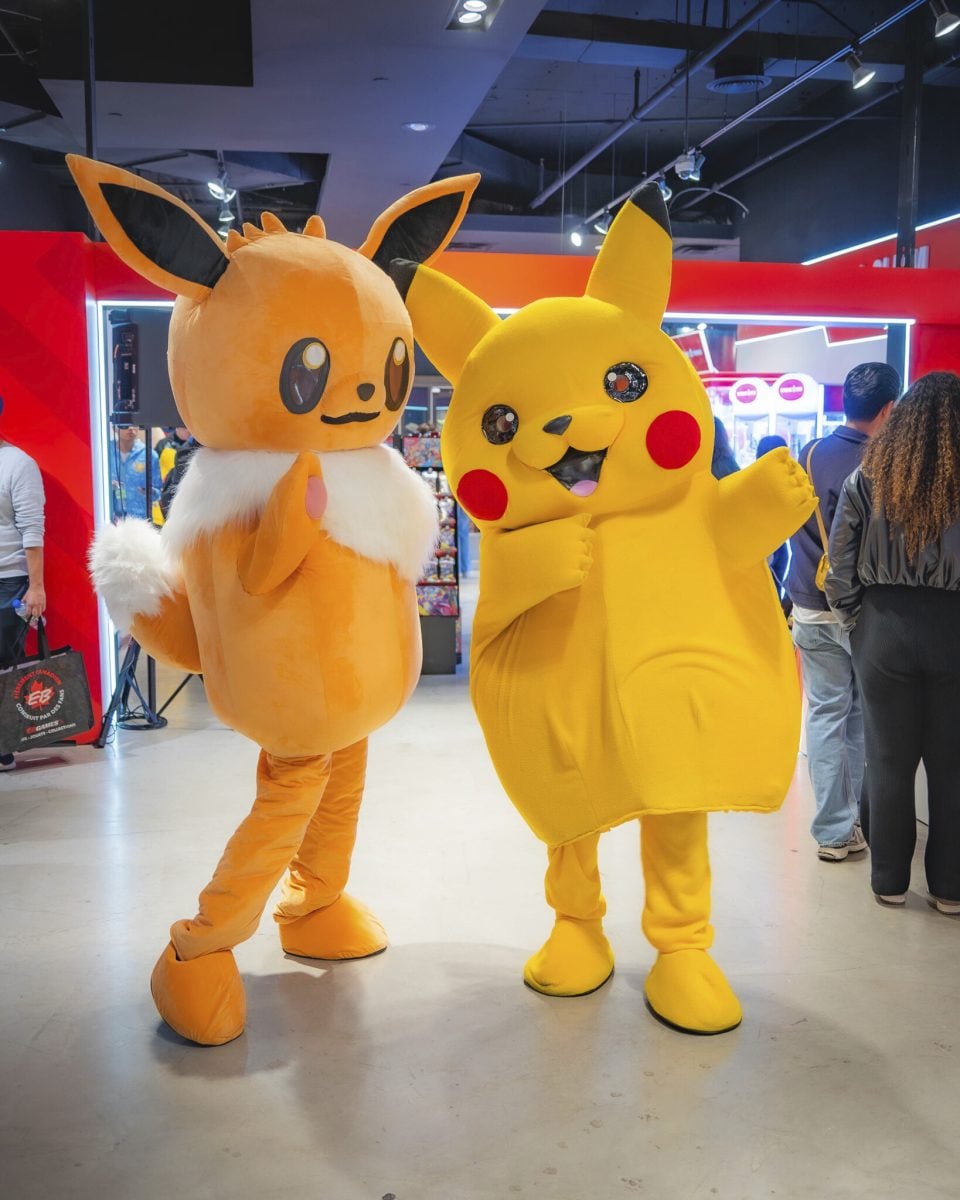
Live Pokémon characters – and cosplayers for eye-catching photo opps
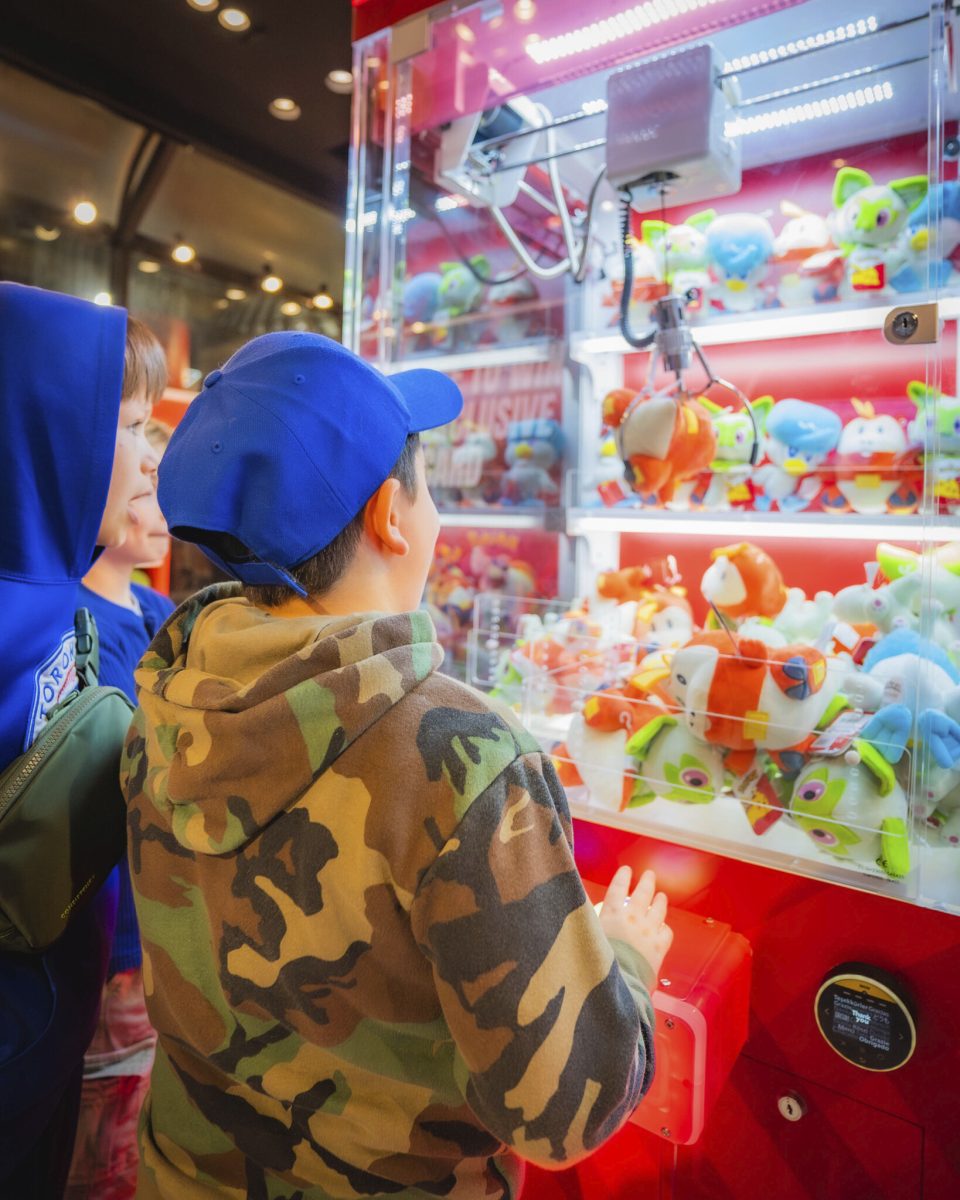
The Claw Machine – the ultimate plushie grab
Jim Tyo
Jim Tyo, President of EB Games Canada, said the Collectors Vault by EB Trends was inspired by a fundamental shift in how Canadians engage with gaming, pop culture, and collectible worlds.
“This store is a reflection of the evolution of fandom culture with design-led spaces they can explore, connect, and fully immerse themselves in with real-world experiences that are exciting and memorable,” he explained.
“This concept for the Collectors Vault was created from a shared ambition between EB Games and Vibrant Marketing to redefine what fan-focused retail can be. Vibrant Marketing brought deep expertise in immersive cultural experiences, and EB Games contributed decades of leadership in understanding what fans look for from specialty retail. Together, we saw an opportunity to build a flexible model that could spotlight whatever worlds or franchises are capturing the public’s imagination at any moment — which is exactly what the ‘Trends’ name represents.
“The Collectors Vault is the first expression of this approach, and the overwhelming response reinforces how powerful it is when you build a destination truly shaped by what fans are excited about.”
Tyo said the company is seeing a remarkable shift in how people approach collectibles.
“For some, these items hold deep personal nostalgia; for others, they represent long-term value and a growing cultural currency. Our goal is to serve both — to honour the emotional connection veteran fans have with these properties while creating an environment that feels exciting, accessible, and relevant for a new generation discovering them for the first time,” he said.
Photo: EB Trends
“The Collectors Vault reflects that balance. We’ve curated premium, high-demand products that serious collectors actively seek, while also designing experiences that invite younger fans into the world of collecting — from live pack-breaks to interactive installations and exclusive drops that spark discovery. Through the EB Trends model, we can continually adapt to the fandoms and cultural movements resonating most strongly, ensuring we’re meeting collectors where they are today and where they’re headed next.”
Tyo said what keeps the brand passionate is the same thing that keeps fans passionate: the sense of connection these worlds create.
“Collecting and competing have always been about more than the items themselves — they’re about the stories, the shared excitement, and the feeling of belonging to a community that spans generations. When you see fans trading tips in line, cheering during a pack-break, or celebrating a plushie grab from the giant claw, it’s a reminder of why this culture endures,” he noted.
Photo: EB Trends
“That energy is what motivates us to keep building spaces like the Collectors Vault. It’s a privilege to help create moments where creativity, competition, and community come together in ways that feel as fresh and inspiring today as they did decades ago. Seeing that passion continue — and grow — is what keeps us invested in delivering experiences worthy of the fans who make this culture what it is.”
Tyo said what younger players gain from Pokémon and the collecting culture goes far beyond the cards themselves.
“These worlds teach strategy, patience, and problem-solving — but just as importantly, they teach confidence. When kids trade, build decks, or hunt for a rare card, they’re learning how to make decisions, express themselves, and engage with others in a community that celebrates curiosity and creativity,” he noted.
Photo: EB Trends
“There’s also a social dimension that’s incredibly meaningful. Collecting introduces younger fans to shared traditions. It gives them a sense of belonging and connection that’s increasingly rare in a digital world whether that’s opening packs with friends, learning from older players, or celebrating small wins together. That’s why we’re building spaces like the Collectors Vault — places where those moments can happen in real life, where younger players can experience the thrill, the learning, and the community that have always been at the heart of fandom.”
Tyo said what makes Pokémon so special for families is that it creates a shared language across generations.
Photo: EB Trends
“Parents who grew up with the franchise are now introducing it to their kids, and that continuity builds a connection that feels both nostalgic and completely new at the same time,” he shared.
“Collecting or competing as a family deepens that bond. It encourages collaboration, friendly rivalry, and a sense of teamwork — and it gives everyone a role to play, regardless of age or experience level. Those shared experiences are what make this world so enduring. When families come into the Collectors Vault, you can see how these moments bring them closer, and that’s exactly the type of connection we want to support and celebrate.”
Rachelle Wintzen, founder of Chi Junky, Toronto’s first full-service, music-forward movement studio, launched her business in 2014, long before boutique wellness evolved into the premium category it is today.
Over the past 12 years, she’s built one of Toronto’s most enduring studio brands – and a model that has influenced some of the city’s biggest players.
Her approach to hyper-curated, white-glove movement experiences set a new standard in the industry, which ultimately led Sweat + Tonic to bring her on pre-launch to design their full-service model and movement programming.
“After almost 10 years living in New York and finding so much inspiration there with the level of customer service, creativity of brands, and offerings I used much of that to inspire Chi Junky. When I moved back to Toronto and spent two years studying the Toronto marketplace, I went to almost every single studio in the city. I studied the experience as a customer, what worked, what didn’t and how I could use what I experienced in NYC and Toronto to create Chi Junky,” explained Wintzen.
Rachelle Wintzen
“The problem I tried to solve in the marketplace stemmed from my own personal struggle (which is the same for many), which was the challenge of trying to get to a class, leaving the house for a long day ahead carrying your gym bag, work bag, yoga mat, water bottle and more. If you forgot your mat it was make or break if I got to the class or not or pay the rental fee for a less desirable rental mat. At the time I was also teaching in home private classes, a service that is a luxury experience and a barrier for most people. That is when the idea for Chi Junky came to me.
“Chi Junky started as a semi-private full service studio that had no more than four people in a class for that individual attention and luxury full service experience. I provided alkaline water, tea service, mats, props and towels all for $25 a person! I wanted to offer a premium experience but at the same competitive price of a standard class drop in fee, I felt strongly that money should not be the breaking point that prevents someone from getting to experience a luxury service. The goal was to make it as easy as possible to get to a class.”
Wintzen said it is hard to believe it has been 12 years, from the humble beginnings of a 150-square-foot room that fit four mats, being a one-woman-show to what the studio has become today – a team of 40 strong and 4,000-square-foot space.
“I never thought the studio would become what it has. I attribute the 12-year success to many things. For one, I never settle. I am constantly seeking ways to improve, innovate and raise the bar within Chi Junky. I am always seeking inspiration not just from within my own industry but a lot from my background which was high end hospitality. I worked in that industry in NYC for almost a decade and that taught me so much and are the principles that I use to drive Chi Junky to this day.
“12 years later you will still find me cleaning the mats, folding our blankets crisply, ensuring I know the names of our members, curating experiences that stem far beyond a typical class and always looking for ways to innovate. I have my hand on everything within the business almost to a fault. Many would say I need to delegate way more but I truly believe that the high level that Chi Junky operates is because I am invested heavily in the small day-to-day details. I also cannot take all the credit, my team is exceptional and they also care deeply about the studio. We love to care for people and while it is a movement studio, we are all in the business of hospitality and customer service first and foremost.”
Rachelle Wintzen
From day one the vision for Chi Junky was to create a space that felt like a home away from home, noted Wintzen.
“This concept remains the same today, all you have to do is show up and let us take care of the rest. I mean that literally. I never enjoyed schlepping everything I needed for a class all over the city. So I changed that and created the first full service studio. When you come to Chi Junky you just need to show up. There is alkaline water on tap with glasses available so you don’t need to bring that clunky water bottle, towels, mats and all the props you need for each class meticulously laid out for you.
“Each of our signature classes has its own prop – styled set up for you and the best part at the end of each class you just get to get up and leave everything there for us to clean up. This is intentional so you can stay in your post class zen state and not worry about cleaning a mat, putting props away and you can just get on with your day. You can even leave your towel on the floor and we will take care of that for you too. We aim to offer a full-service five-star experience from top to bottom.
“All of our props are premium with lululemon mats and plush props from b,halfmoon. Over the years I have found ways to keep improving the full service experience. We have a manual for how we fold every towel in the building from the restrooms to the sweat towels in the studio. The attention to detail and intention behind every small detail is what makes the Chi Junky experience what it is. Down to folding each blanket perfectly, the Chi Junky way, yes there is a Chi Junky blanket folding method too. Each prop is placed in a certain way to create a visually stunning room to walk into which immediately creates a sense of calm.”
Wintzen said she proudly opened and operated the Chi Junky studio at Sweat and Tonic with large success within its first location in 2019.
Photo: Chi Junky
“Since my departure, the Chi Junky full-service experience continues to live on at Sweat and Tonic within all locations. When I first started the concept of full-service in the industry 12 years ago this was unheard of, but now I see this becoming almost an expectation within the high-end boutique fitness space. Pre-pandemic we started to see more high end brands start to enter the marketplace however the pandemic heartbreakingly flatlined a lot of studios,” she said.
“We are now seeing a boom in the industry that we have never seen before. More and more premium fitness brands are opening multiple locations and what is really exciting is that for the first time these brands are entering the New York marketplace, which used to be the other way around. Toronto has significantly leveled up the experience and is exploding right now. There is a welcome trend right now of leaning more into wellness as a social outlet where people are looking to adopt a healthier lifestyle and spend their time socializing less and less over drinks and more in the wellness space.
“Places like Chi Junky become where you go to socialize in a healthy way and become the third space, the third most important place in your life you spend the most time, with home as number one, followed by work and then the third space, your wellness space.”
Photo: Chi Junky
As the boutique fitness space becomes more crowded, what advice would she give to founders trying to build a wellness brand with true staying power?
“Stay true to your intention, values and integrity. Lean into what your unique offering is and never settle. Once you find your concept that sticks, keep innovating and raising the bar within your own offering,” she said.
“Never stay too long in something comfortable, live in the discomfort of always striving to do better. Even if your space doesn’t have all the bells and whistles or deep pockets, get really resourceful, get scrappy (that is true entrepreneurship), and never compromise on exceptional customer service. Above all invest heavily in taking care of your community, they are what will give you staying power against all odds.”
Credit cards may be one of the most common ways Canadians pay for everyday expenses, but new research from Affirm shows the terms and conditions behind them are among some of the most confusing everyday documents Canadians encounter.
According to a national survey of 1,501 Canadians, only 41% ranked credit card terms and conditions among the top three easiest documents to understand, compared to 72% for medication labels, 69% for furniture assembly manuals, and 42% for tax forms, said the company.
This confusion is costing people money. Nearly three in five (59%) Canadians say hidden or unexpected credit card fees have derailed their ability to budget, with more than one in three (36%) saying it happens at least occasionally, it added.
Wayne Pommen
“Fairness and transparency should be the standard for every Canadian using credit,” said Wayne Pommen, Chief Revenue Officer at Affirm. “For too long, people have been accepting confusing terms and unexpected fees as part of the deal. Canadians deserve better, and that means financial tools built around clarity and trust, not surprises. Transparent, predictable payment options are proving that a better path is not only possible, it already exists.”
For decades, credit cards have been seen as a convenient financial tool, garnering 98% familiarity with Canadians, explained Affirm. However, it said new data paints a different picture, revealing a growing disconnect between how Canadians think about credit cards and how they actually impact their finances.
Photo: Mikhail Nilov
“Rewards and points remain a top motivator for using credit cards (65%). But as financial pressures mount, many Canadians are also carrying balances — with the Bank of Canada reporting that roughly half of cardholders carry a balance for at least two consecutive months. These fees and compounding interest charges can add up quickly, leaving people feeling trapped in cycles of debt,” explained Affirm.
“As the holidays approach, many Canadians are seeking greater clarity from their favorite payment methods. More than one-third of (36%) Canadians say credit cards don’t actually reflect their financial realities.”
The Adelaide Club, Toronto’s original premium athletic club, has unveiled The Retreat, a new state-of-the-art recovery space designed to help members recover, reset, and restore.
The company said the launch marks a new era for the Club, coinciding with its refreshed brand identity, campaign “Together I Grow,” and an all-new website experience.
Nestled within the Club’s downtown space located at First Canadian Place, The Retreat redefines recovery as an essential part of performance. Warm, calming, and entirely dedicated to restoration, it invites members to move better, feel better, and live better—whether they’re athletes, professionals, or simply looking to recharge, it said.
Photo: The Adelaide Club
“Our members push hard—in sport, in business, in life,” said Clive Caldwell, CEO of the Adelaide Club. “The Retreat was built to help them recover with the same purpose they bring to everything else. It’s a place where performance meets peace.”
Inside The Retreat, members will experience leading-edge technology that blends innovation with tranquility:
● HydroMassage Beds (440 G3 Lounge): Heated water massage that eases soreness, improves circulation, and melts away stress—no change ofclothes, no getting wet.
● Hyperice Recovery – Normatec: Air compression therapy trusted by elite athletes to enhance mobility, boost recovery, and reduce soreness.
● PEMF Therapy Mat: Pulsed Electromagnetic Field technology to relieve pain, reduce inflammation, and support natural healing.
● Additional tools: Percussion massage devices, stretching and mobility equipment, ambient lighting, and soothing music complete the experience.
The brand said access to The Retreat is included in all Adelaide Club memberships, reinforcing the Club’s commitment to integrated wellness.
HydroMassage sessions can be booked through the Adelaide Club app, while all other recovery tools are available on a first-come, first-served basis during regular Club hours.
Photo: The Adelaide Club
“The unveiling of The Retreat comes alongside the launch of the Club’s new campaign, “Together I Grow,” celebrating the community, connection, and shared progress. The refreshed visual identity and new website reflect this evolution, uniting performance, recovery, and belonging under one cohesive brand,” said the company.
“This next chapter is about growth—personal, physical, and collective,” said Caldwell. “We’re not just a club where you train; we’re a place where you grow, together.”
The holidays are fast approaching and the shopping season is officially in full force. *cue the Christmas music on repeat*
Shoppers are back in action, looking for the best deals and coveted holiday gifts – and now more than ever are looking for the most value when navigating gift giving this season. But how exactly are consumers deciding what and where are “worth” their highly coveted time and money when finding that perfect gift?
Megan Buchite
Online to Offline:
With Black Friday & Cyber Monday leading the way, shopping online to accomplish holiday gifting needs has become increasingly more popular over the last decade. But this year we are starting to see an interesting shift in that trend. Salesforce projected online spending between November 1 and December 31 to rise 2.1% this year, lower than the 4% increase in 2024. While many turn to online shopping for ease of access, conveniences and of course to get the best price for highly sought after items, others just begin their shopping journey online, but it doesn’t end there. Many shoppers begin their journeys online by researching and comparing product offerings. But we’re not just seeing a traditional search through Google anymore, we’re seeing younger generations shifting their discovery and research for new and trending products to social media and AI technology at increasing rates.
Price conscious consumers are taking notice of the online processes that can add to their total costs like shipping fees, purchase minimums and return fees – adding hassle to a process where shoppers are already trusting what they see online is what they get. When value is most important, being able to do an in-person, quality check of a product is now bringing more people in store to see the products they’ve researched online. In-store shopping allows for shoppers to see, feel and even sometimes sample a product before committing their cash to it. For the first time in years, PwC reports that 53% of consumers plan to do their holiday shopping in physical stores, tipping things back to the brick and mortar side of the scale.
Experience AND Tradition:
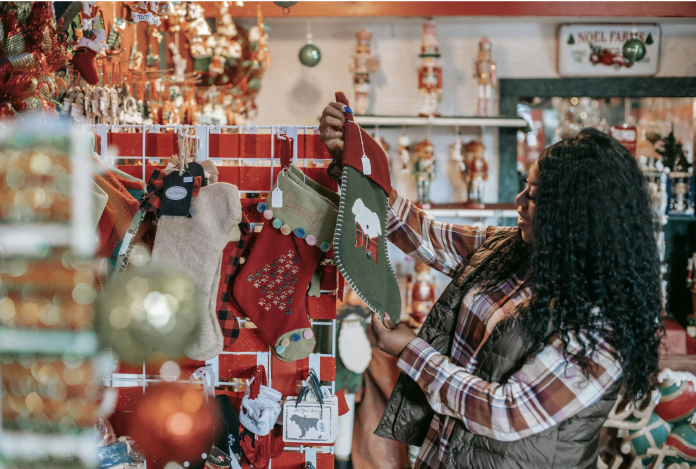
The holiday season brings a unique ambience different from any other shopping season. In-store holiday experiences bring more interaction and tradition, creating moments full of emotion and connection within the buying process.
Window shopping through the mall on your way to visit Santa. Strolling the local downtown shops to see the light displays. The ‘holiday spirit’ primes people to be more in the mood to treat themselves and others. Retailers build an advantage in this spirited momentum, drawing shoppers into store fronts and further creating those memorable experiences and traditions that can be shared with friends and family as shoppers continue their buying journey.
What Does This Mean For Advertisers?
For advertisers, it’s about meeting in the middle. It’s now more important than ever to bring a strong media mix that is an accurate representation of what customers can expect to find from you both on and offline. You want to be along for the full ride of your customers’ buying journey from the product discovery on TikTok, to the online research on Reddit to the promotional and branded experience in store. Media professionals should also be strategic and mindful that the trend for in-store purchasing is on the rise. With shoppers returning to a more “traditional” form of shopping there is a great opportunity to meet them on the road and in the store with more traditional channels for messaging such as radio and OOH.
Photo: Leeloo The First
Advertisers should plan holiday campaigns that utilize an omni-channel approach to best meet customers where they are along their journey. Shaping messaging and creative that emphasizes not only product value but builds loyalty and sentiment through creating memories and sharing experiences to their customers now and into the new year.
Megan is an Integrated Media Planner at True Media. Megan is a curious and creative marketing professional who enjoys continually learning about the ever changing media and marketing landscape as well as diving into and learning about her client’s industries.
Retail Insider is streamlining its Canadian retail news from around the web to include a handful of top news stories that can be viewed quickly during the day. Here are the top stories from the past 48 hours.
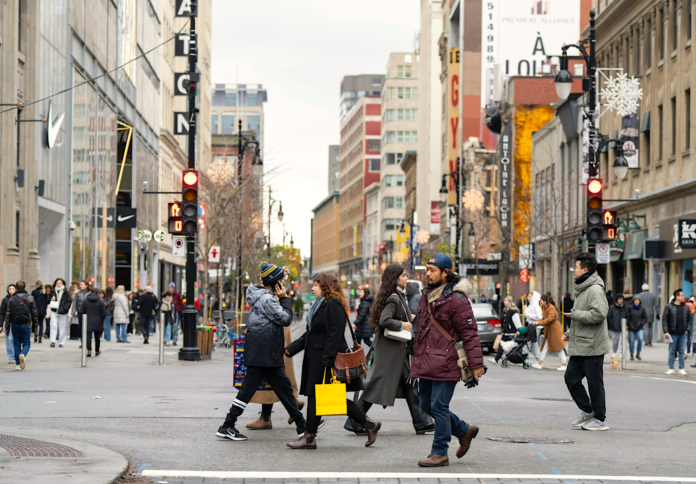
Shoppers on Sainte-Catherine Street take advantage of deals on Black Friday in Montréal on Nov. 29, 2024. THE CANADIAN PRESS/Christinne Muschi
Canadian retailers saw meaningful gains over Black Friday 2025, according to new Salesforce data shared with Retail Insider on Saturday. The figures point to a solid start to the holiday season, although analysts caution that the lift came with signs of growing financial strain on consumers.
Online and in-store spending on Black Friday reached an estimated $865 million in Canada, which marked a 6 percent increase compared to last year. The results reflect steady demand, rising discount activity, and the growing role of artificial intelligence in how Canadians shop. Average discounting reached twenty eight percent, slightly higher than the twenty seven percent seen last year, contributing to higher conversion rates across several categories.
Buy Now, Pay Later Surges as Shoppers Seek Flexibility
Caila Schwartz, Director of Consumer Insights at Salesforce, said the topline growth demonstrates a resilient shopper, but one increasingly reliant on flexible payment options. She noted that the share of Buy Now, Pay Later transactions climbed from two point eight percent a year ago to more than five percent this Black Friday.
Caila Schwartz
Schwartz said this was a clear indication that many Canadians are depending on installment plans to manage holiday spending, with retailers leaning into aggressive promotions to capture that demand.
Payment preferences also continue to change in ways that suggest consumers are searching for flexibility. Aside from the sharp rise in Buy Now, Pay Later activity, mobile wallet usage grew to eighteen percent from sixteen percent last year. Both trends came at the expense of traditional credit and debit transactions, which fell from eighty percent of sales last year to seventy five percent this year.
AI-Driven Search Plays a Growing Role in Discovery
Alongside those shifts in payment behaviour, the role of AI has expanded rapidly. Salesforce reported that Black Friday AI-search-referred traffic in Canada increased fivefold compared to last year. The company said one hundred and seventy three million dollars in Canadian online purchases were influenced by AI and digital agents on Friday alone. Schwartz said AI has moved beyond being a helpful enhancement to becoming a key driver of product discovery for both retailers and consumers. She added that conversion rates originating from AI-powered search tools were four times higher than those from social channels, suggesting that shoppers are increasingly using AI to narrow choices and find value more efficiently.
Traffic patterns continue to evolve across platforms. Social media’s share of Black Friday traffic fell slightly to twelve percent from thirteen percent last year. Mobile traffic also dipped to seventy four percent from seventy five percent, although mobile ordering grew to sixty percent from fifty seven percent, which shows that shoppers are still comfortable completing purchases on their phones even if browsing patterns are shifting.
Outlook Heading Into Cyber Monday/Cyber Week in December
While the Canadian consumer remains active heading into December, the data suggests that retailers will need to monitor how shoppers respond to ongoing economic pressures throughout the final weeks of the holiday season. Retail Insider will provide further updates as Cyber Monday and early December numbers become available.
A shopping trip is usually routine, but when a dog bite occurs inside a business the situation becomes far more complicated and many injured customers begin wondering one question: are retail stores liable for dog bites? While dog owners are most often held responsible, there are situations where a store itself may also be legally accountable. Understanding how liability works inside a retail environment can help victims and business owners know what to expect after an incident.
General Responsibility for a Dog Bite
In most cases the primary liability falls on the dog’s owner. Many states hold owners responsible even if the dog had never shown signs of aggression before. Although the owner is usually the first party named in a claim, the location of the bite can make a significant difference. A bite that happens indoors during normal business hours raises questions about property safety and whether the store should have taken steps to prevent the injury.
A retail store is not automatically liable for every dog related injury on its premises. Instead, the core factor is negligence. If the business failed to act reasonably to protect customers, ignored visible warning signs, or created an environment where an attack was more likely, liability could extend beyond the dog owner.
When a Store Might Share Liability
A store may be considered partially responsible if employees were aware of the dog and had reason to believe it posed a danger yet took no action. For example, if staff observed the dog growling, pulling away from its handler, or snapping at passersby but continued to allow it in the public space, the store may be seen as contributing to unsafe conditions.
Liability may also exist when stores permit pets inside without implementing policies intended to maintain safety. A retailer that advertises itself as pet friendly but fails to require leashes or provide clear behavior rules is more exposed to legal claims. This is especially true if management previously received complaints or witnessed concerning behavior from a specific animal.
Dog Friendly Stores Face Higher Risk
Pet supply stores, grooming salons, home improvement chains, and any retail setting that openly welcomes animals must take greater precautions. Because dogs are expected inside these environments, customers reasonably assume the business has taken steps to ensure safety. A store in this category may need to enforce leash requirements, maintain animal free lanes, limit crowding, and separate animals that appear stressed.
If a bite occurs because a business did not respond to escalating tension between dogs or failed to train employees on how to handle animal incidents, the injured person may have grounds to pursue a claim. The more a store encourages dogs inside, the greater its duty to prevent harm.
When the Dog Belongs to the Store
Liability becomes even more direct when the store itself owns the dog. A guard dog, a resident shop pet, or even a friendly greeter animal is under the business’s control. If that dog bites a customer, the store cannot shift responsibility to an outside party. In these cases the business may be treated much like any dog owner and can be held accountable for injuries and damages.
Conclusion
Retail stores are not automatically at fault every time a bite occurs inside their walls. Most often the dog’s owner carries responsibility, yet a business may also face liability if it ignored warning signs, allowed unsafe conditions, or owned the dog directly. Every case turns on the facts, and determining fault depends on whether the store exercised reasonable care to protect those who walked through its doors.
Generation Z, also commonly referred to as Zoomers, is the demographic cohort born between the mid-to-late 90s and the early 2010s. The majority are the children of Gen X, born between the mid-60s and the late 70s, and it is expected that many will be the parents of Generation Beta, the cohort born between 2025 and 2039. Gen Z were the first to grow up with technology as an established commodity, with the majority having had access to online videos and content since they were young, while many of them played online games such as Minecraft and Club Penguin as well. They were dubbed the “digital natives”, but many of them end up struggling in digital workplaces.
Gen Z has been described as less hedonistic on average than the generations that preceded them, consuming less alcohol and being more focused on school and job prospects. They are better at delaying gratification compared to teenagers who lived in the 60s, have greater awareness when it comes to mental health issues, but are also dealing with the negative effects of excessive screen time and sleep deprivation. Generation Alpha are the children and teenagers born between the early 2010s and the mid-2020s. They are the first group that has never experienced a world without smartphones and social media.
They also experienced the effects of the pandemic as young children, and many of them have been defined by their perceived addiction to screens, earning them the somewhat pejorative nickname “iPad kids”. Streaming, social media, and portable digital technology have increasingly dominated children’s entertainment in the 2020s, while some studies suggest that obesity and allergies have also become increasingly prevalent since the late 2010s. As these generations come of age, studies and research begin to focus on their shopping habits and the ways in which they want to spend their money, as well as the manner in which their choice makes them different from Millennials, Gen Xers, and Baby Boomers.
Nostalgia is a big deal for Gen Z. Many of them seem to yearn for a time when they weren’t even born, an idealized era when today’s challenges and complex pressures (including the looming threat of climate change that is paired with economic struggles and the rise of technologies such as AI) either didn’t exist or weren’t so pressing. 80s and 90s styles are popular among the Zoomers, but the enduring trend is for 2000s styles, many of them dating back to the days when Gen Z members were young children themselves, and therefore more carefree.
You may have noticed a lot of Harry Potter, Lego, and Miffy references on clothing and accessories. Early 2000s Disney is also a source of comfort for many. The renewed popularity of Lilo and Stitch following the 2025 remake of the 2002 classic animation led many to want to add some cute items to their wardrobes, such as mini backpacks, crossbody bags, pins, and t-shirts. This nostalgia also extends to capturing personal memories, with many turning to photo books as a creative way to preserve favorite moments and aesthetic snapshots from their childhood and teen years. After all, who doesn’t love Lilo and Stitch? Buying apparel depicting these characters as a young adult is a fairly new phenomenon, and one that shows Zoomers are prepared to spend money on things that make them happy.
Algorithms
Online shopping has become increasingly popular since the days of the pandemic, and the younger generations love the accessibility and wide range of options it provides. About 50% of the Gen Z respondents who participated in a recent study revealed that online algorithms based on their preferences had a positive impact on their shopping experiences. Consuming more content allows their algorithms to become increasingly personalized so that they come in contact with even more items, creating a symbiotic cycle. Younger shoppers also report that they’re quite likely to purchase the goods recommended by their algorithms, in contrast with Millennials and Gen X.
However, some have also become increasingly aware of the fact that algorithms can lure them into compulsive shopping, especially since social media posts create the impression that you absolutely need and want an item that you end up not being that keen on after it is delivered. The fear of missing out is also a huge driver for many, but those who are interested in sustainability also point out that excessive shopping can impact the environment (through the creation of excessive waste and emissions), financial well-being, and the concept of personal style itself, as everyone seeks to replicate a certain look instead of branching out.
The landmark generation
Born exclusively in the 21st generation, Gen Alpha is known as the landmark generation. However, researchers have noted that there are few retail spaces dedicated exclusively to them. This is odd since they’re expected to be the largest generation in history, with more than 2 billion people born between 2010 and 2024. Many of them went directly for grown-up brands like Lululemon, Sephora, Target, and Walmart. The influence of their Millennial parents is felt here, as these are the brands that Generation Y are known to love and enjoy.
The younger Gen Alpha kids, whose parents still shop for them, end up with products for which their parents did quite a lot of research beforehand. The nostalgia factor is important here as well, with Nintendo, Disney, Lego, and Fisher-Price being among the favorites. Apple and Amazon are also among the generation’s favorites, also because of their parents. Most of those who have Gen Alpha kids, approximately 60% according to recent data, say that their children consume shopping content online. The kids themselves are guided by the influencers they follow in about 30% of cases, fueling the interest companies show for influencer partnerships.
To sum up, while Gen Z and Gen Alpha are just entering the world of retail shopping, with the latter still having their parents shop for them more often than not due to their young ages, analysts and experts have already recorded the presence of several trends and specific approaches that they have. To remain competitive, business owners will have to come up with strategies that attract these demographics, but focusing on sustainability and avoiding shopping for items you don’t need and don’t even want in the long term needs to become more important as well.