Advertisement
Advertisement
Home Blog Page 5

Canadian retail resets as 17 million square feet returns to market

Londonderry Mall. Photo: Mario Toneguzzi

Canada’s retail market is resetting as 17 million square feet of space returns to market while consumer demand remains intact, according to Cushman & Wakefield’s Global Cities Retail Guide 2026: Canada. 

The report said a major driver of this shift is the closure of Hudson’s Bay Company and its associated retail brands, which has brought back approximately 17 million square feet of space. 

This marks one of the largest single increases in availability in recent years and is expected to drive a new cycle of leasing, backfilling and repositioning, according to the report. 

Despite this, demand has held. Seasonally adjusted retail sales rose 4.4% year-over-year through November 2025, with discretionary categories continuing to outperform, it said.

“Canada’s retail market is moving through a supply-led reset, but demand has not broken,” said Cameron Martin, Cushman & Wakefield Research Manager, Canadian Markets. “Large blocks of space have returned to the market, creating a more complex leasing environment where performance will diverge more clearly by location and format.” 

Cameron Martin
Cameron Martin

That divergence is most visible in food and beverage, which has become a primary driver of retail traffic and leasing activity across major markets, he said. 

“Food and beverage is the clearest signal of where demand is going,” said Martin. “Consumers are still spending, but they are prioritizing experience, frequency and value. That is driving expansion in quick-service and premium casual formats, while full-service operators are adjusting to tighter margins and more selective demand.” 

According to the report, nationally, rising costs are reinforcing that shift. Food inflation reached 6.2% year-over-year in December 2025, with restaurant prices up 8.5%, placing pressure on full-service operators and accelerating demand toward more price-conscious formats. 

The report said 2026 is expected to mark a normalization phase for the sector. Slower population growth tied to reduced immigration targets, alongside a cooling labour market, is likely to moderate the pace of expansion. 

“2026 is not a contraction year. It is a normalization phase,” added Martin. “Growth continues, but it becomes more disciplined. Retailers are more selective, operators are more cautious, and landlords will need to work harder to reposition space that no longer fits the market.” 

Former Hudson’s Bay at 44 Bloor St. E. in Toronto, February 23, 2022. Photo: Dustin Fuhs

Toronto: Food and Beverage Leads New Openings as Demand Remains Strong 

Cushman & Wakefield said Toronto continues to anchor national retail performance, supported by a large, diverse population and sustained tourism. The market generates approximately $11.5 billion in monthly retail sales, underscoring the depth of its consumer base.

“Food and beverage remains one of the strongest drivers of activity, accounting for a significant share of new openings and consistently outperforming traditional retail categories. Growth is increasingly tied to mixed-use and neighbourhood retail, reflecting a market that is distributed across multiple high-performing corridors rather than a single dominant core,” it said. 

“At the same time, post-pandemic pressures are driving more selective expansion, with operators focusing on fewer, higher-quality locations and reinforcing a more balanced tenant-landlord dynamic across the market.”

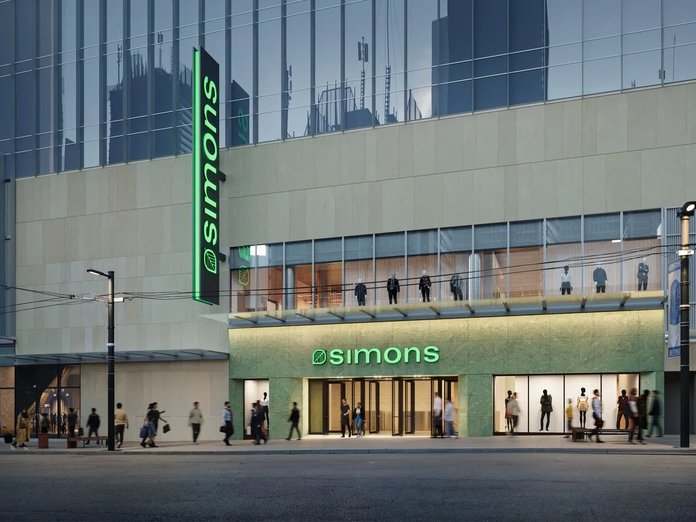
Rendering of Simons’ future store at CF Pacific Centre in downtown Vancouver, scheduled to open in Fall 2027 (Granville Street entrance). (CNW Group/La Maison Simons)

Vancouver: Dining and Premium Retail Concentrated in High-Traffic Urban Corridors 

Cushman & Wakefield said Vancouver remains one of the most competitive retail markets in North America, supported by strong tourism, high incomes and limited new supply. 

“Food and beverage plays a central role in retail performance, acting as a primary driver of foot traffic across high streets, mixed-use districts and neighbourhood retail nodes. Demand continues to concentrate in premium casual, health-focused and experiential concepts that align with the city’s walkable neighbourhoods,” it said.

“Retail and dining are increasingly integrated within new developments. Projects such as Oakridge Park, which will include a 51,000-square-foot curated food hall, reflect a broader shift toward experience-led retail environments.”

More from Retail Insider:

Calgary fashion-tech startup Prévoir expands AI-powered Shopify merchandising platform

Courtney Kos
Courtney Kos

Prévoir, a Canadian fashion-tech startup, recently closed its pre-seed funding round as it continues to onboard more Canadian and US retailers onto its platform.

Calgary-based founder, Courtney Kos, launched the AI-powered merchandising platform that connects directly to Shopify with a launch  in the app store late last year, allowing brands to download directly from Shopify.

It extracts detailed product attributes from a brand’s product images, such as colour and fabric, and pairs them with sales data to reveal which styles and design elements perform best. The result is a visual, interactive tool that helps merchandisers make faster, smarter decisions, and at a lower cost. 

For a fashion brand, it enables their team to quickly determine what to reorder, mark down, rebalance, or create across pre-season planning, in-season trading and post-season learning.

Many retailers aren’t lacking data, but are still making assortment decisions manually or based on instinct. What’s changing is the ability to quickly understand which product attributes are actually driving sell-through, and act on that much faster.

“The name is French. It means to predict in French. I tried to pick a name that sounded elevated and lends itself well to fashion, but also could apply to other verticals at some point if we ever wanted to expand the business into, say, for example, the beauty industry or something like that. So I wanted it to sound fashionable, but not too niche,” explained Kos.

“So Prévoir is an app that helps fashion merchandisers who need clear insights on product performance by analyzing and augmenting their sales data using AI. And we present it in very fashion-specific workflows.

“We’re helping fashion merchandisers make faster and better-informed decisions . . . There are many ways that you can integrate AI into a fashion business. The way that we do it is we’re helping fashion brands use data that they already have and augmenting it with AI. So we take their sales data, which they already have and already own in their Shopify system. We partner with brands that are within Shopify, and then what we do is we basically use AI to look at it and we pull attributes.”

Courtney Kos
Courtney Kos

Kos said the data is able to tell merchandisers what kinds of attributes perform best for them and what kinds of attributes they should maybe stay away from so that they can help plan better for the future whether that’s designing new products or buying products if you’re a multi-brand type of business.

Kos said the recent pre-seed funding raised $750,000. The company has also raised some grant money as well, including a $50,000 grant from Alberta Innovates. 

“We’re using it primarily on people to build the app or continue refining what we’ve already built. We have a software team. It’s also going to help us get better access to our market. We’ve tested a lot of the ways that we can reach out to our market to let them know what Prévoir is and how it can help them,” added Kos.

“We have a good idea of how to reach them and things that work well and things that don’t work well. What we’ve found works really well is having us in person actually spending time with fashion brands. It’s much more useful for me to go to markets like New York or LA and spend time with fashion brands, host events there, or attend events, as opposed to running a LinkedIn campaign, for example. That doesn’t really get us anywhere.

So it’s really about continuing to build a better app, because these products are never done. You’re always building and making them better than they were yesterday, and just getting out to our market and building the business.

Courtney Kos
Courtney Kos

A few years ago, Kos had a small store on 17th Ave. SW, in Calgary selling wedding gowns and evening dresses. She experienced firsthand just how hard it is to manage inventory for a fashion company. That is the primary struggle that just never seems to get easier.

“Back then, I lived that firsthand and started to wonder if there would be a better way to use internal data that you already have to make better buys, to choose better products, and hopefully just make that inventory management easier. So that was a small seed a very long time ago,” she said.

“Then fast forward to 2019 to 2021, I completed my MBA in England, and in my final research dissertation, I focused on data-driven product development for fashion brands. I read a lot of really interesting case studies of how other industries were using data to create better products—whether that’s the film industry. I read some interesting case studies about Nike and Gap, just better utilizing their data and gathering new, interesting data in creative ways to help with product refinement.

“I ended up doing a six-month research project on the topic, with real intentions of creating a business at the time, and that’s clearly what’s happened.”

More from Retail Insider:

Cozey expands global footprint with Australia launch

Photo: Cozey in Calgary

Montreal-based furniture brand Cozey has officially launched its e-commerce business in Australia, opening in a new market and marking its first intercontinental expansion.

Australian consumers can now shop the same collection of products available to Cozey’s customers across Canada and the U.S., underscoring its commitment to making thoughtfully designed home solutions more accessible globally, said the company.

The Australia expansion comes just six years after the company first launched in Canada and follows closely on the heels of its successful U.S. e-commerce debut in 2023. The launch marks the latest milestone in a period of significant growth for the retailer, which has rapidly scaled both its product assortment and physical presence, it said.

Frédéric Aubé, Founder and CEO of Cozey

“We’re incredibly excited to bring Cozey to Australia and introduce our products to a new community of customers,” said Cozey CEO & Founder Frédéric Aubé. “As we looked at where to expand next, Australia emerged as the right choice given how closely it aligns with Canada in terms of customer behaviour and market trends. That similarity gives us strong confidence that our products will resonate while also allowing us to learn from and contribute to the local community as we grow our presence.”

Cozey said it has expanded into new categories with the debut of its bedroom collection and grown SKUs within existing categories, introducing an all-new outdoor collection. Cozey also continues to invest in brick-and-mortar retail across Canada and the United States, opening a permanent store in Calgary and a pop-up in Los Angeles , with permanent store openings planned for Montreal and New York.

“The Australia website will feature all product categories currently available in Canada, apart from mattresses, which will launch later this year. All orders will ship from Cozey’s Sydney-based operations centre, ensuring fast, free delivery across the country and mirroring Cozey’s existing operations across Canada and the U.S.,” it said.

More from Retail Insider:

Grocery Prices Stabilize, but Affordability Remains a Challenge in Canada

Grocery store in Alberta. Photo: Craig Patterson

Canadians are no longer bracing for runaway food inflation, but that doesn’t mean they’ve recovered from it. The latest data from the latest Canadian Food Sentiment Index, produced by Dalhousie University’s Agri-Food Analytics Lab, suggest something more nuanced: the shock of inflation may be fading, but its effects are now deeply embedded in how Canadians live, spend, and eat.

To understand where we are today, we need to look back.

When the first Index was first released in Fall 2024, Canadians were in the thick of a food inflation crisis. At the time, 40.3% of respondents believed food prices had risen by more than 10%, and anxiety was widespread. Food had already emerged as the dominant household concern, with 84.1% of Canadians identifying it as the expense that had increased the most, a staggering figure that set the tone for everything that followed.


Then came a political shift. In March 2025, Mark Carney became Prime Minister, inheriting an economy already under strain, with food affordability at the center of the national conversation. Nearly a year later, Canadians might reasonably ask: are things actually better?

The answer depends on what you measure.

If we look at perceptions of inflation, the situation has improved. By Spring 2026, the share of Canadians who believe food prices rose by more than 10% has dropped to 29.7%, while expectations have stabilized. Today, 30.7% of Canadians expect food inflation to fall between 5% and 7%, and only 18.6% anticipate increases above 10%, down significantly from the previous year.

In that narrow sense, Canadians feel less alarmed.

But feeling less alarmed is not the same as feeling better.

Food remains the top financial concern for Canadians, with 81.1% still identifying it as the expense that has increased the most, only slightly down from 84.1% in 2024. No other category comes close. This persistence tells us something critical: while inflation is moderating, affordability has not improved in any meaningful way.


That reality is reflected in household budgets. Canadians are now spending more on food than they were a year ago, despite all efforts to cut back. Average monthly spending on food at home has climbed to just over $412, up from $396 the year before—an increase of $22.96 per month, or 4.6% year-over-year. At the same time, the share of households spending more than $600 per month on groceries has risen to 20.6%, reinforcing the steady upward drift in food costs.

Yet Canadians are not offsetting these increases by spending more elsewhere. Dining out remains constrained, with the largest share of households still spending $50 or less per month on restaurants and takeout. Households are prioritizing food at home, often at the expense of discretionary spending.

To cope, Canadians have fundamentally changed how they shop.

Inside a Loblaw Grocery Store (Image: Dustin Fuhs)

In Fall 2024, cost-cutting behaviours surged as households scrambled to respond to rising prices. Today, those behaviours have become normalized. According to the Index, 44.4% of Canadians actively seek sales and discounts, while roughly 23% use coupons, 23% shop at cheaper stores, and about 20% cut back on premium foods such as meat or fresh produce. Even alternative strategies are emerging, with 8.5% of Canadians now using food-rescue or surplus apps.

This is no longer crisis behaviour—it is routine behaviour.

And yet, despite all these adjustments, financial strain remains widespread. In Fall 2024, about 34% of Canadians reported drawing from savings or borrowing money to pay for food. That number dipped slightly in 2025, offering a brief sense of relief. But by Spring 2026, it has returned to 34%, unchanged from the peak.

One in three Canadians is still struggling to afford food.

So are Canadians better off today than they were before Mark Carney took office?

If we measure sentiment by panic, the answer is yes, slightly.

If we measure it by financial reality, the answer is no.

Perhaps the most telling shift over the past two years is in how Canadians define value. In Fall 2024, affordability was already important. By Spring 2026, it has become overwhelmingly dominant. Today, 45.5% of Canadians cite affordability as their top food priority, compared to 24.9% for nutrition and roughly 16% for taste.

Everything else—environmental impact, social responsibility, even local sourcing—has taken a back seat.

This helps explain why broader consumer movements are losing momentum. The “Buy Canadian” surge seen in 2025 has already begun to soften. While many Canadians still prefer local products, the data show that cost is once again the overriding factor. Consumers are not abandoning local food—they are being priced out of it.

At the same time, Canadians are becoming more strategic. Grocery shopping frequency now averages 5.23 visits per month, reflecting a shift toward smaller, more frequent trips aimed at controlling spending. Consumers are also paying more attention to product information, with a growing share checking food origins and labels. This is not just awareness—it is optimization under constraint.

The evolution of the Canadian Food Sentiment Index since Fall 2024 tells a clear story. The acute phase of food inflation has passed. But it has been replaced by something more persistent: a prolonged period of affordability stress.

Mark Carney may have inherited this problem, but nearly a year into his tenure, Canadians are still living with it. The numbers suggest that while inflation has cooled, the burden on households has not.

Prices are still rising. Budgets are still stretched. And one in three Canadians is still struggling to afford food.

That is not recovery. That is adaptation under constraint.

If policymakers continue to focus solely on inflation rates, they will miss the deeper issue. The challenge is no longer volatility—it is persistence. Even moderate inflation, sustained over time, erodes purchasing power and forces difficult trade-offs that affect nutrition, health, and food security.

Canadians have shown they can adapt. But adaptation is not the same as resilience—and right now, that resilience is still being tested.

More from Retail Insider:

Cadillac Fairview Dominates Canada’s Top-Performing Shopping Centres

CF Toronto Eaton Centre. Photo: Cadillac Fairview

Cadillac Fairview has emerged as the dominant landlord in Canada’s latest shopping centre productivity rankings, reinforcing its position at the top of the country’s retail real estate sector.

According to newly released data from ICSC, Cadillac Fairview properties account for a significant share of Canada’s highest-performing malls by sales per square foot. The company has seven centres ranked among the top 10 nationally, and 13 within the top 25.

Lillian Tummonds, Senior Vice President of Retail Operations at Cadillac Fairview, says the results reflect both the scale and strength of the company’s portfolio.

Lillian Tummonds

“We own 14 shopping centres across Canada, and 38 percent of Canadians live within a 20-minute drive to one of our shopping centres”, she said in an interview. “That’s a huge driver of traffic to our properties.”

Scale and Market Reach Drive Performance

Cadillac Fairview’s national footprint provides a structural advantage. With assets located in major urban markets and regional hubs, the company is able to capture a large share of Canadian retail demand.

This scale is reflected in the productivity rankings. Centres such as CF Toronto Eaton Centre, CF Pacific Centre, and CF Chinook Centre consistently rank among the country’s top performers, supported by strong tenant demand and high levels of foot traffic.

Tummonds points to accessibility and proximity as key drivers of this success, noting that a significant portion of the population is within close reach of a Cadillac Fairview property.

ICSC top 25 most productive malls in Canada in terms of sales per square foot, 2025.

Tenant Mix and Continuous Evolution

Beyond scale, Cadillac Fairview attributes its performance to ongoing curation and evolution of its tenant mix. The company continues to refine its retail offerings based on consumer demand, bringing in brands and concepts that resonate with shoppers.

“We’re always evolving our retail mix,” said Tummonds. “We’re focusing on what our consumers are telling us, what they need and what they’re looking for, and ensuring that we bring those retailers to the shopping centres.”

Recent leasing activity reflects this approach. At CF Pacific Centre, the redevelopment of the former Nordstrom space is progressing with multiple tenants secured, including the highly anticipated arrival of a 92,000 square foot La Maison Simons and a 41,800 square foot Aritzia flagship.

Elsewhere in the portfolio, new retail and food concepts continue to be introduced. These include Uniqlo at CF Polo Park, Shake Shack’s first Alberta location at CF Chinook Centre in Calgary, and additional dining and experiential offerings across key properties.

CF Pacific Centre in Vancouver. Photo: Cadillac Fairview

Experience and Dwell Time Increasingly Important

While sales per square foot remains the primary benchmark for performance, Cadillac Fairview is also focused on enhancing the overall customer experience within its centres.

Tummonds noted that in addition to productivity and traffic, the company closely monitors how long customers spend in its malls.

“I think another part of things that we look at is dwell time,” she said. “That speaks to experiences. Putting a café in there just improves that dwell time. People spend a little bit more time there, have a beverage, have an experience.”

This emphasis on experience is reflected in recent store openings and concepts that combine retail with food, beverage, and lifestyle elements, encouraging longer visits and repeat traffic.

CF Chinook Centre in Calgary. Photo: Cadillac Fairview

Retailers Investing in Physical Stores

The strong performance of Cadillac Fairview’s centres also reflects broader trends within the retail industry. Despite earlier concerns about the long-term impact of e-commerce, consumers have returned to physical shopping environments in significant numbers.

“People have come back to the malls,” said Tummonds. “Retail is here to stay.”

Retailers are responding accordingly, investing in store environments and prioritizing high-performing locations. This includes both established brands and digitally native retailers expanding into physical retail.

CF Carrefour Laval near Montreal. Photo: Cadillac Fairview

A Competitive and Concentrated Market

The latest productivity rankings highlight a broader trend across Canada’s shopping centre sector. Performance is increasingly concentrated among a relatively small group of dominant assets, many of which are owned or managed by Cadillac Fairview.

At the same time, other centres face growing pressure to adapt, particularly as retailers become more selective about where they open and invest.

For Cadillac Fairview, continued reinvestment and responsiveness to consumer demand remain central to maintaining its position.

“Retail continues to evolve, and we have to evolve with it,” said Tummonds.

More from Retail Insider:

Daily Synopsis: Apr 28, 2026

Retail Insider’s latest articles highlight notable shifts in Canadian retail spaces and strategic growth moves. Brookfield Properties is proposing to convert upper floors of Toronto’s former Hudson’s Bay Centre into self-storage, aiming to modernize retail real estate use. Meanwhile, La Maison Simons plans its first downtown Vancouver store at CF Pacific Centre, investing $55 million to deepen its presence in British Columbia. Also, luxury brand Alice + Olivia will open its inaugural Canadian store in Toronto’s Yorkville, further reinforcing the area’s upscale retail profile. These developments and others underscore ongoing adaptation and targeted expansion in Canada’s retail landscape. Below are the full articles followed by Canadian Retail News From Around the Web.


🗞️ The Day’s Retail Insider Article List


🌐 Canadian Retail News From Around the Web

Lululemon Resets Leadership Amid Rising Competition

lululemon at West Edmonton Mall (Image: West Edmonton Mall)

Lululemon Athletica is undergoing a sweeping leadership transformation in 2026, as the Vancouver-based retailer responds to mounting competitive pressure and evolving consumer expectations.

The company announced this week that Esi Eggleston Bracey, former Chief Growth and Marketing Officer at Unilever, has been appointed to its Board of Directors, effective immediately. The move adds another high-profile executive to a rapidly evolving leadership team and reflects what appears to be a broader strategic reset underway at the company.


Bracey brings more than three decades of experience across global consumer brands, including senior roles at Unilever, Coty, and Procter & Gamble. Her appointment is positioned as part of Lululemon’s ongoing effort to refresh its board, with six independent directors added over the past five years.

“Esi is a seasoned consumer and beauty industry executive whose career has combined brand creation, category transformation, global general management, and enterprise leadership,” said Executive Chair Marti Morfitt in the announcement.

A Broader Leadership Transformation

The board appointment comes at a pivotal time for Lululemon, which is simultaneously preparing for a major transition in executive leadership.

The company recently announced that Heidi O’Neill, a longtime Nike executive, will assume the role of Chief Executive Officer on September 8, 2026. O’Neill spent more than two decades at Nike, most recently serving as President of Consumer, Product, and Brand, where she played a key role in scaling the business globally.

Heidi O’Neill

In the interim, Lululemon is being led by co-CEOs Meghan Frank, the company’s Chief Financial Officer, and André Maestrini, President of International. The leadership structure was put in place following the departure of former CEO Calvin McDonald earlier this year.

At the board level, additional changes have included the recent appointment of Chip Bergh, former CEO of Levi Strauss & Co., as well as the departure of long-time directors including Shane Grant, who will not stand for re-election.

Taken together, these moves point to a coordinated effort to reposition the company’s leadership at both the operational and governance levels.

Rebuilding Brand Momentum

The leadership reset comes as Lululemon faces intensifying competition in the premium athleisure space, particularly in North America. Brands such as Alo Yoga and Vuori have gained traction with consumers, increasing pressure on Lululemon’s core business.

At the same time, the company has been navigating questions around brand positioning and growth sustainability following years of rapid expansion.


Bracey’s background in global marketing and brand transformation may prove particularly relevant in this context. At Unilever, she led marketing across a portfolio of more than 400 brands, with a focus on modernizing brand engagement and strengthening consumer connection.

In a statement, Bracey noted her interest in brands that combine “performance, style, and emotional connection,” aligning closely with Lululemon’s positioning in the market.

Her appointment suggests that Lululemon may be placing renewed emphasis on brand storytelling and cultural relevance as part of its next phase of growth.

Strategic Reset Signals Long-Term Focus

While leadership transitions are not uncommon in large global companies, the scale and timing of Lululemon’s changes indicate a more deliberate shift in strategy.

The addition of executives with deep experience in global brand building, product development, and consumer engagement signals a potential return to fundamentals, particularly as the company looks to strengthen its position in an increasingly competitive landscape.

With a new CEO set to take the helm later this year and a refreshed board in place, Lululemon appears to be entering a new chapter focused on disciplined growth and long-term value creation.

For the retail industry, the company’s next moves will be closely watched, particularly as it seeks to maintain leadership in a category it helped define.

More from Retail Insider:

A Complete Guide To Using eSIM In Australia For Business Travelers

Business travel in Australia moves quickly. A traveler might land in Sydney early in the morning, head to a meeting in Melbourne that afternoon, and wake up in Brisbane the next day with another packed schedule. In the middle of airport transfers, hotel check-ins, and work messages, mobile data quietly keeps the whole trip running smoothly.

That is one reason Australia eSIM has become such a practical choice for work trips. It gives business travelers a simple way to get online without stopping to buy a physical SIM after landing. For anyone moving between Perth, Adelaide, or the Gold Coast, that convenience can make the first few hours of a trip feel far less hectic.

Why eSIM Works Well For Business Travel

Business trips rarely leave room for extra errands. Most travelers want to leave the airport, open a maps app, check a booking, and reply to messages straight away. An eSIM helps make that possible because the setup happens on the phone and cuts out one more task after arrival.

It also suits travelers who need more than one number on the same device. Many phones allow a home number to stay active while a travel data plan runs alongside it. That makes life easier for account codes, work apps, and personal texts during a busy week away.

What To Know Before Landing In Australia

An eSIM is a digital SIM built into a compatible phone. Instead of inserting a small card, the traveler installs a plan through the device settings, usually with a QR code or a short app-based process. It feels straightforward, which matters when the trip already includes flights, meetings, and transport plans.

A sensible move is to install the plan before departure and activate it close to arrival. That way, the phone is ready as soon as the traveler lands. It becomes much easier to check directions in central Sydney, arrange transport from the airport, or pull up hotel details without delay.

Choose A Data Plan That Matches The Trip

The best plan depends on how the trip is actually going to unfold. A short visit with strong hotel Wi-Fi and office internet may need only a modest amount of data. A week filled with train rides, taxi bookings, hotspot use, and constant app access will usually need more.

Travelers should also think about where the trip will take them. Someone staying in central Melbourne or Brisbane may use data differently from someone moving between Cairns, Hobart, and regional stops outside Perth. A quick look at the itinerary can help avoid hassle later in the week.

Set It Up Without Any Stress

A little preparation makes the whole process much easier. Before leaving, the traveler should check that the phone supports eSIM and that it is unlocked for mobile plans. It also helps to keep the setup details saved in email or screenshots so they are easy to find after landing.

Once the plan is installed, it is worth giving the line a clear label in the phone settings. Something simple like travel data can prevent confusion during a packed work trip. That small step makes it easier to manage usage, switch lines, and keep the right number active.

Make Data Last Through A Full Schedule

Business travel creates lots of quiet data use across the day. Maps, calendar checks, document downloads, email replies, and messaging can add up faster than expected. A traveler who checks usage early in the trip will usually have a much smoother experience through the rest of the stay.

Wi-Fi still plays an important role in the routine. Hotels, offices, and event spaces are useful for large uploads and video meetings, while mobile data covers the hours spent in transit. That balance works well during a ride across Perth, a train trip in Melbourne, or a quick stop near Darling Harbour in Sydney.

Stay Reachable Between Cities

Australia covers a huge area, and work travel can move across several cities in a short stretch. A traveler may start the day in Brisbane, spend the afternoon handling meetings in Adelaide, and still need to check transport details that evening. Reliable data makes those shifts feel much easier to manage.

It also helps with the smaller tasks that shape a work trip. Booking confirmations, security codes, and schedule updates can arrive at any time. When the phone stays connected, those moments feel simple instead of disruptive.

Business travel in Australia gets easier when mobile access works from the start. A reliable Australia eSIM gives travelers a practical way to stay connected across Sydney, Melbourne, Brisbane, Perth, and other major stops without adding another airport errand. With the right plan, a quick setup, and a few smart habits, the phone becomes one less thing to worry about. That leaves more room for work, movement, and a smoother trip from arrival to departure.

Why Every Online Retailer Will Need an AI Co-Pilot by 2027

For many online retailers, inventory failures are not discovered in real time; they are discovered after the fact, through a customer complaint, a sudden drop in sales velocity, or a manual audit conducted days too late.

A bestselling SKU goes out of stock on Thursday. The reorder is missed. A competitor has captured that weekend demand, and the revenue loss is irreversible. The contrast with AI-enabled retail operations is significant.

In the same situation, a retailer equipped with an intelligent inventory management system would have received an automated stock risk alert early enough to act. That operational gap between the two retailers is not a theoretical projection.

It is already present across every major e-commerce category. What is shifting, however, is the permanence of that gap, and industry forecasts suggest that by 2027, the advantage held by AI-enabled retailers will have compounded to a point where it becomes structurally difficult for late adopters to close.

The Foundation Problem Nobody Wants to Talk About

Most retailers know AI is coming. According to Amperity’s 2025 State of AI in Retail report, 97% plan to maintain or increase AI investments in the year ahead. Gartner predicts more than 80% of enterprises will be running generative AI in production by 2026.

McKinsey estimates AI could unlock $400 to $660 billion in annual value across retail. But only 11% of retailers feel strongly prepared to deploy AI at scale. Only 43% have brought AI into customer-facing experiences where business impact is most direct.

According to the industry report, 58% of retailers say their customer data is incomplete across channels. Only 23% are using AI in production today to resolve customer identities, meaning they cannot confidently say how many real customers they have, let alone what those customers are likely to do next.

This is the foundation problem. AI does not create intelligence out of nothing. It amplifies what is already there. If the underlying customer data is fragmented, incomplete, or inconsistent, every AI output, every recommendation, every forecast, and every personalized email will reflect that fragmentation. At scale, that means amplified mistakes, not amplified results.

Before a retailer invests in any AI co-pilot tool, the first question is not “which platform?” It is, do we have a single, unified, continuously updated view of our customers? Because without that, every tool built on top of it will underperform.

What Did 2025 Actually Teach Retailers?

In practice, 2025 was the year the experimentation phase ended for serious operators and the execution phase began. Leading retailers used the year to consolidate customer profiles, pulling together purchase history, browsing behavior, loyalty data, and service interactions into unified records that update in real time.

Once that identity layer was in place, something shifted. Natural language interfaces stopped being a novelty and became a genuine workflow accelerant.

A merchandising manager could query five years of customer data. A marketing team could build a behavioral segment in minutes rather than days. Campaign cycles that once operated on a monthly cadence started running weekly, then faster.

The retailers who built this foundation in 2025 are now operating with a compounding advantage. Every month, they run with clean, unified customer data, and the AI models trained on that data get sharper. Their forecasts improve. Their personalization gets tighter. Their ad spend gets more efficient.

The gap between them and retailers still running on fragmented data widens with every passing quarter, not because of the tools they are using, but because of the foundation those tools are running on.

The Roles Of An AI Co-Pilot In 2026

Retailers who have built the data foundation are starting to experience a different kind of AI value, not just faster execution but proactive intelligence that surfaces problems before they become losses.

  • Inventory and demand signals: Instead of reordering from last month’s sales data, AI systems now synthesize search trends, competitive pricing shifts, seasonal signals, and customer segment behavior to anticipate demand two to four weeks out. The result is not just fewer stockouts; it is less capital tied up in overstock, fewer emergency markdowns, and tighter cash flow.
  • Pricing in real time: Dynamic pricing, once reserved for enterprise-scale retailers with dedicated data science teams, is now accessible to mid-market online sellers. AI monitors competitor pricing, inventory velocity, and demand fluctuations continuously, making micro-adjustments that no human team could track manually. The competitive advantage is not aggressive discounting.
  • Personalization that converts: According to McKinsey’s research, AI-driven personalization delivers a 10 to 15% average revenue uplift. For highly engaged customers, AI-powered product recommendations can increase average order value by up to 369%. At the same time, AI now resolves up to 86% of customer service queries without human involvement, freeing retail teams to focus on decisions that actually require judgment.

This is where platforms like eStore Factory’s SellerQI, which act as Amazon analytical tools for sellers, are already delivering practical results for online retailers on Amazon and other marketplaces.

SellerQI’s AI agent, QMate, functions as a genuine operational co-pilot answering questions, executing tasks, managing PPC campaigns, adjusting listings, and surfacing performance signals across an entire seller account. It does not require a data science team to operate. It is built for operators who need intelligent automation without the enterprise overhead.

The Emerging Future Of Retail And How The Industry Is Evolving

Retailers who built the right foundation will not experience AI as a tool they use. They will experience it as the operating system their business runs on. Customer intelligence will stop living inside the marketing department and start flowing across every function.

Inventory planners will not just forecast from sales history; they will incorporate real-time signals about which customer segments are showing early churn risk, which products are losing relevance in high-value accounts, and where demand is shifting before it shows up in the sales report.

Operations teams will adjust staffing and fulfillment based on predicted customer intent, not just historical foot traffic. The more disruptive shift will be in how customers buy. Agentic commerce, where AI agents research, compare, recommend, and complete purchases on behalf of consumers without them ever visiting a brand’s website, is moving from concept to reality faster than most retailers have prepared for.

According to Amperity’s 2025 report, retailers need to start preparing now: sending the right product data, offers, and service context to wherever those agents operate, not just to brand-owned channels. For retailers on Amazon specifically, this shift is already underway.

The sellers who will compete effectively in an agentic commerce environment are the ones with clean listings, accurate pricing, well-structured catalog data, and intelligent PPC management, exactly the layer that tools like SellerQI are built to maintain continuously, through QMate, rather than relying on human teams to audit and correct reactively.

Final Thoughts

The retailers who will be in the strongest position in 2027 are not necessarily the ones making the biggest AI investments today. They are the ones making the right foundational ones. If customer profiles are fragmented across channels, that is the first problem to solve, because every AI application built on top of that foundation will be limited by it.

Invest in tools that unify customer data in real time, not just periodically. Then extend AI into the operational layers that carry the most financial exposure: inventory forecasting, pricing, and catalog management. The window for building that foundation at a competitive cost is still open.

By 2027, the retailers who started in 2025 and 2026 will have two to three years of compounding AI advantage behind them.

Group Purchasing Organizations in Canada and Smarter Procurement

There is growing pressure on Canadian firms to become effective cost managers without compromising the quality of service delivery at affordable rates in a sustainable manner. The conventional approach to procurement, which involved fragmented approaches to suppliers, is becoming obsolete within the evolving business landscape.

Collaboration with Entegra highlights how systematic procurement systems can substitute fragmented procurement methods with more cohesive approaches. Through GPOs, companies have access to increased negotiating strength, enhanced savings, and reliable sources.

With the right framework, procurement evolves from a transactional function into a performance improvement lever driving smarter decisions, stronger cost control, and measurable business outcomes.

Why group purchasing organizations drive savings

One of the major strengths of group purchasing organizations would be the ability to consolidate the demands of various companies and use that to negotiate. Instead of working alone, these companies take advantage of pricing systems that rely heavily on bulk purchases without purchasing additional products.

This will aid the organization in progressing from being reactive to being proactive regarding cost with regards to the procurement approach that has been made difficult because of technology. Modern procurement services have made life easier for organizations since they can easily monitor costs, use standardized savings approaches, and make better financial forecasts. It is strongly advised, especially when prices fluctuate.

Apart from the advantages of enhanced savings, one will be able to access supply chains that have already been agreed upon. As such, the whole procurement process will be simplified, risks will be minimized, and there will be no need for negotiations.

  • The main advantages of collaborating with GPOs are:
  • Cost savings due to the economies of scale achieved from bulk purchases
  • Ability to work with pre-approved suppliers who meet certain performance criteria
  • Simplified procurement process without the need for negotiation each time
  • Increased transparency on costs for better budgeting and forecasting

What defines a modern procurement company today

A modern procurement company is no longer focused solely on securing the lowest possible prices

It plays the role of a strategy, which makes it possible to bring all procurement actions to harmony with the general financial strategy.

With the help of such an approach, using procurement services becomes an instrument for analyzing expenditures, detecting weaknesses and discovering potential for additional savings. This allows companies to abandon reactive strategies and develop proactive measures that will be beneficial to them.

Also, relations with suppliers play a special role in procurement today, and therefore require special attention. Now, it is not enough for organizations just to conclude contracts for the provision of their products or services, but it is important to maintain stable relationships in order to provide consistency and reliability of performance.

The use of procurement strategies in this case will allow you to achieve better results and make better decisions.

How procurement services improve business efficiency

The modern procurement services are aimed at making business operations more efficient through automating processes, better cost control, and standardization of procurement processes. Rather than applying reactive procurement approaches, companies tend to adopt a more efficient way that will contribute to better decision-making and organizational performance.

Cooperation with a professional procurement company will make it possible for companies to turn the procurement process into a controllable and measurable activity. It will allow maintaining sufficient flexibility and better understanding of spending.

Major benefits related to improved efficiency provided by procurement services include:

  • Improved cost control and visibility
    • The ability to monitor spending will facilitate finding areas that require improvement and opportunities for cost reduction.
  • Greater savings and better rebates management
    • Through cooperation with procurement agency, companies can rely on existing negotiated agreements.
  • Improved procurement process management
    • The adoption of standardized procurement process will minimize administrative efforts.
  • More efficient suppliers management
    • Procurement process can be made easier with centralized suppliers’ management.
  • Improved focus on core activities
    • Thus, cooperation with a professional procurement agency will help streamline the process.

Through combining these competencies, companies can avoid using fragmented procurement approaches and adopt a more efficient and scalable approach.

Why businesses choose Entegra

Firms interested in boosting their procurement results without interfering with ongoing processes rely on Entegra – a top-notch procurement company providing a well-structured solution. Instead of creating new channels for procurement, Entegra augments the existing process through leveraging combined buying capabilities and other related benefits.

Why many firms decide to work with Entegra:

  • High purchasing power and financial savings
    • With more than $50 billion worth of global purchasing volume, companies have an opportunity to negotiate better prices and reduce costs.
  • Ability to access a broad supplier base
    • There is a wide range of domestic and regional suppliers that ensures reliability and variety.
  • Modern solutions based on data analysis
    • Tools like ESA & EPRO allows companies to monitor their spending.
  • Professional Advice & Assistance
    • Specialized consulting and support services allow organizations to optimize their use of current procurement services.
  • Other types of operation-related support
    • Other Entegra offerings include energy services, Funiture, Fixtures & Equipment (FF&E), MRO (Maintenance, Repair & Operations).
  • Focus on sustainable development and socially responsible activities
    • Supplier diversity program and sustainable sourcing ensure socially responsible procurement practices.

Through leveraging its advantages, this approach helps organizations to develop procurement into a strategically important activity.

Conclusion

The idea of procurement strategies and group buying is not static but continues to develop into something more advanced, with the goal of offering an organization an efficient process for purchasing. For example, leveraging a group purchasing organization (GPO) in Canada can deliver meaningful advantages through enhanced savings, streamlined supply chain management, and simpler day‑to‑day operations.

On the other hand, procurement service offerings, often delivered by a modern procurement company, allow organizations to have optimized processes and increased agility in response to market changes, which is a benefit obtained by avoiding fragmented procurement methods.

Ultimately, integrating modern procurement solutions into business operations allows organizations to strengthen financial performance, improve decision-making, and support long-term growth.