KEO Capital has launched operations in Canada with a new subsidiary and an agreement for a revolving senior loan facility of up to $50 million with a leading Canadian bank, as the financial technology company expands its B2B payment and financing platform into the Canadian market.
The company said that its Canadian operations will be conducted through Workeo Canada, extending a platform that allows businesses to access working capital, pay suppliers, anticipate receivables and manage payments through a single digital system.
KEO Capital said the Canadian launch builds on its operations in Latin America, where it has operated since 2020. The company is establishing a local leadership team as part of what it describes as a long-term presence in Canada.
Working capital and supplier payments
The company’s Workeo platform is designed to address the timing gap between supplier payments and buyer obligations. Suppliers can wait 30, 60 or 90 days to be paid, while buyers seek to manage payment obligations and maintain supplier relationships, according to KEO.
Through Workeo, businesses can apply for financing and, once approved, obtain a revolving credit facility that can be used to extend payment terms for supplier invoices and operating expenses through the platform.
The company said the arrangement is intended to give buyers greater flexibility in managing their finances while allowing suppliers to gain faster access to receivables and improve their working capital cycle.
Workeo also uses blockchain technology to support what the company describes as secure, transparent and instant B2B payment execution for local transactions.
KEO Capital said the platform connects buyers and suppliers while providing faster access to funds and working capital. It also offers flexible payment terms, blockchain-supported transaction processing and local payment capabilities.
The financing platform is aimed at mid-market and enterprise businesses in sectors including manufacturing, construction, logistics, wholesale distribution, professional services, multi-location retail and health care.
Pavel Danilyuk photo
Canadian expansion
The company’s Canadian services are currently available in Ontario, British Columbia, Alberta, Manitoba and the Atlantic provinces. Availability may vary by province and is subject to applicable regulatory requirements. KEO Capital said its services are not currently offered in Quebec or Saskatchewan.
“Launching KEO Capital’s operations in Canada marks an important milestone in the roll-out of our Workeo platform. Establishing a foothold in such an important, dynamic, and significant market enables us to provide local-currency payment solutions to help more businesses improve cash flow, strengthen supplier relationships, and manage payments. As we grow our Canadian team and work alongside our Canadian customers, their insights will strengthen the Workeo platform,” said Marchiori.
Company structure
KEO Capital AB (publ.), previously known as Maha Capital AB, describes itself as a technology-driven financial solutions provider focused on B2B supply-chain financing and corporate travel and expense management.
The company operates a digital platform through which buyers and suppliers can interact using solutions addressing corporate payables.
KEO Capital also holds an indirect 24 per cent equity stake in Venezuelan oil company PetroUrdaneta and has entered into a binding agreement to increase that indirect interest to 40 per cent.
In an interview with Retail Insider, Marchiori talked about the company’s latest news.
Question: How significant is the late-payment problem for Canadian businesses today, and what are the biggest downstream effects you’re seeing across retail supply chains?
Answer: It’s more significant than most people outside procurement and treasury teams realize. Statistics Canada reports that 62.2% of Canadian businesses are facing cost-related obstacles and data reveals 44% of Canadian B2B credit sales as overdue.
That’s nearly half of business-to-business trade sitting past terms. Suppliers are routinely waiting to get paid, while buyers are under real pressure to hold onto cash to protect their own liquidity.
The downstream effect is a slow squeeze that moves through the whole chain. When a large buyer stretches payment terms, its suppliers stretch terms with their suppliers, and working capital that could be funding inventory, hiring or growth ends up parked in receivables instead.
In retail specifically, we’re also seeing tariff-driven uncertainty push some businesses to buy defensively, building inventory early to get ahead of potential cost increases, which ties up even more capital and adds warehousing and markdown risk on top of the payment-timing problem.
So you have two working-capital pressures compounding each other at once: slower payments and more defensive inventory. That combination is what’s actually showing up in the numbers.
KEO helps businesses close the cash-flow gap faster than traditional options, empowering buyers with greater flexibility and purchasing power while enabling suppliers to receive payment sooner.
Roberto Marchiori Thirdman photo
Q: What makes Workeo different from other working capital or invoice financing solutions already available in the Canadian market?
A: Most platforms in this space solve one side of the problem. A factoring company will advance a supplier cash against its receivables. A line of credit gives a buyer more room to pay later.
Workeo, our B2B payment and financing platform,is unique because it combines B2B payments and financing in one place, and it’s built specifically around the recurring nature of supplier relationships, not one-off transactions.
Buyers get a revolving credit facility to finance recurring inventory purchases and extend payment terms on supplier invoices, and suppliers on the other side of that same transaction get paid faster. Neither party has to separately negotiate financing; it’s built into the payment itself, and the facility renews automatically as the relationship continues, rather than requiring a fresh application every cycle.
The platform is also blockchain-powered, which means secure, transparent, and near-instant settlement rather than the multi-day reconciliation that’s typical of traditional B2B payment rails, with 24/7 visibility into where a transaction stands.
On the underwriting side, our four-step digital application typically takes about a month to establish eligibility, faster than many traditional facilities.
Q: Which types of Canadian retailers, suppliers, or industries stand to benefit most from faster supplier payments, and can you share any early examples or case studies?
A: We built Workeo for mid-market and enterprise businesses with recurring, inventory-heavy purchasing cycles, including multi-location retail, wholesale distribution, manufacturing, construction, logistics and professional services.
Retailers and distributors carrying seasonal, technology or other discretionary inventory are especially exposed right now, because that’s exactly the inventory that gets pulled forward when businesses are hedging against tariffs, which makes flexible working capital more valuable.
This is the model we’ve built and proven across Latin America, where Workeo has facilitated more than US$1 billion in financing since 2020.
Companies use inventory financing to increase purchasing power and secure better pricing on products. Manufacturers embed financing into their customer purchases to support dealers buying inventory. Resellers use flexible inventory financing to close the gap between what their suppliers demand and what their customers pay.
Multi-location retail and distribution businesses in Canada face a very similar cash-conversion gap, which is why we expect that sector to be an early and natural fit here.
Q: Why did KEO Capital choose to expand into Canada now, and what opportunities or challenges do you see in the Canadian business and retail landscape?
A: Canada is our next phase of that growth because it’s a market that’s dynamic, significant and, frankly, underserved on the working-capital side relative to its size.
The timing lines up with having a structured lending facility in place with a leading Canadian bank, which gave us the confidence and the local-currency capacity to launch properly, with a dedicated Toronto-based team rather than a remote presence.
The opportunity is real. Canada has sophisticated financial infrastructure and a large base of mid-market businesses, and right now, an environment shaped by tariffs, trade uncertainty and cost pressure means flexible working capital matters more than it did a few years ago.
We’re currently live in Ontario, British Columbia, Alberta, Manitoba and the Atlantic provinces, and not yet in Quebec or Saskatchewan, so building out that footprint responsibly is part of the work ahead. We see that as something to work through methodically, not around.
Q: Looking ahead, how do you expect payment practices and access to working capital to evolve in Canada over the next few years, particularly if economic pressures and tariffs persist?
A: If tariff pressure and trade uncertainty persist, I think we’ll see even less of an appetite for static, one-size-fits-all terms and more demand for financing that flexes with the business cycle.
Businesses that buy inventory early to get ahead of a tariff schedule need capital that can move with that decision, not a fixed loan that was sized for a different set of assumptions. That favours revolving, embedded financing over one-off borrowing.
I’d also expect the payments infrastructure itself to keep catching up.
Canada’s move toward real-time payment rails and open banking is going to make faster settlement more accessible across the board, which plays directly into what blockchain-powered platforms like Workeo already do. And as supply chains diversify away from single-market sourcing, businesses will need working capital solutions that can support new supplier relationships quickly rather than waiting on lengthy underwriting.
My expectation is that payment flexibility stops being a nice-to-have and becomes a basic competitiveness question for Canadian businesses, which is really the premise we built Workeo, our B2B financing and payment platform, around.
Amazon FBA built the modern e-commerce fulfillment playbook. It gave sellers Prime eligibility, near-guaranteed two-day delivery, and a customer service layer they did not have to staff. For a long time, that trade was worth it.
In 2026, more sellers are asking whether it still is. Storage fees have climbed, inbound placement rules have tightened, and Amazon’s fulfillment network was never designed to serve orders coming from Shopify, TikTok Shop, wholesale accounts, or a brand’s own website. A growing group of sellers are moving to Fulfillment by Merchant (FBM) and pairing it with a third-party logistics (3PL) partner that can fulfill Amazon orders alongside every other channel.
This guide covers the eight strongest Amazon FBA alternatives for FBM sellers in the United States in 2026, how they compare, and how to think about switching without losing sales momentum.
Why Sellers Look for an Amazon FBA Alternative
FBA is still a capable fulfillment engine. But the reasons sellers leave have become more consistent over the last two years, and most fall into four buckets.
Rising FBA storage and long-term storage fees
FBA storage costs have moved upward across both monthly and long-term tiers, with peak-season surcharges kicking in from October through December. Sellers carrying seasonal inventory, slow-moving SKUs, or large-format products often find that a chunk of their margin is being absorbed by storage fees before a single unit ships. The math gets worse for brands that intentionally hold safety stock to avoid stockouts during Q4.
Inflexible inbound placement and prep requirements
Amazon’s inbound placement service and stricter prep requirements have added another cost line and another operational step. Sellers now often pay per unit to have inventory distributed across FBA’s network, on top of already paying for FBA storage and fulfillment. Prep errors can trigger rejections or extra fees at the receiving dock, which is difficult to manage remotely.
No support for non-Amazon channels
FBA is built to fulfill Amazon orders. Multi-Channel Fulfillment (MCF) exists, but it uses Amazon-branded packaging by default in many cases, has separate pricing, and does not integrate cleanly with Shopify, TikTok Shop, wholesale EDI, or B2B workflows. Sellers running a multi-channel business often end up with fragmented inventory pools, one for FBA, one for everything else.
Limited control over branding and packaging inserts
FBA ships in Amazon boxes with Amazon tape. There is very little room for branded unboxing, thank-you cards, discount inserts, or sample drops. For DTC brands that treat the unboxing as part of customer acquisition and retention, this is a real constraint.
What to Look for in an FBA Alternative
Switching from FBA to a 3PL is not a straight swap. The right partner has to do several things FBA does not, without giving up the things FBA does well.
Multi-channel support in one place
A good FBA alternative fulfills Amazon FBM orders alongside Shopify, WooCommerce, TikTok Shop, eBay, Walmart, and wholesale purchase orders from one inventory pool. That removes the need to split stock across marketplaces and prevents overselling.
Transparent, pay-as-you-go pricing
FBA’s tiered storage fees and per-unit fulfillment rates are predictable but not always cheap, and surcharges add up. Look for a 3PL that itemizes receiving, storage, pick-and-pack, and outbound shipping so you can model unit economics before signing.
Fast, reliable delivery speeds
Buyers still expect two- to three-day delivery, especially on Amazon. Sellers moving to FBM need a 3PL with distributed warehouses or a well-placed hub that can hit most of the US in a similar window and support Seller-Fulfilled Prime (SFP) SLAs if maintaining the Prime badge matters.
Real-time inventory sync across all sales channels
Inventory that lags by hours is inventory you will oversell. A modern 3PL should sync stock levels across every connected channel in minutes, not overnight.
Global and cross-border fulfillment options
If you sell or plan to sell outside the US, confirm whether the provider handles cross-border logistics, customs, and Importer of Record and Seller of Record support, or whether you will need a separate partner for international markets.
Quick Comparison Table: FBA vs. Top 3PL Alternatives
Provider
Best For
Channels Supported
Global Warehouses
Pricing Model
Avg. Delivery Speed (US)
Locad
Amazon FBM sellers needing strong SLAs and multi-channel fulfillment
Amazon, Shopify, TikTok Shop, WooCommerce, 15+ more
1. Locad — Best for Amazon FBM Sellers That Need Reliable SLA Performance
Overview
Locad is a tech-enabled 3PL and cloud supply chain partner for Amazon FBM sellers in the US. It combines fulfillment operations with logistics technology to help sellers meet marketplace delivery expectations and stay operational during high-volume sales periods.
Its North American fulfillment network supports under-three-day delivery to 98% of the US. Locad also operates across Southeast Asia, Australia, and the GCC, with 25+ warehouses across 10 countries.
Key Features
3 Distributed fulfillment hubs across North America, with coverage on both US coasts
98.3% same-day fulfillment rate
99.8% inventory record accuracy
Integrations with Amazon, Shopify, TikTok Shop, Temu, eBay, and 15+ other sales channels
Peak-season features such as virtual bundling and gift-with-purchase workflows
Cross-border support including Importer of Record and Seller of Record services
Pros & Cons
Pros
Single inventory pool can serve Amazon alongside DTC and marketplace channels
Strong operational SLAs for sellers that need consistent marketplace performance
High inventory accuracy helps reduce stockouts and overselling
Built to support higher-volume sale days, promotions, and seasonal demand
Cons
Best suited to sellers with enough order volume to benefit from localized fulfillment
More advanced workflows and value-added services can increase overall fulfillment costs
Pricing
Locad uses a subscription and usage-based pricing model. Brands pay a monthly subscription, with fulfillment credits available for services such as storage, packaging, and pick-and-pack.
Why Choose Locad Over FBA?
Locad gives Amazon FBM sellers the fulfillment speed and reliability needed to meet marketplace SLAs without relying on FBA. With a 98.3% same-day fulfillment rate and 99.5% pick-and-pack accuracy, orders move quickly and accurately,
Locad also helps reduce inventory fragmentation. Amazon orders can be fulfilled from the same inventory pool used for Shopify, TikTok Shop, eBay, Temu, and other channels. That gives sellers more control over stock while avoiding the need to separate FBA inventory from the rest of the business.
2. ShipBob — Best for US-Based DTC Brands
Overview
ShipBob operates a network of fulfillment centers across the United States, Canada, the United Kingdom, the European Union, and Australia, combining company-built Innovation Centers with a wider partner network. It is one of the most recognized names in software-first DTC fulfillment.
Key Features
60+ fulfillment centers globally
Distributed inventory model to compress shipping zones
Native Shopify, BigCommerce, and Amazon FBM integrations
Branded packaging and custom inserts supported
Two-day shipping program for eligible US orders
Pros & Cons
Pros
Broad US warehouse footprint for zone-based savings
Mature software dashboard for orders and inventory
Established brand with published SLAs
Cons
Order minimums and standard-size SKU focus can exclude smaller or oversized catalogs
Pricing can rise quickly with add-ons
Pricing
Pay-as-you-go with receiving, storage, pick-and-pack, and shipping quoted separately. ShipBob typically applies minimum monthly volume expectations.
Why Choose ShipBob Over FBA?
For DTC brands whose primary channel is Shopify with Amazon as a secondary channel, ShipBob’s multi-node US network offers Prime-comparable delivery times without FBA’s storage tier structure or Amazon-branded packaging.
3. ShipMonk — Best for High-SKU-Count Brands
Overview
Headquartered in Fort Lauderdale, ShipMonk is a tech-driven 3PL with particular depth in subscription box, crowdfunding, and kitting-heavy fulfillment. Its platform is built around catalogs that carry many SKUs, frequent bundle changes, or complex assembly work.
Key Features
12 facilities across the US, Canada, Mexico, and Europe
Advanced kitting, bundling, and assembly workflows
Support for Seller-Fulfilled Prime
75+ integrations with e-commerce platforms and marketplaces
Pros & Cons
Pros
Strong operational fit for subscription boxes and high-SKU catalogs
Handles complex prep and assembly better than most competitors
Supports SFP for Amazon FBM sellers who want the Prime badge
Cons
Smaller US network than software-first competitors
Pricing structure can be complex to model at low volumes
Pricing
Tiered, volume-based pricing with separate lines for storage, pick, pack, kitting, and shipping.
Why Choose ShipMonk Over FBA?
FBA is a poor fit for brands running 500+ SKUs or subscription bundles that change monthly. ShipMonk’s operational model is designed around exactly that complexity.
4. ShipHero — Best for Brands Wanting Owned Software + 3PL
Overview
ShipHero operates in two modes. It licenses its warehouse management system (WMS) to brands and 3PLs running their own facilities, and it also runs its own 3PL network. That combination lets sellers choose between outsourcing entirely, running their own warehouse on ShipHero’s software, or a hybrid.
Key Features
Cloud-based WMS with Shopify, Amazon FBM, eBay, and Walmart integrations
Owned 3PL network across the US and Canada
Batch picking, mobile scanning, and returns workflows
Two-day shipping program
Pros & Cons
Pros
Flexibility to switch between self-fulfillment and outsourced fulfillment on the same software
Strong WMS for brands that eventually want to bring fulfillment in-house
Transparent per-order pricing
Cons
Fewer facilities than the largest 3PL networks
Self-run model requires internal operational capacity
Pricing
Software subscription for the WMS, plus per-order fulfillment fees for brands using the 3PL network.
Why Choose ShipHero Over FBA?
For sellers who want optionality — outsource today, insource later, or run a hybrid — ShipHero’s software layer travels with them. FBA does not offer that path.
5. Easyship — Best for Cross-Border Shipping Rate Optimization
Overview
Easyship is a shipping platform first and a fulfillment partner second. Its core value is aggregated access to 550+ shipping solutions across major carriers, with pre-negotiated rates that individual sellers would struggle to secure on their own. On top of that, Easyship offers fulfillment through a partner warehouse network, which makes it worth considering for Amazon FBM sellers who ship a meaningful share of orders internationally.
Key Features
550+ shipping solutions with pre-negotiated carrier rates
Rate comparison and label generation across every connected carrier
Access to 250+ partner warehouses globally for fulfillment
Duty and tax calculation at checkout for cross-border orders
Native integrations with Shopify, Amazon FBM, eBay, WooCommerce, and BigCommerce
Pros & Cons
Pros
Strong rate discounts for international shipping without volume commitments
Landed cost transparency for cross-border buyers
Flexible: sellers can use Easyship as pure shipping software or bundle in fulfillment
Cons
Fulfillment is delivered through partner warehouses, so operational consistency varies by node
Better suited to brands whose primary need is shipping optimization, not white-glove fulfillment
Pricing
Tiered SaaS plans for the shipping platform, with fulfillment quoted separately by warehouse partner.
Why Choose Easyship Over FBA?
FBA does not help with international shipments outside its own regional accounts, and its rates are not competitive for cross-border DTC orders. Easyship is designed for exactly that use case, and it works alongside a domestic 3PL rather than replacing one.
6. Stord — Best for Mid-Market and Enterprise Omnichannel Brands
Overview
Stord positions itself as a Cloud Supply Chain company, combining first-party fulfillment facilities, a wider partner network, and proprietary OMS and WMS software. The owned-network model means SOPs, picking standards, and accountability run through one operator across its first-party sites, which can simplify issue resolution for brands operating at scale.
Key Features
First-party and partner fulfillment facilities across the US and Canada
Proprietary OMS and WMS built natively alongside operations
DTC, retail, and B2B fulfillment under one contract
Reported delivery to nearly 20% of US homes for its customer base
Pros & Cons
Pros
Consistent operational standards across owned facilities
Software layer designed for enterprise-grade complexity
Handles DTC, retail EDI, and B2B under one roof
Cons
Coverage outside North America is limited
Positioned for mid-market and enterprise volume; smaller brands may not fit the model
Pricing
Custom, contract-based pricing tied to volume, storage footprint, and channel mix.
Why Choose Stord Over FBA?
FBA cannot serve retail EDI or B2B orders, and its inventory pool cannot be shared with DTC channels. Stord is built to run all three sides of an omnichannel business from one connected system.
7. Flowspace — Best for Omnichannel Brands with Retail + EDI Needs
Overview
Flowspace, headquartered in Los Angeles, runs an omnichannel fulfillment model that orchestrates a network of independently operated warehouses rather than owning every facility outright. The partner-network approach adds geographic reach faster than building owned warehouses, which suits brands that also need retail EDI compliance alongside DTC fulfillment.
Key Features
Partner-operated fulfillment network across the US
Retail EDI, B2B order workflows, and DTC fulfillment on one platform
Real-time inventory and order visibility across all connected nodes
Native integrations with Shopify, Amazon FBM, Walmart, and major retail purchase-order systems
Pros & Cons
Pros
Fast geographic expansion via partner network
Strong retail EDI and B2B order support
Flexible node selection for zone-based savings
Cons
Operational consistency varies across partner-operated sites — worth evaluating each node
Less predictable than an owned-network 3PL for high-priority SKUs
Pricing
Pay-as-you-go, with fees varying by warehouse partner and service level.
Why Choose Flowspace Over FBA?
FBA cannot process retail purchase orders or EDI documents, which is a hard block for brands that sell through Target, Walmart, or specialty retailers alongside Amazon. Flowspace handles both sides.
8. ShipFusion — Best for High-Volume DTC and Subscription Brands
Overview
ShipFusion operates fulfillment centers in Chicago, Los Angeles, Las Vegas, and Toronto, backed by a proprietary WMS built in-house rather than licensed from a third party. Its positioning is tech-enabled fulfillment for growth-stage DTC brands with meaningful daily volume, including subscription boxes and recurring orders.
Key Features
Facilities in Chicago, Los Angeles, Las Vegas, and Toronto
Proprietary WMS included in the service, not a separate SaaS charge
Support for subscription and recurring-order workflows
Native integrations with Shopify, Amazon FBM, and major subscription platforms
Cross-border coverage into Canada through the Toronto facility
Pros & Cons
Pros
Tech-forward operations without a separate software subscription
Strong fit for growing DTC brands past the ShipBob starter tier
North American coverage including Canada
Cons
Smaller network than the largest US 3PLs
Best fit for brands doing consistent daily volume; may not suit very early-stage sellers
Pricing
Pay-as-you-go with the proprietary WMS included. Typically requires minimum monthly order volume.
Why Choose ShipFusion Over FBA?
FBA does not support subscription workflows well, and its Canada coverage requires a separate account. ShipFusion handles both from one contract, which matters for DTC brands scaling North America as a single market.
Locad vs. Amazon FBA: A Detailed Comparison
Dimension
Amazon FBA
Locad
Channels served
Amazon primarily; MCF for others with restrictions
Amazon FBM plus 15+ storefronts and marketplaces from one inventory pool
Real-time sync every 3 minutes across all channels
Cross-border
Separate FBA accounts per region
One platform across North America, SEA, and Middle East, with IOR/SOR support
Best for
Amazon-only sellers who value the Prime badge above all else
Multi-channel and cross-border FBM sellers
When Amazon FBA Is Still the Right Choice
FBA is not obsolete. There are still profiles where staying on FBA is the correct call:
You sell almost exclusively on Amazon. If Amazon is 90%+ of revenue and you have no serious plans to diversify, the operational simplicity of FBA usually outweighs its fees.
Prime badge is your primary conversion driver. For commodity or highly price-competitive categories, the Prime badge lifts conversion enough to justify the cost — and Seller-Fulfilled Prime through a 3PL is possible but operationally demanding.
Your product profile is small, light, and fast-moving. FBA’s fees are least punishing on standard-size, high-velocity SKUs that do not sit in storage long.
You do not want to handle customer service. FBA absorbs returns and supports inquiries in a way most 3PLs do not by default.
The switch usually makes sense once revenue mix, product profile, or expansion plans move past those conditions.
How to Migrate Inventory from FBA to a 3PL Without Losing Sales Momentum
Migration is where most sellers get nervous, and reasonably so. Done badly, it creates stockouts, ranking drops, and a bad quarter. Done well, it is a two- to four-week transition that customers never notice.
Data export and inventory transfer checklist
Before you move a single unit, get your data in order:
Export SKU master data from Seller Central: ASINs, FNSKUs, dimensions, weights, HAZMAT flags, and prep requirements
Pull current on-hand inventory per FBA warehouse
Export the last 90–180 days of order history to model demand at the new 3PL
Document any special prep, labeling, or bundling requirements
Reconcile FBA inventory with your accounting system before the move
Identify slow-moving SKUs — it is often cheaper to liquidate them via FBA than pay removal and inbound fees to move them
Key questions to ask before switching
Before signing with a new 3PL, get direct answers on:
What is your onboarding timeline from contract signing to first order shipped?
How do you handle Amazon FBM orders specifically, including SFP if applicable?
What is your same-day cutoff time, and what percentage of orders hit it?
How is inventory synced with Amazon, Shopify, and other channels, and how frequently?
What are the receiving fees, and how are damages or shortages handled?
Is there a minimum monthly volume or storage commitment?
What does the exit clause look like if the partnership does not work?
What to expect during onboarding with a new 3PL
A typical onboarding runs like this:
Week 1 — Contracting and technical setup. Sign the SLA, connect channels via API, and configure inventory sync.
Week 2 — Inbound planning. Submit FBA removal orders in staged batches so you are not out of stock on any single SKU. Ship inbound to the new 3PL in parallel.
Week 3 — Test orders. Run a small percentage of orders through the new 3PL to validate pick accuracy, packing quality, and shipping speed before switching over completely.
Week 4 — Full cutover. Route the remaining channels to the new 3PL. Keep a small FBA safety stock for two to four weeks in case of unexpected issues.
The Prime badge question is worth flagging: moving FBA inventory to FBM will affect Prime eligibility for those SKUs unless you enroll in Seller-Fulfilled Prime, which has its own performance requirements. Plan the migration and the SFP application in parallel if the badge matters to your category.
Ready to Move Off FBA?
Locad helps FBM sellers fulfill Amazon orders alongside Shopify, TikTok Shop, WooCommerce, and every other channel from one inventory pool — with US coverage in under three days, transparent pricing, and cross-border support for brands expanding beyond the US.
Book a demo with Locad at https://www.golocad.com/contact-us/ to see how the platform fits your catalog, channels, and expansion plans.
Frequently Asked Questions
What are the best alternatives to Amazon FBA?
The strongest FBA alternatives for FBM sellers in 2026 are Locad, ShipBob, ShipMonk, ShipHero, Easyship, Stord, Flowspace, and ShipFusion. The right pick depends on channel mix, product profile, order volume, and whether you need cross-border fulfillment.
Why do sellers switch from FBA to FBM?
Sellers typically switch to reduce storage fees, gain control over branded packaging, fulfill multi-channel orders from one inventory pool, and remove the operational constraints of Amazon’s inbound placement and prep rules. Cross-border sellers also switch to avoid running separate FBA accounts per region.
Is it cheaper to use a 3PL instead of FBA?
Often yes, especially for slow-moving SKUs, oversized items, or brands that keep safety stock. FBA’s tiered storage fees and long-term storage surcharges can add up quickly, while most 3PLs use itemized pay-as-you-go pricing. The comparison depends on your exact SKU velocity and product dimensions — model it with an itemized quote from any 3PL you evaluate.
Can a 3PL fulfill Amazon orders as well as other channels?
Yes. A modern 3PL fulfills Amazon FBM orders alongside Shopify, TikTok Shop, WooCommerce, Walmart, and wholesale from the same inventory pool. Some 3PLs also support Seller-Fulfilled Prime, which lets FBM sellers keep the Prime badge on eligible listings.
How long does it take to migrate inventory from FBA to a 3PL?
A typical migration runs two to four weeks. Week one covers contracting and technical setup, weeks two and three cover staged FBA removals and test orders at the new 3PL, and week four is the full cutover. Most sellers keep a small FBA safety stock for a few weeks after cutover as a hedge.
Does switching away from FBA affect Amazon search ranking (Prime badge)?
Moving inventory out of FBA affects Prime eligibility on those SKUs unless you enroll in Seller-Fulfilled Prime (SFP). SFP has performance requirements around on-time shipping and cancellation rates, so it is worth planning the SFP application in parallel with the migration if the Prime badge matters in your category. Search ranking is influenced by more than badge status — conversion rate, review velocity, and advertising spend continue to matter regardless of fulfillment model.
Diamonds aren’t the only precious stones that are a woman’s best friend. And at Mera Jewelry, that philosophy is woven into every collection.
Founded by Katherine Paul, Mera Jewelry is a fine jewelry brand built on exceptional craftsmanship, thoughtful design, and a deep appreciation for the stories gemstones carry. While the brand works with diamonds, sapphires, and other precious stones, emeralds hold a particularly meaningful place in its identity.
Originally from Colombia and trained at the Gemological Institute of America (GIA), Paul brings both personal heritage and technical expertise to her work. That perspective has become especially relevant as Colombian emeralds continue to attract attention from luxury buyers seeking gemstones that offer rarity, character, and a strong sense of provenance.
The renewed interest in emeralds doesn’t signal a decline in the popularity of diamonds or other precious gemstones. Instead, it reflects a broader shift in consumer preferences. Today’s buyers are increasingly interested in understanding where their jewelry comes from, how it’s crafted, and what makes it unique.
For retailers and jewelry brands alike, the growing demand for Colombian emeralds offers insight into how luxury purchasing decisions are evolving.
Why Colombian emeralds continue to capture attention
Emeralds have been prized for centuries, but Colombian emeralds occupy a particularly respected position in the jewelry industry.
Known for their vivid green color and remarkable depth, Colombian emeralds have long been considered among the finest in the world. Their reputation stems from a combination of geological conditions, rarity, and a history that has connected them to royalty, collectors, and luxury houses across generations.
What makes them especially appealing today is that they offer something many luxury consumers are actively seeking: distinction.
No two emeralds are identical. Each stone possesses unique characteristics, from subtle variations in color to naturally occurring inclusions that make it recognizable from any other gemstone. For buyers looking for something personal rather than predictable, that individuality carries significant appeal.
Heritage, expertise, and the growing appeal of emeralds
One reason consumers often turn to trusted jewelers when purchasing emeralds is that evaluating these stones requires experience. Color, transparency, cut, and origin all influence quality in ways that are not always obvious to the average buyer. Understanding those differences can significantly impact both the beauty and long-term enjoyment of a piece.
For Paul, that expertise comes from both education and personal connection. Growing up in Colombia gave her an appreciation for the country’s rich emerald heritage from an early age. Later, her training at GIA provided the technical foundation necessary to evaluate gemstones at the highest level.
Together, those experiences inform Paul’s approach to design at Mera Jewelry. Whether working with emeralds, diamonds, or sapphires, the focus remains the same: helping clients understand the qualities that make a piece exceptional and creating jewelry that reflects both craftsmanship and meaning.
The continued appeal of heirloom jewelry
Another reason emeralds have gained attention is their natural connection to heirloom design. Many luxury consumers are becoming more intentional about the pieces they purchase. Rather than accumulating large collections, they are investing in fewer items with greater personal significance.
Jewelry often occupies a unique place within that mindset because it can be worn, enjoyed, and eventually passed down. A thoughtfully designed piece becomes more than an accessory. It becomes part of a family’s story.
This philosophy is central to Mera Jewelry’s approach. Designs featuring emeralds, diamonds, sapphires, and symbolic motifs such as butterflies and clovers are created with longevity in mind. The goal isn’t simply to create something beautiful for today, but something that remains meaningful years from now.
What this means for fine jewelry retail
The growing popularity of Colombian emeralds reflects larger changes taking place throughout luxury retail. Consumers are asking more questions, researching purchases more carefully, and looking beyond brand names to understand craftsmanship, sourcing, and quality. For jewelry brands, this represents an opportunity to build stronger relationships through education and expertise.
At Mera Jewelry, that approach begins with helping clients understand the stories behind the stones they wear. Whether choosing an emerald because of its Colombian heritage, a diamond for its timeless appeal, or a sapphire for its symbolism, today’s buyers want purchases that feel intentional.
The rise of Colombian emeralds is ultimately part of a larger movement within luxury retail — one that values individuality, craftsmanship, and connection. And for brands like Mera Jewelry, those qualities have never gone out of style.
Beauty retail has always been shaped by trends, but the speed at which those trends now move is forcing retailers to reconsider something less visible to consumers: how they source inventory.
A makeup product can move from relative obscurity to high demand within days. A shade featured repeatedly on TikTok can disappear from shelves. An established brand can suddenly gain a new audience after a celebrity mention, product reformulation, or viral review. At the same time, products that buyers expected to perform for an entire season can lose momentum surprisingly quickly.
For retailers, beauty chains, e-commerce operators, and marketplace sellers, this creates a procurement problem. The challenge is no longer simply finding products at an attractive wholesale price. It is building a supply chain capable of responding when demand changes faster than traditional purchasing cycles.
The traditional buying cycle is under pressure
Beauty buyers have historically relied on a combination of previous sales, seasonal planning, brand launches, and category forecasts when deciding what to purchase. Those signals remain useful, but they increasingly coexist with consumer demand that is much harder to predict.
Social media has compressed the time between product discovery and purchase intent. Consumers can see a product in the morning and begin searching for it immediately. Retailers that already have inventory benefit. Those waiting for their next scheduled purchasing cycle may arrive after the strongest period of demand has passed.
This creates two opposing risks.
Buy too little and a retailer can lose sales precisely when customer interest is strongest. Buy too much and the business may be left holding inventory after attention moves to another product.
The result is a growing premium on flexibility.
Wholesale sourcing is becoming a strategic function
Wholesale purchasing was once treated primarily as a price negotiation. Today, sophisticated buyers increasingly evaluate the entire sourcing relationship.
Can the supplier provide repeat inventory if a product performs well? Can buyers source across multiple brands? Are products authentic and traceable? Can orders be consolidated? Can inventory move efficiently to warehouses, stores, fulfillment centres, or international logistics hubs?
These questions matter because the lowest quoted unit price does not necessarily produce the lowest landed cost or the strongest retail margin.
A retailer may save on the initial purchase and then lose that advantage through fragmented freight, slow replenishment, additional handling, or an inability to restock a successful SKU.
For businesses looking to supplement direct brand relationships with multi-brand inventory, established distributors such as MinMaxDeals can provide an additional sourcing channel for wholesale makeup, allowing buyers to approach procurement across brands and categories rather than treating every product as a separate supply chain.
Consumers do not shop according to a retailer’s procurement structure.
A customer may purchase foundation from one brand, concealer from another, a lip product from a third, and skincare from several others. Retailers have to build assortments around that behaviour.
Behind the storefront, however, every additional supplier can introduce another purchase order, minimum order requirement, payment relationship, shipping arrangement, and replenishment schedule.
That operational complexity becomes particularly noticeable as a retailer grows.
This is one reason multi-brand wholesale distribution continues to play an important role in beauty. Rather than replacing direct relationships with manufacturers and brands, distributors can fill gaps between them.
A retailer might purchase core inventory directly while using wholesale channels to expand assortment, test demand, replenish fast-moving products, or obtain inventory for particular markets.
For businesses that want to expand their online catalogue without committing to every product upfront, dropship beauty products can also be part of the sourcing strategy, depending on supplier capabilities, margins, and fulfillment requirements.
The strongest procurement model is therefore not necessarily direct purchasing or wholesale purchasing. Increasingly, it is a combination of both.
Inventory availability can matter more than assortment size
Beauty retailers often compete on assortment, but having thousands of products listed means little if the products consumers actually want are unavailable.
That changes how buyers should think about supplier performance.
A useful wholesale relationship is not simply one that offers a large catalogue. It is one that can help maintain availability where demand actually exists.
This distinction becomes especially important for fast-moving products. When a particular makeup item begins selling faster than expected, the ability to replenish it can be more valuable than having access to hundreds of slower-moving alternatives.
Retailers are therefore paying closer attention to supplier responsiveness, repeat availability, order flexibility, and the speed at which inventory can move through the supply chain.
International expansion makes sourcing more complicated
The procurement challenge becomes even more significant when a beauty retailer operates across borders.
A product may be sourced in one country, consolidated in another, and ultimately sold in a third. Inventory might need to reach a retailer’s own warehouse, a third-party logistics provider, an Amazon fulfillment network, or a regional distribution hub.
At that point, product cost becomes only one component of the purchasing decision.
Freight, consolidation, handling, customs requirements, delivery location, lead times, and inventory planning all affect the economics of the transaction.
This is particularly relevant as beauty brands become increasingly global. Consumer awareness no longer respects traditional geographic distribution boundaries. Customers in Dubai, London, Toronto, Johannesburg, or New York can discover many of the same products at approximately the same time.
Retail demand has globalized faster than many supply chains.
Authenticity and consistency remain fundamental
Faster sourcing cannot come at the expense of confidence in the product.
Beauty is a category where authenticity, packaging condition, batch integrity, and proper handling directly influence both consumer trust and retailer reputation.
That makes supplier selection particularly important.
Retailers evaluating wholesale partners increasingly need to consider where inventory originates, whether the supplier has an established operating history, how products are handled, and whether the business can support repeat transactions rather than simply offering an attractive one-time deal.
The difference becomes more significant as order sizes grow. A sourcing mistake involving a few units is inconvenient. The same mistake involving pallets of inventory can become expensive very quickly.
Data should influence purchasing, but speed still matters
Retailers now have access to more demand information than ever before. Search behaviour, marketplace rankings, social engagement, store-level sales, and inventory velocity can all help buyers understand what consumers want.
But better data does not eliminate the need for a responsive supply chain.
Identifying a fast-growing product is useful only if inventory can be obtained while the opportunity still exists.
This is where procurement and merchandising increasingly overlap. Buyers need to understand not only which products may sell, but also how quickly those products can be sourced, replenished, and delivered.
The retailers best positioned to capitalize on emerging demand are often those that shorten the distance between seeing a signal and acting on it.
The future of beauty procurement is flexibility
No retailer can accurately predict every viral product, breakout brand, or sudden change in consumer preference.
Trying to eliminate that uncertainty is unrealistic.
A more practical strategy is to build a procurement system that can operate effectively despite it.
That means maintaining multiple sourcing channels, developing relationships with reliable suppliers, monitoring inventory velocity, understanding landed costs, and avoiding unnecessary dependence on any single route to inventory.
It also means viewing wholesale suppliers as part of the broader retail infrastructure rather than simply as sources of discounted merchandise.
As beauty becomes more global and trend cycles become shorter, the competitive advantage may increasingly belong to retailers that can adapt their inventory faster than their competitors.
In that environment, the question for buyers is changing. It is no longer only, “What should we buy?”
It is also, “How quickly can our supply chain respond when customers decide they want it?”
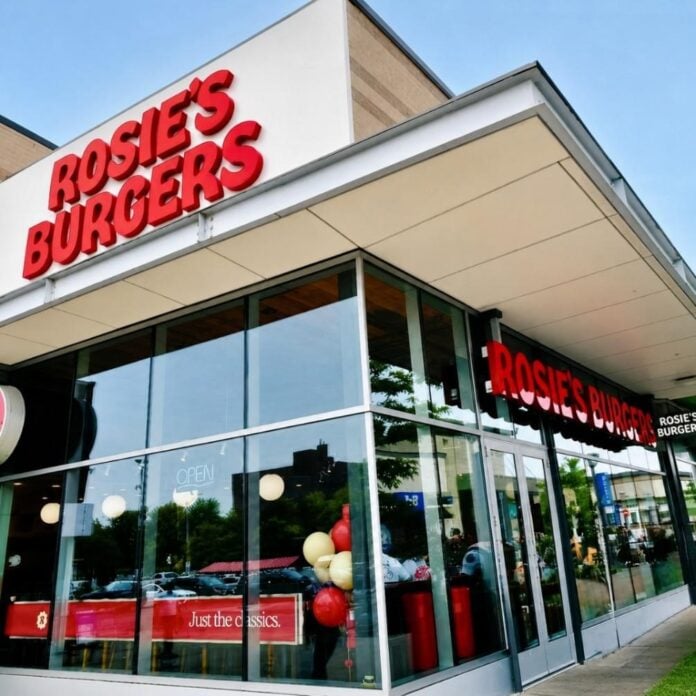
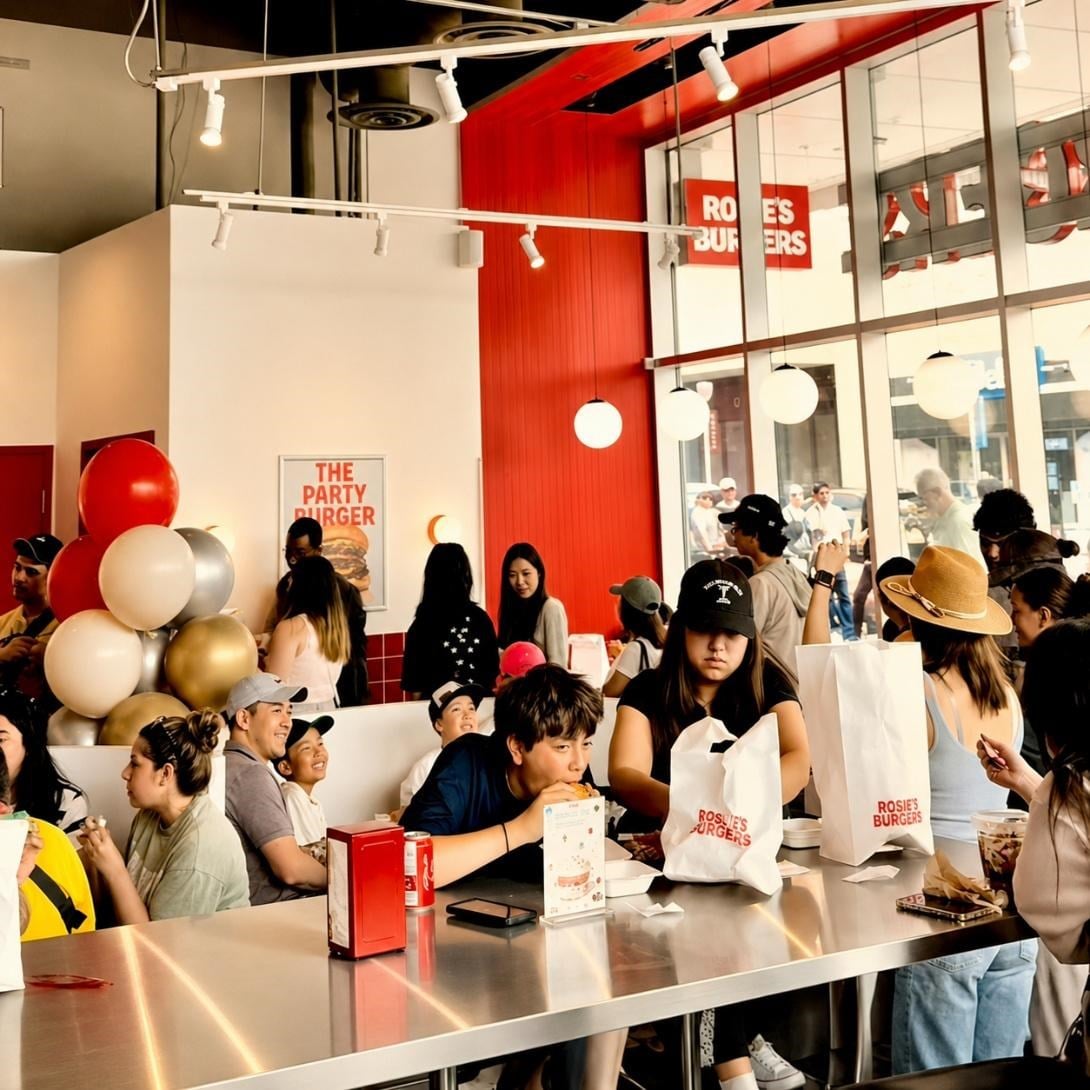
Happy Belly Food Group Inc., a leading consolidator of emerging restaurant brands, has opened its newest Rosie’s Burgers restaurant in downtown Toronto’s First Canadian Place.
Rosie’s is a boutique quick-service restaurant brand known for its signature smash burgers, golden fries, poutine, onion rings, and classic milkshakes – delivering nostalgic flavours in vibrant, neighbourhood-driven locations, said the company.
Sean BlackHappy Belly Food Group photo
“Toronto represents another high-quality market for Rosie’s as we continue accelerating our expansion across North America,” said Sean Black, Chief Executive Officer of Happy Belly. “Our franchise model is designed to scale alongside operators who share our commitment to operational excellence and an exceptional guest experience. This newest location will be operated by one of our experienced multi-unit operators in the heart of Toronto’s Financial District. It reinforces the strength of our franchise system, our disciplined site selection approach, and the growing demand for Rosie’s across the province. We believe the brand is well positioned to continue expanding in markets supported by favourable demographics, consistent daily demand, and strong business fundamentals.”
This Toronto location is situated in First Canadian Place in the heart of downtown Toronto’s central business district. Its central location and steady flow of professionals, residents, and visitors provide an ideal fit for Rosie’s nostalgic smash burger offering, said the company.
Happy Belly Food group photo
The company said Rosie’s Burgers is in a strong phase of national expansion with 18 locations open and more than 112 secured under multi-unit and area development agreements across key provinces, including Atlantic Canada, Quebec, Ontario, Alberta, British Columbia, Manitoba, and Saskatchewan.
“This growing footprint positions the brand to scale rapidly in the years ahead. Backed by a proven track record in the burger category, a high-performing franchise model, and a solid foundation of organic growth, Rosie’s is well on its way to becoming Canada’s leading smash burger brand. Our dual expansion strategy combining franchised growth with targeted corporate store openings underscores our commitment to disciplined, predictable growth as we advance toward becoming Canada’s leading restaurant consolidator,” it said.
Two in five surveyed Canadian exporters to the U.S. report selling products affected by the proposed 50% U.S. tariffs on some CUSMA (Canada–United States–Mexico Agreement) compliant goods. Among those affected, over three-quarters (77%) expect their revenues to drop if new tariffs take effect, finds new research by the Canadian Federation of Independent Business (CFIB).
More than one in three (35%) expect revenues to fall by at least 50%, said Canada’s largest association of small and medium-sized businesses with 103,000 members across every industry and region.
“The small studio in Ontario shipping paintings to a gallery in New York, or a sawmill in BC shipping panels to a builder in Seattle is being walloped by the 50% tax threat. If the tariffs come into effect next week, they will cause massive dislocation for small businesses that rely on U.S. clients and American buyers that rely on Canadian suppliers,” said Dan Kelly, CFIB president. “Most of these businesses have been operating under the long-standing assumption that CUSMA-compliant goods would remain tariff free. The prospect of losing sales, slashing prices, or having to pivot to new markets altogether, is generating a lot of small exporter anxiety in the lead-up to August 19.”
Dan KellyRojda photo
Overall, more than nine in 10 exporters to the U.S. are concerned about the proposed 50% U.S. tariffs, with 32% reporting being extremely concerned, explained the CFIB.
Of the 40% small firms who report their products will be affected, the largest groups include those selling:
Machinery and equipment
Wood, forestry and building products
Plastics, polymers and packaging
Agricultural, food and beverage products
Arts, jewellery and creative products
“Few small firms can absorb a 50% tariff, and few can pass that cost on to customers while staying competitive,” said Kelly. “All eyes are on our negotiations with Washington as the stakes are very high for Canadian SMEs.”
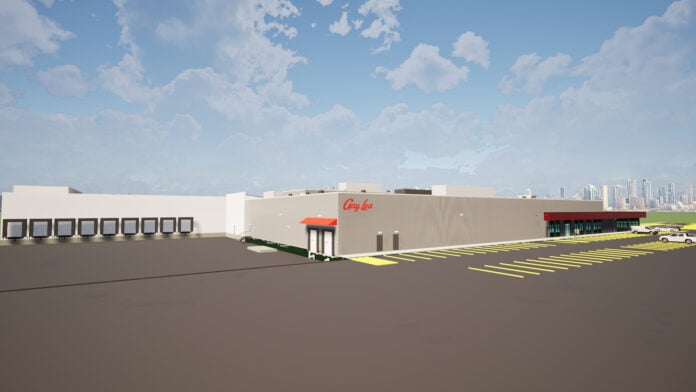
Gay Lea Foods Co-operative Limited says it will invest more than $200 million to expand its Clayson Road dairy manufacturing facility in Toronto, with the project expected to increase cottage cheese production and add up to 75 jobs.
The expansion is the first major milestone in the dairy co-operative’s approximately $450-million Network for Growth strategy, a multi-year plan to invest in and modernize its Canadian manufacturing network.
The company said the project is intended in part to address a national shortage of cottage cheese while adding production capacity across its portfolio of high-protein dairy products.
The expansion is scheduled to be completed in 2028.
Investment in production capacity
The company said the project will introduce advanced processing technology and modern manufacturing capabilities aimed at increasing production capacity, improving productivity and giving the facility greater operational flexibility.
It said the investment will also support its farmer members and employees as it expands its processing capabilities.
Suzanna DalrympleGay Lea Foods photo
“This investment reflects our confidence in the future of Canadian dairy and in Gay Lea Foods’ role in helping shape it,” said Suzanna Dalrymple, President and Chief Executive Officer of Gay Lea Foods. “That future will be built on Canadian dairy farms and in modern processing facilities equipped to respond to evolving consumer preferences.”
The company said cottage cheese has seen increased demand as Canadian consumers seek what it describes as nutritious and affordable health and wellness options.
The expansion will increase production across Gay Lea Foods’ high-protein dairy portfolio, including cottage cheese, while strengthening the company’s processing capabilities.
Gay Lea Foods said the changes are intended to help it respond to changing market needs and support its longer-term growth.
Jobs and Canadian dairy
The Clayson Road expansion is expected to create up to 75 new positions at the facility, adding skilled manufacturing jobs, according to the company.
Gay Lea Foods is a farmer-owned co-operative with approximately 1,200 dairy farmer members in Ontario and Manitoba. The company said the investment is part of a broader effort to strengthen its Canadian manufacturing network.
Andrew HendersonGay Lea Foods photo
“For more than 65 years, our farmer-members have invested to build a stronger future for Canadian dairy,” said Andrew Henderson, Chair of the Board at Gay Lea Foods. “Expanding a facility that transforms Canadian milk into a product sold exclusively to Canadian consumers, is a natural extension of our co-operative’s legacy.”
Gay Lea Foods, founded in 1958, produces dairy products and ingredients under brands including Gay Lea, Nordica, Salerno, Ivanhoe and Bothwell Cheese.
Welcome to the Daily Synopsis by Retail Insider. We hope you enjoy the 13 articles we published covering key developments in Canadian retail.
Kit and Ace reached 17 stores across Canada while focusing on quality locations and diversifying into lifestyle products. METRO Inc. saw Q3 sales climb to nearly $6.9 billion despite a strike at its Laval produce distribution centre affecting earnings. 5% occupancy and rent growth exceeding 10%.
The wait for Shake Shack’s first drive-thru in Canada is nearly over! The drive-thru will officially open to the public at 10:30 a.m. on Thursday August 27. Arriving just in time for the busy back-to-school season, the drive-thru will be located at 9253 Macleod Trail SW, said the company.
The new location will feature a hand-painted mural by local artist, Larissa Schuler. The mural, painted on the exterior back wall of the Shack, showcases iconic Alberta imagery and brand iconography. It will be visible as customers pass through the drive-thru, adding a fun visual element to the experience. Dine-in guests can enjoy the typical warm in-Shack dining experience, it said.
“Guests riding through the drive-thru will have access to a drive-thru combo meal, providing a faster, more seamless ordering experience. Also on the menu at the newest Shack are Alberta-exclusive favourites crafted with regional producers, including the Prairie Berry Shake. And every burger is made with 100% Alberta beef from Beretta Farms, while the Chicken Shack™ features whole white-meat Canadian chicken raised cage-free and without antibiotics,” it said.
Billy RichmondShake Shack image
“We’re excited to introduce Shake Shack’s first drive-thru in Canada, giving our guests a whole new way to enjoy the food and hospitality they know and love,” said Billy Richmond, Business Director, Shake Shack Canada. “We’ve designed this location to deliver the same cooked-to-order experience Shake Shack is known for, while offering the speed and ease that guests are looking for. We’re proud to bring this milestone to Calgary and can’t wait to welcome our first drive-thru guests later this month!”
The company said opening day celebrations will include the brand’s iconic Shack Clap and ribbon-cutting led by the team at the new Shack location. Guests waiting to enter the drive-thru will enjoy special moments along the way, with the first 100 vehicles receiving limited-edition merch. All vehicles on opening day will be encouraged to dial in to a special Shack Roadtrip Playlist, creating a shared listening experience for everyone at the opening.
Formed in 2023, Shake Shack Canada is a partnership between Osmington Inc. and Harlo Entertainment Inc. — two Canadian-based private investment companies. Shake Shack Canada has seven locations across Ontario, one in Alberta, and plans to open at least 35 locations nationwide.
Since the original Shack opened in 2004 in NYC’s Madison Square Park, the company has expanded to over 705 locations system-wide, including over 455 in 35 U.S. States and the District of Columbia, and over 250 international locations across London, Hong Kong, Shanghai, Singapore, Mexico City, Istanbul, Dubai, Tokyo, Seoul and more.
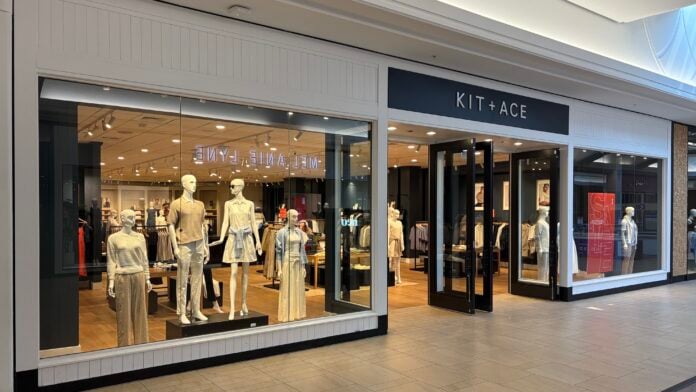
Kit and Ace at Hillcrest Mall in Richmond Hill, ON. Image: Kit and Ace
Kit and Ace has opened a new store at Hillcrest Mall in Richmond Hill, bringing the Canadian technical apparel brand to 17 locations across the country as its expansion under new ownership continues.
The approximately 4,700-square-foot store is among the retailer’s largest and follows the recent opening of a roughly 3,500-square-foot location at West Edmonton Mall. Kit and Ace CEO David Lui said the company remains selective about where it wants to be as it continues evaluating opportunities across Canada.
Growth remains important to Kit and Ace, but the company is not working toward a rigid store-count target. Each new location represents a significant investment of capital, time and operational resources, making the quality of the real estate and market opportunity central to expansion decisions.
That approach has guided the retailer’s development since Unity Brands acquired Kit and Ace in 2023. The company had four stores at the time of the acquisition and has since expanded to 17 locations through new openings and relocations across several Canadian markets.
The growth has made Kit and Ace one of the more active Canadian specialty apparel expansion stories of the past several years, while the company is also beginning to broaden its business beyond its core clothing assortment.
David Lui
Larger Kit and Ace Store Opens at Hillcrest Mall
The Hillcrest Mall opening gives Kit and Ace another substantial suburban location in the Greater Toronto Area, complementing its growing presence in downtown Toronto and other major shopping centres across the region.
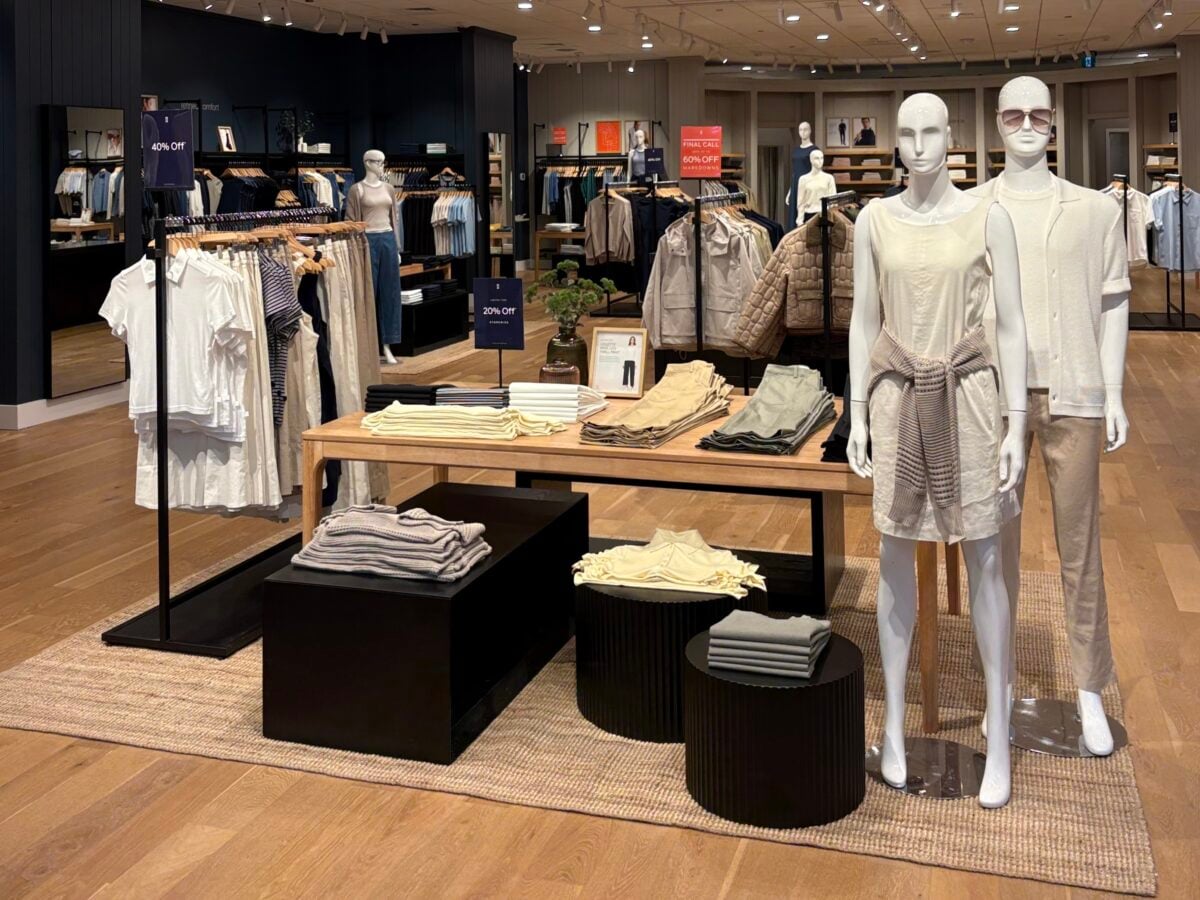
At approximately 4,700 square feet, the Hillcrest location is comparable in scale to the retailer’s store at CF Toronto Eaton Centre. The larger footprint provides additional room for men’s and women’s apparel, accessories and newer lifestyle categories that Kit and Ace is beginning to introduce.
The company’s Ontario network also includes locations at Bayview Village, CF Toronto Eaton Centre, Queen Street West, The Well and CF Sherway Gardens in Toronto, as well as Toronto Premium Outlets, downtown Oakville and CF Rideau Centre in Ottawa.
Kit and Ace also has a multi-store presence in British Columbia and Alberta as it builds out a national network concentrated primarily in major Canadian urban markets.
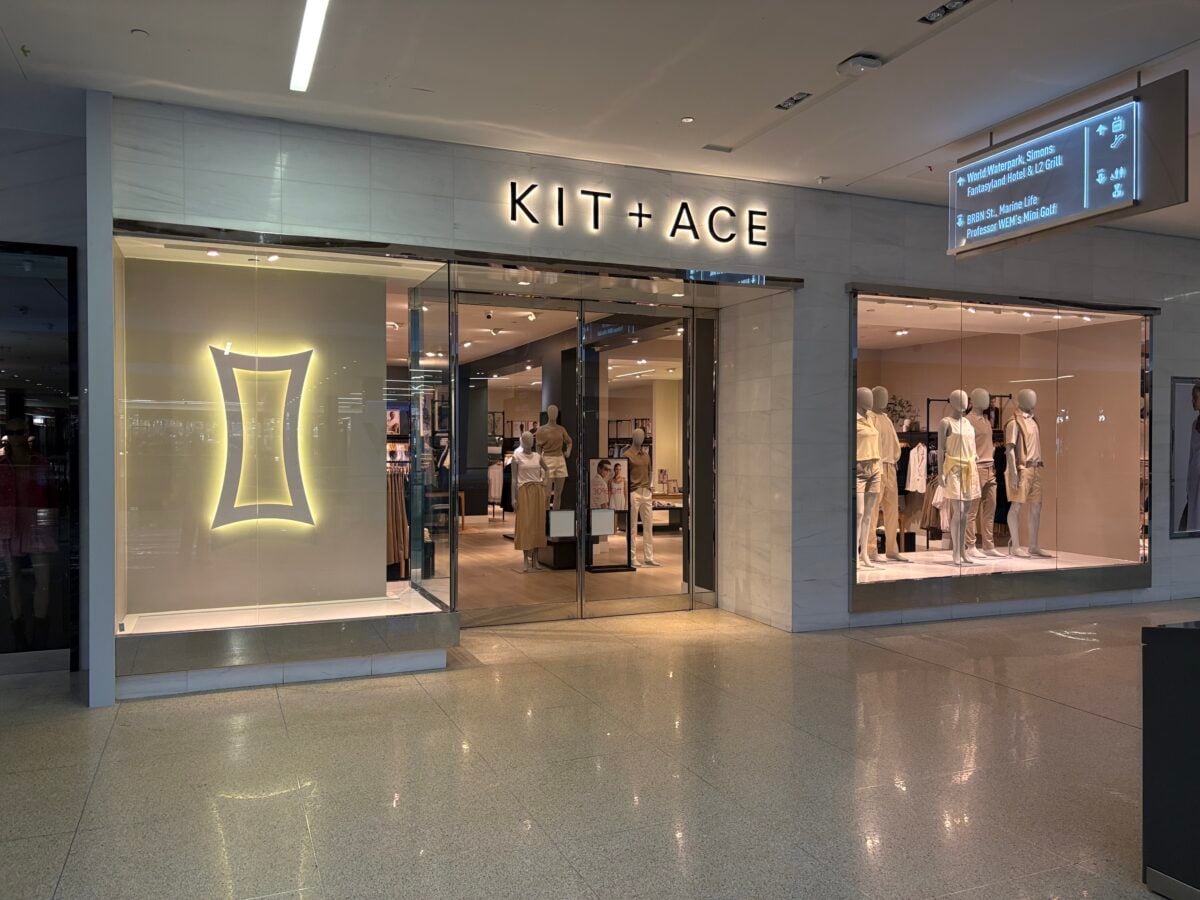
Kit and Ace Returns to West Edmonton Mall
Hillcrest follows Kit and Ace’s recent return to West Edmonton Mall, where the retailer opened an approximately 3,500-square-foot store in space previously occupied by Michael Kors. The luxury brand moved into a smaller adjoining unit, allowing Kit and Ace to take the larger portion of the former store.
The opening represents a return to a familiar market. Kit and Ace previously operated at West Edmonton Mall in 2015 during the company’s earlier period of expansion under its previous ownership.
This time, the decision to enter Edmonton was also supported by existing customer demand. Kit and Ace was already shipping online orders into the market, while some Edmonton-area customers were travelling south to Calgary to shop at the company’s stores.
The Edmonton opening demonstrates how e-commerce data can provide an indication of where a physical location may be viable. It also gives Kit and Ace a presence between its established store networks in British Columbia and Calgary.
Kit and Ace at Hillcrest Mall in Richmond Hill, ON. Image: Kit and AceKit and Ace at West Edmonton Mall. Photo: Kit and Ace
Potential for Further Growth Across Canada
Lui believes Canada could potentially support approximately 20 to 25 Kit and Ace stores, although the company does not consider that range a firm ceiling or a formal expansion target.
With 17 stores currently operating, Kit and Ace has already established a sizeable national footprint. Rather than opening stores to achieve a particular number, the company is continuing to assess opportunities based on the strength of individual markets, available real estate and their fit with the brand.
There is still considerable geographic whitespace. Kit and Ace has built meaningful clusters in markets including Toronto, Vancouver and Calgary, while other Canadian cities remain without stores. Quebec is among the markets the company could consider as it evaluates future opportunities, although no specific location or opening timetable has been announced.
Winnipeg is another potential opportunity. Similar to Edmonton, online sales can help Kit and Ace identify cities where an existing customer base could support a physical store.
The company has also received interest from consumers in Halifax and elsewhere in Atlantic Canada. For now, however, Kit and Ace continues to evaluate possibilities across the country without committing to a specific timetable for entering those markets.
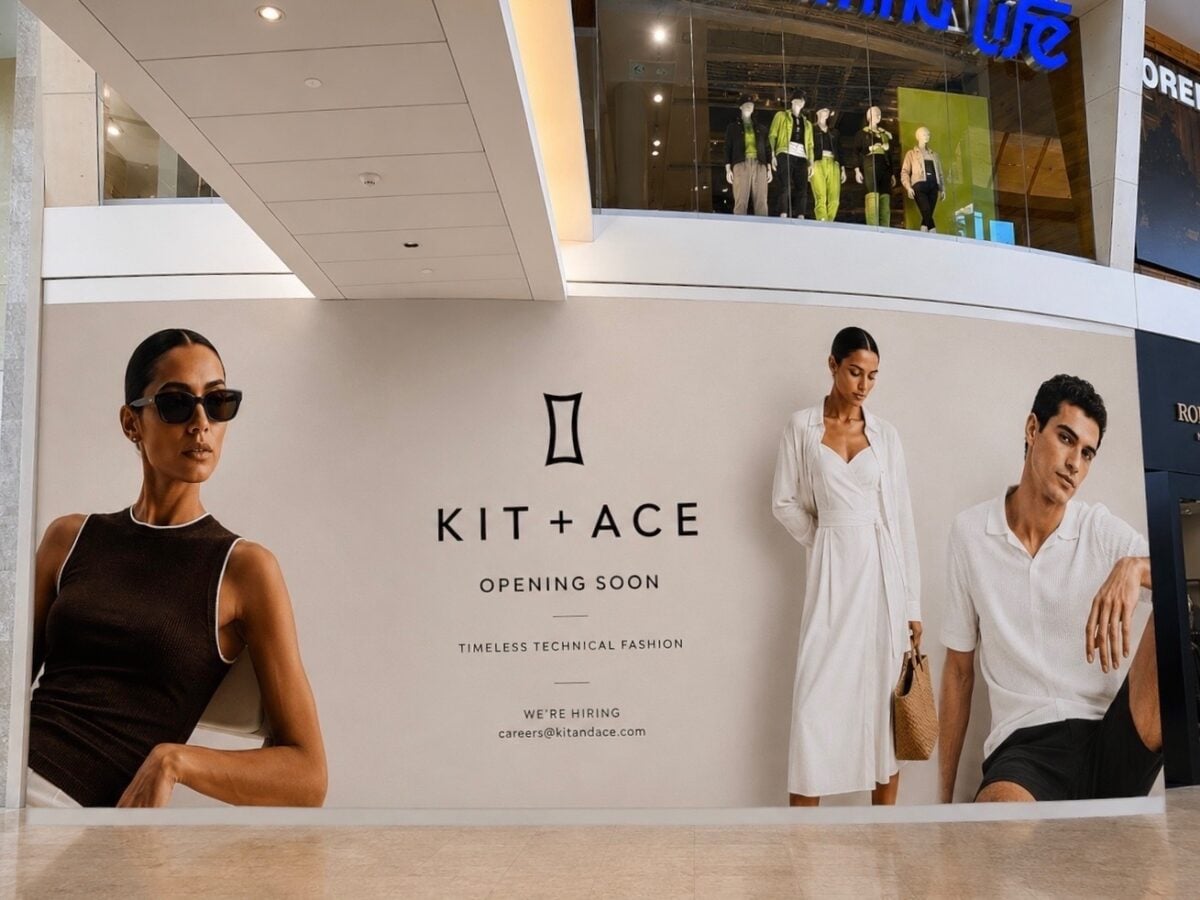
Kit and Ace under construction at CF Sherway Gardens in Toronto. Image: Kit and Ace
Sherway Gardens Store Moving to Better Location
Expansion is not exclusively about adding stores. Kit and Ace is also repositioning some of its existing locations as opportunities emerge within shopping centres.
At CF Sherway Gardens in Toronto, the retailer is preparing to relocate its existing pop-up into a more prominent location within the mall. The replacement store is expected to open around the week of September 1 near the escalators leading toward the food court, below Sporting Life and close to Indigo.
The move illustrates one of the benefits of Kit and Ace’s flexible approach to real estate. Temporary stores can allow the retailer to establish a customer base and measure performance before making a longer-term commitment or moving into stronger space within the same property.
Kit and Ace has used pop-up arrangements in several markets while still attempting to deliver a complete representation of the brand through its temporary locations.
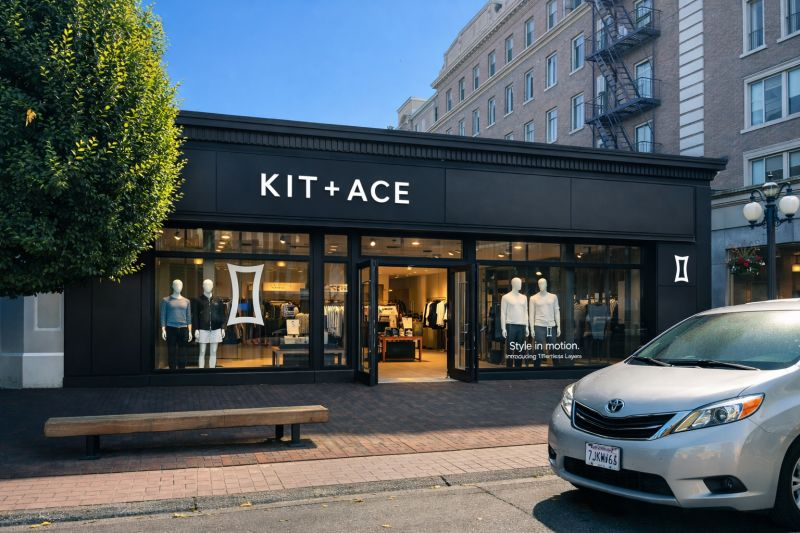
Rendering of the new Kit and Ace store to open in Downtown Victoria. Photo: Kit and Ace
Victoria Store Demonstrates Smaller-Market Potential
One of Kit and Ace’s recent openings also suggests that opportunities extends beyond Canada’s largest metropolitan areas.
The retailer opened a roughly 2,200-square-foot store on Government Street in Victoria earlier in 2026. The location has performed well, serving customers who previously had to travel to Vancouver or purchase online to access Kit and Ace products.
Victoria also benefits from tourism, while its local customer base includes a mix of younger couples and families as well as older consumers with disposable income.
The market provides an interesting case study for Kit and Ace as it considers future expansion. Cities do not necessarily require the population of Toronto, Vancouver or Calgary if there is already meaningful brand recognition, sufficient spending power and a concentrated customer base.
A first look at Kit and Ace’s new leather hand bag line. Image: Kit and Ace
Leather Handbags Coming This Fall
Physical retail represents only part of the company’s growth strategy. Kit and Ace is also looking to extend the brand into additional product categories beyond the technical apparel for which it is best known.
A new collection of leather handbags is expected to arrive this fall. The bags were developed with designers in Italy and will be made from 100 per cent leather, with prices up to about $400.
The company is positioning the initial collection within that range to encourage customers to try the category while allowing Kit and Ace to gather market feedback as it expands beyond its traditional apparel assortment.
The retailer is also considering larger programs involving socks and underwear that would follow the same emphasis on fabrication, comfort and functionality found throughout its apparel assortment. Beyond Canada, the United States could also represent an opportunity when the timing is right.
Home Goods Extend Kit and Ace Beyond Apparel
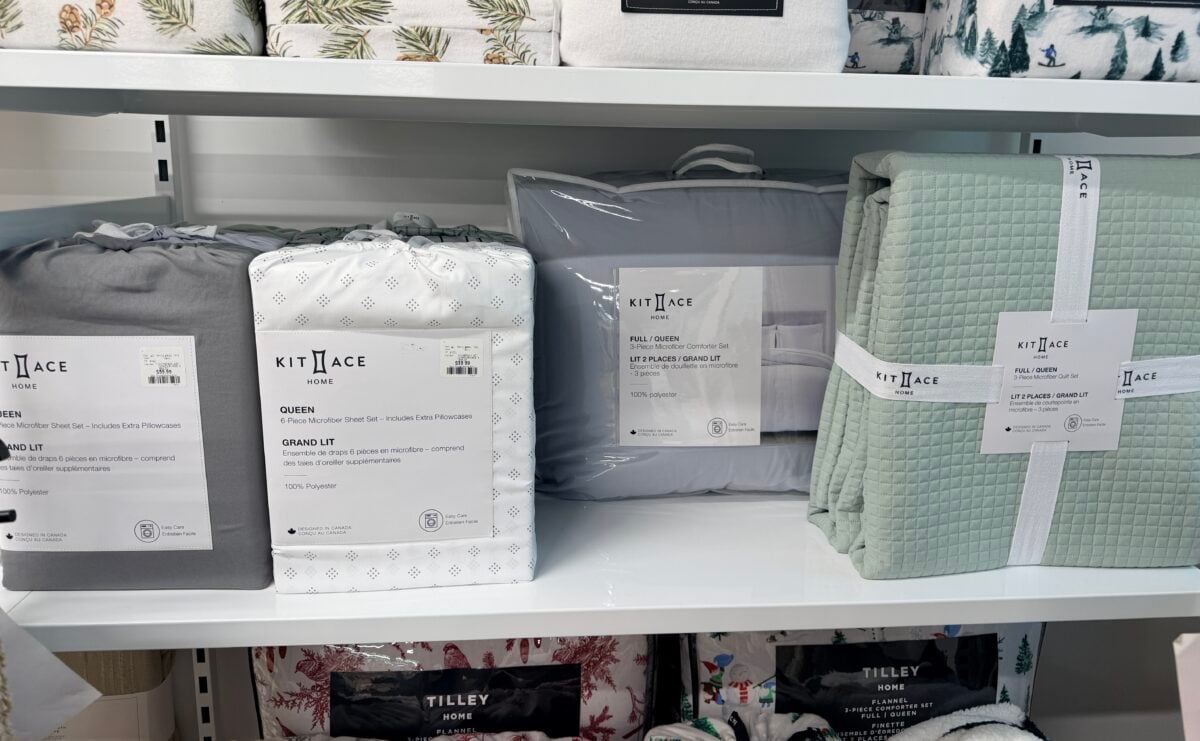
Kit and Ace has meanwhile been building a home-goods program with TJX Canada, extending its focus on fabrics and comfort into products used outside the wardrobe.
Products including bedding, pillows, comforters and throws are being offered through TJX banners including HomeSense, Winners and Marshalls. Additional home products are being introduced as the program develops.
The relationship is significant because it exposes Kit and Ace to customers through a large national off-price network, including communities where the company does not operate its own stores.
It also gives Kit and Ace another avenue for growth that does not depend on continuously adding bricks-and-mortar locations, while applying its fabric-focused identity to products with a natural connection to its apparel business.
Licensing Builds International Reach
Licensing is becoming another component of the company’s broader product strategy. Kit and Ace has partnered with Quebec-based Jovi Sports Inc. on a bag program that moves the brand into adjacent lifestyle categories. The program is also beginning to reach markets outside Canada, with Kit and Ace currently in, or having upcoming orders for, Australia, New Zealand, the United Kingdom, South America and the Caribbean.
Further international opportunities are being developed, while additional licensed Kit and Ace products are planned for spring 2027.
The model allows the company to enter specialized product categories with an experienced manufacturing and distribution partner while introducing Kit and Ace to consumers in markets where it does not operate its own retail network.
Together with the home-goods business, licensing provides another indication of how Kit and Ace is building beyond its 17-store network. Apparel remains at the centre of the business, while accessories, home products and other functional lifestyle categories provide additional opportunities to extend the brand domestically and internationally.
Kit and Ace products at a TJX store in Canada. Photo: Kit and Ace
Consumers Prioritize Value and Longevity
The expansion comes as Canadian shoppers have become increasingly deliberate about where they spend their money. Consumers remain prepared to invest when they perceive value, but are paying greater attention to quality, comfort, versatility and the expected life of a product. That behaviour aligns with Kit and Ace’s positioning around technical fabrics, functionality and products designed for repeated use.
Physical stores also remain an important part of that proposition. E-commerce continues to generate sales, particularly in markets without a nearby Kit and Ace location, while stores allow shoppers to touch fabrics, evaluate quality and try on products before purchasing.
Increasingly, the two channels are informing one another. Online demand helped support Kit and Ace’s return to Edmonton and could eventually identify opportunities in cities such as Winnipeg and other underserved Canadian markets. Physical locations can then give those existing customers direct access to the assortment while also supporting the company’s broader e-commerce business.