Home Blog Page 60

Why Appointment-Only Tailoring Is Quietly Expanding in Toronto’s Premium Menswear Market ?

Walk past 182 Davenport Road on a weekday afternoon and there is very little to see. No window mannequins, no sale signage, no racks. The lights are on and someone is inside, but the door is locked. That is not a struggling retailer — it is the operating model.

A small but growing group of menswear operators in Toronto has abandoned the walk-in format entirely. They carry no sellable inventory, occupy a fraction of the square footage of a conventional apparel store, and see clients only by appointment. In a market where retail availability has hit record lows and prime rents keep climbing, the economics of that approach deserve a closer look.

The rent math that makes zero-inventory viable

Toronto’s premium corridors have become expensive and, in places, contradictory. JLL’s Toronto Urban Retail Report put average asking rents on Bloor Street between Yonge and Avenue at $246.27 per square foot in Q4 2025 — the highest of any corridor in the country — while availability in the same strip sat near 20.9 per cent. As Retail Insider reported when those numbers were released, the pool of tenants able to absorb that cost has narrowed considerably.

Appointment-only formats sidestep the problem in two ways. First, they do not need a flagship address. A showroom drawing clients through referral and search rather than footfall can sit a block or two off the primary corridor — Davenport, Hazelton, Cumberland — at a materially lower rate. Second, they need very little space. JLL has flagged that the bulk of current Toronto leasing activity is concentrated in units under 2,000 square feet, a segment where competition is now most intense. A tailoring showroom typically needs a fitting area, a consultation lounge and a wall of fabric books. That is 800 to 1,500 square feet, not 4,000.

The third variable is the one conventional apparel retailers cannot escape: working capital tied up in stock. A made-to-measure operator holds swatch books, not sellable goods. Nothing is marked down at the end of a season because nothing is bought ahead of demand. Every garment is cut against a paid order.

A case study: French tailoring on Davenport

Blandin & Delloye, founded in Paris in 2013, has been operating on Davenport Road since December 2025. Toronto is its 34th location worldwide and its third in Canada, following Montreal and Ottawa. The showroom sits between The Annex and Yorkville, adjacent to the luxury cluster without paying for a Bloor Street frontage.

Its process is deliberately slow. A first appointment runs 90 minutes to two hours: measurement, posture and morphology analysis, template fittings, then fabric and construction choices. Cloth comes from Dormeuil, Vitale Barberis Canonico, Holland & Sherry, Drago and Loro Piana. Delivery runs roughly six to eight weeks, followed by a fitting and, where needed, free alterations. Clients booking custom suits in Toronto through the house are typically working to a wedding date or a professional wardrobe refresh rather than an impulse.

The Canadian assortment differs from the European one in a specific way: heavier English wools and made-to-measure overcoats carry far more weight, for the obvious reason that a garment sold in Toronto has to function at minus twenty as well as in a boardroom.

Where it sits in the competitive set

The appointment model is not replacing traditional premium menswear in Toronto so much as growing alongside it. Modern Ambition’s pairs merchandise with technical tailoring and a hospitality bar. Ross Mayer’s Cumberland Street boutique has signalled plans to add bespoke services. Derek Rose on Hazelton Avenue operates a conventional store but built its Canadian entry around a narrow, high-margin category rather than breadth.

What links them is a move away from assortment as the primary differentiator. Retail Insider’s Q1 2026 apparel and fashion analysis identified the same divergence at national scale: brands combining disciplined real estate decisions with experience-led formats are separating from operators still carrying legacy footprints.

The constraints nobody advertises

The model has real ceilings. Revenue is capped by advisor hours, not by store hours — a showroom running two-hour appointments can serve perhaps four clients a day, and adding capacity means hiring and training people to a standard that takes months to reach. Growth is therefore linear, not exponential, and highly dependent on staff retention.

Acquisition is the second constraint. With no window traffic, demand has to come from referral, search visibility and events. That makes the first 18 months in any new market slow by design, and it explains why houses in this category expand city by city rather than in clusters.

Finally, the format is fragile to service failure. In conventional retail, a bad interaction costs one transaction. Here, where a client has committed weeks and a four-figure order, it costs the referral chain that comes with them.

What it means for landlords

For owners of secondary premium space — the streets one remove from Bloor and Yorkville Avenue — appointment-based tenants are an increasingly attractive proposition. They take small units, sign long leases, invest heavily in fit-out because the space is the product, and are largely insulated from the discretionary spending cycles that hit assortment retailers first. According to the apparel spending has remained uneven through 2026, a pattern that tends to punish breadth and reward specialisation.

None of this makes the format a mass-market answer. But in a city where the best space is scarce, the best corridors are priced beyond most tenants, and consumers are increasingly buying fewer, better things, a locked door with an appointment book behind it is looking less like an anomaly and more like a strategy.

Best VoIP Providers with Text Messaging (SMS & MMS): 2026 Comparison

When modern businesses evaluate cloud phone systems, voice calling is rarely the sole requirement.

Inbound customer communication increasingly centers on text messaging, spanning service inquiries, appointment scheduling, and quick project updates.

According to research published by Nextiva, one-third of businesses report losing customers specifically due to communication breakdowns and delayed responses. Over 60% of modern consumers prefer receiving service updates and appointment confirmations via text message rather than phone calls or email.

Data from the CTIA report explains this channel preference. Text messages achieve a 98% open rate, with consumers exchanging over 2.2 trillion SMS and MMS messages annually, making business texting significantly faster for critical scheduling and service alerts than crowded email inboxes.

Yet running text messaging across individual employee cell phones introduces significant operational risk. Client message histories remain siloed on personal devices, departing staff retain customer contacts, and unverified messaging risks heavy carrier filtering.

Unifying business phone calling with carrier-verified business texting (SMS and MMS) inside a centralized VoIP platform solves this fragmentation.

However, adding business text messaging to a Voice over IP (VoIP) system involves more than finding a softphone app with a dial pad.

In the United States, telecommunications carriers enforce strict A2P 10DLC (Application-to-Person 10-Digit Long Code) registration requirements governed by The Campaign Registry (TCR). This means providers differ sharply in how they handle carrier vetting, message throughput, team collaboration over shared numbers, and overage billing.

Why 10DLC Compliance Matters for Businesses

Before selecting a provider, buyers must understand that personal texting differs fundamentally from business VoIP texting. Under Federal Communications Commission (FCC) guidelines and cellular carrier rules administered by The Campaign Registry (TCR), every business sending SMS or MMS from a 10-digit long code number must complete A2P 10DLC registration.

  • Brand and Campaign Registration: Organizations must register their legal business entity (EIN/Tax ID) and specific messaging use cases (such as customer support, account alerts, or appointment reminders). Unregistered traffic is blocked or penalized by heavy carrier surcharges ($0.01 to $0.05 per message penalty).
  • Throughput Limits: Trust scores assigned by TCR determine your messages-per-minute throughput across wireless networks like AT&T and T-Mobile.
  • Toll-Free Verification: If texting from a toll-free number (800, 888, 877, etc.), a separate carrier verification process is required before outbound messaging is enabled.

Leading cloud phone platforms assist in submitting these registrations directly through their administrative portals, though verification timelines typically range from several business days to three weeks depending on carrier backlogs.

Top VoIP Services with Text Messaging Compared

If you need a VoIP provider that includes text messaging, the best options are Nextiva, Quo, Intermedia Unite, and Phone.com.

Nextiva offers the best balance for customer-facing teams, pairing generous SMS allowances with unified customer interaction histories and 24/7 human support. Quo is ideal for small teams needing shared text inboxes, while Intermedia Unite suits traditional hosted PBX offices, and Phone.com provides metered options for low-volume users.

ProviderStarting Price (Billed Annually)SMS / MMS AllotmentsBest FitKey Trade-Off 
Nextiva$15.00 / user / mo (List: $23)100 SMS/user (Core), 500 (Engage), Unlimited (Scale)Customer-facing teams needing unified voice, SMS, and digital channelsAdvanced CRM automation requires Engage or Scale plans
Intermedia Unite$19.99 / user / moStandard 1:1 business SMSTraditional offices needing basic voice and text bundled with emailSMS is restricted to basic 1:1 messaging; lacks shared team inboxes and modern automation
Quo (OpenPhone)$15.00 / user / mo (List: $19)Shared SMS/MMS inboxesEarly-stage startups and lean teams prioritizing collaborative textingLacks built-in video conferencing and advanced telephony routing
Phone.com$14.99 / user / moMetered SMS / pooled poolsMicro-businesses and low-volume callers needing basic text capabilitiesBase plans meter minutes and texts; desktop softphone and admin console feel dated
Zoom Phone$10.00 / user / moSMS + MMS (Regional availability)Teams already standardized on Zoom MeetingsSMS availability is restricted outside North America; voice-first capabilities feel secondary
Ooma Office$19.95 / user / moSMS + MMS (Desktop/mobile app on Pro $24.95)Brick-and-mortar small businesses needing plug-and-play simplicityLacks deep CRM integrations and omnichannel customer engagement tools

The Best VoIP Providers for Text Messaging Reviewed

Below, we break down how the premier business VoIP services handle text messaging, carrier compliance, and workflow integration across daily business operations.

1. Nextiva: Best for Customer-Facing Teams Seeking Unified Communications

Nextiva approaches business texting through NextivaONE, a consolidated communications application that groups phone calls, text messages, team collaboration, and digital customer interactions into a single threaded timeline.

Messaging Capabilities & Plan Allotments

Nextiva supports two-way SMS and MMS across desktop (Windows, macOS) and mobile apps (iOS, Android). The plan tiers clearly structure messaging allowances:

  • Core Plan ($15/user/month annual; $23 list): Includes 100 business SMS per user/month, inbound/outbound voice, video meetings, and integration with 3 social/review accounts.
  • Engage Plan ($25/user/month annual; $50 list): Expands messaging to 500 SMS per user/month, customer-to-team SMS routing, 2,000 toll-free minutes, live website chat, and 10 to 30 social/review accounts.
  • Scale Plan ($75/user/month): Delivers unlimited SMS, 10,000 toll-free minutes, AI transcription and summaries, and skills-based routing. Compare plan tiers and message allowances on Nextiva pricing.

Nextiva allows team members to view a contact’s call history, text exchanges, and notes in one chronological interaction stream. Higher-tier plans integrate website live chat and social messages into the same dashboard, preventing team members from toggling between isolated tools.

Telephony & Operational Reliability

Voice calls are backed by eight geographically redundant US data centers with an active-active architecture, delivering a documented 99.999% uptime record. Nextiva also provides 24/7 direct telephone, chat, and email support staffed by US-based technicians across all standard plans, including the entry Core tier.

Where It Falls Short

Nextiva’s Core tier provides strong day-to-day calling and messaging, but advanced bi-directional CRM syncing (such as automated Salesforce or HubSpot logging) and enterprise call center queues require upgrading to Engage or Scale.

  • Best fit: Growing businesses with 5 to 250 employees that want phone, SMS, and customer interaction history unified in one place with dependable 24/7 live human support.
  • Trade-off: Less suited for solo freelancers seeking an unmanaged $10 virtual number solely to receive occasional two-factor verification codes.

2. Intermedia Unite: Best for Traditional Offices Needing Basic Texting

While Nextiva pairs SMS with customer timeline tracking for growing businesses, some traditional organizations prioritize bundling cloud voice and texting with legacy IT services like hosted Exchange email. Intermedia Unite provides this traditional hosted PBX approach.

Messaging Capabilities & Constraints

Intermedia Unite includes business SMS and MMS within its desktop and mobile applications. Users can send direct messages to individual external contacts using their business direct inward dialing (DID) number.

However, messaging capabilities remain rudimentary compared to modern communications suites:

  • Messaging is strictly one-to-one between an individual user and an external contact; it lacks collaborative shared team inboxes or message assignment rules.
  • Administrative workflows for A2P 10DLC campaign registration are manual, often requiring back-and-forth ticket coordination with support rather than guided self-service portals.
  • Automated text workflows, scheduled message delivery, and bulk messaging templates are absent from standard licenses.

Where It Falls Short

The Intermedia Unite interface feels dated compared to contemporary cloud tools.

The separation between voice routing, messaging logs, and administrative settings mirrors older server control panels rather than a modern unified workspace.

  • Best fit: Conservative businesses that buy IT services through managed service providers (MSPs) and only need basic, occasional text messaging.
  • Trade-off: Unsuitable for customer support or sales teams that require shared team texting, automated message dispatching, or unified customer conversation history.

3. Quo (formerly OpenPhone): Best for Startups & Shared Collaborative Inboxes

For agile startups and small service teams, neither Nextiva’s broad communications suite nor Intermedia’s legacy PBX structure may fit their workflow. Many modern teams prefer treating SMS as a collaborative workspace. Quo (formerly OpenPhone) focuses on shared inboxes and team-based texting.

Messaging Capabilities

Quo’s core differentiator is its shared phone number architecture. Multiple employees can view incoming texts from a single business line, see who is currently typing a response, assign message threads to teammates, and leave internal comments directly inside the text conversation. It also supports automated text sequences, snippet templates, and scheduled text sends.

Where It Falls Short

Quo is primarily a voice-and-text application. It does not include built-in video conferencing, webinar broadcasting, or traditional hardware desk-phone provisioning.

Organizations requiring complex multi-level IVR routing, physical IP phone deployments, or unified contact center capabilities will find the platform limiting.

  • Best fit: Early-stage companies, dispatch teams, and agile small businesses that manage high-volume customer texting collaboratively.
  • Trade-off: Unsuitable for offices requiring physical desk phones, unified video conferencing, or enterprise carrier SLAs.

4. Phone.com: Best for Micro-Businesses with Light Texting Needs

While Quo streamlines day-to-day team messaging, solo consultants and low-volume storefronts often need an inexpensive entry point for basic business calling and text alerts. Phone.com delivers an entry-level virtual phone service structured around metered usage.

Messaging Capabilities

Phone.com supports SMS on local and toll-free numbers through its browser portal and mobile application. Users can reply to text inquiries, receive inbound customer notifications, and send basic updates to clients.

However, buyers must monitor usage limitations:

  • Base Basic plans meter both voice minutes and text messages (typically 500 pooled minutes and 1,000 texts across the account). Exceeding these limits incurs per-message overage charges.
  • Group messaging and MMS support can be inconsistent across mobile device operating systems.
  • The system does not provide automated text sequences, keyword auto-replies, or CRM contact syncing on entry-level tiers.

Where It Falls Short

Phone.com’s user interface and mobile apps have not kept pace with modern cloud communications standards.

Navigating call logs, text threads, and extension configurations feels disjointed, and the platform lacks native video collaboration.

  • Best fit: Very small businesses and independent contractors with light inbound calling and minimal monthly text volume.
  • Trade-off: Unsuitable for teams that rely on high-volume customer engagement, collaborative inboxes, or modern desktop softphone software.

5. Zoom Phone: Best Low-Cost Add-On for Zoom-Centric Workplaces

For businesses that want to avoid dedicated messaging workspaces or speech analytics platforms entirely, adding text messaging directly to existing video collaboration software offers the path of least resistance. For teams centered around Zoom Workplace, Zoom Phone provides a consolidated dial pad and SMS inbox.

Messaging Capabilities

Zoom Phone integrates calling and SMS directly into the standard Zoom desktop and mobile application. Users can send and receive texts from their assigned business direct inward dialing (DID) number, share images via MMS, and elevate a text exchange into a voice call or video meeting with a single click.

Where It Falls Short

Zoom Phone’s SMS capabilities are primarily centered on North American numbers; international messaging support is subject to strict carrier constraints. Shared team SMS requires subscribing to the Customer Engagement Pack license at an additional fee.

Because telephony was engineered as an addition to Zoom’s video platform, advanced auto-attendant branching and queue customization also lack the depth of dedicated telephony platforms.

  • Best fit: Budget-conscious teams already operating inside Zoom that need basic inbound calling and texting.
  • Trade-off: Unsuitable for operations that depend on high-volume customer SMS engagement, shared team inboxes, or deep CRM integration beyond standard contact syncing.

How to Choose the Right Texting VoIP Provider

  • Nextiva: Choose when you want a dependable business phone system where customer text messages, phone calls, web chat, and online review tracking live in one application, backed by generous messaging allotments (up to 500 on Engage; unlimited on Scale) and 24/7 direct human support on all plans.
  • Intermedia Unite: Choose when your organization prefers purchasing bundled telephony and email through a managed IT service provider and only requires occasional, basic one-to-one texting.
  • Quo: Choose when you run a lean, remote team where 3 to 10 employees need to handle customer SMS inquiries simultaneously from a single shared business number.
  • Phone.com: Choose when you operate a very small firm with light monthly text volume and want an economical, metered entry tier.
  • Zoom Phone: Choose when your company already spends the work day in Zoom Meetings and wants the lowest-friction, budget-friendly voice and SMS add-on.

Massive social and athletic club planned for Calgary (Renderings)

Nostalgia Club rendering

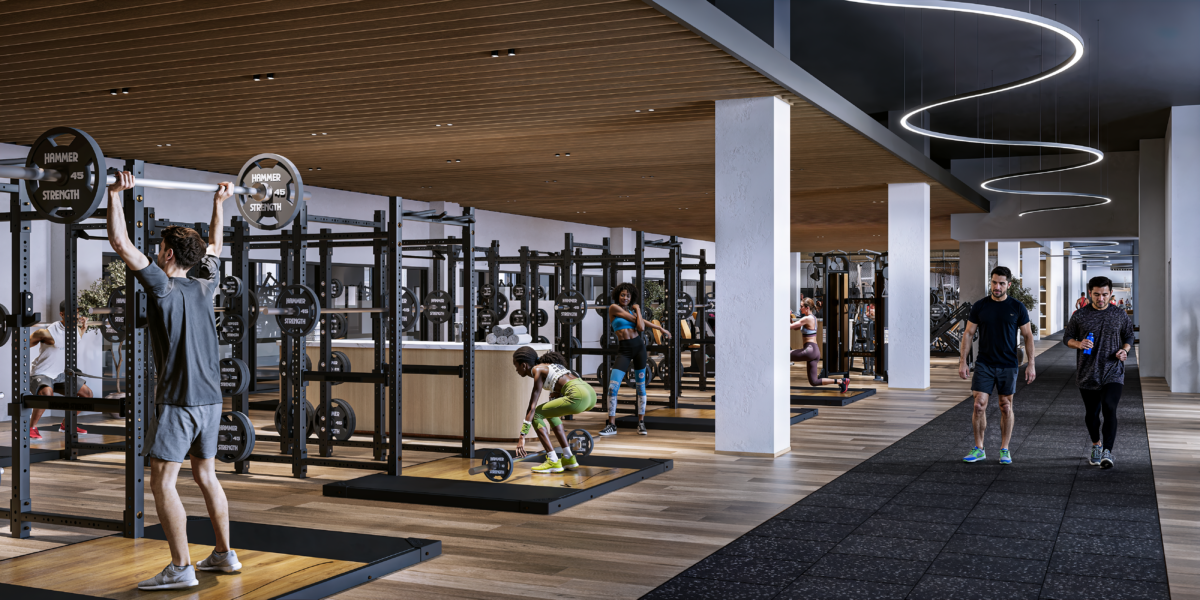
Calgary-based real estate company Jayman Living is building a massive social and athletic club in southeast Calgary that will be 400,000 square feet with numerous amenities including an NHL-sized rink, aquatics and athletics facilities, rooftop dining and wellness experiences.

“The Nostalgia Club began with my own family. I saw the connections my daughter and her family found through their club, and it made me want to create a place where generations belong together,” said Jay Westman, Chairman and CEO, Jayman BUILT. 

“This is a place where legacies are built together. Exceptional service, personal integrity and a true sense of community will shape every detail, from a child’s first lesson to a quiet moment of your own.”

On Monday, officials broke ground for The Nostalgia Club at Nostalgia Townlet in southeast Calgary. Opening in Fall 2029, Westman said it will be the most prestigious private social and athletic club in North America and it will overlook the Bow River.

“CANA has spent more than 80 years building landmark projects across Alberta, and we are excited to partner with Jayman Living on The Nostalgia Club,” said John Simpson, Chairman, CANA. “As a third-generation family-run business, we’re proud to bring our experience building sports, recreation, and community spaces to a destination designed for families for generations to come.”

The Nostalgia Club’s planned amenities include:

  • Family: A place where every generation plays together, with a 3,000-square-foot gymnastics centre, a multi-purpose gymnasium, a climbing centre with 35-foot walls, a family games room, a bowling centre and six golf and gaming simulator bays. An NHL-sized ice rink will host skating and hockey programs for children and adults. Childminding services and a supervised youth centre with a diverse program of activities complete the offering.
  • Athletics: Indoor and outdoor tennis and pickleball courts, indoor padel courts and badminton courts. A 25,000-square-foot fitness space will feature training areas, personal training studios, group fitness classes and a 380-metre indoor running track.
  • Aquatics: A 25-metre pool with four competition lanes, alongside a lifestyle pool with waterslides, water play areas, lap lanes and a lazy river. Swimming lessons and open swims will welcome all ages and abilities.
  • Well-Being: A resort-style luxury rooftop member spa with a sauna, steam therapy, cold plunge, outdoor pools and hot tubs, complemented by a wellness centre offering physiotherapy, chiropractic care and acupuncture.
  • Business: A ballroom and banquet services, private dining rooms, business lounges and boardrooms for meetings, celebrations and milestone occasions.
Nostalgia Club rendering

Five Distinct Dining Venues

Dining at The Nostalgia Club will span the full rhythm of club life:

  • Café Au Lait: A refined start to the day, with casual meals and refreshments
  • Saint Monday’s: A sports lounge overlooking the ice rink
  • Evermore: Rooftop fine dining featuring a thoughtfully curated menu and premium wine list
  • Clementine’s: Wine, cocktails and shareable dishes
  • Winston’s: A private, speakeasy-style lounge
Nostalgia Club rendering

Officials said Legacy Memberships are now available. To learn more about The Nostalgia Club and explore membership, visit https://thenostalgiaclub.ca/.

More from Retail Insider:

Nostalgia Club rendering

Canadians face growing job insecurity as tariffs, AI and economic uncertainty weigh on workers: MNP

Ketut Subiyanto photo


Economic uncertainty, tariffs and trade tension, and the rise of AI have more Canadians worried about job mobility and career opportunities in the current labour market, according to the latest MNP Consumer Debt Index.

The survey found that 55% of Canadians are concerned these days.

The survey, conducted quarterly by Ipsos, found that 42% worry AI could negatively affect their employment or income and 54% say if they lose their job, they do not have enough savings to support themselves and/or their family for six months without borrowing or falling behind on bills.

“When Canadians are not confident they could replace their income if their job situation changed, carrying debt can feel much more precarious,” said Grant Bazian, president of MNP LTD, the country’s largest insolvency firm. “A job loss, reduction in hours or change in pay can quickly alter what a household can afford, particularly when there is not much room in the budget to absorb the change.”

More Canadians worrying about their jobs

Trade-related uncertainty is also evident, as nearly one-quarter (24%) of all Canadians worry tariffs, trade disputes or broader economic instability could negatively affect their job or income, increasing to more than one-quarter (27%) for working Canadians, said the report. 

“One-third of working Canadians (32%) worry they would struggle to find a new job offering similar pay and benefits, while nearly one-quarter (23%) are concerned there are fewer opportunities available in their field or industry.

“These concerns are also reflected in workers’ willingness to make career moves. One-quarter (25%) of Canadian workers say they are reluctant to leave their current job because of uncertainty in the job market, one in five (19%) feel less secure in their job than they did a year ago, and one in five (20%) would like to change jobs but do not feel financially secure enough to risk a period of lower or no income.”

“Changing jobs can involve a period of uncertainty around pay, benefits or how quickly the next opportunity will come,” said Bazian. “For someone already managing debt, even a short gap in income can carry real financial consequences. It’s understandable that some people may be more hesitant to make a move when they are not confident they have the financial room to absorb that transition.”

Many Canadians on the brink of insolvency

While the overall Index has risen, MNP said confidence remains below historical levels. 

Despite this improvement, 44% report they are on the brink of insolvency, meaning they are within $200 or less of being unable to meet their monthly financial obligations. Financial resilience also remains fragile when unexpected costs or disruptions arise: 36%  are not confident in their ability to cope with loss of employment or changes in wage or seasonal work without increasing their debt, 34%, lack confidence in their ability to cope financially with an illness that prevents them from working for three months, while 29% are not confident they could manage an unexpected vehicle repair or replacement, explained MNP.

Nataliya Vaitkevich photo

Canadians look for new ways to earn amid AI uncertainty

The report said 23% of Canadians cite concerns about the potential impact of AI on their careers, increasing to 27% for working Canadians and 14% say they are worried AI will make some of their skills less valuable, increasing to 17% for working Canadians. 

“Roughly equal proportions of working Canadians are concerned AI could reduce their income, hours or earning potential (16%) or reduce job opportunities within their field (15%),” said the report.

“Alongside AI concerns and economic uncertainty, nearly half of Canadians (47%) say they have tried to earn additional income in some way, reflecting a broader ‘second-income economy’. The most common approach is selling goods online (21%) using platforms such as Facebook Marketplace, eBay, or Etsy, while one in 10 (11%) have learned new skills to improve future job prospects. About one in 10 have worked a second job (9%) or monetized a hobby, skill or passion project (9%), while eight percent have taken on freelance or contract work.”

MNP said younger generations are leading many of these efforts to supplement their income and strengthen their finances as 22% of Gen Z Canadians have learned new skills to enhance their career opportunities, while 34% of Millennials have sold goods online, compared with 21% of Canadians overall.

“AI is adding another source of uncertainty around how people work and what they may be able to earn in the future, while many Canadians are also looking for additional ways to bring in income,” said Bazian. “But there is a meaningful difference between earning extra money to get ahead and depending on it to keep up. If someone is taking on more work but their debt balances are not coming down, it may be worth looking at whether the overall debt load is manageable on their regular income.”

Nataliya Vaitkevich photo

Debt pressure persists even as Canadians look for lower rates

Despite rate stability, with the Bank of Canada policy interest rate at 2.25%, many Canadians continue to feel financial pressure, noted the report, with 61% saying they desperately need interest rates to come down, and 51% worrying that they could face financial trouble if rates rise. The report noted that 43% say even if rates decline, they are concerned about their ability to repay debt and only 22% say they could absorb an additional $130 in monthly interest payments, while 35% say they could not.

 “Lower interest rates would be welcome relief for many households, but they are not a cure-all for people already struggling with debt,” added Bazian. “The fact that four in 10 Canadians remain concerned about repaying their debt even if rates decline shows that, for many, the challenge goes beyond borrowing costs. Lower rates may help ease some pressure, but they may not be enough on their own to make an unmanageable debt load manageable.”

More from Retail Insider:

Going Paperless in Retail: Managing Invoices, Contracts and Supplier Records Digitally

The supplier has completed the delivery of your goods to your store. Soon you found that the invoice has a price that differs from what was negotiated. The manager of the store recalls discussing this with the salesperson, but the revised list of prices is hidden somewhere in an email, and the contract document is found in the filing cabinet in another place.

Such scenarios are quite frequent in retail organizations where the record-keeping is done on paper, emails and personal computers. In cloud storage, all of these records can be made available in an organized manner and authorized personnel can access them whenever required. This will be particularly helpful in cases where there is a dispute with a supplier regarding any charge or a store manager wants to look at the conditions of an already existing contract. Instead of chasing colleagues for records, personnel can access them directly.

Which Retail Documents Should Move Online First?

Paperless does not necessarily mean scanning all papers and storing them wherever space is available. The goal of being paperless is making it more convenient for people to access and read business documents.

There are at least three types of documents that would be appropriate for any retailer to organize:

  • Documents related to invoices and payments: invoices from suppliers, receipts, credit notes, purchase orders, payment advices.
  • Documents of contract nature: terms of supply from suppliers, leasing agreements, maintenance agreements, renewals.
  • Supplier’s information: contact information, catalogues, current price lists, delivery notes, certificates of compliance.

Having a proper classification system is important. For instance, in case of disputes about payments, people from the finance department should be able to find relevant invoices and purchase orders without calling three employees and asking them to check their e-mails.

Document typePractical filing method
Supplier invoicesSupplier name, invoice number, and date
ContractsSupplier name, contract period, and renewal date
Purchase ordersOrder number linked to the supplier
Price listsSupplier name and effective date
Compliance recordsDocument type and review or expiry date

How Digital Records Improve Everyday Retail Operations

The advantages are even more evident when one is in the midst of a hectic period. Consider the scenario where a retailer is planning for a seasonal campaign. The purchasing department would need to verify the cost from the suppliers, while the accounting department would be reconciling any outstanding invoices, and store managers would verify delivery schedules.

An organised digital system will help in:

  • Increasing the efficiency of invoice checks, where staff will be able to match the invoices with purchase orders and deliveries prior to making payments.
  • Clearing confusion about the terms of the contract, which becomes clear when there are any unforeseen charges come up.
  • Staff turnover, where the new purchasing manager will have easy access to supplier details without having to depend on the former employee’s email address.

Cloud storage may assist retailers that have multiple business locations in providing access to approved documents to authorized individuals without transferring the documents physically.

Protect Sensitive Records and Keep Them Accessible

Digital documents often require due diligence too. The supplier agreement could include confidential pricing, while invoices and payments could provide financial details.

The consequences are real. The 2026 IBM Cost of a Data Breach Report showed that the average cost of a data breach globally was $4.99 million, up by 12% from the previous year. Also, there was a 56% rise in AI-powered attacks. These statistics are not sector-specific or dependent on size; therefore, a retail business might be at a higher risk or vice versa. What remains true is the need to safeguard your company’s sensitive information. Allowing every staff member access to all files may pose risks, and hence access permission is a must.

The safety of the retailer’s digital documents can be ensured via a number of safety precautions that include:

  • Setting access rights properly: Allowing each employee to have access to necessary files only according to their responsibilities.
  • Creating a solid base of accounts: Providing each employee with their own accounts and using additional security options like multifactor authentication.
  • Backups: Performing regular backups of all important documents and testing the procedure for document restoration.
  • Regular check of access rights: Removal of access rights to some documents the moment an employee does not require them.

In addition to evaluating the security of data encryption, permission to share and recover, and administrative control of a particular cloud storage solution provider, it is crucial for businesses to evaluate whether digital filing helps manage documents confidentially.

Make Document Management Easier to Maintain

The concept of a paperless retail business does not mean just fewer filing cabinets. It means being able to check a supplier’s invoice quickly, access a contract before its expiration, and have the correct price list while making a purchase order. The process of doing all of these becomes simpler through good procedures.

The retail companies can use the services offered by a privacy-focused cloud storage platform for secure cloud-based file management and sharing. Cloud storage, backed by good permissions and proper file organisation, will ensure that the retail team spends less time searching and more time serving customers. This will be useful for accessing files when addressing suppliers’ questions, checking the terms and conditions, reconciling invoices, and more. All of that will allow the retailer to have a neat organisation of its records, streamline daily work, and create a strong base for development.

TM Wander Eyes Canadian Expansion as Central Walk Seeks Mall Partners

TM Wander at Tsawwassen Mills in BC. Image: Central Walk

TM Wander could expand into shopping centres owned by other Canadian landlords as Ruby Liu and Central Walk look for partners to take the food, retail and entertainment concept beyond the company’s own real estate portfolio.

Central Walk is open to working with developers, shopping centre owners and other partners across Canada, with large-format retail spaces among the opportunities the company is interested in exploring. Depending on the property, Liu said potential arrangements could include traditional leasing, joint development, project investment or other strategic partnerships.

Eastern Canada is also on the radar, with Liu identifying Toronto and the Greater Toronto Area as an important potential market. No Toronto location has been announced, and Liu said Central Walk is placing greater importance on finding the right properties and partners than achieving a predetermined number of locations.

The strategy represents the next stage for TM Wander, which opened at Tsawwassen Mills in May and is already planned for Woodgrove Centre in Nanaimo and Mayfair Shopping Centre in Victoria. Central Walk says weekend traffic at Tsawwassen Mills has been approximately 10 per cent higher than comparable year-earlier periods since TM Wander opened, giving the company an early operating track record as it looks farther afield.

The expansion also provides a new avenue for some of the broader ideas about physical retail that Liu has been developing for several years.

Ruby Liu and Mae Wang (CEO of Central Walk) at Woodgrove Centre in Nanaimo BC. Image supplied

An Evolution of Liu’s Retail Vision

Liu outlined an ambitious vision for large-format retail in an interview with Retail Insider in 2025, describing environments that would combine merchandise with food, entertainment, cultural programming, events and experiences intended to attract younger consumers and families.

Those ideas were developed while Liu was pursuing a portfolio of former Hudson’s Bay leases and planning a new department store concept bearing her name. The proposed national rollout ultimately did not proceed after an Ontario court declined to approve the majority of the proposed lease transfers, but elements of the underlying retail philosophy continued to emerge within Central Walk’s existing properties.

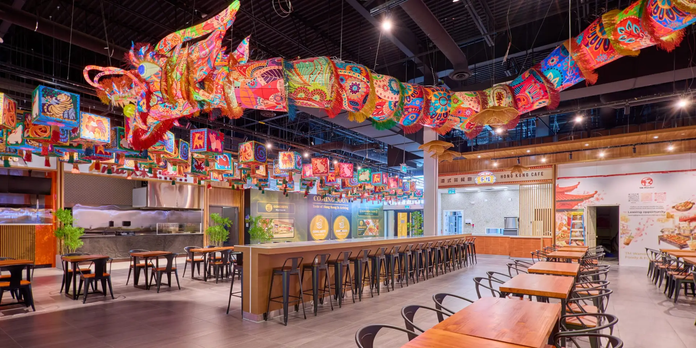
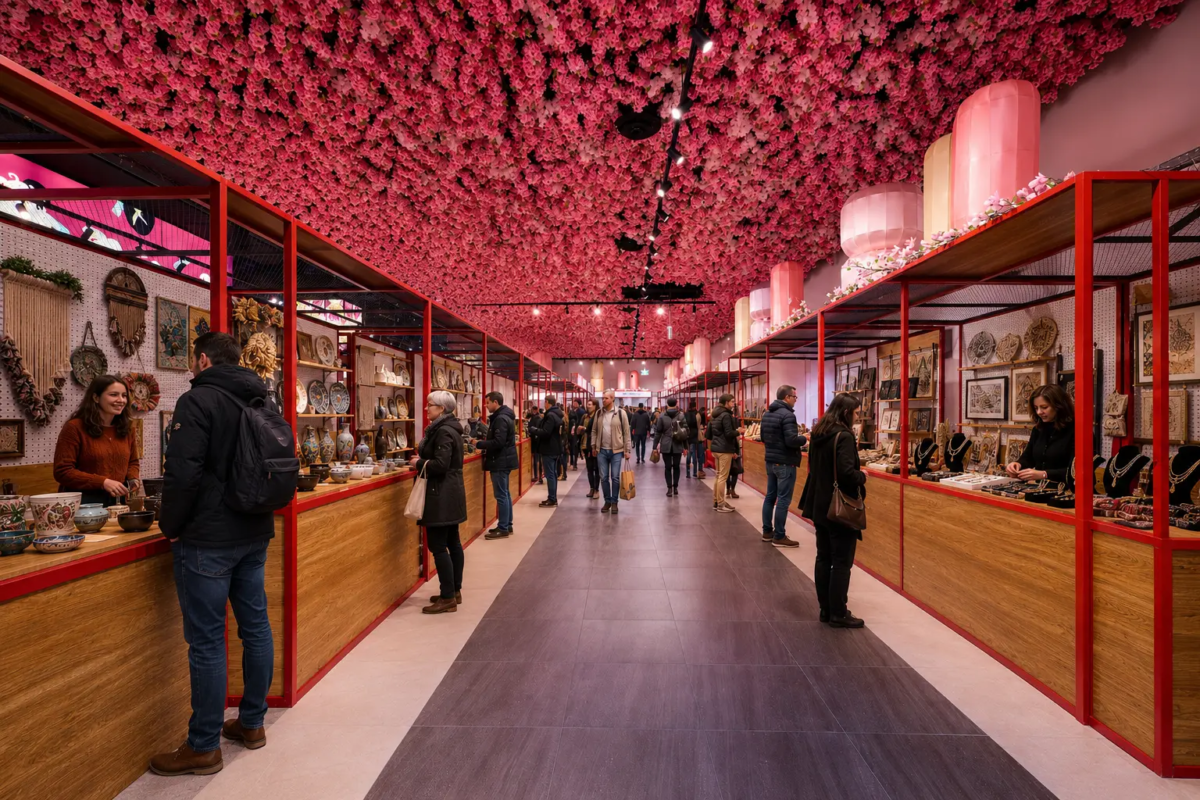
Many of those ideas were visible when TM Wander opened at Tsawwassen Mills on May 30, 2026. The approximately 25,000-square-foot venue was designed to accommodate up to 18 food-and-beverage operators, 34 marketplace vendors and a permanent performance stage with a large LED screen, alongside ongoing cultural and community programming.

The TM Wander name will also travel with the concept. While “TM” refers to Tsawwassen Mills at the original location, Central Walk says it also stands for “Taste & Market,” reflecting the food and marketplace components of the format. The company plans to continue using the TM Wander name as it expands to other locations.

When Retail Insider interviewed Liu following the opening, she acknowledged the continuity between TM Wander and some of her earlier ideas, saying that “the core vision has not changed.” What has changed considerably is how that vision can be deployed.

The proposed Ruby Liu department stores would have required control of large retail spaces operating under a new national banner. The TM Wander model provides a more flexible approach, allowing elements of the same philosophy to become one component within a broader shopping centre redevelopment.

TM Wander marketplace at Tsawwassen Mills. Photo: Central Walk/Ruby Liu Investment Corp.

Testing the Concept at Tsawwassen Mills

The evolution also addresses one of the questions raised when Liu’s department store strategy was being developed. Retail strategist Carl Boutet met with Liu during that period and later told Retail Insider that he came away with the impression that Liu viewed large department store boxes almost as “mini malls,” divided into curated environments containing multiple brands and experiences.

Boutet saw potential in elements of the idea but questioned whether such an ambitious model had been sufficiently tested. “If you believe in the model, you need to demonstrate it first in your own malls,” he told Retail Insider earlier this year.

Central Walk is now beginning to accumulate that operating experience. TM Wander’s first location opened at Tsawwassen Mills, one of three British Columbia shopping centres owned by Central Walk, and Liu says it has attracted customers from different cities, cultural backgrounds and age groups. Commercial real estate, retail and design professionals have also visited to examine the format.

Central Walk also reports a measurable traffic increase. According to Liu, weekend traffic at Tsawwassen Mills has consistently been approximately 10 per cent higher than during comparable year-earlier periods since TM Wander opened.

A leasing package prepared for TM Wander provides another measure of activity, stating that the destination is attracting approximately 30,000 visitors per week. The company says it has a longer-term goal of reaching 50,000 weekly visitors as its tenant mix, programming and brand awareness develop.

Liu previously told Retail Insider that existing food court operators initially had concerns TM Wander could redistribute spending already occurring within the mall. Central Walk says the existing food court instead benefited as overall traffic increased. The operating history remains relatively short, but the company now has data from an active location as it begins talking to potential partners elsewhere in Canada.

Mayfair Mall TM Wander Entrance, rendering supplied

Woodgrove and Mayfair Become the Next Test

Central Walk is preparing to test whether TM Wander can be adapted to different properties and customer bases. A location is planned for Woodgrove Centre in Nanaimo as part of the redevelopment of approximately 144,000 square feet formerly occupied by Hudson’s Bay, where plans for the larger space also include an approximately 30,000-square-foot H Mart, a Family Entertainment Centre and other uses.

Another TM Wander location is planned for Mayfair Shopping Centre in Victoria, where Central Walk is redeveloping approximately 166,000 square feet of former Hudson’s Bay space. The two locations are not intended to be replicas of Tsawwassen.

Liu has said Woodgrove’s version will place greater emphasis on evening activity, while the Mayfair concept will be adapted to a younger demographic and Victoria’s university population. That ability to adjust the mix and programming to individual markets could become increasingly important as Central Walk begins working with properties it does not own.

TM Wander Opens to Other Landlords

Liu confirmed to Retail Insider that Central Walk is prepared to expand TM Wander beyond its own portfolio.

“We are absolutely open to expanding TM Wander beyond Central Walk-owned properties,” Liu said in written responses translated from Mandarin. “We are very interested in working with other Canadian developers, shopping centre owners and strategic partners.”

Central Walk is also presenting TM Wander as a model designed to travel. Its leasing material describes the Tsawwassen project as having established a framework for development, leasing, marketing and operations that can be adapted to different markets and property types.

Future locations would therefore be adapted to their individual markets and properties instead of following a single standardized format. The strategy substantially widens the expansion opportunity because Central Walk would not need to acquire a shopping centre to bring TM Wander into a new Canadian market.

It could work with an existing property owner through a conventional landlord-tenant relationship or participate more deeply in a redevelopment. Liu said Central Walk is particularly interested in large-format spaces in strong trade areas that require reactivation, including former department stores and Hudson’s Bay anchor spaces.

That brings the strategy back to some of the real estate Liu was considering in 2025, but with a different potential role for Central Walk. TM Wander does not need to occupy an entire former department store: the Tsawwassen location is approximately 25,000 square feet, while the Woodgrove and Mayfair plans demonstrate how the format can sit within a substantially larger redevelopment containing several complementary uses.

Future Woodgrove TM Wander, image: Central Walk

Former Department Store Spaces Present an Opportunity

The availability of former department store space has created a redevelopment challenge for shopping centre owners across Canada. Many of the boxes are substantially larger than the requirements of individual contemporary retailers, leaving landlords to consider subdivision or combinations of uses as they work to reactivate the space.

Central Walk is already following that approach at Woodgrove and Mayfair. TM Wander can form one part of a larger former anchor redevelopment alongside grocery, entertainment, recreation, restaurants and conventional retail.

That is where the connection to Liu’s earlier retail vision becomes particularly relevant. Her proposed department stores sought to assemble multiple activities inside a single large operation, while the emerging TM Wander strategy allows Central Walk to apply parts of that philosophy selectively, adapting the format to the building, market and other tenants involved in each project.

The strategy effectively separates Liu’s broader ideas about how consumers might use large retail environments from the requirement to operate a traditional department store, potentially making the model applicable to a wider range of properties and landlords.

Central Walk Open to Multiple Partnership Models

Central Walk is also leaving considerable flexibility around how those projects could be structured. Liu said a conventional lease is one possibility, but the company is prepared to consider joint development, project investment and other strategic partnerships depending on the property and opportunity.

That gives Central Walk several potential routes into shopping centres it does not own. In some cases, TM Wander could operate as a tenant, while larger redevelopment opportunities could involve a broader relationship between Central Walk and the property owner.

This represents a significant difference from the department store strategy Liu pursued in 2025. TM Wander can potentially expand one property and one partnership at a time without requiring Central Walk to secure a national portfolio of large anchor spaces at once.

Ruby Liu, family members, and representatives from Central Walk open TM Wander at Tsawwassen Mills on May 30, 2026. Photo: Craig Patterson

Toronto and Eastern Canada on the Radar

That flexibility could eventually bring TM Wander to Ontario. Liu told Retail Insider that Eastern Canada represents an important potential market, with Toronto and the Greater Toronto Area of particular interest.

Central Walk has not announced a Toronto location, and no specific GTA shopping centre or redevelopment has been identified. Liu said the company is also not pursuing expansion according to a fixed location count, with finding the right property and partner taking priority over opening a predetermined number of locations.

Toronto has been part of Liu’s longer-term thinking for some time. Following TM Wander’s opening earlier this year, she told Retail Insider she hoped the format could eventually reach major Canadian markets including Vancouver, Toronto and Calgary. What is different now is that Central Walk has outlined a route into markets where it does not own shopping centres.

A More Flexible Path to Expansion

TM Wander remains at an early stage, with Tsawwassen Mills its only operating location. Woodgrove and Mayfair will provide the next tests of whether the format can be successfully adapted to different properties, markets and customer bases.

Central Walk nevertheless enters that next phase with an operating location, early traffic results, two additional projects in development and a willingness to work with other Canadian property owners. Its leasing material is already positioning TM Wander as adaptable to different markets and property types.

That gives Liu a different path for advancing some of the retail ideas she first discussed publicly in 2025. The proposed department stores envisioned large environments combining retail, food, entertainment, culture and social activity under a new national banner. TM Wander incorporates several of those elements in a smaller and more adaptable format that can operate alongside other anchors and uses.

The next question is whether that flexibility will translate into partnerships beyond Central Walk’s own portfolio. Toronto and the GTA are among the markets Liu wants to explore, while large-format vacancies and former department store spaces could provide opportunities elsewhere in Canada.

For TM Wander, national expansion may therefore look considerably different from the department store strategy Liu contemplated a year ago, advancing one property, one market and one partnership at a time.

More from Retail Insider:

Canadian Retailers Face Rising Financial Pressure as Bankruptcy Risks Mount: Alex Hennick

Hudson's Bay at CF Market Mall in Calgary. Photo: Mario Toneguzzi

Canadian retailers are facing mounting financial pressure as higher operating costs, cautious consumer spending and excess inventory squeeze cash flow, according to distressed-asset recovery expert Alex Hennick. 

Hennick, president and CEO of A.D. Hennick and Associates, said the current wave of retail distress is being driven by a combination of economic pressures rather than a single event, with legacy retailers carrying high fixed costs particularly vulnerable to insolvency and restructuring.

Hennick, an expert in distressed asset recovery, liquidation strategy and retail survival planning, said there is a lot of pressure beneath the surface right now, and we’re seeing certain industries and categories struggle more than others. 

Consumers more selective

“Consumers are still spending, but they’re being much more selective about where their money goes. That puts added pressure on retailers to discount more heavily and work harder for every sale,” he said.

“What feels different about this period is that there isn’t one single event driving the distress. Retailers have had to deal with the lasting effects of COVID, supply chain disruptions, wars, tariffs, higher interest rates and years of economic uncertainty, all while the cost of doing business continues to rise.

“Rent, wages, fuel, transportation and manufacturing costs are all higher, while in many cases retail traffic appears to be lower than it was years ago.

That creates a very difficult environment. Retailers are being asked to absorb higher costs while competing for a consumer who has more choices and is increasingly focused on value. A business can operate under that pressure for quite some time, but eventually it starts to catch up, particularly when sales soften and more cash becomes tied up in inventory, payroll and long-term warehouse and retail leases.”

Hennick said iInventory is often one of the clearest early warning signs a retailer is heading toward insolvency or bankruptcy. 

“You start to see product building up, deeper and more frequent markdowns, reduced or cancelled purchase orders, overcrowded warehouses and a growing urgency to turn inventory back into cash,” he explained.

“You may also see businesses stretching payments, asking suppliers for longer terms, closing underperforming locations or trying to renegotiate or exit leases.

Waiting too long to act

“The biggest issue is that companies often wait too long to act. There can be a reluctance to take a loss on inventory, close a store or acknowledge that certain products or parts of the business are no longer working. By the time the problem becomes impossible to ignore, many of the best options may already be gone, leaving management with far less flexibility and fewer ways to stabilize the business.”

Legacy retailers can be especially vulnerable because many are carrying significant fixed costs, including large store networks, long-term leases, substantial payroll and older systems built for a very different retail environment, said Hennick.

“At the same time, consumers have become much more value-conscious. They’re comparing prices, waiting for promotions, buying directly from overseas marketplaces and being more selective about discretionary spending. That makes it increasingly difficult for retailers to pass higher costs on to the customer,” he said.

“Legacy retailers that haven’t adapted and built a strong e-commerce business alongside their physical stores are at an even greater disadvantage. When you combine higher rent, wages, transportation, borrowing and product costs with softer store traffic and less flexibility to adapt quickly, it creates enormous pressure on businesses that were built for a very different way of shopping.”

Gustavo Fring photo
Gustavo Fring photo

When a retailer is in financial distress, the most important thing is to act early, while there are still options available, added Hennick.

“That can mean reducing purchases, converting excess inventory into cash, closing or renegotiating underperforming stores or warehouse space, working with landlords and suppliers, selling non-core assets, refinancing debt or bringing in new capital or strategic partners,” he said. 

“Some companies view selling assets or excess inventory as admitting defeat, when in reality it can be a very effective way to improve liquidity and create breathing room before the situation becomes more serious.

“If those steps aren’t enough, a formal restructuring may provide an opportunity to reorganize the business rather than simply shutting it down. The earlier management recognizes the problem, the more options it has and the better chance it has to preserve value.”

One of the biggest lessons Canadian retailers should take from the recent wave of bankruptcies and restructurings is that inventory management is really cash-flow management, noted Hennick.

Importance of cash-flow management

“Inventory may look like an asset on a balance sheet, but if it isn’t selling, it is tying up cash while continuing to create storage, handling and other carrying costs, Retailers also need to be realistic about what inventory is actually worth in the market, not simply what they paid for it. In many cases, once inventory becomes slow-moving, dated, seasonal or distressed, it may be worth far less than its original cost. The longer it sits, the fewer options a company may have and the more value that inventory can ultimately lose,” he said.

“Another major lesson is that retailers need to start forecasting in real time. Brands, products, trends and consumer spending habits can all change very quickly, so businesses can no longer rely too heavily on what happened in the past. They need to understand what is happening in the market today and be prepared to react quickly, rather than assuming that what sold last year will continue to sell this year.

“That means constantly reviewing sales data, inventory levels, consumer behaviour, market changes, and being prepared to adjust purchasing, pricing and product mix quickly. The companies that recognize those shifts early have far more flexibility than those that react only after inventory has built up and too much cash has already become tied up.”

More from Retail Insider:

Square One Reshapes Retail Mix with New Tenants

Square One in Mississauga. Image: Oxford Properties

Square One Shopping Centre in Mississauga is seeing a significant round of leasing activity, with Tiffany & Co. preparing a standalone boutique, Rolex expanding into a substantially larger location, and several international and large-format retailers opening or under construction at the two-million-square-foot property.

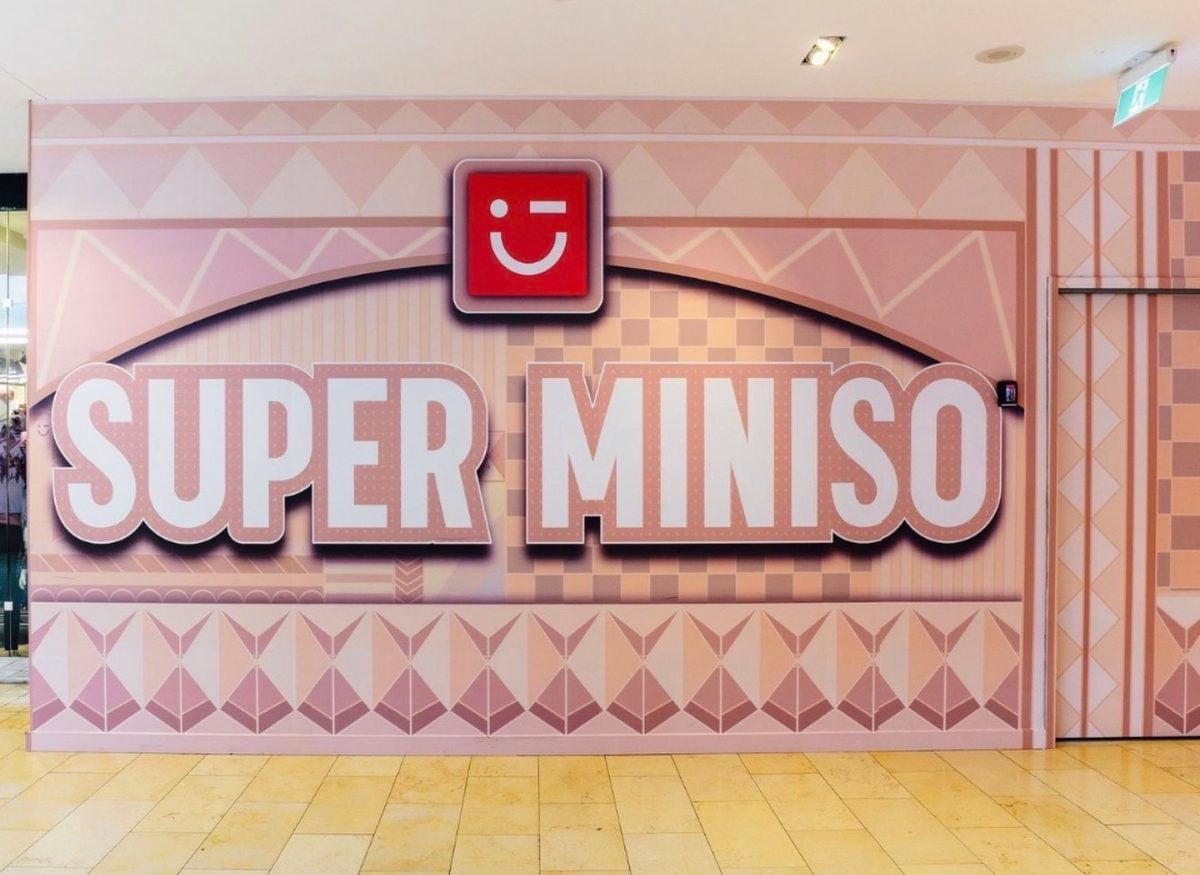
The activity extends well beyond luxury. LEGO, Flying Tiger Copenhagen, POP MART and a new SUPER MINISO concept are among the retailers with stores under construction, while Winners recently opened a two-level location.

The changes are reshaping several parts of one of Canada’s largest shopping centres. Square One, owned by Oxford Properties and Alberta Investment Management Corporation (AIMCo), has approximately 330 stores and services and attracts about 22 million visits annually.

Tiffany Moving Out of Holt Renfrew

One of the most notable changes is taking place in Square One’s established luxury area, where Tiffany & Co. is preparing a standalone boutique in space formerly occupied by Ferragamo.

Tiffany currently operates a boutique concession inside Holt Renfrew at Square One, where it has been located since the multi-brand store opened in 2016. The new location will bring Tiffany directly into the mall as a standalone storefront after roughly a decade within Holt Renfrew.

Ferragamo was among the luxury brands that opened at Square One in 2016 as the shopping centre expanded its higher-end offering. That same year, Holt Renfrew opened its 130,000-square-foot Square One store and Tiffany entered the Mississauga market within it.

Tiffany’s move comes as the jewellery house has reduced its boutique presence within Holt Renfrew elsewhere in Canada. The brand no longer operates its former Holt Renfrew locations in Calgary and Montreal, where Tiffany continues to have standalone boutiques. A Vancouver Tiffany boutique at Holt Renfrew continues to operate.

Rolex Preparing Larger Square One Boutique

Rolex is also expanding at Square One. Raffi Jewellers, which operates the existing Rolex boutique at the shopping centre, is preparing a substantially larger location incorporating adjacent space.

The expansion builds on Raffi’s longstanding presence at Square One and comes as the jeweller is also involved in a larger Rolex presence planned for Yorkdale Shopping Centre in Toronto. Raffi operates Rolex at both properties, giving the jeweller a significant presence at two of the GTA’s highest-profile shopping centres.

The Square One project connects with the property’s previous luxury expansion. In 2016, the shopping centre opened a roughly 75,000-square-foot luxury wing, excluding Holt Renfrew, with Rolex by Raffi Jewellers among the tenants. The original Rolex boutique, which opened later that year, spanned more than 1,700 square feet.

A decade later, Tiffany’s move and the Rolex expansion are updating that same luxury cluster, with established brands taking different or larger spaces within the property.

SUPER MINISO, POP MART and LEGO Add to Collectibles Mix

Another group of incoming retailers is concentrated around toys, collectibles, licensed intellectual property and discovery-oriented shopping.

MINISO is preparing to open a SUPER MINISO at Square One on October 10. SUPER MINISO is a distinct format within the retailer’s broader store network, with greater emphasis on licensed IP, collectibles and fan-oriented merchandise alongside MINISO’s general lifestyle assortment.

Square One has already hosted temporary MINISO activations tied to properties including Star Wars and One Piece. The permanent SUPER MINISO gives the retailer a larger platform for the IP-driven merchandise that has become increasingly important to its store strategy.

POP MART is also under construction at Square One. The Chinese collectibles retailer already has a Robo Shop presence at the shopping centre, while construction hoarding indicates a new physical retail space is being prepared. Details of the forthcoming format have not yet been publicly confirmed.

LEGO is another confirmed addition, with Square One listing a LEGO Store as coming soon. Its arrival adds another global retailer focused on toys and collecting, with a physical-store format that encourages customers to browse.

The concentration of SUPER MINISO, POP MART and LEGO is notable as retailers and landlords put more emphasis on merchandise driven by fandom, collecting and licensed characters. These categories can give consumers reasons to make repeat visits as products and collaborations change.

Flying Tiger Copenhagen Part of Canadian Expansion

Flying Tiger Copenhagen is also under construction at Square One as part of the Danish retailer’s entry into Canada.

The company identified Square One as one of its first five GTA locations when it announced its Canadian expansion earlier this year. The initial rollout also includes CF Toronto Eaton Centre, Vaughan Mills, Scarborough Town Centre and CF Markville.

Flying Tiger sells a frequently changing assortment spanning home goods, toys, stationery, party products, food and other categories. Square One therefore joins several of the GTA’s largest shopping centres in the retailer’s initial Canadian rollout.

Construction hoarding is also visible for Health Cart Canada and Candy Prom & Evening, while Peoples Jewellers has construction underway at the property.

Image: Oxford Properties

Luxury and Mass Market Under One Roof

Square One’s ability to accommodate these different concepts is tied to the breadth of its existing tenant mix. Holt Renfrew serves the luxury end of the property, while Walmart is a major mass-market anchor, with La Maison Simons, The Rec Room, Indigo and numerous international fashion and specialty retailers elsewhere in the centre.

The current leasing activity spans luxury investment from Tiffany and Rolex, off-price retail through Winners, and internationally expanding specialty concepts. That breadth has long distinguished Square One from Canadian shopping centres positioned more narrowly around luxury or mainstream retail.

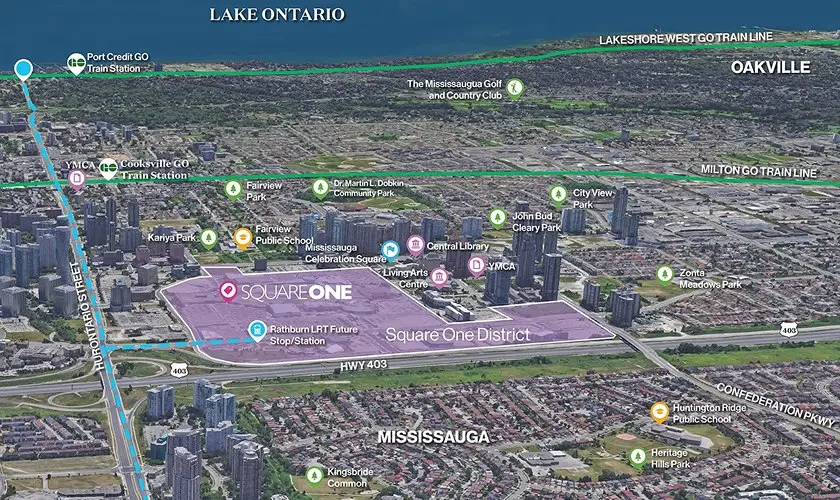
Square One encompasses approximately two million square feet and serves a large trade area extending beyond Mississauga. Oxford says the property receives roughly 22 million annual visits and contains approximately 330 stores and services.

Other recent openings have added to the leasing activity. DAVIDsTEA opened a new flagship at Square One in August, while Shake Shack is among the international brands to have recently established a presence at the shopping centre.

The retail changes are taking place as Oxford and AIMCo pursue longer-term development of the lands surrounding the shopping centre.

Square One anchors the planned Square One District, a mixed-use development envisioned across approximately 130 acres in downtown Mississauga. Long-term plans contemplate more than 18,000 residential units along with a transit hub, office space, community buildings, parks and green space surrounding the existing shopping centre.

More From Retail Insider

52% of tariff-impacted small businesses are performing worse: Merchant Growth report

Sam Lion photo
Sam Lion photo

Many Canadian small businesses are feeling the financial pressure from the current Canada/US trade war and they’re not seeing much relief from government support or the Buy Canadian movement, says the 2026 Canadian Small Business Report by Merchant Growth.

“You don’t have to export anything to feel this trade war. It lands on a supplier’s invoice, or with a customer who decides to hold off, and a lot of owners can’t pass that cost along,” said David Gens, Founder and CEO of Merchant Growth. “Canadians have shown up for local businesses, and that matters, but it hasn’t been enough to cover what owners are paying for goods and fuel. With tariffs, fuel prices, and slower spending all hitting at the same time, small businesses need financing that’s fast and flexible enough to keep up, so one hard quarter doesn’t decide whether they stay open.”

Vitaly Gariev photo
Vitaly Gariev photo

Looking ahead, 41% of Canadian small businesses plan to hold steady with their business plans. Meanwhile, some are planning to make further adjustments by cutting costs and finding ways to improve margins. Over the next six months, Merchant Growth said:

  • 22% plan to raise prices for customers
  • 14% plan to wind down their business
  • 11% plan to delay or cancel a planned investment
  • 9% plan to reduce staff or hours
  • 8% plan to invest in equipment or technology

Nearly two in three (65%) small business owners say U.S.-Canada trade tensions have affected their business in 2026. Among those owners, more than half (52%) say their business is performing worse than it was at this point last year. Many owners also feel shut out of the national response, with over one in three (37%) saying they’re not part of the conversation at all. Meanwhile, another 39% say large exporters, manufacturers, and political considerations come first, said the report.

Despite the series of tariff relief programs that federal and provincial governments have introduced, 68% of small business owners say they have seen no noticeable impact from these initiatives. Canadian consumers say they have been choosing Canadian, but small business owners haven’t felt the boost. Over half (56%) of Canadian consumers have shopped more from Canadian small businesses in the past 12 months than in previous years. However, two in three (67%) small business owners say the Buy Canadian movement hasn’t had a noticeable impact on their business. As economic pressures stack up, some owners are putting their own finances on the line to keep their businesses afloat. More than one in five (22%) small business owners have used personal credit, such as credit cards, home equity lines of credit or personal loans, to fund their business, added the report.

The 2026 Canadian Small Business report also found that:

How have U.S.-Canada trade tensions impacted small businesses?

The U.S.-Canada trade tensions are directly impacting Canadian small businesses’ bottom lines. As a result of the trade disruptions:

  • 38% saw an increased cost of goods or supplies
  • 27% faced lower revenue
  • 26% experienced lower customer demand
  • 23% absorbed higher costs because they couldn’t raise prices
  • 13% delayed or cancelled a planned purchase or investment
  • 12% faced a higher cost of equipment or machinery purchased from the U.S.
  • 12% saw cancellation or pause of contracts or orders
  • 6% lost a U.S. customer or contract outright

In response to the U.S.-Canada trade tensions, small businesses are adjusting how they operate with U.S. partners and customers:

  • 13% stopped working with U.S. suppliers or partners
  • 9% found new suppliers outside the U.S.
  • 8% stopped selling to U.S. customers
  • Looking ahead, 11% of small business owners plan to seek new customers or suppliers outside the U.S. over the next six months.

Is the Buy Canadian movement helping small businesses?

  • The share of Canadian consumers who have shopped much more from Canadian small businesses has gone up from 20% in 2025 to 24% in 2026.
  • Canadian consumers’ top motivators for buying from Canadian small businesses are supporting the local economy (75%), supporting Canadian jobs (69%), and U.S. tariffs (55%).
  • Canadian consumers’ top barriers to buying from Canadian small businesses are prices (52%), product availability (31%), clarity that a product is Canadian (23%), and store locations (23%).
  • That support has yet to translate into a meaningful change for most owners. Only about one in four (24%) small business owners say the Buy Canadian movement has had a positive impact on their business so far in 2026, while 67% have seen no noticeable impact.

Canadian small business owners are raising prices and pulling back on growth plans

This year, the three biggest pressures on Canadian owners’ businesses are inflation or rising input costs (44%), weak customer spending (38%), rising fuel and energy costs (36%), and trade uncertainty (12%).

In response to these pressures, Canadian small business owners are shifting their approach to pricing and operations. However, some are trading off their growth plans.

  • 22% increased prices for customers
  • 15% delayed or cancelled a planned investment to expand the business
  • 13% diversified their products or services
  • 11% reduced staff or hours
  • 10% paused hiring
  • 9% adopted new technology (AI, automation systems, etc.)

Merchant Growth is a Canadian financial technology company that specializes in small business financing. Founded in 2009, Merchant Growth has since supported over 15,000 Canadian businesses with over $1.5 billion in growth financing. 


https://kaboompics.com/ photo

In an interview with Retail Insider, Hash Aboulhosn, Chief Growth Officer at Merchant Growth, takes a closer look at the report.

How have Canada-U.S. trade tensions affected small businesses over the past year in terms of costs, revenue, customer demand and relationships with U.S. suppliers and customers?

It’s hit a lot of small businesses, and it’s landing as a direct hit to the bottom lines. Nearly two in three Canadian owners (65%) tell us they’ve felt some impact from trade tensions with the U.S. 

Rising costs are the biggest concern, with 38% saying their cost of goods or supplies has increased, followed by lower revenue at 27%, and lower customer demand at 26%. And it’s not spread evenly. Owners who’ve been affected by trade tensions are twice as likely as those who haven’t to say business is worse than it was in 2025 (52% vs. 27% of Canadian small businesses overall). 

We’re seeing signs of that pressure in the broader economy, too. Statistics Canada’s July retail trade data came in down 0.7% month over month, led by a drop at general merchandise stores, as trade uncertainty is weighing on discretionary spending.

On the supplier and customer side, some owners are already taking action: 13% have already stopped working with U.S. suppliers or partners, 9% have found new suppliers outside the U.S., and 8% have stopped selling to U.S. customers altogether. And it’s not slowing down, another 11% say they plan to look for new customers or suppliers outside the U.S. in the next six months. 

That search for options outside the U.S. is happening at the same time as the biggest change to internal trade in this country in a decade. The Free Trade and Labour Mobility in Canada Act came into force on January 1, 2026 and the Canadian Federation Of Independent Business (CFIB) has flagged some of the barriers it’s chipping away at, in sectors like health care and education, as equivalent to a 40% tariff. For owners looking beyond the U.S. for suppliers or customers, there’s more room to move inside Canada than there was a year ago. 

What does the report show about the ability of Canadian small businesses to access government support, and why do many owners feel they have been left out of trade negotiations?

Honestly, the data isn’t encouraging: more than two in three owners (68%) say government support, federal or provincial, for those hit by tariffs hasn’t made a noticeable impact on their business, and a lot of them don’t feel like anyone’s speaking for them at the table in the first place either. 

Some of that comes down to how the support itself is built. The last federal budget put $1 billion into a Regional Tariff Response Initiative, and the eligibility rules disqualify many small businesses. That’s the kind of program design owners are dealing with when they tell us the support isn’t registering.

One year after your previous benchmark, what has changed in consumer support for buying Canadian products, and to what extent do small businesses say that sentiment is translating into measurable business results?

The overall number of Canadians shopping Canadian hasn’t changed year over year, but those who are doing it are doing it more. Over half (56%) of Canadians say they’ve shopped more from Canadian small businesses this past year, the same as in 2025. What has shifted is intensity. About 1 in 4 (24%) now say they’ve shopped “much more” Canadian, up from 20% last year. The main reasons people give are supporting the local economy (75%), supporting Canadian jobs (69%), and U.S. tariffs (55%). 

While Canadians have been choosing to support local, one of the surprising findings from the study is that the Buy Canadian movement isn’t giving many businesses a boost. Two in three (67%) Canadian small businesses say the Buy Canadian movement hasn’t made a noticeable impact on their business so far in 2026, and only 24% say it’s had a positive effect. 

Part of that, in my view, comes down to costs. A lot of owners are dealing with higher costs across the board right now, and there’s only so much of that an owner can pass on before they start losing customers. So even with more people saying they want to buy local, that doesn’t automatically show up as healthier margins if the cost side is moving just as fast.


Andrea Piacquadio photo

How are current economic pressures affecting small-business owners’ decisions around financing, investment, expansion and their own personal finances?

About 1 in 5 (22%) have raised prices and 15% have delayed or cancelled an investment they’d planned to grow the business. Right now, a lot of owners are just trying to get through the year. Between trade uncertainty and inflation, the priority for most owners is paying their employees and vendors, keeping customers served, and keeping the doors open.

Much of that pressure is landing on owners personally, not through the business at all. About 1 in 5 (22%) have used personal credit, credit cards, HELOCs, and personal loans to keep the business funded this past year. Meanwhile, 28% have cut their own salary, and 15% have stopped paying themselves altogether.

A lot of that comes down to access. The Big Six banks hold 93% of Canadian financial assets, but their loan sizes typically start at $250,000, well above what most small businesses need. And even when they can secure financing, it comes at a cost. When an owner needs cash for payroll or a supplier invoice, a credit card or a line against their house is often the fastest option, even if it’s not the cheapest. This is why we need faster and more flexible financing options for small businesses, giving them a better option to fund what they need to grow, not just keep their doors open.

What does the data reveal about the steps small businesses are considering to cope with the current environment, including raising prices, reducing staff or hours, delaying growth, investing in technology or equipment, or potentially winding down their businesses?

Owners are getting smarter about where they spend and how they price, trying to protect margins wherever they can, but that also means trade-offs on growth. Looking ahead six months, price increases are the most common plan, 22% of owners say they’ll raise prices, 11% plan to delay or cancel an investment, and only 4% plan to hire.

That low hiring number lines up with a bigger staffing squeeze. More than 1.3 million temporary work permits expire by the end of 2026, and many employers relying on the program say they’d likely close without those workers. On top of that, CFIB puts the cost of pure compliance work at $17.9 billion a year nationally, with the smallest firms paying about seven times more per employee than the largest, the baseline cost of staying open before any of these other pressures. 

Small businesses have created millions of jobs in the private sector. So when owners pull back, it shows up as fewer job postings and fewer independent businesses in the communities they serve.

Many businesses are looking to close their doors, with 14% planning to wind down in the next six months. Small businesses impacted by trade tensions are more than twice as likely to be considering it (19% versus 6% for those who haven’t been touched by it.)

More from Retail Insider:

Canadian Retail Construction Hits Decade Low as Scarcity Reshapes Expansion

Yonge Street in Toronto, Photo: Craig Patterson

Canadian retail construction has fallen to its lowest level in a decade, creating an increasingly constrained supply of new space even as vacancy remains low and retailers continue opening stores across the country.

Construction starts dropped by more than 40% in the first half of 2026, according to JLL’s Fall 2026 Retail Market Dynamics report. Approximately 4.9 million square feet of retail space was under construction nationally at mid-year, compared with an existing inventory of roughly 805 million square feet. The national vacancy rate stood at 2.5%.

Leasing activity was also down approximately 11%, but the decline does not necessarily indicate a corresponding reduction in retailer demand. JLL identifies a shortage of suitable available space as an increasingly important constraint, particularly in Canada’s largest and most supply-constrained markets.

The national figures also conceal substantial differences across the country. Toronto and Vancouver have thin development pipelines, while Calgary is experiencing its largest retail construction cycle in a decade.

Canada’s Retail Supply Pipeline Shrinks

Canada’s retail construction pipeline has contracted after reaching approximately 6.2 million square feet in early 2025. JLL said developers have remained disciplined, concentrating construction in neighbourhood centres and general retail, particularly projects serving daily needs.

The slowdown is occurring alongside weakness in parts of Canada’s broader development industry. New condominium construction has fallen sharply in markets including Toronto, reducing one of the channels through which new urban retail inventory has traditionally been delivered as part of mixed-use projects.

CMHC reported that population-adjusted housing starts in Toronto during the first half of 2026 were among their lowest levels since 1996. Condominium launches have largely stalled, with only 156 condominium units starting construction in the City of Toronto during the first six months of the year, compared with an annual average of about 7,000 over the previous decade.

Not every residential development includes a significant retail component, but fewer large mixed-use projects moving into construction also reduce a potential source of future storefront inventory in dense urban markets.

Toronto’s Low Leasing Reflects Limited Supply

Toronto illustrates how declining leasing activity can coexist with an exceptionally tight retail market. Retail vacancy was 2.3% at mid-year, according to JLL, while average asking rents reached $37.19 per square foot.

Leasing activity nevertheless fell 15% year over year to approximately 1.3 million square feet during the first half of 2026, one of the lowest levels recorded over the past decade. Space under construction fell by more than half from a year earlier, with construction starts near historic lows.

JLL identifies supply as the more consequential issue, with no large development on the horizon capable of adding meaningful inventory. Retailers continue to commit to the market: Toronto accounted for 38% of notable store-opening announcements across the major Canadian markets tracked by JLL during the first half of the year.

Activity includes leases in Bloor-Yorkville, continued leasing along Yonge Street between Gerrard and Bloor streets, and retail incorporated into mixed-use projects including ROQ City, Bloor Crossing and the redevelopment of Galleria Mall.

The suburban picture is different. Halton Region is attracting grocery and large-format development as growing communities create new trade areas, with Costco and Fortinos among the retailers identified by JLL. Toronto ranks alongside Calgary as one of Canada’s two leading markets for new daily-needs development.

Lower leasing volumes in a supply-constrained market can therefore partly reflect a shortage of appropriately located and configured space, rather than simply weaker retailer interest.

Calgary Defies the National Construction Slowdown

Calgary is the most significant exception to Canada’s shrinking retail development pipeline. Approximately 2.1 million square feet of retail space was under construction at mid-year, up from 1.1 million square feet in late 2024.

Based on JLL’s national and local-market figures, Calgary alone accounts for roughly 43% of all retail space currently under construction in Canada.

The city is adding more retail inventory than it has in a decade, with much of the development concentrated in fast-growing suburban areas and weighted toward value-oriented daily-needs uses. Despite the new supply, Calgary’s retail vacancy rate was only 2.4%.

Vacancy was 0.8% in the Southeast and 0.9% in Airdrie, while approximately 80% of the development pipeline was pre-leased, according to JLL.

Projects including Taza and Bingham Crossing illustrate the pattern, with Walmart and Costco anchoring new retail serving expanding residential trade areas. Calgary’s Southwest and West are attracting a disproportionate share of larger developments as residential growth expands the customer base available to retailers.

Housing construction helps explain the contrast with Canada’s more constrained markets. CMHC reported 61 housing starts for every 10,000 Calgary residents during the first half of 2026, compared with 19 in Toronto and 51 in Edmonton. While Calgary housing starts have moderated from exceptionally high 2025 levels, construction remains above recent historical averages.

Consumer spending is also considerably stronger in Alberta. Retail sales in the province were 9.7% higher in July than a year earlier, compared with growth of 5.1% nationally, 4.9% in Ontario and 1.5% in British Columbia, according to Statistics Canada.

Edmonton shows a similar, though less pronounced, suburban development pattern, with approximately one million square feet of retail under construction at mid-year, heavily concentrated in South Edmonton.

Grocery Dominates New Daily-Needs Development

The composition of new development is changing along with its geography. Grocery stores anchored 96% of new daily-needs centres developed since 2022, according to JLL, up from 74% between 2016 and 2021. The shift reflects developer preference for formats supported by frequent visits and essential consumer spending.

Neighbourhood-centre vacancy has fallen from approximately 4.4% in 2017 to about 2% today, while strip-centre vacancy is even lower at 1.7%. Space under construction in neighbourhood centres has increased almost 60% year over year, and neighbourhood centres were the only major retail property format to record an increase in leasing activity while other categories contracted.

Grocery anchors can also support pharmacies, restaurants, personal services, financial services and other businesses dependent on recurring visits, making the format particularly attractive in newly developing suburban communities.

Value Retail Takes Share From the Middle

JLL’s research also points to a significant change within grocery-anchored development. Value-oriented grocery anchors represented 38% of new development between 2016 and 2021. For projects developed or expected to be completed between 2022 and 2027, the share rises to 52%.

Mid-range grocery falls from 45% to 30%, while premium grocery remains comparatively stable, moving from 17% to 18%.

The shift suggests that polarization in consumer spending is increasingly visible in the physical development pipeline. Value-oriented formats are gaining substantial ground while the traditional middle receives a smaller share of new investment.

At the opposite end of the market, major premium developments continue to attract retailers and capital where demographics and expected store productivity support the investment.

Vancouver Shows Demand at the Premium End

Vancouver provides the clearest example at the upper end of the market. The opening of Oakridge Park contributed to approximately 557,000 square feet of net retail absorption during the first half of 2026, Vancouver’s strongest first-half performance since 2020. Average asking rents reached $39.44 per square foot, the highest among the major Canadian markets tracked by JLL.

Oakridge’s completion also substantially reduced Vancouver’s remaining development pipeline. Approximately 526,000 square feet was under construction at mid-year, with construction starts close to decade lows.

Vancouver’s overall vacancy rate was 2.6%, although conditions varied sharply within the region. Downtown Vancouver vacancy remained at 9.9%, while Surrey and Langley were among Canada’s tightest retail submarkets at approximately 1.5%.

Luxury retail is a striking exception to the broader construction slowdown. JLL counted 30 luxury store openings in Vancouver between July 2025 and July 2026, compared with 18 in New York City, 11 in Miami and seven in Los Angeles, with Oakridge Park accounting for most of Vancouver’s activity.

Together, the value-oriented suburban development occurring in Alberta and premium investment in Vancouver illustrate how selective the current development environment has become. Conventional retail supply is growing slowly, while capital continues to flow toward projects where location, demographics, recurring demand or expected productivity provide a stronger investment case.

Low Vacancy Does Not Mean Every Storefront Is in Demand

Montréal provides an important qualification to the national scarcity story. Overall retail vacancy was just 2.1% at mid-year, but conditions varied substantially by property type. Power-centre vacancy tightened to approximately 1%, while strip-centre vacancy increased to 4.6%.

Regional malls continue to absorb the impact of former Hudson’s Bay space, while JLL found necessity-anchored properties continuing to tighten as some discretionary storefront formats face greater pressure.

Retail space is highly specific to location, size, configuration, parking, loading, neighbouring tenants and surrounding demographics. A large former department-store box does not necessarily meet the requirements of a restaurant, supermarket or small-format apparel retailer, just as vacant downtown storefronts do little for chains seeking suburban sites with parking and highway access.

Canada’s low headline vacancy rate can therefore coexist with visible empty storefronts. The constraint is less about an absence of vacant retail space than a limited supply of the right space in the right markets.

Consumer Spending Remains Resilient

The construction slowdown is occurring without a corresponding collapse in Canadian retail spending. Canadian retail sales reached $73.7 billion in July, down 0.7% from June but 5.1% higher than a year earlier, according to Statistics Canada.

Regional performance varied considerably, with Alberta leading the major provinces at 9.7% year-over-year growth. Toronto retail sales increased 2.4%, while Vancouver sales declined 0.8%.

JLL’s first-half analysis similarly found stronger growth in essential categories and food services than in core discretionary retail. Foodservice spending increased 5.6%, while dining represented approximately one-third of announced store openings.

The pattern aligns with where development capital is increasingly concentrated: categories and locations where landlords and developers have greater confidence in recurring consumer demand.

A More Selective Expansion Market

Canada’s constrained construction pipeline is likely to influence retailer expansion strategies over the next several years. In established markets such as Toronto and Vancouver, retailers seeking high-quality locations may face limited choices and greater competition for suitable space.

Some will need to adjust store sizes, commit to developments earlier or consider repositioned existing properties instead of relying on significant amounts of new supply.

Suburban growth markets present a different set of opportunities. Calgary and parts of Edmonton continue to add retail alongside residential development, while grocery-anchored projects provide a relatively predictable framework for new centres.

Mixed-use and transit-oriented development will remain another source of inventory in Canada’s largest cities, although weakness in condominium construction creates uncertainty around how quickly some projects will proceed. CMHC says new project launches have weakened across several major Canadian markets even as previously started projects continue toward completion.

JLL expects supply constraints to become more apparent as population and consumer demand strengthen again. With relatively little conventional retail entering the pipeline in several major markets, stronger demand could tighten conditions quickly.

For retailers planning Canadian expansion, the increasingly important question is whether the right space, in the right trade area and in the right format, will be available when they are ready to grow.

More from Retail Insider: