Plaza Retail REIT recently reported higher profit and operating income in the second quarter as leasing, rent increases and improved cost recoveries helped drive growth across its retail property portfolio.
The Fredericton-based real estate investment trust said that profit and total comprehensive income rose 31.2 per cent to $16.6 million in the three months ended June 30, compared with $12.7 million in the same period a year earlier.
Net operating income increased 4.3 per cent to $19.9 million from $19.1 million, while revenue rose 1.2 per cent to $32.2 million.
The results come as Plaza continues to adjust its portfolio, including selectively selling properties while directing capital toward developments, intensifications and other initiatives.
“FFO (Funds From Operations) per unit increased to $0.105 for the quarter, $0.202 year-to-date, up 5.0% and 7.4% respectively, compared with the same periods in the prior year (or 8.3% year-to-date after adjusting for certain timing and severance impacts). AFFO (Adjusted Funds From Operations) per unit increased to $0.078 for the quarter, $0.152 year-to-date, up 16.4% and 7.0% respectively, compared with the same periods in the prior year (or 8.0% year-to-date after adjusting for certain timing and severance impacts). Our FFO and AFFO payout ratios also improved to 69.2% and 92.2% year-to-date, respectively, strengthening our financial flexibility and demonstrating that the structural changes made to the business over the past year are producing sustainable results and predictable growth.”
Operating results
Plaza said quarterly NOI (Net Operating Income) increased by $828,000 from a year earlier, with the gain attributed to higher revenue from leasing and rent escalations, as well as improved cost recoveries.
Same-asset NOI increased 2.7 per cent in the quarter and 2.3 per cent for the first six months of the year. Committed occupancy was 97.6 per cent.
“Operating fundamentals remained resilient. Total NOI increased by 4.3% for the quarter, 3.4% year-to-date, and same asset NOI increased by 2.7% for the quarter, 2.3% year-to-date. Committed occupancy remained strong at 97.6%, supported by continued tenant demand, contractual rent growth and leasing activity across our essential retail portfolio.”
For the six months ended June 30, revenue was $64.7 million, up 2.8 per cent from $62.9 million a year earlier. NOI increased 3.4 per cent to $38.7 million from $37.4 million.
The year-to-date increase in NOI was attributed to higher leasing revenue, rent escalations and improved cost recoveries, partly offset by higher operating expenses.
Jason ParravanoPlaza REIT photo
Portfolio and capital allocation
Plaza said its strategy includes selling some properties while continuing to add space through development and other projects.
“We remain focused on improving the quality, scale and earnings capacity of our portfolio,” said Parravano. “While we have selectively sold certain properties this year, we will continue to add square footage through developments, intensifications and other strategic initiatives. This reflects a deliberate approach to capital allocation. We are recycling capital from mature or non-core assets into opportunities that can generate stronger returns, improve portfolio quality and contribute to sustainable cash flow growth.”
The trust’s portfolio at June 30 consisted of interests in 189 properties totalling approximately 8.8 million square feet across Canada, along with additional land held for development.
Plaza said the portfolio consists largely of open-air centres and stand-alone small-box retail outlets and is predominantly occupied by national tenants focused on essential needs, value and convenience.
Higher profit
Plaza’s quarterly profit was also affected by changes in the fair value of investment properties. The $5.1 million net increase in fair value during the quarter was $3.8 million higher than in the same period of 2025.
For the first six months of the year, profit and total comprehensive income was $29.4 million, compared with $22.0 million a year earlier, an increase of 33.9 per cent.
The year-to-date results included a $2-million increase in the share of profit of associates, which Plaza attributed mainly to a non-cash fair-value adjustment to underlying investment properties and changes involving 5400 Laurier Ouest Limited Partnership and the acquisition of Plazacorp Ontario-1 Limited Partnership.
The change in fair value of investment properties accounted for another $3.8 million of the year-over-year increase in profit.
“Our progress is measured not simply by the number of properties we own, but by the quality and scale of our real estate, the cash flow it generates, and the value created on a per unit basis. With growing FFO and AFFO, improved payout ratios and a pipeline of projects advancing across the portfolio, we believe Plaza is well positioned to continue creating long term value for unitholders.”
Welcome to the Daily Synopsis by Retail Insider. We hope you enjoy the 11 articles we published covering key developments in Canadian retail.
Winnipeg-based Quarks expanded its Canadian footwear footprint as it nears 50 years in business with a focus on regional markets and sustainable growth. Tim Hortons plans stronger Canadian growth through 80 new stores, 400 renovations, and expanded beverage and loyalty programs. Leon’s Furniture reported higher Q2 net income despite a slight sales decline, driven by cost control and strategic investments.
Canada’s freight market is shifting unevenly with truckload transportation strengthening, influencing retail supply chain strategies discussed in this analysis.
Ever noticed how shopping feels different than it did even five years ago? Not just the fact that half your purchases arrive on the doorstep now. It’s the whole rhythm of it. The way people browse, compare, hesitate, and eventually buy. Retailers have been paying close attention to all of this, mostly because they have to. And the tool doing a lot of the quiet heavy lifting behind the scenes is market research.
The truth is, most of the big shifts in retail didn’t happen by accident. Someone studied shopper behaviour, spotted a pattern, and acted on it. So what exactly has all that research been telling us? Quite a lot, as it turns out.
Shoppers Want Convenience, But Not at Any Cost
Here’s the thing about convenience. Everyone says they want it, and they genuinely do, but research keeps showing there’s a limit. People love one-click checkouts and same-day delivery. What they don’t love is feeling like a data point being squeezed for every last penny.
Studies into shopping habits have picked up on this tension again and again. Customers will happily hand over their email for a discount, then get irritated when they’re bombarded with twelve promotional messages a week. Funny how that works. The research suggests the future isn’t just about making things faster. It’s about making things feel respectful too.
Picture this: trying to buy a pair of shoes and being asked to create an account, verify your phone, and answer a survey before you can even see the price. Most people bail. Retailers who’ve done their homework know this, and they’re stripping back the friction rather than adding to it.
The Blurred Line Between Online and In-Store
Remember when online shopping and physical shopping felt like two separate worlds? That’s pretty much over. People now research on their phones while standing in a shop. Or they’ll spot something in a store window, then order it online later that night from the sofa.
Market research has been tracking this back-and-forth movement for years, and the findings are clear. Shoppers don’t think in channels. They just think about the thing they want. Whether it comes from a warehouse or a shelf barely registers.
This part’s a bit tricky for retailers, honestly. Because it means the old habit of treating the website and the shop floor as separate businesses doesn’t hold up anymore. The ones getting it right are stitching the two together so a customer can start in one place and finish in another without a hitch.
Personalisation Is Expected, Not Impressive
A while back, personalised recommendations felt kind of clever. Now? People barely notice them, and they get annoyed when they’re wrong. Recommend a lawnmower to someone in a flat with no garden and you’ve just reminded them the algorithm doesn’t really know them.
Good research digs into what personalisation actually means to shoppers, and it’s usually more subtle than a “you might also like” widget. It’s about remembering preferences, respecting past choices, and not making people repeat themselves. This is where solid Kadence market research helps brands understand the difference between helpful and creepy, which is a line that shifts depending on who you ask.
Values Are Doing Some of the Shopping Now
Something interesting has crept into the data over the past decade. People increasingly care about where their stuff comes from. Sustainability, fair treatment of workers, honest sourcing. These aren’t fringe concerns anymore.
But here’s where it gets interesting. Research also shows a gap between what people say and what they actually buy. Someone might rate ethics as hugely important, then grab the cheaper option anyway. Retailers who only listen to the survey answers get caught out. The ones who watch real behaviour alongside stated opinions get a much truer picture.
That gap, by the way, is exactly why good research matters so much. Ask the wrong question or trust the surface answer and you build a strategy on sand.
So Where Does This Leave Shopping?
Somewhere more human, oddly enough. All this data and behavioural study keeps pointing back to fairly simple wants. People want to feel understood. They want things to be easy without feeling manipulated. And they want to trust the brands they hand their money to.
The retailers who thrive over the next few years probably won’t be the ones with the flashiest tech. They’ll be the ones who actually listened. Turns out understanding your customer never really goes out of fashion.
Retail events offer brands a chance to create meaningful face-to-face connections that digital marketing alone cannot replicate. Whether you’re preparing for a trade show, pop-up activation, or community event, the right retail event strategies can increase visibility, attract qualified prospects, and strengthen long-term customer relationships. Success depends on careful planning, attractive event design, engaging customer experiences, strategic budgeting, and effective post-event follow-up. These strategies help businesses maximize event results while building stronger relationships and achieving measurable marketing outcomes.
Design an Event Space That Attracts Attention
Your event space should communicate your brand within seconds. Clean layouts, bold graphics, effective lighting, and open traffic flow encourage visitors to stop instead of walking past. For outdoor promotions, a Custom canopy tent provides both weather protection and strong visual branding while making your location easier to spot. Consistent colors, clear messaging, and professional displays create trust before conversations even begin.
Visitors often decide quickly whether to approach a booth, making first impressions essential. An organized layout helps attendees move comfortably, while high-quality visuals reinforce brand identity. Positioning important products or demonstrations in visible areas can increase engagement.
Practical design choices also influence visitor experience. Comfortable meeting spaces, accessible displays, digital screens, and interactive elements can make the booth more welcoming without creating clutter. Every design element should support a consistent brand story that remains memorable after the event.
Engage Visitors With Interactive Experiences
People remember experiences more than displays. Live demonstrations, hands-on product testing, educational sessions, and interactive technology keep visitors engaged and create opportunities for meaningful conversations. Instead of overwhelming attendees with information, focus on solving a specific customer problem. High-quality printed displays from providers such as expoprint can reinforce key messages throughout the visitor journey without distracting from personal interaction.
Interactive experiences turn passive visitors into active participants. Product trials, guided demonstrations, touchscreens, and live presentations help attendees understand the value of your offering more effectively than traditional presentations.
Staff training is equally important. Friendly and knowledgeable team members who listen carefully create stronger relationships than scripted sales pitches. Authentic conversations build trust and increase the chance that visitors will remember your brand.
Digital tools can also extend engagement. QR codes, digital catalogs, online sign-ups, and contests provide additional value for attendees while helping brands collect useful customer information for future communication.
Balance Budget, Branding, and Materials
Not every investment delivers equal value. Prioritizing elements that improve visitor experience usually produces better results than spending heavily on giveaways alone.
Investment
Primary Benefit
Priority
Booth structure
Visibility and professionalism
High
Branded signage
Brand recognition
High
Interactive demonstrations
Visitor engagement
High
Promotional giveaways
Traffic generation
Medium
Digital lead capture
Conversion tracking
High
Staff training
Better customer interactions
High
Product samples
Hands-on experience
Medium
A balanced budget combines durable branding materials with experiences that encourage meaningful conversations instead of simply increasing foot traffic.
Promotional merchandise may attract attention, but it creates more value when combined with strong engagement. Investing in reusable displays, professional graphics, and trained staff often provides better long-term returns while maintaining a consistent brand image.
Reviewing previous event performance also helps optimize spending. If certain materials or activities create limited engagement, those resources can be redirected toward areas that improve customer experience and results.
Measure Success After the Event
The event isn’t over when attendees leave. Strong follow-up determines whether conversations become customers.
Organize leads within 24-48 hours.
Send personalized follow-up messages.
Measure conversions against your original goals.
Review visitor feedback and staff observations.
Apply lessons to improve future events.
Compare results with previous events.
Update CRM records for future sales conversations.
Consistent measurement helps identify which retail event strategies generate the strongest return on investment and deserve more attention in future campaigns.
Quick follow-up keeps your brand fresh in attendees’ minds. Personalized emails, calls, or product recommendations are more effective than generic messages. Combining conversion data with visitor feedback provides a clearer understanding of strengths and areas for improvement.
Frequently Asked Questions
How can a small brand stand out at a trade show?
Focus on a clear message, distinctive visuals, engaging demonstrations, and authentic conversations rather than competing only on booth size. Meaningful interactions often create stronger impressions.
How do you measure retail event success?
Track qualified leads, sales, customer engagement, conversion rates, and return on investment against your original goals. Both data and attendee feedback help evaluate performance.
Conclusion
Outstanding retail events are built through thoughtful planning, engaging experiences, and disciplined follow-up not bigger budgets alone. By refining your retail event strategies before, during, and after every event, you can create stronger customer connections, improve lead quality, and turn each activation into a measurable business opportunity. When goal setting, booth design, visitor engagement, and performance analysis work together, retail events become powerful tools for strengthening brands, building customer relationships, and supporting sustainable growth.
Canadian retail continues to demonstrate resilience as growth strategies and operational agility come to the fore this week. From expansion plans in grocery and specialty segments to evolving consumer engagement models, retailers and commercial real estate stakeholders face a complex yet opportunity-filled landscape. The intersection of strategic portfolio moves, rising costs, and marketplace innovation underscores the need for adaptability.
In the backdrop, ongoing regulatory and supply chain pressures persist, demanding a balance between cost management and customer experience. Notably, key leadership changes signal renewed focus on international growth and operational excellence. As the industry approaches late summer, these developments set a clear tone for the strategic decisions shaping retail’s near future.
Retailer News
The retail landscape is marked by significant footprint expansions and experiential retail innovations. Tim Hortons’ aggressive Canadian growth plans include 80 new restaurant openings alongside enhancements to cold beverages and loyalty programs as it fights to reclaim momentum from recent sales slowdowns. Similarly, Fendi’s standalone boutique at Oakridge Park illustrates luxury retail’s targeted return to independent outlets, capitalizing on Vancouver’s rising prominence in the North American luxury scene.
In grocery, T&T Supermarket is advancing its national reach with the first Manitoba store planned for CF Polo Park, reinforcing growing consumer demand for diverse ethnic food offerings. At the same time, Realm Fitness’ transformation of a Calgary industrial property into a vibrant community and retail hub highlights a promising blueprint for repurposing non-traditional spaces into high-engagement destinations, blending retail with wellness and lifestyle amenities.
Finally, retailers are adapting to a more complex operating environment. The uneven shifts in Canada’s freight market and emerging security risks extending past theft remind the sector of the multifaceted challenges requiring integrated real estate and operational responses.
Consumer spending trends remain fragmented. Although Canadian retail sales grew 4.0% year over year in May, largely fuel-driven, discretionary sectors such as home furnishings continue to struggle, as described in a report on retail sales growth. This dynamic is mirrored in furniture retail with Wayfair’s data indicating Canadian lag behind U.S. recovery. Conversely, specialty retail like eyecare shows promise, with Kits Eyecare’s record revenue highlighting successful niche positioning.
Retailers in foodservice report positive momentum. Restaurant Brands International’s strong Q2 consolidated sales demonstrate resilience in quick-service dining, while beverage innovations by McDonald’s Canada and recent consumer beverage preferences suggest strategic new growth avenues.
Underlying these results, evolving regulatory and operational complexities are well documented in the Retail Insider policy report, outlining the collision between affordability policies and rising retail costs. Similarly, the logistics report reveals a shift toward supply chain optionality as a coping strategy in a volatile environment, which is altering real estate and inventory planning.
Retailer People News
Leadership changes and strategic hires are shaping retail’s forward trajectory. Second Cup’s appointment of Joe Walker as CEO to spearhead its international franchise growth, particularly in the Gulf region, signals ambitions to diversify beyond Canada’s borders through focused leadership with global experience. In financial and operational governance, Leyad’s recent senior appointments of Juan Calixto Tria and Alex Ratté fortify its asset management capabilities amid continued portfolio expansion.
Meanwhile, Goodfood’s leadership change alongside its creditor protection filing highlights operational challenges in the online meal delivery sector, reflecting broader pressures from liquidity constraints and restructuring. Sleep Country’s expansion strategy, including the acquisition of Sleep Number and forthcoming store concepts, demonstrates a multi-brand portfolio approach designed to capture diverse segments and geographic reach, according to their CEO’s recent interview.
Retailer Op-Eds
Thought leadership this week underscores how import strategies can impact category vitality and consumer retention. For instance, the argument that Australian beef imports may sustain Canadian beef aisle engagement amidst domestic price pressures introduces important dialogue on how supply diversity supports category health and customer traffic. This perspective is particularly relevant for grocers and retail real estate owners who depend on stable foot traffic driven by staple and high-demand categories.
Editor’s Take
This week’s developments showcase a Canadian retail sector actively balancing growth ambitions with operational resilience in a complex market. The expansion plans by major players such as Tim Hortons and T&T Supermarket reflect confidence in demand growth even as rising costs and regulatory complexities, highlighted in policy and logistics reports, remind executives of the necessity to embed flexibility into supply chains and real estate strategies. Grocery-anchored retail remains a sturdy platform, as seen in REIT leasing strength and specialty food firms’ robust earnings.
Leadership changes at companies like Second Cup and Goodfood signal a broader pivot towards international markets and turnaround execution, respectively, underscoring the vital role of experienced management in navigating growth amid uncertainty. Meanwhile, luxury and experiential retail moves, including Fendi at Oakridge Park and Realm Fitness’ innovative hub, signal diversification in retail real estate usage and tenant mix strategies critical for maintaining foot traffic in evolving urban centres.
Overall, this week confirms that successful Canadian retailers and real estate operators are those who integrate data-driven market insights with strategic portfolio management, leadership continuity, and operational agility. Aligning product offerings, store formats, and community engagement within a demanding economic environment will be key to sustaining competitive advantage as the sector advances.
In the fast-moving world of digital marketing and e-commerce, only a few names manage to stand out through persistence and clear strategic thinking. One of them is Henry Duy (Vietnamese name: Doi Duy Khanh, born 1996), founder and CEO of GDT Agency, and the person behind the broader GDT Group ecosystem. Starting out as a hands-on digital advertiser, he has gradually built a multi-industry conglomerate serving hundreds of clients around the world.
Educational Foundation and Early Steps
Henry Duy began his career in digital marketing relatively early. From 2018 to 2022, he pursued in-depth studies in Digital Marketing and Conversion Optimization at institutions specializing in performance marketing. From 2022 to 2023, he continued developing his knowledge of Corporate Strategy and Multi-Brand Management through executive leadership programs. Most recently, starting in 2026, he began studying Information Technology and Applied AI, reflecting his ongoing commitment to staying current in a fast-changing industry.
Alongside his academic background, Henry Duy has also earned a number of professional certifications from globally recognized organizations, including a Social Media Marketing certificate from HubSpot Academy, as well as Google Ads Search, AI-Powered Performance Ads, and AI-Powered Shopping Ads certifications from Google Skillshop. These credentials reflect his serious investment in mastering modern advertising tools and trends, particularly as AI plays an increasingly important role in the digital advertising industry.
That said, according to Henry Duy himself, formal education is only part of his development journey. It was hands-on experience, directly running and optimizing hundreds of advertising campaigns for clients across various industries, that truly shaped his leadership capabilities and strategic vision.
Building GDT Agency and Expanding Into the GDT Group Ecosystem
In 2021, Henry Duy laid the foundation for GDT Group with the goal of building an integrated business ecosystem that combines digital services with operational capabilities across multiple industries. The first step in that journey was the GDT Agency brand, which specializes in providing agency ad account rental services for Facebook, Google, and TikTok, helping businesses, media buying teams, and affiliate networks build a more stable advertising foundation for their operations.
From that starting point, Henry Duy went on to expand his ecosystem into several other fields. In 2023, he co-founded Fanmen, a brand in the men’s cosmetics space. By 2025, the ecosystem had grown further with the launch of GDT Group Service, GDT Home in household goods, and BeautyTech in the beauty sector. Most recently, in 2026, he founded GDT Group Tech, marking the group’s expansion into information technology.
This multi-industry expansion isn’t unfocused diversification, it reflects a consistent strategy: building an ecosystem in which different business segments reinforce one another, spanning digital advertising, information technology, and consumer goods categories such as cosmetics and household products. This approach gives GDT Group a solid foundation to adapt to market shifts while creating synergy among its member businesses.
A Footprint in International Markets
Under Henry Duy’s leadership, GDT Agency has grown into an advertising brand with a presence in multiple markets, offering reliable agency ad account solutions that help scaling brands optimize their media buying operations. To date, GDT Agency has partnered with more than 500 advertising clients, manages over $20 million in monthly ad spend, and operates in 18 countries worldwide. A notable milestone in this growth has been the company’s expansion beyond Vietnam, with concrete steps in markets including the United States, India, the United Kingdom, and the Philippines, where GDT Agency has rolled out its services to help local businesses tackle common challenges in running advertising operations.
Beyond market expansion, Henry Duy and the GDT Agency team have also focused on building the operational infrastructure that supports advertising activity on Meta, Google, and TikTok, alongside establishing structured operating processes to ensure long-term scalability and consistent service quality. This has also served as the foundation for driving technology adoption and operational improvements across the businesses within the GDT Group ecosystem.
These efforts have been reflected in client feedback as well. Ethan Walker, founder of e-commerce agency WellCopy, has shared that working with GDT Agency helped his brand scale its advertising more steadily. Similarly, Jackson Christopher Meyer, founder of the Olyndra London brand, said the partnership gave him stable, high-limit advertising infrastructure to expand into international markets while maintaining compliance with policies across Meta, Google, and TikTok.
Leadership Philosophy and Strategic Vision
Henry Duy has shared a view that captures his leadership style well: “Sustainable business growth is built on strong foundations, disciplined execution, and long-term value creation.” This statement isn’t just a slogan, it runs through the way he manages the businesses within GDT Group, consistently prioritizing stability and long-term value over rapid, unsustainable growth.
Henry Duy’s long-term vision is to strengthen GDT Agency’s position as a trusted global partner in advertising infrastructure, while continuing to invest in performance marketing solutions that help businesses scale across major advertising platforms. To realize this vision, he focuses on three main pillars: expanding advertising infrastructure, improving service quality, and continuously refining the range of solutions offered to clients. He also places strong emphasis on building a capable team, developing long-term partnerships, and staying adaptable to emerging technologies in order to create sustainable value for clients.
Another notable aspect of Henry Duy’s working style is his active approach to sharing professional knowledge. He regularly participates in industry events and conferences related to digital advertising, and speaks directly about campaign optimization case studies at workshops. Beyond serving his own clients, he has expressed a desire to contribute practical value to the broader community of digital marketing professionals.
Looking Ahead
Looking back at the path so far, Henry Duy’s journey has been one of steady, step-by-step growth, moving from mastering the craft of digital advertising to building and leading a multi-industry business ecosystem. Starting from GDT Agency, his vision has expanded into GDT Group, a conglomerate now present across several sectors, from digital advertising and information technology to consumer goods.
Drawing on years of accumulated experience, along with a continued commitment to learning and adapting to emerging technology trends such as AI, Henry Duy and his team are continuing to grow GDT Group, with an eye toward serving even more markets around the world. For him, success isn’t measured only by scale or growth rate, but by the real value each business within the ecosystem delivers to clients and partners: stability, transparency, and long-term partnership in an increasingly competitive business landscape.
Retailers cannot govern delivery experience, 3PL performance, capacity promises, or driver workload if no one sees the same live picture of the order. Real-time visibility is the connective tissue that makes every other delivery discipline possible. | Cluster focus: Real-time tracking and visibility
A completed stop is not the same as a visible journey
Many retail networks still treat tracking as something that happens after dispatch, or only when a customer calls. The order leaves the warehouse, the carrier portal updates intermittently, store teams check a separate screen, and customer care searches three systems before answering a simple question: where is my order? PromoPro UK highlights how important it is for retailers to provide customers with a clear and reliable view of their delivery journey.
That fragmentation was tolerable when delivery was a minority channel. It is not tolerable when the van, the pickup counter, and the apartment lobby are part of the brand experience. A shopper who bought a two-hour window expects live truth, not a static “out for delivery” badge that appeared forty minutes ago. Operations expects the same. When dispatch, the store, the driver, and the contact centre each hold a partial version of the day, exceptions are discovered late, recovery starts after the complaint, and the retailer pays twice: once in logistics cost, once in trust.
Real-time visibility, properly defined, is not GPS dots on a map. It is a shared, order-level timeline that connects the promise, fulfilment readiness, route execution, and customer communication, live enough that someone can intervene before something breaks. The commercial stakes are measurable: in a Q2 2026 Locus survey of more than 1,000 U.S. online shoppers, 20 % now rank reliable delivery as their single most important factor in choosing a retailer, 26% expect free returns and another 10 % rank convenient returns first, together rivalling the 34 % who still put raw speed on top. Reliability is what real-time visibility exists to protect.
Why batch updates and carrier portals fail retail
Third-party portals and nightly reconciliations were built for freight visibility, not for hourly retail promises. They show movement between hubs. They rarely show whether the store finished picking, whether the driver is still waiting at the loading bay, or whether a condominium access rule will push the next stop outside the sold window.
Retail scorecards then diverge. Carriers report on-time departures. Care teams measure contacts per thousand orders. Finance sees redelivery invoices. None of those views reconstructs the single question a household asks: will you keep the promise you sold me?
Batch visibility also trains the organisation to react. A delay becomes visible after the window slips. A route deviation appears in a weekly report. A temperature excursion on a chilled run surfaces when the customer opens the box. By then, the cheapest recovery options are gone. And the demand feeding these networks is getting harder to predict, not easier: the same survey found 45 % of U.S. consumers now use AI to research or decide what to buy, and among those shoppers 39 % try new brands more often and 37 % buy more items per order. Larger, less predictable baskets mean more exceptions per thousand orders, which is exactly the wrong moment to be discovering them in a weekly report. Real-time visibility is not a customer nicety; it is how retailers avoid turning a fixable exception into a refund, a one-star review, and a lost repeat purchase.
Signals the network is flying blind
WISMO contacts spike on promotion days even when headline on-time rates look stable.
Store and dispatch disagree whether an order was ready before the route left.
Care agents give different ETAs because they cannot see the same events as the driver app.
Exceptions are logged after the customer calls, not when the geofence breach, halt, or pick delay occurred.
National averages look healthy while one city or daypart fails quietly because nobody monitors live adherence by cluster.
3PL and owned-fleet data sit in separate tools, so hybrid networks cannot explain a missed promise from one timeline.
Build one timeline every stakeholder can trust
Retail leaders should define real-time visibility at the order level, not the vehicle level. For each journey, the operating picture should connect the promise shown at checkout, pick and pack status, dispatch assignment, live route progress, proof capture, and customer-facing updates, timestamped, reason-coded, and owned.
That timeline belongs to commercial governance, not only to transport. The chief customer officer needs it to protect the post-purchase experience. The COO needs it to intervene before an SLA breach. Customer care needs it so agents stop improvising answers. The 3PL needs it so disputes are about facts, not narratives.
Start with the events that matter to the shopper: confirmed, picked, loaded, en route, approaching, delivered, or the credible alternative when the plan changes. Then attach the internal events that explain those states: late pick release, vehicle delay, access failure, re-sequenced stop, proactive delay notice sent. If those events live in different systems, the retailer does not have real-time visibility. It has parallel stories that converge only after something fails.
Separate tracking display from tracking control
A branded tracking page reduces support load when it reflects live execution. It increases frustration when it is a marketing layer on stale data. Retailers should hold both capabilities to the same standard: accuracy, channel consistency, and permission to act.
Customers should see useful progress, not only a map aesthetic, and a clear next step when the plan changes. Operations should see the same facts plus the levers: reassign, rebook, notify, escalate. Drivers should not be the unofficial integration layer, texting dispatch photos because the official workflow cannot capture access problems or cancellations in time.
For click-and-collect and store-origin delivery, real-time visibility must start before wheels roll. A customer told to arrive at 6 p.m. should not discover at 5:55 that picking is still in progress. Store readiness belongs inside the live journey, not in a back-office chat thread the tracking page never sees.
Design alerts for intervention, not post-mortems
Real-time visibility earns its value when it triggers action before the promise breaks. Retail networks should alert on leading indicators: pick completion slipping against a locked route, travel time diverging from plan, unplanned halt, geofence breach, unauthorised deviation, temperature threshold on chilled goods, or driver capacity that can no longer absorb late insertions.
Each alert should map to an owner and a play. Some events warrant automatic customer notification. Some require dispatcher review. Some should block further slot sales in a postal cluster until capacity is restored. Vague “exception occurred” messages recreate the same ambiguity that made batch reporting useless.
Segment alert thresholds by basket type and geography. A five-minute slip on a dense urban grocery route is not the same as a five-minute slip on a long regional bulky run. Visibility without segmentation produces noise; noise produces ignored alerts; ignored alerts produce the same customer call the system was meant to prevent.
Unify all-mile and all-channel execution
Omnichannel retail rarely moves goods through one leg. The survey found 84 % of U.S. shoppers order multiple items at once, and 31 % routinely order four or more, which means split shipments, multiple nodes, and multiple providers behind a single order confirmation. One basket may be picked in-store, handed to an owned van, transferred to a 3PL for the final mile, or fulfilled through a carrier network with its own status language. Real-time visibility fails when each leg has a separate portal and no shared order ID logic, because the customer bought one order, not four journeys.
Retailers should require a control-tower view across owned fleet, store dispatch, and contracted carriers, hub to doorstep, with granular updates at node, route, and stop level. That is how hybrid networks explain a delay without asking the customer which provider they think they used.
Integrations matter, but the commercial requirement comes first: one authoritative timeline exportable for claims, care, and continuous improvement. A provider dashboard the retailer cannot join to order data creates visibility for the 3PL and blindness for the banner.
Reduce WISMO by telling the truth early
Most “where is my order?” contacts are not curiosity. They are anxiety caused by silence, contradictory messages, or a promise that no longer looks credible. Proactive updates, specific, timed, and tied to a next option, usually cost less than the contact they prevent. The loyalty math cuts both ways: in the same Locus research, 42 % of shoppers said fast resolution of the post-purchase moment makes them much more likely to buy from that retailer again, while 8 % said slow resolution would push them to avoid the retailer entirely. That 8 % is avoidable churn sitting inside the post-purchase process, and visibility is usually the missing ingredient.
Measure visibility quality alongside contact rate: percentage of journeys with proactive delay notice before breach, time from exception to customer message, match rate between agent screen and customer tracking page, and repeat-contact rate on the same order. A pretty tracker that reduces contacts by five % but leaves fifteen % of delays unannounced is still a brand liability.
Write the communication rules before peak. When to widen the window, when to offer pickup, when to credit, and what language care may use without escalation. Real-time visibility should feed those rules automatically where possible, not depend on a supervisor noticing a red row during lunch.
Practical moves for the next planning cycle
Publish an order-level visibility standard: required events, timestamps, owners, and customer-facing mirrors.
Run one live exception drill, late pick, mid-route slip, access failure, and score how long each team took to see the same fact.
Align care, customer tracking, and dispatch on one timeline; treat mismatch as a defect, not a training issue.
Require structured exception codes that drive action, not generic “in transit” statuses.
Review ten customer contacts that should never have happened because the event was visible internally first.
Inside the Locus control tower: real-time visibility built for intervention
The requirements above describe a control tower in the operational sense, not the wall-screen sense, and it is worth examining how Locus builds one. The Locus control tower assembles the order-level timeline this article prescribes across owned fleets, store dispatch, and contracted carriers, including a network of more than 1,000 carrier partners, so hybrid networks stop reconciling providers in spreadsheets. Every journey is tracked hub to doorstep at node, route, and stop granularity, with live ETAs recalculated continuously against actual route progress rather than the morning plan. The alerting layer watches the leading indicators that matter to retail: pick completion slipping against a locked route, travel-time divergence, unplanned halts, geofence breaches, route deviations, and temperature thresholds on chilled goods. Critically, alerts arrive attached to levers, not just colours: dispatch can reassign or re-sequence from the same screen, trigger a proactive customer notification, or flag a postal cluster where capacity can no longer absorb new slot sales.
The tower stays truthful because the field feeds it. The Locus Driver Companion App returns live task status, structured exception codes, and multi-format proof of delivery, including item-level scans, photos, signatures, and chain of custody, so the timeline reflects what happened at the curb rather than what the back office assumes. The same events mirror outward to a branded customer tracking page and inward to customer care, which means the agent’s screen and the shopper’s screen cannot disagree; a WISMO contact that still arrives is answered from evidence in seconds. Store readiness sits inside the same journey, so a click-and-collect customer is warned before driving, not at the counter. And every event is timestamped, reason-coded, and exportable, which turns 3PL disputes, claims, and weekly reviews into arguments about facts.
The pattern this eliminates is familiar to any retailer running on portals: a leading Canadian grocery brand delivering perishables across more than 30 cities found that once a shipment left the dock, nobody could see it, and the first signal of a late order was usually the customer, after the freshness window had closed. On the Locus platform, delays began announcing themselves, and customer support resolution accelerated 10 to 20 times because care finally worked from one live screen. Retailers evaluating any control tower, Locus included, should judge it on a messy midday: late release, route deviation, and a proactive customer update from one system of record. Map aesthetics matter less than whether anyone can intervene while the promise is still saveable.
Make real-time visibility a weekly retail discipline
Borrow the rhythm merchandising already uses. Pick one visibility KPI for the quarter, proactive delay notice rate, timeline match rate, or exception-to-action time, and review it weekly with an owner who can change escalation rules, not only report them.
The retailers that treat tracking as a post-delivery report will keep paying for it in contacts, refunds, and fragile 3PL relationships. The retailers that treat real-time visibility as the connective tissue between promise and doorstep will govern delivery as a brand function, with enough lead time to recover when the day diverges from the plan.
Start with one high-volume journey in one geography. Reconstruct twenty missed promises from a single shared timeline. The pattern you find, late pick, silent deviation, stale customer page, should tell you whether the problem is technology, process, or both. Fix that before scaling a tracking programme that only decorates the same blind spots.
Authored by Craig Patterson as part of Retail Insider Reports, the report analyzes Q2 2026 developments in Canadian retail policy and regulation. Its scope includes government policy, legislation, taxation, trade rules, competition policy, labour policy and public-sector decisions affecting retailers, landlords, suppliers, restaurants and consumers.
Retail Insider Reports are designed to deliver executive-level insights across major retail sectors and can be accessed through the Retail Insider Report Hub.
General Themes
Affordability Beyond the Shelf: Freight, tariffs, wages, packaging requirements, recycling obligations, theft and supply disruptions can raise prices before retailer margins enter the equation.
Regulation as an Operating Cost: Language laws, import documentation, food-safety enforcement and other compliance requirements are becoming embedded in retail cost structures.
Retail Crime as Public Policy: Theft and violence now affect employee safety, insurance, store design, inventory access, operating hours and decisions about where retailers operate.
Real Estate Under Scrutiny: Competition Bureau attention on grocery property controls could change leasing practices, market entry and the redevelopment of large retail spaces.
Trade Risk in Retail Planning: CUSMA uncertainty, tariffs, rules of origin and forced-labour import requirements complicate sourcing, pricing and inventory decisions.
Labour Pressure Across Markets: Immigration policy, local hiring, wage pressure and worker availability continue to influence foodservice, logistics and customer-facing operations.
Public Grocery Economics: Government-operated grocery proposals respond to genuine affordability concerns but face difficult questions about procurement, scale, staffing, technology and taxpayer exposure.
Urban Policy and Retail Vitality: Public safety, housing, transit, infrastructure, homelessness and office occupancy all influence the prospects of downtown retail districts.
Retail Insider Coverage
Retail Insider’s Q2 coverage traced how affordability pressures move through the full retail system. Reporting examined fertilizer costs, supply disruptions and recycling rules alongside food fraud and faulty meat scales. Coverage of government-operated grocery proposals included Toronto’s proposed four-store test and commentary questioning whether public stores could overcome the low margins and scale requirements of grocery retail.
The quarter’s reporting also followed the Competition Bureau’s multi-year scrutiny of grocery property controls, Restaurants Canada’s call for temporary foreign worker cap increases in rural areas, and Tim Hortons’ campaign to hire 10,000 local workers. Retail Council of Canada’s position on theft and violence helped frame retail crime as a national safety and operating-cost issue rather than a conventional loss-prevention concern.
Broader Industry Coverage
The report finds that regulation is becoming a material cost driver across Canadian retail. Each obligation may serve a clear policy purpose, but their cumulative effect can be substantial, particularly for small and mid-sized businesses without large compliance teams. Provincial differences in packaging, recycling and language requirements add another layer for companies operating nationally.
The implications also extend to investment and expansion. Competition policy may alter how landlords and grocers use exclusivity clauses, while Quebec language requirements influence market-entry planning and digital operations. Trade uncertainty affects orders placed months in advance, and persistent safety problems can influence store hours, staffing and the viability of individual locations.
The Grocery Code of Conduct offers a different approach to affordability. Rather than concentrating only on final prices, the voluntary framework seeks to improve transparency, predictability and dispute resolution between retailers and suppliers. Its implementation reflects growing recognition that affordability and competition are shaped throughout the supply chain.
Editor’s Take
Q2 2026 exposed a fundamental tension in Canadian retail policy. Governments are under pressure to make consumer goods more affordable, yet many policies add costs or complexity to the systems that produce, import, distribute and sell those goods. Retailers with strong compliance capacity, supply-chain visibility, labour planning and real estate flexibility will be better positioned to manage this environment. Smaller operators and companies entering new markets face greater pressure as regulatory risk becomes part of everyday business strategy.
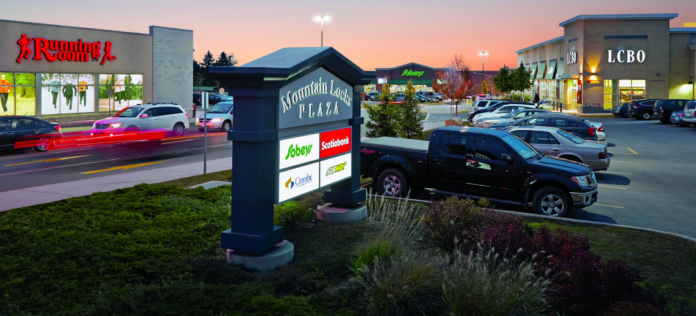
Mountain Locks Plaza in St. Catharines, ON. Photo: Crombie REIT
Crombie Real Estate Investment Trust is continuing to secure sharply higher rents across its Canadian retail portfolio, providing further evidence of strong demand for well-located grocery-anchored space.
The Halifax-based landlord completed 121,000 square feet of lease renewals during the second quarter of 2026 at first-year rents 11.3 per cent above the expiring rates. When measured against the weighted average rent over the full term of the renewed leases, the increase was 12.7 per cent.
It marked Crombie’s seventh consecutive quarter of double-digit renewal rent growth. Committed occupancy remained near a record high at 97.5 per cent, while commercial same-asset property cash net operating income increased 3.2 per cent. Crombie also had approximately 160,000 square feet of committed space awaiting tenant possession through 2026 and 2027, at an average first-year rent of $28.45 per square foot.
The results reflect the structure of Crombie’s portfolio, which combines long-term supermarket leases with smaller units that return to market more frequently. Grocery stores provide stable traffic and income, while limited availability of surrounding retail space is allowing the landlord to capture higher rents as leases expire.
Grocery Anchors Support Retail Leasing Strength
Crombie’s properties are concentrated around grocery stores and other necessity-based uses that draw customers throughout the week. These anchors can be difficult to replicate, particularly in established communities where available development sites are limited and construction costs remain high.
“A grocery store brings people to the property week in, week out, and that steady traffic is what makes our space valuable to every retailer around it,” Mark Holly, president and chief executive officer of Crombie REIT, said during the company’s second-quarter earnings call.
Nearly 90 per cent of Crombie’s non-grocery units are approximately 15,000 square feet or smaller. Management said this is the format sought by a wide range of necessity-oriented retailers and service businesses, with relatively little new supply being created to meet that demand.
The grocery anchor generally remains in place under a long-term lease, giving the property a stable operating foundation. Smaller units surrounding it typically have shorter lease terms and return to market more frequently, allowing Crombie to reset rents as leases expire. The 11.3 per cent increase reported during the quarter applies to Crombie’s renewal activity across the portfolio, which was driven primarily by its retail properties, and does not represent an increase specifically on Sobeys or Safeway leases.
Rental growth has persisted across several reporting periods. Crombie said annual minimum rent has compounded at close to four per cent annually over the past three years, supported by renewals, contractual rent increases and new leasing.
The company reported similarly strong leasing in the first quarter of 2026, completing 232,000 square feet of renewals at first-year rents 12.1 per cent above expiring rates. Commercial same-asset property cash NOI increased 3.7 per cent during that period. For the full year, management expects same-property growth to reach or exceed Crombie’s long-term target range of two to three per cent.
The sustained renewal gains point to retailers holding onto productive locations, particularly where comparable replacement space is difficult to secure. For smaller retailers and service businesses, space next to a productive grocery store can provide recurring customer traffic that may be difficult to reproduce elsewhere in the same trade area.
Mark Holly
Empire Relationship Shapes the Portfolio
Empire Company, the parent of Sobeys, is central to Crombie’s business model. It is the REIT’s largest tenant, a major unitholder and a strategic partner in the development and modernization of grocery properties across Canada.
Empire occupied approximately 12.1 million square feet at the end of the second quarter and accounted for 61.5 per cent of Crombie’s annual minimum rent. More than 90 per cent of Crombie’s retail properties are anchored by an Empire banner, while the weighted-average remaining lease term for Empire properties was approximately 9.7 years.
The relationship gives Crombie a large base of long-term grocery leases and allows the landlord and retailer to coordinate capital investments in stores and surrounding properties. It also creates substantial exposure to a single corporate group, making Crombie more concentrated than many diversified retail landlords.
Crombie invested $10.6 million during the second quarter through its modernization program with Empire. Across the first six months of 2026, the company invested approximately $17 million in 21 grocery-store modernization projects.
Under the program, Crombie provides capital for renovations and upgrades at grocery properties it owns, receiving a defined return on the investment and, in some cases, an extension of the grocery tenant’s lease. Management continues to target returns of approximately six to eight per cent across its non-major investment program, with grocery modernizations generally producing returns near the middle of that range.
Renovating an anchor store can also improve the wider property through an updated customer experience and additional traffic for surrounding tenants. Crombie has pointed to the Sobeys at Topsail Road Plaza in Newfoundland and Labrador as an example of its modernization program, while the addition of an A&W at a property in Spryfield, Nova Scotia, illustrates its strategy of creating additional commercial space at existing sites.
These investments allow Crombie to add value to properties already in the portfolio through store improvements, new pads and incremental retail space, generally on shorter timelines than major redevelopment.
Crombie Steps Up Acquisition Activity
Crombie is reinforcing its necessity-based real estate strategy through acquisitions, completing close to $150 million in purchases during the first half of 2026. During the second quarter, the REIT acquired Ocean Park, an approximately 30,000-square-foot freestanding Safeway in Surrey, British Columbia, for $12.7 million, excluding transaction and closing costs.
The store is located within an established retail node serving the Ocean Park community. Holly described it as the type of necessity-based property Crombie wants to own for the long term, adding another stabilized grocery asset to the REIT’s Western Canadian portfolio.
Earlier in the year, Crombie acquired retail-related industrial properties in Whitby, Ontario, and Saint-Hubert, Quebec. The two properties total approximately 539,000 square feet and were purchased for a combined $129.8 million, expanding the REIT’s exposure to real estate supporting grocery and retail distribution.
Crombie also purchased additional land at an existing property in Moncton, New Brunswick, giving the company full ownership of a site previously divided among several parcels. After the quarter, it acquired two parcels in Windsor, Nova Scotia, where a commercial development application is being advanced.
Management said the acquisition market is presenting more opportunities than it did six months or a year ago, although the REIT continues to be selective.
“The team is very active,” Holly said. “We are seeing more opportunities at this point in the year than we would have seen six months ago or a year ago.”
Crombie is evaluating acquisitions based on their ability to contribute to property income, longer-term funds from operations growth and the quality of the overall portfolio. Over the past four years, the company has acquired approximately $375 million to $400 million of property, sold about $100 million and added roughly 500,000 square feet to its portfolio.
The REIT has sufficient balance-sheet capacity to continue making acquisitions without matching each purchase with a property sale. Management said dispositions remain available as a source of capital and could be used where proceeds can be redirected into properties with stronger long-term growth prospects.
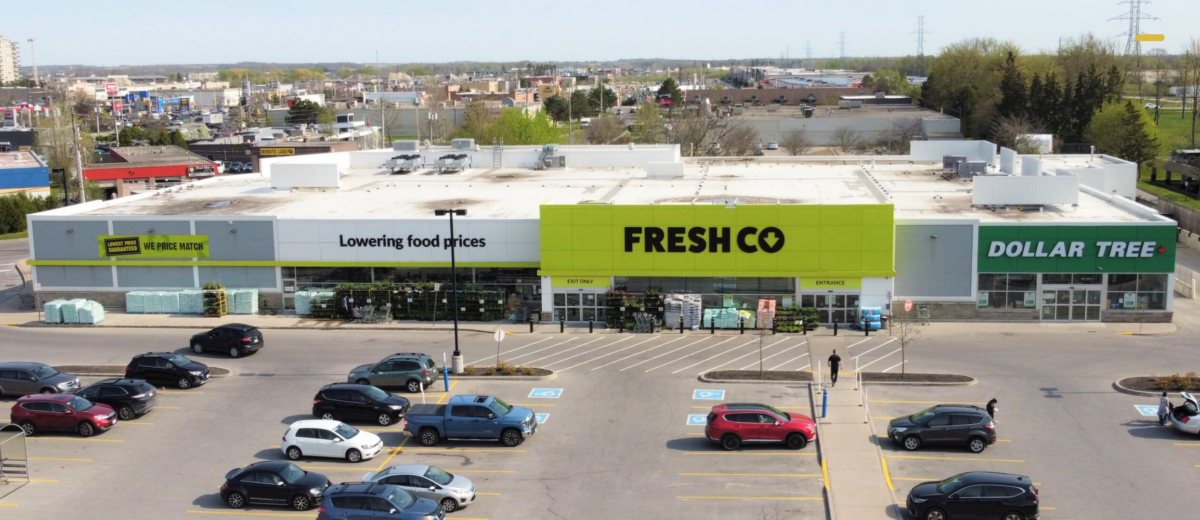
London Pine Valley FreshCo, London, ON. Image: Crombie REIT
Smaller Projects Take Priority
Crombie is currently directing more of its capital toward grocery modernizations, smaller intensification projects and income-producing acquisitions than major new developments. Approximately 29,000 square feet of development was underway across intensification projects and greenfield commercial builds during the second quarter. These investments can generally be completed more quickly than major developments and are expected to produce returns within Crombie’s six to eight per cent target range.
Management does not intend to begin another major development in the near term. Crombie continues to pursue zoning, development permits and other approvals for larger sites, preserving options to build, sell or partner on those properties as market conditions evolve.
Crombie’s only active major development, the Marlstone residential project in Halifax, reached substantial completion during the quarter. The 291-unit rental building is part of the Scotia Square complex and was more than 30 per cent leased by the end of July, with management describing July as its strongest leasing month to date.
Achieved rents at the Marlstone were above the underwriting established when the project was approved in 2023. Stabilization remains expected during the second half of 2027, with a projected yield on cost of between 4.5 and 5.5 per cent.
With the Halifax development substantially complete, Crombie’s near-term capital priorities are weighted toward investments capable of contributing to property income on shorter timelines, while larger development sites continue moving through the approval process.
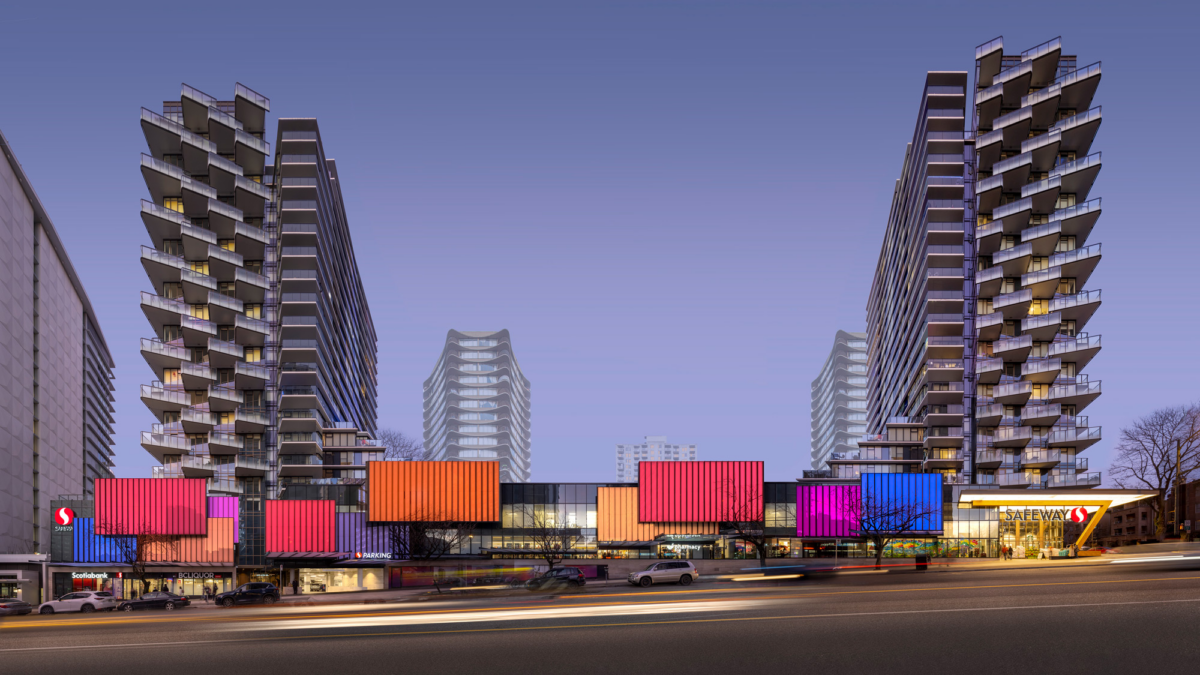
The Zephyr at Davie Street. Image: Crombie REIT
Retail Leasing Strength Extends Beyond Crombie
Crombie’s performance comes as other major Canadian retail landlords report similarly high occupancy and strong renewal activity.
Choice Properties REIT, which owns a large portfolio of Loblaw-anchored properties, reported retail occupancy of 97.4 per cent during the second quarter. The landlord also renewed 50 Loblaw leases covering approximately 3.6 million square feet at an average increase of 8.8 per cent.
RioCan REIT has also reported high retail occupancy and substantial leasing spreads across its more urban portfolio, supported by sustained tenant demand and limited additions of competing retail space.
The portfolios differ considerably. Crombie and Choice have deeper exposure to grocery-anchored properties, while RioCan is more heavily concentrated in major urban markets. The companies also calculate and disclose leasing spreads differently, limiting direct comparisons between individual percentages.
Across these portfolios, productive Canadian retail properties are operating at high occupancy while landlords continue to secure higher rents as leases expire. Conditions vary by property and market, with the strongest demand concentrated in established locations with productive anchors, recurring traffic and space that tenants cannot readily replace.
Crombie is heavily exposed to that segment of the market. Its grocery anchors provide recurring customer traffic and long lease terms, while smaller surrounding units create more frequent opportunities to capture rental growth.
As Crombie modernizes grocery stores, adds commercial space and selectively acquires necessity-based properties, the REIT is directing more capital toward a segment of Canadian retail real estate where limited new supply and high occupancy continue to support landlord pricing power.
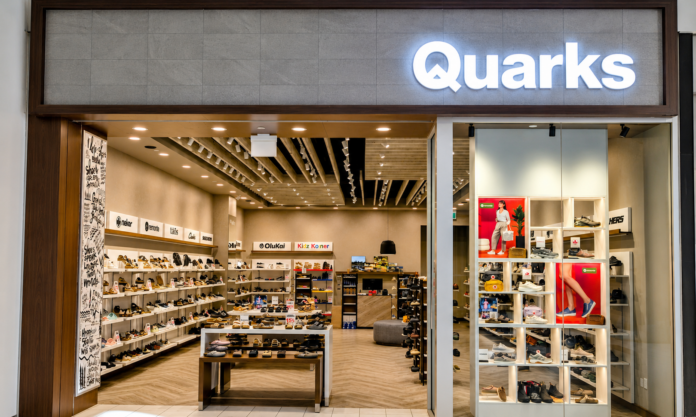
Quarks store at Mayfair Centre in Victoria, BC, April 2026. Photo: Quarks
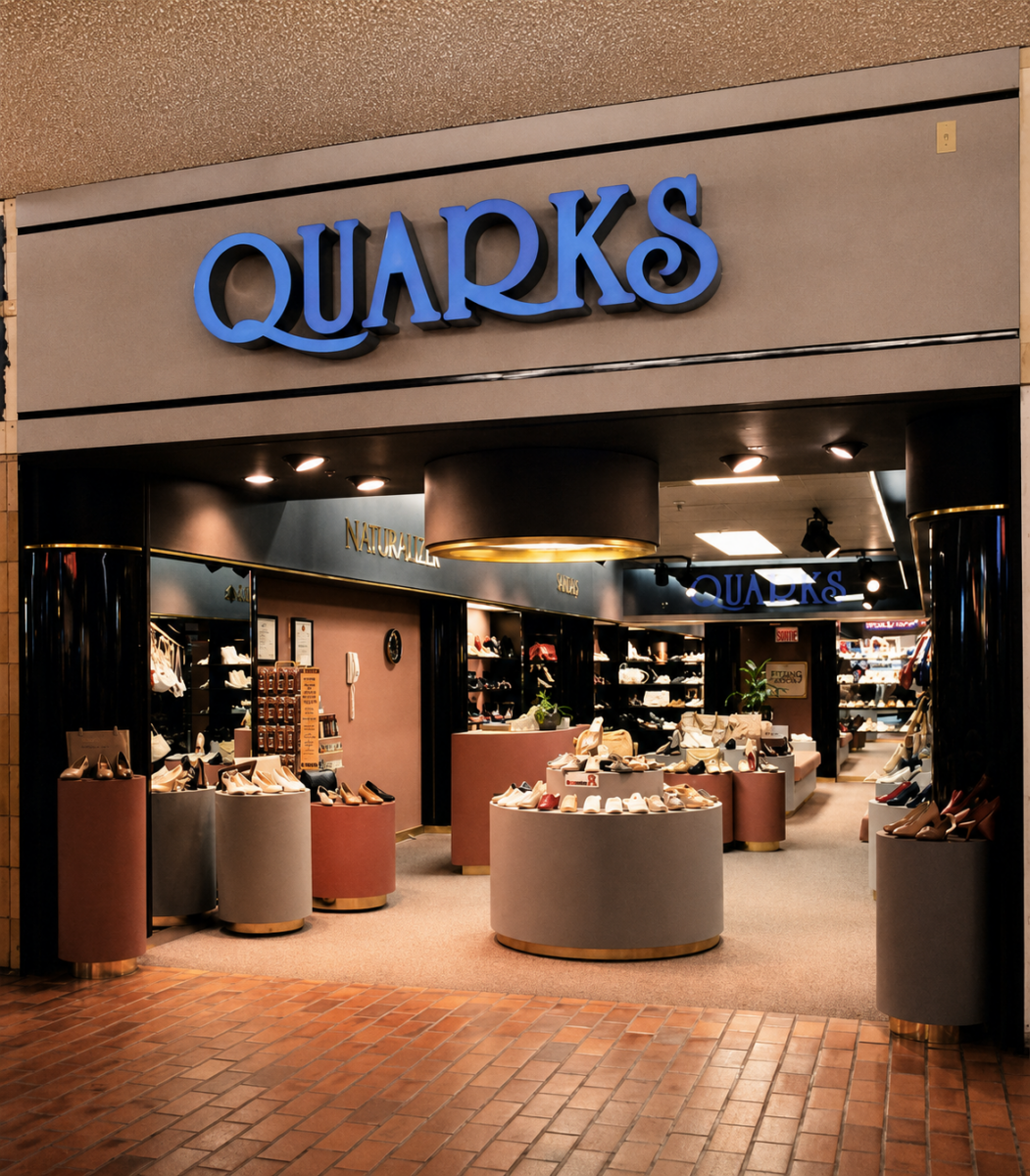
Quarks will celebrate its 50th anniversary in February 2027 at a time when the Winnipeg-based footwear retailer continues to expand its Canadian store network. Earlier this year, the company opened its 40th store at Mayfair Shopping Centre in Victoria and is preparing another location in Saskatoon, extending a business that began with a single store at Westwood Village Shopping Centre in Winnipeg in 1977.
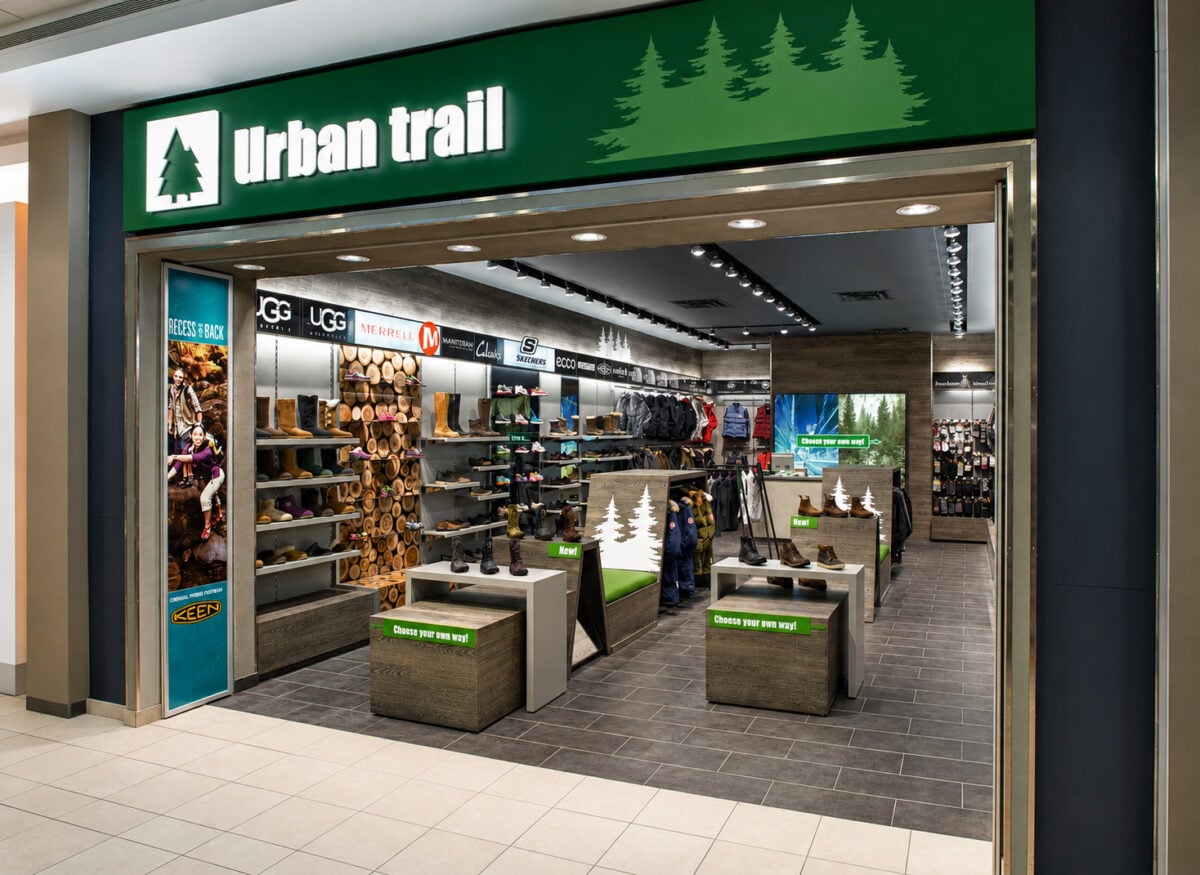
Today, The Quark Group operates the Quarks and Urban Trail banners across six provinces, specializing in branded comfort, casual and outdoor footwear. Its growth has taken place through decades of change in Canadian retail, including the rise of e-commerce, evolving consumer preferences, the casualization of fashion and the arrival of new international competitors.
Retail Insider spoke with President Kristy Krahn and Vice Presidents Doug Quark, Tom Quark and Ryan Krahn to discuss the evolution of the family business and the principles that continue to guide it. Although each oversees different areas of the company, the conversation repeatedly returned to the same themes: understanding customers, making thoughtful business decisions and building a company capable of succeeding over the long term.
As the discussion unfolded, one point became especially clear. While Quarks is approaching an important anniversary, the Quark and Krahn families are spending very little time looking backward. Their attention remains firmly on the future, whether discussing new stores, merchandising, digital retail or how the business continues to evolve in a changing marketplace.
Urban Trail at CF Polo Park in 2013. The award-winning store was designed by Ruscio Studio. Photo: Quarks
Building the Business
The story behind Quarks began before the company itself was established. Founder Dave Quark entered the footwear industry in Saskatchewan before continuing his career in Manitoba, working with retailers including Walkaway Shoes, Sterling Shoes and McDonald’s Shoes. Along the way, he developed experience in merchandising, operations and customer service while earning a reputation for improving underperforming stores. By the mid-1970s, he believed he had the knowledge and confidence to build a successful footwear business of his own.
The Quark Group was incorporated in late 1976, and the first Quarks store opened at Westwood Village Shopping Centre the following February. During its early years, the company concentrated on establishing itself in Winnipeg, gradually building a loyal customer base while refining its merchandising and operating model.
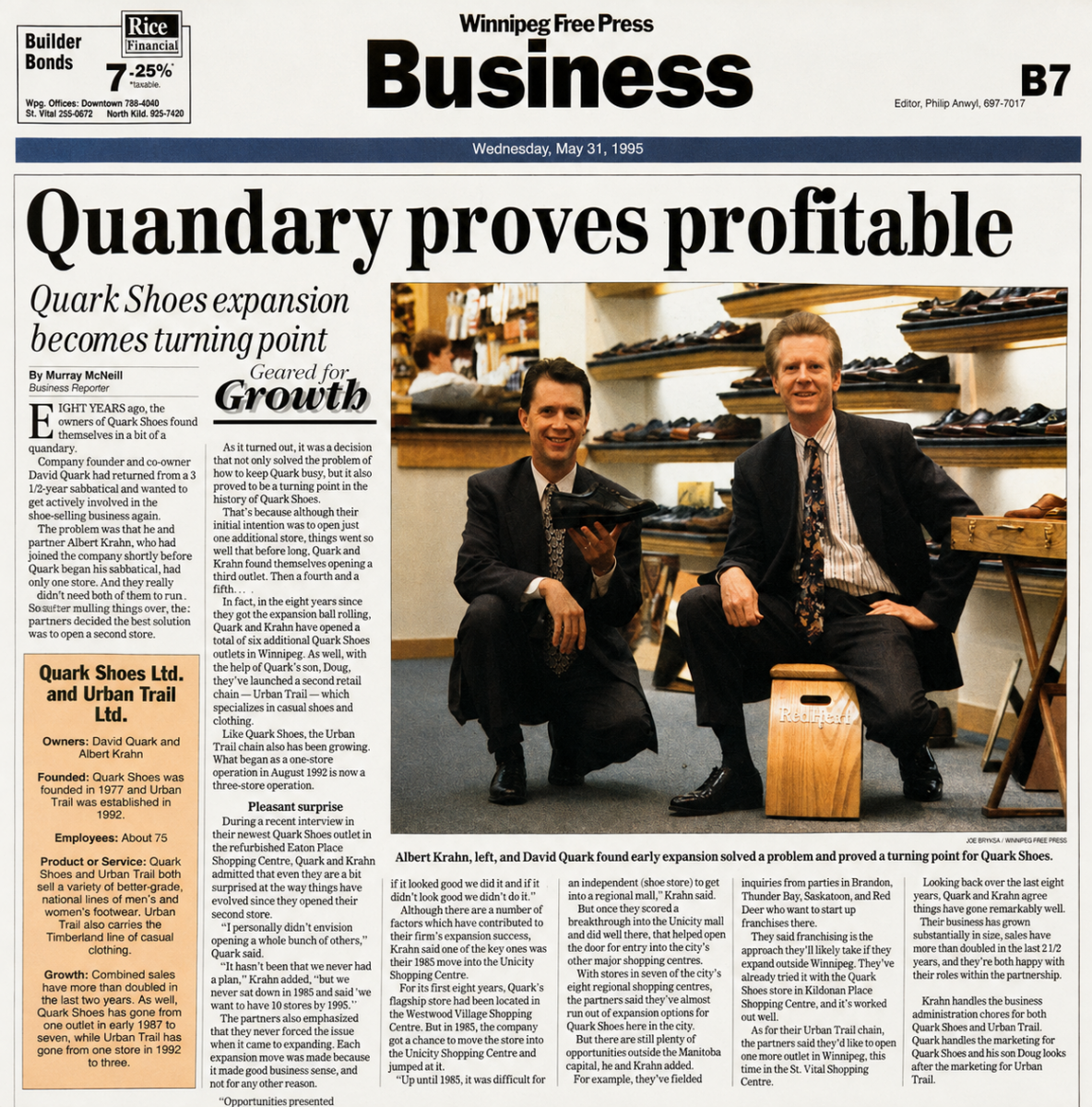
A pivotal moment came in 1984 when Dave and Jane Quark sold a 50 per cent interest in the business to Albert and Susan Krahn, creating an equal partnership that would shape Quarks for decades to come. The following year, the partners relocated the business to Unicity Shopping Centre, marking Quarks’ first location in an enclosed regional mall. By 1987, recognizing that a second successful store would be necessary to support both young families, they opened another Quarks location at Garden City Shopping Centre.
The partnership proved to be highly complementary. Dave brought vision, merchandising expertise and a strong marketing instinct, while Albert contributed financial discipline and strategic leadership. Together, they established many of the principles that continue to guide the company today.
Doug Quark still laughs when recalling one of the company’s earliest lessons in retail economics. When the business moved into an enclosed shopping centre, the original name, Quark Shoes, was shortened because the sign company charged by the letter for the storefront signage. Reducing the name by a single word reduced the cost.
It is a simple story, but it reflects the practical mindset that surfaced repeatedly throughout the interview. Whether discussing real estate, merchandising, technology or expansion, the Quark and Krahn families consistently emphasized building a stronger business instead of making the biggest statement. That approach became one of the foundations of Quarks’ long-term success.
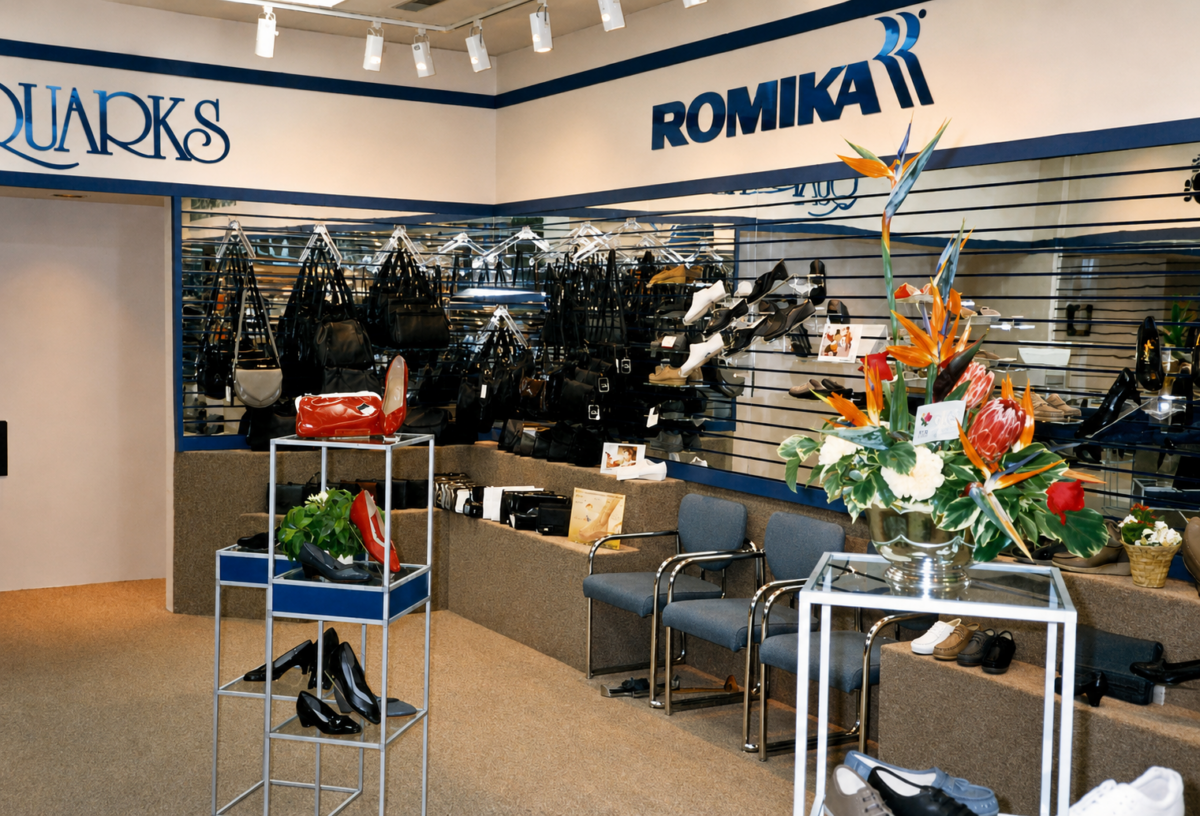
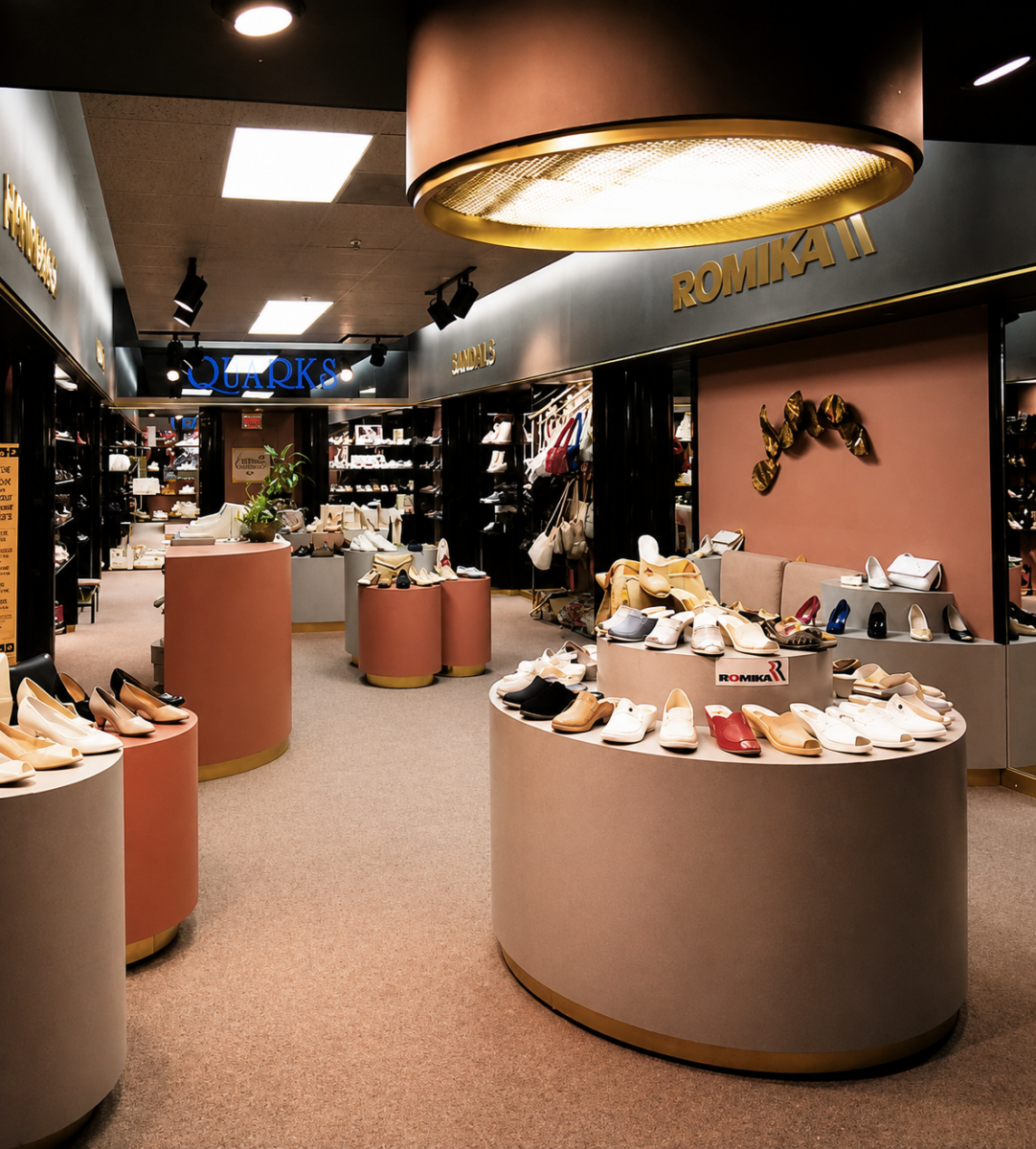
Quarks store at St. Vital Centre, Winnipeg, in 1989. Photo: Quarks
Expanding Across Canada
Quarks’ first significant expansion outside Manitoba involved entering Saskatchewan through Moose Jaw and Yorkton in 2002, identifying communities where customers wanted access to recognized footwear brands but where the business believed it could establish sustainable, long-term operations.
“We thought we could thrive in these smaller centres that don’t have many shoe stores,” Doug Quark said.
That strategy became a defining characteristic of the company’s growth. Quarks gradually added stores throughout Saskatchewan before moving into Alberta, British Columbia, Ontario and New Brunswick. Markets including Red Deer, Lethbridge, Medicine Hat, Thunder Bay, Nanaimo, Prince George, Saint John and Fredericton became important additions to the chain as it expanded across Canada.
Regional markets offered several advantages. Occupancy costs were often more manageable than in Canada’s largest metropolitan areas, competition could be less intense and customers still wanted access to the same national and international footwear brands available in major cities. The approach also allowed the company to strengthen its operations gradually while maintaining close relationships with landlords, suppliers and employees.
Kristy Krahn said the company has never viewed expansion as an objective in itself.
“We’ve never expanded just for the sake of expansion,” she said. “We’re really thoughtful with where we go and when we go there.”
The retailer’s store count reflects that philosophy. Quarks reached 10 locations by 1994, 20 by 2008, 30 by 2014 and 40 this year. Some years brought several openings, while others passed without adding a new location. Opportunities were evaluated individually, with decisions based on the strength of the market, the available real estate and the company’s ability to operate each store successfully over the long term.
Longstanding industry relationships have also played an important role. The company has worked with Jeff Berkowitz of Aurora Retail Group for more than 15 years, relying on his understanding of shopping centres and retail real estate as new opportunities emerged across Canada.
Listening to the discussion, it became apparent that the Quark and Krahn families rarely measure success by the number of stores they operate. Instead, they spoke about creating sustainable businesses, building long-term partnerships and ensuring that every new location contributes to the health of the company as a whole.
Credit: Winnipeg Free Press, 1995 (clipping provided by Quarks)
Changing With the Customer
While Quarks has remained disciplined in its approach to growth, the footwear business itself has changed dramatically over the past five decades. When the company opened its first store in 1977, dress shoes occupied a much larger share of the sales floor. Canadians generally dressed more formally for work, comfort footwear represented a smaller segment of the market and many of today’s leading brands had yet to establish themselves.
Quarks evolved alongside those changes. Today’s assortment reflects the growing demand for comfort, versatility and recognizable brands, with stores carrying labels including Birkenstock, UGG, Blundstone, Merrell, Clarks, Skechers, Rieker and Remonte.
Doug Quark summarized the company’s merchandising philosophy with a simple observation.
“We sell trendy shoes, but we’re not trendsetters.”
That philosophy extends well beyond individual products. Rather than chasing every emerging trend, Quarks watches how consumer preferences develop before making significant merchandising commitments. The company also values long-term relationships with suppliers, recognizing that enduring partnerships often produce better results than continually replacing established brands with the latest newcomers.
“We’ve built our reputation not on creating the trends, but recognizing them and making sure that we bring the right products to our customers at the right time,” Kristy Krahn said.
Tom Quark has watched another interesting shift unfold over the years. Decades ago, mothers, daughters and grandmothers frequently shopped for different styles of footwear. Today, it is increasingly common to see several generations purchasing the same brands, particularly Birkenstock, UGG and Blundstone. The observation reflects broader changes in Canadian lifestyles, where comfort has become an everyday expectation rather than a specialized category.
The company continues to see its role as a curator of trusted brands rather than a trendsetter. Customers visit Quarks knowing they will find recognized labels, knowledgeable advice and an assortment that reflects both current demand and the company’s long experience in the footwear business.
Quarks store at Unicity Mall in Winnipeg, 1985. Photo: Quarks
Service as a Competitive Advantage
Although the footwear business has evolved dramatically since Quarks opened its first store, one aspect of the customer experience has remained largely unchanged.
The company continues to believe that footwear is best sold with knowledgeable service. Associates are encouraged to greet customers, understand how footwear will be used, discuss fit and comfort, and recommend products that meet individual needs. That approach reflects a belief that purchasing shoes is often more personal than many other retail categories, particularly when customers are looking for comfort, support or a specific fit.
“Our associates aren’t just cashiers,” Tom Quark said. “They’re actually helpful people who listen.”
Kristy Krahn said the company organizes its culture around four core values: care, listen, advise and serve. Those principles influence everything from hiring and employee development to the way staff interact with customers on the sales floor.
Listening to the discussion, it became apparent that the Quark and Krahn families view service as part of the product itself. Customers may initially visit Quarks because they recognize brands, but the company believes knowledgeable advice remains one of the reasons shoppers continue returning.
That commitment has become increasingly relevant as traditional footwear departments have disappeared from many Canadian department stores. Consumers who once relied on experienced footwear associates now have fewer places to receive that level of assistance, creating an opportunity for specialty retailers that continue to invest in service.
Quarks Westwood store in the late 1970s. Photo: Quarks
Physical Stores and Digital Retail Working Together
Quarks has embraced e-commerce while continuing to invest in physical retail, viewing the two channels as complementary rather than competing with one another.
The company began selling online on a relatively modest scale before steadily expanding its digital business. Like many retailers, Quarks experienced a significant increase in online sales during the pandemic. Unlike some businesses that saw demand return almost entirely to stores, much of that growth remained after restrictions ended.
Ryan Krahn said customers have become increasingly comfortable purchasing footwear online, particularly when buying brands and styles they already know. Improvements in shipping, returns and exchanges have also made online footwear shopping easier than it once was.
Rather than treating e-commerce as a separate business, Quarks has focused on connecting it with the in-store experience. Customers can reserve products online before travelling to a store, ensuring that the correct size is waiting when they arrive. For many shoppers in the regional communities Quarks serves, that convenience eliminates uncertainty and makes the trip more worthwhile.
The relationship works in the opposite direction as well. Ryan Krahn said the company has consistently observed stronger online sales after opening new stores, suggesting that physical locations continue to build awareness of the Quarks brand while introducing customers to its broader assortment.
To support its continued digital growth, Quarks partnered with London, Ontario-based Northern Commerce in 2025, selecting a larger agency with deeper retail specialization to help strengthen its e-commerce and digital marketing capabilities.
For the Quark and Krahn families, the discussion is no longer about choosing between stores and online shopping. Customers move comfortably between both channels, and the business has adapted to support that behaviour.
Quarks store at Unicity Mall in Winnipeg, 1985. Photo: Quarks
Investing in the Future
As Quarks has expanded, the company has continued investing in its stores as well as its people.
The recently opened Victoria location reflects the retailer’s latest store design, creating a brighter, more contemporary environment while introducing an expanded children’s footwear department. Another store is planned for Saskatoon, continuing the company’s gradual expansion across Western Canada.
Today, Quarks employs approximately 310 people throughout the year, with staffing increasing during the holiday season as the retailer operates approximately 15 seasonal pop-up stores. Although the business has grown significantly since its early years in Winnipeg, it remains closely involved in the communities where it operates.
One initiative that has become particularly important is Walking People Out of Poverty, a fundraising partnership with Opportunity International Canada. The program supports entrepreneurs, particularly women, in developing countries through access to financial services and business opportunities. Quarks also participates in local food bank campaigns, footwear donation initiatives and community programs organized by individual stores across Canada.
Leadership responsibilities have also evolved as the second generation has assumed greater responsibility for the business. Kristy Krahn currently serves as President and oversees finance, human resources and real estate. Doug Quark focuses primarily on buying and store design, Tom Quark plays a key role in merchandising, while Ryan Krahn leads much of the company’s digital strategy and e-commerce development.
That transition reflects a succession process that has unfolded gradually over many years. After Dave Quark retired, Albert Krahn continued leading the company as President and Chief Financial Officer alongside the second generation, helping ensure that the values and long-term perspective established by the founders continued as leadership responsibilities evolved.
Looking Ahead
As Quarks approaches its 50th anniversary, the milestone represents an opportunity to recognize the people who helped build the company while continuing to prepare for its next chapter.
The Quark and Krahn families believe one of the retailer’s strengths is that it has never tried to become something it isn’t. Instead, Quarks has remained focused on serving customers through recognizable footwear brands, knowledgeable staff and a measured approach to expansion that reflects the realities of each market it enters.
Kristy Krahn said those priorities remain unchanged.
“Our focus is really going to remain the same as it has since 1977,” she said. “We want to continue to grow thoughtfully, steward the business responsibly and have a positive impact in the communities and amongst the people that we serve.”
The company also plans to place greater emphasis on its Canadian heritage as it approaches the anniversary. Although Quarks has operated in communities across the country for decades, many customers are still surprised to learn the retailer was founded in Winnipeg and remains Canadian owned.
That history has been shaped by two families whose complementary strengths helped build a business that has endured through changing markets, changing consumer preferences and changing generations of leadership. Dave Quark’s vision for the customer experience, combined with Albert Krahn’s financial discipline and strategic leadership, established a foundation that continues to guide the company today.
Nearly five decades after the first Quarks store opened its doors, the conversation around the boardroom table is no longer about how the company reached its 50th anniversary. It is about where the next opportunity will be found, how the business can continue serving its customers and how the next generation can build on what came before.
Every Quarks store represents years of relationships with customers, employees, suppliers, landlords, and the communities it serves. As the company prepares for its next chapter, the focus remains the same as it has been since 1977: grow thoughtfully, serve customers well and continue building a business that will be as strong for the next generation as it has been for the last.