Advertisement
Advertisement
Home Blog Page 805

Inside Jo Malone’s New Store at CF Toronto Eaton Centre

Jo Malone at CF Toronto Eaton Centre - Photo by Dustin Fuhs

UK-based luxury fragrance brand Jo Malone has opened a new standalone store at CF Toronto Eaton Centre. It’s one of four now open in Canada.

The 860-square-foot CF Toronto Eaton Centre store is located on the third level of the shopping centre, next to Club Monaco and across from the recently announced Moose Knuckles store.

Retail Insider reported on the Canadian expansion of the brand, which saw three new locations initially announced followed by a fourth. In addition to CF Toronto Eaton, Jo Malone has opened in Toronto’s Yorkdale Shopping Centre as well as at CF Pacific Centre in Vancouver earlier in the summer. These spaces were formerly occupied by UK-based Links of London, a luxury brand that shut its global operations in 2020 due to financial struggles. Retail Insider subsequently reported that Jo Malone was opening at CF Richmond Centre near Vancouver and that location recently opened as well.

The Canadian expansion for Jo Malone was negotiated by Jane Baldwin, Senior Vice President at Lennard Commercial Realty on behalf of Jo Malone. Ms. Baldwin represents Estée Lauder brands in Canada as real estate representative. Cadillac Fairview is the landlord for CF Toronto Eaton Centre.

CF Toronto Eaton Centre Jo Malone In-Store Images

Jo Malone Exterior at CF Toronto Eaton Centre – Photo by Dustin Fuhs
Jo Malone Interior at CF Toronto Eaton Centre – Photo by Dustin Fuhs
Jo Malone Toronto Exclusive Packaging at CF Toronto Eaton Centre – Photo by Dustin Fuhs
Jo Malone at CF Toronto Eaton Centre – Photo by Dustin Fuhs

The store features the Engraving & Momogramming service. Guests are able to customize a Jo Malone London scent. Choosing from two elegant fonts, then engrave your Cologne or Candle with a personal message, a special date or their initials.

Jo Malone at CF Toronto Eaton Centre – Photo by Dustin Fuhs
Jo Malone Engraving Machine at CF Toronto Eaton Centre – Photo by Dustin Fuhs
Jo Malone at CF Toronto Eaton Centre – Photo by Dustin Fuhs
Jo Malone Gift Cards at CF Toronto Eaton Centre – Photo by Dustin Fuhs
Jo Malone at CF Toronto Eaton Centre – Photo by Dustin Fuhs

Kit and Ace Closes Store in West Vancouver at Park Royal

Shuttered Kit and Ace location in Park Royal Shopping Centre with new Gastown location announced for September 2021
Shuttered Kit and Ace location in Park Royal Shopping Centre with new Gastown location announced for September 2021. Photo: Lee Rivett.

Vancouver-based brand Kit and Ace has closed its 900 square-foot storefront in West Vancouver at the Park Royal Shopping Centre. For its opening in November 2019, the brand proudly proclaimed “our newest shop in The Village at Park Royal opens this Thursday” and it became the ninth location for Kit and Ace. The company says that the storefront was considered to be a ‘pop-up’.

Kit and Ace ‘newest shop’ announcement for its Park Royal location (November 2019). Photo: Kit and Ace Facebook.

The location would have been two years old if it had lasted until November 2021. The windows at the shuttered location in Park Royal mentions a Gastown reopening in September 2021, the retailer website stated, “Our Park Royal location is now closed as we relocate to our Gastown shop opening Fall 2021”.

Kit and Ace announcing relocation of Park Royal location in West Vancouver to Gastown in Vancouver. Photo: Kit and Ace Website (Aug 29, 2021).

An interview on Retail Insider’s podcast in July 2021 had Kit and Ace co-founder JJ Wilson reminiscing on founding of the brand and no longer being involved. In the podcast he said how Kit and Ace “is predominantly a dot com business or ‘DTC’ … and given COVID-19 its pivot to pure DTC in advance of it was the best thing the company could have done”. As a result, the ongoing closures of Kit and Ace locations was not a surprise.

CEO George Tsogas, who has led Kit and Ace since April of 2017, told Retail Insider in October 2018 that he bought the company from Chip Wilson’s company Hold It All Inc. for an undisclosed sum with the deal having closed on August 31, 2018. This after the retailer reduced its store count to just six locations and one coffee shop in March 2018 after closing all of its international locations in the spring of 2017. 

Additional Kit and Ace background from JJ Wilson during Retail Insider’s podcast in July 2021 included discussing the formation of communications firm Very Polite Agency with the brand/marketing team from Kit and Ace as the brand slimmed down to retain the talent. The agency now provides on brand creative, production, PR services, digital marketing, etc. based in Vancouver.

Entrepreneur Manjit Minhas of Dragons’ Den on Brand Image: Interview

Manjit Minhas
Image: Manjit Minhas

She is one of the most recognizable business executives in Canada and Manjit Minhas has worked hard at building her brand and her image through social media channels.

The co-founder and co-owner of Minhas Breweries, Distillery and Wineries and a Dragon on the popular Dragons’ Den CBC television show is a firm believer in the importance of social media in raising an executive and an entrepreneur’s profile.

“We all have not only talents and skills that we possess but things we all want to learn and I think social media is a great way to share that with people who might be inspired and find out about your journey and your story. They can actually find out more about you than just a basic fact,” said Minhas.

“It applies more and more with why and how people want to buy from a specific company or an individual because they actually know what their values and their mission is and who they are supporting and on the flip side who they are not supporting.

CBC Dragons' Den
Image: CBC Dragons’ Den

“I believe in transparency. That’s one of the great things about social media and branding. You can get your message across without having other news media filter it for you. It’s direct from you to your consumer. So I do think that there’s value in that and there’s value in somebody hearing your voice directly whether that be through social media or through your website.”

Minhas has won many awards during her career including: PROFIT magazine’s “Top Growth Entrepreneur”, Top 100 Women Entrepreneurs in Canada, Canada’s Top 40 under 40, Chatelaine Magazine’s “Top Entrepreneur Woman of The Year 2011”, Ernst & Young’s Entrepreneur of The Year Prairie Region and The Sikh Centennial Foundation Award 2015.

According to the profile of her on the CBC website, when Manjit Minhas was 19 years old, she and her brother Ravinder scraped together $10,000 to launch their first beer in Alberta. In 2006, they purchased the second-oldest brewery in the United States and renamed it “Minhas Craft Brewery.” At the time, this acquisition officially made the Minhas siblings the youngest brewery owners in the world.

“Their group of breweries is the ninth-largest in the world, and as a company they produce more than 120 beers, spirits, liqueurs and wines that ship all across Canada and the U.S., as well as overseas to 16 different countries. Minhas Brewery makes all of the Kirkland brand beer for Costco worldwide, as well as all the craft beers under the Trader Joe’s label in the U.S.,” says the profile.

Manjit Minhas
Image: Manjit Minhas

Minhas uses Facebook, Twitter, LinkedIn and Instagram to get her message across to people. Each has its own purpose in targeting specific audiences. Some of the messages Minhas sends out personally. Others are by her team.

“There’s a combination. For sure there’s a strategy and a team that I have. It is very time consuming. I do have a team and we have a strategy and a plan of when and what we are talking about,” she says.

What is the image she wants to convey out there about who she is?

“That’s a tough one. Me, personally it’s not always wrapped up in the brand of the company. I am a young Indian woman in a very male dominated industry. It’s important for me for my audience to understand there’s a lot of different parts to any individual and we can all wear different hats,” she said.

“I’m always looking for people to understand my authentic voice. I don’t know everything. I’ve had failures. I’ve had successes but I do have some mottos I like to live by and sometimes I share those. I’m always just trying to show a side of my personality that you might not know if you saw me making a keynote address or after you saw me a night on TV.”

Minhas said it’s important that executives and owners of certain companies be the face of their company.

“I think it is important for people to be inspired by you, to learn from you. Even not only your current team members but your potential team members. It’s also a great way to find new opportunities whether it be other career paths, whether it be extra hobbies, whether it be new networks, whether it be boards for executives. Ways to reach out,” she said.

“I do absolutely believe in the power of individual and personal branding on social media. Now, of course, understanding like anything else there needs to be an overall strategy as to what you’re wanting to convey, why and when and who’s involved with that and the time that it will take. But I do completely 100 per cent believe it’s important.”

From PPE Shortages to COVID-19 Vaccine Distribution, The Supply Chain has Emerged as a Determinant of Health: Op-Ed

Image: Getty Images

By Adel Guitouni, University of Victoria; Jie Zhang, University of Victoria; Nadine Schuurman, Simon Fraser University, and Valorie A. Crooks, Simon Fraser University

Toilet paper. Hand sanitizer. Coffee. Over the past year, many people have probably spent more time thinking about their abilities to gather basic supplies than in other recent times.

Supply chains are the networks involved in getting products to their final buyer or user, such as the toilet paper many of us were desperately tracking down in early 2020. As with most things, supply chains are actually quite complex. This is especially so in the context of a crisis, such as the COVID-19 pandemic, where there is a need to rapidly and equitably distribute supplies at a massive scale.

The COVID-19 pandemic has very clearly revealed the reliance that Canada’s public health and health-care systems have on global supply chains. When the health-care system went into crisis mode, it caused simultaneous supply and demand disruptions in global supply chains.

The most immediate and early needs were for critical medical products, such as respirators and personal protective equipment. These products were in short supply globally, which left health-care workers and patients vulnerable.

We’re now at a different stage of the pandemic, and many demands on the global supply chain are focused on vaccination supply and distribution. We have heard about how rich countries have monopolized vaccine supply chains, causing disproportionately more deaths and economic turmoil in lower-income countries.

Additionally, vaccine supply chains require a “cold chain” infrastructure to deliver vaccines to the population. These have strained public health budgets and created additional barriers in many countries and regions around the world.

Supply chains influence health

It is widely recognized that where we were born, how we live and where we work are among the most critical factors that shape our health. These factors are known as the social determinants of health. Throughout the COVID-19 pandemic, the supply chain has emerged as a very important determinant of health.

We make this assertion as a team of health supply chain and health services researchers who have been deeply involved in studying several relevant aspects of the pandemic over the last year. Public health and the provision of health care depends on global health supply chains.

The COVID-19 global pandemic has exposed the interdependence of our socio-economic systems. Supply chains are often complex networks with many members using their know-how in production, processing, transportation, retailing and waste management through the product life cycle. There is no obvious centralized decision-maker or mastermind commanding and controlling the end-to-end supply chain. Rather, several distributed participants co-operate and compete to deliver value to end customers or patients.

China dominates the world’s production of personal protective equipment (PPE). At the end of 2019, the epicentre of the COVID-19 pandemic happened to be located in the global PPE production centre. On Jan. 23, 2020, the city of Wuhan was locked down by the Chinese authorities, shutting off all industrial activities and the outflow of PPEs.

Supply chains are not only a determinant of public health, but also affect all other factors responsible for the health of individuals and communities. Despite their critical importance, health supply chains still exist as an addendum in health public policies and investments. In many health care organizations, health supply chain is reduced to a purchasing or sourcing unit.

Resiliency of supply chains

Thereafter, the rest of the world realized the gravity of the situation and the extraordinary impacts of this pandemic on health care systems around the world.

Many factors affected the health supply chain’s ability to continually fulfil the range of changing and sometimes conflicting requirements for PPE, vaccines and other medical supplies. The increased global competition for the same supplies increased pressure on supply networks, especially in production capacity and global distribution.

Internally, health supply chains continue to be fragmented and barely co-ordinated among different authorities and health care units. This is far from the ideal.

Health supply chain management includes managing operations and logistics for supply to meet effectively and efficiently the demand. It drives co-ordination and collaboration with partners, suppliers, third-party service providers, frontline workers and those who need to access health care. The fragmentation of health supply chain management is the reason that most health supply chains continue to struggle during the pandemic.

Public authorities and stakeholder groups should recognize the critical importance of building robust and resilient health supply chains that connect those involved in the delivery and management of health care globally, nationally and regionally.

Supply chains and health

The overarching goal of designing and operating a health supply chain is to contribute to public health and social well-being while reducing the impacts on the environment. Declaring the health supply chain as a major determinant of health calls for management strategy beyond the conventional race for efficiency at all cost.

Most importantly, it calls for the recognition that supply chains are an integral component of socio-economic resilience and, conversely, vulnerability. For decades, we have justified the under-investment in health care supply chains in the name of budget cuts and financial efficiency. However, while this may have provided short-term benefits, it is not sustainable for the long term.

This article is republished from The Conversation under a Creative Commons license. Read the original article.

Adel Guitouni, University of Victoria; Jie Zhang, University of Victoria; Nadine Schuurman, Simon Fraser University, and Valorie A. Crooks, Simon Fraser University

The Conversation

Brief: Celine Exits Saks Flagship as Standalone Opens, Rexall Shuts 4th Downtown Toronto Store Since June

Lucid Motors Opening at Toronto’s Yorkdale Shopping Centre 

Yorkdale Shopping Centre in August of 2021. Photo: Craig Patterson

US-based electric car brand will open a showroom this fall after confirming one for Vancouver.

Read More about the new addition to Yorkdale

Sungiven Foods Continues Vancouver Market Openings

Sungiven Foods open in North Vancouver (August 2021).
Sungiven Foods open in North Vancouver (August 2021). Photo: Lee Rivett.

Chinese grocery chain has opened six locations across the metro Vancouver area, with two coming soon.

Read More about the new location, including Photos

Celine Exits Saks Fifth Avenue’s Downtown Toronto Flagship As Yorkdale Standalone Celine Store Opens 

Former Celine Boutique in Saks Fifth Avenue at CF Toronto Eaton Centre
Former Celine Boutique in Saks Fifth Avenue at CF Toronto Eaton Centre – Photo by Craig Patterson

The luxury fashion brand has closed its boutique space at Saks Fifth Avenue following an exit last month at Yorkdale’s Nordstrom in Toronto.

Read More about the boutique’s exit

Rexall Shutters 4th Downtown Toronto Store Location in 3 Months

Holt Renfrew Centre Rexall Store Closing – Photo by Dustin Fuhs

Mississauga-based drug store is re-evaluating downtown locations this summer during the pandemic.

Read More about the Rexall closure

Medical Complex to Open at Rockland Centre in Montreal

ELNA Medical at Rockland Centre – Outdoor entrance (CNW Group/ELNA Medical)

ELNA Medical and Cominar sign agreement to bring new facility to the shopping centre, marking a trend of non-traditional tenants opening in major shopping centres in Canada.

Read More about the new medical facility in Montreal

Retailer ‘The Latest Scoop’ to Open New Store at CF Toronto Eaton Centre

Image: The Latest Scoop at CF Toronto Eaton Centre (Photo by Dustin Fuhs)

Vancouver-based women’s lifestyle fashion retailer The Latest Scoop will be opening a location in CF Toronto Eaton Centre in Toronto.

Founded in Vancouver in 2004 as a pop-up shop, The Latest Scoop has expanded into eight locations in Vancouver, Calgary and Toronto.

In 2018, Retail Insider covered the first location in Toronto, a 2,900 square foot location on Ossington Avenue. The brand has since opened a store at 700 Queen Street West in 2019, which would make the CF Toronto Eaton Centre location the third in the downtown core.

At the CF Toronto Eaton Centre, the retailer will be taking over the 5,010 square foot location that was vacated last year by Microsoft. The technology giant shuttered all 83 physical stores worldwide in June 2020, affecting seven locations in BC, Alberta and Ontario.

Ossington Avenue Location

Image: The Latest Scoop on Ossington Ave (Photo by Dustin Fuhs)

Queen Street West Location

Image: The Latest Scoop on Queen Street West in Toronto (Photo by Dustin Fuhs)

Ecommerce Sales In Canada Still Through The Roof, But Shifting Away From Goods Toward Services [Feature]

Image: Getty Images

The turmoil that’s dominated the retail industry over the past year-and-a-half or so has created a bit of a helter-skelter environment for merchants across the country to operate within, with circumstances surrounding the COVID-19 global pandemic serving to disrupt, derail and, in some cases, discontinue the work done by brands altogether. During this time, changes and shifts have occurred that have dramatically altered the market and the landscape in which it resides. And, there have also been trends and behaviours that predated the pandemic which have been accelerated by societal impacts of the virus, namely the remarkable movement by the Canadian consumer from in-store purchases to those made via digital channels. This movement has resulted in astounding increases in ecommerce sales for retailers from coast to coast, going a long way toward making up for a shortfall in recent physical activity. It’s growth that David Nagy, digital pioneer and Founder of eCommerce Canada, is confident will continue. However, he says that the ways in which consumers are spending their money is shifting.

“Right up to the minute, ecommerce demand remains incredibly strong, but it’s shifting just a little bit,” he says. “What we’re seeing currently is a bit of a softening because people are finding other ways to spend their money. Everyone’s been held back for such a long time. The consumer’s been focussing internally, spending on home improvements and vanity purchases, putting things in their closets and basements. Ecommerce has definitely experienced a boom during the pandemic up to this point. And, I don’t think that activity is going to evaporate in any way shape or form. But, over the last couple of months, as tensions around social restrictions have been relieved just a little bit, we’ve noticed a shift in spending toward more lifestyle and experience-based purchases. People are going out to dine, attending events, going to museums and taking in other experiences that they haven’t been able to for a long time. Because of this, product-based retailers are seeing a bit of a soft summer when it comes to online purchases. People have a pent-up desire to experience the world, and it’s showing up in the decisions they’re making with their money, resulting in a bit of a shift in the online ecosystem.”

Continued ecommerce growth

The split of consumer spending between product and services aside, however, the overall growth in ecommerce that occurred in Canada in 2020 was astounding. In fact, according to Insider Intelligence’s Canada Ecommerce Forecast 2021, retail ecommerce in the country grew by an astronomical 75 percent last year. And, the leading research firm doesn’t see any signs of the accelerated trend slowing any time soon. Bolstered by a retail rebound across the country, which is expected to result in an increase of 6.4 percent following a decline of 4.6 percent in 2020, Insider Intelligence believes that ecommerce will account for 13.4 percent of all retail sales in 2021, up from 6.9 percent in 2019. As a result, the firm predicts that retail ecommerce sales will reach $86.52 billion this year, nearly doubling the total of 2019, equating to further growth of around 12 percent. It’s growth that Paul Briggs, Principal Analyst, Canada at Insider Intelligence, believes will continue to be driven, at least in part, by the removal of traditional barriers to online shopping that existed prior to the pandemic.

“We’ve certainly just experienced a period of rapid ecommerce acceleration,” he says. “The pandemic really moved things forward, ahead of what the previous trajectory was prior to COVID. A lot of retailers across the country already had plans in place to implement digital and omnichannel retail in order to meet growing consumer demand. Their timeline for this implementation may have been 18 months or 2 years out. But lockdowns and restrictions made online shopping the only option for many essential goods, forcing retailers to advance their plans to digitize their retail options. And, because people in certain demographics who may have been reticent to shop online and leverage digital channels prior to the pandemic have since done so, and have become comfortable with the option, many of the impediments to that behaviour have been overcome and will continue to make it easier for those particular demographics to continue to shop in that way.”

Increased digital buyers

The demographics that Briggs refers to include the older age groups, specifically those over the age of 55, whose late adoption of online shopping channels has gone a long way toward contributing to the sharp rise in Canadian digital buyers. According to the report, the 65-and-over age group saw an increase of 17.1 percent in digital buyers, while the 55-to-64 age group grew by 7.4 percent. All told, Canada’s digital buyer population grew by 1.2 million in 2020, with the addition of another 600,000 consumers expected to convert to digital channels this year. Including consumers in the 18 to 24 and 25 to 34 age brackets, which accounted for 85.2 percent and 84.6 percent, respectively, when it comes to digital buyer penetration in the country, it’s estimated that there are now 24.2 million digital buyers across Canada, accounting for 74.9 percent of the country’s population.

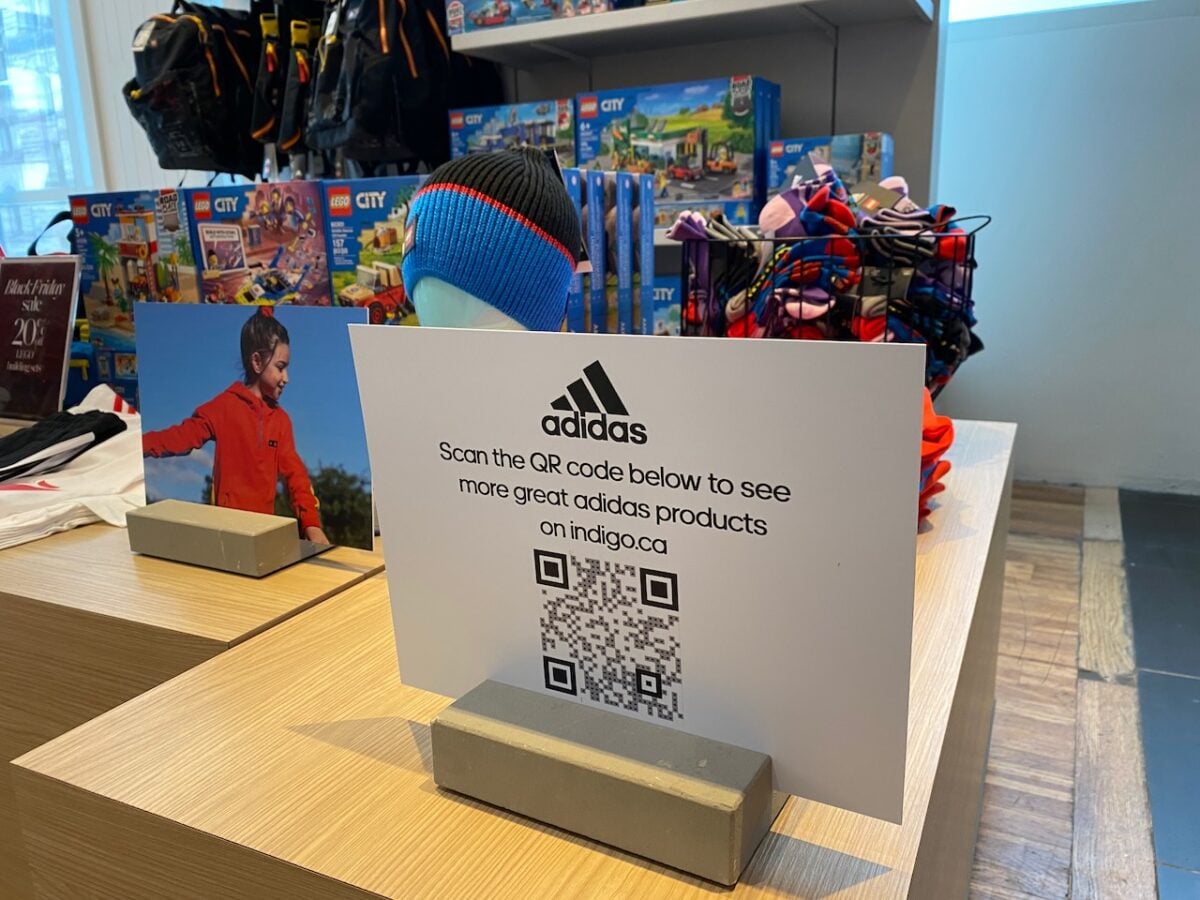
In addition to the incredible increase in adoption of digital channels by the Canadian consumer, the report also cites an even quicker rate of growth for mobile commerce. Surpassing $25 billion in 2020, mobile commerce grew by 83.5 percent, now contributing to one-third (33.1%) of all ecommerce sales in the country and is estimated to grow to 34 percent by the end of 2021. Further, the report forecasts double-digit annual growth for mobile commerce over each of the next four years, reaching $46.4 billion by 2025, accounting for 36.2 percent of all digital purchases. It’s a rise in mobile consumer behaviour that, according to Briggs, is driven in large part by the pervasive use of smartphones and the continuously improved mobile experience that brands offer.

“Most Canadians own a smartphone today,” he says. “And many are increasingly adopting mobile as a means to make digital purchases. This is really helping to underpin mobile commerce’s performance. But, an even more influential driver is the quality of mobile commerce experiences that are being made available by Canadian retailers and direct to consumer brands today. They’ve realized the value in the device as a touch point with the consumer and as a channel to leverage in order to service the retail requirement. Many of the brands have made it much easier and much more convenient for people to use their mobile phones as a means to make purchases.”
Fluid retail marketplace

Briggs goes on to explain that although the digital channels are those experiencing the most growth, they simply serve to comprise elements of the entire retail ecosystem. Consumers today are increasingly viewing the retail experience and the means by which they can interact with brands and shop and make purchases from them as one holistic marketplace, rather than encounters that are defined by the mode by which they happen.

“People like to engage with brands in a number of different ways,” asserts Briggs. “And this is a sentiment and behaviour that is only going to intensify going forward. People like to go into physical retail locations as much as they do shopping on their phones, tablets or desktops. It’s a much broader type of behaviour that the digital channels help support for the consumer, providing retailers with multiple avenues toward purchase. And this expansion concerning the ways that people can shop is really going to drive the retail industry forward.”

Accelerated digitization

The recent rapid growth in digital channels has not only influenced consumer behaviour, however, it’s also created a need for many retailers across the country to enhance and advance their digital initiatives. This advancement for many has meant the development of ecommerce capabilities, the execution of alternate modes of delivery and product transfer and an overall shift in the way retail businesses are run. All told, Briggs says that the digitization of the retail industry is not something that’s been caused by the pandemic, by any means, but is a trajectory that’s been heightened by its impact. He adds that it’s a hastening of retail innovation and development that will ultimately serve to benefit the customer in the end, helping the entire industry to leverage all of the possibilities made available by the latest technologies.

“The digitization of the industry is really leading many retailers to begin using data, or to use data to greater effect than they ever have before,” he says. “It’s providing brands with the ability to understand their consumers at a much deeper level than they did prior to the pandemic. It’s allowing them to understand more clearly what the consumer wants, what products they’re interested in, the ways they want to shop and interact with retailers and the type of experiences they’re looking for. The Amazon type expertise around leveraging data to understand and get closer to the customer is becoming more widely practiced, improving the ways that retailers operate and enhancing the experiences that they offer their customers.”

Curbside rise

Sign advertising contactless curbside pickup at retail store parking lot

Accompanying the growth of the digital channels, helping to prop up ecommerce numbers over the past year-and-a-half, is the explosion of curbside click-and-collect transactions being made by digital buyers. Insider Intelligence estimates that 12.5 million Canadian internet users aged 14 and older will make a purchase via click-and-collect in 2021, accounting for 54.6 percent of all digital buyers in the country. It’s a number that’s increased by 7.2 percent from 2020, adding to the 15.8 percent increase the mode of product delivery experienced last year. It’s function and service that Briggs says has been driven primarily by the expense of last mile delivery in Canada, allowing retailers to avoid many of the logistical challenges and costs in delivering to the countries population while providing a great retail experience. Nagy agrees, adding that it’s become an integral piece of the retail digital offering.

“The click-and-collect phenomenon and behaviour by the consumer are not going to recede,” Nagy asserts. “In fact, it’s become an expected convenience now by the customer who prefers it. People don’t want to go into the store to pick up certain products, especially in a dining scenario, and they don’t want to wait around. It’s not even about the concern or fear of being around other people anymore. It’s just something that’s suitable for a lot of lifestyles. A lot of people are on the move and just want to grab and go. Finding product in an online catalogue and picking things up on the fly is proving to provide a really great retail experience. It’s just something that needs to be baked into a retailers operating system, adding to the service and offering that they provide.”

Cross-border conundrum

Another aspect of consumer behaviour that continues its upward trajectory is the penchant among Canadians to purchase from websites and brands outside of Canadian borders. According to the Insider Intelligence report, cross-border digital buying is a “staple behaviour” in the country, estimating that more than 12 million Canadians will make purchases on non-Canadian sites in 2021, representing more than half of all digital buyers in the country. The reasons for this behaviour are varied, explains Nagy, citing the breadth of options as well as inadequate customer duties, levies and policies on foreign goods entering the country as a couple of examples that lead many to shop elsewhere online.

“I’ve long been concerned about Canadian small and medium-sized businesses when it comes to cross-border buying,” he admits. “Concessions that have been made on the Canadian side with the amount that can be spent on foreign goods have not helped retailers in the country. The average Canadian shopping cart online is about $110. That opens up thousands of retailers in the US as a result of inadequate de minimis levels on goods entering the country. It precipitates billions of dollars of consumer spending across the line. In addition, the value proposition coming out of the US at the moment is just that much better. They have larger catalogues, more product to offer and more in stock. Their marketing ecosystems are better. Their teams are better. Their skillsets with respect to the way they can put product in front of people, as well as their latitude to run websites, are stronger than Canadian retailers across the board. By comparison, a US company that’s selling the same product as a retailer in Canada probably has five to ten times the revenue and so can play in the market much more effectively. Until there’s some kind of contraction within some of the verticals, it’ll be difficult for Canadian retailers to put any kind of dent in cross-border purchases and behaviour.”

Differentiation is key

Approaching what’s hopefully the end of an extremely difficult period in retail history, the role that ecommerce and the digitization of business have played in bracing operations by making up for a lack of physical footfall is alarmingly apparent. The importance of the online channels as paths to purchase are also underscored by the many digital pivots and shifts made by brands throughout the industry. And, although it may be more than challenging for Canadian retailers to go head-to-head with their American counterparts when it comes to resources supporting their online efforts, Nagy suggests that the things that stand them apart will continue to serve as perhaps the most significant tool in winning the spend of today’s digital consumer.

“Retailers absolutely need to identify their piece of the market, the things that make them special, the ways they do things differently, and communicate that story repeatedly. The mistake brands make when they launch online is in their generalization of their brand and offering with a storefront that’s meant to serve everyone. But no brand or offering is for everyone. You have to know your customer and how to speak in your customer voice. Canadian retailers are really good at this in brick-and-mortar retail, developing a look, a feel and a tone with respect to the way their store presents itself. Everything about the in-store experience is designed with the customer in mind. But we do none of that online. Retailers in the country have got to do a better job of understanding exactly who their digital consumer is, targeting them and communicating the uniqueness of their brand to them. If they can do that, they can truly differentiate themselves from their competition and attract the attention and spend of their willing digital audiences.”

Related Retail Insider Articles

Canadian Retail News From Around The Web For August 31st, 2021

Canadian Retail News From Around The Web

Top Stories: National

Central/Eastern Canada News

Western Canada News

David Yurman Invests in Canadian Operations with Standalone Yorkdale Store Renovation 

Yorkdale Shopping Centre in Toronto in August of 2021. Photo: Craig Patterson

New York City-based jewellery and watch brand David Yurman is investing in its Canadian operations as it renovates its only standalone store in this country which is located at Toronto’s Yorkdale Shopping Centre. The luxury brand opened its Yorkdale store in late 2013 and has opened a temporary storefront nearby in the meantime. 

Construction hoarding recently went up on the 1,625 square foot corner space located near several other leading luxury brands. The store’s interior will be updated to reflect the latest David Yurman store design which features high-quality materials with a look that reflects a serious luxury brand. 

A temporary 2,250 square foot David Yurman boutique has opened in Yorkdale’s former Mulberry space — Mulberry exited the Canadian market last year which also included a store at 131 Bloor Street in Toronto. When David Yurman moves back to its original location at Yorkdale after renovations are done, the former Mulberry space will be split up so that adjacent luxury brands Cartier and Bulgari can both expand their existing Yorkdale stores which are said to do astronomically high sales. 

Temporary David Yurman storefront at Yorkdale in the mall’s former Mulberry space in August 2021. Photo Craig Patterson

Several of David Yurman’s Canadian concessions feature the brand’s new look at Holt Renfrew. That includes a 1,649 Yurman boutique at Holt Renfrew’s Bloor Street flagship store that opened last year on the main floor, featuring a range of women’s and men’s designs in dedicated areas. Last year as well, David Yurman unveiled a 1,200 square foot concession on the main floor of Holt Renfrew Ogilvy in Montreal. 

In late 2016, David Yurman opened a 1,226 square foot concession at Holt Renfrew in Vancouver which at the time was the largest concession in the world for the brand. The Vancouver store was one of only five globally at the time to feature Yurman’s ‘high jewellery’ collection with some pieces exceeding $100,000. 

David Yurman also operates concessions at Holt Renfrew stores in downtown Calgary and at Square One in Mississauga. The brand also has a shop inside of Nordstrom in downtown Vancouver. 

When it opened in September of 2014, Nordstrom’s first Canadian store at Calgary’s CF Chinook Centre housed a David Yurman concession area, as did Saks Fifth Avenue’s downtown Toronto store which opened in February of 2016. Both of those Yurman shops have since closed. 

Sources told Retail Insider that in 2018, David Yurman had been looking to open a standalone store at 100 Bloor Street West where the Ermenegildo Zegna store currently operates. An offer by Holt Renfrew to pay part of the construction costs while charging percentage rent for the lease with Yurman is said to have ended those talks.  

Designer David Yurman founded his eponymous company in 1980, and in 1983 introduced his signature bracelet which propelled the brand. The bracelet features a twisted helix adorned with gemstones on its end caps, available at different price points depending on materials. Designs now include pieces for women and men that range from earrings to necklaces to gift items such as pens, as well as a line of timepieces and engagement rings. 

The company operates numerous standalone stores in the United States as well as concessions and shop-in-stores in upscale department stores. Various upscale jewellery retailers also carry the brand in the United States and Canada. 

Walmart to Bolster E-Commerce in Canada with Significant Investments Online and in Stores: Interview

Image: Walmart

Retail giant Walmart Canada is planning to win in the ecommerce space by being agile, fast and customer-focused as the retailer continues to pivot and invest in technology for its omnichannel network.

Laurent Duray

“We’re going to continue providing a faster, easier and trusted shopping experience at our everyday low prices – plus access to an even richer selection of products. And we’re going to keep using the latest technology, from robotics to artificial intelligence, to get us there. Technology will continue improving our customer experience. As we deepen that customer relationship and knowledge, we want to be able to anticipate our customers’ needs and deliver their order in the most convenient way for them,” said Laurent Duray, SVP eCommerce, Walmart Canada.

“We see Walmart as a technology company and are making strides towards a future where our customers can have a more personalized, fast, and convenient experience unlike any other. The journey is just beginning.”

Duray said the company pivoted, adapted and invested in the early stages of the pandemic as more Canadians embraced the online shopping experience.

Image: Walmart Canada

“During the pandemic, 150 more Supercentres started offering online grocery pickup – a big increase. By the end of the year, we’re on track to have 99% of our Supercentres providing this service for our customers (about 350 Supercentres total).” Duray said service speeds are increasing too, with pickup now available in under four hours.

“We’re investing in our stores, our infrastructure and our people to best serve our customers in a rapidly changing retail environment. This is part of our major $3.5 billion investment we announced last summer to make the online and in-store shopping experience simpler, faster and more convenient for our customers,” he said.

“We’re using some of our stores differently today too, carving out space where we can fulfil online orders for pickup or delivery. For example, some locations feature a store-within-a-store in the back room, where associates can quickly access the most popular online products to fill customers’ orders.

“Across the country, our fulfilment centres are also becoming more plentiful and more advanced to increase speed and efficiency. This allows customers to receive their online orders for delivery faster than ever.”

Interior of Walmart’s new fulfillment centre in Scarborough’s Walmart Supercentre. Photo: Walmart

In March, Walmart Canada announced it was accelerating its e-commerce business as construction started on its first fully-automated market fulfilment centre inside the Scarborough West Supercentre (1900 Eglinton Ave E.).

The retailer said the 22,000-square-foot space will automate online grocery picking and dispensing with picking speeds up to six-times faster than manual store picking and the new space will also feature a first for a big grocery retailer in Canada: automated kiosks that serve as vending machines for online grocery orders and can serve up to five customers simultaneously.

The company said customers will be able to drive up to a dedicated parking spot, enter a code and ordered items will appear in less than two minutes, ready to load into their cars. The new space, a partnership with intelligent automation provider, Dematic, will open in the near future.

The company also announced in March it was investing over $500 million this year in its store network, focusing on refurbishing and refreshing stores across the country and making it the largest ever yearly investment in store upgrades.

Duray said Walmart Canada initiatives are always about the customer.

Walmart Fastlane Photo: Walmart

The trend toward online shopping pushed the company to accelerate and pivot as an organization to free up capacity in the stores, to get more parking space allocated for online grocery, to allot more assortment and to make it faster and more convenient for customers.

“Customers want us to be in different channels. They love to be in our stores but they also love to be able to access all the store assortment and more through walmart.ca,” he says. “We’re investing in technology from the robotics to artificial intelligence to really help the customer experience. But also making the life for our associates a lot better. We’re investing in artificial intelligence to make sure it’s more personalized. We also invest in automation in our fulfillment centres. These are all the areas where technology plays a role from a customer facing to more of a back of face.

“We’re investing in technology but also in the people that goes with the technology. We still believe that people will make a big difference in how we operate and how we connect with our customers and how we make a difference. So it’s going to go both hand in hand. We’ve recruited a lot of people in the past so far and in our short future we’re also recruiting in different areas, making sure we meet customer expectations in regards to more assortment, faster delivery and pickup options, better prices and more convenience and ease to shop as well through our app or our web.

“It’s never been easier for the customer and the Canadian to shop online at Walmart and we’ll keep making that a lot better for our customers in the coming months. The customers will see a better version of Walmart in the coming future.”