As CUSMA (the Canada-United States-Mexico Agreement) negotiations move into their next phase, the Canadian Federation of Independent Business (CFIB) is calling on the federal government to ensure small business priorities are front and centre.
Dan Kelly
“Small business owners are frustrated. The ongoing uncertainty around tariffs and trade has delayed real decisions on investment and growth. Protecting Canada’s existing CUSMA exemptions must remain government’s top priority,” said Dan Kelly, CFIB president. “While Canada’s continued tariff-free CUSMA access has helped enormously, small businesses are facing several major pain-points, including sectoral tariffs on steel and aluminum and challenges for small volume exporters in demonstrating CUSMA compliance.”
The CFIB is Canada’s largest association of small and medium-sized businesses with 103,000 members across every industry and region.
According to CFIB’s latest research, 64% of small businesses support taking the time needed to secure the best possible terms for renewed or renegotiated CUSMA, compared to only 16% who would prefer a quicker but potentially less favourable agreement.
Canada–U.S. business relationships have weakened significantly during the trade war, with 75% of SMEs saying the tariff fight has strained their relationships with U.S. partners or clients in April 2026, up sharply from 49% in March 2025. Only 40% of small firms now view the U.S. as a reliable trading partner, said the organization.
As a result, 48% of SMEs trading with the U.S. have shifted to non‑U.S. suppliers or customers. Among those, nearly three-quarters are pivoting to domestic markets. Beyond Canada, Asia (40%) and EU countries (39%) are the top alternatives though high shipping costs, border delays and complex custom procedures limit broader trade diversification, it added.
“While business owners are doing what they can to diversify their trade, we’re never going to be able to entirely replace the 340-million-person market that exists right along our border. That’s why it’s so important to get this right and get a deal that business owners are confident will hold for years to come,” said Kelly.
Corinne Pohlmann
As talks continue, the CFIB said negotiators should seek out areas where there is common ground for improvement, including making CUSMA more accessible to small business owners, streamlining customs rules at the border and clarifying rules of origin.
“As negotiators look ahead to the next version of the agreement, they need to understand it’s not an easy process for small businesses to navigate. Unclear rules of origin, and high compliance and administrative costs mean some small firms are forced to weigh paying tariffs instead of using CUSMA,” said Corinne Pohlmann, CFIB executive vice-president of advocacy. “We can do better. Ottawa must ensure that small business voices are included in trade negotiations and secure a deal that is clear, accessible and works for businesses of every size.”
Welcome to the Daily Synopsis by Retail Insider. We published 6 articles covering prominent developments in Canadian retail and real estate.
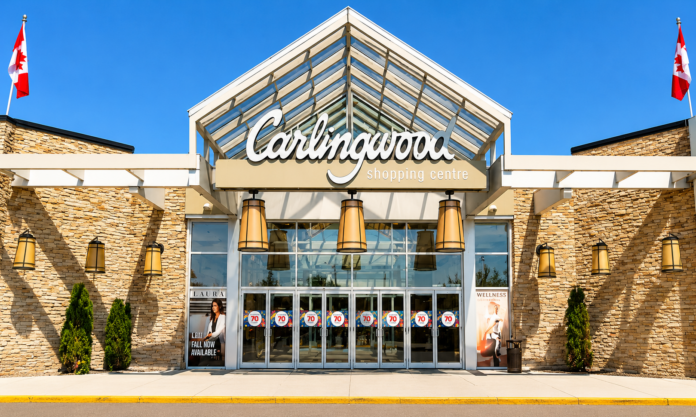
Carlingwood Shopping Centre in Ottawa celebrates 70 years and highlights its evolution from a department store anchor to a neighbourhood hub with grocery and pharmacy services through a strategic redevelopment that included introducing a flagship Canadian Tire. Urban Nature Store has expanded to 10 locations across Ontario as more Canadians embrace backyard birding and nature-related hobbies, reflecting consumer interest in local engagement and specialty retail. Cadillac Fairview is selling CF Shops at Don Mills to focus its portfolio on high-productivity flagship malls, while the property offers investors a stable retail asset with long-term redevelopment potential in a prime Toronto location.
In British Columbia, Redbrick has proposed redeveloping a vacant downtown Victoria site into the Westholme Hotel, addressing anticipated demand for new hotel rooms and revitalizing a historic area with public-facing spaces. These stories illustrate a range of active retail and urban development projects across Canada that respond to changing consumer and market dynamics.
The Ottawa shopping centre is marking its 70th anniversary with roller skating, vintage cars and family activities that celebrate a property that has been part of daily life in the city’s west end for generations.
Few shopping centres in Canada have reached such a milestone.
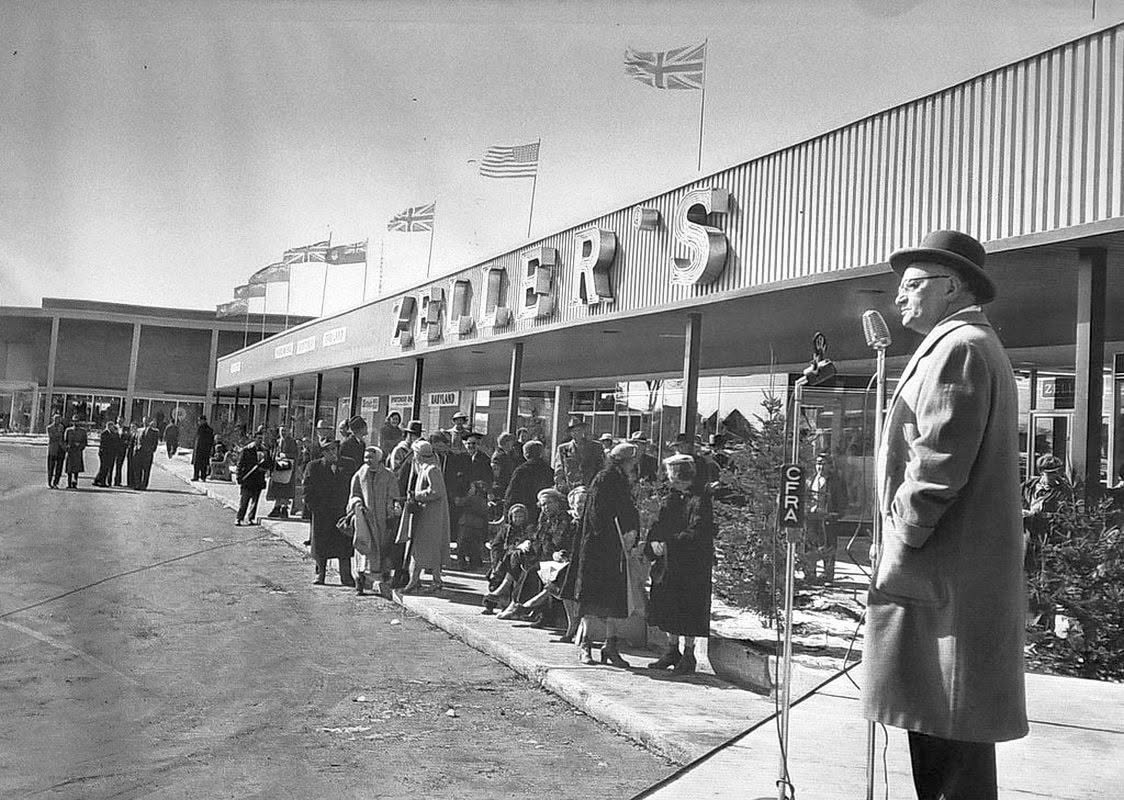
When Carlingwood opened in 1956, it was promoted as the largest shopping centre in Eastern Canada. The centre arrived during the postwar boom, as new suburban communities spread beyond Ottawa’s traditional core and the automobile transformed the way Canadians shopped.
Seventy years later, Carlingwood remains a busy retail destination despite dramatic changes that have reshaped the industry around it.
The shopping centre has outlasted department stores, adapted to the rise of regional malls and big-box retail and navigated the growth of e-commerce. In many ways, its history mirrors the evolution of Canadian retail itself.
Carlingwood Mall opening in 1956
A New Era of Shopping in Ottawa
The 1950s ushered in a new chapter for Ottawa retail.
As families moved into rapidly growing suburban neighbourhoods, shopping centres emerged as a modern alternative to traditional downtown shopping districts. Carlingwood became one of the city’s defining retail destinations, offering the convenience of multiple stores, abundant parking and a shopping experience designed for the automobile age.
The original development featured a two-storey Simpsons-Sears department store and a large Loblaws supermarket. The mall built between those anchors was home to retailers including Woolworth’s, Reitmans, Fairweather, Kiddytown and Zellers.
For many Ottawa residents, Carlingwood became more than a place to shop. It became a community gathering place where families spent weekends, met friends and embraced the growing culture of suburban retailing.
As Ottawa expanded, so did its shopping landscape. Larger regional destinations eventually emerged, including Bayshore Shopping Centre and the downtown-focused Rideau Centre. New power centres and big-box developments later changed shopping patterns once again.
Yet Carlingwood endured. The centre was enclosed and modernized in 1971, beginning a pattern of reinvention that would become one of its defining characteristics.
Carlingwood Mall in 1958
Adapting to a Changing Retail Landscape
The history of Carlingwood is, in many respects, the history of Canadian retail.
The centre experienced the golden age of department stores and later watched as traditional anchors lost their dominance. It saw consumers embrace discount retailers and category killers and later witnessed the rise of online shopping and digital commerce.
Many shopping centres of a similar age struggled to navigate those transitions. Some were redeveloped. Others lost their relevance altogether. Carlingwood evolved into something different: a community shopping centre focused increasingly on convenience and everyday needs.
Its mix of grocery, pharmacy, banking, dining and service-oriented tenants has helped it remain closely connected to the surrounding neighbourhoods that have supported the centre for decades.
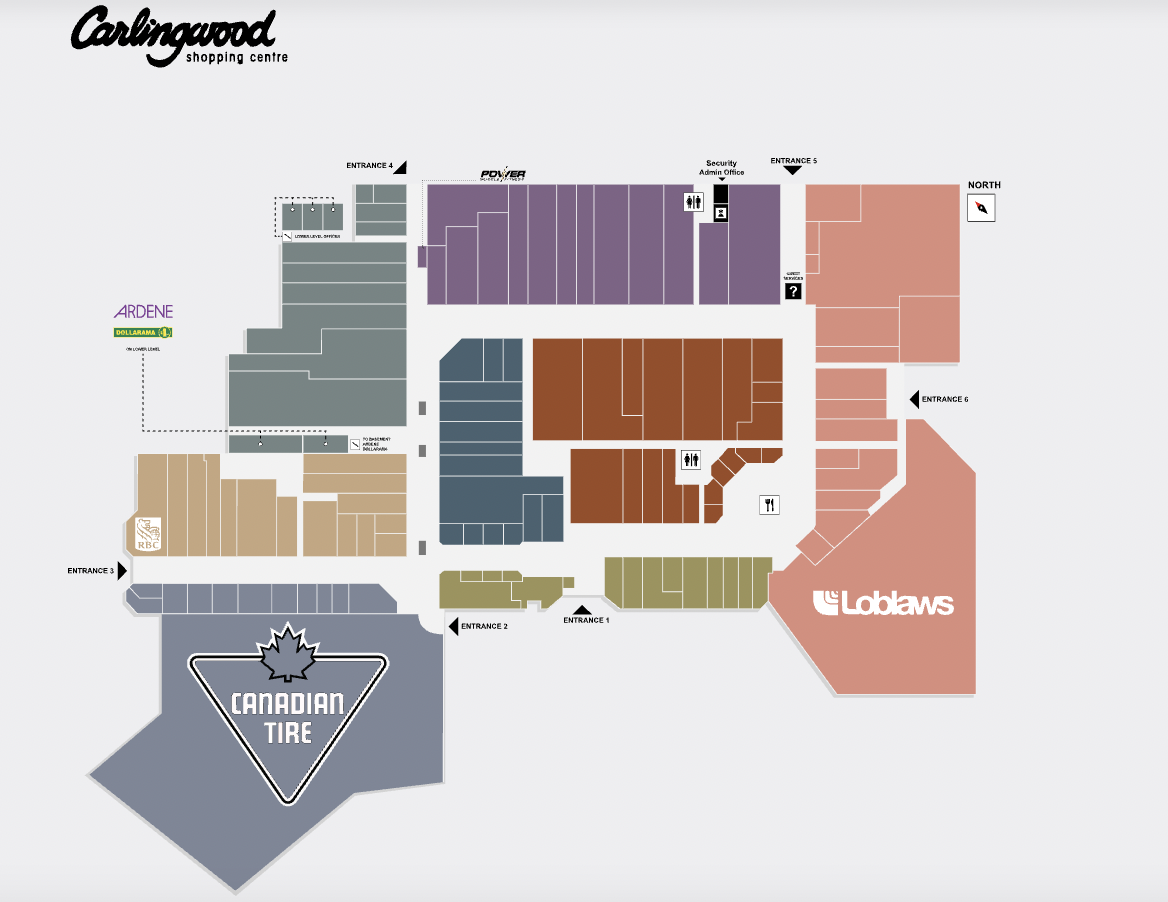
Click image for interactive mall map
The Sears Closure Became an Opportunity
One of the most significant moments in the shopping centre’s history came in 2018 when Sears Canada closed its doors.
Across the country, the collapse of Sears left shopping centre owners facing difficult questions about how to replace massive department store spaces that had anchored malls for generations.
At Carlingwood, the answer became one of the property’s biggest reinventions.
The former Sears building was demolished and replaced by a massive new Canadian Tire location that is widely regarded as the largest Canadian Tire store in the country.
The transformation reinforced Carlingwood’s role as a destination for practical, everyday shopping and demonstrated that older shopping centres can remain successful when they adapt to changing consumer needs.
In many respects, the replacement of Sears with Canadian Tire symbolizes a broader shift in Canadian retail. The era of the traditional department store has given way to retailers that focus on convenience, value and products that are woven into daily life.
Why Community Shopping Centres Continue to Matter
Carlingwood is not Ottawa’s largest mall, nor is it trying to become a luxury retail destination. Its strength lies elsewhere.
Community shopping centres have shown remarkable resilience because they serve local needs in ways that are difficult to replicate online. Grocery shopping, pharmacy visits, banking and everyday errands continue to bring customers through their doors on a regular basis.
Carlingwood’s accessible location, ample parking and neighbourhood-oriented tenant mix have allowed it to remain relevant while many older shopping centres have faded.
The property also remains deeply connected to the communities that surround it, serving not only as a retail destination but as a social and community hub.
Looking Toward the Next Chapter
Carlingwood entered a new era in 2024 when Streamliner Properties and Anthem Properties Group acquired the 30-acre shopping centre.
The new owners have highlighted the property’s proximity to Ottawa’s expanding LRT network and its long-term potential for incremental residential density.
Those comments reflect a broader trend unfolding across Canada as shopping centre owners increasingly explore opportunities to add housing to large urban properties while preserving successful retail uses.
No major redevelopment plans have been announced publicly for Carlingwood. Still, its size and location suggest that the shopping centre could continue evolving in the decades ahead.
That possibility feels fitting for a property that has spent the past 70 years adapting to change.
A Legacy of Reinvention
Carlingwood Shopping Centre’s anniversary is about more than longevity. It is about resilience.
Few shopping centres that opened during the postwar suburban boom remain important retail destinations today. Fewer still have managed to reinvent themselves repeatedly while maintaining a strong connection to their communities.
Seventy years after welcoming its first shoppers, Carlingwood stands as a reminder that successful shopping centres are rarely static. They endure because they evolve.
The future of Canadian retail will likely include more mixed-use communities, transit-oriented development and new forms of shopping. If the past seven decades are any indication, Carlingwood will continue finding ways to adapt to whatever comes next.
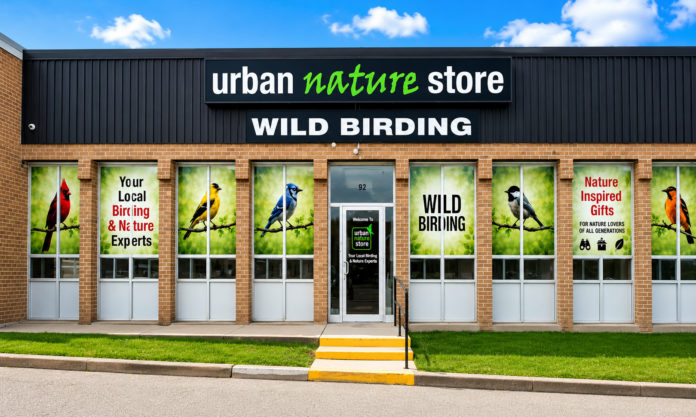
Urban Nature Store in Thornhill. Image supplied/modified
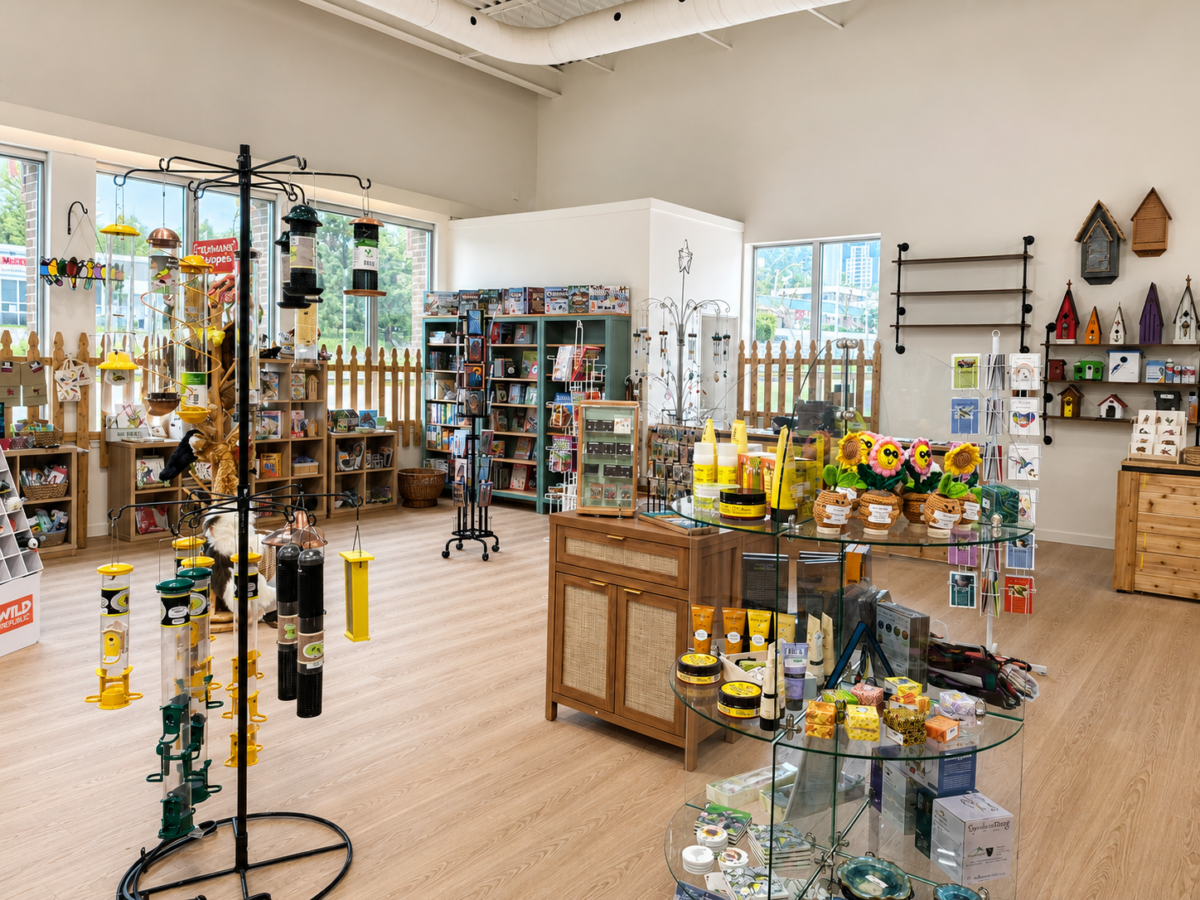
As more Canadians spend time closer to home this summer, many are rediscovering the simple pleasure of watching birds in their own backyards. For Urban Nature Store, that growing appreciation for nature has helped fuel the expansion of a Canadian specialty retailer that has quietly reached an important milestone.
The company has opened its 10th store at 92 Doncaster Avenue in Thornhill, marking a significant achievement for the business founded by Paul Oliver more than 25 years ago. The opening comes as interest in birdwatching, backyard wildlife and other nature-related hobbies continues to build across Canada.
“We’re incredibly grateful for the support Canadians have shown us over the past twenty-five years,” said Oliver. “Opening our tenth store isn’t simply about growth—it’s about continuing to build a community of people who care about nature, wildlife and protecting the environment for future generations.”
Founded in 2000, Urban Nature Store has grown from a single location into a network of 10 stores across Ontario, including locations in Ancaster, Etobicoke, Kingston, Markham, Mississauga, North York, Oshawa, Pickering, St. Catharines and now Thornhill. The retailer also serves customers nationally through e-commerce and employs approximately 75 full- and part-time team members.
Building a Business Around Nature
Urban Nature Store’s growth is rooted in a simple idea: helping Canadians connect with the natural world around them. For Oliver, birding has always been personal.
“It was something my mother and I shared together, and those are memories I’ve carried with me my whole life,” he said.
Today, he sees that connection being passed along to a new generation of customers.
“In a world filled with screens, bird feeding gives families a simple way to spend time together while helping kids develop an appreciation for wildlife and the environment,” Oliver said.
That sense of community has become one of the company’s defining characteristics. Many employees were once Urban Nature Store customers themselves, developing a passion for birding before eventually joining the business.
The loyalty extends to customers as well. More than 90 per cent of shoppers participate in the company’s free rewards program, while combined in-store and online sales are running approximately 17 per cent ahead of last year.
“We’ve been incredibly fortunate to build a loyal community of customers who keep coming back, not just because of the products we sell, but because they know they’ll receive honest advice and personal service,” Oliver said.
Birding Goes Mainstream
Urban Nature Store’s expansion comes amid broader changes in how Canadians are spending their leisure time.
Statistics Canada has reported that more than one-quarter of Canadian households purchase products to feed or shelter birds, while millions of Canadians participate in wildlife viewing and birdwatching activities each year.
At the same time, economic pressures and changing travel habits are encouraging many Canadians to spend more time closer to home this summer, leading some to rediscover local parks, gardens and backyard hobbies.
Oliver said the company saw an extraordinary increase in interest during the pandemic as people spent more time at home and began paying closer attention to the wildlife outside their windows.
“Initially, we thought that interest might fade once life returned to normal,” he said. “Instead, the opposite happened.”
Many customers discovered that birdwatching is relaxing, educational and surprisingly addictive.
“Once someone sees a colourful cardinal or a hummingbird visiting their feeder for the first time, they’re hooked,” Oliver said.
The demographics of birding have also broadened significantly.
“There used to be a stereotype that birding was mostly a hobby for retirees,” he said. “That couldn’t be further from today’s reality.”
The retailer is increasingly seeing young professionals, families with children and newcomers to Canada embracing birdwatching and nature-related activities.
Urban Nature Store in Thornhill. Image supplied/modified
A Growing Interest in Canadian-Made Products
Another trend benefiting the company is growing consumer interest in supporting Canadian businesses and purchasing locally made products.
“We’re proudly Canadian-owned and Canadian-managed, so supporting Canadian suppliers feels like a natural extension of who we are,” Oliver said.
Urban Nature Store offers many products sourced from Canadian manufacturers and has collaborated with domestic suppliers to develop exclusive items for its stores.
“One of the biggest surprises over the past couple of years has been discovering just how much manufacturing expertise exists in Canada,” Oliver said.
That focus has become increasingly important as more customers ask where products are made and look for ways to support Canadian companies.
Expanding With Purpose
The decision to open in Thornhill was driven by both customer demand and data from the company’s online business.
“We regularly received emails and comments from customers saying, ‘When are you opening a store in Thornhill?'” Oliver said.
By examining online sales patterns, Urban Nature Store identified the community as an underserved market with strong interest in birding and nature products.
Despite reaching 10 locations, the company says it remains committed to measured expansion.
“We’d rather open the right stores, in the right communities, while maintaining the level of customer service that has defined us since 2000,” Oliver said.
Additional growth opportunities are being explored, though the company says maintaining the customer experience remains its top priority.
Beyond Retail
Urban Nature Store sells bird feeders, seed, optics, nature-inspired gifts, educational toys, gardening products and seasonal décor, but Oliver says the company’s purpose extends beyond retail.
This year alone, the company will host more than 30 free guided bird walks in communities where it operates. It also offers a binocular lending program for schools, community groups and aspiring birders.
“If someone leaves one of our stores or attends one of our events with a greater appreciation for birds and wildlife, we’ve accomplished something meaningful,” Oliver said.
Twenty-five years after opening its first store, Urban Nature Store is showing how specialty retail can thrive by building community, offering expertise and helping people reconnect with the natural world just beyond their back doors.
CF Shops at Don Mills in Toronto. Photo: Cadillac Fairview
Toronto-based Cadillac Fairview has put CF Shops at Don Mills up for sale, offering investors the opportunity to acquire one of Canada’s best-known open-air shopping centres as the company continues a long-term strategy of concentrating its portfolio around its most productive retail assets and highest-growth opportunities.
The 30-acre property, located at the southwest corner of Don Mills Road and Lawrence Avenue East in Toronto, comprises 580,153 square feet of gross leasable area and is home to 111 tenants. The shopping centre is being marketed by TD Cornerstone Commercial Realty and CBRE Toronto’s National Investment Team, which described the offering as a “generational opportunity to acquire a high-quality shopping centre with stable in-place cash flow and long-term upside potential.”
According to marketing materials, the centre generates approximately $665 in tenant sales per square foot and benefits from an affluent trade area with average household income of about $171,000.
The property is anchored by tenants including Metro, McEwan Fine Foods, Cineplex Cinemas, LCBO, RBC, TD, Anthropologie, Structube and Eataly. Other notable retailers include Aritzia, Sephora, Joey Restaurants, Chick-fil-A and Chipotle.
CF Shops at Don Mills in Toronto. Photo: Cadillac Fairview
A Pioneering Lifestyle Centre
CF Shops at Don Mills opened in 2009 on the site of the former Don Mills Centre, becoming one of Canada’s earliest large-scale open-air lifestyle shopping centres. At the time, the project represented a significant departure from the enclosed regional mall format that had dominated Canadian retail development for decades.
The centre combined shopping, restaurants, entertainment and public gathering spaces in an urban village setting and helped establish the lifestyle centre concept in Canada.
Cadillac Fairview later partnered with FRAM Building Group and Lanterra Developments on residential projects surrounding the shopping centre, including Rodeo Drive, Flaire and LIV Lofts, helping create a mixed-use community around the property.
In 2017, Cadillac Fairview completed a $21-million renovation that included upgraded pedestrian spaces, enhanced landscaping, new public art and expanded entertainment areas.
CF Shops at Don Mills in Toronto. Photo: Cadillac Fairview
Another Step in Cadillac Fairview’s Portfolio Evolution
The proposed sale comes amid a period of significant portfolio repositioning by Cadillac Fairview, the wholly owned real estate subsidiary of the Ontario Teachers’ Pension Plan.
Over the past two years, the company has sold several major shopping centres, including CF Champlain in Greater Moncton, CF Fairview Park in Kitchener, CF Lime Ridge in Hamilton and CF Promenades St-Bruno in Quebec. Earlier this year, Cadillac Fairview also sold a 50 per cent non-managing interest in CF Masonville Place in London while retaining management of the property.
Taken together, the transactions suggest an increasingly focused portfolio optimization strategy centred on a smaller number of flagship assets that generate some of the highest sales productivity levels in Canada.
Retail Advisor Antony Karabus believes the proposed sale of Shops at Don Mills fits squarely within that strategy.
“Different mall owners clearly have very different strategies,” Karabus said in an interview with Retail Insider.
Antony Karabus
“CF’s shopping centre strategy clearly is to build and optimize the most productive modern malls that cater to the biggest-spending retail customers.”
Karabus described Shops at Don Mills as an “orphan” within Cadillac Fairview’s portfolio, arguing that the open-air centre no longer aligns with the company’s focus on highly productive, transit-oriented shopping centres in major urban markets. Further, the open-air nature of the asset brings a whole different set of complexities and is creating challenges to motivate customers to shop there for the many months of winter and rainy weather in Toronto.
“It’s just for a different mall owner, it would be a good asset. For CF, it doesn’t fit into their portfolio strategy,” he said.
A Different Position in the Toronto Market
Karabus noted that Shops at Don Mills occupies a different position in the market than some of Cadillac Fairview’s flagship properties and nearby competitors.
Unlike nearby enclosed shopping centres such as CF Fairview Mall and Bayview Village, the property lacks direct rapid transit access and primarily serves customers arriving by automobile and bus. The surrounding neighbourhood is affluent but remains relatively low density compared with some of Toronto’s major urban shopping districts.
The centre’s tenant sales productivity of approximately $665 per square foot is well below that of Cadillac Fairview’s highest-performing assets, many of which generate more than $1,000 per square foot in tenant sales.
At the same time, Karabus emphasized that the proposed sale should not be interpreted as a reflection of weakness at Shops at Don Mills itself.
“It’s not a bad asset,” he said. “It’s just not the right asset for Cadillac Fairview.”
His comments also reflect broader changes within Canadian retail, where a K-shaped economy has increasingly favoured top-performing luxury and premium retail destinations while value-oriented and necessity-based centres have also performed strongly.
CF Shops at Don Mills in Toronto. Photo: Cadillac Fairview
Significant Long-Term Redevelopment Potential
While the existing shopping centre continues to generate stable cash flow, the property’s long-term redevelopment potential may prove equally attractive to prospective buyers.
Marketing materials indicate that an additional 752 condominium units and 407 purpose-built rental apartments are proposed within the existing mixed-use village surrounding the shopping centre.
The offering memorandum also highlights the possibility of substantially greater intensification in the future. Preliminary planning concepts envision the eastern portion of the site along Don Mills Road eventually accommodating more than 2,800 additional residential units.
The scale of that opportunity suggests that investors may be evaluating the property as both an operating shopping centre and a long-term land play in one of Toronto’s most affluent neighbourhoods.
Karabus believes meaningful redevelopment remains years away given the current challenges and much reduced demand in the multi-family real estate sector but says the property could appeal to an owner with different investment objectives and return expectations than Cadillac Fairview.
As shopping centre owners across Canada increasingly look to unlock value through mixed-use intensification, the future owner of Shops at Don Mills may ultimately see opportunities extending well beyond the existing retail footprint.
Ultimately, the proposed sale appears to be less a commentary on the shopping centre itself and more another sign of Cadillac Fairview’s continuing effort to optimize its retail portfolio around a smaller number of flagship assets with the highest productivity and growth opportunity.
For a new owner, however, the property may represent something entirely different: a stable cash-flowing retail asset, a substantial land holding in one of Toronto’s most affluent communities, and a long-term opportunity to shape the next chapter of one of Canada’s pioneering lifestyle centres.
Celebrate Canada Worldwide is preparing to expand beyond its long-established United Kingdom presence as the not-for-profit organization looks to connect Canadian businesses with new international markets amid changing global trade dynamics.
Executive chair Jeffrey Sundquist said the organization is building on a model developed through its Canada Day programming in London and subsequent Canada U.K. Business Summit, with an eye toward establishing similar initiatives in other regions.
“Our purpose is really to promote trade, investment and culture,” Sundquist said in an interview.
The organization is now assessing markets including the Middle East and Mexico as it considers where its platform could best support Canadian commercial interests.
Jeffrey Sundquist
The expansion marks a strategic shift for the Calgary-based organization, which has historically centred its activities in London, where its Canada Day celebrations once drew about 50,000 people to Trafalgar Square. While the public festival is not being held this year, Sundquist said planning is underway for its return in 2027.
Instead, the organization is focusing on strengthening its business programming while evaluating opportunities in additional markets.
“We want to expand our platform to other markets, particularly given the trade issues right now,” he said.
Building on a business summit model
Celebrate Canada Worldwide traces its origins to Canada Day London, which combined cultural programming with business and diplomatic engagement.
Sundquist, who previously lived in London, said the original event featured Canadian musical acts, cultural activities, sports programming and partnerships with organizations including Lululemon.
Following a hiatus of about a decade, organizers shifted their attention toward commercial engagement by creating the Canada U.K. Business Summit, bringing together business leaders, elected officials, Indigenous leaders and diplomatic representatives.
Celebrate Canada Worldwide photo
The summit now serves as the template for future expansion.
“It’s really about connecting business, elected officials, cultural leaders, Indigenous leaders, and celebrating Canada,” Sundquist said.
The organization works with the Canadian High Commission and seeks to promote Canada’s profile through trade, investment and cultural initiatives.
Focus on established exporters
Rather than targeting early-stage companies, Celebrate Canada Worldwide is concentrating its efforts on businesses with the financial capacity to pursue international expansion.
Among organizations that have participated are mining companies, Air Canada and law firms.
“We want to work with and promote organizations that have got the balance sheet to export,” Sundquist said. “We’re not looking for startups per se.”
He said entering international markets requires patience, capital and long-term commitment.
“On the export side, it takes time and patience and capital to develop into new markets.”
In addition to supporting export opportunities, the organization also works on initiatives related to attracting inward investment and collaborates with multiple levels of government to support international engagement.
Celebrate Canada Worldwide photo
Tailoring markets to provincial strengths
Sundquist said future expansion will not rely on a one-size-fits-all approach. Instead, the organization intends to align Canadian industries with markets where they are most likely to succeed.
He pointed to Newfoundland and Labrador’s participation in London as an example of how regional strengths can be matched with appropriate international opportunities.
“Their industry may not necessarily align with Mexico,” he said.
Likewise, Ontario’s automotive sector may be better suited to some markets than others, while Western Canada’s energy industry could find opportunities in parts of the United States and overseas if market access improves.
“It’s really about aligning the interests of different partners that we’ve got across Canada with new markets.”
Celebrate Canada Worldwide photo
Leveraging diplomatic experience
Sundquist said the organization’s leadership draws on experience in government, diplomacy and international business to support its expansion plans.
A former diplomat, he previously served as Alberta’s representative in the United Kingdom and worked on policy matters across Europe, including Brussels.
That experience, combined with board members’ backgrounds in trade and diplomacy, gives the organization an understanding of how to work with Canadian embassies, high commissions and the Trade Commissioner Service, he said.
“We’ve got a really good pedigree. It’s a small team, but we’ve got a good pedigree of people that understand the playing field in business, diplomacy and culture.”
Although Celebrate Canada Worldwide remains relatively small, Sundquist said its strategy is to leverage those relationships as it evaluates where to establish future programming.
“We don’t want to boil the ocean or be overly ambitious,” he said. “But we think that there are great opportunities in other markets, and we can be a great advocate and support for that.”
Victoria-based Redbrick says it plans to redevelop a long-vacant downtown property into a hotel, marking what the company describes as a significant local investment as it seeks to expand accommodation capacity in the city’s core.
The company said that it is in the preliminary planning stages for Westholme, a proposed hotel at the corner of Government Street and Pandora Avenue. The project would redevelop the site at 603 Pandora Ave., which has remained vacant since a fire destroyed the previous building in 2019.
The proposal represents Redbrick’s latest investment in Victoria, where the company was founded and has operated since 2011. The business says it has grown to employ more than 200 people and has invested in companies, initiatives and projects intended to support the local economy over the past 15 years.
Pandora site. Redbrick photo
The redevelopment application for the property has been active for several years. Redbrick, which recently acquired the site, said it is redesigning the proposal with a new project team in collaboration with Victoria-based developer Aryze.
The property was once home to the historic Westholme Hotel, which first opened in 1911. According to Redbrick, the site has long served as a gathering place in downtown Victoria.
The location sits near Centennial Square and the city’s Industry, Arts and Innovation District. Redbrick said future plans will explore public-facing spaces and street-level uses as part of the redevelopment.
Tobyn Sowden
“Victoria is where Redbrick was built,” said Tobyn Sowden, CEO of Redbrick. “It’s where we live, work and continue to invest. After 15 years downtown, we see Westholme as an opportunity to contribute to the next phase of growth in the city, guided by the same mindset that has shaped Redbrick from the beginning: creating lasting, meaningful impact.”
Redbrick said the project is intended to add year-round hotel accommodation to the downtown core. The company said regional planning and hospitality studies have identified a need for approximately 2,000 net new hotel rooms over the next decade, and said the proposed development would help address that demand.
Aryze is working with Redbrick on the project as development partner.
Chris Quigley
“Victoria has a real gap in hotel supply, yet this property—already zoned for hotel use—has been sitting empty for nearly a decade,” said Chris Quigley, VP of Development at Aryze. “We’re excited to be working alongside Redbrick—a fellow local B Corp who shares a strong vision for not only welcoming more visitors to our city, but delivering an exceptional landmark design that will shape our region’s future potential.”
The proposal remains in its early planning stages.
Redbrick and Aryze said they are holding preliminary discussions with nearby businesses, community members, civic leaders and neighbours before submitting future rezoning and development permit applications.
The company said it is inviting members of the public to register for project updates and future engagement opportunities as planning for the proposed development continues.
Corby Spirit and Wine Ltd. is leaning into the fast-growing ready-to-drink beverage market while working to strengthen consumer loyalty to its Canadian whisky brands as changing drinking habits and shifting market conditions reshape the alcohol industry.
Five months into her role as chief executive, Florence Tresarrieu said the company is benefiting from long-term changes in consumer behaviour that favour convenience, portion control and premium products, trends she expects will continue rather than reverse.
“We see a massive growth in ready-to-drink, the cocktail in the cans,” Tresarrieu said in an interview. “This is growing extremely fast.”
The shift is central to Corby’s strategy because the category represents a significant share of the company’s business and continues to outpace more traditional segments of the alcohol market.
Florence Tresarrieu
Tresarrieu, who joined Corby after eight years with majority shareholder Pernod Ricard, said she was drawn to the opportunity to lead an operating business after spending much of her career in finance, capital markets and investor relations.
Before joining Pernod Ricard, she spent two decades in investment banking, working in London, Asia and Dubai. She said she had been seeking an opportunity to run a business and accepted the Canadian position as soon as it was offered.
“I was super eager to be on the field and then to be running an affiliate, so a country by myself,” she said. “Putting my feet on the ground and seeing it for myself, going to the stores, and being very operational was definitely something that I was super keen on doing.”
Consumer preferences continue to evolve
Tresarrieu said Canadian consumers are following many of the same purchasing trends seen elsewhere in the world.
People are generally drinking less alcohol overall, she said, but placing greater emphasis on quality rather than quantity. At the same time, consumption is shifting away from beer and wine toward ready-to-drink beverages.
While spirits have also experienced some decline, she said the category has held up better than beer and wine.
According to Tresarrieu, consumer research points to several reasons behind the rapid growth of ready-to-drink products.
Convenience remains the primary driver, with canned cocktails offering portability and ease of consumption. She also said improvements in product quality have helped distinguish the category from earlier coolers and seltzers.
Economic pressures are also influencing purchasing decisions.
“Alcohol is not a must-have — it’s something you do to treat yourself,” she said. “People have less money, so they’re making choices.”
Portion control has also become increasingly important, she said, with consumers appreciating clearly labelled serving sizes, alcohol content and sugar levels.
For those reasons, Tresarrieu said she expects the category to remain a permanent part of the alcoholic beverage market.
“I don’t think it’s a fad,” she said. “I think lifestyle choices are something we’re seeing across the board in consumable products, not just alcohol.”
Younger consumers changing how they drink
Tresarrieu said younger consumers are often viewed as drinking substantially less than previous generations, but she believes the reality is more nuanced.
Rather than abandoning alcohol altogether, younger adults are drinking less frequently and making more deliberate purchasing decisions.
“It’s much more intentional,” she said. “They want to drink on specific occasions.”
That group also places greater emphasis on quality, convenience and knowing exactly how much they are consuming, she said.
Corby Spirit and Wine Ltd. photo
Cost pressures are playing an important role as well.
Tresarrieu said younger consumers consistently identify affordability as the biggest reason for reducing wine consumption, followed by lifestyle changes and spending less time socializing in person.
“They are the ones we feel are under the most pressure because everything is getting a lot more expensive,” she said.
Those factors, she said, continue to reinforce demand for ready-to-drink products.
Canadian whisky sees boost amid trade tensions
Corby has also experienced stronger demand for its Canadian whisky portfolio during trade disruptions affecting U.S. products.
Tresarrieu said the company’s flagship Canadian whisky brands have benefited as consumers and hospitality operators shifted purchasing decisions.
She said Lot 40 recorded a 120 per cent increase in sales over the past 12 months.
“It’s not a huge brand, but the increase is very telling,” she said.
She also pointed to changing inventories in bars and restaurants, where Canadian whisky has replaced bourbon in some cases.
The company has also seen stronger sales of Jameson Irish Whiskey, she said.
Despite those gains, Tresarrieu said Corby is planning with the expectation that U.S. products will eventually return to store shelves.
“We don’t expect U.S. products to be off the shelf forever,” she said.
The company’s focus now is on converting temporary purchasing changes into longer-term customer loyalty.
“We need to build loyalty toward Canadian whisky and the portfolio, making sure it sticks.”
Florence Tresarrieu
Positioning for long-term growth
Tresarrieu said Corby’s early investment in ready-to-drink beverages continues to differentiate the company within the spirits industry.
The company entered the category through an acquisition three years ago, giving it what she described as an early-mover advantage in a rapidly evolving market.
Today, she said, ready-to-drink products account for roughly 40 per cent of Corby’s revenue, while spirits generate the remaining 60 per cent.
She said the company continues to gain market share in spirits while participating in one of the industry’s fastest-growing segments.
“What is very specific with Corby… is that almost 30 per cent of our sales are in RTD,” she said, adding that the category has become a defining part of the company’s business strategy.
Looking ahead, Tresarrieu said her priority is ensuring investors and the broader market understand Corby’s position as consumer preferences continue to evolve.
“It’s a great story to tell in the spirits business, or in the alcoholic beverages business, which is a big challenge at the moment.”
The Canadian Federation of Independent Business (CFIB) is urging the Alberta government to complement its newly announced Alberta Energy Rebate with longer-term measures aimed at reducing costs for small businesses, including cutting the province’s small business tax rate.
The business advocacy group said the government’s decision to provide direct payments to most adult Albertans may offer short-term financial relief but does not address the cost pressures affecting small businesses.
The Alberta Energy Rebate will provide direct payments tied to high energy revenues, replacing the province’s previous fuel tax relief mechanism. According to the CFIB, most adult Albertans will receive the payments under the new program.
The CFIB said the rebate may help households in the short term but argued it does little to address broader affordability challenges facing businesses and consumers.
Keyli Loeppky
“Small businesses understand how difficult rising costs have been for Albertans and appreciate the government’s intent to provide cash relief,” said Keyli Loeppky, Senior Director of Alberta & Interprovincial Affairs at CFIB. “However, direct payments to individuals alone won’t address the underlying challenges driving affordability concerns—especially for small firms that are being squeezed on all sides.”
The organization said a $100 rebate would represent only a small portion of the higher monthly costs many business owners continue to face.
The CFIB said small businesses continue to contend with rising expenses, including energy, insurance, operating costs and property taxes, adding that one-time payments are unlikely to change those longer-term financial pressures.
“Small firms are dealing with rising costs in energy, insurance, operating costs, and property taxes,” Loeppky added. “A one-time $100 rebate is simply a drop in the bucket compared to the sustained cost increases businesses are absorbing every month. Without targeted relief, these pressures will continue to limit their ability to invest, grow, and keep prices down for consumers.”
The organization also pointed to concerns raised by economists about broad-based cash payments, saying such measures risk sustaining inflation by increasing demand without addressing underlying cost drivers in the economy.
CFIB is calling on the Alberta government to adopt measures that directly reduce the cost of doing business. Among its recommendations are lowering the province’s small business tax rate and increasing the income threshold at which the rate applies.
The organization said reducing Alberta’s small business tax rate to zero would have less than a one per cent impact on provincial government revenue, estimating the effect at 0.42 per cent.
The CFIB said Alberta’s fiscal position provides an opportunity to implement longer-term tax measures that it believes would better support small businesses than one-time rebate payments.
“Short-term cash might feel good today, but it won’t keep a business open tomorrow,” concluded Loeppky. “Alberta has the fiscal room to do more than short-term fixes. Cutting the small business tax rate is the most direct way to support jobs, investment, and long-term affordability.”
The CFIB represents 103,000 small and medium-sized businesses across Canada, including 11,000 in Alberta.
Artificial Intelligence (AI) is reshaping how people search and decide, moving the industry past the search-and-click model toward a conversational and generative future. Ahead of the recent Cannes Lions, a gathering of the creative marketing communications industry, Pinterest rolled out a new set of AI ad tools focused on three things marketers care about right now: performance, workflow efficiency, and interoperability.
The launch included:
Business Assistant, a new AI collaborator in Ads Manager (US Beta for now).
Pinterest Model Context Protocol (MCP), an AI-native infrastructure layer that connects Pinterest campaign, analytics, and keyword insights to the copilots and agentic tools advertisers and partners already use. Available to select partners globally.
New Performance+ creative, a new AI model that can evaluate a broader set of creatives and identify the variant most likely to perform for each ad impression. Available globally.
Ask Pinterest, is a new experimental app for exploring more conversational, visual-first and agentic shopping experiences (US only).
Taken together, the company said the updates reflect a broader push by the platform to embed AI across campaign management, creative, partner workflows, and discovery surfaces as the industry moves beyond traditional search.
Pinterest photo
Lee Brown
“The future of discovery won’t be driven by keywords alone. It will be shaped by context, taste, and trusted recommendations,” said Lee Brown, Chief Business Officer, Pinterest. “Pinterest has a unique advantage because people come to our platform to plan, curate and take action on what they want to do next. We’re building AI experiences and infrastructure that tap into those signals in more useful and relevant ways.”
The brand said it is building AI into advertiser workflows with Business Assistant, an AI collaborator in Ads Manager and mobile, currently in a closed beta in the US. It combines a deep understanding of an advertiser’s business with Pinterest’s platform insights to help advertisers drive the best performance, building on the approach pioneered by Pinterest Assistant.
“Like Pinterest, Business Assistant is visual. It doesn’t answer with walls of text, but demonstrates breakout Trends in graphs and shows top Pins to promote. For example, if “clean beauty routine” searches are up 42% one week and an advertiser wants to join in, Business Assistant can represent how user interest grew, alongside real Pins leading the Trend to inspire their ads,” said the platform.
“We’ve also brought Business Assistant to mobile, so advertisers get proactive notifications about Trends, performance status and optimization opportunities.”
The platform said it is also embedding AI into partner tools with Pinterest MCP (Model Context Protocol), an AI-native infrastructure that connects Pinterest to the copilots and agentic tools advertisers rely on.
“As AI transforms marketing, partners need a reliable, standardized integration. Built on the Model Context Protocol, Pinterest’s offering provides secure access to campaign, analytics and keyword insights. It grounds AI workflows in Pinterest’s unique signals including taste, trends and intent, allowing partner copilots to provide platform-specific guidance directly within existing tools,” it said.
Pinterest photo
The company said it is evolving Pinterest MCP alongside alpha partners like PMG, Pacvue, Innovid by Mediaocean and Omnicom’s Jump450. Their feedback is shaping the protocol across reporting, analysis, campaign planning and execution, directly informing how we expand in the future.
Chris Ivey
“Pinterest MCP helps us integrate Pinterest directly into the workflows our teams are already building, making it easier to analyze performance, uncover insights and act on opportunities without switching tools,” said Chris Ivey, President of Jump 450. “What makes Pinterest especially compelling is the strength of its intent signals. People come to Pinterest to plan what they want to do next, creating valuable context that helps marketers make smarter decisions.”
It said it is introducing a new AI model to work with Pinterest Performance+ creative to deliver the right variation at the right moment.
“Through dynamic creative selection, the model can evaluate a broader set of creatives and identify the variant most likely to perform for each ad impression. This moves performance optimization from the ad level to the asset level, delivering a more personalized experience for users and better results for advertisers. In testing, the new model increased click volume by 7.5% compared to the previous singular variant model. Pinterest Performance+ creative and its new AI model are available to advertisers globally, “ it said.
“In addition to a more powerful creative selection model, brands will also have access to new ad review tools and enhanced creative reporting breakouts, giving them greater confidence in how their creative appears and performs on Pinterest.”
Pinterest photo
Rolling out in the US, it said Ask Pinterest is a new experimental app for exploring more conversational, visual-first and agentic shopping experiences.
Ask Pinterest brings Pinterest’s Taste Graph and the visual discovery experience beyond the core app, using the company’s proprietary signals around taste, intent and preferences to power more personalized recommendations and inspiration, it noted.
“Ask Pinterest is designed for more conversational, complex, multi-step decisions that don’t fit neatly into a single search, like planning a dinner party on a budget, finding a gift that feels truly personal, or furnishing a room over time. The experience helps us explore how AI can better support those richer shopping experiences while retaining context across sessions.
“What we learn from Ask Pinterest will help inform future AI-powered experiences across the main app.”