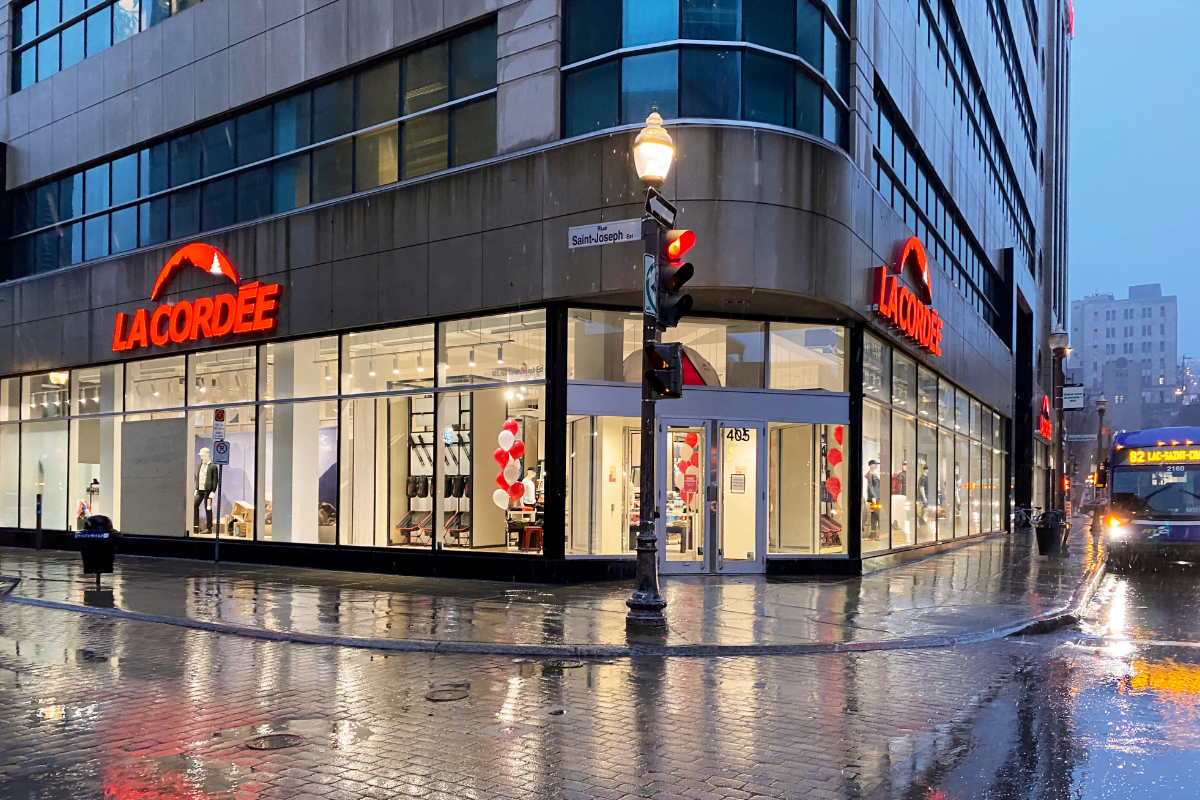
As part of Retail Insider Reports, this Q3 2026 Sporting Goods & Outdoor Report analyzes Q3 2026 developments in Canadian sporting goods, outdoor recreation, and fitness retail. Drawing on Retail Insider coverage, industry research, company disclosures, government data, and broader market signals, it identifies key dynamics shaping store investment, specialist assortments, services, and consumer demand. These reports are designed to deliver executive-level insights across major retail sectors and can be accessed through the Retail Insider Report Hub.
This report examines Canadian sporting goods, outdoor recreation, fitness, athletic equipment, hunting, fishing, cycling, and related specialty retail sectors.
Report Contents
- Executive Summary
- Retail Insider Coverage
- SportChek Captures World Cup Demand
- Destination Sport Makes a Bigger Bet on the Store
- Sports Experts Rebuilds the Economics of an Existing Flagship
- Technology and Space Are Being Judged on Productivity
- MEC Tests a Different Inventory Model
- MEC Builds Around Trail Running
- Arc’teryx Extends the Customer Relationship
- Lululemon Shows the Limits of Participation
- Columbia Shows Why Channel Mix Matters
- Fitness Participation Creates Additional Retail Touchpoints
- Broader Industry Coverage
- Editor’s Take & Outlook
- Representative Articles
- More From Retail Insider
Executive Summary
Canadian sporting goods and outdoor retailers continued investing heavily in stores during the third quarter of 2026, with different approaches to space, inventory and service as companies worked to improve productivity and capture consumer spending.
SportChek generated 8% comparable-sales growth in Canadian Tire’s second quarter, with World Cup merchandise accounting for roughly half the increase. Sports Experts completed an approximately $8-million rebuild of its CF Carrefour Laval flagship, emphasizing inventory depth, fitting and fulfilment. MEC expanded its trail-running business while preparing to test a 2,200-square-foot store in Whistler, and Arc’teryx opened a Montreal Alpha Store with expanded repair, care and resale services.
Performance varied considerably. Lululemon attracted nearly 10,000 runners to Vancouver’s revived SeaWheeze half marathon while its Canadian quarterly revenue declined 11%. Columbia Sportswear reported a high-single-digit decline in Canadian sales on a constant-currency basis as its wholesale business weakened.
The divergence illustrates an important distinction for the sector. Participation in sport, fitness and outdoor activities creates a substantial customer base. Assortment, inventory availability, service, location and merchandising determine how effectively retailers convert that interest into spending.
Canadian sporting goods and outdoor retailers invested in stores, assortments and services during Q3 as financial performance varied substantially across companies.
Several developments stand out:
- SportChek reported 8% comparable-sales growth, with World Cup merchandise generating roughly half the increase. The banner is also expanding its Destination Sport format, including an almost 70,000-square-foot location planned for CF Chinook Centre in Calgary.
- Sports Experts invested approximately $8 million in its roughly 45,000-square-foot CF Carrefour Laval flagship, increasing footwear inventory depth and reorganizing space around sales productivity, fitting and fulfilment.
- Retailers are making different inventory bets. Sports Experts can hold approximately 60,000 pairs of footwear at Laval, while MEC’s planned 2,200-square-foot Whistler store will use a locally curated assortment supported by access to a broader online range.
- Services are taking on defined commercial roles. Sports Experts retained technology that assists with footwear fitting, Arc’teryx expanded repair, care and resale in Montreal, and MEC is using technical expertise and community programming to deepen its trail-running business.
- Strong participation and engagement do not guarantee stronger sales. Lululemon’s Canadian revenue fell 11% even as SeaWheeze attracted nearly 10,000 runners, while MEC has not disclosed whether participation in its trail-running programs generated incremental sales.
- Columbia’s Canadian results demonstrate the importance of channel mix. Wholesale weakened while direct-to-consumer sales grew, led by e-commerce.
Opening campaigns, sporting events and community programs can create traffic and interest. Stabilized sales, margins, repeat visits, inventory productivity and returns on capital will provide stronger evidence of whether the investments are working.
Retail Insider Coverage
SportChek Captures World Cup Demand
SportChek provided one of the quarter’s clearest examples of a retailer successfully preparing for a major sporting event. Comparable sales increased 8% during Canadian Tire’s second quarter ended July 4, with World Cup merchandise generating roughly half the growth. Montreal Canadiens fanwear also contributed, while athletic footwear performed well and cycling was more muted.
The World Cup contribution reflects successful execution around a predictable period of heightened demand. SportChek positioned inventory and marketing to capture spending while consumer interest was elevated. Sustaining the growth becomes the next test. Canadian Tire management has pointed to more difficult comparisons, including the prior year’s Blue Jays postseason run and favourable fourth-quarter weather. Results after the World Cup contribution passes will provide a better indication of performance across SportChek’s broader assortment.
Destination Sport Makes a Bigger Bet on the Store
SportChek is also investing in larger stores designed to carry deeper assortments and support additional services. At CF Chinook Centre in Calgary, the retailer plans to consolidate its two existing locations into an almost 70,000-square-foot Destination Sport store on the upper level of the former Nordstrom in 2027. The project represents a substantial reinvestment in an existing market, using a larger consolidated location to provide sport-focused departments, expanded footwear presentations, broader assortments and services.
The former Nordstrom space illustrates one potential reuse for large department-store floor plates. Sporting goods is among the retail categories capable of occupying substantial portions of former anchors while other tenants take the remaining space.
Canadian Tire has discussed former Hudson’s Bay locations as potential Destination Sport opportunities, although it had not identified specific completed HBC transactions during its August earnings discussion. Access, configuration, local demand, rent and required capital will determine which spaces are viable.
Digital investment is developing alongside the physical program. Canadian Tire has introduced website tabs allowing customers to move among its major banners, with management saying its larger web audience is generating traffic for SportChek and Mark’s. Integrated search, cart and payment capabilities remained planned.
Sports Experts Rebuilds the Economics of an Existing Flagship
The Sports Experts and Atmosphere flagship at CF Carrefour Laval provides one of the quarter’s most detailed examples of investment in an established store.
Groupe Beaulieu-Angelo spent approximately $8 million rebuilding the roughly 45,000-square-foot, two-level location, which soft-opened August 6 and formally reopened August 12. The family-owned operator runs five Sports Experts stores in Quebec, with Carrefour Laval accounting for approximately 40% of group sales. The investment addressed inventory capacity, circulation, category allocation and online fulfilment in a store that had already undergone a substantial renovation in 2015. After exploring a configuration of approximately 70,000 square feet on one level, the operator expanded the existing mezzanine internally by approximately 2,000 square feet and reorganized the premises.
Footwear is central to the rebuilt store. Approximately 1,425 to 1,450 models were on display when Retail Insider visited, with capacity for roughly 1,600 and stockroom capacity for approximately 60,000 pairs. That depth increases the likelihood that customers can find the correct product and size during a store visit while supporting online orders drawn from the same inventory. In a category where fit, comparison and immediate availability can influence the purchase, Sports Experts is making a substantial bet on physical inventory.
Three Aetrex foot-scanning systems help associates measure customers and recommend products across brands, making the large assortment easier to navigate.
Technology and Space Are Being Judged on Productivity
The renovation also provides an unusually clear example of selective thinking around in-store technology. The previous store contained RFID-enabled screens that allowed customers to check product availability. Management found that they created maintenance work and could display inventory that employees were unable to locate. Removing 12 screens created enough space to display another 144 footwear models.
The retailer retained the Aetrex scanners, which serve a specific fitting and recommendation function. Store technology consumes space, labour and capital, and its value depends on whether it improves the customer experience or operation sufficiently to justify those resources.
Space allocation was also reconsidered across categories. Bicycles received less floor space in the rebuilt store, yet early bicycle sales were approximately 20% above previous levels. Footwear sales were running approximately 70% higher when co-owner Hugo Beaulieu spoke with Retail Insider. Both figures were recorded shortly after reopening and should be treated as early indicators. Stabilized performance will provide a better measure of the return on the renovation.
The temporary store used during construction adds another perspective. Despite occupying approximately 50,000 square feet across the street, traffic was roughly 70% below the Carrefour Laval location and sales were about 30% lower. The operator-reported figures reinforce the importance of location, assortment and customer journey alongside store size. The temporary location provided substantial square footage but did not reproduce the traffic or sales of the established mall store.
MEC Tests a Different Inventory Model
MEC’s planned Whistler location takes a very different approach to physical inventory. The retailer is targeting an October 31 soft opening for a 2,200-square-foot store at 104–4338 Main Street in Tyndall Stone Lodge, previously occupied by Arc’teryx. It would become MEC’s 25th Canadian store and its first in the Sea to Sky corridor. The store will carry a regionally selected assortment while providing access to MEC’s broader online range and store pickup where available. Staff knowledge is intended to help customers navigate the smaller selection and find products appropriate for local activities.
MEC has described Whistler as a learning opportunity and has not announced a broader rollout of the format. The comparison with Sports Experts is instructive. Carrefour Laval uses deep physical inventory to increase availability in a high-volume regional shopping centre. MEC is testing whether a specialized market can be served from a much smaller store using local curation, expertise and digital access to additional products.
The appropriate inventory model depends on the market, category, customer mission and fulfilment capabilities. Whistler will provide evidence of how far MEC can reduce physical assortment while maintaining sufficient product availability and service.
MEC Builds Around Trail Running
MEC is also expanding its investment in trail running, drawing on capabilities already present in hiking and backpacking. Its assortment includes footwear, apparel, hydration systems, packs, nutrition and accessories, with Canadian brands including norda, Ciele Athletics and Näak alongside MEC Label and international suppliers. The category can generate purchases beyond footwear as customers progress to longer distances and more technical terrain. Hydration, nutrition, carrying systems and clothing become more important, increasing the role of specialist advice.
Chief Merchandising Officer Chris Speyer said MEC Label represents approximately 25% of the retailer’s overall business, with the company intending to increase that share. The figure applies to MEC as a whole and is not a measure of its trail-running business.
MEC is also using community programming to develop regular contact with runners. Its four-week Train for the Trails program includes free clinics, community runs, training challenges and digital resources. More than 1,000 people registered nationally during the first weekend, while the initial 100 Vancouver places filled during that period.
The registrations demonstrate interest, although MEC has not disclosed incremental sales, basket sizes or longer-term retention resulting from the program. Those measures would provide a better indication of the commercial value created by the engagement.
Arc’teryx Extends the Customer Relationship
Arc’teryx is using its own Canadian stores to expand assortment and services. Its 9,599-square-foot Montreal Alpha Store opened August 28 at 1133 Sainte-Catherine Street West, replacing the brand’s longstanding location farther west. The three-level former Michael Kors premises include an expanded ReBIRD Service Centre, broader product presentations, Veilance and community space.
ReBIRD gives existing owners reasons to return through repair, product care, trade-in and resale. Eligible products can be traded for credit based on a portion of their original value, while some repairs can be performed in-store. For technical products designed for extended use, those services create additional interactions during the ownership cycle. The larger Montreal store can also expose returning customers to footwear, women’s product, Veilance and other parts of the assortment.
Amer Sports has identified Canada as Arc’teryx’s highest-awareness market and reported strong growth in women’s products and footwear. Those growth measures were reported at broader geographic levels and should not be treated as Canada-specific performance. Management has also discussed a potential long-term opportunity for approximately 200 Arc’teryx stores in North America. That represents a continental opportunity and is not a Canadian opening commitment.
JD Sports provides additional evidence of investment in athletic footwear and sports-fashion retail. Its downtown Montreal store at 777 Sainte-Catherine Street West occupies the main level and former mezzanine of the former Banana Republic premises, adding a prominent urban location alongside the company’s suburban expansion. JD Sports’ September half-year results showed softer North American trading and did not provide a separate Canadian sales figure, limiting conclusions about the productivity of its Canadian expansion.
Lululemon Shows the Limits of Participation
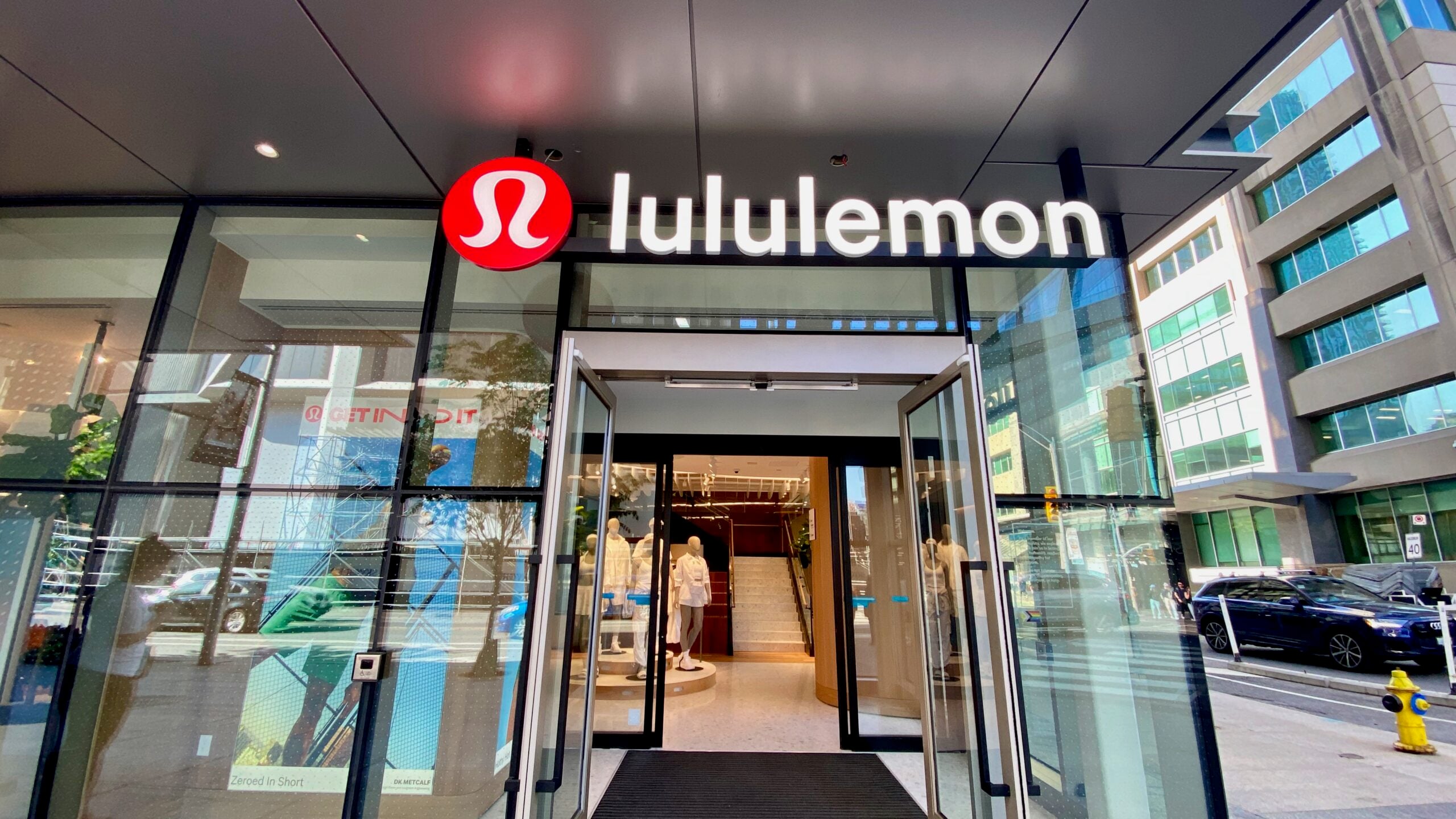
Lululemon provides the clearest example of strong consumer engagement coexisting with weaker retail performance. Canadian second-quarter revenue declined 11% on a reported basis and 9% in constant currency. During the same period, the company brought its SeaWheeze half marathon back to Vancouver, attracting nearly 10,000 runners from 24 countries.
Approximately half of participants were Canadian and more than 70% travelled to Vancouver for the event. SeaWheeze included a Showcase Store, brand activations, limited-edition merchandise and community programming. The participation demonstrates substantial engagement with lululemon’s brand and running community. Management nevertheless acknowledged that encouraging community engagement had yet to improve the Canadian sales trajectory.
Lululemon has identified traffic and product challenges in Canada and is reducing store SKU density while testing more localized assortments. The inventory response is notable in the context of other Q3 investments: Sports Experts is increasing footwear depth in a high-volume store, while lululemon is reducing SKU density to improve product presentation and relevance.
Columbia Shows Why Channel Mix Matters
Columbia Sportswear’s Canadian second-quarter sales declined 7% on a reported basis and approximately 9% in constant currency to roughly US$25.2 million. The decline primarily reflected unfavourable wholesale shipment timing and lower spring wholesale orders. Direct-to-consumer sales grew, led by e-commerce, while store performance was weaker.
Canadian gross margin increased to 49.8% from 48.1%, partly because direct-to-consumer sales represented a larger share of the business and carry higher gross margins than wholesale. Canadian operating loss nevertheless widened to approximately US$3 million from US$2 million. The results show how sales, channel mix, gross margin and operating performance can move differently within the same market.
Shipment timing adds another complication. Columbia said more than US$30 million of shipments globally were expected to move from the third quarter into the fourth, predominantly affecting North America, with no meaningful order cancellations at the time of the call. Timing still matters for seasonal merchandise. Retailers need footwear, apparel and outerwear early enough to capture the strongest portion of their selling periods, even when delayed orders ultimately ship.
Fitness Participation Creates Additional Retail Touchpoints
Fitness businesses provide additional contact with consumers buying athletic apparel, footwear, equipment and nutrition products. Calgary’s Realm Fitness reported approximately 2,500 members and 700 to 800 average daily visits at its 44,000-square-foot converted industrial property near Inglewood. The facility includes branded merchandise, supplements and a working equipment showroom, although retail sales were not disclosed.
The model shows how fitness participation can create recurring customer traffic around products and services adjacent to traditional sporting-goods retail. Without retail-sales disclosure, however, membership and visits cannot establish the value of that merchandise opportunity.
Broader Industry Coverage
Statistics Canada Provides a Broad Market Backdrop
Statistics Canada’s July retail data recorded $1.422 billion in sales at sporting goods, hobby, musical instrument and book retailers and news dealers. Sales increased 4.3% from a year earlier in current dollars and 3.4% at constant prices. Compared with June, sales declined 0.8% in current dollars and 1% at constant prices.
The category includes several businesses outside sporting goods and cannot establish a 4.3% increase specifically for Canadian sporting-goods retail. The annual increase provides a constructive backdrop, while the monthly decline and divergent company results argue against drawing a broad conclusion about the pace of sector growth.
Editor’s Take & Outlook
Outlook: The Investments Face a Productivity Test
The winter selling period and 2027 will provide better evidence of whether the quarter’s investments are producing durable returns. SportChek faces harder comparisons as World Cup merchandise becomes less important to growth. Its planned CF Chinook Centre Destination Sport store will eventually provide another measure of whether consolidating two locations into a larger store improves productivity.
Sports Experts will move beyond the initial reopening period at Carrefour Laval. Early footwear and bicycle gains are encouraging, but stabilized sales and inventory productivity will determine the return on the approximately $8-million investment.
MEC’s Whistler store will test whether a small physical assortment, local expertise and digital access can effectively serve a specialized market. Its trail-running program creates a separate test of whether community engagement produces repeat customers and incremental purchases.
Arc’teryx’s expanded ReBIRD operation creates measures around repeat visits, service usage, trade-ins and resale, while its larger Montreal store will test demand for a broader direct assortment.
Lululemon will need to demonstrate that changes to SKU density, localized assortments and product strategy can improve Canadian traffic and sales. Columbia’s next results should indicate whether wholesale shipment timing normalizes, whether direct-to-consumer growth continues and whether gross-margin improvement can translate into better operating performance.
Across the sector, comparable sales, inventory turns, full-price sell-through, service usage, repeat visits, digital conversion, margins and return on invested capital will provide stronger evidence of performance than store openings and event attendance alone.
Editor’s Take
Sporting-goods retail has an advantage few categories enjoy: customers actively participate in the activities that create demand for its products. Running, soccer, hockey, skiing, cycling and fitness can generate recurring needs for footwear, apparel and equipment. Retailers still have to convert that participation into purchases.
The Q3 investments show how different the solutions can be. SportChek is preparing an almost 70,000-square-foot Destination Sport location, Sports Experts has rebuilt a roughly 45,000-square-foot flagship around inventory and productivity, Arc’teryx is using a 9,599-square-foot store for assortment and lifecycle services, and MEC will test a 2,200-square-foot format built around local curation and digital access.
Sports Experts is carrying enough footwear to increase the probability that customers find the product and size they want immediately. MEC Whistler will test a narrower physical assortment supported by expertise and online inventory. Arc’teryx is creating reasons for existing owners to return through repair, care, trade-in and resale.
Lululemon provides an important financial counterweight. Nearly 10,000 people can participate in a major brand event while Canadian revenue declines, demonstrating why community engagement and commercial performance need to be measured separately.
The strongest Q3 strategies involve specific decisions about what belongs in the store, how much inventory customers need immediately, which services justify labour and space, and where digital capabilities can extend the physical assortment. Participation creates the opportunity. Sales productivity determines whether the investment works.
Representative Articles
- Canadian Tire Corporation reports Q2 2026 results, strong SportChek performance due to World-Cup related demand — Aug 13, 2026
- SportChek Plans More Destination Sport Stores as HBC Spaces Create Opportunities — Aug 18, 2026
- Sports Experts Unveils $8M CF Carrefour Laval Flagship — Sep 28, 2026
- MEC Deepens Investment in Trail Running as Category Gains Momentum — Sep 8, 2026
- MEC to Open Small-Format Whistler Store as Retailer Tests New Concept — Sep 25, 2026
- Arc’teryx Opens Montreal Alpha Store 20 Years After Entering the Market — Sep 22, 2026
- Columbia Sportswear Navigates Softer Canadian Wholesale Sales — Aug 13, 2026
- Lululemon Canada Sales Fall 11% as Outlook Weakens — Sep 3, 2026
- JD Sports Opens Downtown Montreal Flagship as Canadian Expansion Accelerates — Aug 28, 2026
- Realm Fitness Builds 2,500-Member Community Inside Calgary Industrial Property — Aug 6, 2026
- Arc’teryx Sees Potential for 200 Stores in North America as Expansion Accelerates — Aug 24, 2026
- Lululemon Cuts Store SKUs by 15% as Retailer Slows Expansion — Sep 4, 2026