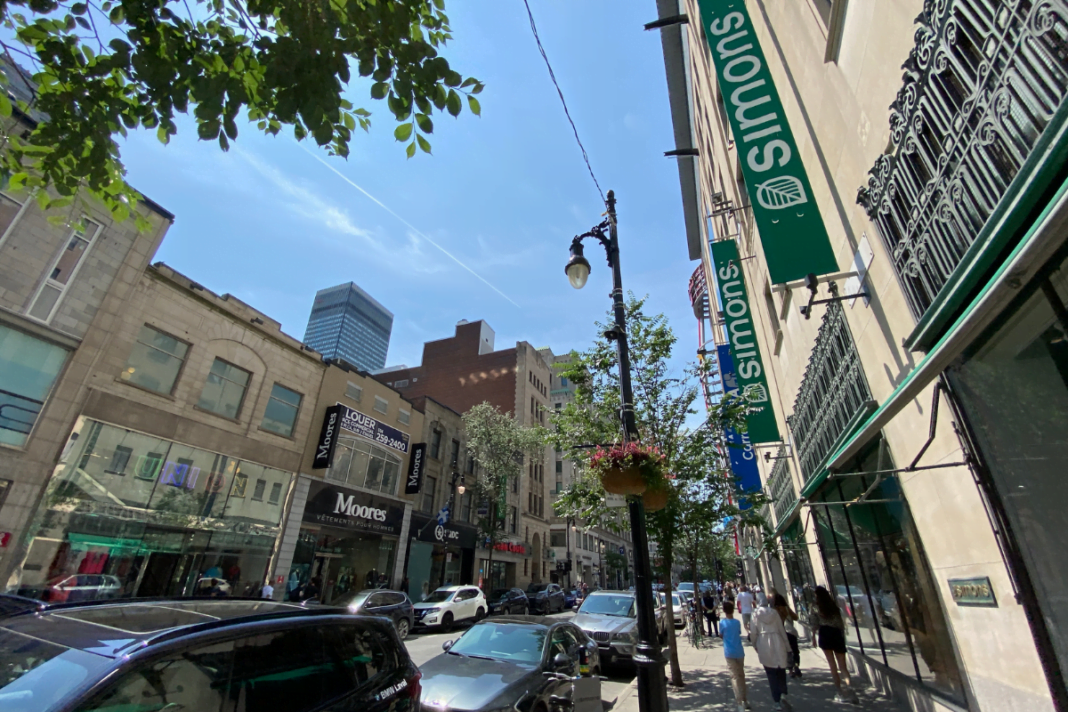
The Canadian retail leasing market will see increased activity for the remainder of 2022 as it recovers from the slowdown in the first quarter as Omicron disrupted business activity, especially in Ontario and Quebec, in January and February, raising business uncertainty and freezing leasing plans, says the Retail Outlook report by commercial real estate firm JLL.
The report said this follows a strong 2021 for retail leasing which fully rebounded from the initial pandemic shock. Overall retail leasing activity in 2021 surpassed 2019 by 12 per cent.
“Businesses and shoppers remain optimistic about the future. Businesses anticipate increased future sales over the coming months, and shoppers are less hesitant about enclosed spaces and reasonably confident about their future spending,” said the report.
“Retailers still consider exterior entrances an asset, but enclosed spaces are increasingly attractive again. Mall leasing activity has intensified, and mall vacancy is starting to trend down after peaking in Q4.
“Calgary and Edmonton have led the retail recovery with the most robust space-absorption. A higher oil price ‒ exacerbated by the Russia-Ukraine conflict ‒ has benefited both of these markets, driving strong economic and housing activity and employment. In addition, unlike Ontario and Quebec, Alberta experienced a more relaxed health framework that did not affect space-absorption levels last year.”
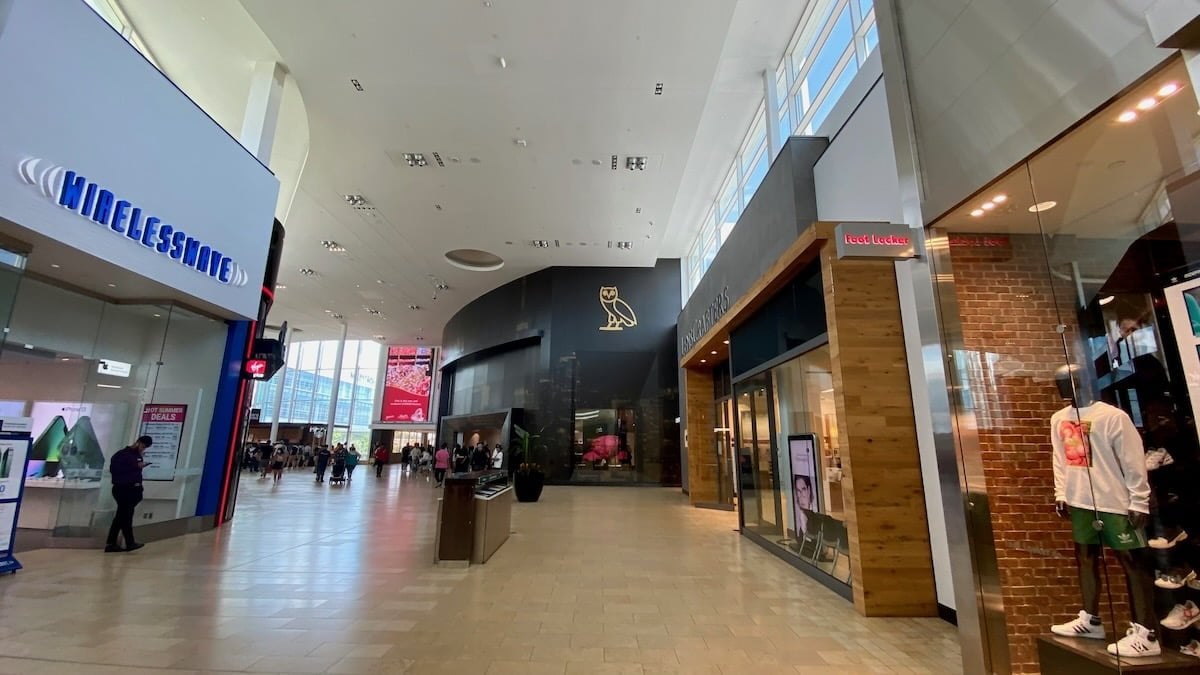
In Canada, total availability was 2.9 per cent in the Spring, near the pre-pandemic 2019 level of 2.8 per cent. It increased to 3.5 per cent in 2020 then dipped down to 3.0 per cent in 2021.
Total retail inventory in Canada is 753.6 million square feet. Net absorption so far this year has been 1.5 million square feet with another 6.2 million square feet under construction.
“Overall, Canada’s economic momentum should continue to drive down available space, while driving rents and space absorption up. The economy resiliently weathered the Omicron wave in Q1, with a tighter labour market, pent-up demand, and excess household savings,” said the JLL report.
“Due to rising construction costs and a labour shortage, retail construction levels have lowered a notch, and no major retail building boom is expected in the short-to-mid-term. Retail completions have consequently decreased, which reinforces the expectation of a tighter market in the following quarters.
“However, Calgary retail construction has been an outlier as the market sees a robust stream of completions fueled by population growth. Calgary is a magnet for young, skilled professionals whenever there’s an acceleration of job growth, especially positions with high wages.”

Tim Sanderson, Executive Vice President & National Lead, Retail, JLL Canada, said availability numbers nationally are pre-COVID numbers.

“That’s a healthy place to be quite frankly. Anything less than that and basically there’s nothing available,” said Sanderson. “We’re not overbuilt in this country. Thankfully.”
He said the amount of current construction out there is a big number.
“On the face of it, across the whole country, that’s a lot. A lot of that would be stuff that was in the pipeline pre-COVID. One of the toughest things we’re up against these days is construction costs. Transactions take a long time from beginning to end and when a landlord and a tenant try to agree on construction budgets and you’ve still got a permitting process to go through which means I’m not going pull my construction budgets for another 12 months and you say I’m going to spend $8 million building this store, well you’ve got no way of knowing if it’s going to be $8 million or $12 million,” he said.
“There were a lot of artificial tenancies through COVID. There were people who were not paying rent. There were people who still occupied space but maybe weren’t open because they couldn’t have staff or whatever. And there was a lot of temporary tenants filling the space. Pop-up stores or what have you. That 3.5 per cent (availability rate in 2020) if you really dug into it was probably more like 4.5.”
The JLL report said retail tailwinds are stronger than headwinds in the market today.
Those tailwinds include:
- Healthy labour market: Job market conditions remain tight with the unemployment rate falling to a record low of 5.1 per cent in May. A tight labour market is a strong indicator that shoppers have disposable income to spend;
- Favourable consumer confidence: Consumer spending as a whole is expected to remain healthy in 2022, supported by pent-up demand and elevated savings;
- Excess household savings: Canadians saved a lot during the pandemic, especially in the first half of 2020 and first half of 2021. For Canada, the average household savings rate was about two per cent before pandemic and we finished Q1 with a rate of 8.1 per cent. At the current rate, there’s still fuel left to burn before it recedes to its historic average rate in one to two years; and
- Pent-up demand: During the shutdowns of physical space, Canadians put a pause on store spending and only redirected a fraction of their shopping to online. With the reopening of physical retail, food services, gyms, cinemas, and bars, many Canadians are eager to go out again.
The headwinds include:
- Supply chain: This year, most retailers expect facing challenges maintaining inventory levels or acquiring inputs, products, and supplies. The top obstacles should be the rising cost of inputs, shortage of labour force, and transportation costs;
- Inflation: Inflation is likely approaching a peak, and forward-looking indicators point to a moderation in economic activity in the second half of this year. Goods prices will soon decline or decelerate as demand shifts back towards services with the relaxation of social distancing measures;
- Labour shortage: While attracting and retaining talent remains a concern across all industries, it is especially acute in hospitality and construction. Although these temporary circumstances will fade over time, labour markets will remain employee-favourable in the long run, due to the secular aging of the workforce and the mass retirement of the Boomer generation;
- Shift from goods to services: While shoppers aren’t clearly substituting goods with services, spending on travel and hospitality services have surged over the past few months. Goods sales, particularly groceries, remain elevated; and
- Rising interest rates: As the cost of borrowing rises, more shoppers will rein in spending in favour of saving. Households that pay mortgages will have less free money to spend on discretionary goods. Commercial rents tend to rise as landlords pass on additional financing costs to preserve profitability.
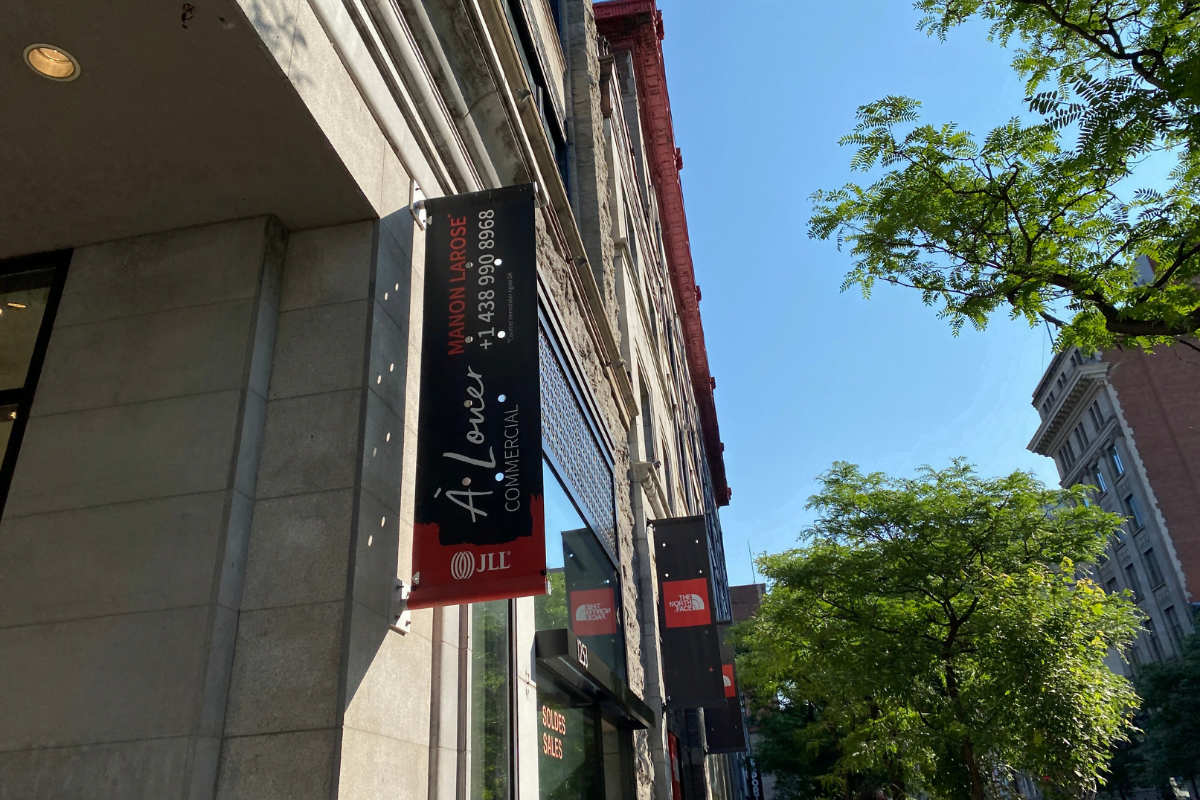
The JLL report said general retail remains by far the most sought-after retail type. Retailers are still interested in neighbourhood centres, but their interest has waned. In contrast, businesses have shown signs of gradually returning to enclosed malls.
“Net effective rents continue their recovery trajectory, demonstrating a slight positive increase this past Q1 compared with Q1-19. Rent concessions and adoption of per cent rent leases continue to dwindle, accompanied by a gradual tapering of government rent subsidies,” said the report.
“Montreal, Toronto, and the Atlantic region have experienced the strongest rate rebound. Calgary still lags the other major markets, as rates in Calgary have yet to reach pre-pandemic levels. Like net effective rents, asking rents continue to trend up as retail sales and foot traffic recover. Particularly in Ontario and Quebec, as space-absorption increases we should see a strengthening of this trend.”
The report said e-commerce has receded from its highs during the pandemic, but activity remains elevated relative to pre-pandemic levels. During each lockdown, the pattern was that e-commerce would accelerate, but then reduce once physical stores reopened. True to form, e-commerce sales slid this March following the peak of the Omicron wave. However, the overall trendline continues to ascend and e-commerce as a percentage of total retail sales should continue to rise, added JLL.
“While physical stores remain the preferred shopping method, curbside pickup has captured a significant share during the pandemic. For each of the past two holiday seasons, about 18 per cent of shoppers bought online and opted to pick up at the store rather than wait for delivery. Before the pandemic, curbside pickup was hardly a viable option,” it said.