Funko Inc. has appointed Kroeger Marketing as its wholesale distributor for Canada, a move that will shift how the U.S.-based collectibles company supplies retailers across the country.
The distribution agreement gives Kroeger Marketing responsibility for Funko’s Canadian wholesale operations and positions the company as the primary point of contact for retailers ordering Funko products in the Canadian market.
Distribution strategy for Canada
The companies said the collaboration is intended to expand access to Funko’s products for Canadian retailers and to support the company’s planned product releases in 2026. Under the agreement, Kroeger Marketing will handle wholesale distribution nationwide, using its existing Canadian network to supply retailers.
The release frames the partnership as part of Funko’s broader plans for its 2026 lineup, which it said is aimed at adult consumers who purchase collectibles tied to entertainment and popular culture. Kroeger Marketing’s role will include ensuring product availability and coordinating orders as Funko adjusts its Canadian distribution model.
Funko said the agreement creates new opportunities for retailers to access its product lineup, which includes both established and new items scheduled for release in 2026.
Executive comments
Jaron Carson
“We’re thrilled to team up with Kroeger Marketing to strengthen Funko’s presence and reach across Canada,” said Jaron Carson, Sales Director, Funko. “This collaboration represents an exciting opportunity to grow our footprint and bring even more fans the unique, entertaining, and collectible experiences they love.”
Rubin Beige, co-CEO of Kroeger Marketing, said the company is preparing for a long-term role in Funko’s Canadian operations.
“Funko has long been a beloved part of pop culture, and we’re excited to serve as their distributor in Canada beginning in 2026 and beyond,” Beige said.
“By combining Kroeger Marketing’s distribution expertise with Funko’s exciting portfolio,” Chapman added, “we look forward to delivering a bigger, more immersive Funko experience for collectors and retailers nationwide.”
Operational timing and retailer impact
Kroeger Marketing said it will begin soliciting new Funko orders. The companies said the timing is intended to provide continuity for retailers while transitioning wholesale distribution to Kroeger Marketing.
According to a release, Kroeger Marketing will serve as the primary communication channel for Canadian retailers seeking information about Funko products once the agreement takes effect.
The release characterizes the change as a reset for Funko’s Canadian distribution approach, with Kroeger Marketing taking on responsibility for wholesale ordering and market coverage across the country.
Positioning for 2026 releases
Funko said the distribution agreement aligns with its planned 2026 entertainment and product lineup. The company described Kroeger Marketing as playing a central role in ensuring that retailers across Canada have access to upcoming releases.
The release notes that Kroeger Marketing brings decades of experience in the Canadian toy and collectibles sector, positioning it to manage national distribution for Funko’s products. Funko said the partnership is designed to streamline access for retailers and support its presence in the Canadian market.
While the release highlights adult consumers as a key audience for collectibles, it does not disclose financial terms of the agreement or provide sales targets tied to the partnership.
Company profiles
Kroeger Marketing is a North American wholesale distributor of branded toys, games, puzzles, arts and crafts, and Halloween products. The company said it has more than 50 years of operating history and serves retailers across Canada while continuing to expand in North America.
Funko is a global pop culture lifestyle brand with a portfolio that includes Funko, Loungefly and Mondo. The company produces collectibles and related products across multiple categories, including vinyl figures, fashion accessories, apparel and other licensed items. Founded in 1998, Funko is headquartered in Washington state and operates offices, retail locations and licensed partnerships in multiple international markets.
Fitness World Canada is entering its most ambitious growth phase to date, unveiling a $50 million capital commitment designed to accelerate national expansion and introduce franchising for the first time in the brand’s modern history. The five year strategy combines the opening of 25 new corporately owned fitness clubs with the rollout of a structured franchise program, positioning the British Columbia based operator for sustained growth across Canada and potentially beyond.
The announcement signals a major inflection point for a company that has quietly rebuilt itself since emerging from bankruptcy during the pandemic. With 17 operating locations across British Columbia and more than 90,000 members, Fitness World is now shifting from regional strength to national ambition, backed by a business model that emphasizes affordability, inclusivity, and operational discipline.
“This $50 million investment is more than growth capital, it’s the fuel behind our mission to make fitness more accessible, affordable, and transformative across North America,” said Chris Smith, President and CEO of Fitness World. “Expanding through both corporate and franchise locations underscores our commitment to growth while staying connected to the day to day business.”
Chris Smith
From Pandemic Reset to Growth Platform
Fitness World’s current trajectory is rooted in a restructuring that began in 2020, when Smith acquired the former Steve Nash Fitness World and Sports Club assets out of insolvency. At the time, the brand carried a mid tier pricing structure and an aging portfolio of clubs that struggled to align with shifting consumer expectations.
“We right sized to 15 clubs and now we’re at 17, getting ready to start construction on our 18th location,” Smith said in an interview conducted in fall 2025. “Over the last few years, we’ve really evaluated what’s next in terms of long term strategy, and how we can spread our brand of fitness a little bit more.”
That reset included a near $10 million reinvestment into existing clubs, focused on upgraded equipment, lighting, layouts, and programming. While many physical structures remained intact, Smith said virtually every other element of the member experience was reimagined.
“The bathrooms are still where you remember them and the walls are still there,” he said. “But the colours, the lighting, the music, the equipment, everything else is different. Our business model is different too.”
A High Value, Low Price Positioning
Central to Fitness World’s growth strategy is its positioning as a high value, low price operator. Memberships start at $12.49 bi weekly, placing the brand well below traditional full service gyms while offering significantly more amenities than entry level discount competitors.
“We’re not claiming to be a high end facility and we don’t want to be,” Smith said. “We don’t think that fits our core values, one of which is inclusivity. You can’t really be inclusive if your price point excludes a lot of folks.”
Fitness World clubs feature extensive strength and cardio zones, group fitness studios, recovery amenities such as hydro massage, red light therapy, and massage chairs, as well as personal training and nutritional services. Many locations also offer child minding, women only workout areas, and community specific programming.
“Our model flexes into the community,” Smith explained. “In suburban locations with young families, child minding is critical. In urban locations, it might not be needed. We design clubs based on what that community actually requires.”
Corporate Growth Anchored by Real Estate Strategy
As part of the Fitness World Canada expansion, the company plans to open 25 new corporate locations over five years, with two new clubs expected to open in the second quarter of 2026. Typical locations range between 20,000 and 25,000 square feet, positioning Fitness World as a large format anchor tenant within retail and mixed use developments.
“These are big commercial footprints, often anchors to retail centres,” Smith said. “That’s where we like to be, but we can be flexible if there’s a community we really want to serve.”
Geographically, the company is prioritizing Ontario and Alberta for corporate expansion, with a particular focus on the Greater Toronto Area, Calgary, and Edmonton. Smith confirmed the company is also evaluating opportunities south of the border, though Canada remains the immediate priority.
“We don’t want to grow too fast, but we want to grow as fast as sustainably possible,” he said.
Photo: Fitness World
Franchising Marks a New Chapter
Alongside corporate expansion, Fitness World is launching its first formal franchise program, a move Smith describes as a deliberate evolution rather than a pivot away from operating company owned clubs.
“We plan to continue a balance of both,” he said. “There’s a lot of merit in doing both, especially at this stage of our incubation as a company.”
The franchise program debuted quietly at ICSC@Canada in Toronto in fall 2025, generating what the company described as a strong initial response from prospective operators. Fitness World plans a more aggressive rollout in 2026, including presence at ICSC Las Vegas and the International Franchise Expo.
Future franchisees are being offered a turnkey model supported by centralized onboarding, operations playbooks, marketing automation, and a proven technology stack. The company reports average unit volumes of approximately $3.25 million, with club operating profit approaching $925,000.
“We’re looking for the right type of investors or operators who embody who we are and what we want to be about,” Smith said. “This isn’t about scaling at all costs. It’s about scaling with impact.”
Technology as a Growth Enabler
Technology has played a critical role in Fitness World’s turnaround and growth. In 2024, the company partnered with ABC Fitness to deploy advanced club management and member engagement tools, including digital onboarding, personalized fitness plans, and operational analytics.
The results have been measurable. Fitness World now generates roughly one third of its sales through online channels, with monthly digital sales nearly tripling since 2020. These systems have also supported improved member retention, which Smith views as one of the most telling indicators of brand health.
“Our Google review scores are the highest in our market by far,” he said. “Retention is strong, and people keep showing up because they appreciate the experience we deliver.”
Industry Trends Favor Value and Accessibility
Fitness World’s expansion comes as Canada’s fitness industry continues to grow, currently valued at approximately $5.8 billion with annual growth exceeding six percent. According to Smith, the market has bifurcated, with premium operators and high value, low price gyms outperforming mid market competitors.
“The high end clubs are doing well, and our category has grown tremendously,” he said. “Every business metric you look at, member counts, profitability, engagement, tells a positive story.”
Smith noted that boutique fitness concepts have struggled to regain pre pandemic momentum, while consumer demand increasingly favours flexible, comprehensive facilities that support strength training, recovery, and long term health.
Photo: Fitness World
Health, Wellness, and the Role of Gyms
Smith believes gyms are playing an increasingly important role in broader health outcomes, particularly as younger generations prioritize wellness more intentionally than previous cohorts.
“The baby boomers are in the same place they’ve always been,” he said. “It’s the younger generations that are really prioritizing health differently, and that’s refreshing.”
He also highlighted the growing intersection between fitness and healthcare, including the impact of GLP 1 medications and preventative wellness strategies.
“For every $1 spent on wellness initiatives, governments save about $4 in healthcare costs,” Smith said. “If we could get more Canadians active, even modestly, the societal impact would be enormous.”
Community Impact and Job Creation
As Fitness World expands, the company expects to create approximately 1,000 new jobs over the next five years, more than doubling its current workforce of about 700 employees. Beyond employment, the brand has invested in community focused initiatives, including free fitness programming for underserved populations and partnerships with organizations supporting youth and seniors.
“Our goal is to meet people where they are,” Smith said. “Whether someone’s goal is weight loss, strength, mental health, or simply staying active, we want to support that journey.”
With capital secured, franchising underway, and multiple markets under evaluation, Fitness World Canada is positioning itself as one of the country’s most aggressive growth stories in fitness and wellness. The combination of corporate discipline, franchise scalability, and community centric positioning reflects a strategy shaped by both hard lessons and renewed opportunity.
“We’ve found something that’s different enough to create separation,” Smith said. “Now it’s about doing it well, sustainably, and in a way that stays true to who we are.”
Temu has introduced a new app that allows Shopify merchants to list and manage products directly on its global marketplace, giving small businesses the ability to reach customers in more than 30 markets, including Canada, the United States, the United Kingdom, Germany, Spain, and Australia.
The move is aimed at streamlining cross-border e-commerce for merchants by integrating Temu’s Local Seller Program with Shopify accounts. Through the app, businesses can manage product listings, inventory, and fulfillment from a single platform, potentially lowering operational costs and simplifying access to new customers.
Expanding the Local Seller Program
Temu launched its Local Seller Program in 2024 to enable local businesses to sell and fulfil orders within their own markets. According to the company, the program has attracted businesses across multiple categories, from pantry staples and plants to books and local creators, allowing them to diversify sales and enter new markets.
“Shopify merchants can now easily reach new customers on our global platform,” said a Temu spokesperson. “This app is part of our efforts to lower barriers and create growth opportunities for businesses worldwide while giving shoppers greater convenience and choice.”
The app allows merchants to sync their Shopify product catalog with Temu, instantly listing items in more than 30 markets. It also provides real-time inventory updates and automated order and shipping coordination. Key features highlighted by Temu include one-click product syncing, real-time inventory management to prevent overselling, and automated fulfilment processes.
Access to a broader customer base
Merchants can list products in more than 600 categories through the app, with low onboarding costs and access to Temu’s large and diverse customer network. The Local Seller Program currently operates in markets including the United States, Mexico, the United Kingdom, Germany, France, Italy, Netherlands, Spain, Belgium, Austria, Poland, Czech Republic, Hungary, Romania, Sweden, Japan, South Korea, Canada, Australia, Portugal, Türkiye, Greece, Denmark, Finland, Bulgaria, Slovakia, Slovenia, Ireland, Lithuania, Croatia, Brazil, Estonia, Switzerland, United Arab Emirates, Latvia, Cyprus, and Norway.
The app is available for download on the Shopify App Store. Temu provides further information for merchants at its dedicated seller website.
Toronto-based restaurant chain Egg Club plans to open a new location in Edmonton in the Spring, marking the company’s third Alberta outlet and part of a nationwide growth strategy.
The expansion will introduce a refreshed store concept, including an updated layout and branding designed to improve the customer experience. The company is targeting up to 10 new locations across Canada by the end of 2026.
Growth Strategy Focused on Alberta
“This will be Egg Club’s first location to feature a refreshed store concept, updated layout and enhanced branding — all designed to improve the customer experience and deliver a true ‘club-like’ atmosphere,” the company said in a statement.
Jason Yu
Jason Yu, president of Egg Club, said the brand sees Edmonton as a key market for quick-service dining. “We’re excited to bring Egg Club to the Edmonton community,” he said. “Originating in a major metropolitan city, we understand the importance of quick-service dining, and we believe our concept will resonate with every Edmontonian looking for something that’s both high-quality and convenient – especially during their daily commute.”
Yu added that Alberta has been central to the chain’s growth. “Alberta has been a key driver of our growth,” he said. “We’ve been incredibly welcomed through the success of our Calgary locations, and we’re excited to carry that momentum into Edmonton.”
Third Location in Alberta
Egg Club opened its first Alberta outlets in Calgary, with locations in Downtown Calgary and on Macleod Trail. The Edmonton site will expand the brand’s presence in the province and reflects the company’s strategy to strengthen its footprint in key Canadian markets.
The chain said it aims to become a “go-to breakfast destination for Canada seeking affordable, made-to-order sandwiches,” offering menu items including its Classic egg sandwich.
The exact opening date for the Edmonton location has not yet been announced.
Larry Leung has been reappointed Chair of the Regional Canadian Council of the Customer Experience Professionals Association for a second consecutive year, an uncommon distinction within the global organization’s leadership structure. The nomination extends Leung’s leadership tenure with CXPA Canada to four years, following two years as co-chair and now a second year as chair, at a time when customer experience is becoming increasingly central to business strategy across retail and service industries.
“Typically people only get one year, maybe two at most,” Leung said in an interview. “Being re-nominated more than once reflects the trust the organization has in the work we’ve been doing and the impact we’ve been able to make across industries.”
CXPA is a global, independent non-profit dedicated to advancing customer experience as a professional discipline. The organization supports more than 4,000 team members worldwide, administers the Certified Customer Experience Professional credential, and connects a global community of practitioners through education, events, and thought leadership.
CXPA’s Expanding Global and Canadian Footprint
Leung noted that CXPA’s global reach continues to grow, with more than 25,000 followers across social platforms and a steadily expanding base of certified professionals. The organization is approaching its 15th anniversary, marking a period of significant evolution in how customer experience is defined and measured.
“The profession started from a marketing mindset, focused on advertising and touchpoints,” Leung said. “Today it has become much more holistic. Customer experience now touches trust, relationships, reputation, and increasingly, financial performance and revenue attribution.”
Within Canada, CXPA’s regional council plays a critical role in localizing global standards and supporting professional development. Through meetups, webinars, and networking, the council works to elevate customer experience as a recognized business discipline in Canadian organizations.
Bringing a Global CX Leadership Summit to Toronto
One of the most significant milestones during Leung’s tenure is the decision to bring CXPA’s CX Leaders Advance conference to Toronto April 27-29, 2026. The event marks the first time the global leadership summit will be held outside the United States, a move Leung says required sustained advocacy from the Canadian council.
“Canada fought hard to host this marquee CX event,” he said. “About 250 global CX leaders will be landing in Toronto to discuss what matters today and what leaders need to be thinking about tomorrow.”
The conference agenda will focus heavily on artificial intelligence, not from a purely technical perspective, but through the lens of how AI is reshaping customer experience, governance, and risk management.
AI, Risk, and the New Mandate for Customer Experience
Leung believes customer experience has entered a new phase, one where it increasingly overlaps with enterprise risk management. As brands operate across digital, physical, and social channels, reputational risk can emerge from places far beyond traditional customer service interactions.
“Customers are paying attention all the time,” he said. “It could be a store interaction, a service call, or even a comment attributed to someone once associated with your brand. All of that can affect trust and loyalty.”
He pointed to recent high-profile examples where misinformation or legacy associations triggered consumer backlash, forcing brands to respond quickly to protect trust. In this environment, Leung sees AI as both an opportunity and a responsibility.
“AI can help organizations monitor sentiment in real time, summarize conversations, and identify emerging risks before they escalate,” he said. “But it also raises questions around consent, privacy, and how data is actually being used.”
Canadian Retail, Privacy, and Regional Complexity
For Canadian retailers, Leung emphasized that customer experience strategies must account for regulatory and cultural differences across provinces. Operating nationally often means navigating bilingual requirements, varying privacy laws, and differing consumer expectations.
“If you operate in Quebec, the rules are very different,” he said. “Brands sometimes fail without realizing it, simply because they haven’t designed experiences that reflect those realities.”
This complexity reinforces the need for customer experience leaders who understand governance, data, and systems, areas where Leung’s background in audit, IT risk, and quality management provides a distinct perspective.
Personalization, Loyalty, and Smarter Use of Data
Looking ahead to 2026, Leung expects Canadian retail to move beyond transactional loyalty models toward more nuanced, data-informed relationships. He sees brands increasingly combining transaction data, browsing behaviour, in-store interactions, and location insights to better understand customer intent.
“Loyalty is no longer just about how often you buy,” he said. “It’s about how you spend, why you spend, and how the brand helps you get value from what you bought.”
That shift includes more education-driven content, better onboarding for complex products, and proactive support designed to reduce frustration and complaints, particularly as smart technology becomes more prevalent in homes.
Rethinking Physical and Digital Retail Experiences
Leung also highlighted how data is reshaping physical retail, from store layouts to merchandising decisions. Heat mapping, conversion tracking, and behavioural analysis are increasingly informing how spaces are designed and how products are presented.
“Store layouts and window displays are becoming data-driven,” he said. “It’s about showcasing what customers actually respond to, not making assumptions.”
In luxury retail, he expects high-touch experiences to remain critical, even as digital tools evolve. Higher-priced products still benefit from in-person interaction, storytelling, and a sense of belonging that cannot be fully replicated online.
A Continued Platform for Thought Leadership
As Chair of CXPA Canada, Leung sees his role as both a convener and a translator, helping organizations connect customer experience strategy to real business outcomes. Through his consulting work at Transformidy, he continues to advise organizations across retail, travel, and government. He is also working on a book on the customer experience industry and leadership to be published in 2026.
“Customer experience now sits at the intersection of trust, technology, and revenue,” he said. “Brands that treat it as a risk management function, not just a service layer, will be better positioned to compete.”
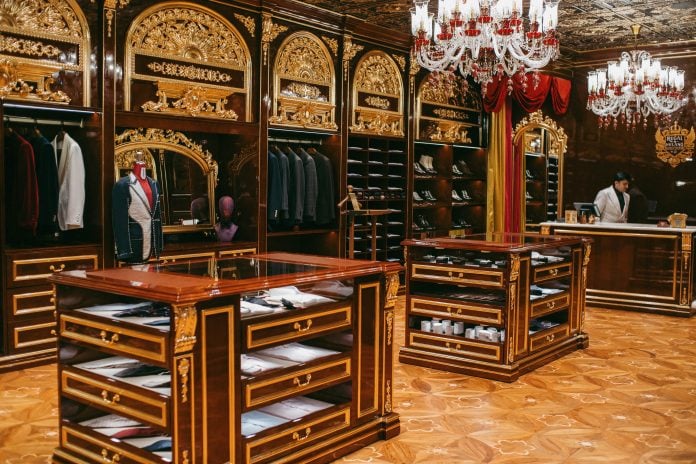
Regal Milano, a family-owned luxury boutique focused on bespoke Italian tailoring, recently opened a new studio in Vancouver’s Gastown district, marking the company’s entry into the city’s retail market.
The studio, located at 28 Water Street, establishes a physical presence for Regal Milano in Vancouver and positions the company within one of the city’s established retail and tourism neighbourhoods.
Entry into the Vancouver market
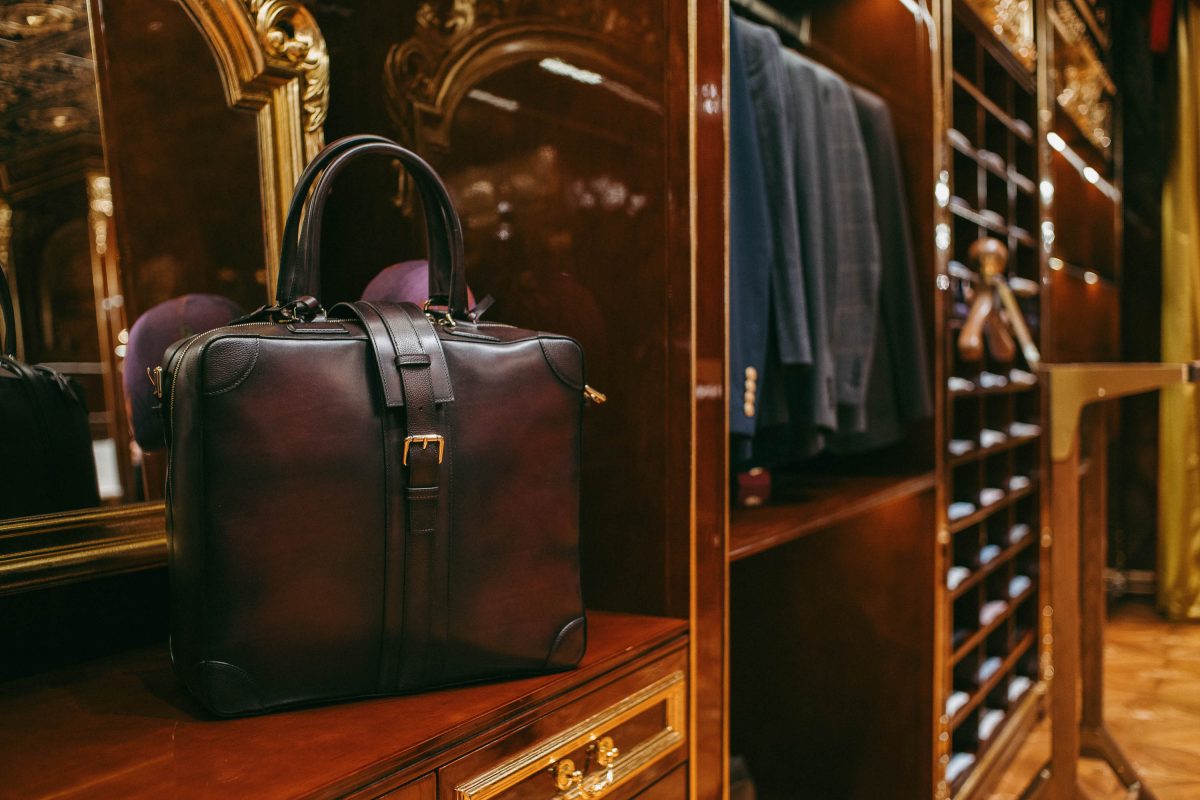
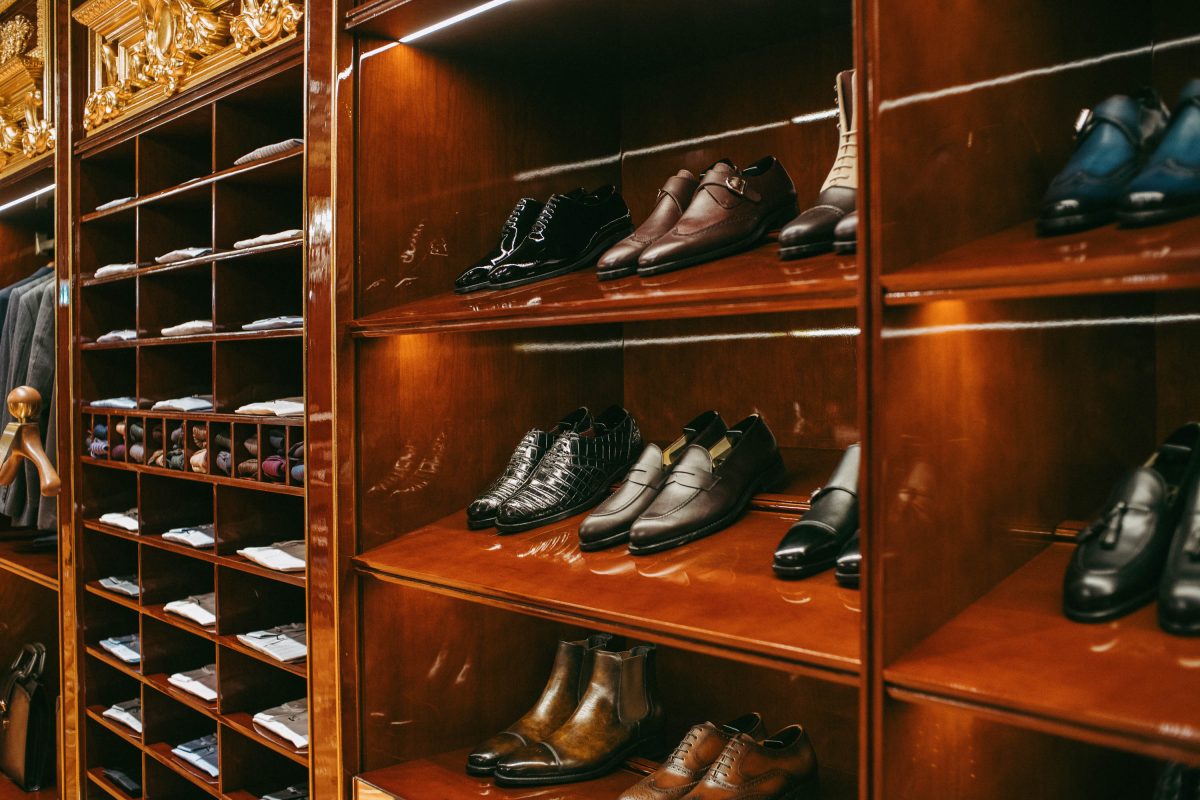
Regal Milano says the Gastown location will offer custom-made menswear and womenswear, along with footwear and other tailored apparel. The business specializes in made-to-measure garments using Italian textiles and production techniques, according to the company.
The studio will operate as a bespoke tailoring space rather than a conventional off-the-rack retailer, with clients selecting fabrics and designs for garments produced to individual specifications. The company states that its offering is centred on Italian tailoring traditions and craftsmanship.
Regal Milano
Product and service offering
According to Regal Milano, clients will be able to commission custom pieces across multiple categories, including formalwear and everyday tailored clothing for both men and women. The company says the collection will extend to fine footwear and other luxury attire.
The studio will be staffed by fashion stylists who guide customers through the design and fitting process. Regal Milano says the garments are made using fabrics sourced from Italian mills, with production emphasizing traditional tailoring techniques.
The company identifies several Italian and European textile mills whose fabrics will be available through the Vancouver studio, including Holland and Sherry, Scabal, Loro Piana and Ermenegildo Zegna. Regal Milano states that materials and design elements used in the studio’s interior have also been sourced from Italy.
Sourcing and positioning
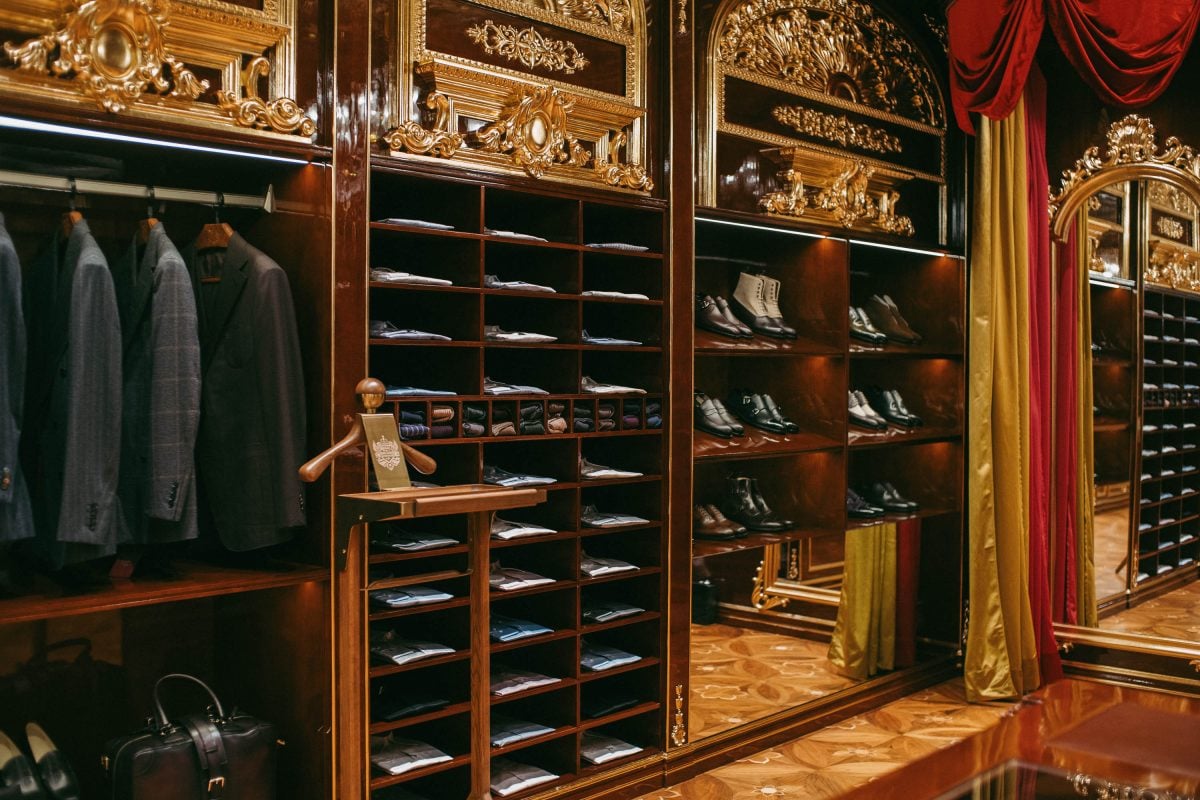
Regal Milano says all fabrics, designers and interior components for the Gastown location have been sourced directly from Italy, an approach the company describes as central to its business model. The studio is intended to reflect the design and atmosphere of traditional Italian tailoring workshops.
The company positions the Vancouver opening as an extension of its focus on bespoke services and controlled sourcing, rather than mass-market retail. Its stated objective is to offer fully custom garments rather than ready-made collections.
Regal Milano
The Gastown opening marks Regal Milano’s latest expansion and establishes a new retail operation in Vancouver focused on custom Italian tailoring and made-to-measure apparel.
Retail Insider is streamlining its Canadian retail news from around the web to include a handful of top news stories that can be viewed quickly during the day. Here are the top stories from the past 24 hours.
McDonald’s Canada has just pulled the pin on a full-scale price war. By freezing prices for an entire year on its $5 Value Meals and $1 menu items, the country’s largest quick-service restaurant player is locking in entry-level affordability at a moment when consumers have made it unmistakably clear they have had enough of fast-food inflation. This is not a marketing flourish. It is a defensive economic move.
The reaction from competitors was immediate. Burger King and Wendy’s are already leaning harder into value bundles and limited-time discounts. When McDonald’s moves, the entire QSR sector adjusts. There is no larger price setter in Canadian foodservice, and history shows that when McDonald’s chooses to compete on price, everyone else must follow — whether they can afford to or not.
What makes this moment especially notable is that it has been a long time since Canada has seen a true fast-food price war. The last nationwide episode dates back to roughly 2013 to 2015, when McDonald’s aggressively expanded dollar-menu pricing and value breakfasts to protect traffic. Rivals followed suit, but that war ended quietly as costs stabilized and chains pivoted toward premiumization — craft burgers, specialty coffees, delivery fees, and app-driven upselling. From about 2016 onward, the industry steadily moved away from value and toward margin expansion.
That context matters, because this price war is fundamentally different. The last one was fought during a period of relatively stable input costs and consumer optimism. Today’s battle is unfolding in an inflationary environment marked by weaker demand, declining restaurant visits, and widespread financial stress across foodservice. This is not about gaining market share. It is about preserving demand.
Screen shot from the McDonald’s Canada website, January 13, 2026.
To consumers, the price freeze looks like a win. After months of menu prices creeping well beyond what “fast food” was ever meant to be, McDonald’s is restoring a sense of predictability at the counter. But price wars of this scale do not stop at the drive-thru window. They ripple through the entire food supply chain, all the way back to Canadian farms.
McDonald’s Canada is not just a restaurant chain; it is one of the most powerful agricultural buyers in the country. At the farm gate alone, its annual demand represents roughly $300 to $350 million in Canadian beef, $200 to $250 million in potatoes, $80 to $100 million in dairy, $70 to $90 million in produce, $40 to $50 million in eggs, and $25 to $35 million in wheat. Taken together, that amounts to approximately $720 to $875 million a year in farm-level value. Once processing, packaging, logistics, and distribution are added, McDonald’s injects roughly $1.6 to $1.8 billion annually into the Canadian food economy.
Those numbers explain why this decision matters so much right now. When McDonald’s freezes prices, the pressure does not disappear — it moves. Restaurants absorb margin compression first. Processors are next, pushed into renegotiating contracts, shaving costs, and demanding higher efficiency. Farmers feel it last—but they often feel it hardest. A sustained price war tightens margins upstream at a time when producers are already grappling with higher fuel, fertilizer, labour, and financing costs.
Photo: McDonald’s Canada
This is also happening against a backdrop of structural contraction in the restaurant sector. According to estimates from the Agri‑Food Analytics Lab, more than 11,000 restaurants in Canada are expected to close over a 24-month period, with closures significantly outpacing openings. Independent operators and mid-sized chains do not have the purchasing power or balance sheets to survive prolonged discounting. When global QSR giants fight on price, smaller players are squeezed out.
The QSR sector is already adjusting. Menus are being simplified, promotional cycles shortened, and technology deployed to cut labour costs and increase throughput. Entry-level items are being protected at all costs, even as premium offerings quietly shrink or disappear. Value, not variety or innovation, has become the dominant competitive weapon.
McDonald’s decision to lock prices for a year should not be misread as a signal that food inflation is over. It is an admission that consumers have reached their limit. When the most powerful restaurant brand in the country decides it must absorb inflation rather than pass it along, it tells us demand is fragile and confidence is thin.
Fast-food price wars are back — but this time, they are being fought in a far more fragile economy. The relief at the counter will be real. The pressure on competitors will be intense. And for processors and farmers, the consequences will be deep and lasting. Because a price war at McDonald’s is never just about burgers. It is a nationwide supply-chain shock that starts at the menu board and ends in the field.
Solis Movement has officially opened its third Toronto studio at 10 St. Lawrence Street, marking another milestone in the brand’s steady growth across the city. The new east-end location joins existing studios at 3451 Lake Shore Boulevard West in Etobicoke and 548 King Street West, downtown. Together, the three locations reflect Solis Pilates’ evolving approach to boutique fitness, one that blends high-intensity programming with warm, design-driven spaces rooted in community.
Founded in 2019, Solis Pilates has grown from its Etobicoke origins into a recognized name in Toronto’s competitive Pilates and boutique fitness landscape. The brand has built a following around its results-focused reformer, mat, and heated Pilates offerings, while maintaining an atmosphere that feels welcoming rather than transactional.
According to co-founder Laura Parise, Solis was born out of a personal frustration with existing studio experiences. “Solis started from a very real personal gap,” she said. “Beautiful studios existed, but the workouts didn’t always deliver. Or the workouts were hard, but the space felt cold. Solis was built to do both. A place that feels like home, where you leave stronger.”
That balance has guided the brand’s evolution since its first Etobicoke studio opened. Co-founder Jeff Whale noted that each new location has been about refining that original vision rather than reinventing it. “The original Etobicoke studio set the tone,” he said. “All new locations since have been about refining that balance of a warm community, a studio you want to work out at, and real results.”
In a city crowded with boutique fitness concepts, Solis has differentiated itself by pairing intensity with intentional human connection. “From the moment someone walks into a Solis studio, the goal is for them to feel seen,” Parise explained. “Not just another check-in on a screen. Instructors know your name, and every 45 to 50 minute class is designed to be efficient, challenging, and worth your time.”
Solis lobby. Photo: Solis Movement
Why the East End, and Why Now
The decision to open a third location was driven largely by demand from existing members. With interchangeable memberships across all studios, expansion became a practical next step as members’ lives and routines shifted across the city.
“The community asked for it,” Whale said. “As members moved between neighbourhoods, work, and daily routines, it became clear that a third location would help Solis stay within reach. Whether you live in Etobicoke, the east end, or work downtown near King Street, there’s now a Solis that fits into your day.”
Neighbourhoods such as Corktown, Leslieville, and Riverdale also aligned naturally with the brand’s ethos. “The east end has a strong sense of community,” Parise said. “We’re excited to bring a high-end, results-driven space that adds to how people move and connect in their everyday lives.”
Lessons from the first two studios directly informed the layout and flow of the new space. Whale emphasized that while the east-end studio introduces new elements, it remains unmistakably Solis. “It’s the same elevated experience, with thoughtful design choices that support how people move through the space.”
Inside the 8,000 Square Foot Studio
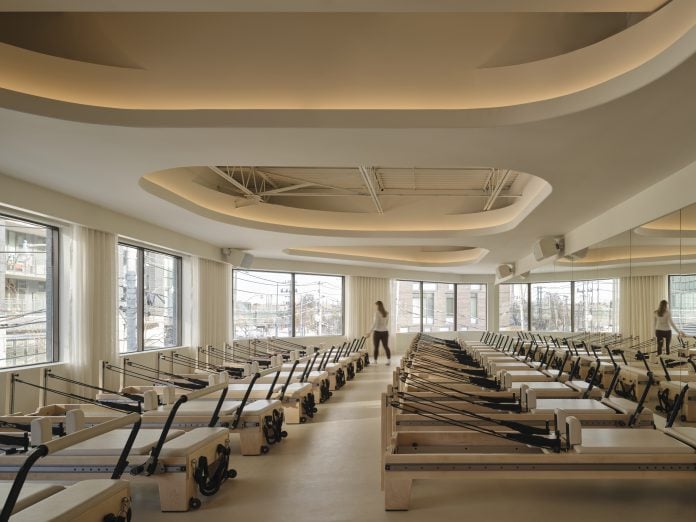
At approximately 8,000 square feet, the new Solis Pilates studio is the brand’s largest to date. The expanded footprint allows for three distinct workout environments, alongside new wellness offerings that broaden the Solis experience.
“The vision was to give the community more options, all in one place,” Parise said. “The larger footprint allowed us to expand beyond reformer and mat into dedicated Cadillac and Chair programming, while also introducing the Vita facial room.”
The studio includes dedicated reformer and mat Pilates rooms, as well as a Forte Room designed for Cadillac and Chair-based small group classes. Clients can expect the same programming standards found at the Etobicoke and King Street studios, with the added benefit of more space and specialized equipment.
“The Forte Room introduces Cadillac and Chair classes that haven’t really been seen in Toronto in this way,” Whale confirmed. It’s strength-driven, highly focused, and allows for deeper work and more individualized attention.”
Solis Bathrooom. Photo: Solis Movement
Introducing Wellness Through the Vita Room
One of the most notable additions at the east-end studio is the Vita Room, an in-house facial treatment space created in partnership with Paige Querney of The SkinBar. The Vita Room is scheduled to open in March 2026 and reflects Solis’ broader view of wellness as an extension of movement and recovery.
“The Vita Room was inspired by the same philosophy behind Solis classes,” Parise said. “A focused, elevated experience that fits into real life. Just like a 45 minute class, Vita treatments are designed to be effective and easy to fit into your day.”
Treatments are intentionally streamlined, offering a small menu of essential services designed to complement a fitness routine. “It’s about high-impact self-care that delivers results without requiring a full afternoon,” Whale added.
Design Rooted in Light and Comfort
Design has always played a central role in the Solis identity, and the new location builds on that foundation. Natural light, curves, and calming colours define the space, with materials chosen to enhance comfort and sensory experience.
“We wanted to create a space that immediately feels good to walk into,” Parise said. “Even the floors in the lobby and hot Sun Room are made from all natural materials, so you’re not walking barefoot on plastics.”
The studio was designed in collaboration with Simone Ferkul Designs, a long-time Solis partner. “Simone understands how space impacts movement and mood,” Whale noted. “That understanding is what allows each studio to feel elevated and aligned with our philosophy.”
Growing the Team and the Community
With the new location, Solis is expanding its instructor team, blending familiar faces with new talent. Instructors remain central to the brand’s experience.
“Instructors are the heart of Solis,” Parise said. “Beyond training, we look for warmth and the ability to lead a challenging, results-driven class while making people feel supported from the moment they walk in.”
The east-end studio also deepens Solis’ connection to Toronto’s neighbourhoods, extending its reach into Riverdale, Leslieville, and nearby communities such as Rosedale and Summerhill.
Looking Ahead
Opening on January 1, 2026 was a deliberate choice. “January 1 is when people are thinking clearly about how they want to feel,” Whale said. “Opening on that day felt grounding and intentional.”
While Solis Pilates Toronto expansion remains focused on establishing the east-end studio, the founders acknowledge that growth is part of the long-term vision. “We approach growth carefully,” Parise said. “It’s always about listening to the community, refining the experience, and keeping every space intentional.”
The agreement gives Team Town Sports a role supporting league merchandise sales in stores and online and aims to expand access to performance footwear for players and coaches across both competitions, Canadian Soccer Business said Monday.
Retail partnership tied to domestic soccer pathway
Canadian Soccer Business said the partnership integrates Team Town Sports’ national retail network and product expertise into the Canadian soccer pathway. The retailer will support Canadian Premier League merchandise distribution and provide footwear access across the professional and semi-professional levels covered by the two leagues.
The announcement comes as the Canadian Premier League enters its seventh season of competition and League1 Canada’s provincial leagues continue to expand. Canadian Soccer Business said participation and performance demands are increasing nationwide, heightening the need for reliable access to quality footwear for athletes at different stages of development.
Photo- Canadian Premier League 1
The organization said the agreement is intended to align the Canadian Premier League and League1 Canada by providing consistent access to footwear across the domestic pathway.
“We’ve all seen how the game can capture the country’s imagination, whether it’s an icicle kick going viral and hitting a billion views or kids lacing up for their first match. That’s why we’re thrilled to welcome Team Town Sports into the Canadian soccer family. Their commitment to providing consistent, high-quality performance footwear will make a real impact across the CPL and League1 Canada. As the sport keeps growing from coast to coast, partners with the expertise of Team Town Sports play a key role in supporting our players and growing the beautiful game.”
Sporting Life Group affiliate expands soccer role
Team Town Sports operates as part of the Sporting Life Group, which also includes Golf Town and Sporting Life banners. The retailer sells team sports equipment in stores and online and serves athletes across age groups and levels of competition.
Dale Skulsky
Canadian Soccer Business said Team Town Sports’ retail presence positions it to support the growing needs of Canadian soccer, including access to footwear from global brands for players and coaches involved in the two leagues.
“This partnership celebrates the growth of soccer across the country and reflects our commitment to supporting athletes and communities from the grassroots level to the professional stage.”
Photo- Canadian Premier League
Scope of leagues covered by agreement
The Canadian Premier League is Canada’s Tier 1 domestic men’s soccer league and competes in Concacaf- and FIFA-sanctioned competitions. League1 Canada operates at the Division III Pro-Am level and acts as the umbrella organization for League1 Ontario, League1 BC, Ligue1 Québec and League1 Alberta.
Canadian Soccer Business manages commercial partnerships and media rights for the Canadian Premier League and League1 Canada, as well as for other national soccer assets. The organization said the footwear partnership is part of its broader commercial strategy supporting league operations and player development.
The terms of the partnership, including financial details, were not disclosed.