The limited collaboration launched Sept. 9, bringing together the two Toronto-based food businesses and giving Egg Club customers another format for three of its existing breakfast sandwich offerings.
Three sandwiches on Gryfe’s bagels
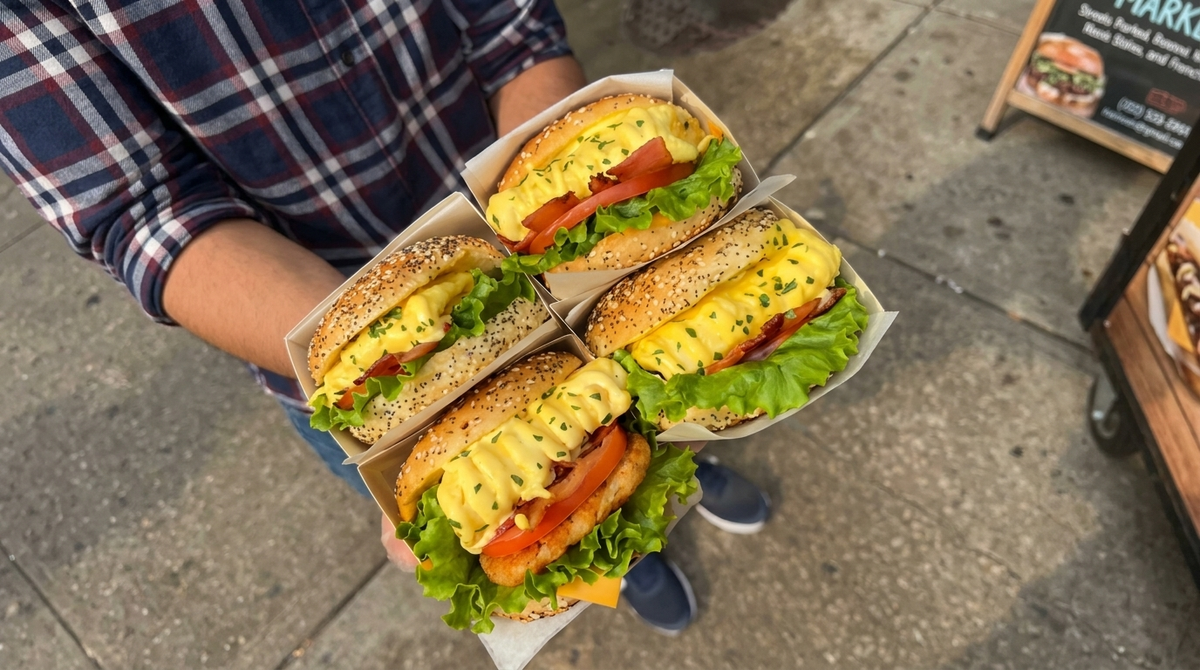
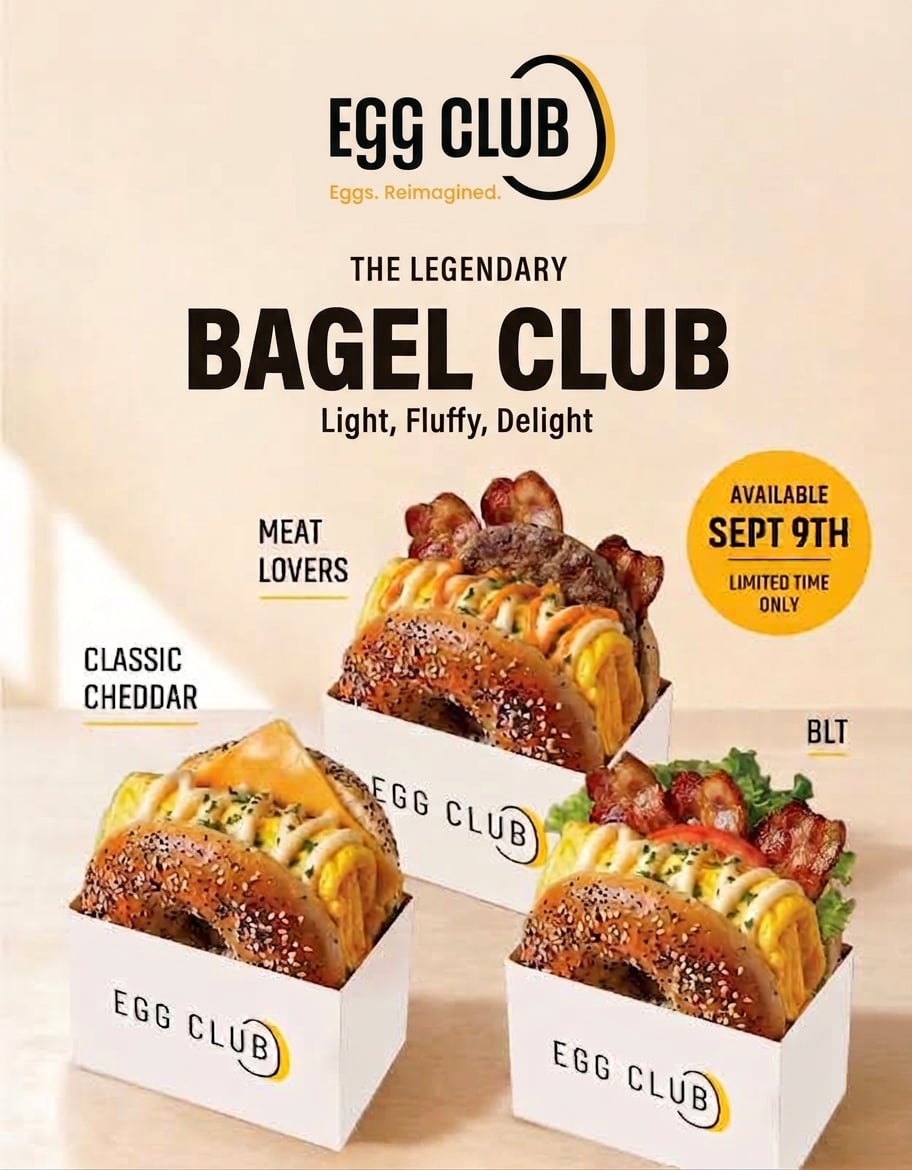
The partnership combines Egg Club’s folded egg sandwiches with Gryfe’s bagels, with the three-menu-item offering featuring the Meat Lovers Bagel, BLT Bagel and Cheddar Classic.
The Meat Lovers Bagel includes folded eggs, bacon, a sausage patty, hollandaise, chipotle sauce and parsley flakes. The BLT Bagel combines folded eggs with lettuce, tomato, bacon and parsley flakes, while the Cheddar Classic features folded eggs, cheddar cheese, hollandaise sauce and parsley flakes.
Egg Club photoEgg Club photo
“We wanted to bring two Toronto favourites together in a way that feels authentic to both brands,” said Jason Yu, president of Egg Club. “Gryfe’s is a true Toronto staple, and we’re proud to partner with another Canadian brand that has been part of this city’s food culture for generations.”
Both companies were founded in Toronto, with Egg Club established in 2020 by three friends and Gryfe’s Bagel Bakery dating back to 1957. Gryfe’s is a family-owned business based in North York that produces its signature light and airy style of bagel.
Expansion plans
For Egg Club, the collaboration comes as the company continues to expand its restaurant footprint beyond Toronto. The chain currently has locations across Ontario and Calgary, with expansion underway in Edmonton and Vancouver.
The company says its business was built around offering affordable, fresh food, with its menu centred on egg sandwiches.
“At a time when supporting Canadian businesses is top of mind for many people, this felt like the perfect way to celebrate two homegrown brands while giving our guests a new way to enjoy some of their Egg Club favourites,” said Yu.
Egg Club photoEgg Club photo
Expanding beverage menu
Egg Club is also giving its drink menu a fresh twist with three new specialty beverages featuring the flavours of matcha and banana.
The limited-time lineup launched September 9 and includes the Iced Banana Milk Latte, Iced Banana Milk Matcha and Iced Premium Matcha Latte, offering guests three smooth, refreshing options designed to pair with Egg Club’s breakfast favourites.
“We wanted to take our drink menu somewhere new,” said Yu. “Matcha and banana felt like a great combination to explore, and we’re excited to introduce our guests to three drinks that are very different from anything we’ve offered before.”
The new menu includes:
Iced Banana Milk Latte: Rich, silky handcrafted banana cream layered over ice-cold milk for a smooth, sweet and fruit-forward take on an iced latte.
Iced Banana Milk Matcha: Vibrant matcha cream and velvety banana cream layered over ice-cold milk, balancing the earthy flavour of matcha with the natural sweetness of banana.
Iced Premium Matcha Latte: Premium-grade matcha cream and ice-cold milk finished with a splash of cream for a smooth, earthy and refreshing drink.
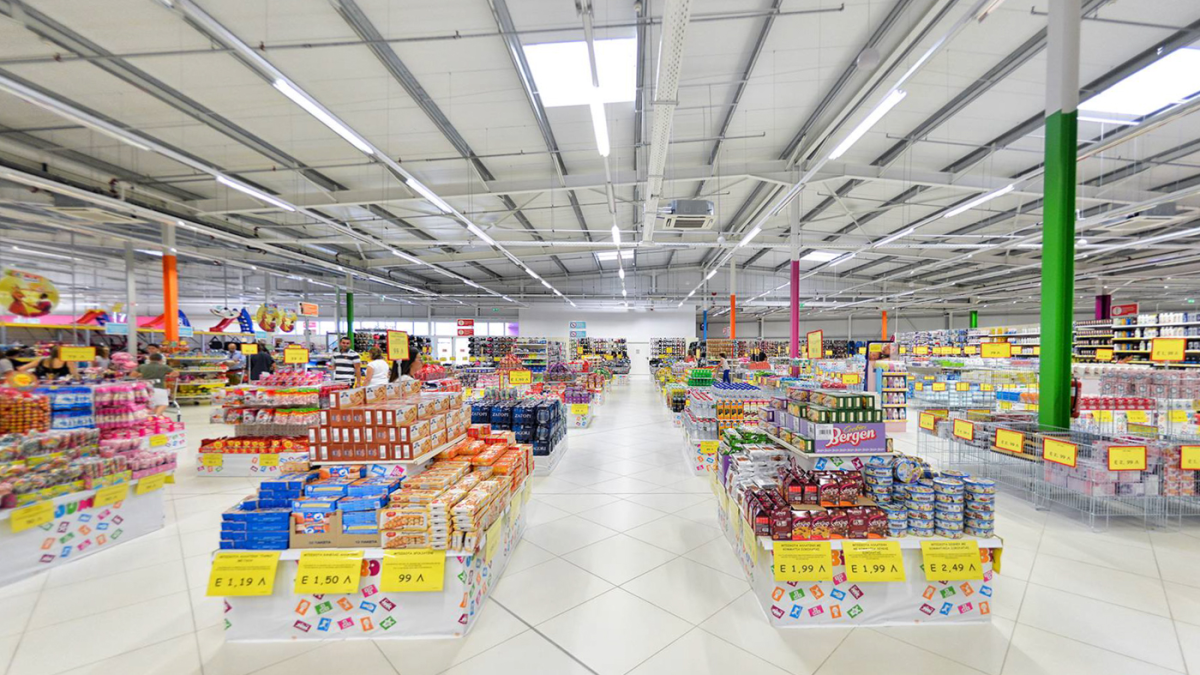
Greek value retailer Jumbo is preparing to open its first Canadian store at Vaughan Mills, taking over the former Toys “R” Us location as franchise partner Fox Group moves ahead with the banner’s Canadian rollout.
The store will occupy approximately 47,000 square feet at the Vaughan, Ontario shopping centre. Fox Group Jumbo Canada Inc. acquired the former Toys “R” Us lease through the retailer’s court-supervised restructuring, with the transaction closing in July.
Vaughan Mills is now promoting Jumbo as coming soon, while Fox Group has been recruiting employees for the location. Jumbo’s latest corporate guidance points to an early 2027 opening for its first Canadian store, subject to delays.
The opening will put a physical location behind expansion plans first disclosed in 2025, when Fox Group outlined plans for multiple stores in Ontario followed by a broader Canadian rollout.
Former Toys “R” Us Space is About 47,000 Square Feet
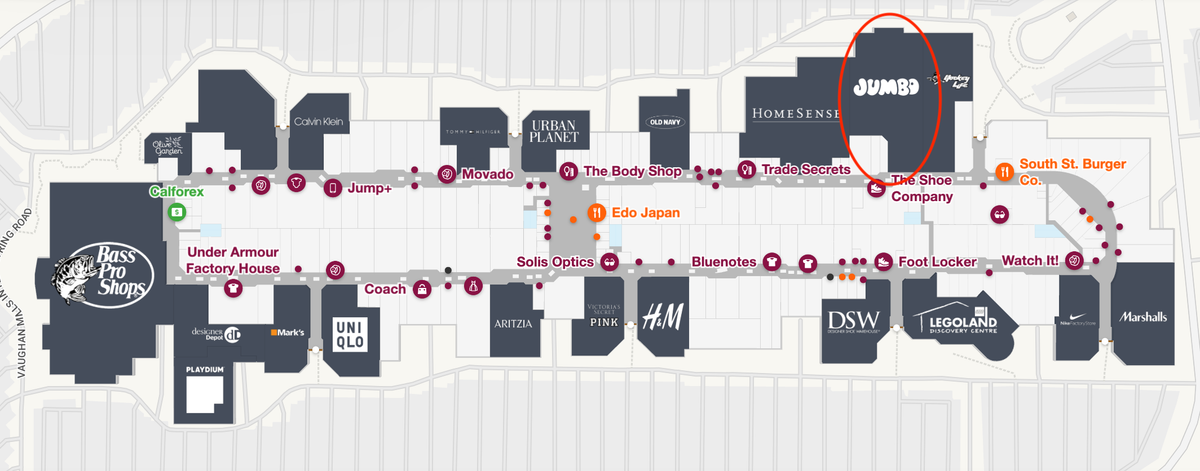
A Vaughan Mills lease plan reviewed by Retail Insider identifies the former Toys “R” Us premises, designated C2, at 47,042 square feet. The plan shows the unit near Entrance 3, between HomeSense/Winners and Hockey Life. The figure is also consistent with reporting during the Toys “R” Us restructuring that described the Vaughan Mills store as approximately 48,000 square feet.
Toys “R” Us Canada obtained protection under the Companies’ Creditors Arrangement Act on February 3, 2026. A court-approved sale and investment solicitation process followed, eventually dividing key parts of the retailer among three buyers.
The Vaughan Mills lease went separately to Fox Group Jumbo Canada. The Ontario Superior Court approved the transaction on June 22, and the court-appointed monitor confirmed that the deal closed July 8.
Fox acquired the lease, not the Toys “R” Us business that previously operated from the store. Ad Populum acquired the Canadian Toys “R” Us and Babies “R” Us intellectual property, while a separate company controlled by Doug Putman acquired most of the remaining operating assets and a group of store leases.
Vaughan Mills floor plan, showing Jumbo
Fox Group Prepares Vaughan Mills Store
Fox began recruiting for Jumbo at Vaughan Mills within weeks of completing the lease transaction, including management and other store-level positions.
The retailer Canadians will encounter bears little resemblance to a conventional toy store. Jumbo started with toys, but has developed into a broad value retailer selling home and decorative products, seasonal merchandise, stationery, baby products and other general merchandise alongside toys.
Home and decorative products accounted for 39.5 per cent of Jumbo’s 2025 sales, followed by seasonal products at 23.9 per cent and toys at 18.5 per cent. Stationery, baby products and other merchandise made up the balance.
The assortment puts Jumbo across several established retail categories in Canada. Parts of the business overlap with Dollarama, Walmart, HomeSense and Giant Tiger, while toys remain a significant part of the mix. The combination is unusual in Canada at Jumbo’s large-store scale.
Fox Group Holds Exclusive Canadian Jumbo Rights
The Canadian expansion is being led by Fox Group, the Israeli retail company that already operates Jumbo stores under franchise in Israel.
Fox holds the exclusive Jumbo franchise for Israel and Canada. The partnership has expanded Jumbo to six stores in Israel as of March 2026, with additional Israeli openings planned.
Fox also has existing retail operations in Canada, giving it infrastructure and experience in the market as it builds the Jumbo network.
Retail Insiderfirst reported in December 2025 that Fox was preparing to introduce Jumbo to Canada. Plans at the time contemplated three Ontario stores during 2026, with between five and 10 Canadian locations targeted during the first three years.
That timetable has since moved. Jumbo said in an April 2026 corporate update that its first Canadian store was expected to open in Toronto in early 2027, provided there were no delays. Its 2025 annual report similarly identifies Ontario for the first Canadian opening in early 2027.
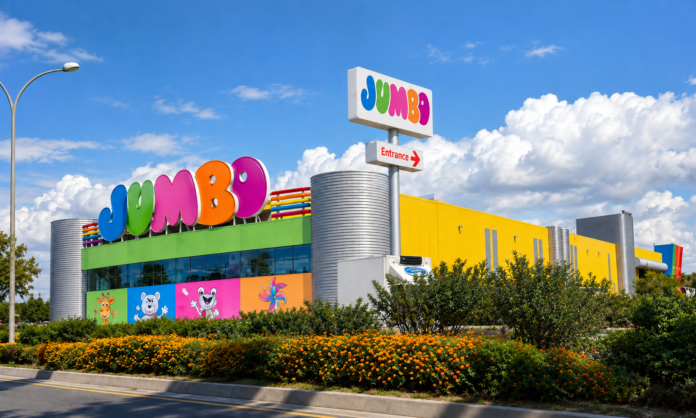
Jumbo store. Photo: EB/ARCHITECTS
Jumbo Generated More Than €1.2 Billion in Sales in 2025
Founded in Greece in 1986, Jumbo has grown into a major multi-category retailer with a large store network in southeastern Europe.
At the end of 2025, the company operated 89 corporate stores: 53 in Greece, 20 in Romania, 10 in Bulgaria and six in Cyprus. Another 45 Jumbo-branded stores operated through partners in seven countries, including Israel.
Jumbo reported group sales of approximately €1.23 billion in 2025, up 7.22 per cent from the previous year.
The Vaughan Mills store gives Fox a roughly 47,000-square-foot location in an established GTA shopping centre for Jumbo’s Canadian debut. The former Toys “R” Us box will shift from a toy-focused retailer to a broader value concept selling home, seasonal, toy, baby, stationery and general merchandise.
An exact opening date has not been announced. Jumbo’s latest guidance points to an early 2027 Canadian opening, with Vaughan Mills now set to become the banner’s first location in the country, with more to come.
Welcome to the Daily Synopsis by Retail Insider. We hope you enjoy the 10 articles we published covering key developments in Canadian retail. Here are a couple highlights with a full list of the day’s articles thereafter.
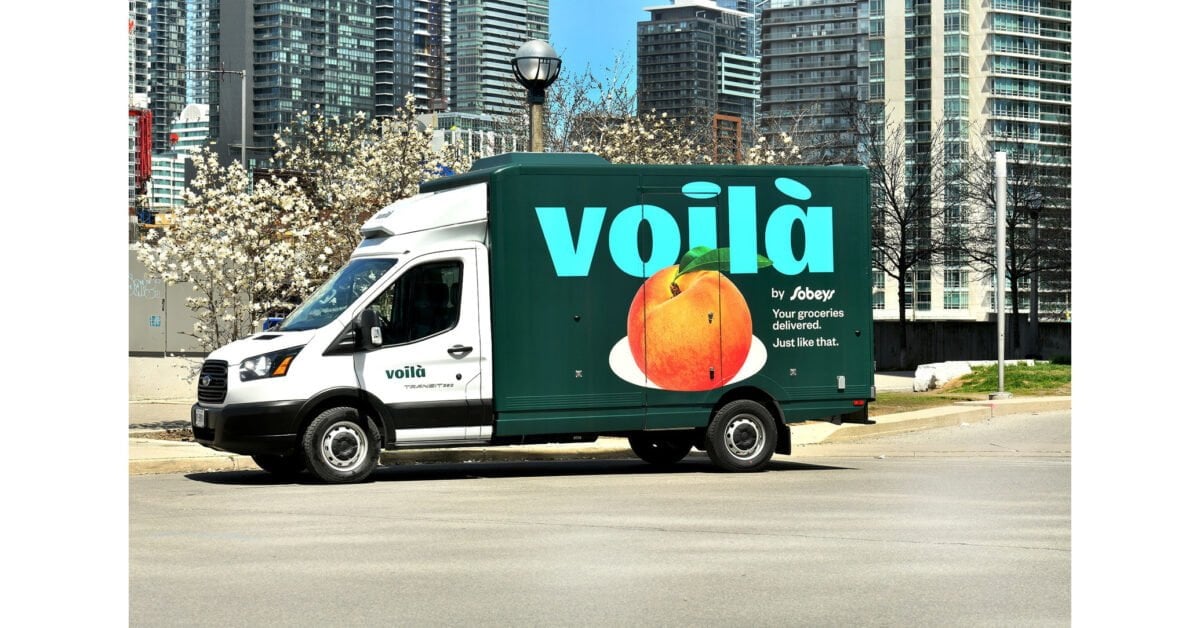
Empire Company Limited is evolving its online grocery strategy by combining Voilà’s planned grocery delivery with third-party platforms to create a more flexible fulfillment approach, aiming to accelerate growth while maintaining improved cost efficiency. This method relies on integrating customer data and loyalty programs to enhance operations without duplicating infrastructure costs. Meanwhile, Flight Centre Canada is expanding its physical presence with two new stores in Toronto and North Vancouver, focusing on locations where face-to-face travel advice builds consumer trust alongside digital booking options.
Supernatural’s new Yorkville retail concept introduces longevity wellness products focused on sleep, recovery, and performance, translating clinical biohacking trends into an accessible consumer experience. Angelcare Group is expanding its Litter Genie product line and retail presence in Canada by introducing a comprehensive cat-care ecosystem that includes litter, litter boxes, disposal pails, and refills designed to work seamlessly together.
Expanding into a new market is rarely just about the product. A business can have a great item, solid pricing, and a clear customer base back home, and still struggle the moment it tries to move into a new city, state, or country. One of the quieter reasons this happens is packaging. What worked for a small, local customer base doesn’t always hold up once a brand is competing on unfamiliar shelves, shipping longer distances, or trying to earn trust with people who’ve never heard of it before. Retail packaging ends up doing a lot more work during expansion than most business owners plan for, and getting retail packaging solutions right early on tends to save a lot of trouble later.
Packaging Is Often the First Real Introduction to a Brand
When a business is selling locally, word of mouth and personal relationships often do some of the heavy lifting. A customer in a new market doesn’t have that. The first real interaction they have with a brand is usually the box or bag sitting on a shelf, and that single moment has to carry the weight that a referral or an existing reputation would normally carry at home.
This is where custom retail boxes with logo printing become more than a branding nice-to-have. A clear, well-printed logo signals that a business is established and serious, even if it’s brand new to that particular market. Customers unconsciously read packaging quality as a stand-in for product quality — a flimsy, generic box next to a competitor’s clean, branded one puts a new entrant at a disadvantage before anyone even picks either product up. This is exactly the gap that branded packaging boxes and consistent custom boxes with logo printing are meant to close.
Retail Packaging Has to Adjust to New Distribution Realities
Expanding into a new market almost always changes how a product gets from the business to the customer. A brand that used to hand-deliver orders locally might suddenly be shipping through third-party logistics, working with new wholesale partners, or stocking shelves in stores it doesn’t directly manage. Each of these changes puts different pressure on packaging.
Wholesale packaging solutions need to hold up through more handling steps — loading docks, pallet stacking, longer transit times — without the business having direct control over how carefully it’s handled along the way. A box that survived a short local delivery route might not survive a multi-state freight run. This is often where businesses discover, sometimes the hard way, that their original packaging wasn’t built for the volume or distance a new market demands, and it’s usually the point where they start looking into proper wholesale boxes Australia suppliers instead of patching together whatever was available locally.
Retail display boxes matter here too, particularly for businesses moving into physical retail for the first time in a new region. A product that used to sell through direct online orders suddenly needs packaging that can stand upright on a shelf, catch attention next to established competitors, and survive being handled by browsing customers before it’s even purchased. This transition — moving from packaging for online to retail — is one of the more common turning points where businesses realise their existing boxes simply weren’t designed for shelf life.
Meeting Local Expectations Without Losing Brand Identity
Every market has its own quiet expectations around packaging, even when nobody states them outright. Some regions lean heavily toward eco-friendly retail packaging and will notice — and sometimes actively avoid — a brand that shows up with excessive plastic or non-recyclable materials. Others place more weight on premium presentation, where a plain box can read as underinvestment rather than simplicity. Choosing the right eco-friendly packaging materials for a specific region is often less about personal preference and more about reading what that market already expects.
This creates a real tension for expanding businesses: how do you adjust to a new market’s expectations without diluting the identity that made the brand recognisable in the first place? The businesses that handle this well usually use customized packaging to keep their core branding elements, including logo placement, colour palette and tone, consistent while adjusting material choice, size, or finishing to fit what the new market responds to. A custom packaging boxes supplier that can work across multiple material and finish options makes this adjustment far easier than starting from scratch with a new manufacturer every time a business enters a new region. Working with one custom retail packaging Australia provider across every region also keeps quality and turnaround predictable, which matters a lot when a business is juggling several markets at once.
Packaging Costs Change the Expansion Math
Business expansion is, at its core, a numbers exercise, and packaging is part of that math whether business owners plan for it or not. Shipping further distances usually means either sturdier materials or accepting higher damage and return rates — both of which affect margins. Entering a market with more competition often pushes businesses toward better-quality retail packaging just to hold shelf space next to established brands, which adds cost per unit but can pay off through fewer returns and stronger repeat purchases. This is often where packaging for small business budgets get stretched the most, since the temptation to cut corners on materials is highest right when consistency matters most.
This is also where order volume starts to matter more directly. A business testing a new market cautiously might need smaller, flexible order runs rather than committing to a huge batch of packaging before knowing whether the expansion will actually work. Suppliers who offer custom sizing and lower minimum order quantities give expanding businesses room to test packaging decisions in a new market without locking in a large sunk cost before the numbers are proven. Flexible custom box sizes and small-batch runs let a business trial a new region without overcommitting on stock it may need to redesign later.
Packaging as a Trust-Building Tool in Unfamiliar Territory
Trust is harder to earn in a new market, and packaging quietly contributes to that in ways that are easy to overlook. Consistent branding across every unit — the same logo, the same finish quality, the same attention to detail — tells a new customer base that the business is stable and not cutting corners just because it’s new to the area. Inconsistent packaging, on the other hand, can read as improvisation, which undermines confidence exactly when a business most needs to build it. This is where brand packaging consistency becomes less of a design preference and more of a trust signal.
This is part of why many growing businesses lean on a single reliable packaging partner rather than switching suppliers every time they enter a new region. Packaging Bee AU works with a number of Australian businesses going through exactly this kind of expansion — moving from a single city into wholesale distribution, or shifting from online-only sales into physical retail across new states — and the packaging decisions during that transition tend to matter more than business owners expect going in. Keeping material quality, printing consistency, and custom retail boxes with logo work aligned across every order, regardless of where it’s shipping, helps a brand look like the same trustworthy business no matter which market it’s entering. Businesses that stick with one packaging supplier world-wide, rather than sourcing differently in every state, tend to have an easier time keeping that consistency intact.
Getting the Sequencing Right
Businesses that handle expansion well tend to treat packaging as part of the planning process rather than something sorted out after the market decision is already made. That means thinking through distribution changes, local material or sustainability expectations, and volume flexibility before committing to a full packaging redesign. It’s a smaller, more manageable set of decisions when it’s made early, rather than something rushed through under pressure once products are already sitting in a new warehouse with the wrong boxes. Planning for shelf-ready packaging and product packaging for retail from the outset, rather than retrofitting it after the fact, is usually what separates a smooth market entry from a scramble.
Final Thoughts
Retail packaging rarely gets credited as a growth tool, but it quietly shapes how a business is received the moment it steps into a market where nobody knows its name yet. From distribution durability to shelf presence to the trust that consistent branding builds over time, packaging carries more of the expansion workload than most business plans account for. Investing in reliable custom printed boxes and a supplier that scales with the business is a small decision early on that tends to pay off across every new market that follows. Getting it right early — rather than treating it as a detail to fix later — tends to make the difference between a smooth entry into a new market and a rocky one.
Retail brands can prepare for AI search by moving from basic keyword targeting to a structured digital system built around clear product entities. To succeed while machine learning systems create buying suggestions in real time, brands need verified product knowledge graphs, product pages that answer detailed conversational questions, clean structured data feeds, and teams that share the same standards for machine-readable information and customer trust.
For more than two decades, commerce followed a familiar pattern: a shopper typed two or three words into a search bar, scanned a page of blue links, and reached an e-commerce category page. That direct path is now breaking apart. Modern shoppers do not search only to browse. They ask large language models, conversational tools, and multi-modal assistants to solve specific lifestyle needs, compare small differences between products, and complete purchases without visiting several websites.
This shift may seem confusing, but it builds on many of the same search basics rather than removing them completely. In fact, SEO people are already on the frontline of AI. No other industry is so used to constant algorithmic change. The difference is that success no longer depends mainly on backlinks and keyword frequency. Visibility now depends on whether machine systems can find, check, and confidently combine your product information in their generated responses.
What AI Search Means for Retail Brands
From Ranked Links to Product Recommendations and Direct Answers
The traditional Search Engine Results Page (SERP) served as a list of possible resources. If a customer searched for “lightweight waterproof hiking boots,” the search engine might show ten organic links, several paid listings, and a local results section. The shopper had to open several tabs, read different descriptions, and compare sizing information on their own.
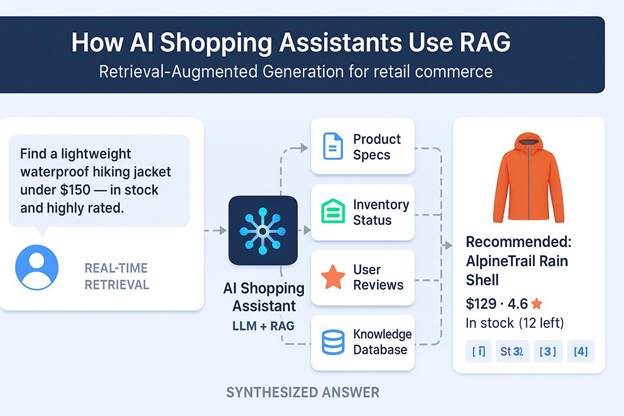
AI search changes this process by combining information into a single response. Instead of giving shoppers separate pages to study, services such as Google’s AI Overviews, Perplexity, and built-in conversational tools offer direct evaluations in natural language. The interface may suggest three specific models based on weight, breathability, and waterproofing limits gathered from different sources, with citations shown below. If your product is missing from that generated response, the shopper may never see it.
How Generative AI, Shopping Assistants, and Conversational Search Work
To gain visibility in this setting, retail leaders need a basic understanding of the technology behind these services. Modern conversational search often uses Retrieval-Augmented Generation (RAG). When a shopper asks an AI assistant a question, the system does not rely only on text learned during earlier training. It retrieves current facts from a search index or product database, adds those facts to the request, and creates a reasoned answer.
In retail, these systems must balance natural language with strict accuracy. They examine product measurements, materials, customer opinions, warranty information, and stock status. If a product page contains unclear wording or conflicting details, the system has less confidence in the product. It may then recommend a competitor with open, consistent, and well-organized specifications.
Why Search Is Splintering Across Google, ChatGPT, Retailer Apps, Marketplaces, and Voice Assistants
The starting point for product research has split across many services. Traditional search engines still bring in a large amount of traffic, but shoppers are also using specialist and closed interfaces. They may begin research in ChatGPT, use a shopping assistant inside the Amazon or Walmart app, or ask a voice assistant at home to reorder everyday items.
This spread means brands can no longer focus on one algorithm. Each service reads and ranks information through its own retrieval system. An AI tool inside a closed marketplace may give more weight to stock levels and delivery speed, while an open-web generative service may look at expert reviews, third-party opinions, and schema markup. Brands need a reliable base of accurate product information wherever these systems search.
How AI Search Is Reshaping the Retail Customer Journey
Shoppers no longer have to reduce complex needs to short search phrases. Instead of typing “trail running shoes wide toe box,” a user might write: “I need a trail shoe for muddy terrain that accommodates bunions, has a zero-drop platform, and won’t fall apart after 200 miles.”
This type of exchange changes discovery from a passive search into a back-and-forth discussion. The AI assistant can ask about weekly mileage, weather, or color choices. If a brand’s product content covers only broad category terms and says little about detailed use cases or physical benefits, the system may pass over it. Brands that explain real-life uses in clear detail have a better chance of being included.
Query Fan-Out Expands One Shopping Question Into Multiple Intents
Modern generative search often uses a process called “query fan-out.” When someone submits a detailed shopping question, the system does not perform just one search. It breaks the request into several smaller searches. It may look at price comparisons, warranty conditions, independent durability tests, and sizing complaints in forums at the same time.
This parallel search examines your presence across the wider web within seconds. The system looks at what your official site says and at how professional reviewers, Reddit communities, and specialist publications support or challenge those statements. If your brand appears only on its own product pages, query fan-out will quickly reveal the limited outside support.
AI Shopping Assistants Compare Products, Prices, Reviews, and Availability
The research stage of shopping once involved many browser tabs and manual price checks. AI shopping assistants now handle much of that work. They can compare several product features and create a table that places your main product beside three close competitors.
These comparisons look at much more than price. The systems can study patterns in reviews, such as whether a piece of clothing shrinks in a washing machine or how quickly customer service handles return labels. Brands with verified customer experiences and clear product details are more likely to perform well in these automatic comparisons.
What AI Search Changes for Retail SEO and Content
Product Entities Matter More Than Isolated Keywords
Search engines and conversational models no longer treat the web as a collection of separate words. They read it as a network of things and their connections. In technical language, a product needs to exist as a defined “entity”: a distinct concept with a clear identity, attributes, relationships, and sources inside a connected knowledge graph.
When a catalog is handled as a group of product entities, content creation changes. Rather than repeating a target keyword throughout a description, the main task is to connect the product to official identifiers such as GTINs, MPNs, brand records, parent companies, and exact category levels. Once systems understand an item’s identity and setting, they can place it more confidently in an answer.
Product Pages Must Answer Comparison, Use-Case, and Trust Questions
A standard product detail page (PDP) with three bullet points, a sales paragraph, and an “Add to Cart” button does not provide enough information for AI-led discovery. Conversational systems use pages to answer specific concerns, so a PDP needs to work as a full source of product knowledge.
Pages should answer direct comparison questions such as: How does this version compare with last year’s release? Who should not use this product? How does it work in humid and dry climates? Adding clear answers to these questions gives the AI system reliable information for matching the product with the right shopper.
Content Formats Expand To Reviews, Buying Guides, FAQs, Video, and Images
Written content by itself is no longer enough. Generative search tools can work with several media types. They read text, examine detailed images, process video transcripts, and review structured data at the same time. A video that shows a stroller folding with one hand gives the system direct evidence for a question about travel convenience.
Brands need a connected mix of content formats. Detailed buying guides provide wider category knowledge, expandable FAQ sections answer specific questions, customer photos offer proof from real buyers, and professional testing or teardown videos support durability statements. Different formats give retrieval systems more ways to find and check information about your products.
The Retail Data Foundation Brands Need to Build
Create a Consistent Product Knowledge Graph Across Every Channel
An enterprise knowledge graph gives a company one shared source of meaning and product facts. It maps the catalog and shows how SKUs connect to collections, audiences, related accessories, materials, and certifications. Without this internal map, sending consistent information to external channels becomes very difficult.
When the same knowledge graph supports your direct-to-consumer store, wholesale portals, marketplaces, and social channels, AI systems gain more confidence in your brand information. Conflicts, such as different measurements on Amazon and your Shopify store, create uncertainty. Recommendation systems may then choose a competitor whose data is easier to trust.
Keep Prices, Specifications, Stock Levels, Delivery Details, and Returns Current
Current information has a strong effect on AI recommendations. A system is unlikely to suggest a product if it cannot confirm that the item is available, priced correctly, and able to arrive within the shopper’s required time. Recommending an unavailable or incorrectly priced product would reduce the usefulness of the service.
Retailers need to connect Enterprise Resource Planning (ERP) systems, inventory databases, and public product pages. Live API connections, regularly updated merchant center feeds, and quick schema changes help answer questions such as, “Can I get this by Friday?” with information the shopper can act on.
Use Schema Markup for Products, Offers, Reviews, Organizations, and Local Stores
Schema markup, usually written in JSON-LD, gives web crawlers a standard way to read the purpose and details of a page. Without it, systems have to guess what human-written text means. For retailers, basic Product markup is only the starting point.
Use connected schema types such as:
ProductGroup and hasVariant to explain differences in color, size, and style.
AggregateRating and individual Review markup to show genuine feedback from verified buyers.
Offer and ShippingDetails markup for current price, currency, stock status, delivery information, and return periods.
Organization and MerchantReturnPolicy markup to support brand identity and customer protections.
LocalBusiness markup linked to store inventory to reach conversational searches such as “near me.”
A Practical AI Search Preparation Plan for Retail Brands
1. Map Customer Intent Across Discovery, Comparison, Purchase, and Support
Preparation starts with moving past simple conversion funnels and reviewing the real questions customers ask at each stage. Collect search logs, customer service chat records, helpdesk tickets, and forum conversations to learn the language people use while researching your product category.
Group these questions into four working areas: open discovery, such as lifestyle problems and compatibility needs; comparison, such as differences in brands, materials, and prices; purchase, such as delivery times, return rules, and warranties; and post-purchase support, such as setup, repairs, and care. Once these conversations are mapped, you can create pages that respond to each need directly.
2. Identify the Questions AI Assistants Must Answer About Each Product
Run simulated AI discovery sessions for every main SKU or product group. Use several leading conversational models to ask broad category questions, such as: “What are the best wireless noise-canceling headphones for running in the rain under $200?” Record which brands appear, which ones are missing, and what facts the systems use to explain their choices.
Look for gaps where the system says, “Information regarding the water resistance rating for Brand X was unavailable.” These gaps show where your content needs work. If an AI system cannot find a basic product attribute, add that attribute clearly to the page copy and to the structured data that machines can read.
3. Optimize Product Pages for Evidence, Clarity, and Factual Completeness
Rewrite product copy by replacing exaggerated sales language with measurable specifications and supporting proof. Instead of saying that a winter jacket offers “industry-leading warmth and supreme comfort,” say that it uses “800-fill-power Responsible Down Standard (RDS) certified goose down, rated for temperatures between -10°F and 20°F.”
AI systems respond well to clear, information-rich pages. Use tables, descriptive subheadings, and bullet lists for technical details. Add direct information about care instructions, certifications, environmental standards, and expected product life. When statements include measurable facts, retrieval systems can use them more easily in product comparisons.
4. Distribute Reliable Product Feeds To Search Engines and Marketplaces
Your content and stock systems should not remain separate from the services that publish product information. Send clean, checked feeds to search merchant centers, retail media networks, affiliate platforms, and shopping indexes on a regular schedule.
Feed attributes should match the structured data on your pages exactly. A mismatch between the price sent through an API feed and the price shown in the page HTML can trigger automated warnings. Those warnings may lower your merchant quality score and reduce the chance that your brand appears in conversational answer panels.
How Brands Can Use AI Without Losing Trust
Use AI-Assisted Workflows With Human Review and Source Verification
AI can help teams produce product descriptions, meta tags, and different FAQ versions at scale, but unchecked automation creates risks. Models trained on large collections of web text may use empty marketing phrases, weaken the brand’s writing style, or add small but serious errors.
Use a mixed workflow with people reviewing AI output. Generative tools can prepare drafts, organize information, and turn raw ERP data into readable text. Every published item should then be checked by technical writers or merchandising specialists. These reviewers can verify specifications, apply brand rules, and confirm that the text is accurate.
Prevent Inaccurate Product Claims, Hallucinated Specifications, and Outdated Offers
Incorrect AI content can create serious legal and reputation problems in retail. If an automated writing process invents an IPX8 waterproof rating for a product that is only resistant to light splashes, the brand may face returns, poor reviews, and attention from consumer protection agencies.
Set firm rules that keep generated content tied to trusted data. For internal AI tools, base prompts on approved specification sheets and prevent the system from adding facts that are not in those sources. Keep promotional terms, discount end dates, and bundle details up to date so external crawlers can read prices and offers correctly.
How to Measure Performance When Search Becomes AI-Driven
Track Visibility in Ai-Generated Answers, Citations, and Product Recommendations
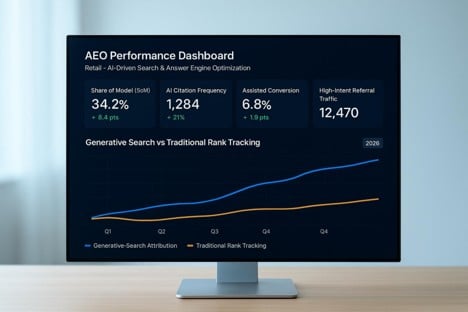
Rank trackers that report positions one through ten no longer show the full picture of online visibility. Retail brands now need tracking methods such as Share of Model (SoM) and Answer Engine Optimization (AEO).
These tools regularly send high-intent shopping questions to major generative platforms. They record how often your brand appears in generated summaries, whether your product is chosen over competitors, and which pages are cited as sources. Tracking changes in citations can show whether retrieval systems are accepting and using your product data.
Measure Assisted Conversions, Branded Demand, and Qualified Traffic
Because AI services answer many questions directly on their own platforms, the number of clicks from broad informational searches may level off or fall. The visitors who do reach your site through an AI citation may be much closer to buying.
Shift attention to results further down the customer path. Track assisted conversion rates, growth in branded searches, average order value (AOV), and changes in direct traffic. A shopper who reaches your site after using a conversational assistant has already completed much of the product comparison process. Their buying intent is often stronger than that of someone casually browsing.
Monitor Product Feed Accuracy, Review Sentiment, and Answer Inclusion
Build technical dashboards that show the condition of your product data distribution. Track merchant center errors, schema validation records, crawl activity, and API synchronization delays. These checks help prevent technical problems from blocking systems that read your products.
At the same time, watch customer sentiment across review sites, forums, and retailer feedback areas. AI models consider written opinions as well as numerical ratings. A rise in complaints about weak packaging or slow delivery may quickly affect whether an AI system recommends your brand for urgent or reliability-focused searches.
What Retail Leaders Should Prioritize in the Next 12 Months
Fund Data Quality Before Expanding AI Content Production
As search technology changes quickly, many companies may want to publish thousands of AI-written articles, glossaries, and category pages. That approach confuses a large amount of content with authority. Pages with little useful detail simply add to the online material that modern search systems are built to filter.
Executives should invest in clean and reliable company data first. Buy or improve Product Information Management (PIM) systems, hire specialists who can organize product categories, fix old inventory mismatches, and add missing technical details. Trusted data is a long-term asset that supports AI search visibility and improves internal operations.
Build Cross-Functional Teams Across SEO, Ecommerce, Merchandising, and Technology
Separate departments cannot respond well to the speed of current search systems. If the merchandising team sets promotional prices, the technology team runs the stock API, the content team writes product pages, and the SEO team manages metadata without close coordination, the result will be a fragmented and conflicting digital presence.
Create shared Commerce Experience teams that bring together digital marketers, software engineers, data analysts, and inventory merchandisers. With common measures for stock availability, feed health, and customer-focused content, retail companies can build a flexible online presence that works across the conversational services shoppers use next.
It was another busy week in Canadian retail, with expansion, consolidation and shifting consumer spending patterns all showing up in different ways across the market.
Major retailers continue to invest selectively in growth, even as financial pressure builds elsewhere in the sector. Dollarama is drawing shoppers with its tightly controlled value proposition, while Empire continues to expand its grocery network and navigate the impact of tariffs and higher operating costs. At the same time, activity in luxury retail, suburban markets and some of Canada’s major shopping centres points to continued confidence in the right locations.
The financial picture remains uneven. Discount and northern retailers are finding areas of growth, while rising debt and late payments are creating challenges for other businesses. Capital is still available for expansion and acquisitions, but retailers are becoming increasingly deliberate about where they put it.
There were also leadership changes, new store developments and some notable recognition for sustainability initiatives across the industry.
Here are some of the stories and developments that caught our attention this week.
Retailer News
Canadian retail real estate is consolidating rapidly as Primaris Real Estate Investment Trust is raising $200 million for mall acquisitions to pursue over $1 billion in deals, capitalizing on portfolio rebalancing by institutional sellers focused on enclosed malls. Concurrently, Toronto’s Bloor Street reports major changes, with new Delysées Café and flagship stores from RH and Tiffany & Co., along with major repositionings by Holt Renfrew and Harry Rosen that diversify its luxury retail mix and add food and beverage options, heightening competition along the corridor. At the same time, LEGO adds three stores in Greater Toronto Area, expanding its network by 25 percent and reinforcing the strategic importance of flagship brand presence in both regional malls and urban retail hubs.
Dollarama upholds $5 price ceiling with sales growth, demonstrating its ability to absorb inflation while attracting increased foot traffic and outperforming many competitors on price. Empire Company Limited is raising its store-opening target to over 25 new locations in fiscal 2027, expanding banners like Sobeys and FreshCo amid intensifying grocery competition across Canada. The retailer also refuses tariff-driven supplier price increases, leveraging diversified sourcing to shield consumers from trade-related cost pressures. These moves show how value-focused grocers balance growth with price discipline, impacting shopping habits and real estate demand in Canadian retail markets.
Meanwhile, many small and mid-sized Canadian retailers are facing cash flow challenges caused by late payments and rising debt, affecting their operational stability even as they stay profitable on paper. These financial trends show pockets of growth but also underline stress points in working capital for retailers and landlords.
Retailer People News
RONA appoints new CEO at RONA effective October 1, bringing Alain Ménard to the role as J.P. Towner moves to an advisory role and board seat. Ménard’s prior experience with the affiliated dealer network aligns with ongoing efforts to unify the brand, expand digital channels and grow private-label sales.
Meanwhile, the Retail Council of Canada recognizes Walmart and SC Johnson sustainability leaders whose work integrates environmental priorities into supply chains and product innovation. Together, these leadership changes and recognitions emphasize how growth strategies and sustainability are becoming core to retail competitiveness and cost control in Canada.
Retailer Op-Eds
Opinion pieces dissect pricing strategies in premium retail, Canadian food inflation challenges, and SMBs’ logistics tactics for holiday success, providing actionable insights for retail and real estate stakeholders. One article explores how premium brands like Canada Goose, Aritzia and Arc’teryx justify higher prices despite the availability of comparable lower-cost alternatives. It highlights that these brands succeed by aligning products with core customer values, offering nuanced design and marketing, and creating augmented value beyond product features, such.
At the same time, another article by Dr. Sylvain Charlebois analyzes why food inflation is higher in Canada than in the U.S., attributing differences to Canada’s smaller market size, limited processing capacity, dependence on imports, and regulatory barriers rather than tariffs alone. It highlights the need for Canada to boost food-processing infrastructure, improve competition, harmonize regulations,. The same pressure is visible as another article explains how small and medium-sized e-commerce businesses can match large retailers in delivering a reliable holiday shopping experience by partnering with flexible, tech-enabled last-mile delivery providers. It emphasizes early planning, scalable carrier networks, and real-time order visibility as critical for managing peak-season demand without extensive logistics.
Editor’s Take
One of the clearer themes emerging in Canadian retail is that capital is still moving into physical stores and shopping centres, but it is becoming increasingly selective about where it goes.
Primaris REIT’s pursuit of more than $1 billion in enclosed shopping centres is a good example. Institutional owners are reassessing portfolios, creating opportunities for specialized retail landlords to increase their exposure to properties they believe have long-term value. It also reinforces the widening gap between dominant shopping centres with strong tenant demand and properties facing greater challenges attracting investment and retailers.
The same selectivity can be seen on the retail side. Dollarama continues to benefit from consumers looking for value, while maintaining its $5 maximum price point. Empire, meanwhile, is expanding its grocery footprint while pushing back against supplier price increases tied to tariffs. Both demonstrate the importance of protecting the customer value proposition at a time when household budgets remain under pressure.
That has implications further down the supply chain. Large retailers have significant leverage when negotiating with vendors, particularly when consumers are resistant to further price increases. Suppliers dealing with Canada’s biggest chains will increasingly have to find ways to absorb, mitigate or restructure costs that retailers are unwilling to pass along.
What is particularly interesting is that this is happening alongside continued investment at the other end of the market. Luxury brands are still pursuing prominent locations and investing heavily in stores, while value retailers and grocers are expanding for very different reasons. The middle of the market may prove more difficult to navigate as consumers become increasingly deliberate about where they spend.
Canadian retail is not moving in a single direction. Strong properties, differentiated retailers and businesses with a clear value proposition continue to attract investment. The challenge is becoming greater for those caught between these positions, without the pricing advantage of a value retailer, the necessity of grocery or the brand strength that supports premium spending.
That divide is something worth watching as retailers and landlords make their next round of investment decisions.This Week’s Articles
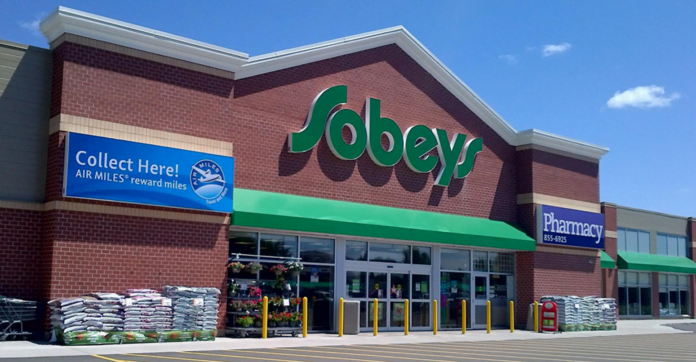
EXTERIOR OF SOBEYS GROCERY STORE. PHOTO: SUPERMARKET NEWS
Empire Company Limited is preparing what management calls its “e-commerce 2.0 strategy,” less than a year after a major restructuring changed how the Sobeys parent approaches online grocery fulfilment in Canada.
Empire reported last week that e-commerce sales increased 11.3 per cent in its first quarter, driven primarily by growth through third-party delivery partnerships and continued growth at Voilà. Management now believes it can accelerate that pace while operating with a substantially different cost structure.
The parent company of Sobeys, Safeway, FreshCo, IGA, Foodland, Farm Boy and Longo’s is drawing a clearer line between the jobs its different e-commerce platforms are expected to do. Voilà is aimed primarily at the planned grocery trip, while third-party platforms can handle customers looking for more immediate delivery.
It is a more flexible model than the one Empire originally built around Voilà, and one that follows a significant reset of the company’s online grocery ambitions.
Empire Reshaped the Voilà Model
Empire made a substantial investment in automated customer fulfilment centres as it built Voilà. The original strategy separated much of the picking and packing of online orders from individual supermarkets, with dedicated infrastructure designed to support larger volumes as online grocery grew.
The Canadian e-commerce grocery market ultimately proved smaller and slower-growing than Empire had originally anticipated, contributing to greater earnings dilution from Voilà. The company responded by restructuring the business and reconsidering how much dedicated infrastructure it needed.
Empire closed its Calgary customer fulfilment centre as part of that restructuring and continued an earlier pause on its planned Vancouver facility. The company retained its Toronto and Montreal customer fulfilment centres, which continue to support Voilà in higher-density markets.
The financial impact was substantial. Empire recorded a significant impairment related to its e-commerce assets and said the restructuring was expected to improve annualized e-commerce operating income by approximately $95 million.
Voilà itself remains part of the strategy. Management said during Empire’s first-quarter earnings call last week that the service continues to grow and offers a strong value proposition for customers making planned grocery purchases.
What changed is Empire’s willingness to use different fulfilment options depending on the customer, market and shopping occasion.
Voilà by Sobeys and Voilà par IGA promises to help Canadians stay one step ahead of their busy lives, underscored by a new tag line “Your groceries delivered. Just like that.” (CNW Group/Empire Company Limited)
Voilà Handles the Planned Shop
Chief Customer Officer Luc L’Archevêque told analysts that Empire sees Voilà as well suited to the planned grocery trip. Third-party delivery platforms serve a different need, particularly when customers want products quickly.
A large weekly grocery order scheduled in advance is different from an order placed because a customer needs a handful of products immediately. Empire can now serve those transactions through different platforms instead of trying to make one fulfilment system handle both.
Management said Voilà and its third-party partnerships are growing.
The split also matters financially. Centralized fulfilment requires significant infrastructure and enough order density to support it. Third-party platforms give Empire another route to customers without requiring the company to build dedicated customer fulfilment centres in every market.
Empire has already demonstrated that it will pull back from centralized infrastructure where the economics do not support the investment. At the same time, it continues to use the model in markets where management believes the scale is there.
Customer Data Moves Up the Agenda
Fulfilment is only part of the next strategy. Empire also wants to make better use of customer visits and data to connect its platforms.
Scene+ gives the company a large and growing loyalty base across its banners. Management said membership continues to increase rapidly, while personalized offers are generating a strong response from customers.
The opportunity extends across Empire’s different points of contact with consumers. A customer may shop at a Sobeys or Safeway store, place a planned grocery delivery through Voilà and use a third-party service when speed matters.
Empire has not said those channels are fully integrated today. Management’s comments indicate that improving the connections between them is part of the work underway as the company develops e-commerce 2.0.
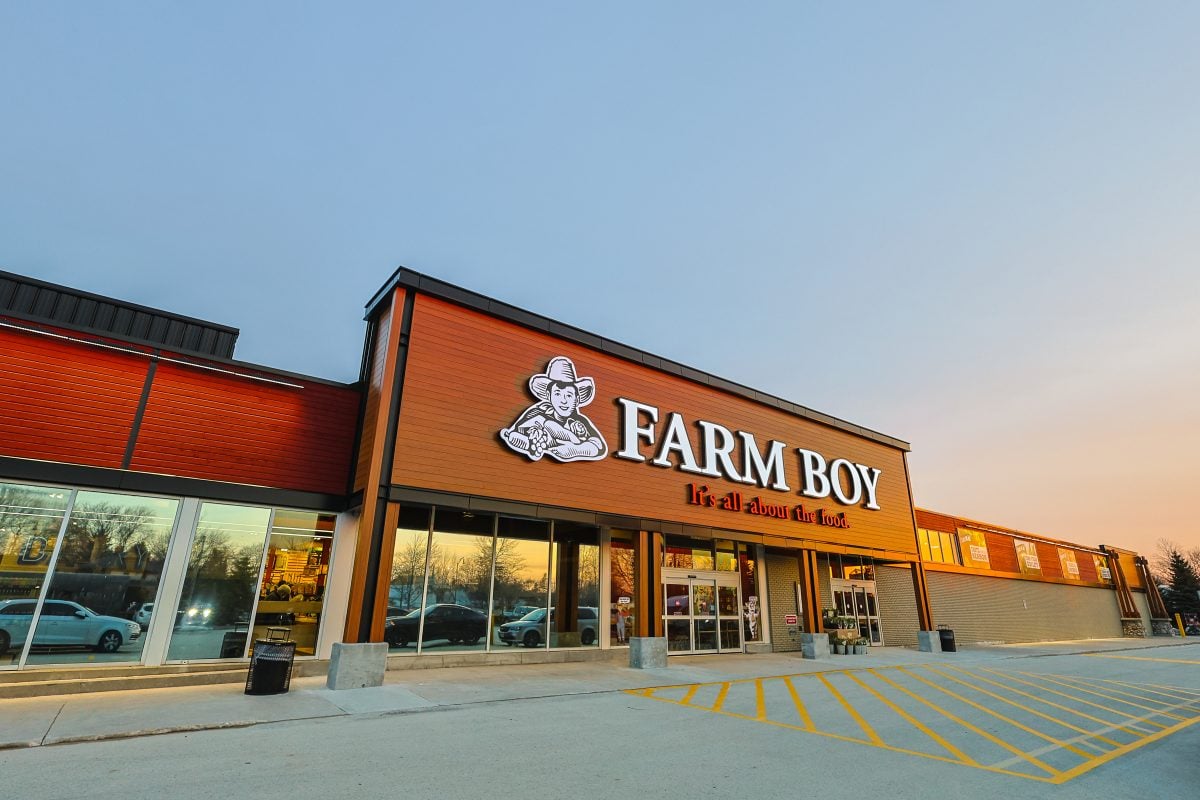
Farm Boy photo
Empire Wants E-Commerce Growth to Accelerate
Online sales increased 11.3 per cent in the first quarter, but L’Archevêque said Empire expects to do better.
Management pointed to continued growth at Voilà and through third-party partnerships, better use of customer data and new technology leadership as areas that can help accelerate the business.
The growth target comes after Empire spent much of the past year reducing costs and restructuring an e-commerce network that was producing more earnings dilution than management had originally expected.
That puts more emphasis on the quality of the growth. Higher online sales would be positive, but Empire also needs to protect the operating improvements created by the restructuring.
The $95 Million Reset
Empire expects the Voilà restructuring to improve annualized e-commerce operating income by approximately $95 million. Management previously said some of that benefit could be reinvested to support future growth.
The size of the improvement shows why fulfilment economics matter. Empire had built significant infrastructure around the expectation that online grocery volume would eventually support centralized fulfilment across several major Canadian markets.
Calgary and Vancouver changed that calculation. Closing one customer fulfilment centre and keeping another planned facility on hold allowed Empire to reduce its cost base while retaining centralized fulfilment in Toronto and Montreal.
The company no longer needs to choose between Voilà and third-party delivery as competing models. Each can serve a different purpose, and Empire can determine where its own infrastructure makes economic sense.
That is the real test of e-commerce 2.0. Growing online sales above the current 11.3 per cent pace matters, but less so if Empire has to rebuild the cost base it just spent considerable effort reducing.
Stores and Digital Growth Remain Connected
Empire’s physical network remains important as the company increases its digital reach. Its stores provide the banners, customer relationships and loyalty participation that underpin much of the broader business, while third-party platforms provide another way for customers to access those banners.
Empire is also expanding that physical network. The company now expects to open more than 25 stores in fiscal 2027 while simultaneously targeting faster e-commerce growth.
Management is continuing to commit significant capital to stores while looking for more flexible ways to grow online. Customers can move between a full weekly shop, a scheduled online order and an immediate delivery without necessarily thinking about the different infrastructure behind each transaction.
For Empire, the challenge is making those channels work together without applying the same cost structure to all of them.
Empire Takes Another Run at Online Growth
Empire has already made a major adjustment to its e-commerce strategy. It closed the Calgary customer fulfilment centre, kept Vancouver on hold and absorbed a significant impairment rather than continuing to invest in centralized infrastructure where the economics were not meeting expectations.
Now it wants online growth to accelerate again. Voilà has a defined role around planned grocery orders, third-party platforms provide immediacy, and Empire wants to use customer data and personalization to build stronger connections across the business. The model gives management more options than the original strategy, particularly in markets that cannot support dedicated fulfilment infrastructure.
Management calls it “e-commerce 2.0.” The label matters less than the financial outcome. Empire has identified approximately $95 million in annualized operating income improvement from restructuring the original model; the next job is to grow without giving those gains back.
Flight Centre Canada is expanding its physical retail presence with two new stores in Toronto and North Vancouver, betting that in-person travel expertise remains valuable despite the growing ability of consumers to research and book trips online.
The travel retailer opened Flight Centre Crosstown in Toronto and Flight Centre North Shore in North Vancouver this month as part of a broader commitment to invest in travel expertise and its Canadian operations.
The expansion follows what the company describes as a third consecutive record year for Flight Centre Travel Group, the parent company of Flight Centre Canada. Canada was also the group’s most improved market globally in the financial year ended June 2026.
“Opening new travel stores in 2026 might sound old school, but that’s part of the point,” said Emilio. “People can research a trip for hours and still not know what they’re missing. A good travel expert cuts through the noise, flags the trade-offs and helps travellers make confident decisions.
“Technology gives us speed and choice. Our people bring judgement, context and accountability. The real value comes from combining the two.”
Anita EmilioChris Lynes
The company said the new stores are intended to give Canadians another way to access travel advice, alongside its online and virtual services with consultants. Flight Centre said the approach is designed to combine its technology with advice from travel professionals.
“Brick-and-mortar retail works when it gives access to expertise people can’t get elsewhere,” said Lynes. “These openings reflect a deliberate investment in a part of the business we know customers value and trust.
“We’re confident in our offering, but we’re also realistic about the current environment. We’ll continue to be selective about where we invest and focus on opportunities that make sense for both customers and the economics of the business.”
New Toronto and North Vancouver locations
Flight Centre Crosstown is located at 2507 Yonge Street, north of Eglinton, in Toronto. The store opened Sept. 10 and operates from 10 a.m. to 6 p.m., Monday to Saturday.
Flight Centre North Shore is located at 120 W. 16th Street, Unit 104, in North Vancouver. The store operates from 9:30 a.m. to 5:30 p.m., Monday to Friday, with its grand opening scheduled for Sept. 10 from 4 to 7 p.m.
Flight Centre photo
The company said the two openings are part of its 30th-anniversary commitment to invest in the future of travel expertise. Flight Centre Travel Group has operated in Canada since 1995, with offices in Toronto, Calgary, Montreal and Vancouver.
Flight Centre Travel Group is headquartered in Brisbane and employs about 15,000 people globally, with company-owned leisure and corporate travel businesses in 25 countries. The company has been listed on the Australian Securities Exchange since 1995 and has a market capitalization in the order of C$4 billion.
Its Canadian leisure travel brands include Flight Centre, Envoyage and Laurier DuVallon, while its corporate travel brands include Corporate Traveller, FCM Travel, FCM Meetings + Events, Stage & Screen and WhereTo.
Supernatural, Toronto’s longevity and wellness destination in Yorkville, is taking an interesting approach to the rapidly growing longevity category — translating what has largely lived in clinics, treatments and the world of biohacking into a physical retail experience.
The retail space spans approximately 800 square feet and is curated by buyer Teca Mussio, who has spent more than a decade researching and testing products across wellness, beauty, sleep, recovery and performance.
Teca MussioSupernatural photo
Consumers looking for better guidance
Her philosophy is refreshingly simple: consumers don’t need more wellness products — they need better guidance around what actually works.
Rather than stocking products based on what’s trending, Mussio has built the assortment around research, efficacy and the fundamentals of how people feel and function. Sleep is a major starting point, alongside products that support energy, recovery, performance, beauty and overall longevity. The assortment spans a wide range of price points — from All is Well tea ($11.25) to the Therabody Depuffing Wand ($199.99), an Allure 2025 Best Of winner, up to splurge items like the Sauna Blanket ($999) for the biohacker who has everything.
The result is an assortment designed to appeal to everyone from the longevity expert to someone simply curious about sleeping better, having more energy or discovering the next generation of wellness products — across a range of categories and price points.
“There is so much noise and claims in wellness right now. I feel like our job is to filter that for people. We look for unique products with credible science, a clear purpose and something we genuinely use ourselves. We don’t want 10 versions of the same thing. We want people to trust that if it’s at Supernatural, there’s a reason it’s there,” said Mussio.
Supernatural photo
“Longevity is pretty abstract, but feeling good isn’t. I think a lot of people go through life operating at 60 or 70 per cent and assume that’s what 100 per cent feels like. Once you get a taste of a really great night’s sleep, more energy and better recovery you understand the value pretty quickly.
“Not everyone really knows what “longevity” means beyond living longer. But everyone understands wanting to feel like the best version of themselves more often.”
Most people don’t care what PEMF (Pulsed electromagnetic field) stands for or what the latest longevity molecule is, said Mussio.
“They care about having more energy and feeling good in their body. Our goal is to take something that can seem complicated and make it simple, approachable and enjoyable. We try to meet people where they are and connect products and experiences to things they actually care about in everyday life. You shouldn’t need to be a biohacker to feel better.”
Supernatural photo
Growing consumer awareness about their health
Since COVID, Mussio said people have become much more aware of their health and how they feel.
“People are more willing to spend on themselves, on experiences, and on feeling better. We’ve always bought things because we think they’ll make us feel good. The difference is that feeling is usually pretty short-lived. Investing in your health, your energy and your wellbeing feels different because you feel the benefit now, but there’s also a payoff down the road. I think longevity wellness is becoming the new luxury,” she added.
“Longevity is becoming a major consumer category, but I don’t think we’ll ultimately call it longevity. To us, it’s really just modern wellness. Right now, much of the category still feels clinical, exclusive or niche. It lives in executive health clinics, private members clubs and social saunas.
“We think there’s an opportunity to create a new kind of retail category around it, and that’s really what we’re trying to pioneer with Supernatural and bring these ideas into everyday life and making them approachable, interesting and even fun.
“The physical space is a big part of that. It should be somewhere you can discover, learn, try things, meet people and get inspired. The best wellness spaces won’t just sell you something. They’ll change what you think is possible for how you feel, perform and age.”
Montreal-based Angelcare Group is planning to build on its growing pet-care business by expanding its Litter Genie product line and pursuing new retail opportunities, CEO Rahul Sharda says, as the company moves toward a broader ecosystem of products for cat owners.
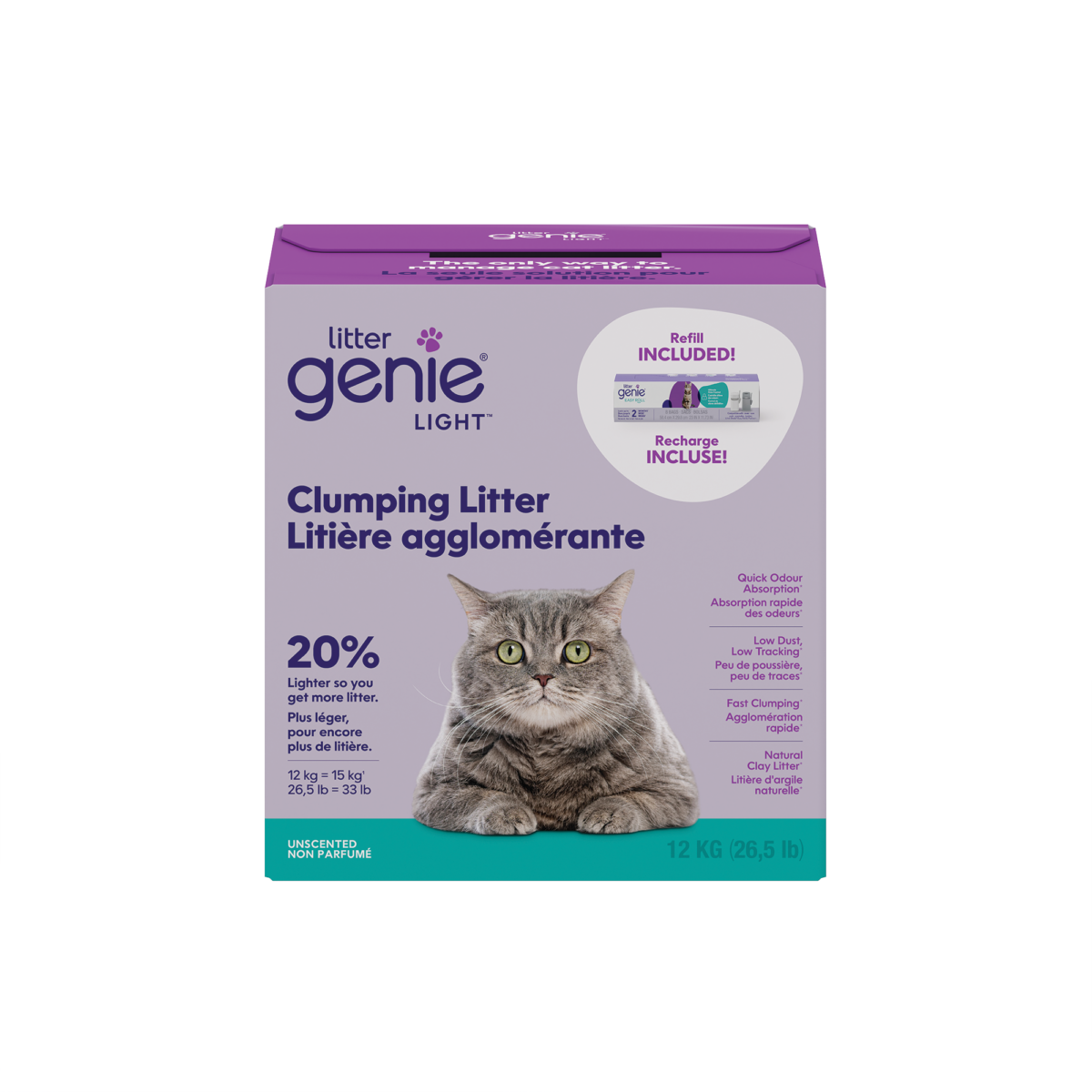
The company recently expanded its Litter Genie offering with a new litter-and-refill program through Quebec pet retailer Mondou and Ontario’s Ren’s Pets. The program pairs Litter Genie litter with a refill of disposal bags, extending a product ecosystem that already includes litter boxes and waste-disposal pails.
“We’re the only brand that has the entire ecosystem,” Sharda said in an interview. “Every time they buy litter, they get a bonus refill inside the litter.”
The company has also been expanding its global operations, including a new 130,000-square-foot packaging and distribution centre in Milton, Ont., which Angelcare says is intended to support future growth.
Rahul ShardaLitter Genie photo
The most overlooked problem in cat ownership
Sharda said Litter Genie has been solving the most overlooked problem in cat ownership for over two decades — what happens after the litter box.
“We invented the category of enclosed cat waste disposal, an inspiration from our flagship Diaper Genie brand for babies, and we’ve never stopped innovating inside it. Today we’re the only brand in the world that offers a complete, system-designed solution: the litter, the litterbox, the pail, and the refill — all engineered to work together,” he said.
“That matters because cat parents don’t want to think about waste management. They want it handled simply, cleanly, and without odour breakthroughs. That’s exactly what Litter Genie delivers. We’re a brand that earns loyalty quietly – once a cat parent switches to a complete Litter Genie routine, they rarely go back.”
The recent launch at marked the Canadian introduction of the Litter Genie complete cat waste management ecosystem.
“The inspiration came from a clear consumer signal: cat parents told us they were tired of mixing and matching products from different brands that were not designed to work together. We solved that,” explained Sharda.
Litter Genie photo
The Mondou customer is exactly who this program is designed for – an engaged, informed cat parent who does the research and wants the best solution, not just the cheapest one. It allowed Litter Genie to ensure the consumer education around the ecosystem is done properly before it will scale the program further.
“When you are introducing something genuinely new to a market, the retail partner matters as much as the product itself. Mondou’s ability to tell a story at shelf and through their staff – not just push volume – made them a clear choice,” added Sharda.
“The odour management bar has risen considerably. When we conducted comparative testing against the leading competitive litter, Litter Genie Light showed zero detectable ammonia levels within minutes – while the competitor was still registering at +20 minutes. That is not incremental improvement; that is a different category of performance.
“And it matters because the trend we are seeing is that cat parents in condos and urban homes have zero tolerance for any breakthrough odour. Convenience is table stakes now. Performance differentiation is where the category conversation is moving. Beyond odour, we are seeing a clear shift from product-by-product purchasing toward integrated routines. Cat parents want solutions that work together seamlessly. That is precisely why the ecosystem model – litter, litterbox, pail, refill from one brand – resonates so strongly right now.”
Cat parents are sophisticated buyers
Cat parents are more sophisticated buyers than they were five years ago. They read reviews, watch unboxing content, and arrive at purchase decisions with genuine product knowledge. That means vague claims do not work anymore – they want to see proof, said Sharda.
“Litter Genie’s response to that is to build products that demonstrate their value clearly and quickly. The Easy Roll pail mechanism, the odour absorption performance of the litter, the refill system – these are things you can see and measure, not just marketing language. Our innovation philosophy is: if we cannot explain why a product is better in one sentence, we have not solved the right problem. That discipline has shaped everything from product design to how we communicate on shelves and in digital channels.”
He said Canada is a key market for Litter Genie, and the recent launch reflects its commitment to continuing to invest in innovation and category leadership.
“We see significant opportunities to deepen engagement with existing users while introducing the brand to new cat-owning households. By expanding beyond disposal solutions and creating more complete pet care ecosystems, we can deliver greater value to consumers and strengthen our position within the cat care category,” explained Sharda.
“Beyond the Mondou program specifically, we are committed to deepening engagement with existing users while meaningfully introducing the brand to new cat-owning households who have not yet discovered what a complete Litter Genie system delivers.
Litter Genie photo
“Quebec punches above its weight in pet specialty retail. The penetration of pet specialty as a channel — relative to mass — is higher in Quebec than in most other provinces, which means the Mondou customer already self-selects for exactly the kind of informed, quality-oriented buyer this ecosystem was designed for.
“We also have strong existing brand recognition and an established relationship with Mondou in this market, which makes it the right geography to take a calculated bet on a new category concept. You do not introduce a market-redefining product in a market where you are starting from zero.
“More broadly, Canada has a growing and highly engaged pet-owning population — one that views pets as family members and is willing to invest meaningfully in products that improve quality of life. That consumer mindset aligns directly with what Litter Genie stands for.”
The opportunities for innovation and growth
Sharda identified three areas as the biggest opportunities for innovation and growth in the cat care category.
“First, the performance credibility race. As consumers get more sophisticated, the brands that can back their claims with real, independently verifiable data will take significant share from those that cannot. We are investing there, and the ammonia testing work is one example of that commitment.
“Second, the shift from products to systems. The integrated ecosystem model is just beginning to play out in pet care, and the brands that architect those systems now will be genuinely difficult to displace later. We have a meaningful head start in cat waste management, and we intend to extend it.
“Third, Canada as a category incubator. We believe there is a real opportunity for Canada to be the market where new formats in pet care get defined before they go global. The Mondou Easy Roll program is the first chapter of that story for Litter Genie. We expect it will not be the last.”