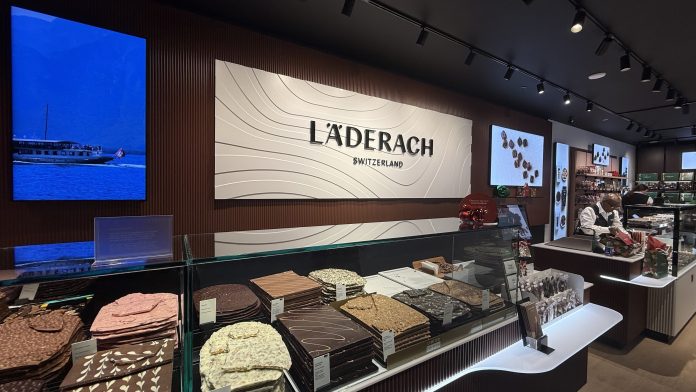
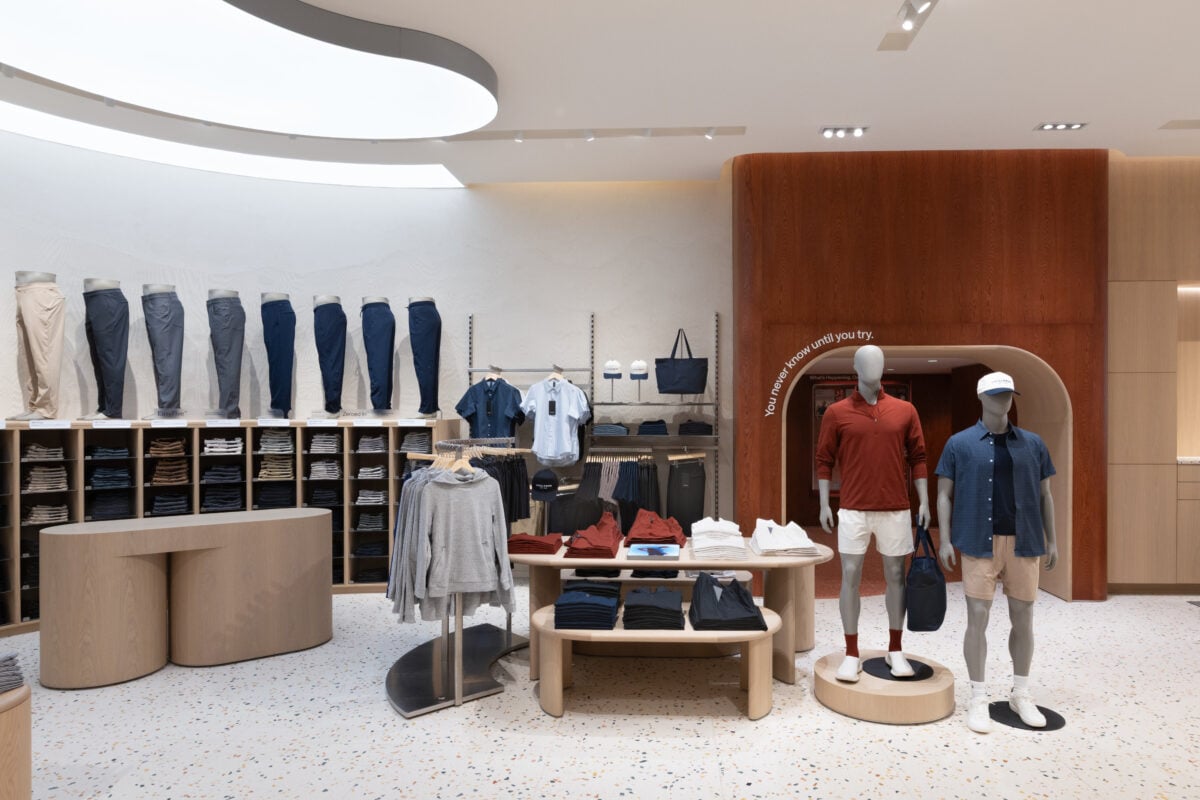
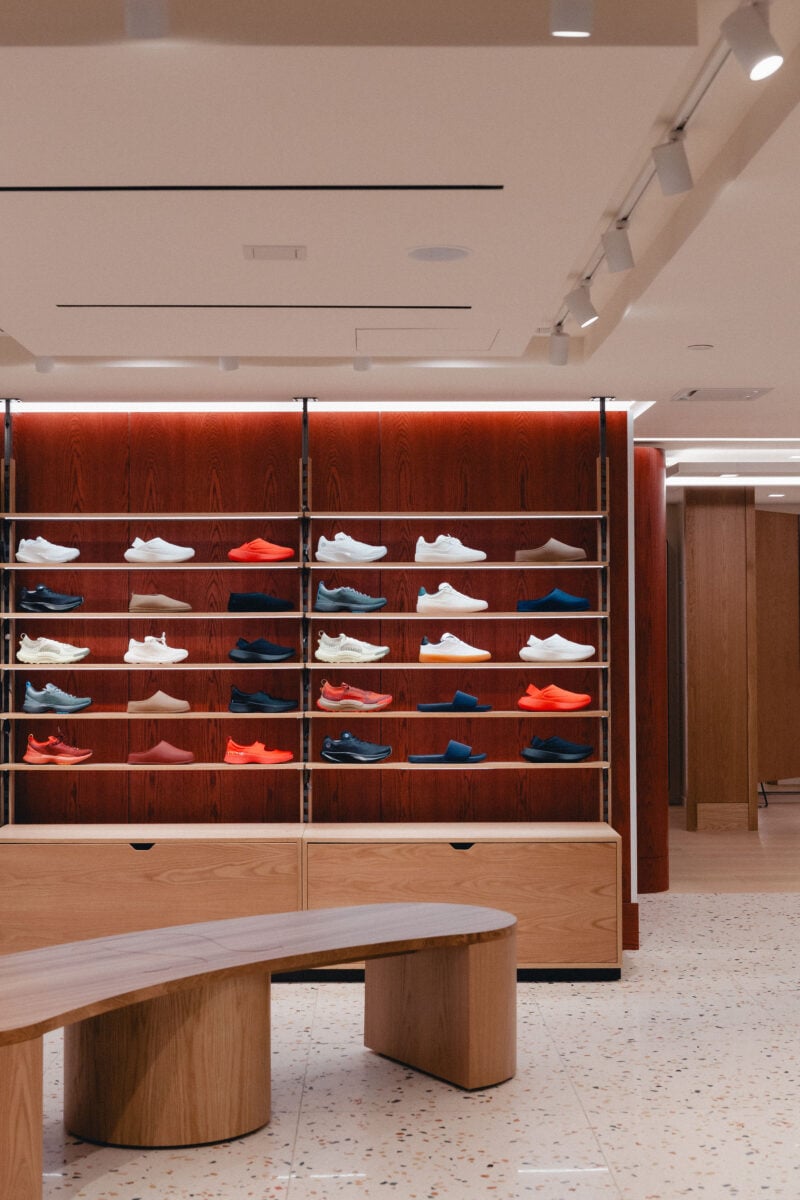
Läderach at 110 Bloor Street West in Toronto. Photo: Craig Patterson
Swiss premium chocolatier, Läderach, is continuing to expand across North America with the opening of its second location in British Columbia.
Läderach has opened a store at CF Pacific Centre in Vancouver, which follows a string of successful launches across North America, including the recent openings in Connecticut at Westfarms and in Utah at City Creek Mall – each reinforcing Läderach’s position as a leader in premium, fresh chocolate, said the company.
Läderach said the opening is part of its continued growth in North America, which includes over 10 new locations in 2026 reinforcing its commitment to making its fresh, artisan chocolate more accessible to chocolate lovers across the region.
“We are delighted to expand our presence in British Columbia with our second location in the province at CF Pacific Centre. We look forward to continuing Läderach’s growth across Canada, including the opening of our first Calgary location next year,” said Warren Dunkelberger, President of Läderach North America.
Warren DunkelbergerLäderach photo
Läderach said its handcrafted chocolates are known for their uncompromising quality, using the finest ingredients sourced directly from Swiss suppliers and a dedication to freshness. Signature products, including its iconic FrischSchoggi (fresh chocolate), pralines, and truffles, have established the brand as a favorite for chocolate connoisseurs worldwide.
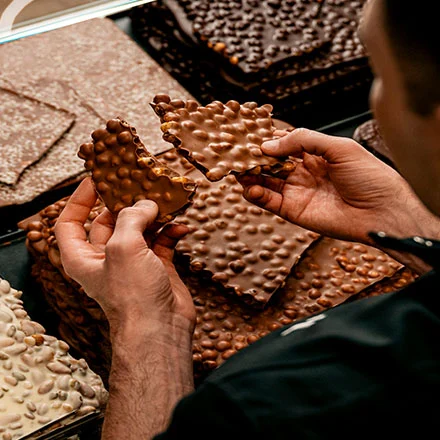
“The new CF Pacific Centre chocolaterie will showcase Läderach’s full assortment of handcrafted chocolates within a refined, immersive retail setting. At the heart of the experience is the signature FrischSchoggi™ counter. Featuring artisanal slabs of fresh chocolate, from which customers may select their favorite combinations as our chocolatiers expertly break off pieces to be purchased by weight. Additional offerings include single-origin tablet bars, seasonal assortments, and a rotation of exclusive new creations including the best-selling milk chocolate Dubai. All crafted in Switzerland to the highest standards of quality and freshness,” explained the company.
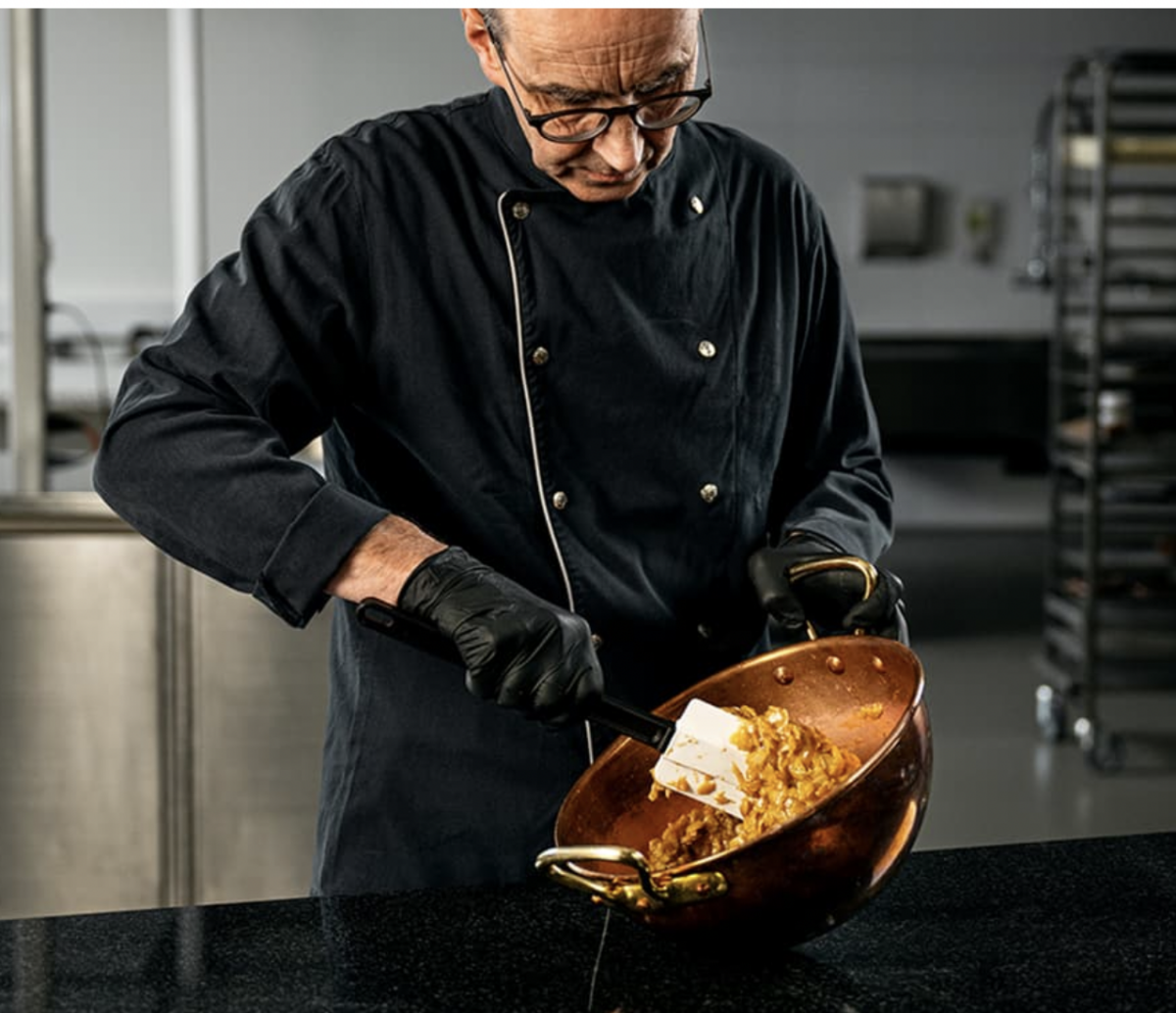
“With a growing North America customer base and a global reputation for excellence, Läderach is poised for further growth in the market, with the new stores another milestone in Läderach’s mission to deliver high-quality, fresh Swiss chocolate and bring joy to everyday moments in life. Operating since 1962 and with the reigning World Chocolate Master at its helm, Läderach is the largest chocolate retailer in Switzerland with 230 chocolatiers across 25 countries worldwide and online. Renowned for creating some of the freshest, high quality artisanal chocolates in the world, Läderach’s responsibly sourced chocolate comes directly from Switzerland and is made bean-to-bar in-house, finished by hand, and brought directly to its stores worldwide.”
Läderach photo
The brand was founded in 1962 and is now led by the third generation of the Läderach family – brothers Johannes, Elias, and David Läderach
“Our North American expansion strategy is to expand across the right locations across the United States and Canada. We will open a couple of locations in Canada each year over the next five years to be the premium Swiss chocolate brand coast to coast,” said Dunkelberger.
“Vancouver is a dynamic and exciting market. CF Pacific Centre is the right second location as it offers a different customer base than our CF Richmond Centre location. Our expectations are that the new location has as strong of sales and customer traffic as our current CF Richmond Centre location.”
He said the brand will also open at CF Chinook Centre in Calgary in Spring 2027 and is approximately 800 square feet.
Läderach photo
“Läderach is known for our fresh Swiss chocolate and that is at the center of every decision we make. We recently built an additional production facility in Bilten, Switzerland to keep up with the increased production,” said Dunkelberger.
“Canada is a key part of our North American growth strategy and we plan to open two new Canadian stores each year.”
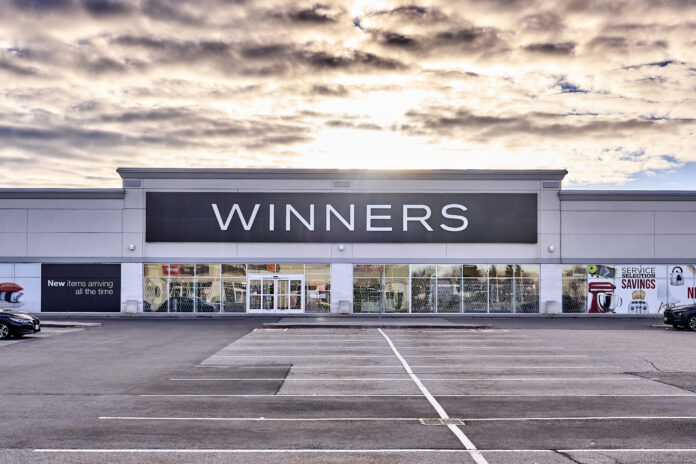
WINNERS is partnering with Canadian cookie company Craig’s Cookies on a campaign that will bring a digital-era concept into physical stores, with a custom cookie offered at select WINNERS locations beginning Sept. 12.
The campaign, called AcceptCookies.IRL, will launch in stores in Calgary, Windsor, London, Hamilton, Toronto, Ottawa and Halifax. Customers will be encouraged to accept a physical cookie before shopping, a play on the cookie-consent prompts commonly encountered while browsing websites.
The campaign is intended to connect the online habit of accepting cookies with the in-store shopping experience, while bringing together WINNERS and Craig’s Cookies for a limited-edition product.
“We accept cookies online without thinking. With AcceptCookies.IRL, we wanted to make that moment worth saying yes to,” said Jordan White, spokesperson for WINNERS. “It’s playful, unexpected and true to the WINNERS experience – you never know where you’ll find your next win until you step inside.”
Jordan WhiteCraig Pike
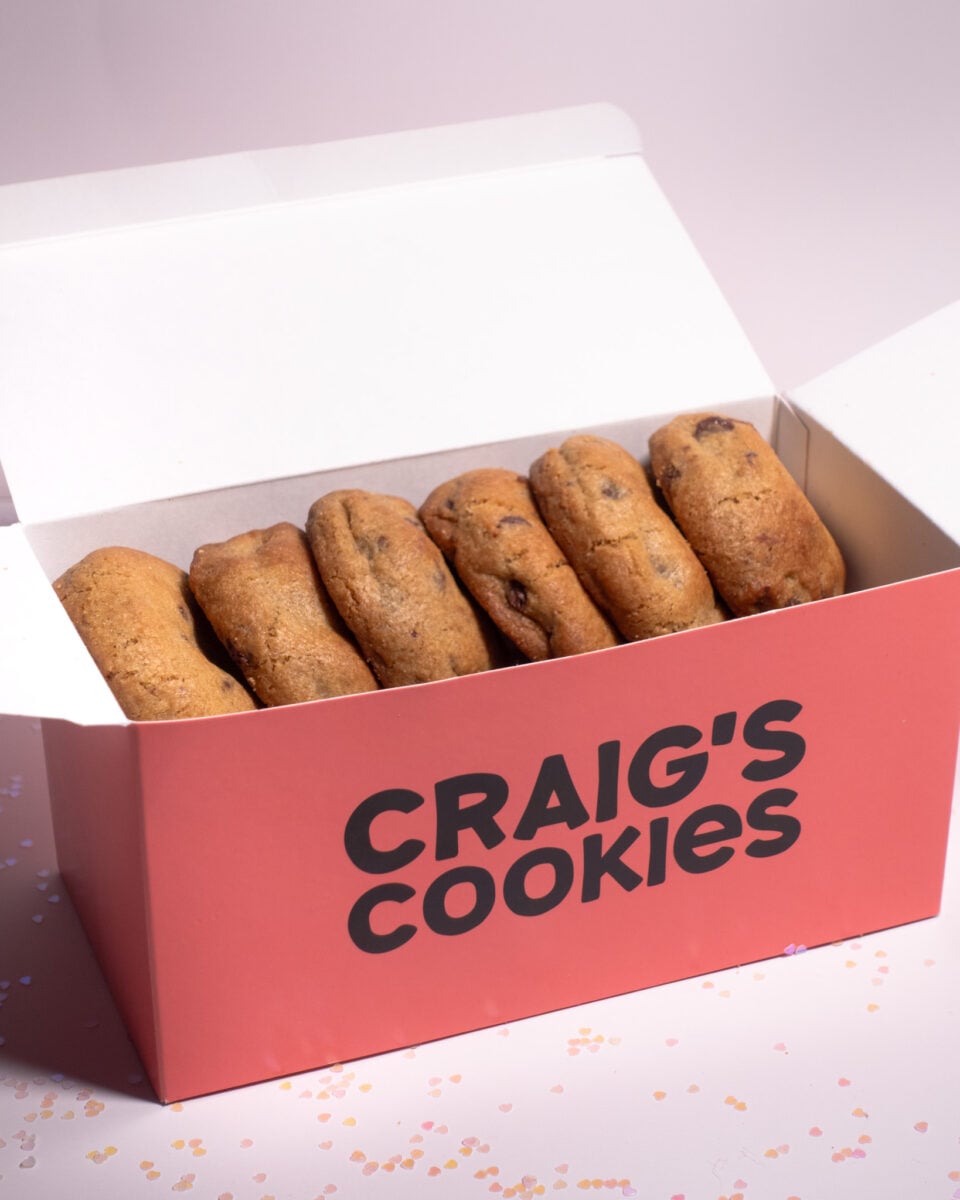
Craig’s Cookies has created a custom WINNERS Cookie specifically for the campaign. The cookie starts with the bakery’s Classic Chocolate Chip Cookie and contains a colourful surprise inside.
The companies said the cookie will be available at the participating WINNERS activations beginning Sept. 12. The custom WINNERS x Craig’s Cookies cookie will then be sold nationwide at Craig’s Cookies locations from Sept. 14 to Sept. 30.
The campaign will also include giveaways and opportunities to win prizes.
“When WINNERS came to us with AcceptCookies.IRL, we loved how fun and instantly gettable the idea was,” said Craig Pike, founder of Craig’s Cookies. “We’re always playing with familiar flavours in unexpected ways, so this gave us the chance to put a Craig’s Cookies spin on an everyday digital moment and create something just for WINNERS. The WINNERS Cookie starts with our Classic Chocolate Chip Cookie, but the surprise is what you find when you break it open. It felt like the perfect way to bring that sense of unexpected discovery to life, and I can’t wait for people to try it.”
The partnership comes as WINNERS seeks to translate a familiar online interaction into a physical retail setting, while Craig’s Cookies extends the campaign through its locations across Canada.
Craig’s Cookies PhotoCraig’s Cookies Photo
WINNERS is part of TJX Companies Inc., which operates more than 5,200 stores across 10 countries. Its Canadian operations include Winners, HomeSense and Marshalls.
Craig’s Cookies was founded in Toronto by Newfoundland-born Craig Pike. The company says it began in 2013, when Pike baked his mother’s chocolate chip cookie recipe from his Toronto apartment, and has since expanded to 25 locations across Canada.
The bakery offers more than 85 rotating flavours and says its cookies are made from scratch with real ingredients and baked fresh daily.
A new online portal has been created by Alberta to collect information on how businesses are being affected by U.S. tariffs and Canadian counter-tariffs.
This will help shape Alberta’s response to real-world tariff impacts across sectors, ensuring decisions reflect the experiences and challenges that Alberta businesses are facing, said the Government of Alberta.
“Alberta businesses create jobs, drive investment and help power the Canadian economy. Tariffs and counter-tariffs put that growth at risk by raising costs and making it harder to do business on both sides of the border. We’ll keep fighting for free and fair trade with the United States while working directly with Alberta businesses to protect jobs, investment and growth here at home,” said Premier Danielle Smith.
The government said the portal launches as businesses continue to assess the impact of recent U.S. tariffs and Canada’s planned retaliatory measures. Alberta continues to advocate for a fair and free trade relationship with Canada’s biggest trading partner and closest ally. Tariffs hurt the economy, create pressure for businesses, risk jobs and increase costs for families on both sides of the border. The province is calling for the dispute to be resolved through diplomacy and constructive negotiations with the United States, it added.
Danielle SmithJoseph Schow
“At a time of uncertainty, we are committed to working with our business community and understanding the direct impact the tariffs and counter-tariffs are having on them. Alberta has shown great resilience since the tariffs were put in place eighteen months ago, and our goal as a government is for that to continue. Alberta businesses are the economic engine of this nation, and their contribution is essential to its prosperity,” said Joseph Schow, Minister of Jobs, Economy, Trade and Immigration.
The government said a cabinet committee has been recently established to coordinate the response across several ministries to support affected industries. Further to this, a recent meeting of the Alberta Trade Advisory Council was hosted by Smith and Schow, which brought together industry and business leaders from across the province to share the impacts they are facing from U.S. tariffs and Canadian counter-tariffs.
“Tariffs and counter-tariffs are creating uncertainty and, for some Alberta businesses, real costs. Government needs clear, timely information about where those pressures are being felt. We encourage any and all impacted businesses to share their experiences with the province so its response can be practical, targeted and focused on protecting investment, jobs and growth. We appreciate Premier Smith and the Alberta government’s willingness to listen and respond as circumstances evolve,” added Adam Legge, president, Business Council of Alberta.
Adam LeggeKeyli Loeppky
Information collected from Alberta businesses will help identify sector-specific effects of U.S. tariffs and Canadian retaliatory measures, including changes to costs, investment decisions, market access, competitiveness, employment and supply chains. For more Information: https://www.alberta.ca/tariff-related-resources-for-alberta-businesses
Richelieu Hardware Ltd. is investing more than $15 million to expand its distribution centre in Drummondville, Que., quadrupling the facility’s size as the company increases its distribution capacity in the province.
The project will expand the facility from nearly 40,000 square feet to 180,000 square feet and is expected to be completed in time for the expanded centre to become operational in spring 2027.
Richelieu said the expansion is intended to support its growing business and improve its ability to serve customers across Montreal’s South Shore, the Quebec City region and its South Shore, Centre-du-Québec and the Eastern Townships.
“Richelieu has been growing for several decades, and this investment in Drummondville gives us the means to keep building on that momentum. By expanding our distribution centre from 40,000 to 180,000 square feet, we are significantly strengthening our ability to serve our customers while continuing to invest in Quebec,” said Richard Lord, president and chief executive officer of Richelieu.
The project was formally launched Sept. 3 with a groundbreaking ceremony at the company’s site on Alfred-Nobel Street. Drummondville Mayor Jean-François Houle and Gerry Gagnon, general manager of Drummond Économique, attended the ceremony.
“We are proud that a company of Richelieu’s stature has chosen to grow here. This is excellent news for our local economy, the vitality of our business community and the quality jobs this project will create,” said Houle.
Gagnon said the investment comes as companies face economic uncertainty and will contribute to the region’s logistics and transportation sector.
“At a time when many companies remain cautious in the face of current economic challenges, Richelieu is demonstrating remarkable vision by continuing to expand in Drummondville. This investment contributes to the economic diversification of our region and reinforces the presence of a Quebec leader. It also strengthens our strategic logistics and transportation sector while optimizing occupancy in the Saint-Nicéphore industrial park,” said Gagnon.
Photo: Richelieu Hardware
Construction will be carried out by Guimond Construction and fully funded by Richelieu.
The Drummondville project is part of a broader growth strategy that includes expansion in the United States.
Richelieu recently announced the acquisition of the hardware division of The Penrod Company, a U.S. distributor specializing in hardware and components for residential and commercial doors.
The company said the transaction is expected to add approximately US$70 million in annual sales and strengthen its presence in the U.S. market. Following the acquisition, Richelieu said the number of its distribution centres will rise to 131.
Richelieu is a North American importer, manufacturer and distributor of specialty hardware and complementary products. Its customers include manufacturers of kitchen and bathroom cabinets, storage and closet systems, home furnishings and office furniture, as well as residential and commercial woodworkers, door and window companies and hardware retailers, including renovation superstores.
The company said it offers more than 145,000 products sourced from manufacturers worldwide to more than 120,000 active customers.
Richelieu currently operates 124 centres in North America, including 54 distribution centres in Canada, 66 in the United States and four manufacturing plants in Canada.
The donation is being made through the Canadian Red Cross 2026 British Columbia Wildfires Appeal as fires continue to affect communities across the province.
The contribution comes as Walmart Canada concludes its annual fundraising campaign for the Canadian Red Cross, which raised more than $3.9 million for local disaster relief. Walmart Canada began this year’s campaign with a $1-million donation, while customers were invited to contribute through donations or by rounding up purchases at checkout in stores across Canada.
The company said its relationship with the Canadian Red Cross dates back more than 23 years. During that period, Walmart Canada, its associates and customers have contributed more than $80 million to the organization, which the company describes as its largest corporate supporter.
“When disasters strike, the Red Cross is there, responding quickly and providing assistance to Canadians during some of their most difficult moments,” said Sara Gugula, Chief People Officer, Walmart Canada. “As the British Columbia community continues to rally against the wildfires, we’re here to support them alongside the Walmart Foundation to direct funds where they’re needed the most.”
“The Canadian Red Cross thanks Walmart Canada and the Walmart Foundation for this generous donation to help those impacted by the wildfires in British Columbia. These funds will assist the people and communities affected as they recover from the wildfires and build resiliency for the future,” said Avis. “This support is one of many examples of how Walmart Canada helps in times of need and the Canadian Red Cross is very appreciative of our partnership.”
Sara GugulaAmy Avis
Walmart Canada also pointed to the response by associates at its Penticton, B.C., store, where the company said staff saw the effects of the wildfires firsthand.
“When you see families displaced from their homes, you realize how important community support can be,” said David Lucente, Store Manager, Penticton Walmart Supercentre in British Columbia. “I’m proud of how our associates came together to lend a hand. It means a lot to work for a company that supports Canadians when they need help most.”
As evacuation orders and alerts spread across the region, people from Summerland and surrounding communities went to the Penticton Walmart parking lot seeking a safe place to stop, according to the company.
Associates provided evacuees with drinking water and snacks, while the store also donated requested supplies, including personal care items and cellphone chargers, to people displaced by the fires.
Walmart Canada said its disaster response efforts also include the rapid deployment of essential supplies, food, water and other critical goods to affected communities and first responders.
The company said it uses strategic inventory planning and freight allocation to support regions affected by wildfires and evacuations, and works with emergency management agencies to help ensure communities receive resources.
Walmart Canada operates more than 400 stores across the country and employs more than 100,000 associates.
With so many sales happening online and away from an expert standing at the jewelry counter, the fine jewelry business has an education problem. There’s a disconnect between the shopper who sees the finished piece and the knowledgeable retailer who knows everything behind it.
A shopper may see two pearl necklaces that look identical in the website photos, yet one (realistically and rightfully) costs hundreds or thousands of dollars more. Two diamonds of similar size can differ substantially in value. “Gold” can refer to different karat levels and alloys. Gemstones may be natural, laboratory-created, imitation, treated, or untreated.
Here are the top reasons the jewelry ecommerce space needs to be more education-focused, and how to apply the best informative solutions to address customers’ knowledge gaps.
Fine Jewelry is Hard to Evaluate from a Product Photo and Description
This is a fundamental ecommerce problem that retailers see across platforms and for all kinds of products. The issue is exacerbated with fine jewelry, since there’s such a wide range of quality and price points represented even in the same ecommerce spaces.
Similar-Looking Jewelry Can Have Very Different Value
Any well-trained jeweler can explain pearl quality factors: how two pearls of the same size and color can differ considerably in luster, surface quality, nacre quality, shape, and matching. Or they could wax poetic about the differences in 14K and 18K gold, or how two diamonds of the same carat weight can vary according to cut, color, and clarity.
These features and factors that determine the jewelry’s overall quality and price are nearly impossible to suss out from just a photo on a website, and even more difficult to assess without the help of an expert. The image can show the beauty of the piece, but it can’t explain its value.
Industry Vocabulary Can Be a Huge Barrier
There’s a lot of insider jargon in the jewelry space: carat, karat, cultured, natural, lab-grown, nacre, luster, clarity, vermeil, plating, treatment, setting, and certification. They’re normal words for experts, but largely unknown by the average shopper.
Buyers will make more confident purchases when they have a better idea of what they’re actually buying, if the pearl is real, and what they can expect from the purchase. Educating about this jewelry-specific terminology is the first step in engaging the customer to make informed and confident decisions about their jewelry.
Product Descriptions Can be Fuzzy, With No Chance for Clarification
Saying a pearl necklace is “premium quality” gives the shopper very little to work with. Explaining what strong luster looks like, why matching matters in a strand, or what makes one pearl type different from another gives them something concrete to compare.
The customer needs to come away feeling like they understand the piece better, not like they just read a longer sales pitch.
Educational Content Replaces Part of the In-Store Conversation
Online shopping makes the jewelry shopping process more convenient at points, but it does remove the jeweler-at-the-counter step from the process.
A Good Jeweler Answers Questions Before Asking for the Sale
In the brick-and-mortar store, a customer points to two pieces and explicitly asks why one costs more.
The jeweler explains the difference in materials, craftsmanship, grading, or rarity. The customer asks whether one piece is better for daily wear, whether a certain gemstone needs special care, or whether that necklace will sit where they want it to.
Those conversations help online jewelry shoppers build a mental framework for the purchase. They start to understand what they’re paying for and which details actually matter for their own needs.
That same guidance has to exist online, even if there’s no person standing behind the counter. Buying guides, comparison charts, short videos, glossaries, FAQs, sizing tools, care guides, and clear product descriptions can all take on parts of that educational role.
Product Pages Should Teach, Too
It goes way beyond blog posts and buying guides! If a customer has made it all the way to the product page, that’s where they need the most information before they make the purchase. Don’t ask them to leave the page to Google a term like “vermeil,” “AAA pearl quality,” or “VS clarity”! It only adds another step between their interest and their ultimate purchase.
A strong product page should explain the important specifications in plain language. For instance, explaining that 18K gold contains a higher proportion of pure gold than 14K helps a shopper understand why the price, color, and wear characteristics may differ. Listing the millimeter size of a pearl is helpful, but showing that size on an ear or beside a familiar object makes the number much easier to picture.
The same goes for chain length, gemstone treatments, ring width, earring dimensions, clasp types, and care requirements. The goal here is to make the product page full of all the expert knowledge the customer needs to make an informed and confident decision.
Main Takeaways
Fine jewelry is difficult to assess from just product photos and descriptions that are often filled with industry-specific jargon; shoppers need more expert knowledge to make a confident choice.
There are knowledge entry-barriers, so retailers should translate technical language into clear, practical information.
Online educational materials from ecommerce sites can help recreate some of the guidance and advice from a knowledgeable jeweler in a brick-and-mortar store.
The whole website – including the blog, buying guides, and every step on the website all the way down to the specific product page – should include educational elements that invite the customer into an informed and confident purchase.
The biggest goal of the website is the same as the expert salesperson standing at a physical jewelry counter: to give shoppers enough knowledge to make a confident decision. When customers understand the product, the sale has far less work to do.
Welcome to the Daily Synopsis by Retail Insider. We hope you enjoy the 10 articles we published covering key developments in Canadian retail.
Lululemon is streamlining its store operations by cutting SKUs by 15% and slowing its expansion efforts while focusing on store optimizations and tailored assortments Lululemon cuts SKUs and slows expansion. Jollibee is marking 10 years in Canada with a promotional campaign and plans to open 26 new franchise-led locations in Alberta and British Columbia Jollibee plans 26 new restaurants. T&T Supermarket will open a massive new store at CF Markville in 2028, becoming the largest Asian grocery store in Markham T&,T expands at CF Markville.
Pilgrim is accelerating Canadian growth with a new Oshawa Centre store and plans for three additional stores annually, targeting suburban markets Pilgrim plans Canadian expansion. OpenRoad Auto announced a 16-acre automall development in Surrey to include dealership lots and extensive commercial space OpenRoad Auto Surrey automall development. Canada’s job market saw losses in August, with retail among affected sectors Canada loses 42,000 jobs, while Typical is broadening its retail reach with new partnerships and product lines in home goods Typical expands retail partnerships.
Natural light has become a defining feature of contemporary retail design. Large storefronts create visibility from the street, skylights bring openness to shopping centres, and floor-to-ceiling glass gives showrooms a sense of scale that electric lighting alone is difficult to reproduce.
But more daylight is not automatically better daylight.
Direct sun can wash out digital displays, create reflections on glass cases, change how colours appear and produce uncomfortable hot zones near the façade. Over time, the same exposure can fade textiles, packaging, artwork and interior finishes. A store built around a bright, transparent envelope can therefore become visually inconsistent and operationally difficult as the sun moves through the day.
The opportunity is not to eliminate daylight. It is to control it with the same intention retailers already apply to track lighting, merchandising and circulation.
From Architectural Feature to Operating Variable
Lighting decisions are usually made during design and construction, but daylight is never static. Its direction, intensity and colour change by hour, season and weather.
A display that looks balanced at 10 a.m. may be crossed by direct sun at 3 p.m. A fitting room can feel flattering on an overcast day and harsh when low western light enters the sales floor. A screen that is readable in the morning may become reflective in the afternoon.
The most effective stores treat lighting as three connected layers: daylight that links the interior to the street, ambient lighting that establishes a consistent base, and accent lighting that creates hierarchy around merchandise. Problems emerge when uncontrolled daylight overwhelms the other two. The store may still be bright, but the products no longer look as intended.
Retail Insider’s coverage of King Living’s Toronto flagship illustrated the importance of consistency. Its controlled lighting environment helps furniture, fabrics and finishes present similarly during the day and evening. Not every store needs a subdued gallery atmosphere, but the principle applies broadly: lighting conditions are part of product presentation, not merely part of the architecture.
The Hidden Cost of Direct Sun
Light-induced fading is cumulative. Ultraviolet radiation is one contributor, while visible light and heat can also affect sensitive materials. The rate depends on the material, dyes, exposure time and intensity, so there is no universal safe number of hours.
Apparel, upholstered furniture, rugs, paper goods, artwork and cosmetics can all be vulnerable. The cost is not limited to products that become visibly unsellable. Uneven exposure may cause a display sample to differ from boxed inventory, weaken colour consistency across a collection or make a premium product look older than it is.
The greatest risks tend to appear near south- and west-facing storefronts, skylights, display windows where products remain for weeks, and high-level glazing that staff cannot easily shade. Retailers should map these exposure zones before finalizing fixtures. Sensitive products can then be rotated, repositioned or protected with filtered daylight.
Glare Is a Customer-Experience Problem
Glare is often treated as an employee-comfort or building-performance issue. In retail, it also affects the customer journey.
A bright reflection can make digital signage unreadable, obscure a product behind glass or reduce visibility at a service counter. Shoppers may move away from an uncomfortable display without consciously identifying why. Employees working at point-of-sale terminals may improvise with paper signs or permanently closed blinds, weakening the store’s visual standards.
The aim is to maintain visual hierarchy. The brightest element in a customer’s field of view should support the intended focal point—not be an uncontrolled patch of sky or a reflection across a screen. A successful solution must also preserve the storefront’s exterior presence; eliminating glare by making the store appear closed is not a useful trade-off.
Selecting Daylight Control by Performance
For existing stores, the practical solution is often a combination of layout changes, solar-control glazing and adaptable interior shading.
Solar screen fabrics come in different openness factors, colours and constructions. These variables influence view, visible light, glare, privacy and solar performance. A lower openness factor generally provides stronger glare control but a more restricted view. Higher openness preserves transparency but may not be sufficient for a screen-facing work area or low-angle western sun.
Colour matters as well. Darker fabrics can maintain a clearer view through the shade, while lighter outward-facing surfaces may reflect more solar energy. The right specification depends on the retail task. A furniture showroom may prioritize colour consistency and protection from fading; an apparel store may need strong vertical illumination and clear views into the space; a service retailer may place more weight on privacy and customer comfort.
Mock-ups are valuable because a specification sheet cannot fully communicate the visual experience. A sample should be viewed on the actual façade under direct sun, from both inside and outside, before a large order is approved. For retailers planning larger installations, an experienced commercial window-treatment team such as Toronto Window Treatments can help evaluate glazing conditions, fabric performance, glare requirements and how the finished system will appear from both inside and outside the store.
Why Automation Matters in Multi-Zone Stores
Manual shades can work in a small location where staff can reach every window. Reliability declines as façades become larger, ceilings rise and daily operating responsibilities multiply.
Automated shades can respond to schedules, sun position or sensor input, creating repeatable conditions without asking employees to monitor the weather. The advantage is consistency, not movement for its own sake.
A practical sequence may lower east-facing shades before opening, reopen them after the morning sun passes, and deploy west-facing zones gradually during the afternoon. Shades serving digital displays can follow a different position from those behind a feature window. Manual override should remain available for events, photography and changing merchandising plans.
For large glazed storefronts, commercial shading systems can also be coordinated with lighting controls, fabric requirements and the architectural details needed to keep rollers, fascias and wiring visually discreet.
The operational question is simple: will the system create the intended condition every day, even when the store manager is occupied elsewhere?
Connect the Shades With Electric Lighting
Daylight control should not be commissioned separately from the lighting system. If shades lower while ambient lighting remains unchanged, the sales floor may become too dark. If shades stay open while daylight sensors dim the LEDs, merchandise can lose the contrast needed to stand out.
Integrated scenes allow the systems to respond together. As direct sun is filtered, ambient lighting can rise enough to maintain a stable base while accent lighting continues to define feature displays. When useful daylight is available without glare, electric lighting can dim where appropriate.
This coordination also supports thermal comfort. Customers near large windows may feel noticeably warmer than shoppers deeper in the store, even when the thermostat reports an acceptable average. Closing a well-selected shade before peak exposure can reduce radiant discomfort and may prevent operators from overcooling the entire store to compensate for one hot perimeter zone.
A Practical Daylight Audit
Retail teams do not need a full renovation to identify the largest problems. Walk the store at opening, midday and late afternoon on a clear day and record:
which products receive direct sun;
where customers or employees change position because of heat or glare;
whether screens and price displays remain legible;
where colours appear different from the rest of the store;
which blinds are routinely left closed;
whether temporary glare fixes have appeared; and
how the storefront looks from outside when shades are deployed.
Repeat the review in another season because the solar path changes. The audit should end with priorities, not a generic recommendation to add more shades. Product protection, screen visibility, thermal comfort and façade presentation may each require a different response.
The Storefront Should Perform as Well as It Photographs
Glass remains one of retail’s most valuable architectural tools. It creates connection, reveals activity and gives the physical store a visibility an online channel cannot reproduce. The objective is not to cover it indiscriminately.
Controlled daylight keeps those benefits while reducing the operational penalties. Merchandise remains visually consistent, screens stay readable, perimeter areas become more comfortable and lighting scenes hold together across the day.
Customers may never notice a well-programmed shade. They will notice that the products look right, the space feels comfortable and the store invites them to stay. That is the real measure of successful daylight control: the technology disappears, and the retail experience becomes more consistent.
It has been another busy week for retail in Canada, with plenty happening across the industry as we headed into September.
Retailers continue to open stores and invest in their physical networks, although expansion is becoming increasingly strategic. At the same time, companies are taking a closer look at merchandise assortments, operating costs and where consumers are choosing to spend their money. Shoppers remain selective, and value continues to influence purchasing decisions across many categories.
There are also some bigger forces shaping the industry. Tariffs and supply chain pressures are creating new challenges for retailers and manufacturers, while the push toward Canadian-made products and domestic sourcing continues to gain attention. Technology, e-commerce and loyalty programs are evolving as retailers look for new ways to attract customers and keep them coming back.
What I find particularly interesting right now is how quickly the Canadian retail landscape is shifting. Some retailers are pulling back, while others see opportunities to expand, enter new markets or rethink how their stores operate. That makes this an especially interesting period to watch.
Here are some of the stories and developments that caught our attention at Retail Insider this week.
Retailer News
Couche-Tard is actively reshaping its convenience store product mix by prioritizing food, energy drinks, and functional beverages in response to evolving consumer habits and regulatory challenges that have weakened demand for traditional snacks and soft drinks. This strategic shift is complemented by investments in technology and new store formats reshaping its convenience store mix as consumer habits change that signal how convenience retailers can unlock growth amid a challenging macroeconomic environment. The company’s recent financial results also reflect this dynamic, including a 25.1% revenue increase driven primarily by fuel sales, underscoring fuel retailing’s importance despite flat merchandise sales reported in its earnings rise as Canadian convenience sales flatten report.
Expansion remains a key theme as Jimmy John’s opened its first Calgary restaurant near the University of Calgary and Alberta Children’s Hospital, targeting dense urban and institutional foot traffic. This development points to the continued opportunity for foodservice brands in education and healthcare-adjacent neighbourhoods.
The 35th anniversary reflection on Simpsons department store offers a historical lens on the evolution of flagship retail spaces in Canada’s urban centres, reminding us of retail’s ongoing transformation.
The August edition of Retail Insider’s Canadian Retail Monitor highlights strengthening retail demand marked by rising sales volumes in categories such as health, personal care, and apparel, even as groceries contract and fuel sales climb mainly due to price increases. This nuanced demand picture underscores the importance of category-specific strategy and regional market attentiveness for retailers and commercial real estate stakeholders.
However, economic headwinds remain evident. Lululemon reported an 11% decline in Canadian sales for Q2, accompanied by a challenging outlook amid weak traffic and product relevance issues. This has led to a strategic slowdown in physical expansion and a reduction in SKUs, highlighting the need for optimized assortment and store productivity. The broader labour market contraction, including losses in retail employment, is reflected in the report on Canada’s loss of 42,000 jobs in August.
Supply chain and tariff pressures persist as key concerns. Gather Packaging’s pivot to Canadian markets following a punitive 50% U.S. tariff illustrates manufacturers’ need to adjust rapidly to geopolitical disruptions. Meanwhile, BRP’s robust Q2 revenue growth and raised earnings guidance, despite losses linked to tariffs and restructuring, underscore how innovation and retail financing strategies help mitigate external shocks.
On the consumer front, Canadian retailers brace for Holiday 2026 with momentum tempered by heightened price sensitivity and complex fulfilment demands detailed in the holiday 2026 spending momentum and price sensitivity analysis. Meanwhile, sectors like device repair see strong growth, as evidenced by Dr. Phone Fix’s 32% revenue increase, reflecting expanding service-oriented retail opportunities.
Retailer People News
Emerging wellness concepts are gaining ground as Toronto’s latest destination, The Practice integrates mental health and holistic therapies into a multi-functional retail and community space. This shift toward environment-driven wellness reflects rising consumer demand for integrated care beyond traditional healthcare settings, with implications for retail real estate design and tenant mix.
In parallel, executives like Angela Rhea of TradeBeyond emphasize the transformative role of AI, product traceability, and resilience in global retail supply chains, as discussed in the AI, traceability and resilience reshape global retail supply chains insight. The move toward interconnected, transparent networks supports retailers’ agility as they respond to regulatory compliance and consumer expectations, positioning technology-human collaboration as a critical competitive advantage.
Retailer Op-Eds
Opinion pieces highlight the complex cost pressures from trade policy shifts, particularly on grocery inflation and food security. The recent targeted counter-tariffs and fuel-tax relief aim to balance mitigating price increases while stabilizing supply chain costs for consumers, as detailed in the grocery prices and counter-tariffs analysis. This nuanced regulatory landscape, according to Dr. Sylvain Charlebois, demands vigilance from retailers and commercial real estate interests concerned with affordability and operational margins.
Consumer behaviour is shifting toward more frequent grocery shopping with smaller baskets, challenging traditional supermarket loyalty and accelerating spending fragmentation across store formats, a trend explored in the power of more frequent, smaller purchases editorial by Dr. Charlebois. This trend necessitates adaptive merchandising and loyalty strategies to sustain customer engagement amid growing convenience alternatives.
Community pharmacies continue to solidify their role as vital healthcare hubs for local economies, providing not only clinical services but significant economic contributions that anchor retail neighbourhoods, as highlighted in the community pharmacies’ economic and health impact opinion piece. Such essential services reinforce the hybrid healthcare-retail real estate model, an increasingly important institutional consideration.
Finally, reflecting on recent developments, Canadian retail’s expansion and adaptation respond to economic uncertainties with innovation in store formats, sourcing, and consumer engagement, a perspective laid out in the expansion and adaptation define Canadian retail landscape commentary. This ongoing strategic evolution highlights the sector’s resilience and its critical intersection with real estate and consumer-facing technology.
Editor’s Take
What stands out to me this week is that there doesn’t appear to be one single direction for Canadian retail right now. We’re seeing companies open stores and invest in expansion at the same time that others are reducing assortments, watching costs and becoming much more selective about where they put their capital.
That tells us something important about the market. Retailers still see opportunities in Canada, but growth is becoming increasingly deliberate. A new store has to make sense, the merchandise has to resonate with increasingly selective consumers, and landlords need to pay close attention to which categories are growing and which ones may require a rethink.
There are pressures coming from outside the store as well. Tariffs, changing trade relationships and supply chain uncertainty are forcing businesses to look more closely at where products and materials come from. The renewed interest in Canadian sourcing could have lasting implications for retailers, manufacturers and suppliers, particularly if the current trade environment persists.
I’m also watching what happens with consumer spending as we move into the fall and eventually the holiday season. Retailers have become increasingly sophisticated with loyalty programs, e-commerce and technology, but consumers ultimately determine where the opportunities will be. If shoppers remain cautious and value-conscious, retailers will have to work harder to earn each visit and each dollar.
There is still plenty of investment happening in Canadian retail, which is encouraging. The difference today is that almost every decision appears to be receiving greater scrutiny. For retailers, landlords and the companies that serve them, understanding where those opportunities are emerging will be increasingly important in the months ahead.
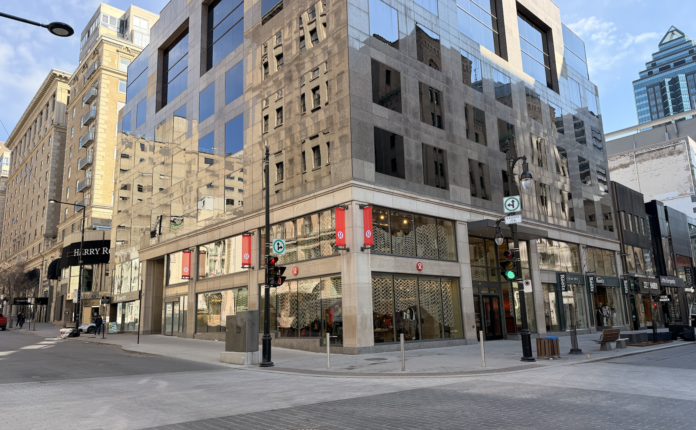
Lululemon at 1035 Ste-Catherine O in Montreal. Photo: Maxime Frechette
Lululemon is reducing the number of products carried in its stores and testing more localized assortments as the Vancouver-based retailer rethinks its physical retail strategy amid weaker sales across North America.
The company has reduced store SKUs by approximately 15% to create a less-dense shopping environment, with the changes being rolled out across its store network. Lululemon is also testing further SKU reductions in selected locations, along with localized assortments, new fixture packages, additional imagery and mannequins highlighting specific activities.
Management said merchandise is increasingly being organized around activities and lifestyle, with the aim of making stores easier to shop and improving how products are presented to customers.
The changes come as lululemon faces declining sales in its largest markets. Canadian revenue fell 11% in the second quarter, while U.S. revenue declined 8%. Management has identified weaker traffic, pressure on conversion and inconsistent product performance among the issues affecting the business.
At the same time, lululemon is becoming more selective about adding stores. The retailer has reduced its expected net new openings globally this year while continuing to invest in approximately 35 store optimizations.
Fewer Products, More Curated Stores
The 15% reduction in store SKUs comes after years of assortment growth across women’s and men’s apparel, footwear and accessories.
Management said the lower SKU density is being rolled out across the fleet, while a smaller number of stores are testing additional reductions. The company is examining how different assortment levels affect customer engagement and store performance before deciding which elements to introduce more broadly.
The tests extend beyond the amount of merchandise on the sales floor. Lululemon is experimenting with localized assortments, different fixture packages, additional imagery and activity mannequins, while organizing merchandise more closely around specific activities and lifestyles.
Localized assortments could give stores greater flexibility to emphasize products that perform particularly well in individual markets. Management said the strongest elements from the current tests can ultimately be scaled across the wider store network.
Changing Fashion Trends Put Pressure on the Assortment
The changes are unfolding as lululemon adjusts to a notable shift in women’s bottoms, historically one of the most important areas of its business. Women’s legging sales declined approximately 20% during the second quarter, considerably more than the decline in lululemon’s overall business.
Management said customers are increasingly moving toward looser, “away-from-body” silhouettes. Products including the Groove Wide-Leg, Align Foldover Jogger, Breezily and an updated Dance Studio Pant have performed well as the company responds to that shift.
Overall bottoms sales declined in the mid-single digits, meaning stronger demand for newer silhouettes is offsetting some of the weakness in leggings. Lululemon maintains that leggings remain an important category, particularly for yoga and Pilates, and said it continues to invest in newness within the category.
The changing product mix is also relevant to the work underway inside stores. As the assortment expands across different silhouettes, activities and uses, lululemon is testing how those products are grouped and presented to shoppers.
Lululemon at Oakridge Park in Vancouver
Lululemon Moves Faster on Products That Sell
Lululemon is also increasing its ability to respond when products perform better than expected. The retailer said it is chasing approximately 20% more product volume this year compared with last year.
That gives the company greater capacity to place follow-on orders for stronger-selling merchandise rather than committing as much inventory before demand becomes clear. Management has also been working to shorten parts of the product-development cycle.
Consumer research conducted by the company found that customers want more differentiated merchandise and innovation, an issue lululemon has acknowledged as it works to improve product relevance. The increased chase capacity complements the changes underway in stores, where the company is reducing SKU density and experimenting with more localized assortments.
Downtown Montreal Store Highlights Localization Strategy
A more selective approach to expansion has not stopped lululemon from making significant investments in established Canadian markets.
In May, the retailer opened a two-level store at 1035 Sainte-Catherine Street West at Peel Street in downtown Montreal. The approximately 11,600-square-foot location replaced a nearby store that had operated for 16 years and is one of lululemon’s larger recent Canadian store investments.
The store incorporates references to lululemon’s Pacific Northwest origins while adding design elements specific to Montreal. These include localized messaging, work by Montreal artist Jason Cantoro and other design details intended to connect the store with the city.
The larger footprint provides additional space for women’s and men’s apparel, footwear and accessories across categories including yoga, running and training. The store also reflects themes lululemon has been applying to its evolving retail strategy, including localization, elevated presentation and clearer activity-based merchandising.
The relocation illustrates how lululemon can invest in an established market without materially increasing its overall store count. The company had 71 company-operated stores in Canada at the end of fiscal 2024 and fiscal 2025, with the count increasing to 72 earlier this year.
Playbook 2.0 Store Concept Opens at Oakridge Park
Lululemon has also introduced one of its newest store concepts in its home market of Vancouver. The retailer returned to Oakridge Park in May with an approximately 5,900-square-foot store as part of the first phase of the redeveloped shopping centre. The location is among the first stores built under lululemon’s new “Playbook 2.0” design standard.
The concept draws from the landscapes and culture of the Pacific Northwest, incorporating softer forms, curved fixtures, natural materials and local references. Clear sightlines and a more open sales floor also make the store feel less compartmentalized than some older lululemon locations.
The Oakridge Park store includes space dedicated to local ambassadors, events and activity routes, while the retailer is using the location as a hub for community programming.
Together, the Montreal and Vancouver stores show that lululemon continues to invest in prominent Canadian locations even as it takes a more cautious approach to overall expansion.
Net Store Expansion Slows
Globally, lululemon now expects to open approximately 35 net new company-operated stores during fiscal 2026, down from its earlier expectation of around 40. The company continues to expect approximately 35 store optimizations, maintaining investment in existing locations even as the pace of net additions slows.
Management said every new store and optimization project is being scrutinized as the company becomes more disciplined about real estate.
North America is seeing particularly limited net expansion. Approximately 10 net new stores are expected across the region this year, including seven in Mexico.
Among the North American openings, roughly half involve converting existing pop-up locations that have already demonstrated strong productivity. The remainder involve strategic locations or additional stores in markets where management believes there is room for further penetration.
Lululemon expects to end fiscal 2026 with approximately 40 pop-up stores, down from 65 at the end of 2025. The format has given the retailer a way to establish a presence in markets before making some permanent store commitments. Management’s decision to convert productive pop-ups among this year’s North American openings shows how those locations can also provide evidence of demand before a longer-term investment is made.
The lower pop-up count, reduced net opening target and continued investment in optimizations point to a more measured approach to North American real estate. Management indicated that it expects to remain disciplined on new stores heading into 2027.
Canada’s Sales Decline Comes Without Major Store Expansion
The relative stability of lululemon’s Canadian store count provides important context for the company’s recent sales deterioration. Canadian revenue grew nearly 10% in fiscal 2024 before growth slowed to less than 1% in fiscal 2025. Revenue declined approximately 3% in the first quarter of fiscal 2026 before falling 11% in the second quarter.
Those declines have occurred without significant growth in the Canadian store network. Management has instead pointed to weaker traffic, pressure on conversion, product performance and brand sentiment among the issues affecting its North American business.
The company expects Canadian revenue to weaken further during the third quarter, performing below a North American business that is forecast to decline in the mid-teens.
Against that backdrop, productivity at existing stores is taking on greater importance. Recent investments in Montreal and Vancouver, alongside the wider assortment and merchandising tests, show where lululemon is directing some of its attention as net expansion becomes more selective.
Lululemon has been making changes to its digital experience, including its homepage, category pages and product-detail pages, as it works to improve product discovery and conversion online.
Both channels are facing pressure. Store-channel revenue and digital revenue each declined 6% during the second quarter, increasing the importance of improving how shoppers find and evaluate products across the business.
Store Strategy Will Be Part of Broader Review
The retail changes are already underway as Heidi O’Neill prepares to become lululemon’s Chief Executive Officer on September 8. O’Neill joins following a 27-year career at Nike that included senior responsibilities across consumer strategy, product, brand and marketplace development. Lululemon has said she will conduct a deep review of the company’s strategy and the action plan currently being implemented.
She will inherit a store network already undergoing changes. Net expansion is slowing, the number of pop-ups is being reduced, existing stores continue to receive investment, and the assortment inside stores is becoming more curated.
Recent investments in Montreal and Vancouver demonstrate that physical retail remains important to lululemon even as sales weaken in its home market. The company’s current direction puts greater emphasis on the productivity, assortment and presentation of individual locations as it becomes more selective about adding stores.