Jollibee is partnering with DreamWorks Animation on a limited-time North American promotion tied to the studio’s upcoming film Forgotten Island, with themed meals, merchandise, store events and a sweepstakes beginning Sept. 16.
The Filipino restaurant chain said the collaboration will run through Oct. 31, or while supplies last, across its North American locations, ahead of the film’s theatrical release on Sept. 25.
The promotion is part of Jollibee’s efforts to connect its Filipino heritage with the film, which features Filipino culture and talent. The campaign will include themed meal bundles with collectible bracelet charms, retro-inspired streetwear, an immersive store takeover in Toronto and a sweepstakes with a grand prize trip to the Philippines.
Luis VelascoImage: Jollibee Canada
“Jollibee and DreamWorks’ Forgotten Island both centre on the pure joy of bringing people together and celebrating meaningful connections,” said Luis Velasco, senior vice-president and marketing head at Jollibee North America. “This partnership is a wonderful reflection of Jollibee’s heritage and our commitment to creating memorable, happy moments around great food. We can’t wait for families, moviegoers, and fried chicken lovers across North America to experience the magic of Forgotten Island with us.”
The promotion will feature three limited-time meal bundles. The Forgotten Island two-piece box meal includes two pieces of Jolly Crispy Chicken, steamed rice, small gravy, a Peach Mango Pie and a Calamansi Lemonade, along with a collectible bracelet charm and sticker sheet.
The Chicken Sandwich Box Meal includes a Jollibee Chicken Sandwich, regular fries, Peach Mango Pie and Calamansi Lemonade, as well as a bracelet charm and sticker sheet.
A six-piece Bucket Bundle includes six pieces of Jolly Crispy Chicken and three Calamansi Lemonades, along with three bracelet charms and three sticker sheets.
The campaign also introduces Calamansi Lemonade, featuring calamansi, a citrus fruit native to the Philippines. The beverage will be available at participating Jollibee North American locations during the promotional period, while supplies last.
The collectible campaign includes eight standard bracelet charms featuring Jollibee icons and characters from Forgotten Island, including Jo and Raissa. Customers can also find a rare “Golden Bucket” charm. A blank chain bracelet will be available for $2 with the purchase of a qualifying Forgotten Island Box Meal or Bucket Bundle.
The company is also releasing a co-branded apparel collection inspired by the film’s 1990s aesthetic. A Jollibee x Forgotten Island T-shirt will sell for $45, while a hoodie and windbreaker will each sell for $100. The T-shirt and hoodie will be available from Sept. 16 through Oct. 31 through the Jolly Merch Shop, while the windbreaker will be available from Oct. 2 through Oct. 31 through Complex Shop.
In Toronto, Jollibee will stage an immersive Forgotten Island promotion at its restaurant at 334 Yonge St.
The partnership also includes a sweepstakes beginning Sept. 16 for Jollibee Rewards members. Prizes include branded merchandise and North American travel packages, with destinations including Catalina Island, Calif., Cape Cod, Mass., and national parks.
The grand prize is a trip for two to the Philippines, including a stay in Palawan, with visits to El Nido and Puerto Princesa.
Jollibee said the film includes Grammy and Academy Award-winning H.E.R., actress Liza Soberano, Tony Award-winning Lea Salonga, comedian Jo Koy, and co-writer and co-director Januel Mercado.
IKEA Canada will open its first compact store format in London, Ont., on Sept. 29, introducing a smaller retail concept focused on everyday essentials and quick shopping visits.
The approximately 43,000-square-foot store at White Oaks Mall, 1105 Wellington Rd., will be about one-fifth the size of IKEA Burlington and will carry more than 2,500 everyday essentials and seasonal products.
The new format is intended to complement IKEA’s existing stores and digital shopping channels while providing customers with additional ways to shop with the retailer.
“We are excited to launch this new concept store as the first of its kind in Canada, making our affordable, functional, and inspiring home furnishing solutions more accessible to those in London, Ontario and surrounding areas,” said Selwyn Crittendon, CEO and Chief Sustainability Officer, IKEA Canada. “As a brand rooted in life at home, we’re committed to continuing to meet our customers’ evolving needs and dreams and helping to create a better everyday life for the many.”
The London store will feature room sets and home furnishing solutions, as well as about 400 furniture items available for immediate purchase and takeaway from its self-serve warehouse.
Customers will also be able to order IKEA’s full product offering, with delivery and collection options available.
The location will include a selection of IKEA food, including meatballs.
Selwyn Crittendon IKEA image
The compact store is part of IKEA Canada’s broader omnichannel approach, with other London-area locations continuing to serve customers with different needs.
Customers looking to plan, design and purchase more complex home furnishing solutions, including kitchens, will continue to be able to book one-on-one appointments with IKEA experts at the company’s London IKEA Plan and order point at 3120 Wonderland Rd. S.
IKEA Canada’s London Pick-up location at 1095 Wilton Grove Rd. will also continue operating, providing a location for customers to collect orders placed through IKEA’s various shopping channels.
The retailer said the compact store is designed to bring its products closer to where people live, work, socialize and shop on a daily basis.
A grand opening celebration will be held at the London location on Sept. 29with contests, offers and giveaways. The company said further details will be released closer to the opening.
IKEA Canada is part of Ingka Group, which operates 574 stores in 31 countries. In Canada, the company operates 15 stores and 13 Plan and order points.
The company said its stores received 33.3 million visitors last year, while IKEA.ca received 199.9 million visitors.
AutoCanada Inc. has expanded its collision repair operations in Edmonton with the acquisition of Doug’s Place Southgate, adding about 7,540 square feet of repair capacity to its network.
The acquisition builds on AutoCanada’s purchase of the first Doug’s Place location in Edmonton’s Strathcona area in October 2025 and adds dedicated non-luxury collision repair capacity near six of the company’s franchised dealerships.
Doug’s Place Southgate also holds certifications for 10 original equipment manufacturers, including Honda, Acura, Stellantis, Ford, Kia, Nissan and Toyota, strengthening AutoCanada’s OEM-certified repair capabilities in the Edmonton market.
Samuel CochraneAutoCanada photo
“The addition of Doug’s Place Southgate is an excellent strategic fit that enhances the efficiency of our overall Edmonton platform by adding much-needed capacity in close proximity to our existing footprint,” said Samuel Cochrane, chief executive officer of AutoCanada. “The acquisition advances our strategic focus on the collision business and directs additional capital toward assets where we have a demonstrated advantage and clear opportunities to create value.”
The facility also has Direct Repair Programs with several major insurance carriers, including TD Insurance, Intact, Co-operators, Definity and the Alberta Motor Association.
AutoCanada said Doug’s Place Southgate will continue operating with its existing local team while using the company’s national platform, insurer relationships, OEM partnerships and operational practices.
The acquisition adds capacity to AutoCanada’s Collision Operations segment, which operates under the ACX brand and includes 38 collision centres supported by 26 OEM certifications covering 37 vehicle brands.
AutoCanada’s dealership operations include 61 franchised dealerships across Canada, representing 23 automotive brands in eight provinces, as well as three independent used-vehicle dealerships. The company said its Canadian dealerships sold approximately 71,000 new and used retail vehicles in 2025.
The company also operates nine franchised dealerships in Illinois through Leader Automotive Group. AutoCanada said those U.S. operations, which sold approximately 8,000 new and used retail vehicles in 2025, are classified as discontinued operations as it progresses the sale of its U.S. dealership portfolio.
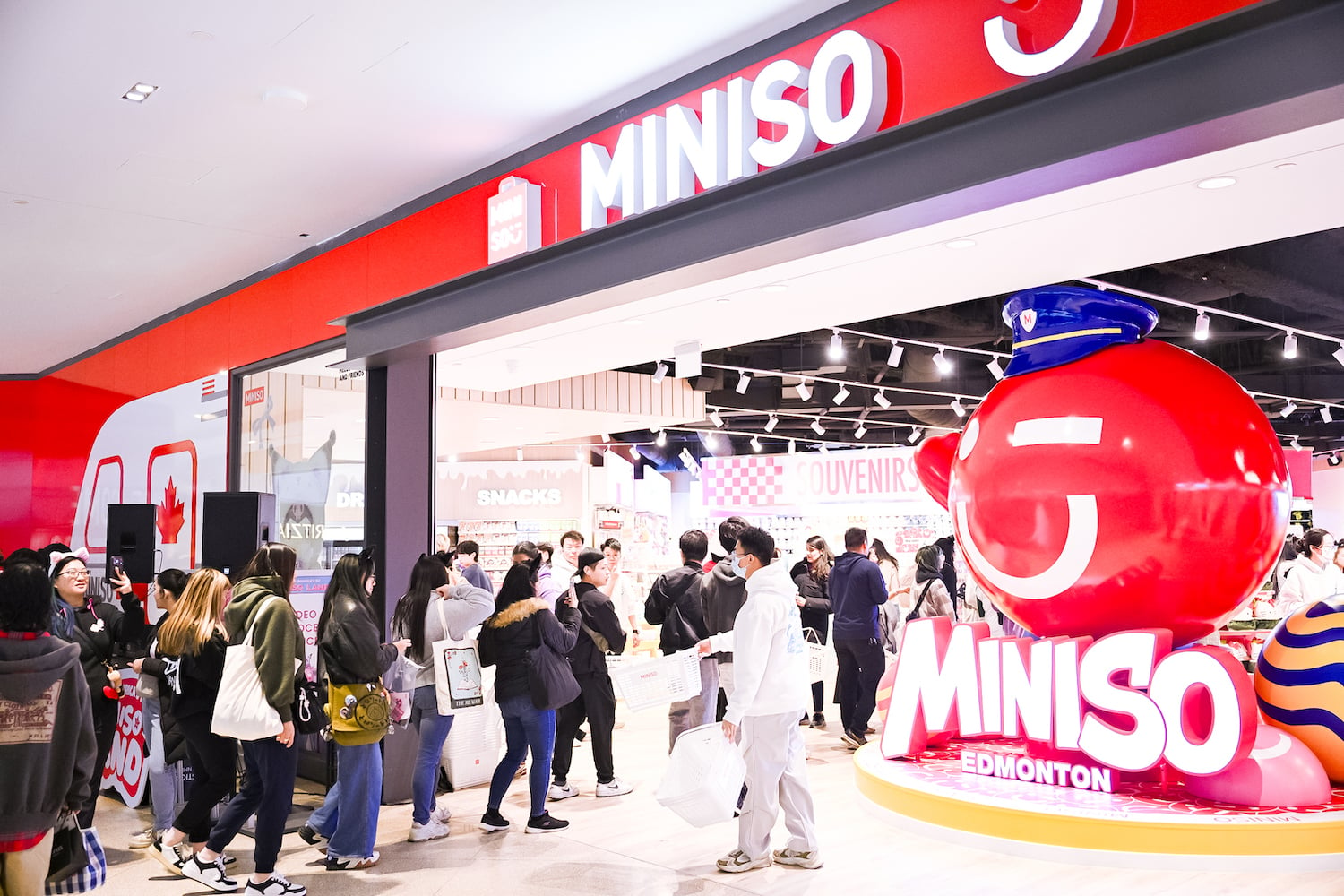
Miniso Land grand opening at West Edmonton Mall. Photo: Miniso Canada
Miniso is preparing to open its second MINISO LAND store in Canada at CF Toronto Eaton Centre, bringing its large-format concept to one of the country’s busiest shopping centres as the global retailer becomes more selective about international expansion.
The forthcoming Toronto location follows the Canadian debut of MINISO LAND at West Edmonton Mall in November 2025. That flagship spans approximately 12,000 square feet and marked a significant increase in scale for Miniso in Canada, with more than 5,000 SKUs and an extensive assortment of licensed intellectual property, collectibles and character-driven merchandise.
The expansion comes as Miniso Group reassesses how quickly it adds stores outside China. During the company’s latest earnings call, founder and chief executive officer Ye Guofu said the international business is shifting from an approach focused heavily on scale toward one emphasizing store quality, productivity and profitability.
The change provides important context for Miniso’s next phase of Canadian growth. Canada and the United States are managed together as the company’s North American business, where revenue continues to rise rapidly despite some moderation in comparable-store performance during the second quarter.
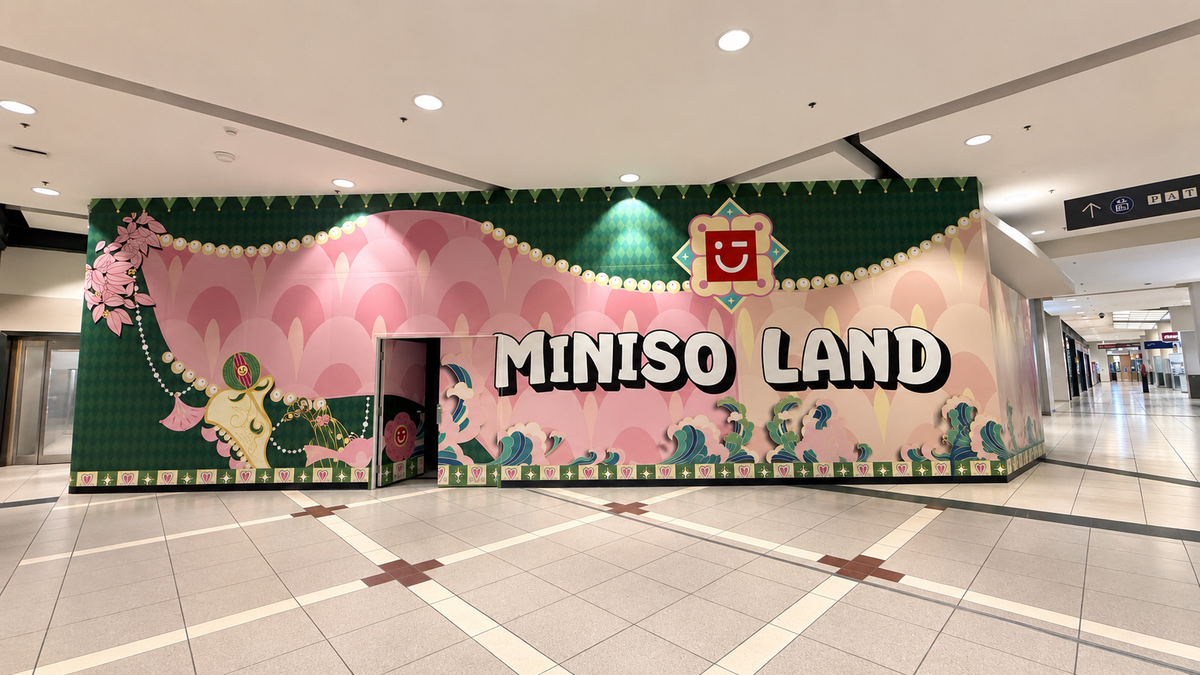
Construction hoarding for the new Miniso Land at CF Toronto Eaton Centre. Photo: Craig Patterson
Second MINISO LAND Coming to Toronto
The new MINISO LAND at CF Toronto Eaton Centre is expected to occupy approximately 8,100 square feet on Level 1, combining space previously occupied by Bluenotes and Journeys. Hoarding for the concept is in place, although an opening date has not yet been publicly announced.
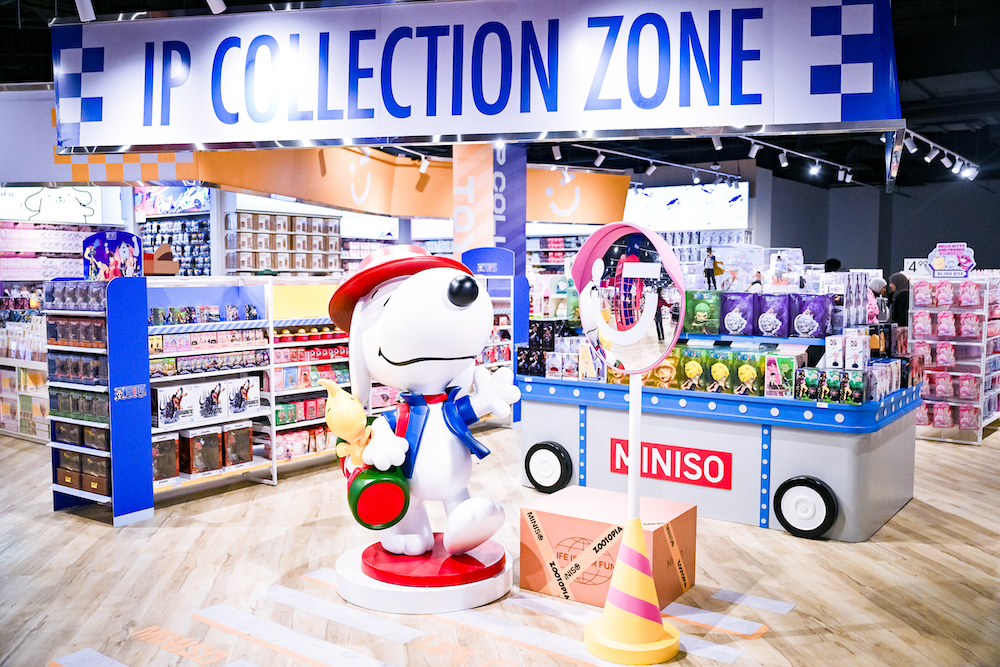
MINISO LAND represents a significant evolution from the smaller variety stores that initially established the Miniso brand in Canada. The format carries a larger assortment of licensed characters, collectibles, plush products and other IP-driven merchandise, presented through more elaborate displays and dedicated character environments. Miniso describes the concept as part of its “Super IP + Super Store” strategy.
Canada’s first MINISO LAND opened at West Edmonton Mall on November 1, 2025. At approximately 12,000 square feet, the store was roughly twice the size of what had previously been Miniso’s largest Canadian location and launched with more than 5,000 SKUs.
Miniso said the Edmonton flagship set a Canadian record for first-day sales. The strong opening provided an early indication of consumer interest in the larger format, which places substantially greater emphasis on licensed merchandise and collectibles than Miniso’s traditional stores.
Bringing the concept to Toronto less than a year later adds another major Canadian market to the MINISO LAND rollout, even as the company applies greater scrutiny to international expansion.
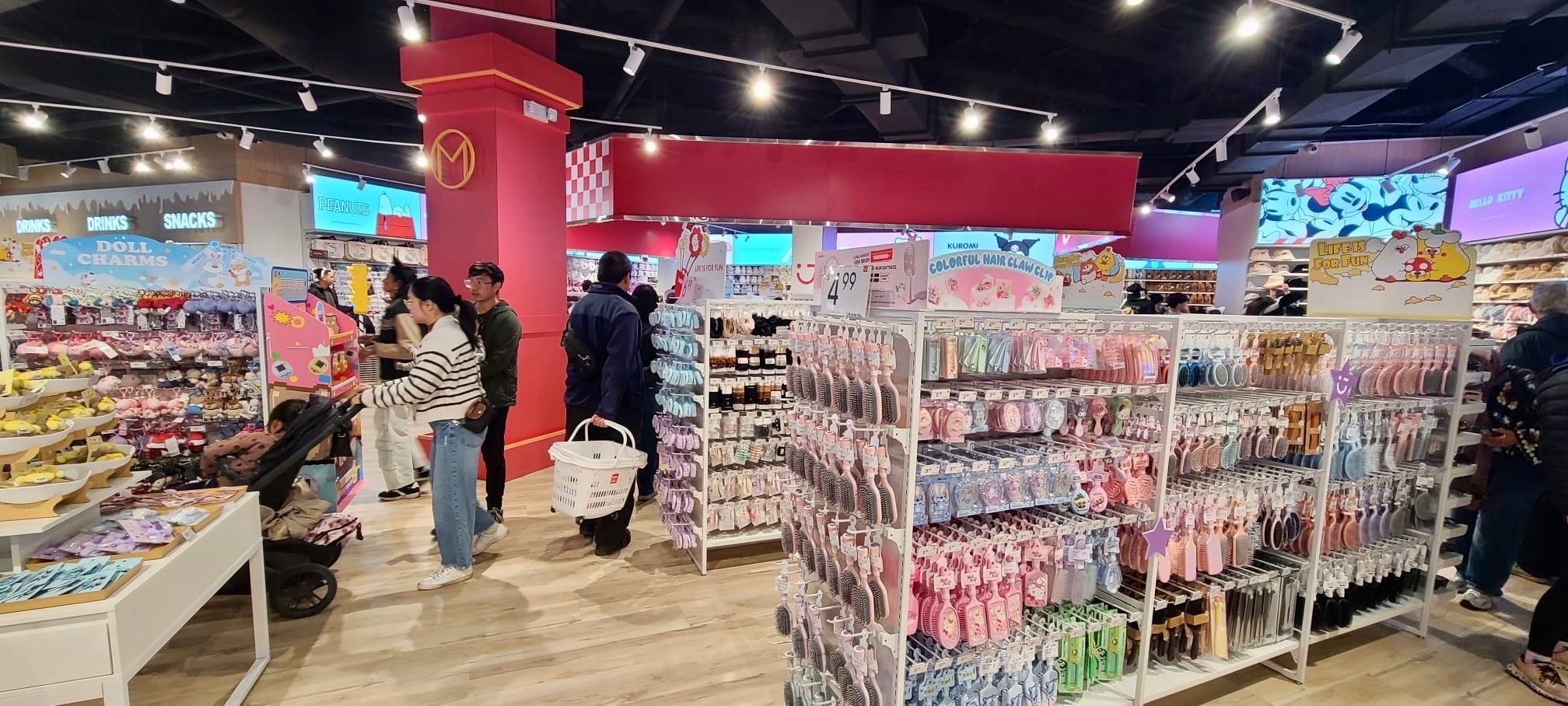
Miniso Land at West Edmonton Mall. Photo: Miniso Canada
North American Revenue Jumps 37%
Miniso’s North American business remains one of the stronger parts of its international operation. Revenue in the region increased 37% year-over-year during the first half of 2026 to approximately RMB 1.8 billion, while comparable-store sales rose by a mid-single-digit percentage.
Miniso does not disclose Canadian revenue separately. During the earnings call, Ye said the company internally manages the United States and Canada together as its North American business. Management continues to target approximately RMB 4 billion in North American revenue for the full year, along with a net profit margin of roughly 10%.
Growth moderated as the first half progressed. North American comparable-store sales increased approximately 10% during the first quarter before slowing in the second quarter, with management pointing to product availability and the timing of IP merchandise launches as contributing factors.
Miniso added approximately 75 net stores in North America during the first half, nearly double the number added during the comparable period a year earlier. That pace brought higher upfront costs as newly opened directly operated stores moved through their initial operating periods.
Management now plans to devote greater attention to the stores already in operation, part of a wider reset taking place across Miniso’s international business.
From ‘Scale First’ to ‘Quality First’
While Miniso generated strong overall growth during the first half of 2026, management acknowledged that its overseas business fell short of expectations in several areas. Distributor revenue weakened, some directly operated international markets remained in an investment phase, and overseas inventory turnover deteriorated.
Ye described the next stage of Miniso’s international development as a shift from “scale first” to “quality first,” drawing a parallel with changes the retailer made to its Chinese business several years ago. The company wants international teams to be more selective about new locations and place greater weight on expected returns before committing to stores.
During the second half of 2026, Miniso plans to concentrate on improving approximately 800 existing directly operated overseas stores while refining its international operating model. The company is also removing weaker locations from its network.
Miniso expects a net reduction of approximately 50 to 70 overseas stores during the second half. That includes 40 to 50 net additions to its directly operated network and a reduction of approximately 100 to 110 distributor-operated stores.
For Canada, the shift is significant because Miniso continues to invest in prominent locations while becoming more cautious about overall international store growth. The expansion of MINISO LAND suggests that larger stores in major shopping destinations remain part of the company’s plans.
Bigger Stores Deliver Stronger Productivity
Miniso’s experience in China helps explain the emphasis on larger formats. The company has spent several years developing stores capable of carrying broader merchandise assortments and considerably more IP product, and management says those locations are producing stronger results than conventional Miniso stores.
According to management, MINISO LAND stores in China are generating sales per square metre at roughly twice the level of regular stores. Franchisee profitability across the Chinese Miniso network also reached its highest level since 2019 during the first half of this year.
Miniso says the larger formats can strengthen its position with shopping centre landlords as well. Ye told analysts that the stores are increasingly viewed as traffic generators, which can help the retailer secure prominent locations and improve occupancy economics.
Site selection remains central to the model. Management said it prioritizes high-traffic commercial districts, strong visibility, corner positions and locations directly along major customer circulation routes. West Edmonton Mall and CF Toronto Eaton Centre align closely with those criteria, giving Miniso exposure to substantial local, regional and tourist traffic.
The company has simultaneously been reducing its reliance on conventional stores in China. During the first half, Miniso recorded a net closure of 121 regular stores while continuing to add newer formats, showing how the retailer is reshaping its network around store productivity rather than store count alone.
Miniso Land at West Edmonton Mall. Photo: Christopher Lui
IP Merchandise Reshapes the Miniso Model
The move toward larger stores is closely tied to changes in Miniso’s merchandise mix. IP products now account for roughly one-quarter of sales, and the company has developed relationships with approximately 180 global intellectual-property partners across entertainment, animation and character brands.
Miniso is also investing heavily in proprietary characters that it can develop internally and distribute through its global store network. The company set a target at the beginning of 2026 of generating RMB 1 billion in proprietary-IP sales and said it had already reached that level by the end of July.
Developing its own intellectual property gives Miniso greater control over product development, marketing and distribution and creates another source of merchandise alongside its extensive licensed portfolio. Management said margins on proprietary-IP merchandise have been above the company average, while inventory turnover has generally remained between 30 and 40 days.
Larger stores give Miniso considerably more room to showcase these collections and build dedicated environments around individual characters. That is particularly evident at MINISO LAND, where collectibles, plush and character merchandise have a much greater presence than in the retailer’s earlier Canadian store model.
The changes are also shifting Miniso’s position within the broader value-retail market. Affordable lifestyle merchandise remains an important part of the assortment, while character collaborations and collectibles are increasingly being used to generate traffic, encourage repeat visits and support higher transaction values.
North America Particularly Sensitive to IP Launches
The growing importance of IP merchandise introduces operational challenges. Management said North America carries a particularly high proportion of IP products, leaving sales more sensitive to the timing of major launches and the availability of popular items.
Miniso acknowledged that it did not maintain a sufficiently consistent cadence of new IP releases during the first half. Several best-selling products also went out of stock during the second quarter, contributing to softer traffic and conversion. The company expects some of those shortages to ease in September and is developing a more structured international launch calendar around major IP releases and local shopping periods.
Maintaining a steady merchandise pipeline will become increasingly important as Miniso seeks to bring customers back for new collections. It also places the retailer within a growing area of discretionary spending driven by collectibles and character merchandise, which management describes as “interest-driven consumption.”
Other specialty retailers are pursuing the same consumer interest. Pop Mart has been expanding its Canadian footprint, including at CF Toronto Eaton Centre. Miniso carries a much broader merchandise assortment, but its increasing emphasis on collectibles and proprietary characters means the two retailers are participating in some of the same character-driven retail growth.
Canada Could Test Miniso’s Next Phase
Globally, Miniso Group generated RMB 11.5 billion in revenue during the first half of 2026, an increase of 22.4% year-over-year. Operating cash flow rose 45.5%, while the company ended June with 8,674 stores across its various banners and markets.
International growth remains central to Miniso’s long-term plans, although management is changing how it evaluates that growth. Store productivity, inventory health and profitability are taking on greater importance as the company becomes more selective about adding locations.
Canada offers an early test of that approach. West Edmonton Mall demonstrated strong initial demand for MINISO LAND, while the forthcoming CF Toronto Eaton Centre location will bring the format into the heart of Canada’s largest urban retail market.
Together, the two locations show where Miniso continues to see an opportunity to invest: prominent shopping centres, larger footprints and deeper assortments built around licensed and proprietary IP. As the company slows its broader overseas expansion, the performance of its Canadian flagships will provide another measure of how successfully the MINISO LAND model can travel beyond China.
Welcome to the Daily Synopsis by Retail Insider. We hope you enjoy the 10 articles we published covering key developments in Canadian retail.
MEC is expanding its focus on trail running by broadening its product range, emphasizing staff expertise, and launching community initiatives nationwide, aiming to integrate this category with its established outdoor expertise. Canadian retailers are confronting margin pressures and supply chain uncertainties as new U.S. counter-tariffs on Canadian goods take effect, particularly affecting categories like appliances, cosmetics, and dairy. Canadian retailers are expanding store footprints despite a significant decline in overall wholesale and retail employment, reflecting cautious staffing strategies amid economic uncertainty.
Läderach is expanding its North American footprint with a second British Columbia store at CF Pacific Centre in Vancouver, following openings in Connecticut and Utah. WINNERS has launched AcceptCookies.IRL, a nationwide in-store campaign in partnership with Craig’s Cookies that offers customers a custom cookie inspired by digital cookie-consent prompts.
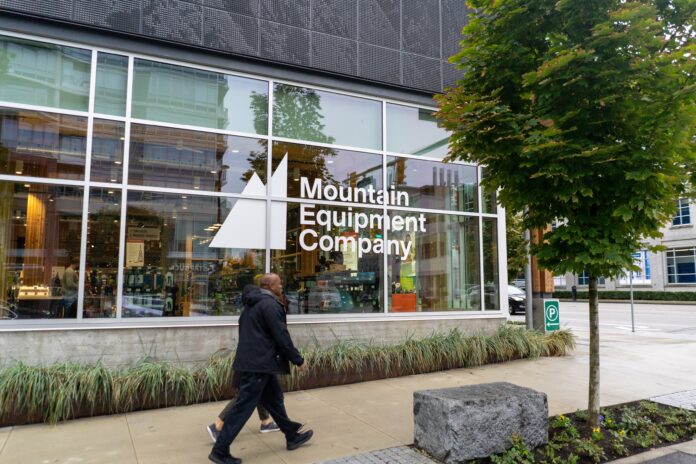
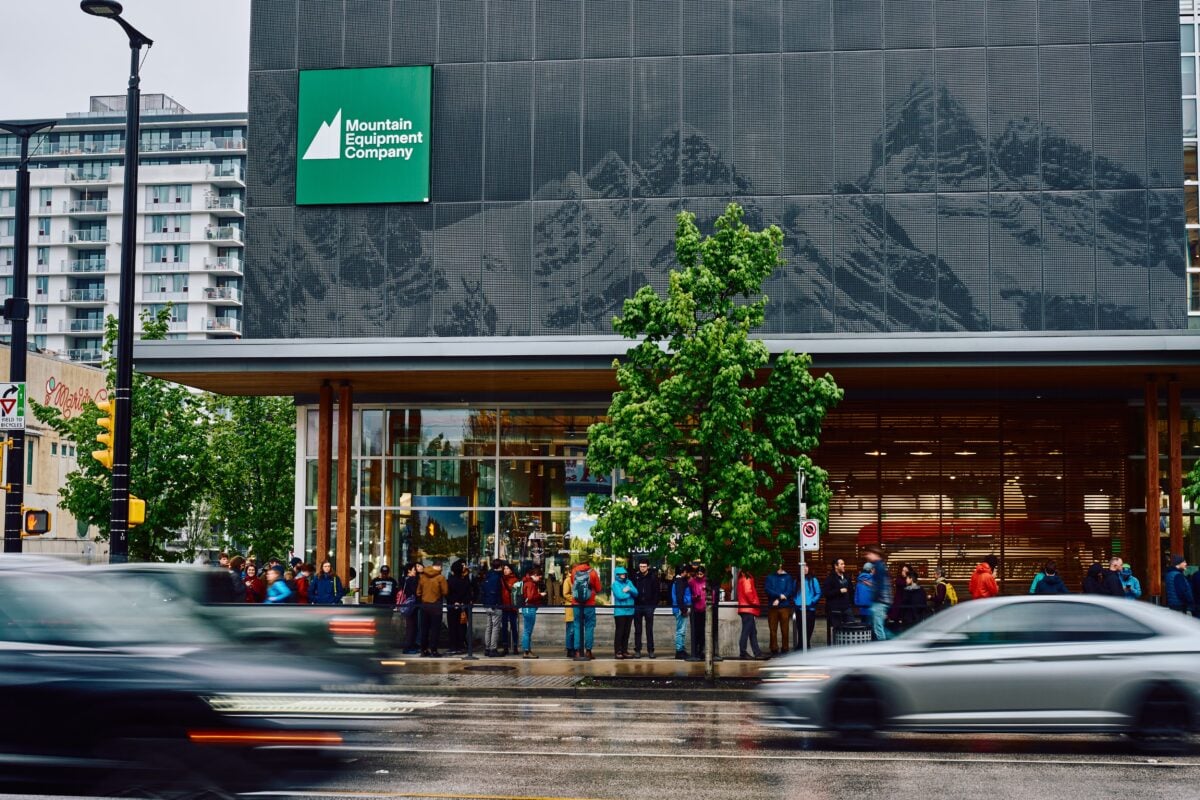
MEC is deepening its investment in trail running, a category the Canadian outdoor retailer expects will become a larger part of its business as it expands its product assortment and renews its focus on expertise and community programming.
The strategy builds on an area where MEC already has considerable experience. Rather than approaching running broadly, Chief Merchandising Officer Chris Speyer said the retailer sees a particularly strong connection between trail running and its longstanding position in hiking and other outdoor activities.
“When we think about running at MEC, we primarily think about trail running,” Speyer told Retail Insider. “We see a lot of people engaging and getting outside, and we love any way people get outside.”
MEC has historically been known for fitting customers with hiking footwear and outfitting them for time on trails. As consumer preferences evolve around how people move through those environments, Speyer sees trail running as an organic extension of expertise the retailer already has.
“We’ve been well known for fitting somebody to spend time on the trail in a hiking boot or hiking shoe. Now we’re seeing an evolution in what the customer is looking for in terms of how they run on the trail, or even walk in a pair of running shoes,” he said. “It’s a natural extension of an area of deep expertise for us.”
The investment comes as MEC continues its evolution following its return to majority Canadian ownership in 2025. A Canadian investor group led by Vancouver entrepreneur Tim Gu acquired control of the retailer from Kingswood Capital Management, with MEC CEO Peter Hlynsky and Speyer among the investors in the business.
Trail Running Becoming a Larger Businessfor MEC
Chris Speyer
Michele Guimond, MEC’s Vice President of Marketing, said the retailer is seeing increased participation in running generally, with particular interest in trails and longer distances. Some road runners are moving onto trails, while established trail runners are increasingly pushing into longer-distance events.
“There has been a massive increase in the uptake of running as a broader category, and certainly in trail running,” Guimond said. “We’re seeing people who may have been road runners looking to get out on the trails.”
Guimond and Speyer participate in the category themselves. Speyer recently completed an approximately 80-kilometre trail event, while Guimond completed her first two 25-kilometre trail races this year.
The enthusiasm extends throughout MEC. Guimond described the company’s latest trail-running initiative as “probably the most impassioned project” she has seen employees work on during her five years with the retailer.
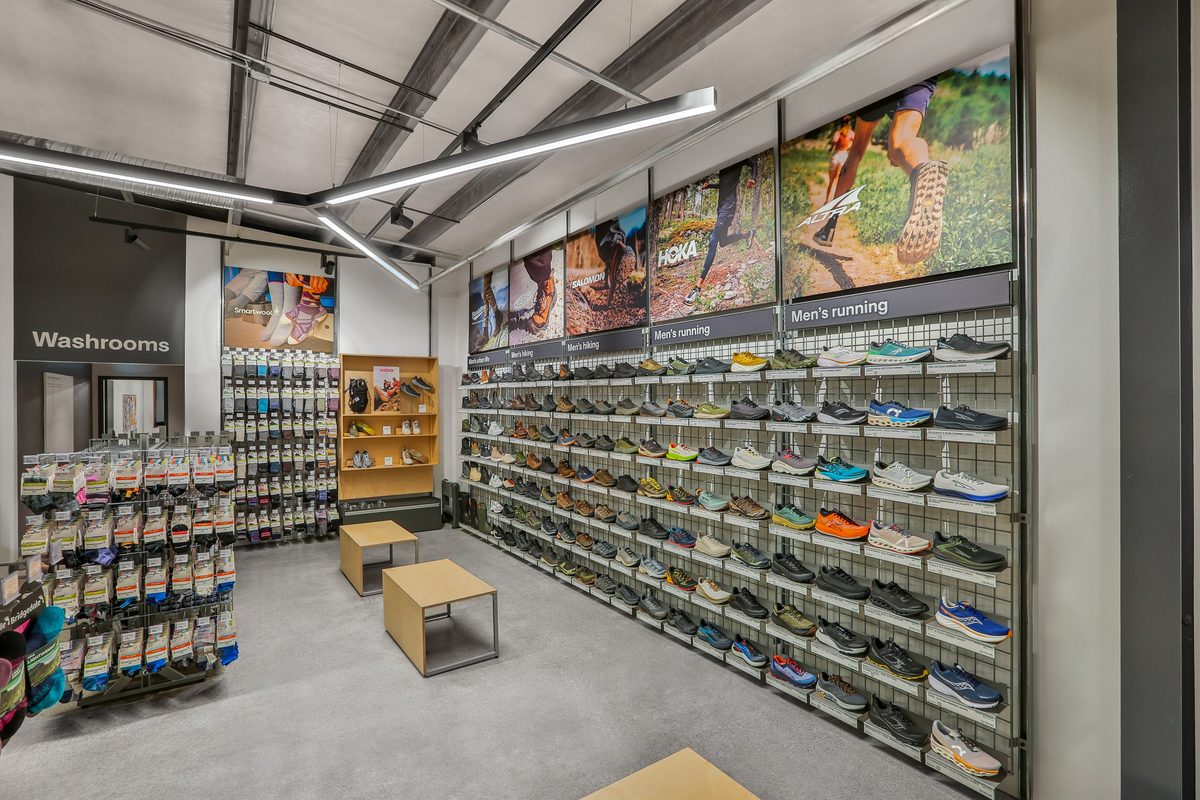
MEC is backing that enthusiasm with a significantly expanded product offering. Guimond said the company is entering the fall with “probably the best running assortment we’ve had in years,” extending well beyond footwear.
Speyer pointed to rapid innovation across running shoes, including changes in cushioning, traction, weight, toe-box width, stack height, materials and shoe geometry. Similar developments are occurring across apparel, hydration and equipment.
“Customers want to be comfortable, fast and light, and they have a tremendous number of options now,” Speyer said. “Their expectations have risen exponentially because the offerings in the market have innovated significantly.”
MEC’s assortment includes footwear, apparel, hats, hydration systems, packs and other carrying solutions, nutrition and equipment intended for runners across different distances and environments. The retailer is also emphasizing products that can move between activities, including trail running, hiking, fastpacking, Nordic skiing and other high-output pursuits.
Guimond said that versatility has become an important consideration for MEC’s merchandising team, particularly when consumers are investing in technical products they can use across seasons and activities.
MEC Community Running. Image: MEC
Selling the Complete Trail-Running Kit
The breadth of the category could give MEC a way to distinguish its offering within an increasingly competitive running market.
As distances increase, runners have to consider considerably more than footwear. Guimond said questions around hydration, nutrition and carrying systems become increasingly important, particularly in remote environments where conventional aid stations may not be available.
“We get a lot of questions around what the right running pack is, whether it’s a hip belt or hydration vest, how much hydration someone needs to carry and how much nutrition they need,” she said. “There’s a big difference going from 10 kilometres to 50 in terms of what you need to sustain yourself when you’re out on the trails.”
That complexity plays into areas where MEC already has extensive product knowledge through hiking and backpacking. A runner visiting MEC can potentially assemble an entire system spanning shoes and apparel through to packs, hydration, electrolytes, nutrition, sun protection and other equipment required for longer periods outdoors.
“This has always been a natural part of who we are — understanding how to stay well fed and protected and how to carry your gear on the trail,” Speyer said. “If that was hiking and backpacking previously, and now the natural extension is going for a long- or short-distance run, it falls right into our existing areas of expertise.”
The opportunity for MEC therefore extends beyond competing for individual footwear purchases. Its broader specialty-retail proposition is built around outfitting customers for the complete trail-running experience.
Speyer identified three primary components of that proposition: expertise, thoughtfully curated merchandise and community.
MEC invests in hiring employees who have an interest in sharing their outdoor knowledge, while continuing to educate staff about the technology and brands represented in its stores.
“If you come into an MEC, one of the value adds we bring is our expertise alongside thoughtfully curated product assortments,” Speyer said. “We’ve made choices for varying levels of ability and the different ways customers participate.”
As technical choices proliferate and consumers can purchase many of the same brands online or directly from manufacturers, MEC is positioning knowledgeable staff as part of the value of visiting a physical specialty retailer.
Source: Mountain Equipment Company
Canadian Brands and MEC Label Part of the Mix
Canadian companies are playing a prominent role in MEC’s running strategy.
Speyer highlighted Montreal-based norda, Ciele Athletics and endurance nutrition company Näak among the Canadian brands contributing innovation to the category.
“There are some incredibly innovative and interesting Canadian brands in the trail-running space,” Speyer said. “We’re excited about the Canadian content we can put out there for people, and in a lot of ways I think Canadians are leading the charge in product innovation in this space.”
MEC is investing in its proprietary assortment as well, including its Pace collection of running apparel, packs and carrying products.
Speyer told Retail Insider that approximately 25 per cent of MEC’s overall business currently comes from its own MEC Label, with the retailer looking to increase that penetration over time.
“One of the things MEC was built on was demonstrating its expertise through the creation of product,” he said. “We think that’s an important space.”
The merchandising strategy involves determining where an outside brand provides the strongest solution and where MEC’s proprietary merchandise can complement the broader assortment. Running gives the retailer opportunities to expand both sides of that mix.
Photo: MEC
MEC Reconnects With Its Community Running History
Product is one part of MEC’s renewed running push. The retailer is also introducing Train for the Trails, a nationwide four-week initiative combining free clinics, guided community runs, weekly training challenges and digital resources designed to introduce runners to trail running and help existing participants develop their skills.
Each participating MEC store will have a run champion helping lead programming and working with community running groups. Salomon is a key partner in the initiative and will participate in local activations, including opportunities for customers to try products.
The community component has considerable historical precedent at MEC.
The retailer once operated a popular race series across Canada, offering comparatively inexpensive events intended to make participation accessible. Running was part of a much broader community program at MEC that included thousands of events spanning outdoor sports, education and skills development.
Guimond said MEC continues to hear considerable affection for elements of that history.
“When I came into the brand, there were things people kept asking for: ‘Bring back the catalogue. Bring back the Trail Race Series,’” she said. “Those were strong passion requests from members and from staff internally.”
MEC isn’t bringing the former race series back. Instead, the retailer is revisiting some of the principles behind it for today’s customer.
“Community-led events and our stores being community hubs are 55-year-old concepts for MEC. That’s not new. How we’re doing it is new,” Guimond said.
The approach reflects what Guimond describes as MEC operating as a national brand while remaining a local retailer. Individual stores can work with running organizations already active in their markets, allowing local expertise and relationships to shape the programming.
“This initiative celebrates the passion our members have for running and enables our store teams to be the experts in their markets and partner with local community running groups,” she said.
Speyer sees an important distinction between MEC’s former race series and what the company is building now.
“I loved the races, but ultimately there are six months of running that go into one day of racing,” he said.
Races can be intimidating or simply unappealing to some runners, while running itself can be a highly personal activity. Community runs provide another entry point where participants can exchange knowledge, discover routes and develop relationships with other runners.
“The idea of creating run clubs in the community is to create a friendly place where people can connect with each other,” Speyer said. “I love the old race series, but this is a smart way to build community and connection over the long haul rather than around individual moments on the calendar.”
MEC trailrunning. Image: MEC
More Than 1,000 Sign Up in First Weekend
The initial response to Train for the Trails exceeded MEC’s expectations.
Guimond said the company initially released a single video and sent an email, with relatively little marketing support before the larger advertising campaign was scheduled to begin.
More than 1,000 people registered nationally during the first weekend. In Vancouver, where the initial program had capacity for 100 participants, the available spaces were gone within the weekend.
“We’re going to add spaces,” Guimond said. “With very little marketing, there’s such an appetite for this.”
MEC is introducing waitlists and looking for opportunities to expand capacity. The early response gives the retailer a tangible indication of interest as it considers how community programming could develop alongside the running business.
“This is the start,” Guimond said. “If you don’t get into this program, look for more. We’re going to keep doing it, and we’re going to learn every time we do it. It’s the start of the roadmap for us.”
People unable to participate in the physical programming will also be able to access a digital training guide developed with two B.C.-based trail-running experts. The beginner-oriented resource will address equipment, nutrition, hydration and terminology, providing another way for runners to engage with the initiative.
Nanaimo store. Photo: MEC
MEC Says It Is in Running for the Long Term
The running investment comes as MEC continues to define its direction under Canadian ownership, something Speyer said remains important to the company and its employees.
“We’re incredibly proud to be back under Canadian ownership,” he said, pointing to the passion for outdoor activities and local knowledge among employees in MEC stores across the country.
The Canadian connection also extends into the merchandise mix through MEC Label and the Canadian running brands the retailer is carrying.
For trail running itself, Speyer said MEC is planning well beyond a single season or community campaign.
“We’re in this for the long game,” he said. “We see this as a natural growth extension of everything we do on the trail.”
MEC expects trail running to become a larger percentage of its overall business as consumers use technical running footwear and equipment across different outdoor activities. Speyer also sees accessibility as an advantage, with trail running taking different forms depending on where Canadians live — from mountain terrain around Vancouver to Toronto’s extensive ravine and trail network.
“We think this is going to become a larger part of our business,” Speyer said. “It won’t be a trend for us. We’ll be following natural growth in how people choose to get out on the trail.”
Train for the Trails offers an early indication of how MEC intends to pursue that growth. Its expanded running assortment, proprietary products, staff expertise and community programming bring together several elements that have long been part of the retailer’s outdoor business, adapted to a category MEC believes has considerably more room to grow.
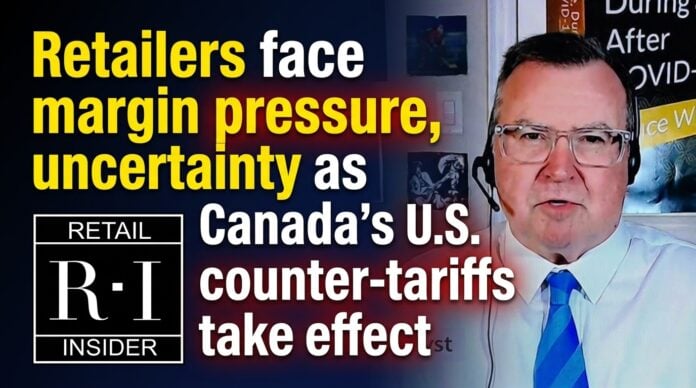
Canadian retailers could face higher costs and tighter margins as retaliatory tariffs on U.S. goods take effect, but the impact on consumers will depend heavily on how long the trade measures remain in place, retail analyst Bruce Winder says.
Winder said the federal government’s counter-tariffs were structured to limit their direct effect on consumers while putting pressure on the U.S. administration. Major appliances, beauty and cosmetics, and cheese and dairy are among the consumer-facing categories directly affected.
For retailers importing U.S.-made products in those categories, higher shelf prices could emerge as existing inventories are depleted. Winder said retailers with sufficient stock may be able to delay the impact for several weeks.
The greater concern is uncertainty, he said, particularly for small retailers that sell into the U.S. and may struggle with changing costs and supply-chain disruptions.
Retailers should examine their supply chains, seek Canadian suppliers and consider sourcing from other countries to reduce risk, Winder said. He also urged retailers to be transparent with consumers about the origins of products and any tariff-related price changes.
Winder said continued tariff uncertainty could contribute to layoffs, job losses, weaker business confidence and economic impacts if it persists for months or years.
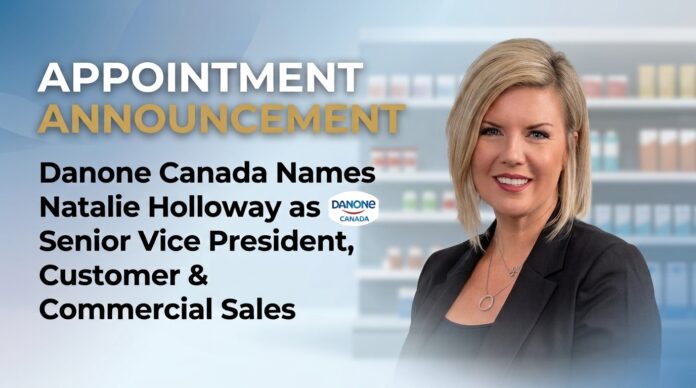
Danone Canada has appointed Natalie Holloway as Senior Vice President, Customer and Commercial Sales, effective September 8, 2026.
In this role, she will lead Danone Canada’s customer and commercial sales organization, helping advance the company’s long-term growth ambition while continuing to strengthen trusted relationships with its retail partners across the country, said the company.
The company said Holloway brings 24 years of experience with Danone and a deep understanding of the Canadian business, its customers and strategic priorities. Throughout her career, she has held roles across retail sales, business development, category insights, national and regional account leadership, commercial strategy, insights, and enterprise strategy and transformation. Most recently, as Senior Vice President, Insights, Strategy and Transformation, she helped strengthen Danone Canada’s strategic planning processes, increase cross-functional collaboration, unlock data and analytics capabilities, and align enterprise priorities across the organization.
Natalie HollowayFrédéric Guichard
“Natalie’s deep knowledge of our business, our customers and our strategic priorities makes her exceptionally well positioned to lead our Customer and Commercial Sales organization,” said Frédéric Guichard, President of Danone Canada. “Her collaborative leadership, strong commercial experience and ability to drive transformation will ensure continuity for our teams and partners as we continue to pursue sustainable, long-term growth.”
Danone Canada is part of Danone, a leading global food and beverage company, with head offices in Toronto (ON) and Boucherville (QC). As the country’s largest consumer-facing certified B Corp, Danone Canada’s portfolio includes iconic pioneering brands in dairy yogurt, plant-based products, coffee creamers and beverages including: Activia, Oikos, Silk, Danone, Two Good, International Delight, evian and more.
Casavogue is giving Montréal shoppers another reason to refresh their homes as summer winds down. The family-owned furniture retailer’s “We Pay Both Taxes” promotion is now underway, offering savings on qualifying purchases across its extensive selection of furniture.
For a limited time, Casavogue is covering the equivalent of both applicable sales taxes on qualifying purchases. For customers considering a new sofa, dining collection, bedroom furniture or a larger home furnishing project, the promotion can translate into meaningful savings.
The timing also coincides with a period when many people begin turning their attention back indoors. Fall entertaining, upcoming family gatherings and unfinished decorating projects can all create a reason to rethink spaces that may not have received much attention during the summer.
A Showroom Filled with Possibilities
Casavogue’s 38,000-square-foot Montréal showroom gives shoppers the opportunity to explore a substantial furniture selection in person. Sofas, sectionals, dining tables, chairs, bedroom collections and occasional pieces are displayed in room settings, making it easier to compare proportions, materials, colours and finishes.
The assortment brings together Canadian, Italian and international furniture across a range of aesthetics. Customers can find clean contemporary designs alongside warmer and more traditional pieces, providing options for different homes and personal tastes.
Customization adds another dimension to the selection. Many pieces can be ordered in different fabrics, leathers, finishes, dimensions and configurations, allowing customers to choose furniture suited to their space rather than settling for a standard combination.
During the “We Pay Both Taxes” promotion, customers can explore those options while benefiting from additional savings on qualifying purchases.
Charles David CLIO Sectional sofa
Getting the Home Ready for Fall
The transition into fall can be an ideal time to look at how the most-used rooms in a home are functioning. A sectional can reshape a living area for evenings at home, while a new dining table and chairs can prepare a space for Thanksgiving dinners and gatherings later in the year.
Bedrooms can also be refreshed with new beds, nightstands, dressers and complete bedroom sets, while accent furniture can update a room without requiring a larger redesign.
For customers furnishing several rooms, the savings offered during the promotion can become particularly relevant. Larger furniture purchases can carry a substantial tax amount, making Casavogue’s limited-time offer worth considering for projects that were already being planned.
Furniture with a Personal Approach
Casavogue has been serving Montréal since 1972 and remains family-owned more than five decades later. Its approach combines a large physical showroom with personalized assistance from design consultants who can help customers navigate the many choices involved in furnishing a home.
That guidance can include selecting the appropriate dimensions for a room, coordinating materials and finishes, comparing upholstery choices or determining which configuration works best for a particular space.
Customers can also explore high-end furniture from established Canadian and international manufacturers, including collections that emphasize craftsmanship, quality materials and long-term use.
The “We Pay Both Taxes” promotion adds a financial incentive to that experience, giving customers an opportunity to make planned furniture purchases at a more advantageous time.
Charles David SPAZIO + PISA Dining set
A Limited-Time Opportunity at Casavogue
For customers who have been considering a new sofa, updating their dining room, replacing a bedroom collection or completing a larger furnishing project, the current promotion provides a timely reason to visit the showroom.
Casavogue’s “We Pay Both Taxes” offer is available for a limited time on qualifying purchases. Customers are encouraged to speak with a Casavogue representative for full promotional details and any applicable conditions.
The showroom is open Monday through Friday from 9:30 a.m. to 6:00 p.m., and Saturday and Sunday from 9:30 a.m. to 5:00 p.m.
Retail staffing and employment, jobs. Photo: RetailNext
Canada’s retail sector continues to generate a steady stream of expansion announcements. International brands are entering the market, established chains are opening new locations, and substantial capital continues to flow into stores, shopping centres and retail real estate across the country.
Employment data are presenting a much less straightforward picture. Employment in wholesale and retail trade was down by 55,000 positions in August compared with a year earlier, a decline of 1.8%, according to Statistics Canada’s latest Labour Force Survey. It was the largest year-over-year employment decline among the major industries tracked in the survey.
The weakness came as overall Canadian employment fell by 42,000 in August and the national employment rate declined to 60.8%. The unemployment rate remained at 6.4%, while wage growth continued to slow.
For a sector that appears to be expanding based on the pace of store-opening announcements, the numbers raise an important question: why isn’t employment showing comparable strength?
Suzanne Sears, president of retail recruitment firm Best Retail Careers International, says the answer has much to do with when expansion decisions were made and how retailers are staffing the stores they open.
“Retailers are afraid to do more,” Sears said, describing employers as increasingly cautious amid economic, trade and geopolitical uncertainty. She said hiring interest had started to improve through the spring before confidence weakened again.
Today’s Store Openings Were Often Planned Much Earlier
One of the biggest disconnects between store growth and current hiring comes from the long lead times involved in retail real estate.
Many stores opening across Canada today were conceived, negotiated and financed well before current economic conditions emerged. Retailers may have begun negotiating leases a year or two earlier, committed capital to construction and fixtures, developed merchandise plans and entered contractual obligations long before a storefront was ready to open.
Sears said retailers are proceeding with investments already in the pipeline even as their current appetite for additional hiring has become more cautious.
The distinction is particularly relevant for landlords, brokers and others watching retail expansion. A store opening in the second half of 2026 may reflect a decision made under very different economic conditions in 2024 or 2025. The number of new stores opening therefore offers an incomplete picture of retailers’ current confidence and employment intentions.
Retailers Are Opening Stores With Leaner Teams
Staffing expectations have also changed, according to Sears. She described situations where a store that might once have opened with six full-time employees could now begin operating with three as retailers scrutinize payroll and look for greater productivity from their existing teams.
That can allow store counts and occupied retail space to grow without producing the same employment gains that expansion might have generated in the past. Companies can centralize some functions, tighten scheduling, broaden management responsibilities and ask individual employees to handle a wider range of tasks.
Sears said staffing is frequently one of the first areas companies examine when seeking cost reductions because changes to payroll can quickly affect financial performance.
Operating with fewer people does not mean retailers have stopped looking for workers. Sears is seeing companies reduce their overall staffing expectations while continuing to have difficulty filling some of the positions they need.
Retail Still Has Tens of Thousands of Vacancies
Statistics Canada’s separate payroll and job-vacancy data provide some context for what Sears is seeing in recruitment.
Retail trade had approximately 50,200 vacant positions in June, representing a job vacancy rate of 2.5%. The same Statistics Canada data put retail payroll employment at approximately 1.98 million.
Sears said retailers are increasingly looking for part-time employees, including workers who can reliably provide around 24 hours of availability each week. Those candidates can be difficult to find even when a company’s overall staffing target has been reduced.
A retailer that once sought a larger team of full-time employees may now be trying to operate with a smaller combination of full- and part-time workers. Candidates, meanwhile, have their own requirements around hours, compensation and scheduling. When those needs do not align, vacancies can remain open even as a retailer keeps tight control over overall staffing.
It is one reason reports of hiring difficulties can coexist with weaker employment numbers. The issue increasingly involves the types of positions being offered and the terms attached to them.
Retail-Specific Data Show a More Nuanced Picture
There is an important distinction behind the headline figure showing 55,000 fewer workers. The Labour Force Survey combines wholesale and retail trade into a single industry category. The figure therefore does not mean retail trade alone lost 55,000 workers over the past year.
Statistics Canada’s Survey of Employment, Payrolls and Hours provides a separate measure of retail employment based largely on employer payroll records. Its latest data, available through June, show that retail employment had recovered during the spring after weakness earlier in the year.
Retail payroll employment declined by 3,900 positions in June, or 0.2%, following three consecutive monthly increases that added a combined 24,000 positions. Despite the June decrease, payroll employment in retail was 8,100 positions, or 0.4%, above its level a year earlier.
The two Statistics Canada surveys measure employment differently and cover different reference periods. The Labour Force Survey is a household survey and includes self-employed workers, while the Survey of Employment, Payrolls and Hours measures employees receiving pay and benefits and relies heavily on payroll records. Statistics Canada cautions that short-term movements between the two measures can differ because of their concepts, definitions and methodologies.
The available data do not show an uninterrupted decline in retail employment. Payroll employment recovered through the spring, while the more recent Labour Force Survey shows weakness across the broader wholesale and retail sector heading into late summer. Upcoming payroll releases will provide a clearer indication of whether that more recent weakness is also appearing in retail specifically.
Retail Sales Have Continued to Grow
The employment picture also comes against a backdrop of relatively resilient consumer spending. Canadian retail sales increased 0.6% in June to $74.3 billion and were 5.2% higher than in June 2025. In volume terms, which account for price changes, sales were up 1.5% from May and 2.1% year-over-year.
Core retail sales, excluding gasoline stations and fuel vendors and motor vehicle and parts dealers, rose 1.2% in June. General merchandise retailers recorded a 2.7% monthly increase, while clothing, clothing accessories, shoes, jewellery, luggage and leather goods retailers were up 3.1%.
Ontario retail sales were 5.9% higher than a year earlier, while Toronto recorded a 6.6% year-over-year increase.
The figures add another dimension to the employment discussion. Retail sales can grow without staffing increasing at a comparable rate, particularly as the mix of retailers, store formats and labour requirements changes.
There are signs of caution heading into the second half of the summer. Statistics Canada’s preliminary estimate suggested retail sales declined 0.8% in July, although the agency cautioned that the early estimate was based on responses from 56.5% of companies surveyed and will be revised.
Hiring Strength Varies Considerably Across Retail
Sears says the recruitment market differs considerably by retail category. She is seeing relative strength among lower-ticket, trend-driven and specialty retailers, particularly businesses with a clear identity and merchandise that gives consumers an accessible discretionary purchase. She pointed to MINISO and Uniqlo, along with cosmetics and novelty-oriented concepts, as examples of retailers and categories that appear to be maintaining momentum.
“You have to have a message,” Sears said, arguing that a clearly defined retail identity has become increasingly important as consumers become more selective about discretionary purchases. She sees a tougher environment for generic apparel and traditional office-wear concepts that lack a distinctive proposition.
The broader economic data also show considerable variation across retail. In June, general merchandise sales were 9.6% higher than a year earlier, while health and personal care retailers were up 13.5%. Clothing and clothing accessories retailers recorded a 4.1% year-over-year increase.
The divergence is important in a sector as broad as retail. A growing value or specialty chain can be opening stores and adding workers while another segment of the market is reducing payroll.
Wages Are Part of the Hiring Equation
Compensation is another factor Sears sees affecting retailers’ ability to attract and retain workers. Across the Canadian economy, average hourly wages increased 2.0% year-over-year in August to $37.02, down from growth of 2.8% in July and 3.3% in June. Statistics Canada said the August increase was the slowest pace of wage growth since November 2017, excluding the pandemic period.
Sears said some retail employers have been considerably slower to move wages. She recently recruited for a retailer offering the same hourly wage for a position that it had offered roughly five years earlier, an example she sees as part of a broader challenge around making retail attractive as a long-term career.
She is also encountering people who combine two part-time retail jobs or work in retail while studying for another field. For employers, that can make retention more difficult at a time when many remain reluctant to increase labour costs substantially.
Retail’s Career Ladder Is Changing
The structure of the Canadian retail industry can create another challenge for career development, Sears said. Many large retailers operating in Canada are headquartered elsewhere, leaving some senior functions such as merchandising, finance, strategy and global leadership outside the country. Sears argues that this can narrow the domestic career path for managers who progress through store, district and regional roles.
“Where’s your career after you’re a district or regional manager?” Sears asked, referring to companies where higher-level decisions are made outside Canada.
She sees a different pattern at the top of the organization. Senior-level recruitment remains comparatively active, with continued movement among presidents, CEOs and other executives as companies look for leadership capable of responding to changing consumer behaviour and uncertain economic conditions. Sears said creative, marketing and strategic positions also remain areas where she continues to see activity.
AI Has Yet to Reshape Retail Hiring on a Large Scale
Technology might appear to be an obvious explanation for leaner staffing, but Sears does not see artificial intelligence as a major driver of the employment changes taking place today.
She said Canadian retailers are increasingly using AI and advanced data systems for inventory analysis, forecasting and operational decisions. The technology can help companies process information and improve purchasing or allocation decisions, although employees are still required to interpret the information and determine how it should be applied.
Sears sees significant opportunities for AI in supply chains, logistics, financial planning and inventory management. Implementation also requires investment, training and organizational changes, which she believes will limit how quickly the technology affects staffing.
For now, the pressures she encounters in recruitment are more closely connected to payroll management, scheduling, compensation and the changing mix of positions retailers are trying to fill.
Holiday Hiring Expected to Remain Cautious
The approaching holiday season will provide another indication of how retailers are approaching labour.
Sears expects seasonal hiring to remain restrained under current conditions, with many companies maintaining what she describes as a “wait-and-see” approach. She does not anticipate a significant increase in hiring unless confidence improves.
Her consumer outlook is similarly cautious. Sears expects spending to favour smaller, lower-ticket and more personal purchases, along with experiences and novelty products, as households continue to manage elevated living costs.
Retailers could therefore enter the holiday period focused closely on scheduling and labour costs, particularly if consumer demand remains difficult to forecast.
A Changing Labour Model for Canadian Retail
The mixed signals in Canada’s employment data become clearer when viewed alongside changes taking place inside retail businesses.
Stores opening today may stem from leases and investment decisions made years earlier. Sales can rise without staffing increasing at the same rate. Retailers can operate with smaller teams while struggling to recruit for particular positions, especially when employers and workers have different expectations around hours, scheduling and compensation.
The latest Labour Force Survey still provides a significant warning sign. Wholesale and retail trade employed 55,000 fewer people in August than a year earlier, even as retailers continued opening stores across Canada. The retail-specific payroll numbers add important context: payroll employment had recovered somewhat by June and was modestly higher than a year earlier, while approximately 50,200 retail positions remained vacant.
For Sears, uncertainty surrounding hiring is likely to persist in the months ahead. Retailers continue to recruit, invest and expand, but the staffing model supporting that growth is changing as companies reassess how many employees they need, which positions they want to fill and how they allocate labour across their businesses.
The holiday hiring period and subsequent retail payroll data should provide a clearer picture of whether the weakness seen in the broader wholesale and retail employment numbers is temporary or signals a more sustained shift in Canada’s retail workforce.