Advertisement
Home Blog Page 361

The Long, Complicated Legacy Behind Hudson’s Bay Company

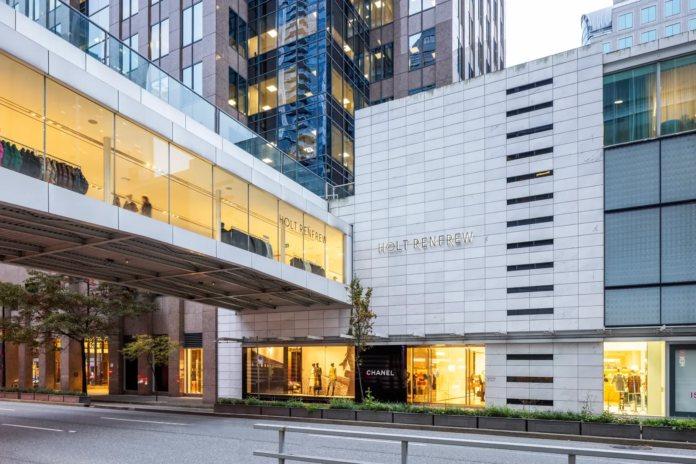
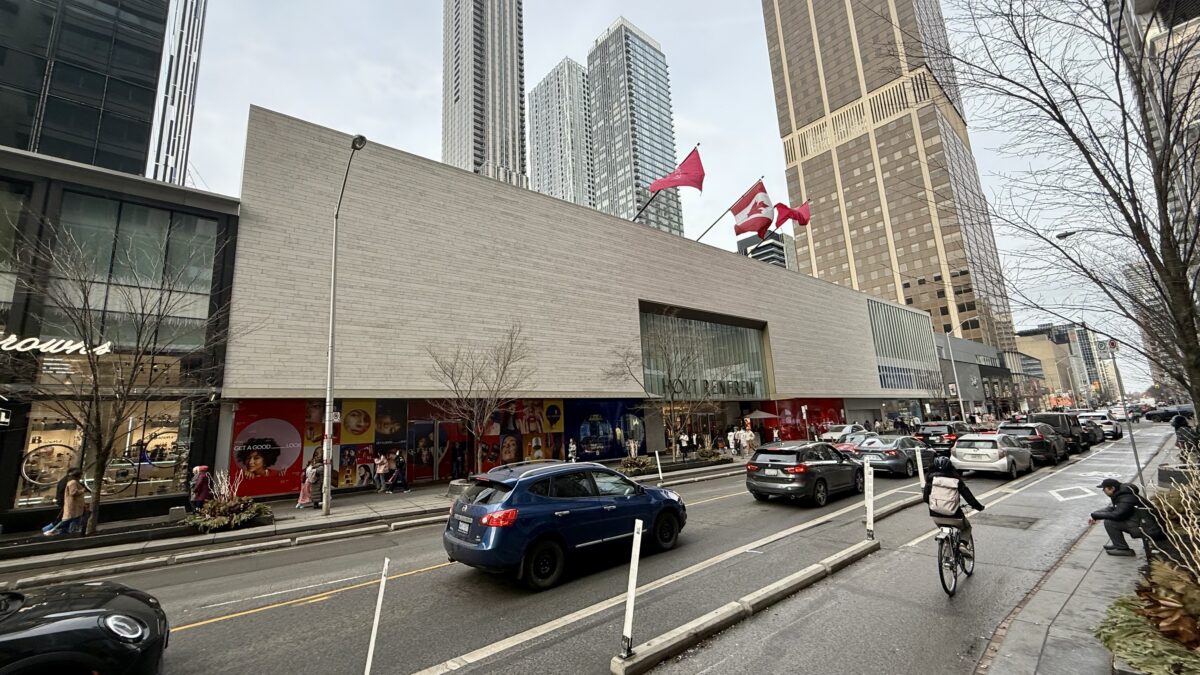
People walk past the Hudson’s Bay department store in downtown Montréal on March 17, 2025. THE CANADIAN PRESS/Christinne Muschi

By Heather Whiteside

The bankruptcy of the Hudson’s Bay Company (HBC) is often framed as the fall of “Canada’s oldest company.” Media narratives typically treat HBC as if it were a straightforward retail firm, albeit one with an exceptionally long history.

But HBC was always more than a hinterland mercantile fur trader in earlier centuries, just as it was more than a department store anchoring downtown shopping in the 20th century.

Like the beaver it nearly wiped out, HBC made Canada into its home by fundamentally transforming its environment, and no bankruptcy court will liquidate that legacy. Still, that legacy is more complex than many might assume.

HBC and the making of Canada

HBC’s initials have sometimes been jokingly elaborated as “here before Christ.” But if we were to take a more secular tone, we might instead say it was “here before Canada,” initiating some of the country’s basic economic and political institutions.

In 1670, England’s King Charles II granted 18 investors the power to make laws, monopolize trade, enforce penalties and establish colonies in Rupert’s Land. Some four million square kilometres, this land grant centred on Hudson Bay but ranged from Labrador in the northeast to the Prairies in the southwest.

Along with establishing fur-trading posts populated by transient servants, the company created its own colonies. In 1811, HBC shareholder Thomas Douglas (Lord Selkirk) organized the first settlers in the Prairies at Red River, now Winnipeg. Forty years later, in 1851, HBC’s former chief factor James Douglas took charge of developing Victoria on Vancouver Island.

Of course, Indigenous Peoples were in these areas long before Canada and long before HBC was. To secure its investments and protect its settlers, HBC representatives negotiated the first treaties with Indigenous Peoples west of the Great Lakes.

Black and white photo of a group of Indigenous people trading furs with white European settlers
Mistahi Maskwa (Big Bear), a Plains Cree chief, trading at Fort Pitt, N.W.T., in 1884. (National Archives of Canada)

The 1817 Selkirk Treaty at Red River and the 14 Douglas Treaties on Vancouver Island in the 1850s are examples of HBC’s expansive role in settler colonialism. Overlooked for some time, the Douglas Treaties are now shaping jurisprudence.

Whereas the infamous HBC striped point blankets may be living room décor for some, for others they represented currency exchanged for long-ignored Indigenous land rights.

Likewise, transferring the six-storey, 94-year-old HBC department store in downtown Winnipeg to 34 First Nations in 2022 might be seen as a form of reconciliation. However, the company itself indicated “shifting consumer behaviour” was the reason for the handover.

Land and sovereignty

Beyond its treaties with Indigenous Peoples and support for settler farmers, HBC is further implicated in the formation of Canadian sovereign territory writ large.

If asked to name famous real estate transactions formative for state-making in North America, one might readily think of Louisiana or Alaska, but Canada, too, was created through purchase. HBC sold Rupert’s Land to the government of Canada for $1.5 million in 1869, forming a significant portion of what we now know as modern-day Canada.

Hudson’s Bay kept roughly seven million acres after the sale, ensuring it would remain a significant force well into the 20th century. Writing of its lands in the Success Belt in the Prairies, HBC argued:

“This land, with a cash payment, was retained as recompense for over 200 years of exploration, pioneering, and trading which the Company had done and without which Canada, as she is today, would not exist.”

Incremental HBC land sales over the coming decades were accompanied by catchy slogans like Victoria as “The Garden of Canada” or Edmonton as Canada’s “Farthest West.”

A pamphlet advertising HBC land for sale in British Columbia and the Prairies
A pamphlet of HBC land sales in British Columbia and the Prairies. (Photo by Heather Whiteside)

HBC pamphlets advertised wharves, orchards, gardens, houses, estates, seashore lots, residential subdivisions, hotels and businesses in coastal and interior British Columbia, Alberta, Saskatchewan, Manitoba and northern Ontario.

It wasn’t until the mid-20th century that the company parted with its remaining residential acreages in Winnipeg in 1954 and Victoria in 1961.

A legacy that outlasts a ledger

The timing of the HBC’s bankruptcy dovetails with renewed anxieties about American annexation as U.S. President Donald Trump repeatedly threatens to turn Canada into the 51st state.

Such annexation anxieties are nothing new for Canada.

In the 1850s, United Kingdom parliamentary support for the HBC monopoly was driven in part by a desire to counter American influence. One English MP warned in 1857 that if the HBC’s trade between the Red River colony and London were to end, “the whole of it would be transferred to the United States.”

Black and white photo of two large buildings
An old Hudson’s Bay Company store in foreground beside a new company store in background in Vancouver in 1918. (National Archives of Canada/W.H. Calder)

Later, the Canadian federal government would use HBC to shore up its sovereignty claims in the High Arctic. In 1953 and 1955, more than 90 Inuit from northern Québec were forcefully relocated to the High ArcticA government apology in February acknowledged the harm caused by the relocations, but the HBC’s decades-long role in instigating and organizing Inuit relocations was conspicuously omitted.

As Canadians look to protect the country from foreign threats, it helps to know how the country came to be in the first place. The long-running and multi-faceted role of the HBC is an integral part of Canada’s story; it has always been more than just a company.

Now saddled with $1 billion of debt, HBC’s demise seems inevitable. But its endurance beyond the original 1670 stockholders’ £4,720 investment speaks to its lasting impact. The HBC legacy will surely shape whatever’s next in store for Canada.

About the Author: Heather Whiteside is an Associate Professor of Political Science at the University of Waterloo.

More from Retail Insider:

*This article originally appeared in The Conversation.

IKEA to Open Sherbrooke Planning Studio on April 14

Customers will get design support for kitchens, bedrooms, and bathrooms as well as a curated selection of relevant IKEA products to touch and try (there will be no products or food available for immediate purchase and takeaway). When their designs are complete, they can be ordered for home delivery or picked up at a local pick-up point location. (CNW Group/IKEA Canada Limited Partnership)

IKEA Canada will officially open its newest Plan and order point in Sherbrooke, Quebec, on April 14. This marks the fourth such location in the province and the ninth across Canada, as the Swedish home furnishings giant continues to expand its network of smaller-format, service-oriented planning studios.

Located at 1305 Boulevard du Plateau-Saint-Joseph in the SmartCentres Sherbrooke shopping area, the new IKEA location will offer customers access to expert support in designing and ordering complex home furnishing solutions — particularly for kitchens, bathrooms, and bedrooms.

Personalized Support and Planning Services

Unlike traditional IKEA stores, the Sherbrooke Plan and order point will not stock goods for immediate takeaway or offer food services. Instead, customers can engage with IKEA planners to receive expert guidance on customizing spaces to fit their needs. A curated selection of home furnishings will be available to view and experience in person, helping customers make informed design choices.

Once finalized, purchases will be fulfilled via home delivery or can be collected at a nearby pick-up point. Customers are now able to pre-book appointments for planning services, starting from the April 14 opening date.

Special Grand Opening Promotion

To celebrate the opening, IKEA Canada is offering a limited-time 15% discount on kitchen purchases of $1,500 or more. This promotion is valid exclusively at the Sherbrooke and Brossard Plan and order points, running from April 14 through May 26, 2025. The offer is subject to availability, and customers must book planning appointments to take advantage of the promotion.

A launch event is planned for April 14, with IKEA staff and members of the Sherbrooke community invited to mark the occasion.

Plan and order points are one of the many ways IKEA Canada is making affordable home furnishings and services more convenient and accessible, allowing customers to get support from IKEA experts to plan, order, and purchase complex home furnishing solutions for the kitchen, bedroom, and bathroom. (CNW Group/IKEA Canada Limited Partnership)

Meeting Evolving Consumer Needs

The expansion of IKEA’s Plan and order point concept reflects the brand’s strategy to adapt to changing consumer behaviours. Smaller, design-focused locations allow IKEA to serve communities that are not near full-sized stores, making the brand’s solutions more accessible to Canadians across the country.

The Sherbrooke studio supports IKEA’s broader initiative to help Canadians during a period of rising costs by emphasizing affordable, efficient home solutions.

Part of a National Growth Strategy

The opening in Sherbrooke is part of IKEA Canada’s ongoing strategy to expand its customer touchpoints nationwide. The company continues to open full-sized stores, smaller-format planning studios, pick-up points, and enhance its digital shopping experience.

IKEA currently operates 16 full-sized stores in Canada, including locations in Montreal and Quebec City. The Plan and order point concept, introduced to Canada in recent years, has been successful in urban areas and mid-sized cities, offering flexible access to IKEA’s services without the footprint of a full store.

More from Retail Insider:

Taza Development to Welcome Real Canadian Superstore at Buffalo Run on Tsuut’ina Nation in Historic Indigenous Partnership

The Shops at Buffalo Run (Image: Taza)

Taza Development Corporation (Taza) announced on Monday a partnership with Loblaw Companies Limited (Loblaw) to introduce a Real Canadian Superstore to the growing community village of Buffalo Run.

Buffalo Run is part of Taza’s innovative 1,200-acre development located just west of Calgary. This collaboration highlights a shared commitment towards providing diverse retail experiences in the area, serving nearby residents and visitors alike, said the development corporation.

James Robertson
James Robertson

“As a partnership between Tsuut’ina Nation and Canderel, Taza is one of the country’s most exciting and innovative developments. We are creating three dynamic village-style communities with a focus on providing diverse services and retailers. We welcome Loblaw and the Real Canadian Superstore to Buffalo Run, offering even more shopping choices for nearby residents and visitors alike,” said James Robertson, President of Taza Development Corporation.

Jonathan Carroll
Jonathan Carroll

“This is our first-ever Real Canadian Superstore in collaboration with an Indigenous community in Alberta. Taza is where culture, opportunity and community come together in a meaningful way. We are so pleased to invest in this innovative development and bring fresh, delicious food options and excellent customer service and be part of this growing area,” said Jonathan Carroll, Senior Vice President, Superstore Operations, Loblaw Companies Limited.

Construction of this newest location of the Real Canadian Superstore is set to start in 2025, with a projected opening date in 2026. The project is expected to create a number of employment opportunities during both the construction and operational phases of the project.

“The Real Canadian Superstore will offer an extensive selection of groceries, household goods, and general merchandise, catering to the needs of everyday shoppers. Its presence is set to further enhance the retail offerings at Buffalo Run, by complementing the current retail mix of the adjacent Shops at Buffalo Run, making the area an even more attractive and convenient shopping destination,” explained Taza in a news release.

“Upon completion, Buffalo Run will offer 390 acres of retail, dining and recreation experiences. It is one of three community villages within the overall development of Taza, which, upon completion, will house more than 700,000 square feet of retail across 1,200 acres. Since its inception, the development has seen the successful launch of more than 50 businesses across Buffalo Run and Taza Park, with more announcements to follow in the coming months.

“Set within Taza’s visionary 1,200-acre development just west of Calgary, Buffalo Run is poised to become a vibrant hub of retail, commerce, and convenience, meeting the growing need for essential amenities in the area. This groundbreaking partnership not only elevates the local shopping experience but also reinforces Taza’s unwavering commitment to fostering community growth and prosperity for both Tsuut’ina residents and visitors alike.”

Related Retail Insider stories:

Hudson’s Bay’s Exit Unlikely to Disrupt Canada’s Apparel Market

Hudson's Bay store in downtown Vancouver on Saturday, April 5, 2025. Photo: Lee Rivett

The Canadian retail landscape is undergoing a historic shift with the closure of Hudson’s Bay stores following the company’s filing for bankruptcy protection. Yet despite its storied past, the department store chain’s departure is expected to have a limited impact on overall apparel sales in Canada.

That’s the conclusion from Randy Harris, President and Founder of Trendex North America, who has been analyzing apparel retail trends in Canada for over two decades.

“In 2024, Hudson’s Bay only held a 2.2% share of the Canadian apparel market,” said Harris in an interview with Retail Insider. “That’s down from 2.4% the year before. It’s become almost a non-entity.”

Randy Harris

A Declining Force in Apparel

While Hudson’s Bay was once considered a national retail powerhouse, its influence in fashion and clothing has sharply eroded in recent years. According to Harris, the company’s declining relevance means its closure will not significantly alter the dynamics of Canada’s apparel industry.

“We believe that the vacuum created by them going out of business won’t benefit any one player. It’ll be spread out across multiple retailers,” he explained. “And we don’t believe the brand had a meaningful lock on the market for anyone under the age of 35.”

The aging customer base—many of whom were drawn in by loyalty programs rather than product uniqueness—further limited the store’s cultural and commercial relevance. “A young kid that’s 22 years old didn’t go to the Bay and didn’t give a damn about their points,” Harris quipped.

Lessons from Sears and Woodward’s

Looking at the past, Harris draws a parallel to the closures of Sears Canada and Woodward’s.

“When both Woodward’s and Sears went out of business, around 20% of their apparel business just disappeared,” he said. “It didn’t transfer neatly to another retailer. It just vanished from the market.”

That trend, though difficult to trace precisely through Statistics Canada, suggests that store closures don’t always lead to redistributions of market share. Instead, they sometimes result in overall contraction.

Still, Harris anticipates a much smaller ripple effect with Hudson’s Bay given its already diminished presence. 

“The difference here is the Bay doesn’t sell anything that’s truly unique. It’s not like they had exclusive lines that can’t be found elsewhere.”

Display window at the Hudson’s Bay store in downtown Vancouver on Saturday, April 5, 2025. Photo: Lee Rivett

Lack of Differentiation and Strategic Missteps

One of the critical issues, Harris argues, is that Hudson’s Bay failed to define itself in a changing retail landscape.

“They tried private labels but never put any muscle behind them,” he said. “None of them are memorable. They didn’t have anything iconic. When Bonnie Brooks left, to me, that was the death knell.”

Bonnie Brooks [Kevin Van Paassen/The Globe and Mail/Canadian Press]

Brooks, who served as President and CEO from 2008 to 2012, was widely credited with reinvigorating the brand before stepping down. Harris believes that what followed was a revolving door of executives and a takeover by financial engineers who lacked understanding of retail fundamentals.

“They were focused on short-term gains, not long-term positioning. It became a case of financial engineering rather than retail strategy.”

The Richard Baker and Eddie Lampert Parallel

Harris draws a striking parallel between Hudson’s Bay Company Executive Chairman Richard Baker and former Sears Holdings Chairman Eddie Lampert, both of whom he refers to as “financial engineers.”

“Neither of them are retailers. That’s the bottom line. They didn’t understand the retail business and ran these companies into the ground,” he said. “It’s the same story with different characters.”

He adds that while department stores are evolving globally—with examples of successful adaptations in Europe and Asia—Canada’s department store models failed to pivot effectively.

“We’re not in an age of generalists anymore. We’re in an era of specialists. Unless you bring something unique, you’re going to struggle.”

No Clear Launch Pad for Emerging Brands

While the impact on overall apparel sales may be minimal, the closure of Hudson’s Bay could complicate brand launches in Canada. Harris acknowledges the department store occasionally served as an entry point for emerging international labels.

“You’re right that the Bay sometimes introduced brands like Macy’s does in the U.S.,” Harris said. “But they never did anything to reinforce them or build excitement. There was no long-term strategy behind those launches.”

Even those brands that did enter via Hudson’s Bay will likely pivot to direct-to-consumer strategies or seek alternative retail partners.

“Most of the brands already had or were working on opening their own stores,” Harris said. “They’ll go direct to the consumer.”

Hudson’s Bay store in downtown Vancouver on Saturday, April 5, 2025. Photo: Lee Rivett

The Real Apparel Winners in Canada

With Hudson’s Bay out of the equation, attention turns to the current leaders in Canadian apparel retail.

“The number one apparel retailer in Canada right now is TJX/Winners,” Harris confirmed. “With over 325 stores, they dominate the space.”

Following Winners are brands with strong market identities such as Lululemon and Mark’s, which Harris says are successful because of their clarity and consistency.

“If you go to Winners, you’re looking for discounted brands. Lululemon has a clear niche, and so does Mark’s. That clarity is key.”

Even warehouse clubs like Costco have carved out a sizable share of the apparel market, driven by price-conscious consumers seeking value.

“Consumers are trading down,” Harris said. “They don’t have as much disposable income, and they’re looking for value propositions. That’s why retailers like Winners and Costco are thriving.”

Winners at CrossIron Mills
Winners at CrossIron Mills. Photo: Jessica Finch

No Growth in Apparel Market in 2024

Trendex’s data shows a sobering picture for the broader apparel sector. “There was absolutely no growth in the Canadian apparel market in 2024,” Harris revealed. “None. Zero.”

In his view, this stagnation is driven by shifting consumer behaviour, with shoppers turning to lower-cost retailers or fast-fashion platforms like Shein.

“People don’t have the money they used to, and they’re making choices that reflect that. They’re finding value wherever they can.”

Comark, Northern Reflections, and the COVID Excuse

Harris also cautions against blaming current retail failures entirely on COVID-19.

“There’s always a retailer blaming COVID,” he said. “But at what point does the statute of limitations expire? If three retailers filed for creditor protection, what about the other 300 that didn’t?”

He notes that few companies admit missteps or flawed business models in their CCAA filings.

“It’s always external factors,” he said. “They never take responsibility for poor decisions.”

The Decline of the Middle Market—Or Is It?

While many observers have declared the death of the retail middle market, Harris sees a more nuanced picture.

“I cringe when I read these sweeping statements that the middle is dead,” he said. “Retailers like Simons and Uniqlo are doing very well in what I’d call the upper-middle.”

The problem isn’t the middle per se, he argues—it’s retailers that lack a clear market focus.

“It’s creative destruction,” Harris explained. “Those who fail to adapt or differentiate themselves get weeded out. But that doesn’t mean there isn’t a healthy market for well-positioned mid-tier players.”

A Catastrophic Decline in Sales

Internal Hudson’s Bay documents revealed that in-store sales dropped by almost 33% year-over-year between 2023 and 2024.

“Can you imagine if your income dropped by 33%? That’s catastrophic,” Harris said. “And I’m sure expenses didn’t go down. If anything, they went up.”

The financial strain was intensified by the company’s awkward positioning in the market—neither high-end nor value-driven.

“They were upper-middle, but without a clear focus. That made them vulnerable,” Harris said.

Unanswered Questions Around Accountability

Perhaps most troubling, according to Harris, is the lack of accountability at the top.

“Both HBC and Sears Canada were destroyed by poor leadership,” he said. “And yet there’s no accountability. The people responsible are walking away, buying condos in Boca.”

Harris says this points to a broader issue of how retail is governed when financial engineers are at the helm.

“It’s a failure of oversight and strategy. Retailers need people who understand consumers, not just spreadsheets.”

Final Thoughts: Will Anyone Really Notice?

For many Canadians, the loss of Hudson’s Bay stores might not be felt all that deeply.

“From a consumer standpoint, I don’t think most people give a damn,” Harris concluded. “The people who shopped there were older, loyal to the points system. But for younger shoppers? The Bay was irrelevant.”

While its closure marks the end of an era, the data suggests that Canada’s apparel market will carry on largely unfazed—dispersing sales among established players with stronger brand identities and modern retail strategies.

As Harris succinctly put it:

“It’s not a retail tragedy. It’s a long-overdue reality.”

*Trendex North America features an informative subscription-based newsletter. Subscribe to Trendex’s Canadian Apparel Insights Newsletter Here

More from Retail Insider: 

Montréal Roses Team with The Unscented Company

Image via The Unscented Company

As the official body and home care partner of the Montréal Roses, The Unscented Company has outfitted the team’s high-performance training facility with a complete lineup of its fragrance-free personal care products. This includes soap, shampoo, conditioner, and lotion — all designed with a minimalist, effective approach that aligns with the brand’s sustainability mission.

In addition to the facility upgrades, each player received a personalized self-care kit featuring The Unscented Company’s signature products. This thoughtful gesture underscores the brand’s philosophy: that self-care can be a powerful form of empowerment — especially for athletes breaking new ground in Canadian sports.

A Shared Mission: Empowerment, Inclusion, and Sustainability

The alignment between the two organizations is no coincidence. According to Annie Larouche, President of the Montréal Roses, the choice to work with The Unscented Company came down to more than just product quality.

“The Unscented Company was a natural fit,” said Larouche. “It’s a woman-led business with a deep commitment to sustainability and community. Their support sends a powerful message about what’s possible when purpose-driven organizations join forces.”

The partnership emphasizes mutual respect and shared goals. The Montréal Roses were founded on principles of courage, excellence, inclusion, and engagement. Likewise, The Unscented Company — a certified B Corp — lives its values through ethical production, inclusive leadership, and a transparent commitment to social and environmental responsibility.

A Milestone for Women’s Sports in Quebec

The Montréal Roses are making history as the city’s first-ever professional women’s soccer team, competing in the new Northern Super League. The team was founded in 2024 by Isabèle Chevalier and Jean-François Crevier, with a vision to elevate women’s soccer in Quebec and across Canada.

Playing out of the Centre Sportif Bois-de-Boulogne, the Roses are supported by a diverse group of founding sponsors, including Intact Insurance, Toyota Canada, Metro’s Programme Moi, Canadian Tire, and Sico, among others. Notable investors include well-known figures from the sports, arts, and business communities, such as Bruny Surin, Julie Du Page, Patrice Bernier, and Maxime Crépeau.

The team’s branding reflects Montreal’s vibrant cultural identity, with its name, colours, and logo chosen to represent diversity, strength, and unity.

Local Brand with a Global Vision

The Unscented Company, founded by Anie Rouleau in 2011 and rebranded in 2016, has become a leading voice in sustainable personal and home care. Rouleau, a prominent figure in Montreal’s entrepreneurial scene, is known for championing women in business and mentoring the next generation of purpose-driven founders.

Anie Rouleau

“This project resonates with us on every level,” said Rouleau. “The Roses are turning their ambitions into reality, and the excitement for their first matches is already palpable. We feel extremely privileged to sponsor them because we believe in their potential and their vision: to elevate women’s soccer not just in Québec, but across the country and even internationally.”

She added that seeing The Unscented Company’s products become part of the team’s daily routine is a tangible way to give back.

“Our whole team has already picked up merch to go cheer on the Roses at their first home game on May 3,” Rouleau shared. “It’s more than sponsorship — it’s solidarity.”

Inspiring the Next Generation

The symbolism of this partnership extends far beyond locker rooms and stadiums. It’s about visibility, opportunity, and reshaping perceptions of what’s possible for women and girls in sport and business.

The Unscented Company’s decision to back the Montréal Roses reflects a broader cultural shift toward supporting women-led ventures — whether on the field or in the boardroom. As Rouleau noted, the partnership is also about making a difference in the lives of those watching from the sidelines.

“We’re proud to support not only these athletes, but an entire generation of young girls who will finally see themselves represented — on the field, in the stands, and in the stories yet to be written.”

Looking Ahead: Game Day and Beyond

As the Montréal Roses gear up for their inaugural season, anticipation is building across the province. Their first home game on May 3 will be more than a sporting event — it will be a celebration of progress, community, and collaboration.

For The Unscented Company, the partnership offers a meaningful way to align its brand with impact. With refillable packaging, natural formulas, and a focus on reducing plastic waste, the company continues to redefine what “clean” really means — while helping redefine the future of women’s sports in Canada.

More from Retail Insider:

Vitadrip IV Opens 1st Clinic at West Edmonton Mall

Vitadrip IV at West Edmonton Mall. Image: Vitadrip IV

A new health and wellness concept called Vitadrip IV has made its Canadian debut at West Edmonton Mall. Located on Level 2 of Phase III, the boutique wellness clinic brings intravenous (IV) and injectable vitamin therapy to one of Canada’s busiest retail environments.

“This is our first location,” said Deven Bector, Managing Partner at Vitadrip IV West Edmonton Mall. “We’re working with two medical doctors on our team and are potentially adding a naturopathic doctor as well. The soft opening allowed us to iron out any kinks, and now we’re open seven days a week.”

What is Vitadrip IV?

Vitadrip IV specializes in custom IV and injectable treatments aimed at improving hydration, boosting energy, and enhancing overall wellness. Guests can choose from a menu of around 10 different IV bags and five or six injectable treatments, such as B12 and vitamin D shots.

“The main idea is to give people access to wellness therapy in a way that’s efficient and comfortable,” explained Bector. “A new patient will first fill out an intake form, then meet with one of our nurses for a free one-on-one consultation. Based on that, our team determines what treatment best suits the patient’s needs.”

He added that safety is a priority, with contraindications such as kidney or liver disease and diabetes assessed before treatment is approved.

Vitadrip IV at West Edmonton Mall. Image: Google Business

A Customized, Transparent Approach

One of the unique aspects of the Vitadrip experience is its commitment to transparency and honest recommendations.

“We take pride in telling someone if they don’t need something,” said Bector. “For instance, if someone is healthy, we might recommend something basic like our ‘Boost’ hydration bag. But we’re not going to push them to get treatments they don’t need.”

Vitadrip’s IV bags are pre-compounded by a reputable supplier, ensuring consistency and safety. “The vitamins are already mixed and frozen when we receive them,” he explained. “We simply thaw them and administer them in the clinic.”

Space and Comfort at the Forefront

The Vitadrip IV clinic spans just under 1,000 square feet, featuring a front intake area and a lounge area with up to 10 chairs for infusions. Each session can take up to two hours, with the infusion itself lasting about one hour.

“We’ve created a space that feels more like a spa than a medical office,” said Bector. “We’ve got reclining chairs, heat packs, and we’re planning to bring in blankets. We even play the Planet Earth series on the TV to help people relax.”

He added that maintaining a positive staff experience is key: “If the staff are happy and not overwhelmed, it reflects in the client experience.”

Vitadrip IV at West Edmonton Mall. Image: Vitadrip IV

Wellness Meets Medicine

While the current focus is on wellness, Vitadrip IV is in the process of expanding into medically prescribed treatments as well.

“We’re getting ready to offer iron infusions and treatments for chronic and episodic migraines using Vyepti, which helps prevent the triggers that cause migraines,” Bector explained. “Our doctor also does Botox for migraines, so this is an extension of that expertise.”

The goal is to fill a gap in the system. “There are people suffering who don’t qualify under government rules for iron infusions but still need them. We hope to provide support for that group.”

Strategic Choice of Location

Opening the first Canadian Vitadrip IV clinic in West Edmonton Mall was a strategic and personal decision.

“It’s convenient—our medical doctor has his other clinic in the mall, and some of our partners work here as well,” said Bector. “The mall is also a great place to reach a wide demographic of people who may not know what IV therapy is. Even if they don’t get a treatment, they can learn more about their health.”

The clinic is also well-positioned next to the Fantasyland Hotel, making it appealing to tourists or hotel guests recovering from travel, fatigue, or even a late night out.

Consultation area at the West Edmonton Mall location. Image: Vitadrip IV

Among the most requested treatments are the ‘Glut Glow’ and ‘Build’ bags. Gut Glow includes glutathione, known for liver detox and skin health, while Build contains arginine and lysine, supporting muscle recovery and improved blood flow which can help with erectile dysfunction.

“Build is popular with people who work out. It’s even said to help with things like blood pressure and circulation,” Bector noted. “And because glutathione can help with melanin reduction, Gut Glow is also used for skin brightening.”

Other treatments focus on immunity, energy, hormone balance (for menopause), and fatigue. “Every person has different goals, and we tailor the treatment accordingly.”

Thoughtful, Honest Marketing and Growth Plans

Marketing for the West Edmonton Mall location has been intentionally low-key. “We didn’t do much advertising during the soft launch—we wanted to make sure the operations were smooth first,” said Bector. “Now, we’re rolling out videos on Instagram and distributing promotional hotel key cards at Fantasyland Hotel.”

Vitadrip IV also has ambitions to expand across Canada, depending on the success of this first location.

“We want to see how things go here,” Bector said. “If the concept resonates, we’d love to bring it to other cities.”

Vitadrip IV at West Edmonton Mall. Image: Vitadrip IV

Making Wellness Accessible

Above all, Vitadrip IV aims to make proactive health and wellness more accessible and approachable.

“We let people book online, call in, or walk in. It’s flexible,” said Bector. “We only ask for a credit card on file and rarely enforce no-show fees unless we’ve already thawed a bag specifically for someone.”

The clinic’s philosophy emphasizes education, empowerment, and comfort. “We want people to feel welcome and supported—whether they’re trying a treatment for the first time or are regulars looking to boost their health.”

More from Retail Insider: 
St. Lawrence Farmers Market Reopens in New North Building

St. Lawrence Market North building hosted its first Saturday Farmers’ Market since undergoing a multi-year redevelopment on Saturday. Photo: City of Toronto

The St. Lawrence Farmers’ Market in Toronto returned to its traditional home on Saturday, April 5, marking a new chapter in the site’s more than 200-year history. The opening of the brand-new North Market building at 92 Front Street East, at the corner of Jarvis Street, signals the end of a years-long construction process and brings the popular market back indoors for the first time since 2015.

Toronto Mayor Olivia Chow welcomed the public on opening day, encouraging residents to reconnect with local farmers and artisans. “Torontonians are looking for ways to shop local and Buy Canadian,” she said. “Now more than ever, it’s important to support local farmers and small businesses, which are the backbone of our economy.”

St. Lawrence Market North Market building on Saturday, April 5, 2025. Photo: Michael Binetti

Decade in the Making: From Temporary Tent to $128M Civic Hub

The newly unveiled five-storey structure, built on the site of the former 1960s-era brick building, has been under construction since 2016. During that time, the farmers’ market operated from a temporary tent behind the nearby South Market building.

What was initially a more modest project grew over time in both scope and cost, ultimately reaching $128 million due to delays and evolving design goals. However, city officials say the investment reflects the growing need for civic infrastructure that blends history, functionality, and future use.

The new building features a sweeping glass and orange metal façade, a central atrium offering clear views of St. Lawrence Hall and the South Market, and ample ground-floor space for vendors. The first and second levels are dedicated to community use, while the upper floors house Toronto’s provincial offences courtrooms and counter services, which relocated from Old City Hall in early March.

Pedestrians cross front street from the St. Lawrence Market North Market building on Saturday, April 5, 2025. Photo: Michael Binetti

Returning to Roots While Looking Ahead

Market vendors, many of whom have been part of the Saturday tradition for years, expressed excitement and relief to be back in a permanent, purpose-built space. 

The official grand opening celebration is scheduled for May 10, but Saturday’s soft opening already drew a strong crowd eager to explore the reimagined venue. As before, the Saturday farmers’ market will remain the heart of the operation, offering fresh produce, meats, baked goods, preserves, and other local specialties.

The space also includes event rental facilities for weddings, corporate functions, and community gatherings, as well as a paid underground parking garage. These revenue-generating features are expected to help offset the building’s construction and operational costs.

St. Lawrence Market North Market building on Saturday, April 5, 2025. Photo: Michael Binetti

Honouring a Rich Culinary and Civic Legacy

The St. Lawrence Market has long been a cornerstone of Toronto’s identity. It was first established in 1803, predating Confederation by more than 60 years. Initially an open-air market, the area has continually evolved, with the South Market building enclosed in the early 20th century. That heritage space remains a bustling hub for specialty foods and vendors during the week.

The market also has culinary roots that run deep. It’s the birthplace of peameal bacon, a Canadian delicacy that continues to draw visitors. Vendors like Carousel Bakery, known for its famous peameal bacon sandwiches, are among the many iconic offerings that contribute to the market’s reputation as a must-visit Toronto destination.

More from Retail Insider:
Couple to Open French Bakery Concept ‘Au Pain Doré’ in Toronto’s St. Lawrence Market Area as Part of Expansion [Interview]

Due North Launches Canadian-Made EH Fridge Program

Due North EH! Campaign Image

With rising international tariffs and growing supply chain unpredictability, a Canadian refrigeration manufacturer is doubling down on local production. Toronto-based Due North, one of North America’s largest makers of self-contained refrigerated merchandisers, has launched its ‘EH!’ Fridge Program—a campaign built around Canadian manufacturing, national pride, and stable, tariff-free supply.

“Ultimately, what’s more Canadian than a big Canadian?” said Sean McGrann, Chief Commercial Officer of Due North, in an interview with Retail Insider. “That’s the whole premise—this is about products made in Canada, by Canadians, for Canadians.”

Sean McGrann, Chief Commercial Officer of Due North

The ‘EH!’ Fridge Program features the company’s QBD-branded merchandisers, which have been produced in Canada for over four decades. The new initiative is designed to promote Canadian-made refrigeration solutions to local brands and retailers facing an uncertain global trade environment.

Made in Canada: A Source of Strength

Due North operates three facilities in the Greater Toronto Area: one in Brampton for its QBD brand, another in Georgetown under the Minus Forty brand, and a technology hub and warehouse in Milton. Between these, the company employs 550 Canadians across engineering, customer service, manufacturing, and administration.

“Supporting Canadian families is at the core of what we do,” said McGrann. “We’ve been a Canadian manufacturer for nearly 40 years, and the people behind these products live right here in the communities we serve.”

The program launched last month, with a dedicated site, EhFridge.ca, reinforcing the campaign slogan: “Canadian brands belong in a Canadian fridge, EH!”

Guaranteed Supply, Price and Performance

The ‘EH!’ Fridge Program is built around three pillars: guaranteed supply, guaranteed price, and guaranteed performance.

“Our customers get peace of mind knowing that our fridges are in stock, priced competitively with imports, and supported by local service teams,” said McGrann. “You don’t have to worry about international delays, tariffs, or surprise shipping costs.”

QBD merchandisers come with patented Cooling Deck, ENERGY STAR® certification, and local support for quick parts replacement—ensuring reliability and uptime for customers across the country.

“We’ve made major investments to keep our inventory healthy and our supply chain stable,” McGrann noted. “When the world feels uncertain, that level of predictability means a lot.”

Image: Due North

An Initiative Rooted in National Pride

McGrann said the motivation behind the program grew out of rising protectionism and new tariffs —particularly from the United States, Canada’s largest trading partner.

“The uncertainty coming out of the U.S.—especially with talk of Trump tariffs—forced us to take a closer look at our message and our market,” he said.

Many Canadian manufacturers still rely heavily on the U.S. as an export market, and Due North is no exception. But with new steel and aluminum tariffs, businesses are being forced to rethink their exposure.

“There’s not a crystal-clear roadmap for what these tariffs will look like,” McGrann added. “But our strategy is to reduce our vulnerability by focusing on what we can control—strengthening our presence here at home.”

Customers Rallying Around a Canadian Message

Early response to the campaign has been strong.

“We’re hearing from retailers and partners we haven’t spoken to in years,” said McGrann. “They want to visit the plant, understand our capabilities, and see how we can work together. There’s a renewed sense of interest in Canadian-made products.”

Well-known Canadian names such as Tim Hortons, Labatt, Molson, Couche-Tard, and Clearly Canadian are already customers. Due North’s merchandisers are used in convenience stores, micro markets, liquor outlets, and specialty retailers nationwide.

“We’ve worked with brands that need to showcase their product at the point of sale,” McGrann explained. “We brand the fridges for them and they deploy them to sell beverages and food products across Canada.”

Campaign image from the Due North EH! campaign

More Phases in the Works

While the current program centres on QBD-branded merchandisers, McGrann said Due North is already looking at expanding it to other product lines.

“Minus Forty—our other brand—focuses more on freezer units,” he said. “They serve different end markets, but the messaging and values are the same: made in Canada, backed by Canadians, for Canadian needs.”

Although expansion plans are under development, the company is first focused on meeting surging demand from its initial launch.

“We didn’t expect this level of response so quickly,” he admitted. “But it’s a good problem to have, and we’re working to scale responsibly.”

A Renewed Spirit of Canadian Nationalism

The campaign also serves an internal purpose—boosting morale among Due North’s employees.

“We wanted to create something our team could rally behind,” said McGrann. “This is a message of pride—pride in our work, our country, and our future.”

With instability on the global stage, including tariff threats and shifting trade relationships, McGrann said Canadians are waking up to the importance of domestic manufacturing and economic independence.

“There’s a growing sense of nationalism in this country—and I think it’s long overdue,” he said. “We’ve spent decades relying on imports. Now it’s time to invest in ourselves.”

The Bigger Picture: Security Through Local Partnerships

McGrann sees the ‘EH!’ Fridge Program as part of a broader cultural and economic shift.

“None of us know where this is all going,” he said. “But if we want to build something sustainable, we need deep local partnerships—retailers, suppliers, manufacturers, all working together.”

He added that while globalization won’t disappear overnight, strategic sourcing, stable manufacturing, and proximity to the customer are becoming key competitive advantages.

“It’s not just about avoiding tariffs. It’s about agility. It’s about control,” McGrann said. “We can respond faster, deliver quicker, and provide more support—because we’re right here in Canada.”

As Canadian businesses brace for what could be a turbulent trade environment, Due North is positioning itself as a reliable, proudly Canadian partner.

“We’re not just building fridges,” said McGrann. “We’re building confidence in Canadian business.”

More from Retail Insider: 
STACKT soars to #4 on Fast Company’s 2025 List of the World’s Most Innovative Companies in Economic Development

STACKT has been named to Fast Company’s prestigious list of the World’s Most Innovative Companies of 2025

STACKT has secured an impressive #4 ranking in Fast Company’s Economic Development category, the only Canadian company to land on this year’s list, a recognition of its groundbreaking role in creative placemaking.

Matt Rubinoff
Matt Rubinoff

“We’re thrilled to be recognized on Fast Company’s list of the World’s Most Innovative Companies of 2025 as a testament to our pursuit of innovating urban spaces and amplifying local voices,” said Matt Rubinoff, founder and president of STACKT.

“This recognition comes after exciting growth for STACKT, highlighted by the launch of our Canadian expansion with STACKTˣ and the addition of new events, businesses, and partnerships at our Toronto flagship. STACKT isn’t just about making use of empty city spaces, it’s creating spaces that amplify commerce and the community for the greater good.”

This transformative moment marks a pivotal milestone as STACKT starts the expansion beyond its Toronto flagship, launching STACKTˣ across Canada, a small business accelerator platform that’s reshaping the future of commerce and empowering Canadian small businesses.

STACKTˣ empowers entrepreneurs by tackling key challenges like access to retail space and professional networks. Through monthly storefront grants, exclusive networking events, partner perks, and educational resources, the platform equips businesses with the tools they need to thrive. With over 11,000 entrepreneurs on the horizon, STACKTˣ is fueling innovation that strengthens the Canadian economy. Since its inception, the platform has awarded 30 small business grants, helping diverse businesses take their first step into physical retail and amplifying its impact across Canada.

Beyond the launch of STACKTˣ, STACKT market continues to strengthen its ecosystem with purpose, hosting over 300 events in 2024 and welcoming over 1,000 businesses to its flagship location in the heart of downtown Toronto. The company also secured a 10-year lease with the City of Toronto last year, solidifying its role in supporting Canadian businesses and celebrating diverse cultures. Through these initiatives, STACKT demonstrates its ongoing dedication to community engagement, inclusivity, and local business development.

Source: STACKT

Source: STACKT

STACKT creates innovative ecosystems that drive a new way of thinking. From large-scale public spaces to satellite pop-ups, STACKT designs concepts that provide inspiration, opportunity and connection. The community is made up of innovators, entrepreneurs, creators, collaborators, and consumers alike. STACKT’s award-winning Toronto flagship, STACKT market, animates over 100,000 square feet with art, retail, events and public space. 

The flagship downtown Toronto location opened in 2019 at the intersection of Front and Bathurst in the King West neighbourhood.

Rubinoff said the property is about the size of a city block with about 25 retail units on 100,000-square-foot site.

“Those are constantly turning over. Some businesses are in for as short as a week, so in total, we host over a thousand businesses in a year. Outside of those retail units, we also have space for vendor markets, activations, or businesses working within the brewery. On weekends with a market going on, we could have over a hundred businesses on site at any time,” he said.

Also open now, is STACKTˣ  at the Byward Market in Ottawa, which is the brand’s expansion project and small business accelerator program. It was launched there last year, early summer.

Rubinoff said the concept is coming to both Calgary and Vancouver this year.

“We haven’t released the specific dates yet, but they’re both on track for this year,” he said.

“STACKTˣis a small business accelerator program that’s reshaping the future of commerce and empowering Canadian small businesses. We address key challenges, such as access to retail space and professional networks. Through STACKTˣ, we offer monthly storefront grants, exclusive networking events, partner perks, and educational resources to equip businesses with the tools they need to thrive and scale. Since the inception of the program, we’ve awarded 30 small business grants, offering free space for businesses to test physical retail, along with other support services. The program is growing, and we’re on track to have over 20,000 entrepreneurs in the community by the end of this year.”

Rubinoff said the company looks for high foot traffic locations. These are different from the flagship where it has 100,000 square feet. These are one-unit spaces designed to be modular retail applications with a small footprint, but they give the company the ability to set up in a variety of locations. The high foot traffic provides tons of exposure for the brands inside.

“We see the STACKTˣprogram scaling. We’ve committed to these markets, but we’re looking at national expansion. We expect more of these units to appear, and there’s a lot of excitement behind the program. Municipalities, landlords, and developers are eager to partner with us. It’s been successful for both sides. It’s a great way to animate downtowns and main streets, and at the same time, we’re giving businesses the opportunity to test physical retail space they might not otherwise have access to. Many are then going on to sign longer-term leases, helping revitalize these areas.”