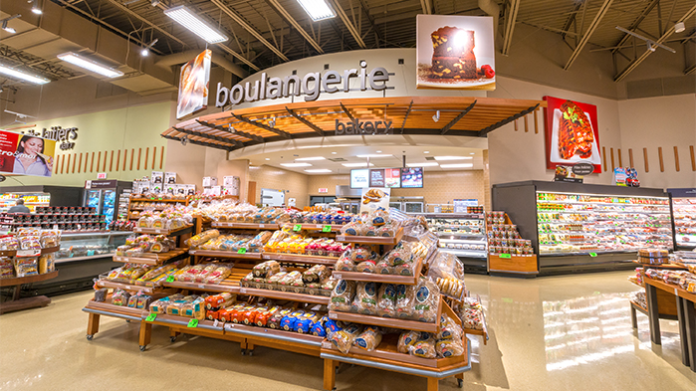
Must Société has opened its brand-new flagship store in Laval, marking the launch of the largest Jardin de Ville space to date.
Strategically located along Autoroute des Laurentides, this 30,000-square-foot destination further strengthens a true design hub in Laval, where the group is already present with Maison Corbeil and Must Société, said the retailer.
“This flagship store showcases the most comprehensive Jardin de Ville furniture offering to date, bringing together all of the brand’s collections within a refined, distinctive environment that is firmly design-driven,” said Walid Laaraba, President of Must Société.
“The space was designed to allow clients to fully immerse themselves in the brand’s universe, through an inspiring, immersive environment that celebrates the art of outdoor living.”
Walid Laraaba
True to Jardin de Ville’s DNA, the space stands out with a chic, organic aesthetic where clean lines meet more enveloping forms. A palette of earthy tones, browns, beiges, terracotta, and wood finishes, replaces cooler hues, creating a warm and timeless atmosphere enhanced by natural textures and abundant greenery, explained the company.
“In terms of products and services, the store features a carefully curated selection of brands including Talenti, Fast, Kettal, and Gloster, further reinforcing Jardin de Ville’s positioning as a go-to destination for outdoor living. Offering comprehensive support, the store provides dedicated services for designers and commercial projects, as well as a bespoke personalization experience that allows clients to bring their vision to life on site. Backed by efficient logistics enabling quick and seamless pick-ups, along with the team’s recognized expertise, the space embodies an integrated approach that combines guidance, creation, and execution.”
Must Société photo
The company said the opening of the new Jardin de Ville store in Laval underscores Must Société’s continued momentum.
“The group is currently unveiling its new brand identity through its first-ever awareness campaign. With this new address, Must Société continues its expansion and further establishes itself as a leading destination for design-forward furniture and décor, both indoor and outdoor, with retail locations across Québec and Ontario, as well as nationwide reach through mustsociete.com and its Canada-wide delivery service,” it said.
Must Société is a leader in mid- to high-end indoor and outdoor furniture, with 16 stores across Québec and Ontario. Its portfolio includes the brands Must Société, Maison Corbeil, Jardin de Ville, Prune Les Fleurs, and La Galerie du Meuble.
Vessi is taking a deliberate approach to expanding its brick-and-mortar footprint, adding stores cautiously while working to shift customer perception from a digital-first brand to a physical retail presence.
“We want to be exactly where our customer is, and we’re going to follow them every step of the way,” Larsen said in an interview. “But we’re intentionally moving really cautiously and carefully and making calculated decisions with our spaces.”
Retail growth builds on early success
Vessi’s push into physical retail began with its first store at Metrotown in Burnaby in 2022, which Larsen described as a “crazy success” that confirmed demand for in-person shopping.
“That taught us that our customers really want to see us and be around us in person,” he said.
Josh Larsen
The company followed with a second location at Square One in Toronto and later opened a temporary store at Toronto’s CF Eaton Centre, initially planned as a short-term activation but extended to roughly a year due to strong performance.
“That popup was a brand-defining popup for us,” Larsen said. “We had such great traction from it … it helped establish and refine our market in the East and connect with a whole different group of customers in Toronto.”
A second Vancouver-area store at Richmond Centre opened in November 2024, and the company entered the U.S. market with a Bellevue, Wash., location in January.
Balancing awareness with growth
Despite steady sales, Larsen said one of the company’s biggest challenges is building awareness of its physical retail presence among customers who still primarily associate the brand with e-commerce.
“Our customer still doesn’t really see us as a physical retailer as much,” he said. “We’re fighting for awareness in the same breadth that we’re still wanting to make sure that we’re driving revenue and growing all channels of the business.”
That dynamic differs from traditional retailers, where physical stores are often central to brand identity. For Vessi, the shift requires ongoing effort to ensure customers know where stores are located and view them as part of the overall brand experience.
“We’re still needing to make sure that people can know us and see us as a physical brand as well,” Larsen said.
Vessi photo
Consumers seek value as spending patterns shift
Larsen said broader consumer behaviour is also shaping the company’s strategy, with shoppers increasingly focused on maximizing value.
“The value flywheel is running hard right now,” he said. “Consumers are just looking for the highest return on every dollar they spend.”
That has implications for pricing and promotions, with retailers weighing how often to discount products while maintaining margins.
From Vessi’s perspective, customers remain willing to spend but expect more in return.
“They just want to get more for less,” Larsen said, adding that this is showing up in transactions that include more items rather than fewer high-priced purchases.
Focus on experience and integration
Looking ahead, Larsen said a key priority is aligning the company’s online and in-store experiences so customers encounter a consistent brand across channels.
“We want our customer to feel really comfortable in both of those spaces and have these visual references that connect them,” he said.
That includes ensuring product displays, signage and marketing campaigns are consistent, making it easier for shoppers to transition between digital browsing and in-store purchases.
Vessi photo
Beyond consistency, the company is also investing in in-store programming and experiences to draw customers into physical locations.
“Our stores need programming. They need things that are happening in the space to make sure that people really do feel connected to it and that they have a reason to visit,” Larsen said.
One example is what the company calls its “splash experience,” where customers can test waterproof footwear by stepping into water while trying on shoes.
“That delivers what we refer to as a magic moment,” he said. “They’re like, ‘Oh wow, this actually works.’”
Larsen said these kinds of interactions are memorable for customers and help differentiate the in-store experience from online shopping.
Smaller stores, high energy
Vessi’s retail strategy also emphasizes relatively small store footprints, typically between 1,400 and 1,800 square feet, designed to feel active and engaging.
“What really makes our stores feel exciting is how dense and full of energy they feel,” Larsen said.
He contrasted that approach with larger flagship stores, which can feel empty or uninviting if not properly activated.
“When you look inside, they feel alive and there’s movement and activity happening,” he said.
While early locations sometimes saw long lineups, particularly at Metrotown, Larsen said the company has adjusted operations to manage demand while maintaining a sense of energy in-store.
Toronto remains a key market
In Ontario, Larsen said the company continues to see opportunity, particularly in Toronto, where customer demographics differ from suburban locations.
“They’re younger, they’re in motion, they’re on transit, they are looking for solutions to make their lives easier,” he said.
Vessi plans to explore additional retail formats in the market, including potential popups or short-term locations, while evaluating longer-term options.
“We know our customer is still in that market,” Larsen said. “We can tell from the data that we have and from who we met at Eaton Centre.”
Vessi photo
Measured approach in a shifting retail landscape
Larsen said Vessi’s cautious expansion comes at a time when many digital-first brands are reassessing their physical retail strategies, with some scaling back while others accelerate growth.
“There’s this dialogue of digital brands building physical stores,” he said. “Everybody kind of wants to find brands that are doing it or moving fast at it, or maybe are peeling back.”
For Vessi, the priority is not rapid expansion but ensuring each location meets customer needs and strengthens the brand.
“Our number one goal is not like, ‘OK, let’s get to 15 or 20 stores,’” Larsen said. “It’s like, we’re going to refine the spaces that we’ve got and make sure that we’re making moves that are dictated by our customer.”
Long before the days of smartphones, social media and same-day delivery, the mall was where people met, lingered and spent time together.
Trends may have moved on from shoulder pads and spandex, but the desire for personal connection has never gone out of style. New research from Lightspeed Commerce suggests that Gen Z Canadians are rediscovering the social side of shopping, and bringing a modern twist to mall culture.
Today, 83% of Gen Z Canadians say stores with social or community features make them feel more connected, and more than half (52%) have chosen a retailer specifically for its third-space experience.
Rather than treating stores as purely transactional, Gen Z is gravitating towards retailers that offer atmosphere, interaction and a reason to stay longer.
This shift is translating into measurable business impact:
74% said they feel more emotionally connected to brands that create gathering spaces instead of focusing solely on transactions
68% said they are more likely to spend more in stores offering non-shopping experiences
The same percentage (68%) also said they would be more likely to return to those stores
At a time where AI is accelerating e-commerce and online convenience has never been higher, physical retail is finding renewed relevance through personal connection. In an inflation-sensitive environment where retailers are competing for discretionary spending, emotional connection can be a powerful growth lever. To win younger consumers, brands must become part of their routine: a place to gather, connect and spend time, not just transact.
“Gen Z grew up fully immersed in digital, so physical retail offers something they can’t get online: real-world connection. Shopping isn’t just about buying anymore, it’s about how a space makes you feel,” he said.
“In cities like Toronto, where community and culture are deeply valued, stores are becoming social hubs again. Our research shows that 93% of Gen Z shoppers feel less isolated when visiting stores with social or community features. That’s a powerful signal that physical retail is filling a gap that digital simply can’t replicate.”
Shapiro noted that retailers are moving beyond transactional layouts and designing spaces that invite people to stay. That can look like in-store cafés, event programming, styling sessions, or interactive brand experiences.
“The most successful retailers are treating their footprint like hospitality brands. They’re asking how to create a space where people want to spend time, not just money. And it’s working. 54% of Gen Z shoppers say they’ve visited a store specifically because it offered a third-space experience,” he said.
Shapiro added that 81% of Gen Z shoppers feel more connected to brands that create spaces for gathering rather than just transactions.
“That connection translates into tangible outcomes such as increased spend, higher loyalty, and stronger brand affinity. In many ways, emotional connection is what turns a one-time purchase into a long-term relationship,” he said.
“Experiential retail is much more than just a brand play – it can drive real revenue growth. Our data shows that 73% of Gen Z shoppers are likely to spend more in stores that offer non-shopping features, and 77% say they are more likely to return.
“In a climate where consumers are more selective with their spending, retailers need to give people a reason to choose them. Experiences drive foot traffic, increase dwell time, and ultimately boost conversion and repeat visits. When done right, the return is measurable and builds over time.”
Gustavo Fring photo
Shapiro said expectations will continue to rise.
“Gen Z will increasingly expect physical retail to feel seamless, personalized, and worth their time. We will likely see more hybrid environments: spaces that blend retail, community, and technology. Stores will act as both discovery hubs and social venues, enhanced by digital tools rather than replaced by them,” he said.
“Ultimately, the bar will be higher. If a store does not offer something beyond convenience, there is little reason to visit. The retailers that win will be those that create spaces people want to return to, not just transact in.”
Today’s Retail Insider articles below cover Canadian Tire’s launch of a new Hudson’s Bay Stripes summer line that highlights Canadian-made outdoor products, marking a shift to active brand development. Peavey Mart has relaunched focusing on a prairie-centric store strategy to rebuild sustainably after restructuring. Downtown Vancouver retail has stabilised but faces a growth plateau, illustrating shifting local consumer dynamics. These stories and others reveal an industry adapting regionally and strategically for long-term resilience.
Toronto-based apparel brand This Is J is advancing a sustainability-driven growth strategy as it evolves its Canadian-made production model and deepens customer engagement. Central to that approach is its zero waste sample sale, which has emerged as both an environmental initiative and a key touchpoint with its growing community.
Founded by Jaimie Harris, Founder and CEO of This Is J, the company has built a reputation for ethically produced sleepwear and loungewear, with all design and production rooted in Toronto. That vertically integrated structure allows the brand to maintain tight control over quality while responding quickly to customer demand, a model that stands in contrast to traditional fashion supply chains.
As the brand transitions into spring, This Is J has introduced lighter patterns and refreshed styles following the holiday season. Harris explained that this period represents both a creative reset and an opportunity to reconnect with customers.
Jaimie Harris
“We came out of the holidays with lighter, more airy patterns, moving away from plaid and heavier seasonal tones,” said Harris. “We launched new styles and a eucalyptus mint stripe collection for men, women, and kids that really reflects that sense of renewal.”
While January typically marks a slowdown in consumer activity, Harris views it as a strategic moment rather than a setback.
“January is always a breather. It gives us time to regroup, listen, and think about what our customer really wants for the seasons ahead,” she said. “Instead of pushing product, we focus on who we are and what we stand for.”
Community Input Shapes Design Decisions
A defining element of the brand’s growth strategy is its close relationship with customers. In recent months, This Is J has expanded its use of surveys and feedback tools to guide future product development.
“We’ve been asking our community directly what they want to see, from patterns to styles,” Harris said. “People are incredibly specific in their preferences, and when you step back and look at the data, you start to see clear trends.”
This approach allows the company to align production more closely with demand, reducing excess inventory while reinforcing customer loyalty. It also supports the broader philosophy behind the This Is J sustainable Canadian apparel model, where efficiency and responsiveness are closely tied to sustainability outcomes.
Zero Waste Sample Sale Anchors Sustainability Efforts
At the centre of this strategy is the This Is J zero waste sample sale, which transforms excess production into a revenue-generating and customer-facing initiative.
Because the company designs and prints its own fabrics, it regularly produces test runs, samples, and limited batches that may not enter full production. Rather than discarding these materials, they are redirected into the sale.
“Instead of saying we tried something and it didn’t work, we make sure it still finds a home,” Harris said. “Nothing goes to waste.”
The sale includes a range of product categories, including misprints, off-cuts, and one-of-a-kind designs. Discounts can reach up to 80 percent, particularly for items with minor imperfections that do not meet internal quality standards but remain highly wearable.
“Some of the imperfections are things customers would never notice,” Harris added. “But for us, it’s about maintaining consistency while still being able to offer value.”
New pattern in the sample sale. Image: The is J
Extending Sustainability Beyond Apparel
The company’s zero waste philosophy extends beyond finished garments. Even small fabric remnants are repurposed through community partnerships.
“We collect even the smallest off-cuts and offer them to people who use them for stuffing pillows or other products,” said Harris. “We’re really committed to not putting anything into the garbage.”
This approach reflects a broader effort to rethink traditional production cycles, particularly in an industry that has faced increasing scrutiny over waste and overproduction.
“Consumers are more aware now of where products come from and what happens to them after,” Harris said. “We’ve learned that a lot of unsold inventory in the industry ends up in landfills, and that didn’t sit well with us.”
Measured Expansion with Global Opportunities
Looking ahead, This Is J is pursuing expansion opportunities while maintaining a disciplined approach to growth. While tariff-related complexities have influenced its U.S. strategy, the company is seeing strong traction in other international markets.
“Australia has been a great fit for us,” Harris said. “There’s a similar mindset when it comes to sustainability and ethical production.”
At the same time, the company continues to expand its product offering across categories, positioning itself as a lifestyle brand that serves men, women, and children.
Limited-Time Event Drives Engagement
The sample sale, running from April 8 to April 11, is expected to generate significant customer interest, particularly with the introduction of several new designs that have not previously been released.
“We have more never-before-seen patterns in this sale than we’ve ever had,” Harris said. “Those are always the pieces that customers get most excited about, and they tend to sell out very quickly.”
The event includes a limited early access window for subscribers, reflecting the high demand and fast-moving nature of the sale.
New pattern in the sample sale. Image: The is J
A Model for Sustainable Retail Growth
As Canadian consumers continue to prioritize locally made and environmentally responsible products, This Is J is positioning itself as a case study in how independent brands can scale thoughtfully.
By combining local manufacturing, community-driven design, and zero waste initiatives, the company demonstrates how sustainability can be integrated into both operations and growth strategy.
For Harris, the approach remains rooted in intention.
“It’s about honoring everything we create while continuing to reduce our footprint,” she said. “That’s always been at the core of what we do.”
Maison Territo at Royalmount. Photo: Maison Territo
From April 28 to May 7, 2026, Montréal Design Week 2026 will bring together designers, architects, and the broader creative community for what is being positioned as the city’s first large-scale, multi-day celebration of design. The program will include exhibitions, panel discussions, architectural tours, open studios, and curated events across Montréal, reflecting the city’s growing role as a centre for design and creative production.
As part of this initiative, Maison Territo has been selected as an official address, placing its Royalmount showroom among a network of key destinations participating in the event.
A Citywide Celebration of Design
Montréal Design Week represents a coordinated effort to bring together multiple facets of the design industry under a single platform. The event spans architecture, interiors, product design, and creative disciplines, offering professionals and the public an opportunity to engage with the city’s design ecosystem in a more structured and accessible way.
By activating showrooms, studios, and cultural spaces across the city, the initiative aims to create a shared moment for discovery, dialogue, and collaboration. For visitors, the format provides a curated way to navigate Montréal’s design landscape, while for participating brands and institutions, it offers increased visibility within a broader cultural context.
The showroom offers an immersive environment where European furniture, lighting, and surface collections are presented as complete interior settings, allowing architects and interior designers to engage directly with materials, finishes, and craftsmanship. This approach aligns with the experiential nature of Montréal Design Week, where physical environments play a central role in how design is explored and understood.
Fendi Casa collection at Maison Territo
Connecting Local and Global Design Perspectives
Maison Territo operates at the intersection of global design and local creative culture. Built on the Territo family’s long-standing design legacy, the showroom brings international collections into a Montréal context, serving architects, interior designers, and private clients seeking refined and distinctive interiors.
Its participation in Montréal Design Week reinforces this positioning, connecting its curated global portfolio with a citywide platform that highlights local talent, design thinking, and creative exchange.
As Montréal Design Week unfolds, Maison Territo will serve as a destination for those looking to engage with contemporary design in a setting that reflects both international influence and local relevance.
Visit Maison Territo During Montréal Design Week
Design professionals and visitors are encouraged to include Maison Territo in their Montréal Design Week itinerary and experience the showroom firsthand.
Hudson's Bay stripes marketing images for Canadian Tire, spring 2026. Image: Canadian Tire
Canadian Tire is preparing to launch a new Hudson’s Bay Stripes collection on May 1, marking the first full assortment developed internally since acquiring the intellectual property of Hudson’s Bay Company last year.
The 32-piece collection represents an important step forward in Canadian Tire’s stewardship of one of Canada’s most recognizable retail symbols. It builds on a limited holiday capsule released in December 2025, which primarily consisted of legacy inventory originally intended for Hudson’s Bay stores prior to the company’s collapse. By contrast, the new Hudson’s Bay Stripes summer line has been designed, developed, and brought to market by Canadian Tire teams.
The December 2025 debut served as a test of consumer appetite following the liquidation of Hudson’s Bay Company earlier that year. According to a source, that initial product offering was sourced by acquiring goods tied to unpaid supplier deliveries before the retailer’s bankruptcy and nationwide store closures.
With the May 2026 launch, Canadian Tire is shifting from redistribution of legacy stock to active brand development. The new summer release marks the first time the company has applied its own design direction to the Hudson’s Bay trademarks, moving beyond reproductions of heritage merchandise and into a purpose-built seasonal assortment.
Hudson’s Bay stripes marketing images for Canadian Tire, spring 2026. Image: Canadian Tire
Summer-Focused Assortment Reflects Canadian Lifestyle
The Hudson’s Bay Stripes summer line has been designed around outdoor living and seasonal experiences. The collection includes 32 items spanning multiple categories such as outdoor furniture, beach essentials, games, and entertaining. Products range from pickleball sets and cornhole games to tote bags, aprons, umbrellas, beach towels, and the iconic point blanket.
Greg Hicks
Signature pieces in the collection include a cedar strip canoe, Muskoka chair, outdoor cushions, and decorative paddles, several of which are made in Canada. The assortment reflects a focus on craftsmanship and domestic production, reinforcing the collection’s positioning as distinctly Canadian in both design and use.
In a LinkedIn post, CEO Greg Hicks framed the collection around moments that define Canadian summers.
“We’re bringing one of Canada’s most recognizable symbols into summer in a new way.
The Hudson’s Bay Stripes Summer ’26 Collection is the first full assortment we’ve developed at Canadian Tire Corporation since acquiring the brand assets, and it’s been shaped with a simple idea in mind…
How do these Stripes show up in the moments that define summer in Canada?
At the cottage. In the backyard. On the water.
That thinking shows up across the collection, from everyday essentials to stand-out pieces that feel distinctly Canadian, including a cedar strip canoe made right here in Canada. Hard to think of anything more fitting than that.
What matters most to us is that we’ve stayed true to what people expect from the Stripes, quality, craftsmanship, and a sense of familiarity, while starting to take the brand into new places and new moments.
The response from Canadians to the return of the Stripes has been incredibly strong, and this collection is an important next step in building something meaningful for the long term.
Thank you to our vendor partners for helping us carry this forward with care, and to our teams across the business who brought it to life.
The Hudson’s Bay Stripes Summer ’26 Collection will be available starting May 1 in stores across the country and online.”
Hudson’s Bay Stripes collection at Canadian Tire [Toronto, 839 Yonge Street] December 5, 2025. Photo: Craig Patterson
Building on Momentum and Brand Strategy
The new collection follows strong consumer demand for the initial holiday release, which saw rapid sell-through across Canadian Tire locations. The summer assortment represents what the company describes as the next chapter for the Stripes, expanding the brand into more everyday moments in Canadian life.
“The response from Canadians to the return of the Stripes exceeded our expectations, and this collection is about building on that momentum in a way that feels natural for how Canadians live, especially in the summer,” said Eva Salem, SVP, Marketing and Brand at Canadian Tire Corporation.
“This is the first time we’re bringing forward a full seasonal assortment, and it reflects the opportunity we see to continue to grow the portfolio of iconic brands we own and design. We’re expanding the Stripes into more everyday moments, from the beach to the backyard, while staying true to what has made this brand so meaningful to Canadians.”
The Hudson’s Bay Stripes brand now joins Canadian Tire’s broader portfolio of owned brands, which includes labels such as NOMA, CANVAS, and Sherwood, as the company continues to invest in proprietary product development as a core retail strategy.
Hudson’s Bay stripes marketing images for Canadian Tire, spring 2026. Image: Canadian Tire
Strategic Stewardship of a Historic Brand
Canadian Tire acquired the Hudson’s Bay intellectual property for approximately $30 million following court approval in June 2025, after the 355-year-old retailer entered creditor protection and ultimately liquidated its operations. All department store locations were closed by June 1, 2025, ending the company’s long-standing presence in Canadian retail.
Importantly, Canadian Tire did not acquire the operating business or its liabilities. Instead, it purchased brand assets including trademarks, the four-colour stripe design, and associated sub-brands, positioning itself as a steward of the legacy rather than a continuation of the department store model.
The Hudson’s Bay Stripes summer line will be available beginning May 1 in Canadian Tire stores across Canada and online. For the first time, select products will also be available through Mark’s locations and online at marks.com, expanding access to the collection across Canadian Tire’s retail network.
Hudson’s Bay stripes marketing images for Canadian Tire, spring 2026. Image: Canadian TireHudson’s Bay stripes marketing images for Canadian Tire, spring 2026. Image: Canadian TireHudson’s Bay stripes marketing images for Canadian Tire, spring 2026. Image: Canadian Tire
Canadian retailers are moving quickly into summer, allocating prominent floor space to outdoor living categories earlier than expected in 2026. The shift signals a notable level of confidence in discretionary spending, even as broader economic conditions remain uncertain.
A recent in-store audit by Field Agent Canada, which examined 60 retail locations across the country, provides a snapshot of how merchants are positioning themselves for the months ahead. The findings point to a clear emphasis on backyard-focused categories, including barbecues, patio furniture, lawn care equipment, and outdoor décor, with retailers prioritizing visibility and presentation at the front of stores.
Early Seasonal Reset Signals Strategic Confidence
The timing of these merchandising resets is important. In Canada, seasonal transitions are always significant, but the pace and prominence of the shift toward outdoor living in 2026 suggest a more assertive approach.
Retailers are not simply rotating inventory. They are committing valuable floor space to categories that depend heavily on consumer confidence. Products such as patio furniture and barbecues represent discretionary purchases, often tied to lifestyle aspirations rather than necessity.
This makes outdoor living retail Canada an important indicator for the broader retail environment. When retailers move early and visibly into these categories, it reflects an expectation that consumers will be willing to spend.
Big-Box Retailers Continue to Set the Tone
The merchandising strategies observed in the report reflect the influence of major national chains, including Canadian Tire, Home Depot, RONA, Home Hardware, and Walmart.
These retailers play a critical role in shaping how seasonal categories are presented across the country. Their scale allows them to set expectations for product assortment, pricing strategies, and visual merchandising. As a result, smaller retailers often follow similar patterns in order to remain competitive.
The consistency of execution across banners highlights how centralized and coordinated seasonal planning has become, particularly in categories tied to home improvement and outdoor living.
Selling a Lifestyle, Not Just Products
The report also underscores the growing importance of experience-driven merchandising. Displays are designed to evoke a fully realized outdoor environment, with coordinated furniture sets, décor, and accessories presented together.
This approach aligns with a broader shift in physical retail toward storytelling and inspiration. In the case of outdoor living, retailers are selling an aspirational lifestyle centred on entertaining, relaxation, and home investment.
For bricks-and-mortar stores, this remains a key advantage over e-commerce. Customers can visualize how products fit together, which can drive higher basket sizes and increase conversion rates.
A Category to Watch as a Consumer Confidence Indicator
While the Field Agent audit provides valuable insight into merchandising strategies, it is important to note that it does not measure sales performance or consumer demand directly. It captures what is on the floor, not what is moving through the checkout.
That distinction matters. However, merchandising decisions themselves carry weight. Retailers must commit capital, inventory, and space well in advance of peak season.
In that context, the prominence of outdoor living retail Canada in early 2026 suggests that retailers are preparing for a potentially strong season. At the same time, it introduces risk if consumer spending does not meet expectations.
A woman shopping with her son in a grocery store. Photo: Unsplash
When news broke that the Donald Trump administration and Iran had agreed to a two-week ceasefire, markets reacted instantly. Oil prices plunged within minutes, wiping out days of gains and triggering a wave of optimism. For many consumers, the assumption seemed obvious: lower oil prices should mean lower food prices.
That assumption is fundamentally flawed.
What matters for food prices is not the direction of oil markets in a given moment—it is volatility. And right now, volatility is acting as a hidden tax on the entire food supply chain.
Since January 7, when West Texas Intermediate (WTI) crude was trading at roughly $55 USD per barrel, oil markets have experienced extreme swings. Prices surged as high as $116 this week amid geopolitical tensions, with some forecasts suggesting a potential spike to $200. Then, almost instantly, prices fell back below $100 following the ceasefire announcement.
At first glance, such a drop appears to be good news. In practice, it creates a far more complex—and troubling—dynamic for food distribution.
Food logistics systems do not operate on daily spot prices. They operate on risk.
Transportation companies responsible for moving food across vast distances must anticipate future costs, not react to temporary dips. When markets become unpredictable, these firms adjust by embedding risk premiums into their pricing. Fuel surcharges increase. Contract rates rise. Margins widen to absorb uncertainty.
This is the key issue often overlooked in public debates: see-saw oil markets drive sustained increases in food distribution costs, even when prices decline in the short term.
A carrier negotiating rates today is not pricing fuel based on a temporary drop below $100. It is pricing based on recent peaks of $116—and the credible risk of even higher spikes. That uncertainty becomes part of the cost structure and is ultimately passed down the supply chain.
By the time food reaches store shelves, those risk-adjusted costs are already embedded in prices.
In effect, consumers pay for volatility, not just for oil itself.
In Canada, this dynamic is now being amplified by policy. As of April 1st, the federal industrial carbon price rose to $110 per tonne. While the consumer carbon charge on fuels has been removed, the industrial system remains firmly in place. For food producers, processors, and distributors, this matters. Energy-intensive activities—from fertilizer production to processing and freight—are still subject to carbon pricing.
Layered onto volatile oil markets, this creates a compounding effect. Businesses are managing not only unpredictable fuel costs, but also a steadily rising carbon cost embedded in operations. Volatility sets the floor; carbon pricing raises it.
Canada is particularly exposed. Its food system spans vast distances and depends heavily on transportation. When fuel costs become unpredictable, the entire chain—from farm to shelf—absorbs higher operating costs.
Compounding the issue is the stickiness of food prices. Retail prices rise quickly when costs increase but fall slowly, if at all. Temporary drops in oil prices rarely translate into immediate savings.
There is also a lag effect. Energy shocks typically take six to nine months to filter into retail food prices. What is happening in oil markets today will not show up immediately at the checkout—but it will show up.
The recent ceasefire, while geopolitically significant, does little to change this trajectory. A short-term pause does not eliminate uncertainty; it prolongs it. Markets remain cautious, and businesses continue to price defensively.
For food distribution, that means higher costs remain locked in, regardless of short-term movements in oil prices.
Too often, the conversation around food inflation focuses narrowly on grocery margins. While retail dynamics matter, they overlook the structural drivers upstream—energy, logistics, and global instability.
If policymakers are serious about food affordability, they must look beyond the checkout aisle. Energy markets—and increasingly carbon policy—play a foundational role in determining the cost of food.
Oil may have dropped sharply on news of a ceasefire, but that does not mean relief is coming.
In today’s food economy, it is not the price of oil that matters most.
The Peavey Mart relaunch is taking shape across Western Canada as the retailer celebrates the reopening of seven stores in Alberta and Saskatchewan following its dramatic collapse in early 2025. Grand opening celebrations will begin April 9, marking a milestone in its transition to a smaller, regionally focused retail model.
The relaunch reflects a deliberate pivot away from the chain’s previous national footprint toward a more disciplined and localized strategy centered on its prairie roots.
The newly reopened stores are located in Lacombe, Spruce Grove, Camrose, Westlock, Red Deer, Assiniboia, and Yorkton. Grand opening events will include welcome remarks, a barbed wire cutting ceremony, promotions, giveaways, and refreshments designed to engage local communities.
“These grand openings represent more than just opening a retail store location. They reflect our commitment to supporting rural communities and providing customers with the focused assortment of products they need and want, tailored to their lifestyle,” said Meagan Parisian, Leader of Marketing & eCommerce. “We’re excited to celebrate alongside our customers, partners, and community leaders.”
The emphasis on community engagement underscores the brand’s repositioning as a destination for rural and lifestyle-focused consumers, with assortments spanning farm and ranch, home and garden, outdoor living, and pet care.
From National Expansion to Sudden Collapse
The Peavey Mart relaunch follows a turbulent period that saw the company move rapidly from expansion to full liquidation. In January 2025, parent company Peavey Industries LP filed for protection under the Companies’ Creditors Arrangement Act, citing mounting financial pressures.
What began as a plan to close 22 underperforming stores escalated quickly. By February 2025, the company confirmed it would shutter all 90 Peavey Mart locations and six MainStreet Hardware stores nationwide.
Management attributed the collapse to a combination of declining consumer confidence, rising operating costs, inflation, and supply chain challenges. Industry observers also pointed to the financial strain of acquiring TSC Stores in 2017 and the end of its Ace Hardware Canada relationship in 2024 as contributing factors.
New Ownership Drives Strategic Reset
The Peavey Mart relaunch became possible in April 2025 when a new investment group, operating as 2707162 Alberta Ltd., acquired the brand’s intellectual property. The new owners adopted a debt-free structure and a significantly reduced store network.
Initial reopenings began in late 2025 with four Alberta locations, followed by the current expansion to seven stores across Alberta and Saskatchewan. The company has indicated plans to grow to between 7 and 12 stores by the end of 2026, maintaining a disciplined approach to expansion.
This reset reflects a broader shift in Canadian retail toward operational efficiency and regional specialization, particularly in categories tied to rural and agricultural lifestyles.
A Return to Prairie Roots
Founded in 1967 as National Farmway Stores, the business later became Peavey Mart and has long served farmers, ranchers, and rural communities. The brand’s identity has historically been tied to practicality, affordability, and a strong connection to Western Canada.
The current strategy builds on that legacy by focusing on core markets where the brand has established loyalty and relevance. By narrowing its geographic footprint and refining its product mix, the company is aiming to create a more sustainable business model.