Advertisement
Advertisement

Fear Could Disrupt Global Supply Chains: Sylvain Charlebois

Date:

Share post:

Arguably, Canadians have never heard more about supply chains than during this pandemic. Discussions about logistics and how food gets to restaurants, grocery stores, and kitchens abound. Canadians are not only genuinely interested in supply chains, but they are also commending the work people do who are involved in making our food systems work, from farm to fork. Outstanding.

But the journey hasn’t been perfect thus far. Empty shelves, line-ups, long cues when ordering food online has made some people nervous. As such, BC recently gave itself the authority to take over supply chains for delivering essential goods and services throughout the province. In other words, the province believes it can do a better job at logistics than the private sector.

The White House is also showing signs that it wants to control supply chains which could be an issue. Agrifood commodities and products could easily be affected by new measures. This could become a problem for Canada’s food security.

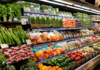
AGRIFOOD COMMODITIES AND PRODUCTS COULD EASILY BE AFFECTED BY NEW MEASURES. PHOTO: MENTOR WORKS

Since the beginning of this crisis everyone in both the public and private spheres have acknowledged, time and time again, that these are unprecedented times. Governments have taken steps to manage public health risks the best they possibly can. For the most part, their work has been amazing. But supply chains are not something bureaucrats are qualified to fully understand, especially nowadays. When someone is not involved with the mechanics of supply chains daily, blind spots can be overwhelming for the uneducated eye. Given the current pandemic climate, most of those in government are inundated with the complex challenges caused by Covid-19. Thus governments barely have any capacity to fully take on the supply chains.

Regardless, this is hardly surprising. Empty shelves were seen in many places, including grocery stores, the perception of running out of anything will instill fear. And fear will push people to make unconventional decisions. Companies and governments, to a certain extent, act the same way.

Governments opting to control supply chains will raise concerns about local patchwork or competing government-controlled supply chains. Some supply chains are already public which can lead to conflicting priorities. What also needs to be recognized is that few goods flow simply within a provincial geography. National, and most desirably, international coordination is critical. Governments, particularly during an election year, will have skewed priorities which often generates damaging protectionist policies. These policies can be detrimental to the true optimization of supply chains and could set a terrible precedent.

EMPTY SHELVES IN CANADIAN GROCERY STORES. PHOTO: CBC.CA

We all know how fear can influence governments, especially in the US. According to a recent survey by Angus Reid, a total of 71% of Canadians are either concerned or extremely concerned about the Canadian economy. Given that more than 10 million jobless claims have been filed in the United States over the last two weeks, Americans are greatly concerned. When a crisis hits, populations tend to stay close to what’s familiar, which is why the buying local movement is getting a little bit of a lift these days. But these are not good signs.

The United Nations and the World Trade Organization last week appropriately called the world to order, which is especially important now. It mentioned that the world could face a food shortage if the authorities fail to properly manage the COVID-19 epidemic. Every effort has been made to ensure that trade flows as freely as possible, especially to avoid food shortages, and this needs to continue.

LEAVE A REPLY

Please enter your comment!
Please enter your name here

More From Retail Insider

RECENT RETAIL INSIDER VIDEOS

Advertisment

Subscribe to the Newsletter

Subscribe

* indicates required

RECENT articles

Loblaw Expands Maxi Discount Strategy in Quebec

Loblaw opens a new Maxi and Pharmaprix in Mont-Laurier as part of a broader national push into hard-discount grocery formats.

Pizza Pizza tops Elite Franchise annual franchise list

The annual ranking recognizes brands that are not only performing at a high level today but are actively shaping the future of the sector through innovation, resilience, franchisee support, and long-term growth.

Giant Tiger and Kids Help Phone unveil new youth-designed pink shirt for Anti-Bullying Day

Through its Anti-Bullying campaign, Giant Tiger has raised more than $350,000 to date to help fund KHP e-mental health services, creating real impact in communities across Canada.

Recipe Unlimited announces 3rd new Olive Garden location in Canada

The restaurant will open in Ajax, Ontario, bringing the brand's Italian-inspired dining experience to a new community in Eastern Canada.

Tim Hortons raises $1.3 million through Special Olympics Donuts, with 100% of proceeds donated to Special Olympics Canada

The funds raised from Special Olympics Donuts support year-round, inclusive sport programs for more than 40,000 athletes with intellectual and developmental disabilities.

Steve’s Music Restructures, Closing Most Stores

Steve’s Music is restructuring its Canadian operations, closing most stores and focusing on a single Montreal flagship and online sales.

IKEA Canada partners with Africville Museum to host immersive exhibit in Halifax 

Nova Scotia is recognized as the birthplace of African presence in Canada.

Canadian Tire Fined $1.29M for False Pricing in Quebec

Canadian Tire will pay $1.29 million after pleading guilty to 74 counts of false advertising tied to inflated reference prices in Quebec.

From The Desk: Experiential Retail and Luxury Growth Shape the Week

Experiential activations, luxury expansion, and retail restructurings highlight a week of strategic recalibration across Canada’s retail sector.

Just Socks Foundation Sock Drive Returns for 11th Year

Just Socks Foundation launches its 11th annual sock drive, culminating in a February 13 Big Sock Drop serving more than 40 charities.

Bang & Olufsen Returns to Yorkville With New Toronto Store

Bang & Olufsen is opening a new Toronto flagship at 135 Yorkville Avenue, marking its return to the city’s luxury retail corridor after several years away.

Statistics Canada reports retail sales growth

In November, the largest monthly increase in dollar terms came from sales of food and beverages, which rose 5.6% compared with the same month in 2024.

Time Out Market Vancouver reveals further additions to its all-star culinary lineup of local chefs and restaurateurs

Time Out Market Vancouver – located at Oakridge Park – is 51,000 square feet of space and will feature 18 kitchens, one dessert and one coffee counter, alongside three bars, multiple event spaces, around 1,000 seats and a large outdoor terrace facing onto a public park. 

Cadillac Fairview malls celebrate Olympics and Chinese New Year

“Our shopping centres serve as true gathering places for our communities."

Affirm partners with Wayfair in UK and Canada

The recently expanded partnership brought Affirm to Wayfair’s online and in-store checkouts across the US last October.

To lower grocery bills, food supply chains need to be improved: McGill professor

The expanded Canada Groceries and Essentials Benefit does not reduce the grocery bills. 

Consumers approaching Valentine’s Day comfortably and intentionally: Lightspeed Commerce

Nearly two thirds of North American consumers (62%) feel little to no pressure to spend money on Valentine’s Day. Instead, most shoppers are approaching the holiday comfortably and intentionally.

DX3 2026 Reimagines Canada’s Leading Retail Conference

DX3 2026 returns to Toronto with a reimagined, executive-focused format moving beyond the traditional trade show model.

VIDEO: Canadian consumers holding steady but under strain as debt and uncertainty persist: Economist Todd Hirsch

Household debt is a growing concern, particularly among consumers relying on high-interest credit cards to cover essentials such as food and fuel.

Lightspeed Commerce sees revenue increase but a net loss in Q3

Revenue grew by 11% compared to last year but a net loss of $33.6 million.