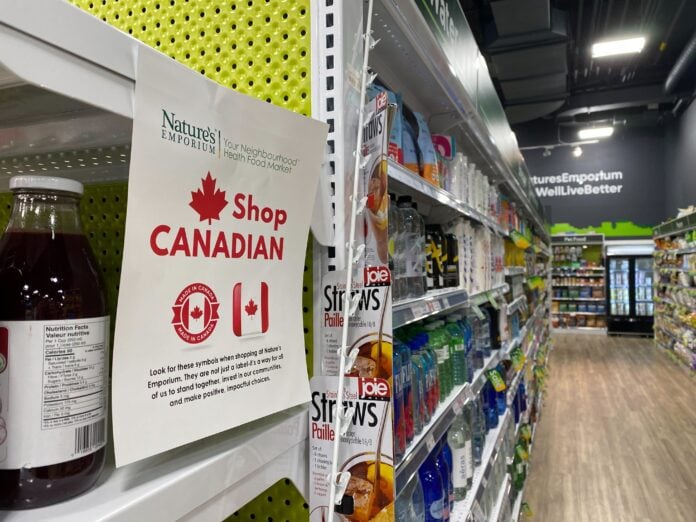
Shop Canadian/Made in Canada/shop local at a grocery store. Photo: Dustin Fuhs
Canada lost 68,000 jobs in September. Young people were particularly hard hit, and Quebec recorded the largest provincial decline. These losses follow the disappearance of 42,000 jobs in August, when Ontario bore more of the brunt. Month after month, the data show that the labour market is faltering.
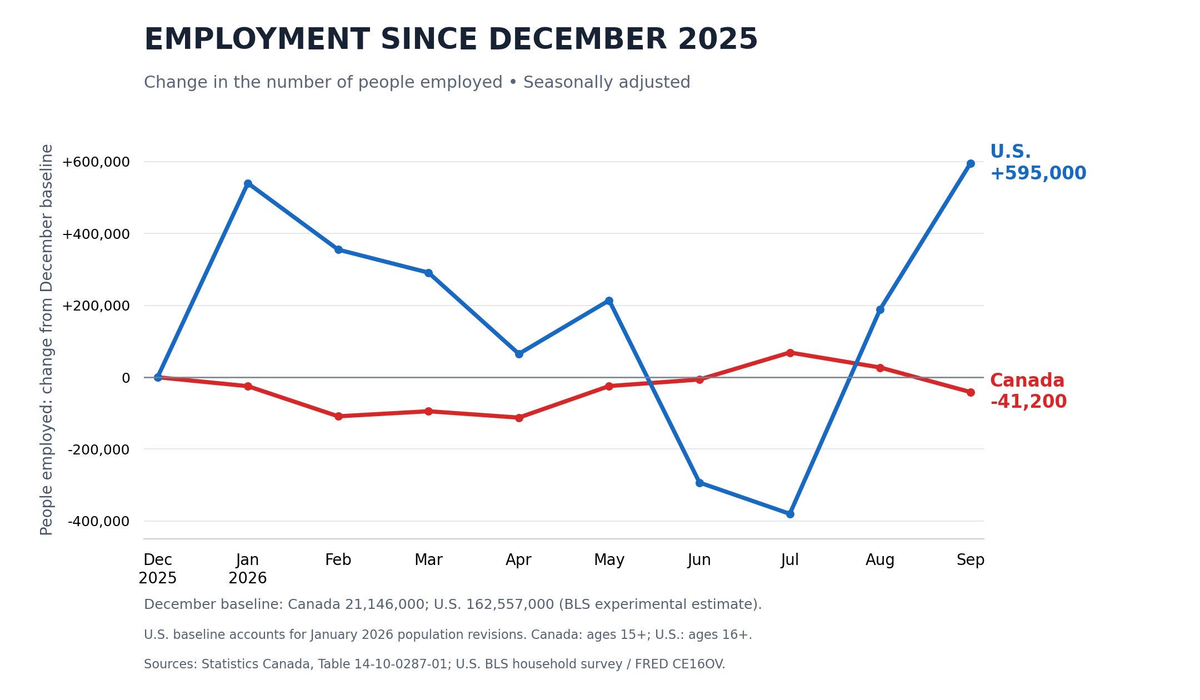
In fact, Canada’s labour market has 41,200 fewer workers than it did at the beginning of 2026. Meanwhile, the American economy has added 595,000 jobs. That is very little by American standards. So imagine what our record means for Canada.
Following the labour market results, the Canadian dollar slipped to around US$0.70, its lowest level since the spring of 2025. No one really knows where it is heading, but with bad economic news piling up, our dollar could plausibly fall further in the coming weeks. With winter approaching, that does not bode well.
Over six months, Canadian imports of agri-food and seafood products amount to roughly C$38 billion, estimated from the annual total for 2024. That figure illustrates the scale of the money involved; it is not a confirmed total for the November-to-April period. Fresh fruits and vegetables are, of course, particularly exposed to a weak dollar during the winter. Their main import season runs from November through June.
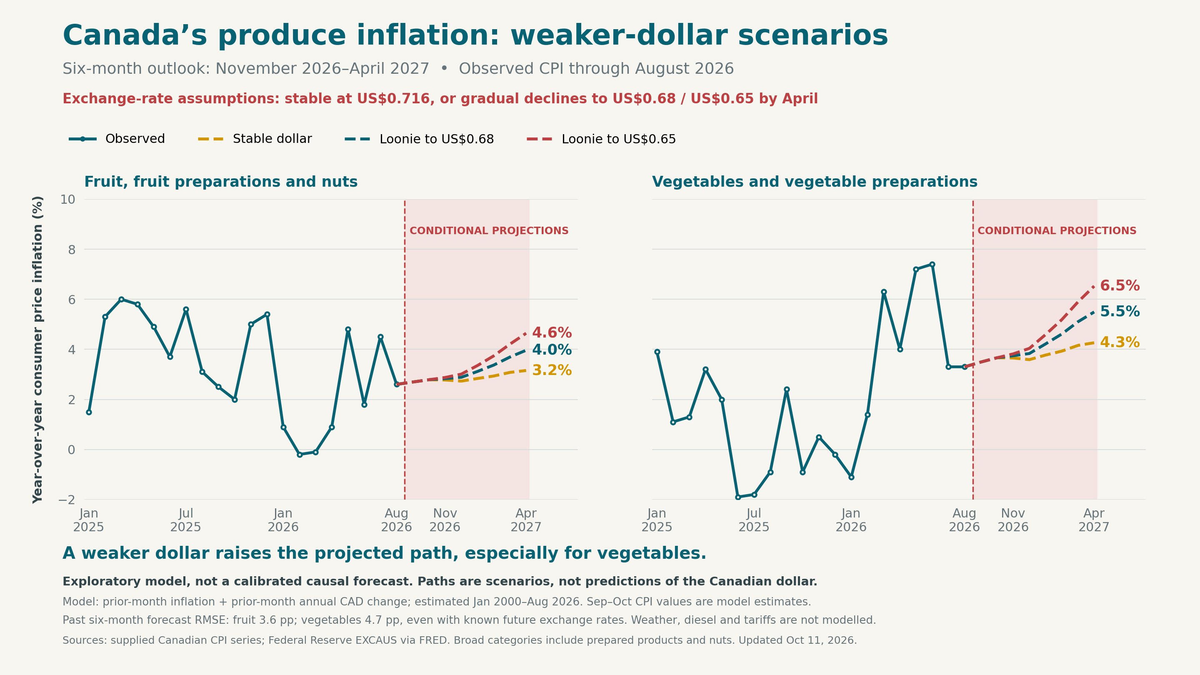
According to our scenarios, if the dollar falls to US$0.68, fruit inflation could reach 4.0%, while vegetable inflation could reach 5.5%. At US$0.65, just a few cents lower, those rates could reach 4.6% and 6.5%, respectively, all else being equal. Historically, vegetables have been much more exposed to currency fluctuations than fruits.
Much of this trade is conducted in U.S. dollars, regardless of where the products originate.
Mother Nature will also have a say in driving up our grocery bills.
The effects of the super El Niño are another concern. Global production is being disrupted by shifting weather patterns that bring too much water to some parts of the world and too little elsewhere. Coffee and cocoa are doing fine: prices are lower than last year. That is good news for coffee and chocolate lovers.
For other commodities, however, things have changed over the past year. Wheat prices are up 48.4%, and rice prices have risen 38.9%. Together, these two staples account for roughly 40% of the calories consumed worldwide. During the previous super El Niño, in 2015 and 2016, price increases emerged six to nine months later, partly because these two commodities drove up food processing costs. Soybeans are also up 29.7%, corn 21.4%, and sugar 17.1%. These are all important ingredients in the food supply chain.
The impact will not necessarily be comparable to what we saw in 2022, following Russia’s illegal invasion of Ukraine, when wheat reached US$13 a bushel. A few months later, food inflation hit 11%. Today, wheat is not even at US$7 a bushel. Higher input costs will therefore be a factor in 2027, but likely a less significant one than three or four years ago.
Even so, things are becoming more complicated for our agri-food sector. While geopolitics gives us headaches every day, our own anaemic economy could also push up our grocery bills.
Certainly, we could produce more at home to reduce our vulnerability. That is part of the thinking behind Quebec’s food self-sufficiency strategy. Baby carrots processed in Quebec represent a small victory. Produits Frais FMS, based in Saint-Patrice-de-Sherrington, in the Montérégie region, markets them under the Carroté brand. The family business is run by brothers Marc-Olivier and Steven Daigneault. The carrots are cut, peeled and packaged in Quebec, although their origin may vary once local carrot supplies run out. It is a welcome step towards reducing our dependence on imports, supported by approximately $5 million in public funding. That is not a huge sum for a project that can make a real difference. We need more wins like this one.
Ottawa’s efforts are commendable as well. The government is working to strengthen Canadian food self-sufficiency through its National Food Security Strategy, which provides more than $3 billion over ten years, including $750 million to expand year-round fruit and vegetable production. The goal is to increase the share of healthy foods available in Canada that are produced domestically from 75% to 85% by 2032. By supporting greenhouses, processing and distribution infrastructure, Ottawa is taking encouraging steps to reduce our dependence on imports. Those commitments must now translate into lasting, competitive projects.
Over the long term, these decisions could change the outlook in our models, which show our vulnerability to macroeconomic fluctuations, particularly currency depreciation. This winter, however, that vulnerability will likely be measurable at the grocery checkout.
Jollibee is marking its 10th anniversary in Canada with a charitable campaign and customer rewards promotions as the Filipino restaurant chain prepares to expand its Canadian footprint through franchising over the next five years.
The company announced that it will donate $1 to Make-A-Wish Canada for every 10-piece Jolly Crispy Chicken Bucket sold at its Canadian restaurants to Nov. 15. The initiative is part of a 10-week anniversary campaign that began Sept. 7 and runs through the end of the year.
Jollibee said it operates 28 restaurants across five provinces, having opened its first Canadian location in Winnipeg in December 2016. The company plans to use its growing franchising program to bring its restaurants to dozens of additional Canadian neighbourhoods over the next five years.
Anniversary campaign combines charity and rewards
The donation program, called Buckets of Wishes, is intended to support Make-A-Wish Canada’s work with children who have critical illnesses. The contribution will be made for each qualifying chicken bucket sold at participating Canadian locations throughout the campaign period.
Jollibee is also offering a rewards promotion from Oct. 19 to 25 for members of its digital loyalty program. Under the Jollibee Rewards Visit Challenge, customers earn double points on their first qualifying visit, triple points on their second and 10 times the points on their third.
Customers can join the program through the Jollibee app, with bonus point multipliers applying automatically to qualifying orders, according to the company.
The promotions form the next phase of the anniversary countdown, which began in September with a series of offers and community activities. Jollibee said additional promotions will include one-day menu deals and in-store anniversary events.
Maribeth Dela CruzJollibee image
Beth Dela Cruz, president of Jollibee North America, said the company wanted to recognize the customers who have supported its Canadian operations over the past decade.
“The response to our 10-Week Countdown has been incredible, and it’s all thanks to the friends and fans who have shown us so much love since day one,” said Dela Cruz. “As we celebrate 10 years in Canada, we wanted to make sure we gave that love back. Our partners at Make-A-Wish® Canada share our core value of spreading joy and creating meaningful memories. Partnering with an organization so impactful in the community feels incredibly fitting for Jollibee, and we are excited to work together to bring smiles to families across the country.”
Franchising to drive Canadian growth
Jollibee said its anniversary comes as it steps up plans to expand its Canadian operations. The company intends to build on its existing network of corporate-owned restaurants through a growing franchising program, with the goal of opening locations in dozens of new Canadian neighbourhoods over the next five years.
The announcement did not specify how many additional restaurants the company plans to open in Canada, identify target markets or provide financial projections for the expansion.
The company operates under Jollibee Foods Corp., a Philippines-based restaurant group that manages a portfolio of 20 brands and has more than 10,700 stores and cafés across 33 countries, according to a news release.
Jollibee image
The group’s portfolio includes Jollibee, Chowking, Greenwich, Red Ribbon, Mang Inasal, Smashburger and Tim Ho Wan, alongside franchised brands and investments in other restaurant businesses.
Jollibee said the anniversary campaign is designed to recognize its Canadian customers while supporting its next stage of growth. The company’s Canadian operations began with the Winnipeg restaurant in 2016, and its current network spans five provinces.
The company also noted that Jollibee was included on TIME magazine’s 2026 list of the 100 most influential companies and ranked among the publication’s top 10 industry leaders in food and drink.
The anniversary promotions will continue through the end of 2026, with the company directing customers to its Canadian app and social media channels for details on upcoming offers and activities.
ICSC@CANADA returned to the Metro Toronto Convention Centre’s North Building from October 5 to 7, drawing retail landlords, brokers, developers and retailers from across the country for three days of dealmaking, industry programming and networking. The event’s dealmaking floor was completely sold out, a milestone that organizers said had not been reached in close to a decade.
Dealmaking tables, Retailer Central and the Food Hall operated at capacity on Tuesday and Wednesday, with leasing representatives from major Canadian landlords holding meetings throughout both days. The busy floor reflected continued demand for retail space across the country, particularly as limited new construction and low vacancy rates create challenges for retailers looking to expand.
The activity was evident throughout the exhibition hall, where landlords and service providers presented their portfolios and projects through elaborate booths and displays. Seating was at a premium in several areas, and conversations sometimes competed with presentations underway at the Show Floor Theatre. For many attendees, the conference provided an opportunity to reconnect with industry colleagues, pursue leasing opportunities and discuss projects that will shape Canadian retail real estate over the coming years.
Tight Retail Conditions Set the Stage
The tone of this year’s conference was established even before the dealmaking floor opened. On Monday evening, JLL hosted its Retail Spotlight & Reception at the TIFF Lightbox, where JLL Canada CEO Alan MacKenzie discussed the country’s historically low retail vacancy rates and the changing relationship between landlords and tenants.
MacKenzie cautioned against viewing current market conditions purely through the lens of landlord leverage, encouraging a partnership approach between property owners and retailers. His comments came against a backdrop of strong leasing fundamentals, including RioCan REIT’s reported record committed retail occupancy of 98.8 per cent at the end of the second quarter and blended leasing spreads of 23.1 per cent.
The discussion reflected a broader challenge facing the Canadian retail industry. Retailers seeking additional locations are competing for a limited supply of desirable space, while landlords must balance opportunities to increase rents with the longer-term value of maintaining productive tenant relationships.
Monday’s conference activities also included the Student Hard Hat Dealmaking Tour, the ICSC Next Generation program and the Opening Reception. Networking continued beyond the convention centre throughout the event, including a well-attended Marcus & Millichap reception at the Cactus Club on Adelaide Street on Tuesday evening. The gathering was among several off-site events that brought industry participants together during conference week.
Big Spaces, Grand Ideas: Reimagining Former Department Stores
One of Tuesday afternoon’s featured sessions at the Show Floor Theatre examined a major challenge facing Canadian shopping centre owners: finding new uses for large-format retail spaces vacated by department stores and other major tenants.
The panel, titled “Big Spaces, Grand Ideas: The Future of Large Format Shopping Centre Spaces,” was moderated by Retail Insider Founder and Publisher Craig Patterson. It brought together Paola Marques of design firm Studio Ormonde Marques, Michael Peiser, Vice President of Development at Cadillac Fairview, and Mae Wang, CEO of Central Walk.
The discussion focused on how landlords are adapting former department-store spaces to accommodate new retailers, entertainment operators and other uses. The closures of Hudson’s Bay and the earlier departure of Nordstrom have created substantial redevelopment and leasing opportunities, although the size and configuration of these properties can make replacement strategies complicated.
Wang outlined Central Walk’s approach to repositioning former Hudson’s Bay locations at Woodgrove Centre in Nanaimo and Mayfair Shopping Centre in Victoria, both of which are owned by the company. Central Walk is planning approximately $30 million to $40 million in investment associated with the projects, with completion expected in 2028.
The plans involve introducing new retail and entertainment uses into spaces previously occupied by traditional department stores. They form part of Central Walk’s broader strategy to increase activity at its shopping centres through a combination of retail, food, entertainment and other attractions.
Wang also discussed developments at Tsawwassen Mills, where the approximately 25,000-square-foot TM Wander entertainment concept opened earlier this year. The property has recorded weekend traffic gains of roughly 10 per cent year-over-year, while a new H Mart supermarket spanning approximately 30,000 square feet is planned to open by Christmas 2027.
At Mayfair Shopping Centre, Chinese hot pot chain Haidilao is preparing to open its first Vancouver Island location, adding another food and beverage attraction to the property. The initiatives illustrate Central Walk’s efforts to diversify its tenant mix and encourage more frequent visits to its centres.
Peiser brought the perspective of one of Canada’s largest shopping centre landlords, discussing Cadillac Fairview’s experience re-leasing former department-store space across its national portfolio. That work has included transactions involving T&T Supermarket, demonstrating how former anchor locations can accommodate retailers with different operating requirements and customer bases.
Marques addressed the design considerations involved in adapting large-format retail properties, including how spaces originally built for department stores can be reconfigured to accommodate new tenants and uses. Together, the perspectives illustrated the financial, operational and architectural considerations involved in repositioning major retail spaces.
These projects demonstrate the range of approaches landlords are taking to large-format retail space, from attracting new anchor tenants to introducing combinations of smaller retailers and other uses. The investment required can be substantial, but the redevelopment of these properties also provides opportunities to reshape shopping centres around new customer demands.
Craig Patterson on stage with Mae Wang, CEO of Central Walk, Vice President of Development at Cadillac Fairview, and Paola Marques of design firm Studio Ormonde Marques
Retail Investment and Expansion Remain Active
The conference took place during an especially active period for Canadian retail investment, leasing and store expansion, with several major developments receiving attention across the industry. Retail Insider has covered numerous transactions, openings and redevelopment projects that reflect the priorities of retailers and property owners heading into 2027.
At Square One Shopping Centre in Mississauga, several notable changes are underway, including a planned standalone Tiffany & Co. boutique, an expanded Rolex presence and forthcoming stores for SUPER MINISO, POP MART and LEGO. The developments reflect continued investment in one of Canada’s leading regional shopping centres.
Retailers Pursue New Canadian Locations
Retailer expansion remained another important theme, with a range of domestic and international brands pursuing additional Canadian locations.
Retail Insider also published its Q3 2026 Real Estate & Leasing report, examining the strength of Canadian retail leasing activity and the challenges associated with delivering new space.
The conference generated additional story leads for Retail Insider, including discussions with retailers pursuing Canadian expansion and property owners planning new developments. Several of those conversations are being developed into upcoming features, including a look at a growing Atlantic Canadian healthy-eating concept identified on the show floor.
Next Stop: Whistler in January 2027
With ICSC@CANADA concluded, attention is turning to the organization’s next major Canadian gathering, ICSC@WHISTLER, scheduled for January 24 to 26, 2027, at the Fairmont Chateau Whistler in British Columbia.
Registration is now open, with advance registration rates available until December 28, 2026. The advance rate is $735 for ICSC members and $1,475 for non-members, while ICSC retailer members can register free of charge. Student registration is available for $50, and attendees must register for the conference before booking accommodation through the event.
ICSC retailer members can also access a complimentary Retailer Central package, which includes a four-foot draped table and company signage. The program provides an opportunity for emerging retail brands and established operators to meet directly with leasing representatives and explore potential locations.
The January gathering will provide another opportunity for Canadian retail landlords, brokers and retailers to discuss leasing activity, development plans and expansion opportunities. Additional program details are expected in the coming months, with registration information available through ICSC.
CRAFT Beer Market is marking its 15th anniversary with a limited-time menu at its Canadian restaurants and an anniversary celebration planned for its original Calgary location in November.
The “Cheers to 15 Years” menu will be available from Oct. 14 to Nov. 11 at all Canadian locations, featuring three returning food items and a signature cocktail. The company will host a separate anniversary event at its Calgary flagship on Nov. 6.
Founded in Calgary in 2011, CRAFT Beer Market has expanded from a single restaurant into a national brand with locations across British Columbia, Alberta and Ontario.
“Fifteen years ago we opened our doors in Calgary with a simple belief: that great beer deserves great food and great company. Watching CRAFT grow into a national community has been the privilege of a lifetime. This anniversary menu is our way of saying thank you – bringing back the dishes our guests have never stopped asking for, and celebrating the people who made CRAFT what it is today,” said PJ L’Heureux, founder and owner of CRAFT Beer Market.
PJ L’Heureux CRAFT Beer Market photo
Anniversary menu features returning items
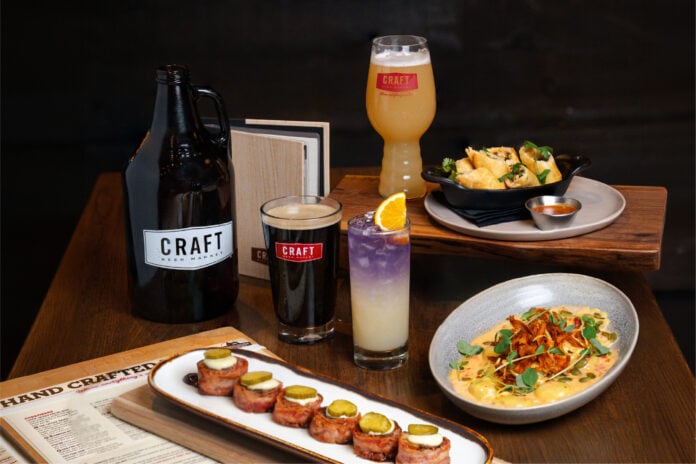
The anniversary menu includes taquitos made with pulled chicken, Monterey Jack cheese, fresh chilis, black beans, roasted corn and CRAFT hot sauce. Another returning item, called Fast Food Sushi, features a bacon cheeseburger wrapped in bacon sushi-style and served with house pickles and barbecue sauce.
The menu also includes butternut squash ravioli with peri-peri Alfredo sauce, pumpkin seeds and carrot chips, along with the Gin Squeeze cocktail, made with Empress gin, lemon juice, simple syrup and Stiegl Radler, garnished with an orange wheel.
The anniversary items will be available for in-restaurant dining only, with the promotion ending Nov. 11. The company plans to introduce its winter menu the following day, Nov. 12.
The limited-time offering brings back established menu items as the restaurant group marks its 15 years in business. The company says the anniversary is also an opportunity to recognize the guests, employees and culinary teams who contributed to its growth.
CRAFT Beer Market Calgary Beltline
Calgary celebration planned for November
CRAFT Beer Market will hold an anniversary celebration at its original Calgary location on Friday, Nov. 6, bringing together longtime guests, local partners and members of the company’s team.
The event is expected to centre on food, beer and the restaurant’s history, although the company has not yet released further details. Additional information about the celebration will be announced in the coming weeks.
L’Heureux said the Calgary location remains significant to the company as the place where the business began.
“Calgary is home. It’s where we opened our first doors and where this community first believed in what we were building. Celebrating 15 years there, with the people who have been with us from the beginning, means everything,” he said.
From one Calgary restaurant to a national brand
The company focuses on craft beer and chef-driven food, with an extensive rotating tap list and an emphasis on Canadian producers and culinary talent.
The anniversary marks 15 years since the business opened its first location, with the company using the occasion to recognize its development and the people involved in building the restaurant group.
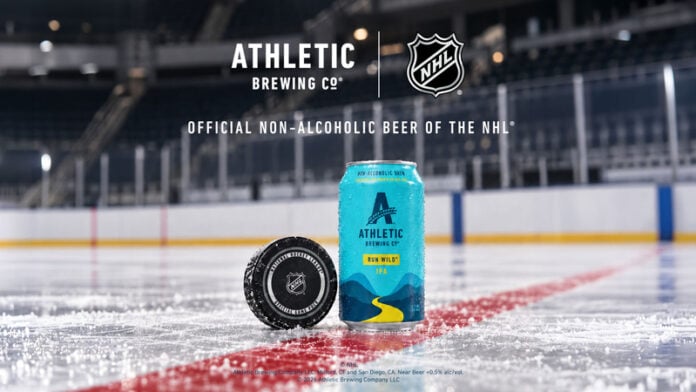
Athletic Brewing Company has signed a multiyear partnership with the National Hockey League to become an official non-alcoholic beer partner in Canada, with plans to promote its products through league events, retail campaigns and digital marketing.
The agreement makes the company the NHL’s first dedicated non-alcoholic beer partner and gives the U.S.-based brewer access to league marketing channels and hockey events across Canada.
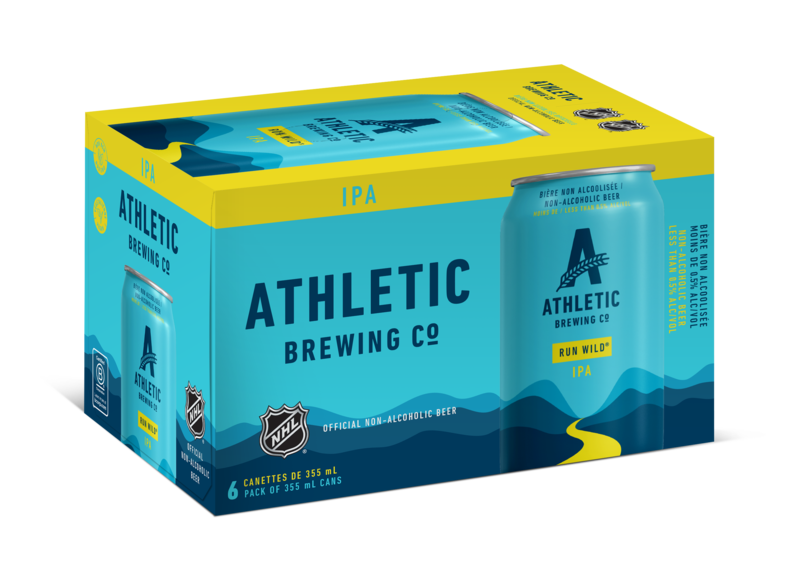
Through the partnership, Athletic Brewing plans to reach fans through digital and social media, retail activations, custom content and a planned Stanley Cup Final sweepstakes. The company will also use co-branded advertising and NHL-branded packaging to promote its products in Canadian stores.
Heritage Classic to launch partnership
The partnership will be featured at the 2026 Tim Hortons NHL Heritage Classic in Winnipeg on Oct. 25, where Athletic Brewing plans to hold fan activations and product sampling.
The company will also have in-stadium signage, an in-ice logo and broadcast exposure through digitally enhanced dasherboard advertising during Sportsnet’s game coverage. Its products will be available for purchase at select concessions and hospitality areas at the event.
The agreement also includes a national retail campaign aimed at adult amateur hockey players and leagues across Canada, extending the company’s marketing efforts beyond professional hockey audiences.
Bill ShufeltMax Paulsen
“Hockey is woven into the fabric of Canadian culture, and we’re thrilled to team up with the NHL to bring Athletic’s great-tasting brews to fans,” said Bill Shufelt, co-founder and chief executive of Athletic Brewing Company. “Whether they’re watching from home, gathering with friends, or headed to the rink, we believe everyone deserves a great brew that fits their lifestyle. This partnership gives us an incredible platform to introduce Athletic to more consumers across Canada and become a meaningful part of the hockey experience.”
“We are proud to welcome Athletic Brewing Company, a non-alcoholic brewing pioneer, to the NHL family,” Paulsen said. “We look forward to building impactful fan-focused programs together to engage our passionate fans in Canada, whether they are watching the NHL or coming off the ice after playing a game at their local rink.”
Canadian retail presence
Athletic Brewing entered Canadian retail in 2022 and is now available in more than 2,500 outlets nationwide, according to the company.
Founded by Shufelt and John Walker, the brewer launched commercially in 2018. The company says it developed a proprietary non-alcoholic brewing method through hundreds of small-batch trials that reworked much of the brewing process.
Athletic Brewing photo
Athletic Brewing describes itself as North America’s largest dedicated non-alcoholic brewer. It also says it has received more than 200 taste awards over the past decade.
The company operates breweries in Connecticut and California and sells its products through retail outlets and other channels in the United States. It says its products are available at more than 75,000 retail locations across the country.
Athletic Brewing’s Canadian expansion through the NHL partnership will include television, digital and social media advertising, as well as in-store displays and packaging bearing the league’s branding.
The financial terms of the multiyear agreement were not disclosed in the announcement.
Artificial intelligence is becoming embedded in retail decision-making, influencing sourcing, assortment planning, pricing, marketing and how consumers discover products.
Canadian retail strategist Carl Boutet sees enormous potential in the technology, along with a growing risk. As retailers adopt similar tools, draw on similar information and optimize toward similar performance measures, they may increasingly arrive at similar answers.
Boutet describes the potential result as a “sea of sameness,” where retailers become more efficient while losing some of what made their businesses distinctive.
Drawing on more than 30 years in retail and his teaching at McGill University and the Asian Institute of Technology, Boutet examines how businesses can benefit from increasingly capable systems while preserving the judgment that gives those businesses direction.
“The Flip itself is this change that we’ve seen in where value is being created,” Boutet said in an interview with Retail Insider.
Historically, human ingenuity, strategy and judgment sat at the centre of value creation, with technology supporting those decisions. Boutet argues that the relationship is beginning to reverse.
“We go from a place where the human was at the core and technology would amplify what the human could do, and now it’s sort of the other way around,” he said.
In retail, the shift extends well beyond employees using generative AI to produce marketing copy. Algorithms influence where products are sourced, how merchandise moves through supply chains, which products retailers carry, how they are priced and promoted, and where marketing dollars are deployed.
“There are very few decisions that are made in a retail organization that algorithms aren’t directly influencing,” Boutet said.
A ‘Sea of Sameness’ in Retail
Boutet is not arguing that retailers should pull back from AI. Companies face competitive pressure to adopt technologies that improve productivity, sales and profitability, and he expects that adoption to continue.
His concern is what happens when businesses increasingly optimize toward the same outcomes without questioning whether those outcomes support a distinctive customer proposition.
Similar tools and information can contribute to convergence. So can shared performance measures that reward immediate conversion, lower costs or faster inventory turnover without adequately accounting for longer-term brand value.
“I think that’s my biggest fear,” he said. “Everything starts looking and feeling the same.”
Boutet sees early signs in digital marketing, particularly among emerging and mid-market brands whose advertisements can take on similar language, imagery and presentation. He contrasted that with companies including Gucci, Louis Vuitton, Aritzia and Nike, which he cited for their recognizable identities and clearly defined brand playbooks.
Those identities do not make a company immune to competitive pressure or algorithmic convergence. They do, however, provide a reference point against which recommendations can be assessed.
The issue becomes more consequential as AI moves from assisting with individual tasks to influencing decisions historically made by experienced merchants, marketers and executives. Retailers also need to consider what happens to institutional knowledge when systems repeatedly make decisions involving pricing, sourcing and merchandising.
“If you start losing the knowledge in the company that allows you to do the right pricing or the right merchandising, the right sourcing, because you just let the algorithms decide that for you all the time, then who really holds that knowledge?” he said.
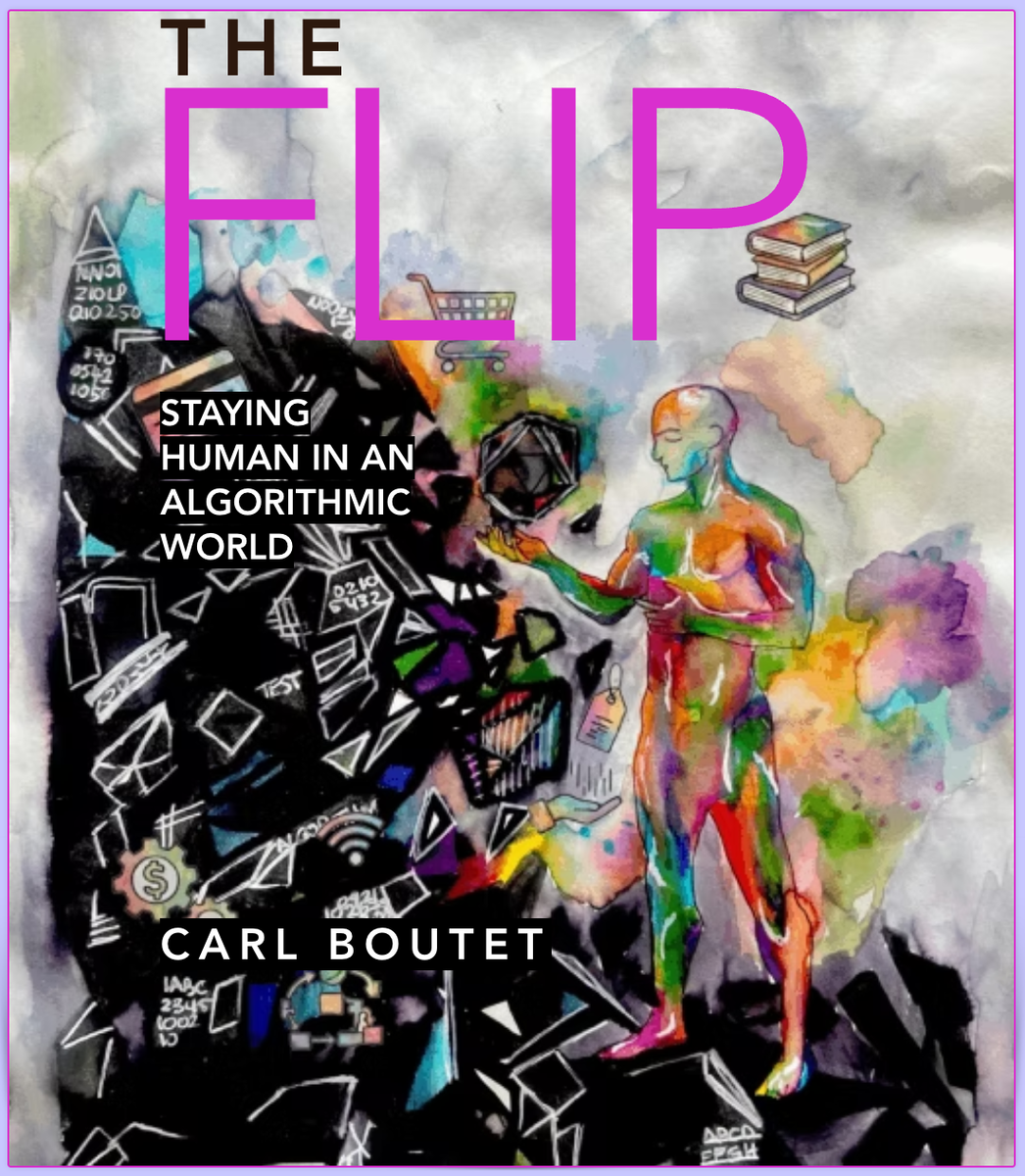
Cover of Carl Boutet’s newest book
‘Delegate, Not Relegate’
Boutet summarizes the distinction with a phrase: “Delegate, not relegate.”
Algorithms can produce strong recommendations, making it natural for companies to give them greater responsibility. Problems emerge when an organization stops maintaining the knowledge and judgment needed to challenge those recommendations.
A system might identify a price likely to maximize a particular outcome or recommend products with the strongest projected sales. Those decisions can make commercial sense individually while gradually pushing a retailer away from its broader positioning.
The responsibility for defining success therefore remains with leadership. A retailer needs to understand what its systems are optimizing for and whether those objectives reflect the business it intends to build.
“They need to use the algorithms, but they need to be conscious of what direction the technology is pointing them in,” he said. “As much as they need to leverage it and use it and make sure that they’re staying competitive, the key message is: delegate, not relegate.”
Taking the ‘Back Flip’
Boutet calls the response the “Back Flip”: restoring human intention, judgment and accountability to the centre of strategy while using technology to expand what people and organizations can accomplish.
That does not require people to resume making every operational decision. It requires them to retain ownership of the business’s purpose, strategic direction and the choices that define its relationship with customers.
“The Back Flip is taking back that agency, taking some risk, maybe not always letting the algorithm make all the choices for us,” he said.
He is explicit that this does not mean rejecting AI.
“I’m not an anti-AI person,” Boutet said, explaining that his concern is with companies going “full throttle” without remaining conscious of where algorithms are pushing the organization.
“It’s great to create fire,” he said. “Just try not to burn the house down.”
For retailers, that leaves room for merchants, marketers and executives to make decisions that may not represent the most efficient outcome predicted by a model. A decision can still strengthen the retailer’s identity, introduce something unexpected or support a longer-term strategy that is difficult to capture through optimization alone.
AI Is Changing Product Discovery
Consumers are also beginning to use AI differently when they shop. Instead of entering several keywords into a search engine and working through the results, shoppers can give an AI assistant a detailed description of what they need.
Boutet used running shoes as an example. A consumer could explain that they are preparing for a 10-kilometre race, expect rainy conditions, are a moderate runner and have a particular budget. That gives the system more context when recommending products.
Boutet expects this type of discovery to become significant, although he is more cautious about predictions that consumers will routinely hand the entire transaction to autonomous shopping agents.
“I’m still more in the camp around agentic that it’s going to have a way bigger impact on how we discover stuff than how we actually purchase,” he said.
Some services already support authorized purchases under specified conditions. Amazon’s U.S. shopping assistant, for example, allows customers to arrange automatic purchases when an item reaches a target price.
The distinction is between what technology can already do and how widely consumers will choose to delegate those decisions. Boutet sees discovery and evaluation as the more immediate strategic changes for retailers.
An AI system can influence which products a consumer considers before that shopper ever reaches a retailer’s website or store.
Carl Boutet
Getting Recommended by AI
The shift has implications for the information retailers make available about their products.
Consumers can provide AI systems with detailed context about what they want, allowing recommendations to move beyond the conventional keyword searches retailers have spent years learning to optimize for.
Product descriptions, reviews, editorial coverage and discussions in online communities can all contribute information that AI systems use. Structured product data, including accurate specifications, pricing and availability, also helps shopping services represent a retailer’s offering.
Boutet pointed to Reddit as one source that has attracted attention because of its volume of human discussion. He also cautioned that attempts by marketers to influence those conversations could eventually undermine their usefulness.
No single source or content tactic guarantees a recommendation. Different systems draw on different information, and retailers may have limited visibility into why one product is presented over another.
For brands, that creates another layer between the business and the consumer. Clear, credible and current product information becomes increasingly important, alongside the distinctiveness of the offering itself.
Physical Stores Could Become More Important
Asked whether AI makes physical stores more or less important, Boutet did not hesitate.
“More.”
He sees distinctive stores as one way retailers can push back against the “sea of sameness” emerging across digital channels.
“Well-designed stores that stand out and really communicate the brand identity, I think that’s going to be more than ever what differentiates and helps brands connect with consumers,” he said.
A physical store gives a retailer considerable control over how its brand is experienced. Architecture, merchandising, service and human interaction can create something difficult to reproduce through an AI interface.
Boutet’s Retail Relevance Index provides a framework for considering that opportunity. It examines four dimensions of value: price, convenience, customer delight and company purpose. Price and convenience help a retailer earn consideration, while delight and purpose offer further opportunities to build meaningful differentiation.
Stores can contribute across those dimensions, whether by making a purchase easier, providing useful advice or creating an experience customers want to revisit.
Boutet also pointed to digitally native companies such as Warby Parker that subsequently developed substantial physical store networks. He argues that locations can generate awareness and relationships that support digital channels as well.
In his view, that role could become increasingly valuable as more product discovery takes place through AI systems over which retailers have limited control. The strategic contribution of a store can therefore extend beyond the transactions completed inside it.
What Asian Retail Can Teach Canada
Boutet, who teaches and spends considerable time in Asia, said retailers there often operate in a different competitive environment. He cautioned against treating Asia as a single retail market, pointing to significant differences between China, India and Southeast Asia.
In Southeast Asia, he continues to see retailers putting considerable effort into creating energy, community and reasons for consumers to spend time in physical environments. Their competition can extend well beyond another retailer or shopping centre.
“Their competition is the night market, it’s the weekend market, it’s the train market,” Boutet said, also pointing to the informal food vendors and other businesses surrounding stores in many markets.
Some informal operators can have lower overhead, increasing the pressure on formal retailers to offer compelling reasons to visit.
“You really need to stand out,” he said. “You have to do something and really resonate there.”
For Canadian retailers, the lesson is to consider the full range of alternatives competing for a customer’s time and attention, and the role that community and experience can play in earning a visit.
Looking at AI Through Four Forces
In The Flip, Boutet moves beyond using “AI” as a catch-all term by identifying four forces reshaping commerce: Optimization, Automation, Immersion and Contextualization.
Optimization describes the pursuit of efficiency, with systems continually refining the path toward a defined outcome.
Automation transfers tasks and decisions from people to machines, raising questions about where responsibility and control should remain.
Immersion describes environments engineered to capture attention and shape desire, influencing what people want as well as what they buy.
Contextualization adapts experiences and recommendations to the individual and the moment. Personalization belongs within this force, as systems respond to a person’s circumstances, preferences and needs.
The forces reinforce one another. Automation produces data that can support contextualization. More tailored experiences generate behavioural signals that enable further optimization.
The framework helps leaders examine what technology is actually doing, how it changes the customer experience and where it expands or diminishes human agency.
Keeping Humans in the Decision
Asked what retail CEOs should be doing differently today, Boutet returned to the question of control.
Leadership teams should understand which decisions have become automated, what objectives guide those systems and where human judgment remains essential. They also need to preserve the expertise required to recognize when a recommendation conflicts with the company’s direction.
That can become difficult when competitors are using similar technologies to improve productivity and performance. Retailers have strong reasons to adopt AI, and Boutet does not expect that pressure to disappear.
His argument is that adoption should be accompanied by deliberate choices about what the business stands for, how it creates value and which responsibilities its leaders must continue to own.
As algorithms become more deeply involved in retail decisions and product discovery, human judgment remains central to giving customers a reason to choose one company over another.
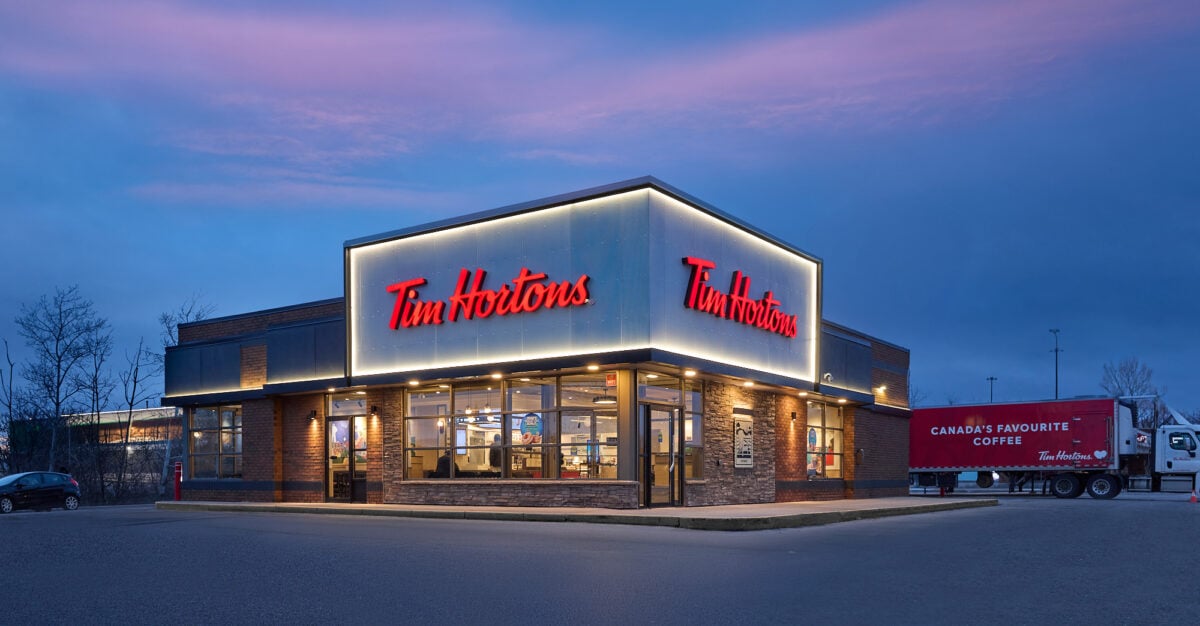
Tim Hortonsis launching a new Halloween merchandise collection across Canada, featuring a Timbits Mummy character on products ranging from a glow-in-the-dark bucket to a plush toy, as the restaurant chain continues its annual seasonal retail offering.
The 2026 collection is available at participating Tim Hortons restaurants and through its online store, TimShop.ca. The lineup includes five items available through participating restaurants, while additional drinkware and apparel are exclusive to the online shop.
The collection includes a Timbits Mummy glow-in-the-dark bucket, a 20-ounce mug, a 24-ounce plastic tumbler, a plush toy and a packable tote bag. The bucket is available on its own or filled with 31 Timbits, the company said in an Oct. 13 news release.
The mug is scheduled to become available starting this week. The tumbler features a straw and a Mummy-themed straw topper, while the plush toy adds another character to the company’s existing Timbits plush collection.
The reusable tote bag features black-and-white stripes and a pouch designed to resemble bandages. The products are being offered as part of the chain’s 2026 Halloween merchandise lineup, which is aimed at customers shopping for seasonal items and gifts.
Tim Hortons is also selling products exclusively through TimShop.ca, including a stainless-steel Timbits Mummy tumbler and two apparel items: a black hoodie and black joggers.
The company did not disclose prices for the products in its announcement.
Tim Hortons photo
Seasonal merchandise remains part of retail offering
Christie Song, head of retail at Tim Hortons, said the annual Halloween collection has become a recurring offering for customers, with this year’s lineup centred on the new Mummy character.
“The annual release of our Halloween merch collection has become a tradition for guests, and this year we’re excited to give the adorable Timbits Mummy the spotlight,” said Song. “Whether guests are picking up a treat for themselves or filling a Timbits bucket to share, we love being part of how Canadians celebrate spooky season.”
The announcement did not include sales projections, revenue expectations or other financial details related to the merchandise collection.
Tim Hortons’ Canadian footprint
Tim Hortons opened its first restaurant in Hamilton, Ont., in 1964 and has since expanded its menu beyond coffee and baked goods to include specialty beverages, breakfast items, sandwiches, wraps and soups.
The company describes itself as Canada’s largest restaurant chain operating in the quick-service industry. Its corporate background information says it has nearly 4,000 restaurants across Canada and more than 6,000 locations in Canada, the United States and other markets worldwide.
The Halloween merchandise release adds to the chain’s range of branded retail products, with the latest collection available through participating restaurants and its online store.
Villages Calgary is closing its retail operation after more than 40 years in Calgary, ending a longstanding storefront presence that the non-profit used to connect local shoppers with fair-trade products from artisans around the world.
“The Store Is Closing. The Fair Trade Mission Continues,” the organization said on its website, where it is directing customers to other fair-trade retailers and providing information about existing gift cards and how to contact its team during the transition.
The closure marks a change for the organization, which has purchased more than $13 million worth of goods directly from artisans since 1984, supporting more than 98 artisan groups through customer purchases, according to the website.
Villages Calgary said its history was shaped by volunteers, employees, community supporters, artisan partners, producer groups and shoppers in Calgary and across Canada.
Relocation plans preceded closure announcement
The closure follows years of challenges at the retailer’s longtime location near Kensington, where it operated from the same building beginning in 1984. The organization had been preparing to relocate its store as the City of Calgary considered expanding nearby Crowchild Trail.
In September 2025, Alex Ferguson, chair of the Villages Calgary board, said the organization had been discussing a move for several years because of the proposed road expansion.
“We’ve been talking about a move for quite a while—even before my time,” said Ferguson, who had served as board chair for just over a year at the time. “They’re talking about expanding what I call the ‘super highway’ right at our doorstep.”
The organization was also contending with customer access challenges. A survey conducted in 2019-2020 identified traffic access as a significant concern, Ferguson said, with the road configuration making it difficult for some motorists to reach the store.
“Getting on and off that highway is always a bit of a challenge. If you’re heading south on Crowchild, you can’t turn left—you have to go all the way around,” he said. “Our kind of store needs foot traffic.”
At the time, Villages Calgary was looking for a new location, with its leadership team and commercial realtors exploring potential sites, including one in Inglewood.
Photo: Villages Calgary
Inglewood move aimed to reverse declining traffic
By July 2026, the organization had identified a new home in Inglewood and sold its longtime property along Crowchild Trail in northwest Calgary for $1.1 million. The sale was to a coffee roaster.
The relocation was intended to address declining revenue and customer visits while positioning the retailer to reach a different demographic. The organization had planned to open a 1,333-square-foot store on Inglewood’s main street in mid-September, reducing its retail footprint by roughly half.
Linnea Ferguson, a volunteer on the organization’s marketing committee and a former assistant manager, said the smaller space would require changes to the product mix and a greater role for online sales.
“We have to re-merchandise,” said Ferguson. “We’re going to be focusing in-store on product that is appealing to this new demographic. That’s why we’ve hired a designer, because we have to be able to fit into that smaller space. But we do have a web store, so we’ll be able to continue selling other items online.”
Photo: Villages Calgary
She said the new store was intended to provide a more coordinated shopping environment.
“For this space, we want it to be cohesive and balanced and not make the space appear cluttered,” she said.
The move followed customer, volunteer and member surveys that identified accessibility, walkability and convenience for volunteers as priorities. The proposed Inglewood location offered a single-level layout, pedestrian traffic and parking.
However, declining revenue and store visits remained significant concerns. Ferguson said customer traffic had fallen over several years, with a particularly sharp reduction after roadway changes affected access to the existing location.
“I think that’s the big incentive for moving,” she said. “Revenues have been declining, and our number of customer visits to the store has been declining for quite a long time.”
She said the organization noticed a substantial drop in visits after the road changes.
“We saw a steep decline when that happened,” she said.
Ferguson said the effects were particularly challenging for a retailer that depended on shoppers browsing its products.
“When you’re in the gift shop business like we are, without that walking traffic, I think we’re sacrificing quite a bit,” she said.
Smaller store required a new approach
The move to Inglewood was also expected to change the organization’s customer base and require renewed efforts to communicate its mission in a new neighbourhood.
“I think we’re going to have more people in a younger age bracket,” Ferguson said.
The organization anticipated that it would need to introduce itself to shoppers less familiar with its history and purpose.
“We are going to have to retell our story, because over the years we’ve built up quite a following of people who understand our mission in the northwest and the west side of Calgary,” she said. “They may not be as familiar here.”
Events, advertising and marketing were expected to help build awareness in the new neighbourhood.
The retail operation’s closure means the planned move will not result in a continuing storefront presence, according to the organization’s latest website announcement. The website does not provide a reason for the closure or specify a date when the retail operation will end.
Fair-trade mission dates to 1984
Villages Calgary’s work centred on providing a market for products made by artisans in countries including Rwanda and Vietnam. In earlier interviews, the organization said roughly 80 per cent of its store inventory was certified fair trade.
“These are products that are certified to be providing benefits to local artisans and communities in some of these countries that don’t have another market for their products,” Alex Ferguson said in 2025.
The organization originally operated independently before coming under the umbrella of the Mennonite Central Committee, which provided administrative services such as human resources policies and payroll. After the committee closed its own brick-and-mortar stores before the COVID-19 pandemic, society-owned outlets such as Villages Calgary could decide whether to continue operating independently.
Alex Ferguson said collaboration with similar stores had helped independent retailers remain viable.
“I think most of the independent ones stayed viable,” he said. “We’ve survived the last five to seven years probably more by collaborating with our sister stores.”
Store managers across the country held monthly calls to exchange information and support one another, he said.
“The whole imperative is to maintain a market for products that come in from countries where we’re supporting local artisans and communities,” he said. “It’s probably a labour of love more than anything else.”
In announcing the closure, Villages Calgary thanked the people who supported the organization over more than four decades. The website said its purchases had provided economic benefits to artisans, their families and their communities, while acknowledging the contributions of its Calgary community and supporters across Canada.
The organization is directing customers seeking alternative fair-trade retailers, gift-card support or contact information to its website as it winds down the retail operation.
BrandMo Tech has launched an advertising technology platform focused on cultural audience insights, naming Toronto as its global headquarters and planning to expand its local team over the next 12 to 24 months.
The company said that its platform uses artificial intelligence and weekly audience intelligence to help advertisers reach culturally diverse consumers across desktop, mobile, apps, connected TV and social media. The launch follows five years of work on the model, including campaigns for Canadian affiliates of global advertising agency holding companies.
BrandMo Tech founder and CEO Pawan Jailkhani said advertisers face challenges understanding audiences as the use of cookies declines and major digital platforms retain more control over their advertising ecosystems. The company aims to address those challenges by incorporating cultural context and identity into its advertising technology.
“As cultural diversity accelerates, cookies disappear, and walled gardens deliver diminishing returns, advertisers are losing more than signals — they’re losing audience understanding,” said Jailkhani. “BrandMo Tech was built to solve this problem.”
The company’s platform combines proprietary technology with partnerships involving supply-side platforms, demand-side platforms and premium publishers. It is designed to reduce reliance on cookies and fragmented third-party data while allowing advertisers to run campaigns across multiple digital channels.
Pawan JailkhaniBrandMo Tech photo
Jailkhani said the company chose Canada as its launch market because of its culturally diverse population and what he described as gaps in the advertising industry’s ability to reach those audiences.
“To reach today’s audiences, advertisers must go beyond language. They require context and nuance that honour culture,” added Jailkhani, a two-decade media and adtech veteran who saw Canada as the ideal launching ground: culturally diverse audiences the industry could not reach. “We built culture into every layer of our tech stack so advertisers can reclaim the open internet.”
Platform focuses on audience data and campaign management
BrandMo Tech says its system provides weekly audience intelligence rather than quarterly snapshots, with culturally modelled signals incorporated into programmatic advertising workflows. It also offers campaign management tools intended to coordinate advertising frequency and customer journeys across connected TV, mobile, apps and desktop.
The platform is designed to integrate with advertising technology providers and premium publishers, allowing campaigns to run across the open internet rather than being limited to major digital platforms, the company said. Its technology supports 44 languages and can be accessed through demand-side platforms.
The company is positioning the platform around the ability to account for cultural differences in advertising, rather than relying on language alone to identify and engage potential customers.
The company did not disclose financial details of the launch or specify how many employees it plans to add in Toronto. Its stated expansion timeline is 12 to 24 months.
BrandMo Tech photo
Toronto to serve as global headquarters
BrandMo Tech said it intends to invest in Canadian partnerships as it grows its operations. The planned Toronto hiring expansion will take place over the next one to two years, although the company did not provide a target for the size of its workforce.
The company describes itself as a global advertising technology and intelligence business and says it is a member of the Interactive Advertising Bureau.
Its launch marks the start of what BrandMo Tech calls its growth phase after five years of developing and testing its approach through advertising campaigns for Canadian affiliates of global agency holding companies. The company says its platform is intended to give advertisers more current audience information and help them manage campaigns across multiple channels while accounting for cultural context.
In an interview with Retail Insider, Jailkhan spoke about the initiative.
What gap in the Canadian advertising and adtech market led to Culture First?
The face of Canada has changed. Adtech hasn’t caught up. Most platforms still treat culture like a language setting. Advertisers translate the flyer, buy an in-language placement and call it cultural marketing. They miss the shoppers they’re trying to reach, and they’re doing it with data that’s often months old.
Every week that continues, advertisers and retailers are paying for impressions that don’t land.
They can’t afford that right now. 51 per cent of Canadian shoppers are cutting discretionary spending and 35 per cent are trading down (Salesforce).
New permanent residents fell 20.2 per cent year over year in the first quarter (Statistics Canada), so growth now means winning the diverse shoppers already here.
Culture First was developed to address this gap by bringing behavioural, contextual and cultural intelligence into mainstream media planning.
By refreshing audience intelligence weekly, we help brands and agencies better understand evolving consumer interests, purchasing intent and media consumption patterns, rather than relying solely on static demographic or language-based segments. .
How does culturally modelled audience intelligence differ from demographic, language and third-party targeting, and how is it developed and updated weekly?
Demographic, language and third-party segments sort people into broad buckets: age, income, postal code, “speaks Punjabi.”
They can’t tell you how someone shops or who influences the purchase. Two 35-year-olds on the same street look identical in a DSP (demand-side platform, the software advertisers use to buy digital ads). One researches every spec before she buys. The other is family-first, wants value and trusts her community’s recommendations. Demographics can’t tell them apart. We can, by combining cultural, behavioural, contextual and intent signals across 44 languages.
Through TrueInsight, our proprietary audience intelligence platform, BrandMo combines behavioural, contextual, cultural and intent signals to develop audience segments that reflect changing consumer interests. These signals are refreshed weekly, helping advertisers adapt their planning and activation strategies as audience behaviour evolves.
Timing matters too. Much of the industry updates segments monthly or quarterly.
Diwali, Lunar New Year and Eid move every year, and the shopping starts weeks before the day. Being late costs sales: 37 per cent of Canadian shoppers switch retailers when they can’t find what they came for (Leger for the Retail Council of Canada). Our intelligence refreshes weekly, so retailers see demand building and act on it.
BrandMo Tech photo
How does the platform address privacy and the decline of cookies while still reaching culturally diverse audiences across CTV, mobile, apps, desktop and social?
Third-party cookies have historically played a significant role in digital advertising, but growing privacy expectations, regulatory changes and browser restrictions are forcing advertisers to rethink how they understand and reach consumers.
BrandMo Tech is designed to reduce advertisers’ dependence on third-party cookies by combining privacy-governed audience intelligence with behavioural, contextual, cultural and intent signals.
Rather than relying solely on demographic profiles, postal codes or language preferences, our Culture First™ approach helps advertisers better understand evolving consumer interests, shopping behaviours and purchase intent.
Through TrueInsight, our proprietary audience intelligence platform, these signals are refreshed weekly, helping retailers work with more current audience intelligence rather than relying on static segments that may no longer reflect consumer behaviour.
Through our technology and partnerships with leading SSPs, DSPs and premium publishers, advertisers can use this intelligence to inform activation across supported programmatic environments, including CTV, mobile, apps and desktop, while continuing to work with their existing buying platforms.
For retailers, this means they can better understand and engage culturally diverse and general-market audiences through a unified approach, without having to build separate media strategies or replace their existing technology infrastructure.
We don’t replace the media stack. We make it smarter.
Five years powering campaigns: what have you learned about how advertisers reach, or miss, culturally diverse Canadian consumers?
One of the biggest lessons from five years of campaign execution is that cultural relevance isn’t limited to cultural occasions. Consumers’ shopping decisions are shaped by changing needs, interests, lifestyles and media habits throughout the year. Advertisers who treat cultural intelligence as a year-round planning input are better positioned to identify relevant audiences and respond to changing demand. Three problems keep coming up in retail that BrandMo Tech solves:
Problem: very different shoppers get lumped together. A “South Asian” or “Chinese” segment gets one message regardless of generation, life stage or time in Canada. Fix: plan by behaviour and life stage, not a single label.
Problem: spending spikes around a festival or heritage month, then goes dark. IAB Canada calls for year-round multicultural advertising, treated as “a driver of growth, not a discretionary add-on” (IAB Canada). Fix: stay present all year and use weekly data to time the peaks.
Problem: retailers miss the moments that build loyalty. A newcomer furnishing a first apartment, a young family buying a home and an established household upgrading all shop differently, even when they share a language. Fix: reach shoppers when they’re choosing where to shop, and adjust weekly.
Why Toronto as global HQ, and what are the plans for the next 12 to 24 months?
Toronto is a natural home for BrandMo because it brings together cultural diversity, a sophisticated advertising industry and a strong technology ecosystem. As our global headquarters, it will anchor our next phase of growth, including expanding our Canadian team, strengthening supply, demand and technology partnerships, and developing additional audience intelligence and planning capabilities. Over the next 12 to 24 months, our focus is on scaling these capabilities across Canada while supporting our broader North American expansion. See job postings here.
Canadian small businesses are turning to artificial intelligence to save time on marketing and daily operations as rising costs and cautious consumers add pressure heading into the holiday shopping season, says Dave Charest, director of small business success at Constant Contact.
Charest said the company’s latest Small Business Now report found that half of AI users globally cited time savings as the technology’s biggest benefit, with owners using it to draft marketing content, brainstorm ideas, analyze data and handle repetitive tasks. Meanwhile,
Constant Contact’s Canadian holiday research last year found that 72 per cent of small business owners identified inflation and rising costs as their top concern, while 88 per cent of consumers said they were likely to become repeat customers after a positive holiday purchase from a small business.
Competing with larger chains and online markets
Charest said independent retailers can compete with larger chains and online marketplaces by emphasizing unique products, personalized recommendations and local connections rather than relying on discounts. He said AI can help small businesses maintain a consistent marketing presence, but warned that relying on generic, AI-generated content could make it harder for retailers to stand out. The priority, he said, should be using the technology to free up time for meaningful customer relationships.
Dave CharestJackson Jacob photo
“AI is mostly giving small business owners time back, which is the thing they’re shortest on. In our most recent Small Business Now report, owners described using it for practical jobs: drafting marketing content, brainstorming, looking at their data and handling repetitive tasks. Globally, half of AI users said saving time was the biggest benefit.
What I’d encourage is treating AI as an assistant. Let it write the first draft of an email or a social post, or help you spot what’s working, and keep the owner’s voice and judgment in the final version. That personal connection is the biggest advantage a local retailer has over a big chain,” explained Charest.
Cautious but not defeated
He described the current state of small retailers in Canada as cautious, but not defeated.
“In our Canadian holiday research last year, 72% of small business owners named inflation and rising costs as their top concern. That research is a year old, and I haven’t seen anything since that suggests the pressure has let up. The challenge going into the holidays is getting noticed without spending more than they have. Owners tell us budget and a steady supply of fresh ideas are what get in their way. Most are still planning to put more into marketing, not less,” added Charest.
Successful small retailers are leaning into what a big retailer can’t copy: a product you can’t find anywhere else, a recommendation from someone who knows the customer, a local story, early access, or a bundle someone put real thought into. Those create value without pulling a small shop into a discount war, he noted.
“The holidays are also a way to win year-round customers. In last year’s Canadian holiday research, 88% of consumers said they were likely to become repeat customers after a good holiday purchase from a small business. A thank-you note or a follow-up email after that first purchase is a simple place to start,” said Charest.
Andrea Piacquadio photo
Some Canadian small businesses are becoming more sophisticated in how they use customer data, email marketing and social media to drive repeat purchases, but it’s still early.
“In our survey of Canadian small businesses, 28% of owners said they use customer data and insights to shape their holiday strategy, so most aren’t there yet. It doesn’t have to be complicated. It can be as simple as noticing that someone bought from you last year and suggesting something they’d like this year, or speaking differently to a loyal customer than to someone who just found you. The owners getting the most out of it treat social and email as one conversation. Social helps people find you, and email keeps them coming back,” said Charest.
Biggest risks
“The opportunity is that AI lets a small team do work that used to take a marketing department: creating content, following up with customers and staying visible without spending all day on it.
The biggest risks are the ones owners are already living with: rising costs, tariffs and cautious shoppers. None of that disappears in 2027, which leaves less room to waste time or money.
“There’s a quieter risk with AI itself. If every retailer uses it to say the same thing, no one stands out. I’d rather see an owner use it to save two hours a week and spend them talking to customers than produce 20 more generic social posts. A real relationship with the customer is what a big chain can’t match.”