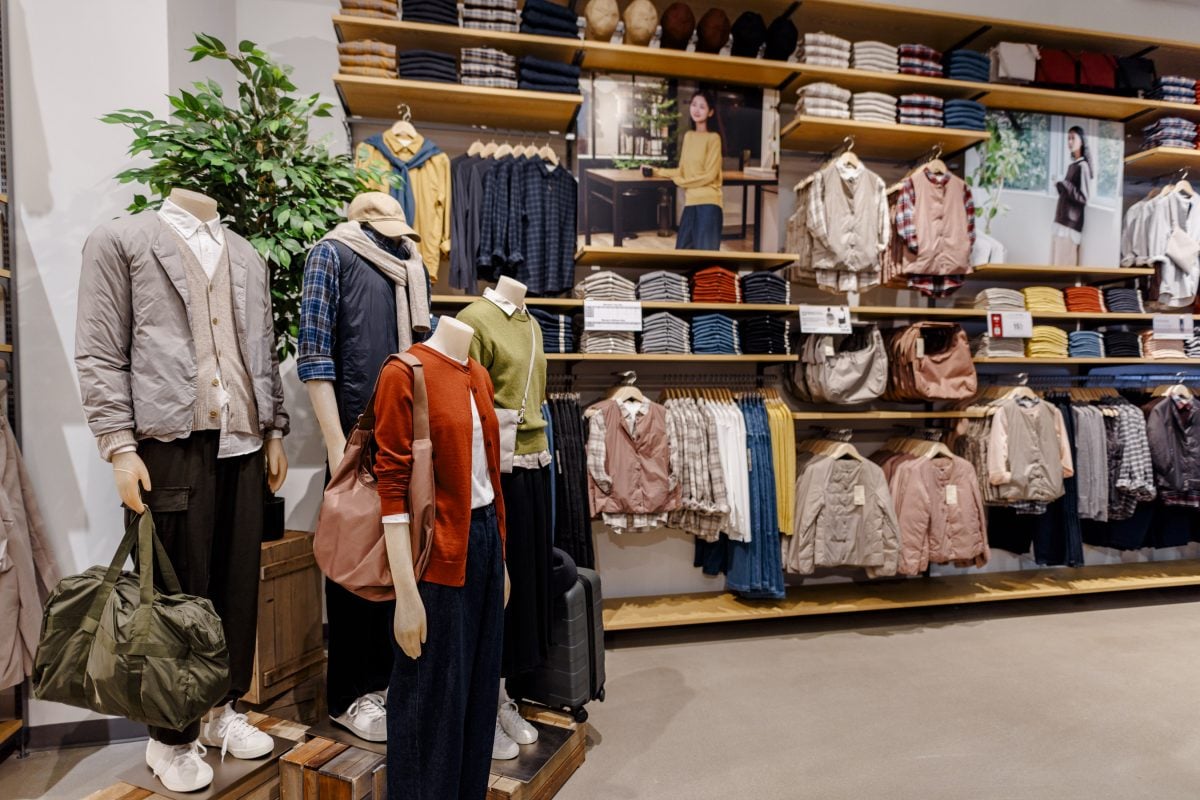
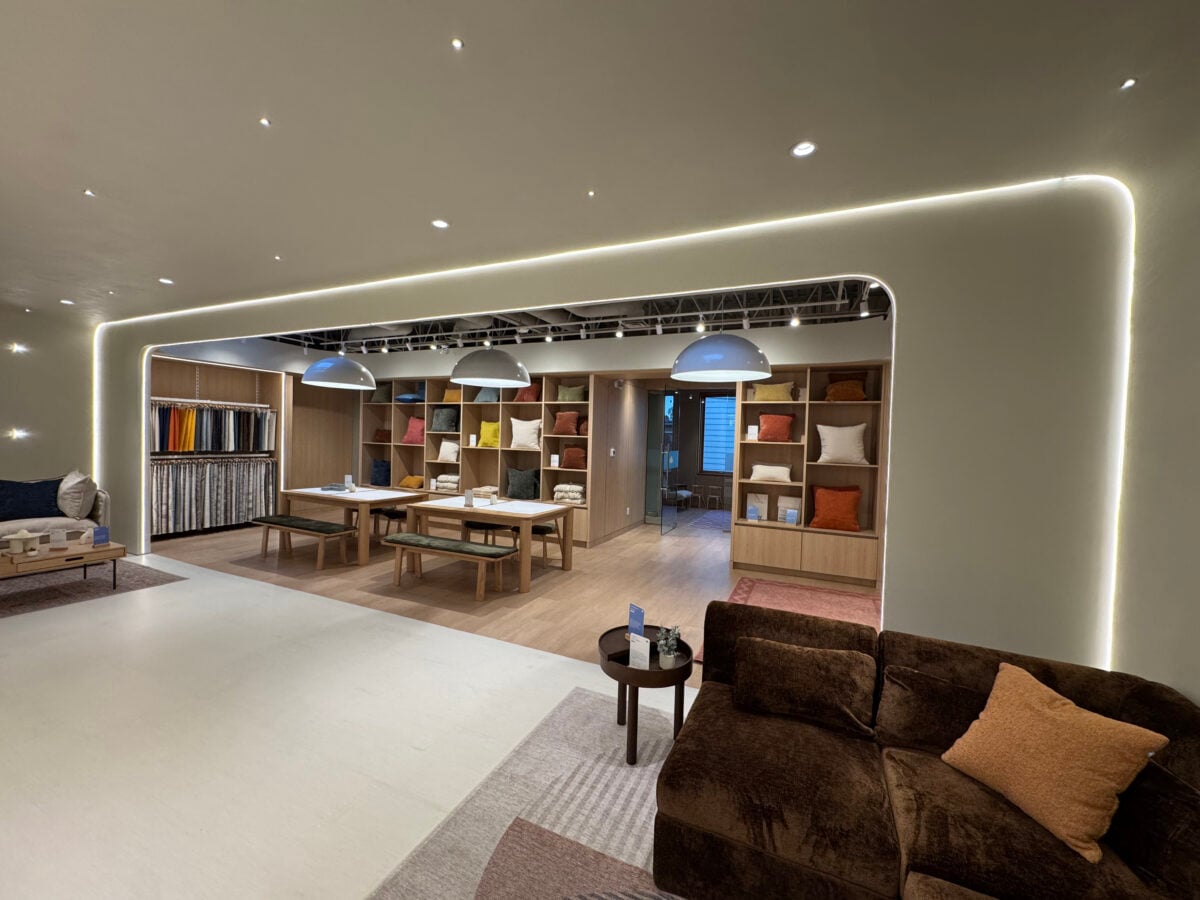
MUJI store in Tsawwassen Mills Shopping Centre, opened in March 2026.
Japanese retailer MUJI is opening its first Vancouver Island store at Victoria’s Mayfair Shopping Centre, adding to its British Columbia presence while launching a community partnership initiative it plans to use for future Canadian locations.
The 3,379-square-foot store will carry MUJI Canada’s full product range, including kitchen and home goods, apparel basics, stationery and travel items. The opening also marks the launch of MUJI Community Collective, a program designed to connect the retailer with local businesses and organizations in the communities where it opens stores.
The Victoria location is MUJI’s fifth store in British Columbia and its third Canadian store opening within the past year, according to the company. The retailer plans to extend the community initiative to future store openings across Canada.
Community partnerships tied to expansion strategy
MUJI Community Collective is intended to give local businesses and organizations a role in the retailer’s store-opening celebrations and introduce them to new audiences. The company said the initiative builds on its existing Community Marketplace program, a global series of pop-up events that supports local makers and businesses.
For the Victoria launch, MUJI invited residents to nominate local businesses they wanted to see recognized. The retailer subsequently connected with selected businesses to incorporate them into the grand opening celebrations and help showcase their work to MUJI customers.
The company said the partnerships would continue beyond opening weekend, establishing ongoing connections between the Mayfair store and the surrounding community. It also intends to use the approach in other Canadian markets as it expands its retail network.
Richard Rappaport
“MUJI is rooted in our Japanese heritage of simplicity, quality, thoughtful design, and products that make everyday life better,” said Richard Rappaport, President MUJI Canada. “As we continue to grow in Canada, we are excited to bring that philosophy to more customers while building meaningful connections with the communities we serve. Victoria is an important next step in that journey.
“With our first store on Vancouver Island, we look forward to introducing more customers to MUJI while also celebrating the local businesses, organizations, and people that make Victoria unique. As MUJI grows in Canada, we will remain true to our Japanese roots while creating stores that feel relevant, welcoming, and connected to the communities they serve.”
The company said the community-focused approach represents an extension of its existing philosophy of simplicity, quality and everyday living. Rather than focusing exclusively on the arrival of a new retailer, the initiative emphasizes businesses and organizations already operating in each market.
Mayfair store adds to B.C. footprint
The new location is inside Mayfair Shopping Centre, which houses national and regional retailers. The store will use MUJI’s marketplace-style layout and offer products across the company’s main merchandise categories, allowing customers to shop its Canadian assortment in one location.
The grand opening weekend is scheduled for Oct. 24 and 25, with giveaways, activities and treats and prizes provided by local community partners. The company has also established an online event registration page for the opening.
The Victoria store follows the opening of MUJI’s Tsawwassen Mills Shopping Centre location in March 2026. The company described the Mayfair opening as part of its broader strategy to grow across Canada while developing retail experiences connected to local communities.
The Well in Toronto. MUJI photo
Japanese retailer continues Canadian growth
Established in Japan in 1980, MUJI sells products across categories including homewares, fashion and wellness. Its name, Mujirushi Ryohin, loosely translates to “No-Brand, Quality Goods,” reflecting its stated focus on simplicity, affordability and quality.
The company operates in more than 30 countries and offers more than 7,000 products, according to its corporate description. Its Canadian assortment includes household products, clothing basics, stationery and travel goods.
The Victoria opening gives the retailer a physical presence on Vancouver Island for the first time and introduces a community partnership model that it intends to carry into subsequent Canadian markets. The company has not provided details in the release about the timing or locations of its next Canadian store openings.
Jeff Berkowitz of Aurora Retail Group represents MUJI in Canada and negotiates its leases.
WitchSchool Canada is testing a collaborative retail model in a 160-square-foot storefront in Ottawa’s ByWard Market. Founder Kiki Keskinen says the grant-supported residency connects independent entrepreneurs through shared programming, customer referrals and promotional opportunities, while raising questions about long-term operating costs.
WitchSchool Canada is experimenting with a collaborative approach to physical retail in Ottawa’s ByWard Market, bringing independent entrepreneurs together in a temporary storefront where they can share programming, promotional opportunities and customer referrals while operating their own businesses. The initiative combines educational programming and independent services in a compact commercial space.
The organization, founded by Kiki Keskinen in 2017, is participating in a 27-day STACKTˣ Storefront Grant residency at 60 ByWard Market Square from October 6 to November 1. The location includes approximately 160 square feet of indoor space and a larger outdoor patio, with programming ranging from Tarot readings and educational workshops to community events involving artists, authors and other independent practitioners.
Keskinen calls the approach reciprocal retail, a model in which participating businesses retain their own customers and revenues while collaborating to attract visitors. The experiment raises questions about how small commercial spaces could support multiple entrepreneurs, particularly in shopping centres, vacant storefronts and established retail districts.
Bringing Independent Businesses Together
WitchSchool Canada began as an educational organization focused on earth-based spirituality, mythology, Goddess traditions, ritual and related subjects. Its programming has evolved from in-person classes to live online instruction, with a network of students and educators across Canada and the United States.
Keskinen’s background includes packaged-goods marketing, telecommunications, public relations and consumer engagement. She also taught public relations in Carleton University’s journalism department for 12 years, experience that has informed her approach to building customer relationships and introducing unfamiliar products and services to new audiences.
At the Ottawa location, WitchSchool has brought together Tarot and oracle practitioners, authors, artists, musicians and educators for a rotating schedule of activities. Programming has included demonstrations, workshops, discussions about grief and death, and a Witches Dance event, with some activities offered free and others generating revenue through tickets or professional services.
Participating entrepreneurs maintain their own businesses, set their prices, manage bookings and retain their earnings. WitchSchool provides the shared location, coordinates programming and supports promotion, without charging commissions on approved collaborator activities.
“The collectivity is in the relationships, not necessarily in the ownership,” Keskinen told Retail Insider. She explained that participating entrepreneurs are encouraged to recommend one another, introduce customers and share promotional opportunities without establishing a formal cooperative or revenue-sharing arrangement.
The approach draws on familiar practices such as shared retail spaces, cross-promotion and temporary commercial activations. Keskinen’s experiment applies those ideas to a mix of educational and service-based businesses, many of which do not require conventional merchandise-focused storefronts.
WitchSchool Canada is testing a collaborative retail model in a 160-square-foot storefront in Ottawa’s ByWard Market. Founder Kiki Keskinen says the grant-supported residency connects independent entrepreneurs through shared programming, customer referrals and promotional opportunities, while raising questions about long-term operating costs.
Early Commercial Results and Operating Costs
The residency has produced some encouraging sales activity, although Keskinen cautions that the results should not be interpreted as proof of a financially sustainable retail model. Both direct sales and longer-term customer relationships are among the outcomes being tested.
During the period, WitchSchool reported five enrolments in educational programs priced at $1,600 each, representing approximately $8,000 in tuition sales. Keskinen emphasized that those purchases cannot be attributed entirely to the storefront because the organization has also been marketing its programs through digital channels, publicity and existing customer relationships.
The physical location complements those activities by allowing prospective students to meet instructors, ask questions and become familiar with WitchSchool before committing to an educational purchase. It also provides opportunities for independent practitioners to earn revenue without establishing permanent retail locations.
According to Keskinen, one Tarot practitioner earned approximately $400 in a single day providing readings, with the money retained by the practitioner. The example illustrates the potential value of temporary commercial access, although individual results do not establish how much income other participants have generated.
Keskinen said WitchSchool has incurred approximately $1,500 in out-of-pocket expenses for the experiment, excluding substantial unpaid labour. She and her husband, Ryan, have devoted considerable time to preparing and operating the residency, reporting a workload of approximately 60 hours weekly during September and October.
The project also benefits from the STACKTˣ Storefront Grant, which provides temporary retail space and business-development support. This reduces the financial commitment associated with the experiment, making the reported cash expenditure considerably different from what it would cost to independently lease and operate a comparable location.
“I wouldn’t claim we’ve proven a sustainable retail business model in 27 days. We’re testing it, and the STACKT grant makes that possible,” Keskinen said.
A commercially sustainable version would need to cover occupancy, insurance, staffing, production, marketing and the labour involved in coordinating multiple independent businesses. Those costs are particularly relevant when considering whether the model could be reproduced without grant support or significant unpaid work.
Connecting Physical Retail With Digital Education
The Ottawa experiment coincides with an expansion of WitchSchool’s online education business. The organization is preparing to launch a self-directed learning library on November 3, offering video and audio lessons for students who cannot attend scheduled classes or live near an instructor.
Keskinen sees physical encounters as an important part of introducing potential customers to educational offerings that may be unfamiliar to them. Visitors can meet practitioners, learn about the programs and establish relationships before deciding whether to enrol.
“You don’t simply put a product on a shelf and hope people will purchase it. You create awareness, familiarity, encounters and stories that allow people to develop confidence in the brand,” she explained.
The eventual transaction may occur online, making the storefront one component of a broader customer-acquisition strategy. However, WitchSchool has not established how many enrolments or future purchases are directly attributable to the Ottawa residency.
Keskinen is also interested in supporting local activities organized by WitchSchool graduates and instructors in other Canadian communities. Such an approach could allow the organization to maintain a physical presence through temporary programming without establishing permanent school locations.
Encouraging Customers to Explore the ByWard Market
The experiment extends into the surrounding commercial district through programming intended to connect WitchSchool visitors with other local businesses. A neighbourhood shopping event is scheduled as part of the residency.
One initiative is The Charmed Route, an October 25 Witches Walk & Shop event developed with Catherine Landry of SheShopsLocal. The event is scheduled to involve visitors following a mapped route through the ByWard Market, collecting charms at participating retailers and returning to the WitchSchool patio for a concluding gathering.
The event is intended to introduce visitors to merchants they might otherwise overlook while encouraging customer movement between independently operated businesses. Its impact on sales and pedestrian traffic has not yet been established.
Keskinen believes locally based organizers are important to making these initiatives work, particularly when programming involves several merchants and community partners. She also emphasizes that those responsible for coordinating activities need to be compensated, since the time required to manage relationships, promotion and events represents a substantial operating cost.
“I’m not interested in creating another economic structure where women provide endless unpaid care and coordination while other people earn the money,” Keskinen said. She added that the people doing professional work need to be compensated and that each entrepreneur should have an opportunity to build a sustainable business.
Potential Uses for Vacant Storefronts
Keskinen believes the reciprocal retail approach could have applications beyond WitchSchool, including shopping centres, vacant commercial units and neighbourhood retail districts. She has suggested a different mix of services could be assembled for other locations and seasons.
One example she has proposed involves temporarily converting an empty storefront into a collaborative sewing and repair centre during the winter. Clothing alterations, textile artists, repair services, independent designers and workshops could operate from the same location, giving customers several reasons to visit.
For property owners, such arrangements could create additional activity in otherwise vacant space while introducing new businesses to the property. Participating entrepreneurs could benefit from customer referrals, shared promotion and temporary access to a physical location without the commitments associated with a conventional lease.
The model would still require suitable occupancy arrangements, insurance, facilities and professional coordination. Its viability would depend on the economics of each location, including whether the participating businesses generate sufficient value to justify those expenses.
STACKT’s accelerator program already provides small businesses with temporary storefront opportunities and promotional support intended to reduce the barriers to testing physical retail. WitchSchool’s residency demonstrates how that platform can accommodate businesses centred on education, services and community programming.
Exploring Opportunities Beyond Ottawa
Keskinen is interested in developing similar temporary activities in other Canadian cities through WitchSchool’s network of instructors, graduates and independent collaborators, although no additional retail residencies have been announced. The model would rely on local organizers and participating businesses.
She envisions locally organized programming suited to individual neighbourhoods, supported by WitchSchool’s educational resources and network of participants. A future activation could involve different businesses and activities depending on the market, available space and time of year.
According to Keskinen, STACKT is collecting information before and after the Ottawa residency to assess the experiment and identify lessons for future initiatives. The findings could help identify which activities and operating arrangements are worth repeating.
“I don’t think 27 days can prove the future of retail,” Keskinen said. “But it can give us a very useful opportunity to question some of the assumptions about what a storefront is for, how small businesses might cooperate and what customers actually want from their commercial neighbourhoods.”
For WitchSchool, the next challenge is determining whether the customer relationships, referrals and revenue generated through collaborative programming can support the full cost of operating it. The results will help determine whether reciprocal retail can become a practical option for independent entrepreneurs seeking access to physical retail space.
Montreal-based furniture company Cozey has doubled the size of its Toronto flagship showroom to 7,200 square feet as the furniture retailer responds to increased customer traffic and expands its product offerings.
The Montreal-based company added a second floor to its Queen Street West location, which opened in 2023 as its first permanent retail store. The expansion increases the showroom’s size from 3,600 square feet and provides additional space for customers to explore the company’s growing furniture selection.
The renovation is intended to accommodate demand in Toronto and the Greater Toronto Area while providing more room for the retailer’s expanding product categories.
“It’s been incredible to see the customer reaction and store evolution since it first opened,” says Frederic Aubé, Founder and CEO of Cozey. “As our first-ever permanent location, the Queen Street showroom is an important part of our company’s history and an essential community hub. This renovation is a direct reaction to meet Cozey’s growing demand in the Toronto and Greater Toronto area, meanwhile providing our customers with an evolved shopping experience. We look forward to having more customers in the space, and to curating more community moments.”
Frédéric AubéTaurean Scotland
Product expansion drives showroom growth
Located in Toronto’s Trinity Bellwoods neighbourhood, just west of the Ossington strip, the store has experienced a steady increase in foot traffic since opening in 2023. The additional floor space is designed to give customers more room to browse the retailer’s expanding range of furniture and home products.
Cozey has broadened its product assortment this year, entering the bedroom category with the launch of its Ara bed system and mattress option. The company has also introduced three new sofas, including Cassini, its first curved sofa, as well as sleeper options through its Orian and Atmosphere Sleeper models.
The retailer has added living room and dining furniture as part of its product expansion. The larger showroom provides more space to display those offerings, while the store’s team has grown alongside the physical location and its expanded assortment.
“The renovation couldn’t come at a better time,” says Scotland. “To see our footprint double is pretty amazing. It’s also much needed, considering how consistently busy the store is. Having been with Cozey’s Queen Street store since the beginning, I’ve had a front-row seat to just how much the brand and our customers have evolved and I’m excited to be able to comfortably welcome more customers into the store to continue providing a great customer experience.”
Cozey photo
Retail expansion continues across North America
The Toronto showroom expansion follows Cozey’s permanent store opening in Montreal last month, adding to the company’s investment in physical retail locations.
The company is also planning further expansion, with store openings scheduled for Edmonton later this year and New York City in early 2027. The planned openings would extend its physical retail presence into additional markets.
Cozey’s growth in 2026 has also included product launches and an e-commerce launch in Australia, according to the company. The combination of new retail locations, an expanded product range and its entry into the Australian online market represents several areas of expansion during the year.
The Toronto renovation marks a further investment in the location where Cozey began its permanent physical retail operations, while the planned openings in Edmonton and New York City signal its intention to continue expanding its store network.
Furniture retailer CouchHaus is opening a pop-up showroom at 322 King Street East in Toronto with a soft opening in late October and with the showroom fully operational for November.
“This is an exciting next step for us. We first tested the Toronto market with our Stackt pop-up in 2024, and the response reinforced that customers want an in-person place to experience the comfort, dimensions, fabrics and customization options before purchasing,” said co-founder Paige Sandher who started the business with Harrison Gordon.
“The Stackt Market pop-up confirmed that Toronto customers were genuinely interested in a more personalized way to shop for furniture, but that they wanted to experience the product in person before making a decision. With a customizable sofa, details like comfort, seat depth, fabric, dimensions, and configuration are much easier to understand when you can sit on the product and work through the options with someone. The feedback and demand we saw gave us confidence to return with a longer-term location where we can create a more complete showroom experience and continue learning from the market.”
Paige SandherHarrison Gordon
Reason for the location
She said King East is a natural fit because customers already visit the area with design and home furnishings in mind.
“Being in that environment gives CouchHaus strong visibility with both consumers and design professionals, and it allows customers to include us in a broader shopping trip. The location also gives us the opportunity to introduce the brand in a neighbourhood that understands design while remaining accessible to customers across the GTA,” said Sandher.
“Our goal is to build a strong local customer base, deliver an exceptional in-person experience and learn what Toronto customers need from us. We will be looking at demand, showroom traffic, sales performance, customer feedback and the role the location plays in building awareness across the Greater Toronto Area. The pop-up gives us enough time to assess the market thoughtfully before making a longer-term real estate decision.”
CouchHaus image
The showroom experience
Sandher said the showroom experience further supports its online experience.
“While our design team can support clients virtually, comfort is personal. Our customers can customize the dimensions, configuration, depth, cushion fill, fabric and other details, so the showroom helps turn what could feel like a complicated decision into a clear and confident one. Our Design Consultants act as concierges: they listen to how someone lives, understand the space and help build the right sofa around that customer’s needs,” she said.
“Toronto is the next step in building CouchHaus as Canada’s leading customizable furniture brand. Vancouver gave us our foundation, Calgary demonstrated the value of entering a new market with a physical showroom, and Toronto allows us to bring the experience to Canada’s largest market.
“Our near-term priority is to execute well across all three cities while using what we learn from our showrooms and online purchasing data to guide where we go next. That could mean a second location in Toronto or Vancouver, or expansion into markets such as Ottawa and Montreal. We want to follow our customers: looking at where online orders are coming from, where demand is growing, and where an in-person experience would have the greatest impact.”
Retail Insider has released Q3 2026 Grocery: Capacity Expands as Competition for the Basket Intensifies, authored by founder and publisher Craig Patterson. The report examines a competitive problem that opening announcements alone cannot answer: how much additional grocery business new investment will actually produce.
The report covers Canadian supermarkets, discount and specialty grocers, store development, merchandising, consumer purchasing and online fulfilment. It draws on Retail Insider reporting, company disclosures, government data and industry research, distinguishing Q3 developments from earlier reporting periods and projects scheduled for later years.
Retail Insider Reports bring together sector reporting and commercial analysis for retailers, suppliers and property owners. The Retail Insider Report Hub provides access to the full quarterly collection and its coverage of the wider Canadian retail economy.
General Themes
Discount is becoming more local: Store size, assortment and banner choice are being adapted to individual trade areas.
Opening counts need context: New builds, acquisitions, conversions and relocations create different changes in grocery capacity.
Households remain price-conscious: Slower inflation has not reversed the cumulative increase in food costs.
Online growth is not a profit measure: Order density, basket size and fulfilment costs determine the economics.
Existing stores matter: Added capacity must be assessed alongside cannibalization, store contribution and changes in household spending.
Retail Insider Coverage
Grocery inflation slowed to 2.8 per cent year-over-year in August, below the 3.0 per cent headline rate, but prices remained approximately 29 per cent above August 2021. NIQ findings cited in the report indicated more purchase occasions and lower average transaction spending across several retail channels. Those occasions are not a count of supermarket visits. They nevertheless show why retailers are competing for portions of a household basket rather than assuming one destination captures it all.
Loblaw’s $2.4-billion Canadian capital program includes investment in No Frills and Maxi, alongside pharmacy and other formats. Its roughly 75 expected openings should therefore not be read as 75 supermarkets. An approximately 8,000-square-foot No Frills in Dutton, Ontario, uses a curated assortment of about 4,000 products, while a larger Komoka store offers more fresh and prepared food. Both adapt discount to local demand, with their longer-term returns still to be established.
Metro is repositioning existing capacity through plans to convert 10 Ontario supermarkets to Food Basics. The company expects the selected sites to perform better under a different price proposition, with benefits building over subsequent fiscal years. Its fiscal third-quarter food same-store sales decline of 1.5 per cent was materially affected by the Laval produce-distribution strike. That result is not a clean measure of underlying demand or the case for banner conversion.
Empire raised its fiscal 2027 store target to more than 25 and plans approximately $850 million in capital spending. The target includes four acquired Mayrand stores, so it is not an entirely new-build program. FreshCo’s Atlantic Canada entry sits alongside investment in IGA, Safeway and other banners. Discount is important, but it is not the only format attracting capital.
Walmart’s planned Supercentres in former department-store spaces can introduce substantial grocery capacity without an equivalent increase in net store count. T&T’s approximately 68,000-square-foot CF Markville project is expected to replace its roughly 50,000-square-foot Unionville store in 2028, adding about 18,000 square feet rather than an entirely new 68,000-square-foot operation. Its planned 48,000-square-foot CF Polo Park store represents a different move: entry into Manitoba, expected in spring 2028. Each project changes local competition differently.
Operator turnover also needs to be separated from property viability. Valleyview IGA reopened at an established Edmonton grocery site after L’OCA’s departure, while McEwan plans to occupy former Pusateri’s space at Bayview Village in 2027. Sunterra’s Red Deer closure occurred during company restructuring, not proof of a general premium-grocery retreat. Crombie’s 11.3 per cent first-year rent increase on second-quarter renewals applied across its portfolio, not specifically to Sobeys or Safeway stores.
Broader Industry Coverage
Loblaw, Metro and Empire reported online growth of 19.3 per cent, 16.3 per cent and 11.3 per cent respectively in their latest fiscal periods. Those periods differ, preventing a like-for-like Q3 ranking. More digital revenue also says little by itself about the costs of picking, delivery, customer acquisition and dedicated facilities.
Metro plans to close its dedicated Montreal e-commerce facility and move toward store picking and third-party delivery. Its combined network measures, including the Ontario conversions, are expected to produce approximately $15 million in recurring annual after-tax earnings by the end of fiscal 2028, with roughly half attributed to each component. Using existing stores reduces reliance on dedicated infrastructure, but brings its own labour and operating requirements.
Empire is giving Voilà and third-party delivery different jobs after concluding that Canadian grocery e-commerce demand was smaller than originally expected. It closed its Calgary fulfilment centre and kept Vancouver plans on hold while retaining dedicated Toronto and Montreal facilities. The earlier restructuring was expected to improve annualized e-commerce operating income by approximately $95 million. Planned baskets and immediate purchases need not support the same fulfilment model in every market.
Instacart made its Clementine shopping assistant available to most Canadian and American customers in September. The launch establishes Canadian availability, not Canadian profitability gains. Early basket-size claims were not Canada-specific, leaving repeat use, conversion and customer retention as questions for subsequent evidence.
A September consent agreement made Empire’s earlier commitments on certain grocery property controls legally binding. Easing restrictive covenants and exclusivity clauses can reduce barriers without supplying suitable premises, capital or demand. Separately, the Competition Bureau’s investigation into minimum advertised pricing policies remained ongoing and was not a finding of wrongdoing. Empire also reported minimal immediate tariff effects and said it would challenge some supplier increases, illustrating why new costs do not automatically pass through unchanged to shelves.
Editor’s Take
The report argues for measuring transactions, real sales, store contribution and cannibalization rather than treating each opening as equivalent growth. July supermarket sales at constant prices were 2.4 per cent below a year earlier, but that establishment category excludes grocery sold through general merchandise retailers. It is evidence of pressure within one channel, not a complete measure of Canadian food demand.
Over the next six to 18 months, Metro’s conversions, smaller No Frills formats and Empire’s development program will provide clearer operating evidence. Several large shopping-centre projects extend into 2027 and 2028. Online investment needs the same discipline: growth must justify its picking, delivery and infrastructure costs rather than repeat the assumptions behind earlier overbuilding.
National averages cannot identify every underserved community or explain the economics of every site. They also cannot make additional capacity profitable merely because a retailer can afford to build it. The commercial test comes after opening, when incremental household spending can be separated from sales transferred out of existing stores.
The Retail Insider Report Hub includes this report and the wider quarterly series. It provides a common starting point for following Canadian retail sectors and the operating decisions shaping their performance.
Measured on a scale between 0 and 100, an index below 50 means owners expecting their business’s performance to be weaker over the next three or 12 months outnumber those expecting stronger performance.
Absorbing tariff and fuel costs increases
Average price increase plans dropped to 2.8% after spiking to 3.3% in September. CFIB’s recent edition of the Main Street Quarterly shows that small firms planning to absorb more than half of tariff and fuel cost increases outnumber those intending to pass most of those costs on to customers.
“Sectoral confidence—also calculated as three‑month moving averages— remains weakest in agriculture, construction, manufacturing, transportation, and retail trade; with readings below 50. Transportation, construction, retail and manufacturing also recorded the largest declines in long-term confidence,” said the report.
Yan Krukau photo
Higher share of employers planning to lay off staff
‘Full-time staffing plans weakened further in October, with a higher share of employers planning to lay off staff (22%) than to hire (11%). This month marks the weakest net staffing intentions since the pandemic.
“Insufficient demand remains the top constraint to business and production expansion, cited by 50% of SMEs, followed by the shortage of skilled labour (43%).
“Despite the additional pressures from higher fuel costs, about 70% of small businesses expect to pass on to customers only a very small part of these higher costs. On average, businesses expect to pass on only about one-fifth (21%) of the higher costs through price increases.”
Nearly two-thirds of Canadian small business owners plan to leave their businesses within the next decade, but just 6 per cent have a formal succession plan, putting more than $2 trillion in business assets at risk, according to a new report from the Canadian Federation of Independent Business (CFIB).
The report, released Thursday, says 63 per cent of owners expect to exit their businesses over the next 10 years, with retirement the primary reason. The findings highlight the challenge of transferring ownership to a new generation of entrepreneurs as business exits have outpaced new business entries in Canada since early 2024.
The CFIB is calling on governments to introduce measures to make business transitions easier, including tax changes, improved access to financing for prospective buyers and programs to connect retiring owners with potential successors.
“Canada is in an entrepreneurial drought. With a wave of owners preparing to exit, we can’t afford to lose viable businesses because of the difficulty in navigating ownership transitions or finding someone to take over the business. That’s a huge blow to the economy, and it puts jobs and local services at risk,” said Corinne Pohlmann, the organization’s executive vice-president of advocacy.
“A successful handover keeps a business open and brings a new generation of entrepreneurs into the economy, which is why governments need to pay attention and help make it easier to buy and sell a business.”
Corinne PohlmannMarvin Cruz
Finding buyers a major obstacle
Retirement accounts for 78 per cent of planned business exits, according to the report. However, other factors are also prompting owners to consider leaving, including burnout or stress, cited by 21 per cent, and high operating costs, cited by 20 per cent.
About 13 per cent of owners expect to close their businesses entirely, a proportion that rises to 17 per cent among retailers.
Finding a buyer or suitable successor is the most frequently cited obstacle to succession planning, identified by 47 per cent of owners. Being too busy to plan and difficulties determining the value of a business were each cited by 37 per cent.
The findings suggest that many businesses could face challenges finding new owners even when their current operators intend to sell rather than close. The lack of formal succession plans may also leave owners with fewer options as they approach retirement.
“Many business owners count on selling their business to fund their retirement. If they can’t find a buyer, they may have to delay retiring or close the business altogether,” said Marvin Cruz, CFIB’s senior director of research.
“A succession plan is the best way for owners to protect what they’ve built, and the earlier they start, the more options they’ll have.”
Owners weigh succession options
Most owners planning to exit expect to sell their businesses to someone outside their family, with 54 per cent identifying an unrelated buyer as their intended successor. Another 28 per cent plan to sell to employees.
Family transitions also remain an option for many owners. The report found that 21 per cent intend to sell their businesses to a family member, while 19 per cent plan to transfer ownership to a family member.
The figures indicate that owners may pursue more than one approach to succession, with sales and transfers forming part of the potential transition paths identified in the report.
Maintaining Canadian ownership is also a priority for many business owners. Seven in 10 respondents, or 72 per cent, said keeping their businesses Canadian-owned was important, including 68 per cent of those planning to sell outside their families.
Owners also placed considerable importance on protecting employees and maintaining their businesses’ community roles. Some 87 per cent said protecting employees was a priority, while 79 per cent emphasized continuing to support their communities.
“There is an enormous opportunity for the next generation of entrepreneurs to acquire an existing Canadian business, but they risk missing out without more government action to promote opportunities that come with buying an existing business,” Pohlmann said.
Kampus Production photo
CFIB calls for policy changes
The CFIB is asking governments to take several steps to encourage business succession and help prospective buyers acquire established companies.
Its recommendations include increasing awareness, particularly among young entrepreneurs, of the opportunities and advantages of purchasing an existing business. The organization also wants governments to add a dedicated Business Succession Stream to entrepreneur immigration programs.
On taxation, the CFIB is calling for changes to capital gains rules, including a lower 33 per cent inclusion rate on the next $2 million of gains beyond the Lifetime Capital Gains Exemption.
Other proposals include raising awareness of Employee Ownership Trusts as a succession option and creating a secure marketplace to connect business owners preparing to exit with vetted successors. The proposed marketplace would be modelled on Repreneuriat Québec.
The organization is also urging governments to explore ways to help first-time business buyers obtain financing, similar to existing supports for first-time homebuyers.
The recommendations are intended to address barriers that can prevent viable businesses from changing hands, while creating opportunities for new entrepreneurs to enter the market by acquiring existing operations.
The report, titled Passing the Torch: How Canada’s Small Business Owners Are Planning Their Exit and Why the Next Generation of Ownership Matters, examines owners’ plans for leaving their businesses and the importance of transferring ownership to the next generation.
The CFIB describes itself as Canada’s largest association of small and medium-sized businesses, with 103,000 members across industries and regions.
Canadian small business owners are increasingly putting their personal finances at risk to support their companies, with more than one in four surveyed saying they have been required to personally guarantee business financing, according to a new Equifax Canada survey.
The survey found that 26 per cent of business owners had been required to provide a personal guarantee to obtain business financing, potentially putting savings, homes and other personal assets at risk. Another 21 per cent said they had applied for or opened a personal line of credit as a financial safety net for their business during the past two years.
The findings highlight the financial pressures facing small businesses and the extent to which owners may be relying on personal borrowing to maintain operations, particularly younger entrepreneurs.
Customer acquisition, rising costs top concerns
Finding and retaining customers was the most commonly cited challenge among surveyed business owners, identified by 53 per cent of respondents. Rising operating costs followed at 48 per cent, while 42 per cent cited workload, stress or mental health concerns.
Competition was identified as a challenge by 38 per cent of respondents, while 30 per cent pointed to a lack of capital or cash flow.
Equifax data also indicates that business owners, referred to as business principals in the company’s analysis, rely disproportionately on personal credit to fund and operate their companies. They have credit utilization rates 31 per cent higher than those of average consumers, personal credit balances 105 per cent higher and manage 44 per cent more credit trades.
The company also reported high usage of revolving credit and home equity lines of credit, or HELOCs, among business owners.
“This data clearly demonstrates a disproportionate dependence on personal credit to secure timely funding and sustain their operations. To put this in perspective, if businesses are relying on HELOCs to sustain operations – and they are doing this amid challenging real estate market fluctuations – this could put them in a difficult situation. When owners are using personal credit or pledging personal assets to support their business, the financial health of the company can have implications well beyond the business itself, ” notes Brown.
Younger owners more likely to put personal finances at risk
The survey found a substantial difference between younger entrepreneurs and older business owners in their reported reliance on personal guarantees and credit.
Among owners aged 18 to 34, 54 per cent said they had been required to provide a personal guarantee for business financing, compared with 15 per cent of owners aged 55 and older.
The same proportions applied to younger owners who said they had applied for or opened a personal or business line of credit as a financial safety net during the previous two years: 54 per cent among those aged 18 to 34, compared with 15 per cent among those aged 55 and older.
Among the smaller group of surveyed owners who had used a personal line of credit or provided a personal guarantee for their business, 45 per cent said the arrangements had affected their personal finances.
Reported consequences included reduced personal credit availability, cited by 20 per cent, and greater difficulty qualifying for a car loan, also reported by 20 per cent. Another 15 per cent said they had difficulty obtaining other personal credit, while 13 per cent reported difficulty qualifying for a mortgage.
“The findings suggest that younger business owners are managing several pressures simultaneously: maintaining customers and revenue, absorbing higher costs and, in some cases, finding additional financing to bridge cash-flow gaps,” notes Brown.
https://kaboompics.com/ photo
Business credit monitoring remains limited
Despite the reported financing pressures, awareness of business credit reports remains uneven among surveyed owners.
Just over half, or 54 per cent, said they had checked their business credit report at least once, including 34 per cent who had done so within the previous 12 months. Meanwhile, 15 per cent said they did not know how to access their business credit report, and 10 per cent were unaware their business had a separate report.
The survey also found interest in accessing credit information through existing banking relationships. Nearly two-thirds, or 64 per cent, of respondents said they would be interested in monitoring their business credit score directly through their bank’s commercial banking platform.
Among owners who had checked their business credit report within the past year, interest rose to 86 per cent. The figure was 74 per cent among owners under age 55, compared with 52 per cent among those aged 55 and older.
Last month, Equifax Canada reported on commercial credit trends, saying Canadian businesses were carrying more debt as tariffs and payment pressures deepened. That report also pointed to differences in how businesses were managing their financial obligations and allocating cash.
“You cannot manage what you cannot see,” said Brown. “Understanding a company’s commercial credit profile can help business owners better understand how lenders may view their business and the financing options that may be available to them. Making that information easier to access could help owners make more informed financial decisions.”
Equifax said it works with small-business lenders to support Canadian companies and offers a business credit report intended to provide a snapshot of a company’s financial profile.
Canadian small businesses increased their average workforce by 44 per cent between 2019 and 2025 while reducing employee turnover and raising median hourly pay faster than inflation, according to a new report from payroll software provider Wagepoint.
The company’s 2026 Canadian Small Business Workforce Report, based on aggregated payroll data from approximately 6,800 Canadian small and mid-sized businesses, found that average headcount rose to 19.1 employees from 13.3 in 2019. The annual employee separation rate fell to 27 per cent from 38 per cent over the same period.
The findings also show a significant shift in workforce demographics, with Generation Z accounting for 38 per cent of employees at participating businesses in 2025, up from 18 per cent six years earlier. Millennials represented 41 per cent of the workforce, down from 55 per cent.
The report examines payroll data covering actual hires, departures and compensation from 2019 to 2025, offering a view of how participating small businesses have changed their staffing practices, workforce composition and pay levels.
cottonbro studio photo
Hourly wages outpace inflation
Median hourly pay increased 27 per cent over the six-year period, rising to $26.70 from $20.97, compared with an approximately 20 per cent increase in consumer prices, according to the report. Median full-time salaries rose by about 14 per cent.
The data also indicates that small businesses shifted toward full-time employment as their teams expanded. Part-time positions accounted for 69 per cent of headcount in 2025, down from 79 per cent in 2019.
Together, the changes point to a workforce that has grown in size while experiencing lower employee separation rates and higher hourly compensation. The report notes that larger teams create additional payroll and staffing responsibilities for business owners, including onboarding, accurate pay administration and employee retention.
The findings also have implications for accountants and bookkeepers who support small businesses, as payroll becomes a more significant part of the advice clients require when managing staffing and labour costs.
“Payroll data gives us a real-world view of how Canada’s small businesses are changing, from who they hire to how they pay and retain their people,” said Ben Richmond, CEO of Wagepoint. “These trends matter because small businesses are a major part of Canada’s economy, yet their workforce realities can be overlooked in broader employment data. Seeing how teams are growing, who’s entering the workforce, and how wages are keeping pace with inflation helps us better understand the pressures and opportunities facing small businesses today.”
Ben RichmondVitaly Gariev photo
Gen Z gains share of small-business workforce
The growing representation of younger workers was one of the report’s key findings. Gen Z’s share of employment more than doubled between 2019 and 2025, while the proportion of millennials declined, leaving the two generations accounting for a combined 79 per cent of the workforce in 2025.
The figures reflect changes in the composition of employees at businesses included in Wagepoint’s data rather than estimates covering every Canadian small business.
The report’s analysis is based on de-identified, aggregated payroll information from approximately 106,000 employees at businesses that used the platform during the six-year period. Partial-year 2026 data was excluded.
Wagepoint said the figures represent trends among businesses that operate formal payroll systems and should not be interpreted as estimates of the company’s market share or of the entire Canadian business population.
Regional workforce trends vary
Western Canada recorded the largest increase in average workforce size among the three regions examined, with headcount rising 53 per cent to 18 employees per business in 2025 from 11.8 in 2019. The region also had the highest median hourly pay, at $27.58.
Central Canada had the largest businesses on average, with 20 employees in 2025, up from 14.5 six years earlier. The region’s annual employee separation rate declined to 26 per cent from 39 per cent.
In Atlantic Canada, Gen Z’s share of the workforce rose to 37 per cent in 2025 from 14 per cent in 2019, the largest increase among the regions. The report notes that this shift occurred despite the region having Canada’s oldest population.
Median hourly pay in Atlantic Canada increased 33 per cent during the period, rising to $25.19 from $18.95.
The regional results show that workforce growth, employee retention and wage increases varied across the country, with Western Canada leading in average headcount growth, Central Canada reporting the largest average business workforces and Atlantic Canada recording the largest increase in Gen Z representation.
Wagepoint, founded in 2012, provides payroll software to Canadian small businesses, accountants and bookkeepers. The company says more than 30,000 businesses, accountants and bookkeepers rely on its platform.
HEINZ is entering Canada’s ready-to-eat soup market with six varieties packaged in portable bags, marking the brand’s first move into the category in Canada and introducing a format that Kraft Heinz Canada says is new to the country’s major soup brands.
The HEINZ Soup Collection has rolled out nationwide, offering an alternative to traditional canned soup as the company expands its product portfolio beyond its existing canned tomato soup.
The launch also represents the first time a major brand has introduced ready-to-eat soup in a bag to Canadian consumers, according to the company. More than 80 per cent of ready-to-eat and condensed soup in Canada is still sold in cans, based on market data cited by Kraft Heinz Canada.
Six varieties target demand for convenience
The collection includes Homestyle Chicken Noodle, Thai Style Chicken Coconut Curry, Hearty Tomato and White Bean, Cheesy Potato, Rich Mushroom and Curry Butternut Squash. The products are made with vegetables and are designed to offer a range of flavours and textures in a ready-to-eat format.
The bags are designed to be easy to open and do not require a can opener or additional ingredients, according to the company. Kraft Heinz Canada is positioning the products for occasions such as workday lunches, busy routines and meals on the go.
The launch comes as the company points to the size of the Canadian soup market, with 76 per cent of Canadians purchasing soup, according to NielsenIQ Homescan data cited by the brand.
Kelly FlemingHEINZ photo
“Canadians know HEINZ for making everyday foods better, and we see an opportunity to bring that same standard to more parts of the grocery store,” said Kelly Fleming, Chief Marketing Officer, Kraft Heinz Canada. “Soup is a category Canadians already love, but one that we believe is ready for something new. We’ve paired carefully crafted recipes with a more convenient format to deliver a satisfying, ready-to-eat option for the aisle.”
Expansion beyond existing soup products
The collection expands HEINZ’s soup offering, adding six ready-to-eat soup products and a new packaging format to the brand’s Canadian portfolio.
The company says the products are intended to provide an alternative for consumers seeking flavours and textures associated with homemade or restaurant-style soups without having to prepare them from scratch. The launch combines the convenience of a ready-to-eat product with recipes that extend beyond traditional soup offerings.
Kraft Heinz Canada’s broader portfolio
Kraft Heinz Canada traces its history to 1903, when James Lewis Kraft began selling cheese from a horse-drawn wagon in Stevensville, Ont. Heinz Canada was established in Leamington, Ont., in 1909, initially selling pickles sourced from local growers.
Following the 2015 merger of Kraft Foods Group and H.J. Heinz Company, Kraft Heinz Canada became a subsidiary of the newly formed Kraft Heinz Company, which trades on the New York Stock Exchange under the symbol KHC.
The company describes itself as Canada’s second-largest food and beverage company, with products including Kraft Peanut Butter, Heinz Ketchup, KD, Philadelphia Cream Cheese, Renée’s Dressing, Jell-O, Classico, Kool-Aid and Maxwell House. Its products are found in more than 97 per cent of Canadian households, according to the company.
Kraft Heinz Canada also identifies community initiatives, including Kraft Heinz Project Play and Kraft Hockeyville, as part of its local activities, alongside Kraft Heinz Project Pantry, which supports food banks across Canada.
HEINZ photoHEINZ photoHEINZ photo
In an interview with Retail Insider, Fleming spoke about the initiative.
What consumer research or market trends led Kraft Heinz Canada to believe Canadian shoppers are ready for a new ready-to-eat soup format, and what gap in the existing soup aisle are you looking to fill?
Canadians are looking for more from everyday meals—richer flavours, heartier textures and convenient options that fit busy routines. When it comes to soup, we saw a clear opportunity to modernize the aisle and bring something different. Canadians want the rich flavours and hearty textures they associate with homemade or restaurant-style soup, but they don’t always have the time or effort to make it from scratch. HEINZ Soup is designed to close that gap – delivering an elevated ready-to-eat soup experience without the time or effort required to make soup from scratch.
Why did Kraft Heinz choose a portable bag for the HEINZ Soup Collection, and what were the biggest challenges involved in developing and scaling soup in this format?
With more than 80 per cent of ready-to-eat and condensed soups still sold in a can, we wanted to give Canadians a fresh alternative and a convenient substitute that better fits busy schedules and on-the-go moments without needing a can opener or extra ingredients. The team worked hard to develop a recipe that delivered on the expected taste and texture while also ensuring that the new innovative format was easy to understand and intuitive to use.
How significant do you expect the HEINZ Soup Collection to become within Kraft Heinz Canada’s overall soup business, and what are your expectations for sales and market share in the first year?
We see the HEINZ Soup Collection as a meaningful step forward for our soup business in Canada because it’s designed to recruit and re-engage shoppers who want a more elevated, ready-to-eat soup experience that fits busy, on-the-go routines. That said, it’s still early, and our focus in year one is on building awareness, driving trial, and earning repeat—making sure the product and the portable bag format are clearly understood and deliver on taste and texture expectations.
How will the six recipes be positioned and priced relative to existing canned, carton and other ready-to-eat soup offerings, and which consumer segments are you specifically targeting?
HEINZ Soup is competitively positioned within the category, offering an elevated ready-to-eat experience for Canadians looking for rich flavours, hearty textures and everyday convenience.
Each flavour we designed features a Heinz twist on comforting classics our consumers know and love and are made with wholesome vegetables to offer restaurant quality flavour and hearty textures.
Will the launch remain exclusive to Canada, and if the collection performs well, do you anticipate expanding the range, introducing additional formats or bringing the concept to other markets?
While HEINZ has a presence in the soup category in other markets, this specific HEINZ Soup collection is exclusive to Canada. It’s too early to confirm what might come next, but we’re excited for Canadians to be the first to enjoy it and will continue to assess future opportunities.