Advertisement
Home Blog Page 26

Affordability Is Changing How Canadians Eat Protein

Grocery basket in a grocery store. Image: iStock/licensed

For years, the food industry assumed Canada’s protein future would be shaped by a dramatic shift toward veganism and strict plant-based eating. That future never arrived. Instead, Canadians have chosen something far more pragmatic and far more disruptive to the market: flexibility.

The latest Canadian Food Sentiment Index from Dalhousie University’s Agri-Food Analytics Lab, supported by Caddle, shows a remarkable transformation in dietary behaviour among Canadian adults. Omnivorous diets, meaning consumers with no specific dietary restrictions, fell from 67.6% in Fall 2024 to 55% in Spring 2026.


Based on Canada’s adult population, that represents approximately 2 to 3.5 million fewer adult Canadians identifying as omnivores in less than two years. Meanwhile, flexitarian diets climbed steadily from 4.6% to 9.4%, paleo also expanded significantly. Vegetarian and vegan diets, despite years of headlines suggesting explosive growth, remained relatively small and mostly stagnant. In fact, at 2.6% of respondents in Spring 2026, the data suggests that roughly 600,000 adult Canadians identify as vegan today. That figure has barely moved over the last several survey waves despite enormous media attention and billions invested globally into plant-based alternatives.


This is not a vegan revolution. It is a protein recalibration, and it is already reshaping Canada’s agri-food economy. Canadians are no longer defining themselves by strict labels like “vegetarian” or “vegan.” Instead, they are becoming opportunistic eaters, adapting their diets based on price, convenience, health goals, protein density, satiety, and increasingly, metabolic concerns tied to GLP-1 medications like Ozempic. The old assumption was binary: consumers would either eat meat or reject it. But today’s consumer wants flexibility and optionality. Someone may eat steak on Friday, Greek yogurt on Saturday, plant-based protein on Monday, and skip lunch entirely Tuesday because of appetite suppression drugs. This creates a far more volatile and fragmented protein economy.

The graph tells us something profound: Canada is not abandoning animal protein. Canadians are becoming more selective about when, how, and why they consume it. That shift is already sending shockwaves through food manufacturing and retail. Traditional meat categories are under pressure, especially premium red meat consumed at home. But value-added proteins are thriving. High-protein snacks, fortified beverages, dairy-based protein products, egg innovations, and hybrid foods are outperforming expectations. The success of protein-enhanced foods, from yogurt to beer, reflects a market obsessed not with ideology, but functionality. Consumers increasingly ask one question before buying food: “What does this do for me?” That is why cottage cheese suddenly became fashionable again. It is why protein bars now occupy entire aisles. It is why dairy is quietly winning the protein wars despite years of criticism from anti-animal-product activists.

Ironically, many plant-based food companies misunderstood consumer psychology. Canadians never truly wanted ultra-processed meat replicas as much as investors believed. They wanted moderation, affordability, and nutritional efficiency. Flexitarianism offers all three. The data also reveals the immense economic pressure Canadians remain under. Meat inflation has consistently outpaced many other food categories in recent years, while household budgets remain stretched. For many households, especially larger families, dietary adaptation is no longer philosophical. It is financial. That is why flexitarianism is growing faster than veganism. Consumers are not necessarily making ethical declarations. They are managing budgets.

The implications for agriculture are enormous. Canada’s livestock sector is unlikely to disappear despite years of predictions suggesting otherwise. But producers will face a more segmented marketplace. Premiumization, traceability, sustainability claims, animal welfare standards, and protein functionality will matter more than sheer volume growth. Meanwhile, pulse producers and ingredient manufacturers may benefit enormously from hybrid consumption patterns. Lentils, chickpeas, pea proteins, and beans are increasingly integrated into mainstream diets without consumers fully abandoning meat. Canada, one of the world’s largest pulse exporters, is uniquely positioned to capitalize on this middle ground.

For over a decade, the food conversation was dominated by activists predicting the collapse of animal agriculture and the inevitable rise of fully plant-based diets. But Canadians have chosen moderation instead of absolutism. That may frustrate ideological purists on both sides, but it reflects how real consumers actually behave during periods of economic uncertainty. People rarely eat according to political theory. They eat according to affordability, biology, convenience, and habit. The future of protein in Canada will not belong exclusively to meat, nor to plants. It will belong to flexibility.

More from Retail Insider:
Leon’s Furniture sees dip in sales in Q1

Leon's Furniture Coquitlam (Image: Leon's Furniture Limited)

Leon’s Furniture Limited announced Thursday financial results for the quarter ended March 31, 2026, showing system-wide sales of $672 million, a decrease of 3.5% from the same period a year ago.

“During the first quarter our team executed with discipline in a period defined by macro headwinds, a cautious consumer and particularly demanding prior-year comparables. We continued to grow share in our core categories while expanding gross margin with a consistent focus on thoughtful merchandising and an optimized promotional strategy. The mattress category was a clear standout, delivering mid-single-digit growth in a challenging segment – a direct result of the focused-assortment playbook that drove our furniture gains last year,” said Mike Walsh, President and CEO of LFL.

“While there are elevated risks across the broader economy, from potential tariffs to increased fuel costs, LFL is well positioned to continue to outperform through this cycle and to come out of it in a stronger position as conditions normalize. Retailers across the sector continue to face a more selective consumer, and we are navigating those pressures from a position of strength, with the business better positioned than ever before. Our scale, national distribution network and approximately $561 million in unrestricted liquidity position us to continue delivering value to Canadians, gaining share in our categories of focus, and delivering long-term returns for our shareholders.”

Financial Highlights – Q1-2026

  • System-wide sales for the quarter were $672.0 million, a decrease of 3.5%.
  • Q1 Revenue was recorded at $557.2 million, a decrease of 3.8%, driven primarily by timing of delivered sales in the furniture category as compared to Q1 last year, a challenging macro environment and unfavourable weather.
  • Same store sales decreased 4.2%.
  • Gross profit margin was 44.80%, a 21-basis points improvement driven by favourable category sales mix and improved appliance rates.
  • Net Income was $21.5 million compared to $23.8 million in the prior year.
  • Adjusted net income was $20.1 million compared to $24.1 million in the prior year.
  • On March 31, 2026, unrestricted liquidity was $560.8 million, comprised of cash, cash equivalents, debt and equity instruments and the undrawn revolving credit facility.

Leon’s Furniture Limited is the largest retailer of furniture, appliances and electronics in Canada. Its retail banners include: Leon’s; The Brick; Brick Outlet; and The Brick Mattress Store. With The Brick’s Midnorthern Appliance banner alongside with Leon’s Appliance Canada banner, this makes the company the country’s largest commercial retailer of appliances to builders, developers, hotels and property management companies. The company has 299 retail stores from coast to coast in Canada under various banners. It operates six websites: leons.cathebrick.comfurniture.camidnorthern.comtransglobalservice.com and appliancecanada.com.

More from Retail Insider:

Hatch’d launches National Nursing Week fundraiser for Stollery Children’s Hospital No Bounds Campaign

Hatch'd photo
Hatch'd photo

National Nursing Week starts May 11, and Edmonton restaurant Hatch’d is donating a portion of every sale made throughout the week (May 11-17) to the Stollery Children’s Hospital Foundation’s No Bounds Campaign – the $1 billion initiative to build Edmonton’s first standalone children’s hospital. 

The initiative is called Fuel the Frontline, and Hatch’d is turning every breakfast order into a contribution to something bigger than a meal. They’re encouraging hospital staff, nursing students, and the broader U of A community to come in throughout the week, knowing that every order placed contributes directly to the No Bounds Campaign.

Brett Verhulst
Brett Verhulst

Brett Verhulst, Brand Lead at Hatch’d, said the U of A Hospital is right across the street, and the restaurant sees nurses, doctors, and hospital staff coming through its doors every single day. 

“They’re some of our most regular guests, and over time you genuinely build relationships with these people. But that’s just the business side of it – this relationship also hits our team very personally. My oldest daughter has had a couple visits to the Stollery and each time she received such special care and attention that makes me want to give back to this cause in any way that I can,” he said. 

Hatch'd photo
Hatch’d photo

“So National Nursing Week carries a lot of weight for us. It’s not an abstract awareness week, it’s a week that directly celebrates people we know by name. We wanted to mark it in a way that actually meant something to them.

“When we decided we wanted to give back during Nursing Week, we knew we wanted the donation to go somewhere that would actually move the needle. That’s when we learned about the No Bounds Campaign. The Stollery is already the most specialized children’s hospital in Western Canada, but it’s the only one of its kind without a standalone space built specifically for kids. This campaign is raising $1 billion to change that, and to advance pediatric research and innovation that will impact families across this region for generations. That’s a massive undertaking and one that hits close to home when the hospital is your neighbour. We wanted to be part of it, in any small way that we can.”

Verhulst said the initiative aligns with what the brand feels is important.

“We’re working to grow across Alberta and BC, and the thing we keep coming back to is that every Hatch’d location is going to live inside a real neighbourhood. That means something to us. What we’re doing at One12 (112 Street Northwest) this week is honestly a preview of what we want every Hatch’d to look like wherever it lands. We want every location we open to feel like it belongs to that neighbourhood, that it contributes to the community in meaningful ways,” he said.

More from Retail Insider:

Mic Mac Mall unveils Happy to Chat seating areas

Mic Mac Mall photo
Mic Mac Mall photo

It’s not always easy to talk to new people, but Mic Mac Mall says its newly-designated Happy to Chat seating is aiming to change that.

The concept was launched on Thursday in partnership with the Dartmouth Community Health Board and the Canadian Mental Health Association, Nova Scotia Division. Happy to Chat decals will be placed in designated seating areas throughout the shopping centre. When a guest sits in these marked seating areas, it indicates to others that the person is open to striking up a conversation, said the mall.

The Happy to Chat seating areas are launching during Mental Health Week, which touts the 2026 theme, “Come Together, Canada”, encouraging Canadians to connect with their communities. The Mic Mac Mall seating areas are the second iteration for the region, with an earlier set of benches being launched in Birches Park in Dartmouth, and throughout Eastern Passage in 2025, added the mall.

Mic Mac Mall photo
Mic Mac Mall photo
Tia Hathaway
Tia Hathaway

“Life can feel heavy and isolating sometimes,” said Tia Hathaway, Client Experience and Community Engagement Manager, Mic Mac Mall. “Mic Mac Mall has always been a hub for Dartmouth, and we want to help combat the loneliness that some community members may be feeling. We’re honoured to be the region’s newest Happy to Chat location.”

Monique Mullins-Roberts

“We first introduced the Happy to Chat Bench Project to Dartmouth in 2019, and we’ve seen great success and community connections since then,” said Monique Mullins-Roberts, Dartmouth Community Health board. “We can’t wait to see everyone chatting, meeting new people and coming together in these seating areas.”

More from Retail Insider:

MOVATI Athletic donation campaign to provide more than 164,000 meals

MOVATI is in expansion mode. Photo: MOVATI website

MOVATI Athletic says it will donate $80,185 to food banks in Ontario and Edmonton following a fundraising campaign that also collected nearly 3,500 pounds of food through its fitness club network.

The company said its MOVATI Cares initiatives, including Shake Days and a spring food drive, generated support from members, employees and partners to help address food insecurity in the communities where it operates.

Shake Days, held from April 13 to 15, resulted in the sale of 7,925 shakes and raised $73,725, according to the company. An additional contribution of $6,460 from Gruppo Nutrition brought the total donation to $80,185, which will go to Feed Ontario and Edmonton’s Food Bank.

The company also said its MOVATI Cares Spring Food Drive collected 3,499 pounds of food across its clubs, with each location partnering with a local food bank to distribute donations within its own community.

Participating clubs in Alberta supported Edmonton’s Food Bank, while Ontario clubs partnered with organizations including the Ottawa Food Bank, Burlington Food Bank, Guelph Food Bank, Waterloo Region Food Bank, Food Bank of York Region and Regional Food Distribution Association.

Additional partnerships included Eden Food for Change in Mississauga, UHC – Hub of Opportunities in Windsor, Amherstburg Food and Fellowship Mission, Brantford Food Bank, Kanata Food Cupboard and Kingsville Community Food Bank.

The company said the combined fundraising and food collection efforts are expected to provide more than 164,000 meals to people in need across Ontario and Edmonton.

“The success of our annual Shake Day and Food Drive programs is a testament to the power of our MOVATI community,” said Chuck Kelly, President and CEO of MOVATI. “Thank you to our members, team members, and partners for once again surpassing our goals and helping us create meaningful change for those who need it most.”

Chuck Kelly
Chuck Kelly

MOVATI said the MOVATI Cares program was developed to support charitable organizations focused on helping people lead healthier lives. The company said Shake Days directs 100 per cent of proceeds from MOVATI Café shake sales to partner food banks.

According to the company, Feed Ontario uses bulk purchasing to support food banks across the province, while Edmonton’s Food Bank supports more than 34,000 people each month and distributes more than 400,000 meals and snacks monthly through community partners.

Founded in 1997, MOVATI Athletic operates 19 locations across Ontario and Alberta and employs more than 2,000 people, according to the company.

More from Retail Insider:

Charcoal Group to open five new restaurants across Ontario

Beertown Etobicoke (Image: Beertown / only1andywright)

At a time when many restaurant operators are pulling back and hospitality industry analysts warn that thousands of establishments could close amid ongoing economic uncertainty, Charcoal Group of Restaurants is moving in the opposite direction – doubling down on what it calls ‘true hospitality’ as the foundation for long-term success. 

The Ontario-based, corporately owned hospitality company is investing $25-30 million over the next 18 months to open five new restaurants across the province, marking a significant expansion of its footprint.

“We’re doing well and we’re very optimistic about the industry, and our investment into expansion reflects that,” said Jody Palubiski, CEO of Charcoal Group of Restaurants. “We see continued opportunity for growth when it’s grounded in strong hospitality and consistent guest experience.”

Jody Palubiski. Photo credit: Charcoal Group

As part of the expansion, Charcoal Group of Restaurants will introduce new Wildcraft Grill + Long Bar locations in Burlington and the Niagara Region. The Niagara location will open alongside a new Beertown restaurant. Beertown will also continue its growth trajectory with planned locations in Peterborough and Richmond Hill.

For Charcoal Group of Restaurants, the expansion of both brands is driven by both confidence in the market and a deliberate focus on long-term community building, it said.

“We’re very selective and want to make sure we’re the right fit for each community, and that we can deliver a meaningful experience through quality, location and hospitality,” said Palubiski. “It’s about more than just opening restaurants. We want our restaurants to serve as community hubs.” 

While much of the broader industry has shifted towards operational efficiencies such as reduced staffing models, increased automation and growing reliance on third-party delivery platforms like Uber Eats and DoorDash, Charcoal Group of Restaurants said it continues to prioritize in-person dining and hospitality-first service.

The company said its restaurants are designed to be more than food and beverage destinations – they are intended as community gathering spaces. From family dinners and business lunches to weekend celebrations, each concept is built around shared experiences and connection. 

“There are a lot of restaurant groups implementing short-term fixes,” added Palubiski. “But there’s no replacement for true hospitality. We’re in the people business. Guests remember how they felt in your space, not just what was on the plate.” 

Charcoal Group, with over 65 years in the hospitality industry, has a group of full-service restaurants across in Southern Ontario. Its restaurants include Solé Uptown, The Charcoal Steakhouse, Martini’s, Dels Italian Kitchen, Wildcraft Grill & Long Bar, The Bauer Kitchen, The Bauer Bakery & Café, Moose Winooski’s, Beertown and Sociable Kitchen & Tavern.   

More from Retail Insider:

Warehouse One Collapse Signals Structural Shift in Canadian Apparel Retail

Bootlegger at Guildford from Lower Level - Photo by Lee Rivett

When Warehouse One acquired Bootlegger in 2025, the deal appeared to represent a rare survival story in Canadian apparel retail.

One year later, both chains are headed for liquidation.

The collapse of Warehouse One under Companies’ Creditors Arrangement Act (CCAA) protection this week reflects a deeper structural shift underway across Canadian apparel retail, particularly among middle-market mall brands that once formed the backbone of shopping centres across smaller cities and regional communities.

Court documents filed in Manitoba show the Winnipeg-based company plans to liquidate all 128 stores nationwide after years of mounting losses, shrinking liquidity, and rising pressure from online competitors and ultra-low-cost fashion platforms.

The filing specifically cites “consumer uptake of ultra low cost fashion retailers and other online competition” as a key factor in the company’s collapse.

That language is significant because it directly acknowledges a retail environment that has fundamentally changed in recent years, particularly with the rise of platforms such as SHEIN and Temu, which have dramatically altered pricing expectations in apparel retail.

Bootlegger store in Halifax. Photo: Mapquest
 

The Failed Bootlegger Rescue

One of the most striking aspects of the Warehouse One collapse is the role played by the company’s acquisition of Bootlegger just one year earlier.

At the time of the April 2025 transaction, Warehouse One appeared positioned as one of the surviving players in Canada’s shrinking mid-market apparel sector. The deal preserved stores, jobs, and a recognizable Canadian denim brand following earlier retail distress connected to the Comark Group insolvency proceedings.

Instead, the acquisition ultimately became part of the problem.

Court materials filed this week state that Warehouse One experienced “operational challenges and losses” following the Bootlegger acquisition.

The filing also reveals that shareholders and affiliated lenders advanced more than $39 million to sustain operations since 2020, including approximately $20.5 million following the Bootlegger transaction period beginning in early 2025.

While the acquisition boosted revenue, costs rose sharply as well. Court documents show that store-level, corporate, and overhead expenses increased by approximately 50% year-over-year after the acquisition closed.

Ultimately, the filings state that ownership was no longer prepared to continue funding ongoing losses.

The result is an unusual and symbolic retail outcome: Warehouse One effectively collapsed while attempting to rescue a former rival.

WAREHOUSE ONE, ST. VITAL CENTRE, WINNIPEG. PHOTO: WAREHOUSE ONE


A Different Kind of Retail Collapse

Unlike the recent failures of department store operators or luxury-oriented chains, Warehouse One occupied a very different part of the Canadian retail landscape.

The company’s footprint was concentrated heavily in regional malls, working-class suburban markets, and smaller Canadian communities. Stores operated in markets such as Cold Lake, Quesnel, Meadow Lake, Thompson, Prince Rupert, Weyburn, Flin Flon, Whitehorse, and Stephenville.

This was not a retailer built around downtown luxury shopping districts or flagship urban corridors.

Instead, Warehouse One represented a generation of Canadian mall apparel retail that expanded across regional Canada during the growth years of enclosed shopping centres.

That distinction matters because many of these communities are already facing broader retail challenges. Enclosed mall traffic has declined in numerous secondary markets as consumers increasingly shift spending online, while many regional shopping centres continue to grapple with aging infrastructure and shrinking national tenant rosters. In some smaller communities, replacing a longtime apparel tenant can also prove difficult, particularly as fewer national fashion retailers continue expanding into tertiary Canadian markets.

Court documents state that some smaller-market locations experienced sales declines exceeding 10% year-over-year.

The collapse also raises potential concerns for secondary shopping centres that rely heavily on apparel tenancy. In smaller communities, the loss of a longtime fashion retailer can have broader implications for mall traffic and leasing stability.

The Middle of Canadian Apparel Retail Is Disappearing

Warehouse One’s liquidation also reflects a growing divide within Canadian retail.

At the high end of the market, luxury and experiential retail continue to expand in major urban centres. Shopping destinations such as Yorkdale Shopping Centre, CF Pacific Centre and Royalmount are attracting international luxury tenants and major redevelopment investment.

At the lower end, discount formats and ultra-low-cost online marketplaces continue to gain market share.

The middle of the apparel sector, however, has become increasingly unstable.

Over the past decade, Canada has seen the collapse, retrenchment, or restructuring of numerous apparel chains including Le Château, Smart Set, Jacob, Ted Baker Canada operations, and several Comark-owned banners.

Warehouse One now joins that list.

The company’s filings repeatedly point toward an industry under pressure from changing consumer behaviour, rising costs, and aggressive online pricing competition.

Most of the company’s inventory was sourced internationally and purchased in U.S. dollars, placing additional strain on margins as the Canadian dollar weakened.

At the same time, consumers increasingly shifted spending toward cheaper online alternatives.

Warehouse One store in Cold Lake, Alberta. Photo: Warehouse One

The End of a Prairie Retail Institution

For Winnipeg, the liquidation represents the loss of a retailer with nearly five decades of local history.

Warehouse One was founded in 1977 by Max Maryk, who reportedly began selling denim from the trunk of a car before opening the company’s first physical store.

The business eventually grew into one of Canada’s best-known regional denim retailers, operating a large corporate office, warehouse, and distribution centre in Winnipeg while employing hundreds of Manitoba workers in merchandising, logistics, planning, and retail operations.

Court filings indicate that approximately 232 employees are based in Manitoba alone.

The liquidation now marks the end of a nearly 50-year retail story that once appeared resilient enough to survive earlier waves of Canadian retail disruption.

Instead, Warehouse One became one more casualty of a rapidly changing apparel market.

More from Retail Insider:

Peroni Nastro Azzurro launches summer campaign with Antoni Porowski

Photo of Antoni Porowski with Peroni Nastro Azzurro (CNW Group/Peroni Nastro Azzurro)

Peroni Nastro Azzurro has launched a summer marketing campaign in Canada featuring author and television personality Antoni Porowski, aimed at promoting Italian-inspired hosting and entertaining.

The campaign, titled “A Taste of Italian Style,” centres on a digital video series filmed in Milan that follows Porowski as he explores Italian food culture and demonstrates hosting ideas tied to aperitivo, pizza nights and home entertaining.

The series launched Thursday on Peroni Canada’s Instagram channel and comes as the brand looks to position itself around summer entertaining occasions in Canada.

According to the company, the series highlights what it describes as a more intentional approach to hosting, with episodes focused on topics including pouring beer, preparing food and creating atmosphere for gatherings at home.

“Partnering with Peroni Nastro Azzurro felt like a natural extension of my love for Italian food and my travels throughout Italy,” said Porowski. “Those experiences have shaped how I approach cooking and hosting in a way that’s intentional yet effortless. Whether I’m making pizza at home or hosting an aperitivo with friends, Peroni Nastro Azzurro is my go-to pairing; it transforms everyday moments into something a little bit more stylish.”

The campaign also includes an episode tied to the upcoming Canadian Grand Prix featuring Formula One driver Charles Leclerc, who serves as a global ambassador for Peroni Nastro Azzurro 0.0%.

Peroni Nastro Azzurro Glass Bottle and Peroni Nastro Azzurro Beer Glass (CNW Group/Peroni Nastro Azzurro)

In that episode, Leclerc and Porowski prepare pizza inspired by their travels in Italy while showcasing the company’s non-alcoholic beer product.

Joy Ghosh
Joy Ghosh

The company said the broader campaign is designed to connect the brand’s Italian identity with food, entertaining and lifestyle-focused occasions during the summer season.

“A Taste of Italian Style is about celebrating Peroni Nastro Azzurro’s Italian heritage and inspiring Canadians to embrace a more intentional, effortless, and elevated approach to everyday living,” said Joy Ghosh, Head of Marketing at Asahi Canada. “From aperitivo to pizza nights with friends, Peroni Nastro Azzurro brings a sense of style and Italian living to any occasion, elevating everyday moments and making it the perfect choice for entertaining all summer long.”

Peroni said the campaign follows the recent announcement of Porowski’s upcoming National Geographic series, “Best of the World with Antoni Porowski,” which premieres next month.

The company said the social media series will continue to feature Porowski exploring Italian-inspired food culture and hosting practices centred on shared meals and gatherings.

Peroni Nastro Azzurro was first brewed in Rome in 1963 by Birra Peroni and is now sold internationally. In Canada, the brand is distributed by Asahi Canada, which also markets brands including Asahi Super Dry, Grolsch, Kozel, Pilsner Urquell and Twisted Shotz.

More from Retail Insider:

Loblaw Says ChatGPT Grocery Integration Is Ahead of Plan

ChatGPT/Loblaw integration. Image: RI/Google

Loblaw Companies Limited says customer adoption of its ChatGPT-powered grocery integration is exceeding expectations as the retailer accelerates broader artificial intelligence initiatives across its operations, reflecting how major Canadian retailers are increasingly moving AI projects from experimentation into real-world deployment.

Executives discussed the company’s expanding AI strategy during Loblaw’s first quarter 2026 earnings call, where the retailer also reported continued growth in e-commerce sales, pharmacy operations, and discount grocery performance.

Among the most notable updates was management’s commentary surrounding Loblaw’s recently launched integration with OpenAI and ChatGPT, which allows customers to turn recipe-related searches into grocery transactions.

“Last quarter, we launched the PC Express integration with OpenAI, so ChatGPT, turning previously dead-end recipe searches into transactions,” said Per Bank during the call. “Customer adoption is already ahead of plan.”


Conversational Commerce Expanding in Grocery Retail

The comments provide one of the clearest indications yet that Canadian grocery retailers are beginning to explore conversational commerce as a practical customer-facing retail tool rather than simply an experimental technology initiative.

Traditionally, recipe searches often end without a purchase transaction. Loblaw’s integration is designed to shorten the path between meal inspiration and grocery purchasing by connecting ChatGPT-generated recipe interactions directly to the retailer’s e-commerce ecosystem.

Management also revealed that a second version of the platform is already in development.

“We are continuing to advance our leadership with the 2.0 version coming soon,” Per Bank said.

The initiative reflects a broader industry shift as retailers increasingly look to AI tools to improve customer engagement, search functionality, personalization, and conversion rates across digital channels.

Loblaws store. Photo: Loblaw Companies
 

Loblaw Expanding AI Across Operations

Beyond customer-facing technology, Loblaw executives said the company is also scaling artificial intelligence and machine learning capabilities across its broader business infrastructure.

Earlier this week, Loblaw announced a partnership with Canadian technology company Secoda aimed at supporting AI and machine learning deployment across the retailer’s data systems.

Per Bank
Per Bank

According to management, the platform will help create a unified environment for scaling AI tools throughout the organization.

“We’re starting to roll out AI productivity tools across our teams to support them in their day-to-day work,” Per Bank said during the earnings call. “There’s more to come here. We’re just getting started.”

The comments suggest Loblaw’s AI ambitions now extend well beyond marketing or customer service applications into broader operational workflows and enterprise productivity initiatives.

E-Commerce Growth Continues

The retailer’s AI expansion comes as Loblaw continues seeing strong momentum in digital grocery sales and delivery services.

Online sales increased 20.3% year-over-year during the first quarter, driven primarily by growth in PC Express delivery and the integration of third-party delivery services.

Executives said digital grocery growth was particularly strong among discount banner customers, underscoring how online grocery adoption continues broadening across multiple consumer demographics.

The company’s broader digital strategy increasingly appears tied to convenience, personalization, and customer retention through the integration of e-commerce, loyalty, delivery, and AI-driven tools.

Retailers Increasingly Looking to AI for Growth

Loblaw’s latest comments reflect how large retailers are beginning to operationalize artificial intelligence investments amid growing competition across grocery and e-commerce markets.

While many retailers have publicly discussed AI experimentation over the past two years, fewer have outlined specific examples tied directly to transaction growth and customer adoption.

The integration also arrives at a time when retailers globally are reassessing how consumers discover products online as conversational AI tools increasingly influence search behaviour and digital commerce journeys.

For Loblaw, the company’s scale, national e-commerce infrastructure, and PC Optimum loyalty ecosystem provide a significant foundation for integrating AI-driven personalization and shopping experiences into its broader retail strategy.

The retailer operates more than 2,800 locations across Canada and employs approximately 220,000 people nationwide.

More from Retail Insider:

Daily Synopsis: May 7, 2026

Daily Synopsis2

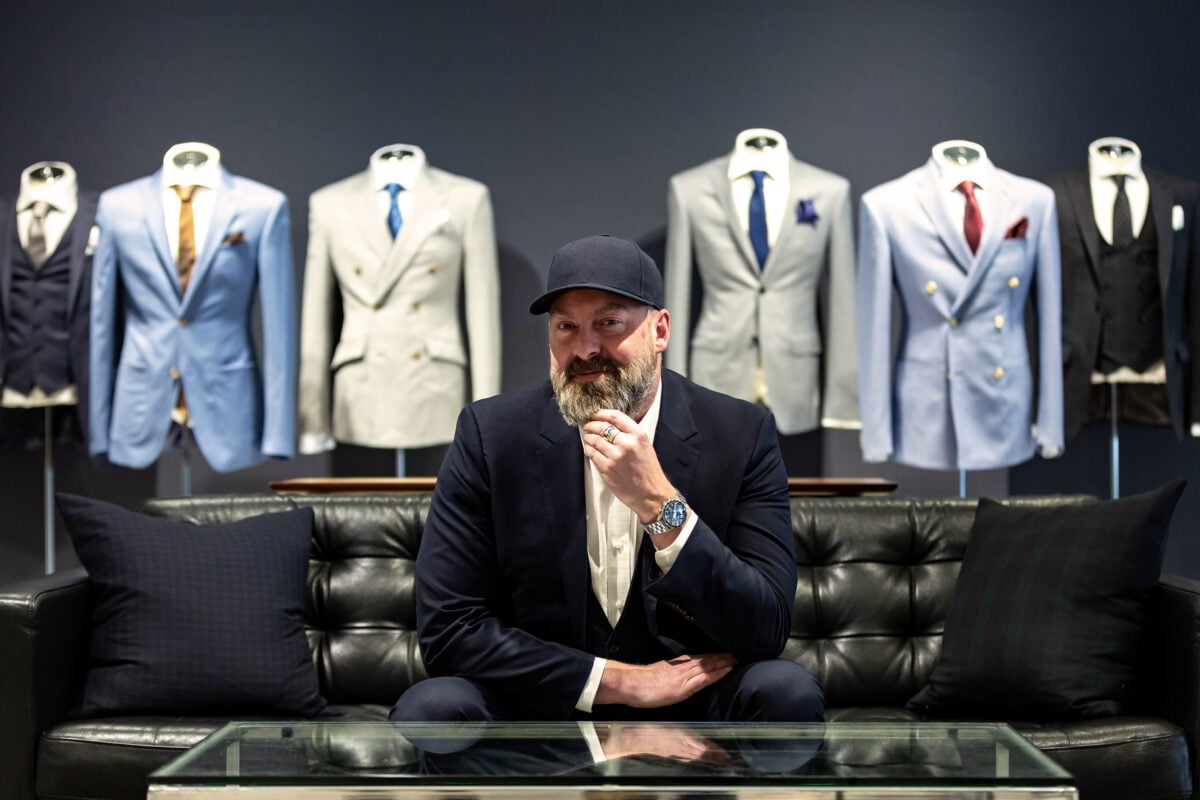
Today’s Retail Insider articles are listed below, followed by Canadian Retail News From Around the Web. Highlights include Aritzia’s record-setting Q4 and fiscal 2026 results driven by digital growth and new boutiques, Sonic Boom’s 25 years thriving amid physical media changes, and the launch of HANK., a new premium menswear brand targeting gaps in the market. These stories illustrate resilience and strategic adaptation in Canadian retail amid evolving consumer demands.


🗞️ The Day’s Retail Insider Article List

Retail Insider Reports Released Today:


🌐 Canadian Retail News From Around the Web