Future Hermes store (former HSBC Bank) at 407 8 Avenue SW in Calgary. Photo: Mario Toneguzzi
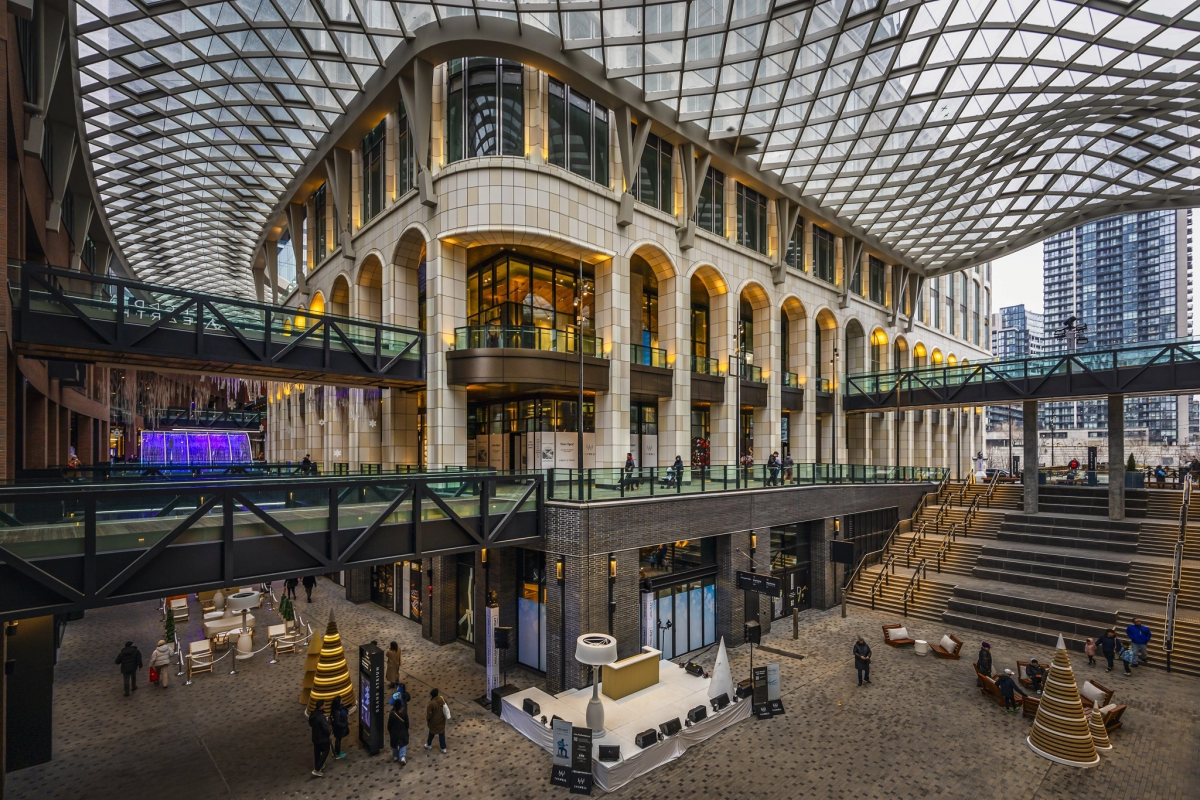
Hermès is planning to open its first standalone Alberta store on Calgary’s Stephen Avenue, a major expansion for the French luxury retailer that further strengthens downtown Calgary’s position within Canada’s luxury retail landscape.
Retail Insider has learned that Hermès has secured a location at 407 8th Avenue SW, where the company is expected to open a boutique of between 5,000 and 6,000 square feet. The store is anticipated to open in 2028.
The move represents a dramatic increase in the brand’s presence in Alberta. Hermès currently operates a concession of approximately 1,300 square feet within Holt Renfrew’s downtown Calgary store, where it has maintained a presence since 2009.
Retail Insider has also reviewed an internal Holt Renfrew communication advising staff that Hermès has signed a deal to take over the former HSBC space on Stephen Avenue. The communication notes that the move is not expected until 2028 and that Hermès Beauty will continue to be available at Holt Renfrew after the boutique opens.
Hermes concession at Holt Renfrew in downtown Calgary. Photo: Mario Toneguzzi
From Concession to Standalone Boutique
Founded in Paris in 1837, Hermès is one of the world’s most prestigious luxury brands, known for its leather goods, silk scarves, ready-to-wear collections, watches, jewellery, fragrances and home furnishings.
The Calgary project represents more than a relocation.
For more than 15 years, Hermès has served Alberta customers through Holt Renfrew. The planned boutique will increase the brand’s footprint several times over, creating a dedicated environment capable of showcasing a broader range of merchandise and services.
The store will be the only Hermès location in Alberta and will place Calgary alongside Toronto and Vancouver as one of only three Canadian cities with a standalone Hermès boutique. Hermes also operates a concession at Holt Renfrew Ogilvy in downtown Montreal.
Downtown Calgary. Click image for interactive Google MapInside the Hermes concession at Holt Renfrew in downtown Calgary. Photo: Mario Toneguzzi
A Different Path for Calgary Luxury Retail
What makes the project particularly noteworthy is where Hermès has chosen to invest.
For decades, Holt Renfrew anchored Calgary’s luxury retail market. As luxury retail expanded in the city, some brands gravitated toward CF Chinook Centre, which emerged as Calgary’s dominant luxury shopping destination. International brands including Louis Vuitton, Burberry and Tiffany & Co. established dedicated boutiques there, helping transform the centre into one of Canada’s leading luxury retail hubs.
Future luxury expansion in Calgary appeared likely to follow that pattern. Hermès has chosen a different path.
Rather than establishing a boutique within a regional shopping centre, the company is investing in a street-front location in the heart of downtown Calgary. The decision reinforces Stephen Avenue’s luxury retail presence and suggests that Calgary’s luxury market is becoming increasingly sophisticated, with the potential to support multiple high-end retail districts.
In larger luxury markets such as Toronto and Vancouver, luxury retail is distributed across both premier shopping centres and established urban shopping streets. Calgary has historically been more concentrated. The Hermès investment signals that the city’s luxury retail landscape may be entering a new phase.
The Chanel concession at Holt Renfrew in Calgary spans 2,900 square feet — with the exit of Hermes from Holt Renfrew in 2028, Chanel could theoretically expand to about 4,200 square feet on one level. Photo: Mario Toneguzzi
Stephen Avenue’s Momentum Continues
The choice of Stephen Avenue is central to the story.
The boutique’s future location sits roughly a block from Holt Renfrew along one of Calgary’s most recognizable commercial corridors.
The area has undergone considerable change in recent years. Public infrastructure projects, streetscape improvements, downtown revitalization initiatives and office-to-residential conversion programs have all contributed to renewed investment in the city’s core. At the same time, Stephen Avenue has strengthened its position as one of Calgary’s leading restaurant and hospitality districts.
The anticipated 2028 opening date reflects the long-term nature of luxury retail investment. Global luxury brands often plan stores years in advance, evaluating present conditions as well as the future trajectory of a neighbourhood or city.
By the time the boutique opens, downtown Calgary is likely to look very different than it does today.
Toronto-based brokerage DWSV represents Hermès in Canada. Founded by David Wedemire and Stan Vyriotes, the firm has been involved in numerous luxury retail transactions across the country.
The new boutique will occupy space formerly associated with an HSBC branch, bringing one of the world’s most recognizable luxury brands to a prominent Stephen Avenue address.
Hermès’ departure will also create approximately 1,300 square feet of additional space within Holt Renfrew’s Calgary store. While there has been speculation regarding how that space could ultimately be utilized, no plans have been confirmed.
Building permit for the future Hermes store in downtown Calgary, taking over a space formerly occupied by HSBC Bank. Photo: Mario Toneguzzi Chanel boutique at Holt Renfrew in downtown Calgary. Photo: Mario ToneguzziHermes concession at Holt Renfrew in downtown Calgary. Photo: Mario ToneguzziFuture Hermes store (former HSBC Bank) at the base of 407 8 Avenue SW in Calgary. Photo: Mario Toneguzzi
Retail operations run on paperwork that rarely arrives one document at a time. Vendor catalogues, planograms, store audits, shift schedules, supplier contracts, and compliance checklists tend to land in batches, often as oversized PDFs or zipped folders that nobody has time to sort through manually. When a regional manager opens a 200-page supplier pack on a Monday morning, the bottleneck is not the content itself but the fact that every store needs only a slice of it.
Effective bulk file management is what separates store teams that act quickly from those that drown in attachments. Operations leads who handle high document volume increasingly rely on a browser-based PDF splitter to carve master documents into store-specific packets without printing a single page. The goal is simple: get the right pages to the right people, in the right format, with the smallest possible delay between head office and the sales floor.
Why Bulk Document Volume Hurts Retail Margins
Document friction costs retailers in three places: labour hours, decision speed, and compliance risk. When a district manager spends ninety minutes reformatting a vendor file before forwarding it to twelve store managers, that time comes directly out of customer-facing work. Multiply that across regions, and a single weekly task quietly absorbs hundreds of hours per quarter.
The pain is not only about time. It also shows up as an inconsistency. When each manager edits and re-saves the same source file, version drift creeps in, store packets stop matching head office records, and audits get harder. A centralized approach to bulk document handling reduces both the labour and the discrepancies.
Building a Repeatable Bulk File Workflow
A repeatable workflow starts by treating documents the same way retail treats inventory: with intake, sorting, distribution, and confirmation.
Intake: Centralize all incoming vendor and HQ files in one cloud folder, not individual inboxes.
Sort: Label files by document type, region, and validity window so they can be filtered later.
Split or merge: Break master packs into store-level packets, or combine related files into one PDF per recipient.
Fill and sign: Route fillable forms and acknowledgments through eSignature instead of printed paper.
Distribute: Share via secure links with view or edit permissions matched to the role.
Archive: Keep a clean, dated copy of every distributed packet for audit trails.
Teams that lock in these six stages tend to cut document turnaround from days to hours, because no one waits for a single person to manually forward files anymore.
Splitting, Merging, and Distributing Without Printing
The most common bulk-file scenario in retail is taking one master document and producing many smaller ones. A 300-page promo guide may contain ten regional sections, each of which needs to land with a different district lead. A practical guide to breaking a PDF into multiple files by page range, bookmark, or chapter helps operations teams turn this into a five-minute task instead of an afternoon project. The same logic works in reverse when stores submit weekly audit pages that need to be merged into a single regional report.
Browser-based tools matter here because store managers should not need IT tickets to open a PDF, extract pages, and forward the result. Such services let users edit, split, merge, redact, and share documents from any device with a connection.
Comparing Manual Versus Streamlined Bulk Handling
It helps to see the difference between the legacy approach and a streamlined one before committing to process changes. The table below summarizes how each stage of a bulk-document workflow changes when retailers shift to a smarter document management strategy:
Stage
Manual Approach
Streamlined Approach
Intake
Files scattered across inboxes
Single cloud folder per category
Splitting
Print and re-scan sections (for scanned PDFs)
Split by page range in the browser
Signing
Print, sign, scan, email back
Send for eSignature in one click
Distribution
Email attachments per store
Secure shared links per role
Archive
Local drives, hard to audit
Centralized library with timestamps
The takeaway is straightforward: streamlining each stage compounds the savings. Even one upgraded step, such as eSignature on weekly compliance forms, frees hours that can be returned to merchandising and customer service.
Common Mistakes Retail Teams Should Avoid
Even well-intentioned bulk workflows fail when teams skip small but important habits. Operations leaders rolling out a new document process should watch for the following pitfalls so the system stays clean as document volume grows across stores and seasons:
Sharing master files instead of store packets, which forces managers to hunt for their pages
Skipping redaction on supplier contracts before forwarding to stores, exposing pricing or contact data
Mixing final and draft versions in the same folder without dating them
Relying on email attachments when files exceed inbox limits or get blocked
Forgetting to archive signed forms, which makes audits painful months later.
Avoiding these five missteps keeps the bulk workflow lean. With a clear intake folder, consistent splitting and merging, and eSignature replacing paper, retail operations teams gain back the hours that paperwork used to swallow.
Walk into any major home goods retailer right now and you’ll see something that wasn’t there two years ago. End caps filled with statement lighting. Full aisles dedicated to fixtures. Even impulse displays near checkout.
What changed? The margins finally made sense.
Lighting used to be a low-priority category. Functional, sure, but not profitable enough to justify prime floor space. Then production costs dropped, import logistics improved, and consumer behavior shifted online. Retailers noticed people were researching fixtures digitally but still wanted to see them in person before buying. That’s when the category went from afterthought to strategic focus.
Why Lighting Became a Retail Priority
The numbers told the story first. According to the American Lighting Association’s 2025 retail report, decorative lighting sales grew 34% year over year in Q4 2025, outpacing nearly every other home category. Retailers who expanded their lighting assortments saw basket sizes increase by an average of $47 per transaction compared to those who didn’t.
The shift wasn’t just about demand. It was about margin structure. Decorative fixtures carry better margins than basic replacements. A builder grade ceiling mount might net 18% after MarkDown. A statement piece can hit 45% or higher, especially when retailers curate around trending styles that move quickly.
That’s where fixtures like a well designed bubble light chandelier started showing up in big box stores. These weren’t utility products. They were visual merchandising anchors that pulled customers into the aisle and created aspiration around an otherwise boring category. When shoppers see something that looks like it belongs in a design magazine, they stop. And when they stop, they browse the whole section.
The Merchandising Model That Made It Work
Retailers didn’t just add more SKUs. They rethought how lighting was presented. Instead of organizing by wattage or socket type, they started building lifestyle vignettes. Kitchen setups. Bedroom styling. Home office displays.
The strategy worked because it solved a customer problem. Most people don’t know what fixture goes where. They know what feeling they want. Retailers who built displays around that emotional outcome saw conversion rates double in some categories. Data from the National Retail Federation shows that experiential displays increased lighting category conversion by 58% compared to traditional fixture racks.
Placement mattered too. Lighting moved from the back corner near electrical supplies to high-traffic zones. Some chains put curated fixture collections near furniture. Others placed them adjacent to paint and wall decor. The logic was simple. If someone’s redecorating, they’re thinking about the whole room, not just one element.
What Worked on the Floor
Not every lighting style performs equally. Retailers learned quickly which designs moved and which sat. Mid-century shapes did well. Anything with visible bulbs or industrial detailing sells consistently. Oversized fixtures for dining rooms and entryways became anchor pieces that justified larger purchases.
But the surprise category was accent lighting. Small-scale pieces that customers bought on impulse. Things like sculptural desk lamps or decorative bedside fixtures that didn’t require installation. When merchants introduced more options like a sleek table lamp with glass details positioned near home office furniture, attachment rates jumped. People were already buying a desk or chair. Adding a $60 lamp felt like finishing the look, not an extra expense.
Target and West Elm both reported in early 2026 that their tabletop lighting categories outperformed expectations by over 20%. The key was positioning them as decor, not utilities. Instead of asking “do I need a lamp,” customers asked “does this fit my style.”
How Independent Retailers Adapted
Big box stores had buying power, but independent retailers had flexibility. Smaller shops couldn’t compete on price, so they focused on curation and service. They carried fixtures you couldn’t find at the chain down the street. They offered installation referrals. Some even started staging rooms in the store to show how lighting changed a space.
This approach worked in markets where consumers valued expertise over convenience. According to Lighting Magazine’s Q1 2026 survey, independent retailers captured 23% of the decorative lighting market despite representing less than 12% of total retail square footage. Their advantage was knowledge. Staff could answer questions about lumens, color temperature, and dimming compatibility. That mattered when customers were spending $200 or more on a single fixture.
The challenge for independents was inventory risk. Carrying enough variety to seem relevant without overextending cash flow required careful planning. Many partnered with distributors who offered consignment or fast reorder windows. Others focused on a narrower style range and became known for it. If you wanted farmhouse lighting, you went to one shop. For a modern minimalist, another.
Where the Category Is Headed
Retailers aren’t done experimenting with lighting. The next phase is about integration. Smart fixtures that work with voice assistants and app controls are moving from specialty stores to mainstream assortments. Pricing is dropping fast. What cost $180 in 2024 is under $90 now for comparable functionality.
Expect to see more collaboration between lighting brands and furniture retailers. IKEA’s already doing it with their TRÅDFRI line. Wayfair’s bundling fixtures with room packages. The goal is to reduce friction. When someone buys a dining table, suggesting a matching chandelier becomes automatic, not optional.
Sustainability is starting to show up in messaging too. LED adoption is near universal, but now retailers are highlighting recyclable materials, low-waste packaging, and energy certifications. It’s not the primary purchase driver yet, but it’s becoming table stakes for premium segments.
Practical Takeaways for Retail Buyers
If you’re sourcing lighting for retail, focus on versatility first. Fixtures that work in multiple settings move faster than hyper-specific designs. A simple pendant works in a kitchen, entryway, or bedroom. A highly ornate baroque chandelier only works in one type of home.
Pay attention to finish trends. Matte black and brushed brass are still strong. Chrome is softening. Anything too trendy risks markdowns in six months. Stick with finishes that photograph well for online listings because most customers research before they visit.
Don’t underestimate installation anxiety. Fixtures that require hardwiring scare off DIY customers. Anything plug-in or easily swappable has a wider audience. If you’re carrying hardwired pieces, make sure your staff can confidently explain installation or provide referrals.
Frequently Asked Questions
Why did retailers wait so long to prioritize decorative lighting?
Margins weren’t there until recently. Import costs dropped, manufacturing efficiency improved, and consumer willingness to spend on home decor increased post-pandemic. Once the unit economics worked, retailers moved quickly to capture the category.
What makes a lighting fixture successful on the retail floor?
Three things: visual impact, versatility, and clear differentiation from what’s available online. Shoppers want to see scale and finish in person. If your fixture looks identical to the $40 version on Amazon, it won’t move at $120 in store. Unique design or premium materials justify the markup.
Are smart lighting fixtures worth stocking for smaller retailers?
Only if you can support them, smart fixtures require more customer education. If your staff can’t explain setup, compatibility, and troubleshooting, you’ll get returns. Larger retailers can absorb that cost. Smaller shops should focus on what they can service well.
How do you merchandise lighting without overcrowding the space?
Vertical displays work better than spreading fixtures across multiple aisles. Use height variation to show different styles without eating floor space. Lifestyle vignettes need less square footage than you think. A six-foot section can showcase a full room concept if it’s styled intentionally.
Final Thoughts
Lighting went from a fill-in category to a margin driver because retailers finally treated it like furniture. They curated it, styled it, and gave it space that reflected its value to customers. The stores that figured this out early are seeing the payoff now. The ones still treating fixtures like commodities are wondering why the category isn’t performing.
The lesson isn’t complicated. When you sell aspiration instead of function, people spend more. That works for lighting. It works for most of home goods. Retailers just needed the margins to justify the effort. Now that they have them, expect this category to keep growing.
This week’s retail news highlighted an industry balancing change and opportunity. From the end of a chapter in Canadian furniture manufacturing to major investments in luxury retail, experiential concepts, and new store openings, retailers continue to adapt to evolving consumer expectations and economic pressures.
A common theme across many of this week’s stories was the growing importance of experience, community, and differentiation. Retailers are investing in stores that offer more than transactions, creating environments designed to build customer loyalty and engagement. At the same time, businesses are navigating cost pressures, supply chain uncertainty, and cautious consumer spending while pursuing targeted expansion opportunities. The result is a retail landscape where innovation, strategic growth, and strong customer connections are becoming increasingly important for long-term success.
Retailer News
The acquisition of Palliser Furniture by MotoMotion marks a poignant end to over 80 years of family ownership in Canadian manufacturing. This transaction highlights the pressures facing domestic production amid global competition and rising costs and also raises critical questions for retailers and commercial real estate players about supply chain stability, dealer support, and the viability of Canadian-made furniture as a market differentiator.
Luxury retail is clearly evolving in Canada, demonstrated by Hermès’ plans for a standalone Alberta store on Stephen Avenue in Calgary. The move from a small concession model into a prestigious larger downtown location indicates both maturing markets and shifting luxury geographies, emphasising the importance of prime urban real estate for high-end retail. Similarly, Canada Goose’s new concept store in Vancouver’s Oakridge Park is a paradigm for experiential luxury, blending art, heritage, and expanded product categories to create a deeply immersive retail environment that goes beyond transactional shopping.
Innovation in creating socially vibrant retail spaces comes from Ruby Liu’s TM Wander at Tsawwassen Mills, which integrates food, entertainment, and cultural experiences to revitalize traditional shopping centres into community-centred hubs. This approach reflects a strategic pivot toward creating places where retail is embedded in local lifestyles, a response to growing consumer demand for connection and authenticity.
In a similar vein, the nostalgia-infused Zellers store in Toronto revives beloved brand elements like kiddie rides and a diner on wheels to appeal to budget-conscious shoppers while blending heritage with modern retail trends. This deliberate mix of value and experience suggests a cautious but promising path for Zellers’ further expansion. Across sectors, from the emerging Modern Ambition stores in key cities to Foodtastic’s acquisition of Kinton Ramen, the emphasis is on strategic, experience-driven growth targeting premium and rapidly evolving market segments.
Retailer Financials / Trends / Reports
Consumer spending data continues to reflect a complex economic environment. Statistics Canada points to nominal retail sales growth bolstered primarily by fuel sales rather than discretionary goods, revealing hidden constraints on consumer wallets despite the uptick. Meanwhile, RBC’s report on Canadian cardholder spending underscores cautious discretionary spending growth in apparel and a plateau in essentials, influenced by persistently high fuel prices. This nuance challenges retailers to balance demand forecasting with careful site and format planning amid tightening consumer budgets.
Food retail giant Empire Company posted solid fiscal 2026 numbers, with $31.95 billion in sales and a 27% adjusted earnings growth, led by FreshCo’s discount banner expansion. Their plan to open 15 FreshCo stores regionally next year, detailed in their financial update, signals a broader trend towards value-focused retail formats capturing price-sensitive shoppers. Specialty apparel also shows pockets of resilience: Groupe Dynamite enjoyed 37% revenue growth and a four-year high gross margin in Q1 2026, highlighting how premium locations and optimized real estate contribute to profitability. Similarly, Reitmans posted modest revenue gains reflective of operational efficiencies and new store concepts navigating a challenging consumer climate.
Retailer People News
On the leadership and brand development front, Toronto-based Love Ur Curls founder Sahar Saidi is spearheading physical retail expansion after nearly a decade of DTC success. This move exemplifies how digitally native brands are strategically leveraging their online momentum to enter and thrive in offline specialty channels, capturing new audiences and broadening distribution in established retail environments.
Retailer Op-Eds
The retail sector’s operational and strategic pressures are well captured in recent opinion pieces. Sylvain Charlebois offers a critical analysis of the hidden costs borne by grocery suppliers due to promotional practices, urging scrutiny into promotional strategies that may be exacerbating food inflation. This holds considerable weight for retailers and suppliers negotiating pricing and promotional frameworks amid ongoing consumer price sensitivity.
Supply chain challenges persist despite headlines of political relief. The reopening of the Strait of Hormuz masks ongoing bottlenecks and stranded vessels, with Scandiweb’s opinion highlighting continued disruptions and the need for retailers to modernize logistics visibility and systems. Meanwhile, the retail workforce faces intensified risk management challenges as employee experience evolves into a critical operational focus; strategies to address burnout, psychological safety, and communication must become integral to minimizing business risks, as discussed in a recent analysis on retail risk.
Editor’s Take
This week’s stories reflected a retail industry adapting to changing consumer expectations while navigating a challenging economic environment. From the sale of Palliser Furniture and ongoing shifts in Canadian manufacturing to major investments by luxury retailers and shopping centre owners, businesses are continuing to reposition themselves for long-term growth.
Several stories pointed to the growing importance of experience as a competitive advantage. Whether through Ruby Liu’s vision for TM Wander, Zellers’ nostalgic store opening in Toronto, or luxury retailers creating highly curated physical environments, retailers are increasingly focused on giving consumers reasons to visit stores beyond making a purchase. As consumers become more selective with their spending, retailers are looking to create stronger emotional connections and memorable in-person experiences.
The week also highlighted the continued divide between value and premium retail. Grocery operators are pursuing discount growth to attract cost-conscious shoppers, while luxury brands such as Hermès and Canada Goose are investing in prominent locations and elevated store concepts. Despite serving different customer segments, both approaches reflect a common goal: delivering a clear and differentiated value proposition.
At the same time, retailers continue to face pressures tied to costs, supply chains, and economic uncertainty. Companies that can adapt quickly, invest strategically, and maintain strong connections with customers appear best positioned to succeed. Taken together, this week’s developments suggest that Canada’s retail sector remains resilient, with growth opportunities emerging for businesses willing to evolve alongside changing consumer behaviours.
A grocery store in Alberta. Photo: Craig Patterson
For years, Canadians have been told that food inflation is driven by weather, labour shortages, transportation costs, global conflicts, exchange rates, and climate events. All of those factors matter. But there is another contributor to rising food prices that rarely receives public attention: the way some grocery promotions are funded.
Consumers love promotions. A 10% discount advertised in a weekly flyer appears to be a win for everyone. Shoppers save money, retailers attract traffic, and manufacturers gain visibility. At least that’s the theory.
The reality can be very different.
Consider a common practice known in the industry as forward buying. A retailer decides to feature a product at a 10% discount for one week. Instead of purchasing only the quantity needed for that promotional period, the retailer orders enough inventory to cover several months of sales while demanding the promotional discount on the entire purchase.
The product is then sold at regular price for most of those months. The retailer enjoys the benefit of the discounted purchase long after the promotion has ended.
Who pays for it? The manufacturer.
What consumers often don’t realize is that promotional discounts are frequently calculated based on the retail shelf price, not the wholesale price paid to the supplier.
Suppose a product sells for $10 at retail. A 10% promotion represents a $1 discount. If the manufacturer sells that product to the retailer for $4.65, that $1 deduction actually represents more than 21% of the manufacturer’s revenue on that item.
In other words, what appears to be a modest 10% promotion for consumers can become a 20% or greater financial hit for the supplier.
Manufacturers are not charities. Nor should they be expected to absorb losses indefinitely.
When these practices become widespread, suppliers have only a few options. They can accept shrinking margins, reduce investment in innovation, cut costs elsewhere, shrink package sizes, or increase prices. Most choose some combination of the latter two.
The result is entirely predictable: consumers eventually face higher prices or smaller products.
This is why Ottawa’s latest review of competition in Canada’s food sector should look beyond concentration ratios and grocery market shares. Competition is not just about how many retailers operate in a market. It is also about how power is exercised within commercial relationships.
A retailer does not need to own the entire market to exert significant influence over suppliers. Sometimes market power reveals itself through purchasing practices, promotional requirements, listing fees, penalties, and contractual arrangements that suppliers cannot realistically refuse.
Smaller manufacturers are particularly vulnerable. A multinational food company may have the scale to negotiate better terms. A regional processor, family-owned food company, or emerging brand often does not. For them, losing access to a major retailer can be catastrophic.
This is precisely why the Grocery Code of Conduct was created. The Code aims to promote transparency, fairness, and predictability in supplier-retailer relationships. It recognizes that power imbalances exist and that healthier commercial relationships ultimately benefit consumers.
But the Code alone cannot answer a larger question: How much are these practices costing Canadians?
The Competition Bureau should investigate. Not because promotions are inherently anti-competitive, but because they may distort how costs are distributed across the food supply chain. If suppliers routinely raise prices to offset promotional demands, then practices designed to create the appearance of savings may be contributing to inflation over the long run.
Ironically, Canadians spend enormous amounts of time debating grocery profits while paying relatively little attention to the mechanics that shape prices before products ever reach store shelves.
The food industry is notoriously secretive. Many suppliers are unwilling to speak publicly for fear of commercial repercussions. Yet if Ottawa genuinely wants to understand why food remains expensive in Canada, it needs to hear from those manufacturers behind closed doors.
The answer may not be found in the checkout lane. It may be hiding in the promotion calendar.
Retail sales increased 0.5% to $73.0 billion in April. Sales were up in five of nine subsectors, led by increases at gasoline stations and fuel vendors, reported Statistics Canada on Friday.
Core retail sales, which exclude gasoline stations and fuel vendors and motor vehicle and parts dealers, were down 0.7% in April. In volume terms, retail sales were unchanged in April, said the federal agency.
Statistics Canada also provided an advance estimate of retail sales, which suggests that sales increased 1.0% in May.
RDNE Stock project photo
The largest increase in retail sales in April was observed at gasoline stations and fuel vendors (+5.1%). In volume terms, sales at gasoline stations and fuel vendors rose 0.8% in April, noted Statistics Canada.
“Following a decline of 0.1% in March, sales at motor vehicle and parts dealers were up 1.7% in April. The increase was led by sales at new car dealers (+1.8%), which posted a fourth consecutive monthly gain. Sales were also up at used car dealers (+5.1%) in April after recording a decline of 4.2% in March,” it said.
Core retail sales fell 0.7% in April, posting their second consecutive monthly decline. The decrease was led by lower sales at food and beverage retailers (-2.0%) and general merchandise retailers (-1.7%). In April, sales also declined at sporting goods, hobby, musical instrument, book, and miscellaneous retailers (-1.5%), down for a second consecutive month. The largest increase in core retail sales came from building material and garden equipment and supplies dealers, which increased 3.3% in April after decreasing 4.5% in March, explained Statistics Canada.
The report said retail sales increased in six provinces in April and the largest provincial increase in dollar terms was observed in Ontario (+0.5%), led by higher sales at motor vehicle and parts dealers. In the census metropolitan area of Toronto, retail sales fell 1.0%.
In Alberta, retail sales were up 1.3% in April on higher sales at gasoline stations and fuel dealers. The largest provincial decrease in retail sales in April was observed in Manitoba (-1.8%). This decrease was led by lower sales at motor vehicle and parts dealers, added the federal agency.
On a seasonally adjusted basis, retail e-commerce sales decreased 1.2% to $5.1 billion in April, accounting for 7.0% of total retail trade, compared with 7.1% in March.
Maria Solovieva
Maria Solovieva, Economist, TD, said: “April’s report suggests that inflation continued to support nominal retail sales, while underlying demand remained subdued. Core retail sales contracted for a second consecutive month, indicating that consumers are becoming more selective in their spending as higher energy prices continue to eat into household budgets.
“With higher energy prices weighing on purchasing power through much of the quarter, we expect consumer spending growth to moderate to a +0.5% q/q annualized pace in Q2, following the more robust +1.5% recorded in Q1. Energy prices have begun to retreat in June, which should provide some relief to household budgets and help support a firmer pace of private domestic demand in the second half of 2026
Andrew Grantham
“Today’s data provided further evidence that high gasoline prices were cutting into households’ ability to spend in other areas over the spring. While headline retail sales posted a seemingly solid 0.5% gain in April (consensus 0.6%), that nominal figure was flattered by higher gasoline prices. Core sales (ex auto and gasoline) fell 0.7% on the month, while overall sales volumes were unchanged. As well as the partly price-driven increase at gasoline stations, auto sales also rose on the month, as did sales at building material stores. Acting as an offset, food & beverage, general merchandise and sporting goods retailers all saw declines in sales. The advance estimate for May pointed to a 1% increase in headline nominal sales, although with gasoline prices rising during that month as well, that figure will also look softer in volume terms,” said Andrew Grantham, Senior Economist, CIBC Capital Markets.
“Overall, the volume of consumer goods spending appears to be stalling in the second quarter following a strong start to the year, with high pump prices cutting into household spending on more discretionary items. However, the recent decline in gasoline prices, combined with expanded household benefits paid by the Federal government, should support a pick-up in spending again during the second half of the year. “
Shelly Kaushik
Shelly Kaushik, Senior Economist, BMO Capital Markets, said: “Canadian consumers are hanging in through the energy price shock by pulling back on spending for other items. As prices start to normalize, we expect to see consumer spending recover through the rest of the year.”
For more than eight decades, Palliser Furniture occupied a rare position in Canadian retail.
The Winnipeg-based manufacturer grew into one of the country’s best-known furniture brands, supplied retailers across North America and became one of the few furniture makers recognized by consumers from coast to coast. Founded in 1944 by the DeFehr family, the company built a reputation for upholstered furniture, leather seating, recliners and motion furniture while establishing long-standing relationships with furniture retailers across Canada.
That era has now come to an end.
Palliser was acquired by MotoMotion in a transaction completed May 29, ending more than 80 years of family ownership and marking one of the most significant developments in Canada’s furniture industry in recent years. The acquisition places a historic Canadian manufacturer under new ownership at a time when retailers, manufacturers and consumers are paying renewed attention to Canadian-made products.
The transaction also follows a challenging period for the company, with some retailers seeking greater clarity on outstanding customer orders, product availability and the future direction of the Palliser brand.
A Company Built Through Retail Relationships
Palliser’s growth was closely tied to independent furniture retailers.
Across Canada, dealers carried Palliser products for decades, helping establish the company as a major presence in the upholstered furniture category. Many retailers viewed the company as a dependable Canadian supplier with a broad product assortment that appealed to a wide range of consumers.
At its height, Palliser employed roughly 2,000 people and was widely regarded as one of North America’s leading manufacturers of made-to-order leather furniture. The company became particularly associated with motion seating, recliners, home theatre seating and customized upholstery programs that helped differentiate it from many competitors.
The company also developed Palliser Studio concepts with select dealers, creating dedicated branded spaces within furniture stores and further strengthening its retail presence.
That history helps explain why the acquisition has attracted attention throughout the industry. Canada has seen its domestic furniture manufacturing base shrink over several decades as producers faced rising costs, import competition, labour pressures and changing trade conditions. While many manufacturers reduced their footprint or disappeared altogether, Palliser remained one of the country’s largest and most visible furniture companies.
Its sale therefore carries significance beyond a single corporate transaction. It reflects broader changes taking place across North American manufacturing and raises questions about the future of Canadian furniture production.
Palliser Studio. Photo: Palliser Furniture
Warning Signs Emerged Before the Acquisition
Industry sources told Retail Insider that delivery delays, communication challenges and uncertainty surrounding order status had become increasingly noticeable in the months leading up to the acquisition.
For furniture retailers, those issues can quickly affect customers. Many products are sold on a made-to-order basis, with delivery timelines often extending weeks or months. When suppliers encounter disruptions, retailers are frequently left managing customer expectations while waiting for updated information.
Some dealers have been seeking clarity regarding outstanding customer orders, future production timelines and the level of support available under the company’s new ownership structure.
Earlier this year, industry reports indicated that Palliser had experienced liquidity challenges that affected supplier payments and disrupted raw material flows, contributing to production and delivery delays.
Industry sources also pointed to leadership changes and broader operational challenges in recent years as factors that may have complicated the company’s ability to navigate a difficult market. While tariffs and trade pressures played a role in the company’s recent challenges, sources familiar with the sector said some of Palliser’s issues appeared to predate the most recent tariff pressures.
The acquisition is therefore being viewed through two lenses. The first is the long-term significance of an iconic Canadian manufacturer changing hands. The second is the practical reality facing retailers who are focused on customer orders, inventory planning and the stability of a major supplier.
Photo: Palliser Furniture
Anti-Dumping History Adds Another Layer
The ownership change also carries an unusual trade-policy dimension.
Palliser was among the Canadian manufacturers that pushed for anti-dumping measures on upholstered domestic seating imported from China and Vietnam. The case led to duties intended to protect Canadian manufacturers from lower-priced imports that were found to be injuring domestic producers.
That history makes the company’s sale to MotoMotion especially notable within the furniture industry. Palliser had been one of the Canadian manufacturers seeking protection from Asian imports, and it is now owned by a China-headquartered company with deep roots in furniture components and motion technology.
It reflects how complicated the furniture business has become. Canadian manufacturers have relied on trade remedies to protect domestic production while also operating within global supply chains involving components, materials and offshore manufacturing. Palliser’s acquisition sits directly within that tension.
Manitoba Connection Remains Significant
The sale carries particular significance in Manitoba, where Palliser’s history has been deeply intertwined with the province’s manufacturing sector.
In August 2025, the Manitoba government approved a $15 million loan guarantee connected to Lexington Real Estate Holdings Ltd., a company controlled by Arthur DeFehr, whose family founded Palliser. The support was intended to help protect manufacturing jobs during a period of economic and trade-related pressure.
Several months later, Palliser announced layoffs and manufacturing adjustments as it responded to tariff pressures and changing production needs.
The company’s headquarters, leadership and manufacturing heritage have been tied to Winnipeg for generations, making the acquisition especially notable within the province.
EQ3 store on King St. E. in Toronto. Photo: Dustin Fuhs/6ix Retail
EQ3 Remains Separate
One point of confusion following the acquisition has involved EQ3, which remains a separate business and was not included in the MotoMotion transaction.
While Palliser and EQ3 share historical connections through the DeFehr family, EQ3 continues to operate independently.
Public reports have also indicated that Winnipeg will remain an important centre for product development, design, sales, marketing and customer service functions associated with the Palliser brand.
What remains less clear is how Palliser’s manufacturing footprint may evolve under MotoMotion ownership. The company has operated production facilities in both Canada and Mexico, and retailers will be watching closely for any changes that could affect lead times, product availability, warranty support and dealer services.
A Global Industry Meets a Canadian Legacy Brand
MotoMotion’s acquisition of Palliser reflects the increasingly global nature of the furniture business. The company has been a long-time supplier of motion mechanisms and related components used in reclining furniture, giving it an established relationship with Palliser prior to the acquisition. The transaction gives MotoMotion control of a recognized North American brand with a long history, established dealer relationships and significant market presence.
For retailers, however, the focus remains less on ownership structures and more on operational questions. Dealers want to know how existing orders will be handled, what future production will look like and how the company plans to support its retail partners moving forward.
Those questions are likely to shape perceptions of the acquisition far more than the transaction itself.
What the Sale Says About Canadian Furniture Manufacturing
The Palliser story arrives at a moment when many consumers are actively seeking Canadian-made products.
Furniture retailers across the country have reported increased interest in domestic manufacturing, particularly as trade tensions and economic uncertainty have encouraged some shoppers to look closer to home.
At the same time, manufacturing furniture at scale in Canada has become increasingly difficult. Companies face higher labour costs, rising material costs, skilled labour shortages and intense competition from imported products.
That tension sits at the centre of Palliser’s story.
The sale illustrates the pressures facing even long-established manufacturers and highlights how global supply chains continue to reshape industries that were once dominated by domestic producers.
For retailers, the immediate concerns are operational. For the broader industry, the transaction raises a larger question about the future of Canadian manufacturing and the role that Canadian-owned brands will play in an increasingly global marketplace.
Photo: Palliser Furniture
Looking Ahead
The next chapter for Palliser will be watched closely by retailers, suppliers, employees and customers.
If MotoMotion can strengthen operations, improve communication and stabilize production, the acquisition could provide Palliser with additional resources and long-term support. If uncertainty continues, retailers may look to diversify their supplier relationships and shift business toward other manufacturers.
Regardless of how the transition unfolds, the sale marks a historic moment for Canadian furniture manufacturing.
For more than 80 years, Palliser was one of the country’s most recognizable furniture companies. The brand remains in place, but its future will now be written under new ownership.
Retail Insider contacted Palliser seeking comment regarding the acquisition, manufacturing operations, outstanding dealer orders and retailer concerns. No response was received by publication deadline.
FreshCo store at Parliament & Dundas in Toronto (Image: Dustin Fuhs)
Empire Co. Ltd. is making a significant bet on the future of discount grocery retailing in Canada.
The parent company of Sobeys, Safeway, FreshCo, Farm Boy and IGA plans to open 70 new stores over the next three years, with more than three-quarters of those locations expected to operate under discount banners. The move comes as Canada’s major grocers continue to invest heavily in discount formats, reflecting a consumer environment where price remains a major factor in purchasing decisions.
The expansion plan, announced alongside the company’s fourth-quarter and fiscal 2026 results, provides one of the clearest indications yet of the direction President and Chief Executive Officer Pierre St-Laurent intends to take the company as it enters a new phase of expansion.
“We have a lot of room to grow in discount, without cannibalization of our network,” St-Laurent said during the company’s earnings conference call.
Empire plans to open more than 20 stores during fiscal 2027 alone. The company also expects to complete approximately 90 real estate projects annually through a combination of new stores, renovations and conversions, representing a roughly 25 per cent increase compared with recent years.
The focus on discount retail is particularly notable because it mirrors broader developments across the Canadian grocery sector. Loblaw Companies Ltd. continues to invest heavily in No Frills and Maxi, while Metro Inc. has expanded Food Basics and Super C. Across the industry, major grocery operators are increasingly directing investment toward formats that appeal to shoppers looking for lower prices and strong promotional offerings.
Pierre St-Laurent
FreshCo and Mayrand Highlight the Strategy
Much of Empire’s planned expansion is expected to come through FreshCo, the company’s discount grocery banner.
FreshCo now operates more than 160 stores across Ontario and Western Canada and recently entered Atlantic Canada, where Empire opened three locations during fiscal 2026. Management believes there is still considerable room for expansion across multiple regions, particularly in markets where discount grocery remains underrepresented within its network.
The emphasis on FreshCo reflects a broader shift in the grocery industry. While conventional banners continue to play an important role, retailers increasingly see opportunities in formats that appeal to shoppers seeking competitive pricing, strong promotional programs and private-label products.
Empire’s recent acquisition of Québec-based Mayrand further reinforces that direction.
Mayrand operates four wholesale food stores in the Greater Montréal area and serves both consumers and foodservice customers. While relatively small compared with Empire’s core grocery business, the acquisition gives the company an entry point into Québec’s discount wholesale market.
Management indicated the business was attractive because of its expansion potential and limited overlap with existing banners.
Together, FreshCo and Mayrand illustrate how Empire is broadening its reach across multiple value-oriented retail segments rather than relying exclusively on traditional supermarket expansion.
Consumers Continue to Watch Their Spending
Empire’s expansion plans are being rolled out against a backdrop of continued consumer caution.
Although food inflation has moderated compared with the peak levels seen in recent years, management said shoppers remain highly engaged with promotions, loyalty offers and value-focused products.
At the same time, the company reported relatively stable customer behaviour during the fourth quarter. Basket sizes increased, shopping trips remained steady and sales growth was recorded across both discount and conventional banners.
That stability may be encouraging for grocers. While consumers continue to watch their spending, grocery remains one of the most resilient retail categories because it serves everyday needs.
Empire has also continued pushing back against supplier requests for fuel-related surcharges, arguing that additional increases would ultimately be passed on to shoppers.
“We know many customers remain stretched,” St-Laurent said.
The company’s ability to maintain sales growth while emphasizing competitive pricing suggests management believes consumers will continue looking for ways to manage household budgets even as broader inflation pressures ease.
Sobeys (Image: Nejmark Architect)
Strong Results Support Expansion Plans
Empire’s confidence in expanding its store network is supported by solid financial performance.
Fourth-quarter sales increased 2.2 per cent to $7.8 billion, while same-store sales rose 1.5 per cent. Net earnings climbed to $212 million, or 94 cents per share, compared with $173 million, or 74 cents per share, a year earlier.
The company reported sales increases across both discount and conventional grocery banners. For fiscal 2026, adjusted earnings per share increased 8.7 per cent. Management also highlighted continued progress in controlling operating costs and improving efficiency across the business.
Empire increased its quarterly dividend by 10.2 per cent and said it expects adjusted earnings per share growth in fiscal 2027 to be at the high end of its long-term target range.
Those results provide the company with flexibility to invest in new stores, technology initiatives and other strategic priorities while continuing to return capital to shareholders.
Pharmacy Becomes a Strategic Priority
While Empire’s discount expansion is attracting much of the attention, another theme emerged repeatedly during the company’s earnings call: pharmacy.
For years, Empire’s strategy centred on strengthening its grocery operations through store investments, supply chain improvements and digital initiatives. Management now appears increasingly focused on pharmacy as an additional platform for expansion.
The company currently operates more than 400 pharmacies through a combination of Lawtons Drug Stores and pharmacy locations within grocery stores. According to St-Laurent, the business received relatively limited strategic attention over the past several years as Empire focused on improving its core grocery operations.
That is beginning to change. Earlier this year, Empire elevated pharmacy leadership within the organization and signalled plans to devote greater resources to the business. Management sees opportunities to improve performance within the existing network, add pharmacies to new grocery developments and pursue selective acquisitions where appropriate.
“We see meaningful opportunity in that business,” St-Laurent said.
The company is also looking to extract greater value from investments already made in central-fill pharmacy operations. By automating portions of prescription processing, central-fill facilities can improve efficiency while allowing pharmacists to spend more time serving patients and providing healthcare services.
The emphasis on pharmacy reflects a broader trend across food retail. Grocers increasingly view pharmacies as a way to deepen customer relationships, increase shopping frequency and diversify revenue streams beyond traditional food sales.
For Empire, pharmacy appears poised to become an increasingly important component of its long-term strategy alongside discount grocery and wholesale food retailing.
Voilà by Sobeys and Voilà par IGA promises to help Canadians stay one step ahead of their busy lives, underscored by a new tag line “Your groceries delivered. Just like that.” (CNW Group/Empire Company Limited)
Repositioning E-Commerce for Profitability
Empire is also continuing to refine its approach to online grocery.
Earlier this year, the company closed its Alberta customer fulfilment centres following a strategic review of its e-commerce operations. The move came after Empire recorded a significant impairment related to its online grocery business and shifted its focus toward improving profitability.
The impact was visible in fourth-quarter results, with online sales growth slowing compared with some competitors.
Management, however, argued that the closures were part of a broader effort to improve the economics of the business rather than a retreat from e-commerce.
Partnerships with third-party providers including DoorDash, Instacart and Uber Eats are expected to play a larger role going forward. Empire said the national rollout of DoorDash has already produced encouraging results, while additional initiatives are expected later this year.
The shift reflects a growing recognition across the grocery industry that online growth alone is no longer enough. Retailers are increasingly focused on building digital businesses that can generate sustainable returns while complementing their physical store networks.
For Empire, e-commerce remains part of the strategy, but management appears determined to ensure future expansion comes with stronger economics than in the past.
A New Phase of Expansion
Empire’s latest results provide a snapshot of a company entering a different phase of its evolution.
Over the past decade, management focused heavily on strengthening the business through store renovations, supply chain modernization, digital investments and operational improvements. Those efforts helped improve profitability and establish a stronger foundation for future expansion.
Now, the conversation appears to be shifting. Rather than focusing primarily on transformation initiatives, Empire is increasingly talking about expansion. The company’s plans call for dozens of new stores, continued investment in discount grocery, expansion in pharmacy and a more disciplined approach to e-commerce. At the same time, the acquisition of Mayrand signals a willingness to pursue opportunities in adjacent retail segments when they align with the company’s broader strategy.
The common thread running through each of those initiatives is an emphasis on everyday essentials. Grocery, pharmacy and wholesale food distribution remain categories that consumers rely on regardless of broader economic conditions, even as spending patterns shift.
That approach reflects the reality of today’s retail environment. While inflation has eased and consumer confidence has improved from recent lows, price remains an important consideration for many Canadian households. Retail analyst and Agri-Food Analytics Lab Director Dr. Sylvain Charlebois has previously noted that grocery remains among the strongest segments of Canadian retail even as some discretionary retail categories face softer demand.
Empire’s decision to direct more than three-quarters of its planned store expansion toward discount banners suggests management believes those trends are likely to persist for years to come.
For the Canadian grocery industry, that may be the most important takeaway from the quarter. The competition for price-conscious shoppers is not slowing down. If anything, the country’s largest grocery retailers are committing more capital and resources to winning that customer.
Empire’s latest expansion plans indicate the company intends to be an active participant in that race.
Alibaba.com says new data from its global startup competition suggests artificial intelligence is accelerating the shift toward solo entrepreneurship, with a growing share of founders building businesses without teams.
The business-to-business e-commerce platform reported that 71 per cent of more than 15,000 applicants to its CoCreate Pitch competition identified as solo founders, up from 40 per cent a year earlier.
The figures point to a broader shift in how companies are being launched, with AI tools allowing entrepreneurs to operate with fewer resources and reduced reliance on specialized staff.
Of those solo founders, 89 per cent said AI tools are essential to their entrepreneurial efforts, helping them address gaps in areas such as industrial design, coding and marketing.
The company said the findings reflect the emergence of what it describes as an “agentic business” model, where AI systems take on tasks that previously required teams, lowering barriers to entry and allowing businesses to scale with leaner operations.
Adoption of AI tools among entrepreneurs appears to be widespread across age groups. More than 70 per cent of applicants reported using AI in building their businesses, with usage rates exceeding 80 per cent among Gen Z, millennials and Gen X founders.
The data comes as Alibaba.com prepares for the return of its CoCreate Pitch competition, which includes a prize pool of more than $1 million. The competition has attracted applicants from 132 countries, with finals scheduled in the United States and Europe later this year.
The company said this year’s competition reflects a shift tied to the introduction of Accio Work, an AI tool designed for small and medium-sized enterprises. According to Alibaba.com, the technology is contributing to changes in how businesses are conceived and launched.
Liz Wang
“This year’s application trends show that AI is rewriting the rules of entrepreneurship and fueling the rise of one-person companies, making it possible for one person to accomplish in a single day what used to require multiple specialists,” said Liz Wang, Global Head of Commercial Strategy at Alibaba.com.
“We reduced the CoCreate Pitch application form to just six fields because AI can understand the depth behind even a simple pitch, instantly identifying pain points, logic and potential. This points to the future of agent-to-agent commerce, where AI can interact with suppliers, logistics providers and factories on a business owner’s behalf, helping small businesses compete and win in the next era.”
The company said the shift also reflects changing patterns in how entrepreneurs approach business creation. In the United States, nearly 35 per cent of applicants cited burnout from their current jobs as a reason for starting their own ventures.
Among U.S. applicants, 40.5 per cent had not secured a contract manufacturer but had already developed brand websites and 3D product renderings, indicating an emphasis on early-stage concept development supported by digital tools.
In the United Kingdom, the applicant pool included a notable share of professionals transitioning into entrepreneurship. Nearly 12 per cent of applicants work in healthcare, while 10 per cent are employed in engineering or technology and six per cent in finance or consulting.
Applicants from France and Germany showed a different focus, with 19 per cent of projects centred on environmentally friendly or sustainable products, according to the company.
The competition is divided into three categories: a general small and medium-sized enterprise track, a “0-to-1” startup track and a student track. The 0-to-1 category, which focuses on early-stage ideas developed using AI tools, accounts for 65 per cent of applications.
Alibaba.com said the structure reflects growing interest among founders in using AI to move from initial concept to product development and launch.
The finals for the competition are scheduled to take place during CoCreate 2026, with events planned in Los Angeles on Sept. 9–10 and in London on Nov. 19–20.
The company said the competition offers a view into how global trade may evolve as AI becomes more integrated into business operations, particularly in interactions between companies and suppliers.
“This points to the future of agent-to-agent commerce, where AI can interact with suppliers, logistics providers and factories on a business owner’s behalf, helping small businesses compete and win in the next era,” Wang said.
Canadian clothing brand Miik says it is partnering with cosmetics company Cheekbone Beauty for a joint live shopping event later this month, combining product promotion with a commitment to fund Indigenous education.
The Toronto-based apparel company said the June 24 virtual broadcast will feature its “Made in Canada” sale alongside a live beauty presentation led by Cheekbone founder and chief executive Jenn Harper. The event will be streamed through Miik’s website and both companies’ social media platforms.
Jenn Harper
The collaboration brings together two woman-led businesses that say they share a focus on sustainability and community support, while also tying the initiative to a multi-year fundraising effort.
Central to the partnership is a continued commitment to Indspire, an Indigenous-led charity that supports education for First Nations, Inuit and Métis students. Miik said it will donate $10,000 from this year’s campaign to fund three scholarships through its Miik Foundation Award for Indigenous Women. The company noted this marks its fifth consecutive year directing a portion of proceeds from the annual sale to the organization.
The live show will include product showcases across different body types, as well as a beauty segment featuring application techniques. It also incorporates interactive elements aimed at engaging viewers during the broadcast.
Donna Smith
“The best collaborations happen when you share a commitment to doing business better – but in uncertain economic times like these, it’s something much deeper,” said Donna Smith, founder of Miik Inc.
“Right now, we need to lift each other up, get creative, and actively collaborate with businesses that align with our core values. Your purchases don’t just support the Canadian economy; they directly fuel women-owned businesses that refuse to compromise on their mission. We are so proud to partner with Jenn at Cheekbone Beauty to show what values-driven commerce can look like. Our live shows have always been a fan-favourite tradition for our community, but bringing our two brands together on screen completely elevates the experience. This isn’t just a partnership; it’s a masterclass in women supporting women when it matters most.”
Miik manufactures its clothing in Toronto using custom-milled fabrics, while Cheekbone Beauty positions itself as a clean cosmetics brand with a focus on environmentally conscious production and Indigenous representation in the beauty sector.
As part of the campaign, the companies are also offering two promotional giveaways tied to the event. One prize, open nationwide, includes a $500 Miik digital gift card and a Cheekbone Beauty complexion kit valued at more than $500. A second prize, limited to the Greater Toronto Area, includes the same package along with an invitation to attend the live broadcast in studio and receive an on-camera makeover with the founders.
The companies say the initiative is intended to combine commercial activity with community impact, using the live show format to highlight their products while supporting a charitable cause tied to education.
The broadcast is scheduled for 8 p.m. ET on June 24.