With a growing entrepreneurial drought across Canada, the Canadian Federation of Independent Business (CFIB) is calling on the federal government to follow the lead of provinces by making changes to the small business corporate tax rate.
This spring three provinces (Ontario, Quebec and Newfoundland and Labrador) announced plans to significantly reduce their small business rates. Two other provinces (PEI and Nova Scotia) also reduced their rates and increased the threshold under which the rate applies in recent years, said the national organization, which is Canada’s largest association of small and medium-sized businesses with 103,000 members across every industry and region.
“Since the last federal small business rate reduction, five provinces have made progress in reducing their corporate tax rates on small businesses,” said Dan Kelly, CFIB president. “And while the federal rate has been stuck at 9% since 2019, provincial rates now range from 1% to 2.5% in all provinces, other than Manitoba’s country-leading rate of 0%.”
Dan Kelly
In addition, while the federal government caps the amount of income under the small business threshold at $500,000, three provinces now have higher thresholds (Saskatchewan and PEI at $600,000 and Nova Scotia at $700,000), said the CFIB.
“Over the past decade, the federal government has been sending the wrong message to entrepreneurs. Small businesses had to push back against a gutting of the small business tax structures in 2017 after being referred to as tax cheats by the Prime Minister. It is no small wonder that 55% of business owners would not recommend starting a business today,” said Kelly.
As provinces are delivering real tax relief to small businesses, Ottawa has no excuse not to do the same. CFIB is calling on the federal government to lower its rate from 9% to 6%. In addition, the $500,000 small business threshold should have been raised to over $700,000 by now just to keep pace with inflation. Parliament’s Industry Committee recently recommended it be raised to $1 million in order to enhance Canada’s productivity, it said.
CFIB said it is also pushing back against several myths around the Small Business Deduction (SBD), including claims that it discourages business growth, misallocates capital, or primarily benefits rich shareholders.
CFIB said its new analysis shows the most common criticism – that the SBD disincentivizes firms to grow – is wildly overstated. In fact, the vast majority of firms claiming the SBD operate far below the threshold. Only about 5,900 businesses have corporate income near the threshold. After adjustments, only 3,900 firms–or 0.4% of SBD claimants–are above the expected data trend. This means at least 99.6% of SBD claimants are not limiting their growth because of the deduction.
“Investment is weak, costs are rising, and fewer Canadians are starting businesses. That’s a clear signal it’s time to take a hard look at how competitive Canada’s tax system is for entrepreneurs. Instead of picking winners and losers with giant subsidy cheques from Ottawa, government need to look at real data and cut taxes so small firms can succeed.”
Shuttered Hudson's Bay store at Toronto's Yorkdale Shopping Centre on the evening of June 1, 2025. Photo: Craig Patterson
One year ago today, Canadians woke up in a country without Hudson’s Bay.
On June 1, 2025, the retailer’s remaining stores closed following a liquidation process that brought an end to a company that had operated continuously for 355 years. From flagship downtown locations to shopping centre anchors, Hudson’s Bay had been part of the retail landscape for generations.
A year later, many former Hudson’s Bay stores are being redeveloped or repositioned. The company’s intellectual property has a new owner. Competitors absorbed market share, and shoppers adjusted their habits.
The past year also answered many of the questions that surrounded Hudson’s Bay during its final months.
The Last Major Canadian Department Store Chain
When Hudson’s Bay closed, it joined a list of department store names that once defined Canadian retail.
Simpsons ceased operations in 1991. Woodward’s closed in 1993. Eaton’s followed in 1999. Sears Canada ceased operations in 2018. Nordstrom exited Canada in 2023. Each closure reflected changing consumer habits, evolving retail formats, and shifting economics.
Hudson’s Bay occupied a unique position among those retailers.
Founded in 1670, the company predated Confederation by nearly two centuries. While its origins were in the fur trade, generations of Canadians knew Hudson’s Bay through its department stores. Families shopped there for clothing, cosmetics, furniture, housewares, wedding registries, and holiday gifts. Many downtown stores became landmarks in their own right.
By the time liquidation sales began in 2025, Hudson’s Bay was Canada’s last major national department store chain.
Its closure removed a retail format that had played a central role in Canadian shopping habits for more than a century.
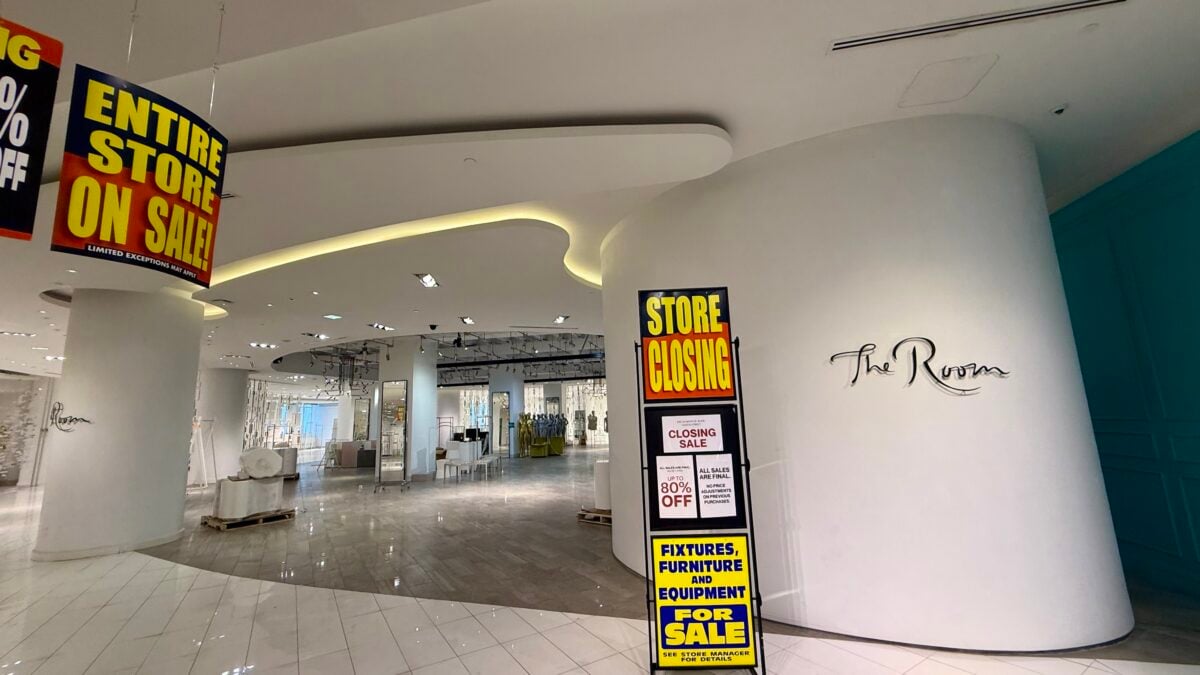
The Room women’s luxury department at the Hudson’s Bay Queen Street flagship store in Toronto on May 31, 2025. Photo: Craig Patterson
The Final Months
The company’s final months generated an unusual level of public attention.
Liquidation sales drew crowds across the country. Shoppers purchased merchandise, display fixtures, signage, and memorabilia. Discounts deepened as inventory disappeared. Stores that had operated for decades gradually emptied.
The story extended well beyond liquidation sales.
Court hearings, lease negotiations, real estate transactions, intellectual property auctions, employee concerns, supplier claims, and competing proposals for the future of the business became regular topics of discussion throughout the retail industry.
For months, the future of Hudson’s Bay remained the most closely followed story in Canadian retail.
Questions persisted about whether portions of the business could survive, whether stores might reopen under new ownership, and whether another operator would emerge.
The past year provided answers to many of those questions.
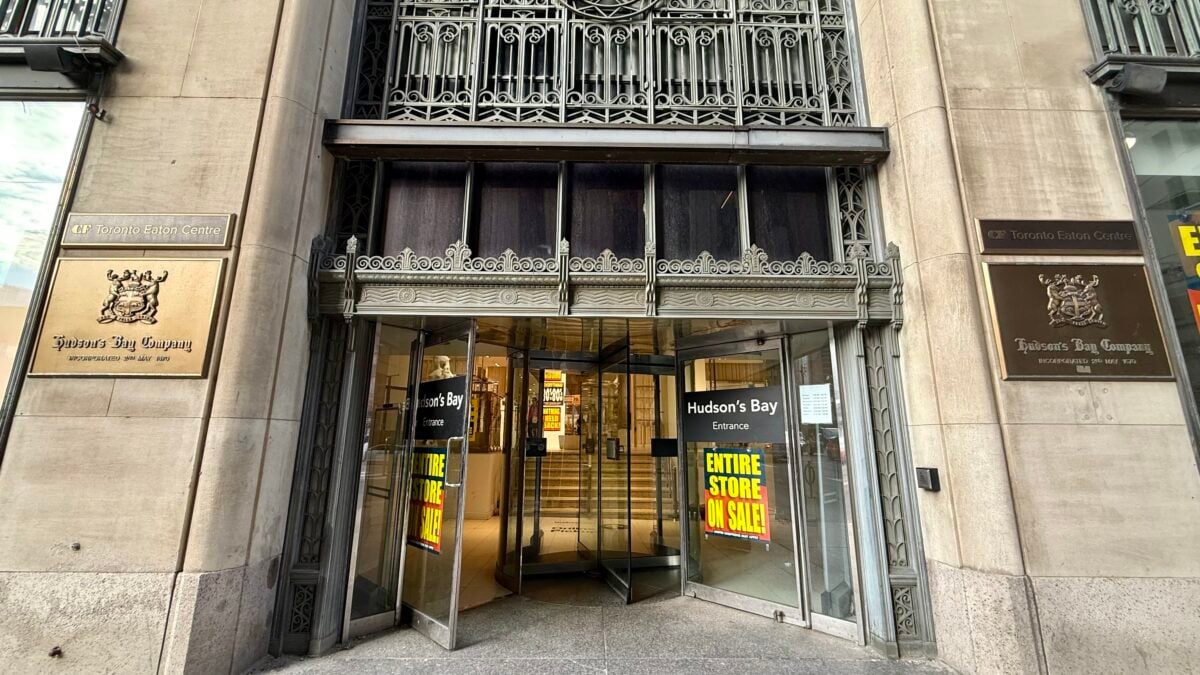
Bay Street entrance to the former Hudson’s Bay flagship department store in downtown Toronto on May 31, 2025. Photo: Craig Patterson
The Stores Are Gone
One year later, no department store operator has emerged to take Hudson’s Bay’s place.
Former Hudson’s Bay locations have entered various stages of redevelopment, subdivision, leasing, and repositioning. Landlords across Canada have pursued different strategies depending on market conditions and property requirements.
Some spaces have secured replacement tenants, while others remain in transition, reflecting the scale and complexity of repurposing former Hudson’s Bay stores.
For shopping centre owners, the closure created challenges and opportunities as they reconsidered how large anchor spaces fit into today’s retail environment.
The industry moved quickly. Consumers did as well.
Shopping patterns shifted to competitors, specialty retailers, off-price chains, luxury retailers, warehouse clubs, e-commerce platforms, and other formats. Retail spending continued.
The stores closed. Canadian retail carried on.
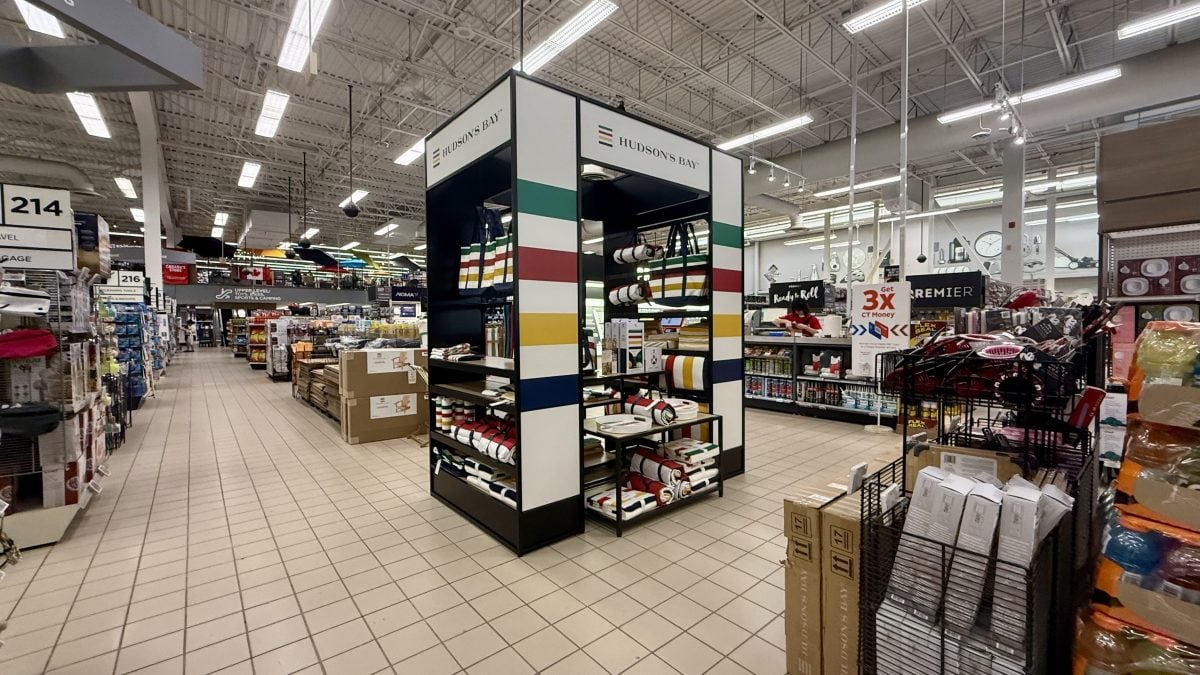
Hudson’s Bay display at Canadian Tire, 839 Yonge St. in Toronto, May 1 2026. Photo: Craig Patterson
The Brand Has a New Home
One of the most important developments following Hudson’s Bay’s collapse involved the company’s intellectual property.
Canadian Tire acquired Hudson’s Bay’s trademarks, branding, iconic stripes, coat of arms, and related assets for approximately $30 million.
The transaction separated the Hudson’s Bay name from the department store business that made it famous.
Before the intellectual property sale, some industry observers discussed the possibility that investors or retail operators might eventually revive Hudson’s Bay in some form. After the sale, that prospect became considerably less likely.
Today, the Hudson’s Bay name remains in the marketplace, while the department store chain itself remains closed.
Consumers can still purchase products bearing the familiar stripes, but there is no indication that Hudson’s Bay will return as a department store operator.
Ruby Liu opens TM Wander at Tsawwassen Mills on May 30, 2026. Photo: Craig Patterson
A Different Retail Model
Another development connected to the broader Hudson’s Bay story took place just days before this anniversary.
On May 30, Central Walk opened TM Wander at Tsawwassen Mills in British Columbia.
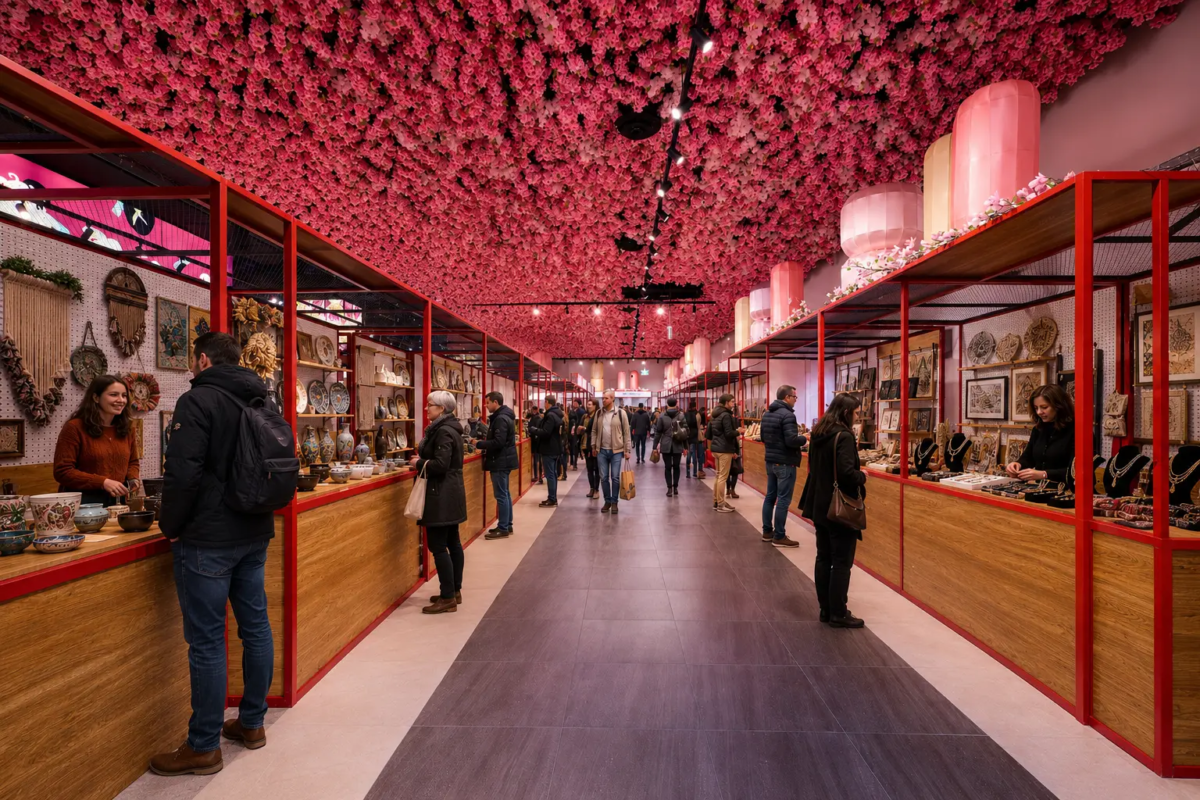
The concept combines retail, food and beverage, entertainment, events, and community gathering spaces.
The opening attracted attention because Central Walk owner Ruby Liu was associated with one of the most closely watched proposals that emerged during Hudson’s Bay’s restructuring process. Last year, Liu sought to acquire 25 former Hudson’s Bay leases as part of an effort that generated national attention.
A year later, the discussion has shifted.
Since acquiring three British Columbia shopping centres, Central Walk has continued adding entertainment attractions, food and beverage offerings, cultural programming, and experiential elements across its portfolio. TM Wander reflects that broader strategy.
Rather than concentrating large amounts of merchandise under one roof, the concept emphasizes experiences, events, dining, entertainment, and social interaction alongside shopping.
TM Wander is one example of a broader strategy that has seen Central Walk expand entertainment, food and beverage offerings, and community-focused programming across its shopping centre portfolio.
TM Wander marketplace at Tsawwassen Mills. Photo: Central Walk/Ruby Liu Investment Corp.TM Wander dragon on the ceiling at Tsawwassen Mills, May 30 2026. Photo: Craig Patterson
One Year Later
The closure of Hudson’s Bay did not bring an end to the activity surrounding the company.
Former locations continue to evolve. Redevelopment plans continue to emerge. Canadian Tire continues to steward the intellectual property. Former employees, suppliers, landlords, and customers continue to reflect on the company’s legacy.
The past year also demonstrated how quickly the retail industry adapts to change.
Canada no longer has a national department store chain comparable to Hudson’s Bay.
For decades, Hudson’s Bay outlived competitors that once appeared equally established. Simpsons disappeared. Woodward’s closed. Eaton’s failed. Sears Canada followed. Hudson’s Bay remained. By 2025, it was the last major national department store chain operating in Canada.
Department stores once served as anchors for downtown shopping districts and major malls across the country. Today, consumers divide their spending among specialty retailers, luxury brands, off-price chains, warehouse clubs, direct-to-consumer brands, and e-commerce platforms.
Its former stores are finding new purposes. Its brand has a new owner. New retail concepts continue to emerge.
The company that introduced generations of Canadians to department store shopping is gone from the retail landscape. The buildings remain. The stripes remain. The conversations about Hudson’s Bay remain as well.
Canadian retail has moved forward. Hudson’s Bay has become part of its history.
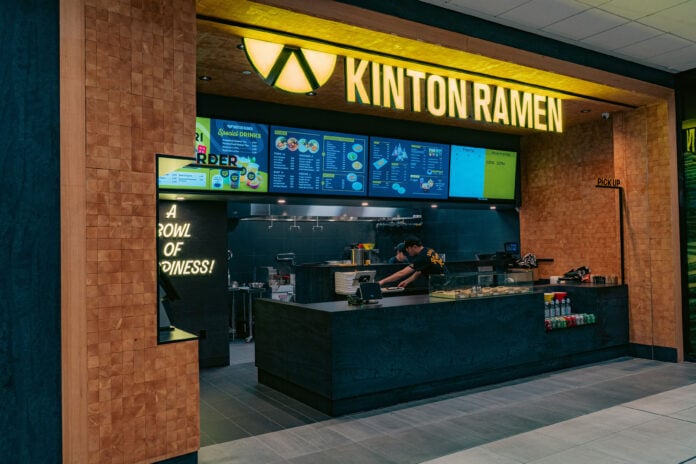
Kinton Ramen has launched a fully digital version of its Kinton Bowler loyalty program, integrating the system into its mobile app so customers can earn points on ramen purchases made in restaurant, through the app or via the company’s website.
The move brings the long-running customer rewards program into a unified digital format and links participation directly to the Kinton Ramen app, where customers can track and redeem points tied to their spending on ramen bowls.
Kinton Bowler, which originated at the company’s first Baldwin Street location in May 2012, was initially created as a way to recognize customers who finished their ramen bowls. It has since evolved into a broader loyalty program and a recurring feature of the brand’s customer engagement strategy across its Canadian locations.
The company said the updated program is designed to make participation more accessible across all ordering channels while maintaining continuity with the original concept that helped shape its early customer base.
Under the digital system, customers advance through lifetime membership tiers and unlock rewards as they progress. The company says rewards include items such as free appetizers, free ramen and VIP benefits, including a Free Topping for Life and the Kinton Bowl Kit.
The program’s highest tier, known as Legend status, includes a $1,000 Kinton Ramen gift card and permanent recognition in the brand’s “Bowl of Fame.” Alongside the app-based program, the Kinton Bowler Instagram account will continue to highlight customer experiences and in-restaurant moments from locations across the country.
The company describes the social media component as a way to showcase customer participation in the program while reinforcing its brand identity.
“Kiinton Bowler has become part of our brand identity,” said De Luna. “This next chapter helps us continue delivering ‘A Bowl of Happiness,’ while making sure every bowl truly counts.”
Kinton Ramen said the updated loyalty program is intended to support its continued expansion in Canada by strengthening customer retention through a points-based rewards structure tied directly to its digital ordering platforms.
As part of the announcement, the company also directed readers seeking franchise opportunities to its website.
Scene+ is expanding its rewards program to more than 1,400 Shell Canada stations across the country, allowing members to earn, redeem and save on fuel and in-store purchases as the loyalty program broadens into one of Canadians’ most frequent spending categories.
The rollout marks a nationwide integration of the program at Shell-branded locations from coast to coast. It brings fuel purchases into the Scene+ ecosystem alongside groceries, dining, entertainment, travel, banking and retail spending, extending the reach of the program for its more than 15 million members.
Under the program’s structure, 1,000 Scene+ points equals $10 in value for most redemptions. With the addition of Shell, members will be able to earn and redeem points on eligible fuel, car wash services and convenience store purchases, while also accessing accelerated earning through eligible Scotiabank and Tangerine payment products and Shell Go+ benefits at participating locations.
Scene+ said the expansion builds on an earlier pilot in Alberta and reflects member interest in using rewards for fuel purchases and immediate savings.
Tracey Pearce
“Our expansion to Shell locations across the country is a milestone moment for Scene+ and our members,” said Tracey Pearce, President, Scene+. “The loyalty landscape is dynamic, and we are continuing to lead by staying relentlessly focused on what our members tell us they want. With Shell, we are bringing rewards into one of Canada’s most frequent spending categories, making every stop an opportunity to unlock more value.”
The Alberta launch earlier this year informed the national rollout, the company said, including member uptake of instant savings tied to fuel purchases of up to 10 cents per litre for eligible Scotiabank and Tangerine cardholders, along with additional benefits through the Shell app.
“Building on our Alberta launch earlier this year, and as part of our planned rollout, Scene+ is now available at Shell stations across Canada, making it easier for customers to earn and redeem rewards as part of their everyday routine,” said Kent Martin, General Manager, Shell Canada Mobility and Convenience. “By bringing Scene+ to more than 1,400 Shell-branded locations nationwide, we’re focused on adding practical value and convenience—whether customers are fueling up or stopping by for everyday needs.”
Shell Canada, a subsidiary of Shell plc, said the partnership is aimed at integrating rewards into routine customer activity at its fuel and convenience locations across the country.
At the centre of the program is the stated redemption structure, which sets 1,000 points at a $10 value for most uses. The companies say the addition of Shell expands the number of everyday transactions where points can be earned or redeemed.
Scotiabank said the expansion strengthens the connection between its payment products and daily consumer spending, including fuel purchases.
“Our clients want rewards that fit seamlessly into their everyday lives and deliver value faster,” said Simona Salter, Executive Vice President, Cards, Loyalty, Payments and Client Experience at Scotiabank. “With accelerated earning and faster redemption, Scotiabank’s payment cards turn everyday spending – including fuel – into meaningful moments of value, reinforcing our role at the centre of our clients’ lives.”
Simona Salter
Tangerine Bank said the integration is intended to give clients additional ways to earn and redeem rewards in familiar spending environments.
“Tangerine clients are looking for more intuitive ways to get more from their everyday spending,” said Gaurav Singh, Senior Vice President, Client Solutions at Tangerine. “With fuel now part of the Scene+ program, they can earn and redeem in more places they already go — turning routine purchases into real value over time.”
The expansion brings fuel spending into a broader coalition of participating merchants and brands within the Scene+ ecosystem.
Participating partners include:
Empire Company Limited family of grocery banners: Sobeys, IGA, Safeway, Foodland, FreshCo and Voilà
Cineplex venues: Cineplex Theatres, The Rec Room and Playdium
Empire Company Limited and Cineplex Inc. are co-owners of the Scene+ program alongside Scotiabank.
Scene+ said the integration with Shell Canada is intended to make rewards more accessible across frequent daily purchases, particularly fuel, as part of its broader strategy to embed earning and redemption opportunities into routine consumer activity.
“By bringing fuel into Scene+, Scotiabank, Tangerine, and Shell are helping Canadians make rewards integrated into everyday life.”
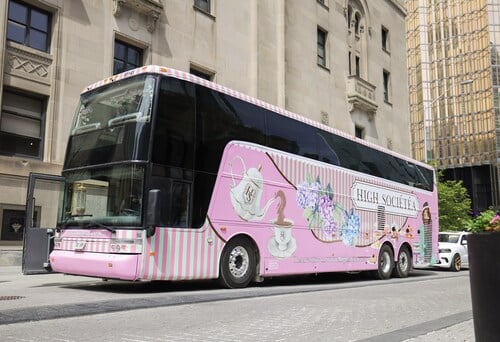
A bold pink double-decker bus will roll through Toronto on Thursday, June 4, unmistakable and unlike anything the city has seen before.
High Sociétéa, Canada’s first afternoon tea experience served in motion, offers a curated city tour, live violin, and a theatrical onboard experience beneath a panoramic glass roof with 180-degree city views.
High Sociétéa was conceptualized around memory and shared experience, particularly those between founder and creator Veruschka Mungroo and her mother. When her mother was diagnosed with dementia, Mungroo found herself returning to one specific ritual: afternoon tea together in South Africa. Those memories became the inspiration for something greater, a space designed to evoke the same sense of warmth, presence and togetherness across the city, inviting guests to pause and reconnect, said the company in a news release.
Veruschka Mungroo
“I wanted to create a space that honours connection, nostalgia, and the kind of joy that stays with you,” said Mungroo. “Not just a beautiful experience, but a meaningful one. One where people can make memories, as I have with my mother. And Toronto, with its rich multicultural tapestry and deep appreciation for community, felt like a natural home for it.”
Inside, the bus transforms into an elegant escape. Soft floral booths, layered textures and golden accents add a touch of refined whimsy. Every detail has been thoughtfully curated to take guests through a full sensory experience, where the aesthetic and the tea ritual are equally important, explained the company
At its heart, High Sociétéa is a social experience, celebrating connections between loved ones, longtime friends, and new relationships. Onboard, guests can choose from multiple packages, featuring a curated selection of teas, seasonal non-alcoholic rosé, and delicate tea sandwiches and pastries, it said.
For Mungroo, who immigrated from South Africa eight years ago, supporting women and fellow immigrants is deeply personal.
“Every six months, women from local shelters will be invited as guests of honour for complimentary trips. “Every woman deserves to feel special and celebrated,” said Mungroo.
High Sociétéa runs for 90 minutes and will be available Thursday to Sunday from 10:30 AM to 6:00 PM. After June, tours will run Tuesday to Sunday from 10:30 AM to 6:00 PM.
Retailers across Canada continue to adapt to changing economic conditions and shifting consumer expectations. While the country remains in a technical recession, the retail sector is showing resilience as brands invest in new stores, innovative concepts, and experiences designed to attract shoppers. Many retailers are also placing greater emphasis on community engagement and creating destinations that encourage customers to spend more time in physical spaces.
This week saw several notable expansions, new retail concepts, and sustainability-focused initiatives across the country. Retailers are also adjusting their operations and hiring strategies as they respond to changing consumer behaviour. With major events such as the FIFA World Cup expected to drive tourism and spending in the years ahead, many businesses are positioning themselves for long-term growth while remaining focused on serving local communities.
Retailer News
Sephora Canada is making a pivotal leap into smaller, community-focused formats with its first-ever small store in Kitsilano. This 2,000-square-foot location emphasizes a hands-on, curated beauty discovery that complements evolving local shopping preferences while rethinking traditional footprint strategies. Meanwhile, Tilley is pursuing premium urban consumers by expanding with three new stores that align with its transition from classic hatmaker to a comprehensive outdoor lifestyle brand, reflecting a refined outdoor aesthetic tailored for affluent markets in its recent expansion.
Large-scale retail development continues to garner attention with the opening of Oakridge Park which introduced a luxury retail and experiential food hall space as part of Vancouver’s growing upscale shopping milieu. This new destination signals diversification in mixed-use urban retail, showcasing a changing vision of luxury away from heritage corridors. Complementing the sustainability trend, MEC launched its first permanent Gear Swap store, facilitating circular commerce through trade, repair and resale of outdoor gear to foster community and eco-conscious shopping.
On the growth and market consolidation front, Dr. Phone Fix’s entry into New Brunswick via acquisition and store expansion strengthens its national footprint in the device repair sector, as detailed in its strategic move. These concrete expansions and innovative retail concepts reflect a broader industry emphasis on quality, sustainability, and functional urban experience in physical retail spaces.
Retailer Financials / Trends / Reports
Despite Canada’s entry into a technical recession, the retail sector reported a 1.0% trade increase in Q1 2026, driven primarily by health, personal care, and general merchandise retailers, highlighting resilience in consumer spending and signalling sustained opportunities for retail and commercial real estate investment, according to the latest report. At the same time, Statistics Canada data points to continuing declines in retail employment, underscoring persistent labour challenges that could impact store operations and service delivery in key sub-sectors.
Retail pricing strategies are also evolving amid inflation fatigue. Insights into counter-tariffs reveal selective price increases for affected U.S. goods, coupled with transparency efforts through product labelling, which helped maintain consumer acceptance of modest price adjustments as discussed in Canada’s counter-tariffs analysis. This balanced approach demonstrates tactical cost management important for maintaining competitiveness during economic uncertainty.
Furthermore, physical grocery stores remain vital for product discovery, with nearly half of consumers making spontaneous purchases in-store, as detailed in the grocery retail report. Consumer behaviour surveys reveal shifts in spending patterns as 35% of Canadians intend to reduce discretionary summer spending due to cost pressures, though younger demographics buck this trend with increased social-driven expenditure, according to the consumer study. Meanwhile, event-driven economic boosts such as the Montreal Canadiens’ NHL playoff run highlight how live experiences continue to drive substantial restaurant and retail spending in urban areas.
Retailer People News
Leadership shifts and workforce dynamics are front and centre as retail brands position themselves for growth amid competition and labour constraints. L’Oréal Canada appointed Stéphane Bérubé as its first Canadian President and CEO, signalling a strategic focus on omni-channel innovation and localized market responsiveness in its recent announcement. In a competitive labour market, Tim Hortons launched a campaign to hire 10,000 local workers and expand its store base as a defensive strategy against Dunkin’s planned Canadian re-entry, detailed in their hiring initiative.
Retail leaders in hospitality are preparing for a significant surge in demand as the FIFA World Cup approaches, with warnings about enduring staffing shortages and the need for robust training and retention efforts to meet visitor volumes and protect service standards, outlined in hospitality industry insights. These developments underscore the interconnectedness of talent strategy and capacity building in retail and hospitality sectors facing heightened demand volatility.
Retailer Op-Eds
Analysis of retail operational challenges reveals that despite apparent demand, many retail spaces struggle with conversion issues due to poor visual merchandising and suboptimal store layouts resembling storage more than curated environments, underscoring the necessity for focused investments in presentation and engagement to unlock space potential and drive profitability as highlighted in Why Retail Spaces Aren’t Converting Despite Demand. This reflects a wider need to address the ‘last mile’ of in-store experience amid hybrid retail models.
On food retail, rising chicken prices tied to supply shortages spotlight structural vulnerabilities in Canada’s supply-managed protein sector, foreshadowing cost pressures that could ripple through grocery prices and consumer budgets, detailed in the chicken prices analysis by Dr. Sylvain Charlebois. Separately, debates around taxation of convenience foods highlight government recognition that such products are necessities for many Canadians, with policy changes aiming to alleviate undue burdens on vulnerable demographics and potentially influence sector sales and retail footprints as argued in Taxing Convenience Foods Punishes the Wrong Canadians.
Meanwhile, broader retail pricing debates clarify myths about surveillance pricing, emphasizing that Canadian grocers currently do not engage in price discrimination based on consumer data at checkout, but rather rely on common personalized offers. This distinction is crucial to understanding real pricing dynamics and regulatory contexts affecting consumer trust and retailer strategies in a sensitive economic climate, as explored in Double Click: Big Foot, The Easter Bunny & Surveillance Pricing.
Editor’s Take
This week’s developments highlight a retail sector that continues to evolve despite ongoing economic uncertainty. Across Canada, retailers are investing in new store concepts, experiential destinations, sustainability initiatives, and community-focused strategies to strengthen customer relationships and drive growth. These efforts demonstrate that many businesses remain confident in the long-term potential of physical retail, even as consumers become more selective about where and how they spend.
At the same time, challenges remain. Economic pressures, labour shortages, and changing consumer behaviour continue to affect retail operations across the country. While overall retail sales have shown resilience, many businesses are working to balance rising costs with the need to deliver value, maintain service levels, and remain competitive in an increasingly crowded marketplace.
This week’s stories also reinforced the importance of trust, authenticity, and creating compelling shopping environments. Whether through transparent pricing, sustainability efforts, or thoughtfully designed stores, retailers are finding that success increasingly depends on building meaningful connections with customers. As the industry continues to adapt, those that remain responsive to changing consumer expectations will be best positioned for growth in the months and years ahead.
Welcome to the Daily Synopsis by Retail Insider. We hope you enjoy the 7 articles we most recently published, covering key developments in Canadian retail.
Canada entered a technical recession while the retail sector recorded 1.0% growth in the first quarter of 2026. Canadians are increasingly using stores as social spaces, with Gen Z leading this shift toward experiential shopping. Meanwhile, employment in retail and hospitality sectors continued to decline in March 2026, reflecting ongoing workforce changes.
Sephora Canada First-Ever Small Store in Kitsilano (CNW Group/Sephora Canada)
Sephora Canada says it is redefining neighbourhood beauty retail with the opening of its first-ever small store format in Kitsilano, Vancouver, marking a strategic evolution in how the retailer brings its signature multi-brand discovery experience closer to Canadian consumers.
Located in one of Vancouver’s most vibrant and wellness-driven communities, the new format is designed to complement the pace and personality of neighbourhood shopping districts. The Kitsilano store delivers its signature multi-brand assortment, and beauty expertise, tailored to how Canadians increasingly live, shop, and connect with beauty today, said the brand.
The new store is located at 2235 4th Ave W and officially opens to the public on June 5.
The opening marks Sephora Canada’s 147th store nationwide and represents an important milestone in the retailer’s ongoing retail evolution, focused on deepening proximity to consumers while preserving the discovery and human connection at the heart of Sephora Canada, it said.
Thomas Haupt
“We know that beauty is an inherently personal and experiential category, where customers want to touch, test, discover, and connect with experts before they buy,” said Thomas Haupt, Country General Manager, Sephora Canada.
“Our new small store format lets us bring the best of Sephora into communities like Kitsilano in a way that feels curated, convenient, and reflective of the neighbourhood. “It’s about meeting clients where they already live and spend their time, making Sephora part of their everyday.”
The company said the store will span just over 2,000 square feet and feature a curated assortment of brands, including Glow Recipe, Haus Labs, Kayali, Kérastase, Makeup by Mario, Merit Beauty, Rare Beauty, Rhode, and Sol de Janeiro, alongside exclusive ‘Only at Sephora’ collections.
Sephora is the world’s leading global beauty retail brand with 50,000 employees operating in 35 markets. It has more than 3,200 stores and close 500 brands as well as its own label, Sephora Collection. It was founded in 1969 in Limoges, France, and has been part of the LVMH Group since 1997.
Sephora’s real estate strategy in Canada has long been guided by Aurora Retail Group, founded by Jeff Berkowitz, which has represented the retailer since its entry into the Canadian market more than 20 years ago. Perri Zimmerman from the firm’s team handled the Kitsilano lease transaction.
“The data shows an economy that is losing momentum and struggling to find a clear source of growth,” said CPA Canada’s chief economist David-Alexandre Brassard. “Canadians are continuing to spend, supported by strong wage growth, but job creation has yet to pick up meaningfully in 2026.”
David-Alexandre Brassard
Household spending continued to hold up despite broader weakness across the economy. Ongoing uncertainty continues to weigh on business investment, while a weaker housing market is dragging down residential investment. A temporary boost from businesses in North America rebuilding depleted inventories helped offset some of this weakness, said the CPA.
“Consumers are carrying more of the load, at the expense of savings and increasing financial strain. And that is not entirely sustainable,” said Brassard. “Stronger investment and government spending are needed to offset slowing momentum elsewhere in the economy because right now Canada is lacking a clear engine for growth.”
Looking ahead, the outlook remains weak, Brassard added. Higher oil prices in April may provide some support, but that benefit could be offset by tougher U.S. sectoral tariffs. Meanwhile, labour market data suggests employers remain cautious amid ongoing uncertainty despite wage growth supporting consumption for now.
This weaker-than-expected data is likely to be noted by the Bank of Canada and could keep policymakers on the sidelines through 2026, said the organization.
Statistics Canada also reported that retail trade rose 1.0% in the first quarter, with health and personal care retailers (+3.5%) and general merchandise stores (+3.2%) contributing the most to the sector’s quarterly growth.
But it also said the retail trade sector contracted 0.6% in March, partially offsetting the back-to-back monthly expansions in January and February.
“General merchandise retailers (-2.7%) contributed the most to the decline in the sector in March, the first contraction in six months. Retailing activity at building material and garden equipment and supplies dealers (-3.0%) was another large contributor to the decline. Gasoline stations and fuel vendors (-1.9%) further added to the decline in the retail trade sector, coinciding with a jump in gas prices, arising from the supply shock caused by the conflict in the Persian Gulf,” noted the federal agency.
Tahir Xəlfə photo
Statistics Canada said household spending rose 0.4% in the first quarter of 2026, following a 0.7% increase in the fourth quarter of 2025. Growth in the first quarter was led by higher spending on financial services and food. Meanwhile, fewer Canadians travelling abroad as well as decreased purchases of new vehicles tempered the overall growth in household consumption expenditures, it said.
“The household saving rate slowed to 3.5% in the first quarter of 2026, the lowest rate since the first quarter of 2024, as disposable income increased 0.6%, while nominal consumption expenditure rose 0.9%. Although compensation of employees increased in the first quarter of 2026, declines among other income sources weighed on disposable income, including self-employment income (termed net mixed income), net investment income (termed net property income) and net receipts of current transfer,” explained Statistics Canada.
“Net property income declined 0.6% in the first quarter of 2026 due to a combination of reduced investment earnings and higher interest payments. Household investment earnings (i.e., property income received) declined 0.1% in the first quarter, due mainly to lower returns on interest-bearing instruments. Household property income paid, comprised of mortgage and non-mortgage interest expenses, increased by 0.7%, marking the first increase since the second quarter of 2024. The Bank of Canada policy rate was unchanged during the first quarter of 2026, in contrast with its numerous reductions over the past two years.”
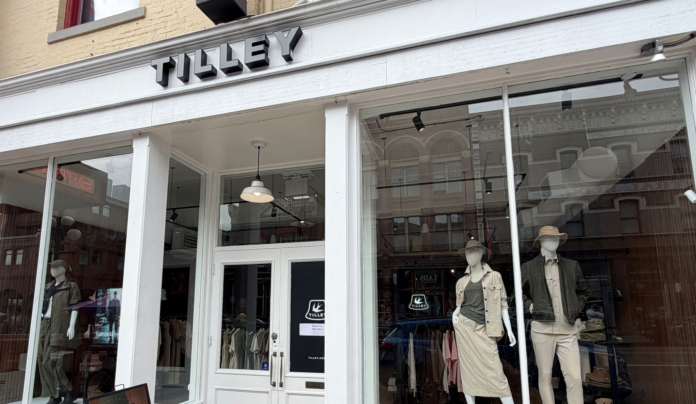
Canadian heritage apparel company Tilley is in the midst of a rapid retail expansion across Canada, with three store openings in roughly three months as the company accelerates its push into physical retail under the Unity Brands platform.
Tilley recently opened a new store at The Well in downtown Toronto following the launch of a location in Victoria, British Columbia. A store at Bayview Village Shopping Centre is also expected to open soon, becoming Tilley’s eighth location including its factory outlet store.
For many consumers, Tilley is still best known for its iconic hats. The company, however, has steadily expanded into apparel, sport and lifestyle categories while building a growing network of standalone stores in carefully selected markets across Canada.
David Lui, co-founder of Unity Brands, said the platform continues to explore expansion opportunities in markets that align with Tilley’s customer base and long-term growth strategy.
Tilley at The Well, Toronto. Photos by David Lui.
Tilley Targets Lifestyle-Oriented Retail Markets
Tilley’s recent expansion builds on the opening of its first modern standalone store on Toronto’s Ossington Avenue in late 2022. Since then, Tilley has expanded into locations that align closely with its customer base, including Oakville, CF Chinook Centre in Calgary, Victoria and The Well.
Rather than pursuing rapid expansion, Tilley has focused on markets that align closely with its customer base, including affluent urban neighbourhoods, premium shopping centres and destinations with strong outdoor and travel-oriented lifestyles.
According to Lui, Ossington and Oakville have emerged as strong markets for the brand, reflecting the alignment between Tilley’s evolving product assortment and those customer demographics.
Tilley also operates locations at Toronto Premium Outlets and a factory store in Toronto.
Tilley at The Well, Toronto. Photos by David Lui.
The Well Store Introduces a More Refined Concept
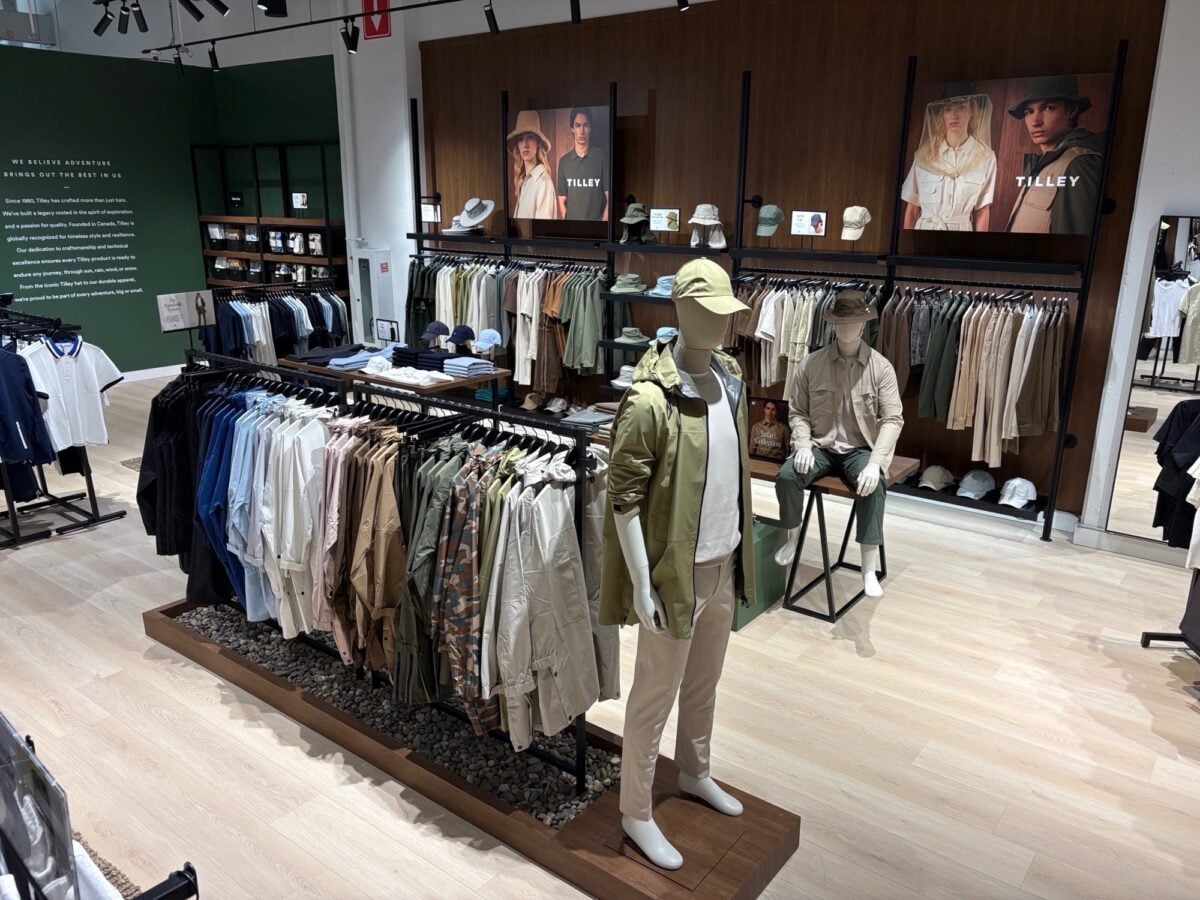
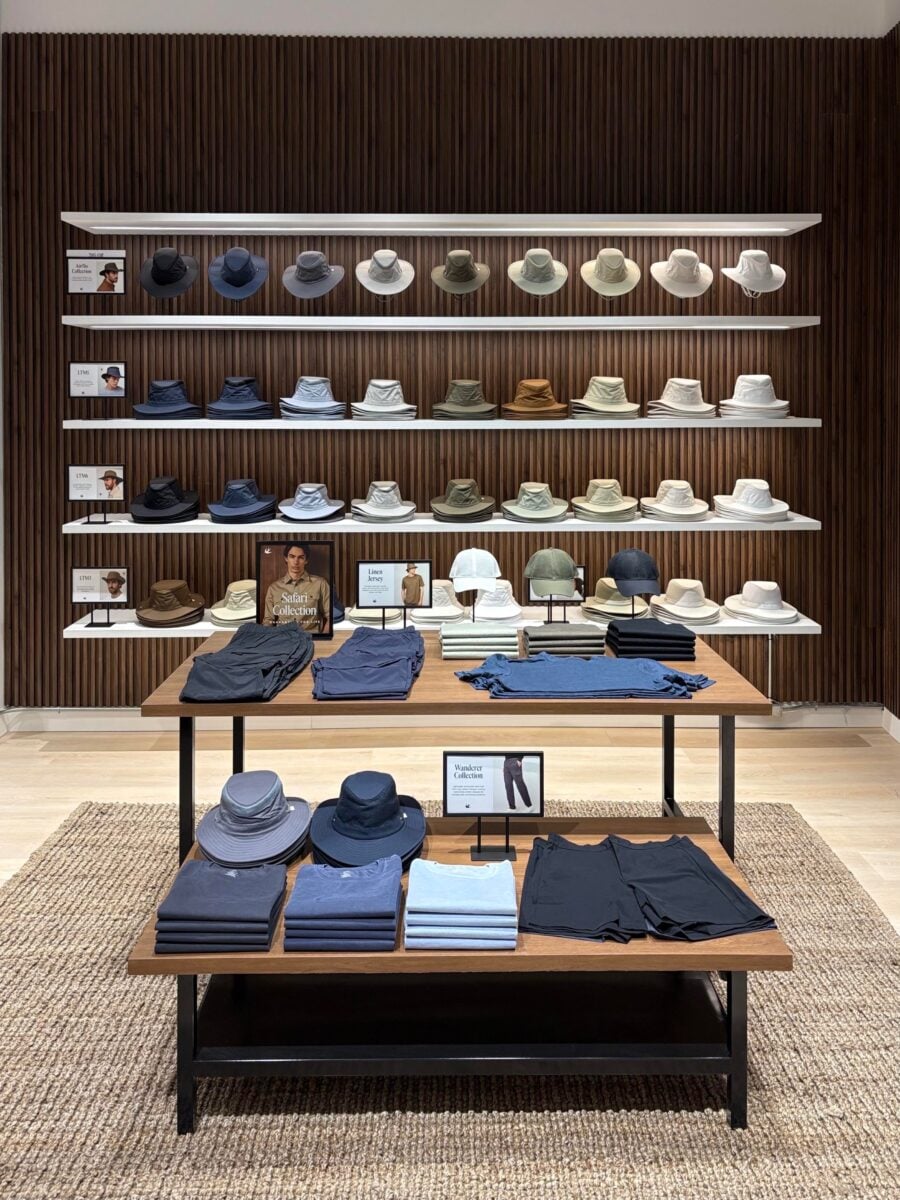
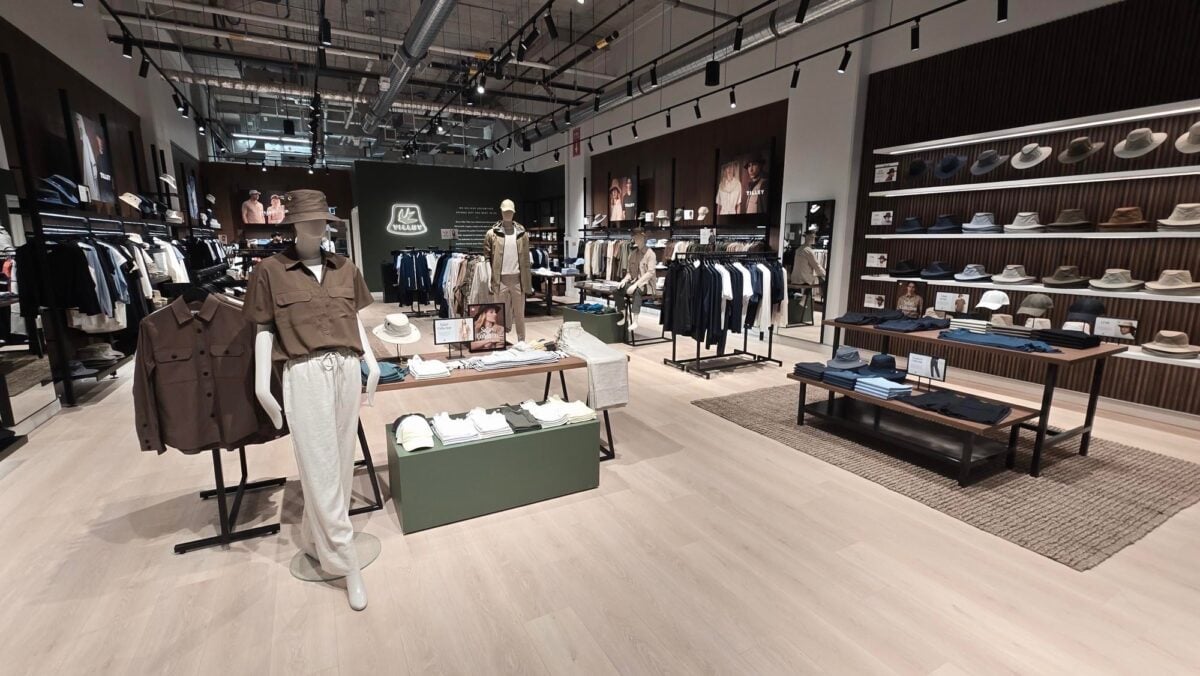
The recently opened store at The Well spans approximately 2,600 square feet and reflects what the company describes as a more refined retail concept for the brand.
Arif Mukhtar, Vice President of Retail Development at Unity Brands, said Tilley has spent the past several store openings refining what the brand retail environment should look and feel like.
“The stores have a very outdoors feel that reflects what the brand is about, getting outdoors and embracing nature,” he said.
The newer stores incorporate dark walnut finishes, forest green accents and lifestyle-focused merchandising intended to reflect the company’s outdoor roots while presenting the broader apparel assortment in a more contemporary way.
The assortment now extends well beyond hats and travel apparel. Tilley has expanded into full men’s and women’s collections as well as Tilley Sport, which includes golf, tennis and active lifestyle apparel.
The stores are also helping introduce the modern Tilley brand to consumers who may still associate the company primarily with headwear.
Tilley at The Well, Toronto. Photos by David Lui.
Wholesale Remains Core to the Business
Founded in 1980 by Alex Tilley, the company built its reputation through durable outdoor hats and travel apparel before growing into a broader wholesale and international distribution business.
Today, Tilley products are sold globally, including operations in Australia and the United Kingdom.
While the company is expanding its direct-to-consumer business, wholesale remains a major part of operations.
Wholesale continues to account for the majority of Tilley’s business, even as the company invests in growing its store network and direct relationships with customers.
In Canada, the company has partnerships with retailers including RONA, where Tilley Tuff workwear products are sold.
Unity Brands Guides Tilley’s Evolution
Tilley’s retail expansion has unfolded under Unity Brands, the platform behind brands including Tilley, Kit and Ace and Mastermind Toys.
Unity Brands is led by a team that includes Canadian retail entrepreneur Joe Mimran, whose retail career includes founding Club Monaco and Joe Fresh.
Tilley has also maintained some manufacturing operations in Toronto, which Mukhtar said remains important to the brand’s Canadian identity.
“Being a Canadian brand, it’s important for us to maintain manufacturing in Toronto, and a good percentage of our hats are still made here,” he said.