If CHFA NOW Toronto has been sitting on your September calendar but you haven’t finalized your plans, there’s still time.
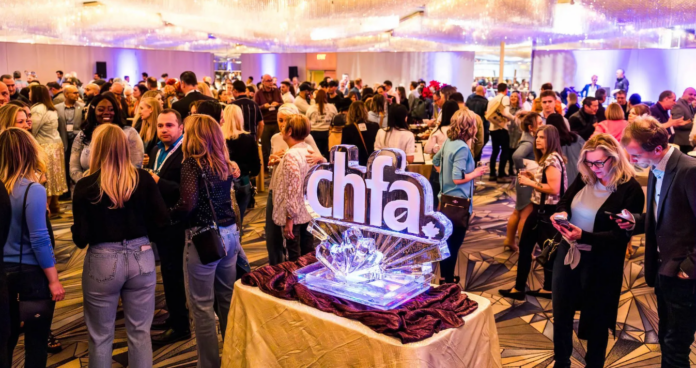
Canada’s natural, organic and wellness industry will gather at Exhibition Place this week for CHFA NOW Toronto 2026, beginning with the conference on Friday, September 25, followed by the trade show on Saturday, September 26 and Sunday, September 27.
Online registration for non-CHFA members has now closed, but that doesn’t mean you’ve missed the show. On-site registration will be available at the Enercare Centre throughout the event, and trade show admission remains complimentary for retailers and CHFA members.
For retailers in particular, the timing presents an opportunity to spend a weekend seeing products, meeting founders and suppliers, comparing emerging brands and getting a concentrated look at what is happening across one of retail’s fastest-evolving areas.
Thousands of Products, Hundreds of Retailers
CHFA NOW Toronto brings together companies spanning food and beverage, natural health products, supplements, beauty, skincare, healthy home and other wellness categories.
The scale makes it possible to accomplish something that would be difficult to replicate through individual meetings.
CHFA says its 2025 Toronto event featured more than 1,200 exhibitors, with more than 750 retail locations represented and more than 8,400 industry professionals participating.
For buyers, category managers and retail executives, the show floor provides an opportunity to compare products directly, sample new launches and have conversations with the people behind the brands.
Some will be familiar names. Others may be companies retailers are encountering for the first time.
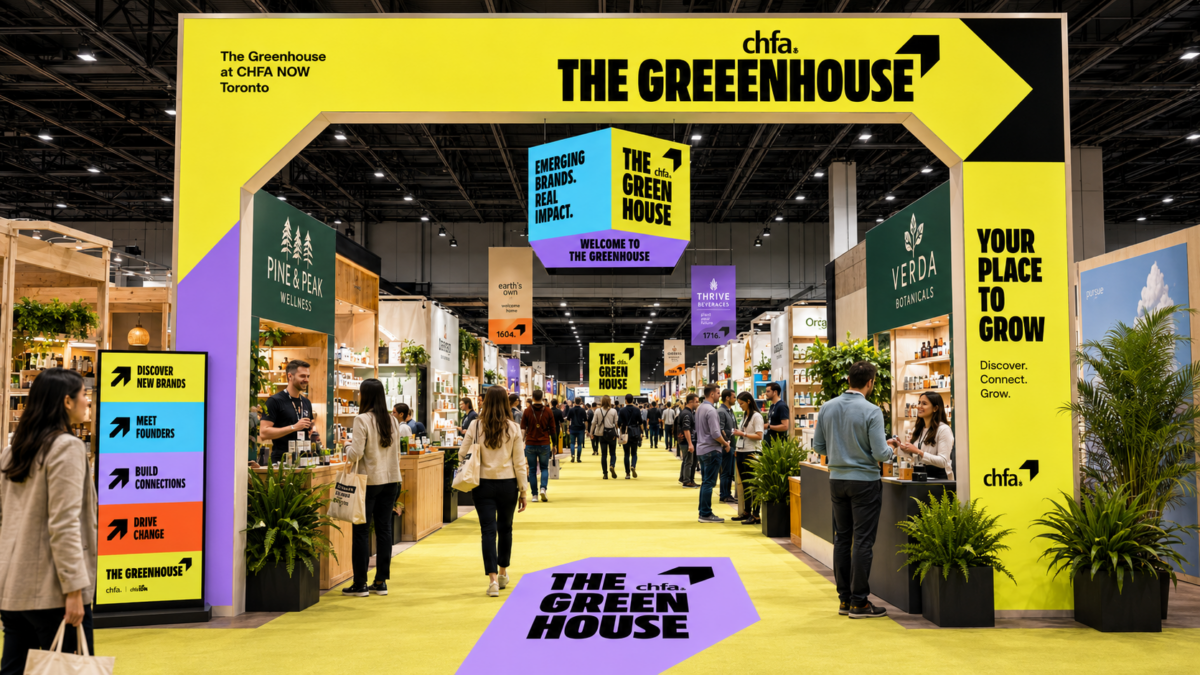
The Greenhouse: CHFA photo
Discover Emerging Brands Before They Become Familiar
Product discovery is a major part of CHFA NOW, and this year’s event puts additional emphasis on emerging businesses.
The new Greenhouse program is designed to connect promising Canadian natural, organic and wellness companies with retailers, distributors and other industry decision-makers.
CHFA NOW Toronto will also showcase emerging companies through its programming, giving retailers an opportunity to see new products and hear directly from entrepreneurs about the businesses they are building.
For buyers looking to differentiate their assortments, those early conversations can be particularly valuable. A product that is relatively unknown today could become a much more familiar presence on Canadian retail shelves in the years ahead.
See Where Wellness Is Heading
One of the advantages of attending a large trade show is being able to see broader patterns emerge across hundreds of companies and products.
Protein continues to move into unexpected categories. Functional beverages are evolving. Women’s wellness is becoming increasingly specialized. Personal care, beauty, healthy home and food are increasingly intersecting with the broader wellness conversation.
Walking the show floor allows retailers to see those developments in context.
It is one thing to read about an emerging trend. It is another to see dozens of companies approaching the same consumer need in different ways, compare their products and speak directly with the founders and executives behind them.
More Than Product Discovery
CHFA NOW is also an opportunity to reconnect with the people behind the industry.
Retailers, manufacturers, distributors, suppliers and entrepreneurs from across Canada will be in Toronto, creating opportunities for meetings and conversations that extend beyond individual products.
The event begins Friday with CHFA NOW’s conference program, which will examine some of the larger consumer, business and competitive issues affecting the natural, organic and wellness sector.
The trade show then opens Saturday and continues Sunday at the Enercare Centre, with additional programming and industry events taking place throughout the weekend.
Haven’t Registered? You Can Still Attend
With the event only days away, the window for advance planning is getting short, but attending is still possible.
CHFA NOW Toronto is a trade-only event, and attendees must work within the natural, organic or wellness industry. Those registering or collecting badges on site should bring photo identification and proof of industry employment.
On-site registration and badge pickup at the Enercare Centre in Hall A will be available:
Friday, September 25: 8:00 a.m. to 6:00 p.m. Saturday, September 26: 8:00 a.m. to 5:00 p.m. Sunday, September 27: 8:30 a.m. to 4:00 p.m.
The trade show itself runs from 10:00 a.m. to 5:00 p.m. on Saturday and Sunday.
For retailers, trade show registration is complimentary.
If discovering new products, meeting suppliers or understanding where the wellness market is heading matters to your business, there is still time to put CHFA NOW Toronto on this weekend’s schedule.
CHFA NOW Toronto takes place September 25–27, 2026 at Exhibition Place in Toronto. The conference takes place Friday, followed by the trade show Saturday and Sunday.
Welcome to the Daily Synopsis by Retail Insider. We hope you enjoy the 13 articles we published covering key developments in Canadian retail. Here are a couple highlights with a full list of the day’s articles thereafter.
Mastercard, Flybits and Rogers Bank say they have completed what they describe as Canada’s first successful agentic commerce transaction, using an AI-powered assistant to select and purchase a product on behalf of a consumer within pre-set spending limits.
The companies say the transaction is intended to demonstrate how AI agents can be used in commerce while maintaining consumer control, transparency and security as the technology becomes increasingly capable of making purchasing decisions and completing transactions.
AI transaction
The initiative involved a Flybits-powered AI assistant acting on instructions from a Rogers Red credit card cardholder. The assistant identified an eligible product within a specified budget and completed the purchase using Mastercard Agent Pay.
The transaction was designed to show how AI agents can operate within defined parameters, including validated consumer instructions and predetermined spending limits. It also demonstrated how AI-powered assistants can provide personalized recommendations and explain how and why those recommendations are generated.
Craig ReiffNick BednarzHossein Rahnama
“Agentic commerce represents one of the most significant shifts in the future of commerce and payments,” said Craig Reiff, senior vice-president, Core Payments, Mastercard, Canada. “As AI becomes increasingly capable of acting on behalf of consumers, trust will determine how quickly these experiences scale. Mastercard is helping establish the standards and infrastructure for secure, transparent and consumer-controlled commerce in Canada.”
The companies said the work is part of Mastercard’s global Agent Pay framework, which is intended to support trusted, interoperable and secure transactions involving AI agents. The collaboration is also being used to examine safeguards, governance principles and industry standards for the adoption of agentic commerce in Canada.
Consumer controls
Mastercard said its Canadian research indicates there is interest in AI-assisted shopping, although consumers place importance on maintaining control over how the technology is used.
The research found that 41 per cent of respondents were open to using AI assistants to help them shop online. Among respondents with positive feelings toward AI shopping assistants, 53 per cent said they were open to AI-assisted purchasing when it operates within pre-set preferences and budget limits.
“We are always looking for innovative ways to enhance the customer experience and deliver value to Canadians,” said Nick Bednarz, CEO, Rogers Bank. “This collaboration shows how AI technology can simplify commerce while preserving the security, transparency and control consumers expect from their payment experiences.”
Antoni Shkraba photo
Flybits supplied the agentic intelligence and explainability layer behind the experience. Its platform was used to provide personalized recommendations while helping consumers understand the basis for those recommendations.
The company said future phases are expected to incorporate Mastercard Insight Tokens, which it describes as a secure and governed method for AI agents to access and apply permissioned insights. The companies said the technology is intended to support more personalized and dynamic experiences with consumer consent.
“For consumers to embrace AI-powered commerce, the experience must be transparent, fast and personalized,” said Dr. Hossein Rahnama, Founder and CEO of Flybits and the Edward Rogers Sr. Chair in AI and Human Creativity at TMU. “By combining contextual intelligence with auditable AI, we are building a new generation of digital commerce experiences that enable consumers to make more informed decisions with greater confidence, clarity and access to relevant choices.”
Building an agentic commerce framework
Mastercard, Flybits and Rogers Bank said they are continuing to work on applying safeguards, transparency and security to agentic commerce as the technology develops.
The companies said the initiative is aimed at moving agentic commerce from an emerging concept toward a consumer experience in which controls, transparency and security are incorporated into the way the technology operates.
Big League Food Company says it is on track to reach a revenue run rate of nearly $70 million entering 2027 as it expands its Ontario retail network and invests in manufacturing, technology and logistics capacity.
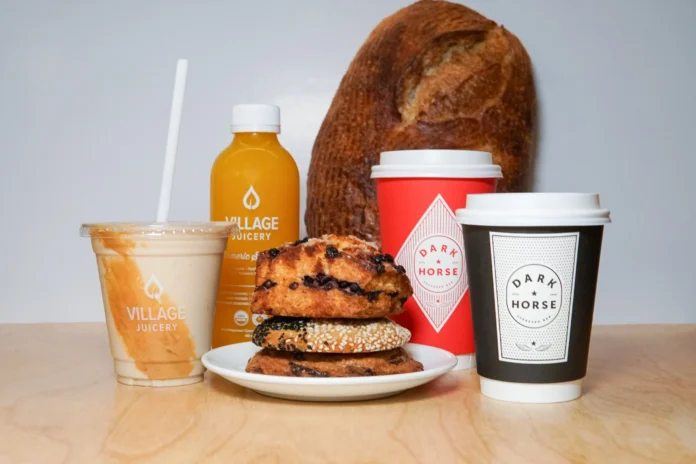
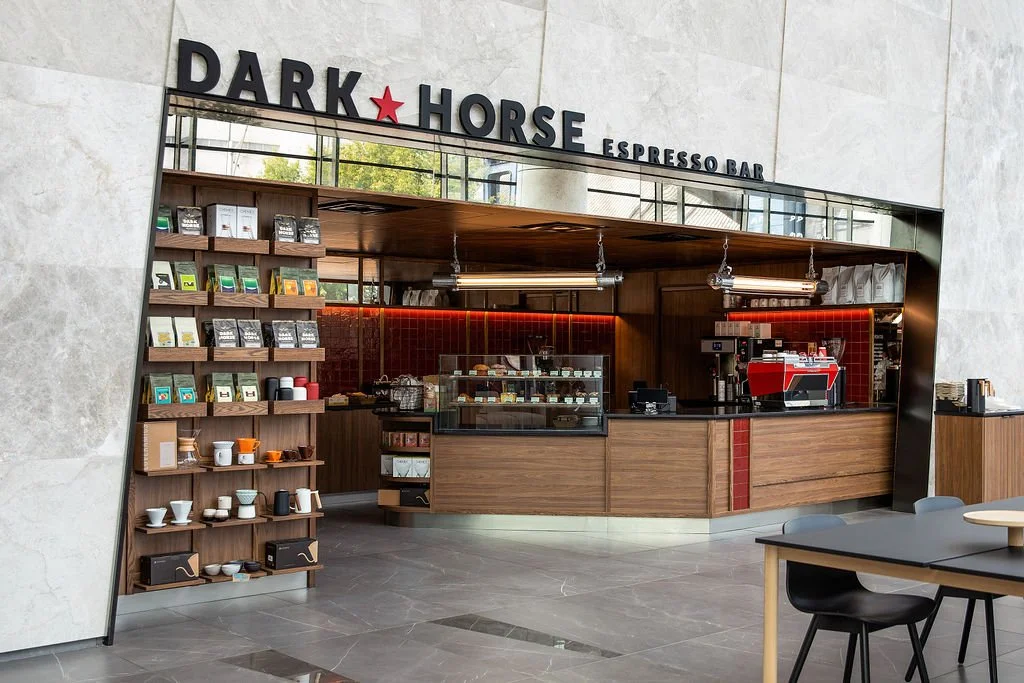
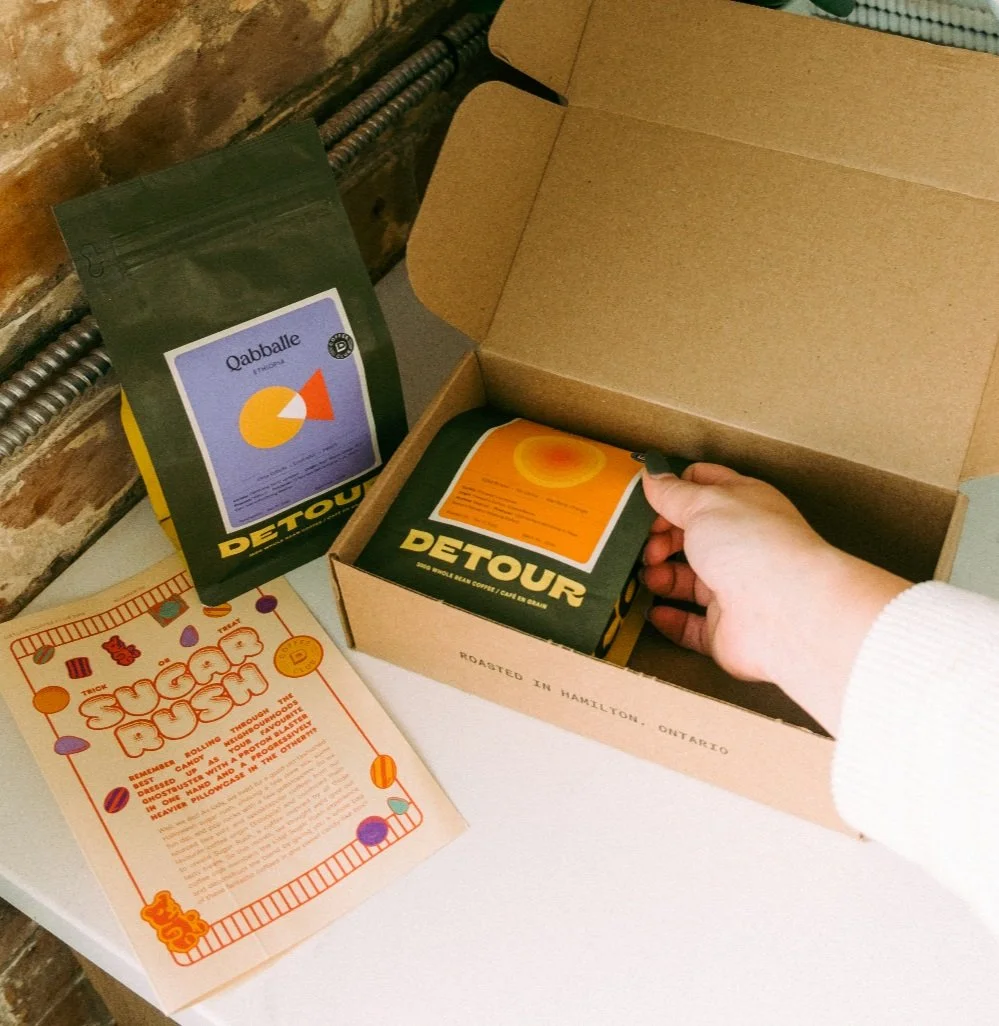
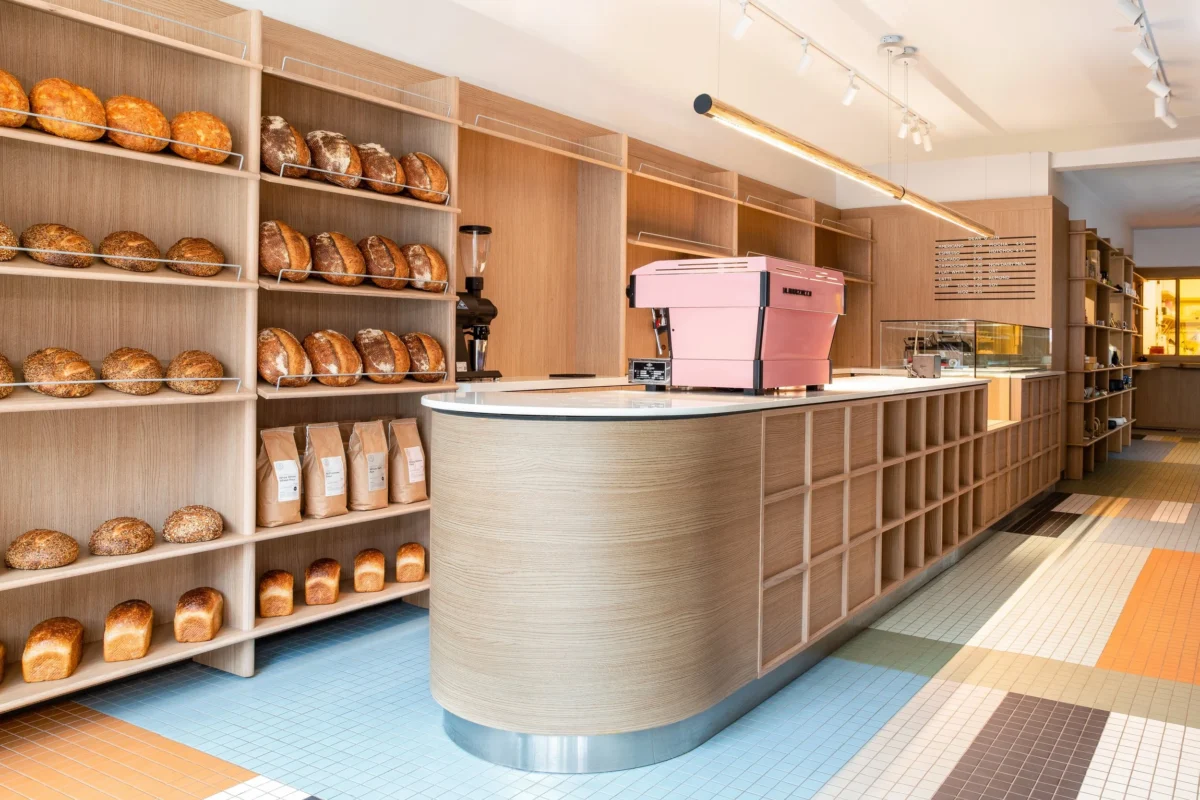
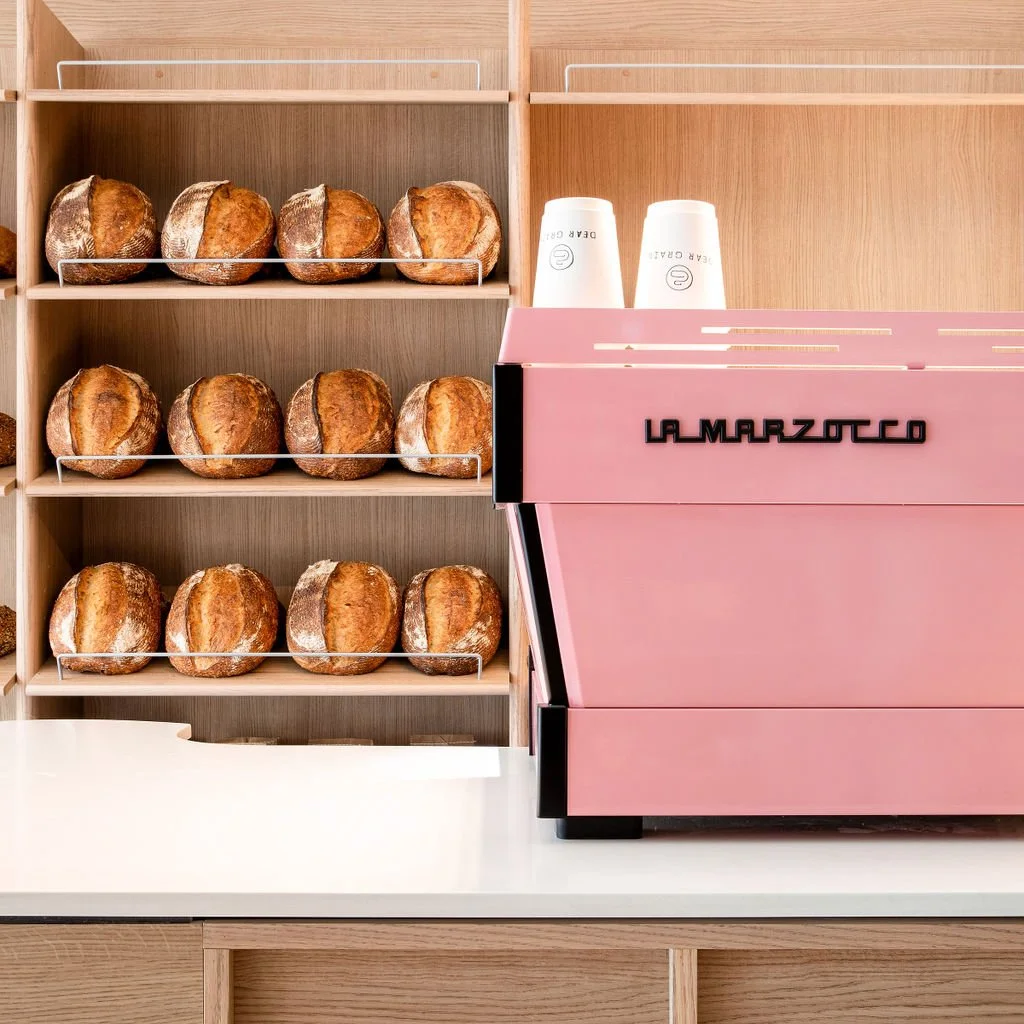
The Toronto-based food platform, whose brands include Dark Horse Espresso Bar, Dear Grain, Village Juicery and Detour Coffee, says it has achieved 25 per cent compounded annual growth since its inception in 2024 and is targeting $100 million in revenue by 2028.
Eight new locations planned in 2026
Big League Food Company, or BLFC, expects to have 35 retail locations by the end of 2026, including eight new locations opened or scheduled to open this year. The expansion includes a Village Juicery at First Canadian Place in May, three Dark Horse locations in North London, on Geary Avenue and at Sherway Gardens, as well as locations at College and Dovercourt and 64 Bathurst.
Two Dear Grain locations are also planned, at Summerhill at The James in October and Waterworks at 511 Richmond later in 2026.
The company says growth is also coming from existing locations. Dark Horse is reporting an 18 per cent increase in same-store sales and is expected to have 22 locations by the end of the year, while Dear Grain is reporting 25 per cent same-store sales growth and is expected to have five locations. Village Juicery is reporting three per cent same-store sales growth and is expected to have eight locations by year-end.
BLFC says about 90 per cent of store-level growth is being driven by customer traffic, which it says supports its plans to expand the brands’ retail footprints.
Big League Food Company photoBig League Food Company photo
Investment in manufacturing and wholesale
The company is also investing in infrastructure intended to support growth across its retail and wholesale operations. A key project is a new 10,000-square-foot bread bakery for Dear Grain beside Gage Park in Hamilton, which is designed to increase production capacity and includes new equipment.
BLFC has also launched a Shopify-powered wholesale platform serving more than 650 active wholesale accounts with access to more than 700 products. The company says it is continuing to invest in manufacturing capacity, its delivery fleet and regional logistics network.
Omar ShaheenBig League Food Company photo
“We’ve consistently grown and executed since coming together in 2024, but the real source of our confidence is the underlying performance of the brands,” said Omar Shaheen, Co-Founder of Big League Food Company. “Eight new locations in 2026 is exciting, but strong traffic, same-store sales and customer adoption are what tell us these brands can become regional leaders. We’re investing now in the platform required to deliver compounded growth long into the future.”
BLFC says its investments are intended to build infrastructure capable of supporting approximately three times its current scale across its corporate stores and wholesale business.
Big League Food Company photoBig League Food Company photo
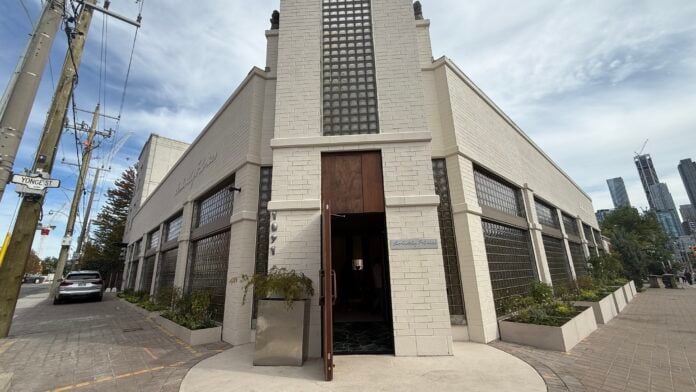
Absolutely Fabrics at 1091 Yonge Street in Toronto. Photo: Craig Patterson
Toronto fashion retailer Absolutely Fabrics has opened its new 7,000-square-foot flagship in Summerhill, bringing an ambitious independent fashion store to one of the city’s wealthiest and increasingly active retail neighbourhoods.
Located at 1091 Yonge Street, the store marks a significant expansion for the retailer founded by Kaelen Haworth, which opened its first location on Queen Street West in 2023. The Summerhill flagship introduces menswear for the first time while providing considerably more space for Absolutely Fabrics’ mix of established designers, emerging labels and archival vintage.
The opening comes amid considerable residential and commercial investment in Summerhill and neighbouring Rosedale. New condominium and rental development is adding density to an already affluent area, while a growing collection of fashion, food, beauty and hospitality businesses is strengthening the retail offering along this section of Yonge Street.
Absolutely Fabrics celebrated the new store with a gala opening on Friday, September 18. Retail Insider visited on Sunday, two days later, and found the flagship busy with customers exploring the space, browsing merchandise and trying on clothing.
Opening-weekend traffic is too early to say much about longer-term performance. Haworth does, however, enter Summerhill with an established customer base in the area, including customers who had been travelling to Queen West from Rosedale, Forest Hill and surrounding neighbourhoods.
Kaelen Haworth
Inside the New Summerhill Flagship
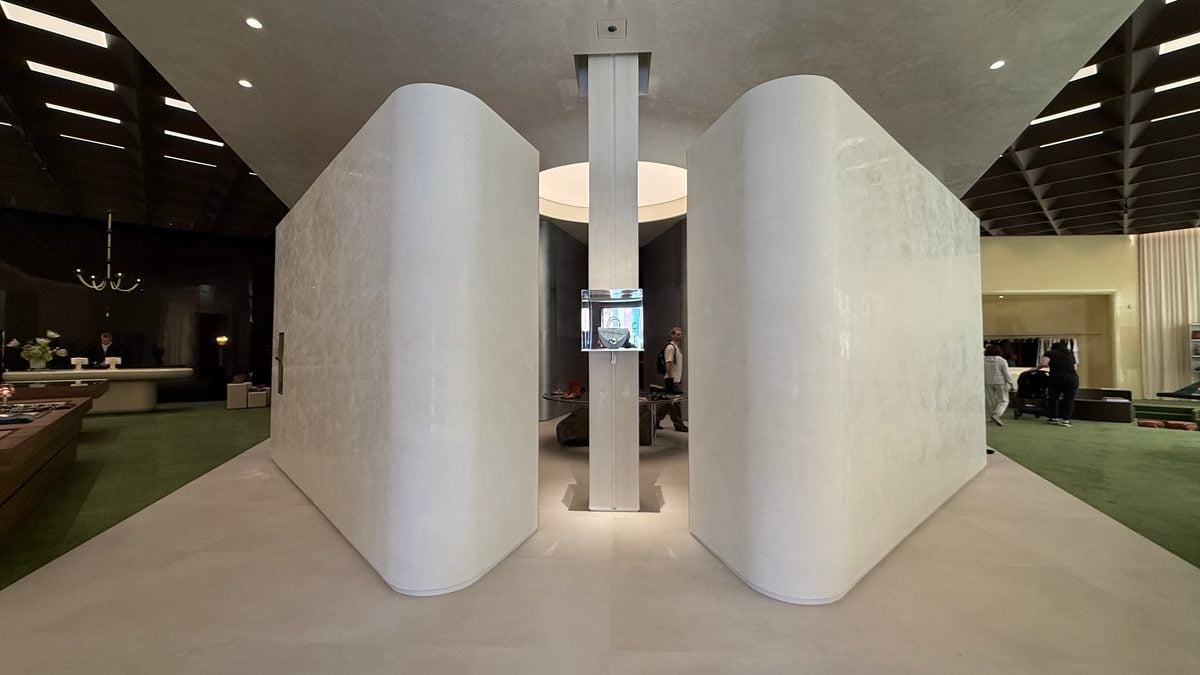
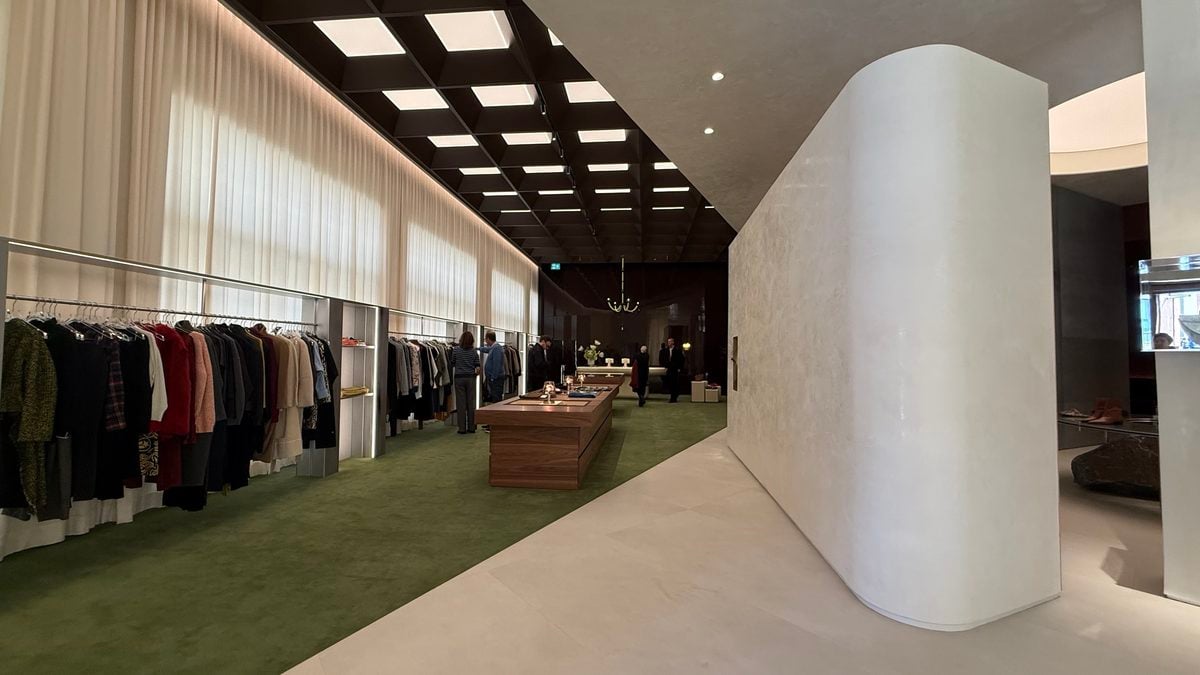
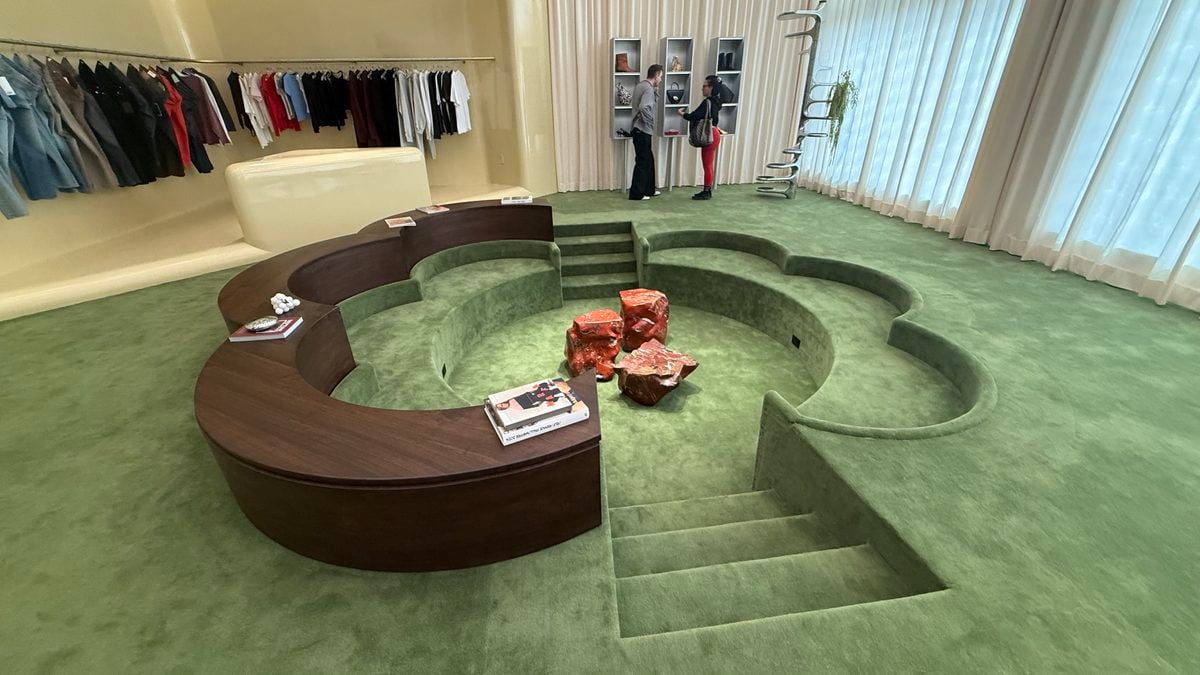
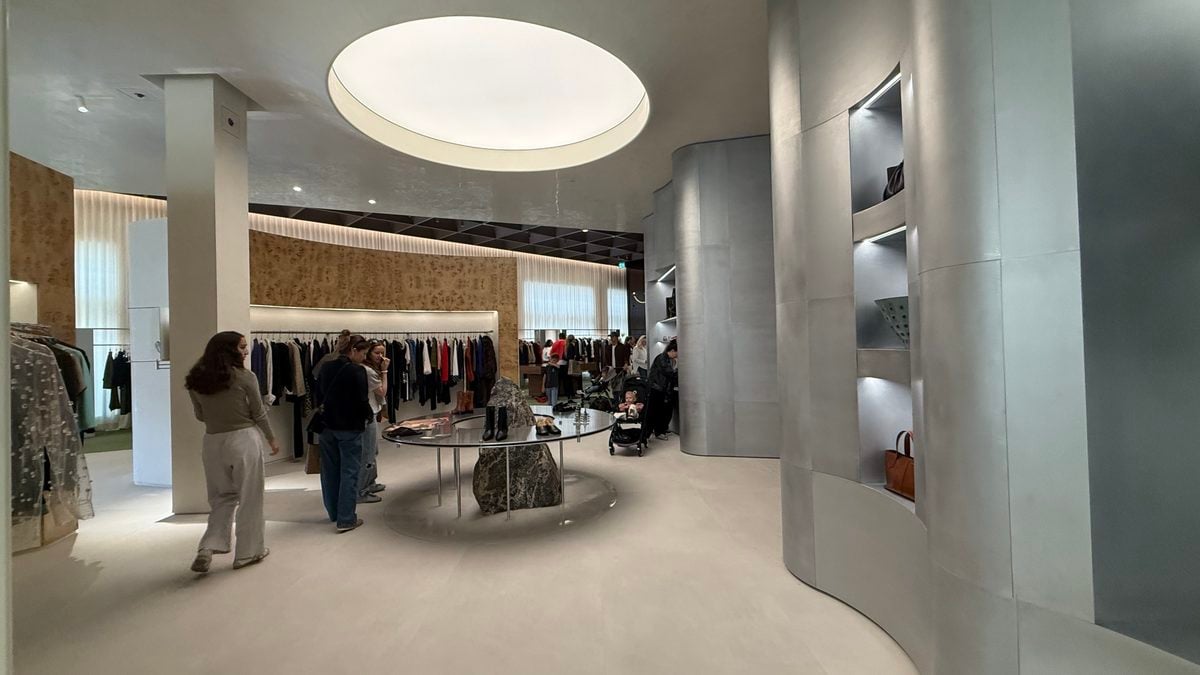
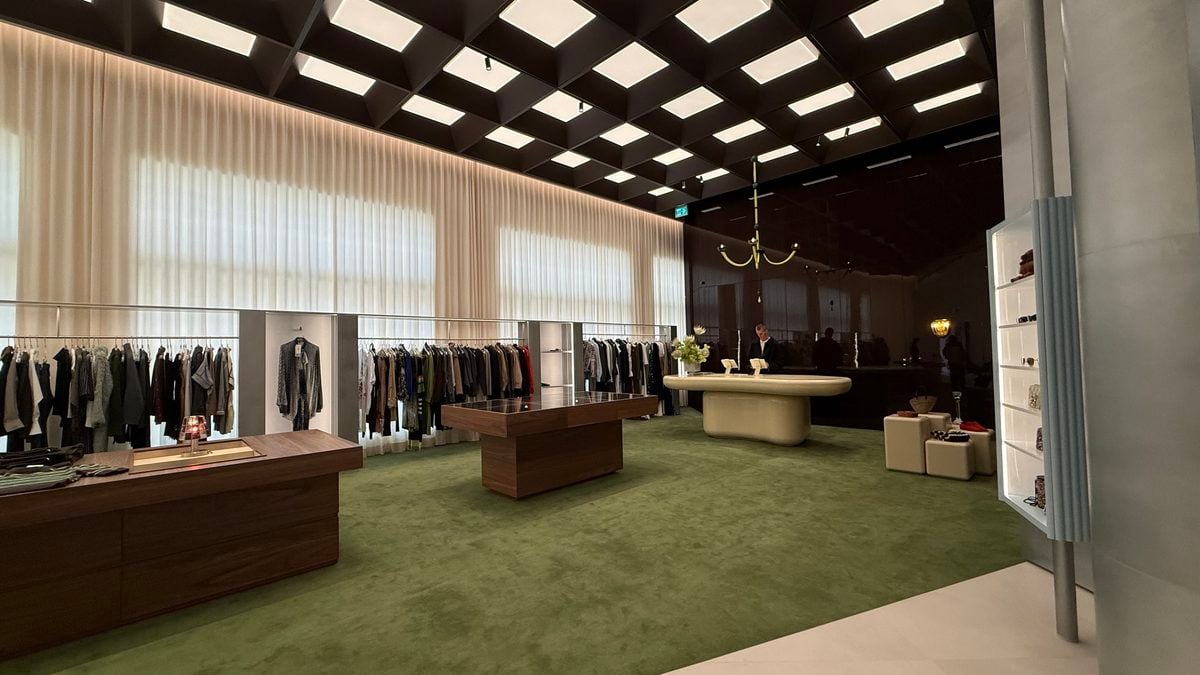
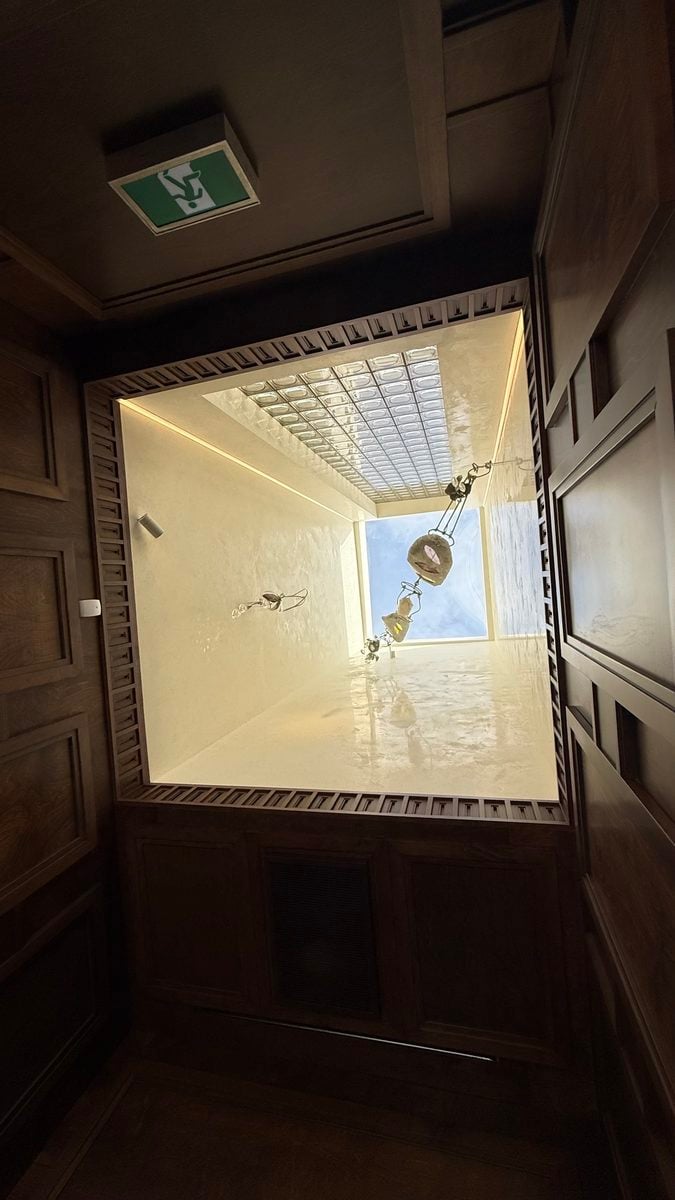
The scale of the new Absolutely Fabrics becomes apparent upon entering. The store has been conceived with the character of a private residence rather than a conventional fashion boutique. Carpeting, dark wood, coffered ceilings, glass-block detailing, sculptural lighting, furniture and artwork create a warm environment far removed from the sparse interiors found in many contemporary fashion stores.
Among the pieces incorporated into the store are a Red Jasper coffee table and coordinating benches by South African artist and designer Lea Colombo, along with sculptural lighting by artist Dana Arbib. Artwork by designers represented at Absolutely Fabrics further connects the interior with the fashion being sold.
Clarisa Llaneza of Clarisa Llaneza Studio collaborated with Haworth on the interior design, while Trevor Wallace of Reflect Architecture oversaw the space and Carbon Building Group brought the project to life.
Before the opening, Haworth told Retail Insider that she wanted the flagship to feel residential while still giving customers the sense that they had entered somewhere distinctive.
“I really wanted it to feel like a warm and inviting space, but also a really inspiring, highly intentional and thoughtful space,” Haworth said. “I want it to feel like you’ve really stepped into a different place, somewhere that transports you.”
The completed store gives considerably more room to the merchandise than was possible at Queen West. Seating, furniture and gathering areas are integrated throughout, while the large fitting rooms continue the residential feel.
“We want people to stay and linger,” Haworth said. “It’s about being there. It’s not just about shopping.”
During Retail Insider’s Sunday visit, customers were spending time moving through the store, speaking with staff and trying on merchandise. The activity offered an early look at how customers were using the space, even if opening weekend itself says little about what regular traffic will eventually look like.
Entrance to Absolutely Fabrics at 1091 Yonge Street in Toronto. Photo: Craig Patterson Men’s department inside Absolutely Fabrics at 1091 Yonge Street in Toronto. Photo: Craig Patterson
Investing in the Physical Shopping Experience
The scale of the Summerhill store reflects Haworth’s belief that higher-end fashion still benefits from a physical environment where customers can spend time with the merchandise.
“When you’re asking people to spend a lot, you can expect them to want to take their time, try things on and get to know the brands and the pieces,” she previously told Retail Insider.
That is particularly relevant to the Absolutely Fabrics assortment, which combines established fashion names with emerging designers and labels with limited Canadian distribution.
Summerhill also gives Absolutely Fabrics the space to introduce menswear, available only at the new location. The men’s assortment includes Aubero, Studio Nicholson, Willy Chavarria, Rier, Martine Rose, ssstein and Soshiotsuki, among others.
Soshiotsuki is exclusive to Absolutely Fabrics in Canada, while Haworth previously said she expected Aubero to be a Canadian exclusive as well.
Haworth had considered the Queen West location too constrained to introduce menswear in a meaningful way. The much larger Summerhill space allowed her to develop the category from the outset instead of fitting it into an existing store.
Her buying strategy extends beyond securing brands with limited Canadian distribution. Haworth has spoken about the gap she sometimes sees between the expressive pieces generating attention on international runways and the safer merchandise that ultimately makes it onto store racks.
“I want to be able to support those really exciting runway or editorial pieces,” she said. “People want that. They want both, but they definitely want the editorial and the excitement as well.”
Those buys also give customers another reason to experience the assortment in person.
Absolutely Fabrics at 1091 Yonge Street in Toronto. Photo: Craig Patterson
Moving Closer to Customers
The choice of Summerhill was not based solely on the neighbourhood’s demographics. Absolutely Fabrics had already developed a customer base in the area through its Queen West store. Haworth told Retail Insider before the opening that many customers travelling downtown to shop with the retailer lived closer to where the new location now operates.
The relationship with some customers had become sufficiently established that Absolutely Fabrics was taking merchandise directly to them.
“We were doing a lot of travelling with our clothing, doing events in people’s homes or bringing pieces from the new collection to some of our best clients,” Haworth said.
Opening at Yonge and Price streets brings a much larger version of Absolutely Fabrics closer to those customers while the Queen West store remains open.
The two locations also serve different retail environments. Queen West puts Absolutely Fabrics in one of Toronto’s best-known shopping districts, with substantial pedestrian traffic and a broad mix of consumers. Summerhill places it in a smaller, exceptionally affluent residential market where the retailer already had customers.
Vintage and other items at Absolutely Fabrics at 1091 Yonge Street in Toronto. Photo: Craig Patterson
Wealth and Density Reshape the Summerhill Market
Summerhill and neighbouring Rosedale have long been among Toronto’s wealthiest residential areas, providing a strong customer base for high-end fashion, restaurants, beauty and other discretionary spending.
Previous Retail Insider research found average household income within one kilometre of nearby Scrivener Square at more than $300,000.
The neighbourhood is also becoming denser. When Retail Insider examined development activity in the area in 2025, 17 residential projects were under construction within 1.5 kilometres of Scrivener Square, representing approximately 3,800 additional units. Another 39 developments were then in pre-construction.
Those figures were a snapshot of the development pipeline at the time, but illustrate the amount of residential investment underway around an area historically characterized by lower-density housing.
New condominium and purpose-built rental projects are putting more residents within walking distance of Yonge Street while adding housing to an already affluent market. For Absolutely Fabrics, the location provides proximity to existing customers as the surrounding residential population grows.
Absolutely Fabrics at 1091 Yonge Street in Toronto. Photo: Craig Patterson
A Retail Cluster Takes Shape Across Yonge Street
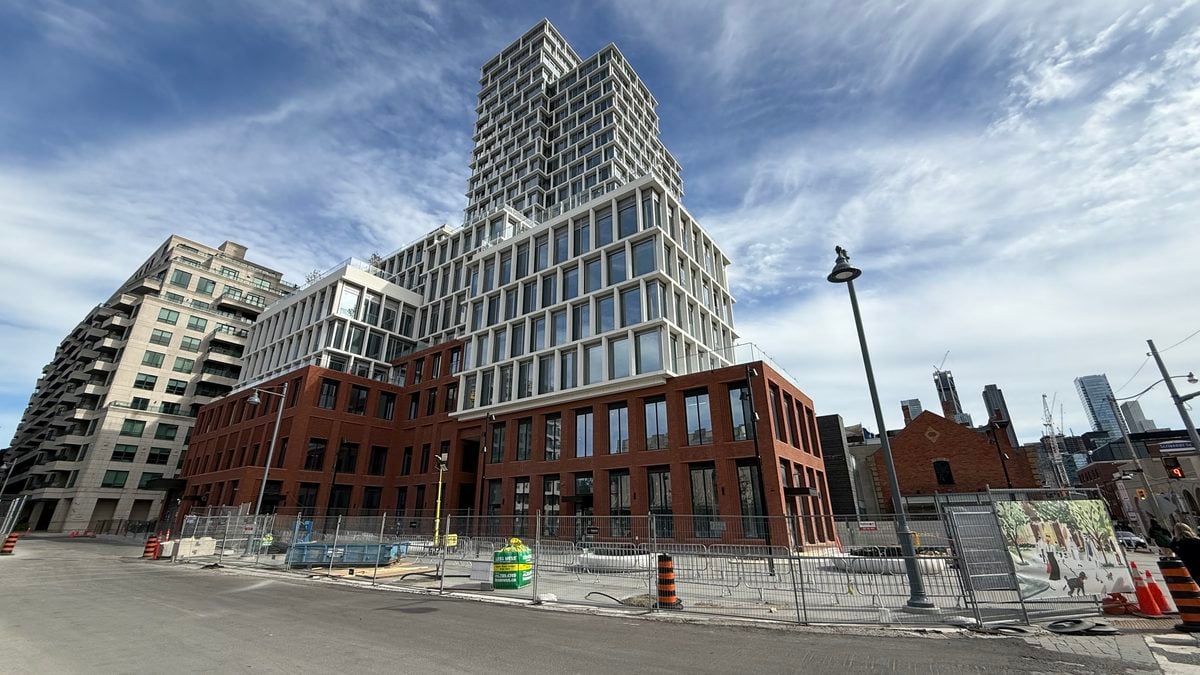
Some of the most visible change is happening directly across Yonge Street from the new flagship. The historic Five Thieves retail stretch is being expanded through The James at Scrivener Square, a 23-storey luxury rental development by Tricon Residential. The project includes approximately 10,500 square feet of ground-floor boutique retail, a pedestrian retail mews and public square, along with a new connection to Summerhill subway station.
The development builds around a longstanding specialty-food cluster that includes Harvest Wagon, Olliffe Butcher Shop and Pisces Gourmet.
Businesses announced for The James have included Mamakas, Gee Beauty, 6 By Gee Beauty, Nutbar, Dear Grain Bakery, Chocolat de Kat and jewellery retailer Bluboho. Toronto fashion boutique Clementine’s is also relocating to the development.
Together with existing businesses in the surrounding area, the additions are broadening what has historically been a strong specialty-food destination into a more varied retail and hospitality district.
Absolutely Fabrics now adds a sizeable fashion store on the opposite side of Yonge Street.
The James mixed use project on Yonge Street in Toronto. Photo: Craig Patterson
A New Destination Business for Summerhill
Haworth has described Absolutely Fabrics as a destination store, including when discussing the original Queen West business.
“We can’t rely only on walk-in traffic,” she told Retail Insider. “We have to rely on people hearing about us, knowing about us and wanting to make an appointment and come in.”
The new flagship retains that destination character. Its assortment includes merchandise that can be difficult to find elsewhere in Toronto or Canada, while Absolutely Fabrics already has customers accustomed to travelling specifically to shop with the retailer.
The store could bring additional shoppers to this section of Yonge Street and create more opportunities for cross-shopping among nearby businesses. Customers coming specifically to Absolutely Fabrics may also visit restaurants, cafés and shops around Scrivener Square, while people already visiting the Five Thieves and The James have another substantial retailer within steps.
It is far too early to measure any spillover. The busy Sunday observed by Retail Insider came immediately after the store’s opening, on a pleasant day when curiosity around a new flagship would naturally have been high.
The longer-term question is whether Absolutely Fabrics joins the businesses giving consumers from elsewhere in Toronto a reason to make Summerhill a specific shopping and dining destination.
Artwork over the main entrance to Absolutely Fabrics at 1091 Yonge Street in Toronto. Photo: Craig Patterson
From Queen West to Summerhill in Three Years
The scale of the new store is notable for a retailer founded only three years ago. Haworth spent 15 years in New York City, where she studied at Parsons and operated fashion labels Kaelen and Second Sight, before returning to Toronto. Absolutely Fabrics opened at 613 Queen Street West in 2023 after Haworth concluded that her interests increasingly centred on curation, editing, styling and the broader presentation of fashion.
She told Retail Insider earlier this year that business had steadily increased since Queen West opened and that customers had responded strongly to the concept.
Absolutely Fabrics was also recently included in The Business of Fashion’s The Best Fashion Stores in the World, a hand-curated guide highlighting independent fashion retailers around the world.
Summerhill takes the concept considerably further, adding menswear while making a substantial investment in store design and the physical customer experience.
Haworth has remained measured about the risks involved.
“We’re taking a lot of risks, and so far they are paying off, which is excellent,” she said. “But retail ebbs and flows, so we’ll see how we do. I’m not taking that for granted.”
For now, the focus is on establishing the new flagship.
At 1091 Yonge Street, Absolutely Fabrics has opened as significant residential investment and a growing collection of independent businesses reshape the surrounding area. The retailer brings another fashion destination to the neighbourhood, backed by an existing customer base and an assortment designed to give shoppers a reason to make the trip.
The opening-weekend crowds were encouraging, but they remain only a first impression. The more significant development is the scale of Haworth’s investment in physical retail: three years after opening on Queen West, Absolutely Fabrics has committed to a 7,000-square-foot flagship in one of Toronto’s wealthiest and fastest-changing retail districts.
Reitmans (Canada) Limited is seeing double-digit sales growth at two recently transformed flagship stores as the retailer increases investment in its physical network.
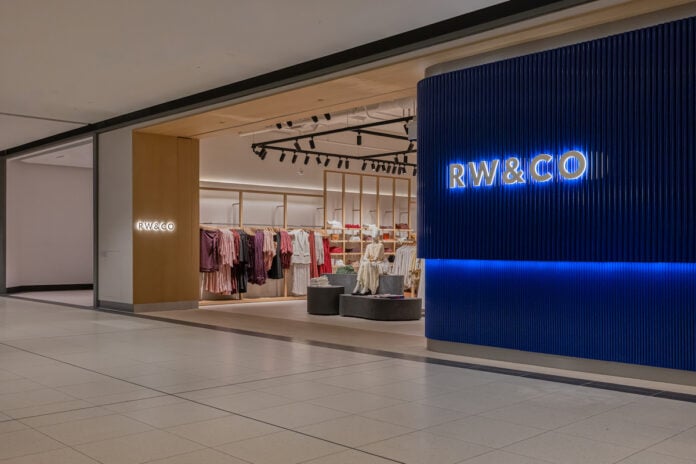
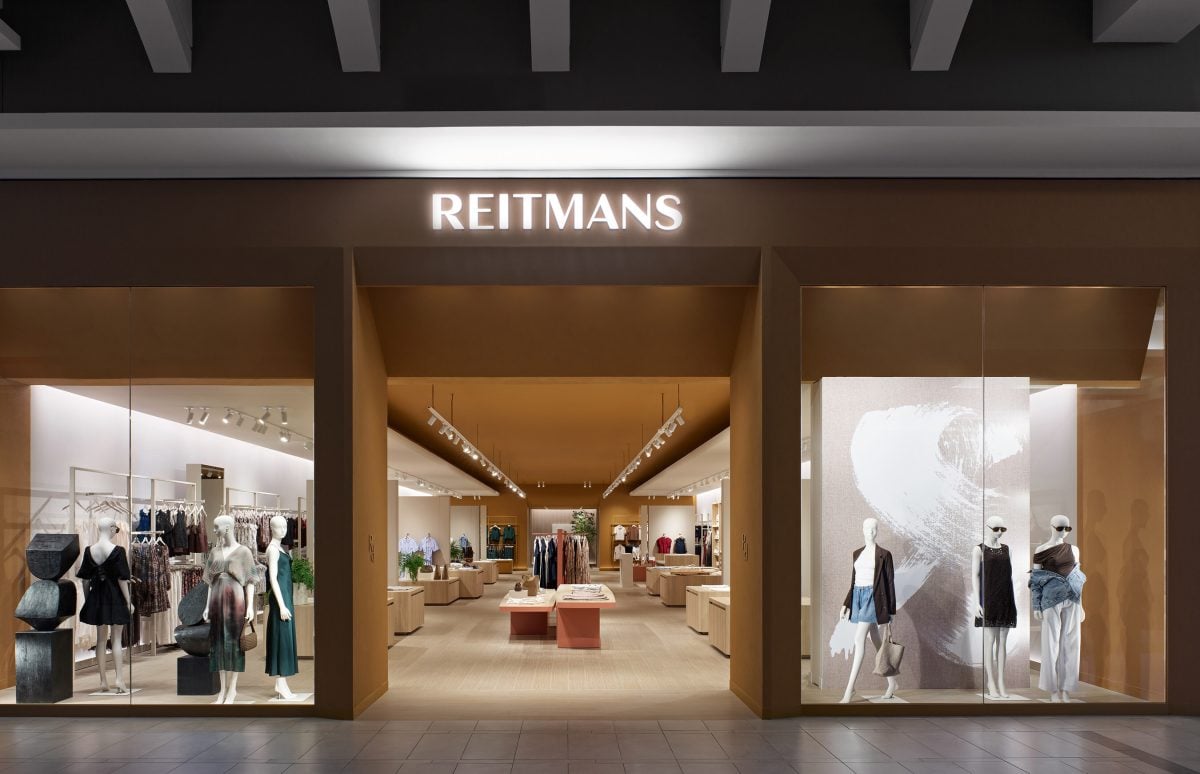
The new-concept Reitmans flagship at CF Carrefour Laval and the renovated RW&CO flagship at CF Toronto Eaton Centre both posted double-digit year-over-year sales gains during the company’s second quarter.
The performance comes against softer results for the company overall. RCL’s net revenue declined 1.9% to $211.8 million, while comparable sales, including e-commerce, fell 1.5%. Comparable physical-store sales edged higher.
RCL has been reshaping its store portfolio with larger locations, renovations and relocations, while closing stores that no longer fit its plans. The latest results offer a first look at how some of its largest recent projects are performing.
RCL Invests in Larger, More Productive Stores
RCL is targeting $1 billion in annual revenue and adjusted EBITDA of between $60 million and $70 million by fiscal 2030.
The company plans to reinvest approximately $100 million over five years, with roughly three-quarters directed toward stores through renovations, expansions and new locations. RCL expects to increase its total retail square footage by approximately 10% while maintaining a network of roughly 400 stores.
The plan calls for more space without a significant increase in store count. RCL is expanding or relocating locations where it sees opportunities for growth while continuing to rationalize the rest of the portfolio.
During fiscal 2026, the company opened 13 stores, relocated two, expanded five and refreshed 17. It also closed 15 locations.
CF Carrefour Laval Tests a New Reitmans Concept
Reitmans opened its reimagined flagship at CF Carrefour Laval in April as part of a wider update to the 100-year-old Canadian retailer.
Developed with Toronto-based design firm BURDIFILEK, the store introduced a new layout, materials and customer journey alongside Reitmans’ updated visual identity and logo. RCL said when the store opened that the concept would pave the way for a Canadian rollout beginning in 2027.
President and CEO Andrea Limbardi told investors that the CF Carrefour Laval location posted double-digit sales gains compared with the same quarter last year. He described the renovated store as an elevated retail environment built around a different customer experience.
The result gives RCL an encouraging starting point ahead of the wider rollout. It is still one flagship in one of Quebec’s strongest shopping centres, and sales performance can reflect merchandise, marketing and location as much as the physical store itself.
Performance at subsequent locations will show whether similar gains can be repeated elsewhere in the chain.
The store redesign coincides with a broader effort to update the Reitmans brand during its centennial year.
Its “We’ve Evolved” campaign generated more than 365 million impressions and achieved the highest advertising recall in the brand’s history, according to management. RCL said 80% of respondents associated the campaign with a more modern Reitmans and 77% with a younger brand image.
The company has also partnered with Coco Rocha, Catherine St-Laurent, the Toronto Tempo and Montreal’s McCord Stewart Museum as part of the repositioning.
RCL is trying to pair the marketing changes with updated stores and stronger regular-price selling. CF Carrefour Laval is the first new-concept location where the company has disclosed a meaningful sales result.
RW&CO Flagship Also Posts Double-Digit Growth
RW&CO is showing a similar result. The retailer introduced its new store concept at Promenades Saint-Bruno in Quebec in late 2025 before bringing the format to CF Toronto Eaton Centre, where its expanded and renovated flagship reopened May 29.
Management said after the first quarter that the Toronto store had exceeded expectations. During the second quarter, Limbardi said the flagship generated double-digit year-over-year sales growth.
The sales increase came as RW&CO tightened its approach to pricing, assortment and product. Management said stronger pricing integrity and lower markdown penetration supported margins, while changes to assortment and product strategy were resonating with customers.
The combination of higher sales and fewer markdowns is notable as RCL looks for better returns from its store investments.
RCL Reduces Reliance on Promotions
RCL’s company-wide results show the same focus on regular-price selling.
Gross profit increased by $1.1 million to $123.9 million during the second quarter despite lower revenue. Gross margin improved 160 basis points to 58.5%, with management citing stronger regular-price selling, fewer markdowns, more selective promotions and tighter inventory management.
Inventory ended the quarter at $119.7 million, down 5.2% from a year earlier.
E-commerce revenue declined during the quarter while comparable physical-store sales increased slightly. RCL said lower online sales partly reflected a deliberate reduction in clearance and promotional activity, making it difficult to draw a direct comparison between demand online and in stores.
The company is looking for more sales at regular price while carrying less inventory into clearance, a shift that becomes increasingly important as RCL spends more on its stores.
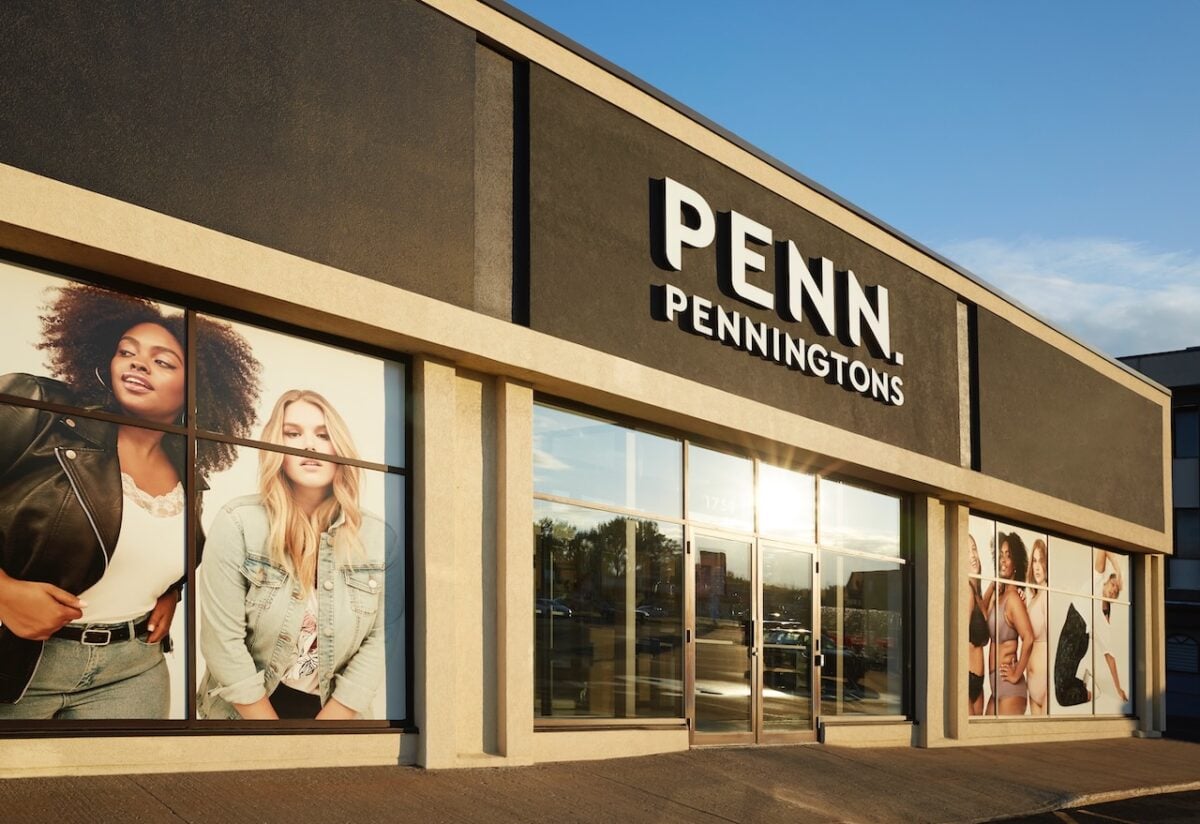
PENN. Storefront (Image: Penningtons)
PENN. Continues Its Own Changes
PENN., RCL’s plus-size fashion banner, is also being repositioned, although the company has not disclosed comparable performance figures from individual stores.
Management said PENN.’s performance improved as the second quarter progressed, with a stronger customer response to product and experience initiatives.
RCL highlighted Atelier by Addition-Elle, its occasion-focused collection, which management said was generating full-price sales growth.
Reitmans and RW&CO, however, currently provide the clearest store-level results from RCL’s investment program.
RCL Has Cash to Continue Investing
RCL ended the quarter with $152.7 million in cash and $149.2 million in working capital, with no bank debt.
The company is also spending outside the physical store network. Project spending increased by approximately $1.2 million during the quarter, primarily for preliminary work on a loyalty program and continued improvements to its digital platform.
That spending will continue alongside the store program as RCL works toward its fiscal 2030 targets.
Wider Rollout Will Put the Strategy to the Test
RCL now has double-digit sales gains from two of its most prominent recent store projects.
CF Carrefour Laval is particularly important because the new Reitmans concept is expected to roll out more broadly beginning in 2027. RW&CO has already taken its latest format from Promenades Saint-Bruno to CF Toronto Eaton Centre, where the renovated store is also reporting double-digit growth.
RCL ultimately plans to operate more retail space without materially increasing its store count. That puts greater pressure on renovations, relocations and expansions to produce better sales from the portfolio.
Results from CF Carrefour Laval and CF Toronto Eaton Centre give RCL a strong start. As more stores are renovated or relocated, there will be considerably more evidence to show whether those gains extend beyond the flagship locations.
RBC Canadian cardholder spending remained on a positive trajectory with growth broadening across major spending categories, according to a recent RBC report.
“Our estimate of core retail sales rose 0.6% on a three-month average, building on July’s 0.5% gain,” said the report.
“Discretionary services continued to lead spending growth, supported by solid gains in travel, entertainment and arts. Discretionary goods spending also improved, while essentials spending remained firm, although gasoline continued to account for an outsized share of the increase.
“The latest card transactions data suggests household demand remained resilient heading into Q3. Spending patterns stayed uneven across categories, but continued gains across goods and services are consistent with a gradual recovery in domestic demand.
“Elevated trade uncertainty continues to pose downside risks in specific sectors/regions impacted by U.S. tariffs, but most exports continue to cross the border duty free, limiting the impact on broader aggregate growth and spending trends.”
Abbey XuHelena Lopes story
In an interview with Retail Insider, RBC Economist Abbey Xu spoke about the report’s findings.
Question:What do the August spending figures tell us about the strength and resilience of Canadian consumers heading into the third quarter, and how does the current trend compare with earlier in 2026?
Answer: The August data point to continued resilience in household spending heading into the third quarter. What’s encouraging is that the strength has become somewhat broader. Core retail spending rose 0.6% on a three-month average in August, building on the 0.5% increase in July, while we also saw gains across discretionary services, discretionary goods and essentials.
That’s a somewhat stronger picture than earlier in the year, when spending was more uneven and households were absorbing the initial hit from higher energy costs. It’s also consistent with the broader economic data: growth rebounded in Q2, employment conditions have improved after a softer start to the year, and wage and salary income posted its strongest quarterly increase in almost two years.
So, we wouldn’t characterize the consumer as booming, particularly with gasoline prices still squeezing purchasing power, but household demand has proven more resilient than we might have expected earlier this year.
Q: What factors are driving the stronger growth in discretionary goods and services spending, particularly in travel, entertainment, dining and household-related purchases?
A: There are probably a few factors working together. Labour market conditions have improved since the spring, which has been supportive of household income and spending. We’ve also continued to see strength in experience-related categories, with travel, entertainment and dining spending all increasing on a three-month average in August.
On the goods side, stronger household and construction-related spending is also broadly consistent with signs that housing activity is starting to stabilize. Nationally, activity has improved from the very weak levels earlier this year, although the recovery remains gradual and quite uneven across regions. To the extent that more buyers return to the market, that can generate some follow-on demand for furniture, renovations and other household-related purchases. But we’d be cautious about attributing all of the recent increase directly to housing.
Gustavo Fring photo
Q: Gasoline spending accounted for a significant portion of the increase in essentials spending, while grocery spending was much more modest; what does this divergence tell us about how Canadians are allocating their household budgets?
A: A large part of the increase in essentials spending isn’t necessarily households choosing to consume substantially more, it reflects the higher cost of filling up. Spending at gas stations rose 1.7% on a three-month average in August, compared with just 0.2% for groceries.
That matters because gasoline is difficult for many households to substitute away from in the short run. Higher fuel bills effectively absorb a larger share of household budgets and leave less room for other purchases, particularly for lower-income households. That’s why we continue to view elevated energy prices as a headwind to purchasing power even though overall consumer spending has remained resilient.
The encouraging part is that, so far, we haven’t seen evidence that this squeeze is producing a broad pullback in spending elsewhere. But the longer energy prices remain elevated, the greater the risk that households eventually have to make those trade-offs.
Q: Clothing, footwear and related apparel spending was essentially flat in August while household and construction-related spending grew more strongly; what are you seeing in these trends and what might they mean for retailers heading into the fall?
A: We wouldn’t read too much into weakness in any single category, particularly given the volatility in card spending data. But on a three-month average, there is a noticeable divergence, with household and construction-related spending rising more strongly while clothing and footwear spending was essentially flat.
One potential support for household-related retailers is the tentative stabilization we’ve been seeing in housing. Nationally, activity has improved from the very weak levels earlier this year, but the recovery remains gradual and uneven across regions. More housing transactions can generate follow-on demand for furniture, renovations and other household goods. At the same time, we’re still a long way from a strong housing cycle, so we wouldn’t expect that alone to drive a major acceleration in retail spending this fall.
Vitaly Gariev photo
Q: Spending growth varied significantly by province, with P.E.I., Alberta, Saskatchewan and Manitoba among the stronger performers; what is behind these regional differences, and what impact could U.S. tariffs and ongoing trade uncertainty have on consumer spending in the months ahead?
A: We’d be cautious about reading too much into individual results for some of the smaller provinces, where our cardholder sample is more limited. More broadly, there are a few factors behind the regional differences.
Alberta’s relative strength is consistent with a stronger economic backdrop and continued population growth, while higher gasoline prices are also boosting nominal spending in some regions. That effect can be particularly important in the Maritime provinces, where gasoline accounts for a relatively larger share of household spending.
Ontario and Quebec, meanwhile, have held up relatively well despite a softer economic backdrop and greater exposure to trade uncertainty. Some of that resilience could reflect the lagged effects of earlier population and household income growth, as well as households drawing on savings or credit to support spending. B.C. has been softer, more in line with weaker economic growth in the province.
Looking ahead, trade uncertainty remains an important downside risk, particularly for communities and households tied to affected industries. But our base case is still that the tariffs imposed so far are more of a sector-specific shock than an economy-wide one. The latest Section 338 measures affect a relatively small share of Canada-U.S. trade, so we don’t expect them by themselves to derail consumer spending nationally. The larger. risk would be a broader escalation in the trade dispute that starts to weigh more materially on employment and household confidence.
Former Nordstrom at CF Rideau Centre in Ottawa. Image: SERCO CONSTRUCTION
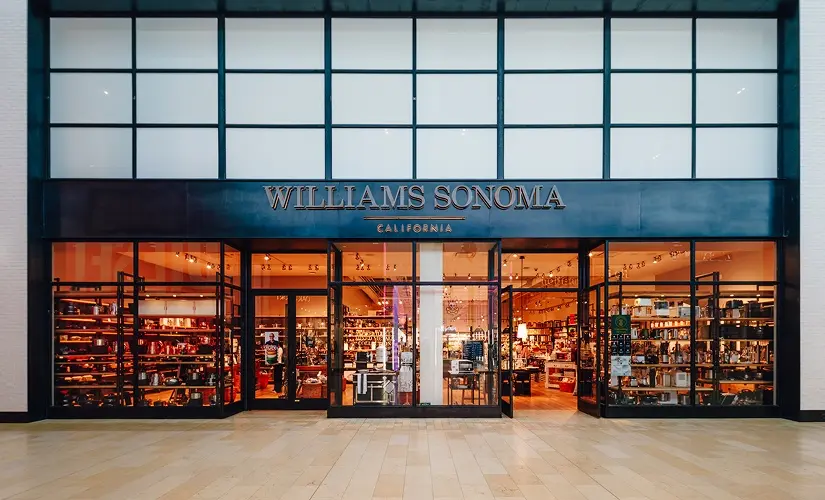
Williams Sonoma, Pottery Barn and West Elm are set to open at CF Rideau Centre in downtown Ottawa in spring 2027, bringing three major home-focused retail banners into the former Nordstrom space.
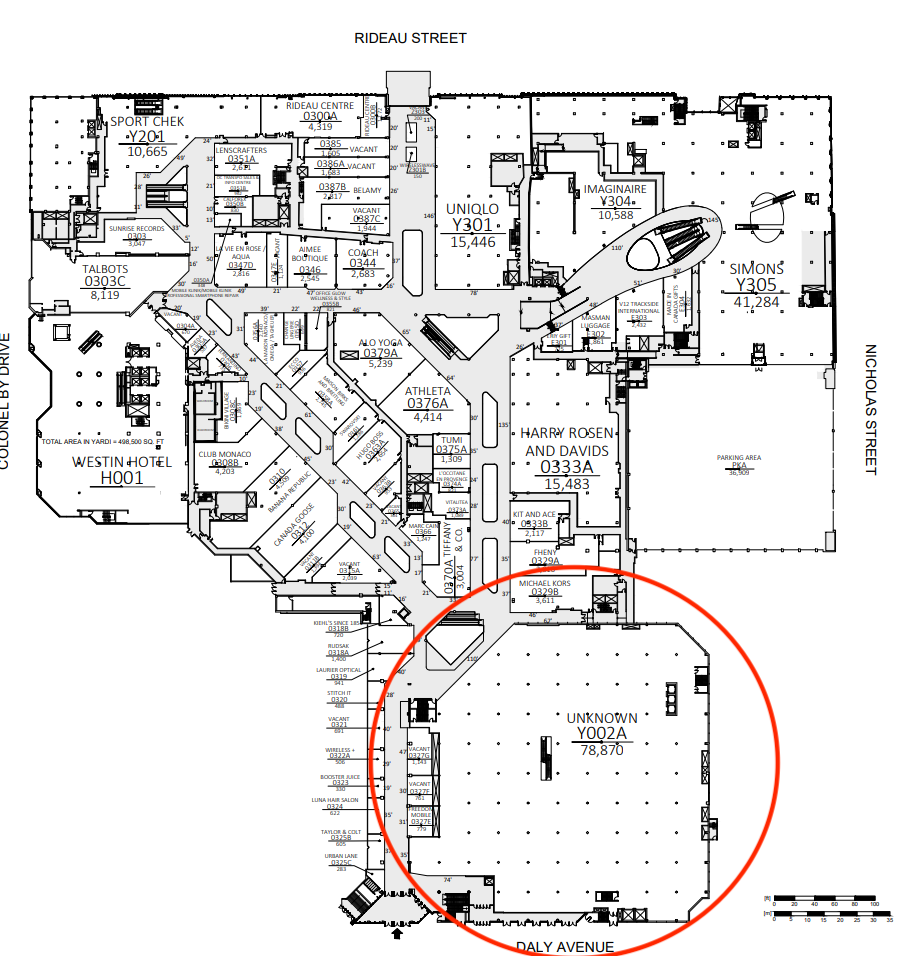
The stores will be located on Level 3, marking a significant step in Cadillac Fairview‘s redevelopment of the large department-store premises left vacant when Nordstrom exited Canada in 2023. CBRE, which represents the Williams-Sonoma brands for real estate requirements in Canada, identifies the Rideau Centre transaction as a flagship.
All three retailers are part of San Francisco-based Williams-Sonoma, Inc., making the project a significant multi-banner expansion into Ottawa. Williams Sonoma specializes in cookware, kitchenware and entertaining, Pottery Barn in furniture and home furnishings, and West Elm in contemporary furniture and home design.
The openings also come as Williams-Sonoma prepares to return to physical store growth following several years of optimizing its store portfolio.
Katelyn Young and Geoffrey Smith of CBRE’s Retailer Services Group work with the Williams-Sonoma portfolio in Canada and both identify the Rideau Centre transaction among their recent notable deals.
Canada a Growth Market for Williams-Sonoma
Williams-Sonoma’s Canadian physical network remains relatively small. The company’s latest annual filing reported 506 stores globally as of February 1, 2026, with its Canadian network concentrated primarily in major markets including Toronto, Vancouver, Calgary and Montreal. None of Williams Sonoma, Pottery Barn or West Elm currently operates a store in Ottawa.
Canada has emerged as one of the company’s stronger international markets. During Williams-Sonoma’s second-quarter earnings call, President and CEO Laura Alber said growth across its priority international markets was led by Canada, Mexico and the United Kingdom.
Recent results were also positive across the three banners coming to Ottawa. Comparable brand revenue in the second quarter increased 7.6 per cent at Williams Sonoma, 6.4 per cent at West Elm and 5.1 per cent at Pottery Barn.
Williams-Sonoma expects its store count to remain approximately flat in fiscal 2026 before moving to annual unit growth of about one to three per cent beginning in fiscal 2027. The spring 2027 Rideau Centre openings will therefore arrive as the company shifts back toward expanding its physical store network.
Former Nordstrom/3rd floor at CF Rideau Centre in Ottawa. Image: Cadillac Fairview lease plan
Breaking Up a 157,000-Square-Foot Nordstrom
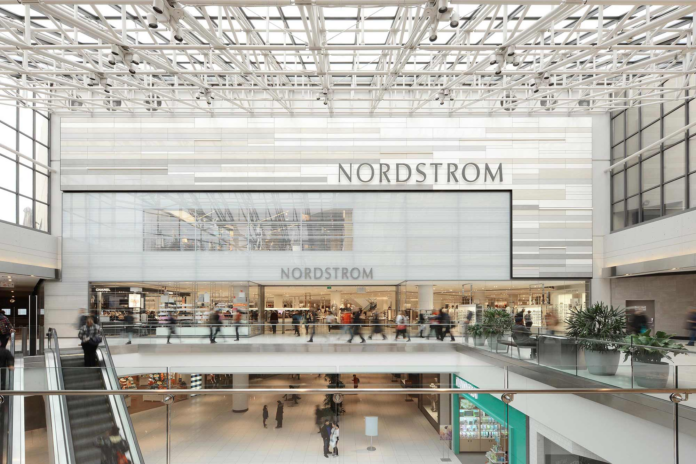
Nordstrom opened at CF Rideau Centre in March 2015 as part of Cadillac Fairview’s major redevelopment of the downtown Ottawa shopping centre. The approximately 157,000-square-foot store occupied two levels and was Nordstrom’s second location in Canada.
Nordstrom announced its Canadian exit eight years later, eventually closing six full-line department stores and seven Nordstrom Rack locations. Its departure left Cadillac Fairview with a major two-level vacancy in the heart of the mall.
As Cadillac Fairview worked through the space, indications emerged that the former anchor would be divided among multiple tenants instead of being replaced by another department store. Ottawa commercial real estate broker Candice Lerner-Fry said in 2024 that Cadillac Fairview was speaking with major fashion and household-goods retailers about the former Nordstrom premises and expected the space would ultimately be subdivided.
The arrival of Williams Sonoma, Pottery Barn and West Elm now puts a significant part of that strategy into view.
Level 3 Takes Shape
The individual sizes and precise configurations of the three stores have not been disclosed. It is therefore unclear whether they will occupy the full Level 3 portion of the former Nordstrom or how the floor will ultimately be divided.
Redeveloping a former department-store floor can involve considerably more than placing new walls between stores. Landlords can introduce new mall corridors, entrances and common areas through former anchor premises, giving individual retailers direct access to the shopping centre’s circulation system.
That approach has been used elsewhere in Canada when large department-store spaces have been subdivided. Cadillac Fairview has not disclosed the final configuration at Rideau Centre, nor has it announced what will ultimately occupy the upper portion of the former Nordstrom.
Former Nordstrom at CF Rideau Centre in Ottawa. Image: SERCO CONSTRUCTION
The Upper-Floor Challenge
Upper levels of former department stores can present a different leasing challenge. Traditional department stores were designed to move shoppers vertically through large interconnected floors, while specialty retailers typically favour direct access to a mall’s main circulation corridors.
That can lead landlords to pursue different strategies by floor. Primary retail levels can be divided among multiple stores, while upper levels can accommodate larger destination uses that are less dependent on conventional mall frontage.
Oakridge Park in Vancouver provides a recent Canadian example. Hudson’s Bay had been planned as an anchor at the major mixed-use development, but the department store was never ultimately built out.
Altea Active is instead taking the upper level of the planned Hudson’s Bay premises for a large fitness and wellness club. The arrangement provides an example of how substantial space originally intended for a department store can accommodate a destination use outside the traditional retail model.
There is no indication that Altea Active or another fitness operator is destined for Rideau Centre, and Cadillac Fairview has not disclosed plans for the upper Nordstrom floor. The Oakridge project nevertheless points to another potential model for large upper-level anchor spaces as shopping-centre owners rethink former department stores.
Eataly Job Postings Sparked Earlier Speculation
The former Nordstrom premises had already attracted considerable speculation before the Williams-Sonoma brands were confirmed.
Earlier in 2026, Eataly North America posted a series of employment opportunities for Ottawa. The listings prompted online discussion that the Italian marketplace and restaurant operator could be preparing to enter the market, with some speculation focusing on CF Rideau Centre and the former Nordstrom space.
Eataly never announced a Rideau Centre location, however, and the job postings did not identify the mall as a future store. At least some were specifically described as being for “future opportunities,” leaving open whether Eataly was exploring Ottawa, building a prospective pool of employees or simply posting ahead of any firm plans.
The postings nevertheless drew attention because of Eataly’s existing relationship with Cadillac Fairview. The Italian food hall operator has locations at CF Sherway Gardens and CF Toronto Eaton Centre, along with two other Toronto locations.
No Ottawa Eataly location has been announced.
Williams Sonoma at Yorkdale in Toronto. Image: Williams Sonoma
CF Rideau Centre Continues to Add Retailers
The Williams-Sonoma project follows several years of leasing activity at CF Rideau Centre. The downtown property has added retailers including Uniqlo and Arc’teryx, while Quebec-based pop-culture and entertainment retailer Imaginaire has also established a significant presence in the mall.
Those additions came as Cadillac Fairview worked through the much larger Nordstrom vacancy. Bringing Williams Sonoma, Pottery Barn and West Elm together adds another retail category to the property while establishing all three banners in an Ottawa market where they currently have no stores.
The concepts also have a natural relationship. Williams Sonoma focuses heavily on kitchens, cooking and entertaining, Pottery Barn carries a broader furniture and home furnishings assortment, and West Elm is positioned around contemporary furniture and design. Locating the three together creates a substantial home-focused retail cluster under common ownership.
The project shows how the loss of a large department store can reshape a shopping centre without requiring a like-for-like replacement. At Rideau Centre, Nordstrom’s former footprint is beginning to take on a new configuration through multiple specialty retailers, while the future of the balance of the two-level space has yet to be disclosed.
Williams Sonoma, Pottery Barn and West Elm are expected to open at CF Rideau Centre in spring 2027.
Its research indicates just 18% would advise someone to start a business right now, while half (50%) would not.
The CFIB released its research on Monday with Canadian Parliament back in session and the national organization said the federal government must act quickly to address Canada’s entrepreneurial drought.
Among those that say now is not a good time to start a business, 88% cite the high cost of doing business, 86% cite economic uncertainty, 65% say the tax burden is too high, and 53% point to the heavy government regulatory burden, said the CFIB.
Corinne PohlmannJasmin Guenette
“Small business owners have spent years navigating rising costs, and now the tariff war with the U.S. is piling fresh uncertainty and additional costs on top of already weak consumer demand and low small business confidence. It’s no surprise small business owners are pressing pause on hiring, investment and expansion as they wait and see what comes next,” said Corinne Pohlmann, CFIB executive vice-president.
“Canada is a country of small businesses and government priorities need to reflect that. The government took positive steps towards strengthening Canada’s economy by making immediate expensing permanent and expanding the deduction to more assets. We strongly encourage them to build on that momentum and boost Main Street by lowering the small business tax rate from 9% to 6% in the upcoming session.”
“Small businesses are being squeezed from multiple directions. The best way for the government to help is to focus on what it can control,” said Jasmin Guénette, Vice-President, National Affairs. “That means delivering on tax reduction, cutting red tape, and ensuring Canada has the best environment possible to start, run and grow a business.”
Demetra Ioannidou photo
CFIB is calling on the federal government to introduce concrete measures that would lower costs and improve small business competitiveness, including:
Reducing the federal small business tax rate from 9% to 6% and increasing the small business deduction threshold to $700,000;
Introducing a lower capital gains inclusion rate for small firms of 33% on the next $2-million of gains beyond the LGCE.
Exempting taxes from capital gains incurred following the sale of a business (shares and assets) when the proceeds are reinvested in a Canadian CCPC within the next three years (rollover policy).
Increasing the GST/HST threshold from $30,000 to at least $60,000 and indexing it to inflation going forward;
Bringing in a two-for-one rule for federal regulations to jumpstart regulatory modernization; and,
Returning counter-tariff revenues to businesses directly affected by the U.S.-Canada trade war.
The CFIB is Canada’s largest association of small and medium-sized businesses with 103,000 members across every industry and region.
Tourisme Montréal is launching a series of free guided tours aimed at encouraging residents to rediscover the city and strengthening the connection between tourism and local communities.
The initiative, tied to World Tourism Day on Sept. 27, will run from Oct. 2 to Nov. 1 and feature nearly 60 tours in French and English across several Montreal neighbourhoods and attractions.
Focus on residents
The initiative forms part of Tourisme Montréal’s broader consideration of local tourism and the role residents play in the tourism experience. The organization says the program is intended to give Montrealers a different perspective on their city while highlighting the relationship between tourism and local life.
“Tourism is about more than welcoming visitors from outside the city. A tourism destination is first and foremost a city where people live, work and create. We want to bring Montrealers closer to tourism and help them better understand the benefits it generates for the community as a whole. By giving residents an opportunity to rediscover their own city, we also hope to strengthen their pride and sense of belonging,” said Yves Lalumière, president and CEO of Tourisme Montréal.
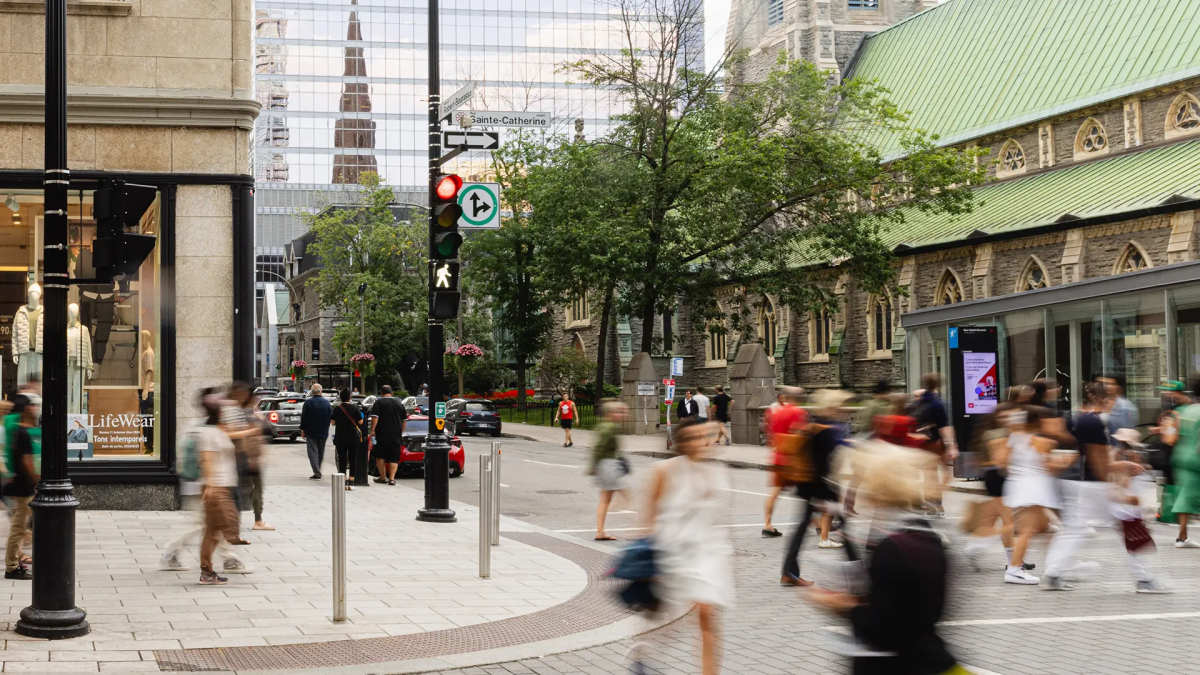
Yves LalumièreShoppers in downtown Montreal. Photo: Montréal centre-ville
Tourisme Montréal said its approach is informed by a resident sentiment study it commissioned, which found that 82 per cent of Montrealers are proud to welcome tourists to their city. The organization said the study also recorded a tourism aversion index of 4 per cent, which it described as well below the threshold associated with destinations experiencing tourism-related tensions.
The organization said tourism has historically been connected to investments and infrastructure in Montreal, pointing to Expo 67, the 1976 Olympic Games, the development of the metro and major festivals and events as examples of developments that have contributed to the city’s identity and international profile.
Nearly 60 tours planned
The first edition of the program will be operated by Guidatour, with tours taking place on Fridays, Saturdays and Sundays. Participants will be able to explore areas including Little Italy and Jean-Talon Market, learn about the history of Old Montreal, tour Mile End and view murals in the Plateau and downtown.
An accessible tour, called Inclusive Montréal, will also be offered for participants with accessibility needs. The tours will last approximately two hours and will be limited to 20 participants, while the accessible tour will accommodate 12 participants.
Tourisme Montréal said the program is intended to support a vision of tourism that takes local residents into account alongside visitors. The organization said creating opportunities for Montrealers to experience the city differently is part of an effort to make tourism more compatible with local life.
The tours are free, although participants must pay a $10 deposit when registering. The deposit will be refunded to those who attend their scheduled tour.
Priority will be given to residents of the island of Montreal, with people living in immediately surrounding areas eligible subject to availability. Advance reservations are required, with Guidatour managing registrations, confirmations and refunds through its booking platform.
Tourisme Montréal is a private non-profit organization that has promoted Montreal as an international leisure and business tourism destination for more than 100 years. The organization says it has more than 1,000 members working directly or indirectly in the tourism industry and is involved in the development and management of the city’s tourism offering.