Home Blog Page 44

BUILD IT by Design: Building Canada’s Retail and Hospitality Environments

BUILD IT by Design is a Canadian full-service general construction company specializing in creating branded environments across retail, hospitality, and commercial sectors. Headquartered in Mississauga, Ontario, the firm has built a strong reputation for delivering high-quality spaces across the Greater Toronto Area and beyond, including Calgary and other key markets.

Founded in 2008 by Alburt Lefebvre and Simon Shahin, BUILD IT has grown into a multidisciplinary construction firm known for its ability to bring complex concepts to life, from initial planning through to final build-out.

From Concept to Completion: An Integrated Approach

At the core of BUILD IT’s offering is a fully integrated, end-to-end construction model. The company provides services spanning:

• Pre-construction planning and cost analysis
• General contracting and construction execution
• Project management and coordination
• Millwork and fabrication
• Design-build services and consulting

This approach allows clients to work with a single partner throughout the entire lifecycle of a project, streamlining communication, timelines, and cost control.

BUILD IT collaborates closely with architects, engineers, designers, and brand stakeholders to ensure that each project reflects the intended vision while meeting operational and regulatory requirements.
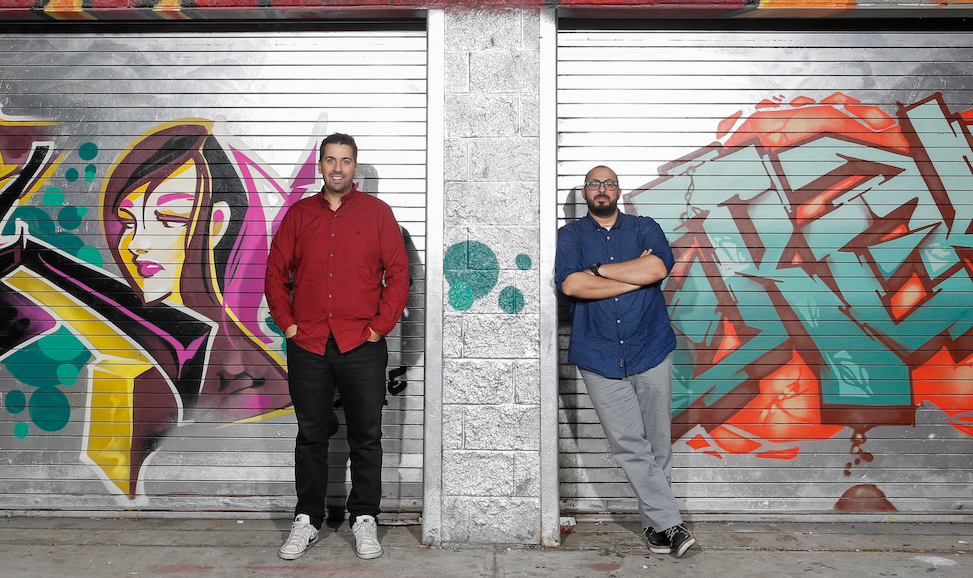
Alburt Lefebvre and Simon Shahin

Specializing in Retail, Hospitality, and Branded Environments

BUILD IT has established itself as a key construction partner for brands operating in sectors where design, customer experience, and execution are critical.

The firm is particularly active in:

• Restaurants and quick-service chains
• Retail storefronts and flagship locations
• Hospitality and mixed-use environments
• Office and commercial interiors
• Medical and specialty-use facilities

Its work focuses on translating brand identity into physical space, ensuring that each location supports both operational efficiency and customer engagement.
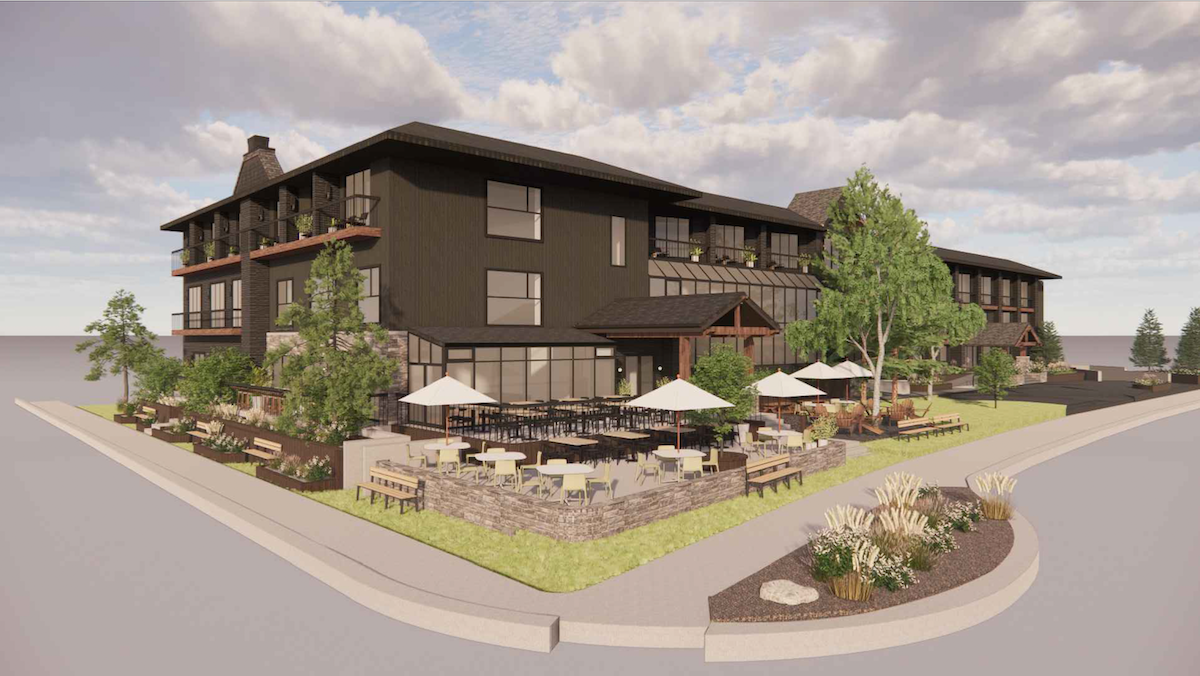
The Kenrick Hotel in Banff, Alberta. Rendering: Eight Statio

A Track Record of Recognized Brands

Over the years, BUILD IT has worked with a wide range of established and emerging brands across Canada. Clients include:

• Earls Kitchen + Bar
• Chick-fil-A
• Jollibee
• Basil Box
• Paramount Fine Foods
• Mary Brown’s
• Food Dudes
• Harbour Eats by Mercatino
• Bombay Street Food
• Supermoon
• Glass Monocle Eyecare
• Arvinda’s Spices & Chai

These partnerships reflect BUILD IT’s ability to deliver consistent results across both large multi-unit rollouts and independent concepts.
Delivering Consistency, Speed, and Quality

Client feedback consistently highlights BUILD IT’s ability to deliver projects on time and on budget, while maintaining strong communication and collaboration throughout the process.

The company’s in-house capabilities, including dedicated labour teams and millwork facilities, allow it to maintain tighter control over timelines and quality compared to traditional fragmented construction models.

Supporting Growth in Canada’s Retail Landscape

As retail, hospitality, and mixed-use developments continue to evolve, construction partners play an increasingly strategic role in enabling brand expansion.

BUILD IT’s work sits at the intersection of construction, design, and business growth, helping brands move from concept to physical presence efficiently and effectively.

With experience across hundreds of projects and a growing national footprint, the company continues to position itself as a key partner for businesses looking to scale their physical environments in Canada.
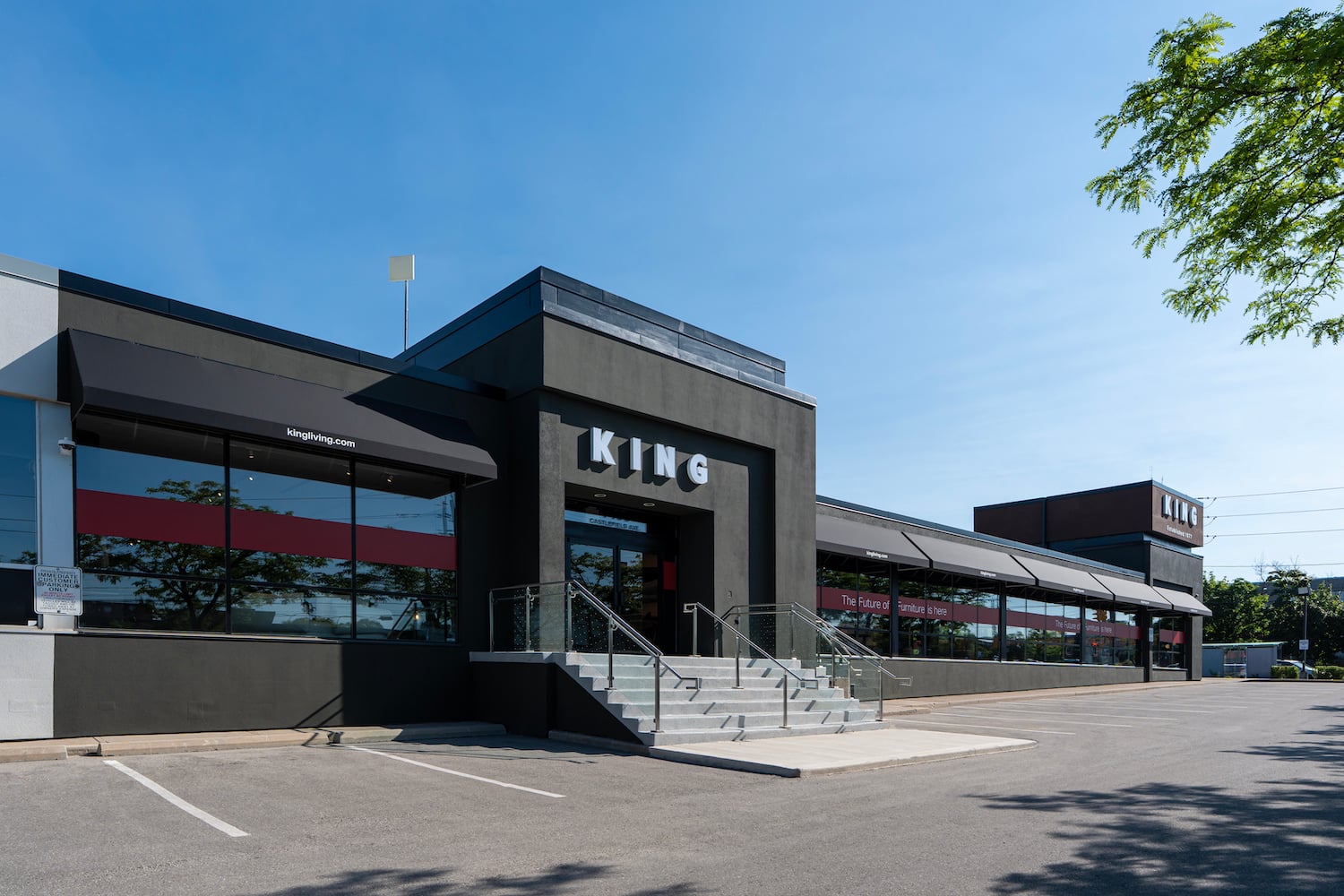
King Living showroom in Toronto. Photo: King Living

A Construction Partner Positioned for Growth

As Retail Insider expands its coverage into Construction & Design, BUILD IT represents the type of partner shaping the next generation of retail and hospitality environments in Canada.

Through a combination of technical expertise, collaborative approach, and deep understanding of brand-driven spaces, BUILD IT continues to play a central role in bringing some of the country’s most recognized concepts to life.


More From Retail Insider:

Apple Reports Record Revenue for Second Quarter of 2026

iPadOS 26 takes a huge leap forward and pushes the unique capabilities and versatility of iPad even further. Photo: Apple.

Apple Inc. is reporting its best March quarter ever with a remarkable revenue of $111.2 billion for its fiscal 2026 second quarter ended March 28, 2026. This marks a 17 percent increase year-over-year, alongside a substantial boost in diluted earnings per share, which rose to $2.01, up 22 percent from the previous year.

“Today Apple is proud to report our best March quarter ever, with revenue of $111.2 billion and double-digit growth across every geographic segment,” stated Tim Cook, Apple’s CEO. He attributed this growth to the extraordinary demand for the iPhone 17 lineup. During this quarter, services also achieved an all-time record, bolstered by the introduction of new products including the iPhone 17e and the M4-powered iPad Air, alongside the launch of MacBook Neo, which is captivating customers globally.

Apple’s Chief Financial Officer, Kevan Parekh, remarked that the strong business performance generated over $28 billion in operating cash flow, leading to new March quarter records for both operating cash flow and earnings per share. He highlighted that sustained customer demand for Apple products and services contributed to a new all-time high for its installed base of active devices.

Dividend Announcement

The board of directors at Apple has declared a cash dividend of $0.27 per share of the Company’s common stock, reflecting a 4 percent increase. This dividend is scheduled for payment on May 14, 2026, to shareholders recorded as of the close of business on May 11, 2026.

Stock Buyback Programme

In addition to the dividend, the board has authorized a new program to repurchase up to $100 billion of its common stock. This initiative reflects the Company’s strategy to enhance shareholder value amidst its strong financial performance.

Apple will offer a live streaming of its Q2 2026 financial results conference call, commencing at 2:00 p.m. PT on April 30, 2026. Interested parties can view the webcast at apple.com/investor/earnings-call, with availability for replay approximately two weeks following the event.

For more updated information, Apple maintains a corporate website at apple.com and an investor relations section at investor.apple.com, where details regarding financial performance, corporate governance, and other investor-related news can be accessed.

This press release contains forward-looking statements as defined under the Private Securities Litigation Reform Act of 1995. These include projections regarding the Company’s plans for capital return and quarterly dividends, which are subject to risks and uncertainties. Actual results may differ significantly from future predictions due to various factors including economic conditions and competitive market dynamics.

More from Retail Insider:

From The Desk: Navigating Retail’s Transformation Amid Legacy Resets and Experiential Growth

Canada’s retail landscape continues to shift as legacy store closures and new experiential concepts reshape both shopping centres and consumer expectations. One year after Hudson’s Bay’s liquidation, the industry is still adjusting, with landlords focusing on tenant diversification, mixed-use redevelopment, and new strategies around sustainability and technology.

At the same time, retailers are navigating ongoing pressures tied to affordability, logistics, and labour. As the spring season unfolds, many are refining growth plans and repositioning their businesses, with a clear focus on integrating physical retail with digital capabilities to remain competitive over the long term.


Retailer News

The retail sector’s tangible evolution is evident in ongoing redevelopment initiatives rooted in the Hudson’s Bay collapse. The signing of deals for former Hudson’s Bay properties across major cities signals a decisive transition from traditional anchor store models to mixed-use developments and residential intensification, a trend further underscored by proposals like Brookfield’s conversion of Toronto’s Hudson’s Bay Centre into self-storage to address emergent urban needs. These actions reflect an adaptive response to declining department store demand and a push toward diversifying space utility to enhance urban retail vibrancy.

Complementing these legacy shifts, high-profile retailer expansions emphasize experiential and curated retail. Aritzia’s momentum continues with the unveiling of their expanded flagship at CF Toronto Eaton Centre, integrating fashion and lifestyle under one roof with experiential elements like an in-store café. Similarly, La Maison Simons advancing its footprint with a downtown Vancouver flagship, highlights a strategic pivot towards experience-driven urban centres following the demise of traditional department stores. Meanwhile, specialty retailers such as La Rosée leverage omnichannel strategies via an exclusive partnership with Shoppers Drug Mart to marry clinical skincare with sustainability-focused values, aligning with consumers’ demand for transparency.

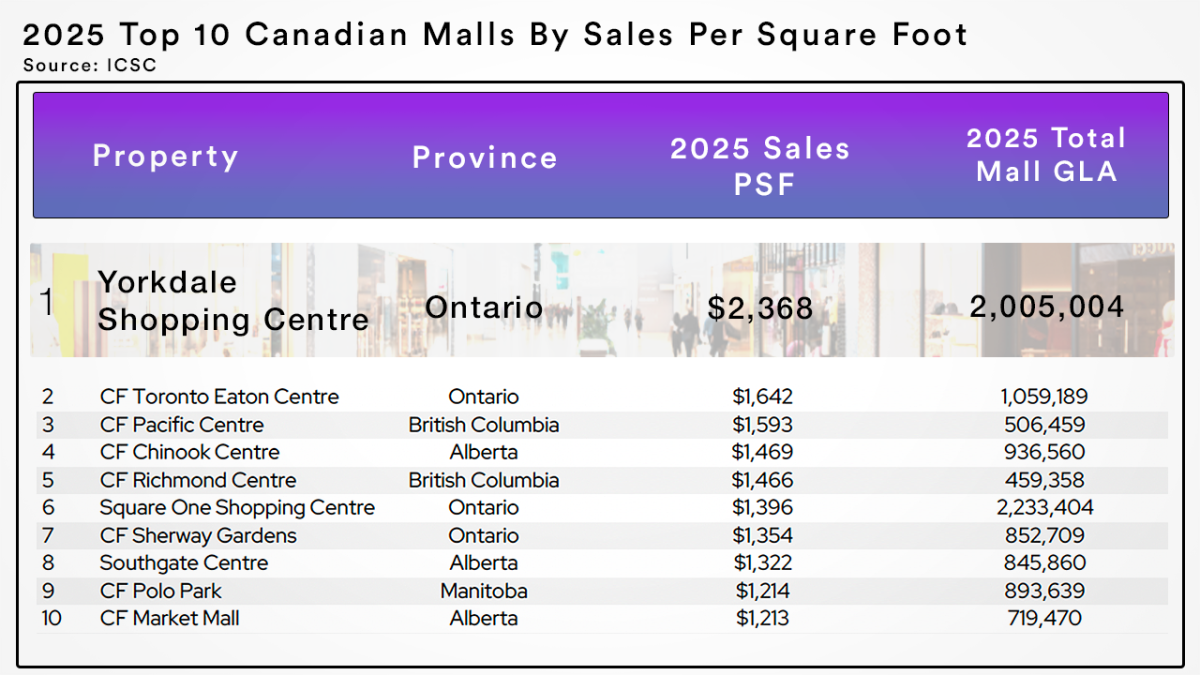
Further illuminating consumer experience trends, the resurgence of circular economy models has been captured by Mine & Yours’ collaboration with Holt Renfrew in Calgary, offering pre-owned luxury fashion at accessible price points. Meanwhile, both Mandy’s expansion in Toronto’s Distillery District and QuickBite Collective’s strategic growth in foodservice point to the increasing importance of experiential dining and beverage formats in driving foot traffic amidst a more competitive retail real estate landscape. Cadillac Fairview’s dominance with seven of Canada’s top-performing shopping centres reaffirms the enduring strength of curated tenant mixes and location accessibility in sustaining mall vitality.

On the flip side, challenges surfaced with Coast Appliances filing for creditor protection following leadership turmoil, signalling risk in big-ticket appliance retail amid economic strain. Additionally, speculation around GS25’s rumored Canadian entry spotlighted the growing consumer appetite for Asian convenience retail formats, though the brand is not yet entering Canada, such market signals prompt retailers to revisit opportunities within urban food-first convenience models.

Financial and market data provide crucial context for these strategic moves. Statistics Canada’s report of a 1.3% decline in retail employment underscores labour reshaping, notably in clothing and department sectors, likely linked to structural retail contraction and automation adoption. Consumer spending shows a nuanced picture; while retail sales rose modestly in February, ongoing inflationary pressures, especially in food affordability, remain a major factor driving cautious consumption, as detailed in Dalhousie’s analysis and Sylvain Charlebois’ op-ed on grocery price stabilization.

In apparel, Gildan’s record quarterly revenue exemplifies successful vertical integration and synergy realisation, while EMERGE Commerce’s 43% growth reflects the strength of diversified e-commerce platforms. Real estate fundamentals appear resilient with Primaris REIT’s Q1 rental revenue increase driven by strategic leasing of former HBC spaces is a case in point, demonstrating adaptive re-tenanting and portfolio enhancements.

Moreover, Yorkdale Shopping Centre’s 2025 dominance with $2,368 per square foot sales affirms the premium on curated luxury and experiential retail environments in Canadian malls. However, as the DALBAR study warns, retail security measures that frustrate shoppers risk driving abandonment, pressing retailers to innovate on loss prevention without compromising the customer journey.

Retailer People News

Leadership developments this week underscore the strategic recalibrations underway. Lululemon’s appointment of new executives, including CEO Heidi O’Neill, reflects a critical leadership reset aimed at navigating intensifying competition in premium athleisure, signalling adaptation to shifting consumer expectations. Concurrently, retail executives gathered at the Rotman School heightened attention on the increasingly complex interplay between digital and physical retail channels, emphasizing a consumer-centric focus on value and brand experience rooted in operational agility.

Retailer Op-Eds

Op-ed perspectives deepen the insight into current retail transformations. The anticipated La Maison Simons downtown Vancouver store not only diversifies the brand’s footprint but acts as a bellwether for urban retail evolution away from traditional department stores towards experiential, curated formats responsive to market decentralization and labour shifts. Sylvain Charlebois’ commentary on grocery prices highlights the persistent challenge of food affordability, reinforcing how these economic pressures shape purchasing habits and retailer strategies even as inflation eases.


Editor’s Take

This past week’s coverage highlights a retail landscape that is still in transition. The impact of Hudson’s Bay’s closure continues to be felt, particularly as former department store spaces are repurposed. Landlords and retailers are rethinking how space is used, with more focus on mixed-use projects, services, and food-driven concepts.

At the same time, underlying pressures remain. Consumer demand is holding up, but it is more cautious. Ongoing challenges around affordability, labour, and costs are forcing retailers to tighten operations and refine their value propositions. Meanwhile, brands such as Aritzia and Simons are investing in larger, more experiential stores, showing that standout retail environments are capturing a greater share of spending.

Looking ahead, the industry will need to balance repositioning legacy assets with investing in new formats and growth opportunities. Retailers that integrate digital capabilities, strengthen omnichannel strategies, and stay closely aligned with consumer expectations will be better positioned to compete as the market continues to evolve.

This Week’s Articles

Retailer News

Retailer People News

Retailer Op-Eds

News From Around the Web

Hudson’s Bay Stripes Return in Canadian Tire Stores

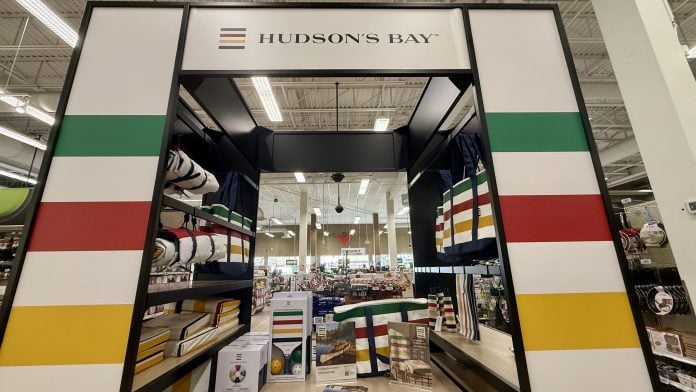
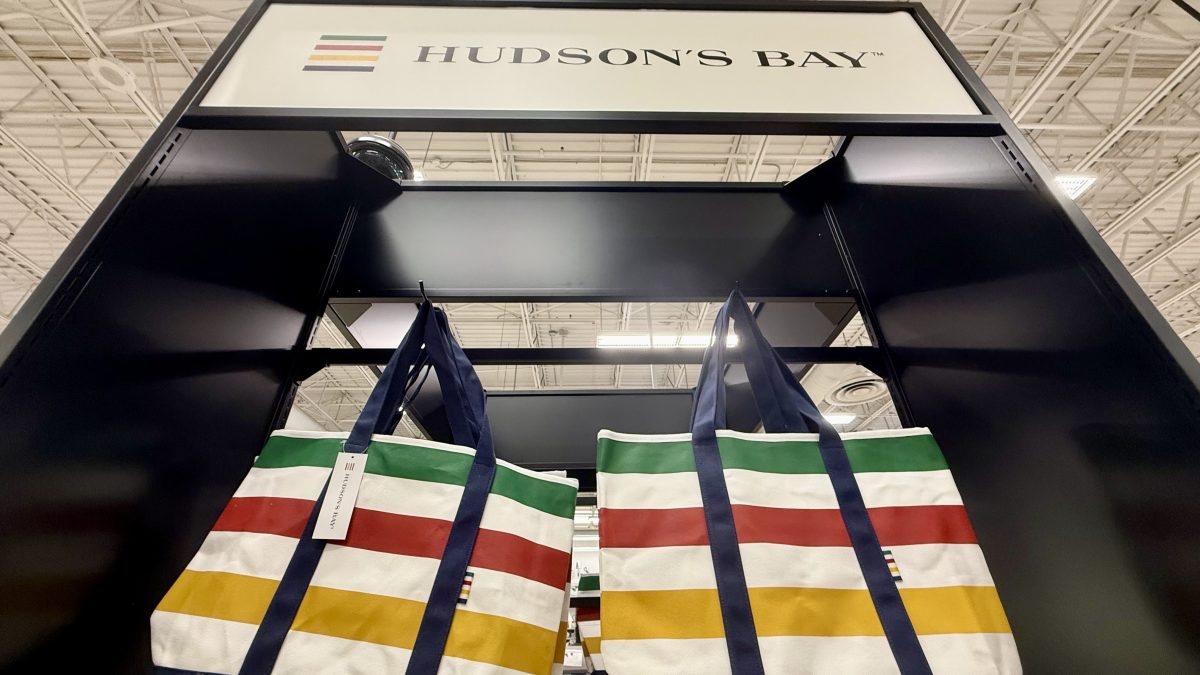
Hudson's Bay display at Canadian Tire, 839 Yonge St. in Toronto. Photo: Craig Patterson

Canadian Tire has officially launched its Hudson’s Bay Stripes Summer 2026 collection across stores nationwide, marking the first fully in-house designed assortment since acquiring the Hudson’s Bay Company intellectual property for $30 million in 2025. The 32-piece collection represents a significant step in repositioning one of Canada’s most recognizable retail brands, as Hudson’s Bay re-enters the market not as a department store, but as a lifestyle-driven owned brand within the broader ecosystem of Canadian Tire.

Founded in 1670, Hudson’s Bay operated for generations as Canada’s oldest retailer before entering creditor protection and liquidating its department store network in 2025. The current launch reflects what Canadian Tire has described as the “next chapter” for the Stripes, expanding the brand into more everyday moments in Canadian life.

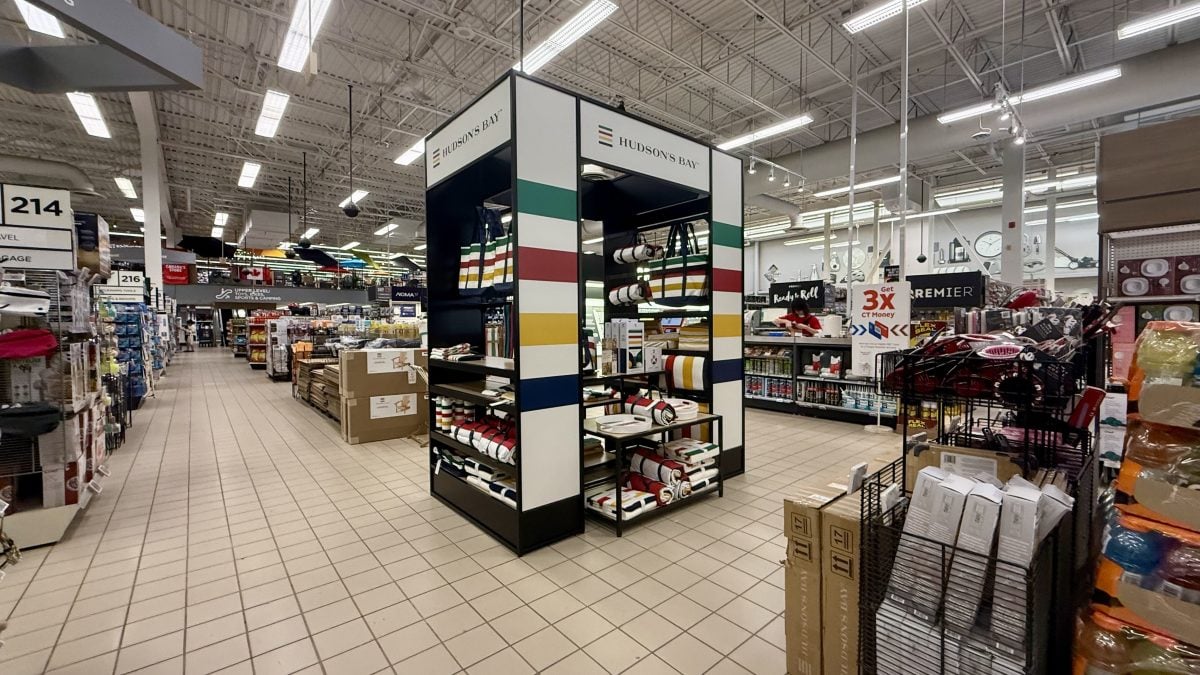
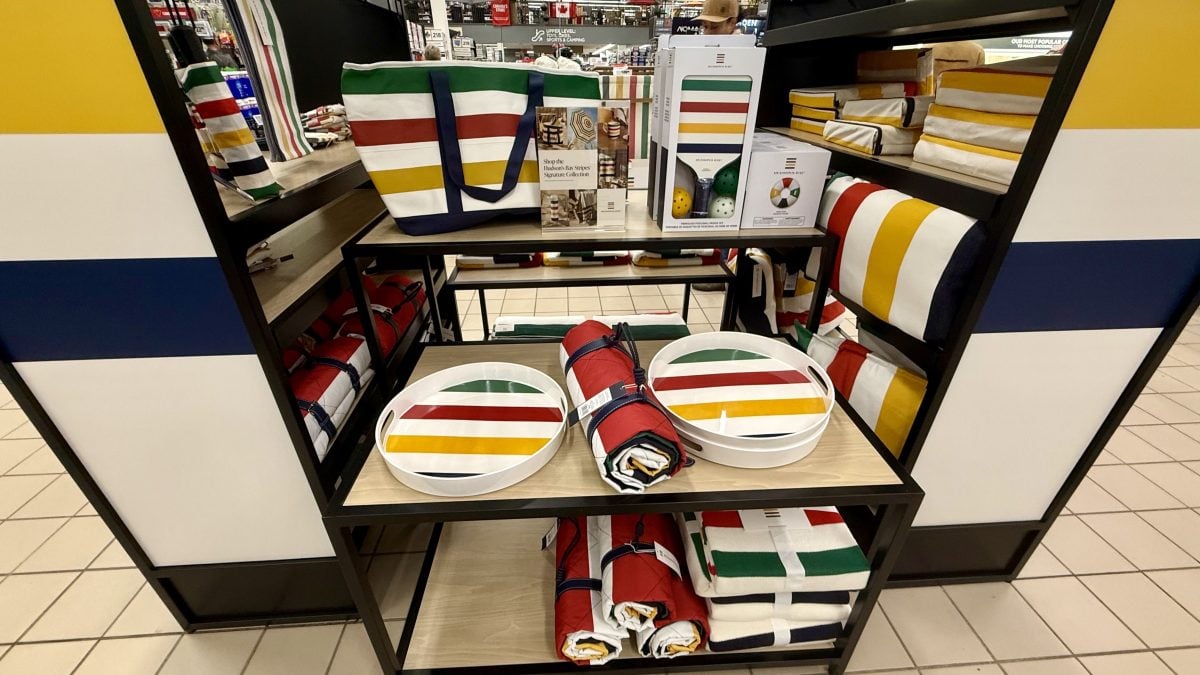
Hudson’s Bay display at Canadian Tire, 839 Yonge St. in Toronto. Photo: Craig Patterson

Dedicated In-Store Kiosks Signal Long-Term Brand Intent

Retail Insider visited a downtown Toronto Canadian Tire location on opening day, where the collection was presented through dedicated Hudson’s Bay-branded kiosks that created a distinct store-within-a-store environment. The displays were immediately visible from the main aisle and appeared purpose-built for the May 1 launch, with clean architectural framing, tightly edited assortments, and consistent visual merchandising anchored by the iconic multicolour stripes.

The execution stood in contrast to the surrounding mass retail environment, reinforcing a more curated, lifestyle-oriented presentation within a traditional big-box setting. The kiosks function as a focal point for brand storytelling and appear to be a repeatable merchandising format that can be scaled across Canadian Tire’s national store network.

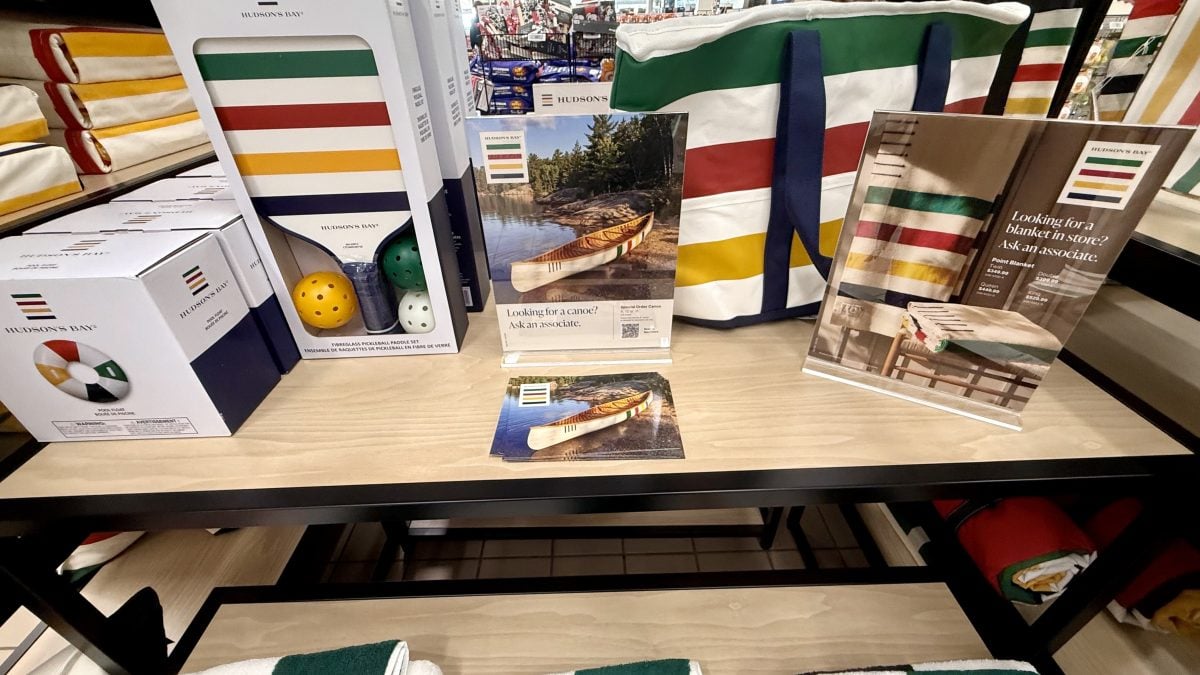
Hudson’s Bay display at Canadian Tire, 839 Yonge St. in Toronto. Photo: Craig Patterson

Product Assortment Blends Heritage with Outdoor Living

The collection spans outdoor living, beach essentials, games, and home accessories, with a clear pricing ladder that ranges from entry-level items such as mugs starting at $8 to high-ticket heritage products including a 16-foot cedar strip canoe priced at approximately $10,000.

Core items include the iconic point blanket, now offered in multiple sizes, along with Muskoka chairs, striped cushions, towels, tote bags, and recreational products such as cornhole and pickleball sets. Several flagship items, including canoes and select furniture pieces, are manufactured in Canada, reinforcing the brand’s heritage positioning while aligning with Canadian Tire’s strength in outdoor and backyard categories.

Hybrid Merchandising Strategy Combines Brand and Volume

In-store execution reflects a blended physical and digital retail strategy. While smaller products are displayed within the kiosks, larger items are supported by signage and QR codes, allowing customers to access additional information or arrange purchase through associates.

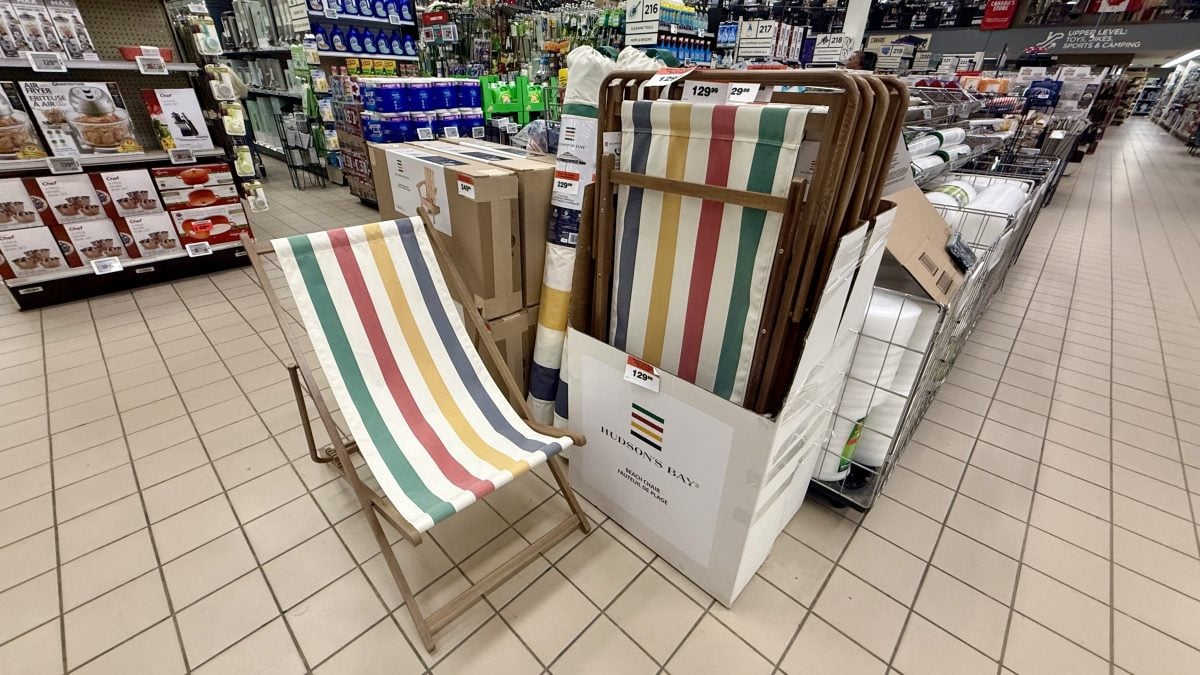
Secondary merchandising extends beyond the kiosk, with bulkier items such as striped outdoor chairs positioned in adjacent aisles. This approach combines curated brand presentation with volume-driven retail placement, enabling Canadian Tire to balance storytelling with scale.

Hudson’s Bay display at Canadian Tire, 839 Yonge St. in Toronto. Photo: Craig Patterson

Coordinated Marketing Campaign Drives Early Visibility

Traffic during Retail Insider’s visit appeared measured on Friday morning, with shoppers browsing the display with curiosity. The in-store atmosphere contrasted with a coordinated digital rollout, where Canadian Tire locations and Mark’s stores shared videos and photos showcasing the collection and in-store displays.

Influencer activity has also played a central role in the launch. In the weeks leading up to May 1, Canadian Tire brought creators to a staged cottage setting in Prince Edward County, where the collection was presented in a lifestyle environment. Content from these visits leaned heavily into aspirational, cozy, and distinctly Canadian imagery, reinforcing the brand’s repositioning around outdoor living and everyday experiences. The campaign positioned the Stripes within a contemporary lifestyle context, rather than relying solely on heritage recognition.

Hudson’s Bay display at Canadian Tire, 839 Yonge St. in Toronto. Photo: Craig Patterson

First Full Collection Marks a Strategic Shift

The launch builds on momentum from a limited holiday capsule released in late 2025 and represents what Canadian Tire describes as the “next chapter” for the Stripes. “The response from Canadians to the return of the Stripes exceeded our expectations,” said Eva Salem, Senior Vice President, Marketing and Brand at Canadian Tire Corporation. “This is the first time we’re bringing forward a full seasonal assortment, and it reflects the opportunity we see to continue to grow the portfolio of iconic brands we own and design.”

Distribution reflects a multi-banner strategy. The kiosks appear to have been rolled out across Canadian Tire stores nationwide, while a more limited assortment and select displays have been introduced at certain Mark’s locations. The expansion into Mark’s extends the reach of the Stripes beyond traditional home and outdoor categories into a more everyday consumer context.

Hudson’s Bay display at Canadian Tire, 839 Yonge St. in Toronto. Photo: Craig Patterson

The launch has been supported by a coordinated marketing campaign, including influencer activations and store-level content, which has helped generate early visibility for the collection. The longer-term challenge will be maintaining that momentum, as the Hudson’s Bay brand evolves without the presence of a traditional department store network. Continued product development, consistent retail execution, and sustained consumer engagement will likely be required to ensure the HBC Stripes resonate in this new format over time.

More from Retail Insider:

DAVIDsTEA Returns to Profitability as Retail Strategy Gains Traction

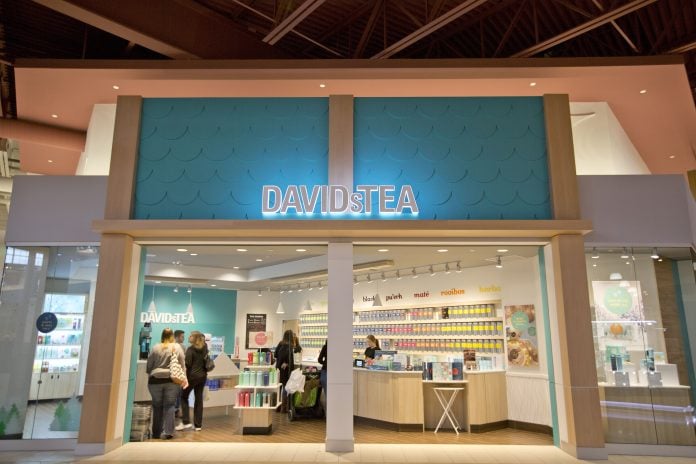
DAVIDsTEA | Tsawwassen Mills Outlet Shopping Mall, Source: https://www.flickr.com/photos/gotovan/31034236481/

Canadian specialty retailer DAVIDsTEA has returned to profitability, marking a significant milestone in its multi-year transformation following a pandemic-era restructuring. The Montreal-based company reported net income of approximately $2.9 million for Fiscal 2025, reversing a net loss of about $3.2 million the previous year, while also delivering a strong fourth quarter that underscored improving operational performance.

The results point to a business that has stabilized after a period of uncertainty, supported by a recalibrated retail strategy that blends physical stores, e-commerce, and wholesale distribution. For a brand that once operated more than 200 locations across North America, the return to profitability signals that a smaller, more focused footprint can support sustainable growth.

From Restructuring to Recovery

The latest results must be viewed against the backdrop of DAVIDsTEA’s dramatic restructuring in 2020, when the company sought protection under the Companies’ Creditors Arrangement Act. At the time, it closed the majority of its store network and pivoted aggressively toward an e-commerce-first model as mall traffic declined and operating costs became unsustainable.

That reset fundamentally altered the company’s trajectory. Rather than pursuing scale through a large store base, DAVIDsTEA shifted toward a more disciplined approach focused on profitability, brand engagement, and channel diversification. The years that followed were characterized by experimentation, including a gradual reintroduction of physical retail in select markets.

Today, the company operates a much smaller fleet of stores, but one that is positioned to perform more efficiently. This right-sizing appears to be paying off.

Physical Retail Re-emerges as a Growth Driver

One of the most notable elements of the Fiscal 2025 results is the renewed strength of brick-and-mortar retail. Store sales increased by more than 10 percent year-over-year, while comparable store sales also posted gains, reflecting improved productivity within the existing network.

This performance suggests that DAVIDsTEA’s physical locations are once again playing a meaningful role in the business, not simply as points of sale, but as brand-building environments that support customer engagement and product discovery. The shift aligns with a broader industry trend in which retailers are rethinking the role of stores as part of an integrated omnichannel ecosystem.

At the same time, e-commerce sales declined modestly, driven in part by operational challenges in the United States. However, the company’s results indicate that the balance between digital and physical channels is evolving toward a more sustainable mix.

A Hybrid Model Takes Shape

Beyond stores and e-commerce, DAVIDsTEA has continued to expand its wholesale and distribution channels, an area that has become increasingly important to its long-term strategy. Partnerships with retailers such as Alimentation Couche-Tard highlight the company’s push into grocery and convenience environments, allowing the brand to reach consumers beyond its own stores.

This shift represents a meaningful evolution in the business model. DAVIDsTEA is no longer solely a retailer, but also a branded product company with multiple avenues to market. The diversification reduces reliance on any single channel and provides greater resilience in a changing retail landscape.

Canada Drives Growth While U.S. Challenges Persist

Geographically, the company’s performance continues to be led by Canada, which now accounts for the vast majority of revenue. The domestic market has proven to be more stable and predictable, benefiting from brand recognition and a more straightforward operating environment.

In contrast, the United States has presented ongoing challenges. Sales declined in that market, reflecting a combination of cross-border logistics issues, tariff pressures, and a more complex competitive landscape. In response, DAVIDsTEA has been adjusting its fulfillment strategy, including initiatives aimed at improving efficiency and reducing costs.

The divergence between the two markets underscores a broader trend among Canadian retailers, many of which are prioritizing domestic growth while reassessing their approach to U.S. expansion.

Expansion Returns to the Agenda

Perhaps the clearest indication of renewed confidence is DAVIDsTEA’s return to store expansion. The company recently raised capital to support growth and has already opened a new location in Quebec City’s Laurier shopping centre, with additional stores planned.

While the expansion remains measured, it signals a shift from retrenchment to cautious growth. The focus appears to be on selecting high-performing locations and maintaining a disciplined approach to capital allocation, rather than pursuing rapid network expansion.

This strategy reflects lessons learned during the company’s earlier period of overexpansion and aligns with a broader industry move toward optimizing store portfolios rather than maximizing store counts.

A Case Study in Retail Reinvention

DAVIDsTEA’s return to profitability offers a compelling case study in how a specialty retailer can adapt to structural change. The company has moved from a mall-dependent chain with a large footprint to a more agile organization that leverages multiple channels and a streamlined store network.

The path has not been without challenges, particularly in international markets, but the Fiscal 2025 results suggest that the core business is on firmer footing. As the company continues to refine its model and pursue targeted growth, it may provide a blueprint for other retailers navigating similar transitions.

For Canada’s retail industry, the turnaround also carries symbolic weight. At a time when many legacy retailers are still grappling with the aftermath of pandemic disruptions, DAVIDsTEA’s recovery demonstrates that reinvention, when executed with discipline, can lead to renewed relevance and profitability.

More from Retail Insider:

FreshCo Targets Underserved Markets with Winnipeg Opening

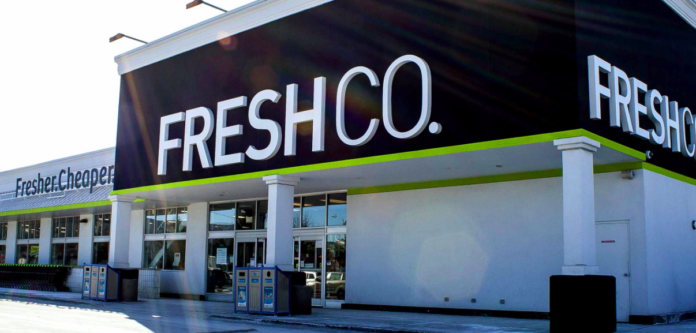
FreshCo (Image: JACKMAN REINVENTS)

FreshCo Targets Underserved Markets with Winnipeg Opening

A long-vacant grocery store in Winnipeg is set to return to life as FreshCo prepares to open a new location in Fall 2026, marking both a community milestone and a broader signal in Canada’s evolving grocery landscape.

Construction is now underway at 1870 Burrows Avenue, where a former Sobeys store has sat empty since closing in December 2016. The redevelopment, led by Shindico Realty Inc., will see FreshCo take on the role of anchor tenant in a revitalized retail space that has remained dormant for nearly a decade.

For local residents, the reopening represents the return of a full-service grocery option after years of limited access to fresh and affordable food. For the industry, however, the project reflects a more strategic shift in how discount grocery banners are expanding and how retail landlords are repositioning legacy assets.

Discount Grocery as a Strategic Growth Engine

FreshCo, operated by Sobeys Inc. under parent company Empire Company Limited, has grown steadily since its launch in 2010. The banner now operates more than 125 stores nationally, with a focus on delivering fresh food at lower price points through a simplified, high-efficiency format.

In recent years, the brand has played a central role in Empire’s broader discount strategy. Across Western Canada, the company has converted dozens of underperforming conventional grocery stores into FreshCo locations, effectively repositioning existing real estate to align with changing consumer demand. That phase of expansion is now nearing completion, with the majority of targeted conversions already finalized or underway.

As a result, the company’s focus has begun to shift. While Atlantic Canada has emerged as a key battleground for new store development in 2026, targeted infill opportunities such as Winnipeg are increasingly important. These projects allow FreshCo to enter or strengthen its presence in specific communities where demand for value-oriented grocery options remains high.

Reviving a Long-Dormant Retail Asset

The Winnipeg project highlights a growing trend in Canadian retail real estate, where landlords are seeking stable, high-traffic tenants to reactivate large-format spaces that have remained vacant for extended periods.

In this case, the former Sobeys location represented a significant gap in the local retail landscape. By securing FreshCo as a replacement tenant, Shindico Realty has effectively aligned the property with a format that is better suited to current market conditions.

“FreshCo is the perfect fit for this community, offering another much-needed grocery option and bringing a long, dark space back to life,” said Michael Stronger, Broker at Shindico Realty Inc., in a statement.

The decision reflects a broader shift in leasing strategy. Rather than prioritizing traditional full-service grocery formats, landlords are increasingly turning to discount banners that can deliver consistent foot traffic and align with evolving consumer expectations around value.

A Changing Competitive Landscape

The expansion of FreshCo also underscores the intensifying competition within Canada’s discount grocery segment. Banners such as No Frills and Food Basics have long held strong positions in the value-focused category, particularly in Ontario.

FreshCo’s growth has added another national player to the mix, particularly as it expands beyond its traditional strongholds. Its continued rollout into underserved markets suggests that competition is no longer limited to major urban centres, but is increasingly playing out in neighbourhood-level trade areas where access and affordability are key concerns.

At the same time, macroeconomic pressures continue to shape consumer behaviour. While food inflation has moderated from earlier peaks, many shoppers remain focused on price, driving sustained demand for discount-oriented formats. In this environment, banners that can combine low prices with a credible fresh offering are well positioned to capture market share.

A Signal of What Comes Next

The reopening of a single grocery store may appear incremental on the surface, yet it reflects several larger shifts underway across the Canadian retail sector.

First, it highlights the ongoing transition from conventional grocery formats toward discount-driven models. Second, it demonstrates how landlords are adapting to this shift by repositioning existing assets rather than relying solely on new development. Finally, it underscores the importance of targeted expansion strategies, as national retailers seek to fill gaps in their networks while responding to local demand.

For Winnipeg’s Burrows Avenue community, the arrival of FreshCo will restore a long-missing retail service. For the broader industry, it offers a clear example of how discount grocery, real estate strategy, and consumer behaviour are increasingly intersecting.

As FreshCo continues to expand its footprint across the country, projects like this suggest that the next phase of growth will be defined less by rapid market entry and more by precision, focusing on the right locations, the right formats, and the right value proposition for today’s consumer.


More from Retail Insider:

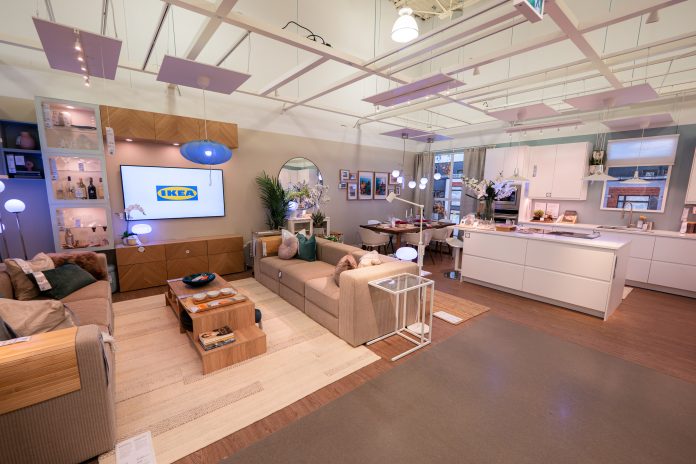
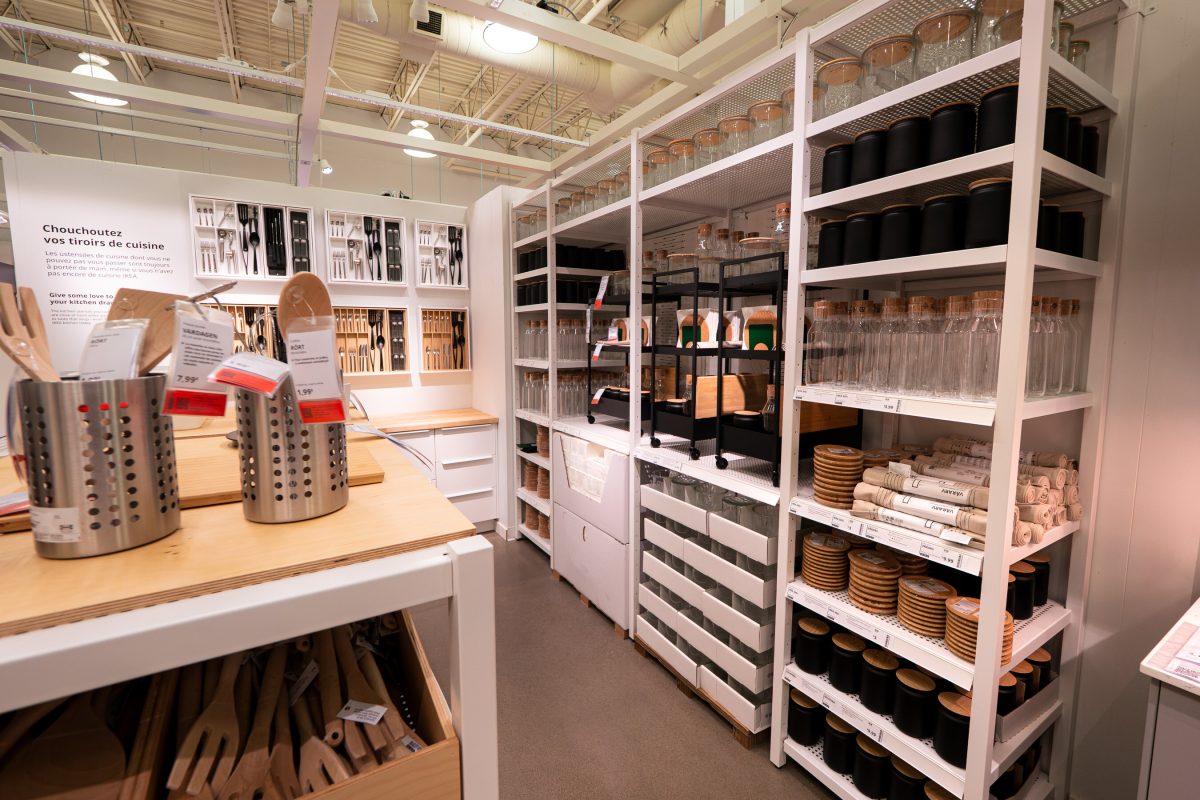
IKEA to Open Plan and Order Point in Gatineau on May 11

IKEA photo
IKEA photo

IKEA Canada says it is opening its newest Plan and order point in Gatineau, Quebec on May 11.

Located at 1100 boulevard Maloney Ouest, the Plan and order point will be the sixth location in the province (13th across Canada), marking an important step in its journey to bring the brand closer to many Quebecers, said the home furnishing retailer.

It said Plan and order points offer easy access to expert design services when planning, ordering, and purchasing home furnishing solutions for any room in the home such as kitchen renovations or bedroom storage systems. Once orders have been placed, they can be delivered to their homes or collected from the pick-up location at the Plan and order point.

Customers can now pre-book planning appointments for May 11 and beyond online at IKEA Gatineau – Plan And Order Point – IKEA CA.

“For those looking to instantly refresh their spaces, visitors to the Gatineau Plan and order point will be able to shop a selection of IKEA products (excluding food – sorry, no meatballs) for immediate purchase and takeaway,” it said.

IKEA photo

The company operates 12 Plan and order point locations in Quebec, Ontario, and British Columbia.

“These service-based customer meeting points are one of the many ways IKEA Canada is transforming its business to deliver a seamless retail experience wherever, whenever, and however customers choose to shop with the brand,” explained the retailer.

“Plan and order points help to reduce the distances that customers must travel to visit an IKEA location, which has affordability, accessibility, and sustainability benefits. IKEA Canada looks forward to providing this elevated planning experience to its new Gatineau neighbours.”

For more information including store hours at IKEA Plan and order points, visit https://www.ikea.com/ca/en/stores/plan-and-order-point/.

IKEA Canada is part of Ingka Group which operates 574 stores in 31 countries, including 15 stores and 12 Plan and order points in Canada.

More from Retail Insider:

IKEA photo

Happy Belly Food Group Reports $63.1M in 2025 Sales

Photo: Happy Belly Food Group

Happy Belly Food Group Inc., a leader in acquiring and scaling emerging food brands, released on Thursday its audited financial results and corporate update for the fiscal year ended December 31st, 2025.

Fiscal 2025 and Recent Business Highlights

  • System wide sales across Quick Service Restaurants totaled $63.1M in fiscal 2025, up 108% versus the prior fiscal year (2024 – $30.30M). The increase is attributed to organic baseline restaurant growth, alongside increased restaurant count, which reached 77 operating restaurants in 2025 versus 43 in the prior fiscal year, representing a 79% increase in operating restaurant count. Total restaurant count includes the acquisitions and investments during fiscal 2025.
  • Total operating revenues, services, interest income, and rebates totaled $22.1M in fiscal 2025, up 176% versus the prior fiscal year (2024 – $8.0M). Year-over-year growth was driven by continued sales growth in the QSR segment, as well as four (4) business acquisitions in 2025, combined with new franchised restaurant openings and royalties collected during 2025 (34 restaurants added to the Happy Belly portfolio).
  • Total product sales totaled $18.1M in fiscal 2025, up 162% versus the prior fiscal year (2024 – $6.9M). Furthermore, royalties and franchise fee revenues reached $2.8M, up 195% from the prior fiscal year (2024 – $0.95M), which was driven by royalties collected from 34 new restaurant additions to the Happy Belly portfolio in 2025.
  • Adjusted EBITDA reached $0.1M or 0.3% in fiscal 2025, a 60% increase versus the prior fiscal year (2024 – adjusted EBITDA loss of $(0.1)M or (1.2)%). Q4 2025 adjusted EBITDA was $(0.5)M or negative 8.2% versus $(0.2)M or negative 6.5% in the same quarter last year.
  • Total cash and cash equivalents remain healthy at $3.0M as of December 31, 2025 (2024 – $3.5M). One non-brokered private placement was completed during fiscal 2025 for aggregate proceeds of $500,000 at a subscription price of $1.50.
  • Happy Belly made strategic cash and equity investments during fiscal 2025. First, acquiring two (2) QSR brands: Smile Tiger Coffee Roasters, and Salus Fresh Foods Inc. The Company also (i) completed an earn-out transaction in regard to its Via Cibo Restaurants brand, and (ii) acquired the remaining 50% ownership of Heal Wellness. In addition, with a franchise pipeline of over 680 restaurants in development, and expectations of a record number of new restaurant openings in 2026, the Company determined to increase capacity for growth in 2026 and, as a result, investments were made in Q4 2025 to add headcount and infrastructure.
  • As of April 30, 2026, subsequent to fiscal 2025, the Company has opened and is operating 17 additional restaurants.
Sean Black
Sean Black

“Happy Belly closed 2024 with 43 operating locations and 421 contractually committed franchise locations across a portfolio of emerging brands at various stages of development, construction, and operation. By the end of 2025, we had expanded to 77 operating locations and 666 committed franchise locations. This meaningful acceleration in both open and committed units reflects the increasing demand for our brands and the strength of our area developer model,” said Sean Black, Chief Executive Officer.

“Our performance in 2025 reinforces our position as a disciplined, high-growth, multi-brand restaurant platform with a scalable and predictable expansion model. These achievements lay a strong foundation as we continue executing on our strategy to become Canada’s leading acquirer and scaler of emerging food brands, while delivering long-term shareholder value.”

“We are proud of what our team has accomplished. Our proven, repeatable growth model drove system sales to more than double year over year, increasing 108%. During the year, we added 34 new restaurant locations to the Happy Belly portfolio through a balanced mix of organic expansion and strategic acquisitions, further strengthening our presence across key markets and concepts.

“I would like to congratulate our brand leaders, franchise partners, area development partners, team members, and cross-functional groups in both Canada and the United States for an outstanding year. As Happy Belly continues to scale, so do its highest-margin revenue streams of royalties, franchise fees, and rebates which grew by 195% year over year. This marks an important milestone as we transition from foundational capital deployment to meaningfully advancing toward positive cash flow. As our franchised footprint expands, these high-margin segments will play an increasingly critical role in accelerating that trajectory.

“Our core principles have been the 3P’s: People, Product and Process, while staying operationally and financially disciplined throughout our execution. Our current infrastructure is a testament to the team-oriented culture at Happy Belly. Our brand partners and management team work together to support franchisees in global expansion. In 2026 we anticipate delivering significant organic growth beyond our 2025 growth total of 34 new locations, surpassing our original expectations for the full year. With a clear focus on growth, we believe our best years are still to come.”

More from Retail Insider:

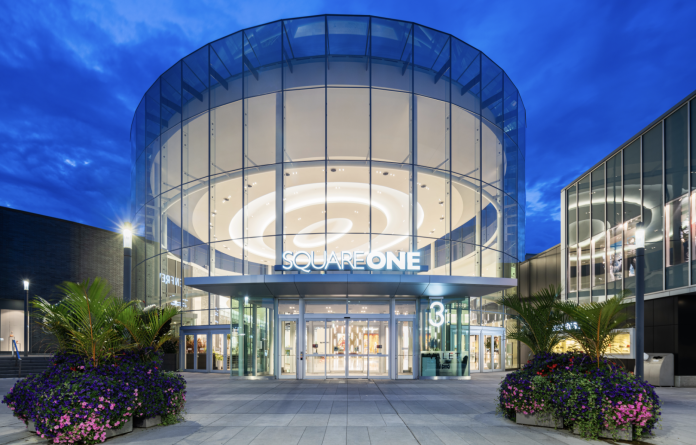
Square One Anchors Mississauga’s Downtown Transformation

Square One in Mississauga. Photo: Oxford Properties

Square One Shopping Centre is no longer just a regional shopping destination. It is increasingly becoming the centrepiece of one of the most significant urban transformations in North America.

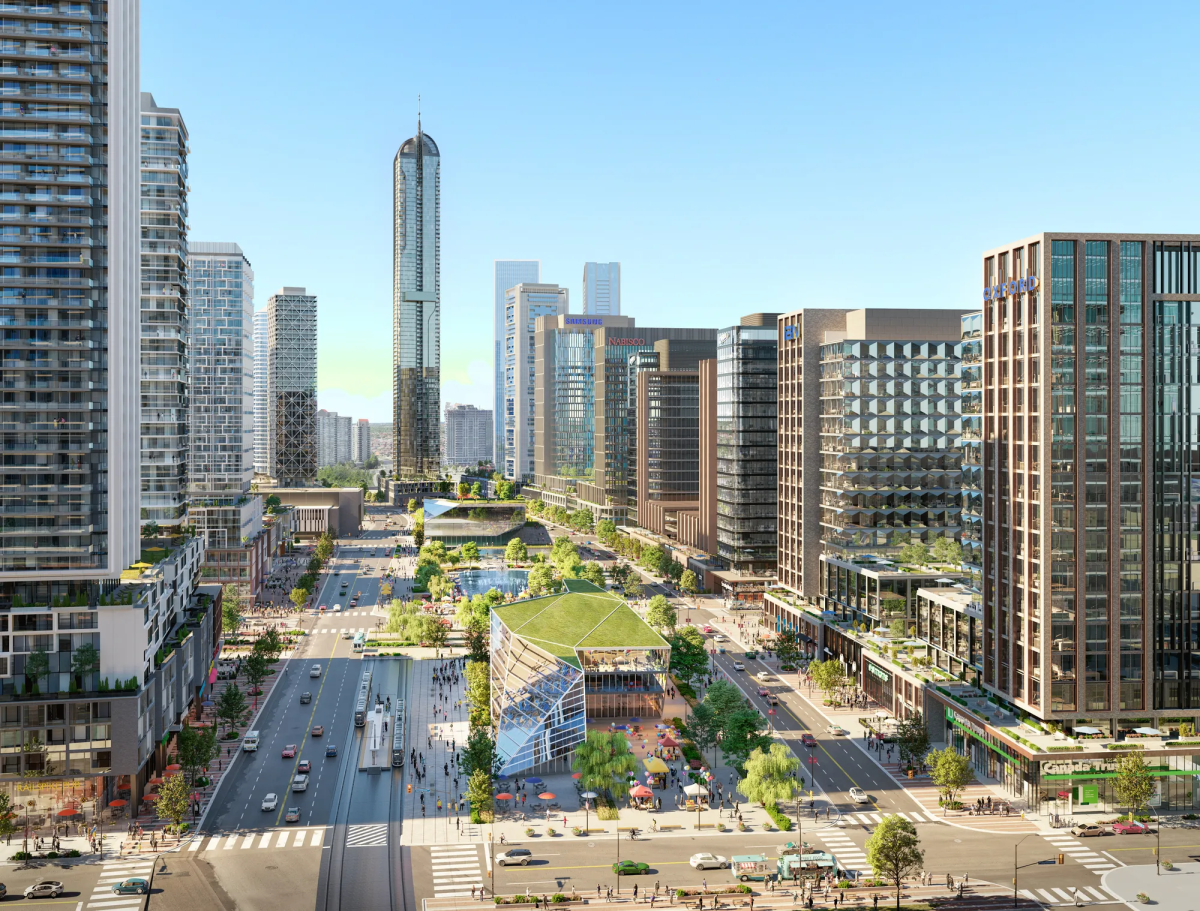
Located in the heart of Mississauga, the centre is evolving alongside the multi-decade Square One District redevelopment, a project that is reshaping more than 130 acres of land into a dense, mixed-use urban environment. The scale is substantial, with plans calling for approximately 18 million square feet of development, including thousands of residential units, office space, and new public realm infrastructure. As this transformation unfolds, Square One is shifting from a destination mall into the retail anchor of a growing downtown core.

A City Within a City Takes Shape

Mississauga is undergoing a fundamental shift. Long viewed as a suburban extension of Toronto, the city is now intensifying its development and positioning itself as a self-sustaining metropolitan centre. The Square One District sits at the centre of that ambition.

As new residential towers rise and thousands of residents move into the area, a daily population is forming around the shopping centre. This is changing how Square One functions. Rather than relying solely on regional visitors, the centre is increasingly serving a local, urban customer base that lives, works, and spends time in the immediate area.

Oxford Properties, which owns and manages the shopping centre, is adapting its strategy accordingly. The focus is expanding beyond traditional retail to include food, services, and experiences that cater to a more frequent, everyday customer.

Rendering of the future Square One District, via Oxford Properties

Retail Strategy Shifts with Population Growth

Robert Horst, Vice President, National Retail at Oxford Properties Group, described this transition as a shift from a standalone shopping destination to an integrated urban environment.

Robert Horst

He noted that Square One is evolving into a mixed-use core that serves both regional shoppers and a growing local population. This dual role is influencing leasing decisions, with greater emphasis on categories that support daily life as well as destination shopping.

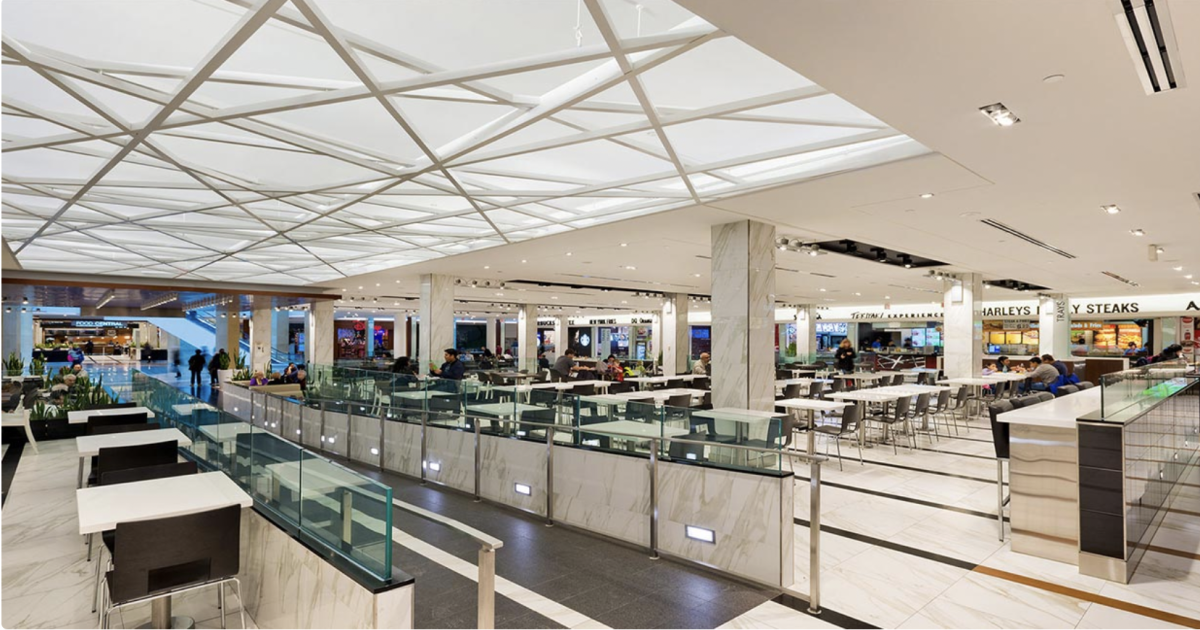
The centre’s food district provides a clear example of this shift. Designed to offer high-quality, fast-casual dining, it has seen strong productivity as nearby residents increasingly use the space as part of their regular routines. This reflects a broader trend where food and beverage offerings are becoming essential components of modern retail environments.

Strong Performance Reflects Strategic Evolution

That evolution is also reflected in performance. According to the International Council of Shopping Centers 2025 data, Square One recorded sales of approximately $1,396 per square foot, ranking among the top shopping centres in Canada.

This places the centre firmly within the country’s top tier of retail destinations. Its productivity underscores how scale, tenant diversity, and a rapidly growing urban population are translating into strong and sustained retail performance.

Scale, Diversity, and Market Reach

Square One remains one of the largest shopping centres in Canada, with more than 2.2 million square feet of retail space. Its scale allows it to serve a broad and diverse trade area across the western Greater Toronto Area.

What distinguishes the centre is the range of its offering. Square One brings together value-oriented retailers alongside premium and luxury brands, creating a tenant mix that appeals to a wide cross-section of consumers. This diversity positions the centre as both an everyday shopping destination and a place for aspirational retail experiences.

The surrounding growth in Mississauga reinforces this positioning. With a population approaching 800,000 and continued intensification planned through the city’s long-term development framework, the area around Square One is becoming one of the most important urban nodes in the region.

Square One in Mississauga. Photo: Oxford Properties

Infrastructure and the Future of Downtown Mississauga

The transformation of the Square One area is being supported by significant infrastructure investment, including transit expansion that will further connect the district to the broader region. This is helping to create the conditions for a walkable, high-density downtown environment.

City-building initiatives are also reinforcing the shift. Plans for new public spaces, cultural venues, and employment hubs are positioning the area as more than a retail destination. Instead, it is emerging as a place where people live, work, and gather.

Within this context, Square One plays a foundational role. It provides the retail and experiential backbone that supports the broader ecosystem, attracting both residents and visitors while adapting to changing patterns of urban life.

Holt Renfrew at Square One in Mississauga. Photo: Oxford Properties

A Model for the Future of Retail

The evolution of Square One reflects a broader shift in the retail industry. Shopping centres are no longer defined solely by the stores they contain. Their success increasingly depends on how well they integrate into the urban fabric and serve the communities around them.

As Mississauga continues its transformation, Square One is positioned at the centre of that change. Its role is expanding from that of a traditional mall to a key component of a new downtown, where retail, residential, and public life intersect.

In doing so, it offers a clear example of how large-scale shopping centres can evolve to remain relevant in an era of rapid urban growth and changing consumer expectations.

More from Retail Insider:

Three Ships challenges ‘natural’ and ‘clean’ beauty claims in Toronto campaign

Laura Thompson and Connie Lo

Toronto-based skincare brand Three Ships has launched a city-wide OOH (out-of-home) campaign that challenges one of beauty’s most widely used — and least regulated — claims: “natural” and “clean.”

Despite driving billions in sales, these terms have no legally binding definition in cosmetics in the U.S. or Canada, meaning brands are free to interpret them individually. The campaign brings this tension to life through bold posters across Toronto with lines like “Natural. According to who?” and “Clean. Based on what?”

Each poster directs to a landing page where consumers can learn more and add their name to support clearer standards — helping quantify demand for future regulatory change, say Laura Thompson and Connie Lo, Co-Founders of the company.

“Transparency has always been core to who we are as a brand, and honestly this has been a dream of ours since the very beginning. When Connie and I were first building Three Ships, we were shocked to find out there was no legal definition of “natural” or “clean” anywhere. It felt impossible. These are words that carry so much weight for consumers, yet the only regulation that exists around how brands use them comes down to basic false advertising rules. We knew we wanted to help change that someday. This campaign is our first step toward doing that publicly, and it definitely won’t be our last,” said Thompson.

“We’re really excited about this moment because it feels like the right time to bring others into the conversation. One of the things we’re hoping this campaign does is help us find like-minded brands who share this frustration and want to see the same change. We don’t want to do this alone, and we’re hoping this is the start of building a real coalition around it,” added Lo.

Laura Thompson and Connie Lo

Defining “natural” and “clean”

For Three Ships, explained Thompson, natural means ingredients that are entirely plant or mineral-derived, not petrochemical in origin, processed using defined and allowed methods, and sourced with full transparency. 

“Clean means formulated responsibly, with safety backed by clear and substantiated evidence, full ingredient transparency, and no misleading claims. These are the standards we hold ourselves to and we’ve been very intentional about defining them clearly,” she said.

Lo said the biggest issue is that there is no standardized definition across the industry at all. 

“Every brand has their own interpretation. Every retailer has their own standards. So a product that one brand calls natural might not meet another brand’s definition, and the consumer has no way of knowing that. That’s exactly why this cause matters so much to us. These words carry real weight for shoppers and right now they have no consistent meaning, which makes the whole category confusing to navigate,” she said.

The heart of the campaign

At its heart this campaign is about consumer education, said Thompson. 

“Through our own consumer research and just by listening to natural skincare shoppers over the years, we kept hearing the same thing: natural and clean beauty is so confusing, what do these terms actually mean, are they the same thing? We wanted to give people a name for that frustration and help them understand what’s actually driving it.

Lo said their bigger dream and end goal is to help push for real regulatory change. 

“But we see consumer education as the essential first step. You can’t build momentum for policy change without first helping people understand the problem. So this campaign is about raising awareness and showing that there is genuine consumer demand for clarity,” she said.

Three Ships image
Three Ships image

Outcomes hoping to achieve

Thompson said they want consumers to feel seen. 

“So much of what we heard in our research was this real frustration that natural and clean beauty is just hard to shop with confidence. We hope the landing page gives people a place to have this frustration acknowledged, and to help them understand why it exists. Beyond that, we want to show regulators and the broader industry that there is real consumer appetite for this kind of clarity and transparency,” she noted.

Lo said partnership is one of their core brand values, so they’re also hoping this becomes a rallying point for other brands who care about the same thing. 

“We genuinely want to find partners across the industry who are passionate about pushing for a shared definition and working toward change together. The petition is one signal of consumer demand, but building a coalition of brands who are aligned on this is just as important to us,” she said.

Laura Thompson and Connie Lo

When asked how do they address the risk of confusing or alienating consumers by questioning familiar marketing language, Thompson said: “We actually rooted this whole campaign in consumer insight for that exact reason. The frustration we kept hearing was that natural and clean beauty is already confusing to shop. Consumers told us that, so what we’re doing is acknowledging something that people are already feeling and giving it context. These words mean a lot to how people want to live their lives and take care of themselves, and we took that seriously when developing the campaign.”

Lo said they were really deliberate about the tone here. 

“We are not trying to fearmonger or demonize any ingredients or brands. We’re simply saying that we want there to be a shared definition of natural and clean so that consumers always know what they’re getting when they shop the category. And that’s our end goal really, being able to help everyone navigate natural and clean beauty with confidence,” she said.

More from Retail Insider: